Evaluation of the Immune Responses to
and Cross-Protective Efficacy of Eurasian
H7 Avian Influenza Viruses
Hyeok-Il Kwon,a,bYoung-Il Kim,a,bSu-Jin Park,a,bMin-Suk Song,a,bEun-Ha Kim,a,b Se Mi Kim,a,bYoung-Jae Si,a,bIn-Won Lee,aByung-Min Song,cYoun-Jeong Lee,c Seok Joong Yun,aWun-Jae Kim,aYoung Ki Choia,b
College of Medicine and Medical Research Institute, Chungbuk National University, Cheongju, Republic of Koreaa; Zoonotic Infectious Diseases Research Center, Chungbuk National University, Cheongju, Republic of Koreab; Avian Disease Division, Animal and Plant Quarantine Agency, Gimcheon-si, Gyeongsangbuk-do, Republic of Koreac
ABSTRACT Due to increasing concerns about human infection by various H7
influ-enza viruses, including recent H7N9 viruses, we evaluated the genetic relationships and cross-protective efficacies of three different Eurasian H7 avian influenza viruses. Phylogenic and molecular analyses revealed that recent Eurasian H7 viruses can be separated into two different lineages, with relatively high amino acid identities within groups (94.8 to 98.8%) and low amino acid identities between groups (90.3 to 92.6%).In vivo immunization with representatives of each group revealed that while group-specific cross-reactivity was induced, cross-reactive hemagglutination inhibition (HI) titers were approximately 4-fold lower against heterologous group viruses than against homologous group viruses. Moreover, the group I (RgW109/06) vaccine pro-tected 100% of immunized mice from various group I viruses, while only 20 to 40% of immunized mice survived lethal challenge with heterologous group II viruses and exhibited high viral titers in the lung. Moreover, while the group II (RgW478/14) vac-cine also protected mice from lethal challenge with group II viruses, it failed to elicit cross-protection against group I viruses. However, it is noteworthy that vaccination with RgAnhui1/13, a virus of a sublineage of group I, cross-protected immunized mice against lethal challenge with both group I and II viruses and significantly atten-uated lung viral titers. Interestingly, immune sera from RgAnhui1/13-vaccinated mice showed a broad neutralizing spectrum rather than the group-specific pattern ob-served with the other viruses. These results suggest that the recent human-infective H7N9 strain may be a candidate broad cross-protective vaccine for Eurasian H7 vi-ruses.
IMPORTANCE Genetic and phylogenic analyses have demonstrated that the
Eur-asian H7 viruses can be separated into at least two different lineages, both of which contain human-infective fatal H7 viruses, including the recent novel H7N9 viruses isolated in China since 2013. Due to the increasing concerns regarding the global public health risk posed by H7 viruses, we evaluated the genetic relationships be-tween Eurasian H7 avian influenza viruses and the cross-protective efficacies of three different H7 viruses: W109/06 (group I), W478/14 (group II), and Anhui1/13 (a sublin-eage of group I). While each vaccine induced group-specific antibody responses and cross-protective efficacy, only Anhui1/13 was able to cross-protect immunized hosts against lethal challenge across groups. In fact, the Anhui1/13 virus induced not only cross-protection but also broad serum neutralizing antibody responses against both groups of viruses. This suggests that Anhui1/13-like H7N9 viruses may be viable vac-cine candidates for broad protection against Eurasian H7 viruses.
KEYWORDS Eurasian H7 influenza virus, cross-reactivity, vaccines, H7N9
Received22 November 2016Accepted3
March 2017
Accepted manuscript posted online22
March 2017
CitationKwon H-I, Kim Y-I, Park S-J, Song M-S,
Kim E-H, Kim SM, Si Y-J, Lee I-W, Song B-M, Lee Y-J, Yun SJ, Kim W-J, Choi YK. 2017. Evaluation of the immune responses to and cross-protective efficacy of Eurasian H7 avian influenza viruses. J Virol 91:e02259-16.https:// doi.org/10.1128/JVI.02259-16.
EditorDouglas S. Lyles, Wake Forest University
Copyright© 2017 American Society for
Microbiology.All Rights Reserved. Address correspondence to Young Ki Choi, [email protected].
crossm
on November 7, 2019 by guest
http://jvi.asm.org/
I
n recent years, poultry outbreaks caused by highly pathogenic avian influenza (HPAI) and lowly pathogenic avian influenza (LPAI) viruses of the H7 subtype have resulted in culling of more than 75 million birds (1). Notably, the geographically diverse countries with poultry affected by the H7 subtype, including Australia, Ireland, Italy, Canada, the Netherlands, and China, readily demonstrate the global public health risk posed by viruses within this subtype. Prior to 2003, a large outbreak of highly patho-genic H7N7 virus occurred in poultry in the Netherlands and caused infections of 86 humans who handled affected poultry, as well as 3 of their family members (2). Although most infections were mild and presented only with conjunctivitis, there was a single fatality, by acute respiratory distress syndrome (3). Additionally, three cases of human infection with HPAI H7N7 were reported in Italy in 2013 (4), and in North America, LPAI H7N2 and LPAI/HPAI H7N3 viruses have caused a limited number of human infections, with respiratory involvement and/or conjunctivitis (5, 6). Moreover, in February 2013, cases of human infection with a novel, lowly pathogenic H7N9 virus were reported in the Anhui and Shanghai regions of eastern China, and by mid-May 2015, the total number of H7N9 cases exceeded 650. In addition to the cases in China, isolated cases were also identified in Taiwan, Malaysia, and Canada (7, 8).While sustained human-to-human transmission of H7 subtype viruses has not been reported, some H7 viruses exhibit enhanced transmissibility in mammalian models (9). Consistent with the epidemiology in humans, H7N9 viruses have demonstrated a limited ability to be transmitted through respiratory droplets in the ferret transmission model, suggesting that additional genetic changes are needed for the virus to fully adapt to humans (10). The continuing prevalence of H7 viruses in poultry may lead to the generation of variants and further sporadic human infections, which may result in the virus acquiring human-to-human transmissibility (11).
Since most of the human population has no immunity against these viruses (12), it is urgently necessary to develop effective diagnostic and preventative tools to use in the event of an outbreak of H7 subtype virus infections. Because pandemics have the potential to spread rapidly through human populations across large regions, it is crucial that a candidate pandemic vaccine be made available to the public on short notice. Furthermore, cross-protectiveness of pandemic vaccines is imperative because influ-enza viruses readily undergo antigenic drift and shift due to error-prone RNA polymer-ase activity and reassortment, which result in escape mutants that may be resistant to subtype-specific vaccines. For example, sporadic infections of humans and avian spe-cies with HPAI H5N1 influenza viruses have been occurring since 1997, and phyloge-netic and antigenic analyses of H5N1 viruses collected over this period have indicated the evolution of these viruses into different sublineages or clades (clades 1 to 10) (13, 14). Thus, this indicates that the immunity conferred by a vaccine against H5N1 viruses should be effective against heterologous viruses (those in different clades), which might be antigenically different from the original vaccine strain (15). Similar to the case seen for H5 viruses, recent studies of H7 viruses have reported that at least two different hemagglutinin (HA) lineages of Eurasian H7 viruses are cocirculating in domestic and wild migratory birds (16, 17). However, the antigenic relatedness and vaccine efficacies of the different lineages of recent Eurasian H7 viruses remain unclear. We thus created three different H7 vaccines in the internal backbone of the A/PR/8/34 (PR8) (H1N1) virus, representing each Eurasian H7 lineage and including the recent human-infective H7N9 strain. We then investigated the immunogenicity and cross-protective efficacy of each of these vaccines against homologous and heterologous H7 viruses in mice.
RESULTS
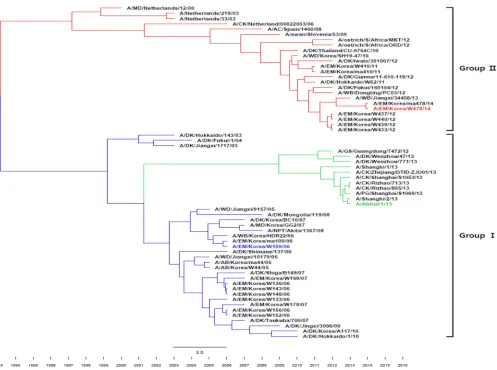
Genetic analysis of the H7 gene in South Korea.To analyze the genetic relation-ships between recent South Korean H7 avian influenza viruses and other Eurasian H7 viruses, a phylogenic analysis was conducted with our recent isolates and with H7 data deposited in GenBank. The results revealed that all the HA genes of the H7 viruses tested in this study clustered within Eurasian lineages but were separated into at least two different lineages (group I and group II) (Fig. 1). Group I viruses were closely related
on November 7, 2019 by guest
http://jvi.asm.org/
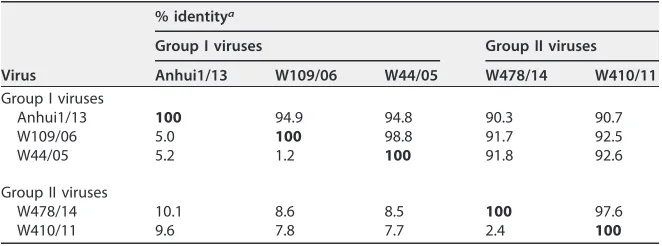
to the A/DK/Jiangxi/1717/03 (H7N7)-like lineage, which includes recent H7N9 viruses circulating in southern China and causing fetal human infections (18). However, al-though the A/Anhui/1/2013 (Anhui1/13)-like viruses were broadly clustered into group I, they showed the longest branch distance from the main lineage viruses and may have segregated from the main lineage around 2003. These results suggest that the Anhui1/ 13-like viruses can be separated as a sublineage of group I viruses. In contrast, group II viruses, predominantly isolated between 2011 and 2014, clustered with the HPAI H7N7 viruses that have caused fetal human infections in the Netherlands (19). Molec-ular analysis of H7 HA genes showed that each group of viruses exhibited relatively high amino acid identity within the same group (94.8 to 98.8%), while only 90.3 to 92.6% amino acid identities were observed between groups (Table 1). Further, to investigate the antigenic differences between the group I and group II H7 viruses, we compared the deduced amino acid sequences of the antigenic sites and receptor binding sites (RBS) of their HA proteins (20, 21). The amino acid sequence of HA revealed that the A and D antigenic sites were well conserved in all group I and group II H7 viruses, including the Anhui1/13 virus (Table 2). However, at antigenic site B, Anhui1/13-like viruses have lysine and serine residues at positions 182 and 183, respectively, while group II viruses have an arginine at residue 182 (R182) and both group I and II viruses have aspartic acid at residue 183 (D183). At antigenic site C, Anhui1/13-like viruses have an alanine at residue 197 (A197), while the group I and II
FIG 1Phylogenetic tree comparing the nucleotide sequences of HA genes of H7 viruses isolated from the Eurasian lineage. Phylogenetic trees were constructed using the BEAST v1.8.3 software package and Tracer v1.6. The nucleotide sequences were aligned using CLUSTAL V, and phylograms were generated using the neighbor-joining method in the tree-drawing program of the Lasergene sequence analysis software package (DNAStar 5.0; DNAStar, Madison, WI). AB, aquatic bird; AC,Anas crecca; CK, chicken; DK, duck; EM, environment; Ma, mouse adaptation; MD, mallard duck; NPT, northern pintail; OS, ostrich; SW, swan; WB, wild bird; WD, wild duck.
on November 7, 2019 by guest
http://jvi.asm.org/
[image:3.585.47.544.67.437.2]viruses have a threonine at this residue (T197). Further, at antigenic site E, Anhui1/13-like and group II viruses have a serine at residue 293 (S293), while only group I viruses have an asparagine at residue 293 (N293). However, only Anhui1/13-like viruses have the 235L substitution for glutamine in the RBS, which is commonly observed in Eurasian H7 viruses. However, amino acid variation at HA residue 293 (N or L) was not associated with variation of the glycosylation pattern between the H7 viruses (Table 2). These results demonstrate that recent Eurasian H7 viruses, including viruses of the Anhui1/ 13-like sublineage, possess group-specific antigenic site variations that may alter their antigenicity.
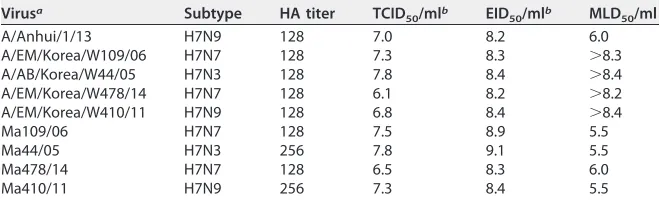
Biological properties of mouse-adapted and parental viruses.To evaluate the cross-protective efficacy of each H7 vaccine, we generated a mouse-adapted version of each strain and compared its biological features to those of the wild-type H7 virus. To confirm the antigenicity of each mouse-adapted virus, the full-length genome of each virus was sequenced and compared to the sequence of its parental virus. No amino acid changes were observed at specific antigenic sites of HA or NA surface genes (Table 2); however, all mouse-adapted viruses acquired the PB2 E627K mutation, and there were nonsynonymous mutations in the PB1, PA, NP, M, and NS internal genes of the individual mouse-adapted viruses (Table 3). Interestingly, no significant difference in replication titer was observed for any of the mouse-adapted strains compared to their parental H7 viruses with either MDCK cells or embryonated chicken eggs (Table 4). However, the mouse-adapted strains could reach titers of 6.5 to 7.8 log1050% tissue
culture infective doses (TCID50)/ml in MDCK cells and 8.3 to 9.1 log1050% egg infective
doses (EID50)/ml in chicken embryos, which were 3 to 7 times higher than the titers of
[image:4.585.41.372.92.215.2]wild-type H7 viruses.
TABLE 2Molecular comparison of Anhui/1/2013 and H7 avian influenza viruses and previous South Korean viruses
Virusa Subtype
HA sequence at position(s)b:
Antigenic site RBS
A (148–153) B (179–183) C
(197–206) D (267–274) E (285–293) 235 237 294
A/Anhui/1/13 H7N9 RRSGSS NTRKS AEQTKLYGS SFLRGKSM CEGDCYHS L G G
A/EM/Korea/W109/06 H7N7 --- ----D T--- --- ---N Q -
-A/AB/Korea/W44/05 H7N3 --- ----D T--- --- ---N Q -
-A/EM/Korea/W478/14 H7N7 --- ---RD T--- --- ---S Q -
-A/EM/Korea/W410/11 H7N9 --- ---RD T--- --- ---S Q -
-Ma109/06 H7N7 --- ----D T--- --- ---N Q -
-Ma44/05 H7N3 --- ----D T--- --- ---N Q -
-Ma478/14 H7N7 --- ---RD T--- --- ---S Q -
-Ma410/11 H7N9 --- ---RD T--- --- ---S Q -
-aAB, aquatic bird; EM, environment; Ma, mouse adaptation.
[image:4.585.42.548.579.721.2]bEach dash represents an amino acid residue identical to that in the consensus sequence. TABLE 1Sequence homology of HA genes of A/Anhui/1/13 and several H7 viruses available in South Korea
Virus
% identitya
Group I viruses Group II viruses
Anhui1/13 W109/06 W44/05 W478/14 W410/11 Group I viruses
Anhui1/13 100 94.9 94.8 90.3 90.7
W109/06 5.0 100 98.8 91.7 92.5
W44/05 5.2 1.2 100 91.8 92.6
Group II viruses
W478/14 10.1 8.6 8.5 100 97.6
W410/11 9.6 7.8 7.7 2.4 100
aValues shown in bold are percentages of identity for homologous strains.
on November 7, 2019 by guest
http://jvi.asm.org/
To investigate the pathogenic potential of and identify the appropriate challenge dose for each mouse-adapted virus, we determined the 50% murine lethal dose (MLD50). As expected, the parental viruses could not induce any mortality in mice, with
the exception of Anhui1/13 (6.0 MLD50/ml). However, each mouse-adapted strain could
induce 50% mortality in infected mice at about 5.5 to 6.0 log10TCID50/ml, which is at
least 100-fold higher than the virulence of the parental strains (Table 4).
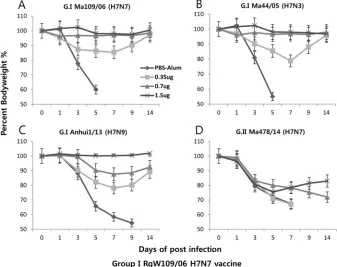
Evaluation of group I H7 vaccine efficacy.To evaluate the cross-protective efficacies of vaccines between group I and group II viruses, we selected the A/Environment/ Korea/W109/06 (W109/06; H7N7) virus as the group I vaccine candidate and tested its cross-reactivity by using a hemagglutination inhibition (HI) assay with sera from immunized mice. The results revealed that the RgW109/06 vaccine induced a high HI titer against the homologous W109/06 virus and heterologous group I viruses (A/ Aquatic bird/Korea/W44/2005 [W44/05] and Anhui1/13), in a dose-dependent manner, while only the 1.5-g dose (the highest dose of RgW109/06 vaccine) could induce an HI titer of 40 against the heterologous A/Environment/Korea/W478/2014 (W478/14) group II virus (Fig. 2). To evaluate the cross-protective efficacy of the vaccine between group I and group II viruses, RgW109/06 (H7N7)-immunized mice were challenged with 100 MLD50 of various group I (Ma44/05, Ma109/06, and Anhui1/13) and group II
[image:5.585.42.548.83.243.2](Ma478/14) viruses 2 weeks after the last vaccination and then monitored for morbidity and mortality (Fig. 3 and 4). With the group I virus challenge, all RgW109/06-vaccinated mice (for all doses) survived until 14 days postinfection (dpi), regardless of the chal-lenge virus (H7N3, H7N7, or H7N9) (Fig. 4A to C), without any flu-like clinical symptoms (see Fig. 3, 7, and 11). In contrast, all mice in the control group (phosphate-buffered saline [PBS]–alum) succumbed to infection by 8 dpi. In the group II virus challenge
TABLE 3Comparison of molecular determinants of wild-type H7 influenza viruses and those of mouse-adapted H7 viruses
Subtype Virus or sequencea
Residue at positionb:
PB2 PB1 PA NP M NS
627 634 759 276 288 370 456 720 731 32 97 217 265 570 33 488 204 95
Consensus E S N N K A H S E T T Q R T V F E L
H7N3 A/AB/Korea/W44/05 - - -
-Ma44/05 K - - - K I I K - - - P
H7N7 A/EM/Korea/W109/06 - - -
-Ma109/06 K - - Y Y - Y - - - C - - - G
-A/EM/Korea/W478/14 - - -
-Ma478/14 K - - - - S - - -
-H7N9 A/EM/Korea/W410/11 - Y - - -
-Ma410/11 K F I - - - - F - - - I I I -
-aAB, aquatic bird; EM, environment; Ma, mouse adaptation.
bEach dash represents an amino acid residue identical to that in the consensus sequence.
TABLE 4Comparison of growth properties and virulence of wild and mouse-adapted H7 viruses
Virusa Subtype HA titer TCID
50/mlb EID50/mlb MLD50/ml
A/Anhui/1/13 H7N9 128 7.0 8.2 6.0
A/EM/Korea/W109/06 H7N7 128 7.3 8.3 ⬎8.3
A/AB/Korea/W44/05 H7N3 128 7.8 8.4 ⬎8.4
A/EM/Korea/W478/14 H7N7 128 6.1 8.2 ⬎8.2
A/EM/Korea/W410/11 H7N9 128 6.8 8.4 ⬎8.4
Ma109/06 H7N7 128 7.5 8.9 5.5
Ma44/05 H7N3 256 7.8 9.1 5.5
Ma478/14 H7N7 128 6.5 8.3 6.0
Ma410/11 H7N9 256 7.3 8.4 5.5
aAB, aquatic bird; EM, environment; Ma, mouse adaptation. bTCID
50and EID50values were measured in MDCK cells and 12-day-old embryonated chicken eggs, respectively.
on November 7, 2019 by guest
http://jvi.asm.org/
[image:5.585.41.371.611.711.2]study, RgW109/06 (group I)-immunized mice showed high mortality rates (60 to 80%) even though the challenge virus was also of the H7N7 subtype (Ma478/14) (Fig. 4D). Therefore, this result suggests that group lineage is a better predictor of cross-protection than subtype. Although there was some dose dependency, these results
FIG 2Serum antibody responses in mice administered the group I RgW109/06 vaccine. Groups of mice were vaccinated with various doses (0 to 1.5g) of group I RgW109/06 twice as described in Materials and Methods, and sera were collected 2 weeks after the second vaccination. Serum antibody responses were evaluated by HI assay with the W44/05, W109/06, W478/14, and Anhui1/13 viruses. The detection limit of each test was 0.5 (10 log2).
FIG 3Body weight loss of RgW109/06 (group I [G.I])-vaccinated mice following infection. Groups of immunized mice were challenged intranasally with 100 MLD50 of Ma109/06 (H7N7) (107.5 EID50) (A),
Ma44/05 (H7N3) (107.5EID
50) (B), Anhui1/13 (H7N9) (108.0EID50) (C), or Ma478/14 (H7N7) (108.0EID50) (D) 2
weeks after the last vaccination. The data are presented as means⫾standard errors of the means (SEM). Body weights were recorded for 14 dpi.
on November 7, 2019 by guest
http://jvi.asm.org/
[image:6.585.86.326.70.285.2] [image:6.585.41.378.423.690.2]clearly demonstrate that the group I virus W109/06 cannot induce cross-protective immunity against group II H7 viruses. In addition, all control group mice (PBS-alum) succumbed to death within 6 dpi with Ma478/14 virus.
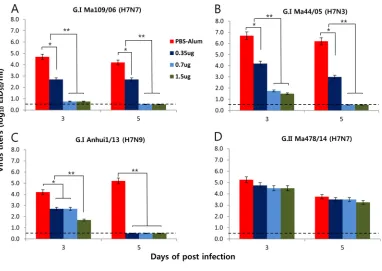
To examine the suppression of viral growth after RgW109/06 (group I) vaccination, we assessed virus replication in the lungs of vaccinated mice at 3 and 5 dpi. In comparison to PBS-alum-immunized animals, RgW109/06-immunized mice demon-strated a significant reduction in viral replication when challenged with three different group I viruses (P⬍0.01) (Fig. 5A to C). It should be noted that the group vaccinated with 0.35g of RgW109/06 showed a persistent Ma44/05 viral titer (3.0 log10EID50/g)
until 5 dpi; however, the RgW109/06-vaccinated groups receiving doses of 0.7 and 1.5 g were able to clear both the Ma44/05 (H7N3) and Ma109/06 (H7N7) viruses by 3 dpi. Furthermore, RgW109/16 vaccination resulted in significantly lower Anhui1/13 titers at 3 dpi and in clearance by 5 dpi for all three vaccine doses (Fig. 5C). However, when challenged with the Ma478/14 virus (group II), all RgW109/06 vaccine-immunized mice showed high lung titers and no significant difference in virus titer at either 3 or 5 dpi compared to those of PBS-alum-vaccinated mice (P ⬎ 0.05) (Fig. 5D). In addition, PBS-alum-immunized mice showed the highest lung viral titers with each challenge virus at 3 dpi (titers ranging from 4.5 to 5.3 log10EID50/ml), which persisted at 5 dpi
(titers of 3.3 to 3.8 log10EID50/ml). These results demonstrate that vaccination with the
group I virus W109/06 cannot attenuate virus replication of group II viruses in the lung. Evaluation of group II H7 vaccine efficacy.Next, the cross-reactivity of a group II vaccine (W478/14 [H7N7] virus) was tested by an HI assay using sera from immunized mice. The RgW478/14 vaccine induced high HI titers against both homologous (W478/ 14) and heterologous (A/Environment/Korea/W410/2011 [W410/11]) group II viruses. Although the RgW478/14 vaccine induced moderate HI titers (40 to 80) against the Anhui1/13 virus (group I), only the high doses of RgW478/14 vaccine (0.7 and 1.5g) induced detectable HI titers against the heterologous group I virus W109/06 (Fig. 6). To
FIG 4Survival of RgW109/06 (group I)-vaccinated mice following infection. The efficacy of vaccination was verified by assessing the survival rate following infection. Groups of immunized mice were challenged intranasally with 100 MLD50 of Ma109/06 (H7N7) (107.5 EID50) (A), Ma44/05 (H7N3) (107.5 EID50) (B),
Anhui1/13 (H7N9) (108.0EID
50) (C), or Ma478/14 (H7N7) (108.0EID50) (D) 2 weeks after the last vaccination.
Survival was recorded for 14 dpi.
on November 7, 2019 by guest
http://jvi.asm.org/
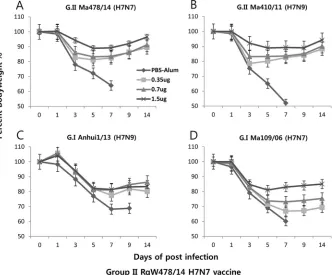
[image:7.585.44.378.73.342.2]evaluate the cross-protective efficacy of this group II virus, groups of RgW478/14-immunized mice were challenged with 100 MLD50of various group II (Ma410/11 [H7N9]
and Ma478/14 [H7N7]) and group I (Anhui1/13 [H7N9] and Ma109/06 [H7N7]) viruses 2 weeks after the last vaccination and then monitored for morbidity and mortality (Fig. 7
FIG 5Viral titrations for RgW109/06 (group I)-vaccinated mice following challenge with group I and II viruses. After intranasal infection with a lethal dose of Ma109/06 (H7N7) (107.5EID
50) (A), Ma44/05 (H7N3) (107.5EID50) (B), Anhui1/13 (H7N9) (108.0EID50)
(C), or Ma478/14 (H7N7) (108.0EID
50) (D), lungs were harvested at 3 and 5 dpi. Virus titers are expressed as log10EID50per
milliliter. The limit of virus detection was set to 0.7 log10EID50/g or 0.7 log10EID50/ml.*,P⬍0.05;**,P⬍0.01.
FIG 6Serum antibody responses in mice administered the RgW478/14 (group II) vaccine. Groups of mice were vaccinated with various doses (0 to 1.5g) of RgW478/14 twice as described in Materials and Methods, and sera were collected 2 weeks after the second vaccination. Serum antibody responses were evaluated by HI assay with the W109/06, W410/11, W478/14, and Anhui1/13 viruses. The detection limit of each test was 0.5 (10 log2).
on November 7, 2019 by guest
http://jvi.asm.org/
[image:8.585.45.427.69.340.2] [image:8.585.87.327.479.688.2]and 8). In group II virus challenge experiments, all immunized mice survived until 14 dpi following both homologous (Ma478/14 [H7N7]) and heterologous (Ma410/11 [H7N9]) virus challenges (Fig. 8A and B). However, all mice in the control group (PBS-alum) succumbed to infection by 8 dpi following challenge with Ma478/14 or Ma410/11. When they were challenged with group I viruses, most RgW478/16-immunized mice showed high mortality rates (Fig. 8C and D), and only the highest dose of vaccine (1.5 g) could cross-protect immunized mice against Anhui1/13 (50%) and Ma109/06 (60%) infections, while the mice receiving the lower vaccine doses exhibited mortality rates as high as 70 to 100% with these viruses. This suggests that there is a lack of cross-protection between the H7 lineages.
Although the group vaccinated with 0.35g RgW478/14 showed persistent viral titers until 5 dpi following infection with Ma478/14 (2.8 log10EID50/g) or Ma410/11 (3.3
log10EID50/g), all mice vaccinated with 0.7 or 1.5g RgW478/14 showed significantly
attenuated lung viral titers (more than 500 times;P⬍0.05) at 3 dpi and viral clearance by 5 dpi (Fig. 9A and B). In contrast, following challenge with group I viruses, all RgW478/14 vaccine-immunized mice exhibited high lung titers at 3 and 5 dpi (Fig. 9C and D). Furthermore, even though Anhui1/13 elicited moderate cross-reactive HI titers (Fig. 6), RgW478/14-immunized mice infected with Anhui1/13 showed viral titers almost similar to those of Ma109/06-infected mice at 3 dpi (3.5 to 4.3 log10EID50/g) (Fig.
9C and D).
Enhanced cross-protective efficacy of Anhui1/13 vaccine against group I and II viruses.We observed that both group I and group II vaccines could protect mice from lethal challenge with the same group of viruses but failed to cross-protect the host from viruses of the heterologous group (Fig. 4 and 8). Therefore, we hypothesized that the Anhui1/13 virus might provide more cross-protection, because although the Anhui1/13 virus clusters in group I, the results of phylogenic tree and molecular analyses suggest that it differs enough that it may represent yet another sublineage of H7 group I. HI
FIG 7Body weight loss of RgW478/14 (group II)-vaccinated mice following infection. Groups of immunized mice were challenged intranasally with 100 MLD50of Ma478/14 (H7N7) (108.0EID50) (A), Ma410/11 (H7N9)
(107.5EID
50) (B), Anhui1/13 (H7N9) (108.0EID50) (C), or Ma109/06 (H7N7) (107.5EID50) (D) 2 weeks after the
last vaccination. Body weight was recorded for 14 dpi.
on November 7, 2019 by guest
http://jvi.asm.org/
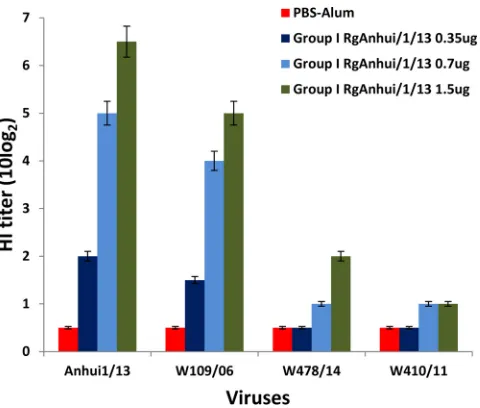
[image:9.585.46.378.73.348.2]assay results revealed that the RgAnhui1/13 vaccine induced the highest HI titers against the homologous Anhui1/13 and heterologous W109/06 group I viruses, in a dose-dependent manner. In contrast, the RgAnhui1/13 vaccine induced HI titers of only 20 to 40 against the group II viruses W478/14 and W410/11 (Fig. 10). Two weeks after booster vaccination, RgAnhui1/13-immunized mice were challenged with 100 MLD50of
group I (Ma109/06 and Anhui1/13) and group II (Ma410/11 and Ma478/14) viruses and then monitored for morbidity and mortality (Fig. 11 and 12). Note that the RgAnhui1/13 vaccine efficiently protected the mice from lethal challenges with both homologous H7N9 and group I (W109/06) viruses, even at the 0.35-g dose (Fig. 12A and B). Furthermore, in contrast to the results with the RgW109/06 group I vaccine (Fig. 4D), mice immunized with 0.7- and 1.5-g doses of the RgAnhui1/13 vaccine exhibited a 100% survival rate against challenge with the group II Ma478/14 (H7N7) and Ma410/11 (H7N9) viruses (Fig. 12C and D). In addition, although the 0.35-g RgAnhui1/13 vaccine dose elicited no detectable HI titer against Ma478/14 or Ma410/11 (Fig. 8), immunized mice exhibited only 10 to 30% mortality after challenge with these group II viruses (Fig. 12C and D).
Immunization with RgAnhui1/13 significantly attenuated Anhui1/13 virus replica-tion, in a dose-dependent manner, at 3 dpi and gave viral clearance by 5 dpi (Fig. 13A). Further, the RgAnhui1/13 vaccine efficiently attenuated infection with the heterologous group I Ma109/06 virus, with no detectable virus present at 5 dpi for both the 0.7- and 1.5-g doses (Fig. 13B). Surprisingly, RgAnhui1/13 vaccination also significantly atten-uated virus replication in the lungs of mice infected with the heterologous group II viruses (Ma478/14 [H7N7] and Ma410/11 [H7N9]). Furthermore, no virus was detected in the lungs of mice immunized with 0.7- and 1.5-g doses of RgAnhui1/13 at 5 dpi (Fig. 13C and D), similar to the results seen with group I Ma109/06 virus infection (Fig. 13B). Broad serum cross-neutralization of RgAnhui1/13 immunization.In contrast to the 100% survival rate of RgAnhui1/13-vaccinated mice against both group II viruses
FIG 8Survival of RgW478/14 (group II)-vaccinated mice following infection. The efficacy of vaccination was verified by assessing the survival rate following infection. Groups of immunized mice were challenged intranasally with 100 MLD50 of Ma478/14 (H7N7) (108.0 EID50) (A), Ma410/11 (H7N9) (107.5 EID50) (B),
Anhui1/13 (H7N9) (108.0EID
50) (C), or Ma109/06 (H7N7) (107.5EID50) (D) 2 weeks after the last vaccination.
Survival was recorded for 14 dpi.
on November 7, 2019 by guest
http://jvi.asm.org/
[image:10.585.41.378.73.340.2](Ma478/14 and Ma410/11) (Fig. 12C and D) and the significantly lower lung viral titers (Fig. 13C and D), low cross-reactive HI titers were observed against these viruses (Fig. 10). Hence, to further investigate the antigenic relatedness of these groups, serum neutralization (SN) assays and neuraminidase inhibition (NI) assays were performed. The SN results revealed that group I viruses exhibited relatively high cross-neutralizing
FIG 9Viral titrations for RgW478/14 (group II)-vaccinated mice following challenge with group I and II viruses. After intranasal infection with a lethal dose of a group II virus, Ma478/14 (H7N7) (108.0EID
50) (A) or Ma410/11 (H7N9)
(107.5EID
50) (B), or a group I virus, Anhui1/13 (H7N9) (108.0EID50) (C) or Ma109/06 (H7N7) (107.5EID50) (D), lungs
were harvested at 3 and 5 days postinfection. Virus titers are expressed as log10EID50per milliliter. The limit of virus
detection was set to 0.7 log10EID50/g or 0.7 log10EID50/ml.*,P⬍0.05;**,P⬍0.01.
FIG 10Serum antibody responses in mice administered the RgAnhui/1/13 (group I) vaccine. Groups of mice were vaccinated with various doses (0 to 1.5g) of RgAnhui/1/13 twice as described in Materials and Methods, and sera were collected 2 weeks after the second vaccination. Serum antibody responses were evaluated by HI assay with the W109/06, W410/11, W478/14, and Anhui1/13 viruses. The detection limit of each test was 0.5 (10 log2).
on November 7, 2019 by guest
http://jvi.asm.org/
[image:11.585.48.405.70.333.2] [image:11.585.87.327.485.689.2]titers against other group I viruses, regardless of NA subtype; in contrast, their SN titers against group II viruses were at least 4-fold lower (Table 5). A similar pattern of SN titers was observed for group II viruses. It is noteworthy that in contrast to the pattern for HI titers, immune sera from RgAnhui1/13-vaccinated mice did not exhibit a group-specific pattern for the other group I and II viruses, and only 2-fold differences (640 versus 320 or 320 versus 160) were observed (Table 5). In the NI assay, only NA homo-subtype viruses (A/Anhui/1/13 and A/EM/Korea/W410/11) showed NI titers of⬎40, while other heterosubtypic viruses (N3 and N7) showed NI titers of⬍20, regardless of whether they were group I or group II viruses. These results suggest that the broad cross-protectiveness of the RgAnhui1/13 vaccine is closely related to the SN results, not the HI or NI results.
DISCUSSION
Direct avian-to-human transmission of an LPAI A/H7N7 virus was first confirmed in 1996, in an English woman who contracted the virus while tending to apparently infected pet ducks (22). Since then, various LPAI H7 subtypes have caused human infections, including LPAI A/H7N2 infections in Virginia, New York (52), and England (53) and LPAI A/H7N3 infections in the United Kingdom (23) and Italy (24). Further, HPAI A/H7N3 variants were responsible for zoonotic infections in British Columbia, Canada (25), and Jialisco, Mexico (54), and an HPAI A/H7N7 virus was also responsible for one of the largest human H7 outbreaks, in the Netherlands (26). In 2013, a novel H7N9 virus emerged in China (27, 28), and subsequently, the number of cases of human infections exceeded 650, with rapid spread to Taiwan, Malaysia, and Canada (7, 8).
In contrast to the HPAI H5 virus, avian H7N7 and H7N9 strains are relatively lowly pathogenic in poultry species, including chickens, which exhibit no signs of disease despite substantial replication and rapid transmission to contact birds (29–31). Further, while the H7N9 viruses, a product of multiple assortments between strains found in migratory birds and prevailing A/H9N2 viruses in Chinese poultry (32), do not contain
FIG 11Body weight loss of RgAnhui/1/13 (group I)-vaccinated mice following infection. Groups of immunized mice were challenged intranasally with 100 MLD50 of Anhui1/13 (H7N9) (108.0 EID50) (A),
Ma109/06 (H7N7) (107.5EID
50) (B), Ma478/14 (H7N7) (108.0EID50) (C), or Ma410/11 (H7N9) (107.5EID50) (D)
2 weeks after the last vaccination. Body weight was recorded for 14 dpi.
on November 7, 2019 by guest
http://jvi.asm.org/
[image:12.585.44.379.74.338.2]the pathotypic HA cleavage motif, they appear to infect and replicate well in mammalian species (33). Due to the increasing concerns about human infections by various H7 viruses, the WHO has recommended several H7 vaccine candidate viruses for pandemic preparedness (34). Although identification of an H7 pandemic vaccine with cross-protective efficiency against a broad spectrum of H7 viruses would be an ideal strategy for protecting the human population, the antigenic relatedness and vaccine efficacies between the different lineages of recent Eurasian H7 viruses are largely unknown. Therefore, we evaluated the antigenic relationships between Eurasian H7 viruses (including recent H7N9 viruses) and compared the immunogenicities and cross-protective efficacies of three different reverse genetics-based H7 vaccines.
Phylogenic and molecular analyses revealed that recent Eurasian H7 viruses can be separated into two different lineages, with relatively high amino acid identities within groups (94.8 to 98.8%) and low amino acid identities between groups (90.3 to 92.6%). The first group (group I) is closely related to the recent H7N9 viruses that caused fetal human infections in China in 2013, and the other group (group II) clusters with the HPAI H7N7 viruses that have caused fetal human infections in the Netherlands (19). It should be noted that while Anhui1/13-like viruses are grossly clustered into group I, molecular analysis revealed that Anhui1/13-like H7N9 viruses have their own specific antigenic variations, such as S183 (antigenic site B), A197 (antigenic site C), S293 (antigenic site E), and L235 (RBS) (Table 2). Moreover, only Anhui1/13-like viruses have the 235L substitution in the RBS, which may alter transmission into mammalian species and lead to sustained human-to-human transmission (35). However, Anuhi1/13-like viruses also share some specific genetic variations at antigenic sites and in the RBS gene with group I and group II H7 viruses. For example, Anhui1/13-like and group I viruses both have a lysine at residue 182 (K182), while group II viruses have an arginine (R182). Furthermore,
FIG 12Survival of RgAnhui/1/13 (group I)-vaccinated mice following infection. The efficacy of vaccination was verified by the survival rate following infection. Groups of immunized mice were challenged intrana-sally with 100 MLD50of Anhui1/13 (H7N9) (108.0EID50) (A), Ma109/06 (H7N7) (107.5EID50) (B), Ma478/14
(H7N7) (108.0EID
50) (C), or Ma410/11 (H7N9) (107.5EID50) (D) 2 weeks after the last vaccination. Survival was
recorded for 14 dpi.
on November 7, 2019 by guest
http://jvi.asm.org/
[image:13.585.44.379.72.351.2]Anhui1/13-like and group II viruses commonly have a serine at position 293 (S293) (at antigenic site D), while group I viruses have an asparagine (N293). However, molecular analysis revealed that these amino acid variations did not alter the glycosylation patterns of the H7 viruses tested in this study (Table 2). Therefore, in addition to the two representatives of groups I and II (W109/06 and W478/14), we also assessed the efficacy of the Anhui1/13 vaccine against H7 viruses of other groups.
Immunization studies in mice demonstrated that each vaccine group produced group-specific antibody responses, including those against heterosubtypic H7N3 and H7N9 viruses. However, only limited cross-reactive HI titers (⬍40) were observed across groups. In a mouse-adapted virus challenge study, vaccines of each group could protect the immunized host from lethal challenge with viruses from the same group,
FIG 13Viral titrations for RgAnhui/1/13 (group I)-vaccinated mice following challenge with group I and II viruses. Lungs were harvested 3 and 5 days after intranasal infection with a lethal dose of a group I virus, Anhui1/13 (H7N9) (108.0EID
50)
(A) or Ma109/06 (H7N7) (107.5EID
50) (B), or a group II virus, Ma478/14 (H7N7) (108.0EID50) (C) or Ma410/11 (H7N9) (107.5
EID50) (D). Virus titers are expressed as log10EID50per milliliter. The limit of virus detection was set to 0.7 log10EID50/g or
[image:14.585.52.429.69.353.2]0.7 log10EID50/ml.*,P⬍0.05;**,P⬍0.01.
TABLE 5Geometric mean antibody titers in HI, SN, and NI assays 14 days after inoculation of mice with various H7 influenza viruses
Vaccine virusa Group Subtype
Antibody titer againstb:
Anhui1/13 W109/06 W44/05 W478/14 W410/11
HI SN NI HI SN NI HI SN NI HI SN NI HI SN NI
A/Anhui/1/13 I H7N9 320 640 320 320 320 15 160 320 10 80 160 20 80 160 120
A/EM/Korea/W109/06 I H7N7 320 320 10 320 640 120 160 320 ⬍10 40 80 80 40 80 ⬍10
A/EM/Korea/W44/05 I H7N3 320 640 10 320 160 15 320 320 120 ⬍20 80 ⬍10 40 80 ⬍10
A/EM/Korea/W478/14 II H7N7 40 320 60 40 80 60 ⬍20 80 ⬍10 640 640 120 320 640 ⬍10
A/EM/Korea/W410/11 II H7N9 20 320 80 40 80 10 20 40 ⬍10 320 320 10 320 640 320
Ma109/06 I H7N7 320 320 15 640 640 120 160 160 ⬍10 40 80 60 40 80 ⬍10
Ma44/05 I H7N3 320 320 10 320 320 10 320 320 80 40 40 ⬍10 40 80 ⬍10
Ma478/14 II H7N7 80 320 15 40 40 40 20 40 ⬍10 640 640 120 320 320 ⬍10
Ma410/11 II H7N9 40 160 60 20 40 10 20 40 ⬍10 320 640 10 640 640 240
aAB, aquatic bird; EM, environment; Ma, mouse adaptation. bValues in bold are titers against the homologous virus.
on November 7, 2019 by guest
http://jvi.asm.org/
[image:14.585.45.543.589.721.2]regardless of the challenge virus type (H7N3, H7N7, or H7N9), with significantly attenuated viral growth in the lungs compared to that in the PBS-alum-immunized control group. However, both the RgW109/06 (group I) and RgW478/14 (group II) vaccines failed to cross-protect the host from lethal challenge with viruses of the other group, and virus titers in lungs remained high (Fig. 5 and 9; Table 5). Further, these results correlate with the HI titers observed in this study.
Similarly, a lack of cross-protection between viruses from different clusters was confirmed in HPAI H5 vaccine studies (13, 14). To date, HPAI H5 viruses can be separated into at least 10 different clades based on phylogeny and molecular charac-teristics (13, 14). Although some variation can be observed within clades, most H5 viruses elicit clade-specific immune responses, and only limited cross-reactive immune responses between clades have been reported (36). Therefore, the WHO suggests the use of specific pandemic H5 vaccine candidates depending on which clades are in circulation (37). In the present study, we clearly demonstrated that Eurasian H7 viruses can be separated into at least two different lineages (clades) and that there is high molecular similarity and serologic reactivity within each group but not between heterolo-gous groups of viruses (Fig. 1; Tables 1 and 5). In addition, we observed that the group I H7 vaccine could not confer protective efficiency against group II H7 viruses, andvice versa (Fig. 4 and 8). In contrast, the RgAnhui1/13 H7N9 vaccine demonstrated efficient protection and inhibition of viral replication against both groups of viruses. Interestingly, although the RgAnhui1/13 vaccine elicited HI titers of only 20 to 40 in response to group II viruses, the survival rate was 100% against group II viruses when mice were vaccinated with 0.7 or 1.5g of RgAnhui1/13 antigen. These results contrast markedly with those for the RgW478/14 (group II)-vaccinated mice against group I virus infection (Fig. 6 and 8). The RgW478/14 vaccine induced HI titers of 40 to 80 against group I viruses (Anhui1/13 and W109/06) but prevented only 50 to 60% of immunized hosts from succumbing to infection, even at the highest dose (7.5 g) of vaccine. Further, the 0.35-g vaccine dose resulted in 90 to 100% mortality rates against the Anhui1/13 and Ma109/06 viruses. In contrast, at 0.35 g, the RgAnhui1/13 vaccine could not induce detectable cross-reactive HI titers against group II viruses (W410/11 and W478/14), but immunized mice were significantly cross-protected against these viruses (with only 10 and 30% mortality, respectively) (Fig. 12). These results suggest that the RgAnhui1/13 vaccine may elicit antibodies that neutralize viral infectivity instead of those that induce hemagglutinin inhibition (HI) activity by binding with chicken red blood cells (RBCs).
By SN assay, we confirmed that the RgAnhui1/13 vaccine induces cross-protection through neutralizing antibodies against both group I (titers of 320 to 640) and group II (titers of 160 to 320) viruses. These SN titers are 8- to 16-fold higher than the HI titers against group II viruses (Table 5; Fig. 10). Similarly, previous studies reported that HI assays often fail or elicit responses below the level of detection necessary to detect seroconversion in patients with H7 virus infections confirmed by PCR or through virus isolation (25, 38). Moreover, the disparity between results obtained with HI and SN assays may be due to the receptor binding specificity of the erythrocytes used for the HI assay (39). Therefore, further studies are needed to optimize the methods for antibody detection and to develop criteria for assessing seropositivity for the H7 virus in mammalian hosts (38).
Taken together, the results of our study demonstrate that Eurasian H7 viruses can be separated into at least two different lineages and that while vaccines from each induce group-specific cross-protective efficacy, they fail to cross-protect immunized hosts against lethal challenge with viruses from other H7 groups. The exception is the Anhui1/13 (H7N9) virus, which can be considered a sublineage of group I H7 viruses. Vaccination with this virus induced cross-protective efficacy with broad serum neutralizing antibody responses to both groups of H7 viruses. This indicates that an Anhui1/13 (H7N9)-like vaccine may be a viable broad-spectrum vaccine for Eurasian H7 viruses. In addition, the serum neutralization assay is more suitable for measuring cross-reactivity in response to Eurasian H7 viruses.
on November 7, 2019 by guest
http://jvi.asm.org/
MATERIALS AND METHODS
Viruses.Wild-type H7N3 (A/Aquatic bird/Korea/W44/2005 [W44/05]), H7N7 (A/Environment/Korea/ W109/06 [W109/06] and A/Environment/Korea/W478/2014 [W478/14]), and H7N9 (A/Anhui/1/2013 [An-hui1/13] and A/Environment/Korea/W410/2011 [W410/11]) viruses were used for serologic analysis, and their mouse-adapted strains (Ma44/05, Ma109/06, Ma410/11, and Ma478/14) were used for animal challenge studies. Each virus was propagated in 10-day-old embryonated chicken eggs, and the titers were calculated as log10EID50per milliliter by a 10-fold serial dilution method (40). Stock viruses were
kept at⫺80°C and thawed right before use. In addition, the 50% murine lethal dose (MLD50) was defined
as the EID50resulting in 50% mortality, calculated by the method of Reed and Muench (40). All live-virus
usage of H7N9, H7N3, and H7N7 viruses was conducted inside an approved biosafety level 3 (BSL-3⫹) facility.
Mouse-adapted H7 virus generation.To generate H7 strains with increased pathogenicity in mice, each virus was serially passaged in mice until it generated a mouse-adapted, highly virulent strain, and the strains were termed Ma44/05, Ma109/06, Ma410/11, and Ma478/14. To isolate single-phenotype viruses that cause mortality similar to that of mouse-adapted virus, we plaque purified lung isolates of the virulent mouse-adapted strains in MDCK cells as described previously (41). Briefly, supernatants of lung tissue homogenates were serially diluted 10-fold in appropriate medium. MDCK cells were infected with the dilution samples in 6-well plates. After 1 h of incubation, the cells were washed with PBS and overlaid with a 0.7% agarose-medium mixture with tosylsulfonyl phenylalanyl chloromethyl ketone (TPCK)-treated trypsin. Sixty hours later, 5 single plaque colonies were picked, resuspended in medium, and injected into 11-day-old embryonated chicken eggs. After 48 h of incubation, viruses were harvested, and the 50% tissue culture infective dose (TCID50) was calculated by the method of Reed and Muench
(40). The pathogenicity of the 5 plaque-purified viruses was reevaluated in mice. Based on the highly pathogenic phenotype and sequence analysis, each of the representative purified viruses was selected for further studies.
Phylogenetic and molecular analyses.Sequences of H7 viruses were obtained by Cosmo Genetech (Seoul, South Korea), using an ABI 3730XL DNA sequencer (Applied Biosystems, Foster City, CA). Sequences were analyzed and compiled with DNAStar 5.0 (DNAStar, Madison, WI); closely related viruses were identified by basic local alignment search tool analysis. Phylogenetic trees were built by aligning published reference avian influenza virus sequences obtained from wild birds, domestic poultry, and humans, available in GenBank, together with the closely related avian virus sequences obtained from the basic local alignment search tool results. Full genome sequences were aligned in Clustal X (42), and phylogenetic trees were generated using Bayesian Markov chain Monte Carlo coalescent analyses to investigate the recent evolutionary genealogy of H7 genes within Eurasian lineages. Statistical uncer-tainty in the data was reflected by the 95% highest probability density (HPD) values. Results were examined using the TRACER v1.6 program from the BEAST package (43). Convergence was assessed with effective sample size (ESS) values after a burn-in of 4 million steps. Models were compared by calculating the Bayes factor (BF) from the posterior output of each of the models, using the TRACER v1.6 program as explained on the BEAST website (http://beast.bio.ed.ac.uk). A log BF (natural log units) of⬎2.3 indicates strong evidence against the null model (43, 44). Maximum clade credibility trees were generated using Tree Annotator from the BEAST package, and FigTree v1.4.3 (http://tree.bio.ed.ac .uk) was used for visualization of the annotated trees (45).
Construction of reverse genetics plasmids and vaccine generation. Based on molecular and phylogenic analyses, we selected three H7 strains (A/Environment/Korea/W109/2006 [W109/06; H7N7], A/Environment/Korea/W478/2014 [W478/14; H7N7], and A/Anhui/1/2013 [Anhui1/13; H7N9]) as H7 vaccine candidates (Fig. 1; Table 1). The HA and NA genes were amplified by reverse transcription-PCR (RT-PCR) and then cloned into the vPHW2000 vector (46). Each of the HA and NA gene plasmids was cotransfected with the 6 internal gene plasmids of the A/PR/8/1934 virus into Vero cell lines by use of Mirus transfection reagent (Invitrogen), and each virus was rescued as previously described (46). The rescued viruses were propagated in specific-pathogenic-free (SPF), 11-day-old embryonic chicken eggs at 37°C for 72 h. The concentrated viruses were inactivated with formalin for 48 h at 4°C. The inactivation of vaccine viruses was confirmed by the absence of virus growth in two consecutive passages in SPF, 11-day-old embryonic chicken eggs. The inactivated vaccine viruses were loaded into ultracentrifuge tubes and underlaid with a 20% sucrose cushion. Ultracentrifugation was performed at 25,000 rpm for 3 h at 4°C. Supernatants were discarded, and virus pellets were resuspended overnight at 4°C in 1⫻ phosphate-buffered saline. The presence of viruses in the pellet was confirmed by hemagglutination assay. The total protein content was determined using the Bradford assay (Bio-Rad) according to the manufacturer’s specifications. To estimate the HA content in the vaccine, the vaccine stock and a dilution series of bovine serum albumin (BSA) standards were run in an SDS-PAGE gel and stained with Coomassie blue. The immunization dose was formulated so that the HA content was 30% of the total protein content, as previously described (47, 48). After dilution of the vaccine bulk to the appropriate antigen concentration, antigen was adsorbed to aluminum hydroxide as an adjuvant, using 1 mg/ml alum.
Vaccination and virus challenge. Eight-week-old BALB/c mice were purchased from Samtako (Seoul, South Korea), and all animals tested seronegative against H1N1-like, H7N9-like, H5-like, and type B-like viruses by hemagglutination inhibition (HI) assays prior to this study. Groups of mice (22 per group) were vaccinated intramuscularly (i.m.) with 2 doses given 3 weeks apart of each inactivated vaccine, containing 0.35, 0.7, or 1.5g of HA/dose, with 250g of aluminum hydroxide adjuvant in 0.25 mlof sterile PBS. The control group received 250g of aluminum hydroxide adjuvant only in 0.25 ml of sterile PBS. Two weeks after the last immunization, mice were challenged intranasally (i.n.) with 100 MLD50
on November 7, 2019 by guest
http://jvi.asm.org/
of the wild-type A/Anhui/1/13 (H7N9) virus or the mouse-adapted Ma44/05 (H7N3), Ma109/06 (H7N7), Ma410/11 (H7N9), or Ma478/14 (H7N7) virus to evaluate the cross-protective efficacy of each H7 vaccine.
Serum and tissue collection.Sera from immunized mice were collected 2 weeks after administra-tion of each vaccine and stored at⫺80°C until use. Lung tissues (n⫽5) of mice were harvested at 3 and 5 dpi and homogenized with equal volumes (1 ml/g of tissue) of PBS-containing antibiotics. Tissue homogenates were clarified by centrifugation at 12,000⫻gfor 10 min at 4°C, and the supernatants were transferred to new tubes. Samples were 10-fold serially diluted immediately after collection and then inoculated into 11-day-old embryonated chicken eggs for virus titration as computed by the method of Reed and Muench, with the results expressed as log10EID50per milliliter or per gram of tissue collected
(40). The limit of virus detection was set at 0.7 log10EID50/ml or log10EID50/g, and the virus titers were
compared by standard Student’sttest.
Serological assays.HI assays were done as described elsewhere (47). Briefly, serum samples were treated with a receptor-destroying enzyme (RDE; Denka Seiken, Japan) to inactivate nonspecific inhib-itors, with a final serum dilution of 1:10. RDE-treated sera were 2-fold serially diluted, and equal volumes of virus (8 HA units/50l) were added to microplate wells. The microplates were incubated at room temperature for 30 min, followed by the addition of 0.5% (vol/vol) chicken RBCs. The plates were gently mixed and incubated at 37°C for 30 min. The HI titer was determined by the reciprocal of the last dilution that did not exhibit agglutination of the chicken RBCs. The detection limit for the HI assay was set to 40 HI units.
The serum neutralization (SN) assay was performed as previously described, with modifications, to determine the cross-reactivity of sera collected from mice (49, 50). Viruses used for the SN assay were diluted from virus stock solutions at titers of 100 to 300 TCID50/0.1 ml. Initial 1:10 serum dilutions were
made using PBS. Twofold serial dilutions of all samples were made to a final serum dilution of 1:10,240. To each serum dilution, 50l of virus (100 to 300 TCID50/0.1 ml) was added and incubated for 1 h at 37°C
in 5% CO2. Following incubation, the virus and serum mixtures were added to 96-well tissue culture
plates containing confluent MDCK cell monolayers (⬃1.5⫻104cells/well) and incubated for 48 h at 37°C
in 5% CO2. After infection, the appearance of cytopathic effect (CPE) was monitored. Viral replication in
the supernatant of each well was confirmed by the hemagglutination test.
Serum neuraminidase inhibition (NI) titers were also measured using a previously described assay (51). Briefly, the collected mouse sera were serially diluted in 2-fold steps to generate a range of dilution values ranging from 4 to 11 log2units. A 5-l aliquot of diluted serum was mixed with 5l of a defined
standard NA activity dose. The diluted viruses were mixed with 10l fetuin (25 mg/ml; Sigma) in a PCR tube and incubated at 37°C for 3 h. After cooling for 5 min at 10°C, 5l of periodate reagent was added and incubated for 20 min. A 25-l aliquot of arsenite reagent was added to stop the reaction. Fifty microliters of thiobarbituric acid (TBA) was then added, and the mixtures were incubated at 56°C for 30 min. After cooling, 75l of Warrenoff reagent was added. The mixtures were vortexed and centrifuged for 5 min at 1,200 rpm. Finally, 50l of the butanol phase was transferred to a Nunc Immuno 96-well plate (Nunc, Rochester, NY). The optical density (OD) was measured at 540 nm.
Ethics statement.Virus preparation, titration, all animal studies, and serologic testing for H7 viruses were performed in an enhanced biosafety level 3 (BSL-3⫹) containment facility at Chungbuk National University that is approved by the Korean Centers for Diseases Control and Prevention (KCDC) (permit number KCDC-14-3-07). All animal experiments were conducted in strict accordance with and adherence to relevant policies regarding animal handling as mandated under the guidelines for animal use and care of the KCDC and were approved by the Medical Research Institute (approval number CBNUA-767-14-01), a member of the Laboratory Animal Research Center (LARC) of Chungbuk National University.
Accession number(s).The nucleotide sequences of mouse-adapted viruses determined in this study have been submitted to the GenBank database and assigned accession numbersKY067452toKY067459. ACKNOWLEDGMENTS
This study was partially supported by a grant from the Korea Healthcare Technology Research and Development Project of the Ministry of Health and Welfare (grant A103001) and by the Functional Districts of the Science Belt support program (grant 2015K000284).
REFERENCES
1. Capua I, Alexander DJ. 2004. Avian influenza: recent developments. Avian Pathol 33:393– 404.https://doi.org/10.1080/03079450410001724085. 2. Matrosovich MN, Matrosovich TY, Gray T, Roberts NA, Klenk HD. 2004.
Human and avian influenza viruses target different cell types in cultures of human airway epithelium. Proc Natl Acad Sci U S A 101:4620 – 4624.
https://doi.org/10.1073/pnas.0308001101.
3. Fouchier RA, Schneeberger PM, Rozendaal FW, Broekman JM, Kemink SA, Munster V, Kuiken T, Rimmelzwaan GF, Schutten M, Van Doornum GJ, Koch G, Bosman A, Koopmans M, Osterhaus AD. 2004. Avian influ-enza A virus (H7N7) associated with human conjunctivitis and a fatal case of acute respiratory distress syndrome. Proc Natl Acad Sci U S A 101:1356 –1361.https://doi.org/10.1073/pnas.0308352100.
4. Puzelli S, Rossini G, Facchini M, Vaccari G, Di Trani L, Di Martino A, Gaibani P, Vocale C, Cattoli G, Bennett M, McCauley JW, Rezza G, Moro ML, Rangoni R, Finarelli AC, Landini MP, Castrucci MR, Donatelli I. 2014. Human infection with highly pathogenic A(H7N7) avian influenza virus, Italy, 2013. Emerg Infect Dis 20:1745–1749. https://doi.org/10.3201/ eid2010.140512.
5. Centers for Disease Control and Prevention. 2004. Update: influenza activity—United States, 2003– 04 season. MMWR Morb Mortal Wkly Rep 53:284 –287.
6. Hirst M, Astell CR, Griffith M, Coughlin SM, Moksa M, Zeng T, Smailus DE, Holt RA, Jones S, Marra MA, Petric M, Krajden M, Lawrence D, Mak A, Chow R, Skowronski DM, Tweed SA, Goh S, Brunham RC, Robinson J,
on November 7, 2019 by guest
http://jvi.asm.org/
Bowes V, Sojonky K, Byrne SK, Li Y, Kobasa D, Booth T, Paetzel M. 2004. Novel avian influenza H7N3 strain outbreak, British Columbia. Emerg Infect Dis 10:2192–2195.https://doi.org/10.3201/eid1012.040743. 7. Government of Canada. 2015. Government of Canada and British
Co-lumbia confirm case of H7N9 avian influenza in Canada. Government of Canada, Vancouver, British Columbia, Canada.
8. William T, Thevarajah B, Lee SF, Suleiman M, Jeffree MS, Menon J, Saat Z, Thayan R, Tambyah PA, Yeo TW. 2015. Avian influenza (H7N9) virus infection in Chinese tourist in Malaysia, 2014. Emerg Infect Dis 21: 142–145.https://doi.org/10.3201/eid2101.141092.
9. Dermody TS, Sandri-Goldin RM, Shenk T. 2014. Sequence changes asso-ciated with respiratory transmission of H7N1 influenza virus in mammals. J Virol 88:6533– 6534.https://doi.org/10.1128/JVI.00886-14.
10. Zhu H, Wang D, Kelvin DJ, Li L, Zheng Z, Yoon SW, Wong SS, Farooqui A, Wang J, Banner D, Chen R, Zheng R, Zhou J, Zhang Y, Hong W, Dong W, Cai Q, Roehrl MH, Huang SS, Kelvin AA, Yao T, Zhou B, Chen X, Leung GM, Poon LL, Webster RG, Webby RJ, Peiris JS, Guan Y, Shu Y. 2013. Infectivity, transmission, and pathology of human-isolated H7N9 influ-enza virus in ferrets and pigs. Science 341:183–186.https://doi.org/10 .1126/science.1239844.
11. Lam TT, Wang J, Shen Y, Zhou B, Duan L, Cheung CL, Ma C, Lycett SJ, Leung CY, Chen X, Li L, Hong W, Chai Y, Zhou L, Liang H, Ou Z, Liu Y, Farooqui A, Kelvin DJ, Poon LL, Smith DK, Pybus OG, Leung GM, Shu Y, Webster RG, Webby RJ, Peiris JS, Rambaut A, Zhu H, Guan Y. 2013. The genesis and source of the H7N9 influenza viruses causing human infections in China. Nature 502:241–244. https://doi.org/10.1038/ nature12515.
12. Bai T, Zhou J, Shu Y. 2013. Serologic study for influenza A (H7N9) among high-risk groups in China. N Engl J Med 368:2339 –2340.https://doi.org/ 10.1056/NEJMc1305865.
13. Chen H, Smith GJ, Li KS, Wang J, Fan XH, Rayner JM, Vijaykrishna D, Zhang JX, Zhang LJ, Guo CT, Cheung CL, Xu KM, Duan L, Huang K, Qin K, Leung YH, Wu WL, Lu HR, Chen Y, Xia NS, Naipospos TS, Yuen KY, Hassan SS, Bahri S, Nguyen TD, Webster RG, Peiris JS, Guan Y. 2006. Establishment of multiple sublineages of H5N1 influenza virus in Asia: implications for pandemic control. Proc Natl Acad Sci U S A 103: 2845–2850.https://doi.org/10.1073/pnas.0511120103.
14. WHO Global Influenza Program Surveillance Network. 2005. Evolution of H5N1 avian influenza viruses in Asia. Emerg Infect Dis 11:1515–1521.
https://doi.org/10.3201/eid1110.050644.
15. Govorkova EA, Webby RJ, Humberd J, Seiler JP, Webster RG. 2006. Immunization with reverse-genetics-produced H5N1 influenza vaccine protects ferrets against homologous and heterologous challenge. J Infect Dis 194:159 –167.https://doi.org/10.1086/505225.
16. Kang HM, Park HY, Lee KJ, Choi JG, Lee EK, Song BM, Lee HS, Lee YJ. 2014. Characterization of H7 influenza A virus in wild and domestic birds in Korea. PLoS One 9:e91887. https://doi.org/10.1371/journal.pone .0091887.
17. Kim HR, Park CK, Lee YJ, Oem JK, Kang HM, Choi JG, Lee OS, Bae YC. 2012. Low pathogenic H7 subtype avian influenza viruses isolated from domestic ducks in South Korea and the close association with isolates of wild birds. J Gen Virol 93:1278 –1287. https://doi.org/10.1099/vir.0 .041269-0.
18. Liu Q, Liu DY, Yang ZQ. 2013. Characteristics of human infection with avian influenza viruses and development of new antiviral agents. Acta Pharmacol Sin 34:1257–1269.https://doi.org/10.1038/aps.2013.121. 19. Jonges M, Bataille A, Enserink R, Meijer A, Fouchier RA, Stegeman A,
Koch G, Koopmans M. 2011. Comparative analysis of avian influenza virus diversity in poultry and humans during a highly pathogenic avian influenza A (H7N7) virus outbreak. J Virol 85:10598 –10604.https://doi .org/10.1128/JVI.05369-11.
20. Tharakaraman K, Jayaraman A, Raman R, Viswanathan K, Stebbins NW, Johnson D, Shriver Z, Sasisekharan V, Sasisekharan R. 2013. Glycan receptor binding of the influenza A virus H7N9 hemagglutinin. Cell 153:1486 –1493.https://doi.org/10.1016/j.cell.2013.05.034.
21. Xiong X, Martin SR, Haire LF, Wharton SA, Daniels RS, Bennett MS, McCauley JW, Collins PJ, Walker PA, Skehel JJ, Gamblin SJ. 2013. Recep-tor binding by an H7N9 influenza virus from humans. Nature 499: 496 – 499.https://doi.org/10.1038/nature12372.
22. Freidl GS, Meijer A, de Bruin E, de Nardi M, Munoz O, Capua I, Breed AC, Harris K, Hill A, Kosmider R, Banks J, von Dobschuetz S, Stark K, Wieland B, Stevens K, van der Werf S, Enouf V, van der Meulen K, Van Reeth K, Dauphin G, Koopmans M. 2014. Influenza at the animal-human interface: a review of the literature for virological evidence of human infection
with swine or avian influenza viruses other than A(H5N1). Euro Surveill 19:20793.https://doi.org/10.2807/1560-7917.ES2014.19.18.20793. 23. Nguyen-Van-Tam JS, Nair P, Acheson P, Baker A, Barker M, Bracebridge
S, Croft J, Ellis J, Gelletlie R, Gent N, Ibbotson S, Joseph C, Mahgoub H, Monk P, Reghitt TW, Sundkvist T, Sellwood C, Simpson J, Smith J, Watson JM, Zambon M, Lightfoot N. 2006. Outbreak of low pathogenicity H7N3 avian influenza in UK, including associated case of human conjunctivitis. Euro Surveill 11:E060504.2.
24. Puzelli S, Di TL, Fabiani C, Campitelli L, De Marco MA, Capua I, Aguilera JF, Zambon M, Donatelli I. 2005. Serological analysis of serum samples from humans exposed to avian H7 influenza viruses in Italy between 1999 and 2003. J Infect Dis 192:1318 –1322.https://doi.org/10.1086/ 444390.
25. Belser JA, Sleeman K, Pearce MB, Katz JM, Gubareva LV, Tumpey TM. 2012. Oseltamivir inhibits H7 influenza virus replication in mice inocu-lated by the ocular route. Antimicrob Agents Chemother 56:1616 –1618.
https://doi.org/10.1128/AAC.06101-11.
26. Koopmans M, Wilbrink B, Conyn M, Natrop G, van der Nat H, Vennema H, Meijer A, van Steenbergen J, Fouchier R, Osterhaus A, Bosman A. 2004. Transmission of H7N7 avian influenza A virus to human beings during a large outbreak in commercial poultry farms in the Netherlands. Lancet 363:587–593.https://doi.org/10.1016/S0140-6736(04)15589-X. 27. Bi Y, Liu J, Xiong H, Zhang Y, Liu D, Liu Y, Gao GF, Wang B. 2016. A new
reassortment of influenza A (H7N9) virus causing human infection in Beijing, 2014. Sci Rep 6:26624.https://doi.org/10.1038/srep26624. 28. Poovorawan Y. 2014. Epidemic of avian influenza A (H7N9) virus in China.
Pathog Glob Health 108:169 –170.https://doi.org/10.1179/2047772414Z .000000000206.
29. Kalthoff D, Bogs J, Grund C, Tauscher K, Teifke JP, Starick E, Harder T, Beer M. 2014. Avian influenza H7N9/13 and H7N7/13: a comparative virulence study in chickens, pigeons, and ferrets. J Virol 88:9153–9165.
https://doi.org/10.1128/JVI.01241-14.
30. Li Q, Zhou L, Zhou M, Chen Z, Li F, Wu H, Xiang N, Chen E, Tang F, Wang D, Meng L, Hong Z, Tu W, Cao Y, Li L, Ding F, Liu B, Wang M, Xie R, Gao R, Li X, Bai T, Zou S, He J, Hu J, Xu Y, Chai C, Wang S, Gao Y, Jin L, Zhang Y, Luo H, Yu H, He J, Li Q, Wang X, Gao L, Pang X, Liu G, Yan Y, Yuan H, Shu Y, Yang W, Wang Y, Wu F, Uyeki TM, Feng Z. 2014. Epidemiology of human infections with avian influenza A(H7N9) virus in China. N Engl J Med 370:520 –532.https://doi.org/10.1056/NEJMoa1304617.
31. Zhang Q, Shi J, Deng G, Guo J, Zeng X, He X, Kong H, Gu C, Li X, Liu J, Wang G, Chen Y, Liu L, Liang L, Li Y, Fan J, Wang J, Li W, Guan L, Li Q, Yang H, Chen P, Jiang L, Guan Y, Xin X, Jiang Y, Tian G, Wang X, Qiao C, Li C, Bu Z, Chen H. 2013. H7N9 influenza viruses are transmissible in ferrets by respiratory droplet. Science 341:410 – 414.https://doi.org/10 .1126/science.1240532.
32. Gao R, Cao B, Hu Y, Feng Z, Wang D, Hu W, Chen J, Jie Z, Qiu H, Xu K, Xu X, Lu H, Zhu W, Gao Z, Xiang N, Shen Y, He Z, Gu Y, Zhang Z, Yang Y, Zhao X, Zhou L, Li X, Zou S, Zhang Y, Li X, Yang L, Guo J, Dong J, Li Q, Dong L, Zhu Y, Bai T, Wang S, Hao P, Yang W, Zhang Y, Han J, Yu H, Li D, Gao GF, Wu G, Wang Y, Yuan Z, Shu Y. 2013. Human infection with a novel avian-origin influenza A (H7N9) virus. N Engl J Med 368: 1888 –1897.https://doi.org/10.1056/NEJMoa1304459.
33. Li SC, Li XH, Zhong SG, Sun HL, Pan JJ, Chen SJ, Peng DX, Liu XF. 2012. Genome sequencing and phylogenetic analysis of avian influenza vi-ruses subtype H9N2. Bing Du Xue Bao 28:7–14.
34. WHO. 2016. Candidate vaccine viruses for influenza A(H7). WHO, Geneva, Switzerland.
35. Ma J, Shen H, Liu Q, Bawa B, Qi W, Duff M, Lang Y, Lee J, Yu H, Bai J, Tong G, Hesse RA, Richt JA, Ma W. 2015. Pathogenicity and transmissibility of novel reassortant H3N2 influenza viruses with 2009 pandemic H1N1 genes in pigs. J Virol 89:2831–2841.https://doi.org/10.1128/JVI.03355-14. 36. Richard M, Herfst S, van den Brand JM, Lexmond P, Bestebroer TM,
Rim-melzwaan GF, Koopmans M, Kuiken T, Fouchier RA. 2015. Low virulence and lack of airborne transmission of the Dutch highly pathogenic avian influ-enza virus H5N8 in ferrets. PLoS One 10:e0129827.https://doi.org/10.1371/ journal.pone.0129827.
37. World Health Organization. 2014. Antigenic and genetic characteristics of zoonotic influenza viruses and development of candidate vaccine viruses for pandemic preparedness. WHO, Geneva, Switzerland. 38. Belser JA, Bridges CB, Katz JM, Tumpey TM. 2009. Past, present, and
possible future human infection with influenza virus A subtype H7. Emerg Infect Dis 15:859 – 865.https://doi.org/10.3201/eid1506.090072. 39. Meijer A, Bosman A, van de Kamp EE, Wilbrink B, Du Ry van Beest Holle
M, Koopmans M. 2006. Measurement of antibodies to avian influenza
on November 7, 2019 by guest
http://jvi.asm.org/
virus A(H7N7) in humans by hemagglutination inhibition test. J Virol Methods 132:113–120.https://doi.org/10.1016/j.jviromet.2005.10.001. 40. Reed LJ, Muench H. 1938. A simple method of estimating fifty per
cent endpoints. Am J Epidemiol 27:493–497.https://doi.org/10.1093/ oxfordjournals.aje.a118408.
41. Gubareva LV, Robinson MJ, Bethell RC, Webster RG. 1997. Catalytic and framework mutations in the neuraminidase active site of influenza viruses that are resistant to 4-guanidino-Neu5Ac2en. J Virol 71:3385–3390. 42. Thompson JD, Gibson TJ, Plewniak F, Jeanmougin F, Higgins DG. 1997.
The CLUSTAL_X windows interface: flexible strategies for multiple se-quence alignment aided by quality analysis tools. Nucleic Acids Res 25:4876 – 4882.https://doi.org/10.1093/nar/25.24.4876.
43. Drummond AJ, Suchard MA, Xie D, Rambaut A. 2012. Bayesian phylo-genetics with BEAUti and the BEAST 1.7. Mol Biol Evol 29:1969 –1973.
https://doi.org/10.1093/molbev/mss075.
44. Huang PY, Lee CC, Yip CH, Cheung CL, Yu G, Lam TT, Smith DK, Zhu H, Guan Y. 2016. Genetic characterization of highly pathogenic H5 influ-enza viruses from poultry in Taiwan, 2015. Infect Genet Evol 38:96 –100.
https://doi.org/10.1016/j.meegid.2015.12.006.
45. Si YJ, Choi WS, Kim YI, Lee IW, Kwon HI, Park SJ, Kim EH, Kim SM, Kwon JJ, Song MS, Kim CJ, Choi YK. 2016. Genetic characteristics of highly pathogenic H5N8 avian influenza viruses isolated from migratory wild birds in South Korea during 2014 –2015. Arch Virol 161:2749 –2764.
https://doi.org/10.1007/s00705-016-2979-4.
46. Song MS, Baek YH, Pascua PN, Kwon HI, Park SJ, Kim EH, Lim GJ, Choi YK. 2013. Establishment of Vero cell RNA polymerase I-driven reverse ge-netics for influenza A virus and its application for pandemic (H1N1) 2009 influenza virus vaccine production. J Gen Virol 94:1230 –1235.https:// doi.org/10.1099/vir.0.051284-0.
47. Lu X, Tumpey TM, Morken T, Zaki SR, Cox NJ, Katz JM. 1999. A mouse
model for the evaluation of pathogenesis and immunity to influenza A (H5N1) viruses isolated from humans. J Virol 73:5903–5911.
48. Wong SS, Jeevan T, Kercher L, Yoon SW, Petkova AM, Crumpton JC, Franks J, Debeauchamp J, Rubrum A, Seiler P, Krauss S, Webster R, Webby RJ. 2014. A single dose of whole inactivated H7N9 influenza vaccine confers protection from severe disease but not infection in ferrets. Vaccine 32:4571– 4577.https://doi.org/10.1016/j.vaccine.2014.06 .016.
49. Benne CA, Harmsen M, De Jong JC, Kraaijeveld CA. 1994. Neutralization enzyme immunoassay for influenza virus. J Clin Microbiol 32:987–990. 50. Palmer DF. 1979. Advanced laboratory techniques for influenza
diag-nosis. US Public Health Service, Center for Disease Control, Bureau of Laboratories, Atlanta, GA.
51. Lee KJ, Choi JG, Kang HM, Kim KI, Park CK, Lee YJ. 2013. Development of neuraminidase subtype-specific reference antisera by recombinant pro-tein expressed in baculovirus. Clin Vaccine Immunol 20:140 –145.https:// doi.org/10.1128/CVI.00385-12.
52. Centers for Disease Control and Prevention. 2017. Outbreaks of avian influenza in North America. Centers for Disease Control and Prevention, National Center for Immunization and Respiratory Diseases (NCIRD), Atlanta, GA.https://www.cdc.gov/flu/avianflu/outbreaks.htm.
53. European Centre for Disease Prevention and Control. 11 February 2015. Human infection by low pathogenic avian influenza A(H7) viruses. Eu-ropean Centre for Disease Prevention and Control, Stockholm, Sweden.
http://ecdc.europa.eu/en/publications/Publications/RRA-Influenza-A-H7 .pdf.
54. Centers for Disease Control and Prevention. 2012. Notes from the field: highly pathogenic avian influenza A (H7N3) virus infection in two poul-try workers: Jalisco, Mexico, July 2012. MMWR Morb Mortal Wkly Rep 61:726 –727.