THYROID DYSFUNCTION AND INCREASED RISK OF DEVELOPING GESTATIONAL DIABETES MELLITUS
A Dissertation Submitted to
THE TAMILNADU Dr.M.G.R MEDICAL UNIVERSITY, Chennai-600 032
In partial fulfilment of the requirements for the award of the Degree of MASTER OF PHARMACY
IN
PHARMACOLOGY
Submitted by LAKSHMI SIRISHA K REGESTRATION No.261525903
Under the Guidance of G.VENKATESH, M. Pharm., Department of Pharmacology
PSG COLLEGE OF PHARMACY PEELAMEDU,
Certificates
G.VENKATESH., M. Pharm., Assistant Professor, Dept. of Pharmacology, PSG College of Pharmacy, Peelamedu, Coimbatore - 641 004 (T.N).
CERTIFICATE
This is to certify that the dissertation work entitled “Thyroid Dysfunction and Increased Risk of Developing Gestational Diabetes Mellitus” submitted by University Regd. No.261525903 is a bonafide work carried out by the candidate under my guidance and submitted to the Tamil Nadu Dr. M.G.R. Medical University, Chennai, in partial fulfilment for the Degree of Master of Pharmacy in Pharmacology at the Department of Pharmacology, PSG College of Pharmacy, Coimbatore, during the academic year 2016-2017.
Dr. M. Ramanathan, M. Pharm., PhD., Principal & Head of the Department,
PSG College of Pharmacy, Peelamedu, Coimbatore - 641 004 (T.N).
CERTIFICATE
This is to certify that the dissertation work entitled “Thyroid Dysfunction and Increased Risk of Developing Gestational Diabetes Mellitus” submitted by University Regd. No.261525903 is a bonafide work carried out by the candidate under the guidance of Mr.G.Venkatesh, M.Pharm., submitted to the Tamil Nadu Dr.M.G.R. Medical University, Chennai, in partial fulfilment for the Degree of Master of Pharmacy in Pharmacology at the Department of Pharmacology, PSG College of Pharmacy, Coimbatore, during the academic year 2016-2017.
Dr. M. Ramanathan, M. Pharm., PhD.,
DECLARATION
I do hereby declare that the dissertation work entitled “Thyroid Dysfunction and Increased Risk of Developing Gestational Diabetes Mellitus” submitted to the Tamil Nadu Dr. M.G.R. Medical University, Chennai, in partial fulfilment for the Degree of Master of Pharmacy in Pharmacology, was done by me under the guidance of Mr.G.Venkatesh, M.Pharm., at the Department of Pharmacology, PSG College of Pharmacy, Coimbatore, during the academic year 2016-2017.
EVALUATION CERTIFICATE
This is to certify that the dissertation work entitled “Thyroid Dysfunction and Increased Risk of Developing Gestational Diabetes Mellitus” submitted by University Regd. No.261525903 to the Tamil Nadu Dr.M.G.R. Medical University, Chennai in partial fulfilment for the Degree of Master of Pharmacy in Pharmacology is a bonafide work carried out by the candidate at the Department of Pharmacology, PSG College of Pharmacy, Coimbatore and was evaluated by us during the year 2016-2017.
Examination Center: PSG College of Pharmacy, Coimbatore.
Date:
ACKNOWLEDGEMENT
I take this opportunity to render my profound sense of gratitude to my indebtedness and
respectful regards to my teacher and guide Mr. G.Venkatesh, M. Pharm., Department of
Pharmacology, for his valuable guidance, support and encouragement throughout the period
of research.
It’s my great honor to express whole hearted gratitude to beloved principal Dr.
M.Ramanathan, M. Pharm., Ph.D., for providing me the necessary facilities to carry out the
work successfully.
I express my sincere thanks and heartfelt gratitude toDr. R.Senthilkumar, MD, MRCP.,
Associate professor& Head, Department of Endocrinology, for his valuable guidance and
keen interest shown towards my work
I owe my deepest gratitude to Dr. Seetha Panicker, MD, DG, DNB., Department of
Obstetrics & Gynecology for her support and valuable ideas for my research work.
I am thankful to Nurses and Patients without whose co-operation this dissertation would not
have been possible.
I heartily thank all my teachers and research scholars for their suggestions and constant
support during the period of my study.
I acknowledge with gratitude, the memorable company and co-operation extended by my
friends for their timely help and support.
My sincere thanks to Institutional Human Ethical Committee for approving my study.
It’s my pleasure to thank all other Staff members, Lab Technicians, Library Staff and I
submit my sincere thanks to ' PSG Sons’ and Charities for all the facilities that were
provided to me at the institute enabling me to do the work of this magnitude.
From the depth of my heart I would like to express my profound gratitude to my beloved
Dedicated
To The Supreme Lord
My beloved
Grandmother
&
ABBREVIATIONS
ATA : American Thyroid Association
ADA : American Diabetes Association
ATA : Anti-Thyroid drugs
AIDS : Acquired Immunodeficiency Syndrome
ATMs : Adipose Tissue Macrophages
c AMP : Cyclic Adenosine Monophosphate
CI : Confidence Interval
DIPSI : Diabetes In Pregnancy Study Group India ESCPG : Endocrine Society Clinical Practice Guidelines
FT3 : Free Tri-iodothyronine
FT4 : Free Thyroxine
FAs : Fatty Acids
GD : Grave’s Disease
GDM : Gestational Diabetes Mellitus
HCG : Human Chorionic Gonadotropin
IHEC : Institutional Human Ethical Committee
IRS : Insulin Receptor Substrate
LT4 : Levothyroxine
OGTT : Oral Glucose Tolerance Test
PCOD : Polycystic Ovarian Syndrome
PTU : Propylthiouracil
PKC : Protein kinase C
SPSS : Statistical Package for Social Sciences
SOCS : Suppressor of Cytokine Signaling
SLE : Systemic Lupus Erythematosus
TSH : Thyroid Stimulating Hormone
TFTs : Thyroid Function Tests
TBG : Thyroxine Binding Globulin T3 : Tri-iodothyronine
LIST OF FIGURES
FIGURE
NO. TITLE PAGE NO.
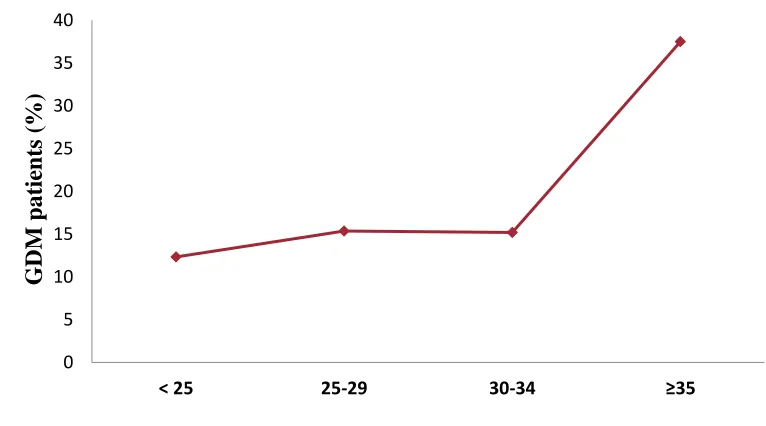
1 Incidence of GDM in different age group patients 24 2 Incidence of GDM in patients with different BMI 25 3 Incidence of GDM in patients with and without medical
history 27
4 Incidence of GDM in patients with and without History of
PCOD 28
5 Incidence of GDM in patients with and without History of
Infertility 29
6 comparison of mean TSH values between GDM and non
GDM patients 31
7 comparison of mean TSH values in overt hypothyroid
group between GDM and non GDM patients 32 8 OGTT values of GDM patients in different groups 33 9 Mean OGTT values of GDM patients in different group 34 10 Mean OGTT values Euthyroid vs overt hypothyroid group 35
LIST OF TABLES
TABLE
NO. TITLE PAGE NO.
1 TSH cut off values according to American thyroid
association guidelines 20
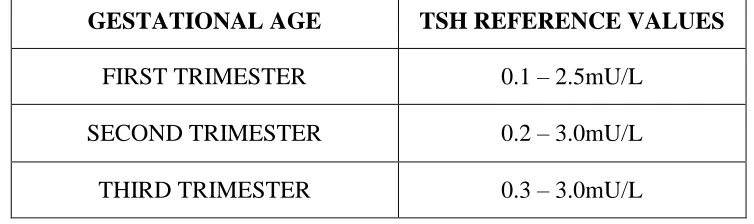
2 TSH reference values in different trimesters. 20
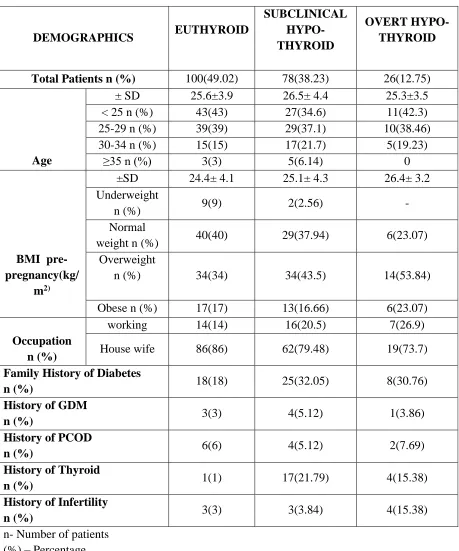
3 Demographic data of the study population 22
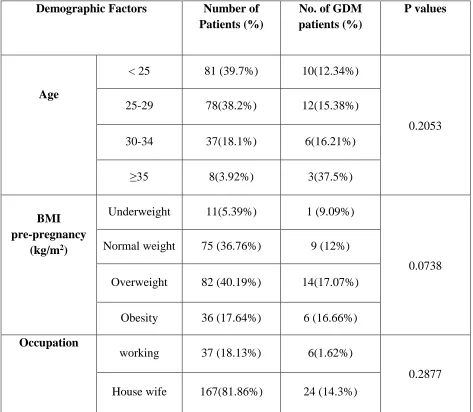
4 Comparison of the Demographic Factors across the study
population 23
5 Comparison of the clinical characteristics across the
study population 26
6
Comparison of Thyrotropin (TSH) values in early pregnancy between GDM and non-GDM pregnant
women.
30
7 Comparison of OGTT values in GDM patients 33
8 Group wise Correlation of clinical characteristics with
GDM using Pearson correlation analysis 36
LIST OF CONTENTS
SL.NO. CONTENTS PAGE NO.
1 Introduction 1
2 Literature Review 10
3 Aim and Objective 15
4 Plan of Study 16
5 Materials and Methods 17
6 Results 22
7 Discussions 39
8 Summary and conclusion 44
9 Future Outlook 46
10 Reference 47
Chapter 1
Introduction
Department of Pharmacology, PSGCOP Page1
1. INTRODUCTION
Thyroid disorders are among the common endocrine problems in pregnant women. Thyroid disorders occur when thyroid gland releases more (over active) or less (underactive) thyroid hormones. Thyroid hormone production is regulated by thyroid-stimulating hormone (TSH), which is made by the pituitary gland in the brain (Sahu et al., 2010).Thyroid disease affects 2–3% of pregnant women and is associated with adverse pregnancy outcomes. (Abalovich et al., 2007; Fitzpatrick and Russell, 2010; Van Den Boogaard et al., 2011).
HYPERTHYROIDISM IN PREGNANCY
When thyroid gland releases more (overactive) thyroid hormones that condition is called Hyperthyroidism. The prevalence of clinical Hyperthyroidism is found in 0.1–0.4% of pregnant women.
Types
Overt hyperthyroidism is seen in nearly 0.002% of pregnancy characterized by a reduced TSH and an increased FT3/FT4 (Brent et al., 2007).Subclinical hyperthyroidism is seen in 1.7% of pregnancy and is characterized by a suppressed serum TSH and normal FT4(Brent et al., 2007)
Causes
Introduction
Department of Pharmacology, PSGCOP Page2
Complications
If left untreated hyperthyroidism significantly increases the risk of pregnancy and poor fetal outcomes, which includes
Miscarriage
Preeclampsia
preterm birth
Placental abruption
Fetal hyperthyroidism (Zimmerman, 1999; Earl et al., 2010). Treatment
According to the Endocrine Society Clinical Practice Guideline (ESCPG) and the American Thyroid Association (ATA), the treatment of choice is with two Anti thyroid drugs (ATDs), MMI and propylthiouracil (PTU), both cross the placenta and hence are used to treat hyperthyroidism. The goal of ATD therapy in pregnant women with hyperthyroidism is to maintain maternal serum FT4 at or just above the upper limit of normal for pregnancy using the smallest ATD dose possible. Propylthiouracil (PTU). (Abalovich et al., 2007; Stagnaro-Green et al., 2011).
HYPOTHYROIDISM DURING PREGNANCY
Introduction
Department of Pharmacology, PSGCOP Page3
Types
Subclinical hypothyroidism, which is characterized by an elevated serum TSH with normal free thyroxine (FT4) and is observed in 3%–5% of women in pregnancy. (Reid et al., 2013). Overt hypothyroidism, characterized by an elevated serum TSH and abnormal FT4 is observed in 0.3%–0.5% of women in pregnancy (Reid et al., 2013).
Causes
Hypothyroidism in women of reproductive age is most commonly caused by autoimmune thyroiditis, Hashimoto’s disease (Abalovich et al., 2007). Other causes include prior radioactive iodine and/or surgical ablation of Graves’ disease (GD) (Neale et al.,2004;Burrow et al.,2004)surgical removal of the thyroid because of multinodular goiter or thyroid cancer,
overtreatment of hyperthyroidism with thionamides, medications that alter the absorption or metabolism of LT4, and central defects that inhibit the hypothalamic-pituitary-thyroid axis. The fetal thyroid gland starts producing small amounts of thyroid hormone at approximately 10 weeks’ gestation, until production plateaus at approximately 35 weeks. (Glinoer et al., 1990; Nayer et al., 1990)
Thus, particularly in the first trimester of pregnancy, the fetus depends entirely on thyroid hormone from the mother.
Complications
Maternal hypothyroidism can have devastating consequences if left untreated. It is associated with:
Spontaneous abortion (Abalovich et al., 2002; Gutierrez et al., 2002)
Introduction
Department of Pharmacology, PSGCOP Page4
Preterm delivery (Stagnaro-Green et al., 2009; Allan et al., 2000; Palomaki et al., 2000)
Pregnancy induced hypertension (Leung et al., 1993. Millar et al.,1993)
Gestational diabetes (Stagnaro-Green et al., 2009)
Anemia,
Postpartum hemorrhage. (Davis et al., 1998; Leveno et al., 1998)
Placental abruption and preterm labor (Casey et al., 2005; Dashe et al., 2005)
Preeclampsia (Ashoor et al., 2010; Rotas et al., 2010)
Cesarean section (Cohen et al., 2010; Wiznitzer et al., 2010)
Early embryo loss (De Vivo et al., 2010; Mancuso et al., 2010)
Placental abruption
Preterm labor (Casey et al., 2005; Dashe et al., 2005)
Low birth weight
Fetal distress
Impaired neuropsychological development.
Lower intelligence scores. (Haddow et al., 1999; Li et al., 2010; van den Boogaard et al., 2011).
Treatment
Treatment with levothyroxine is recommended and considered safe in pregnancy. (Abalovich et al., 2007).The goal of treatment is to maintain TSH within trimester-specific reference
ranges:
0.1 to 2.5 mIU/L in the first trimester,
Introduction
Department of Pharmacology, PSGCOP Page5
0.3 to 3.0 mIU/L in the third trimester. (Stagnaro-Green et al., 2011; Abalovich et al., 2011) Thyroid function should be normalized as rapidly as possible after conception. TFTs ismeasured within 30 to 40 days of the first positive pregnancy test, and then every 4 to 6 weeks throughout pregnancy.
Physiological changes of Thyroid gland in pregnancy
Data from human and animal studies suggest that pregnancy alters normal thyroid function (Weetman et al., 2010). Thyroid physiology changes significantly during pregnancy. (Glinoer et al., 1997). During pregnancy, the thyroid gland increases in size by 10% in iodine replete
countries, but by 20% to 40% in areas of iodine deficiency (ADA et al., 2014). The metabolic changes include:
1. Increase in Iodine Renal Clearance
During pregnancy, there is an enhanced urinary loss of iodine owing to an increased glomerular filtration rate, leading to iodine deficiency and maternal goiter (Banerjee et al., 2011).
2. The impact of Human Chorionic Gonadotrophin (HCG) on the Thyrotrope Receptor Decrease in the level of thyroid-stimulating hormone (TSH) with an increase in pregnancy related hormone concentration- Human Chorionic Gonadotropin (Galofre et al., 2009).
3. An increase in serum Thyroxine-Binding Globulin (TBG)
Introduction
Department of Pharmacology, PSGCOP Page6
4. Inner-ring Deiodination of Triiodothyronine (T3) and Thyroxine (T4) by the placenta Placenta produces the enzyme type 3 deiodinase, which increases the peripheral metabolism of thyroid hormones and regulates the trans-placental transport of thyroid hormone and iodide (Landers et al., 2009).
A variety of endocrine disorders complicate pregnancy. Diabetes is the most prevalent and has been seen increasing prevalence of Diabetes in general and in young people in particular, which has led to increase in the number of Pregnancy with diabetes.
Gestational Diabetes Mellitus (GDM)
GDM is defined as glucose intolerance of varying degree with onset or first recognition during pregnancy. The prevalence of GDM in India varied from 3.8 to 21% in different parts of the country, depending on the geographical locations and diagnostic methods used. GDM has been found to be more prevalent in urban areas than in rural areas. The importance of GDM is that two generations are at risk of developing diabetes in the future. Women with a history of GDM are at increased risk of developing predominately type 2 diabetes and also their children. (Yogev et al., 2004)
Pathophysiology of GDM
Introduction
Department of Pharmacology, PSGCOP Page7
blocking effect on insulin. This is called contra-insulin effect, which usually begins about 20 to 24 weeks in the pregnancy. As the placenta grows, more of these hormones are produced, and the risk of insulin resistance becomes greater. Normally, the pancreas is able to make additional insulin to overcome insulin resistance, but when the production of insulin is not enough to overcome the effect of the placental hormones, it results in gestational diabetes. (Poulakos et al., 2014).
Risk factors for Gestational Diabetes Mellitus
Although any woman can develop GDM during pregnancy, some of the factors that may increase the risk include the following (Chen P et al., 2015; Alfadhli et al., 2015)
Overweight or obesity
Family history of diabetes
Having given birth previously to an infant weighing greater than 9 pounds
Age (women age >25 are at a greater risk for developing gestational diabetes than younger women)
Prediabetes, also known as impaired glucose tolerance
Adverse outcomes associated with GDM
Maternal (Wei et al., 2015; Alfadhli et al., 2015)
Preeclampsia
Women with a history of GDM have approximately a 30% likelihood of developing DM type 2 within 10 years
Introduction
Department of Pharmacology, PSGCOP Page8
Cesarean delivery
Women with a history of GDM have up to a 60% likelihood of developing GDM in a future pregnancy
Fetal (Wei et al., 2015; Alfadhli et al., 2015)
Shoulder dystocia/birth trauma
Macrosomia
Birth defects
Hyperbilirubinemia
Hypoglycemia
Treatment for GDM
First-line treatment for GDM is medical nutritional therapy, moderate exercise has been used in the management of GDM (ADA 2014).Pharmacotherapy is implemented when medical nutritional therapy and lifestyle measures fail. Insulin is the mainstay of pharmacotherapy. (ADA 2014).Insulin regimens can include intermediate and short acting insulin such as the regular recombinant insulin analogs aspart, lispro. Historically, insulin has been the drug of choice for the management of women with GDM.
Introduction
Department of Pharmacology, PSGCOP Page9
Parameters
Thyroid function assessment
At the first antenatal visit (gestational age: 9–13 weeks), maternal serum samples were collected in 10 ml vacutainer tubes, centrifuged, and stored in aliquots at –80°C until assayed. Quantitative analyses of thyroid hormones [TSH] were performed using chemiluminescent microparticle immunoassays.
Oral Glucose Tolerance Test (OGTT)
Chapter 2
Literature Review
Department of Pharmacology, PSGCOP Page 10
2. LITERATURE REVIEW
Thyroid disorders are one of the most common endocrine disorders in pregnancy. Thyroid disorders are known to be associated with abnormal maternal and fetal outcomes and are often overlooked in pregnant women because of nonspecific symptoms and hypermetabolic state of pregnancy.
Krajewski et al., 2011 studied thyroid disorders in pregnancy and suggests that Normal thyroid function is essential in pregnancy to avoid complications in gestation and to ensure delivery, to the best extent possible, of a healthy baby. Women with hypothyroidism and (or) thyroid antibodies are at increased risk of miscarriage. Low thyroid hormone levels during pregnancy can have detrimental effects on the development of the fetal central nervous system and predispose to preterm delivery and spontaneous pregnancy loss.
Negro et al., 2014 examined the peer-reviewed literature on hypothyroidism, hyperthyroidism and thyroid autoimmunity in pregnancy. Results suggests that overt hyperthyroidism and hypothyroidism are responsible for adverse obstetric and neonatal events. Thus concluded that overt hyperthyroidism and hypothyroidism need to be promptly treated and subclinical hypothyroidism also requires substitutive treatment.
Literature Review
Department of Pharmacology, PSGCOP Page 11
effective in preventing pregnancy complications. For clinical hypothyroidism, treatment with levothyroxine is recommended. For subclinical hypothyroidism and thyroid autoimmunity, evidence is insufficient to recommend treatment with levothyroxine.
Jahagirdar et al., 2012 evaluated Thyroid hormone role in regulating brain glucose metabolism and potentially modulating hippocampal cognitive processes. This review
discusses evidence for mechanistic links between TH, insulin, cognitive function and brain
glucose metabolism and reaches the conclusion that TH may modulate memory processes,
likely at least in part by modulation of central insulin signaling and glucose metabolism.
Karakosta et al., 2012 studied the association of thyroid function and autoimmunity in early pregnancy with adverse pregnancy and birth outcomes. The study used data from the prospective mother-child cohort “Rhea” study in Crete, Greece. A total of 1170 women with singleton pregnancies participated in this analysis. Maternal serum samples in the first trimester of pregnancy were tested for thyroid hormones (TSH, freeT4 and free T3) and thyroid antibodies (thyroid peroxidase antibody and thyroglobulin antibody). Outcomes included gestational diabetes, gestational hypertension/preeclampsia, cesarean section, preterm delivery, low birth weight. The combination of high TSH and thyroid autoimmunity in early pregnancy was associated with a 4-fold increased risk for gestational diabetes and a 3-fold increased risk for low birth weight neonates.
Literature Review
Department of Pharmacology, PSGCOP Page 12
delivering at Johns Hopkins Hospital from January 2005 to December 2008. Clinical Parameters were abstracted and appropriate statistical tests were performed. Results states that GDM occurred in 12.3% of women in the study cohort. In hypothyroid women, 14.3% developed GDM compared to 5.8% of hyperthyroid women. If larger studies confirm the trends observed in this study, consideration should be given to including women with known thyroid disease in the subset of women who should be offered screening for diabetes early in pregnancy and appropriate clinical surveillance.
Shuai Yang et al., 2016 have evaluated the correlations between different thyroid hormone levels in early pregnancy and the incidence of gestational diabetes mellitus. The study comprised 27,513motherswho provided early pregnancy serum samples for analyses of thyroid function. GDM was diagnosed using a 2 h, 75 g oral glucose tolerance test between 24-28weeks of gestation. The incidence of GDM in pregnant women tended to increase with age (5.83%, 10.18%, 14.95%, 22.40%, P<0.0001), increasing pre-pregnancy body mass index (BMI) (P<0.0001), a family history of diabetes (21.09% vs. 12.92%, P<0.0001).It was observed that the level of free T4 (FT4) in early pregnancy in GDM women was lower than that in non GDM women (P <0.0001). Increasing FT4 levels were associated with a protective effect against GDM thereby concluding that low thyroid hormone levels in early pregnancy are a risk factor for GDM incidence.
Literature Review
Department of Pharmacology, PSGCOP Page 13
elevated serum thyrotropin but a normal serum free thyroxine were designated to have subclinical hypothyroidism and those with a low thyrotropin and a normal serum free thyroxine level were designated to have subclinical hyperthyroidism. Euthyroid women had both normal thyrotropin and normal serum free thyroxine values. The incidence of gestational diabetes was compared among these three groups. Of the 24,883 women included in the study, 23,771 (95.5%) were Euthyroid, 584 (2.3%) had subclinical hyperthyroidism and 528 (2%) had subclinical hypothyroidism. The risk of developing gestational diabetes increased with thyrotropin level. There by supporting a relationship between subclinical hypothyroidism and diabetes diagnosed during pregnancy.
Literature Review
Department of Pharmacology, PSGCOP Page 14
Chapter 3
Aim and Objective
Department of Pharmacology, PSGCOP Page 15
3. AIM AND OBJECTIVE
To investigate the association between thyroid dysfunction in pregnancy and risk of developing gestational diabetes mellitus.
Chapter 4
Plan of Study
Department of Pharmacology, PSGCOP Page 16
4. PLAN OF STUDY
PHASE- I (3 months):
Preliminary literature survey
Protocol preparation
PHASE – II (6 months):
Obtaining approval from Institutional Human Ethical Committee
Allocation of cases
Data collection
PHASE – III (3 months):
Data interpretation
Statistics
Results
Chapter 5
Materials and Methods
Department of Pharmacology, PSGCOP Page17
5. MATERIALS AND METHODS
STUDY TYPE Observational STUDY DESIGN Prospective
STUDY CENTER
Department of Endocrinology, Obstetrics & Gynaecology, PSG IMS&R
Coimbatore. It is a multi-speciality 900 bedded tertiary care hospital located in the southern part of Tamilnadu.
STUDY POPULATION Pregnant Women SAMPLE SIZE 204 patients STUDY DURATION 1year STUDY PERIOD
November 2016 to July2017 INCLUSIVE CRITERIA
Pregnant women with Age > 18 yrs
EXCLUSIVE CRITERIA
Cases with Diabetes mellitus (Type -1 or Type -2) diagnosed prior to pregnancy
Materials and Methods
Department of Pharmacology, PSGCOP Page18
Chronic medical conditions such as HIV/AIDS, kidney disease, SLE and Autoimmune
diseases STUDY TOOLS:
Patient Data Collection Form STUDY APPROVAL:
The approval for the study was obtained from Institutional Human Ethical Committee (IHEC), PSGIMSR. Project No: 16/438.
GROUPING
STUDY PROCEDURE:
The study protocol was prepared and submitted to the Institutional Human Ethical
Committee (IHEC) for approval.
The protocol was approved by IHEC.
This was then informed and the permit was obtained from the Heads of Departments,
Obstetrics&Gynecologyand Endocrinology, PSG Hospitals, Coimbatore.
Materials and Methods
Department of Pharmacology, PSGCOP Page19
The study was commenced in the outpatient Departments of Obstetrics&Gynecology
and Endocrinology, PSG Hospitals, Coimbatore.
All the pregnant women above18 years, present for antenatal care, were explained
about the study protocol in the language understandable to them (English, Tamil).
Written informed consent was obtained from thepatients who agreed and were
enrolled in the study.
Demographic details such as age, BMI,occupation, contact information and all the
data concerning their medical history was obtained.
Study participants were screened for Serum Thyrotropin levels (TSH, FT4) during
their first trimester (9 -13 weeks)based on which they were grouped (Table -1),cut off values were obtained from ‘AMERICAN THYROID ASSOCIATION’2017 (Table -2)and were followed up until their second trimester
Between (24-28weeks) they were subjected to oral glucose tolerance test according to
DIPSI guidelines for GDM diagnosis.
DIAGNOSIS OF GDM
Materials and Methods
[image:41.612.122.503.96.212.2]Department of Pharmacology, PSGCOP Page20
Table 1. TSH cut off values according to American thyroid association guidelines
GROUPS TSH VALUES PATIENT CONDITION
GROUP -1 0.1-2.5mU/L EUTHYROID
GROUP-2 >2.5mU/L SUBCLINICAL HYPOTHYROID
GROUP-3 >10mU/L OVERT HYPOTHYROID
Table 2. TSH reference values in different trimesters.
STATISTICAL ANALYSIS
Data were analyzed using the Statistical package for social sciences (IBM SPSS, version 19). Incidence of GDM with the demographic factors and clinical characteristicswere assessed by ANOVA andstudent’s t-test. Group wise correlation between the clinical characteristics and GDM were assessed by Pearson’s x2 test. GDM risk analysis between the groups were
assessed by odds ratio (OR), and exact 95% confidence intervals (CI). P values <0.5 were considered as statistically significant.
GESTATIONAL AGE TSH REFERENCE VALUES
FIRST TRIMESTER 0.1 – 2.5mU/L
SECOND TRIMESTER 0.2 – 3.0mU/L
[image:41.612.124.501.269.381.2]Materials and Methods
Department of Pharmacology, PSGCOP Page21
STUDY PROCEDURE (flow chart)
RResult Statisticstics
Data interpretation
GDM Diagnosis b/w 24-28 weeks by OGTT according to DIPSI Guidelines
Follow up until II trimester Subclinical hypothyroid
Thyroid function assessment (TSH) b/w 9-13 weeks
Demographic data &medical history was
Protocol was explained and written consent was obtained Pregnant women above 18 yrs. of age were identified
Chapter 6
Results
Department of Pharmacology, PSGCOP Page22
[image:44.612.83.542.148.699.2]6. RESULTS
Table 3. Demographic data of the study population.
DEMOGRAPHICS EUTHYROID
SUBCLINICAL HYPO- THYROID
OVERT HYPO- THYROID
Total Patients n (%) 100(49.02) 78(38.23) 26(12.75)
Age
± SD 25.6±3.9 26.5± 4.4 25.3±3.5
< 25 n (%) 43(43) 27(34.6) 11(42.3)
25-29 n (%) 39(39) 29(37.1) 10(38.46)
30-34 n (%) 15(15) 17(21.7) 5(19.23)
≥35 n (%) 3(3) 5(6.14) 0
BMI pre-pregnancy(kg/
m2)
±SD 24.4± 4.1 25.1± 4.3 26.4± 3.2
Underweight
n (%) 9(9) 2(2.56) -
Normal
weight n (%) 40(40) 29(37.94) 6(23.07)
Overweight
n (%) 34(34) 34(43.5) 14(53.84)
Obese n (%) 17(17) 13(16.66) 6(23.07)
Occupation n (%)
working 14(14) 16(20.5) 7(26.9)
House wife 86(86) 62(79.48) 19(73.7)
Family History of Diabetes
n (%) 18(18) 25(32.05) 8(30.76)
History of GDM
n (%) 3(3) 4(5.12) 1(3.86)
History of PCOD
n (%) 6(6) 4(5.12) 2(7.69)
History of Thyroid
n (%) 1(1) 17(21.79) 4(15.38)
History of Infertility
n (%) 3(3) 3(3.84) 4(15.38)
Results
[image:45.612.80.553.143.555.2]Department of Pharmacology, PSGCOP Page23
Table 4. Comparison of the Demographic Factors across the study population
Demographic Factors Number of Patients (%)
No. of GDM patients (%)
P values
Age
< 25 81 (39.7%) 10(12.34%)
0.2053
25-29 78(38.2%) 12(15.38%)
30-34 37(18.1%) 6(16.21%)
≥35 8(3.92%) 3(37.5%)
BMI pre-pregnancy
(kg/m2)
Underweight 11(5.39%) 1 (9.09%)
0.0738 Normal weight 75 (36.76%) 9 (12%)
Overweight 82 (40.19%) 14(17.07%)
Obesity 36 (17.64%) 6 (16.66%)
Occupation
working 37 (18.13%) 6(1.62%)
0.2877 House wife 167(81.86%) 24 (14.3%)
Results
[image:46.612.118.501.184.397.2]Department of Pharmacology, PSGCOP Page24
Fig. No. 1: Incidence of GDM in different age group patients
39.75%of study population were in the age group <25yrs out of which 12.34% had developed GDM. 38.2% of the study population were between the age group 25 to 29 out of which15.38% had developed GDM.18.1% of the study population were between the age group 30 to 34 out of which 16.21% developed GDM. 3.92% of the study population were of the age ≥35 out of which 37.5%developed GDM.
0 5 10 15 20 25 30 35 40
< 25 25-29 30-34 ≥35
Results
[image:47.612.130.511.195.404.2]Department of Pharmacology, PSGCOP Page25
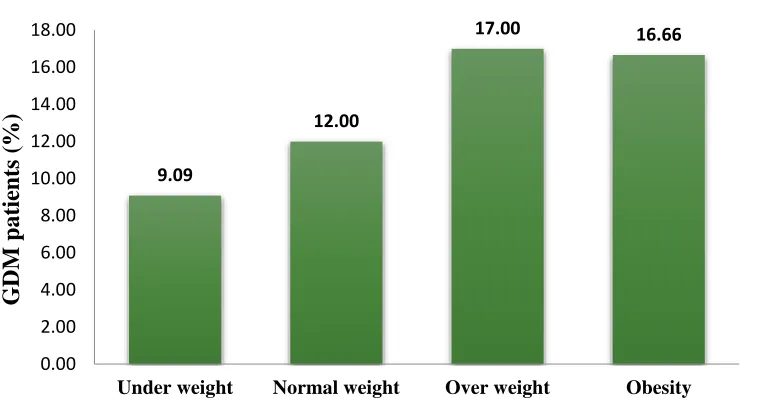
Fig. No. 2: Incidence of GDM in patients with different BMI
5.39% of the study population who were underweight had 9.09% incidence of GDM. 36.9% of the study population who were normal weight had 12% incidence of GDM.40.19%of the study population who were overweight had 17.07% incidence of GDM. 17.64% of the study population who were obese had 16.66% incidence of GDM.
9.09 12.00 17.00 16.66 0.00 2.00 4.00 6.00 8.00 10.00 12.00 14.00 16.00 18.00
Under weight Normal weight Over weight Obesity
Results
[image:48.612.89.536.118.491.2]Department of Pharmacology, PSGCOP Page26
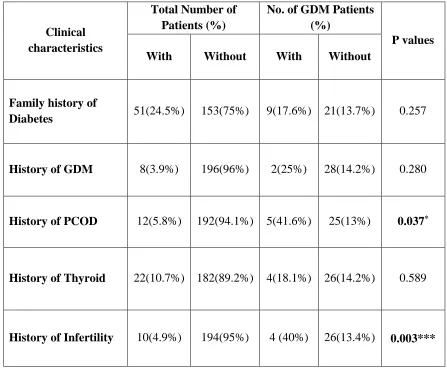
Table 5. Comparison of the clinical characteristics across the study population.
Clinical characteristics
Total Number of Patients (%)
No. of GDM Patients (%)
P values With Without With Without
Family history of
Diabetes 51(24.5%) 153(75%) 9(17.6%) 21(13.7%) 0.257
History of GDM 8(3.9%) 196(96%) 2(25%) 28(14.2%) 0.280
History of PCOD 12(5.8%) 192(94.1%) 5(41.6%) 25(13%) 0.037*
History of Thyroid 22(10.7%) 182(89.2%) 4(18.1%) 26(14.2%) 0.589
History of Infertility 10(4.9%) 194(95%) 4 (40%) 26(13.4%) 0.003***
Results
[image:49.612.98.525.139.378.2]Department of Pharmacology, PSGCOP Page27
Fig. No. 3: Incidence ofGDM in patients with and without medical history
There was a slight increase in the incidence of GDM in patients who are having a family history of diabetes when compared with those without family history of diabetes (17.67% vs.13.7%), in patients with history of thyroid than those without history of thyroid (18.1% vs. 14.2%), in patients with history of GDM when compared with those without (25% vs. 14.2%).There was significant increase in the incidence of GDM in patients who are having a history of PCOD when compared with those without history of PCOD (41.6% vs. 13%) and in patients with history of infertility than those without history of infertility (40% vs. 13.4%)
17.6
25
41.6
18.1
40
13.7 14.2 13 14.2 13.4
0 5 10 15 20 25 30 35 40 45
Family history of Diabetes
History of GDM History of PCOD History of Thyroid History of Infertility G DM P atie n ts (% )
Results
[image:50.612.155.478.163.445.2]Department of Pharmacology, PSGCOP Page28
Fig. No. 4: Incidence of GDM in patients with and without History of PCOD
Results
[image:51.612.144.485.172.513.2]Department of Pharmacology, PSGCOP Page29
Fig. No. 5: Incidence of GDM in patients with and without History of Infertility
Results
Department of Pharmacology, PSGCOP Page30
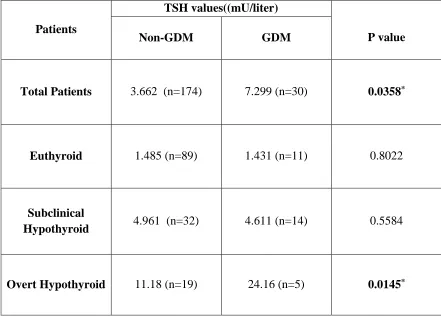
Table 6. Comparison of Thyrotropin (TSH) values in early pregnancy between GDM and non-GDM pregnant women
Patients
TSH values((mU/liter)
P value
Non-GDM GDM
Total Patients 3.662 (n=174) 7.299 (n=30) 0.0358*
Euthyroid 1.485 (n=89) 1.431 (n=11) 0.8022
Subclinical
Hypothyroid 4.961 (n=32) 4.611 (n=14) 0.5584
Overt Hypothyroid 11.18 (n=19) 24.16 (n=5) 0.0145*
[image:52.612.80.521.143.461.2]Results
[image:53.612.106.515.176.409.2]Department of Pharmacology, PSGCOP Page31
Fig. No. 6: comparison of mean TSH values between GDM and non GDM patients.
In Euthyroid group mean TSH values slightly decreased in GDM patients when compared with and non GDM patients (1.431mU/liter vs.1.485mU/liter). In subclinical hypothyroid group mean TSH values slightly decreased in GDM patients when compared to non GDM patients (4.611mU/liter vs. 4.961mU/liter). In Overt hypothyroid group mean TSH values increased in GDM patients when compared with non GDM patients (24.16mU/liter vs. 11.18mU/liter). 1.485 4.961 11.18 1.431 4.611 24.16 0 5 10 15 20 25 30
Euthyroid Subclinical Hypothyroid Overt Hypothyroid
Results
[image:54.612.150.481.198.473.2]Department of Pharmacology, PSGCOP Page32
Fig. No. 7: comparison of mean TSH values inovert hypothyroid group between GDM and non GDM patients
Results
[image:55.612.80.523.152.299.2]Department of Pharmacology, PSGCOP Page33
Table 7. Comparison of OGTT values in GDM patients.
OGTT Values Euthyroid Subclinical
Hypothyroid Overt Hypothyroid ≥140
144.8(n=11)
149.6(n=14) 169.2(n=5)
P value 0.0617 < 0.001***
Fig. No. 8: Mean OGTT values of GDM patients in different group
[image:55.612.88.419.381.582.2]Results
[image:56.612.86.476.137.471.2]Department of Pharmacology, PSGCOP Page34
Fig. No. 9: OGTT values of GDM patients in different groups
The OGTT values of GDM patients are shown in the above graph. OGTT values of euthyroid patients are in the range between 140mg/dl to 152mg/dl, in subclinically hypothyroid patients the values are in between 140mg/dl to 160mg/dl and in overthypothyroid patients the values ranging between 150mg/dl to 185
0 20 40 60 80 100 120 140 160 180 200
0 2 4 6 8 10 12 14 16
OG T T V ALUES (m g/d l)
Results
[image:57.612.183.452.202.442.2]Department of Pharmacology, PSGCOP Page35
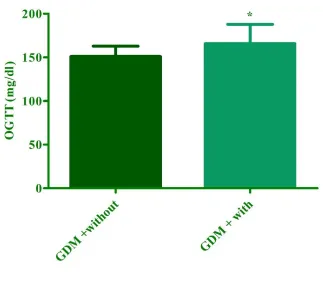
Fig. No.10: Mean OGTT values Euthyroid vs overt hypothyroid group
Results
[image:58.612.90.537.168.592.2]Department of Pharmacology, PSGCOP Page36
Table 8. Group wise Correlation of clinical characteristics with GDM using Pearson correlation analysis.
Clinical characteristics
Correlation values
Euthyroid Subclinical
hypothyroid Overt Hypothyroid
Age 0.123 0.0042* 0.9378
BMI 0.864 0.3118 0.2509
Occupation 0.134 0.5303 0.7115
Family History of
Diabetes 0.002 0.050 0.150
History of GDM 0.062 0.043 0.410*
History of PCOD 0.180 0.043 0.703**
History of Thyroid -0.035 0.014 0.015
History of Infertility 0.313** 0.080 0.592**
Results
[image:59.612.109.533.146.516.2]Department of Pharmacology, PSGCOP Page37
Fig. No. 11: Group wise Correlation of clinical characteristics with GDM using Pearson correlation analysis.
In Euthyroid group there is a positive correlation between history of infertility and GDM (0.313).In subclinical hypothyroid group there is a positive correlation between age and GDM (0.004).In overt Hypothyroid group there is a positive correlation between history of GDM and GDM (0.410), history of PCOD and GDM (0.703), history of infertility and GDM (0.592).
-0.2 0 0.2 0.4 0.6 0.8 1
Cor
re
lation
V
alu
Results
[image:60.612.82.546.133.301.2]Department of Pharmacology, PSGCOP Page38
Table 9. GDM risk analysis using Odds ratio
Odd Ratios Value
95% Confidence Interval Lower Upper Odds Ratio for group
(Euthyroid / subclinical) 1.770 0.755 4.151
Odds Ratio for group
(Euthyroid / overt hypothyroid) 1.926 0.604 6.140
Chapter 7
Discussion
Department of Pharmacology, PSGCOP Page39
7. DISCUSSION
The studies exploring the association between thyroid dysfunction and gestational diabetes are comparatively less in the Indian population, the incidence of gestational diabetes mellitus (GDM) in pregnant women with thyroid disorders is less clear, so the aim of this observational, prospective study was to investigate the association between thyroid dysfunction and risk of developing gestational diabetes mellitus.
Discussion
Department of Pharmacology, PSGCOP Page40
receptors via CAMP, which increases the sensitivity of catecholamines, powerful hormones that accelerate glycogenolysis (Das et al., 1984).
Studies have also shown that many of the pathways between the hypothalamic- pituitary axis and the T3 receptor in thyroid cells are abnormal in patients with diabetes (Yang et al., 2016). Pregnancies complicated with thyroid disorders especially, in hypothyroidism there is an increased chance of impaired glucose tolerance (Das Bishnu Prasad et al., 2015). Similar results were obtained in the present study where, oral glucose tolerant test (OGTT) mean values of GDM patients were significantly high in overt hypothyroid patients (169.2mg/dl) when compared with Euthyroid patients (144.8mg/dl). The proposed reason for the above findings is that patients with either hypothyroidism or subclinical hypothyroidism can exhibit insulin resistance. In vivo and in vitro studies have shown that this resistance may be caused by a reduced need for insulin or glucose utilization in peripheral tissues that have been damaged by insulin (Maratou et al., 2009).
Discussion
Department of Pharmacology, PSGCOP Page41
The reason for the above findings could be explained by the: i) association between aging and progressive vascular endothelial damage, ii) decreased insulin sensitivity with age and in individuals with impaired glucose tolerance (Fulop et al., 2003), iii) pancreatic ß cell function falls with age (Szoke et al., 2008).
(Yang et al., 2016) reported that the incidence rate of GDM has gradually increased as pre pregnancy BMI has increased. Similar results were obtained in the present study where 5.39% of the study population who were underweight had 9.09% incidence of GDM. 36.9% of the study population who were normal weight had 12% incidence of GDM.40.19%of the study population who were overweight had 17.07% incidence of GDM.17.64%of the study population who were obese had 16.66% incidence of GDM. The proposed reasons for increased GDM with increased pre pregnancy BMI are, in over weight and obese women insulin resistance is increased. The combination of obesity and insulin resistance increases the long-term risk of these individuals developing metabolic dysregulation in pregnancy, i.e. gestational diabetes (Catalano et al., 2010).
Discussion
Department of Pharmacology, PSGCOP Page42
on serine/threonine kinases that inhibit insulin signaling. e) Obesity-associated activation of NF-κB heightens inflammatory responses that exacerbate insulin resistance. f) suppressor of cytokine signaling (SOCS) family proteins, induced by adipokines, induce insulin resistance either by interfering with IRS-1 and IRS-2 tyrosine phosphorylation or by targeting IRS-1 and IRS-2 for proteosomal degradation. g) FAs also trigger insulin resistance by direct activation of TLR4 (toll like receptor) and the innate immune response. h) Obesity-related alteration in the central response to hormonal and nutrient signals alters peripheral insulin sensitivity (Qatanani et al., 2007).
From the study results obtained, we found that, incidence of GDM increased with family history of diabetes, history of thyroid, history of GDM when compared with those patients without family history of diabetes, history of thyroid, history of GDM (17.6% vs 13.7%), (18.1% vs 14.2%) & (25% vs 14.2%) respectively. The obtained results are not statistically significant, the reason might be a small sample size.
Discussion
Department of Pharmacology, PSGCOP Page43
Incidence of GDM was higher in patients with history of infertility than those without history of infertility (40.6% vs. 13.4%, p = 0.003). The observed results are in consistent with the earlier reports (Tobias et al., 2013) which suggested that infertility is associated with an increased risk of developing gestational diabetes mellitus. (Holst et al., 2016) mechanisms that might explain an increased risk of GDM after fertility problems are probably related to the underlying cause of infertility, the procedures involved in the treatment of infertility, or both (Ashrafi et al.,2014). Regarding the underlying fertility problems, it has been suggested that the association with risk of GDM is primarily attributable to PCOD. PCOD has been shown to increase the risk of GDM, possibly owing to a high prevalence of insulin resistance in these women (Boomsma et al., 2006). Regarding the mechanisms associated with fertility treatment, researchers have argued that the hormonal environment induced during ART or ovulation induction may explain or contribute to the development of GDM (Maman et al., 1998). For instance, the hormone progesterone, which is commonly used in fertility treatment (for luteal-phase support) has been suggested to have a diabetogenic effect in pregnancy, possibly by increasing insulin resistance in skeletal muscle and adipose tissue. Thus, it is biologically plausible that factors related to both the underlying fertility problem and fertility treatment increase the risk of GDM.
Chapter 8
Summary and conclusion
Department of Pharmacology, PSGCOP Page 44
8. SUMMARY AND CONCLUSION
In our present study we investigated the association between thyroid dysfunction and increased risk of developing gestational diabetes mellitus and assessed the other risk factors for developing gestational diabetes mellitus.
We found that, incidence of GDM is high in overt hypothyroid groups when compared
with other groups.
Oral glucose tolerant test (OGTT) mean values of GDM patients were significantly
high in overt hypothyroid patients when compared with Euthyroid patients.
Interesting finding was that, overt hypothyroid patients with GDM had significantly
high mean serum TSH values in their early pregnancy when compared to overt hypothyroid patients without GDM thereby indicating the association between thyroid dysfunction in pregnancy and gestational diabetes mellitus.
Incidence of GDM increased with increase in age, BMI, family history of diabetes,
history of GDM, history of thyroid but dint reach the statistical significance
Patients with history of PCOD and history of infertility had significantly higher
Summary and conclusion
Department of Pharmacology, PSGCOP Page 45
CONCLUSION
The present study can be concluded that, thyroid dysfunction especially overt hypothyroidism is associated with increased risk of developing gestational diabetes mellitus. History of PCOD and history of infertility are the notable risk factors for developing GDM.
Future Outlook
Department of Pharmacology, PSGCOP Page 46
FUTURE OUTLOOK
This study can be continued in future by following up the women with Gestational diabetes mellitus to find out the Obstetric outcomes such as Delivery method and likelihood of developing DM type 2
References
Department of Pharmacology, PSGCOP Page47
REFERENCES
Sahu MT, Das V, Mittal S, Agarwal A, Sahu M. Overt and subclinical thyroid dysfunction among Indian pregnant women and its effect on maternal and fetal outcome. Arch Gynecol Obstet. 2010 Feb; 281 (2): 21520.
Reid SM, Middleton P, Cossich MC, Crowther CA, Bain E. Interventions for clinical and subclinical hypothyroidism pre-pregnancy and during pregnancy. Cochrane Database Syst Rev. 2013 May 31; (5): CD007752.
Galofre JC, Davies TF. Autoimmune thyroid disease in pregnancy: a review. J Womens Health (Larchmt). 2009 Nov; 18 (11): 1847-56.
Brent GA. Diagnosing thyroid dysfunction in pregnant women: Is case finding enough? J ClinEndocrinolMetab. 2007 Jan; 92 (1): 39-41.
Glinoer D. The regulation of thyroid function in pregnancy: pathways of endocrine adaptation from physiology to pathology. Endocr Rev. 1997 Jun; 18 (3): 404-33.
Williams GR. Neurodevelopmental and neurophysiological actions of thyroid hormone. J Neuroendocrinol. 2008 Jun; 20 (6): 784-94.
Calvo RM, Jauniaux E, Gulbis B, Asuncin M, Gervy C, Contempr B, Morreale Escobar G. Fetal tissues are exposed to biologically relevant free thyroxine concentrations during early phases of development. J ClinEndocrinolMetab. 2002 Apr; 87 (4): 1768-77.
References
Department of Pharmacology, PSGCOP Page48
Landers KA, McKinnon BD, Li H, Subramaniam VN, Mortimer RH, Richard K. Carrier-mediated thyroid hormone transport into placenta by placental transthyretin. J ClinEndocrinolMetab. 2009 Jul; 94 (7): 2610-6.
Abalovich M, Gutierrez S, Alcaraz G, Maccallini G, Garcia A, Levalle O. Overt and subclinical hypothyroidism complicating pregnancy. Thyroid. 2002 Jan; 12 (1): 63-8.
Bahn Chair RS, Burch HB, Cooper DS, Garber JR, Greenlee MC, Klein I, Laurberg P, McDougall IR, Montori VM, Rivkees SA, Ross DS, Sosa JA, Stan MN; American Thyroid Association; American Association of Clinical Endocrinologists. Hyperthyroidism and other causes of thyrotoxicosis: management guidelines of the American Thyroid Association and American Association of Clinical Endocrinologists. Thyroid. 2011 Jun; 21(6):593-646.
vanden Boogaard E, Vissenberg R, Land JA, van Wely M, van der Post JA, Goddijn M, Bisschop PH. Significance of (sub)clinical thyroid dysfunction and thyroid autoimmunity before conception and in early pregnancy: a systematic review. Hum Reprod Update. 2011 Sep-Oct; 17(5):605-19.
Zimmerman D. Fetal and neonatal hyperthyroidism. Thyroid. 1999 Jul; 9(7):727-33.
Behrooz HG, Tohidi M, Mehrabi Y, Behrooz EG, Tehranidoost M, Azizi F. Subclinical hypothyroidism in pregnancy: intellectual development of offspring.Thyroid. 2011 Oct; 21(10):1143-7. doi: 10.1089/thy.2011.0053.
References
Department of Pharmacology, PSGCOP Page49
thyroid disease during pregnancy and postpartum. Thyroid. 2011 Oct; 21(10):1081-125.
Haddow JE, Palomaki GE, Allan WC, Williams JR, Knight GJ, Gagnon J, O'Heir CE,Mitchell ML, Hermos RJ, Waisbren SE, Faix JD, Klein RZ. Maternal thyroid deficiency during pregnancy and subsequent neuropsychological development of the child. N Engl J Med. 1999 Aug 19; 341(8):549-55.
Weetman AP. Immunity, thyroid function and pregnancy: molecular mechanisms.Nat Rev Endocrinol. 2010 Jun; 6(6):311-8.
Position statement on gestational diabetes mellitus. Formulated by the American Diabetes Association, Inc. Am J Obstet Gynecol. 1987 Feb; 156(2):488-9.
Yogev Y, Ben-Haroush A, Chen R, Rosenn B, Hod M, Langer O. Diurnal glycemic profile in obese and normal weight nondiabetic pregnant women. Am J Obstet Gynecol. 2004 Sep; 191(3):949-53.
Chen P, Wang S, Ji J, Ge A, Chen C, Zhu Y, Xie N, Wang Y. Risk factors and management of gestational diabetes. Cell BiochemBiophys. 2015 Mar; 71(2):689-94.
Wei YM, Yang HX, Zhu WW, Yang HY, Li HX, Kapur A. Effects of intervention to mild GDM on outcomes. J Matern Fetal Neonatal Med. 2015 May; 28(8):928-31.
Alfadhli EM, Osman EN, Basri TH, Mansuri NS, Youssef MH, Assaaedi SA, AljohaniBA. Gestational diabetes among Saudi women: prevalence, risk factors and pregnancy outcomes. Ann Saudi Med. 2015 May-Jun; 35(3):222-30.
References
Department of Pharmacology, PSGCOP Page50
American Diabetes Association. Standards of medical care in diabetes--2014. Diabetes Care. 2014 Jan; 37 Suppl 1:S14-80
Ryu RJ, Hays KE, Hebert MF. Gestational diabetes mellitus management with oral hypoglycemic agents. SeminPerinatol. 2014 Dec; 38(8):508-15.
Glinoer D, de Nayer P, Bourdoux P, Lemone M, Robyn C, van Steirteghem A, Kinthaert J, Lejeune B. Regulation of maternal thyroid during pregnancy. J ClinEndocrinolMetab. 1990 Aug; 71(2):276-87.
Stagnaro-Green A, Abalovich M, Alexander E, Azizi F, Mestman J, Negro R, Nixon A, Pearce EN, Soldin OP, Sullivan S, Wiersinga W; American Thyroid Association Taskforce on Thyroid Disease During Pregnancy and Postpartum. Guidelines of the American Thyroid Association for the diagnosis and management of thyroid disease during pregnancy and postpartum. Thyroid. 2011 Oct; 21(10):1081-125.
Neale D, Burrow G. Thyroid disease in pregnancy. ObstetGynecolClin North Am. 2004 Dec; 31(4):893-905.
Abalovich M, Gutierrez S, Alcaraz G, Maccallini G, Garcia A, Levalle O. Overt and subclinical hypothyroidism complicating pregnancy. Thyroid. 2002 Jan; 12(1):63-8.
Allan WC, Haddow JE, Palomaki GE, Williams JR, Mitchell ML, Hermos RJ, Faix JD, Klein RZ. Maternal thyroid deficiency and pregnancy complications: implications for population screening. J Med Screen. 2000; 7(3):127-30.
Stagnaro-Green A. Maternal thyroid disease and preterm delivery. J ClinEndocrinolMetab. 2009 Jan; 94(1):21-5.
References
Department of Pharmacology, PSGCOP Page51
Davis LE, Leveno KJ, Cunningham FG. Hypothyroidism complicating pregnancy. Obstet Gynecol. 1988 Jul; 72(1):108-12.
Casey BM, Dashe JS, Wells CE, McIntire DD, Byrd W, Leveno KJ, Cunningham FG. Subclinical hypothyroidism and pregnancy outcomes. Obstet Gynecol. 2005 Feb; 105(2):239-45.
Ashoor G, Rotas M, Maiz N, Kametas NA, Nicolaides KH. Maternal thyroid function at 11-13 weeks of gestation in women with hypothyroidism treated by thyroxine. Fetal DiagnTher. 2010; 28(1):22-7
Cohen N, Levy A, Wiznitzer A, Sheiner E. Perinatal outcomes in post-thyroidectomy pregnancies. GynecolEndocrinol. 2011 May; 27(5):314-8.
De Vivo A, Mancuso A, Giacobbe A, Moleti M, Maggio Savasta L, De Dominici R, Priolo AM, Vermiglio F. Thyroid function in women found to have early pregnancy loss. Thyroid. 2010 Jun; 20(6):633-7.
Patil-Sisodia K, Mestman JH. Graves hyperthyroidism and pregnancy: a clinical update. EndocrPract. 2010 Jan-Feb; 16(1):118-29.
Gong LL, Liu H, Liu LH. Relationship between hypothyroidism and the incidence of gestational diabetes: A meta-analysis. Taiwan J Obstet Gynecol. 2016 Apr; 55 (2): 171-5.
References
Department of Pharmacology, PSGCOP Page52
Jahagirdar V, McNay EC. Thyroid hormone's role in regulating brain glucose metabolism and potentially modulating hippocampal cognitive processes. Metab Brain Dis. 2012 Jun; 27 (2): 101-11.
Nathan N, Sullivan SD. Thyroid disorders during pregnancy. EndocrinolMetabClin North Am. 2014 Jun; 43 (2): 573-97.
Tudela CM, Casey BM, McIntire DD, Cunningham FG. Relationship of subclinical thyroid disease to the incidence of gestational diabetes. Obstet Gynecol. 2012 May; 119 (5): 983-8.
Vissenberg R, van den Boogaard E, van Wely M, van der Post JA, Fliers E,Bisschop PH, Goddijn M. Treatment of thyroid disorders before conception and in early pregnancy: a systematic review. Hum Reprod Update. 2012 Jul; 18 (4): 360-73.
Negro R, Stagnaro-Green A. Clinical aspects of hyperthyroidism,hypothyroidism, and thyroid screening in pregnancy. EndocrPract. 2014Jun; 20 (6): 597-607.
Karakosta P, Alegakis D, Georgiou V, Roumeliotaki T, Fthenou E, VassilakiM,Boumpas D, Castanas E, Kogevinas M, Chatzi L. Thyroid dysfunction and autoantibodies in early pregnancy are associated with increased risk of gestational diabetes and adverse birth outcomes. J ClinEndocrinolMetab. 2012 Dec; 97 (12): 4464-72
Yang S, Shi FT, Leung PC, Huang HF, Fan J. Low Thyroid Hormone in Early Pregnancy Is Associated With an Increased Risk of Gestational Diabetes Mellitus.JClinEndocrinolMetab. 2016 Nov; 101 (11): 4237-4243.
References
Department of Pharmacology, PSGCOP Page53
prospective analysis of 40,773 pregnancies. Am J Epidemiol. 2013 Oct 15;178(8):1219-25.
Urman B, Sarac E, Dogan L, Gurgan T. Pregnancy in infertile PCOD patients. Complications and outcome. J Reprod Med. 1997 Aug;42(8):501-5.
Lanzone A, Caruso A, Di Simone N, De Carolis S, Fulghesu AM, Mancuso S. Polycystic ovary disease. A risk factor for gestational diabetes? J Reprod Med. 1995 Apr;40(4):312-6.
Jun Z Qin, Li H Pang, Mu J Li, Xiao J Fan, Ru D Huang, Hong Y Chen .JReprodBiolEndocrinol. 2013june; 11: 56.
Dunaif A, Xia J, Book CB, Schenker E, Tang Z. Excessive insulin receptor serine phosphorylation in cultured fibroblasts and in skeletal muscle. A potential mechanism for insulin resistance in the polycystic ovary syndrome. JClin Invest. 1995 Aug;96(2):801-10.
Holst S, Kjr SK, Jørgensen ME, Damm P, Jensen A. Fertility problems and risk of gestational diabetes mellitus: a nationwide cohort study. FertilSteril. 2016 Aug;106(2):427-434.
Khalil A, Syngelaki A, Maiz N, Zinevich Y, Nicolaides KH.Maternal age and adverse pregnancy outcome: a cohort study. Ultrasound ObstetGynecol. 2013 Dec;42(6):634-43.
References
Department of Pharmacology, PSGCOP Page54
systematic review and meta-analysis. Diabetes MetabSyndr.2016 Dec 13; ii: S1871-4021(16)30239-9.
Kemp HF, Hundal HS, Taylor PM. Glucose transport correlates with GLUT2 abundance in rat liver during altered thyroid status. Mol Cell Endocrinol. 1997Apr 4;128(1-2):97-102.
Velayutham K, Selvan SS, Unnikrishnan AG. Prevalence of thyroid dysfunction among young females in a South Indian population. Indian J EndocrinolMetab. 2015Nov-Dec;19(6):781-4.
Bianco A, Stone J, Lynch L, Lapinski R, Berkowitz G, Berkowitz RL. Pregnancy outcome at age 40 and older. Obstet Gynecol. 1996 Jun; 87(6):917-22.
Cleary-Goldman J, Malone FD, Vidaver J, Ball RH, Nyberg DA, Comstock CH, SaadeGR, Eddleman KA, Klugman S, Dugoff L, Timor-Tritsch IE, Craigo SD, Carr SR, Wolfe HM, Bianchi DW, D'Alton M; FASTER Consortium. Impact of maternal age on obstetric outcome. Obstet Gynecol. 2005 May; 105(5 Pt 1):983-90.
Gilbert WM, Nesbitt TS, Danielsen B. Childbearing beyond age 40: pregnancy outcome in 24,032 cases. Obstet Gynecol. 1999 Jan; 93(1):9-14.
Naeye RL. Maternal age, obstetric complications, and the outcome of pregnancy. Obstet Gynecol. 1983 Feb; 61(2):210-6.
Prysak M, Lorenz RP, Kisly A. Pregnancy outcome in nulliparous women 35 years and older. Obstet Gynecol. 1995 Jan; 85(1):65-70.
References
Department of Pharmacology, PSGCOP Page55
Favilli A, Pericoli S, Acanfora MM, Bini V, Di Renzo GC, Gerli S. Pregnancy outcome in women aged 40 years or more. J Matern Fetal Neonatal Med. 2012 Aug; 25(8):1260-3.
Vercellini P, Zuliani G, Rognoni MT, Trespidi L, Oldani S, CardinaleA.Pregnancy at forty and over: a case-control study. Eur J ObstetGynecolReprodBiol. 1993 Mar; 48(3):191-5.
Alshami HA, Kadasne AR, Khalfan M, Iqbal SZ, Mirghani HM. Pregnancy outcome in late maternal age in a high-income developing country. Arch Gynecol Obstet. 2011 Nov; 284(5):1113-6.
Chan BC, Lao TT. Effect of parity and advanced maternal age on obstetric outcome. Int J Gynaecol Obstet. 2008 Sep; 102(3):237-41.
Fulop T, Larbi A, Douziech N. Insulin receptor and ageing. PatholBiol(Paris). 2003 Dec; 51(10):574-80.
Szoke E, Shrayyef MZ, Messing S, Woerle HJ, vanHaeften TW, Meyer C, MitrakouA, Pimenta W, Gerich JE. Effect of aging on glucose homeostasis: accelerateddeterioration of beta-cell function in individuals with impaired glucose tolerance. Diabetes Care. 2008 Mar; 31(3):539-43.
Ashrafi M, Gosili R, Hosseini R, Arabipoor A, Ahmadi J, Chehrazi M. Risk of gestational diabetes mellitus in patients undergoing assisted reproductive techniques. Eur J ObstetGynecolReprod Biol. 2014 May; 176:149-52.
References
Department of Pharmacology, PSGCOP Page56
Maman E, Lunenfeld E, Levy A, Vardi H, Potashnik G. Obstetric outcome of singleton pregnancies conceived by in vitro fertilization and ovulation induction compared with those conceived spontaneously. FertilSteril. 1998 Aug; 70(2):240-5.
Boomsma CM, Eijkemans MJ, Hughes EG, Visser GH, Fauser BC, Macklon NS. A meta-analysis of pregnancy outcomes in women with polycystic ovary syndrome. Hum Reprod Update. 2006 Nov-Dec; 12(6):673-83.
Pisarev MA. Interrelationships between the pancreas and the thyroid. CurrOpinEndocrinol Diabetes Obes. 2010 Oct; 17(5):437-9.
Haddow JE, Craig WY, Neveux LM, Palomaki GE, Lambert-Messerlian G, Malone FD, D'Alton ME; First and Second Trimester Risk of Aneuploidy (FaSTER) Research Consortium. Free Thyroxine During Early Pregnancy and Risk for Gestational Diabetes. PLoS One. 2016 Feb 24; 11(2):e0149065.
Das DK, Bandyopadhyay D, Bandyopadhyay S, Neogi A. Thyroid hormone regulation of beta-adrenergic receptors and catecholamine sensitive adenylate cyclase in foetal heart. ActaEndocrinol (Copenh). 1984 Aug; 106(4):569-76.
Maratou E, Hadjidakis DJ, Kollias A, Tsegka K, Peppa M, Alevizaki M, Mitrou P, Lambadiari V, Boutati E, Nikzas D, Tountas N, Economopoulos T, Raptis SA, Dimitriadis G. Studies of insulin resistance in patients with clinical and, subclinical hypothyroidism. Eur J Endocrinol. 2009 May; 160(5):785-90.