UNIVERSITY OF SOUTHERN QUEENSLAND
Developing and implementing asynchronous online
discussions to facilitate deep learning among trainee
teachers in a non-western and non-native English
speaking setting
A Dissertation submitted by
Brinda Oogarah-Pratap, MSc (Public Health Nutrition),
PGCert (Online Education)
For the award of
Doctor of Education
2
ABSTRACT
This study examined how to develop and implement asynchronous online
discussions using design principles and guidelines drawn from constructivist
principles such that deep learning is facilitated among non-western trainee teachers
who are native English speakers. The study was conducted among eleven
non-native English speaking trainee teachers in a non-western learning context.
Reeves‟ model of design-based research (DBR) was chosen to guide the research
design of the study. This approach allowed the researcher to design and implement
online discussions based on design principles and guidelines that were
progressively and iteratively tested and refined.
The study consisted of four phases, namely identification of a practical problem,
development of an online discussion based on draft design principles, testing and
refinement of the design principles, and reflection to develop contextually sensitive
design principles. Mixed methods of data collection and analysis were used during
the different phases of the study. Data from literature review, questionnaires,
online discussion transcripts, semi-structured interviews and a reflective log were
gathered and analysed during the different phases of the study. The degree and
nature of the tutor‟s online interaction were influenced by trainees‟ mixed
conceptions about teaching and learning. The findings revealed that the tutor
should encourage and guide trainees to express their disagreements and objections
clearly and politely to maintain a sense of safety and trust, and to promote active
and meaningful online interaction. To address language barriers, adequate time
should be allowed for reading and interpreting learning materials and postings.
Moreover, focus should be on clear formulation of ideas, using the appropriate
wordings and tone rather than on the grammar, spelling and punctuation. The
provision of marks and clear assessment criteria are also important.
Content analysis of trainee‟s online postings using Henri‟s model showed that
there were more deep level postings than surface level postings. It can thus be
concluded that when culture and language are given due consideration in the
formulation of design principles and guidelines drawn from constructivist
3
non-native English speaking students. The findings also suggest that DBR is an
appropriate research approach to explore and develop effective design principles
for online discussions. The revised design principles and guidelines have
theoretical and practical implications for tutors designing and implementing online
discussions to facilitate deep learning among non-western or culturally diverse
4
CERTIFICATION OF DISSERTATION
I certify that the ideas, experimental work, results, analyses, software andconclusions reported in this dissertation are entirely my own effort, except where
otherwise acknowledged. I also certify that the work is original and has not been
previously submitted for any other award, except where otherwise acknowledged.
_____________________________ ________________
Signature of Candidate Date
ENDORSEMENT
_____________________________ ________________
Signature of Supervisor/s Date
5
ACKNOWLEDGEMENTS
I wish to express my sincere thanks to Dr Shirley Reushle, my Principal
Supervisor, and Dr Peter Albion, my Associate Supervisor, for their valuable
comments and suggestions throughout this learning journey. Their guidance, feedback and encouragement were very helpful, and the process of being a student again was very rewarding under their tutelage.
I also wish to thank my Director for allowing me to undertake the study at my
workplace. Special thanks go to the study participants who volunteered their
precious time to respond to my questionnaires and interviews.
Finally, I wish to acknowledge and thank my husband and two daughters for their
6
Table of Contents
Abstract ... 2
Certification of Dissertation ... 4
Acknowledgements ... 5
List of Figures ... 8
List of Tables... 9
CHAPTER 1: INTRODUCTION ... 11
1.1 Research problem and context ... 11
1.2 Purpose and scope of the study ... 15
1.3 Significance of the study ... 17
1.4 Structure of the dissertation ... 18
CHAPTER 2: LITERATURE REVIEW ... 21
2.1 Constructivism ... 21
2.2 Approaches to learning ... 24
2.2.1 Deep approach to learning ... 27
2.2.2 Surface approach to learning ... 29
2.3 Online discussions in teacher education ... 31
2.3.1 Culture and language issues ... 32
2.3.2 Potential benefits of online discussions ... 34
2.3.3 Potential barriers and challenges ... 38
2.3.4 Constructivism and online discussions ... 42
2.4 Summary ... 46
CHAPTER 3: METHODOLOGY ... 48
3.1 Research Questions ... 48
3.2 Research approach ... 49
3.3 Research design ... 51
3.3.1 Study phases ... 52
3.4 The study context ... 55
3.5 Methods of data collection and analysis ... 56
3.6 Ethical and political considerations ... 65
3.7 Limitations of DBR ... 67
3.8 Summary ... 68
CHAPTER 4: FINDINGS AND DISCUSSION OF STUDY PHASE 2 ... 69
4.1 Students‟ characteristics and tutors‟ practices that facilitate deep learning .. 70
4.1.1 What are students‟ characteristics that facilitate deep learning? ... 71
4.1.2 What are the practices of tutors that facilitate deep learning? ... 75
4.2 Phase 2 questionnaire findings ... 83
4.2.1 Socio-demographic profile ... 83
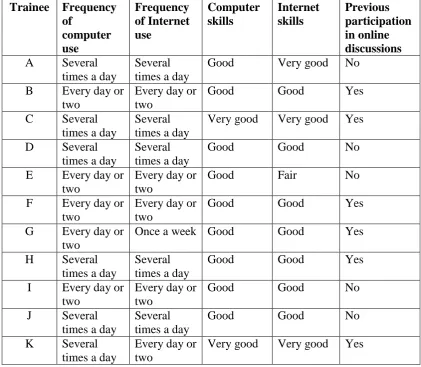
4.2.2 Computer and Internet access, related skills, prior experiences and perceptions about online discussions ... 84
4.2.3 Conceptions about teaching and learning ... 87
4.2.4 Summary and implications of Phase 2 questionnaire findings ... 90
4.3 Principles and guidelines for the design and implementation of online discussions that facilitate deep learning ... 92
4.4 Design and development of first online discussion... 95
4.5 Summary ... 99
7
5.1 Implementation of the first online discussion ... 100
5.2 Analysis of online postings ... 108
5.2.1 Depth of online postings ... 110
5.2.2 Interactive dimension of online postings ... 114
5.2.3 Social dimension of online postings ... 116
5.3 Phase 3 student questionnaire ... 118
5.3.1 Perceptions of the first online discussion ... 118
5.3.2 Learning approach for first online discussion ... 128
5.4 Summary of findings and implications ... 129
5.4.1 Revised design principles and guidelines ... 144
CHAPTER 6: FINDINGS AND DISCUSSION OF SECOND CYCLE OF PHASE 3 ... 148
6.1 Design and implementation of the second online discussion ... 149
6.2 Analysis of online postings ... 156
6.2.1 Depth of online postings ... 157
6.2.2 Interactive dimension of online postings ... 160
6.2.3 Social dimension of online postings ... 162
6.3 Comparison of postings for the first and second online discussion ... 165
6.4 Analysis of semi-structured interviews ... 168
6.5 Summary ... 191
CHAPTER 7: PHASE 4 AND CONCLUSION ... 194
7.1 Introduction ... 194
7.2 Phase 4: Implications of study findings for the refinement of design principles and guidelines ... 195
7.3 Implications of language and cultural factors ... 221
7.4 Limitations of the study and implications for future research ... 224
7.5 Conclusion ... 226
REFERENCES ... 232
APPENDICES ... 245
Appendix 1: Phase 2 questionnaire ... 245
Appendix 2: Phase 3 (1st cycle) questionnaire ... 251
Appendix 3: Semi-structured interview questions for phase 3 (2nd cycle)... 259
Appendix 4: Permission from the Mauritius Institute of Education ... 261
Appendix 5: USQ ethics clearance ... 262
Appendix 6: Letter of informed consent ... 263
Appendix 7: Assessment rubric used for first online discussion ... 265
Appendix 8: Coding of indicators for level of information processing ... 266
Appendix 9: Position statements of first online discussion that reflect surface level of information processing ... 267
Appendix 10: Examples of position statements of first online discussion that reflect deep level of information processing ... 270
Appendix 11: Extracts from trainees‟ follow-up postings for second online discussion illustrating indicators of a deep level of information processing .... 273
Appendix 12: Extracts from tutor‟s postings for second online discussion illustrating indicators of a deep level of information processing ... 277
Appendix 13: Examples of surface level follow-up postings from trainee teachers for the second online discussion ... 278
8
LIST OF FIGURES
Figure 1: Biggs‟ 3P model (Adapted from Lew, 2005) ... 26
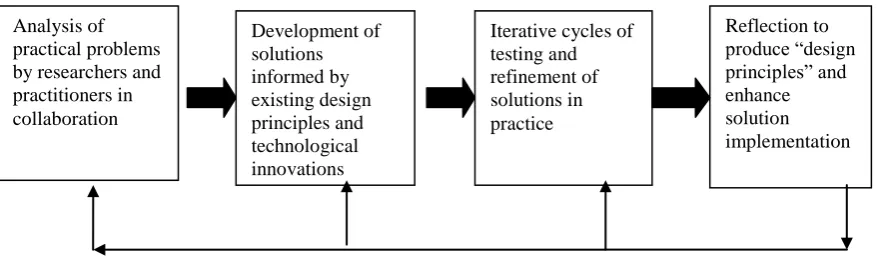
Figure 2: Reeves‟ model of DBR (Reeves, 2006, p. 59)... 52
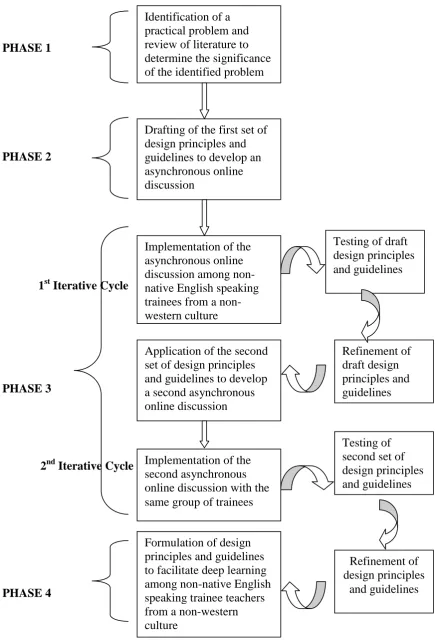
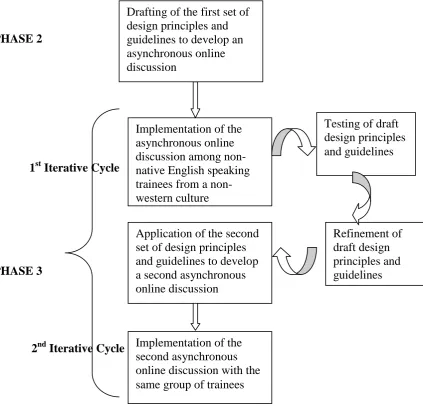
Figure 3: Diagrammatical representation of the study phases. ... 53
Figure 4: Diagrammatical representation of study Phases 2 and 3 ... 69
Figure 5: Design of the first online discussion ... 96
Figure 6: Diagrammatical representation of study phases 3 and 4 ... 148
Figure 7: Design of the second online discussion ... 149
9
LIST OF TABLES
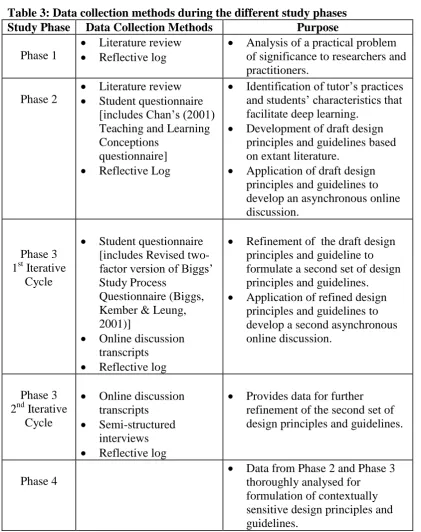
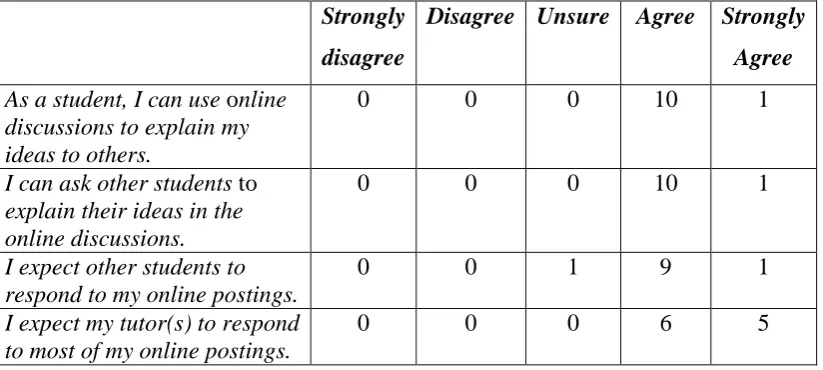
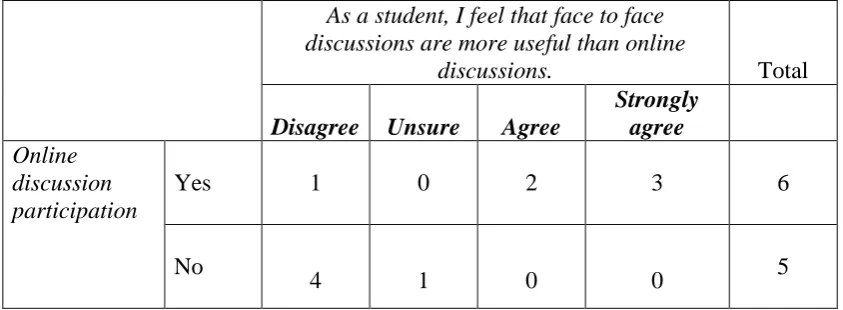
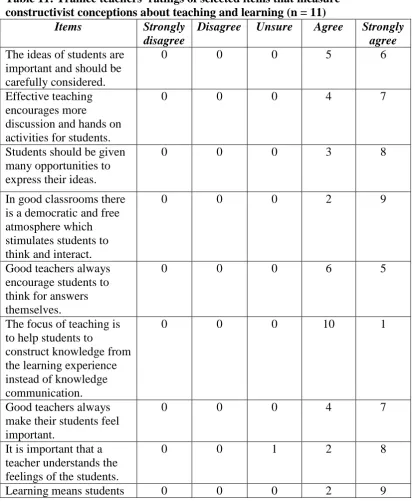
Table 1: Comparison of deep and surface learning approaches (Adapted from Biggs (1999) and Ramsden (1992)) ... 30 Table 2: Constructivist principles in the development of technology-facilitated learning environments ... 45 Table 3: Data collection methods during the different study phases ... 57 Table 4: Indicators for analysis of level of information (Adapted from Henri, 1992) ... 62 Table 5: Community of study participants ... 83 Table 6: Frequency of computer and Internet use, access and prior experiences ... 84 Table 7: Trainee teachers' opinions about their role, the role of peers and the tutor in online discussions ... 85 Table 8: Perception that face to face discussions are more useful than online discussions ... 86 Table 9: Cross tabulation of trainee teachers' perceptions of the usefulness of online discussions vs. their previous participation in online discussions ... 86 Table 10: Ease to communicate in English ... 87 Table 11: Trainee teachers' ratings of selected items that measure constructivist conceptions about teaching and learning (n = 11) ... 88 Table 12: Trainee teachers' ratings of selected items that measure traditional conceptions about teaching and learning (n = 11) ... 89 Table 13: First set of principles and guidelines for the design and implementation of asynchronous online discussions to facilitate deep learning ... 93 Table 14: Selected Socratic questioning prompts from a list compiled by Paul and Binker (1995, p. 342) ... 103 Table 15: Summary of strengths and weaknesses noted for the first online
discussion ... 105 Table 16: Strategies to address the first set of principles ... 106 Table 17: Analysis of online postings for depth of information processing,
interactive dimension and social dimension ... 109 Table 18: Extracts from trainees‟ follow-up postings for the first online discussion illustrating indicators of a deep level of information processing ... 113 Table 19: Sample of trainees‟ and tutor‟s questions based on the Socratic Approach ... 115 Table 20: Trainee's responses related to design principle „Establish a climate of trust and a safe learning environment‟ (n = 11) ... 120 Table 21: Trainees' perceptions related to design principle 'Promote online
10
11
CHAPTER 1: INTRODUCTION
1.1 Research problem and context
Mauritius is a small island of 2000 square kilometres and is located in the
south-west of the Indian Ocean. It has a multi-ethnic population of about 1.2 million
consisting of people of Asian (71%), African (27%) and European (2%) origin
(Central Statistical Office, 2010). English is the official language and medium of
instruction in all state-funded schools and higher education institutions, although it
is not the mother tongue of the vast majority of the Mauritian people; the island
was a British colony until it attained its independence in 1968. It has one teacher
education institution that runs under the aegis of the Ministry of Education and
Human Resources. The teacher education institution, as per its Act, is a tertiary
education institution and it is mandated to engage in educational research,
curriculum development and teacher education (Mauritius Institute of Education,
2007). Teacher education remains at the core of the activities of the institution and
the clientele are mainly local teachers (pre- and in-service) working in pre-primary,
primary and secondary school.
Since the past decade, with wider access to computer and Internet technologies
throughout the island, teacher educators at the local teacher education institution
have been called upon to include components of online learning in their courses.
According to the latest strategic plan of the institution (Mauritius Institute of
Education, 2007), by 2015, all departments should offer at least one course that
includes components of online learning. Currently, asynchronous online
discussions have been integrated in a few on-campus courses and distance learning
courses. Many tertiary education institutions worldwide are incorporating the
discussion board to complement their courses as it is a common tool built into
many learning managements systems such as Web-CT, Blackboard and Moodle
(Reeves, Herrington & Oliver, 2004; Teo & Webster, 2008). The discussion
board is considered to be one of the most beneficial tools of online learning since it
allows student-student and student-tutor interactions, unlike a static web-page of
12
At the local teacher education institution, the main reason for including online
discussions in selected courses is to promote communication and exchange of
information among the trainee teachers and between the trainee teachers and their
tutors. Although communication is critical in the professional development of
teachers (pre- and in-service) (Jetton, 2003; Romano, 2008), increased
communication through social interaction and exchange of information in online
discussions does not necessarily engender a deep approach to learning, which is the
approach to foster in higher education, including teacher education (Garrison &
Cleveland-Innes, 2005; Leamnson, 1999; McGee & Wickershame, 2005; Richards
& Schofield, 2005; Smith & Colby, 2007; Szabo & Schwartz, 2009). A deep
approach to learning reflects a student‟s intention to extract meaning by using
active learning strategies that involve relating ideas, establishing patterns and
principles, using evidence, and examining the logic of arguments (Entwistle,
2000). It results in deep learning whereby students can stand back, conceptualise
and seek out interconnections between concepts and data while reflecting on the
learning (Rosie, 2000). This approach suggests that teacher educators should
implement online discussions with the intent to help trainee teachers to think in a
critical and reflective manner (Havard, Du, & Olinzock, 2005) rather than to
simply increase opportunities for communication; tutors should capitalise on the
text-based, reflective and collaborative properties of asynchronous online
discussions (Ferdig & Roehler, 2003; Hara, Bonk, & Angeli, 2000; Henri, 1992;
Kanuka, 2005; Schallert, Reed, & D-Team, 2003). Some studies have shown that
asynchronous online discussions have the potential to facilitate deep learning
(Garrison & Cleveland-Innes, 2005; Hara et al., 2000; Havard et al., 2005; Hawkes
& Romiszowski, 2001; Szabo & Schwartz, 2009).
My own experiences and those of colleagues with online discussions suggested
that online discussions were not being used to facilitate deep learning at the local
teacher education institution. Online discussions were mainly being used to
increase the communication opportunities among trainee teachers and between
trainee teachers and their tutors with little consideration given to improving the
quality and depth of the online information being exchanged. I had jotted down
the following issues in my reflective log that I kept throughout the duration of the
13
Trainee teachers used the discussion forums for social interaction with
their peers.
Trainee teachers used the discussion forums to post their course
content-related queries, expecting the tutors to respond and clarify the queries. Online discussion was perceived by tutors as a tool to increase
communication opportunities rather than a tool that can be used to promote
deep learning.
During these workshops conducted at the local teacher education
institution to train tutors to integrate elements of online learning into their
courses, it was noted that the tutors were unaware of how to design online
discussions such that deep learning is facilitated.
Online discussions, in and of themselves, do not facilitate deep learning nor do
they automatically become interactive, collaborative and reflective by virtue of
their text-based, reflective and collaborative properties (Kanuka, 2002; Pawan,
Paulus, Yalcin, & Chang, 2003; Wang, 2009). According to Garrison and
Cleveland-Innes (2005), designing online discussions that facilitate deep learning
is a challenging task and tutors need to develop online discussions based on sound
design principles and guidelines. Developing and implementing online
discussions using design principles and guidelines that are based on constructivist
principles can foster deep learning as learners are required to work collaboratively,
to actively interact with peers and to think critically (Biggs, 1995; Chan, 2002;
Gordon & Debus, 2002; Wang, 2009).
Most of the studies that have shown that online discussions have the potential to
facilitate deep learning have been conducted among homogeneous groups of
students from western countries and for whom English is their first language.
There are few studies that have focused on the design of online discussions to
facilitate deep learning among native English speaking students from
non-western cultures. Culture and language are important factors to be considered for
the effective implementation of online discussions (Gerbic, 2005; Gunawardena et
al., 2001; Moghadam & Assar, 2008; Pisutova-Gerber & Malovicova, 2009;
14
communicate in an online discussion can be a challenge for non-native speakers
(Lai, Berg & McDonald, 2008).
Moreover, there is evidence that culture influences students‟ adoption of online
learning technologies and their attitudes toward and approach to learning in an
online learning environment (Lim, 2004; McLoughlin, 1999; Moghadam & Assar,
2008). Hofstede (1993) has developed several sets of dimensions to characterise
the concept of a national culture. This study focused on the
„individualism/collectivism” dimension since online learning environments have
been more effectively implemented in countries with an individualistic culture as
opposed to countries with a collectivist culture (Anakwe, Kessler, & Christenssen,
2002; Lai et al., 2008). Western societies are more individualistic than
non-western ones; ties between individuals are loose and they are expected to look after
themselves and to take care of their own immediate family (Hofstede, 1993). On
the other hand, in collectivist cultures individuals since birth are integrated into
strong, cohesive in-groups, and these groups look after one another due to an
innate feeling of loyalty. Hofstede has measured the “individualism/collectivism”
dimension in several countries, but not in Mauritius. Ethnicity has been found to
be a primary indicator of the national culture (Morse, 2003). Since Mauritius
consists mainly of individuals of Asian and West African descent, it is likely that
the „individualism/collectivism‟ dimension will be similar to that which has been
measured in Asian and West African countries. As per Hofstede‟s research, these
countries have low individualism ranking, such that they share a more collectivist
culture.
In many cultures, including the Mauritian culture, the teacher is perceived as the
figure of control and authority and an authoritarian teaching approach prevails
(Gerbic, 2005; Pisutova-Gerber & Malovicova, 2009; Yildiz & Bichelmeyer,
2003). An authoritarian teaching approach tends to favour one-way
communication; learners are passive recipients of information from the
teacher/tutor who is believed to hold all the relevant knowledge on the topic of
study. Participation in online discussions based on constructivist principles may
contradict the traditional pedagogical values and experiences of the learners
15
with what has been described by Wilson (2001) as cultural discontinuity, that is a
mismatch between the conditions of the learning environment and the learners‟
socio-cultural values and experiences. This study attempted to determine how the
design principles and guidelines known to facilitate deep learning among western
and native English speaking students could be adapted for students from
non-western cultures and for whom English is their second language. The study
culminated in the formulation of contextually sensitive design principles and
guidelines for the development and implementation of online discussions such that
deep learning is facilitated among non-native English speaking trainee teachers
with a non-western cultural orientation.
1.2 Purpose and scope of the study
The purpose of this study was to formulate contextually sensitive design principles
and guidelines for the development and implementation of online discussions such
that deep learning is facilitated among non-native English speaking trainee
teachers with a non-western cultural orientation. The terms „online discussions‟ or
„online interactions‟ in this study, unless otherwise specified, refer to asynchronous
online interactions between students and the tutor or among students while using
the online discussion forums.
Design-based research (DBR) was chosen to guide the research design of the
study. The aim of DBR is to improve educational practices and refine design
principles through design, development, implementation, and iterative analysis of
interventions in real world settings (Design-Based Research Collective, 2003;
Wang & Hannafin, 2005). It is particularly appropriate for the development,
implementation and assessment of innovative learning environments such as online
learning (Anderson, 2005; Design-Based Research Collective, 2003; Hill, Song, &
West, 2009; Wang & Hannafin, 2005), and it is based on the assumption that
existing practices are inadequate or can, at least be improved upon (Marden,
Herrington, & Herrington, 2007). It supports a pragmatic approach to research
which is congruent with my view as a researcher that research conducted in
real-world settings should focus more on selecting methods for data collection and
16
draw exclusively from the qualitative or quantitative research paradigm
(Tashakkori & Teddlie, 2002).
In this study, the use of DBR allowed me to assume the roles of the researcher,
designer and practitioner through the implementation of online discussions
developed using grounded design principles and guidelines which were
progressively and iteratively tested and refined. The study consisted of four phases
based on Reeves‟ model of DBR (Reeves, 2006). The first phase involved the
identification of a significant problem based on my experiences with online
teaching and through conversations and discussions with colleagues at the local
teacher education institution who also had some experience with online teaching.
Extant literature was extensively reviewed in the second phase of the study to
determine students‟ characteristics and tutors‟ practices that foster a deep approach
to learning. The researcher considered the implications for the formulation of
design principles and guidelines that were used to develop an online discussion to
facilitate deep learning among trainee teachers. The online discussion was
implemented during Phase 3 of the study. Given the iterative nature of DBR, the
design principles and guidelines were tested and refined through two iterative
cycles. As such Phase 3 involved the implementation of two online discussions.
The fourth and final phase of the study involved thorough documentation and
reflection of data gathered during the different study phases. This culminated in
the formulation of contextually sensitive design principles and guidelines for the
development and implementation of online discussions such that deep learning is
facilitated among non-native English speaking trainee teachers with a non-western
cultural orientation.
The study was conducted at the local teacher education institution. The study
participants (n = 11) were non-native English speaking high school (secondary)
teachers enrolled in the core course Independent Study of the Teacher‟s Diploma
Secondary programme. This course was selected as it was delivered using a
blended mode (face to face and online sessions) and I was the course tutor. It was
the first course in the Teacher‟s Diploma programme that required trainees to
17
1.3 Significance of the study
The study findings have theoretical and practical implications for tutors designing
and facilitating online discussions with the view of promoting deep learning,
especially among non-native English speaking trainee teachers from a non-western
culture. There are important benefits to exposing trainee teachers to online
learning experiences that facilitate deep learning in teacher education programmes.
The trainee teachers are more likely to develop a constructivist perception of
teaching and learning rather than a transmissive one (Gordon & Debus, 2002).
This is of particular interest to the local educational context, since the educational
system in Mauritius at the primary and secondary levels has often been criticised
for favouring the authoritarian teaching approach and encouraging the transmission
model of learning. It has also been noted that when trainee teachers adopt a deep
approach to learning, they tend to develop deeper notions of teaching and learning
and problem-solving capabilities that enable them to cope with novel and
challenging circumstances that can arise in classroom situations (Gordon & Debus,
2002).
Most of the studies that have shown that online discussions have the potential to
facilitate deep learning have been conducted among homogeneous groups of
students from western countries and for whom English is their first language.
Culture and language are important factors to be considered for the effective
implementation of online discussions (Gerbic, 2005; Gunawardena et al., 2001;
Moghadam & Assar, 2008; Pisutova-Gerber & Malovicova, 2009; Schallert et al.,
2003; Yildiz & Bichelmeyer, 2003). There are few studies that have addressed
cultural and language issues when designing online discussions to facilitate deep
learning among non-native English speaking students from non-western cultures.
Moreover, it has been stated that there is a need to conduct research that explores and
develops effective design principles for online learning environments using a DBR
approach (Hill et al., 2009). This study, using a DBR approach, attempted to
determine how the design principles and guidelines known to facilitate deep
learning through online discussions could be adapted or improved for non-native
English speaking students from non-western cultures. Thus, findings of the study
18
design principles and guidelines for the development and implementation of online
discussions such that deep learning is facilitated among non-native English
speaking trainee teachers with a non-western cultural orientation.
This study addressed another significant limitation of extant literature on online
discussions among students from non-western cultures, that is the lack of details on
what facilitates deep learning, why, in what ways, and under what conditions
(Cotton & Yorke, 2006; Garrison & Clevelan-Innes, 2005; Kanuka, 2005; Wang,
2009). As pointed out by several researchers (Kanuka, 2002; Pawan et al., 2003;
Wang, 2009), online discussions, in and of themselves, do not facilitate deep
learning nor do they shift students‟ learning approach from a surface one to a deep
one (Rosie, 2000). With the development of a set of design principles and
guidelines to facilitate deep learning through asynchronous online discussions as
the ultimate goal of the proposed study, it is anticipated that the task of designing
and implementing online discussions would be less challenging for tutors at the
local teacher education institution and other practitioners working with culturally
diverse groups of students or students from western cultures and who are
non-native English speakers.
Redmond and Lock (2008) observe that:
Creating a space for deep learning using technology within teacher education, provides students the opportunity to experience what that it looks and feels like. In addition, they have a model from which they can then design online learning that fosters deep learning when they become teachers. (p. 4296)
Thus, this study and the application of the design principles and guidelines for the
development and implementation of online discussions in teacher education
courses might also prove to be beneficial to the trainee teachers by assisting the
prospective teachers to develop similar online learning activities in order to
facilitate deep learning among their students.
1.4 Structure of the dissertation
19
approaches to learning and constructivism, the principles of which constitute the
theoretical foundation for the design of the online discussions in the study. It also
focuses on the use of online discussions, especially in teacher education courses.
Special consideration has been given to cultural and linguistic issues while
discussing the potential benefits, barriers and challenges of online discussions for
students and tutors as this study was carried out in a non-western learning context
where trainee teachers, for whom English is a second language, were expected to
use English as the medium of interaction. The aims of the literature review are to
clarify the research problem and to locate potential gaps in the literature on the use of online discussions to facilitate deep learning among culturally diverse groups of students who are non-native English speakers.
Chapter 3 identifies the research questions that guided this study. It outlines and provides justification for the research design. The aims, methods of data collection and analysis for the study phases have been discussed in detail. The study context, ethical and political considerations, and the study limitations are also addressed. Chapter 4 presents and discusses the findings of Phase 2 of the study. Extant literature is again extensively reviewed to address the first two research questions. The first research question focuses on the students‟ characteristics and tutors‟ practices that facilitate deep learning, according to extant literature. The second research question explores the design principles and guidelines for the development and
implementation of online discussions such that deep learning is facilitated among
non-native English speaking trainee teachers from a non-western culture. This
chapter also presents background information about the study participants that were taken into consideration in the formulation of the draft design principles and
guidelines. Chapter 4 concluded with the design and development of the first online discussion used in this study.
20
concludes with the formulation of a revised set of design principles and guidelines following thorough analysis, comparison and integration of data from various sources, including online transcripts, questionnaires and a reflective log maintained by the researcher.
21
CHAPTER 2: LITERATURE REVIEW
This chapter reviews extant literature on constructivism and approaches tolearning, namely deep and surface approaches. The principles of constructivism
constitute the theoretical foundation for the design of the online discussions in this
study. The use of online discussions, especially in teacher education programmes,
is also explored. Special consideration has been given to cultural and linguistic
issues while discussing the potential benefits, barriers and challenges of online
discussions for students and tutors as the present study was carried out in a
non-western learning context where trainee teachers, for whom English is a second
language, were expected to use English as the medium of interaction.
2.1 Constructivism
Online learning is a relatively new field and there seems to be no single learning
theory that applies specifically to online learning environments. One of the most
often cited and widely accepted theories closely related to technology facilitated
learning environments, including online learning, is the constructivist learning
theory (Chan, 2002). Constructivist learning theory has developed from the
epistemological philosophy of constructivism. There is evidence that learning
environments designed using constructivist principles support a deep approach to
learning (Biggs, 1995; Gordon & Debus, 2002). Thus, in this study the principles
of constructivism constitute an appropriate theoretical foundation for the design
and development of online discussions such that deep learning is facilitated. The
next section describes the principles and tenets of constructivism.
Constructivism describes a philosophy of learning whereby each individual
constructs knowledge through his or her interactions with the environment,
including other learners (Ravai, Ponton, & Baker, 2008). It has emerged from the
work of theorists such as Piaget, Dewey, Vygotsky, Kelly and Bruner (Taylor,
Marienau, & Fiddler, 2000). With its focus on learners constructing their own
knowledge, constructivism has gradually gained acceptance among educationists to
become a dominant epistemology in lieu of the objectivist and positivist paradigms
22
apply more to western educationists that non-western ones (Gerbic, 2005; Schallert
et al., 2003; Yildiz & Bichelmeyer, 2003).
Constructivism emphasises thinking, the thinking process and the application of
knowledge, in line with a deep approach to learning, rather than a surface approach
to learning that is characterised by rote learning, memorisation and repetition of
information (Chan, 2002). It views learning as an active process in which students,
in a learner-centred environment, construct new ideas or concepts based upon their
prior knowledge, preferably in a realistic and meaningful context. Constructivism
focuses on two things: how learners construe ideas and how they construct
meaning (Candy, 1991). Thus, learning involves not just constructing knowledge,
but also the interpretation of ideas and experiences to create or develop new
knowledge. If learners encounter ideas and situations that are not consistent with
their current understanding, they can change their understanding to accommodate
the new experience.
Constructivism comprises two main schools of thought: cognitive constructivism
and social constructivism. The former was developed by the Swiss psychologist,
Piaget. It is concerned with meaningful learning and the construction of
knowledge structures (Shuell, 1987); individuals construct knowledge through
their actions on the world. Meaning is imposed by an individual‟s interpretation of
his or her own world and therefore, there are many ways to structure and interpret
the world, and there are many meanings and perspectives for any event or concept.
The primary focus of social constructivism, developed by the Russian
psychologist, Vygotsky, is on social interaction (Vygotsky, 1978). Learning is
perceived as a social process and knowledge is socially and culturally constructed.
Social interaction and discourse with knowledgeable members of the community
enable individuals to construct and create meaning within the environment they
live in (Taylor, Gilmer & Tobin, 2002). Through interaction in a community of
learners, an individual can gain multiple perspectives of an issue to enable them to
23
Social interaction, according to social constructivism, also fosters the development
of a learner‟s zone of proximal development (ZPD), defined as the social processes
that help learners to bridge the gap between the known and unknown (Vygotsky,
1978). A learner is thus able to extend his or her own knowledge, skills and abilities
within a limited range under adult guidance or with the aid of more capable co-participants (Chaiklin, 2003). This view of learning has important implications for online discussions since it emphasizes learning as a social process and the importance of interaction and scaffolding instructions in order to promote learning.
Cognitive constructivism and social constructivism share several common
perspectives about teaching and learning (Jonassen, 1994):
Emphasis is on knowledge construction rather than knowledge
reproduction.
Constructivist learning environments provide multiple representations of
reality.
Multiple representations minimise oversimplification and reflect the
complexity of the real world.
Learning environments that reflect real-world settings are preferred to
predetermined sequences of instruction.
Thoughtful reflection on experience is encouraged.
Context- and content-dependent knowledge construction is fostered. Collaborative construction of knowledge is favoured among learners
through social negotiation rather than competition among learners for
recognition.
Despite the clear advantages of designing constructivist learning environments,
tutors can face certain conceptual, pedagogical and cultural challenges in
implementing constructivist instructions (Windschitl, 2002), both at a personal
level and at an institutional level. The applicability of constructivist approaches in
non-western learning contexts or among learners who come from non-western cultural backgrounds and who are used to teacher-centred learning environments has been questioned (Gunawardena, 1998; 2007; Lai et al., 2008) because the educational
24
than constructivist ones. This might have important implications for this study,
which was carried out in a non-western learning context among trainee teachers
who come from predominantly Asian and African cultural backgrounds.
According to Windschitl‟s framework, successful implementation of constructivist
instruction requires that tutors themselves have a good grasp of the underpinnings
of cognitive and social constructivism and that they change their epistemological
orientation necessary for constructivist learning. They have to encourage their
students‟ thinking, facilitate and manage discourse and collaborative work in
classroom. Moreover, they need to be conscious of classroom culture, the
discourse patterns of students, the transformation in student's beliefs and practices,
and the types of activities that are being valued. Tutors may also need to negotiate
with various stakeholders in the school community for their support. These
challenges are of particular relevance to this study and may have had an influence
on students‟ approach to learning and the quality of the learning outcomes when
they engaged in online discussions.
2.2 Approaches to learning
The way in which students approach their learning has been widely researched.
Approaches to learning describe the way students engage with a task or course and
provide a framework for understanding the complex relationship between the
learning context and the learning processes that result in specific learning
outcomes (R. D. Garrison & Cleveland-Innes, 2005). They include the process
that guides a student through the learning as well as the student‟s engagement with
the learning process. They reflect students‟ motives, that is the reasons students
have for learning, and the strategies, that is the actual methods used by the students
in learning the material (Biggs, 1999). In a particular learning context, students
will try to seek congruence between their learning motives and the strategies.
The original work on approaches to learning was carried out by Marton and Saljo
(1976) and has been elaborated by others (Entwistle, 1991; Ramsden, 1992) . The
study of Marton and Saljo explored students‟ learning approaches to a particular
task. Students were instructed to read a text, and were told that they would later be
25
approaches to this task. The researchers determined that one group of students
adopted an approach where they tried to understand the whole picture; their focus
was on comprehending and understanding the text. These students were identified
as having a deep approach to learning. The second group of students tried to
remember the facts and details from the text, and they were more concerned with
what they thought they would be questioned about later. This group focused on
rote learning and their approach to learning was characterised as a superficial or
surface approach.
The concept of approaches to learning as described above is mainly concerned
with the way students engage with a task or a course, but it does not explicitly
address the specific factors which influence students to adopt a particular approach
to learning. Besides knowing how a student is engaging with a task or a course, it
is also important to know why the student adopts a deep or surface approach to
learning. In this study the focus was on both the „how‟ and why‟ trainee teachers
adopted a particular learning approach when they participated in online
discussions. The „how‟ and „why‟ are seen as complementary in order to assist in
the formulation of sound pedagogical principles and guidelines for the
development of online discussions such that deep learning is facilitated.
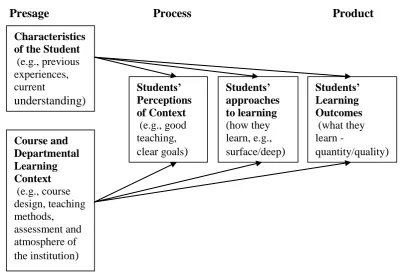
Biggs (1987) proposed a model, the Presage, Process and Product model (Biggs‟
3P model, see
Figure 1) to describe a range of factors that are known to influence students‟
choice of learning approach (Biggs, 1987). According to this model, the learning
26
environment and learner characteristics (presage), students‟ approaches to learning
(process) and learning outcomes (product). The presage factors describe how
students differ within a given context. They mainly refer to personal and
situational factors. Personal factors include learners‟ ability, personality, prior
knowledge, motivation, past experiences, personal values and conceptions of
learning, while the situational factors include course design, teaching methods,
assessment, nature of task, time pressures and the atmosphere of the learning
environment. Given that these factors are known to have an influence on the
quality of the learning outcomes via the learning process used, many of them have
been considered in this study. More details about these factors are discussed in
Phase 2 of the study (Chapter 4) in order to address the first research question
about tutors‟ practices and learners‟ characteristics that facilitate deep learning.
[image:26.595.113.514.335.608.2]Presage Process Product
Figure 1: Biggs‟ 3P model (Adapted from Lew, 2005)
The process factors describe how the specific tasks are tackled. They include
motives students have for studying a particular course or completing a particular
task, and the strategies used in learning the materials. The product factors refer to
the learning outcomes, both qualitatively and quantitatively. They can include a
combination of objective measures of performance such as exams and class tests,
and subjective measures such as level of satisfaction. In this study, content
Characteristics of the Student (e.g., previous experiences, current
understanding)
Course and Departmental Learning Context (e.g., course design, teaching methods, assessment and atmosphere of the institution)
Students‟ Perceptions of Context (e.g., good teaching, clear goals)
Students‟ approaches to learning (how they learn, e.g., surface/deep)
Students‟ Learning Outcomes (what they learn
27
analysis of online discussion transcripts for the level of information processing
constituted an objective measure of performance, and the levels of satisfaction of
students were gauged through a questionnaire and semi-structured interviews.
Before discussing more extensively the two specific approaches to learning, deep
and surface, it is important to point out that learning approaches should not be
perceived as a stable trait of a learner, although he or she may have a preference
for one or the other (Biggs, 1987). A learner can adopt both approaches in the
same course or adopt a deep approach in one course and a surface approach in
another course in response to the presage factors, namely the situational factors.
2.2.1 Deep approach to learning
A deep approach to learning reflects the intention to extract meaning through
active learning processes that involve relating ideas and establishing patterns and
principles on the one hand, and examining the logic of an argument on the other
hand (Entwistle, 2000). Learners need to be engaged in deep-level information
processing (Mitsifer, 2004), critically analysing new ideas and relating them to
already known concepts and ideas. They are personally committed to learning and
show much interest in the subject. Students who adopt a deep approach to learning
are intrinsically motivated to understand the material thoroughly through critical
examination of new facts and ideas, tying them into existing cognitive structures
and linking them to past and current knowledge and experiences (Gordon &
Debus, 2002; Lew, 2005; Ramsden, 2003; Vaughan, 2008). In a study by Chin and
Brown (2000), students who used a deep approach tended to refer to their past and
daily life experiences, and their ideas were more interconnected, reflecting a
greater degree of cognitive processing to foster ongoing thinking rather than
piecemeal thinking.
Besides improving the quality of learning outcomes, including students‟ analytical
skills, a deep approach to learning can help students to reshape pre-existing
concepts which they initially had before actively engaging in the learning process
(Riley & Anderson, 2006). When students actively engage in the learning process,
28
factors and conditions of a given issue or concept. Consequently, they can develop
multiple perspectives about an issue whereby they get to explore and accept the
positive and negative aspects of the issue under focus. Kanuka (2002) states that a
deep approach to learning “is challenging and removes us from our comfort zones
in that it requires us to take perspectives and positions that are unfamiliar and
sometimes conflicting with our own world view” (p. 165). Consequently, one
would expect trainee teachers who mostly use a deep approach during their
training to be more prepared to face challenging and unforeseen situations that can
arise in the school setting once they become practising teachers. Research has
shown that trainee teachers who receive greater exposure to learning experiences
that facilitate deep learning are more likely to develop deeper notions of teaching
and learning and problem-solving capabilities to cope with problematic classroom
situations (Gordon & Debus, 2002).
A deep approach to learning results in deep learning whereby students can stand
back and conceptualise, seeking out interconnections between concepts and ideas
while reflecting on their learning (Rosie, 2000). Students thus develop a better
understanding of concepts and can then organise their understanding and thoughts
in various ways to apply them in real-life and unfamiliar or problematic situations
(Biggs, 1995; Kanuka, 2005). Deep learners have good critical thinking skills,
skills often referred to as higher order cognitive skills (Halpern, 1998). These
skills involve the ability to analyse, synthesize and evaluate information, identify
main ideas, and cite evidence in support of a conclusion. Critical thinking skills
are essential and need to be fostered as part of teacher education programmes
(Szabo & Schwartz, 2009). When students think critically about topics learned,
they use metacognitive skills and consequently, they not only apply what they
learn, but also think about their own processes of thinking, in time becoming
self-regulated or independent learners (Yip, 2008). Independent learning has been
recognised as one of the factors that can contribute to the success of learning in an
online course (Mimirinis & Bhattacharya, 2007). Unlike face to face courses,
online courses are characterised by less reliance on the course tutor whereby
learners need to seek relevance or purpose from the learning materials under the
29
Deep learning, thus, is more likely to occur when learners are intrinsically
motivated and are exposed to learning experiences that are designed to foster the
use of active teaching and learning strategies such as group discussions, case
studies, role plays, as opposed to passive strategies such as lectures. If tutors want
their students to use a deep approach to learning, they need to give due
consideration to the design and implementation of a task or a course. In this study
the key elements that facilitate deep learning, more specifically through the use of
online discussions in a non-native English speaking and non-western educational
setting, are explored.
2.2.2 Surface approach to learning
A surface approach to learning, unlike a deep approach, is reflected by students‟
intention to simply complete the task requirements for a course in a bid to obtain
the minimum passing mark (Entwistle, 2000; Ramsden, 2003). Students are more
concerned with making minimal effort and acquiring just sufficient knowledge to
avoid failure rather than to seek further connections, meaning or implications of
what they have learned. The focus is on rote memorisation and the use of
reproductive strategies. In a study by Lew (2005) among undergraduate students,
it was found that students who adopted a surface approach to learning perceived
academic texts and lecture notes as a mass of information that had to be memorised
for recall and reproduction.
When students adopt a surface approach to learning, they perceive the knowledge
acquired as unrelated pieces of information for assessment purposes rather than to
be applied to real-life situations. Studies have shown that surface learners tend to
compartmentalise their learning such that they cannot find the links between
knowledge acquired from one course or task and the knowledge acquired from
another task or course (Entwistle, 2000; Redmond & Lock, 2008; Richards &
Schofield, 2005). Surface learning is thus characterised by repetition of
information, lack of originality, elaboration and justification without evidence, and
suggesting solutions without explanation. Students would offer opinions without
grounding them on evidence from reliable sources, they would fail to reason with
30
directional link between the isolated ideas (Angeli, Valanides, & Bonk, 2003; Chin
& Brown, 2000; Hara et al., 2000; Ng & Murphy, 2005).
It has been stated that “a surface approach to learning in potential teachers is less
that desirable, to say the least” (Richards & Schofield, 2005, p. 2950). According
to Gordon and Debus (2002), teachers using this approach find it difficult to
generate a range of alternative solutions in various contexts. They also point out
that the memorisation of materials and modelling of teaching methods from
practicum supervisors are not to be encouraged since when difficulties arise,
teachers may not be in a position to cope or solve the problematic situation. If a
surface approach to learning is the predominant approach, neophyte teachers may
not be able to adapt and apply whatever they have learned in their teacher
education courses to novel situations, while those who have been mainly using
deep strategies will have better analytical and problem-solving skills to face similar
situations (Gordon & Debus, 2002; Havard & Du, 2004). Analytical and critical
thinking skills are essential higher order cognitive skills and need to be fostered in
teacher education programmes (Riley & Anderson, 2006; Szabo & Schwartz,
2009).
If students are using a surface approach to learning, they cannot be totally blamed.
The use of surface learning strategies is not solely the result of poor intrinsic
motivation. Students with poor intrinsic motivation are more concerned with
getting a passing grade rather than understanding and integrating information from
different sources. As stated earlier, a learner can adopt both approaches in the
same course or adopt a deep approach in one course and a surface approach in
another course in response to the presage factors, namely the learning context
(Biggs, 1987). Mimirinis and Bhattacharya (2007) found that careful design and
structure of online discussions can increase students‟ motivation.
Table 1: Comparison of deep and surface learning approaches (Adapted from Biggs (1999) and Ramsden (1992))
Approach Deep Approach Surface Approach
Features Genuinely interested to gain a thorough understanding of
31 material through active learning strategies.
Good intrinsic motivation. Relates previous knowledge
to new knowledge.
Makes connection between content from different courses.
Relates theoretical concepts to everyday experience. Relates and distinguishes
evidence and argument.
for assessment purposes using rote learning and
memorisation
Poor intrinsic motivation. Cannot recognise new
knowledge as building on previous knowledge.
Treats content from different courses as separate.
Treats theoretical concepts unreflectively.
Cannot make the distinction between principles and examples
The features of deep and surface approaches are summarised in Table 1. If online
discussion is to be used to facilitate deep learning, careful thought needs to be
given to its design and implementation in order to minimise the adoption of surface
learning strategies.
2.3 Online discussions in teacher education
In teacher education programmes, online discussions are used for various purposes
and this has been widely researched according to Steinbrecher (2008). For
example, online discussions are used to prepare students for face to face
discussions in courses using a blended learning environment or to discuss topics
that are not fully discussed in class due to time constraints (Jetton, 2003; Szabo &
Schwartz, 2009; Teo & Webster, 2008). Through online discussions, students can
engage with course topics in a collaborative way even when they are not in the
classroom. In blended online learning environments, online discussions have been
frequently used to foster reflection and reflective thinking; teacher educators have
used the online forums to encourage trainee teachers to reflect on their field
experience or to stay connected with their tutors and peers (Kumar, 2008).
The design and development of effective online discussion by a class tutor requires
that he or she has a sound understanding of the benefits of online discussions and
the potential challenges for tutors and their students. In this chapter, Section 2.3.1
provides an overview of the cultural and language issues that are of significance to
online discussions; these issues are further looked into in Sections 2.3.2, 2.3.3 and
32
on the benefits and limitations of online discussions, with special consideration
given to linguistic and cultural issues that can arise while developing and
implementing the discussions in non-western and non-native English speaking
learning contexts.
2.3.1 Culture and language issues
Culture is defined as the “the distinctive pattern of thought, action and value that
characterise the members of a society or social group” (Winthrop, 1991, p. 50). It
has been found to have a significant effect on the design and adoption of online
learning technologies (McLoughlin, 1999; Moghadam & Assar, 2008). According
to these researchers, national culture can be either a restraining or a driving force.
Other researchers have found that learners‟ cultural background, learning styles
and cognitive processing are interrelated (Sanchez & Gunawardena, 1998). There
is also evidence that cultural differences in online learning environments influence
students‟ attitudes toward and approaches to learning (Lim, 2004). Hence, cultural
factors cannot be overlooked when designing online discussions to facilitate deep
learning.
Extant literature shows that technology-facilitated distance learning environments,
including online learning environments, can be implemented more effectively in
countries with an individualistic culture as opposed to countries with a collectivist
culture (Lai et al., 2008; Anakwe et al., 2002). A collectivist society includes
individuals who since birth are integrated into strong, cohesive in-groups, often
extended families, and these groups look after them due to an innate feeling of
loyalty. In comparison, an individualistic society, more prevalent in western
countries, is one where the ties between individuals are loose; everyone is expected
to look after himself or herself and to take care of his or her own immediate family
(Hofstede, 1993).
Sanchez and Gunawardena (1998) compared the western and non-western world
views and their influence on learning. They found that western world views
include competition, individuality, timing and scheduling, dualistic thinking,
nuclear family, separation of religion from culture, and task orientation. On the
33
time, holistic thinking, extended family religion as part of culture, and social
orientation. Research shows that in many Asian cultures, individuals are less
likely to express their disagreement and they are very much concerned with
protecting one‟s face in public, “face saving”, a concept common in collectivist
culture; arguing one‟s point of view is perceived as confrontational and undesirable
(Gunawardena, 1998; Samovar & Porter, 2001).
It is important for online tutors to recognise that students from different cultures
may communicate differently in an online learning environment and thus, the
design of the online learning activities must be based on culturally sensitive
principles and guidelines (Lai et al., 2008). It should be noted that there is a lack
of research on the online communication and interaction patterns of students from
various cultural backgrounds. Extant literature demonstrates that the power
distance, that is the relationship between students and teachers, significantly
influences students‟ readiness to ask questions in group situations; students with a
high power distance are less likely to ask questions (Holmes, 2005 and Tu, 2001,
cited in Lai et al., 2008).
The use of English language by non-native speakers in an online environment can
be a challenge. It can increase students‟ workload as they require more time to
formulate their postings and to understand the online postings of their peers and
tutor (Lai et al., 2008). The emphasis on context in students‟ native language is
also another challenge. In low context cultures, most of the meaning is provided in
explicit verbal utterance, whereas in high context cultures, contextual/non-verbal
cues convey certain important information that cannot be inferred solely from the
words used (Morse, 2003). Given that online discussion is a predominantly
text-based medium of communication where there is a lack of non-verbal cues, students
from high context cultures may be disadvantaged. Though culture and language
constitute significant challenges for the effective implementation of online
discussion in the present study, one cannot ignore the benefits of online
discussions in teacher education, some of which are of special relevance to
34
2.3.2 Potential benefits of online discussions
Due to the increasingly complex roles of teachers nowadays, it is recognised that
they should be provided with opportunities to examine their beliefs about teaching
and learning, to construct their own knowledge in a supportive environment, and to
collaborate with peers (Hawkes & Romiszowski, 2001; McLoughlin, 2004; Szabo
& Schwartz, 2009). An online discussion forum provides a powerful learning
environment for understanding the complexity of students, teachers, classrooms,
schools, and their surrounding communities (Teo & Webster2008). It also seems
to offer a solution to the limited opportunities teachers have to engage in
professional development experiences that are collaborative, collegial, and
reflective (Courtney & King, 2009; Jetton, 2003). Teacher educators, trainee
teachers and in-service teachers can all gain from the use of online discussions.
Online discussions offer several benefits for trainee teachers, some of which are of
particular significance to non-native English speakers. According to Ferdig and
Roehler (2003), an “electronic discussion forum represents a unique opportunity
for teaching and learning in teacher education. It retains many of the benefits of
discourse and dialogue (the opportunity to socially interact) while offering the
meta-linguistic and meta-analytic advantages of print” (p. 125). The relative
permanence of the text-based messages provides students with more time to reflect
on their teaching experiences as well as those of their peers (Andresen, 2009;
Dutt-Doner & Powers, 2000; Jetton, 2003; Killian & Willhite, 2003; Lin, 2008; Tiene,
2000), thus facilitating internalisation and peer interaction. This is of particular
benefit to non-native English speakers who have reported being motivated to think,
to clarify their position, to develop understanding through reading and to discuss
the different points of view (Campbell, 2007; Gerbic, 2005; Schallert et al., 2003).
Kumar (2008) reported that the ability to edit and improve postings on online
discussions encouraged the non-native English speaking students to participate
more actively in online discussions than face to face discussions.
Online discussions have been found to promote critical thinking skills and deep
learning among pre-service as well as in-service teachers (Hara et al., 2000;
35
compared face to face and online courses when evaluating students‟ critical
thinking skills and they have shown that the use of online discussions fostered
critical thinking; students used higher level questions and their online responses
reflected more breadth and depth than time-constrained classroom discussion
where students often make spontaneous unsubstantiated comments (Derry,
Hmelo-Silver, Nagarajan, Chernobilsky, & Beitzel, 2006; Schumm, Webb, Turek, Jones,
& Ballard, 2006; Teo & Webster, 2008). Online discussions also promote
metacognition, the self- evaluation of one‟s own thinking, which is part of the
critical thinking process that pre-service teachers should use as part of their
learning and as part of their classroom teaching (Ferdig & Roehler, 2003). This
study contributed to existing literature on the potential of online discussions to
foster deep learning and critical thinking skills among non-native English speaking
student teachers in a non-western educational setting.
Besides deep learning and critical thinking skills, asynchronous online discussion
has been found to improve other skills such as ICT skills, problem-solving and
writing skills. Active participation in online discussions better prepared preservice
teachers to use online discussions in their own teaching when online discussions
were integrated into their teacher education courses (Kumar, 2008; Szabo &
Scwartz, 2009). In a study by Jetton (2003), students were found to rely on each
other to solve their problems rather than waiting for the online instructor to provide
an answer, thus helping to establish a community of learners. Even when trainee
teachers do not have the solutions to the problems, they may respond in
sympathetic and caring ways, thus providing emotional support to their peers
(Dutt-Doner & Powers, 2000).
Students can improve their writing skills by reading the postings of their peers and
then responding to them. Among non-native English speaking students, writing is
considered easier than speaking or listening, and dictionary or spelling/grammar
checks can be used for postings (Gerbic, 2005; Yildiz & Bichelmeyer, 2003) .
This can encourage participation to such an extent that students feel more at ease to
voice out their opinions online than during in-class discussions. In addition,
36
because, in the absence of visual cues, they feel that more importance is given to
ideas than the identity of the participant. Kumar (2008) also found that in blended
learning environments, online discussions increased students‟ comfort level with
each other in the class; online discussions provided the students with the
opportunity to better know their peers as a result of which they felt equally at ease
to argue with their peers face to face.
Gerbic (2005) has pointed out that the pace of face to face discussion can be too
fast for non-native English speaking students who may lack the general confidence
to join class discussions. This concurs with the findings of Killian and White
(2003) and Kumar (2008) who have reported in their studies that reluctant and shy
students participate more actively in online discussions than in face to face
discussions; this can largely be attributed to the much lower pace of online
discussions, the reduced competition for “air-time”, and the absence of visual cues.
The absence of visual cues has also been found to be beneficial in minimising
distraction (Hammond, 1998) and emotional outbursts (Poole, 2000) – “Traditional
class structures sometimes encourage emotional outbursts, whereas the online
medium enabled students to respond with passionate, but well supported positions”
(p. 175). In multicultural classes, online discussions can create a more egalitarian
situation than in traditional face to face classes because barriers common to face to
face communication such as race, physical appearance and language accent are
absent (Gunawardena, 1998; Yildiz & Bichelmeyer, 2003). Male dominance in
class discussions, noted in the local context and other patriarchal societies, can be
partially overcome in an online environment because of the egalitarian situation
and the social distance that prevail (Im & Lee, 2003). The gender dimension,
although of significance, could not be addressed in this study because all the study
participants were females.
Online discussion also provides a means for students used to teacher-centred
approaches to adopt new roles, in line with constructivist approaches, where they
37
to teacher-centred approaches. Hence, it was worth finding out in this study
whether students took responsibility for their learning by participating in online
discussions.
Whilst most research studies seem to highlight the benefits of online discussions
for the learners, one should not underestimate the benefits for the course
instructors. Ferdig and Roehler (2003) and Gunawardena (1998) have found that
the use of online discussions may help instructors to adopt constructivist teaching
approache