Archived
at
Copyright © NOGAMU, SATNET & ORGANIC DENMARK GLOBAL ORGANIC, 2011
NATIONAL ORGANIC AGRICULTURAL MOVEMENT OF UGANDA (NOGAMU) P.O.Box 70071 Clock Tower Kampala, Uganda
Physical location: Plot 957 Galukande Close, Off Tankhill Road, Muyenga. Tel: +256 414 269415, +256 312 264039, +256 772 912250
Email: admin[a]nogamu.org.ug, website: www.nogamu.org.ug
SUSTAINABLE AGRICULTURAL TRAINERS NETWORK (SATNET) Plot 6A Mugurusi Rd., Fort-Portal, P.O.Box 884, Fort Portal Town Tel: +256 483 422487
Email: admin[a]satnet.org.ug, satnet[a]utonline.co.ug, website: www.satnet.org.ug
ORGANIC DENMARK GLOBAL ORGANIC Silkeborgvej 260, 8230 Åbyhøj, Denmark Tel: +4587322700
Email: info[a]okologi.dk, website: www.okologi.dk
FOREWORD AND ACKNOWLEDGEMENTS
Farmer Family Learning Groups are groups of farmer families, who together define their goals and needs in relation to their own future development, and help each other to reach the goals. The groups form strong networks and help each other, and help the entire local community. The approach is inspired by the well-known ‘Farmer Field Schools’, which can be practiced in very many ways – and in the approach described in this manual, we have used a very flexible approach with great success. We understand a Farmer Family Learning Group as a group of farmers or farmer families which – by the help of a facilitator – go together to support each other and may be, market their produce together, and which work, develop and learn together. All decisions and activities and plans belong to the group members of each group, and each group will be shaped and formed by their needs, which change with time. We believe that the group members’ ownership over the group and its approaches and activities is the sole pathway to sustainable groups. We do not e.g. work with a curriculum for a certain crop or livestock specie – we try to enable facilitators to be able to form and facilitate groups and base their work on an identification of what each individual group wants and needs. We – the author team of this booklet – have learned about this approach by practicing it together with a number of groups in Rwenzori Region since 2009. The groups come from different NGOs and CBOs, all members of the Sustainable Agricultural Training Network SATNET, and all groups work for food security obtained through locally and household based food and income generation, produced through sustainable agricultural methods which feed the soil for future generations.
We would like to thank our colleagues in our organizations NOGAMU, SATNET and OD for having been good sparring partners in the project, in particular, Musa Muwanga, Vincent Sebukyu, Samuel Mugisha, Susan Nansimbi, Anett Birungi and Longino Masareka and Rev. Kitooke
Michael.
Our biggest and warmest thanks go to all the facilitators – internal and external – and the farmer families, who so generously shared their insight with us and made it possible for everybody involved in the project to learn. We hope that we thank you on behalf of the many people who can use this manual and work with local community for empowerment, interaction and improvement of the community in terms of more social capital and better food security and food sovereignty. Not only did you share your insights – but you were also pioneers in this approach in your area, and at times struggled to make it all work. It is our greatest hope that the learning from this project will encourage many to do similar group collaboration, share and be active together.
We will step back so that you can start acting …
LIST OF CONTENT
Chapter 1. Introduction to organic farming and
Farmer Family Learning Groups... 1
Chapter 2.
Forming a succesfull Farmer Family Learning Group
and how it works ... 7
Chapter 3.
Taking ownership ... 13
Chapter 4.
Strengthening social capital ... 16
Chapter 5.
The roles of the external and internal facilitators ... 23
Chapter 6.
Networks between farmer groups and facilitators ... 27
Chapter 7.
Farmer Family Learning Groups as a project
for the whole family ... 29
Chapter 8.
Farm planning ... 32
Chapter 9.
Record keeping on the farm and in the group ... 36
Chapter 10. Farmer Family Learning Groups in community
Development ... 40
1
CHAPTER ONE
INTRODUCTION TO ORGANIC FARMING
AND
FARMER FAMILY LEARNING GROUPS FOR RURAL
COMMUNITY DEVELOPMENT
1.1 What is Organic Farming?
Organic farming is the process of producing food and fiber focusing on conservation of natural resources and maintaining fertile soils, clean water and rich biodiversity naturally. In organic farming, we aim to build up healthy fertile soil, which can produce healthy plants and give feed to healthy animals and healthy humans. Organic farming is a way of farming which is based on locally available resources and avoid chemicals and genetically modified organisms. In organic farming, agro-ecological farming practices are used consciously to reach good health at all levels. Some examples of relevant agroecological methods are given in the figure on the next page.
1.1.1 Organic Farming is Based on Four Principles
The International Federation of Organic Farming Movements (IFOAM) formulated four important principles for organic farming. These four principles guide the way an organic farm is organized, and in every context the principles have to be practiced in ways, which are relevant in the
particular conditions of that context..: The four principles are:
1. The Principle of Ecology: Organic Agriculture should be based on living ecological systems and cycles, work with them, emulate them and help sustain them
2. The Principle of Care: Organic Agriculture should be managed in a precautionary and responsible manner to protect the health and well-being of current and future generations of the environment
3. The Principle of Fairness: Organic Agriculture should build on relationships that ensure fairness with regard to the common environment and life opportunities
4. The Principle of Health: Organic Agriculture should sustain the health of soil, plant, animal, humans and planet as one and indivisible
1.1.2 Is Organic Farming Just Farming without Using Chemical Pesticides and Fertilizers?
2
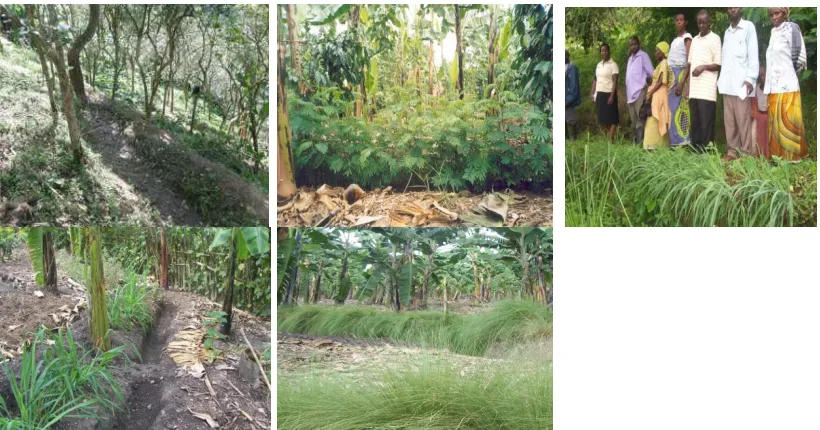
Figure 1: Examples of agro-ecological methods which can be used in organic farming. A lot of manuals go more in-depth – the photos below are just some examples.
Compost making manure using plant material
Trench digging (and planting stabilizer grass or shrubs on edges) to prevent soil erosion
3 Diversified gardens and farms
Artimisia Tephrosia spp Tithonia
Grow herbs for bio-pesticides, medicinal use and plant fertilizer
Improved stove – saves wood fuel and gives less smoke
4
1.1.3 Is Organic Farming always Certified?
No, organic farming is defined by the way that it is practiced. The guiding principles from IFOAM can be used to evaluate whether a farming system is truly organic. The organic certification is based on rules which reflect the principles. There are many good organic farms which are not certified, for many reasons, for example that it can be very expensive to have a farm certified, and most smallholder farmers cannot afford this. But the farm can still be a good organic farm where the organic principles are used and where good agro-ecological methods are practiced. 1.1.4 What is the Difference between Organic Farming and Traditional Farming?
Traditional farming is many ways of farming, based on practices which have existed for centuries among different communities, and are very different between different parts of the world. Many call it natural farming, and when it works in an ideal way, there is a good balance between the farming practices and the surrounding nature. Traditional farming is often based on indigenous knowledge – and much of this knowledge can be used also in organic farming. Organic farming however, is not the same as traditional farming. In organic farming, the farmer constantly aims at feeding the soil, and leaving the land more fertile for the next generation. This is not necessarily the case in traditional farming. Many traditional farmers practice for example the slash-and-burn system, which is not a good agro-ecological practice. It has worked for centuries in many places because there was plenty of land and therefore farmers could leave some land to rest and recover, while farming elsewhere. When there is high population pressure, this is no longer possible. Farmers have to plan their farming, so that they can grow a lot of food and still keep the land fertile.
1.1.5 Food Production Increases in Organic Farming
Many people say that organic farming gives a lower yield than non-organic farming. It is true that in some industrialized farming systems with heavy use of chemical inputs, the yield is very high, and this level cannot be reached in organic farming systems, especially at the beginning of conversion to organic farming. The point is that the soil becomes exhausted in these farming systems, where no nutrients are given back to the soil but rely on increasing amounts of chemical fertilizers and pesticides to be utilized by the crops. The glaring fact however, shown and
demonstrated in very many studies throughout the world, that the use of organic methods makes the yield increase dramatically. It is complete nonsense to state that organic farming gives a lower yield than nonorganic farming. After complete conversion, organic yields increase consistently and are sustainable.
1.1.6 Organic Farming is Sustainable Farming
5
principles, all these four aspects are covered, and therefore we can call organic farming a sustainable way of farming.
Environmentally: because we feed the soil and keep the land fertile. In organic farming we do not use methods which destroy the future generations’ chances of producing the food they need.
Economically: because the yield increases and we produce more food on the same piece of land, when using organic methods appropriately and relevantly.
Socially and institutionally: because organic farming is based on a principle of fairness, and sharing the natural resources which should be available for everybody. In organic farming, some challenges cannot be fought alone by an individual farmer. Whole communities have to collaborate when planning irrigation from a river or a stream, or when limiting the amount of insects which can transmit diseases to the animals.
Institutionally, we can see that the use of locally available resources requires a democratic structure also in the institutions, and it involves more decision makers and the farmers themselves in participating in forming policies which are fair. In other words, organic farming is a sustainable way of farming, covering all aspects of what contributes to a system being sustainable.
1.2 The Farmer Family Learning Groups as an Approach to Improved Food
Security in the Households
The Farmer Family Learning groups is a type of Farmer Field Schools (FFS), which we also called ‘Organic FFS’. In this manual, Farmer Family Learning Groups is an extension approach built on principles of adult education and experiential learning processes. The Farmer Family Learning Group concept is based on the belief that each farmer’s field is unique. The activities in the group are focused on the participating farmers’ own farms and not a demonstration plot or few demonstration farms. The Farmer Family Learning Group encourage a farmer to gain insight in his or her own system, respect the farmers’ own priorities, and enable farmers to proceed on their own even when the facilitator leaves.
6
facilitators need to be able to manage this flexibility together with the farmers, with whom they work. We called our approach Organic Farmer Field Schools or Organic FFS and now refer to it as ‘Farmer Family Learning Groups’ – because it involves whole families, and it is a process of continuous learning in addition to working together, marketing together and having all kinds of activities together which support the community and all the involved households.
1.3 Why is a Farmer Family Learning Group (or an Organic FFS)
Particularly Relevant for Organic Farming Development?
A Farmer Family Learning Group in our approach is a group of farmers, who by the help of a facilitator, go together to develop their farms, improve livelihood and food security in their families, develop and learn together and build up social capital in their local communities. The Farmer Field School should be organized in a way which fits best to the needs of the participants at any given time and place. If the participants choose their approach they take ownership over their own development and commit themselves to the togetherness in the group.
As discussed above, organic farming is based on the conscious use of agro-ecological methods. This requires a lot of knowledge and skills. Some traditional farming methods are also relevant for organic farming, and this also requires knowledge about these methods. Whenever knowledge is required, it is relevant to create situations where knowledge can be exchanged, developed and debated. In a group of farmers working like a Farmer Family Learning Group, people go together and the pool of knowledge and experience in a group of farmers is tremendous. Each farmer is an expert in his or her own farm and farming practice, and if open to change and challenges, these practices can be developed. All the experiences in a farmer group will be debated and new common knowledge is developed. Knowledge intensive systems like organic farming therefore, are so relevant to develop in groups of farmers, who need this knowledge.
7
CHAPTER TWO
FORMING A SUCCESSFUL FARMER FAMILY LEARNING
GROUP AND HOW IT WORKS
2.1 Different Focus Areas and Directions of Being and Working Together in a
Farmer Family Learning Group
Most Farmer Family Learning Groups have multiple purposes and develop with regard to many different aspects at the same time, for example:
- working together and learning new things, - making savings and credits, and
- marketing together.
All farmers in an Farmer Family Learning Group group need to involve themselves and participate actively. This means that all the farms in an Farmer Family Learning Group group are open to meetings in the group, and the group rotate between the participating farms. This rotating system, coupled with the small number of farmers (most often 12-25 families per group) makes
communication easy amongst them; builds cohesiveness; give the members complementary skills; helps the members to have a common purpose; helps the members to set goals both for their family and in the group; provides the members with a common approach; and makes them mutually accountable.
The group will also be dynamic and change the ways in which they work together over time. This should be chosen by the group and guided by their needs. Therefore, the group must hold meetings regularly – for example once every half year or monthly – where they can spend time to discuss their visions and directions of working.
2.2 Examples of Aims and Elements of the Work in a Farmer Family Learning
Group
2.2.1 Working Together to Improve the Members’ Farms
The common effort involving 20-30 group members to improve something on one farm can help the farmer move very far in just one day. This is very encouraging and stimulating for everybody. Men and women may have different tasks – e.g. the men doing the primary tillage on a piece of land, while the women carry compost or construct an improved stove. They rotate therefore between farms so that they meet on a group member’s farm e.g. once per week. This rotating system in the Farmer Family Learning Group allows every household to benefit from the whole group working together. All members must have the appropriate tools, e.g. hoes, also for the children who
8
to split the group so that the group work on 2-3 farms on the same day, because this also allows everybody to benefit in a growing season of for example 2 months of a certain crop and allows participation of all members in the discussions than working in an extremely big group.
2.2.2 Sharing Resources and Enterprises
Some Farmer Family Learning Groups start by cultivating a common piece of land together. It can be a common crop for marketing, either on a piece of land owned by an organisation to which the group is connected, or to the Farmer Family Learning Group, or it can be on a piece of land offered by one of the member farmers. It can also be nursery beds with vegetables seedlings, or making banana suckers for the group members. Many groups acquire donations from organisations or government programs like NAADS, and therefore have pigs, goats or other animals together. They can be taken care of by one group member, or they can be given to one group member who then will give the offspring to other group members.
2.2.3 Making Common Investments
A group can decide to invest together, e.g. in a poultry house for their common hens, or in a milling machine, a water source with clean water or tools to rotate between farms. This requires trust between farmer families and the facilitators should ensure that there is constructive collaboration and feed-back, and that the common resources are managed well.
2.2.4 Learning Together to Create Common Knowledge
The group members represent a huge amount of experience and knowledge, and they benefit from open discussions and sharing of this. It requires a conscious effort to take time and have peace in the group to take common farm walks to learn from host farmers, see things together, make
excursions to relevant demonstration farms or gardens, and to discuss what they have learned from their own experiences in the group. It is the facilitators’ role to make sure that time is given in the group to share and build up knowledge.
2.2.5 Make Savings and Credit Together
Most groups make savings and credit schemes together. It can be organised in different ways – e.g. as mentioned above, the group can decide to invest together in shared resources. They can also make funds for loans, and group members take loans with or without paying interest, which they can use for the families, e.g. school fees, farm improvements, health care or any investment they want for the individual. Some groups also have emergency credits, where the members very quickly can get a loan for immediate use e.g. in case of emergency or need for facilitating a funeral.
2.2.6 Solving Problems Together
9
solve problems has many other advantages for other forms of associations. Nevertheless, this requires much from the group members, as well as the facilitators, but it adds to the social capital and trust in the whole group. Members can even intervene in conflicts at household level if a member family is affected or involved.
2.2.7 Marketing Together
Many groups start joint marketing initiatives together, based on different models of working
together. These initiatives can involve organising bulking the produce, transporting the produce to a town/ trading centre, and require skills to link up with business partners and plan for the whole group to be able to meet the agreements of supplying a buyer with what is agreed on with the buyer. It can be risky, but bring good income to the member families and/or the whole group (some groups choose to give some of the income to the savings, to be able to invest in the forthcoming season).
2.2.8 Raising a Voice Together
Many groups become strong enough to organise and raise a voice to local politicians and the local government, or even at higher levels. They can address issues like getting access to more healthy water, better roads, address problems with thieves and justice in the local area, or public transport. This could in future become serious advocacy energies that can influence government programs and interventions.
2.3 Different Phases of a Group’s life
2.3.1 The first phase: the young group
A group is established with some goals which the group members define together or are attracted to. The group members need to find each other and gain a common understanding of why the group exist and what they can reach together. At this stage the facilitator is active in supporting this process, and helps the group to exchange and share the knowledge which exists in the group.
2.3.2 The mature phase: the group consolidates itself
10
2.4 The Dynamic Farmer Family Learning Group: the group will change over
time
The group will change over time, as discussed below, and in chapter 4 about social capital. A group can become ‘dull’ and the members feel that they do not reach so much together anymore. As discussed in chapter 4, they can choose to break up the group, or they can rejuvenate and find new goals or directions together. Therefore, as long as all group members feel comfortable with the development, a group will develop over time. The flexibility of the group as well as the dynamic development over time is the beauty of this approach – this is what allows the group members to take ownership, because they will shape the group and the work in accordance with what is needed at any present time. A group with a long term plan will normally last long compared to short term goal GROUPS for example aiming to slaughter a bull for christmass may imply that the group will start late in the year and end late in the year (December groups).
2.5 The Daily Life of a Group
The group rotates between farms. All members must have their turn, where they open up the farm and the group help them to improve the farm. We encourage whole families to participate, and when possible also the children and youngsters.
The host farmer decides where he / she / the family needs help and the group works on this. It can be constructing a goat’s house, clearing land, weeding, mulching, making improved stove or anything else which the group has agreed on as ‘things they can do together’ and are necessary to improve their livelihoods and organic farms.
Most groups work in a way where they meet at certain days and have a certain rhythm. The following are examples from the Rwenzori project; but each group has to decide for themselves what suits them best:
- The group meet to work together on early Saturday mornings and then they meet up till midday, where they share some little food or refreshment, while they discuss issues for the host farm, solve problems together, discuss issues and make savings and credits.
- The group meet at a farm to work together on a certain week day, and hold a meeting twice in a month to make savings and credits and discuss their common interests, share on marketing issues and challenges among group members.
11
2.6 What needs to be present among the members in a well working Farmer
Family Learning Group?
To be able to work together as a group, certain characteristics need to be present. The facilitator must be aware that the group actually feel the existence of these characteristics, or they work
actively to improve the group. Otherwise the group may fall apart and fail. We experience that these characteristics are the following, and they are interlinked:
Trust: Group members must trust each other. Household members from the participating families should of course never do things to each other or in the local community, which can break this trust. That means, e.g. children should never go into neighbour farms to take anything without
permission. Trust also means that the group members should trust the capacity and resources of the group to solve problems and help each other.
Openness: Every family participating in the group opens up their own farm to other families, and is open to discuss their own problems, challenges, and ideas on vision for the whole group.
Ownership: Each member must take ownership over own development, and take equal
responsibility together with the other group members over the group’s development. No other can do this, and if each member does not own the group, it will fall apart.
Commitment: All group members must be committed to the group, meaning that they should be willing to contribute to the development of each other’s farms and the whole group and sacrifice something to the benefit of the group – and trust that others will do the same.
Sharing: Knowledge and experience must be shared openly. The group members must
acknowledge that the knowledge among the group members is valuable for everybody, and that all aspects of knowledge can benefit others. Problems and challenges are also shared – and the group members will experience that problems become smaller and benefits become bigger when shared.
Equality: Members of a group may have different farm sizes, different capacities, different skills and different resources both human and physical. Across all these differences, each group member still participates on equal level with all the other group members. No group member is more worth or have a higher status than others as humans, be it men, women or children.
12
Empathy: All group members should be able to understand and be conscious of each other’s limitations and difficulties.
2.7 Members can enter or leave an Farmer Family Learning Group
A long lasting group will always be dynamic to a certain extent. Members will move to other places, die or for some reasons want to leave the group. Others may be attracted, looking at what is going on among neighbours who are group members.
The group must take basic decisions on the development they wish for. This means that they must take decisions on the desirable size of the group, and what happens if the group becomes bigger: will the group prefer to split into two groups e.g. based on distances between farms, or will the group prefer to stimulate and maybe participate actively to help a new group to form itself? If including more members, the group also needs to be clear about the selection of these members. They need to maintain a good group dynamics, and this means that not everybody can just enter. They must decide the criteria for including the new members. Examples of relevant criteria can be:
- The new members are eager to adopt the agro-ecological farm practices
- The new members share the interests, visions and goals of the group, e.g. to improve farms with non-chemical inputs
- The new members are committed to help each other on equal basis and to contribute to help the local community,
- The new members want to include the whole family in the group.
2.8 The Role of a Facilitator
All the above points to some key values and attitudes, which guide a good facilitator. The role of the facilitator is discussed more in detail in a separate chapter, but it is important to highlight the following here:
a- The facilitator does not tell the group members what to do, but is constantly aware of letting the group members direct the development in the group, and let all group members be heard and remain focused on their goals and principles. All ideas of the individuals are important. No idea or individual is more important than another. This requires respect and empathy. b- The group members must be encouraged to work together to reach the group’s goals. This
requires that the facilitator has the cooperative skills to encourage this.
c- The individual facilitator and the group must be honest and open about each other’s feelings, values and priorities.
d- The group should assume responsibility for the solutions and their implications. The facilitator should be able to take the responsibility to facilitate the development of joint responsibility among group members.
13
CHAPTER THREE
TAKING OWNERSHIP
3.1 Taking ownership as individual and group: a necessity for development
You develop when you learn something new. This learning leads to new ways of viewing things and it empowers to implement and engage in new practices. But learning does not take place, if a person is not motivated, and if a person does not trust that he or she can actually change and
develop and improve. To develop, you have to be motivated. Without motivation, development and learning does not take place. All this can be stimulated in certain environments, and be stimulated by certain people and in groups, but the basic motivation is within each person. The major change must happen within each person, each FFLG group member, if development should take place in his or her farm, home and family and take root. Nobody can develop anybody else more than him- or herself. This is the major reason why it is so important that every person takes ownership. Every person must take the situation in his or her own hand and start improving, and move to another point, following a vision. When a person takes ownership, he or she can direct the route for own development. The FFLG therefore, should stimulate every member as well as the whole group as a group, to take ownership over their own development.
3.2 Stop blaming others. Stop waiting for others to do things for you. Start
doing something yourself to move to the point where you want to be
14
No matter what a person is born in to, it is still up to each person to start developing from that point. This includes building up necessary knowledge, resources and skills, among others. The question is where to start when you want to change your life.
3.3 The FFLG approach: one way of starting to move together
As clearly stated in chapter 4 of this manual, nobody can change the environment which can keep you down, alone. It is necessary to go together, and it strengthens everybody to go together and start managing an environment which can be difficult in many ways. In this manual, the need for
knowledge, capacity and skills is emphasised, and this is a big step and can be stimulated in a group. Any group of people, who start focusing together and pull their knowledge together, discovers how much knowledge and resources they have. When combining knowledge, new discoveries are made, and these discoveries are shared between all who participate in the process. The group start building something unique together: namely knowledge which arose from the group itself, and which is relevant to all group members. This is an important step for a group to take ownership over their development.
3.4 How does a Farmer Family Learning Group take ownership?
A FFLG group take ownership when they form the group and decide to do something to commonly improve themselves. They take ownership over the development in the entire group when they care about each other, and help each other, and let others help themselves. When the members start sharing responsibilities and commit themselves to the common development, they take ownership not only over their own individual development, but over the development of a whole little community. Therefore, the characteristics mentioned in Chapter 2 are so important and must be present for the group to really take ownership and responsibility for development both at individual, group and community levels.
3.5 To take ownership, the approach to FFLG must be flexible
Every person, who wants to improve, has his or her own background and starting point. In each local community, certain conditions are present which may be unique for this particular community. These can be related to market, weather, geography, history (many immigrants or previous
15
be able to guide this process and not try to shape each group into a uniform program or way of working together.
In the case of the Organic FFLG groups in Rwenzori, new settlers surpassed the development of locals by realising that they had to work harder because they were living among a people who had already established themselves, so they had to catch up – and they could do that in a group together by taking responsibility for their own development.
3.6 The flexible approach is still based on common values
Because the surroundings vary and people are different, and the combination of people in a group is different, each FFLG group must be allowed to develop in accordance with their own identified needs, and find their direction based on their own starting point and perception of where they are at any given time. It is important to emphasise that the values and characteristics discussed in chapter 2, such as respect, openness, mutual equality etc., still need to be fundamental for any well-working group, and that these values and characteristics form the very basis for a group to find its own direction and way of working together.
16
CHAPTER FOUR
STRENGTHENING SOCIAL CAPITAL IN FARMER FAMILY
LEARNING GROUPS FOR ORGANIC DEVELOPMENT
Mette Vaarst & Professor John C. Munene
4.1 What is social capital?
Social capital is when the individual sacrifices something on short term basis for the community to the long term benefit of everybody and the community.
Social capital is
- Voluntary and given free of charge - For the purpose of common gain
- Not selfish and not completely free / non-selfish - Gain in the future for everybody
- Invest in the community and take from the community
Social capital is also about the capacity of a community to mobilize resources
- Some new developments can start with an individual but can survive only if the community catches it.
- If people do not catch it, it will fail
- Social capital is transforming the values in your head and makes them become vibrant.
Social capital demands an effort.
4.2 What does social capital produce?
- Networking
- Gain for everybody when people do things together for example o if people in a village make cough medicine together
o boosting community efforts against poultry thieves by encouraging all village mates to keep poultry
o common road construction
17
4.3 Cooperation is more enriching than competition
Competition isolates people and makes them focus on their own benefits only, and feel that if others gain then they may loose something themselves – which is definitely not true.
Cooperation brings people together and strengthens networks which help everybody.
Example: the woman Hajati
- She was successful growing her vegetables, but villagers considered her to be a witch - She was almost kicked out of the village for that reason
- She organized a meeting to show other women why she was successful and share her knowledge
- In the end, she brought the organization Africa-2000 into the village - She was finally accepted and safe
THAT IS SOCIAL CAPITAL
Example from the book ‘Escaping from Behavioural Poverty in Uganda. The Role of Culture and Social Capital’ by J.C. Munene, S. Schwartz & G.M. Kibanja, 2005.
4.4 How to stimulate building of social capital in a group of farmers in practice?
It is a challenge to facilitate a development where people start building up social capital together. Many farmer groups are formed because people live in the same area or have same interests, and that is not enough – people in a group should be interested in changing their lives and invest in the group with the expectation to the long term benefit of everybody – otherwise it does not work: select people with same fundamental values!
18
- Give time and work with those who are interested, Then others will join.
- The rural community can give the framework and direct the needs, e.g. need for security, a road, manual labour, and/or common marketing.
- Share resources in the local community - Offer services for / on free basis
- Promote team work and networking - Foster interpersonal skills
- If people focus on money, maybe it is a wrong group; start with another focus. Money can come in later.
- Start one group – move on to other groups
4.5 Moving out of poverty through interaction
Moving out of poverty does not start with cash. When you just pour money into a system, it evaporates. Cash is the outcome of good decisions and practice.
Moving out of poverty can happen when people interact:
‘An individual is learning by interacting with others. Getting out of poverty is not action, it is interaction. If you think you are going to act yourself out of poverty you are probably making a
mistake. You interact yourselves out of poverty, in a group of people whom you understand and you act together and you get out. Because action alone is simply not enough, because it’s the environment that keeps you poor, and you are not alone, you cannot manage the environment as an individual. Once you interact with others then the individual customizes the new learning she subsequently uses to solve the problems towards survival. So getting into a group and people can work together is central to getting
out of poverty.’ (Munene, Oct. 2008)
Social capital builds on mutual trust and sharing. When a group of people genuinely want to help each other, they all benefit. They base their network on common values: they all want to move out of poverty, rather than common interests (e.g. that they all have a banana plantation).
19
4.6 Understand poverty: do not focus on poverty indicators but poverty carriers:
‘what do people do to keep themselves poor?’
Poverty indicators
- A poverty indicator is nothing more than a sign of poverty; a figure or statistics e.g. ‘%
illiterate’ or ‘a certain expected age of life’. Often, the general debate on poverty does not focus on individuals but on bigger structures like market and indicators. They are static and do not include action.
Poverty carriers
- A poverty carrier involve an action or a decision which can explain poverty and which the poor carries with him or her. The main question is: what do people do to keep themselves poor?
Most of this can be changed. The following were mentioned as poverty carriers:
- Laziness - Envy - Selfishness - Greediness
- Poor decision making
- Poor resource management and lack of proper resource utilization - Undirected expenditure
- Low level of education - Lack of information
- Lack of respect for the families
- Irresponsible gender planning in families
- Example: successful harvest sold and goes to husband who uses it for public relations. That is a poverty carrier which makes families poorer and poorer. Why does he make those decisions?
Examples of poverty carriers given by the participants at the course in Kasese, June 2009
4.7 Wrong decisions keep people poor
20
A decision may be understandable but it can still make things worse, e.g.
- Leaving the rural community for urban life has made many people very poor - Leaving a husband that drinks can make a woman even poorer
One of the wrong decisions poor people often make is to think that they can move out of poverty alone (as indicated in section 4.5 above). This is often not possible, and they only benefit by interacting with others, learning with others and networking. Therefore the first challenge is to understand what it is in a person’s life that makes them say ‘Don’t interfere in my poverty’, and to convince them that they need to work together with others to move somewhere, and they need to commit themselves to it. Good advice was given to convince people:
- Show them your own farm which is a result of group work and learning,
- Let agitators for ‘use-the-money-behaviour’ visit farms where credits and savings have let to improvements and let them see what good it does,
- Call or invite somebody else to stimulate people in a village to think.
- Accept that people make smaller savings and spend some money, e.g. in a womans’ group so that the husband does not get impatient with the group, or e.g. for Christmas celebrations. Focus on ‘what do you do to keep yourself poor?’
- The decisions that the poor make can make them more and more poor
- Much poverty is a result of wrong decisions - Many decisions are about resources that could
have been useful: RESOURCES ARE
AVAILABLE BUT PEOPLES’ DECISIONS MAKE THEM WASTED
- Poverty recycles itself and becomes very deep
The solution is to turn things around and ask: How can you get the best out of your resources? How can a group of farmers together get the best out of their resources?
- Start little savings
- Even if you do not know how to help exactly: look for resources in the nearby surroundings
21
4.8 People can learn and you - as facilitator for FFLG groups - can help them do it.
What is the learning about?
Learning can take place in two different ways, and both are necessary:
Interpersonal:
You get together and work on a problem which is relevant for you all => learning can take place. Focus on the trainee. Start with which problems do people want to solve? Some problems are results of other things (e.g. lack of money as result of bad decisions: use resources), so you have to find the problem which you need to target in order to solve the problem in focus.
Intrapersonal:
When each individual takes ownership over the knowledge that is shared and is able to internalize knowledge got from somewhere and use it in own practice.
Design your facilitation to ensure that intrapersonal learning takes place - The learning should take place in peoples’ own home and farms
- The group should always follow up on whether the intrapersonal learning has taken place and how it is used – and if the learner has met any challenges
- The individual who learns need to be committed => selected on basis of that
All participants should be involved in planning, implementation, monitoring and evaluation. All participants should be exposed to impressions and discussions all the time.
4.9 It is important to think
FUTURE
when establishing a group
Friendships are formed within FFS groups, and people help each other and develop. It is very important to make sure that the group always moves somewhere and is forward directed: ‘We want to learn, develop and work together towards a common goal and based on common values’.
4.10 When a group needs new inspiration
At a certain point or level, all the knowledge existing in a group has been used and they have learnt together and feel that they cannot move further. No group can exist for more than a limited period without new skills, competencies, or information from outside. When you get nothing more out of it you will get out unless the group is saved by bringing new stimulus. That means that this group now ia in the zone of proximal development. Two things can happen to the group:
22 What to do if you want to save the group?
- Identify the time where it starts to decay (e.g., people become tired, drop out and the same things are repeated)
- Help the group go beyond their first objectives – setting new objectives or new goals - Motivate group members to further developments, as they focus on overall objectives - Give them alternative frameworks
- Inspirations from outside: exchange visits, new experiments, demonstrations, new responsibilities and challenges.
4.11 Why is focus on social capital particularly relevant in the development of
organic farming?
- Organic farming demands knowledge about eco-systems and how to take care of natural resources – and this means that knowledge, learning and experience exchange is fundamental to develop organic farming in a certain area.
- Organic farming can be quite labour intensive, and it is a benefit if farmers in a community can work together.
- Agro-ecological methods also include terrace building, water trenches etc. depending on the local conditions – and whole communities need to be involved in organising those initiatives.
- Organic farming allows people to find/take resources in own village.
- Organic farming can sometimes give access to markets – common marketing can work if social capital is there.
- Organic farming does not rely on chemical inputs and expensive seed that are bought from other countries, but on local resources. When labour force, knowledge and benefits of development are shared, everybody wins in a community and as a group.
23
CHAPTER FIVE
THE ROLES OF THE EXTERNAL AND INTERNAL
FACILITATORS OF A FARMER FAMILY LEARNING GROUP
5.1 What is an External and an Internal Facilitator?
In the Rwenzori Experience approach we have worked in a structure where an external facilitator is involved in the initial phase, where the group builds up its identity as a group. The group members then appoint an internal facilitator, who will be able to stay with them on everyday basis, and who is a part of the group itself. In Box 5.1 below, the two types of facilitators are described.
Box 5.1: The characteristics of the External and the Internal Facilitator.
The external facilitator
- Educated facilitator, who works for an organization, often comes from outside the local community, and has the specific task to facilitate the group through the initial phase.
- Supervising and guiding the internal facilitator
- May have a background of agricultural advisor, but only starts ‘training’ on request from the farmers in addition to the facilitation.
- May stay as a kind of consultant for the internal facilitator and the group, also after having pulled out as facilitator for the group.
The internal facilitator
- A member farmer of the group, appointed by the group
- Takes over gradually the daily
facilitation of the group, supervised and trained by the external facilitator - Will participate in the local or district
based network of facilitators who supervise each other
- Will need to be stimulated and trained, and this is up to the group/internal faciliatator/external faciliatator?
24
internal facilitator was a kind of replacement facilitator when the external facilitator was not present.
5.2 Creating an Enabling Environment for Learning and Changing Practices
In chapter two, we stated that some of the values and characteristics of the process in a Farmer Family Learning Group must be trust, openness, commitment, sharing, equality, respect and ownership, and in chapter 3, we further discussed the crucial importance of the groups to take ownership. All these characteristics form an environment for the group members, in which they can feel safe also to explain their doubts and fears and hopes, and to learn together, and develop their practices. In other words: a well working group needs an environment which enables them to learn, develop and change attitudes and practices from which they can benefit.
It is a major task of a facilitator to create this enabling environment for the entire group, and this is the case for both the external and the internal facilitator.
5.3 The alliance between facilitator and group members is about ownership
The facilitator – external or internal – cannot take the sole responsibility to create an enabling environment for learning. All group
members have to be active, enthusiastic and want this, and the key to this is taking ownership and be committed. If the group members want the development which is stimulated in a group, then they will show commitment by following the democratic approaches which are facilitated by the external and internal facilitators. They will acknowledge that the facilitator is a partner who will stimulate them to move together as a group. The bond between the facilitator
and the group members is an alliance where the group members give the facilitator the task to guide them. When they turn up for a meeting in time, then this does not happen because the facilitator wants this, but because the group itself has given the facilitator the task to make sure that he or she can facilitate their own development.
5.4 The group needs different types of support from the facilitators at different
times
25
Phase of establishing or change: In the phase of establishing a group, and when major changes take place in the group structure (such as many new members enter), the group dynamic and building of trust, respect, equality and the whole
atmosphere within the group needs special attention. In a newly formed group, where the members do not know each other well yet, a good facilitator will spend time listening and asking questions to the group to make sure that every member feels comfortable in the group. Sometimes it can imply that the facilitator approach a group member individually between group meetings, to make sure that everybody considers themselves to be an important member of the group and feel well.
Consolidated everyday life of a harmonious group: If a group is in a phase, where they are happy about their mode of operation and working together, they need facilitation to the practical planning of meetings and selection of host farms. However, the facilitator must continuously be aware of general group dynamics, and ensure that everybody participates and can speak freely in the group. When learning new things or formulating new plans or ambitions: The group needs knowledge from outside to both understand the background for moving in a new direction and to acquire skills to reach there. The facilitator should then use the network of organizations, contacts and other facilitators to find the necessary knowledge and resources to do this.
Crisis management: If a crisis occurs in the group, the group needs special support to negotiate themselves out of a difficult situation. The facilitator may need to discuss these issues with
colleague facilitators or others, because it can be difficult. It can be both crises related to the group itself (e.g. that some members want to engage in a business which others feel are risky), or it can be a participating family or quarrel between two group members. Depending on the situation, the facilitator will use different methods, either involving others, different ways of discussing it in the group or with individual group members.
A tired group: A group can reach a point where they feel that nothing really happens, and they do not learn much more, or they are just stuck with each other, as explained in chapter 4 about social capital, where Dr. Munene classifies this stage as the so-called ‘zone of proximal development’. It can be recognized by the way the group members start dropping out or become less active and enthusiastic. Here, difficult decisions may be necessary, such as dissolving the group. Another solution can be to rejuvenate it with new initiatives, directions and ambitions. Maybe the group can move into a new phase by setting new goals and maybe work together in new ways, search for new knowledge or include new members.
26
5.5 The difference between a facilitator and a trainer
From the above, it becomes clear that a facilitator has a role which is very different from the role of a trainer. Based on experiences in the Rwenzori project, we defined the differences in the ways which are listed in Box 5.2 below.
Box 5.2: Difference in Roles of a Trainer and a Facilitator
A trainer
- A trainer is a person who has acquired particular skills, knowledge, practices and delivers these to learners so that they are informed and maybe even gain insight into new principle and practices
- Often sets the goals for the training
- Lectures and use class room teaching
- Will often demonstrate ‘what is generally best for everybody’ and let participants struggle with trying to figure out how they can implement these ‘best practices’ themselves at home
- Will bring new knowledge or want to implement new methods in an area
- Will feel that the task is fulfilled when having delivered the knowledge and not be so interested if the subject which was taught actually also was learnt by the participants.
A facilitator
- A facilitator is a person who helps other people to learn from each other, guides them through learning processes and helps the group to identify their
problems, potential solutions and how to implement these solutions. A facilitator creates an enabling environment for the participants to learn through the
activities which are performed in the group.
- Guides the group to set their own goals
- Facilitate self discovery in the participants own environments
- Will first stimulate the participants to exchange existing knowledge amongst themselves, and only bring new knowledge on explicit request
- Will follow up and ask for lessons learnt and be interested in the development of the common learning in the group
27
CHAPTER SIX
NETWORKS BETWEEN FARMER GROUPS
AND FACILITATORS
6.1 Why exchange of experience always is valuable
In Farmer Family Learning Groups, knowledge is created in the group when it is needed. The solution to a given problem is rarely coming
from somewhere or somebody outside the group. There are more reasons for this: first, resources are scarce so paying somebody to come and teach or advice is difficult. But, secondly and most important: any solution to a problem must be found in the context where the problem is, and therefore local conditions and knowledge must be the main elements for any solution or direction for development. In a group of farmer families, there is a lot of knowledge, especially when more generations
are involved. Young people make some observations and old people carry knowledge from their parents and their youth. All in a group can contribute with knowledge and experience. An environment of experience exchange is therefore always valuable. It is valuable inside a farmer group, but it is also valuable to exchange across farmer groups.
6.2 Exchange visits between Farmer Family Learning Groups
Whole farmer groups can agree to visit each other.
28
Some groups live in quite short distance from each other – if starting from home early in the morning, walking can be an option, if it is only a couple of hours walk. The host group will then have some refreshments ready when the group arrive and is being introduced to the hosts. Some groups can even choose to make a ‘tradition’ of visiting each other for example every year.
If there is larger distance between the groups, they have to agree on the transport costs within the group – e.g. they can take the necessary transport fund
from the saving and credit box.
Alternatively, they can choose to send a smaller delegation, e.g. the external and internal facilitator and one of two members from the group, who then have to share their experience with the rest of the group at home. This does not give the shared and common experience in the whole group, but can be a good solution to still bring in new inspiration and knowledge
in the group. The more eyes and minds, the richer the group becomes from what they can pick up from the other group – if few are sent, it can be a good idea to discuss with the group before the excursion about what they should particularly ask and inquire about.
6.3 Networks between facilitators
Exchange of experience and knowledge between facilitators is particularly valuable and important when new internal facilitators take over the facilitation of a group. Then they can benefit greatly from hearing from others how they work and operate in a group, and how others e.g. organize savings & credits or rotate between farms or share some animals. Facilitators can learn and get new
ideas from each other on how to facilitate groups.
The facilitators in a region can also form networks and meet in workshops in larger groups e.g. every year, to exchange and solve problems together, if there is something which they struggle with in a group. This may require support from some organizations (NGOs or CBOs) in the area, to which the farmer groups may be connected.
29
CHAPTER SEVEN
FARMER FAMILY LEARNING GROUPS AS A PROJECT FOR
THE WHOLE FAMILY
7.1 A major experience in the Rwenzori project: more unity in families
In the Rwenzori project, one major outcome of forming the Farmer Family Learning Groups was the improved situation in many families. We were told that improved food security in the families led to less domestic violence, and improved the health of everybody in the family. In the following we will explain factors which in the Rwenzori project led to improved family situations. The group must focus on making the group participation a project for the whole family.
7.2 A whole farming system needs a whole family approach
The arguments for involving everybody in the family in the farmer group are many. All family members contribute to the maintenance of the farm. Most organic farms – especially smallholder
farms – are diversified and have many crops and maybe animals, and need planning which involves everybody who has responsibility even for a small part of the farm. Bringing every part together on a farm demands efforts from everybody, who are involved in the different activities. Every family member needs knowledge in the areas for which they carry particular responsibility. At the photo (left) some of the older family members carried knowledge about seed conservation, which enabled and encouraged the farmer group to start exchanging local seeds. In other groups, the elder members knew about medicinal plants and started passing on that information. Every family member survives on the income and products produced at the farm – so everybody is dependent and should be able to take responsibility and practice in appropriate ways. In other words: a whole farming systems which sustain a family’s livelihood needs a whole family approach and empowerment of everybody to share and take
30
7.3 Appreciating the efforts of other family members
When the farm improves, and the yields increases, the feeling of security becomes bigger. When the land becomes more well maintained and the banana plantation as well as the crops and kitchen garden more beautiful, there is a good reason for being proud of what a family can achieve by pulling the efforts together and also work together with a group. This also improves the bonds between the family members. The family members start appreciating much more the efforts done by all household members to maintain a well working farm, being able to maybe construct a better house, produce more healthy and diversified food including vegetables and fruits, and take good care of healthy livestock. Being proud together creates an atmosphere of unity and peace.
7.4 Involving the children: Arguments and ways
The children may take over the farm one day, or may start or be involved in another farm in another place. If they should continue the same good practices as acquired by the parent generation, it is a great advantage to involve them from a young age,
both in the farm work, and in the farmer group. It is a big challenge worldwide that the youth seems more attracted to ‘easy city life’ and less to agriculture, especially agriculture using knowledge intensive practices. Therefore, children should be stimulated to learn about agriculture and good agro-ecological practices, which can be passed on to the future generations. It requires that there are available tools, and that they are involved in types of work which are appropriate for their age group. Young children should
not carry heavy things, or work with dangerous tools which may be over-sized for them. Also, they should not be given responsibilities without proper guidance, and they should be involved in the community. In the daily life, it is an advantage for the whole family that the children know and are able to discuss about the farm practices, because then they can take over the work for each other when needed.
7.5 Organising the group work so that all family members can participate
31
of participants. By doing this, they appreciate the capacities of each other, and the benefits that the whole group gain from everybody. A young man may contribute by being able to do hard physical work such as land tillage and lifting heavy things, and an elderly woman may contribute by growing medicinal plants and sharing knowledge about this with the younger members. Some members can take care of small children when the other group members work in the field, and some can cook a meal or provide the group with refreshments during the work and the meeting. There are roles for everybody in a creative and open-minded group, where the attitude is that everybody should benefit.
7.6 The farm’s production of cash crops must be shared both in terms of money
and responsibilities
In many smallholder farms, the wife produces food crops for the family and maybe the local market. In some farms, a certain amount of land is allocated for a specific cash crop for the local, regional or international market. We define ‘family food security’ as being able to produce on the farm so that every family member can have healthy meal all year round, but also to create income generating activities which enables the children to go to school, and the family to buy the necessary things to the household. We therefore encourage farmer groups to do business. Doing business as a family
requires openness – and the whole group has to support this process in the families. Professor Munene – who is a co-author of chapter 4 in this manual – said at the initial meeting about planning this project:
‘… It is not enough to know about the end-result – for example that men control all the money. We have to understand the process how they became the dominating over the money that was made in the home. If you understand that you can intervene. You cannot intervene when the money is already in their pockets, that is not possible, and you destroy the family. You cannot tell me ‘share my money with my wife’ --- no no no, that is culture. But if you looked into the way where the decisions were made, then you can intervene, and people can listen, because you tell people in that process at stage
1 you actually do a, b, these kind of things...’
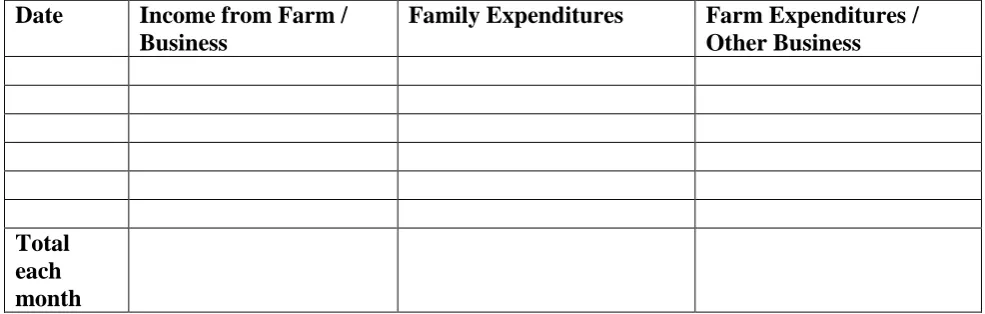
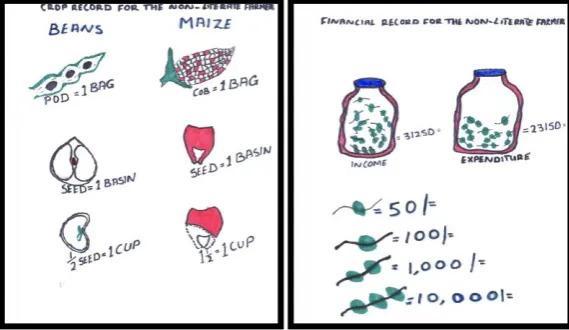
In other words: the group has to support the process where both responsibilities and money are shared in the homes. We showed that keeping records of the money is one powerful way of doing this. In families, where income and expenditures were recorded, it became visible for everybody from where the money comes and to which activities it goes. This create basis for rational and
32
CHAPTER EIGHT
FARM PLANNING
8.1 Organic farming involves the whole farm
Organic farming is based on a whole farm approach. All aspects of farming must work and fit together in the farm. Everybody must work together. A real farm-eco-system works this way, and it is important to consider all the factors with potential importance on the farm system. Even the surrounding nature must be considered in the planning, e.g. rainfall and animals which belong to the nature.
8.2 Drawing a farm plan helps us visualise the farm – now and in the future
A drawing of the farm makes it visible where the production of different crops takes place. In the Rwenzori project, farmers were provided with flip charts when drawing farm plans – this allows them better to share it with the whole group in a group discussion. However,
it does not require flip charts and pens, but can be made on smaller papers with ordinary pens maybe in different colors where some indicate the present use of land and
resources, and another color indicates the future plan.
By drawing a farm plan, the overview over the farm gives a good platform for
identifying the needs and the potentials of the farm, and to use it to discuss in the family.
33
farmer to improve the farm. The experience in the group is a big resource for supporting the farmer in thinking about his or her plan.
8.3 What do we need to consider when planning the farm?
Since all elements of the farm need to be considered, farm planning helps us to get better organised. It helps us to focus on the whole system and how the different elements and enterprises support each other.
The following should be considered in planning of the farm:
- Time for all the activities on the farm – both on everyday basis and when special efforts are required in relation to one crop or activity,
- Labour, which is required for the different activities. This can be the family’s own labour, as well as the visits by the FFS group and where they are needed most at a given time,
- Costs and expenditures, e.g. to buy seeds or for family activities including school fees, or for new investments and constructions,
- Do the family plan for new productions? How can these new productions be introduced and maintained, and where is land and resources available?
- Where are the strengths and weaknesses of the farm? This becomes visible in the discussions which will form basis for the planning,
- Income generating activities?
- Can available resources be used better in the future?
8.4 What is AESA?
‘AESA’ means ‘Agro-Ecological System Analysis’ and it means that you evaluate all the elements of the whole farm and analyse the whole system and how it works. Using an AESA form guides you to make a farm plan, or to analyse the whole system and discuss like when discussing a farm plan.
34
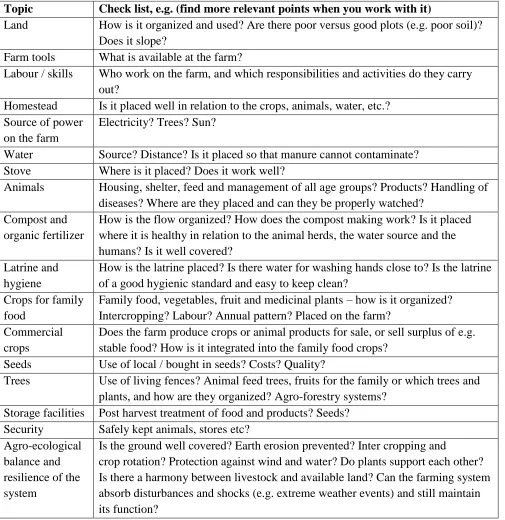
[image:38.612.53.558.182.702.2]8.5 The AESA form gives a checklist and guidance for the whole system
Table 8.1 An example on a check list for an AESA analysis which can be done on each farm by the group. After the analysis has been conducted, the host farmer family and the group should discuss advice for this particular farm, and the farmer family should share with the group which
improvements they will attempt to make before next visit.
Topic Check list, e.g. (find more relevant points when you work with it)
Land How is it organized and used? Are there poor versus good plots (e.g. poor soil)? Does it slope?
Farm tools What is available at the farm?
Labour / skills Who work on the farm, and which responsibilities and activities do they carry out?
Homestead Is it placed well in relation to the crops, animals, water, etc.? Source of power
on the farm
Electricity? Trees? Sun?
Water Source? Distance? Is it placed so that manure cannot contaminate? Stove Where is it placed? Does it work well?
Animals Housing, shelter, feed and management of all age groups? Products? Handling of diseases? Where are they placed and can they be properly watched?
Compost and organic fertilizer
How is the flow organized? How does the compost making work? Is it placed where it is healthy in relation to the animal herds, the water source and the humans? Is it well covered?
Latrine and hygiene
How is the latrine placed? Is there water for washing hands close to? Is the latrine of a good hygienic standard and easy to keep clean?
Crops for family food
Family food, vegetables, fruit and medicinal plants – how is it organized? Intercropping? Labour? Annual pattern? Placed on the farm?
Commercial crops
Does the farm produce crops or animal products for sale, or sell surplus of e.g. stable food? How is it integrated into the family food crops?
Seeds Use of local / bought in seeds? Costs? Quality?
Trees Use of living fences? Animal feed trees, fruits for the family or which trees and plants, and how are they organized? Agro-forestry systems?
Storage facilities Post harvest treatment of food and products? Seeds? Security Safely kept animals, stores etc?
Agro-ecological balance and resilience of the system
Is the ground well covered? Earth erosion prevented? Inter cropping and