UNIVERSITI TEKNIKAL MALAYSIA MELAKA
DEVELOPMENT OF A PROTOTYPE OF PORTABLE 5V
BATTERY CHARGING SYSTEM USING WIND ENERGY
This report is submitted in accordance with the requirement of the Universiti Teknikal Malaysia Melaka (UTeM) for the Bachelor of Mechanical Engineering
Technology (Automotive Technology) with Honours
by
ZULFAHMI BIN OMAR B071410507
950829-07-5581
UNIVERSITI TEKNIKAL MALAYSIA MELAKA
UNIVERSITI TEKNIKAL MALAYSIA MELAKA
UNIVERSITI TEKNIKAL MALAYSIA MELAKA
UNIVERSITI TEKNIKAL MALAYSIA MELAKA
BORANG PENGESAHAN STATUS LAPORAN PROJEK
SARJANA MUDA
BORANG PENGESAHAN STATUS LAPORAN PROJEK
SARJANA MUDA
BORANG PENGESAHAN STATUS LAPORAN PROJEK
SARJANA MUDA
BORANG PENGESAHAN STATUS LAPORAN PROJEK
SARJANA MUDA
TAJUK: DEVELOPMENT OF A PROTOTYPE OF PORTABLE 5V BATTERY
CHARGING SYSTEM USING WIND ENERGY
SESI PENGAJIAN: Semester 2017/2018
Saya ZULFAHMI BIN OMAR
mengaku membenarkan Laporan PSM ini disimpan di Perpustakaan Universiti Teknikal Malaysia Melaka (UTeM) dengan syarat-syarat kegunaan seperti berikut:
1. Laporan PSM adalah hak milik Universiti Teknikal Malaysia Melaka dan penulis. 2. Perpustakaan Universiti Teknikal Malaysia Melaka dibenarkan membuat salinan
untuk tujuan pengajian sahaja dengan izin penulis.
3. Perpustakaan dibenarkan membuat salinan laporan PSM ini sebagai bahan pertukaran antara institusi pengajian tinggi.
4. **Sila tandakan ( )
SULIT
TERHAD
TIDAK TERHAD
(Mengandungi maklumat yang berdarjah keselamatan atau kepentingan Malaysia sebagaimana yang termaktub dalam AKTA RAHSIA RASMI 1972)
(Mengandungi maklumat TERHAD yang telah ditentukan
oleh organisasi/badan di mana penyelidikan dijalankan)
Alamat Tetap:
NO 72,
KAMPUNG SUNGAI DULANG,
83100 RENGIT, JOHOR.
Tarikh: ________________________
Disahkan oleh:
Cop Rasmi:
Tarikh: _______________________
Cop Rasmi:
DECLARATION
I hereby, declared this report entitled “Development of a Prototype of 5V Battery Charging System Using Wind Energy” is the results of my own research except as
cited in references.
Signature : ……….
Author’s Name : ZULFAHMI BIN OMAR
APPROVAL
This report is submitted to the Faculty of Engineering Technology of UTeM as a partial fulfillment of the requirements for the degree of Bachelor of Mechanical Engineering Technology (Automotive Technology) with honours. The member of the supervisory is as follow:
………
EN. MUHAMMED NOOR BIN HASHIM
ABSTRAK
ABSTRACT
DEDICATION
To my beloved parents,
Omar Bin Ambu Laungan and Siti Rubiah Binti Abd Rashid
Who raised me to become a useful person, helping person and a successful person in a world and here after.
To my honored supervisor,
Mr Muhammed Noor Bin Hashim and all UTeM lecturers
ACKNOWLEDGEMENT
TABLE OF CONTENTS
ABSTRAK I
ABSTRACT II
DEDICATION III
ACKNOWLEDGEMENT IV
TABLE OF CONTENTS V
LIST OF TABLES VII
LIST OF FIGURES VIII
LIST OF ABBREVIATIONS, SYMBOLS AND NOMENCLATURE X
CHAPTER 1 1
INTRODUCTION 1
1.0 Introduction 1
1.1 Background 1
1.2 Problem Statement 3
1.3 Objectives 3
1.4 Scope of Project 4
CHAPTER 2 5
LITERATURE REVIEW 5
2.0 Introduction 5
2.1 Wind Energy 5
2.2 Wind Turbines. 6
2.3 Types of Wind Turbines 7
2.4 Generators 10
2.6 Previous Research 14
CHAPTER 3 19
RESEARCH METHODOLOGY 19
3.0 Introduction 19
3.1 Flowchart 20
3.2 Sketching 21
3.3 Design Drawing 22
3.4 Fabrication and Assembly of Prototype 23
3.5 Prototype Testing 23
3.6 Material and Cost 23
3.7 Conclusion 26
CHAPTER 4 27
RESULT AND DISCUSSION 27
4.1 Introduction 27
4.2 Concept Design Drawing 27
4.3 Prototype Fabrication and Assembly 28
4.4 Voltage Output Measurement 31
4.5 Comparison of Portable Wind Turbine with Another Commercial Charger. 38
CHAPTER 5 40
CONCLUSION AND RECOMMENDATION 40
5.1 Introduction 40
5.2 Conclusion 40
5.3 Recommendation 41
REFERENCES 42
APPENDIX A 44
LIST OF TABLES
LIST OF FIGURES
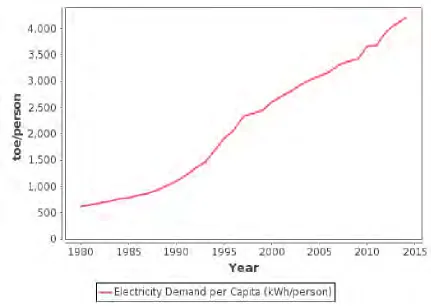
Figure 1-1: Graph increment of electricity demand per capita from 1980 to 2014 ... 2
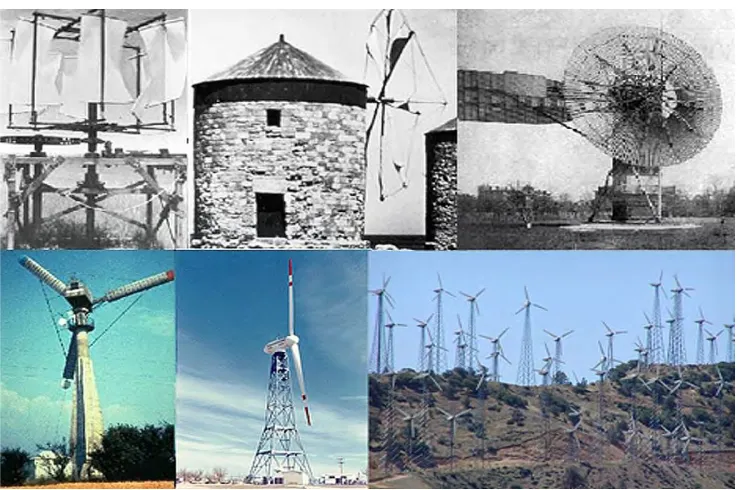
Figure 2-1: Primary stages development of wind turbine ... 7
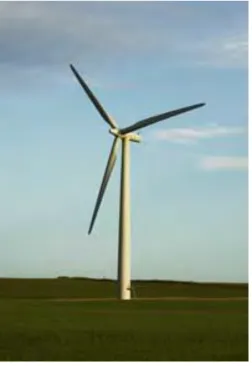
Figure 2-2: A Horizontal Axis Wind Turbine ... 8
Figure 2-3: A Darrieus Wind Turbine of VAWT subtypes ... 9
Figure 2-4: A Savonion Wind Turbine of VAWT subtypes ... 10
Figure 2-5: Portrait of Michael Faraday ... 11
Figure 2-6: Electricity generation by Faraday’s Law ... 12
Figure 2-7: Lenz Law of magnetic Induction ... 13
Figure 2-8: The construction of free energy generator ... 15
Figure 2-9: Pictorial description of the variation of speed and voltage ... 16
Figure 2-10: Graph of voltage, current and power produce against speed (Grover et al. 2014) ... 16
Figure 2-11: Circuit of the voltage booster used in the experiment. (Grover et al. 2014) ... 17
Figure 2-12: Graph of the boost voltage when using voltage booster. (Grover et al. 2014) ... 18
Figure 3-1: Flowchart ... 20
Figure 3-2: Design 1 ... 21
Figure 3-3: Design 2 ... 21
Figure 3-4: Design 3 ... 22
Figure 4-1:Drawing of prototype using CATIA V5 software ... 28
Figure 4-2: Measurement of the length of the wood. ... 29
Figure 4-3: Cutting Process by using saw ... 30
Figure 4-4: Soldering of PC Fan to 5V Voltage Booster ... 30
Figure 4-5: Prototype when assemble with the motorcycle’s basket. ... 31
Figure 4-6: Graph of Turbine Speed against Motorcycle’s Speed………...33
LIST
OF
ABBREVIATIONS, SYMBOLS AND
NOMENCLATURE
2D - Two-Dimensional
3D - Three-Dimensional
A Ampere
AC - Alternating Current
DC - Direct Current
CAD - Computer Aided Design
CAE - Computer Aided Engineering
CAM - Computer Aided Manufacture
CATIA - Computer Aided Three-Dimensional Interactive Application
EMF - Electromotive Force
HAWT - Horizontal Axis Wind Turbine
P Power
PC - Personal Computer
USB - Universal Serial Bus
UTeM - Universiti Teknikal Malaysia Melaka
V Voltage
CHAPTER 1
INTRODUCTION
1.0 Introduction
In this chapter, the project’s introduction, background, problem statement, objectives and scope of project will be discussed. This project focus on designing and fabricating a prototype of portable wind turbine for that can be attached to motorcycle It works by converting wind energy to kinetic energy and then producing electrical energy. will be design and attach to a motorcycle and will provide electricity by harvesting wind energy when riding the motorcycle. The purpose of the portable wind turbine is to overcome the problem of increasing cost of electricity usage.
1.1 Background
The main function of a generator is generating electricity. The discovery of electromagnetic induction by Michel Faraday demonstrated a method to build a simple generator. The need for such a device at that time was little as commercial energy such as light still not invented.
In Malaysia, the electricity output is generated mainly from burning of limited fossil fuel resources. For example, from the burning of oil, coal or natural gas that may cause consequences for the environment.
As Malaysia is one of the rapidly developing country, the demand for electricity over the past decades has rapidly increased whether from the industrial sector or the residential and commercial use of the Malaysian.
[image:16.612.114.545.318.624.2]The increasing cost and electricity demand per capita has been a huge problem that had to be faced by the Malaysian. Based on the statistics from the energy commission of Malaysia, the electricity demand per capita shows increment each year, from 626 kWh/person in 1980 to 4194 kwh/person in 2014
Some ways that can be used to decrease the amount of electricity usage is by harvesting energy from surrounding. One of the energy that can be harvest is wind energy. Some of the time that can be used to harvest wind energy is when riding a motorcycle. Huge amount of wind energy is produced when riding motorcycle especially in higher speed. Hence, harvesting the wind energy by using small wind turbine will result in electricity production. Although, the electricity produce is maybe low, it can be used to charge mobile phones hence decreasing the electricity cost usage.
1.2 Problem Statement
The main problem faced is the increasing cost and electricity demand per capita of Malaysian. Some of the reason that contribute to the increment of cost and electricity is due to usage of mobile devices such as mobile phones. Based on the statistics from the energy commission of Malaysia, the electricity demand per capita shows increment each year, from 626 kWh/person in 1980 to 4194 kwh/person in 2014. The rapidly increasing electricity cost and demand per capita cause people to look for other alternate source of energy.
1.3 Objectives
The purpose of this project is to build a prototype of 5V battery charging system by using wind energy. The portable wind turbine is expected to be able to charge 5V battery. In short, the objectives are:
i. To design a prototype of portable wind turbine that can be attached to a motorcycle.
iii. To measure the output voltage of the portable wind generator by using multimeter.
1.4 Scope of Project
The scope of this project is divided into two main parts. The first main part will focus on designing the prototype of the portable wind generator, while the second main part is focusing on fabricating the prototype of the portable wind generator.
For the designing of the prototype itself, some concepts of the portable wind turbine system will be developed and sketch. The most effective or suitable concept will be selected by concept selection method The finalized design concept will be continued to be design in Computer Aided Design (CAD) Software. CATIA V5 Software will is the CAD Software that will be used to design and draw every part of the prototype of 5V battery charging system.
CHAPTER 2
LITERATURE REVIEW
2.0 Introduction
This chapter discussed about some published information regarding this project and it will cover with some basic theories with a principle for a better understanding about this project.
2.1 Wind Energy
2.2 Wind Turbines.
2.2.1 History of Wind Turbines.
Technology of winds start to be acknowledge centuries ago. Simpler wind devices which are vertical axis windmill found thousands of years ago at the Persian-Afghan borders around 200 BC. Meanwhile, horizontal- axis windmills found much later which is the property of the Netherlands and the Mediterranean around 1300 – 1875 AD. Evolution of the system was further perfected by the USA during 19th century. In 1888 Cleveland, Ohio, a low speed and high-solidity wind turbine was installed which is the first large wind machine to generate electricity. Design of airplane propellers and monoplane wings had inspired further development of wind generators in the United States of America (USA). During 1935 to 1970 periods, subsequent effort in several European countries prove that large-scale wind turbine could work (Kaldellis & Zafirakis 2011)
Figure 2-1: Primary stages development of wind turbine (Kaldellis & Zafirakis 2011)
2.3 Types of Wind Turbines
There are two major types of wind turbines which are Horizontal Axis Wind Turbine and Vertical Axis Wind Turbine.
2.3.1 Horizontal Axis Wind Turbine
Horizontal Axis Wind Turbines (HAWT) are the most common style of wind turbine. A HAWT design is similar to windmill, it consists of blades that look similar to a propeller that rotates on the horizontal axis.
square with the rotor, while large turbines used a wind sensor coupled with servo motor to turn the turbine into the wind. Large wind turbines usually have a gearbox that function to turn the rotation of the rotor from slow into a faster rotation that have more efficiency in driving an electrical generator.
[image:22.612.203.455.275.641.2]The tower will produce turbulence behind it, hence the turbine usually pointed upwind to the tower. As wind turbine blades are stiff, it prevents the blades from being pushed into tower cause by high winds. The blades usually placed in some amount in front of the towers and usually tilted up a bit.(C Bracken Meyers, 2013)
Figure 2-2: A Horizontal Axis Wind Turbine
2.3.2 Vertical Axis Wind Turbine
Vertical Axis Wind Turbines (VAWT) have the main rotor shaft arranged vertically. Difference with the HAWT that have main rotor shaft that arrange horizontally
The wind turbine does not need to be pointed into the wind for this type of wind turbine. It is an advantage on place which has turbulent winds, or the wind direction is highly variable.
As the VAWT has vertical axis, its generator and other primary components can be placed near the ground hence the tower does not need to support those components. It also makes the maintenance for the wind turbine easier. The main disadvantages for this kind of wind turbines are it generally create drag when rotating into the wind.
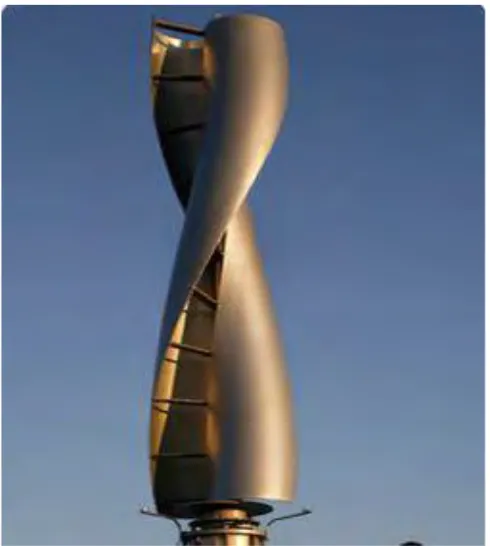
[image:23.612.220.435.417.641.2]VAWT have two subtypes which are Darrieus wind turbine and Savonius wind turbine. C Bracken Meyers, 2013)
Figure 2-3: A Darrieus Wind Turbine of VAWT subtypes
Figure 2-4: A Savonion Wind Turbine of VAWT subtypes
(Source:<http://www.archiexpo.com/prod/windside/product-88530-959470.html> 27/11/2017)
2.4 Generators