CUROPEAN COMMISSION
Directorate-General Information, Communication, Culture, Audiovisual Directorate-General External Relations
Directorate-Genera I Externa l Poli tica I Re la tions
NO3
/
MARCH
I
94
PROGRESS REPORT
on
EU-US
Relations
CONTENTS
INTRODUCTION
2
TWO
BIG STEPS FORWARDConclusion
ofthe
Uruguay RoundPresident
Clinton's
First Visitto
Europe 433
OTH ER H IC H.LEVEL BI LATERALS
Warren
Christopherin
BrusselsMickey
Kantorin
Brussels EU-US Sub-CabinetTransatlantic
Ministerial
meeting in Washingtonl'
;J
5 6
THE EUROPEAN PARLIAMENT'S ACTIVITIES
IN THE FIELD OF EU.US RELATIONS
6
EU.US POLITICAL DIALOGUE;
FOREICN
AND
SECURITY POLICY7
EU.US TRADE
AND
ECONOMIC
RELATIONS-RECENT DEVELOPMENTSSpotlight: Nerc generation of trade issues
Trade and Environment lTrade and Competilion /Trade and Social lssues
CATT issues
Tobacco / Trade Policy Review Mechanirm (TPRM)
Some Problems
Super 301 / Horserneat / Seafood / Conditional National Treatment (CNT)
/
ShipbuildingSome positive developments
C 7 Jobs Corrference / Regulatory Cooperation
/
National lnformation Infrastructure / EU-US Spirits Agreement / Procurement/Telecoms/
Air cargo / Customs Cooperation Agreement I Energy Charter / AluminiumB
l1
AN
EU VIEWON
US TRADE RELATIONS WITI-ITHIRD
COUNTRIES US/TAPAN trade relations China14
14 14 Repoduolon k authorired.
EUROPEAN COMMISSION - ?00, rue de la Loi - T 120 - 6/93 - &l (X9 Brussels
T6l. (312) 299.90.48 - Fax. (11!l 299.92.88
Infomation *rvices in the USA:
2l0O M SrrEet, tfw, Suite 707, Wlhington, OC ?OO37 - USA - Tcl. (202f 862-9500
3O5 East 47th Strcet. 3 Dag Hammer:kiold Plur, t,lerr-Yor\ NY 10017 - USA - Tel. 1212't 371-38U
This is the
first
Progress Reportof
1994 and also the first one to be produced jointly by DC I and DC lA, the Commission services dealingwith
erternal economicand external
political
relations
respectively. The Progress Reportwill
thus deliver a more complete pic-ture of the multifarious contacts across the Atlantic notonly referring to trade and economic issues but also reporting on how cooperation in the field of Common Foreign and Security Policy (CFSP) has evolved in the
few
first
months sincethe entry into
forceof
the Maastricht Treaty.The four months (December 1993
-
March 1994) this issue covers, have been good ones for the transatlantic relationship. Frictions and misunderstandings some-times prevalent in '1993 have been replaced by a better understanding of each sides' concerns and bya
closer cooperation on the whole range of political andecono-mic
issuesin
which the
EuropeanUnion
and the United States share an interest.It is of course a truism that the world on 31 March 1994 looks different from what
it
did on 1 December 1993, butit
is one particularly aptto
describe EU-US rela-tions. They were under some strain at the beginning of December 1993: in the US, the EU was widely seen asresponsible
for
not preventing the escalation of theconflict in
former Yugoslavia and was regarded as somewhat parsimonious in its efforts to assist the reform process in the countries of Central and Eastern Europe, Russia and the ClS. The US saw the EC struggling first over the ratification of Maastricht and then over enlar-gement and it considered that the prospects for deeper monetary integration were shattered. Europeans, on the other hand, were disappointed by the lack of interest the Clinton Administration initially appeared to have inEuropean affairs. lts foreign policy focus on NAFTA and APEC coupled
with
the time-consuming domesticissues of budget, health and crime largely absorbed the Administration's energies and left the EU wondering what role
it
would play in future US policies. Inaddi-tion, the seven-year-long CATT neSotiations dragged on and, with only wvo weeks to go until the deadline for their conclusion, the EU and the US were still divi-ded over a substantial number of issues .
No miracles have taken place since then. However, among the various political factors contributing
to
arevitafisation and intensification of the EU
-
US dia-logue on practically every issue of common concern, twb events were of outstanding impoftance: theconclu-sion
of the
Uruguay
Round neSotiationson
15 December 1993 and President Clinton's first visit to Europe between 9-
16 January 1994. Both are descri-bed in greater detail in the section of this Report entit-led "Two big steps forward".The successful conclusion of the Uruguay Round, in itself a ringing confirmation of the primacy of open trade rules. demonstrated that hoth the EU and the US
have the political
will
to work together constructively. Theirjoint
leadership made an agreement possible which provides for trade rules wider in scope and more effective in their protection of fair trade, a more level international playing field and greater legal security for traders. In a nutshell, the potential for trade disputes between the world's largest trading partners has been significantly reduced while the scope for cooperation has been enlarged.President Clinton's visit to furope and in particular his
Summit
meetingwith
President Delors and
the Presiijent of the European Council, Mr Papandreou, dida
lotto
dispel European anxieties about a shiftin
US interest towards the Pacific area and away from their commitments in Europe. In what President Delorsdes-cribed as the best Summit yet held, the US President wholeheartedly supported European integration, under-lining the importance of the EU for the United States
and emphasising that "America's commitment towards Europe's safety and stability remains as strong as ever". Supported by this new understanding between the paftners on both sides of the Atlantic, the transatlantic dialogue now covers more areas than ever before.
while
the basis for a working partnership between thetwo
sides was already definedin
the Transatlantic Declaration of November I990, it is only now that the EU and the US have begun to make full use of the pro-cedures established for regular consultation and inter-action.The Progress Report provides information on some of the issues currently under discussion, denoting progress achieved and obstacles encountered. lt has no claim to completeness. More general information on the transat-lantic relationship as well as a copy of the Transatlantic Declaration are available
on
request.Of
particular interest are the Commission's annual "Repofton
US Barriers to Trade and Investment", the annual "General Report on the Activities of the Communities" and the monthly "Bulletin of the European Union". The lattertwo publications include chapters on EU-US relations,
with the Bulletin focusing on the ongoing dialogue at the highest political level. For further information on economic and trade aspects, contact Ms A. Schomaker, DC 1.8.1
,te|
..32-2-299.01.73, and on political aspectsCONCTUSION OF THE URUGUAY ROUND
l Irtt!ttIraItIIttIlt
After 2643 days of negotiations, the conclusion of the Uruguay Round on 15 December 1993 brought a sense
of
relief and achievement tothe
102 current CATT Member States and gave a positive signal to business and investment across the world. The results achievedwill boost the world economy and are expected to pro-vide a very much needed impetus
to
help overcome the global recession.Even conservative estimates suggest that the overall economic benefits of the Uruguay Round agreement
will
be tremendous. According to a study of the CATT Secretariat (based on the offers made by trade negotia-tors by 19 November 1993), the projected increase in global economic welfarewill
amountto
US$ 230bil-lion by the year 2005 and many commentators think that this estimate is too low.
But the conclusion of negotiations was not only impor-tant because of the economic benefits
it
conferred on the contracting parties,it
also demonstrated that inter-national cooperation was capable of achieving results even in a world hit by recession.In a nutshell, the Round went beyond the consolidation and the reduction of tariff and non-tariff measures ro address and cover new areas including intellectual pro-pefty, services and trade-related investment measures. Furthermore,
it
has encompassed in a singleunderta-king
the
Final
Act
creating
the WJrld
Trade Organisation, a Memorandum of Understanding on clis-pute settlement procedures and a wide range of expan-ded Codes (TBT (Technical Barriers to Trade), procure-ment, subsidies, dumping, etc) and comprehensive sectoral agreements.More specifically, there are the achievements of the tra-ditional CATT activity of tariff reductions. Here, the Uruguay Round produced a final market access packa_ ge which constitutes the biggest liberalisation in trade
history.
Overall, developed country contributions reduce import duties by between 35 and 40 per cent, bettering targets set earlier in the negotiations. The USwill
reduce its industrial tariffs on EU exports by a6%; while the EU, for its part,will
reduce industriai tariffsfor US imports by
5O'/..
ln
various sectors, such aspharmaceuticals and intermediate chemicals, paper, steel, construction equipment as well as scientific
ins-truments,
total
tariff elimination
was achieved. However, despite these commitments. many US tariff peaks (tariffsof
15oh and above),in
particular in the textile, footwear, ceramics and trucks sectors,will
beupheld even after the implementation of the Uruguay Round results.
Furthermore, the negotiations included within the sphe-re of multilateral law international economic relaiions in the field of services, intellectual propefty and foreign direct investment.
With regard to services: we now have a multilateral fra-mework
of
open trade rulesie
transparency, MFN (most-favoured-nation treatment) and national treat-ment together with the first package of market-opening commitments. The rules are comprehensive and no sector is excluded, though many substantive commit-ments were ultimately deferredto
futurework
pro-grammes. The audiovisual sector is also part of the ser-vices framework although the EU has not undeftaken any market access obligations.The agreement on intellectual propefty
will
level up protection for a range of formsof
intellectual property thus providing significant benefits for a wide spectrum of US and European industry: consumer goods, textiles and clothing, processed food, wines and spiris, phar-maceuticals, chemicals, computer programming and entertainment.The third major achievement was a strengthening of the institution charged with the promotion
of
harmonious economic relations - therewill
now be a World Trade Organisation (WTO). The WTOwill
have the authority necessary to be more active in co-operation with other key international bodies such as the IMF and the World Bank. The WTOwill
also be a more transparent organi-sation combining a higher political profile with a new statutory openness. ltwill
take more frequent initiativesto steer world economic cooperation towards greater openness and less friction.
Yet another major attainment is the strengthening of the multilateral dispute senlement procedures and the rela-ted removal of scope for unilateral action. To counter-balance the abolition of the virtual power of veto that has applied to CATT dispute settlement up to now, the legal findings of WTO panels
will
be open to review by a separate appealsbody.
For the first time, there willbe clear rules on the timetable for dispr*e settl€ment, on the implementation of panel findings and on the steps
to
be takenin
casesof
non-implementation. Alongside this system there is the explicit reaffirmation that WTO members shall not take it upon themselves to determine a breachof
international rules orto
apply unilateral sanctions (however, see below for a distus-sion of President Clinton's recent decisionto
reinstate "Super 301 ").Numerous additional results deserve
a
mention. To pick out just one, but one of particular importance toproduction and the corresponding external protection it is difficult to overstate the importance of binding agree-ments in the field of agriculture. The Uruguay Round represents the integration of agricultural trade into the multilateral trading system and the agreement, once implemented,
will
ensure that in the future agricultural tradewill
be subject to rigid multilateral rules. In addi-tion, the CATT Contracting Parties have agreed tospe-cific
disciplineson
internal support measures, on export subsidies and on market access. Market oppor-tunities for efficient producers are thus improved and consumers on both sides of the Atlantic should be.able to benefit from lower food prices.Despite
the overall very
positive outcomeof
the Uruguay Round, substantive work remains to be done as the results achieved did not in all cases match the ambitious objectives of the neEotiating parties. With the aim of concluding them by 15 April 1994 (expiry ofthe US President's "fast-track" neSotiating authority), further negotiations are under way on public procure-ment. As regards services where most "unfinished busi-ness" remains, negotiations on Basic Telecommunica-tions should be concluded by 30
April
1996.lt
was also agreed to continue negotiations on certain aspectsof the financial services commitments. On maritime transport further negotiations
will
be pursued as ofApril 1994 with the aim of concluding them by ,lune
1996. Professional services and free movement of per-sons
will
be discussed by specific working Sroups, the aim being to achieve higher degrees of liberalisation in these areas. Finally, certain plurilateral agreements still haveto
be negotiated: a Multilateral Steel Agreement and a Civil Aircraft Agreement.For the time being efforts need to be concentrated on the process of formal ratification of the Uruguay results and the adoption of the final
text.
Accurate implemen-tation of the Uruguay Round is essential and any backs-liding on the commitments made on 15 December last year must be resisted. The EU and the US clearly have a mutual interest in understanding how each other will complete the implementation process, both in order to provide continued leadership to other countries and to achieve as much convergence as possible between themselvesin
orderto
maximise the benefits of the Round.Beyond these practical considerations lies the question
of
beginningwork on the
new main priorities for strengthening worldtrade.
Some have already been identified: the key ones are the relations between trade and environment policy, as well as the need for stron-ger international rules on competition and the issue of trade and social questions. Headway already made will be discussed in greater detail in the section entitled "Spotlight" in this Report.From a
political
perspective, the conclusion of the Uruguay Round not only cleared the way for asuccess-frrl Fl,l-tJS Srrmmit. hrrt also rendercd
it
nossihlp tofocus on another important element of EU-US coopera-tion, the establishment of an overall security framework for post Cold War Europe.
PRESIDENT
CIINTON'S
FIRST VISIT TO EUROPE I I lt I lr I ll I lr ! ll r ll I lrPresident Clinton's first visit
to
Europe from 9to
16 January 1994 constituted a landmark in bilateral rela-tions and proved that'
after 1993 as transitory year for the new Administration's policy formulation-
Europe has regained priority status on the US' international political agenda. He followed an impressive schedule involving meetings at NATO andwith
EU leaders in Brussels, with the heads of state and government of the Visegrdd countriesin
Prague,with
the
Ukrainian President in Kiev, the Russian President in Moscow and finally with the Syrian President, Assad, in Ceneva. The US President left his interlocutors throughout the conti-nent impressed both by his capacity for mastering awhole range of diverse issues in great detail and by his genuine commitment to furthering European integra-tion.
President Clinton set the tone by sharing his thoughs on the future of the transatlantic relationship with 300 young Europeans, whom he addressed in a speech in Brussels'townhall at the outset of his visit. He emphasi-sed that his "Administration supports European Union and Europe's development of stronger institutions of common purpose and common action" and went on to say that the US recognise that they
"will
benefit more from a strong and equal partner than from a weak one". Following the NATO Summit, the EU-US Summit on 1l ianuary brought together President Delors, the current President of the European Council Mr Papandreou, and President Clinton for substantial and lively discussions on various issues focusingin
particular on economic growth and employment. Participants at the meeting subsequently described the atmosphere as excellenu one observer stated thatit
had been a true meeting of minds confirming the special nature of the transatlantic relationship.President Clinton used the opportunity to reiterate his Administration's support for the continuing process of European integration and
to
confirm the EU's role asthe United States' most valued trade and investment 'partner. The Summit also served to establish a consen-sus on the particular impoftance of tackling jointly the problem of unemployment. The Commission's White Paper was well received by President Clinton and ideas
were exchanged about how best to Benerate employ-ment growth
on
both sides of theAtlantic.
In this context a more intensive cooperation in the preparation of the C-7 Jobs Summit was agreedupon.
As regardsSummit provided a solid basis for dealing with the outs-tanding issues, collaborating further on improving third country market access and providing joint leadership in the discussion of the next generation of trade issues.
Civen the itinerary for President Clinton's visit, discus-sions over lunch naturally focused on NATO and the EU's enhanced role within this organisation as well as
on Russia. Both sides agreed that
it
was difficult to determine how the reform processin
Russia could be best supported and that the Russian government should be made more aware of the importance of their trade relationship withthe
EU, given that current Russianexpofts to the EU are thifty times higher than to the US.
Further political achievements are set out
in
detail in section E of this Report.In summary,
it
can safely be stated thatthe
EU-US Summit provided a new impetus for bilateral relationsboth
in
political
and economicterms.
The unique nature of the transatlantic partnership was confirmedand the high personal regard presidents Delors and Clinton have for each other
will
cenainly contribute to a further strengthening of the bond between the UnitedStates and the European Union.
WARREN CHRISTOPHER
IN
BRUSSETSr r tt I rt t al ! tr I ll I tl I ll
After attending the CSCE,ministerial meeting in Rome, Secretary of State Warren Christopher met the president
of
the
Commission andthe then
presidentof
theCouncil,
Belgian Foreign
Minister
Claes,on
l December1994.
Relevant foreign policy topics of common interest were discussed such as developmentsin Russia, the Central and Eastern European countries, ex-Yugoslavia, the Middle East and tran.
MICKEY KANTOR
tN
BRUSSETS! I tI I tt t Il r rt I rt I tr I rt
EU Commissioner for External Economic Relations, Sir
Leon Brittan, and US Trade Representative (USTR).
Mickey Kantor, used
their
firsi
meeting since the conclusion of the Uruguay Round (UR) to look chiefly towards the future andto
identify a number of topics requiring particular attention duringthe
months tocome. The implementation of the UR results naturally figures high on the political agenda on both sides of the
Atlantic.
Questions concerning maritime transport, government procurement and other ,,unfinished busi-ness" from the UR were discussed in some detail. The new trade issues,in
particular the problem of social issues, formed another focal point of the discussions. The two trade negotiators also touched on graduation, APEC and the US-lapan Framework Agreement. Onthis last point, Sir Leon re-emphasised Europe,s opposi-tion to managed trade and said that any such arrange-ment must be MFN-based and non-discriminarory.
EU.US SUB.CABINET
r I tt r It t lt t tI r lt t tt I lt
The first EU-US Sub-Cabinet meeting
of
1994(these are meetings at the highest administrative level which are held biannually) took place on2
February. The spirit of open and constructive cooperation established atthefirst
Sub-Cabinet meeting
with the
Clinton
Administration in July 1993 was confirmed and both sides agreed
to
cooperate more closelyon
a whole range of issues. The respective delegations werehea-ded by
Mr
Krenzler, Director Ceneralfor
External Economic Relations, and Ms Spero, Under Secretary forEconomic
and Agricultural
Affairs
at the
US Depaftment of State. At a press conference, Ms Spero described the meeting as very positive, saying thai the US and the EU were at a point in their relations where "things are really very very good,,. Both pafties agreed that the Sub-Cabinet meetings provided a useful means of actively reviewing the transatlantic dialogue and that the meetings have developed into an appropriate forum for overall coordination of EU-US relations, as well asfor medium and longer term policy planning. They will
continue to be used
to
assure the follow-up of agree-ments reached at previous meetings.As regards specific subjects, the so-called ,,next
genera-tion of trade issues"; namely the links between trade and the environment, trade and competition policy and trade and social matters, was one of the main themes of the consultations, as was the state of the economy and,
in
particular, cooperation over the preparation of theJobs Summit. Under the agenda item ,,early warning,, the Sub-Cabinet looked at issues which could escalaie into disputes if not kept under close political purview, such as conditional national treatment, computer reser-vation systems and
illicit
payments (ie the bribery ofregulatory cooperation and, over lunch, with the parti-cipation of t"tr Burghardt, Director Ceneral for brternal Political Relations, the Energy Charter, Japan, Russia and the countries of Central and Eastern Europe.
TMNSATTANTIC MTNISTERIAI MEETING IN
WASHINGTON
trrr
r rl
r ral
trr
ll
!laltl
In keeping with the framework of the on-golng politicai dialogue as set out in the Transatlantic Declaration, EU Commissioner for External Political Relations Hans van
The 42nd EP/US Congress inter-parliamentary meeting was held in Athens from 14-16 January 1994, just a few days after the Transatlantic Summit in Brussels. lt was the first such meeting since both the ratification of the Maastricht Treaty and the successful conclusion of the Uruguay Round. lt took place in a constructive atmos-phere and dealt with a number of political, economic and trade related
issues.
Boththe
European and American representatives warmly welcomed the resultsof the Summit,
with Mr
Lantos, chairman of the US Congress delegation pointing out that the US and the EU had never needed each other as much as now andMr
Donnelly, chairman of the EP delegation, stressing that the EU-US Summit had got "the transatlantic rela-tionship back on track".The ensuing exchange of views focused first on the "unfinished business" from the Uruguay Round, but then turned to the benefits of closer regional economic cooperation as witnessed by both NAFTA and the EU's efforts fortrade liberalisation with Eastern Europe. Both sides also explained their views on a number of speci-fic subjects such as aviation, unitary taxation and steel.
The
two
sessions devotedto a
discussion of foreignpolicy issues concentrated on the EU's future role in NATO and the role of NATO itself. Finally, an intensi-ve and detailed discussion took place on how to rein-force cooperation with and improve the investment cli-mate in Russia.
In February/t"tarch
the
European Parliament debated and adopted a series of repofts relatedto
EU-US rela-tions, notably the Penders Report "on relations between the Eurooean Union and the United States of America", and the Prag Report "on developmentsin
East-West relations and their impact on relations beween the USden Broek and the current President of the Council, the Creek Foreign Minister Papoulias met US Secretary-of State, Warren Christopher,
in
Washingtonon
31January 1994.
There was a frank and constructive exchange of views
on a wide range
of
issues of mutual interest, namely former Yugoslavia, Russia and ClS, the Middle East and Central and Eastern European countries. Mr van den Broek and Foreign Minister Papoulias also met with MrA.
Lake,
National
Security
Advisor,
and
Mr
L.Hamilton, Chairman of the Foreign Affairs Committee in the House of Representatives.
With both
the
NATO and the EU-US Summit taking placein
Brussels in January, the EU-US political dia-logue wassignificantly
intensified during the firstmonth of 1994.
The role and importance of the EU
in
building up a European security and defence identity obtained full USsupport.
To develop its Common Foreign and Security Policy, the EUwill
take greater responsibility for security matters andwill
strengthen the European pillar of the Alliance. Developments in Russia and the other ClS, the Central and Eastern European countries, former Yugoslavia and the Middle East were also dis-cussed.The WEU, as a new element and specifically European defence component,
will
complement NATO and sharethe same strategic interests. The Combined Joint Task Forces using NATO resources
will
be at the disposal of the WEU for certain military operations. The division of labour between thewo
defence structures, although not yet clearly defined,will
ensure more flexibility in reactingto
potential future local conflictsin
Europe. Creater European involvement in security and defence matters was strongly supported by the US side.The main outcome of the NATO Summit was the rein-tegration of NATO's original objectives as a collective defence community and "guarantor,' of security
in
aperiod of transition affecting the whole continent. The stationing of 100,000 soldiers in Europe reaffirmed the US' commitment towards the Alliance which is based
on a strong transatlantic
link in
the face of a shared destiny. NATOwill
continue to adapt its structures tothe new situation
which
will
involvean
increased European contribution. Out of area operations under the authority of the UN Security Council can be consi-dered on a case-by-case basis.There was a general consensus on Russia,s importance
with regard to the European security architecture and the political line to be taken in form of conditional sup_
port
of
reformswhich
aimto
transform the society according to democratic standards.In
responseto the
applicationsof
various former Warsaw Pact countries to become NATO members, the US introduced the formula of ,,paftnership for peace,, (PfP)which
was unanimously adopted duringthe Summit. Short of immediate membership it aims to ins-tigate closer political and operational military coopera-tion in planning and training activities. The prospect of future membership
of
NATO was also addressed, but without setting precise deadlines and membership cri_teria. During his stop-over in prague. president Clinton met with the representatives of the Visegrdd Four and
set out the EU-US joint position on the dimension and potential of this partnership for the countries concer-ned. The "Partnership
for
peace,, initiative met with some scepticism from the countriesof
Central and Eastern Europe in the beginning but has now been lar-gely accepted. Including Slovenia, 14 Stateswill
have signed the agreement by the end ofMarch.
Russia is also considering joining the partnership scheme.The trilateral agreement reached
in
Moscow between the US, Russia and Ukraine on denuclearisation of the Ukraine covers the disposal of the world,s third largest nuclear arsenal and also improvesthe
prospectsof
enhanci.ng security
in
Europe.
After havingfinally
obtained support from the Ukrainian parliameni,
practi-cal implementation is on the
way.
Thefaa
that the Ukraine recently joined the pfp is another encouragingstep
in the right
direction.
Ukrainian
presidentKravchuk's recent visit to the US was accompanied by the announcement of an initial aid package of US$ ZOi)
Million, and the US is inviting further assistance from the EU
to
help the Ukrainein
its effortsto
undertake economicreforms.
In this context,the
EU and the Ukraine initialed a partnership and cooperation agree-ment on 23 March 1994 in Brussels.A
major recent developmentin
US foreign policy in Europe has been its more active involvement and lea-dership with regard to Bosnia-Herzegovina. The formal signing of a document endorsing the draft constitutionof a Muslim/Croat Federation
in
Bosnia-HerzegovinaSPOTLICHT:
NEXT GENERATION OF TRADE ISSUES Trade and Environment /Trade and Competition
/
Trade and Social lssuesr r ll t ll ! rr ! rl I lr I rl I Il
There is a common understanding between the EU and the US that, following the successful conclusion of the Uruguay Round negotiations last December, a new set
of trade issues
will
haveto
be focused on withoutdelay. ln this respecl, the issues of trade and environ-ment, trade and social aspects, and trade and competi-tion were highlighted during the last EU-US Sub-cabi-net meeting.
The
very frank and open exchange of views enabled both sides to gain a fair picture of both the preparatory work undeftaken so far and the current pol itical environment..
Trade and EnvironmentThe discussion on trade and environment is the most advanced
of the
three.
Duringthe
Scheveningen Round Table on Environment and Trade, which took place in January 1994, the EU and the US engaged in a broad and more in-depth discussion of the various aspects of the issue leading to an increasing convergen-ce of views. lt was agreed to cooperate closely on the establishment of a Working Committee on Trade and Environment in the framework of the new World Trade Organisation. This Committee should have an appro-priate status comparable to that of the Committeesesta-blished by the Ministerial Conference according to
Article
lV
of the WTO Agreement. lts proceedings should be transparent and open to outside environmen-tal expertise and its work programme flexible while still encompassingall
relevantsubjects.
Both partners understood that developing countries had to be brought on board and that their concerns about a possible "eco-logical colonialism" had to be taken seriously.On the issue of unilateral measures in the context of the environmental protection,
it
was possible to find considerable common ground although there still exist important differences of appreciation in the respective positions of the EU and the US. The EU is of the opi-nion that multilateral measures are clearly to be prefer-red over unilateral actions.With regard to more specific aspecs. the Round Table
took up the issues
of
nature conservation, chemical safety, ecolabels and waste.On nature conservation, it was considered necessary to look for incentives to encourage sustainable develop-ment projects which involve local people in conserva-tion, giving them an incentive to work for sustainable development and green
trade.
Examples cited were trade incentives such as the Ceneralised System of Preferences (CSP) and export credits, and also the use of financial resources in aid programmes.On chemical safety, it was agreed that there should be
a joint EU-US workhop with the chemical industry in order
to
look at existing problems, underline success stories and work out better methods of cooperation for the future.The ecolabel presentation generated great interest amongst the Americans present and in general with the NCOs. The need for transparency in the ecolabelling procedure was heavily
underlined. An
information meeting was proposed in view of the interest expressed by the US authorities.On
waste,the
EU's legislationto
ratify the
BaselConvention
hasalready been adopted and
the Convention was ratified on7
February by the EU and most of the Member States. Much of the discussion focusedon
waste management andthe
problems which have occurred in the German dual system. The question of total bans on export of waste to third world countries was raised and it was acknowledged that this would be a ma.ior problem at the next meeting of the contracting parties to the Basel Convention. This was deemed to be an area where cooperation between EUand US would be necessary
if
the meeting isto
be a SUCCeSS..
Trade and Social lssuesThere is agreement between the EU and the US on the political importance as well as the complexity of trade and social questions. Ongoing discussions between the two paftners aim to assess the scope of the problem and
to
determine the most appropriate international fora to deal with thematter. lt
should be noted that emphasis is being placed on the question offull
and faithful implementation of human rights rather than the transposition of certain social standards.fu
far as mul-tilateral fora are concerned, both the EU and the US areOrganisation should only be concerned with the issue at a later stage.
.
Trade and CompetitionThe issue of trade and competition
will
also require international rule making in the future. During the last Sub-Cabinet meeting it became apparent that although bilateral discussion between the EU and the US on the substance of the issue arewell
advanced, they still needto
be intensified in orderto
provide a basis for multilateral cooperation.lt
was also understood that there is a needto
integrate the developing countries more fully into the discussion.GATT ISSUES
I r art rl rlt I tlarl rtr I lr
.
TobaccoThe
provisions
of
the
US
Omnibus
Budget Reconciliation Act of 1993 contain inter alia, a require-ment thatat
least 7Sohof
the tobacco usedin
the manufacture of cigarettes in the US be from domesticproduction.
The EU considers that these measures infringe its GATT rights, notably with respect to CATT Articlelll,
and has engagedin
consultations with the US under ArticleXxttt.l
of the CATT which did not resolve theissue.
Therefore,in
the meeting of the CATT Contracring Parties of 25 January 1994, the EU stated its intention formallyto
intervene in the panel requested by Brazil et al..
Trade Policy Review Mechanism (TPRM)On 16-17 February 1994, US trade policy was revie-wed for the third time under the CATT Trade policy Review Mechanism (which
will
be institutionalised inthe World
Trade Organisation asa result
of
the Uruguay Round). On the basis of a report bv the USgovernment
and
one
established
bv the
CATT Secretariat, US trade was discussed atthe
CATT Council. As the Chairman of the Council, Ambassador Zahzan (Egypt) concluded, the overriding theme is the "multi-track" approach of US policy :- multilateralism - regionalism - bilateralism - unilateralism
As far as the first two tracks are concerned, the result of
US trade policy is satisfactory. Concerns primarily exist over the bilateral and unilateral approach
in
US tradepolicy. The most striking examples are the attempts of the US to ooen uo the laoanese market on the basis of
quantitative targets and the panoply of unilateral trade measures still provided for under Section 30'1, Special 30'l and Super
301.
This underlines the importance ofthe new dispute settlement procedures agreed
in
theUruguay Round and the need
to
monitor closely thatthe US brings its legislation into conformity with the WTO as agreed in Article XVt.4 of the Uruguay Round Final Act.
SOME PROBTEMS
t!ar I tt rlt ! llr tt !lI I rl
.
Super 301On 3 March 1994 USTR Kantor announced president Clinton's decision
to
reinstate, by an Executive Order, the so-called "Super 301" authority for a two year term after the old Super 301 had lapsedin
1990.
The new Super 301 is broadly similar to the oldone.
ttwill
leadto
an annual report (thefirst
onenot
later than 30 September 1994) in which the USTRwill
identifyprio-rity
foreign country practices,following which
the USTRwould
haveto
initiate
standard Section 301 investigations within 21days.
Under Section 301of
the 1974 Trade Act the US Administration is authorised
to take unilateral action
to
enforce US rights under international trade agreements andto
combat foreign government practices judged to be unreasonable or dis-criminatory and to burden or restrict US commerce. With regard to the conformity of Super 301 and Section 301 with 6ATT, the USTR has indicated that where the practices at issue constitute violations of trade agree-ments such as the CATT or the new WTO, the US will take those practices to the relevant dispute senlement procedures.However, there are provisions in the
3Ol
legislationwhich contain elements of automaticity and
iompul-sion of the USTR to identify and investigate and to use
in the last resort sanctions, which are not foreseen as
such in the CATT and WTO dispute settlement proce-dures.
The EU is on the record as strictly opposing all kinds of unilateral action and has again expressed its conc€rn over the resurgence of such a unilateral trade provision
in US trade legislation. lt
will
scan its implementationto determine if there is a violation
of
its CATT rights. The Council of Ministersof
7 March 1994 agreed to monitor the development very carefully and asked the Commission to repoft to the Council. The Council will,.
HorsemeatFollowing an outbreak
of
illnessin
Francein
late December 1993, allegedly caused by trichinae foundin
imported horsemeat, the EU imposed a temporary ban on fresh cuts of horsemeat from the US. Carcassesand frozen cuts could still be imported except from a specific slaughterhouse from which an infected sample of meat had been found.
At the end of January 1994, the ban was lifted because the US proved
willing to
provide explicit Suarantees regarding testing. However, certain difficulties conti-nued to be experienced by US exporters to France, as a consequence of a unilateral French ban on imports of all cuts of less than 3 kg. Currently, the US seems pre-pared to enter into an arrangement, involving theprovi-iion
of tested samples, which should allow the full resumption of US horsemeat exports to the EU..
SeafoodIn an unrelated incident, US exports of seafood to France experienced some difficulties in early February 1994, when the French authorities unilaterally took certain measures including ceasing
to
accept exports from third countries which had not provided them with an approved list of exporting establishments' This pro-blem was resolved on 12 February when the US provi-ded such alist.
However, the French authorities then began a policyof
rigorous inspection and testing of eaCh shipment of imported seafood and closed Roissy Charles de Caulle airport to imports. The US authori-ties complained that these measures severely disrupted US exoofts of seafood to France.Consequently, following high-level contacts between the French and the US authorities, France agreed that Roissy Charles de Caulle be reopened on 7 March, that normal inspection and testing procedures be resumed for
all
US establishments exporting seafood for whichno problems had been found during the period of intensive inspection, and that for a small number of establishments where problems had been found, rigo-rous inspection
will
continue butwill
return to normal when three consecutive consignments are free of pro-blems..
Conditional National Treatment (CNT)The EU continues
to
have serious concerns about the proliferation of legislation in the US conditioning natio-nal treatment for foreign-controlled companiesopera-ting
in
US markets. There are now 11 bills pending before Congress which have incorporated CNT langua-ge, and which covera
broad range of predominantly technology oriented sectors. However, the trend is not limited to Congressional initiatives: President Clinton'smuch publicised research initiative on a new Senera-tion of vehicles basically excludes participation of non-US automakers and auto part suppliers located in the us.
There have been consultations
with the
USAdministration and Congress at various times, raising the issue in more
detail.
Although there is outspoken oppositionwithin
the Administration, aswell
as inmajor US industrial organisations,
to
the so-called Manton Amendment to the National Competitiveness Act which has already passed the House, it is apparent that the US Administration has not yet developed a coherent and cornprehensive positionon'all
questions of conditional national treatment of non-US controlled economic operators in the US. This lack of a consistent approach, however, contains the danger that the CNT "virus" with which certain Congressional proposals are infectedwill
spread to sectors other than R&D and will have a detrimental effect not only on the investment climate in the US, but also on EU-US relations.Concerns over CNT in the US have also been strongly voiced in the framework of a recent OECD examina'
tion of US measures concerning foreign direct invest-ment in the context of the Code
of
Liberalisation of Capital Movements and the lnstrumenton
National Treatment. The European Commission has therefore proposed to the US Administration to continue bilate-ral consultations on conditional national treatment with a viewto
working on the formulationof
mutually acceptable criteria for the eligibility of companies' par-ticipation in domestic R&D programmes..
ShipbuildingThe multilateral negotiations on shipbuilding, which have been going on now for four and a half years, resu-mecl at the OECD
in
Parisin
January andin
March1994. The aim is to reach an international agreement on the elimination of all obstacles to normal competiti-ve conditions in the shipbuilding sector. Substantial progress was registered
in
regardto
key areas in the negotiations, including indirect supports, injurious pri' cing and €xport credits. ln addition, agreement exists on the suppressionof
direct supports. However, this progress must be regarded as provisional until agree-ment as a whole is reached on all the areas including, in particular, the "home-build" requirements set out in US legislation (The Jones Act), which restricts US coas-ral tnde to US owned and built ships manned with UScrews. The Commission considers that the lones Act constitutes a form of indirect suppoft for the US indus'
concer-ned that at the last minute the United States tries to push through an expanded domestic credit scheme. So
far, no real
progress has been madein
resolving concerns about the US Jones Act.The Clinton Administration has announced its support
for legislation pending in the United States Congress such as the Cibbons Bill (HR 1402) and the Breaux Bill (s 990), which cause concern to furopean shipbuilders and transporters and are perceived as an attempt to increase the pressure on the OECD negotiations. These Bills provide for sanctions - such as denial of access to US ports and imposition
of
fines-
against vessels owned or controlled by citizensof
countries which subsidise shipbuilding or repair industries.The
European Commission
joined,
with
the Covernments' of 15 countries, a demarche against the provisions of the Cibbons Bill, which was delivered tothe US Department
of
State on 28 Februarylgg4
.Amendments introduced
in
November 1993 have not diminished concerns about the effects of the Bill on shipping interests, as expressed in a previous demarche in August 1993.The Commission continues to monitor other recent pro-posals for US legislation such as the Maritime Security and Competitiveness Act (HR 2151) and the National
Shipbuilding
Initiative
(NSt)-
Fy
1994
DefenceAuthorisation Bill (HR 2401151298). HR 215t would authorise the federal government to pay operating ship-ping companies support payments of US$2.1 million to $2.3 million per US-flag vessel annually for ten years. Foreign controlled companies' eligibility under the pro-gramme would be limited through a priority system in favour
of
US-controlled companies. Thebill
would also include shipbuilding provisions creating a pro-gramme of payments for series-built ship construction to subsidise the transition of US yards from the defence to the commercial market.The Administration's proposed NSI plan, announced at
the beginning
of
October 1993, consists of a 5-oart programme aimed at rejuvenating the US civilian ship-building industry by increasing its world-widecompeti-tive
position.
lt
provides for federal loan guarantees (US$147 million in Title Xt export loan guarantees) to US shipyards to subsidise exports and US$50 million in defence conversion funds for ship design/productionR&D. Participation in the NSt is limited to yards loca-ted in the
US.
In addition, the programme calls for aregulatory reform
revi*
programme and the increased use of existing export promotional programmes to help US shipyards secure foreign orders.SOME POSITIVE DEVETOPMENTS
! I lt I lt I rt t lr r !l ! lr t tt
.
G-7 fobs ConferenceThe EU and the US cooperated closely on the
prepara-tion for the C-7 Jobs Conference which took place on 14l15 March in Detroit.
The "Jobs Conference"
did
nottry
andfind
a single solution or one idea or course of actionto
resolve the structural labour market problems that various coun-tries have, instead it provided a forum for the exchangeof views, the formulation of questions and the discus-sion of possible responses. Structured into four sessions
focusing
on
"The
World
Employment problem,,,"Creating Employment Oppoftunities
in the
Global Economy", "Technology, Innovation andthe
private Sector", and "Labour Markets, Investmentin
Human Capital, and the Social Safety Net,,, the Conference also facilitated some productive informal talks among the participants.The EU explained its approach to tackling labour mar-ket problems as set
out in
the Commission,s White Paper on Crowth, Competitiveness and Employment, emphasising-
among other things-
thelink
between technology and a more open trading system, as well as the need for more cooperation between the private and public sectors. There was agreement among the partici-pants that international trade plays an important role increating economic
growth. Opening
marketswill
increase the demand for goods and services, which willin turn create job opportunities. By contrast, closing markets will damage efforts to create jobs.
The discussions on practical and operational labour market issues illustrate that there is much common thinking between the US and the EU,s views as expres-sed in the Commission's White paper. Not only was there agreement that there is need for greater invest-ment in people in the form of lifetime education,
retrai-ning and acquiring new skills, but also
that
labour mobility and structural reforms of social programmes should be supported by sound macroeconomicpoli-cies.
The ".lobs Conference" in Detroit was generally seen as
.
Regulatory CooperationRegulatory cooperation targets problems Which traders or investors on either side of the Atlantic may face due to differences between the regulatory systems in the EU
and in the
U5.
lts objective is not to achieve identical sets of regulations butto
minimise the coststo
busi-nesses which may result from disparities between the regulatory systems.At the EU-US Sub-Cabinet meeting in July 1993, the concept
of
regulatory cooperation was endorsed by both sides and it was agreedto
identify pilot projectswhich would
be suitable
for
implementing
thisconcept. The EU has now drawn up its list which was discussed briefly at
the
February 1994 Sub-Cabinet meeting. This meeting also agreedto
look into some horizontal aspects of regulatory cooperation, such as accessto
informationin
the respective rule-making processes and the link between international standards and internal legislation.The EU regards regulatory cooperation as a dynamic process which,
if
pursued consistently,will
contribute to a build-up of goodwill and understanding of mutual concerns and, which,if
successful in one sector, will encourage progress in others..
National Information tnfrastructure (Nll)ln September 1993 the US Administration launched the National Information Infrastructure (Nll) Plan for pro-moting industrial activity in the field of information net-works and advanced communications. Many of the issues covered by the
Nll
are related to those being addressed by the EUin
its telecommunications policy and in the December 1993 White Paper on Crowth, Competitiveness and Employment. In recognition of certain common interests in the fieldof
information technologies, the EU and US agreed to set up aframe-work
for
dialogue on
the
Nll
andthe
European Information Society (in the February 1994 EU-USSub-Cabinet meeting). No decision has yet been taken on
the structure of
the
dialogue.
During hisvisit
to Washingtonon
1-3 March 1 994 EU CommissionerMartin Bangemann focused his attention on this topic. From the Commission's point of view a first step could be a review of the scope and goals of the
Nll
in the United States, to explain to the US side the information society initiatives and the ongoing process of telecom-munications liberalisation in Europe and, in particular,to
exchange experience onthe
pilot
experiments undeftaken both in the EU and theU5.
Finally, there appearsto
be much scope for regulatory cooperation between the EU and the US in areas such as informa-tion security and frequency spectrum management..
EU/US Spirits AgreementIn February 1994 the Council of Ministers approved the spiris agreement, which provides for the recognition in
the US of six EU appellations (Scotch and trish whis-kies, Cognac, Armagnac, Calvados and Brandy de Jerez) in return forthe recognition within the EU of two
US appellations (Bourbon and Tennessee whiskies). There is also a provision that discussions with the US
on the extension of recognition
to
other appellations such as Ouzo, Crappa, Korn, Kornbrand and Pachardnwill
begin as soon as possible after the agreement has been signed and implemented.o Procurement/Telecoms
Following the understanding between 5ir Leon Brittan and USTR Kantor on how to proceed with the govern-ment procuregovern-ment neSotiations and the review
of
l5
February 1994 between the Commission and the US
Administration of the
initial
draftfinal
repofi of thejointly financed study on procurement opportunities,
the EU and US recommenced their bilateral negotia' tions with a view to expanding coverage of the
CAfi
Covernment Procurement Agreement (GPA on cateSo-ry B (sub-central entities) and category C (utilities) and to reach a bilateral self-standing agreement on telecom-munications equipment procurement. In the EU's view, the study shows that the US procurement markets are less open than its own. This result strengthens the EU'snegotiating position
to
urgethe
USto
remove "Buy America" and other restrictions imposed at state andcity level and to achieve a balanced deal on telecom-munications. The US is willing to have an overall pac-kage only if it includes the self-contained agreement on telecommunications and permanent coverage of elec-trical utilities under the CATT CPA disciplines.
Both sides have agreed to try to complete this
negotia-ting
processin
orderto
have thefinal
package onCATT government procurement
included
in
the Marrakech Uruguay Round signing ceremonies on 15April 1994.
.
Air cargoIn
the
absenceof a
negotiating
mandatefor
the Commission, exploratory discussions on the conclusion of an air cargo agreement took place in Washington on 14l15 February1994.
This was the second time the subject was discussed between thetwo
parties, butconstructi-ve exchange of views both on the scope and on the contents of a future
accord.
While agreement seems possible on a whole range of questions such as pricing, taxes and duties, customs clearance and disputeresolu-tion,
it
has also become evident that on three maiorissues the positions of the Commission and of ttre US
Administration
differ
fundamentally.
TheCommission's initial position is that the conclusion of an air cargo agreement is only of interest if cabotage is
included, if third parties can
join it
and if the current US ownership limitations are opened up..
Customs Cooperation AgreementWith a view to further facilitating trade between the EU and the US, the transatlantic partners have entered into exploratory discussions on the conclusion of a Customs Cooperation Agreement. According to a draft
ten
pre-sented by the Commission, such cooperation should be of the widest possible scope, covering, among other things, simplification and harmonisation of customs procedures, aswell
astheir
computerisation.
A Protocol on Mutual fusistance between Administrative Authorities provides furtherdetails.
A Joint Customs Committee isto
be establishedto
monitor the proper functioning of the Agreement. As regards cooperation on issues covered by the third pillar of the Maastricht Treaty and hence not within the Community,sexclusi-ve
competence,
such as drug trafficking,
the Commission has indicated its willingness to enter into adialogue
with the
Member States andto
envisage conclusion of a mixed agreement. Nevertheless, given the sometimes lengthy ratification procedures and the content of the negotiating guidelines received, theCommission would give preference to prior conclusion
of an agreement
within
Community competence tostart operations as quickly as possible.
Formal negotiations are however not to start before July 199a, by which date US Customs hope to have recei-ved the necessary negotiating authority.
resources;
to
modernise, renew and restructure the energyppply
industryi and, lastly, to generally coope-rate in the energy field ie on the development of saiety principles, the exchange of technology information and on vocational education and training.The Charter requires the 50 participating states to nego_
tiate
a treaty (Basic Agreement)to
implement the Charter's principles and give them the forceof
law. With the US and the EU as major potential suppliers ofbadly needed capital
for
investmentsin
the'Energy .Sector in the East playing leading roles, negotiations commenced in early 1992, but encountered numerous difficulties.An EU initiative
to
solve crucial questionson
invest_ ment, tabled in October 1993, found the support of the US delegationin
Januaryigg4,
thus
substantially improving chances for bringing the negotiations to an end.The EU proposal on investment issues came in respon-se
to
Russia's request for a three year ,,grace period,, after the signature of the treaty in orderto
implement new legislation on accessto
its investment opportuni-ties (ie natural resources). lt is now foreseen to conclu-de the Treaty on all central issues - trade, transit,dispu-te
settlement and national treatmentfor
(existing) investments - and leave the implementation of theprin-ciple
of
national treatmentfor
accessto
investment opportunities to a second phase of negotiations,to
be concluded within three years. This approach ensures that the valuable results achieved in the neqotiations sofar are nor endangered by insurmountabll difficulties over one outstanding issue.
With a common EU-US position
on
investment ques-tions now in place, a rapid conclusion of the Treaty hasbecome
more
likely.
The
major
problems
nowconcern trade issues
with
Russia,while
it
should be noted that one important elementof the
treaty, anexception
clause
allowing Regional
Economiclntegration Organisations to withhold benefits resulting from such integration from other Contracting parties oT the treaty, is strongly favoured by the EU and equally strongly rejected by the US.
.
Energy CharterThe European Energy Charter, concluded at The Hague in December 1991, was designed to act as a framew-ork
for
the
reconstructionof the
energy sectorin
theCentral and Eastern European countries, and
in
Russiain
particular.
Six undertakings are centralto
theCharter: to provide a stable and transparent legal fra-mework for energy activities by the private
reitor;
tofacilitate access to energy resources; to develop trade and free movement
of
energy products, materials, equipment and services; to develop transpoft infrastruc_ tures and improve accessibility of existing ones, to pro-mote the efficient management and useof
energy.
AluminiumFollowing
meetingsin
Moscow (October
l9g3),
Washington (December '1993) and Brussels (January 1994), a further multilateral conference on aluminium was held in Ottawa onI
March 1994. RepresentativesUnderstanding agreed following the Brussels meetinS. The problemj in the aluminium market are primarily due to a collapse of internal consumption in Russia and the surge in exports from this country on to the world market. At present the excess global supply of alumi-nium is estimated by industry as 1.5 to 2 million metric tonnes/year, taking into account excess inventories. Participants agreed that the situation would best be improved
if ali
companies took market oriented com-mercial decisions on an individual basis. They consi-dered that the reductionof
productionin
Russia of500,000 tonnes/year
(in two
stagesof
300,000tonnes/year in three months from 1 February 1994 and 200,000 tonnes/year
in
the three months following)taken with likely reductions of production in other pro-ducer countries (both participants to the conference and third states) would bring a total reduction compa-tible with the estimated world-wide excess supply. The Ottawa conference also noted the cut in global aluminium production since 1 November 1993 by over one million tonnes/year.
lt
was however considered that further adjustments would be necessary before nor' mal market conditions were restored.The participants established a working pafty to improve transparency and exchange data efficiently and agreed
to meet again
in
Brussels on 21April
1994 to review the latest developments.US/IAPAN TRADE RETATIONS
r I r! r rr a la r al I rl r ll ! ll
When meetinS
in
Washington on '11 February 1994,President Clinton and Prime Minister Hokosawa did not reach agreement in their trade talks under the July
I993 Framework Agreement concerning structural and sectoral issues, in particular autos and auto parts, insu-rance, procurement in telecommunications and medi-cal equipment. One of the major bones of contention remained US insistence on objective criteria of a quali-tative and quantitative nature to monitor the
implemen-tation of the future
sectoral
trade
agreements. Formally. the US seeks increased access and sales of competitive foreign goods and services to the lapanese market. Japan is opposed to US proposals forquantita-tive targets as
it
considers that they leadto
specific exoectations of increased future sales and thus to risksof unilateral US sanctions in case commitments, inclu-ding those taken at company level, are not achieved. Although the EU shares the US view that there is a
major problem with the Japanese balance of trade and that the Japanese current account surplus of 3.1 per cent of CDP is not sustainable in a global interdepen-dent economy, the EU approach to solving the problem
is different and
basedon the
Trade Assessment Mechanism (TAM), which aims to identify market ope-ning and import promoting measures which can reducetradl
imbalances. The EU further seeks a deregulation of the lapanese economy in orderto
facilitate market penetration. Finallythe
EU favours macroeconomic measures stimulating the Japanese economy and thusgenerating
import possibilities.
However,the
EU opposes mlnaged trade, such as the fixing of numericaltargets
by
sectors as demandedby the
US, as itcontains an obvious risk of discrimination.
The development of US-Japanese trade talks is of inter-est to the EU: on one side the Commission monitors discussions with a view to identifying any discriminato-ry elements preiudicial to the EU's trading or industrial
interests. On the other side it studies opportunities of establishing cooperation
with
both sides on market access issues. Following a period in which the US did not provide any first hand information to the European Commission a teleconference was oiganisedto
allow the EU to clarify a number of issues in the US approach.CHINA
t I rr I ll I ll r ll ! ll lrl r tl
The US approach
to
opening up the Chinese market takes place in a legal framework consolidated bybila-teral agreements, such as the .lanuary 1992 MOU (Moratolium of Understanding) on intellectual property rights and the October 1992 MOU on market access.
It
is inspired by the principle of comparable market access between'the US and Chinese markets. lt is also influenced by human rights considerations: the renewal ofurN
status to China, to be decided in June 1994, is conditional on the achievement of overall and signifi' cant progresson
human rights,following
President Clinton's decision of May '1993. On trade, China hascommitted itself
to
increasing the transparency of its trade regime and to opening its marketto US industrialgoods. In particular,
it
has eliminated import restric'Table 1: US Trade
US Trade with the World
1 989 r 990 1 991
US Trade with the EU
1 990 r 991 1992
Exports lmports Balance
363.8 473.2 -109.4
393.6 495.3 -101.7
421.7 487.1 -65.4
448.2 532.5 -84.3
86.4 85.3 + '1.1
98.1 91.9 + 6.3
103.1 86.2
+ 17.O
102.8 94.0 + 8.8
o/o
Table 1a: US export/imports to the EU as a percentage of total US exports/imports
1 989 r 990 1 991 1992 Exports
lmports
Source: US Department of Commerce
Table 2: EU Trade 23.7 18.0
24.9 18.5
24.4 17.7
22.9 17.6
EU Trade with the World (Ertra EUR 12)
EU Trade with the US (Ertra EUR 12)
1 990
97.5 108.5 -1 1.0 ($bn)
Expofts rmports Balance
1 989
455.0 492.2 -37.2
1 990
534.6 589.2 -55.6
1 991 524.8 612.1 -88.3
1992 565.5
63 3.1
-67.1
1 989
86.0 92.2 -6.2
1 991
88.2
1 13.9 -25.7
1992
95.9 112.6 -16.7
o//o
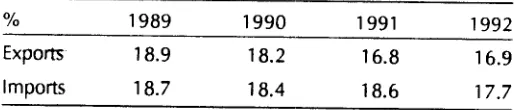
Table 2a: EU exports/imports to the US as a percentage of total EU expofis/imports
r 989 r 990 1 991 1992
Exports lmports
18.9 18.7
18.2 18.4
r 6.8 18.6
16.9 17.7
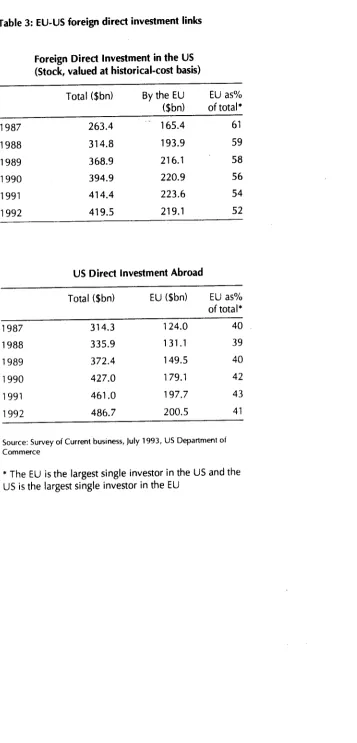
[image:15.600.50.553.62.718.2] [image:15.600.51.305.326.382.2] [image:15.600.45.302.660.715.2]Table 3: EU-US foreigr direct investment links
Foreign Direct Investment in the US (Stock, valued at historical'cost basis)
Total ($bn) By the
EU
EU as%($bn)
of total* 19871 9BB 1 989
1 990 199'r 1992
263.4 314.8 368.9 394.9 414.4 419.5
165.4 't93.9 216.1 220.9 223.6 219.1
61
59 58 56 54 52
US Direct Investment Abroad
Total ($bn) EU
($bn)
EU as% of total* 19871 988 1 989
1 990
1 991
1992
314.3 335.9 372.4 427.0 461.0 486.7
124.0 131.1 149.5 179.1 197.7 200.5
40 39 40
A1 AL
43 +l
Source: Survey of Current business, July 1993, US DePartment of
Commerce