
PP: Risk Attitudes in the Construction Industry - Avoidance Does Not Work
8
0
0
Full text
(2) Risk Attitudes in the Construction Industry - Avoidance Does Not Work -. Introduction Risk is not real! Describing something as a ‘Risk’ is a convenient way of describing an unknown state that may occur in the future (and consequently may not). If something has occurred it is a fact or an issue. If something will occur (eg the setting of the sun) there is no uncertainty and therefore no ‘risk’. The mathematical processes and understandings that led to our current perceptions of risk have evolved since the mid 17th Century. These developments are the absolute underpinning of modern civilisation. It would be impossible to buy insurance or calculate a reasonable return on an investment if the ‘insurer’ or ‘investor’ was unable to calculate the risk involved in the transaction. The story of the transition from belief to calculated probability is elegantly told in the book Against the Gods, the remarkable story of risk (Bernstein, 1996) and underpins much of the thinking in this paper. However, even from the earliest developments in understanding and calculating ‘risk’ the inherent uncertainty of the process was clearly understood by some. As Leibniz wrote in a letter to Bernoulli in 1703 “Nature has established patterns originating in the return of events, but only for the most part”. Complexity theory recognises the absolute impossibility of accurately predicting the future, particularly at the detail level. Couple this phenomena with the problem that the decisions/reactions of people creating the future are only partially predictable and are linked to their current set of relationships through the ‘Complex Responsive Processes of Relating’ or CRPR (Weaver, 2007) the uncertainty associated with predicting future outcomes is obvious. The challenge addressed in this paper is to deal effectively with ‘risk’ based on current understandings of ‘how the world works’ in today’s business environment, whilst always recognising the impossibility of actually predicting the future to eliminate all risk.. Understanding Risk PMBOK Definitions The definition of ‘risk’ used by the authors of A Guide to the Project Management Body of Knowledge (PMBOK® Guide) is consistent with most modern risk management standards. The PMBOK® Guide describes risk as: ‘An uncertain event or condition, that if it occurs, has a positive or negative effect on a project’s objective’. The key element of this definition is that the effect of the uncertainty, if it occurs, may be positive or negative on the objectives of the planned endeavour. Many things are uncertain; risks are by definition only those uncertainties that will impact the project should they occur.. The Case Studies Given the basic structures of risk management, or at least the mathematical elements, were firmly established whilst Napoleon ruled large tracts of Europe, observing the very different outcomes on two major projects completed in the last year, with very similar issues to manage, in a very similar environment suggests that project risk management is not a mathematical/actuarial process. The art of the actuary is essential to insurance businesses, major investors, etc – the mathematics drive decisions.. © Practical PM Pty Ltd. 2. www.mosaicprojects.com.au.
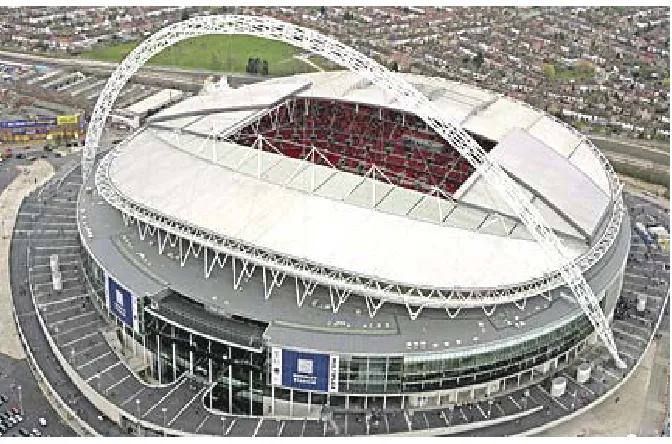
(3) Risk Attitudes in the Construction Industry - Avoidance Does Not Work Effective project risk management seems to be far more closely aligned with developing the right attitudes, expectations and relationships in and around the project team and with the key stakeholders.. Project #1 – Wembley Stadium. Figure 1 – The completed stadium. Australian builder Multiplex won the ‘Guaranteed Maximum Price’ (GMP) contract to design and construct a new, world-class 90,000 seat Wembley football stadium. Work commenced in September, 2002, with completion planned well ahead of the FA Cup Final in May 2006. The stadium was eventually finished just in time for the 2007 FA Cup Final. Some of the key points include: •. In March 2006 Multiplex announced a loss of £106 million and the work was estimated at one month behind schedule. In the final accounting, Multiplex lost AU$355 million on the project (£150 million) and is the subject of shareholder litigation in Australia over the adequacy of its disclosure of the loss.. •. Wembley National Stadium Limited (WNSL) withheld £38 million from Multiplex as a penalty for the late finish which was less than 10% of the £431 million cost overrun.. •. Multiplex issued a £350 million claim against Wembley National Stadium Limited (WNSL), the venue's owner, to cover loss of earnings and were prepared for litigation to last several years, blaming WSNL for many of the project's problems.. •. After negotiations, everyone walked away from the disputes accepting their losses and declining to add to their respective financial pain with the additional costs associated with years of expensive litigation.. The confidential nature of the final settlement precludes a proper analysis of the issues in dispute but it is safe to assume both parties believed they faced a significant probability of losing any court action (or certainly did not feel sufficiently confident of success to justify court action). The GMP contract was the real problem, by attempting to contract out of any price risk, WNSL ended up paying an additional £431 million whilst Multiplex’s shareholders ‘donated’ another £150 million to the project.. © Practical PM Pty Ltd. 3. www.mosaicprojects.com.au.
(4) Risk Attitudes in the Construction Industry - Avoidance Does Not Work The fact Wembley is seen as a success now it is finished is a testament to the construction workers and management who were focused on creating a great national monument despite the pressures, not the system that generated the ‘failure’.. Terminal 5, Heathrow At £4.3 billion, T5 was the biggest construction project in Europe (Figure 2), yet it appears to have run like clockwork, completed on schedule and ‘under budget’. Its success is attributed to the commitment made by the client, BAA Limited (BAA), to an entirely different way of working focused on proactive collaboration with its contractors.. Figure 2 – T5 under construction, September 2005. Under the unique procurement strategy developed for T5, BAA retained all the financial risks of the project; they also created an incentivisation strategy that rewarded ‘best practice’ suppliers and invested heavily in the 'soft' skills of communication and leadership that made this innovative approach work so well. These two strands of formal contracts and measurements, supported by a strong emphasis on developing relationships are mutually dependent. They both contributed to the process of team building and helped ensure that the ethos of collaboration extended to every link in the supply chain. An outstanding example of this approach was the construction of the terminal roof. Completed sections of the roof, including the box girders, purlins and cladding were planned to be erected in six 2,000 tonne lifts. To minimise any chance of mishaps, BAA, funded the ‘roof team’ to conduct a £2.4m ‘dummy run’ in Yorkshire to see whether the concept was feasible. This trial is credited with saving three months work on the Heathrow site and significant costs. This type of initiative would have been impossible under a GMP Contract similar to the one used at Wembley. Before starting the project, BAA’s management had realised that conventional contracts do not really work because ultimately any major risk falls back on the client, so rather than taking the conventional approach of trying to ‘avoid all risk’ by passing it on to their contractors, they took the key decision to accept and manage the risks inherent in this massive project directly.. © Practical PM Pty Ltd. 4. www.mosaicprojects.com.au.
(5) Risk Attitudes in the Construction Industry - Avoidance Does Not Work Case Study Conclusions Despite the massive problems with the ‘opening’, BAA’s approach to construction management used on Terminal 5 that proactively embraced risk appears to have saved a fortune. The building was completed on time, on budget and with an exemplary safety record. In contrast, the attempts by the clients on the Wembley project to avoid ‘all risk’ by contracting out of any involvement in the project simply did not work. The difference between the projects lays in the clients risk attitudes.. Managing Variability, a key source of ‘Uncertainty’ A key management attitude that works against achieving a successful project outcome is the expectation of unrealistic levels of accuracy in many project management processes. Variability is inevitable in every process; demanding assurances that unrealistic levels of accuracy and precision have been, or will be, achieved simply creates failure.. Variability in Cost Estimating Whilst it is theoretically possible to identify and price all of the elements of a project and then to accurately compile the ‘estimated prices’ into an arithmetically accurate ‘estimated project cost’, this answer is never going to be the actual project cost at completion. The factor many management teams forget is that the process of ‘writing prices’ into a project estimating system cannot influence the actual cost the project will have to pay for the item in the future – all the system can tell you is how different the two prices are! Cost estimating processes establish the expected cost parameters for the project and then provide a framework that can be used to guide the project team as they expend ‘budgets’ and for recording the actual costs spent on the work. Variances from the plan can be measured using a variety of techniques and management action taken to lock in gains and mitigate cost overruns. As soon as a management team accepts the fact that cost estimating cannot control future costs, but by comparing actual costs with the estimate, the systems can tell you how wrong the estimating process was, the real benefit of a good cost estimate becomes apparent. The estimate provides the framework for managing the project’s costs and predicting trends based on performance to date using techniques such as Earned Value Analysis. Using this knowledge wisely allows management to proactively engage in the running of the project to optimise future outcomes Deciding on the ‘appropriate’ level of detail to include in a cost estimate is not a scientific or mathematical process; it is governed by intuitive decisions on what is optimal, acceptable, or traditional. However, demanding unachievable levels of accuracy and then requiring the project estimators to agree that they have been achieved simply creates unrealistic expectations and, unrealistic expectations are unlikely to be fulfilled! The challenge is to know when ‘enough’ estimating has been done.. Variability in Scheduling (Time Estimating) All of the above discussion on variability in cost estimating applies to time estimating with several additional layers of uncertainty. These issues have been discussed at length in other papers, published by the author, and will only be highlighted below: The purpose of a ‘good cost estimate’ and a ‘good schedule’ are different. The purpose of the cost estimate is to establish the likely total cost of the project by incorporating as nearly as is possible every element of cost. The purpose of a ‘good schedule’ is to “provide a useful road map that can be used by the project manager and the project team” (PMI, 2007). This means that a ‘good schedule’ © Practical PM Pty Ltd. 5. www.mosaicprojects.com.au.
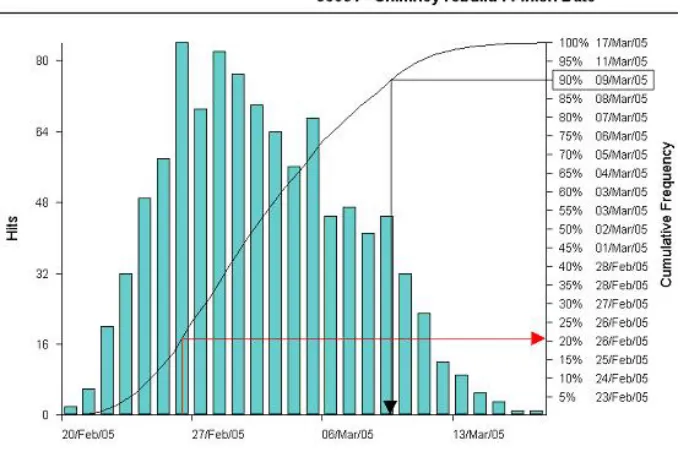
(6) Risk Attitudes in the Construction Industry - Avoidance Does Not Work highlights the key elements of work that summarise the overall flow of the project without an unnecessary clutter of detail. The net effect of this valuable simplification is to make precise measurements of actual ‘float’, the ‘critical path’ etc impossible. The schedule is there as a guide and an aid to effective coordination and management, not as some precise statement of the future. A well developed schedule is an invaluable management tool for developing an understanding of the work involved in a project, coordinating the efforts of resources and optimising the overall time management of the project. However, no schedule is correct in every detail and attempts to make a schedule fully detailed and totally accurate destroy its usefulness as a communication and motivational tool without increasing its accuracy.. Identifying the likely range of outcomes It is only after the inevitability of variability in cost and time estimating is accepted by management, that determining a likely range of outcomes and focusing on reducing inappropriate variability becomes possible.. Monte Carlo Simulation. The most effective tool for dealing with the residual variability and uncertainty in project estimates is simulation. The project team assesses optimistic, pessimistic and most likely cost and time outcomes for each element of the project and evaluates the likely distribution of outcomes within the range. The model is then analysed many times, each analysis randomly selecting values from within the distribution nominated for each activity. A typical set of results for an assessment of ‘time’ is shown in Figure 3.. Figure 3: A Monte Carlo simulation of a project created by PertMaster.. The blue bars on the chart below show the number of times out of 1000 each date was the result of an analysis. The 26th Feb. is the most likely date for the project to finish (ie, it is the Mode, or the most frequently achieved answer during this set of simulations) but overall the 26th February only has a 21% chance of being achieved. The Mean is the 2nd March – this date has a 50% chance of being achieved. If management want a date that has a 90% probability of being achieved, then the 9th. © Practical PM Pty Ltd. 6. www.mosaicprojects.com.au.
(7) Risk Attitudes in the Construction Industry - Avoidance Does Not Work March should be selected as the projected completion date. To achieve this, a ‘reserve’ of 11 days needs to be created and added to the ‘most likely’ result.. Managing Variability Conclusion Variability in time and cost estimates cannot be managed if management do not accept that variability is inevitable. The key to success is accepting variability and then focusing on two strategies. The first is to design processes that minimise excessive variability (narrowing in on the ‘mean’), but only to the extent this is feasible and cost effective. The Second is monitoring actual variability against the plan to understand trends and appreciate ‘what is real’ and use this information to modify the project delivery strategy to maximise gains and minimise losses.. Getting the Focus ‘Right’ Different levels of the organisational and project structure need different focuses on risks, variability and targets to generate successful outcomes. Some of the key differences are: o. The project team should focus on achieving an ‘optimistic’ outcome (stretch targets). The best outcomes are achieved by a motivated team striving to achieve the best possible outcome. They almost certainly will not be 100% successful but in trying would have achieved the optimum result.. o. The project manager or contracting organisation should be more conservative and develop contingencies within its estimates. Each project should have at least a 50% of being achieved (ie, the target is focused on the Mean) or possibly a more conservative outcome (maybe 80% certainty).. o. The client and/or senior management need to focus on achieving an overall ‘safe outcome’ this includes adding appropriate ‘reserves’ to protect the organisation from project overruns. It also involves balancing gains and losses. If an organisation in a competitive market can achieve an 80% probability of not losing money on all of its projects the 4 out of 5 that achieve or better their cost targets should generate sufficient ‘profits’ to offset the predictable loss on the remaining 1 out of 5 projects that can be expected to lose money. The balance is between remaining competitive and remaining profitable overall.. All of these focuses should exist in a risk aware culture. Mature, risk aware organisations deal with the different focuses in an open and communicative (trusting) relationship. Ultimately 90% of ‘risk’ creation, perception and management comes down to people.. Conclusions The conclusions to be drawn from this paper are relatively simple: •. All projects are ‘risky’ ie, the outcome is uncertain.. •. Variability is inherent in every process and must be acknowledged to be managed.. •. Adding unnecessary detail does not improve accuracy or reduce variability.. •. Actively managing risk is safer than ignoring risk; attempting to avoid ‘all risk’ is impossible and doomed to fail.. •. Expectations must be identified to be managed; unrealistic expectations are unlikely to be fulfilled.. •. Organisations need to aim to win overall, attempting to win every time is impossible.. © Practical PM Pty Ltd. 7. www.mosaicprojects.com.au.
(8) Risk Attitudes in the Construction Industry - Avoidance Does Not Work •. The primary commercial advantage of any organisation is its ability to manage the risks inherent in its environment better than its competitors. Changing environments changes the risks.. •. A mature risk attitude at all levels of management is critical to the success of both the organisation and its projects (but must appropriate to the organisation). References Bernstein, P.L. (1996). Against the Gods, the remarkable story of risk. John Wiley & Sones Inc. New York. Project Management Institute. (2007) The Practice Standard for Scheduling. Newtown Square, PA: Project Management Institute Weaver, P. (2007). A Simple View of ‘Complexity’ in Project Management. World Project Management Week #4. Singapore. Retrieved on Jan. 9th 2008, from http://www.mosaicprojects.com.au/Resources_Papers_070.html Weaver, P. (2007b). Getting the 'soft stuff' right - Effective communication is the key to successful project outcomes! PMI Global Congress North America. Atlanta, USA. Retrieved on Jan. 9th 2008, from http://www.mosaicprojects.com.au/Resources_Papers_055.html. © Practical PM Pty Ltd. 8. www.mosaicprojects.com.au.
(9)
Figure

Related documents
Bayat, A Prioritization Model for HSE Risk Assessment Using Combined Failure Mode and Effect Analysis and Fuzzy Inference System: A Case Study in Iranian Construction
Construction industry is known for years to be fragmented in nature and every construction project is bound to have conflicts or disputes caused by high risk and the
Furthermore, the survey results showed that there are eleven barriers in the Iranian construction industry preventing contractors from implementing risk management,
The objective of this research is to evaluate how the comparative risk management process is used in the Ethiopian road construction industry, and how the
This study considers work experience, educational background, physical health and emotional intelligence as human factors affecting risk attitudes and then identifies the
The target of the QRAM (Qualitative Risk Assessment Model) is the construction industry, and within this domain it is applicable to a wide range of organizations and/or enterprises
Potential Health Risk of Endocrine Disruptors in Construction Sector and Plastics Industry: A New Paradigm in Occupational Health.. Aleksandra Fucic 1 ,
The study adopted principal component analysis to examine the level at which the construction industry of Nigeria follows the risk management best practices of
