A numerical formulation and algorithm for limit and shakedown
analysis of large-scale elastoplastic structures
Heng Peng1, Yinghua Liu1,* and Haofeng Chen2 1
Department of Engineering Mechanics, AML, Tsinghua University, Beijing 100084, People’s Republic of China
2
Department of Mechanical and Aerospace Engineering, University of Strathclyde, Glasgow G1 1XJ, UK
*
Corresponding author: [email protected]
Abstract
In this paper, a novel direct method called the stress compensation method (SCM) is proposed
for limit and shakedown analysis of large-scale elastoplastic structures. Without needing to
solve the specific mathematical programming problem, the SCM is a two-level iterative
procedure based on a sequence of linear elastic finite element solutions where the global
stiffness matrix is decomposed only once. In the inner loop, the static admissible residual
stress field for shakedown analysis is constructed. In the outer loop, a series of decreasing
load multipliers are updated to approach to the shakedown limit multiplier by using an
efficient and robust iteration control technique, where the static shakedown theorem is
adopted. Three numerical examples up to about 140,000 finite element nodes confirm the
applicability and efficiency of this method for two-dimensional and three-dimensional
elastoplastic structures, with detailed discussions on the convergence and the accuracy of the
proposed algorithm.
Keywords Direct method; Shakedown analysis; Stress compensation method; Large-scale;
Elastoplastic structures
1 Introduction
In many fields of technology, such as petrochemical, civil, mechanical and space engineering,
structures are usually subjected to variable repeated loading. The computation of the
difficult task in structural design and integrity assessment. The full step-by-step elastic-plastic
analysis procedure may be used to estimate the long term behavior of a structure, such as
shakedown, alternating plasticity, incremental plasticity or instantaneous collapse, by the
acquired evolution of stresses and strains. Generally, the method is cumbersome and
time-consuming, and needs the exact knowledge of the loading histories that often are
uncertain in practical engineering situations. A better alternative is to perform the limit and
shakedown analysis of structures using the direct methods [1,2], which just need to know the
interval of these applied loads.
Most of the direct methods are based on the lower bound theorem by Melan [3] or the
upper bound theorem by Koiter [4], both of which rest on the assumptions of perfectly plastic
material, small displacements, negligible inertia and negligible creeping effects [5]. Since the
two pioneering works, the subsequent researches have been along two different routes [6].
The first route of these researches is concerned with the extensions of shakedown theorem,
where the material hardening [7-12], geometric nonlinearities [13,14], non-stationary loads
[15,16], creeping effect [17,18] and frictional contact [19] are considered respectively. The
second route of these researches is concerned with the development of efficient and robust
numerical methods [20-30] towards the solution of the shakedown problem, which is also the
major objective of this article.
Based on the lower or upper bound theorem, the limit and shakedown analysis of a
structure is normally transformed into a mathematical programming problem that aims to
minimize or maximize a goal function under excessive independent variables and constraint
conditions. Different optimization approaches like the nonlinear Newton-type iteration
algorithm [21,29,31], the second order cone programming (SQCP) [32,33] or the interior
point method (IPM) [30,34-37] are widely used for solving the programming problem. Instead
of using the standard finite element method, some researchers combine shakedown analysis
with some other computational methods. The articles about the numerical shakedown analysis
based on the boundary element method [38,39], the cell/edge/node-based smoothed element
method (CS-FEM, ES-FEM or NS-FEM) [40-43], the element free method [44,45], the nodal
discretization or the node arrangement will lead to a tremendous mathematical programming
problem due to the significant number of variables and constraints, which may limit the
application of these methods. In order to reduce the scale of the shakedown problem, some
techniques such as the basis reduction technique [9,44,49] or subspace iteration are employed.
Noteworthy, although the numerical methods mentioned above are based on mathematical
programming, there are some other approaches for limit and shakedown analysis in literatures.
A group of elastic modulus adjustment methods [22-24,50-56], including the generalized local
stress strain (GLOSS) r-node method [50], the m(alpha)-method [51], the elastic
compensation method [22,23,52,53], and the linear matching method (LMM) [24,54-56],
were systematically developed. Using more physical arguments, these methods match the
linear behavior to the nonlinear plastic behavior by performing a sequence of linear solutions
with spatially varying moduli. As the origin of these methods, the elastic compensation
method (ECM) [52] was early put to use for calculating limit loads of pressure vessels. Then
Ponter and Carter [22,23] demonstrated an initial implementation of this technique and also
provided a rigorous theoretical proof for the existence of the monotonically reducing upper
bounds. Finally, a more generalized and practical code called the LMM [24,55-58] was
developed to be used for limit, shakedown and ratchet analyses of engineering structures by
making full use of the commercial finite element software ABAQUS. Further, Garcea et al.
[25,26] propsoed an incremental-iterative solution method which has analogies with the Riks
path-following algorithm to plane frames and two-dimensional flat structures. Another direct
method termed as the residual stress decomposition method for shakedown (RSDM-S) was
presented [28]. Based on the cyclic nature of the residual stress in the steady cycle, the
residual stress at every Gauss point is decomposed into Fourier series in time. This method
was used for evaluating the shakedown loads of some simple two-dimensional structures.
As described above, both the traditional mathematical programming and iterative method
with more physical agreements can be used for calculating the limit and shakedown loads. It
is worth noting that many of the proposed methods appear to aim at academic purpose or to
solve some specific simple problems but are not suitable for general engineering applications.
Even through the shakedown analyses of some complex engineering structures using the IPM
solving large-scale shakedown problems and the finite element models reported in literatures
have no more than 100,000 nodes. From the mathematical point of view, the elastic modulus
adjustment method is not completely satisfactory, because it requires a complete elastic finite
element analysis procedure that includes the assemblage of the stiffness matrix and its
decomposition during every iteration [25].
In this work, a novel direct method named as the stress compensation method (SCM) for
limit and shakedown analysis of large-scale engineering structures is proposed. The method
adopts a two-level iterative strategy where a series of decreasing cyclic loading solutions
based on linear elastic finite element analysis are generated. Over the numerical procedure,
only one decomposition of the global stiffness matrix is required, and the residual stresses are
directly calculated in a very small number of load vertices, which largely enhances the
computational efficiency of the proposed algorithm. By using an efficient and robust iteration
control technique, the convergence and the accuracy of the SCM are ensured. The layout of
this paper is as follows: shakedown criterion and basic theorems for shakedown analysis are
introduced in Sect. 2, followed by description of the formulation of the SCM in Sect. 3. Then
the detailed numerical algorithm of the SCM for shakedown analysis is presented in Sect. 4.
Three numerical examples including two-dimensional (2D) and three-dimensional (3D)
large-scale engineering structures are considered to verify the availability of the proposed
procedure, and the results are also compared to the reference solutions as well as calculations
with the LMM and the step-by-step procedure to illustrate the accuracy and the efficiency of
the SCM in Sect. 5. Finally, the discussion and conclusions are presented in Sect. 6.
2 Shakedown criterion and basic theorems
2.1 Static shakedown theorem by Melan
A lower bound evaluation of the load-carrying capability of an elastic-perfectly plastic
structure under cyclic loading can be obtained by performing the shakedown analysis based
on the static shakedown theorem. The classical conditions of shakedown theorem, such as
extensions are in reach. What’s more, the convex yield surface and the normality rule are
assumed so that the material is stable in Drucker’s sense [30].
The statement of the static shakedown theorem is as follows [59]: a structure will shake
down to the variable repeated loading, i.e. its behavior after a number of initial loading cycles
will become purely elastic, if there exists a time-independent distribution of residual stress
field ρ x
such that its superposition with the fictitious elastic stress field σ xE
,t , results in a safe stress state σ x
,t at any point of the structure under any combination of loadsinside the prescribed domain.
,
E
,
0f σ x t f σ x t ρ x x V,t (1)
Here, f
is the yield function; σ x
,t is the actual stress; σ xE
,t is the fictitious elastic stress that occurs if the structure responds to the prescribed loads in a purely elasticmanner; ρ x
represents a self-equilibrated residual stress field that should satisfy theequilibrium conditions within the body V and the boundary conditions on the part Γt of the surface, i.e.
in on t
ρ 0 V
ρ n 0 Γ (2)
where denotes the divergence operator; n is the unit outward normal to the boundary
t
Γ .
2.2 Load domain and specified loading path
Structures are often subjected to many types of loads at the same time, and generally, the
loads vary randomly. If a finite number of the external loads obeying their own rules vary in a
domain, the loading history P x
,t can be described as the superposition of these externalloads with different loading sets P xi
, ,t i1, ,N
. The each loading set P xi
,t can be decided by time-dependent multiplier i
t and the normalized basis load 0
i
P x .
01 1
, ,
N N
i i i
i i
t t t
P x P x P x (3)
i i t i
(4)
Eq. (3) describes a domain Ω of these loads. The load domain Ω is a polyhedron defined
by m vertices B B1, 2, , Bm in the space of load parameters. It is worth noting that the load
domain Ω may not be convex and the detailed descriptions of load domain for complex
load conditions can be seen in Ref. [60]. As shown in Fig. 1(a), a load domain with five load
vertices is taken as an example.
Fig. 1 Load domain and loading path: (a) arbitrary loading path; (b) specified loading path
Although the exact loading history is unknown and the loads may vary in an arbitrary
manner within a domain Ω, the domain Ω is usually known in practical engineering
problems. In order to determine the shakedown behavior of the structure under the load
domain Ω, König [5] proposed a relevant theorem which is stated as follows:
If a given structure shakes down over a certain cyclic loading path which contains all the
m vertices B B1, 2, , Bm of the hyper-polyhedral load domain Ω, the structure shakes
down in an arbitrary loading history defined by Eq. (3).
On the other hand, if the structure does not shake down in a certain cyclic loading path
containing some of the vertices, the direct evidence can be obtained so that the domain Ω is
not a shakedown domain of the structure.
The above statement provides a good strategy to estimate whether or not a given structure
will shake down over any loading path within the domain Ω. We define a specified loading
illustrated in Fig. 1(b). If the structure shakes down under this loading path, then it must shake
down within the load domain defined by all these vertices.
It should be pointed out here that the shakedown analysis will degenerate to the limit
analysis and the plastic limit load can be calculated when the number of the vertices of the
load domain equals to one.
2.3 Steady cyclic stress state
We assume that a body of volume V is subjected to cyclic mechanical loads on a part of the
surface S. The expression of the mechanical loads is as follows:
,t
,tnT
P x P x (5)
where P x
,t has the same definition as that in Eq. (3); t is the current time point measuredfrom the beginning of the cycle; T is the period of the cycle; n1, 2, denotes the number of full cycles; x denotes the coordinates of a material point in the body.
We suppose that the material of a structure is elastic-perfectly plastic and obeys the
Drucker’s postulate. The actual stress σ x
,t in the structure is decomposed into two parts:the fictitious elastic stress part kσ xE
,t and the residual stress part ρ x
,t , i.e.
,t k E ,t ,t
σ x σ x ρ x (6)
where k is a load multiplier.
The corresponding strain rate can also be decomposed into two parts:
,t k E ,t r ,t
ε x ε x ε x (7)
where the first term ε xE
,t on the right of the equation is the elastic strain rate corresponding to the fictitious elastic stress rate σ xE
,t and the second term ε xr
,t on the right of the equation is the residual strain rate. It should be noted that the residual strainrate ε xr
,t consists of the plastic part ε xp
,t and the elastic part ε xre
,t , and ε xer
,t is required so that the total strain rate ε x
,t satisfies the deformation compatibility over thewhole body. Then, Eq. (7) can be written as
,t k E ,t p ,t er ,t
According to the constitutive law of the elastic-perfectly plastic material with an
associated flow rule, the following equations are obeyed:
,
,E E
t t
σ x D ε x (9)
,t er
,tρ x D ε x (10)
,
,
p f
t
t
ε x
σ x (11)
where D is the elastic stiffness matrix; f is the yield function; ε xp
,t is the plastic strain rate whose direction is along the outer normal of the yield surface; and is the plasticmultiplier. Because of the convexity of the yield surface, the following inequality holds
referring to the Drucker’s postulate:
σ σ a
εp0 (12)where σ is the stress at yield surface associated with the plastic strain rate εp and σa is an admissible stress.
It has been elucidated [59,61,62] that a cyclically loaded elastoplastic structure made up
of material obeying Drucker’s postulate will reach a steady cyclic state, that is, the stresses
and the strain rates will gradually stabilize from cycle to cycle. The stress distribution in the
steady cycle does not depend upon the initial stress state and is unique in those regions where
the plastic strain rates are non-vanishing [59]. However, it should be noted that the
time-independent residual stress field within the elastic regions in the steady cyclic state is not
unique [62].
3 Description of the SCM
To provide simply and rapidly the steady cyclic stress state for an elastic-perfectly plastic
structure with von Mises yield model, the stress compensation method abbreviated with the
SCM is presented here.
We suppose that a structure is discretized into finite element meshes. All the strains and
the stresses are calculated at the Gauss points of the element. The strain rate ε x
,t at the
,t
tε x B x u (13)
where B x
is the strain-displacement matrix.Substituting Eq. (8) into (10), the residual stress rate ρ x
,t at the Gauss point is writtenas
,t ,t k E ,t p ,t
ρ x D ε x ε x ε x (14)
Since the residual stress rate field ρ x
,t is self-equilibrated and the strain rate ε x
,t iskinematically admissible, the principle of virtual work can be adopted as follows:
T , , 0
V t t dV
ε x ρ x (15)where the superscript T denotes the symbol of transpose and ε x
,t is the virtual strainrate.
Substituting Eqs. (13) and (14) into Eq. (15), we get
T T
, , 0
k E p
V
t t t t dV
u
B D B u ε x ε x (16)Since Eq. (16) holds for any virtual displacement rate u
t , the integral formula consistingin this equation must vanish, that is
, ,
k
T T E T p
V dV t V t dV V t dV
B D B u
B D ε x
B D ε x (17)For an elastoplastic structure, the exact solution of the plastic strain rate ε xp
,t may be obtained by the elastic-plastic analysis using the traditional incremental method. Instead, weadopt another approach [28] to deal with it here. We replace the term D ε p
x,t with
,C t
σ x which is named as the compensation stress in this article, and substitute Eqs. (9) and
(13) into (17) and (14). Then Eqs. (17) and (14) give, respectively
, ,
k T E T C
V V
t t dV t dV
K u B σ x B σ x (18)
,t t k E ,t C ,t
ρ x D B u σ x σ x (19)
where T
V dV
K B D B is the global stiffness matrix of the structure. The value of
,C
t
σ x may be obtained by performing the iterative procedure as follows.
1) The total stresses at all the Gauss points in a body are calculated for a given load vertex
of the specified loading path.
, , ,
n k E n
t t t
σ x σ x ρ x (20)
2) We check whether the total stress σ n
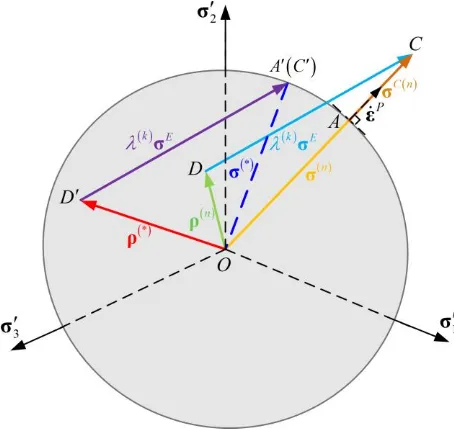
x,t exceeds the von Mises yield surface at every Gauss point in the body. As illustrated in Fig. 2, the sum of the residual stress vectorOD (ρ x
,t ) and the fictitious elastic stress vector DC ( k σ xE
,t ) is the total stressvector OC (σ n
x,t ). The part in excess of the von Mises yield surface is thecompensation stress vector AC (σC n
x,t ) which is calculated by the following formulae:
, , , , , , , 0 ,n n n
C n y n y n n n y
t t t
t t t t t ,
σ x x σ x
x x x x x (21)
3) Substituting Eq. (21) into (18), the nodal displacement rate u n
t is obtained by solving the equilibrium equations in Eq. (22). The residual stress rate can be calculated by Eq.(23). Then the residual stress ρ n
x,t for the next load vertex can be updated by Eq. (24).
, ,
n k T E T C n
V V
t t dV t dV
K u B σ x B σ x (22)
, , ,
n n k E C n
t t t t
ρ x D B u σ x σ x (23)
n
,
n
, t t n
,t
t t t
t dtρ x ρ x ρ x (24)
4) Repeat steps 1-3 for every load vertex.
5) Check the convergence of the value of compensation stress, and repeat the steps 1-4 till
Fig. 2 von Mises yield surface and stress superposition schematic in the deviatoric plane
According to the theorem on existence and uniqueness of a steady stress cycle by
Gokhfeld and Cherniavsky [59], the above procedure will evaluate a steady cyclic stress
state of the structure, and the evolution of compensation stress σ xC
,t is also obtained. It should be noted that although the value of σ xC
,t may be different from that of
,p
t
D ε x , they are going to vanish at the same time if it happens. Thus, the compensation
stress can be considered as a symbol for estimating whether the structure shakes down, i.e.,
whether the structure responds to the subsequent cyclic loads in a purely elastic manner.
4 Numerical algorithm of the SCM for shakedown analysis
As discussed in Sect. 2, the shakedown behavior of a structure subjected to repeated loads
varying arbitrarily in a load domain can be determined by estimating the behavior of the
structure under a specified loading path which includes all the load vertices, and the existence
of the steady cyclic stress state of a structure with the elastic-perfectly plastic material
obeying the Drucker’s postulate is demonstrated. Instead of using a standard elastic-plastic
finite element analysis, an approximated steady cyclic stress state is assessed by using the
SCM, as elaborated in Sect. 3.
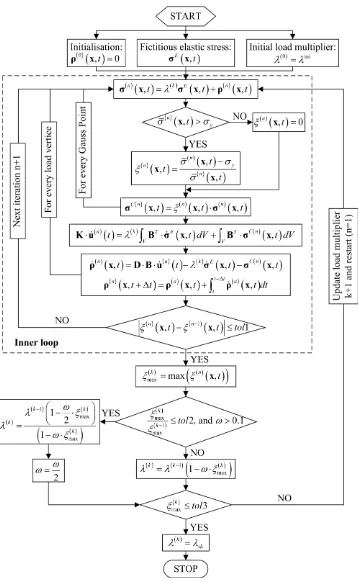
In this section, a numerical procedure well suitable for shakedown analysis is proposed by
process, and the flowchart of the procedure is illustrated in Fig. 3.
[image:12.595.120.479.100.682.2]4.1 Evaluation of an initial load multiplier
The numerical procedure commences by calculating the fictitious elastic stress field σ xE
,t at each extreme point in the specified loading path and by constructing an initial loadmultiplier ini. The fictitious elastic stress field can be easily obtained via the elastic finite element analysis. However, the initial load multiplier must be chosen as a value above the
shakedown limit, from which the decreasing load multiplier may be generated after each outer
iteration. According to the description in Ref. [24], the upper bound load multiplier
1 ini 1 , , m y i V i m E E i i V i dVt t dV
xσ x ε x
(25)
must be an appropriate initial load multiplier. Here, ε xE
,ti is the elastic straincorresponding to the fictitious elastic stress σ xE
,ti at load vertex ti, m is the number ofthe load vertices, and i
x is the effective strain of E
,i
t
ε x .
4.2 The proposed numerical procedure for shakedown analysis
As illustrated in Fig. 3, the procedure consists of two iteration loops. The inner one controlled
by iteration n is used to obtain the approximately steady cyclic stress, and the outer one
controlled by iteration k is used to calculate the shakedown load multiplier.
For the inner loop, the value of n
x,t (Eq. (21)) is examined:
1
, , 1
n n
t t tol
x x (26)
where tol1 is a tolerance parameter which dynamically reduces from 10-3 to 10-4 according to
the value of n
x,t . The maximum value of n
x,t at all the Gauss points for all load vertices is updated at the end of each loading cycle, that is
max max ,k n
t
x (27)
Before calculating the load multiplier by the following expression:
1
max 1k k k
(28)
where is a convergence parameter with an initial value 0.1~0.5, k1 is the previous
load multiplier and k is the updated load multiplier, a probable overshooting below shakedown limit will be examined by the following judgment:
max1 max
2 and 0.1
k k tol
, (29)
where tol2 usually takes 0.1~0.2; the initial value of max 0 is 1.0. If Condition (29) is satisfied, the previous load multiplier must be modified by
1 max max 1 2 1 k k k k (30)
and then the convergence parameter is halved:
2
(31)
In final, a desired tolerance tol3 (e.g. 10-4~10-3) is given to estimate whether max k approaches to zero or not
max 3
k
tol
(32)
If Condition (32) is satisfied, it means that the calculated load multiplier becomes the
shakedown limit multiplier sh, i.e.
sh
k
(33)
otherwise, a new outer iteration starts and the inner iteration number resets to 1. In fact, the
criterion shown in Condition (32) is equivalent to the following form:
1 max 1 k k k k (34)
where the value of is not more than 0.5. Thus, the relative error of the calculated
4.3 Convergence and accuracy considerations
An iterative strategy shown in Eq. (28) will allow the proposed procedure to produce a
sequence of decreasing cyclic loading solutions and to end up with the limiting value of
loading parameters at which shakedown takes place. The relevant mathematical proof on the
uniqueness of stress state at the limiting cycle has been presented by Gokhfeld and
Cherniavsky [59]. Thus, if the iterative control technique and some tolerance parameters are
adopted appropriately in the SCM procedure, a series of decreasing load multipliers will
approach smoothly to the shakedown limit multiplier.
The value of tol1 used to control and stop the inner loop is a key factor that influences the
accuracy and efficiency of the algorithm. Considering that the accuracy of the calculated
shakedown limit multiplier is mainly determined by the finally convergent solution and has
little relation to the solution in the intermediate process, a dynamically varying value of tol1 is
used to balance the accuracy and the efficiency. A final value of tol1 10 4 proves enough for a good calculation accuracy of the steady stress cycle.
The iteration strategy shown in Eq. (28) with 0.5 might not strictly prohibit the load multiplier from overshooting below the target solution at shakedown. To deal with this
problem, the numerical scheme shown through Eqs. (29)-(31) is followed, and then even
though the overshooting might still occur, its value must be small enough to be ignored. Once
Condition (29) is satisfied, the calculated load multiplier will increase until above the
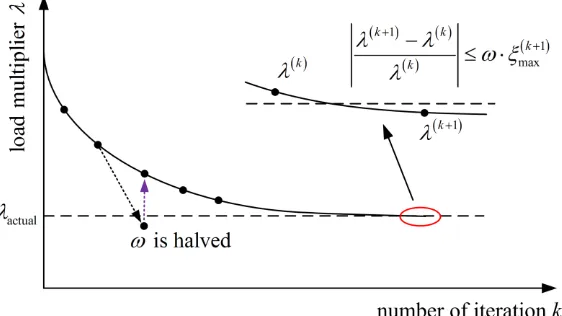
shakedown limit multiplier, and then the iterative process continues. The described
convergence procedure of the SCM for shakedown analysis is vividly depicted in Fig. 4. By
doing so, the method can ensure that the load multiplier approaches to the actual shakedown
limit multiplier actual from above. Since the adopted shakedown criterion is based on the Melan’s static shakedown theorem and all the conditions of the static theorem are satisfied
when the iterative procedure converges, the calculated shakedown limit multiplier in this
Fig. 4 Convergence procedure of the SCM for shakedown analysis
5 Numerical examples
A significant advantage of the provided method is its ability to be implemented into
commercial finite element software that have the facility to allow the users to establish finite
element models easily and conveniently. The described numerical algorithm in Sect. 4 has
been implemented into ABAQUS [63] via user subroutines UAMT and URDFIL. In order to
illustrate the performance of the present algorithm, three numerical examples of limit and
shakedown analysis are considered. It is mentioned here that limit analysis is considered as a
special case of shakedown analysis when the number of load vertices is reduced to one.
In all examples, the materials are assumed homogeneous, isotropic and elastic-perfectly
plastic with the von Mises yield criterion. All material parameters are constant over time and
independent of temperature. All the calculations are carried out on the personal computer with
16 GB RAM and Intel Core i7 at 3.39 GHz using single processor.
5.1 Square plate with a circular central hole
Fig. 5 shows a square plate with a circular central hole subjected to biaxial loads P1 and P2,
which is a common benchmark example for numerical limit and shakedown analysis
[24,26,28,30,31,38,41,44,55,64-70]. The mechanical material data are given in Table 1. The
ratio between the diameter D of the circular hole and the length L of the plate is 0.2. The ratio
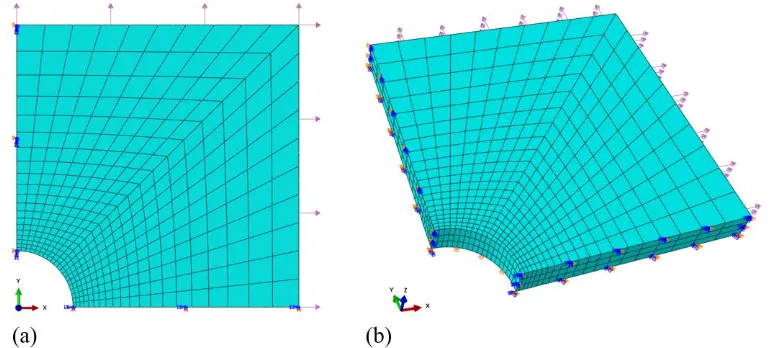
[image:16.595.159.440.78.236.2]established for the analysis. Since the thickness d of the plate is much smaller than its length L,
both a plane stress problem and a three-dimensional problem are analyzed here. The 2D and
3D finite element models of the plate are shown in Fig. 6. Four hundred 8-node quadratic
plane stress elements (ABAQUS CPS8) with 3×3 Gauss integration points are used for the
plane stress problem in Fig. 6(a), and twelve hundred 20-node quadratic brick elements
(ABAQUS C3D20) with 3×3×3 Gauss integration points are used for the three-dimensional
problem in Fig. 6(b).
Fig. 5 Geometry of the holed plate under biaxial loading
Fig. 6 Finite element models: (a) for the plane stress problem; (b) for the three-dimensional
[image:17.595.196.397.248.471.2] [image:17.595.105.490.523.697.2]Table 1 Material properties of the plate
Young’s modules E (GPa) Poisson’s ratio v Yield stress y (MPa)
200 0.3 360
This benchmark problem has been studied by several authors, since it was first
investigated by Belytschko [67]. Some comparative studies have been presented in their
literatures, such as [24,28,30,31,38,44,55,69,70]. As a result, there is no exact solution that is
generally accepted and the shakedown load is relevant to the loading mode. So four different
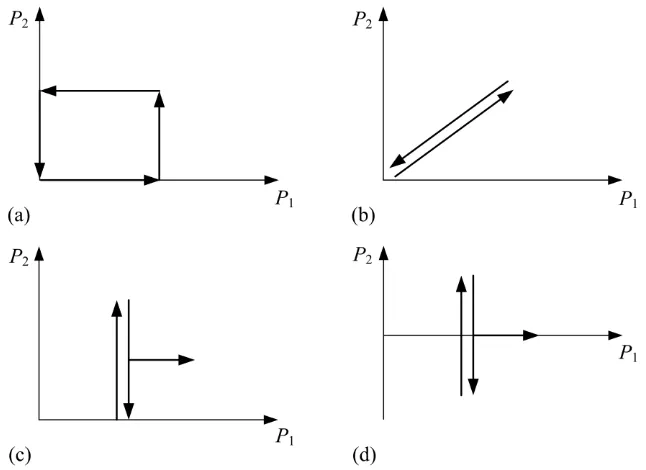
loading histories are considered, as illustrated in Fig. 7. For loading path a, P1 and P2 vary
independently. For loading path b, P1 and P2 vary proportionally. For loading path c, P1 keeps
constant and P2 varies from nil to a certain value. For loading path d, P1 keeps constant and P2
varies from minus to plus.
Fig. 7 Four loading histories for shakedown analysis: (a) loading path a; (b) loading path b;
(c) loading path c; (d) loading path d
5.1.1 P1 and P2 vary independently
The plate is subjected to biaxial uniform loads P1 and P2 that vary independently in the
following ranges:
1 1 0 0 P P
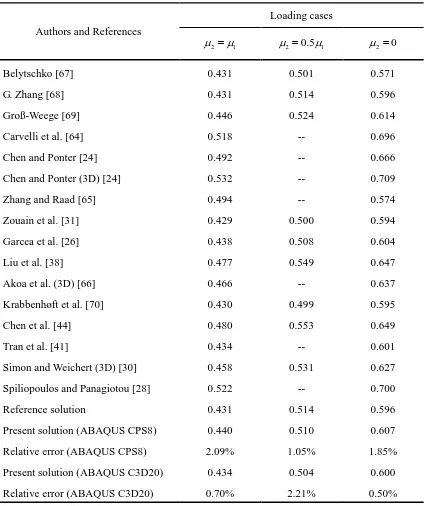
[image:18.595.136.459.341.576.2]The shakedown limits calculated by the SCM are compared to the mentioned results
[24,26,28,30,31,38,41,44,64-70] for the three special loading cases 20, 20.51 and 2 1
in Table 2. The values of shakedown limits in Table 2 are normalized with the ratio
0 y
P . As explained in Ref. [30], the partly-analytical solution by Zhang [68] can be
[image:19.595.87.512.211.717.2]considered as the reference solution.
Table 2 Comparison of different numerical results for shakedown analysis
Authors and References
Loading cases
2 1
20.51 20
Belytschko [67] 0.431 0.501 0.571
G. Zhang [68] 0.431 0.514 0.596
Groß-Weege [69] 0.446 0.524 0.614
Carvelli et al. [64] 0.518 -- 0.696
Chen and Ponter [24] 0.492 -- 0.666
Chen and Ponter (3D) [24] 0.532 -- 0.709
Zhang and Raad [65] 0.494 -- 0.574
Zouain et al. [31] 0.429 0.500 0.594
Garcea et al. [26] 0.438 0.508 0.604
Liu et al. [38] 0.477 0.549 0.647
Akoa et al. (3D) [66] 0.466 -- 0.637
Krabbenhøft et al. [70] 0.430 0.499 0.595
Chen et al. [44] 0.480 0.553 0.649
Tran et al. [41] 0.434 -- 0.601
Simon and Weichert (3D) [30] 0.458 0.531 0.627
Spiliopoulos and Panagiotou [28] 0.522 -- 0.700
Reference solution 0.431 0.514 0.596
Present solution (ABAQUS CPS8) 0.440 0.510 0.607
Relative error (ABAQUS CPS8) 2.09% 1.05% 1.85%
Present solution (ABAQUS C3D20) 0.434 0.504 0.600
Relative error (ABAQUS C3D20) 0.70% 2.21% 0.50%
(3D) denotes that the results are obtained from three-dimensional model, and the other results are
As we can see, the different numerical results in Table 2 show that our solution is in great
agreement with the values from the reference solution where the maximum relative error is
only 2.09% for plane stress problem and 2.21% for three-dimensional problem. It should be
noted that there is a relatively large range among those numerical results. The discrepancy is
attributed not only to the different methods but also to the different types of finite elements
and sizes of the element meshes used for the initial elastic solution. A simple way to illustrate
the influence of finite elements is the existing difference of the maximum elastic stress
between in this paper and in Ref. [24] under same single loading P1. The maximum elastic
stress is 3.297P1 when the finite element meshes in this paper are used but is 2.891P1 when
the element meshes in Ref. [24] are used. What’s more, the maximum relative error is only
0.49% between the present solution for plane stress problem and the solution by Garcea [26],
whose finite element model has the most approximate mesh size with the finite element model
in Fig. 6(a).
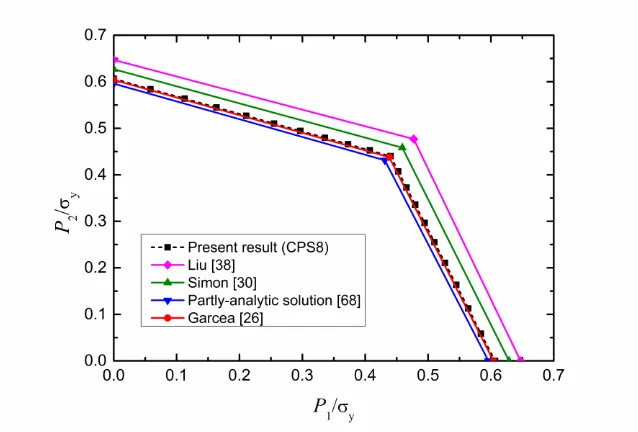
After calculating the shakedown limits for various ratios of 1 2 by using the SCM, the shakedown domain was obtained. As illustrated in Fig. 8, these points of shakedown limits
align in two straight-line segments and the results coincide well with the reference solution.
Furthermore, the shakedown boundary in Fig. 8 is dominated by alternating plasticity.
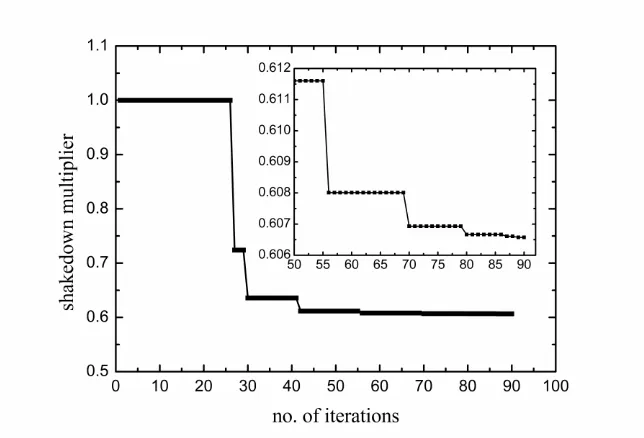
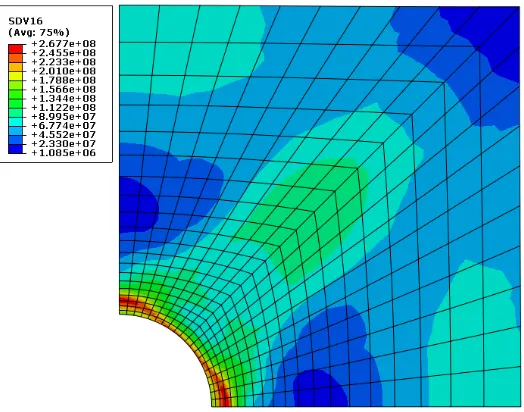
[image:20.595.137.456.492.708.2]under loading case 20. The horizontal line segment in the Fig. 9 indicates that the procedure is being carried out for the steady cyclic state, and the decreasing values indicate
the procedure is being carried out for the iterative process of the load multipliers. Although,
with the increase of iteration number, the calculated load multipliers do not strictly decrease
monotonically, the solutions converge to the stable one which is the actual solution with a
specified tolerance (10-4) by using the reasonable iterative control technique.
The crucial idea of the Melan’s theorem for shakedown analysis is to find an optimal
time-independent self-equilibrated residual stress field. As a result, a final residual stress field
of the holed plate is shown in Fig. 10. It should be noted that, the calculated residual stress
field by the SCM is non-unique and related to the initial load multiplier, but the calculated
shakedown limit multipliers are the same for different initial load multipliers, which verifies
the discussions in Sect. 2.3.
In order to illustrate the efficiency of the proposed procedure for shakedown analysis, the
computing time for some cases with different number of finite elements is compared in Table
3. For the finite element model with 4008-node quadratic plane stress elements in Fig. 6(a),
the amount of CPU time ranges from 6 s for the case of 20 to 11 s for 2 1. Specially, for a large-scale three-dimensional finite element problem with 20000 20-node
quadratic brick elements (ABAQUS C3D20), the computing time is only 2558 s.
[image:21.595.136.458.507.726.2]Fig. 10 Equivalent residual stress field of the holed plate for loading case a (2 0)
Table 3 Computing time for shakedown analysis of the holed plate
Finite Elements Loading cases 1 2 CPU time (s)
400 CPS8 20 0.607 0 6
400 CPS8 12 0.440 0.440 11
400 CPS8 11.252 0.466 0.373 10
1200 C3D20 12 0.434 0.434 131
20000 C3D20 12 0.429 0.429 2558
5.1.2 P1 and P2 vary proportionally
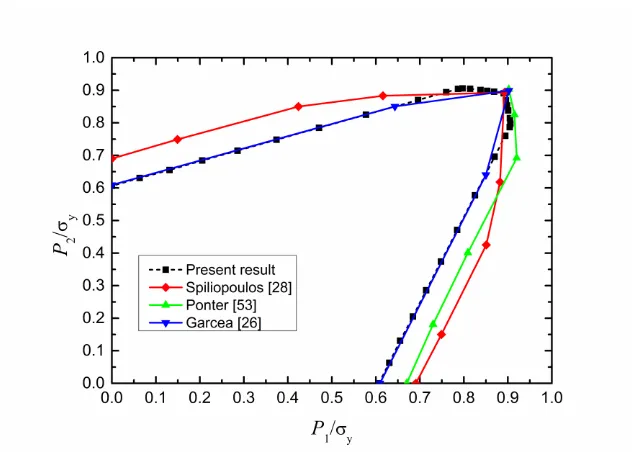
The shakedown analysis of the holed plate with P1 and P2 varying proportionally is also
considered by using the SCM. The same case has already been analyzed by some authors
[26,28,53] and the present results are compared in Fig. 11. It is worth noting that, for the
present results in Fig. 11, the straight-line portion of the shakedown boundary curve is
Fig. 11 Shakedown domain of the square plate for loading path b
5.1.3 P1 is constant and P2 is cyclic
The SCM is used to calculate the shakedown limits of the plate under loading path c and
loading path d (Fig. 7). These two shakedown problems have been considered by Chen and
Ponter [55]. In order to exclude the discrepancy of the mesh discretization, the comparison of
the calculated results by the SCM and those by the LMM is based on the same finite element
model. Fig. 12 and Fig. 13 give the shakedown domains of the square plate under loading
path c and loading path d, respectively. Each figure of them includes the shakedown domains
by the SCM with two different kinds of mesh discretization, the shakedown domain by the
LMM, and the results from Ref. [55]. The mark “mesh 1” in the legend denotes that the mesh
displayed in Fig. 6(a) is used, and the mark “mesh 2” denotes that the mesh from Ref. [55] is
used.
We can observe from Fig. 12 and Fig. 13 that the results obtained by the SCM and the
LMM agree very well with each other for the same mesh model, which verifies the validity of
the two methods. Nevertheless, for the different mesh models, there are obvious differences in
the plateaus of shakedown boundary curves, while the rest of the curves are very agreeable.
The differences are in fact due to the different failure modes of the structure. In both Fig. 12
alternating plasticity, for which the shakedown limit is relevant to the local maximum stress.
Thus, the difference in the local maximum stress due to the inconsistent mesh leads to the
different shakedown limits. However, if the structure fails due to incremental plasticity, as is
the rest portion of these shakedown boundary curves in Fig. 12 and Fig. 13, the shakedown
[image:24.595.139.456.201.415.2]limit is insensitive to the mesh.
[image:24.595.139.455.448.670.2]Fig. 12 Shakedown domains of the square plate for loading path c
Fig. 13 Shakedown domains of the square plate for loading path d
In the above examples, the shakedown domains are all obtained by the SCM under
those by other methods.
5.2 Defective pipeline
Pipelines, which are generally made up of ductile steel, are widely used in various fields, such
as petrochemical industry, energy, nuclear industry, and electric power engineering, etc.
During their operation, many defects such as part-through slots can be produced by
mechanical damage, corrosion or abrading surface cracks. These defects may jeopardize the
integrity (i.e. reduce the load-carrying capacity) of pipelines and sometimes even lead to
severe industrial accidents. The integrity assessment of pipelines with part-through slots is a
very important research subject with significant and extensive application background in the
industry. Plastic limit and shakedown analysis plays a significant role in the integrity
assessment of defective pipelines. In this paper, through some computational examples and
analyses, the effects of small and large area slots on the load-carrying capacity of pipelines are
investigated and evaluated.
These examples adopted here are three-dimensional defective pipelines under internal
pressure and axial tension [24]. The geometry of the structure is shown in Fig. 14. The
mechanical material data are given in Table 4. It should be noted that the applied total axial
loads consist of the independent axial tension N and the additional axial tension N1 induced by
independent internal pressure P. The additional axial tension N1 is equal to P R i2, where Ri
is the inner radius of pipeline. Here a small spherical slot and a large area slot are considered
for limit and shakedown analyses. The geometric parameters of the slotted pipelines are
presented in Table 5.
Fig. 14 Geometry of pipeline with part-through slot subjected to internal pressure and axial
Table 4 Material properties of pipelines
Young’s modules E (GPa) Poisson’s ratio v Yield stress y (MPa)
200 0.3 245
Table 5 Geometric parameters of pipelines with different defect types (mm)
Defect type Ri Ro L α A1 A B C
Small slot 17 21 250 0 2 2 2 2
Large area slot 17 21 250 45° 2 10 2 2
Due to the symmetry of the structure and the loading, only a quarter of the defective
pipeline is considered. The corresponding displacement constraints are imposed on the
symmetric boundaries. The 3D finite element mesh discretization of the pipeline is shown in
Fig. 15, where the 20-node quadratic brick elements (ABAQUS C3D20) with 3×3×3 Gauss
integration points are used. In order to optimize the efficiency and accuracy of the calculation,
the finite elements around the slots should be distributed appropriately to make them as much
neat and fine as possible. The numbers of finite elements used to discretize the pipelines with
a small slot and with a large area slot are 1905 and 1658, respectively.
The SCM is used to calculate the shakedown limits of the defective pipeline under axial
tension and internal pressure with five different loading paths, as shown in Fig. 16. For
loading path a, the single load N varies from nil to a certain value. For loading path b, the
single load P varies from nil to a certain value. For loading path c, three vertices of the
loading path are included, in which the maximum independent axial tension N (replaced by
the equivalent uniform tension) is four times of the maximum internal pressure P. For loading
paths d and e, the single load N and P keep certain value, respectively. The loading paths d
and e are used to calculate the limit loads of the defective pipeline subjected to independent
Fig. 15 3D finite element meshes for slotted pipeline: (a) with a small slot; (b) with a large
area slot
Fig. 16 Five different loading paths for shakedown analyses
As we all know, the shakedown limit of elastoplastic structure under proportional load is
the minimum one of its plastic limit load and its double elastic limit load. Thereby, the
shakedown limit of the defective pipeline can be determined via an elastic-plastic incremental
analysis and a linear elastic analysis using the finite element software ABAQUS.
[image:27.595.142.456.416.623.2]Ponter [24], and was used for the shakedown and limit analyses of three-dimensional
structures. In this paper, the shakedown and limit loads of the defective pipelines under axial
tension and internal pressure with the five loading paths shown in Fig. 16 are calculated by
the above three different methods, i.e., the SCM, the method of ABAQUS and the LMM.
It should be explained that the defective pipelines considered here have the same
geometry, mechanical material data and load conditions as those in Ref. [24], but are different
in mesh discretization with the reference. In order to compare the performance of the SCM
and the LMM reasonably, the same finite element model must be considered. The present
numerical results by the LMM for defective pipelines are based on the finite element models
in Fig. 15, which has a slight difference with the results in Ref. [24].
Table 6 and Table 7 show the numerical results of shakedown analysis for the pipelines
with a small slot and with a large area slot, respectively. It can be seen that the shakedown
limits obtained by the SCM are in excellent agreement with the solutions by the method of
ABAQUS and the LMM. As a general result, the linear matching method is an upper bound
method, by which the calculated shakedown loads are bigger than that by the other two
methods. For the pipeline with a large area slot under the five different loading histories, the
maximum deviation of the shakedown loads between the results calculated by the SCM and
that by the method of ABAQUS is 2.9%.
Table 6 Shakedown limit for the pipeline with a small slot under five different loading paths using three different methods
Loading
paths
Shakedown limit (MPa) for the load domain
SCM ABAQUS LMM
Case a (0,0), (229.6,0) (0,0), (229.8,0) 1 (0,0), (229.7,0)
Case b (0,0), (0,56.8) (0,0), (0,57.0) 1 (0,0), (0,57.1)
Case c (0,0), (172.0,0), (0,43.0) --- (0,0), (173.3,0), (0,43.32)
Case d (0,0), (242.1,0) (0,0), (244.5,0) (0,0), (244.8,0)
Case e (0,0), (0,57.4) (0,0), (59.1,0) (0,0), (0,59.7)
Table 7 Shakedown limit for the pipeline with a large area slot under five different loading
paths using three different methods
Loading
paths
Shakedown limit (MPa) for the load domain
SCM ABAQUS LMM
Case a (0,0), (168.7,0) (0,0), (168.7,0) 1 (0,0), (169.9,0)
Case b (0,0), (0,38.4) (0,0), (0,39.3) 2 (0,0), (0,39.5)
Case c (0,0), (142.8,0), (0,35.7) --- (0,0), (143.8,0), (0,35.9)
Case d (0,0), (208.2,0) (0,0), (212.6,0) (0,0), (215.3,0)
Case e (0,0), (0,38.7) (0,0), (0,39.3) (0,0), (0,39.5)
( ) 1, the superscript indicates the shakedown load is determined by the double elastic limit load. ( ) 2, the superscript indicates the shakedown load is determined by the plastic limit load.
Fig. 17 Convergence procedure of the SCM towards the shakedown load for the defective
Fig. 18 Equivalent residual stress field of the defective pipeline with a large area slot under
loading case b
Under the proposed five loading paths, all the calculations for shakedown analysis of
these defective pipelines have good convergence condition. As an example, the convergence
procedure of the SCM towards the shakedown load for the defective pipeline with a large area
slot under loading path b is shown in Fig. 17. Moreover, this case generates the maximum
number of iteration for the five cases considered here. It should be noted that the increase of
the shakedown multiplier during the process of the iteration indicates that an overshooting of
the shakedown limit has occurred in the previous iteration. However, the shakedown
multiplier still converges to the final result by halving the convergence parameter . The
final equivalent residual stress field is shown in Fig. 18.
Assuming the axial tension and internal pressure vary independently, the SCM is used to
calculate the shakedown limits of the pipeline for various ratios of the applied axial tension
and internal pressure. Then shakedown domains of the defect-free pipeline as well as the
defective pipelines with a small slot and with a large area slot are presented in Fig. 19.
In order to demonstrate the computational efficiency of the SCM for complex
three-dimensional problem, the LMM and the step-by-step procedure are also used to
calculate the shakedown load of the pipeline for same ratios of the applied axial tension and
shakedown analysis of the defective pipelines under three load domains by the SCM, the
LMM and the step-by-step procedure are compared in Table 8. It can be seen from Table 8
that, with necessary accuracy of calculations (see Fig. 19), the CPU time by the step-by-step
procedure is 20 times more than that by the SCM while the computational efficiency of the
SCM is higher than that of the LMM.
As a by-product, the strain history of the pipeline under cyclic loading is also obtained
from the incremental elastic-plastic calculation. In Fig. 19, the load conditions marked with
capital letters “A” and “B” are acted on the defective pipelines with a small slot while the
load conditions marked with capital letters “C” and “D” are acted on the defective pipelines
with a large area slot. Fig. 20 shows the effective plastic strains of the pipeline with a small
slot over the first 10 load cycles for point “A” and point “B”. It can be seen that the pipeline
with a small slot exhibits alternating plasticity behavior for point “A” and shakedown
behavior for point “B”. Fig. 21 shows the effective plastic strains of the pipeline with a large
area slot over the first 15 load cycles for point “C” and point “D”. The pipeline with a large
area slot shakes down after 11 load cycles for point “D”, but failures due to the incremental
plasticity mechanism for point “C”.
Fig. 19 Shakedown domains of the defect-free pipeline and the defective pipelines with a
[image:31.595.138.453.474.697.2]Table 8CPU time (s) for shakedown analysis of the defective pipeline under different load
domains by the SCM, the LMM and the step-by-step procedure
Load domains (MPa) 0 300sin 0 100cos
N P
With a small slot With a large area slot
SCM LMM Step-by-step SCM LMM Step-by-step
θ = 30°
324 660 6211 319 480 6735
θ = 45°
291 635 5984 303 493 6612
θ = 60°
325 611 6121 311 562 6786
Fig. 20 Effective plastic strains of the pipeline with a small slot over the first 10 load cycles
for point “A” and point “B”
[image:32.595.143.454.161.470.2] [image:32.595.159.437.526.719.2]5.3 Header component
The third numerical example is a header component, which is typically used in an advanced
gas-cooled reactor (AGR) power plant. In the cooling and reheating process of the AGR, the
header often experiences complex load conditions due to its interaction with the rest of the
piping system. Here, a schematic of the header component is shown in Fig. 22, where the
main pipe has two vertical branch pipes with the same geometric dimension. In the present
paper, some typical loading cases are considered and the shakedown boundaries of the header
component under different load domains are calculated by the SCM.
The header component is depicted by some characteristic dimensions in Fig. 22, and the
values of these dimensions are listed in Table 9. For the convenience of calculation, the
material properties are assumed constant over time and independent of temperature. The
detailed mechanical material data of the header component are given in Table 10.
[image:33.595.121.475.394.596.2]Fig. 22 Geometry of the header component
Table 9Geometric parameters of the header component (mm)
Dimension A B C D E F G
[image:33.595.88.508.666.716.2]Table 10 Material properties of the header component
Young’s modules E (GPa) Poisson’s ratio v Yield stress y (MPa)
200 0.3 165
Three groups of different loads are applied to the header component, whose fundamental
loads are listed in Table 11. For the first group, the internal pressure Pi3.64 MPa is applied to all internal surfaces of the structure, and the internal pressure leads to additional
tensions at ends of the main and branch pipes. For the second group, the axil force F, which
has been replaced by the equivalent uniform pressure PF 40 MPa, is applied to the outboard main pipe end. For the third group, the bending moment Mmx 240 kN m and
160 kN m
my
M are applied to the outboard main pipe end, and the bending moment 9.6 kN m
bz
M is applied to the inboard branch pipe end. It should be noted that these three bending moments are assumed to vary synchronously. Hence, the amplitudes of the
three group loads can be determined by three dimensionless load factors, i.e. P0, F0 and M0.
In order to balance the efficiency and accuracy of the calculation, the 20-node quadratic
brick elements with reduced integration (ABAQUS C3D20R) are used to discretize the
structure, and the meshes around the area of stress concentration are refined properly. As
shown in Fig. 23, the mesh discretization consists of 27540 elements and 139251 nodes. The
reference points and kinematic coupling constraints are used to apply the bending moments
[image:34.595.87.512.604.705.2]and boundary conditions to the model.
Table 11 Fundamental loads applied to the header component
Load
P0 F0 M0
Internal pressure Pi (MPa)
Main tension Pma
(MPa)
Branch tension Pbr
(MPa) F P (MPa) mx M
( kN m )
my
M
( kN m )
bz
M
Fig. 23 Finite element model of the header component
Here, two types of combinations of two loadings are considered.
(1) Combination I
We consider the load factor F0 equals to zero, and then the load domains of interest are
dominated by the load factor P0 and M0, as displayed in Fig. 24.
Fig. 24 Four different load domains for combination I: (a) domain a; (b) domain b; (c)
domain c; (d) domain d
The SCM is used to calculate the shakedown limits of the header component for various
loading cases. As results, four shakedown boundaries corresponding to the four load domains
are presented in Fig. 25. For the load domains a and b, alternating plasticity is the critical
[image:35.595.168.428.415.619.2]alternating plasticity (curve 1 and curve 4 in Fig. 25) and incremental plasticity (curve 2 and
curve 3 in Fig. 25). It should be noted that the load history is dominated by one parameter in
the load domain b, thus, the shakedown load is the double elastic limit load. For comparison,
the elastic boundary is also presented in Fig. 25. The shakedown boundary curve for the load
domain b has the same shape and twice values in amplitude as the elastic boundary curve.
Fig. 25 Shakedown domains of the header component for combination I: P0 versus M0
[image:36.595.157.435.204.453.2](2) Combination II
[image:36.595.171.424.525.724.2]Here, we consider that the load factor M0 equals to zero. The load domains of interest are
dominated by the load factor P0 and F0, as displayed in Fig. 26.
The SCM is used to calculate the shakedown limits of the header component. Four
shakedown boundaries corresponding to the four load domains and the elastic boundary are
all presented in Fig. 27. It is obvious that the shapes of the four calculated shakedown
boundaries for the combination II are very similar to these for the combination I. Furthermore,
the same critical failure modes dominating the shakedown boundaries are observed for the
[image:37.595.157.435.274.523.2]two types of load combinations.
Fig. 27 Shakedown domains of the header component for combination II: P0 versus F0
To the authors’ best knowledge from literatures, until now, the shakedown problem of this
comparable scale has never been solved before. In this paper, about one hundred calculations
have been completed to demonstrate the performance of the SCM for shakedown analysis of
the large-scale header component under various load conditions. All iterative procedures of
the SCM for shakedown analysis present good convergence. The convergence tolerances are
all met within 270 increments, and the CPU time is not more than 40 minutes. The equivalent
residual stress field of the header component is also obtained conveniently, as shown in Fig.
Fig. 28 Equivalent residual stress field of the header component
6 Discussion and conclusions
A novel direct method so-called the stress compensation method (SCM) for the application of
limit and shakedown analysis to large-scale elastoplastic structures has been proposed, where
a two-level iterative procedure is performed by a series of linear elastic finite element
analyses and the conventional mathematical programming problem does not need to be solved.
The global stiffness matrix is decomposed only once during the whole procedure, which
contributes to the high efficiency of the SCM, especially for large-scale problems. By
adopting an efficient and robust iteration control technique, the convergence and the accuracy
of the SCM are ensured. Since all the conditions of the static shakedown theorem can be
satisfied when the iterative process converges, the shakedown limit calculated by the SCM is
a lower bound approximate to the actual solution with predefined tolerance.
Comparing the SCM with the residual stress decomposition method for shakedown
(RSDM-S) [28], one may note that the RSDM-S decomposes the residual stresses into Fourier
series with respect to time and thus requires many time points inside the cycle to represent the
applied loading. After each iteration of the numerical procedure, these Fourier coefficients
need to be calculated at all Gauss points by performing the numerical integration of residual
[image:38.595.135.456.73.300.2]