246 • ITALY
Italy
Paolo Navone and Gill Shepherd
Contents 1.
1.1 1.2 1.3 1.4 2. 3.
3.1 3.2 3.3 3.4 3.5 3.6 3.7 3.8 3.9 4.
5 4.1 4.2 4.3 4.4 4.5 5.1 5.2 5.3 5.4 5.5 6. 7. 8.
DOMESTIC FORESTS AND FORESTRY . . . 247
Forest cover, type and tenure . . . 247
Development of forestry . . . 247
Forest policy and the institutional framework . . . 248
Public perception of forestry . . . 249
HISTORICAL INVOLVEMENT WITH TROPICAL FORESTRY . . . 249
STRUCTURE OF DEVELOPMENT ASSISTANCE DELIVERY . . . 250
Organisation of the aid programme . . . 250
Development assistance commitment . . . .'\ .... 251
Personnel . . . 252
Bilateral assistance . . . 252
Multilateral assistance . . . 253
Non-Governmental Organisations . . . 253
The Regions . . . 254
Assisted Credit . . . 254
DGCS and Consulting Companies . . . 254
DGCS DEVELOPMENT ASSISTANCE STRATEGY . . . 254
Background . . . 254
Recent developments in DGCS strategy . . . 255
Forestry Strategy . . . 255
International influences . . . 255
NGOs and environmental strategies . . . 255
REGIONAL AND THEMATIC DISTRIBUTION OF FORESTRY PROJECTS . . . 255
Introduction . . . 255
Bilateral and multi-bilateral programmes . . . 256
Regional distribution . . . 256
Thematic distribution . . . 257
Distribution of NGO projects . . . 257
TROPICAL FORESTRY RESEARCH AND TRAINING . . . 258
PROJECT CYCLE MANAGEMENT . . . 258
THE INFLUENCE OF ITALY'S MULTI-BILATERAL EXPERIENCE IN COLLABORATION WITH FAO, ON ITS BILATERAL FORESTRY PROGRAMME . . . 258
9. CONCLUSIONS . . . 259
REFERENCES . . . 260
KEY CONTACTS . . . 260
ACRONYMS . . . 260
1.
DOMESTIC FORESTS AND
FORESTRY
1.1 Forest cover, type and tenure
Italy has the biggest range of types of forest of any country in Europe, from the Alpine forests of the north through the mainly deciduous forested hills and plains of Central Italy to the sub-tropical Mediterranean conditions of the south. One fifth of the country is mountainous, 60% hilly and only 20% consists of lowland plains.
According to the Ministry of Agriculture and Forests (Ministero dell'Agricoltura e delle Foreste, MAF) National Forestry Inventory, 1983-5, (MAF, 1988), forest cover in Italy amounts to 8.675 m. ha. This is made up of 6.436 m. ha of forest, (2.577 m. ha of high forest and 3.858 m. ha of coppice), together with 2.240 m. ha of other woody formations such as bush, Mediterranean scrub and so on. Broad leaf trees represent 80% of the total, and conifers 16%. Average forest cover stands at 28.8%, with averages ranging from 41.2% in the north and 23.2% in the centre to 21.3% in the South. The average forest area per inhabitant is less than 2,000 m.2, though it increases to nearly 8,000m2 in such Alpine regions as Valle d'Aosta, Trento and Bolzano provinces. The total standing volume is nearly one billion m3
, close to that of Germany (1.062 billion m3
) and France (1.639 billion m3). Mature forest contains volumes of 163 m3/ ha while coppice reaches 88 m3/ha. The main reason for the high standing volume is the decrease in forest utilisation in Italy since the Second World War.
However, the average productivity of Italian forests, slightly over 3 m3/ha/year, is among the lowest in the EU (MAF, 1990), well below France, Spain and Portugal whose mean annual increments stand at over 4 m3/ha/year and the UK and Germany (5.4 m3 and 5.6 m3 respectively). Only poplar plantations in the plains of the Po Valley constitute an exception to this low productivity. Here, by contrast, annual volumes of 25-35 m3/ha/year - among the highest financial internal rates of return in the EU - are produced from clones selected for disease and insect resistance. At the moment these poplars, covering about 1% of the total forest area, generate 60% of the wood produced for industry. The contribution of the forestry sector to the national economy is marginal. In 1986 the added value of forestry represented less than one third of that of fisheries, and just 2% of that of agriculture.
Wood production has greatly decreased in the last 30 years, falling from more than 13 million m3 at the beginning of the 1950s to the present 8 million m3• In the same period the country's degree of self-sufficiency in industrial timber fell from about 60% to 17%.
Almost all forests (95%) are concentrated in moun-tainous and hilly areas, mostly on slopes of more than 20-25%. While it is understandable that these agricul-turally marginal lands are the most likely to be forested, the terrain makes forest management costly, and offers major obstacles to the introduction of mechanisation. High management costs and low economic returns from forests, particularly coppice, have led to the present state of neglect. It is estimated that only one third of forests are under management (MAF, 1990, 1994;
1. DOMESTIC FORESTS AND FORESTRY • 247
Piussi, 1994).
About 66% of the total forest estate belongs to private owners, with average holdings of about 3 ha. The small patches of forest found within the farm boundary constitute, in aggregate, about 24% of total farm area in Italy. The last Agriculture Census (MAF, 1988) indicated that 843,000 farms included forest. Undoubtedly this fragmentation and the lack of specialised forest management limits the economic potential of forests.
Publicly owned forests are controlled by the State, Regions and Communes, the last-named holding almost three-quarters (73%) of the total. Many once State-owned forests have been transferred to the Regions following the regionalisation of responsibility in agri-culture and forestry in the 1970s.
An important share of the total forest area is owned by community organisations. In this category can be found community forests dating back to the Middle Ages and even Pre-Roman times. Alpine community forests (such as Magnifica Comunita di Fiemme, and Regole di Cortina d'Ampezzo, etc.) are the best known and best managed.
Another institution dating back to early times is that of 'usi civici' (traditional use rights). Though these rights are found in all kinds of forest, regardless of the form of tenure, they are commonest in publicly-owned forests, especially those belonging to communes. In Southern regions, the unregulated exercise of these use rights for grazing has had a noticeably negative impact on forest regeneration (Ciancio, 1996; Piussi, 1994).
1.2 Development of forestry
Forests began to grow back from about 8,000 BC at the end of the last glaciation period, and were colonised first by hunters and gatherers. By the fifth millennium BC, a shift to livestock raising and agriculture was under way, and both fire and shifting cultivation were making inroads into the forest and opening up fertile lands. During the Bronze and Iron Ages, woodfuel use increased as first pottery and metal-working and later glass-making became increasingly important. By the end of the Etruscan period (c.300BC) extensive deforesta-tion in central Italy was already resulting in widespread soil erosion.
Over the course of the Roman period, Italy's land-scape came completely under the control of settled populations. Agricultural land was all privately owned, while designated forest and pasture lands remained public property and were collectively used. Communal use of these lands was enshrined in usufruct rights, the usi civici. These were strengthened during the fifth century barbarian invasions of the Goths and Visigoths, and still exist in many areas today.
As the Roman Empire expanded, forests were further depleted by demands for ship-building timber for the fleet on which its military and trading supremacy depended, and for the fuel to support its industries. At the same time, rural social structures concentrated labour on high value-added crops such as grapes, and left the remainder of the territory for more extensive use. Since cereals were supplied by the Empire's outer provinces, extensive livestock raising was the common-est and most profitable use for the remaining lands.
248 • ITALY
century AD, the forest had fewer demands upon it and grew back, assisted by a favourably humid and warm climatic period. But the population and the economy began to expand again from the tenth to the fourteenth century, and lands which had been abandoned to forest and swamp were slowly brought back into cultivation. Cities developed, requiring timber and fuel for con-struction and energy. As forests came under renewed pressure, the first legislation for the regulation of their use was introduced.
Though both the plague and the period of hunger which followed it caused population losses in the fourteenth century, the economies of Italy's city states continued to develop, and rapidly expanding trade led to the development of a series of ports and shipyards over the next century. First Pisa and Genoa, and then Venice, Messina, Palermo, Civitavecchia, and Livorno began to make enormous demands on forests for ship-building. At their point of maximum output, it is estimated that these shipyards together needed 18,000 m3 of timber per year. The need to assure timber supplies for military ship-building prompted the im-plementation of forest inventories (the first was carried out by Venice in 1498) and the widespread adoption of more restrictive forest legislation. Venice's forest code was considered a model for the period, and was adopted by Austria when it decided to upgrade its Trieste shipyards.
At this period monasteries and monastic orders had an important role in reforestation, and in research on the management and utilisation of forests. The activities in this field carried out in Camaldoli and Vallombrosa from the fourteenth century onwards are well docu-mented (Di Berenger, 1982). During the same period, in other parts of Italy, plantations of both local and exotic species were first planted.
By the eighteenth and nineteenth centuries, free-market economic attitudes and the demands of indus-trial development were beginning to lead to increased rates of destruction in the forest that remained. Land-lords reclaimed much land from customary-use tenants, leaving many of them with holdings too small to make a living. The latter sought additional land by cutting into marginal areas in upland forest. In the South the process was somewhat different. Here the agrarian structure had always been characterised by large private estates (latifondo), and by the lands and estates of the Catholic Church and the religious orders. With the unification of Italy in 1861, all these lands, estimated to cover about a third of the total area of Italy, were confiscated and sold off, with considerable subsequent deforestation.
Italy's first forest law after unification dated from 1877, and included legal restrictions designed to conserve watershed forests. These banned forest felling above the altitude to which the chestnut would grow, but allowed the use of forests below this limit. Deforestation during the period up to the turn of the century was massive. Estimates of the forest lost range from 736,000 ha to about 2 m. ha. Among the many reasons for this loss was the rapid growth of the railway system, which expanded its network from 2,100 km in. 1870 to 16,000 km in 1900 and used vast quantities of timber for sleepers and bridges. The squandering of public forests on this scale ended in 1910, when a special Agency for State Forests was founded with the
responsibility of protecting and extending the forest estate by acquiring lands and reforesting. Later, in 1923, Forest Law 3267 was promulgated, which linked forest conservation to watershed protection m particular.
Reforestation became an increasingly important policy from 1920 onwards, spurred initially by the need to supply raw materials for the domestic pulp and plywood industries. Later when economic sanctions were imposed on Italy following the invasion of Ethiopia in 1935, additional planting took place to replace charcoal imports. Throughout the period from the 1920s to the Second World War, the plantation of poplars in the Po Valley and of conifers in mountain and upland regions was strongly promoted. After the war, reforestation continued but increasingly for environment protection (Di Berenger, 1982; Ciancio, 1996; MAF, 1994; Piussi, 1994).
1.3 Forest policy and the institutional framework
Forest policy in Italy is still based on the Forest Law of 1923 which was characterised by severe restrictions on any change of use on land under mountain or upland forest. The rationale behind this policy had been the trend, marked at the time, for the expansion of agriculture at the expense of forest on marginal and fragile soils. The policy of forest protection and expansion, both to protect the environment and for industrial purposes, was managed by the Agency for State Forests. However, it was implemented by an institution known initially as the Forest Militia (Milizia Forestale Nationale) and re-named the State Forestry Corps ( Corpo Forestale dello Stato, CFS) after the Second World War. This was the institution in charge of planning, monitoring, policing, providing technical assistance, and carrying out reforestation on public and private lands (Ciancio, 1996).
However, the pressure on the uplands and on forests has steadily decreased over the last half-century, as a result of new employment opportunities in the indus-trial sector, of the replacement of woodfuel with fossil fuel as source of energy, and of the decline of grazing. As a result forest policy now focuses almost exclusively on the protection of the forest as an environmental asset. Forest law 431 of 1985 endorses the restrictions on change of use of forested terrain originally found only in upland areas, and extends them, again for conservation reasons, to forests and woodlands throughout the lowlands as far as the coast. These restrictions now cover 98% of forest country-wide. Only the rationale for the policy has changed. Its target is now the challenge to forests coming from their increased use for leisure and tourism, as the country has industrialised.
2. HISTORICAL INVOLVEMENT WITH TROPICAL FORESTRY • 249
were protected by restnct1ve rules. Because farmers were unable to profit from any oak trees which happened to grow on their land, they regarded such trees as a negative asset and eradicated them as soon as they began to appear. It was thus no surprise that, by the beginning of the seventeenth century, only 18 of the hundreds of private oak forests registered in Friuli during the sixteenth century remained.
With a few differences, the situation has now been reproduced in the rural Italy of today, even if trees on private land now belong to the owner. It explains why Italian farmers, who have participated more enthusias-tically in the EU set-aside programme (Regulation No. 1094/88) than any other Member State, setting aside 733,450 ha in the first four years alone, have never-theless planted only a few thousand hectares with trees. As a Ministry of Agriculture and Forests document (MAF, 1994) points out, 'due to environmental and land use restrictions, reforestation has to be an irreversible decision (for the farmer)'. The inevitable result is that, given the parallel negative incentives of restrictive legislation and the low profitability of forestry, reforestation is almost entirely left to the State. Forestry was the responsibility of the Ministry of Agriculture and Forests 1, until the shift of responsibility for agriculture and forests to the newly formed Regions in the 1970s. The main task of the Ministry is now policy coordination, especially in the sphere of interna-tional relations, and more particularly with the EU. A Directorate of Forests is responsible for sectoral coordination within the Ministry. The State Forestry Corps, (the Forest Militia) comes under this directorate except in the case of the five Regions under special statute (Friuli Venezia Giulia, Sardegna, Sicilia, Tren-tino, and Valle d'Aosta) where this body comes under the Regional authority. The definition of relative responsibilities and competencies between the Ministry and Regions has not been easy. (Indeed, the Regions have held two referenda which voted to abolish the Ministry.) Operations are, however, the full responsi-bility of the Regions, including the application of EU rules, and the formulation, implementation and mon-itoring/evaluation of relevant projects for the sector.
1.4 Public perception of forestry
Forestry in Italy is relatively young, by contrast with other European countries such as France or Germany. In consequence, the ties with national forests are weaker for most citizens, apart from those who live close by or whose employment is linked to the forests. Even 'green tourism' is less developed in Italy than in some other European countries, though this attitude is changing as a result of information provided at school and through the media, and as the stresses of urban living become more evident. At the same time there is a growing interest in the protection of moist tropical forests, as the media and environmental organisations point out the threat to their survival along with their functions of climate regulation and biodiversity protection.
Over the last thirty years, but especially in the 1960s and 1970s, holiday homes and tourist resorts and infrastructure have been built in some of the most
1. Newly re-named the Ministry of Agricultural Policies
beautiful areas in Italy. These have often been in forests and woodlands, and have resulted in environmental degradation which has offended many citizens and spurred debates in the media. Law 431 of 1985 was introduced in part in response to this situation. This makes proposals for change in national forest policy difficult. To make continued ownership of forest more attractive to farmers, there has to be some economic benefit from it. But if less stringent norms are introduced to address farmers' problems, public senti-ment is likely to oppose them.
2.
HISTORICAL
INVOLVEME~TWITH TROPICAL FORESTRY
The colonial history of Italy is recent compared with that of many other European countries. Eritrea became the first African colony of Italy at the end of the nineteenth century (1890). Somalia (1905), Libya (1912) and Ethiopia (under Italian rule from 1936 to 1941 ), completed Italian colonial domains in Africa.A policy for the protection of forest resources was set in place in Eritrea once the colonial administration was established, but it failed to address the real reasons for deforestation, namely military operations and the construction of infrastructure. Senni (1915), in his article on forest legislation in Eritrea notes that the restrictive policy was ineffectual because the adminis-tration lacked the capacity to enforce it. Furthermore, European residents represented the most serious danger to forests, yet sanctions were far more likely to be directed against indigenous people. There was ambi-guity surrounding the local population's traditional use-rights over trees and the concept of public ownership, and confusion as to whether or not change of use of forested land should be allowed.
By 1910, in Eritrea, policy had been further elaborated, and different categories of forest, for different purposes, were defined. A Corps of Forest Guards was created with the functions of control, law enforcement, and supervision of reforestation opera-tions. In particular, a policy of reforestation with exotic and high-value indigenous species was implemented, with the creation of state nurseries, incentives for the creation of private nurseries by the local population, subsidies for reforestation, and private ownership over planted trees (Guidotti, 1934). In 1937, the responsi-bilities of the Forest Militia were extended to Italy's colonies. This marked the definitive adoption of the metropolitan policy of direct state responsibility for the protection, development and management of forests and the establishment of a forest estate (demanio forestale).
250 • ITALY
by the League of Nations. Research trials were set in place both to test the suitability of various exotic tropical species for local conditions, and to evaluate the industrial potential of local species. The collapse of Italian colonial rule in 1941 marked the end of these programmes (Fiori, 1902-1912; Giordano, 1940; ibid, 1941; Senni, 1938).
Italy also has a considerable interest in tropical forests as a major importer of tropical hardwoods. Its importers, coming from mainly small and medium-sized businesses, have maintained links with African tropical timber-producing countries throughout the post-war period. Since the Italian wood industry specialises in transformation, importing raw materials and exporting final products, it has been obliged to assure its channels of supply. These importers (of particular importance in such countries as the Cote d'Ivoire, Liberia, Cameroon, etc.) were instrumental in the identification and promotion to Italian consumers of African hardwoods for furniture production2• Later, as policies in the tropics have shifted to limit the export of roundwood, the Italian timber industry has begun to develop local saw mills and intermediate wood indus-tries at source.
Sadly, while French commitment to tropical forests has in part been influenced by the Michelin company's campaign in their favour, the same cannot be said of Italian industry. The hundreds of small-to-medium Italian companies with an interest in tropical forests and the countries where they are found, have no access to policy-makers and make no impact on Italian foreign policy in the sector.
3.
STRUCTURE OF DEVELOPMENT
ASSISTANCE DELIVERY
3.1 Organisation of the aid programme Italy began to address the issue of development co-operation late by comparison with other European countries. The main reasons were the lack of a long colonial tradition, the country's difficult international position at the end of the Second World War (Italy joined the United Nations only in 1955), and its resulting internal economic problems, which obliged it to concentrate all its efforts on national development.
The first law on the subject of development co-operation is Law 1222 of 1971. This limited aid to the provision of services such as technical assistance, without developing a project concept for aid or under-taking any analysis of possible impacts on the recipient country. The initial provision was L.50 billion for five years.
Law 38 of 1979 established a Department for Development Co-operation (Direzione Generate per Ia Cooperazione allo Sviluppo, DGCS) within the Minis-try of Foreign Affairs (Ministero degli Affari Esteri, MAE), with its own structure and administrative and
2. For instance, Italians have always regarded walnut as the hardwood of choice for furniture. Timber importers have created a considerable demand for Tanganyika Walnut, (the West African species Lovoa trichlioides), needless to say neither walnut nor from Tanganyika.
budgetary autonomy. The law introduced the use of grants and soft loans for project implementation, and provided a budget six times larger than the earlier one. However, its focus is on development co-operation as a tool for enhanced international commercial relations (Censis, 1993; IAI, 1994).
In 1985, following growing public concern at the disastrous effect of the 1983-4 African drought and the starvation in the Sahel which followed it, Parliament passed Law 73. This granted extraordinary powers to a State Under-Secretary charged by the MAE with the creation of a survival fund for people threatened by hunger and under-nourishment. The budget made available was L.1,900 billion to be spent in 1~ .months. The impact of the concept of 'extra-ordinary aid' was mixed. On the one hand it provided a transition to a broader style of development co-operation. On the other, because it exempted relevant DGCS departments from the duty to compete with each other for funds, it allowed a lack of transparency which gradually increased until it covered almost all aid activities. Parliament passed a bill in 1995 abolishing extra-ordinary aid and delegating to emergency aid the task of providing immediate relief in case of disasters.
Law 49 of 1987 can be seen as the first attempt to define the goals of Italian aid. The law sees co-operation as an integral part of Italian foreign policy, fostering solidarity among peoples and the establishment of basic rights according to UN principles. Its immediate objectives can be summarised as support for the basic needs of people in developing countries, such as safety and food security, together with the promotion of more sustainable economic, social and cultural development, better mother and child health, an enhanced position for women, and the conservation of the environment (MAE, 1987).
The law makes the DGCS responsible for the implementation of co-operation programmes, either directly or through outside contracts. In this, it is assisted by the Central Technical Unit (Unita Tecnica Centrale, UTC) which offers support in such tasks as the identification, formulation, appraisal, implementa-tion, monitoring and evaluation of co-operation pro-grammes. General oversight is provided by the MAE and the Interministerial Committee for Economic Planning (Com ita to Interministeriale per Ia Program-mazione Economica, CIPE)3• It is headed by the Minister of Foreign Affairs, and includes Ministers from the Ministries of Planning and Finance (Ministero del Bilancio e Tesoro, MBT) and Foreign Commerce (Commercia Estero). More detailed guidelines, the approval of projects and programmes worth more than L.2 billion, and of soft loans, are the responsibility of a Steering Committee, chaired by the Minister of Foreign Affairs and composed of administrators from the same Ministries plus a representative from Mediocredito Centrale the financial institution responsible for the control of co-operation loans. Finally a Consultative Committee, made up of representatives from research institutions, NGOs and the Regions and who are involved in the field of Development Co-operation,
STRUCTURE OF DEVELOPMENT ASSISTANCE DELIVERY • 251
offers its opinions on the plans and guidelines issued by the Steering Committee, and on the yearly report presented to the Parliament.
The law specifies that developing countries receiving Italian Official Development Assistance (oda) should be given a more substantial role in helping to set priorities for co-operation. Local Technical Units (Unita Tecnica Locale, UTL) established within Italian Embassies are charged with negotiating and agreeing Country Pro-grammes with recipient countries, and providing data for the identification of projects. So far, however, Country Programmes have been drawn up only for priority countries.
A new Development Co-operation law is currently in preparation. Meanwhile, the 1995 Bill has not only abolished extraordinary aid, but also set in place various measures to improve transparency and effi-ciency. These include compulsory use of logical frame-works, and strengthened technical, economic and financial control throughout the entire project cycle. Finally, the Bill specifies that communities (e.g. Pales-tinian communities within Israel), as well as States can be recipients of oda. The current structure of the DGCS
is shown in Box 1.
3.2 Development assistance commitment
Official Development Assistance (oda) increased greatly during the 1980s when the total, expressed as a percentage of GNP, more than doubled. Because Italy adopted a co-operation policy comparable to those of its partner industrialised countries only late in the day, it was eager to show a commitment to its international obligations commensurate with its status and economic importance. However, it was unable to match budget increases with strengthened managerial capacity suffi-ciently rapidly, and this led to inefficiencies. The problem lay in the need for innovative organisational arrangements within a rigidly bureaucratic adminis-trative structure.
Figure 1 indicates the investment for oda (bilateral, including grants, loans and food aid, and multilateral) in million US dollars per year from 1981 to 1994.
Development assistance as a percentage of GNP increased in this period from 0.19% in 1981 to 0.40% in 1986 to reach its peak in 1989 with 0.42 %. It declined to 0.31% in 1993, and to as little as 0.14%, according to preliminary data, in 1995. It was predicted that oda would slightly increase to 0.16% in 1997, still far from the OECD average of 0.30%.
At the beginning of the 1990s Italian aid faced a number of problems, which caused its drastic decline. These stemmed in part from budgetary problems which required a rescheduling of public expenditure. But it also had to contend with public disappointment with development aid. Some of these attitudes - such as
impatience with the limited impact of co-operation policy to date, and the influence of the impact of the Cold War on North-South relations were not unique to Italy. Others were more specific to the Italian situation. Above all, public disillusionment was fuelled by the Office of the Prosecutor's Enquiry, Operation 'Clean Hands' ('Mani-pulite'), which ran from 1992 to 1996.
This enquiry investigated cases of corruption involving politicians, administrators and businessmen, and in-vestigated development co-operation among other areas
Figure 1: Italian aid totals, 1981-94
5000 ···•···•·•···•·
E
=
::: :
:
:
~?~i>
i
--
--
--~--
::
3
2000 -···;-···i
1000
=~~~=~~1:_:::::_:::::::::::_:--_:::_::_:-_:::::::::
__ :::_::::_::·
0 I I I I I I I I I I I I I I 19811982198319841985198619871988198919901991199219931994
Year
(Source: OECD, 1996)
(Rhi-Sausi, 1994; Camera Dei Deputati, 1995). The trend inversion in the 1990s is clearly illustrated in Figure 2, where spending on bilateral co-operation including loans, during the period 1990-97, is indicated in L. billion. 4
During the period 1990-95 the percentage of the state budget managed by the MAE for development co-operation fell from 0.90% to 0.37%. The sum made available to the MAE for oda in 1997 was L.572 billion, compared with L.1,429 billion in 1993 and L.3,831 billion in 1991.
252 • ITALY
Figure 2: Bilateral spending, 1990-97
4000r---
---1990 1991 1992 1993 1994
Year
3.3 Personnel
The total number of personnel in the DGCS is 520. Technical divisions, in particular, are noticeably under-staffed. It was specified, for instance, in the law of 1987 that the Central Technical Unit would be staffed by 120
technicians. But the maximum ever reached was only
104, and numbers today stand at only 41. It is
calculated that there is a staff shortage across the board of about 15%. The budget allocated for the DGCS in 1997 was L.62.8 billion or 12% of total allocated oda resources. A particular human resource problem is posed by the fact that the DGCS is staffed by diplomats. Since, according to MAE rules, they are transferred every 4-5 years, there is never sufficient staff continuity to create a durable managerial structure.
Figure 3: Bilateral assistance, 1981-94
1995 1996 1997
3.4 Bilateral assistance
- - - - Total bilateral - a - -Grants
- l o a n s
"
-FoodAi~
(Source: DGCS database)
Bilateral grants and soft loans, voluntary contributions to international organisations, and food aid all come under DGCS and are managed by their own depart-ments within it.
Expenditure during the 1980s and early 1990s followed the trend indicated in Figure 3.
The geographical distribution of expenditure during
the whole period put sub-Saharan Africa in first place,
followed by the countries of the Mediterranean Basin
and Near East, Latin America and Asia. However, the
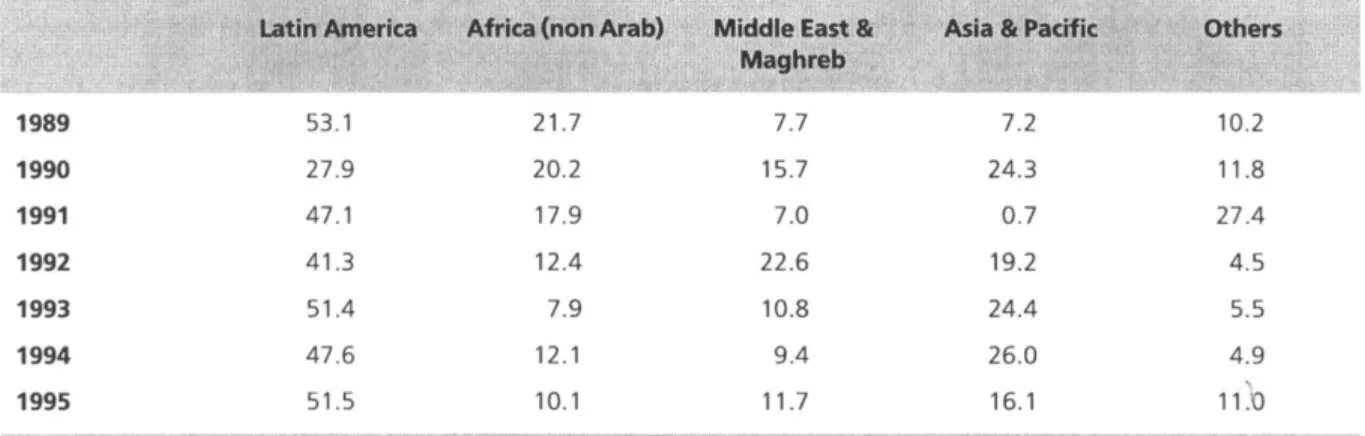
importance of Africa decreased over the period, the Mediterranean Basin and Near East maintained its importance, and Latin America and Asia increased their share of total oda, especially during the period when aid
4500r-- - - -- --- - - ---
---4000 ··· ... .
3500
E 2500 ···
~
~ 2000 ... .
~
:; u
-500 L _ ..l ______ .J _______ L ___ ...L __ _l __ _._ __ ~ _ _..._ _ __.__ 1981 1982 1983 1984 1985 1986 1987 1988 1989 1990 1991 1992 1993 1994
Year
-TotaiODA
Grants
- l o a n s
- - - - Multilateral
STRUCTURE OF DEVELOPMENT ASSISTANCE DELIVERY • 253
policy was increasingly shadowing Italy's own econom-ic interests. The geographeconom-ic priorities notionally set during the period were not always followed. The rate of concentration, representing the amount received by the top 25 countries as a percentage of total oda, was 65.3% in 1989-90 (MAE, 1995).
New guidelines set by the MAE in 1995 (MAE, 1995), narrow and intensify the geographical focus of co-operation activities to the following:
• the Eastern Mediterranean, where it can provide a contribution to the Middle East peace process, particularly the Israeli-Palestinian negotiations; • the Western Mediterranean and Albania, to assist
political and social stabilisation;
• the Horn of Africa and Southern Africa (SADC area) to assist the peace and reconstruction process. Depending on available budgetary resources, aid to Latin America and Asia will focus on the development of human resources and, particularly in Asia, support for the development of local enterprises.
Since the new guidelines were put in place, the concentration of oda has increased. In 1997, the top 20 countries received about 80% of all aid. In 1995, 44% of total aid went to the lowest-income countries (with a per capita income of less than US$ 675) and 91% went to mid-low-income countries (with a per capita income of less than US$ 2,695).
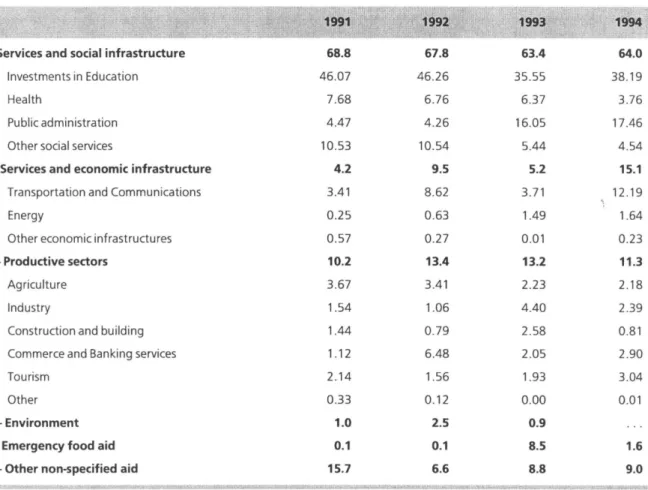
Bilateral co-operation has mainly financed tion activities and infrastructure, above all, the produc-tion of goods and services and economic infrastructure. Much support has also gone to the energy sector. Assistance to social and administrative structures has been funded at a fairly low level, compared both with other sectors of Italian oda, and with the DAC/OECD average for the social sector itself.
3.5 Multilateral assistance
Italian policy has been to support and strengthen its commitment to multilateral co-operation, and it imple-ments this policy through both multilateral and multi-bilateral channels.
Among its multilateral activities are the following. (i) The European Development Fund (EDF) and the
Community budget earmarked each year for co-operation with non-ACP developing countries. During the 1981-90 period these contributions corresponded to about 33% of total multilateral oda.
(ii) International financial organisations, e.g. the World Bank group, the Regional Development Banks (African, American, Asian, Caribbean), and the International Fund for Agricultural Develop-ment (IFAD). The Italian contribution to the Global Environmental Facility (GEF) also comes under this category. These contributions amounted to about 45% of total multilateral oda during the 1981-90 period, with peaks of up to 56%. Co-ordination between these contributions and the rest of the development co-operation programme is managed by the MAE (Ministry of Foreign Affairs) and the MBT (Ministry of Planning and Finance). (iii) Contributions to UN organisations and other
international organisations, may be compulsory,
voluntary or multi-bilateral. Contributions to these organisations represented 22% of Italian multi-lateral oda during the period 1981-90.
• Compulsory contributions are established on a multi-year basis according to quotas established by international agreements.
• Voluntary contributions are autonomously decided by donor countries.
• Multi-bilateral contributions are co-financed by the donor country and by one or more interna-tional organisations. Multi-bilateral funding gives donors the chance to earmark funds given to multilateral organisations for some of their own priorities.
Contributions to the organisations listed in (i) and (ii) above are managed directly by the Ministry of Planning and Finance. Contributions to the organisations listed in (iii) come within the development co-operation budget managed by the MAE.
In recent years, the most significant changes in development policy (apart from the overall reduction of oda), have been the setting of new geographical priorities, and the increased resources allocated to multilateral ends. The two are connected: the new geographical priority areas are selected on the basis not of trading links but of Italian international policy, while the closer links with international organisations indi-cates a new commitment to Italy's role in the interna-tional community.
If work with international organisations before the end of the Cold War was dictated only by the need to be seen to be present, while allowing others to formulate policies, the Italian presence now in these same institutions is seen as an opportunity to take part in the active formulation and maintenance of international relationships. Italian participation in peace keeping and emergency relief actions is also part of this same approach.
3.6 Non-Governmental Organisations Many of the NGOs active in Italian development co-operation are volunteer-sending agencies with some link to the church. Their presence in developing countries increased in the late 1960s when Italian citizens first gained the right to opt to work as volunteers in technical assistance for the period of time they would otherwise have had to spend on military service. International NGOs such as the World Wildlife Fund (WWF) are also represented. During the 1981-90 period, the main concentration of NGO projects was to be found in Africa with 111 projects, followed by South and Central America.
The importance of NGOs in Italian aid has increased over time, and under Law 49 of 1987, NGOs are now represented on the Consultative Committee for Devel-opment Co-operation and on the NGO Commission, chaired by the General Director of the DGCS.
254 • ITALY
aid managed by the DGCS.
In 1981, NGO projects were financed from private sources or from their own fund-raising, while MAE and EU financing represented about 34%. This percentage increased to nearly 48% in 1985 and more than 50% in 1990. In the case of individual NGO projects, law 49 specifies that DGCS financing should be up to 70% for projects identified and promoted by the NGO itself, and 100% for DGCS projects entrusted to them.
Within Italy, one of the NGOs which has taken an environmental campaigning function in recent years is 'Italia Nostra', a cultural organisation which campaigns to protect both historical buildings and the countryside. 3. 7 The Regions
Law 49 also lists Italian Regions and Local Adminis-trations as potential actors in development co-opera-tion. In fact only about 55% of the country has adopted regional legislation for co-operation, and activities have been modest so far.
Where regional activities have been undertaken, these have so far concentrated on information dissemination, education for development, and training and support. The objective has been to stimulate public opinion, to plan development co-operation activities at the local level, and to promote the implementation of develop-ment projects. Communes, through their National Association, are also involved in a programme aimed at decentralisation and the strengthening of local administrations for development co-operation activity. 3.8 Assisted Credit
Besides bilateral soft loans managed by the DGCS, the Ministry of Planning and Finance allocates resources to supply a Revolving Fund managed by Mediocredito Centrale to offer soft loans to developing country governments and Italian enterprises engaged in joint ventures with developing countries. However, the geographic area in which these credits may be used is shrinking for the following reasons:
• an agreement has been reached among OECD countries to exclude countries with a per capita income of more than US$ 2, 785 from soft-loan lending;
• many of the poorest countries cannot even afford the debt service of soft loans;
• these soft loans are tied to the use of services and goods originating in Italy. This makes it impossible to co-finance such projects as infrastructure pro-jects with the World Bank or other international financial organisations.
In 1997 it was planned that the only countries eligible for this form of loan would be the low-medium income countries of Asia and the Mediterranean Basin (MAE, 1997).
3.9 DGCS and Consulting Companies During the expansion of co-operation activities at the beginning of the 1980s, DGCS staff were too few for the resources they had to manage. For this reason many of the activities eventually funded were suggested by the recipient country in the absence of either a country programme or a list of agreed priorities. The country also often named the consulting firm which it had
selected to implement the activity, usually the Italian company with which there had been contacts at the project identification phase. In this way consulting firms were often in positions of considerable influence over the decisions taken by Italian co-operation, procedures were insufficiently transparent, and opportunities for corruption multiplied.
Law 49 of 1987 addressed this problem, introducing the principles of country programming and competitive bidding in awarding contracts. However, contracts by private negotiation were continued until appropriate procedures for competitive bidding could be drawn up on the basis of those in use inside Italy. As a result, competitive bids were the exception rather tha,n the rule for co-operation projects until 1995. Comparlies made use of a loophole in the law which allowed private negotiation where there was an exceptional and demonstrated need for it in the recipient country. The powerful position of certain companies explains why some sectors were prioritised in the aid programme. A good example is the energy sector, where the interests of recipient countries and powerful Italian state or parastatal enterprises were well-matched.
4.
DGCS DEVELOPMENT
ASSISTANCE STRATEGY
54.1 Background
Italy's experience in the field of tropical forestry is relatively limited for a variety of reasons, including the fact that its colonies did not include any tropical moist forest areas. No large-scale forestry sector industries emerged, therefore, during the colonial period or after. Nevertheless, the large group of small and medium-sized wood processing enterprises represents an im-portant national asset in terms of added value and employment, even though, as previously mentioned, they have had no access to DGCS policy-making processes.
During the rapid expansion phase of the 1980s and early 1990s, the aid programme was reactive rather than pro-active, relying on requests for projects from the recipient countries, rather than on country pro-grammes focusing on identified problems and opportu-nities. The agriculture and forestry sectors are usually at a disadvantage when competing with others, if requests are based not so much on real priorities as on those which appeal to politicians. Furthermore, as has been suggested, interested Italian companies were probably influential in determining the projects presented to the DGCS for funding.
As already noted, contributions to international organisations have for a long time been more a matter of respecting commitments than of using the opportu-nity offered by these fora to develop Italy's interna-tional policy. In these circumstances, it is hardly surprising that there was little enthusiasm for adopting the policies and guidelines formulated by these organisations.
5 REGIONAL AND THEMATIC DISTRIBUTION OF FORESTRY PROJECTS • 255
However, in this same period Italian development co-operation began to explore more effective ways of implementing its programme, given its shortcomings in efficiency. Through multi-bilateral co-operation, staff working in bilateral co-operation began to be exposed to proven approaches and instruments. Participation in FAO's Tropical Forestry Action Programme (TFAP) was conceived of as an occasion to involve co-operation in the formulation of programmes of agreed and prioritised forestry projects. The joint execution with FAO of social and community forestry projects exposed Italian aid to up-to-date approaches and methodologies (FAO, 1996). Co-operation with the Development Assistance Committee at the OECD and with the institutions of the World Bank allowed it to refine its instruments and guidelines.
4.2 Recent developments in DGCS strategy In recent years, as noted above, there has been a sharp decrease in the volume of resources allocated for Italian oda, as a consequence of a reduction in public expenditure in general. Italy was the fifth largest donor in 1993, the tenth in 1995 and has probably sunk lower down the league table in 1997 (MAE, 1997; Dini, 1997).
However, this period of cutbacks could prove positive if the opportunity is seized to rationalise and improve efficiency, and this is what Italian co-operation is attempting to do. In 1995 CIPE approved the guiding principles for a new aid policy and the reform of Italian co-operation. These rationalised aid planning and spending; specified areas and countries of concentra-tion; specified greater spending transparency and new spending procedures; and gave more importance to monitoring, evaluation and project cycle management methodologies.
The recent increase in the importance of the multi-lateral programme for Italian co-operation, is a reflec-tion of an increased interest in the sector policies and guidelines of international organisations. DGCS is eager to adapt, and to coordinate its approaches, methods and procedures with those of relevant institutions, in particular the EU and the DAC/OECD. In this context it is not surprising that objectives and principles in the forestry sector mainly reflect those agreed at the UN's global conferences and conventions.
4.3 Forestry Strategy
The DGCS has not provided itself with a Forestry Strategy as such. Mention of the forestry sector can be found only in passing, in official Notes and documents concerning the environment, agriculture, primary health care, etc.
Italy's main exposure to changing forestry thinking and strategy has been through its collaboration with FAO on multi-bilateral projects (see section 8). The F AO-Italy Consultative Committee is a body composed of 4 senior members of DGCS and 4 FAO representa-tives. Their task is the monitoring and technical review of projects co-funded by the two entities under multi-bilateral arrangements (FA0,1996).
In 1990, this body agreed that a strategic component of the multi-bilateral programme would be forestry and the environment, to be developed through projects involving the participation of local people and
commu-nities, and addressing the underlying causes of defor-estation as they are linked to human poverty. There are currently about 37 multi-bilateral projects, some of which are forestry projects. Since then the multi-bilateral programme with FAO has implemented innovative approaches in the field of protection, conservation and the building of country capacity, and has in turn influenced the bilateral programme. Italy and FAO have co-operated in the formulation of some interesting recent initiatives such as the tree planting component of the Egypt Environment Action Plan; soil and water conservation in Tunisia; and a forestry programme in Albania.
Italy is also interested in the development of forestry guidelines and approaches among internationM organi-sations such as the World Bank family including the Global Environment Facility (to which it is a con-tributor) and the European Commission.
4.4 International influences
In spite of the fact that there is no Italian Forestry Strategy, principles agreed by international fora, such as the 1992 UNCED Conference in Rio, the Climate Change, and Biodiversity Conventions, etc., have been promptly adopted and reflected in internal Notes. A recent Note produced by the Environment Section of the Central Technical Unit (UTC) in DGCS, for instance, analysed the consistency of recently approved environmental projects with a large forestry compo-nent, in the light of the UNCED Agenda 21 guidelines.
4.5 NGOs and environmental strategies As mentioned above, there is a close relationship between DGCS and NGOs. In particular, NGOs engaged in development programmes have a represen-tative on the Consulrepresen-tative Committee for Development Co-operation. Environmentalist NGOs, either Italian or international such as WWF, and based in Italy, often act to mobilise Italian co-operation by lobbying, through direct contacts and by participation in workshops on specific topics.
Their objectives are often to influence the sectoral policies of international organisations, or to counteract projects or programmes which they consider to have a potential negative effect on the environment. They also played an advisory role when principles and guidelines for environmental programmes were debated and adopted.
5
REGIONAL AND THEMATIC
DISTRIBUTION OF FORESTRY
PROJECTS
5.1 Introduction
256 • ITALY
Figure 4: DGC5-funded forestry, by bilateral and multi-bilateral spending, 1985--97
4or---35
E 25
-
VI::> .... 20
c:: ~ :;
u 15
10
0
1985-7
.Bilateral
198S.90 1991-3 1994-7 Year
• Multi-bilateral ~Total
(Source: DGCS database)
bilateral projects in other sectors were focused on lower and upper middle-income countries in Latin America. Italian participation in global and inter-regional for-estry programmes such as FAO's 'Forest, Trees and People' Programme, TF AP and the Global Forest Resource Assessment programme, has also had the same effect.
The process of change since 1985 in the tropical forestry sector has been accelerated by the multi-bilateral programme as well. Most of the projects implemented with the FAO Forestry Department have conservation and sustainable forest management using participatory approaches as their objectives.
Since it was decided in 1995 that development co-operation policy should support Italian foreign policy, and should concentrate on a restricted number of priority countries selected for their strategic and humanitarian importance, bilateral and the multi-bilateral strategies should now draw closer.
Italian forestry aid amounted to US$ 97.17 m. during the period 1985-97. During 1985-94, the only period
Figure 5: Total DGCS forestry spending by geographic area, 1985--97
Mediterranean Near East (16%)
(Source: DGCS database)
for which comparable data are available, this represents a mere 0.25% of total Italian oda. However, the figure includes only pure forestry projects. In reality there are, for instance, important forestry components in inte-grated rural development projects, often based on soil and natural resource protection. Conservatively
esti-mating a 30% forestry component in IRDPs and adding
this to forestry aid, it becomes clear that about 83% of DGCS forestry expenditure goes on pure forestry projects and a further 17% within IRDPs (DGCS Data Base and FAO, 1996). Other forestry components can be found in environment, watershed management, and food security projects, but they are not presented as such in DGCS statistics.
5.2 Bilateral and multi-bilateral programmes
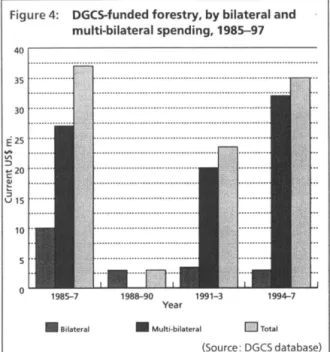
As already mentioned, the FAO-Italy Consultative Committee agreed in 1990 to give priority to environ-mental projects, especially those in the forestry sector, to be implemented in such a way as to ensure local participation in all aspects of the project cycle. The result was the large importance that the multi-bilateral programme now assumes in the forestry sector. The total oda in the sector in 199 5-6 was more than US$ 97 m., of which 82% was spent multi-bilaterally, and 18% bilaterally (DGCS Database and FAO, 1996). As shown in Figure 4, the multi-bilateral programme
has steadily increased in importance from 1990
onwards. Before this date, projects were arbitrarily selected and often the result of individual initiatives. An example of this is the large wood processing training centre established for the SADC countries.
5.3 Regional distribution
The regional focus of Italian co-operation has always been mainly on Africa, even if changes in policy have shifted the relative weighting of each region over time. Large special relief programmes for natural or man-made disasters in Africa have had strong support from Italian public opinion.
Figure 5 shows the distribution of forestry aid, bilateral and multi-bilateral, during the period 1985-97. Assistance to countries in Central and Southern Africa represents nearly half of the total, while the Far East and Central and South America, with about 5% each, are of marginal importance. However there is a large inter-regional component including projects and programmes with field locations in many countries and regions, so the total actual weighting is a little different from that indicated.
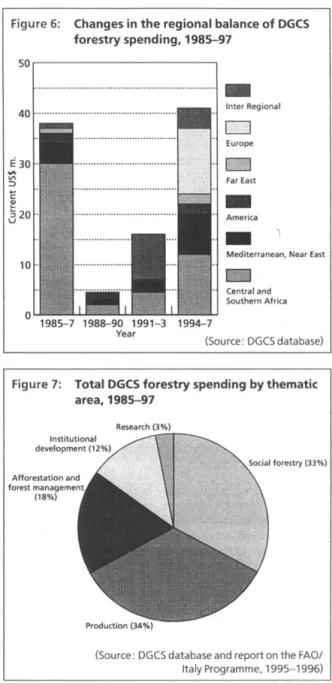
If we consider the distribution of forestry aid over the 13 year period 1985-97 (Figure 6), we find a complex picture. The level of aid decreased after 1985-87, and has only recently recovered to a similar level. 6 Africa is no longer the main destination for funds. The Medi-terranean-Near East area has increased in line with Regional policy, and part of the aid has been directed to East European countries to support the transition to a market economy.
REGIONAL AND THEMATIC DISTRIBUTION OF FORESTRY PROJECTS • 257
5.4 Thematic distribution
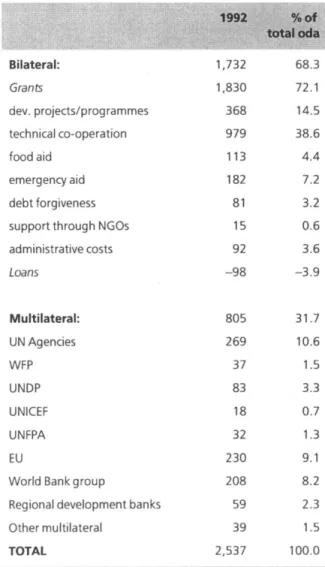
Figure 7 attempts to indicate the nature of the forestry projects which come under DGCS. The division is merely indicative, since projects are now much more multidisciplinary and integrated, and it is common for them to include afforestation, sustainable forest man-agement, research and development activities in the field of social forestry, country capacity building, etc. Community forestry projects all have in common a strategy centred on local people's development and their involvement in implementation, but forestry objectives may vary. Afforestation projects are more generally conducted by the forestry administration and do not necessarily involve local people.
Observing the development of forestry funding during the 1985-97 period (in Figure 8), a sustained increase of projects targeted towards both community development and forests can be identified, in line with the recent trends in international forestry aid referred to by the FAO/Italy Consultative Committee (FAO, 1996). The drastic drop in oda funds for commercial forestry is a result of changing Italian forestry co-operation strategies. In the past, a few large projects of this kind were funded, often more as a result of a conjunction of interests between recipient countries and Italian com-panies than because of any explicit aid strategy.
Research projects as such have not been funded since 1990. However, there are still a few applied research components in some community forestry projects.
5.5 Distribution of NGO projects
NGO-implemented forestry projects are funded out of the bilateral budget, 22% of the budget being disbursed through them. NGO projects concentrate on social forestry and biodiversity protection, and NGOs are felt to be well suited to carry out projects in these fields. Indeed, since these topics are among Italian forestry aid's main priorities, the NGO share of funding for them would be even larger if more of them had specific experience in these fields. NGO-implemented forestry projects mainly concentrate in Central and South America (69%), and represent the bulk of Italian aid in the sector there. The remaining 31% is spent in sub-Saharan Africa.
Figure 6: Changes in the regional balance of DGCS forestry spending, 1985-97
SOr---~
Mediterranean, Near East
1985-7 1988-90 1991-3 1994-7
Year
(Source: DGCS database)
Figure 7: Total DGCS forestry spending by thematic area, 1985-97
Research (3%)
(Source: DGCS database and report on the FAO/ Italy Programme, 1995-1996)
Figure 8: Changes in the thematic balance of DGCS forestry spending, 1985-97
30
25
IIJ
Production20
E • Afforestation forest management
-
VI:::>
.... c: 15 ~~ Institutional development
~
:;
u • Research
10
~~ Social forestry
0
1985-7 1988-90 199~2 1993-7
Year
258 • ITALY
6.
TROPICAL FORESTRY
RESEARCH AND TRAINING
7The lstituto Agronomico per l'Oltremare (Overseas Agronomy Institute, lAO) was established in Florence in 1912 to support agriculture and forest management activities in the colonies. It still plays the same role for the Italian co-operation programme, and is not a part of the university system.
No comparative synthesis has been made of tropical forestry research undertaken during the colonial period in Eritrea, Somalia, Libya and Ethiopia. It lies scattered in university archives. However, a colonial herbarium was established in Florence, and research was under-taken on dryland tree species and medicinal plants. Forest inventories and trials were also conducted in all four countries. Additionally, in Libya, research was undertaken on the planting of shelterbelts, and on sand-dune fixation. This research is now, of course, well over fifty years old, and some has been lost.
The Silviculture Research Institute (lstituto Sperimen-tale per Ia Selvicoltura) was established at the University of Florence in 1922, initially for Italian and Mediterra-nean forestry research 8 and later for tropical forestry research as well. After the Second World War a forestry teaching faculty was established with a postgraduate course in tropical and sub-tropical agriculture, which included some tropical forestry. Tropical activities concentrated mainly on Tunisia, Algeria, and Morocco. Until 1960, only the University of Florence had a forestry faculty, Arezzo, Padua and Viterbo following in the 1960s. After Regionalisation in the 1970s (and the devolution of responsibility for agriculture and forests) each Region wanted its own university. Forestry depart-ments were created in the Universities of Bari, Bologna Palermo, Reggio Calabria, Sardinia, Torino and Trieste.§
The Ministry of Foreign Affairs began to give some support to tropical forestry projects from the 1960s onwards. However, the projects were often selected geographically on the basis of current interests and policies rather than the areas in which Italy had particular competence. The projects selected did, how-ever, sometimes prioritise wood technology, in which Italy has a comparative advantage. For instance, the lstituto per Ia Ricerca sui Legno (Wood Research Institute) in Florence, which is part of the National Council for Research (Consiglio Nazionale delle Ri-cherche, CNR) has conducted research on wood technology, woodfuel including improved techniques for charcoal production in semi-arid countries and harvesting techniques, in West Africa, South-east Asia and Latin America. Similarly, the Poplar Research
7. There is no easy way of characterising all the tropical forestry research undertaken by Italian institutions. The following brief summary is based on personal interviews with Professor Riccardo Morandini (Universities of Florence and Arezzo), and individuals in DGCS, the Ministry of Agriculture and Forests and FAO. The Italian entries in the European Tropical Forestry Research Network (ETFRN) Directory for 1996 were also consulted.
8. The headquarters of the pan-Mediterranean working group 'Silva Mediterranea' was established there in that year. 9. There are now too many foresters - 200-300 a year- being
produced in Italy.
Institute, and the Centre for Forestry and Agriculture Research in Casaletto, near Milan, which both come under the parastatal SAF (Societa Agricola Forestale), have undertaken highly successful research financed by Italian Co-operation to introduce Italian poplars to China, Latin America (Argentina and Chile) and Turkey. While the Mediterranean, North Africa and the Near East have probably remained the main area of comparative advantage for Italian forestry researchers, there is also experience (above all at Florence) in West and Central Africa and the SADC countries, Amazonia, Brazil and the Andean region, and the Indian sub-continent and South-east Asia. So far, however, Italian institutional coordination with international research centres such as CIFOR and ICRAF has been practically non-existent.
The State Forestry Corps are trained at the Italian Academy of Forest Science (Accademia ltaliana de Scienze Forestali) in Florence - an Army College originally. Italian institutions have also provided train-ing for technicians from developtrain-ing countries. The universities of Padua and Florence have run training programmes in Somalia and Mozambique. The Institute for Wood Technology at San Michele all'Adige (Trento), another CNR institute, has conducted training for technicians from Latin America. Private institutions have also been involved in training. CEFAS, an institute managed by the Chamber of Commerce in Viterbo, ran training courses for students from developing countries until 1995. SCM, a leading wood processing company, organises training courses for technicians from devel-oping countries.
7.
PROJECT CYCLE MANAGEMENT
Project cycle management methods using logical frame-works (objectives-oriented project planning) were adopted in principle by Italian co-operation in 1995. The methodology selected was based on that of DG VIII in the European Commission, and the DGCS has commissioned the preparation of manuals. A series of courses have been conducted, both in the Central Technical Unit in Rome, and in Local Technical Units in Italian embassies in developing countries, to train DGCS personnel in the application of the method.
While Country Programme documents will still be vital for project identification and selection, logical frameworks will give projects clearer goals. So far, however, these project cycle management methods have not been widely applied in the aid programme. The delay has been caused by plans for the restructuring of official development co-operation, which will re-assign responsibilities among the main actors in the DGCS.
8.
THE INFLUENCE OF ITALY'S
MULTI-BILATERAL EXPERIENCE
IN COLLABORATION WITH FAO,
ON ITS BILATERAL FORESTRY
PROGRAMME
be useful to present results in international fora where they could be debated and confronted with other methods and approaches, refined, and used to shape future interventions in the sector. However, this task still lies in the future.
Instead Box 2 reviews the ways in which Italy's multi-bilateral experience in collaboration with FAO has helped to shape the thinking in its bilateral programme.
9.
CONClUSIONS
Italian co-operation developed late compared to the majority of OECD countries and grew too quickly in the initial period without equipping itself with the necessary organisational and administrative structure to face its increased commitments.
Italian tropical forestry co-operation had other problems when it started.
• The history of colonial Italian tropical forestry had been short, and had not included valuable forest areas which might have given forestry an economic importance nationally.
• The timber importers engaged in furniture produc-tion had little political influence with the Italian government, which therefore never considered the sector a strategic one.
• Research was diffuse and Italian comparative advantage initially unclear.
In these circumstances, policy-makers hesitated to engage in a sector in which they were not sure whether Italy could provide the necessary capacities and technologies.
Earlier co-operation agreements with recipient coun-tries often included an arbitrary selection of projects, in countries selected for unclear geographic priorities,
9. CONCLUSIONS • 259
rather than an analysis grounded in country priorities and oda policies. As a result, a large part of the funds available went to sectors of interest to local politicians and powerful Italian industrial groups, sowing the seeds for what would become a national scandal and a major problem for Italian co-operation.
In this situation, the forestry sector had no chance to emerge as a priority, except in the case of a few projects supported by NGOs and scientific organisations. Italian co-operation has chosen instead to implement most of its tropical forestry programme through the multi-bilateral channel, gaining experience and participating in progressive development and protection experiences in the field at the same time.
Meanwhile, co-operation policy has been changing.
Taking stock of previous experience, reforms have been
41
introduced, and the process is not yet finished. • Resources have decreased, as a result of reductions inpublic expenditure, and this represents a good oppor-tunity to improve efficiency. The new form of Italian co-operation which has emerged is now closer to interna-tional standards, as a result of the choice to give more emphasis to active participation in international orga-nisations, and to enhanced co-ordination with other development agencies in international fora.