Adaptation Pathways and Opportunities for
the Wet Tropics NRM Cluster region
Volume 2. Infrastructure, Industry, Indigenous peoples, Social
adaptation, Emerging planning frameworks, Evolving
methodologies and Climate adaptation planning in practice.
Precis
This chapter canvasses some of the adaptation options for infrastructure in the Wet Tropics Cluster (WTC) region. Specifically, this chapter considers potential options for adaptation to climate change impacts for water and power supplies, transport networks, buildings including urban development and waste management. This chapter is written for the NRM community and is intended to provide a framework for considering options when developing potential adaptation pathways for the WTC region. The key messages associated with each of the topics addressed in this chapter are:
TOPIC KEY MESSAGES
Anticipating increased deterioration of infrastructure
172. Adaptation options for higher rates of deterioration of concrete, steel, timber and other materials include the use of existing or new technologies, increasing the cycle of maintenance and repair and improving standards for new structures.
173. Adapting to more frequent damage to infrastructure in general will require budgetary provision for more frequent maintenance, repair and replacement.
Increasing system redundancy
174. An option for adapting to more frequent interruptions to a range of infrastructure functions and services is to increase redundancy in the system, thereby reducing dependence on a single mode of infrastructure.
Insurance 175. A potential adaptation option for all infrastructure sectors is to increase the level of insurance against climate change impacts. Insurance premiums may also be used to discourage infrastructure in vulnerable areas.
Rainfall variability 176. Adaptation options to address the reduced availability of freshwater include increased use
4.
Adaptation pathways and opportunities for
infrastructure
Catherine Moran and Stephen M. Turton
IN A NUTSHELL
Adaptation options for infrastructure can be classified as either ‘protect’, ‘accommodate’ or ‘retreat’. In general, current community support is strongest for ‘protect’ options, although these are often expensive, may be inconsistent with other sectors (e.g., biodiversity conservation) and will be likely to work only under low or moderate climate impacts.
Many ‘Accommodate’ options will require investment in the development of new technologies (e.g., new agricultural crops, protection of materials from deterioration, water recycling) and local networks (e.g., power generation and distribution, water collection and storage and produce distribution).
TOPIC KEY MESSAGES
of water-saving devices, large-scale recycling and re-use programs, instigating behavioural change and encouraging domestic rainwater collection.
Higher temperatures 177. Higher evaporative losses from water storage compounds may potentially be addressed using physical and chemical covers or by storing water in underground aquifers. 178. Adaptation options for industry when cooling water temperatures are high include
temporary shut-down, the development of new technologies, switch to industries that do not require cooling water and partnership with industries that can make use of warm water.
179. Adaptation options for buildings in response to increased temperatures include improved design and upgrading, as well as the use of vegetation for shading and to provide green areas. It will be difficult to mitigate periods of severe heat-related health risk in some areas, especially where there is limited access to air-conditioning.
Sea level rise 180. Protective adaptation options for inundation from sea level rise are common across infrastructure sectors. These include the use of engineering techniques such as sea walls, dykes, storm surge barriers, beach nourishment and sand dune revegetation, which are intended to physically prevent sea water inundation and coastal erosion.
181. Adaptation options to accommodate inundation by sea water include the elevation of infrastructure in these areas, improved drainage, shut-down of infrastructure facilities during inundation and increased cycle of maintenance and repair. The relocation of infrastructure to elevated or inland areas is a Retreat adaptation option that is likely to be important for susceptible critical infrastructure (e.g. Cairns base and private hospitals). 182. Adaptation options for seawater contamination of freshwater supply include installation of
tidal gates, desalination, switch to salt-tolerant crops, managed aquifer recharge, the relocation of operations upstream and a shift to localised collection and distribution of water, particularly rainwater.
183. Adaptation options for transport infrastructure in response to inundation include shut-down during inundation events, technological adaptations, and increased reliance on local commodities. Retreat will not be possible where access to coastal areas (e.g. for sea ports) is required.
Heavy rainfall 184. Adaptation options for buildings in response to heavy rainfall include incorporating structural features that reduce vulnerability to flooding.
185. Adaptation options for dams in response to extreme rainfall events include integrated catchment management to reduce sedimentation and improved design standards. 186. Adaptation options for sea ports in response to increased sedimentation and debris
transport during extreme rainfall events include more frequent dredging, improved sediment control and reduced harbour capacity.
More intense tropical
cyclones 187. Potential adaptation options in response to extreme events include the replacement of wooden poles with stronger material, laying underground supply cables in areas not affected by seawater intrusion, improving mobile network coverage, improved systems in remote locations and transition to localised generation and supply networks.
TOPIC KEY MESSAGES
increasing freight storage capacity, and development of new technologies.--- 189. Adaptation options for buildings in response to damage from intense cyclones include
upgrading pre-1980 buildings to current engineering standards and increasing the number of and access to cyclone shelters.
Introduction
An earlier report (Moran and Turton 2014) outlined broad impacts of climate change on infrastructure in the WTC region. Infrastructure provides and supports the basic needs of communities and any decline in the condition, reliability, supply of, or access to
infrastructure will impact across remote, rural and urban communities. This chapter provides information for community discussion about potential ways of adapting to these impacts.
Infrastructure tends to be large-scale and complex and many of the policy and regulatory options for adapting infrastructure to climate change will be the
responsibility of Local, State and Federal Governments. While some of these decisions (e.g. location of major roads) are beyond the direct control of the NRM community, an informed NRM community can have influence over these. In addition, many adaptation decisions will be made at the level of communities (e.g. town water supply) and individuals (e.g. household power supply).
Strategies for active adaptation of infrastructure to climate change impacts fall into one of three categories (Pittock and Jones 2000; Linham and Nicholls 2012): 1. ‘Protect’: Implement defensive actions or structures
to prevent exposure to impacts and enable continued use or occupation of an area 2. ‘Accommodate’: Allow for continued use or
occupation of an area, but make changes to develop resilience to impacts
3. ‘Retreat’: Cease use or occupation of an area and relocate to less vulnerable area that is not exposed to impacts.
These categories can be further subdivided, but in this chapter we present adaptation options in these broader
categories. We note that a fourth category of adaptation is recognised as ‘autonomous adaptation’ (or ‘do nothing’) and depends on reactive rather than proactive action, usually following natural disasters (King et al. 2013). We don’t explicitly examine this option in this chapter.
Variation in the economic cost of different adaptation options is related to the different categories of
adaptation: Protection is often most expensive whereas options in the ‘Accommodate’ category are often relatively inexpensive. ‘Retreat’ options may also be very expensive, and additionally require substantial behavioural and cultural change which can present major psychological hurdles. There is also variation in the ecological cost of options within the three categories of adaptation, with options in the Protect category likely to be least consistent with ecological protection (Davey et al. 2013). An integrated analysis of the ecological, economic, cultural or social costs and benefits associated with potential adaptation options is beyond the scope of this chapter. However, it is acknowledged that there are trade-offs associated with most adaptation options and that developing
adaptation pathways will need to balance potentially competing economic, social and ecological objectives. The amount of adaptation that will be required to avoid and reduce exposure and increase resilience to climate change impacts is related to the amount of climate change that will happen. This is dependent on the level of mitigation of global greenhouse gas emissions that can be achieved. Under a ‘best case’ scenario where emissions are rapidly and substantially reduced, it will still be necessary to adapt to ‘locked in’ impacts that are the result of past and existing emissions due to the long residence time of Co2 in the atmosphere. Various
climate will exceed our capacity to adapt in many cases. Then, even adaptation strategies based on Retreat may not be sufficient to maintain functional infrastructure.
Structure of this chapter
The intention of this chapter is to present a framework for considering some of the possible adaptation options associated with different infrastructure elements in the WTC region. The first three sections of the chapter outline potential adaptation options that are common across climate change impacts and infrastructure sectors, namely: i) anticipating increased deterioration of infrastructure; ii) increasing system redundancy ; and iii) insurance. These options are not repeated in key messages for each subsequent section, although they remain relevant to water supply, power supply, transport networks, buildings and waste management. The following five sections of the chapter outline potential adaptation options in relation to specific climate change impacts: rainfall variability, high temperatures, sea level rise, heavy rainfall and more intense tropical cyclones. We use a series of tables at the end of the chapter to summarise adaptation options for each infrastructure sector by category of adaptation strategy (i.e. Protect, Accommodate and Retreat).
The adaptation options in this chapter are not exhaustive lists of all potential options, but represent the range of ideas considered in recent reports and scientific literature. The desirability, financial cost, social or ecological dimensions of these options are not explored in this chapter; these considerations will necessarily involve engagement with stakeholders in the region.
Anticipating increased
deterioration of infrastructure
Adaptation options for higher rates of deterioration of concrete, steel, timber and other materials include the use of existing or new technologies, increasing the cycle of maintenance and repair and improving standards for new structures.
Higher temperatures, more intense heavy rainfall events and associated flooding, together with sea level rise in coastal areas, will increase the wetting-drying cycle, leading to more rapid deterioration of a range of building materials, including concrete, steel and timber, asphalt, coatings and sealants (McEvoy et al. 2013; Barnett et al. 2013). Adaptation options include increasing the cycle of maintenance and repair and - for new structures - developing new building standards and enforceable codes that account for impacts of climate change. Ongoing research into different types of cements, interactions between climate-change impacts (e.g. sea level rise and chloride penetration) and new technologies may yield new adaptation options (Wang et al. 2010a).
Climate change will increase corrosion of concrete structures through increased penetration of atmospheric CO2 and chloride. These increased
deterioration processes will be compounded by increased exposure to salt and wave impact through sea level rise and increased levels of exposure to extreme weather events. Impacts on the safety, functionality and durability of concrete will be significant (Wang et al. 2010a). Adaptation options for existing concrete structures include retrofitting using existing technologies, such as surface coating, cover replacement, cathode protection, realkanisation and chloride extraction (Wang et al. 2010a). The best option for a given structure will depend on specific levels of exposure, exposure to other climate change impacts, cost and effectiveness (Wang et al. 2010a). In general, surface coating will be the cheapest, but least effective, while cover replacement is most effective and also most expensive (Wang et al. 2010a).
Adapting to more frequent damage to infrastructure in general will require budgetary provision for more frequent maintenance, repair and replacement.
Increasing system redundancy
An option for adapting to more frequent interruptions to a range of infrastructure functions and services is to increase redundancy in the system, thereby reducing dependence on a single mode of infrastructure.
More intense tropical cyclones as well as heat waves and inundation events (see Turton 2014) will interrupt the provision of critical infrastructure services, such as power supply. Installing a backup power supply for these times is a means of increasing redundancy in the power supply system. Many residents and businesses in the WTC region already have generators for this reason. Other options include the installation of renewable energy micro grids to supply backup power when the national grid is interrupted. In the case of industries such as Mackay sugar mill, sufficient power is generated from biomass (bagasse) energy to run mill operations independently of the national grid during the crushing season as well as to meet a substantial proportion of community energy needs. Renewable energy micro grids are also an option for areas of the WTC region that are not connected to the national grid, where small populations and geographical isolation mean that it would be uneconomic to do so (and where connection to the national grid is not welcomed by parts of the communities such as Daintree). Most of these areas currently depend on local power generation but this is predominantly from diesel generators. Advances in battery storage technology and affordability are improving the feasibility of domestic photovoltaic systems supplying household power needs. Renewable energy household or micro grid systems may present an option for providing reliable energy that is not affected by interruption of the national energy grid or diesel supply chains. There is also the potential for this strategy to have the dual benefit of reducing greenhouse gas emissions and so contributing to climate change mitigation. In the WTC region,
renewable hydro-electric power from the Barron Gorge power station currently contributes a large proportion of power requirements around Cairns. The Climate
Change and Greenhouse Gas Reduction Act 2010 is an
Australian example of legislated greenhouse gas emission reduction through altering the mix of
electricity generation, developing approximately 1 900 gigawatt hours of emissions-free electricity per year by 2020 (Australian Capital Territory 2012).
Increased redundancy in the transport and freight distribution network will also improve adaptive capacity in the WTC region. For example, transport of export goods from production areas to sea ports typically depends on a single mode of transport and
interruptions have consequences through the supply chain and to port operation. Building in modal
redundancy in supply chain systems has been identified as an adaptive strategy for major transport networks (Scott et al. 2013). Redundancy in private transport options will also contribute to adaptation. Again, there are existing examples of this in the WTC region, where transport of people and goods shifts to air and sea during the wet season when road transport is not feasible, although costs are high. It is striking that large-scale infrastructure plans for the region generally do not currently consider likely consequences of climate change either in terms of the need for backup infrastructure (e.g. supply-chain infrastructure for the Abbott Point terminal) or investor behaviour (especially in relation to stranded assets).
Insurance
A potential adaptation option for all infrastructure sectors is to increase the level of insurance against climate change impacts. Insurance premiums may also be used to discourage infrastructure in vulnerable areas.
increase in the WTC region and are already inaccessible to many residents in the region, in large part because of the perceived risk of climate change-related weather hazards.
Rainfall variability: fresh
water supply
Adaptation options to address the reduced availability of freshwater include increased use of water-saving devices, large-scale recycling and re-use programs, instigating behavioural change and encouraging domestic rainwater collection.
Maintaining adequate supply of fresh water for
domestic, agricultural and industrial uses in parts of the WTC region is already constrained during the dry season and is likely to become more uncertain (DERM 2010). Although rainfall is not expected to decline, supplying uncontaminated freshwater will become more challenging, especially in coastal areas. Factors such as increased evaporation, increased rainfall variability and salt water contamination will impact on the availability of fresh water in the region (see Turton 2014). Factors such as sea water contamination will also impact on water supply by increasing corrosion of water distribution infrastructure.
Water conservation strategies are generally preferable to the construction of new large reservoirs, which are politically unpopular (McJannet et al. 2008) and which have a range of negative ecological impacts (Bouwer 2000). Water conservation strategies may include fitting water-saving devices for domestic and industrial use and facilitating behavioural change to conservative water use practices. Water conservation will result from improved irrigation efficiency and water harvesting techniques. Increasing local water storage capacity through increased use of domestic and farm rainwater tanks may also be an adaptation option to address greater variability in fresh water supply.
Water recycling and reuse is another adaptation strategy that will reduce the need for new water reservoirs or access to aquifers. Cairns Regional Council is already increasing their waste water recycling program to address existing and projected future
shortfalls in fresh water supply. For example, the Marlin Coast Recycled Water Scheme is designed to supply recycled water through a dual domestic reticulation network to be used in toilet flushing and other non-potable uses
(http://www.cairns.qld.gov.au/environment/water-and-waste/wastewater-management).
Higher temperatures:
evaporative loss of water,
heated industrial cooling
water, heat stress in buildings
and power failure
Evaporative loss of freshwater from
storage compounds
Higher evaporative losses from water storage compounds may potentially be addressed using physical and chemical covers or by storing water in underground aquifers.
Rates of evapotranspiration are predicted to increase in all seasons in the WTC region (Turton 2014). This will lead to increased evaporative losses from dams, including large, public reservoirs which store water for municipal potable supply or for broad-scale irrigation, as well as private dams including large-scale reservoirs used in industry operations or smaller-scale on-farm dams. Increased evapotranspiration from catchments may also reduce runoff into dams and reservoirs. It will be very difficult to manage increased
(monolayers and surface films). There are economic and practical limitations on the use of physical and chemical covers, as well as a range of poorly known ecological impacts (NPSI 2006; McJannet et al. 2008). Physical covers include impermeable or modular plastic and shade cloth. Shade cloth seems to hold most potential for smaller dams, being relatively inexpensive, practical in many situations, and effectively reducing evaporation by up to 70% while allowing rainfall penetration (NPSI 2006). A web-based tool ‘Ready Reckoner’ has been developed to calculate water losses from farm dams and the economic value of different physical covers (Heinrich and Schmidt 2006). The degree to which monolayers reduce evaporation requires more research, but it seems they may be most effective in smaller water bodies (McJannet et al. 2008), including irrigation channels (Land & Water Australia http://lwa.gov.au/projects/2636). A downfall of monolayers is that they need to be reapplied, every one to three days, especially if surface turbulence is high (McJannet et al. 2008), but this is a potential benefit in that they can be applied only when and if needed (Schache 2011). The health risks posed by monolayer or microlayers are also unknown (McJannet et al. 2008). Alternatives to storage in open reservoirs include the use of closed storage tanks, as well as artificial recharge of underground aquifers (Brouwer 2000). This strategy, also known as ‘water banking’, has especially been used in parts of the world where rainfall is very seasonal, with rain water collected above-ground during the wet season, with any excess pumped into underground aquifers for extraction during the dry season. In parts of Europe excess surface water, desalinated water and treated effluent are used to recharge aquifers. This strategy is also one of the suggested methods of dealing with sea water incursion as a result of rising sea levels (see below). This method is not suitable where the water table is high, due to the risk of salinity or where aquifers are not suited to storage of large volumes of water.
Increased temperature of cooling
water
Adaptation options for industry when cooling water temperatures are high include temporary shut-down, the development of new technologies, and switch to industries that do not require cooling water.
With increased average temperatures and increased frequency of heat waves, the temperature of industrial cooling water will increase and more frequently exceed threshold temperatures. Adaptation options include the development of new industrial processes that can tolerate warmer water or do not require as much cooling, the development of new technologies for cooling or temporary shut- down of facilities. This will impact mining operations in particular, which will also be affected by increased ambient temperatures in other significant ways (Mason et al. 2013). Plans for new industrial operations in the Mackay-Whitsunday region, near Cooktown and in the Herbert River catchment area should take into account potential constraints imposed by increased temperatures, the need to install technology such as heat exchangers, and the potential to partner with industries that could use waste heat (e.g. prawn farms).
Heat stress in buildings
Adaptation options for buildings in response to increased temperatures include improved design and upgrading, as well as the use of vegetation for shading and to provide green areas. It will be difficult to mitigate periods of severe heat-related health risk in some areas, especially where there is limited access to air-conditioning.
building design codes and retrofitting existing buildings with light-coloured roofing, ceiling insulation,
protective coatings (e.g. ceramic paint) and window shading can make a substantial difference to heat stress experienced by occupants, particularly in regions where summers are warm or temperate (e.g. upland areas of the Terrain NRM region). However, while designing new buildings to reduce solar access in hot periods is a potential way of adapting housing to climate change impacts in some regions, analysis of modelled heat stress indices in different housing types with different degrees of adaptation shows that it will be very difficult to mitigate periods of severe heat-related health risk in regions with hot summers (i.e. most of Cape York and the Torres Strait region and lowland areas of the Terrain and Reef Catchments NRM regions) (Barnett et al. 2013).
In many of the most vulnerable regions of the WTC region, there is very limited domestic air-conditioning and public cooled places such as shopping centres are generally unavailable outside major urban areas. In situations where air-conditioning is available, this may offset some of the discomfort of high temperatures, although power outages during extreme heat weather and increases in household energy costs may mean this is not a viable option (Barnett et al. 2013). Note that the national electricity grid does not supply power to some of the areas that are most vulnerable to heat stress, including Cape York and the Torres Strait region, where dependence on diesel generators is high. The prevalence of health problems that will be
exacerbated by climate change impacts is higher among people in low income households (Barnett et al. 2013). In the WTC region, low income households are common, dominating more remote locations, and include many Indigenous families (see Chapter 6, this report).
Power failure during heatwaves
Heat waves may cause power failures because of the accumulation of resistance in transmission lines, which increases with temperature and demand (peak power demand typically occurs during heat waves). Demand may be able to be reduced to some extent by instigating behavioural change in residents as well asimprovements in building design (e.g. see below), although there is a limit to how these adaptations will mitigate the discomfort experienced during heat waves. Within the WTC region, many of the areas most
vulnerable to heat waves (i.e. Cape York, Torre Strait) are not on the national electricity grid and so will neither contribute to demand, nor benefit from improved supply from national grid.
Sea level rise: seawater
contamination of freshwater
supplies, impacts on power
supply infrastructure,
transport infrastructure,
buildings and waste
management systems
Sea level rise will lead to more frequent and permanent sea water inundation in coastal areas and the upstream extension of tidal reach, especially in combination with cyclonic storm surges (see Turton 2014). These processes will impact on most infrastructure sectors in the coastal zone and a suite of potential adaptation options may apply across sectors, including tourism infrastructure (see Chapter 5, this report).
Protective adaptation options for inundation from sea level rise are common across infrastructure sectors. These include the use of engineering techniques such as sea walls, dykes, storm surge barriers, beach nourishment and sand dune revegetation, which are intended to physically prevent sea water inundation and coastal erosion.
considerable potential for unintended downstream effects such as altered patterns of beach erosion and accretion in other areas (Harman et al. 2014), especially with hard engineering measures. Soft engineering approaches (e.g. beach nourishment, sand dune revegetation) can have positive impacts additional to reduction in flooding, including the creation of habitat. However, the protective capacity of these measures will decrease with sea level rise over time, especially in area where these systems are confined by adjacent
infrastructure. Beach nourishment in isolation will also tend to be an increasingly expensive means of providing protection due to increased severity of storm events and associated storm surge and erosion impacts. In relation to risks to coastal infrastructure from sea level rise, community support in Australia tends to be highest for the option of protection (King et al. 2013) and at least in the short-term, retreat is likely to remain politically and economically unappealing in Australia (Fletcher et al. 2013; Harman et al. 2013).Protective options may potentially be effective in the short term, but, as noted, are likely to be expensive and will eventually be overcome by high levels of sea level rise (Wang et al. 2010b). Protective barriers such as sea walls may also have unintended consequences such as inhibiting the discharge of floodwaters, thereby exacerbating coastal flood events.
Adaptation options to accommodate inundation by sea water include the elevation of infrastructure in these areas, improved drainage, shut-down of infrastructure facilities during inundation and increased cycle of maintenance and repair. The relocation of infrastructure to elevated or inland areas is a Retreat adaptation option that is likely to be important for susceptible critical infrastructure (e.g. Cairns base and private hospitals).
These adaptation options apply to impacts from sea water inundation of infrastructure, including that associated with power supply, coastal buildings and waste management (below) and are also relevant to impacts of inundation from heavy rainfall across infrastructure sectors (see later section).
Seawater contamination of freshwater
supply
Adaptation options for seawater contamination of freshwater supply include installation of tidal gates, desalination, switch to salt-tolerant crops, managed aquifer recharge, the relocation of operations upstream and a shift to localised collection and distribution of water, particularly rainwater.
Sea level rise will necessitate adaptation to freshwater contamination via sea water inundation into coastal surface water bodies, upstream extension of tidal range in coastal watercourses and seawater intrusion into ground water. The need for adaptation to sea level rise will be greatest in coastal areas of the mainland and islands and along coastal watercourses. Storm surge associated with tropical cyclones will exacerbate this problem.
Protective engineering options (see first section) may be used to prevent seawater inundation of coastal freshwater bodies. Tidal gates (hinged, one-way flaps across watercourses) may be used to prevent the inflow of tidal water into freshwater reaches of coastal watercourses. While installation of tidal gates on coastal watercourses may protect watercourses and surrounding floodplain areas from tidal inundation, such structures have been associated with the exposure of acid sulphate soils and changed composition of aquatic faunal communities (Heath and Windberg 2010). Research into the ecological impacts of tidal gates is required and legislation that regulates the design and installation of such engineering options will need to be developed.
Sea level rise is predicted to lead to seawater intrusion into coastal groundwater. The Cape York NRM region has a relatively high dependence on groundwater due to the high seasonality and low reliability of surface water availability. Freshwater supply in this part of the region may be vulnerable to sea water intrusion, although sea level rise is predicted to be lower, at least on the Western Cape, than elsewhere in the WTC region (Turton 2014). Seawater intrusion also has the potential to significantly impact water supply for agriculture on coastal floodplains.
Managed or artificial recharge of underground aquifers involves pumping freshwater underground. This is used to replenish depleted aquifers and also to force back the salt water interface and may be a suitable adaptation strategy. Artificial recharge is already employed in areas such as the Burdekin Delta where over-extraction of groundwater has lead to seawater intrusion (Narayan et al. 2003). In South Australia, waste water is pumped into aquifers to reduce the discharge of nutrients and contaminants into waterways. However, managed recharge of aquifers will not necessarily restore water for extractive purposes, and also carries the risk of contaminating groundwater.
Sea water inundation and degradation
of shoreline power supply
infrastructure
The key messages relating to adaptation options for sea level rise (presented above) also apply to the
inundation and degradation of power supply infrastructure by seawater.
Sea level rise will increase the exposure of coastal infrastructure to salt spray. In the case of power distribution networks, this will increase rates of corrosion of transmission wires, potentially leading to increased incidence of flashover. It is likely that there will be an increased need for maintenance and repair to networks in transmission networks exposed to salt. Sea level rise, especially in conjunction with storm surge and heavy rainfall events, will lead to inundation of low-lying coastal power distribution facilities, such as sub stations. Adaptation options include the
construction of defensive engineering structures (e.g. sea dykes), elevation of facilities, and the relocation of networks to less vulnerable areas. An additional adaptation option would be to develop backup power supply for when the mains power supply fails.
Increased coastal erosion associated with sea level rise will remove erodible shoreline areas where power transmission poles are currently located. If protective measures fail, relocation of the network away from the coastline appears to be the only adaptation option. Subsurface networks, such as gas pipelines and underground power networks, will also be affected by seawater incursion and rising water tables resulting from sea level rise. In many parts of Cape York and in the Torres Strait region, small airports are critical for the transport of people, goods and services, especially in the wet season when the road network is closed for several months. Interruption of transport and freight distribution networks will have major, isolating and economic consequences for the region.
Sea water inundation of transport
infrastructure, degradation of
shoreline transport infrastructure
Adaptation options for transport infrastructure in response to inundation include shut-down during inundation events, technological adaptations, and increased reliance on local commodities. Retreat will not be possible where access to coastal areas (e.g. for sea ports) is required.
More frequent and permanent inundation of coastal transport infrastructure as a result of sea level rise will affect sea ports, airports, major roads and rail lines. Because most major settlement is in lowland coastal areas, major transport infrastructure is concentrated in the same areas that are most vulnerable to impacts from sea level rise. There are limited options for the relocation of transport networks away from vulnerable areas (Retreat). Although adaptation to these impacts will very likely require significant financial investment in strategies such as elevating infrastructure and
Transport infrastructure is obviously critical to the mobility of local residents, as well as to trade, business and the tourism industry. The WTC NRM region currently depends on freight coming in from other regions, including for fuel, food and other commodities. Also, most major industries in the region depend on access to a freight distribution network to transfer goods nationally and internationally. Most major distribution networks are coastally-located and transport of products from mining, agriculture and other industries, especially across low-lying coastal land to sea ports, are vulnerable to inundation from both the sea and river floods.
Sea ports are particularly vulnerable to impacts from sea level rise. There are three bulk import/export sea ports in the WT NRM cluster region (Weipa, Mackay and Cairns and export ports at Hay Point, Mourilyan and Lucinda. Petroleum supply in the region depends on imports to the Mackay and Cairns ports. Smaller ports in the region (e.g. Lockhart River, Thursday Island) are also critical for goods supply and people transport, especially in the wet season. Most of the WTC NRM region around Cairns, Cape York and the Torres Strait depend on the supply chain in and out of Cairns where industrial fuel storage facilities are recognised to be vulnerable to inundation by seawater.
Increased coastal erosion resulting from sea level rise will remove the substrate for coastline infrastructure, such as roads. Engineering adaptations may provide protection, but relocation of infrastructure to less vulnerable parts of the landscape is likely to be the most pragmatic option.
Sea water inundation of coastal
buildings and urban infrastructure
The key messages relating to adaptation options for sea level rise (presented above) also apply to inundation of coastal buildings.‘Hard’ and ‘soft’ engineering adaptations have been used to reduce sea water intrusion, coastal erosion and flooding in coastal areas throughout the world (e.g. Netherlands and Bangladesh) and in Australia (e.g. Gold Coast: Linham and Nicholls 2012). However, the
Australian system of land tenure, division of responsibility for implementation of adaptation measures, and the dispersion of a large number of at-risk communities across a long coastline may reduce the feasibility of this as a widespread response to sea level rise from climate change (Harman et al. 2013). Options to accommodate impacts of sea level rise on coastal buildings include elevation and increased drainage. Retreat will involve relocation of communities to less vulnerable parts of the landscape. This strategy is being used in some parts of Australia (e.g. Byron Bay in New South Wales), but is generally an unpopular option for coastal residents. The Commonwealth of Australia (2009) present a useful summary of a suite of approaches to calculating the risk to coastal areas posed by sea level rise and extreme events (see below). Sea level rise is also predicted to raise water tables in coastal areas, leading to freshwater inundation of subsurface infrastructure such as underground power reticulation (e.g. Cairns CBD), basements, underground carparks and swimming pools, as well as to structural damage and instability in above-ground buildings. This problem will be compounded by salination of the water table. Management of ‘rising damp’ is a problem throughout the world, and a suite of methods has been developed, including the use of electro-osmotic systems, injection of moisture barriers and installation of perimeter drains (Spennerman 2001).
Heavy rainfall: inundation,
sedimentation and damage to
infrastructure
Inundation of buildings
Adaptation options for buildings in response to heavy rainfall include incorporating structural features that reduce vulnerability to flooding.
areas, design features such as breakaway wall sections of the lower areas of structures are potential
adaptation options that will reduce loading during flooding (Linham and Nicholls 2012).
Dam sedimentation and failure
Adaptation options for dams in response to extreme rainfall events include integrated catchment
management to reduce sedimentation and improved design standards.
Increased frequency and intensity of high rainfall events (including with cyclones) are predicted under climate change. This will increase sediment transport and the rate of sedimentation of dams, reducing their capacity and eventually their longevity (Wegner et al. 2013). Integrated catchment management actions that slow sediment transport are an adaptation option for increased rates of dam sedimentation. Increased sedimentation will increase surface area: volume ratios, compounding effects of increased evapotranspiration. The likelihood of failure both of public and private dams will be increased with predicted changes in extreme rainfall events (Wegner et al. 2013). Improved dam standards that account for more frequent and intense rainfall events may be an adaptation option.
Sedimentation and debris transport
and ports
Adaptation options for sea ports in response to increased sedimentation and debris transport during extreme rainfall events include more frequent dredging, improved sediment control and reduced harbour capacity.
Increased frequency of intense rainfall events will increase sedimentation and the transport of debris to ports and harbours. This will impact shipping and sea port operation. Improved sediment control measures in upstream catchment areas would be one option for trying to protect from this impact and it may be possible to make upstream sediment control (e.g. through revegetation) a condition of approval of any increased dredging operation. Increased dredging
would be another potential adaptation to this impact, although removal of marine sediments may increase exposure to acid sulphate soils. Note that high flow events can also expose acid sulphate soils (Heath and Windberg 2010). Alternatively, seaward extension of sea port infrastructure is one option for adapting to increased sedimentation, as is reducing the capacity of harbours and ports to a smaller ship limit would be another adaptation option, although this would need to be integrated with export/import plans and is
inconsistent with current proposals (e.g. expansion of Abbot Point terminal).
Inundation of waste management
facilities
Extreme rainfall events are likely to cause flooding and failure of infrastructure in floodplain areas. During cyclonic events, these areas may be simultaneously impacted by storm surge and river flooding. Flooding of utilities such as waste water storage facilities and landfill sites in low-lying areas will potentially lead to point source pollution of surface and ground water and serious public health risks. Adaptation options for sea level rise such as the construction of levees (protection) and the elevation of sensitive elements (adaptation) and relocation to less vulnerable areas (retreat) also apply to inundation of waste management facilities.
More intense tropical
cyclones: damage to
infrastructure
Power supply
Potential adaptation options in response to extreme events include the replacement of wooden poles with stronger material, laying underground supply cables in areas not affected by seawater intrusion, improving mobile network coverage, improved systems in remote locations and transition to localised generation and supply networks.
networks, resulting in more frequent and prolonged power outages. Replacement of wooden poles
(predominant in the WTC region) with steel may reduce damage, although transmission wires are still likely to be affected by strong winds. Increasing redundancy in the power supply system by encouraging local power generation (e.g. domestic solar or wind energy systems; micro-grid networks) is an obvious adaptation option for this impact. Transition to an underground power reticulation network would reduce the susceptibility of power supply to pole and wire damage, although in low-lying coastal areas, such subsurface infrastructure would potentially be susceptible to rising water tables, as described earlier.
Transport infrastructure
Adaptation options for transport infrastructure in response to extreme events include increasing freight storage capacity, and development of new
technologies.
Extreme rainfall and wind speeds associated with more high-intensity tropical cyclones will cause damage to and inundation of transport infrastructure, and will lead to more frequent shut-down of transport networks. Shut-down periods are likely to increase with more intense cyclones. Increasing drain and stormwater capacity and elevating and relocating infrastructure where possible are also adaptation options. Increased redundancy in transport and freight networks will mean that distribution is not dependent on a single mode (Scott et al. 2013). Of relevance to mitigation of greenhouse gas emissions, road transport (car, trucks and light commercial traffic) accounts for almost 80% of Australian greenhouse gas emissions from transport and a modal shift to rail would substantially reduce emissions from transport (Stanley et al. 2011). For example, it may be possible to make use of existing cane rail infrastructure for local distribution, especially since it is needed for cane transport for only part of the year. Additionally, developing and strengthening local distribution networks of locally-produced food and other products will simultaneously reduce dependence on large-scale, vulnerable infrastructure as well as reducing transport emissions incurred in food distribution. Increased freight storage capacity may
increase the ability of freight distribution infrastructure services to cope with delays due to shut-down.
Development of equipment that is more resistant to impacts of extreme weather events (e.g. cranes that can tolerate higher wind conditions (Scott et al. 2013) would improve adaptive capacity in this sector.
Damage to buildings and urban areas
Adaptation options for buildings in response to damage from intense cyclones include upgrading pre-1980 buildings to current engineering standards and increasing the number of and access to cyclone shelters.
Intense tropical cyclones (i.e. category 3-5) are predicted to become more common in the WTC NRM region (Turton 2014), although the frequency of cyclones may decline. During intense cyclones, buildings can be damaged or destroyed by exposure to extreme wind gusts. Building standards introduced in the mid 1980s have increased the resistance of
buildings to these forces. Upgrading pre-1985 buildings to current engineering standards is an important adaptive strategy, however this will probably be financially unrealistic for low-income households. Low income households have less capacity to adapt but are more vulnerable to negative impacts from extreme events, as well as to other impacts from climate change such as increased temperature because of less resistant and resilient housing location, design and materials. There are currently few cyclone shelters in the region, and access to cyclone shelters is limited by poor roads and a lack of transport, especially in remote parts of Cape York and the Torres Strait. An adaptation option is to increase the number of and access to cyclone shelters that are engineered to protect against high intensity cyclones.
Sea walls have been used elsewhere in the region (e.g. Machan’s Beach), but the small population size in other areas may make sea wall construction financially unrealistic. Such hard engineering protective options are also likely to alter patterns of sand erosion and deposition, with a range of ecological consequences as well as secondary implications for coastal
infrastructure.
Higher sea levels will mean that the impacts of storm surge are felt further upstream of coastal watercourses. Flash flooding of floodplain areas during higher
intensity high rainfall events will also result in more frequent inundation in these areas. Again hard engineering protective adaptation measures could include levees, bunds and drainage channels, while elevation of housing and other floodplain buildings may also be an option. Retreat strategies that involve shifting infrastructure and agriculture from vulnerable floodplain areas may include benefits in the form of ecosystem services payments to landholders who for example restore mangrove and wetland systems, providing protection to upstream and surrounding areas.
Key knowledge gaps
Better information about the following areas would improve the ability of NRMs to develop adaptation plans for their regions with NRM communities:
A systematic assessment of the vulnerability of critical community-service infrastructure (e.g. hospitals, emergency management services, waste management infrastructure, major roads, bridges, airports, ports etc.), the flow-on cflow-onsequences and potential adaptive options to protect, adapt or retreat A systematic assessment of the potential
recipient/ refuge sites in a scenario of retreat from coastal and other vulnerable areas
Study into the feasibility of renewable energy micro-grid networks, especially for areas currently dependent on diesel generators Assessment of the areas of freshwater likely to
be subject to inundation or intrusion by sea or salt water
Understanding of the required increase in water storage capacity given different
projections for evapotranspiration and rainfall variability, together with potential
consequences of salt contamination of current supplies
Investigation into the industries likely to be affected by higher air and water temperatures and potential partner industries
Assessment of the feasibility of reticulating power supply through underground networks, given potential for seawater intrusion and rising water tables
Information about the ecological impacts and different design of tidal gates
A directory of local producers and local distribution networks (e.g. the ‘Taste Paradise’ project in the Wet Tropics
www.tasteparadise.com.au).
Summary of adaptation
options by infrastructure
sector
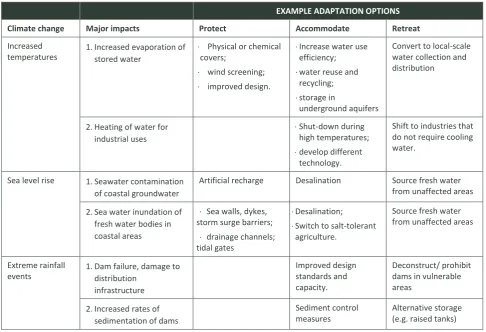
Table 4.1 Major impacts of climate change on fresh water supply and potential adaptation opportunities.
EXAMPLE ADAPTATION OPTIONS
Climate change Major impacts Protect Accommodate Retreat
Increased temperatures
1.Increased evaporation of stored water
Physical or chemical covers;
wind screening; improved design.
Increase water use efficiency; water reuse and
recycling; storage in
underground aquifers
Convert to local-scale water collection and distribution
2.Heating of water for industrial uses
Shut-down during high temperatures; develop different
technology.
Shift to industries that do not require cooling water.
Sea level rise 1.Seawater contamination of coastal groundwater
Artificial recharge Desalination Source fresh water from unaffected areas
2.Sea water inundation of fresh water bodies in coastal areas
Sea walls, dykes, storm surge barriers;
drainage channels; tidal gates
Desalination; Switch to salt-tolerant
agriculture.
Source fresh water from unaffected areas
Extreme rainfall events
1.Dam failure, damage to distribution
infrastructure
Improved design standards and capacity.
Deconstruct/ prohibit dams in vulnerable areas
2.Increased rates of sedimentation of dams
Sediment control measures
Alternative storage (e.g. raised tanks)
Table 4.2 Major impacts of climate change on power supply and potential adaptation opportunities. Adaptation options that also potentially mitigate greenhouse gas emissions are marked (M).
EXAMPLE ADAPTATION OPTIONS
Climate change Major impacts Protect Accommodate Retreat
Sea level rise 1.Increased deterioration rates of transmission network in coastal areas.
Auxiliary power supplies;
Increase maintenance & repair
Relocate transmission network away from coastline.
2.Inundation of coastal substations
Sea walls, dykes, storm surge barriers; tidal gates;
drainage channels.
[image:16.595.60.540.601.751.2]EXAMPLE ADAPTATION OPTIONS
3.Loss of infrastructure due to coastal erosion
Groynes, sea walls, breakwaters, beach nourishment.
Relocate transmission network away from coastline.
Increased variability in rainfall
1.Less predictability for hydroelectric power generation
Divert water from elsewhere;
Increase capacity for excess storage.
Auxiliary power supplies
Extreme events (more high intensity cyclones, heavy rainfall events, heat waves)
1.Increased frequency and duration of power outages
Auxiliary power supplies
Transition to local generation and distribution (M)
2.Damage to distribution networks
Auxiliary power supplies; Replace wooden
poles with steel; Increase maintenance
& repair
Transition to local generation and distribution (M)
3.Increased transmission failure due to high resistance during heat waves
Behavioural change to reduce demand during high temperatures; Auxiliary power
supplies
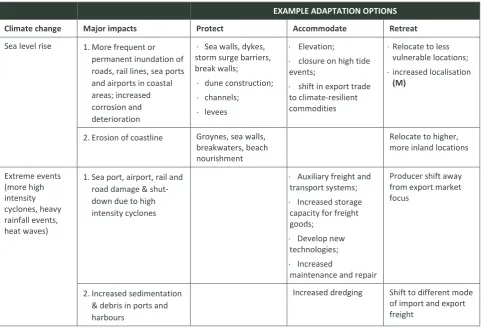
Table 4.3 Major impacts of climate change on transport and freight distribution networks and potential adaptation opportunities.Adaptation options that also potentially mitigate greenhouse gas emissions are marked (M).
EXAMPLE ADAPTATION OPTIONS
Climate change Major impacts Protect Accommodate Retreat
Sea level rise 1.More frequent or permanent inundation of roads, rail lines, sea ports and airports in coastal areas; increased corrosion and deterioration
Sea walls, dykes, storm surge barriers, break walls;
dune construction; channels;
levees
Elevation;
closure on high tide events;
shift in export trade to climate-resilient commodities
Relocate to less vulnerable locations; increased localisation
(M)
2.Erosion of coastline Groynes, sea walls, breakwaters, beach nourishment
Relocate to higher, more inland locations
Extreme events (more high intensity cyclones, heavy rainfall events, heat waves)
1.Sea port, airport, rail and road damage & shut-down due to high intensity cyclones
Auxiliary freight and transport systems; Increased storage capacity for freight goods;
Develop new technologies; Increased
maintenance and repair
Producer shift away from export market focus
2.Increased sedimentation & debris in ports and harbours
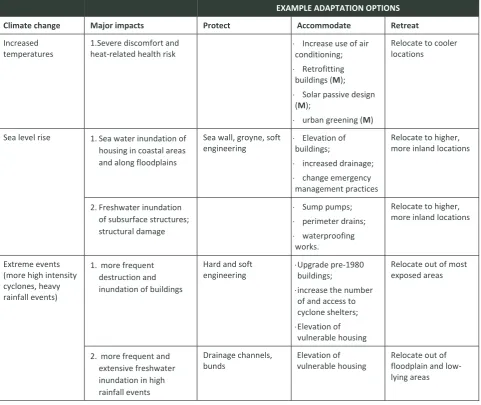
Table 4.4 Major impacts of climate change on buildings and potential adaptation opportunities
EXAMPLE ADAPTATION OPTIONS
Climate change Major impacts Protect Accommodate Retreat
Increased temperatures
1.Severe discomfort and heat-related health risk
Increase use of air conditioning; Retrofitting buildings (M); Solar passive design
(M);
urban greening (M)
Relocate to cooler locations
Sea level rise 1.Sea water inundation of housing in coastal areas and along floodplains
Sea wall, groyne, soft engineering
Elevation of buildings;
increased drainage; change emergency
management practices
Relocate to higher, more inland locations
2.Freshwater inundation of subsurface structures; structural damage
Sump pumps; perimeter drains; waterproofing
works.
Relocate to higher, more inland locations
Extreme events (more high intensity cyclones, heavy rainfall events)
1. more frequent destruction and inundation of buildings
Hard and soft engineering
Upgrade pre-1980 buildings;
increase the number of and access to cyclone shelters; Elevation of
vulnerable housing
Relocate out of most exposed areas
2. more frequent and extensive freshwater inundation in high rainfall events
Drainage channels, bunds
Elevation of vulnerable housing
Relocate out of floodplain and low-lying areas
Table 4.5 Major impacts of climate change on waste management and potential adaptation opportunities.
EXAMPLE ADAPTATION OPTIONS
Climate change Major impacts Protect Accommodate Retreat
Sea level rise & extreme events
1.Inundation of coastal sewerage treatment plants, solid waste facilities and stormwater management systems
Hard and soft engineering Sea walls, dykes, storm surge barriers; drainage channels; tidal gates
Improved containment; increased drainage capacity
[image:19.595.55.541.664.778.2]Summary and conclusions
There will be many impacts of climate change on infrastructure in the WTC region and these will be pervasive across communities. There are typically several adaptation options for given impacts, but most will have substantial economic, social, and ecological consequences. Optimal adaptation strategies will depend on community characteristics, including the distribution of risks through the community and an assessment of the importance of vulnerable infrastructure (Fletcher et al. 2013).Adaptation will require co-ordination across different levels of government and will also involve industry and community. However, there is currently no integrated, overarching plan for adaptation of infrastructure to climate change impacts in Australia, although this is clearly needed (Infrastructure Australia 2011).
Adaptation is often viewed as an incremental, iterative, ongoing process (Linham and Nicholls 2012), but there are also arguments for co-ordinating adaptation plans based on a rapid paradigm shift (Beyond Zero Emissions 2013).
It is striking that there are no identifiable protective adaptation options for several climate change impacts – that is, there is no known means of preventing the impact on infrastructure, only strategies that can adapt to these impacts to reduce the consequences. In the case of increased temperatures, more intense tropical cyclones and high rainfall events, impacts cannot be prevented and accommodation and retreat are the only available adaptation strategies. These will typically involve major structural, behavioural and cultural changes and high economic cost.
Literature cited
Australian Capital Territory (2012) AP2: A new climate change strategy and action plan for the Australian Capital Territory. Environment and Sustainable Development Directorate, Canberra.
Barnett G., Beaty R.M., Chen D. et al. (2013) Pathways to climate adapted and healthy low income housing, National Climate Adaptation Research Facility, Gold Coast.
Beyond Zero Emissions (2013) Zero Carbon Australia: Buildings Plan. Melbourne Energy Institute, University of Melbourne, Melbourne.
Bouwer H. (2000) Integrated water management: emerging issues and challenges Agricultural Water
Management45, 217-228.
Commonwealth of Australia (2009) Climate change risks to Australia’s coast: A first pass national
assessment. Department of Climate Change,
Canberra.
Davey E.K., Peirson W.L., Jones A.R. et al. (2013) Managing Estuaries for resilience. ACCARNSI Discussion Paper series.
Department of Environment and Resource
Management (DERM) (2010) Far north Queensland regional water supply strategy. Strategic Water Initiatives-Regional Water Supplies, DERM, Brisbane. Harman B.P., Heyenga S., Taylor B.M. et al. (2013)
Global Lessons for Adapting Coastal Communities to Protect against Storm Surge Inundation J. Coastal Res. (online ahead of print)
Heath T. and Winberg P.C. (2010) Ecological Impacts of Floodgates on Estuarine Tributary Fish Assemblages. Report for the Southern Rivers Catchment
Management Authority. University of Wollongong Shoalhaven Marine & Freshwater Centre, Nowra. Heinrich N. and Schmidt E. (2006) Economic Ready
Reckoner for Evaporation Mitigation Systems Reference Manual. NPSI Final Report .
Hipsey M.R. (2006) Numerical Investigation into the Significance of Night Time Evaporation from Irrigation Farm Dams Across Australia. Final Report. Land & Water Australia on behalf of the National Program for Sustainable Irrigation, Canberra. Infrastructure Australia (2011) National Land Freight
Strategy: Discussion Paper, February 2011. Infrastructure Australia, Commonwealth Government, Canberra.
King D., Ginger J., Williams S. et al. (2013) Planning, building and insuring: Adaptation of built
environment to climate change induced increased intensity of natural hazards. National Climate Change Adaptation Research Facility, Gold Coast. Fletcher C.S., Taylor B.M., Rambaldi A.N. et al. (2013)
pathways, National Climate Change Adaptation Research Facility, Gold Coast.
Linham M.M. and Nicholls R.J. (2012) Adaptation technologies for coastal erosion and flooding: a review. Proceedings of the Institution of Civil Engineers–Maritime Engineering. 165, 95–111. Mason L., Unger C., Lederwasch A. et al. (2013)
Adapting to climate risks and extreme weather: A guide for mining and minerals industry
professionals. National Climate Change Adaptation Research Facility, Gold Coast.
McEvoy D., Mullett J., Millin S. et al. (2013) Understanding future risks to ports in Australia. Work Package 1 of Enhancing the resilience of seaports to a changing climate report series, National Climate Change Adaptation Research Facility, Gold Coast.
McJannet D., Cook F., Knight J. et al. (2008) Evaporation reduction by monolayers: overview, modelling and effectiveness. CSIRO: Water for a Healthy Country National Research Flagship. Urban Water Security Research Alliance Technical Report No. 6.
Moran C. and Turton S. (2013) Chapter 5.The impacts of climate change on infrastructure. In Hilbert, D., Hill, R., Moran, C. et al. Climate Change Issues and Impacts in the Wet Tropics NRM Cluster region. James Cook University, Cairns.
Narayan K.A., Schleeberger C., Charlesworth P.B. et al. (2003) Effects Of Groundwater Pumping On Saltwater IntrusionIn The Lower Burdekin Delta, North Queensland. In Post, D. A. (ed.) MODSIM 2003 International Congress on Modelling and
Simulation. Volume 2, pp 212-217. Modelling and
Simulation Society of Australia and New Zealand, July 2003.
NPSI (2006) NPSI Research Bulletin. National Program for Sustainable Irrigation. ISBN: 1921253215 Pittock A.B. and Jones R.N. (2000) Adaptation to what
and why? Environmental Monitoring and Assessment, Vol. 61, pp 9 – 35.
Schache M. (2011) Farm Dam Management. NPSI Case Study. National Program for Sustainable Irrigation. Scott H., McEvoy D., Chhetri P. et al. (2013) Climate
change adaptation guidelines for ports. Enhancing the resilience of seaports to a changing climate for
Collaborative Sustainable Development. Ecology and Society 17.
Lyons P, Bohnet IC and Hill R. (2013) Synthesis of Climate Change Knowledge and Planning Practices carried out by the Wet Tropics Cluster Natural
Resource Management (NRM) Organisations.
Cairns: CSIRO Ecosystem Sciences and Climate Adaptation Flagship, 25.
Rissik D, Boulter S, Doerr V, et al. (2014) The NRM Adaptation Checklist: Supporting climate adaptation
planning and decision‐making for regional NRM.
CSIRO and NCCARF, Australia.
Robinson CJ and Wallington TJ. (2012) Boundary Work: Engaging Knowledge Systems in Co-management of Feral Animals on Indigenous Lands. Ecology and Society 17.
Sillitoe P and Marzano M. (2009) Future of indigenous knowledge research in development. Futures 41: 13-23.
Turton S. (2014) Climate change projections for the Wet Tropics cluster. InHilbert, D., Hill, R., Moran, C. et al. Climate Change Issues and Impacts in the Wet Tropics NRM Cluster region. James Cook University, Cairns.
Vatn A and Vedeld P. (2012) Fit, Interplay, and Scale: A Diagnosis. Ecology and Society 17.
Weiss K, Hamann M, Kinney M, et al. (2012) Knowledge exchange and policy influence in a marine resource governance network. Global Environmental