
Design, development and delivery of a pharmacist tutor training program at James Cook University
245
0
0
Full text
(2) Design, Development and Delivery of a Pharmacist Tutor Training Program at James Cook University. Thesis submitted by. Gillian Jane Knott, BPharm, GradCertClinPharm, AACPA In January 2014 For the degree of. Master of Pharmacy (Research) School of Pharmacy and Molecular Sciences James Cook University.
(3) Statement of Access. I, Gillian Knott, the author of this thesis, understand that this thesis will be made available for use to others. All users consulting this thesis will have to sign the following statement: In consulting this thesis I agree not to copy or closely paraphrase it in whole or part without the written consent of the author; and to make proper public written acknowledgement for any assistance which I have obtained from it. Beyond this, I do not wish to place any restriction on access to this thesis.. ……………………………………. (Author’s signature). 16 January 2014 ………………………… (Date). ii.
(4) Declaration. I declare that this thesis is my own work and has not been submitted in any form for another degree or diploma at any university or institution of tertiary education. Information derived from the published or unpublished work of others has been acknowledged in the text and a list of references is given.. ……………………………………. (Author’s signature). 16 January 2014 ………………………… (Date). iii.
(5) Acknowledgements This project would not have been possible without the assistance of my supervisors, particularly my immediate supervisor Professor Beverley Glass, whose outstanding research knowledge and sound advice was invaluable in bringing this thesis to completion. I also thank my co-supervisors, Associate Professor Ian Heslop and Associate Professor Linda Crane who also offered helpful advice and support quite freely throughout this time. I thank all those project participants who offered their time to provide input into this study – this included pharmacist tutors, academic staff and students, who participated in the questionnaire and focus groups, and most importantly, the pharmacist tutors who participated in the first pharmacy-specific tutor training program here at JCU. To the training program presenters, thank-you for your time, expertise and enthusiasm in delivering the content of the training program. Special thanks to Professor Angela Hill and Dr Glenn Harrison from the JCU Teaching and Learning Development Unit, Pharmacy Head of Discipline Dr Michelle Bellingan, Mr David Herron, Mr Joe Grasso, Ms Tori Llewelyn and Mr Aaron Drovandi. To Ms Lisa Murray and Mrs Joanne Roache, I thank you for your expert assistance in the preparation of the questionnaire, the tutor manual and the thesis, and in the organisation of the focus groups and training program. Finally, I would like to thank my husband Ron for his patience and encouragement over the past few years, and my four children, who find it hard to understand what drives a person to spend such an inordinate amount of time on a seemingly ‘small’ project. Let us hope that now we can find a little more balance in our lives.. iv.
(6) Abstract Background: The worldwide increase in demand for academic staff in higher education over recent years has resulted in the employment of increasing numbers of sessional staff. This trend towards casual or sessional employment of academic staff has been of benefit to universities, providing both cost savings as well as increased diversity and flexibility of student education. For health professional programs, the use of practicing health professionals on a sessional basis has been invaluable in ensuring that student education is both current and relevant to their chosen profession. In terms of teaching workload, it has been estimated that internationally, a half of all teaching in tertiary institutions is undertaken by sessional staff. Recent Australian statistics indicate that sessional staff are estimated to comprise approximately a quarter of the workforce in higher education institutions and are responsible for 50% of the teaching in universities. This high teaching load of sessional academics, in combination with a lack of attention being paid to their management and support, has potential implications for the quality of teaching and learning at universities. Sessional staff training and support programs have become well established in higher education institutions in both the United States of America (USA) and the United Kingdom (UK), and are now being developed in the majority of universities around Australia. It is recognized that while general university wide policies are required for the support and management of sessional staff, training programs should be tailored to suit both the requirements of the particular institution and the specific school or discipline. For this reason, programs may vary widely in terms of structure and content, both within and between institutions. At the James Cook University (JCU), a general university-wide sessional staff orientation and training program has been in place since 2005 and attendance at this program is a requirement of ongoing employment for all JCU sessional staff. For tutors in the Discipline of Pharmacy, while this introductory session provides a good induction to the university environment and the process of student education, it is not pharmacy specific and in addition it does not address the ongoing needs of sessional staff. Aim: The aim of this study was therefore to design, develop and evaluate a tutor training program specifically for pharmacist tutors in the Discipline of Pharmacy at James Cook University. Methodology: In order to inform the design of the training program, a needs analysis study was conducted, which involved the development of a tutor questionnaire, which was sent to 40 past, present and potential pharmacist tutors at JCU. The questionnaire was used to inform a series of three focus groups involving pharmacist tutors, pharmacy academic staff and pharmacy students. Data from the tutor questionnaire was evaluated using mixed methods, integrating qualitative and quantitative data collection and analysis, with the data from the focus groups being analyzed using qualitative thematic analysis. The pharmacist tutor training program was implemented for the 14 currently employed tutors in February 2013 and evaluated using two post training self-evaluation surveys. The first survey,. v.
(7) distributed immediately after the face-to-face training session, assessed the usefulness and relevance of the training program. The second survey, distributed after one full semester of tutoring, obtained general information on perceived program benefits, problems experienced and potential future program topics. The second survey also required that respondents self-rate their competence levels at three stages in their development as tutors: prior to the program, immediately after the program and then again after one full semester. Competence ratings were obtained for a range of tutoring skills and attributes, including confidence, marking and assessment and teaching knowledge and skills. Data from the two post-training surveys was analyzed, again by the use of mixed methods combining both quantitative data analysis and qualitative thematic analysis. Results and discussion: The needs analysis study highlighted the importance of pharmacist tutor involvement in the practical areas of the pharmacy curriculum, which included clinical dispensing, extemporaneous dispensing and clinical counselling. The tutor’s role in marking and assessment was identified as an area for concern. The most important perceived benefits of a training program were enhanced teaching consistency and student learning and increased tutor confidence. Four major content areas for a tutor training program were identified as the provision of effective student feedback, student assessment, teaching practical skills and teaching communication skills. The results of the first post-training feedback survey were overwhelmingly positive, with the majority of the 12 tutor respondents (83%) indicating that the content of the program was relevant and that the program had met their current needs. Tutors felt that the main benefits of the program were an increase in general confidence levels, the opportunity for interaction with other tutors and staff, a better understanding of their roles and expectations and the acknowledgement of tutors as an integral part of the pharmacy teaching team. Importantly, tutors found that the topic of ‘Assessing student learning’ was one of the most useful sections of the training program, with 92% of tutors rating this section as either very useful or mostly useful. This indicated that the program had appropriately addressed the problem area of assessment and marking. The findings of the second evaluation survey showed that tutor self-competence had improved in all suggested areas of competence between just prior to the program and after one full semester of tutoring, with the most significant improvement occurring in the area of marking and assessment. Initial competence prior to training was rated as average to good in most areas, while competence after one full semester of tutoring was rated as good to very good. Conclusions: This study clearly indicates that the JCU pharmacist tutor training program has been successfully designed, developed and delivered to meet the needs of pharmacist tutors, in addition to delivering other benefits, including an improvement in both tutor confidence and competence. This program has also contributed towards the integration of pharmacist tutors into the Discipline of Pharmacy teaching team, which in turn will play a role in supporting academic staff in delivering improved learning outcomes for pharmacy students in the program at JCU.. vi.
(8) Contents Statement of Access .................................................................................................. ii Declaration ................................................................................................................ iii Acknowledgements................................................................................................... iv Abstract. ................................................................................................................... v. List of Tables .............................................................................................................. x List of Figures ........................................................................................................... xi List of Abbreviations ................................................................................................ xii List of Appendices .................................................................................................. xiii Chapter 1 Introduction.............................................................................................. 1 Background .................................................................................................................. 1 Aim ............................................................................................................................ 2 Hypotheses .................................................................................................................. 2 Objectives .................................................................................................................... 3 Outline of thesis ........................................................................................................... 3 Chapter 2 Literature Review ..................................................................................... 5 2.1. Introduction ........................................................................................................ 5. 2.2. Definitions and roles – Sessional staff and tutors ................................................ 6 2.2.1 Definitions ................................................................................................ 6 2.2.2 The role of the tutor ................................................................................. 7 2.2.3 Specific tutor roles ................................................................................... 8 2.2.4 Demographics of sessional staff ............................................................ 10. 2.3. The need for tutor training and support ............................................................. 11 2.3.1 Sessional staff teaching loads................................................................ 11 2.3.2 Teaching vs research............................................................................. 12 2.3.3 Professional degree accreditation requirements .................................... 13 2.4. Benefits of tutor training .................................................................................... 13 2.4.1 Improved quality of teaching .................................................................. 14 2.4.2 Benefits for the first year experience ...................................................... 15 2.4.3 Training for the teacher-practitioner ....................................................... 16 2.4.4 Training for the problem based learning (PBL) tutor ............................... 17 2.4.5 Improved assessment and marking ....................................................... 17. 2.5. Evidence for the benefits of tutor training .......................................................... 18 2.5.1 Evidence for tutor benefits ..................................................................... 18 2.5.2 Evidence for student benefits ................................................................. 20 vii.
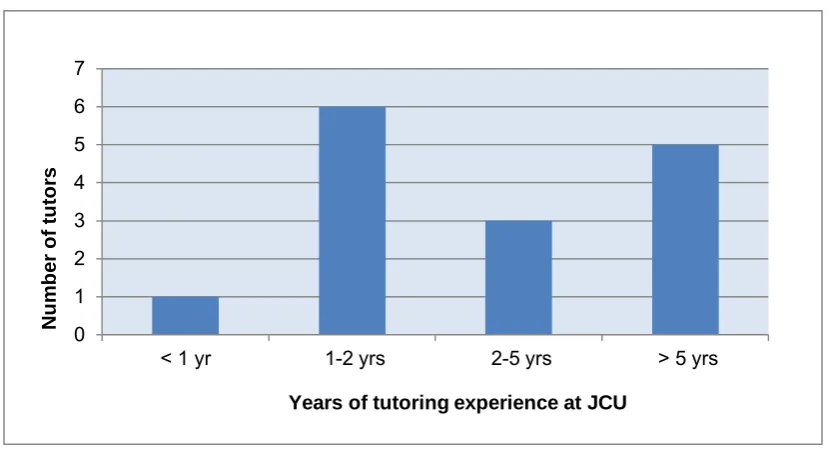
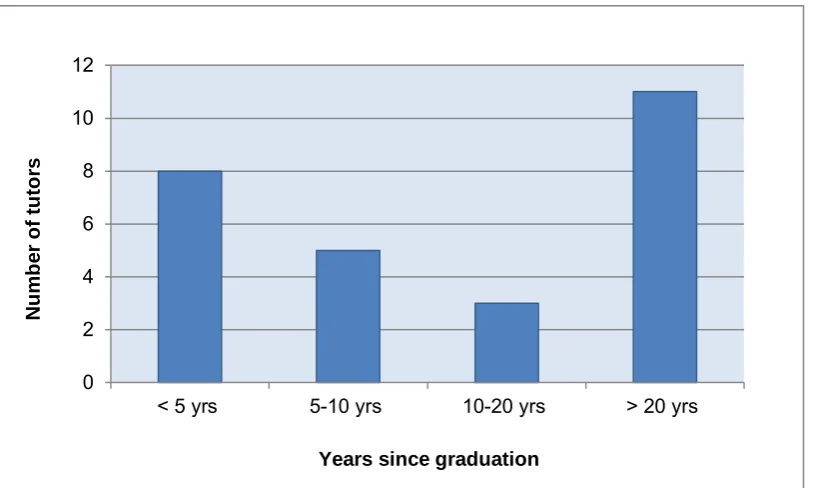
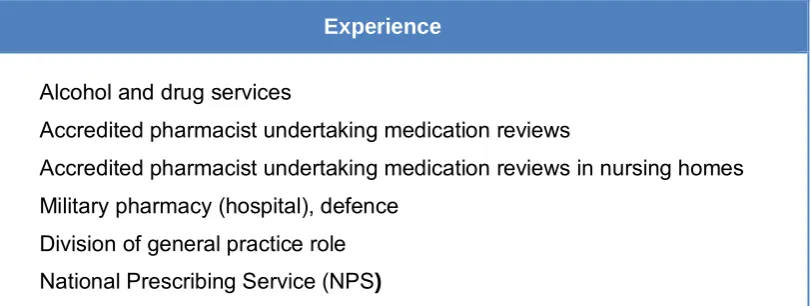
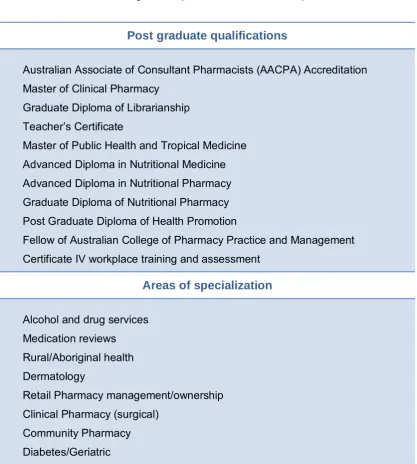
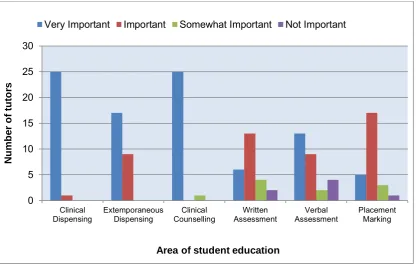
(9) 2.6. Management of tutors ....................................................................................... 21 2.6.1 Current management policies ................................................................ 21 2.6.2 Tutor concerns....................................................................................... 24. 2.7. Tutor training programs ..................................................................................... 29 2.7.1 Overview................................................................................................ 29 2.7.2 Structure of training programs................................................................ 31 2.7.3 Content of training programs.................................................................. 39. 2.8. Literature review – Summary............................................................................. 42. Chapter 3 Tutor training program - Needs Analysis ............................................. 44 3.1. Introduction ....................................................................................................... 44. 3.2. Methodology ..................................................................................................... 44 3.2.1 Pharmacist tutor questionnaire .............................................................. 45 3.2.2 Focus groups ......................................................................................... 47 3.2.3 Selection of focus group participants ..................................................... 48 3.2.4 Ethics approval ...................................................................................... 49. 3.3. Results and discussion - Tutor questionnaire ................................................... 49 3.3.1 Demographics........................................................................................ 49 3.3.2 Role of the tutor ..................................................................................... 55 3.3.3 Training program ................................................................................... 57 3.3.4 Additional support for tutors ................................................................... 61. 3.4. Results and discussion - Focus groups ............................................................ 62 3.4.1 The role of the pharmacist tutor ............................................................. 63 3.4.2 Experiences with or as tutors ................................................................. 68 3.4.3 Perceived benefits of tutor training ......................................................... 73 3.4.4 Pharmacist tutor training requirements .................................................. 75 3.4.5 Tutor Support......................................................................................... 77. 3.5. Pre-training - Summary ..................................................................................... 79. Chapter 4 Program design, development and delivery ........................................ 82 4.1. Introduction ....................................................................................................... 82. 4.2. Background ....................................................................................................... 82 4.2.1 Current sessional staff training at JCU ................................................... 82 4.2.2 School or Discipline-specific programs .................................................. 83 4.2.3 JCU Policy requirements for sessional staff training............................... 84 4.2.4 Pharmacist tutors at JCU ....................................................................... 84. 4.3. Program design and development ..................................................................... 85 4.3.1 Structure ................................................................................................ 85 viii.
(10) 4.3.2 Format ................................................................................................... 86 4.3.3 Responsibility ........................................................................................ 87 4.3.4 Length and timing .................................................................................. 87 4.3.5 Attendance requirements ....................................................................... 88 4.3.6 Content .................................................................................................. 89 4.4. Program delivery ............................................................................................... 91 4.4.1 Pharmacist tutor website........................................................................ 91 4.4.2 Pharmacist tutor face to face program ................................................... 94. 4.5. Training Program - Summary ............................................................................ 96. Chapter 5 Post-training program evaluation ......................................................... 97 5.1. Introduction ....................................................................................................... 97. 5.2. Methodology ..................................................................................................... 98 5.2.1 Ethics approval ...................................................................................... 98 5.2.2 Evaluation 1 – (Immediately post-training) ............................................. 98 5.2.3 Evaluation 2 – (Five months post training) ............................................. 99. 5.3. Results and Discussion – Evaluation 1 ............................................................ 100 5.3.1 Tutor demographics ............................................................................. 100 5.3.2 Length, relevance, usefulness ............................................................. 101 5.3.3 Best aspects of the program ................................................................ 103 5.3.4 Suggested improvements .................................................................... 106. 5.4. Results and Discussion - Evaluation 2 ............................................................ 108 5.4.1 Tutor demographics and areas of participation .................................... 108 5.4.2 Ratings of benefits of tutor training program ........................................ 109 5.4.3 Problems experienced by tutors........................................................... 111 5.4.4 Benefits of training program ................................................................. 111 5.4.5 Additional topics for future programs.................................................... 112. 5.5. Post-training - Summary.................................................................................. 113. Chapter 6 Conclusions and Recommendations ................................................. 115 Conclusions ............................................................................................................. 115 Project limitations ..................................................................................................... 118 Recommendations for future research...................................................................... 119. ix.
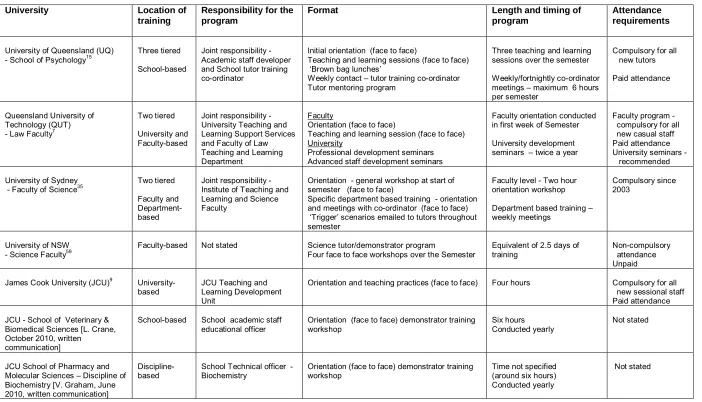
(11) List of Tables. Table 2.1. Roles and responsibilities of tutors........................................................... 9. Table 2.2. Key findings of the review phase of the 2002 AUTC final report: Training, Support and Management of Sessional Teaching Staff.......................... 22. Table 2.3. Components of a school based tutor training program at the UQ School of Psychology in 2002 ................................................................................ 34. Table 2.4. Summary of selected tutor training programs at Australian Universities . 38. Table 3.1. Additional areas of practice experience ................................................. 52. Table 3.2. Postgraduate qualifications and areas of specialization ......................... 53. Table 3.3. Other potential areas of involvement for pharmacist tutors .................... 57. Table 5.1. Evaluation 1 - Demographics of tutor participants ................................ 100. Table 5.2. Tutor comments on suggested program improvements ....................... 106. Table 5.3. Evaluation 2 - Demographics and areas of participation ...................... 108. Table 5.4. Evaluation 2 - Tutor training program - Participant average ratings (and range) of competence .......................................................................... 109. x.
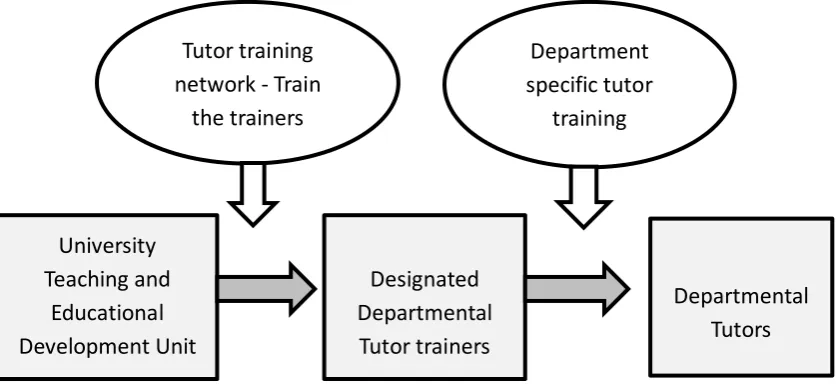
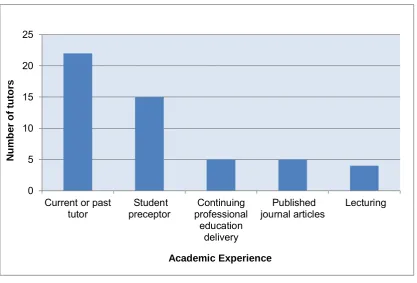
(12) List of Figures. Figure 2.1. Outline of the UQ Tutor Training Network .............................................. 33. Figure 3.1. Distribution (in years) of tutor experience ............................................... 50. Figure 3.2. Tutor years since graduation.................................................................. 51. Figure 3.3. Tutor types in respondent’s degree ........................................................ 54. Figure 3.4. Tutor academic experience .................................................................... 55. Figure 3.5. Role of the pharmacist tutor - areas of importance................................. 56. Figure 3.6. Rating of potential benefits of tutor training ............................................ 58. Figure 3.7. Content of a pharmacist tutor training program ...................................... 60. Figure 3.8. Current level of support for pharmacist tutors at JCU ............................. 61. Figure 3.9. Ratings of importance of additional support measures ........................... 62. Figure 4.1. JCU Pharmacist Tutor Support Community Website – Home Page ....... 92. Figure 4.2. JCU Pharmacist Tutor Support Community Website – Information page 93. Figure 4.3. Outline of pharmacist tutor training program – February 2013 ............... 95. Figure 5.1. Tutor ratings of usefulness of areas of tutor training program .............. 102. xi.
(13) List of Abbreviations ALTC. Australian Learning and Teaching Council. AUTC. Australian Universities Teaching Committee. BLASST. Benchmarking Leadership and Advancement of Standards for Sessional Teaching. GTA. Graduate teaching assistant. JCU. James Cook University. NZ. New Zealand. PAPTA. Professional Association of Part Time Academics. PBL. Problem-based Learning. PFF. Preparing Future Faculty. PSA. Pharmaceutical Society of Australia. QUT. Queensland University of Technology. RED. Recognition, Enhancement, Development. START. Streamlined Tutors Audio/visual Reflective Teaching. TEDI. Teaching and Educational Development Institute (University of Queensland). TEQSA. Tertiary Education Quality and Standards Agency. TLD. Teaching and Learning Development Unit (JCU). TTN. Tutor Training Network (University of Queensland). TTP. Tutor training program. UK. United Kingdom. UQ. University of Queensland. USA. United States of America. xii.
(14) List of Appendices. APPENDIX A:. Sessional Staff @ JCU RED Executive Summary Stage One – Review December 2009 ................................................................ 128. APPENDIX B:. Copy of tutor questionnaire ........................................................... 145. APPENDIX C:. Information sheet for tutor questionnaire ....................................... 153. APPENDIX D:. Informed consent form for tutor questionnaire ............................... 154. APPENDIX E:. Reminder letter to tutors for return of tutor questionnaire .............. 155. APPENDIX F:. Student focus group introduction and questions ............................ 156. APPENDIX G. Academic staff focus group introduction and questions ................. 158. APPENDIX H:. Pharmacist tutor focus group introduction and questions .............. 160. APPENDIX I:. Student focus group information sheet .......................................... 163. APPENDIX J:. Academic staff focus group information sheet ............................... 164. APPENDIX K:. Pharmacist tutor focus group information sheet ............................ 165. APPENDIX L:. Informed consent form for focus groups ........................................ 166. APPENDIX M:. Ethics Approval H3959 – Tutor questionnaire ............................... 167. APPENDIX N:. Ethics Approval H4580 – Focus groups ....................................... 168. APPENDIX O:. Discipline of Pharmacy – Pharmacist tutor training manual ........... 169. APPENDIX P:. Tutor training program attendance certificate ................................ 222. APPENDIX Q:. Ethics Approval H4580 Amendment for Program Evaluations ....... 223. APPENDIX R:. Tutor training program - Feedback evaluation survey 1................. 224. APPENDIX S:. Feedback evaluation survey 1 – Information sheet ....................... 226. APPENDIX T:. Feedback evaluation survey 1 – Informed consent form ............... 227. APPENDIX U:. Tutor training program – Feedback evaluation survey 2 ................ 228. APPENDIX V:. Feedback evaluation survey 2 – Information sheet ....................... 230. APPENDIX W:. Feedback evaluation survey 2 – Informed consent form ............... 231. xiii.
(15) Chapter 1. Introduction. Background Sessional staff are becoming increasingly important in the university setting, particularly in the area of health education.1-4 The rapid increase in numbers of sessional staff in Universities worldwide over recent years, together with significantly increased teaching loads has resulted in the level of training and professional development being offered to these sessional teachers to be considered inadequate. As a consequence, this training deficit poses a risk to the overall quality of tertiary education.3,5-7 Although the release of the RED (Recognise, Enhance, Develop) Report in 2008 prompted Australia to address this issue, there remains a lack of appropriate policies and procedures for the management and support of sessional staff in many Australian universities.8,9 As with most Australian universities, the number of sessional staff at the James Cook University (JCU) has been increasing, especially in recent years. This trend towards increased casualization of the academic workforce has benefits from both an economical and educational perspective. However, with the increasing diversity of sessional staff and their lack of educational qualifications or experience, training is thought to be essential to provide for quality and consistency of teaching.9-12 For professional degree courses such as Pharmacy, the involvement of teacherpractitioners who are currently working in practice is important in order to maintain the currency and relevance of the program and to ensure that graduating students are ‘work-ready’.13 In addition to providing more opportunities for small group learning, the varying backgrounds and experience of teacher-practitioners also has the advantage of broadening the student knowledge base, while their link with the practice assists students in the development of professionalism.4 For these purposes, the JCU Discipline of Pharmacy has been employing practising pharmacists as sessional tutors since the initiation of the course in 1999. In terms of training and support, while all new pharmacist tutors are required to attend a general JCU orientation or induction prior to commencing their duties, this session has not been pharmacy specific. Feedback from JCU tutors has indicated that due to the wide variety of roles that sessional staff play within the institution, the generic induction session did not always meet their specific needs and the session content was 1.
(16) often irrelevant to their particular role. Many tutors were also of the opinion that additional follow up support from their individual school would be beneficial.9 Based on this feedback as well as informal feedback from pharmacist tutors, it was felt that the generic tutor induction program falls short of addressing the current needs and the ongoing management of tutors in the Discipline of Pharmacy. Considering the requirements of the University as well as the Australian Pharmacy Council accreditation standards for the appropriate training of these staff, it was concluded that a Discipline-specific tutor training program was required in order to adequately prepare pharmacist tutors for their role in pharmacy student education, in addition to accommodating their ongoing management and support.9,14 With a distinct lack of literature being available on the design, development and delivery of sessional staff training programs in Australia, this project is expected to contribute to the body of research on sessional staff training in Australian universities. With the establishment of the JCU Faculty of Medicine, Health and Molecular Sciences, which has rolled out seven other health professional programs since 1998, this project may in addition be of benefit for other Schools and Disciplines in this Faculty at JCU, as well as for pharmacy and health professional programs in other Universities around Australia. The post-training evaluation of this program is expected to inform and improve future sessional staff training programs in the Discipline of Pharmacy as well as in other health programs at JCU.. Aim The aim of this project is to design, develop and deliver a training program for pharmacist tutors, who play an integral part in the delivery of the James Cook University Pharmacy Program.. Hypotheses 1.. Current training does not address the needs of pharmacist tutors at JCU.. 2.. The training program that is developed is appropriate to deliver the desired outcomes for pharmacist tutors at JCU.. 2.
(17) Objectives In order to prove or disprove the above hypotheses and to deliver the aim of the project, the objectives of this research are: •. To determine the role and the training and support needs of pharmacist tutors in the JCU Pharmacy program.. •. To design the pharmacist tutor training program in terms of structure and content.. •. To develop and deliver the tutor training program for pharmacist tutors at JCU.. •. To evaluate the tutor training program in terms of tutor satisfaction and tutor competence.. Outline of thesis The thesis will consist of six chapters as outlined in the table below:. Chapter 1. Introduction, Aims and Objectives This chapter provides a brief background and introduction to the topic of sessional staff training and the reasons why this study was undertaken. This will be followed by a statement of the Aims, the Hypotheses and Objectives of the study and an outline of the content of each chapter.. Chapter 2. Literature review This chapter provides a broad summary of the literature on sessional staff and their training and includes: •. Sessional staff definitions and roles. •. Demographics of sessional staff. •. The need for training, perceived benefits of training and evidence for benefits. •. The issues surrounding the training, management and support of sessional staff. •. A summary of existing sessional staff training programs, both in Australia and worldwide. •. An overview of the structure and content of current training programs 3.
(18) Chapter 3. Pre-training: Needs analysis This chapter includes the investigation of the role of the pharmacist tutor at JCU, the potential benefits of training and the ideal training and support requirements for a pharmacist tutor training program. This utilised a mixed methodology involving a self-completion pharmacist tutor questionnaire followed by a series of three focus groups involving pharmacist tutors, academic staff and students. The results will be analysed and used to inform the design of the tutor training program.. Chapter 4. Program design, development and delivery This chapter discusses the design of the tutor training program, based on the results of the needs analysis from Chapter 3. This is followed by the development of the program where consideration is given to the structure and content of the training program, responsibility for training, format, duration and attendance requirements. Development is also informed by the JCU standard policy requirements as well as the design of other School or Discipline-specific training programs available in the Faculty. Delivery of the program will also be discussed, along with the additional support measures to complement the program.. Chapter 5. Post-training: Program Evaluation This chapter describes the evaluation of the program, involving two post-training tutor self-completion questionnaires, the first being distributed immediately after the training program and the second after one. full. semester. of. tutoring.. The. aim. of. the. post-training. questionnaires will be to assess the training program and to inform the ongoing development of the program to ensure that the training needs of pharmacist tutors are appropriately addressed. Chapter 6. Conclusions and recommendations In this chapter, the main outcomes of the project will be highlighted in order to address the aim and objectives of the study. Also discussed in this chapter will be the limitations of the project and opportunities for further research. 4.
(19) Chapter 2 2.1. Literature Review. Introduction. Since the 1960s there has been an ever-increasing number of students attending University and this has resulted in an increased demand for academic staff, both in Australia and worldwide. Numerous factors including reduced University funding, increased research demands, changing employment conditions and a lack of appropriately qualified full time staff have led to a significant expansion in the number of sessional staff, particularly tutors.. 10,15-18. This has been considered to be of benefit. to the majority of University programs, being firstly cost saving, but also allowing for increased diversity and flexibility in student education.10,18,19 In the area of health education, with today’s emphasis on producing graduates who are ‘work-ready’, the sessional involvement of practising health professionals is considered essential to ensure that clinical education remains current and relevant.13 In addition to the increased reliance on casual and sessional staff, there has been a growing demand from governments for accountability in the provision of quality student education in tertiary institutions. With the progressive increase in student monetary contribution to their university education, further pressure has also been placed on academia by the students who expect value for money in the form of a high quality education.19,20 Given the significantly increased workforce casualization and the emphasis on appropriate standards of teaching, concerns have been raised over the quality of teaching provided by these sessional staff. 8,9,19,20 The issue of management, training and support for sessional staff has been addressed quite extensively in the USA, where sessional staff are generally known as graduate teaching assistants (GTAs). GTA training programs are now quite well established in North American institutions with the majority of Universities having some form of training for GTAs. 21,22 According to a survey in 1993 in the USA, it was found that 71% of institutions surveyed had training programs in place, and in 46% of these institutions, training was mandatory.20 There is a wealth of literature available on the training of GTAs in North America, including the design of various training programs,22-25 the development of support materials,25-28 as well as evaluations of the effectiveness of such programs.23,24,27-30. 5.
(20) In the UK, GTA training programs began to develop in the 1980s as higher education institutes followed the worldwide trends of expanding numbers of GTAs and increased reliance on this teaching cohort. Researchers in the UK gained from the experiences of the USA in developing their own GTA training programs and many institutions were offering GTA training programs by the 1990s.21,31-34 Until the mid-1990s in Australia, the training and professional development of casual academic staff had not been considered important and they have almost routinely been excluded from training and staff development opportunities.19,35 Since the publication of the 2002 Australian Universities Teaching Committee Project Report on Sessional Teaching Staff, there has been widespread interest in this area and Australian Universities are now recognising the need for formalised policies relating to the management, training, support and integration of this rapidly expanding group of academic staff.19,35,36 Subsequent research has led to the development of training and support programs for sessional staff in many Universities around Australia, including the University of Sydney, the University of Adelaide, the University of Melbourne, Monash University, The University of Queensland (UQ) and Curtin University.8,19,35-39 There is still however much debate about the ideal structure and content of these training programs, and existing programs can vary widely in terms of their location within the University, program length and format, academic responsibility and attendance requirements. While a central University-wide approach is generally recommended as a policy framework, it has been recognised that the actual implementation of staff development programs should be locally designed and driven within the individual disciplines or schools.19,37,40. 2.2. Definitions and roles – Sessional staff and tutors. 2.2.1. Definitions. A sessional teacher may be defined as ‘any higher education instructor not in a tenured or permanent position.19,38 This includes part-time tutors or demonstrators, postgraduate students or research fellows involved in part-time teaching, external people from industries or professions, clinical tutors, casually employed lecturers or any other teachers employed on a course by course basis’.38 Sessional teachers have been referred to as graduate teaching assistants (GTAs) in the USA, UK and New Zealand. This term originated due to the fact that the majority of sessional teachers were drawn from the ranks of postgraduate students who are at the start of. 6.
(21) their academic career, with their main role being as a research student, but who also engaged in some teaching (often for financial support).20,21 A tutor is often regarded as a specific type of sessional teacher. The term tutor means to give special or individual instruction in a subject.41 Tutors are frequently involved in the organisation and conduction of tutorials, which are often held with small groups of students. This more informal environment may be more conducive for students to ask for clarifications on lectures and assignments which they may not feel as comfortable about asking in large classes. Tutors therefore ‘supplement the activities of the faculty in research and teaching and help to engage students in individualised instructional opportunities.42 Tutors and demonstrators are also often involved in teaching practical classes, which engage the student in the more practical aspects of their chosen subject, such as demonstrating techniques and the use of laboratory and research equipment or medical devices. The problem-based Learning (PBL) tutor plays a more specific tutor role within a problem-based learning curriculum, whereby their role is more as a facilitator of learning rather than a provider of information.43. Although by definition, a tutor is a particular type of. sessional teacher, the term tutor nowadays seems to be used more broadly and there is considerable overlap between the roles and responsibilities of a tutor and other types of sessional teachers. Evaluation of the literature is limited by this lack of consistency in the definition of a tutor and their functions within the higher education system.7,18-20 For the purposes of this review, the term ‘sessional staff’ will be used generically to encompass other similar or overlapping terms such as ‘tutors’, ‘demonstrators’, ‘sessional teachers’, ‘casual academic staff’ ‘graduate teaching assistants’ and ‘teacher-practitioners’.. 2.2.2. The role of the tutor. Tutors are frequently involved in tutorials and practical classes which are traditionally held with smaller groups of students. Smaller groups will allow for discussion and interaction. between. students. and. teachers,. which. provides. support. and. encouragement and opportunities for one-to-one feedback. This more informal learning environment may help to bridge the communication gap between the lecturer and the student.. 7.
(22) In a study of students perceptions of tutor effectiveness in a NZ University, 3 main roles of tutors were recognised42 1.. To facilitate a learning environment that meets each student’s learning needs. 2.. To provide positive and constructive feedback on student’s progress and performance. 3.. 2.2.3. To facilitate intellectual growth that results in high quality student learning. Specific tutor roles. The roles and responsibilities of a tutor can vary significantly between institutions and within Faculties and Departments, and can encompass the full range of teachingrelated duties. Common duties for a sessional teacher or tutor may include leading tutorial sessions, conducting laboratory sessions and marking student assignments, exams or other forms of assessment.27 Table 2.1 below illustrates the variety of activities which have been undertaken by sessional teachers or tutors in some selected tertiary institutions. 9,32,36,44. 8.
(23) Table 2.1 Roles and responsibilities of tutors. A 1987 survey of 1400 graduate teaching assistants at 8 major research universities in the US noted the most common responsibilities of GTAs25 Grading. (97%). Leading class discussions. (71%). Holding office hours. (94%). Conducting review sessions. (69%). Preparing tests. (72%). Lecturing. (60%). At the University of Bradford, UK in 1994, a survey of postgraduate demonstrators and hourly paid lecturers indicated their teaching responsibilities32 Laboratories/demonstrations. (31%). Tutoring. (18%). Marking. (29%). Lecturing. (17%). Seminars. (19%). In a survey of all tutors at the University of Queensland in 1997, the following is a list of activities which a tutor may undertake37 Small group tutoring. (70%). Practicals - wet laboratory. Marking. (64%). Consulting with students. (50%). Facilitating small group discussion/groupwork. Demonstrating Teaching Supervising. (39%). Fieldwork and excursion: organising/supervising. (7%/4%). Clinical training/mentoring in professional settings. (6%). (22%) (26%) (22%). Practicals - dry laboratory Demonstrating Teaching Supervising. (18%) (18%) (11%). Clinical training at the University (3%). In a survey of 338 part-time limited term teaching staff at Victoria University of Wellington, New Zealand in 2001, their responsibilities were identified44 Most tutors – Leading discussions Marking assignments Consulting or meeting with students. Fewer tutors – Giving lectures Developing paper outlines Giving extensions on assignments Other responsibilities – Liaising with students, other tutors, lecturers Leading study sessions Marking and supervising exams Leading field trips. At James Cook University, a survey of 511 sessional teaching staff identified the following teaching-related activities undertaken by sessional teachers in 20099 Tutorials/workshops. Examinations. Practical demonstration. Professional Placement supervision. Lectures. External/Online teaching. Mentoring. Subject Co-ordination. Group facilitation. Marking. Field Trips. 9.
(24) 2.2.4. Demographics of sessional staff. In order to devise appropriate teaching and learning development policy, it is important that we are aware of the profile of the sessional teacher, i.e. who are our casual teaching staff? Traditionally, sessional staff have been recruited from the many postgraduate students wishing to enter academia, with a smaller number being experts from the industry.10 However, as numbers of sessional staff continue to rise, they are becoming an increasingly diverse group.10-12 Sessional staff can be loosely categorised into four groups 2,10,45 1.. The ‘aspiring academic’ who has a desire to become a permanent staff member in the future. These people are most likely to be young women and are either completing or have recently completed a higher research degree and are interested in a gradual transition from a casual or sessional position to a full-time permanent position in academia/research.. 2.. The ‘industry expert’ (teacher-practitioner) who maintains employment in the industry and has a desire to teach future professionals. These academics may in some cases be motivated by their experiences in teaching students to enrol in postgraduate research and move into academia.12 Teacher-practitioners (or lecturer-practitioners) are frequently employed in the vocationally focused schools (e.g. the health professions, law, engineering) and. often see their main role as bridging. the theory practice gap and. helping to maintain clinical currency of the curriculum.2,13 In some situations, a more official arrangement is in place, such as in nursing schools in the UK, where lecturer-practitioners play a dual role in both teaching and practice, and are jointly employed by a university and a hospital.2 3.. The ‘career ender’ who is nearing the end of their career and is looking for a gradual progression into retirement. These may be former lecturers or researchers, more commonly male, who are retired or semi-retired but still wish to contribute to university teaching. The number of people in this category is predicted to rise due to the increasing number of full-time academics reaching retirement age. 10,12. 4.. The ‘freelancer’ who will often have a number of part-time and casual positions in order to juggle work and family responsibilities. These people are more commonly female and are happy with the flexibility of casual work, but may like in the future to pursue an academic career.12 10.
(25) It has been estimated that 57% of casual academic staff in Australian Universities are female, with 52% of all staff being aged 35 years and under.12 At JCU, a survey of 312 sessional staff in 2009 indicated that approximately 54% of sessional staff were under 41 years of age.9 A survey of 72 tutors at the University of Wellington, NZ in 2004 found that 60% of tutors did not have any form of prior teaching experience. JCU reported that 33% of their sessional staff had no teaching experience prior to starting at JCU, and only 15.7% were in the process of attaining a formal education qualification.9,46 Although there are limited data available on qualifications of sessional staff, an Australia wide survey involving 622 casual and sessional academics from a number of institutions indicated that approximately 77% of these sessional academics had postgraduate qualifications, with 23% at PhD level; 49% were currently studying towards a further degree with 72% of this group enrolled in a PhD.47 This study also found that the most common forms of work undertaken by sessional academics were tutoring (80%) and lecturing (55%), with 19% also having a teaching co-ordination role. At the Sydney University of Technology, a survey of 305 casual academic staff indicated that the highest formal qualification was a Master’s degree in 49% of respondents, a Bachelor’s degree in 36%, while seven percent had a Doctoral degree. It was found that 24% of this group were intending to secure a full-time academic position in the future.48 Sessional staff will therefore vary widely with regard to age, qualifications, level of experience and motivation for teaching: their roles and responsibilities will also vary across the full range of teaching-related duties.. 2.3.. The need for tutor training and support. 2.3.1. Sessional staff teaching loads. Internationally, it has been estimated that a half of all teaching in higher education is undertaken by sessional staff.. 2. A 1996 study reported that nearly 40% of Faculty in. the USA were part-time and on short term contracts, and that they are responsible for most of the teaching.32. 11.
(26) In Australia, tertiary education is regarded as one of the most casualised sectors of education. Between 1996 and 2011, it was found that the number of casually employed academic staff (based on full time equivalent calculations) had risen by 81%.49 Data from the Department of Education, Employment and Workplace Relations indicate that in the tertiary education sector in Australia, the proportion of sessional academics (based on full-time equivalent calculations) had risen from 13% in 1989 to 22% in 2007.50 Based on university superannuation data, in terms of actual staff numbers, casual academic staff are estimated to make up 60% of all academic staff in Australia.12 The Australian Teaching and Learning Council’s RED Report in 2008 estimated that ‘between 40 and 50% of the teaching in Australian higher education is currently being performed by sessional staff’.8 For those involved in undergraduate teaching, it is estimated that this figure may be as high as 80%.50 This significant contribution of sessional staff to the teaching loads at universities has been until recently largely unrecognised.8 Kift in 2002 suggested that casual academics play a pivotal role in the delivery of higher education and the lack of attention paid to their training and support is a risk to the quality of teaching and learning in Universities.6,7 In order to improve the quality of teaching, it has been suggested that Universities require a shift in their policies and practices to recognise and value the contributions of sessional teachers and enhance their opportunities for professional development and integration into the teaching team.6,49 2.3.2. Teaching vs research. Universities can be complex organisations with various functions, the two main functions being teaching and research. While the relationship between teaching and research is generally thought to be complementary, often one takes place at the expense of the other.46 Given the increased focus on teaching quality in tertiary institutions, it is imperative that even the most research-orientated university is aware of the importance of academic staff teaching skills development. However, recent changes to University funding schemes have led to an increased emphasis on research performance and this has therefore created a dilemma for permanent academic staff, who have been under pressure to improve research output.3 The rapidly expanding numbers of sessional staff engaged in teaching roles has allowed full-time and tenured academics to assign more of their energies to research, with teaching duties becoming more and more the responsibility of sessional staff. This shift in teaching roles, along with student expectations of a higher standard of teaching have led academic staff developers to seriously consider the need for 12.
(27) training and professional development of these ‘new’ academics, who have long been excluded from staff development opportunities.20. 2.3.3. Professional degree accreditation requirements. The process of external accreditation of professional degree courses aims to ensure a consistently high standard of graduates who have the required knowledge, skills and attributes to begin work in their chosen profession. As part of this process, for accreditation of an Australian Pharmacy School, the Australian Pharmacy Council has standard requirements for academic staff. The following are required by the Australian Pharmacy Council14 •. The School should have or have access to programs for development of teaching skills for full-time and part-time academic staff, adjunct staff and teacher-practitioners (whether in an honorary or paid capacity). •. The Australian Pharmacy Council encourages the use of teacher-practitioner appointments to provide expertise in specialised areas and to assist in maintenance of the nexus between teaching and practice.. •. Academic staff numbers in the enabling basic sciences and the Pharmacy Disciplines should be sufficient to allow interaction with individual students and small groups, and for staff to maintain a necessary range of academic activity.. The employment of sessional staff such as tutors and specialist teacher-practitioners in a Pharmacy degree program is therefore encouraged and appropriate programs are required to be available for the development of teaching skills in this particular group of people. Similarly for other professional degrees such as law, engineering and medicine, accreditation requires that the development of teaching skills for all academic staff, including sessional staff, be addressed.51-53. 2.4. Benefits of tutor training. Given that the large majority of first time tutors have little or no teaching skills or teaching qualifications, it is expected that they may require some support and training in their transition to tertiary teaching. Prior to beginning their first teaching session, tutors will often report feeling nervous and anxious. They may also be unsure of their specific roles and responsibilities and may be concerned about their ability to engage 13.
(28) and manage the students. 54,55. Although they may be more than adequately qualified. in their field, these qualifications do not necessarily equip the tutor with the appropriate skills and knowledge necessary to provide effective teaching, manage classes, perform consistent assessment and deal with special needs students7 and challenging student behaviour9. Without the benefit of training, tutors have described their initial experiences as ‘the sink or swim ethos’ or ‘being tossed into the deep end’9,44,45 Formal training of tutors in effective teaching practice has many perceived benefits. Overall, the aim of such training is to improve the quality of teaching and subsequently to improve the standard of student education in tertiary institutions. For the tutor, a training program can contribute in many ways to their professional development as a teacher and their job satisfaction. Some potential benefits of tutor training include46 •. Improved tutor confidence in their teaching ability. •. Better clarification of tutor roles, responsibilities and expectations. •. Improved tutor engagement and motivation of students. •. More effective classroom management. •. Better provision of student feedback. •. Improved classroom participation. •. More effective marking of essays and assignments. •. Networking with other university tutors. 2.4.1. Improved quality of teaching. It is a widely held belief amongst both tutors and academic staff that ‘to know one’s subject is to be able to teach it’.15 This implies that formal training in educational methods is not necessary, as both tutors and academic staff should already have the ability to teach effectively. After interviewing the recipients of distinguished teaching awards at the University of New Zealand (NZ) in 1995 and 1996, Barrington found that there were divided opinions on whether training of lecturers for teaching was necessary. While some were of the opinion that training was essential, others believed that the best way to learn to teach is to do it.20 Traditionally, in the medical area, as with an apprenticeship to a trade, it has been assumed that teaching is part of being a doctor and there are no additional formal 14.
(29) qualifications required to undertake teaching of medical students, junior doctors and other health professionals.56 Since the early 1990s there has been a shift in culture towards a more teaching-focused curriculum, whereby teaching is regarded as a ‘skill which can be acquired, developed and refined’ rather than an innate talent.57 Similarly in other areas of tertiary education, it has historically been assumed that ‘any PhD can teach’ and that a good knowledge of subject matter is sufficient for effective teaching.58 Professionally trained educators do not support this belief and argue that expert teachers require not only subject matter knowledge but also a grounding knowledge of pedagogy. Changes in education in the 21st century have supported this more pedagogical style of teaching with an increased emphasis on student-centred learning. With science being a discipline that is content rich and with the constant addition of new content, it is becoming more difficult to accommodate this extra subject material in the form of lectures into an already full curriculum. An alternative approach has been to teach students the skills required to make sense of this content, in particular the content that has not actually been covered within the lecture material. This has been thought by some to be a more sustainable method of teaching, but places more emphasis on a background knowledge in educational theory.59 Given the now significant role of sessional staff in tertiary education, these changes in educational methods have put further pressure on Universities to implement tutor training.58 2.4.2. Benefits for the first year experience. The role of the tutor in the first year experience can be significant. With the expansion of sessional staff in tertiary institutions, for many first year students casual academic staff will be their earliest point of personal contact as they begin their transition to tertiary education. With the smaller tutorial group numbers, tutors often form the ‘academic front’ or the ‘first port of call’ for these students, particularly in the larger classes where there is often little personal interaction between the student and the lecturer.7,15,20 First year students are relatively vulnerable and often have trouble ‘finding their feet’ in the university setting. Tutors and demonstrators can help the student to build a sense of belonging to the university and adjust to their new academic and social experiences.60 This is particularly relevant when considering the. 15.
(30) increasing diversity of the first year student population with differing cultural backgrounds, educational expectations and learning styles.20 The first year experience has been found to have a significant impact on a student’s future learning success. In support of this, a study conducted in 2006 in Australia found that good quality teaching was an important factor in improving first year retention rates60,61 Given the trend towards larger class sizes and increased student/teacher ratios, it is considered crucial that first year students are exposed to good teaching and learning experiences. A survey of Australian first year undergraduate students in 1995 found that less than half of all first year students thought that their tutors were ‘good at explaining things’ and only 53% thought that academic staff were enthusiastic about what they were teaching.7 McInnes, James and McNaught surveyed first year Australian undergraduate students in 1995 and were quoted as saying: ‘Tutorials and practical classes in first year subjects are frequently staffed by inexperienced part-time teachers with little preparation for their role - often working within a structure of minimal support. Students expressed concern with the variation in the quality and attitudes of their tutors. Some were very happy with their tutors and believed their tutorials to be useful, others were less happy, having a sense of injustice about the "lottery" of tutor quality’ 7,20 It is therefore of importance for optimal student success that they are supported from the beginning by well qualified and educationally sound casual academic staff. According to the ‘Sessional Staff @ JCU RED Executive Summary Stage One – Review December 2009’ (JCU RED Report – Refer to Appendix A), over half of the sessional staff at JCU identified as teaching into the first year of a degree program. The JCU First Year Experience Project Report of April 2009 highlighted the contribution of sessional teachers to Teaching and Learning in the first year and stated that in many cases, their contribution was ‘essential to the professional quality and relevance of the degree program’.. The project identified a future focus on. enhancing the quality of sessional teaching and specialist preparation of sessional teachers of first year students.62 2.4.3. Training for the teacher-practitioner. The use of sessional teacher-practitioners in higher education has many advantages, particularly in the education of health professionals. They are thought to assist in 16.
(31) ‘bridging the gap’ between theory and clinical practice by bringing their professional experiences to the classroom, thus guiding the students in understanding and handling of potential problems and situations which may arise in their relevant profession.2,13 They are also said to play an invaluable role in maintaining currency of the curriculum due to their joint involvement in both the university and the workplace. A study of 12 sessional teacher-practitioners in a Bachelor of Nursing program in Sydney in 2008 revealed that while sessional teachers saw their main role as ‘bringing reality into the classroom’ and maintaining clinical currency of the course, they did not always appreciate the value of the theoretical knowledge taught in the degree. This lack of awareness and respect for the theoretical aspects of the course has the potential to widen the gap between theory and practice. This study concluded that it was important that sessional teachers be formally orientated to the individual University or School so that they can more closely identify with their academic colleagues and have a healthy respect for the both the theoretical and practical aspects of teaching.2 2.4.4. Training for the problem based learning (PBL) tutor. A specific area where tutor participation is crucial is with a problem-based learning (PBL) curriculum. The PBL system has been increasingly used in medical schools worldwide and provides a tutorial program, where a healthcare problem or ‘case’ is presented to the students in small groups: the students are required to raise questions about the case, propose hypotheses, present data from independent study and basically teach each other. The role of the PBL tutor is more as a facilitator of learning rather than a provider of information. The tutor becomes the guide, coach or facilitator of a student-centred rather than a teacher-centred curriculum.43,63 PBL teaching relies almost entirely on effective small group tutoring and requires the tutor to not only have some content knowledge but also be skilled as a facilitator of learning. Professional development programs which help with pedagogical skills such as guiding student learning, developing critical thinking, effective group discussion, and encouraging student participation, have been shown to be essential for tutors in this complex area of teaching.64-66 2.4.5. Improved assessment and marking. One of the common roles of casual or sessional staff is the marking of assessments. Marking is defined as the task of reading, commenting on and assigning grades to a student’s assessable work.39 While marking is considered to be of some importance, 17.
(32) being a measure of quality for a university, there appears to be little attention paid to the role of the marker and the need for marking training. Both tenured academic staff and sessional staff do not generally receive any formal training in assessment. However, tenured teachers will normally be more experienced in the process of marking and have a better knowledge of marking practices and policies. Concerns have therefore been raised about the quality of marking amongst sessional and casual university staff. 1,39,45,67 Studies in Australia have found that 39,67 •. Sessional markers were rarely supervised.. •. Sessional markers had minimal training, induction or ongoing staff development on the topic of marking.. •. Sessional markers were often left to devise their own marking criteria. •. Grade distributions were not considered important to sessional markers. •. Sessional teachers were more likely to award higher assignment marks than tenured academics. The tendency for grade inflation by sessional staff, coupled with the growth in numbers of sessional staff may have future implications for the quality of assessment and student learning outcomes.45 It was suggested that in order to ensure consistency and fairness in marking and assessment, consideration should be given to training in assessment and marking for both permanent and sessional staff.39,67. 2.5. Evidence for the benefits of tutor training. Although it is generally agreed that the training of sessional staff is of benefit to the sessional staff member as well as the student and the institution, there are limited data in the literature on the evaluation of training programs. Program evaluations have been performed in the USA, UK, NZ and more recently Australia, to assess the benefits of tutor training.9,15,20,23,24,27,34,35,59,68 2.5.1. Evidence for tutor benefits. USA In 1998 Savage and Sharpe (USA) performed a single subject analysis on a GTA who was experiencing difficulties in teaching undergraduate students in physical 18.
(33) education. They found that formal teacher training over a 16 week period helped significantly in improving the GTA’s ability to teach into the program.24 An evaluation of a structured GTA training program operating in the Division of Biological Sciences at the University of Missouri in the early 1990s compared student evaluations in the five year period prior to implementation of training compared to after training. It was found that student evaluations averaged 71% prior to training and 87% after training, and both GTAs and students expressed more satisfaction in their experience than prior to the implementation of training.23 A later study in the Psychology department at the California State University (USA) in 2008, involved forty graduate teaching assistants who participated in a questionnaire to evaluate the effectiveness of a newly developed GTA training program. Results indicated that the GTAs found the training program highly effective in improving their skills in classroom management, student involvement and instructional strategies. This effect was particularly significant for those GTAs in their first year of teaching. Participants also found a positive effect on their confidence levels in handling the challenges of their positions. 27 UK In 1997, Goodlad conducted an evaluation of a 5 hour interactive workshop attended by 327 GTAs in the College of Science, Technology and Medicine at the University of London. Pre and post-training participant questionnaires used a rating scale for various sections of the program, with qualitative comments also collected. It was concluded from this evaluation, that subject knowledge alone is insufficient for effective tutoring and that training improves GTA confidence in their role.34 While there appear to be few reports in the literature on the evaluation of GTA training programs in the UK, some studies have been performed to investigate the benefits of University teacher training in general. A study in 2004 evaluating the effectiveness of university teachers from 22 Universities over 8 different countries found that training can significantly improve teaching effectiveness and increase the extent of student focus, as well as improving student learning.68 New Zealand A study conducted by Ernie Barrington in 1997 obtained tutor feedback on the benefits of a tutor training program which was in place at the University of Auckland. He found that tutors who had completed the training program felt that it made a 19.
(34) significant difference to their ability as a tutor and their feeling of fulfilment in their teaching.20 Australia Evaluation results have been documented for tutor training programs at several Universities around Australia. All studies have had positive results and have shown an increase in tutor confidence, improved communication with students and a shift towards a more student centred learning. At the University of Queensland, Australia, a 2002 tutor feedback evaluation of a multi-component tutor training program conducted in the School of Psychology revealed overwhelmingly positive results in terms of relevance, benefits and effectiveness of the program.15. A tutor feedback survey of eight cohorts of. participants of a tutor training program since 2004 in the Faculty of Science at the University of New South Wales, Australia, indicated that training had improved confidence levels, improved tutor communication with students and had led to an increased student focus.59. In 2002, a survey of participants of a training and. orientation program for casual tutors and laboratory demonstrators in the Faculty of Science at the University of Sydney, Australia, resulted in participants remarking favourably on the experience, with new tutors finding the training much more helpful than experienced tutors.35 The JCU RED report revealed that 57% of sessional staff felt that the ‘Teaching at JCU: Sessionals’ orientation and induction program had improved their teaching performance, specifically by the acquisition of useful teaching strategies and approaches, the building of teaching confidence and by confirming the value of their current practice.9 Current research findings therefore support the benefits of tutor training to improve teaching skills, enable more effective student communication and management, increase tutor confidence levels and improve job satisfaction.7,9,15,20,24,27,35,44,54,55,59,68,69 2.5.2. Evidence for student benefits. Student learning is thought to be affected by the competency of tutors. A 2009 student survey of a large sample of management students at the University of Wellington (NZ), where introductory tutor training is mandatory, confirmed the belief that student satisfaction with learning involves not only teaching, but also the creation of a conducive. learning environment, positive and constructive feedback and. encouragement of tutorial participation.42 This study supported the important role of 20.
(35) the tutor in University education and the value of tutor training to increase student learning satisfaction and improve student retention rates. A study conducted in 1994 at Auburn University, USA, involving 628 GTAs across 38 University departments examined the effect of GTA training on undergraduate students as well as GTA self-perceptions of teaching effectiveness. The effect of three types of training were examined: University training, Departmental training and an undergraduate degree in education. Results indicated that students rated GTAs with the most comprehensive training (i.e. an undergraduate degree in education) as more effective than those without training. It was found that prior teaching experience was a significant factor, with those GTAs with prior teaching experience also being consistently rated by the students as more effective than those without teaching experience. The effect of GTA University training and Departmental training on student ratings of teaching effectiveness was overall considered to be not significant. This was thought to be due to the wide variety of training programs offered across the University, as well as the emphasis on provision of University and Departmental policy within the training program, leaving less time for the inclusion of training in pedagogical principles and skills.29. 2.6. Management of tutors. 2.6.1. Current management policies. The rapid growth in the number of casual and sessional staff in tertiary institutions has been evident in Australia since the 1990s but Universities are only now starting to recognise the significant contribution of this core academic group to university teaching loads.8,19,70 In the continuously changing environment of tertiary education in Australia, there has not until relatively recently been any formal guidelines and policies in place for the management, support and training of this rapidly increasing group of academic staff, and there has been some criticism about how the issue of workforce casualisation has been handled. Due to the perceived lack of attention paid to the employment procedures, working conditions, integration and professional development of the sessional staff workforce, they have been described as ‘a neglected or invisible group’, ‘hidden careerists’ ‘ the tenuous periphery’ or ‘the reserve army of adjuncts’.10,18,42,48. 21.
Figure
+7

Related documents