
Evidence Report 5
September 2009
an
ce
W
ork
in
g:
Su
rv
ey
To
ol
Ev
id
en
ce
Re
po
rt
5
ISBN: 978-1-906597-18-4Produced by the Institute for Employment Studies for the UK Commission for Employment and Skills
To obtain copies of this document, contact:
UKCES
3 Callflex Business Park Golden Smithies Lane Wath-upon-Dearne South Yorkshire S63 7ER
T +44 (0)1709 774 800 F +44 (0)1709 774 801
UKCES
28-30 Grosvenor Gardens London
SW1W OTT
T +44 (0)207 881 8900 F +44 (0)207 259 1290
Email: [email protected] www.ukces.org.uk
High Performance Working:
Developing a Survey Tool
Peter Bates, Annette Cox and Gemma Robertson-Smith
Institute for Employment Studies
and
Richard Garrett
UK Commission for Employment and Skills
Foreword
Launched on 1st April 2008, the UK Commission for Employment and Skills is a key
recommendation in Lord Leitch’s 2006 review of skills Prosperity for All in the Global Economy: World Class Skills. The UK Commission aims to raise UK prosperity and opportunity by improving employment and skills. Its ambition is to benefit individuals, employers, government and society by providing independent advice to the highest levels of the UK Government and Devolved Administrations on how improved employment and skills systems can help the UK become a world class leader in productivity, in employment and in having a fair and inclusive society.
Research and policy analysis plays a fundamental role in the work of the UK Commission and is central to its advisory function. In fulfilling this role, the Research and Policy Directorate of the UK Commission is charged with delivering a number of the core activities of the UK Commission and has a crucial role to play in:
• Assessing progress towards making the UK a world-class leader in employment and skills by 2020;
• Advising Ministers on the strategies and policies needed to increase employment, skills and productivity;
• Examining how employment and skills services can be improved to increase employment retention and progression, skills and productivities.
• Promoting employer investment in people and the better use of skills.
We will produce research of the highest quality to provide an authoritative evidence base; we will review best practice and offer policy innovations to the system; we will undertake international benchmarking and analysis and we will draw on panels of experts, in the UK and internationally, to inform our analysis.
Sharing the findings of our research and policy analysis and engaging with our audience is very important to the UK Commission. Our Evidence Reports are our chief means of reporting our detailed analytical work. Our other products include Summaries of these reports; Briefing Papers; Thinkpieces, seminars and an annual Research and Policy Convention. All our outputs are accessible in the Research and Policy pages at
This report is the start of the process to develop a UK wide survey of high performance working. Such a survey is a much needed contribution to the evidence base for high performance working (HPW). The establishment of a common, longitudinal, employer based survey tool capable of producing results comparable across nations, sectors, firm size and strategy, would be extremely valuable in developing the evidence base necessary on which to build actions to encourage more effective skills utilisation and thus improved organisational performance.
The report is the output from one of a number of UK Commission projects exploring the issue of HPW and skills utilisation including a skills utilisation literature review, a synthesis of HPW literature, case studies and a review of policy interventions in support of HPW. We hope you find this report useful and informative in building the evidence we need to achieve a more prosperous and inclusive society.
Professor Mike Campbell
Director of Research and Policy
Lesley Giles
Deputy Director and Head of Research
Acknowledgements
Table of Contents
Executive Summary ... i
Project context ... i
Project objective ... i
Developing the survey tool content ... ii
Survey tool development process ... iii
1
Introduction ... 1
1.1 Background to the research development ... 1
1.2 Methodology ... 5
1.2.1 Stage one: Scoping existing evidence ... 6
1.2.2 Stage two: Developing a framework of evidence ... 7
1.2.3 Stage three: Developing the survey tool ... 7
1.3 Report structure ... 8
2
High Performance Working: Concepts and framework ... 9
2.1 Definitions of high performance working and skills utilisation ... 9
2.2 HPW: a brief reminder of theory, some implications for survey research and the original 4A model ... 12
2.3 Contextual influences on HPW ... 17
2.4 Implementing HPW ... 19
3
What do we need to be able to measure? ... 25
3.1 Which HR practices should a survey cover? ... 26
3.2 How should HR practices be measured? ... 28
3.3 Whom should the survey target as respondents? ... 29
3.4 What are the outcome measures that a survey tool on HPW should cover? ... 31
3.5 Proximal and distal outcome measures ... 32
3.6 Subjective and objective outcome measures ... 32
3.7 Issues of sequencing ... 35
3.8 The future direction of research ... 35
4
Review of existing data sets and question gaps on High
Performance Working ... 37
4.1 Summary of existing data sets ... 37
4.1.1 National Employers Skills Survey ... 38
4.1.2 Workplace Employers Relations Survey ... 39
4.1.4 People and the Bottom Line ... 41
4.1.5 Future of Work survey ... 42
4.2 Review of existing HPW questions and gaps ... 43
4.2.1 Access ... 43
4.2.2 Ability ... 47
4.2.3 Attitude ... 52
4.2.4 Application ... 57
4.2.5 Organisational context and strategy ... 60
4.2.6 Outcomes and Performance ... 63
5
Developing a HPW survey tool ... 68
5.1 Survey structure ... 68
5.2 Respondents ... 70
5.3 Survey size and scope ... 70
5.4 Interviewing methods ... 71
5.5 Conclusions and implications for research development ... 72
5.6 Thematic survey tool ... 75
5.6.1 Access: Questions module ... 76
5.6.2 Ability: Questions module ... 79
5.6.3 Attitude: Questions module ... 81
5.6.4 Application: Questionnaire module ... 85
5.6.5 Organisational context and strategy: Questions module ... 86
5.6.6 Outcomes and Performance: Questions module... 90
6
Bibliography ... 93
Table of Graphs and Charts
Figure 1: Extended 4A model ... 13
Table 1: Access questions module ... 76
Table 2: Ability questions module ... 79
Table 3: Attitude questions module ... 81
Table 4: Application questions module ... 85
Table 5: Organisational context and strategy questions module ... 86
Executive Summary
Project context
The development of a longitudinal employer based survey tool is one of three linked sub-projects commissioned by the UK Commission for Employment and Skills within a project concerned with Skills Utilisation in the UK. The concept of skills utilisation encompasses a range of high performance work practices with a focus on creating a working environment in which employee talents can be deployed for the optimal mutual benefit of themselves and their employer. As such it implies a particular concern with identification of workforce talents, designing work in such a way that employee talents are optimally used and offering opportunities for employees to contribute to shaping the broader development of the organisation beyond the confines of their job descriptions.
Concerns about adequate deployment of workforce skills derive from broader concerns about the role of skills in contributing to the UK’s economic performance. The UK ‘skills problem’ is multi-faceted, well documented and has a long history. Our stock of skills and their optimal deployment fare relatively poorly when compared internationally according to Skills Utilisation measures such as labour productivity and levels of qualifications among different workforce groups. Access to opportunities for skills acquisition is uneven as are their impacts and a number of reasons are provided for this, often deriving from Human Capital Theory (Becker, 1964).
For organisations, underinvestment in skills may appear to be a rational response in the face of risks such as poaching of trained workers and payback time on investment. Equally organisations may be keen to invest in developing workforce skills, but lack capacity or capability to manage the process, or simply find it difficult to source appropriate training or lack broader knowledge of how skills utilisation can be optimised. It is within this context that this survey tool has been developed.
Project objective
Therefore the aim of this project is to develop a common, longitudinal, employer based survey tool on HPW capable of providing results comparable by: nation; sector; size of firm and organisational strategy.
Developing the survey tool content
The development of the survey tool content was informed by:
• Developing an extended version of the 4A model to enable us to capture the causal processes between organisational contextual influences such as product market strategy, culture and choice of technology, selection and implementation of HPW practices, employee perceptions of their implementation and impact on employee performance outcomes.
• Undertaking a scoping review to identify what researchers, academics and policy makers think are the key unanswered questions concerning skills utilisation and HPW. This enables assessment of which measures and themes are most important and which evidence gaps can be filled.
• Evaluating existing surveys including the Workplace Employer Relations Survey 2004; the National Employer Skills Survey 2007; the Skills for Business Network Survey 2007; the People and the Bottom Line Survey 2007; the Future of Work survey 1999 and the Investors in People Employer Survey Tool. It considers the extent to which each survey covers relevant issues related to HPW, skills utilisation and organisational performance. Where there are gaps or difficulties we gave particular attention to the design implications for a new survey to capture the relevant information.
The findings from the initial scoping exercise were used to develop a generalised framework for examining skills utilisation and HPW, against which we considered appropriate measures, variables and question development. This second stage generated a framework to capture areas of required evidence and was used to assess the potential of adapting existing surveys against developing a new cross-sectional and/or panel survey.
Survey tool development process
1 Introduction
1.1
Background to the research development
The UK Commission for Employment and Skills has a remit to advise the four Governments of the UK on issues of employment and skills. The Commission’s creation originates from the recommendations in Leitch Review of Skills (2006) and its overarching objectives are to help the UK achieve dual goals of ‘economic competitiveness and social cohesion’ (UK Commission for Employment and Skills, 2008). It aims to do this by gathering robust and reliable evidence to become a powerful and credible presence in informing policy-making, employer and individual activity with respect to investment in and deployment of skills.
For organisations, underinvestment in skills may appear to be a rational response in the face of risks such as poaching of trained workers and payback time on investment. Equally organisations may be keen to invest in developing workforce skills, but lack capacity or capability to manage the process, or simply find it difficult to source appropriate training or lack broader knowledge of how skills utilisation can be optimised within broader systems of high performance working. Furthermore, one school of thought argues that many UK employers adopt competitive strategies which simply do not demand high levels of workforce skills (Keep et al, 2006). However, employer reluctance to invest or harness the talent of their workforces through suboptimal HR systems can create risks to individual firms and UK competitiveness, in that emerging economies in other continents are providing large quantities of cheap labour, some of which is highly skilled. Coupled with the globalisation of production systems for many goods and services, this development poses an increasing threat to the prospects for UK organisations which are competing in these markets. Optimising employer investment in skills and their application requires tackling some of the blockages and barriers that inhibit employer action. Some of these relate to skills deployment which is being addressed in the UK Commission’s ‘skills utilisation’ project.
The rationale for the project is to understand how to stimulate more effective skills utilisation in the workplace and by so doing enhance UK productivity and performance. The project has four strands of work.
• A paper synthesising the key and latest evidence on high performance working (HPW).
• Work to develop an employer survey tool to assess the extent and impact of HPW
• Case studies of the implementation of HPW
Preceding these strands is a review of skills utilisation literature commissioned by Scottish Government (2008). Skill utilisation is potentially a very broad and wide-ranging topic, and in order to ensure clarity and focus, the elements of work outlined in this report will concentrate specifically on ‘High Performance Working’ (HPW), since this allows an explicit focus on the ways in which people are managed, and thus on management and
leadership issues. HPW is a general approach to managing organisations that aims to
stimulate more effective employee involvement and commitment to achieve high levels of performance.
A range of research studies have sought to define HPW, measure the extent of take-up, and look at exactly how HPW can create a work environment that encourages higher performance. These are referred to in the UK Commission’s synthesis of HPW literature by Belt and Giles (2009). The development of a HPW employer survey tool aims to build on, update and take forward previous research rather than replicate it. In particular, it aims to make a valuable contribution to the understanding of HPW and the utilisation of skills in UK organisations, particularly focusing on what works in securing HPW and effective skills utilisation and what good practice looks like. Importantly, the findings will also make clear policy recommendations in this area in terms of broadening the take-up of HPW practices and promoting more effective skills utilisation - an issue that has been neglected in previous research.
This focus on what can be done to increase the take-up of HPW is important as research has shown that in spite of the fact that there is convincing evidence of the positive impact of HPW on organisational performance, only a minority of UK firms have put such practices into place. Research has suggested some reasons for this, such as a lack of knowledge amongst managers, doubts about the benefits, as well as a culture of short-termism amongst British management (see Guest, 2006; Tamkin et al, 2008; Belt and Giles, 2009)1. It seems that the vast majority of UK employers still ‘do not find the
evidence base [for HPW] either accessible or compelling, and even if they are convinced, struggle to understand how they might apply, measure and monitor such practices in their workforce’ (Tamkin et al, 2008, p. 3).
The UK evidence base has suffered deficiencies in the past around the issue of more effective skills utilisation and organisational performance. For instance:
• There are few large scale, representative, economy-wide surveys in the UK.
• Research tends to focus on the most successful, large employers and to focus on best practice.
• There is limited cross sectional analyses (e.g. sector, size, region) to show how practices differ amongst firms of varying characteristics.
• Little longitudinal data are available on HPW and performance, which might more effectively identify any causal link between skills and the bottom line and to precisely understand ‘what is driving what’.
Therefore the aim of this project is to develop a common, longitudinal, employer based survey tool on HPW capable of providing results comparable by: nation; sector; size of firm; organisational strategy. The parameters for and remit of the project need to be appreciated in reading this report. In undertaking this work, it must be acknowledged that a variety of employer survey tools, some relating to HPW are already in existence in the UK but that coverage is not always comprehensive or comparable. In particular there is some variation across the four nations of the UK in terms of their employer skills surveys but this is minor when compared to differences with employer skills surveys that exist outside of the UK. Some consideration would need to be given to developing appropriate synergies between existing and any new survey tools in the UK, including the possibility of harmonisation. Additionally, the need to capture employee views of HPW was recognised as being of central importance as the project progressed compared to its initial focus, and further investigation into employee-based surveys on working and working conditions would be desirable in any further development of the survey tool. The specific goal of the project was to develop a longitudinal survey tool. There are a number of potential challenges which have been identified for longitudinal compared to cross-sectional surveys, such as the need for a large sample to cope with attrition in response and to obtain a sufficient sub-sample of firms with variations in HPW practices over time. Alternatives such as cross-sectional surveys involving the linking of performance data are discussed within the report, and careful consideration will be needed in selecting the most appropriate option which will meet the UK Commission’s needs.
The development of a longitudinal survey stands to make the following contribution to the stock of evidence on HPW:
• Identifying the determinants and influences on HPW.
• Identifying which groups of employers stand to benefit most from the achievement of HPW.
• Identifying, comparing and contrasting differences across surveys and key variables (such as geography, sector, size of firm and strategy) as appropriate to understand the differences in HPW across the economy and identify the most robust measures.
The key issues to be addressed in this report which underpin the development of the survey are therefore to identify the topics and issues it should cover, based on an analysis of the strengths and deficiencies in existing surveys, to assess how the survey should be designed and administered and whether there are evidence gaps which require filling through other means to advance our understanding of how HPW can be diffused more widely among employers.
1.2 Methodology
The aim of this report is to develop a survey tool on skills utilisation, HPW and organisational performance, designed to be applied at an employer level, and capable of providing scope for longitudinal data collection comparable by: nation; sector; size of firm, and organisational strategy. The development of the survey tool is informed by:
• Undertaking a scoping review of what researcher, academics and policy makers think are the key unanswered questions concerning skills utilisation and HPW. This enables an assessment of which measures and themes are most important and the potential for filling evidence gaps.
• Evaluating existing surveys (eg WERS, NESS and PBL) in terms of their ability to capture evidence of relevance to the framework and reviewing our assessment with expert consultants. Where there are gaps or difficulties, particular attention is given to the design implications for a new survey to capture the relevant information.
1.2.1 Stage one: Scoping existing evidence
Assessment of existing literature and consultation with key informants
The overall aim of the initial stage of the research was to explore the views of a range of key informants (academics and policymakers) on the main issues they would like addressed related to skills utilisation and HPW, and gaps in the current surveys tools. A scoping overview of the relevant literature was conducted which informed our discussions with key informants.
A mix of face-to-face, telephone and email discussions took place with the following academics and research commissioners: David Ashton, Victor Dukelow, Jonny Sung, David Guest, John Purcell, Peter Boxall, Bill Harley and Kirsty Yates.
The review of recent literature combined with these interviews allowed us to identify a series of key issues that a future survey of HPW needed to address (eg understanding of the causality chain; employee attitudes, behaviours and reactions, and the importance of management and leadership).
Assessment of existing data sets
1.2.2 Stage two: Developing a framework of evidence
In the second stage of analysis, information from the scoping review provided insights to develop a framework of the core thematic issues around HPW and performance. This attempted to define measures of HPW, overarching measures of skills utilisation and performance, and identify supplementary issues (eg related to influences on job design) that could be measured in conjunction. This framework enabled construction of a matrix of issues for review in the existing surveys.
This matrix acted as a test of the framework and presented questions or desired evidence, the existing best data source available, an analysis of the gap between the desired evidence and that which is available and an assessment of how best this gap might be filled.
1.2.3 Stage three: Developing the survey tool
The third stage of the research used the framework of evidence to develop module areas for coverage by a survey tool for investigating skills utilisation and HPW. As there was no requirement to pilot the survey at this stage, the project adopted no preconceptions about its size, wider content (eg information not pertaining to skills and HPW but essential in conducting crossbreak analysis) and method of delivery (eg face to face or telephone, single or multiple respondent).
1.3 Report
structure
The remainder of the report is structured as follows:
• Section 2 presents the overarching model of HPW used to inform this report and considers relevant existing debates in the wider literature that are of importance in informing the development of the survey content and design. These include contingent versus universalist perspectives on how HPW practices are linked to business performance and the need for internal and external fit of HPW practices with a range of strategic dimensions, organisational characteristics, policies and systems. It also seeks to explain the 'black box' process linking HPW practices to organisational performance, and indicates some of the implications for survey content and design which are considered later in the report.
• Section 3 focuses on issues related to the measurement of HPW, including which HPW practices other studies have linked to organisational performance; views from literature and external consultants on which respondents in an organisation are best equipped to answer questions on these issues; which outcome measures need to be considered and survey design issues (eg cross-sectional versus longitudinal surveys).
• Section 4 provides an overview of existing surveys that may be of relevance in HPW and/or skills utilisation research. The surveys covered comprise of: the Workplace Employer Relations Survey 2004; the National Employer Skills Survey 2007; the Skills for Business network Survey 2007; the People and the Bottom Line Survey 2007; the Future of Work survey 1999 and the Investors in People Employer Survey Tool. It considers the extent to which each survey covers relevant issues related to HPW, skills utilisation and organisational performance.
2
High Performance Working: Concepts and
framework
This section sets out the overarching model of High Performance Working which is being used to inform the development of the survey tool. It begins by providing a definition and explanation of the concept, followed by an explanation of the model used to inform the analysis of existing surveys and develop the proposed survey tool. The connections between organisational context and strategy, HPW practices and how they generate performance outcomes along an impact chain are outlined, and the implications for survey tool development are noted.
2.1
Definitions of high performance working and skills utilisation
High performance working (HPW) is a term originating from Appelbaum and Batt’s study of US manufacturing techniques to describe a set of Human Resource Management practices intended to be used together to increase organisational performance through maximising the contribution of individual employees (1994). Other terms used in the same context (with or without the same intended meanings) are ‘high involvement management’ and ‘high commitment management’. There is no single definition of HPW but for the purpose of this report, ‘high performance working’ is defined as a general approach to managing organisations (including HR practices, work organisation, management and leadership) that aims to stimulate more effective employee
involvement and commitment to achieve high levels of performance (see Belt and
Giles, 2009 who review a number of definitions of HPW). In contrast, HRM refers to any approach adopted to the management of people, not necessarily HPW, and HR practices refers to practices adopted as part of any approach to people management.
All the definitions have a shared concern with employee engagement and/or wellbeing, participation and performance, reflecting a philosophy of mutuality in the benefits that can be gained from this approach by both managers and employees. While there is broad agreement that HPW is an approach that seeks to increase organisational performance through the better management of people, there has been some debate about definitions, and in particular about which precise practices constitute HPW. There is considerable disagreement about which practices to measure or what constitutes a definitive set. This is a question addressed later in this Chapter in the explanation of the overarching model which underpins this report.
The concept of skills utilisation encompasses a range of high performance work practices with a focus on creating a working environment in which employee talents can be deployed for the optimal mutual benefit of themselves and their employer. As such it implies a particular concern with identification of workforce talents, designing work in such a way that the talents are optimally used and offering opportunities for employees to contribute to shaping the broader development of the organisation beyond the confines of their job descriptions. The report does not seek to identify any particular sub-set of HPW practices as more or less likely to lead to effective skills utilisation; such questions could be explored empirically through analysis of any survey developed.
So how do HPW practices operate together and contribute to improved performance outcomes? Figure 1 below shows a combined model of elements of high performance working, the factors which influence their selection, and the causal impact chain which affects individual and organisational performance. The model draws heavily on the earlier 4 As framework (Tamkin, 2005) but seeks to advance this by tracing the connections between the incidence and application of HPW practices and outcomes.
Thinking about how survey tools can be used to unpick the connections in the impact chain requires us to address two questions:
• Should HPW practices embraced by the 4A model be applied in all kinds of organisations facing all kinds of circumstances or are some combinations more appropriate than others?
This requires a consideration of the relationship between HPW and the wider internal and external organisational context.
• How does the impact chain between use of HPW and outcomes develop?
2.2
HPW: a brief reminder of theory, some implications for survey
research and the original 4A model
In their original form, as popularised by Huselid (1995), studies of HPW and performance were based on the assumption that it was possible to identify an optimal combination of HR practices which could improve the performance of firms of all kinds facing any circumstances – the universalist or ‘best practice’ perspective. In many respects the argument is not new, indeed Karen Legge (2004) has long argued that some versions of HRM’s predecessor ‘personnel management’ had a strong normative streak in trying to implement ‘good’ people management policies. The main appeal and arguably value of universalistic approaches to HPW is that they focus attention on defining core HR practices and processes, ie they direct management attention to those aspects of people management over which it is most important to implement clear policies and processes. For example, deciding how to recruit and select employees, the kind of training and development opportunities to offer them and how (much) to pay them are core decisions to make in implementing any HRM strategy. The question for developing an appropriate survey tool using a best practice perspective is therefore simply one of determining the best definitions of HPW.
In this respect, the universalist argument ran into problems quite early on, if only because early analyses of the HPW surveys recognised that they included different practices and measured their implementation in different ways (Wood, 1999). More fundamentally, commentators have argued that ‘best practice’ approaches to HRM are critically deficient in ignoring organisational contexts and that they tend to gloss over differences between firm strategies and product markets in assuming that one size fits all (Boxall and Purcell, 2003).
The contingency perspective argues that a predetermined and identical set of HPW practices will not improve organisational performance in all circumstances. Instead it prescribes that managers should undertake a detailed and careful analysis of the internal and external context of the organisation, in order to choose the most appropriate HPW practices. This analysis should cover factors such as sectoral and product market demands, type of technology used, organisational culture, management style, labour market state and employee expectations.
• Better organisational performance (profitability, productivity and sales)
• Improvements in job satisfaction and employee well-being
• Reductions in labour turnover and absenteeism
• Improvements in employee skills
• Increased innovation
• Increased customer satisfaction
Product market competitive strategy is a critical element of the contingency perspective but has not been fully explored in existing literature, despite offering significant potential. This has some important implications. Ashton and Sung (2006) have argued that much of the HPW research has failed to address why the use of HPW practices may appear to produce positive outcomes in some instances but not others. They suggest that we need a model which explains why 'increased training and the use of self managed teams and knowledge sharing may generate higher skills levels and performance in an IT company producing internet applications, while the same practices may have an opposite impact in a textile factory producing cheap knitwear, leading to work intensification, an increase in its training and production costs and reduced profit’. The authors propose that to understand these differences there is a need to account for a firm’s production system and competition strategy. Competitive strategy takes the form of interpersonal (task focused versus people focused) and technical (mass production/ standardised versus differentiated) relations of production. It is suggested that HPW practices when combined with differentiated technical relations will increase the chances of upskilling but the same practices applied to standardised technical relations will produce little increase in skills.
This analysis suggests that in modelling HPW and performance outcomes, it is necessary to retain the possibility of a contingency approach and to take account of variables which may lead to variations in approaches to the adoption of HPW practices between individual firms. In terms of survey design, this creates a need to gather detailed data on a range of organisational characteristics that goes well beyond the usual contextual data of size, location, nature of governance, ownership and sector.
The original 4A model used in the PBL survey intentionally applied inductive modelling techniques to establish whether particular types of HPW were adopted by particular kinds of organisations, so the role of organisational context as an initial shaper of practice choices was less explicitly recognised within the model.
The four 4A of the model cover the following elements of HPW and their influence on organisational performance.
• Attitude: it is clear that skill types and levels do not constitute the sole factors which make people do an excellent job. There is also the engagement, motivation and morale of the workforce and the meaning they find in work, their beliefs about the workplace and their willingness to put in additional effort.
• Application: the opportunities made available for individuals to apply their skills and motivation by the actions of the organisation. This recognises that people need the working environment to prosper, which organisations can provide through job design, organisational structure and business strategy.
It is now appropriate to draw on more recent literature to update and extend the framework. Three recent pieces of work have informed the recasting of the 4A framework. These are Purcell and Kinnie (2007), Nishii et al (2008) and Boxall and Macky (2009). The three models represent a trend in the progression of HR research. They suggest that our understanding of the impact of HR policy on organisational outcomes requires knowledge of how HR practices are shaped by organisational contexts, then operationalised by employers (including line-managers) and internalised by employees (through positive attitudes and behaviours). Each model attempts to uncover the factors within the 'black box' that links HR practice to organisational outcomes.
2.3
Contextual influences on HPW
organisations pursue multiple strategic objectives and the ability to manage change is likely to be a key attribute of successful organisations, suggesting that a reductive approach to classifying organisations by fitting them into neat strategic frameworks may not be helpful. This suggests that measures of external fit in organisational surveys need to allow for the possibilities of relatively sophisticated and complicated definitions of strategy.
Second, Purcell and Kinnie (2007) note the importance of organisational culture, organisational values, work structure and operational strategies in the use of HPW practices. Organisational culture and values may shape both the selection and application of HPW practices as management choices may be conditioned by expectations and beliefs about whether practices will or will not be effective in particular organisations, coloured by previous experiences, employee reactions and labour market context. Organisational culture, quality of leadership and beliefs about HPW are however, relatively poorly captured in existing surveys (see later discussion). Equally, Boxall and Macky (2009) note that type of technology, amount of innovation in product/service delivery and amount of money available to invest in HPW practices will affect management choice in the extent to which they are applied. These operational strategy choices are then closely linked to the nature of the work undertaken. In particular the nature of jobs, the pace of work, degree of variety in job tasks and level of employee discretion in deciding how work is done could also influence demand for different types of HPW practice. For example, offering financial incentives based on individual performance makes more sense when employees have greater control over the pace of their work and how they undertake it.
This may be explained by the degree of competitive pressure faced by different organisations and also choice of business strategies, which is partly related to sector. Ashton and Sung (2005) found that some combinations or bundles of HPW practices are more effective in some sectors than others. In sectors where innovation and creativity are important as drivers of productivity, companies implemented practices that created high levels of trust to enable the sharing of ideas. Additionally, a range of evidence (see Ashton and Sung, 2002; Osterman, 1994; Weinstein and Kochan, 1995 and Boxall and Purcell, 2000) has pointed to the fact that those organisations that were most likely to adopt HPW are in those sectors exposed to international competition, more advanced technology and where a strategy of innovation and differentiation of products on the basis of quality and service is required. (Scottish Government, 2008).
A frequent major concern of policy makers is the quality of Human Resource Management and adoption of HPW in SMEs. Much of the early evidence examined HPW in large firms, although this has partly been remedied by the extension of WERS to all but the smallest firms. Fewer small organisations use HPW, but the SME sector is a complicated and heterogeneous one, and there are differences depending on the type of business (Kinnie et al., 1999). Some literature argues that HPW is primarily a large firm concept and has not been translated into terms suitable for small firms. However, it is not necessarily the case that HPW is not relevant to small firms, simply that practices are often too formal and structured for them to implement (Scottish Government, 2008). The question to address therefore is which kinds of small firms use which kinds of HPW practices and with what effect on performance.
2.4 Implementing
HPW
A number of studies have noted the deficiencies in existing survey research in terms of its weaknesses in capturing how HPW practices are implemented. Recent research has emphasised in particular the need to understand how effectively line managers implement HPW practices and how employees interpret and respond to them (Kinnie et al., 2005). In addition, the combination of different elements of HR policy, practices and processes create a particular ‘architecture’ which is critical to enhancing individual and organisational performance.
• Intended practices:designed by senior management and applied to most if not all employees with a view of impacting upon ability, motivation and opportunity. These practices will be formalised and articulated in the HR manual or organisational web pages and are assumed within the 4A of our model.
• Actual practices: HR as it is actually applied (eg though line managers). How
managers apply HR practice may deviate substantially from intended practice, ie 'implementation fidelity', see Patterson et al (2007) for a review of the literature. The quality and regularity of appraisals and team briefings, for example, can vary hugely between managers.
• Employee perceptions: how HR is viewed and interpreted by employees.
Perceived practice is likely to be influenced by judgements over fairness and organisational justice. Perceptions are also a function of work climate (eg trust) and job experiences (including pace, effort, autonomy, challenge, stress).
• Employee commitment: how employees react to HPW practices and how they
influence employee feelings and beliefs about work and their organisation. This included overall job satisfaction and dimensions of organisational commitment such as how the extent of employee voluntary willingness to continue working for the organisation, the extent to which they share and defend its values and uphold and comply with the norms of its culture.
• Employee behaviours: this includes learning new methods of working and
• Outcomes and performance: these may be either proximal in the sense of being operational indicators of performance where the influence of employee performance can be discerned relatively clearly or distal indicators such as financial measures, which may be more heavily influenced by a whole range of other factors.
Difficulty in assessing the effects of HPW practices are likely to arise from the fact that different practices may be implemented for different reasons by managers and also that not every employee will interpret the same practice in the same way. Nishii et al (2008) suggest that the effects of HR practices are not likely to be automatic but will depend upon the meaning that those employees attach to those practices and in particular on employees' attribution for why the HR practice exists. The core idea in their research is that employees respond attitudinally and behaviourally to HR practices based on attributions they make about management's purpose in implementing the actual HR practice and whether or not these are regarded as being in the best interests of employees. For example, Nishii et al predict that practices which emphasise quality of service delivery or employee wellbeing will be welcomed by employees and related to employee commitment and satisfaction, while HR practices reflecting a cost reduction HR strategy or viewed as exploiting employees will be negatively received.
consequence. This report takes an impartial stance on whether HPW is achieved at the expense of worker exploitation, but the survey modules include questions which can be used to explore this issue.
Employee attributions may be moderated by the degree of influence on use of HPW for which managers have responsibility (internal attributions) and those over which managers have less discretion (external attribution). For example, external attribution might include legal requirements and institutional norms. The theory was validated through large scale survey research in a retail organisation but the authors concede several limitations to their research, including:
• Lack of a longitudinal dimension: which prevents analysis of causality and how attributes are formed and developed.
• Lack of cross-organisational comparisons: as the study focused on a single organisation it was not possible to consider the relationship between actual HR practice and HR attribution. There is, therefore, scope for further research into whether attributions play a mediating or moderating role in the relationship between HR practice and organisational performance.
• The HR attribution items were appropriate for the organisation under investigation but may need to be modified for use in other organisations in order to cover the range of HR practices that would be appropriate (eg work/ family balance, flexible work schedules, performance appraisals, promotion policies).
Practice consistency refers to the need to make sure that different HR practices do not send mixed messages to employees about desired behaviours, otherwise they may perceive the overall system to be incoherent and unfair. One example often given here is contradictory messages given by work organisation in teams and the award of bonuses for individual performance. Achieving practice consistency is problematic, in as much as firms may be trying to pursue multiple objectives simultaneously such as increasing quality while reducing costs, so mixtures of practices which appear inconsistent to employees may be logical to managers. Kepes and Delery (2007) refine the notion of practice consistency by pointing out the need to ensure consistency within families of HPW practices as well as between them and between different levels of HR architecture. Thus all elements of a reward package such as basic pay levels and bonus pay levels should be mutually reinforcing, and reward philosophy, policies, practices and processes should work synergistically too.
Person consistency refers to the need for HPW practices to be implemented uniformly across the workforce in the interests of equity, which places great weight on the role of consistent line management. There are a number of problems here in that theories such as the resource-based view of strategy as well as empirical work examining the different needs and expectations from different workforce groups (Purcell et al., 2005) emphasise the need to differentiate between workers of different types in selecting and applying HPW practices. In undertaking surveys on HPW which involve employees, it is therefore critical to understand the nature and goals of the HR strategy for any particular group of staff as well as the type of HPW practices applied to them. This potentially implies tailoring of survey tools to capture the intentions for and impact of practices which may be customisedfor different workforce groups.
3
What do we need to be able to measure?
This section discusses some of the measurement issues that a survey on High Performance Working will need to consider. It starts by considering which HPW practices will need to be included in a survey on HPW (section 3.1). The discussions in this section suggest that:
• Although there is a lot of commonality in the 'top four' list of HPW practices that studies have attempted to capture, there is less agreement on the remainder of the list. Any final selection of HPW practices for our survey tool will need to be driven by theory.
• Most studies of HPW practice and performance use dichotomous scales that represent the presence or absence of a practice. Few studies have considered issues of coverage and intensity.
• Measures of HPW practice are known to be subject to various biases (eg rater bias). There may also be differences between official HPW practices and actual application. In consequence, there is a need to capture information from multiple respondents within each organisation, and feedback from our expert interviews suggests this should include the views of employees.
• Outcome measures can be based around employees (eg attitudes), organisations (productivity, quality), finance (profit, sales) and market value. Theoretically, a stronger relationship should exist between HPW practices and measures that are closer in the causal chain to those practices (proximal outcomes) than between measures that are further apart in the causal chain (distal outcome).
3.1
Which HR practices should a survey cover?
The starting point for the development of a HPW survey tool has to be the establishment of a thematic list of HPW practices that such a study should encompass. Although debate over which themes should be considered did not feature highly in our discussions with our expert contributors, their views of the perils of attempting to derive a definitive set of practices were noted in their publications. Purcell and Kinnie (2007) for example suggested that 'there is no agreement on what constitutes 'HR practices' let alone a full set of them' , while Boxall and Macky (2009)
have argued that ‘any contention in the literature that there is some kind of general consensus around systems of best practice, without regard to specific context is patently false'.
For an exhaustive list of the HR measures that have been linked with performance we need to turn to Boselie et al (2005). Their review of 'what the authors believe to be every empirical research article into the linkage between HRM and performance published in pre-eminent international refereed journals between 1994 and 2003' (104 articles in total) identified 26 broad categories of HR practice that researchers had attempted to link with performance outcomes. These comprised of:
1 Training and development
2 Contingency pay and rewards (PRP, bonuses, profit sharing, etc)
3 Performance management (also appraisals and performance metrics)
4 Recruitment and selection (also staffing)
5 Team working and collaboration
6 Direct Participation (eg empowerment, employee involvement, suggestion schemes, etc)
7 'Good wages' (eg high, above the market rate remuneration, also fair pay)
8 Communication and information sharing
9 Internal promotion opportunities and labour market
10 Job design (also job enrichment and job rotation etc)
15 HR planning (eg career and succession planning)
16 Financial participation (eg employee stock/ shares)
17 Symbolic egalitarianism (eg single status/ harmonisation)
18 Attitude survey
19 Indirect participation (eg consultation with trade unions, etc, consultation committees, voice mechanisms)
20 Diversity and equal opportunities
21 Job analysis
22 Socialisation, induction and social activities
23 Family friendly policies and work-life balance
24 Employee exit management (eg layoffs, redundancy policies)
25 Professionalisation and effectiveness of the HR function and department
26 Social responsibility practices.
The first four set of practices on the list (training and development, contingency pay and rewards, performance management and careful recruitment and selection) were the most often cited and form the core functions of most HR systems. Other practices that might be deemed to benefit and influence employees, such as good basic pay (eg level and equity), were considered less often. Few studies were found that covered exit strategies - a part of the HR function's 'darker side'.
The choice of practices to include in any survey tool requires some conceptualisation of HPW and theories of how a particular practice is intended to affect access, abilities, attitudes and awareness (or ability, motivation and opportunity, depending on our conceptual model). The selection needs to be driven by theoretical concerns before any consideration may be given to internal statistical consistency (eg the strength of the 'Cronbach alpha'). Gerhart (2007), for example, has highlighted how in one study the HR measures that were found to be most significant in a scale of 'employee skills and organisational structure' were 'what is the proportion of the workforce whose job has been subject to formal job analysis?' and 'what is the proportion of the workforce who are included in a formal information sharing program (eg newsletter)?'. What we need to consider, Gerhart suggests, is 'whether these items are critical components of the HR domain and are they major drivers of ability, motivation, opportunity to contribute, and cost' (Gerhart, 2007 p. 560). In other words, our selection of practices has to be based on what we believe (through theory, a priori reasoning and hypothesis) to be the relevant measures, rather than on which practices perform well in terms of reliability testing or other data reduction activities.
In terms of the implications of Gerhart's observations on our approach to the survey design (Chapter 5), a greater emphasis has been placed on selecting questions on the basis of theoretical reasoning than on whether or not past research experience tells us that they perform well in terms of reliability testing / factor analysis. In some cases, where the response rates from previous surveys have been poor, the report makes a judgement on whether this is the result of the way the questions were asked (eg the questions might have been too specific) or whether it is the result of the questions' complexity or sensitivity, which might be addressable through simple rewording. An overall assessment of these factors determines whether each question appears in the survey tool module, and whether the question should be a 'core' (first choice question) or 'peripheral' (supplementary question).
3.2
How should HR practices be measured?
• measure of intensity - a continuous scale based on the degree to which an employee is exposed to the practice or policy.
Most studies were found to measure HPW in terms of whether or not the practice was present. A few considered the degree of coverage, while measures of intensity (eg studies that asked whether the employee has had enough training) or quality were rarer still. We might hypothesise that intensity and coverage of HPW practices are more closely associated with performance outcomes than a simple measure of the presence or absence of an activity. This would, therefore, be a theoretical justification for asking survey questions that went beyond the registering of whether a practice was present or absent.
Bloom and Van Reenan (2006) have developed an innovative management practices survey covering some elements of HPW such as use of monitoring and incentives. This relies on asking managers open-ended questions and then categorising the responses according to a pre-determined scale. This can clearly produce some very rich data, although it relies on accuracy of inter-rater reliability between survey administrators in using the classification. It is likely to be a costly process requiring long interviews with managers and intensive training of interviewers and is mostly likely to be appropriate as a face-to-face method. However this could usefully be deployed in a small scale survey or in a focussed study on HPW practices which are deemed to be of core or critical interest.
One final issue related to measurement of HPW should be noted. Once a set of practices, their method of collation and levels of measurement have all been agreed upon, the issue of how these practices should be grouped (including which theories should be applied), and how interactions between practices should be identified, will need to be resolved. Guest and Conway (2007) reported four methods of grouping the HPW measures identified in WERS 2004: measures of individual HPW practices; measures of 'bundles of practices' reflecting the concept of 'high performance working'; 'measures of interactions between bundles' and 'measures of the total number of practices in place'. Different measures linked to performance gave differing results.
3.3
Whom should the survey target as respondents?
'Respondents may have incomplete knowledge, for example of how many employees are covered by a particular practice, especially if the respondent is located at the corporate office of a firm with numerous business units. There is ‘...the difficulty in assuming that HR practices are translated into actual practices...' Purcell and Kinnie (2007).
Problems associated with respondent (rater) bias are well documented (eg see Gerhart et al 2000). Their research suggest that the HR practice scores that a respondent obtains from an organisation depends more on the respondent completing the survey than on which practices are actually applied. A further issue of 'common methods variance' would suggest that the more optimistic or committed to the organisation a respondent is the more likely they are to give high scores to both HR practice and performance, relative to those who are pessimistic or uncommitted. Although the issue of common methods variance should not be overstated, Wall et al
(2004) suggest that there is little evidence of common methods bias leading to spurious results. The problems Gerhart has noted about the poor measurement of HR practices may be more serious. This means that if multiple respondents are interviewed in an organisation there may be little consensus between them. This issue is reflected in the literature reviewed in Section 2.4, which suggests potential variance between intended HR policy and actual HR practice.
3.4
What are the outcome measures that a survey tool on HPW should
cover?
We now turn our attention to the measurement of outcomes. Dyer and Reeves (1995) have classified the performance outcome measures used in HR research into four categories:
• Employee outcomes - eg absenteeism and labour market turnover
• Organisational outcomes - operational performance measures such as productivity, quality and customer satisfaction
• Financial outcomes - accounting measures such as profit and return on assets
• Market value outcome -value of the organisation on the stock market.
In their review of the literature, the list of employee and organisational outcomes that were identified by Patterson et al (2007) as being linked to HRM practices comprised: motivation; job satisfaction; organisational commitment; occupational and professional commitment; engagement; burnout; job involvement; turnover intentions; psychological contract; organisational justice (distributive, procedural); organisational support and organisational climate.
In terms of the most commonly reviewed outcomes, Boselie et al (2005) found that financial outcomes were represented in over one-half of the 104 studies on HR and performance linkages they reviewed. Profit was the most common financial performance measure followed by measures of sales. Despite the popularity of financial performance outcomes, Paauwe and Boselie (2005) suggest that these financial performance measures can be problematic as they are influenced by a whole range of internal and external factors that have nothing to do with employees, their skills and human capital:
'having smart policies for managing working capital can increase earnings substantially, but have nothing to do with the proclaimed effect of HR practices (apart from apparently having selected the right treasurer manager)'.
3.5
Proximal and distal outcome measures
A distinction can be drawn between proximal and distal outcomes. Proximal outcomes are outcomes that are closer in causal distance to the employee and are therefore seen as being more susceptible to HPW practice. Distal outcomes are those that are further away from the HPW practice in terms of causal distance. The move from employee outcomes through to market value outcomes in the typology suggested by Dyer and Reeves represents a shift from proximal to distal measures.
It is reasonable to expect research linking HPW practices to outcomes to show a stronger correlation between HPW and proximal outcomes rather than distal ones. Interestingly, this is not always the case. Guest et al (2003) and Guest and Conway (2007) found a stronger relationship between HPW practices and financial measures than HPW practices and productivity measures. Guest and Conway note that these results confirm the findings of a meta-study of HR and performance by Combs et al
(2006) and we 'still lack a convincing explanation as to why this is the case.'
3.6
Subjective and objective outcome measures
Outcome measure can either be objective or subjective. Objective outcome measures are usually based on financial accounts or management information data. These measures are based on observable metrics rather than opinion. Subjective outcome measures are opinions (hopefully from a respondent deemed knowledgeable about the subject area) that are usually recorded in terms of a five-point Likert scale, eg ranging from 'a lot better than average' to 'a lot worse than average'. For example, to capture labour productivity WERS 2004 asks 'Compared with other establishments in the same industry, how would you assess your workplace's labour productivity?'. This line of questioning has the advantage of allowing for cross-industrial comparisons of data where objective measures of productivity might have been incompatible. Other benefits of this approach include: being able to draw out information to which only the employer is privy and is not reflected in the accounting measures, and being able to look at workplace performance when accounting measures are only available at the organisational level (Kersley et al 2006). Kersley et al continue, however, to highlight some of the criticisms made against subjective performance measures:
• It is unclear which measure of performance the respondent has in mind (eg sales per head, value-added per head etc).
• Ordinal measures of performance do not tell us how much better or worse an organisation is to the average.
• Two respondents from the same workplace may provide different answers (inter-rater reliability).
The WERS 2004 data collected financial information which allowed Kersley et al
(2006) to examine for the first time the extent to which objective financial measures corresponded with subjective measures of labour productivity. When comparing objective and subjective measures of labour productivity the authors found some degree of convergent validity but concluded that the two measures were far from identical. This did not mean, however, that the two methods of data collation were measuring different constructs. Analysis that compared the association of objective and subject measures of productivity with workplace characteristics found a consistency in associations between either outcome measure and union recognition or off-the-job training. Inconsistent results were found, however, when looking at UK versus foreign ownership (ie foreign ownership was negatively but statistically insignificantly related to subjective measures of productivity, while positively and statistically significantly related to objective measures of productivity). Finally, the use of objective financial measures from secondary sources (the Annual Business Inquiry) is reviewed in Forth and McNabb (2007). Their attempts produced a matched data set of around 1,000 observations with low rates of item non-response. The disadvantage, however, was that for the majority of cases the ABI data relates to the business enterprise, while the WERS data relates to the smaller establishment unit. The WERS financial questionnaire also produced around 1,000 observations, with 80 per cent relating to the survey establishment. Overall, the WERS financial questionnaire data correspond well with the ABI data. It does not, however, provide the same scope for longitudinal data collection.
3.7
Issues of sequencing
To investigate the relationship between HPW practices and performance, a survey design / tool needs to capture the direction of causality. Ideally, the survey would be longitudinal in nature and have a lag between the implementation of HPW practices and performance outcomes. Most surveys, however, are cross-sectional in nature and do not allow for us to measure how HPW practices precede outcome. Indeed, Wright and Haggerty's (2005) review of 66 studies linking HR practices to performance found that the majority of studies actually adopted a 'post-predictive' design. This means that the studies have measured the presence of HR practices after the performance period. Drawing conclusions that HR practices affect performance outcomes from such survey designs, disregards a very basic rule governing causality.
In summary, a cross-sectional survey design, capturing current HPW practices and using objective but retrospective financial outcomes, will generally be insufficient in determining a casual link in which HPW practices influence performance. One study that attempted to control for sequencing by using lagged financial performance measures (Guest et al, 2003) did not uncover any clear relationship between HR practices and financial outcome.
3.8
The future direction of research
Interviews with the expert respondents confirmed that the there was a strong body of research that has reviewed the correlation between HPW practices and performance outcomes. As we have seen in our review above, this body of research is not without statistical limitations based largely on the lack of appropriate survey data (eg reliance on single respondent surveys; focus on employer views; lack of a longitudinal dimension).
In my view, we now have ample evidence that HPW practices are correlated with a range of organisational (eg. productivity) and employee (eg. commitment) outcomes and there is little to be gained from continuing to pursue research which demonstrates practice-outcome links. [Comments from Bill Harley]
The broad feeling from our expert respondents is that the associations between practices (as measured by 'listing' activities/bundles of activities) and measures of performance is something that has been heavily researched and there is little to gain from doing more of the same. The experts suggest, therefore, that the focus of attention needs to be channelled into understanding the processes/mechanisms by which HPW practices affects performance outcomes, including: the impact of HPW practices on employee discretionary effort; conflicts between HPW and work intensification (and within this the issue of mutual gains); the role of contingent bundling of HPW practices and the importance of line-management in operationalising HR strategy. The widely held view of our expert consultants was that the survey tool will need to unpick the 'black box' linking HR policy to performance by allowing for a multi-level investigation that matches individual employees with line-managers HPW implementation and organisational HR strategies and outcomes.
4
Review of existing data sets and question
gaps on High Performance Working
4.1
Summary of existing data sets
In this section some of the key large-scale data sources / surveys identified as containing information on HPW, organisational performance and skills utilisation are discussed. These data sources include: the Workplace Employment Relations Survey 2004; the National Employers Skills Survey 2007; the Skills for Business Network Survey 2007 and the People and the Bottom Line Survey 2007 and the Future of Work Survey (1999). The section describes the data source, the sample, the limitations of the survey with regard to our interest in HPW and in the context of previous discussions. The second part of this section highlights specific questions of relevance to HPW.
Section 4.2 includes information from the Investors in People survey tool. The Investors in People survey has three components: a top manager questionnaire; a manager questionnaire and an employee questionnaire. It is designed to be administered at an organisational level by organisations preparing for IiP. As the IiP survey tool is used by IiP organisations in their internal HR assessments there is no publicly available data set or survey results to include in the review. We have not, therefore, discussed the IiP survey tool in any detail in this preceding section.
4.1.1 National Employers Skills Survey
The National Employers Skills Survey (NESS) is an establishment survey mapping skills shortages and workforce development activity across England. Data are collected from organisations through telephone interviews with ‘the most senior person at the site with responsibility for human resource and personnel issues’. NESS 2009 is currently in progress; previous surveys were conducted in 2007; 2005, 2004 and 2003 and built upon previous Employer Skills Surveys in 1999, 2001 and 2002. Previous to this the Skills Needs in Britain Surveys explored a similar area. Each of the four nations of the UK currently operates their own employer skills survey although the English survey has the largest sample.
Sample
The sample for NESS 2007 survey has been derived from a sample drawn from Experian and was weighted using data from the Inter-Departmental Business Register (IDBR) maintained by ONS. It was defined using a three dimensional grid, covering: sector of business activity; and size of establishment and local learning and skills council areas. Within each local LSC the target interviews were distributed by sector as defined by the SSC footprints, half in proportion to the number of establishments within that sector and half evenly across all sectors. The targets within each sector were then distributed across six size bands according to the proportion of the number of people working in establishments of that size in that sector.
NESS 2007 covers around 79,000 establishments with two or more people working in them. It included a training module carried out through a second wave of interviewing of 7,000 organisations. The overall response rate for NESS 2007 was 35 per cent, slightly lower than the 43 per cent achieved in the 2005 survey but an improvement on the 33 per cent achieved in 2004.
Relevanceand limitations
4.1.2 Workplace Employers Relations Survey
Workplace Employment Relations (WERS, 2004) survey presents a range of different measures that may be used to investigate HPW and organisational performance. Sponsored by the Department for Business, Enterprise and Regulatory Reform (BERR), the Economic and Social Research Council (ESRC), Advisory, Conciliation and Arbitration Service (ACAS) and the Policy Studies Institute (PSI), WERS 2004 is the fifth survey in a series extending back to 1980. Broadly speaking, WERS comprises two halves; the 2004 cross section survey and the panel survey covering 1998-2004. Much secondary analysis has been conducted on WERS and numerous publications have been based on WERS 2004 alone (see for example Guest et al.,
2008; Wood and Menezes, 2008; Forth and McNabb, 2008).
Sample
The sample for all the WERS surveys has been derived from the Inter-Departmental Business Register (IDBR) maintained by ONS. WERS 2004 includes workplaces with five to nine employees and the achieved sample increased again to just under 2,300.
In each WERS, interviews were conducted with a management representative and union representatives, although the latest WERS also sought interviews with a non-union staff representative at each establishment if they were present. Employees were included in the design in the 1998 and 2004 surveys. In 2004 information on financial performance was collected through a new addition to the survey; the Financial Performance Questionnaire (FPQ) distributed to a subset of the workplaces responding to the survey.
Figure
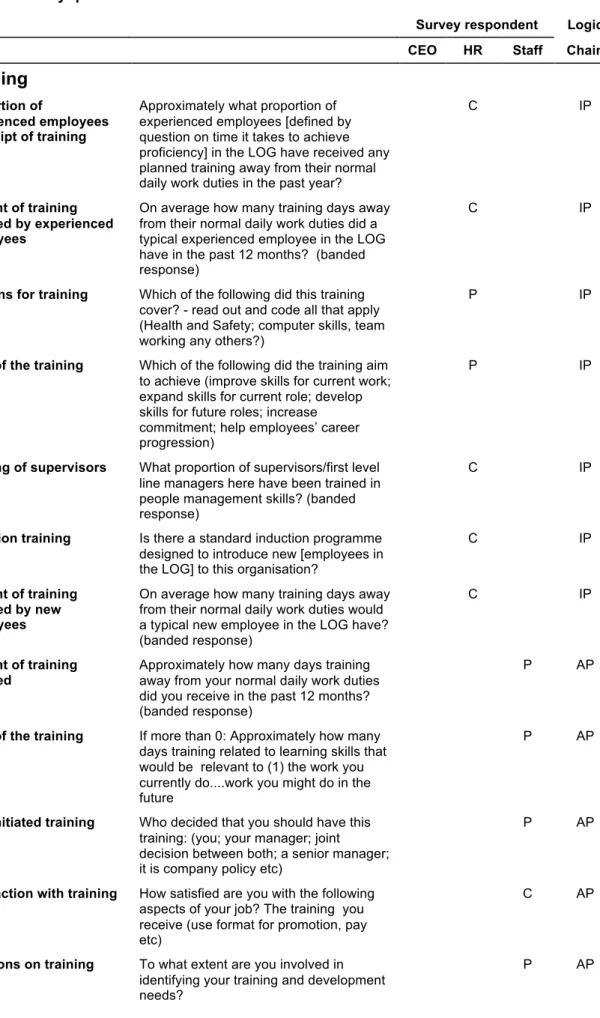


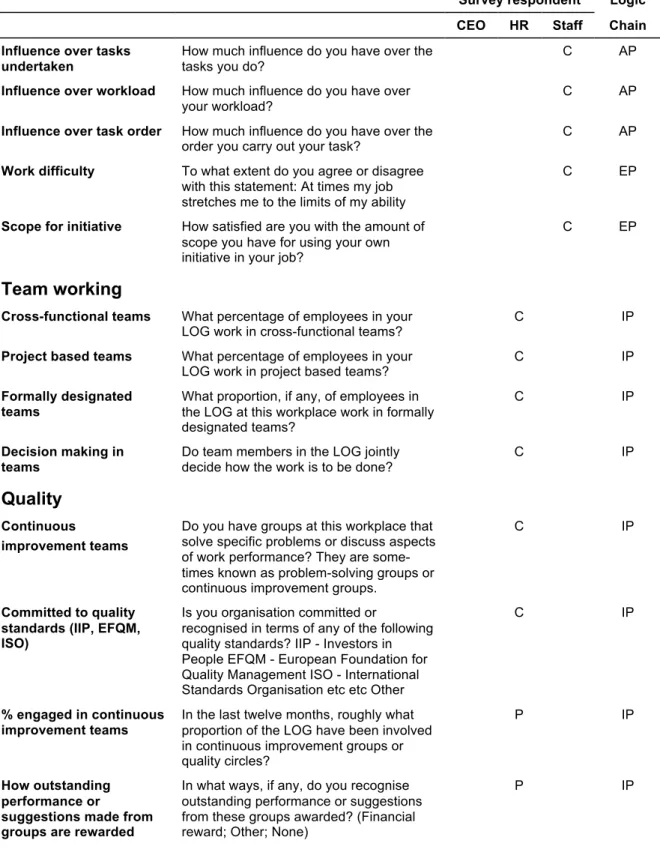
Outline
Related documents
DeKeyser (1998, cited in Doughty and Williams 1998) mentions how some theoreticians argue that explicit teaching of grammar is fruitless and that “the teacher should
Ovo istraživanje nastoji donijeti odgovore na sljedeća pitanja: preuzimaju li ispitanici piratske knjige zato što su besplatne, osjećaju li grižnju savjesti prilikom
Opening their new brewery in North Carolina will allow Sierra Nevada to somewhat catch up with demand, allow them to diversify their company culture, and help them promote the
Directions for fundamental improvements of inter- organisational relationships in the construction supply chain are found in four theories: transaction cost economics (TCE),
The paper then outlines transfer of effective ownership of the trains and related services in 2003 to an Australian company, and in 2008 back to the New Zealand Government
By integrating Crenshaw's account of intersectionality with the lens of transnational feminist theory, which explores the location of subjects in relation to borders
SMARCB1 using specific siRNAs in these primary cell lines yielded little changes in the expression of LIN28B, CCND1 and CDKN1C (Fig. 6
Proposed methodology: adapting neuro-fuzzy classifier for evolving data streams using rough set theory and holoentropy The main objective of this paper is to classify the data
