1-1-1999
Propagation of Alnus maritima from its three
disjunct populations
James Alan Schrader
Iowa State University
Follow this and additional works at:
https://lib.dr.iastate.edu/rtd
This Thesis is brought to you for free and open access by the Iowa State University Capstones, Theses and Dissertations at Iowa State University Digital Repository. It has been accepted for inclusion in Retrospective Theses and Dissertations by an authorized administrator of Iowa State University Digital Repository. For more information, please [email protected].
Recommended Citation
Schrader, James Alan, "Propagation of Alnus maritima from its three disjunct populations" (1999).Retrospective Theses and Dissertations. 17412.
by
James Alan Schrader
A thesis submitted to the graduate faculty
in partial fulfillment of the requirements for the degree of MASTER OF SCIENCE
Major: Plant Physiology Major Professor: William R. Graves
Iowa State University Ames, Iowa
Graduate College Iowa State University
This is to certify that the Master's thesis of
James Alan Schrader
has met the thesis requirements of Iowa State University
TABLE OF CONTENTS
ABSTRACT iv
CHAPTER 1. GENERAL INTRODUCTION 1
Introduction 1
Thesis Organization 2
Literature Review 2
Literature Cited 9
CHAPTER 2. TIMING OF SEED DISPERSAL MAY LIMIT THE REPRODUCTIVE 14 SUCCESS OF ALNUS MARITIMA
Abstract 14
Introduction 14
Materials and Methods 16
Results 19
Discussion 20
Literature Cited 23
CHAPTER 3. SEED GERMINATION AND SEEDLING GROWTH OF ALNUS 30
MARITIMA FROM ITS THREE DISJUNCT POPULATIONS
Abstract 30
Introduction 31
Materials and Methods 32
Results 36
Discussion 39
Literature Cited 42
CHAPTER 4. PROPAGATION OF ALNUS MARITIMA FROM 51 SOFTWOOD CUTTINGS
Abstract 51
Introduction 52
Materials and Methods 53
Results 55
Discussion 57
Literature Cited 59
CHAPTER 5. GENERAL CONCLUSIONS 63
General Discussion 63
Recommendations for Future Research 65 APPENDIX A. EFFECTS OF IRRADIANCE INTENSITY AND ROOT MEDIA 66
ON EARLY GROWTH OF ALNUS MARITIMA
APPENDIX B. MAPS OF SITES WHERE SEEDS AND CUTTINGS WERE 73 COLLECTED AND OF THE GEORGIA POPULATION OF ALNUS MARITIMA
APPENDIX C. ALNUS MARITIMA IN NATURAL SETTINGS APPENDIX D. ALNUS MARI11MA PLANTED IN lOW A ACKNOWLEDGMENTS
ABSTRACT
Alnus maritima [Marsh.] Nutt. (seaside alder) is a rare woody plant species known to occur naturally in three disjunct populations in south-central Oklahoma, northwestern Georgia, and the Delmarva Peninsula. Ecological concerns and interest in producing this species for use in managed landscapes underscore the need for information on reproduction, population biology, and propagation of A. maritima. My first objective was to examine reproductive limitations of A. maritima caused by timing of seed dispersal. In Oklahoma, 65.7% of seeds were dispersed during winter months. A model simulating the fate of these seeds showed germination percentage was reduced from 63.3% to 19.5% after exposure of seeds to winter temperatures typical of native habitats. Germination percentage declined from 57.9% to 39.7%
for seeds that overwintered on trees. I propose that timing of seed dispersal reduces seed germinability, thereby limiting the natural distribution of A. maritima. My second objective was to examine effects of provenance and environment on seed germination and effects of provenance on the growth and morphology of seedlings. Six weeks of stratification at 4
oc
optimized germination of seeds from Oklahoma at 73.2%. When this treatment was applied to seeds from all populations, seeds from Oklahoma had a higher germination percentage (55.0%) than did seeds from Georgia (31.4%) and Delmarva ( 14.7% ). Leaves of seedlings from Oklahoma were longer, more narrow, and less bullate than those from Georgia and Delmarva. Seedlings from Oklahoma and Georgia had higher growth rates than seedlings from Delmarva, while seedlings from Oklahoma and Delmarva were more densely foliated. My third objectivewas to evaluate the use of softwood cuttings to propagate A. maritima. Indole-3-butyric acid (IBA) at 8 g·kg·' caused a greater rooting percentage (68%), root count (36), and root length (9.1 em) than did IBA at 0 and 1 g·kg·' when applied to cuttings from Oklahoma in June. Cuttings from Oklahoma had greater survival, callus development, and root length, and had a higher rooting percentage and root count, than cuttings from Delmarva. More cuttings
Introduction
Alnus maritima [Marsh.] Nutt. (seaside alder) is a rare North American woody plant
species found in three small, disjunct populations separated by ;:::1000 km (620 miles). It is native to two counties in south-central Oklahoma, one county in northwestern Georgia, and on
the Delmarva Peninsula in four counties in Maryland and two counties in Delaware. The limited distribution of A. maritima has made it a threatened species in Oklahoma, Maryland and globally. In the wild, A. maritima is restricted to soils that are at least periodically
saturated with fresh water, and when it occurs with other bottomland species, it has a selective
advantage in the wettest soils. Alnus maritima, which blooms in autumn, does not hybridize naturally with other North American alders, which bloom in the spring, and is considered more closely allied to species in southern Asia than to those of North America. These unusual ecological characteristics present interesting problems for study. What is the origin of this limited, disjunct distribution? Are there intraspecific differences between plants of the three known populations caused by geographical isolation or differences in habitat? With a competitive advantage in wet soils, why does the range of A. maritima not increase? Why is
A. maritima more similar to species in Asia than to species in the New World? What should
be done to conserve this threatened species? Research investigating the reproductive,
developmental, and population biology of this species is needed to begin addressing these and other ecological concerns.
developmental, morphological, physiological, and aesthetic differences in A. maritima from its three populations is needed to facilitate selection of horticulturally superior genotypes.
Research is also needed to determine how A. maritima reacts to different and changing environmental conditions including those stressful to other woody plants.
I examined reproductive and population biology, seed and softwood cutting
propagation, and seedling traits of A. maritima from its three disjunct populations. Results
and discussions address both ecological and production issues, especially as they are affected by experimental treatments and population differences.
Thesis Organization
This thesis consists of three manuscripts. The first manuscript, chapter 2, has been submitted to Castanea, The Journal of the Southern Appalachian Botanical Society and is formatted for that journal. The second manuscript, chapter 3, is formatted for submission to
the Journal of the American Society for Horticultural Science. The third manuscript, chapter
4, is formatted for submission to HortScience. A literature review and general conclusions for this research are included. Four appendices containing information relevant to the thesis topic follow the general conclusions, and acknowledgments follow the appendices.
Literature Review
Classification and ecology
Of the nine species of Alnus (Betulaceae) native to North and South America, Alnus
maritima [Marsh.] Nutt. (seaside alder) is the only member of the subgenus Clethropsis,
After comparing leaf characteristics, Stibolt ( 1978) concluded that the sections Clethropsis and
Japonicae are very similar and, taken together, are distinct from most of the other sections. The subgenus Clethropsis is distinguished most from other alders by its autumnal flowering habit. All other alders flower in the spring (Furlow, 1979).
Alnus maritima occurs naturally in only three very small and disjunct populations. It is indigenous to the Delmarva Peninsula (Eastern Shore of Maryland and southern Delaware), to
south-central Oklahoma, and was recently discovered ( 1997) around a small swamp in northwestern Georgia (Brian Dickman, personal communication; Furlow, 1979; Stibolt,
1981). No intervening populations are found even though seemingly suitable habitats exist outside the three known locations. The origin of this disjunct and limited distribution of
A. maritima has been the topic of much speculation. Before discovery of the population in Georgia, some believed the population in Oklahoma was transplanted from the Delmarva Peninsula by Native Americans (Duke, 1983; Stibolt, 1981). Motivation for such an endeavor might have been the demand for alder tissue in folk medicine; alder remedies were used to treat
many human ailments (Duke, 1983). Others believe the present distribution of A. maritima to be the remnant of a much larger range. Evidence supporting this theory includes the distant location of its closest allies (southern Asia) and the fossil remains from other members of the subgenus Clethropsis that have been found in the northwestern United States (Furlow, 1979; Stibolt, 1981 ). The discovery of A. maritima in Georgia would seem to support the second theory, but the limited size of this population allows room for the belief that it too was introduced.
Regardless of its cause, this limited distribution has placed A. maritima on the threatened species list in Oklahoma and Maryland. It holds an Oklahoma state rank of S2 (imperiled in Oklahoma because of extreme rarity), a Maryland state rank of S3.1 ("Watch List" species that is actively tracked because of global rarity), and a global rank of G3 (either
and Maryland Natural Heritage Inventories (Oklahoma Natural Heritage Inventory, 1997; Maryland Heritage and Biodiversity Conservation Program, 1994). A. maritima has been considered a rare and threatened species since 1975, when it appeared as "Threatened" on the original, congressional "Report on Endangered and Threatened Plant Species of the United States" (Ripley, 1975). It has since been removed from the federal endangered species list and given a federal status of 3C, which means it is among those "taxa that have proven to be more abundant or widespread than previously believed and/or those that are not subject to any identifiable threat" (Maryland Heritage and Biodiversity Conservation Program, 1994).
A. maritima and other alders are actinorhizal species that can utilize atmospheric
nitrogen through a symbiotic relationship with nitrogen-fixing bacteria, Actinomycete
(Frankia) (Benson and Silvester, 1993; Furlow, 1979; Stibolt, 1978). Actinorhizal plants are
common pioneer species on nitrogen-deficient soils (Salisbury and Ross, 1992). They are successional species on impoverished coastal soils and dunes and deglatiated areas of Alaska, and are among the first plants to become re-established after forest fires (Hensley and McNiel,
1979). In 1953 it was first demonstrated that nodulated alder plants were able to utilize elemental N2 to satisfy their nitrogen requirements (Ferguson and Bond, 1953). By using an isotopic technique with 15N it was confirmed that nitrogen fixation took place in root nodules
of Alnus glutinosa (L.) Gaertn. infected with an endophyte (Bond, 1955) later identified by
electron microscopy as actinomycetes (Becking et al., 1964). In 1970 the endophytes of
Alnus ssp. were placed in the genus Frankia (species Frankia alni), of the family Frankiaceae,
order Actinomycetales (Becking, 1970). Alnus maritima develops root nodules when Frankia
is present in the root medium, and the symbioses has been shown to fix nitrogen (Furlow, 1979; Stibolt, 1978). Stibolt (1978) used the acetylene reduction technique to compare the
nitrogenase activity of A. maritima and Alnus serrulata Willd. and concluded that nodules of
A. serrulata had higher nitrogenase activity, but activity was retained for a longer period of
Observations of plants in their native habitats suggest A. maritima prefers extremely wet soils, often growing with its roots partially or completely submerged in water (Furlow,
1979; Stibolt, 1981 ). In Delaware and Maryland, where the two species occur sympatrically,
A. maritima shows a selective advantage over tag alder (A. serrulata) at and beyond the water
line. Yet, where it occurs without the competition of A. maritima, A. serrulata occupies all available habitat (Stibolt, 1981 ).
Although the natural occurrence of A. maritima is intriguing, information concerning
the ecology and population biology of this species is limited. I have examined some of the basic issues in these areas of study and have defined the needs and posibilities for future research.
Potential for use in managed landscapes
There is an ongoing demand for the development of woody plants that are both ornamental and resistant to environmental stresses. Two of the most common abiotic
stressors of landscape plants are varying soil water conditions and low soil nitrogen (Harris,
1992; Spirn, 1984; Tattar, 1980). These problems are especially evident in urban landscapes, areas of recent construction, and devastated lands scheduled for reclamation (Craul, 1985; Foster and Blaine, 1978; Hashimoto et al., 1973; Ruffner and Steiner, 1973). The
identification and establishment of woody plants that can improve such sites would fill a very
important role in modern arboriculture. Although it has received little attention among horticulturists, foresters, and ecologists, A. maritima may have potential as a stress-resistant large shrub or small tree useful for urban landscaping, soil conservation, and land reclamation (Graves, 1997; Hensley and McNiel, 1979; Veracion et al., 1981; Wheeler and Miller, 1990).
Alnus maritima possesses several appealing ornamental characteristics. In the wild it
clusters (strobili) close to branch ends, while male flowers are borne in terminal, pendulous catkins. Its foliage, which is a much darker than that of all other North American alders (Furlow, 1979), and yellowish male catkins are particularly ornamental (Mazzeo, 1987).
Alnus maritima possesses physiological qualities that could make it especially
promising for use in stressful environments. The capacity of A. maritima and other alders to utilize atmospheric nitrogen fixed in their roots, makes them an excellent choice for many landscape situations. Benson and Silvester (1993) conclude that actinorhizal plants could be particularly useful in reclaiming and conditioning soil, and acting as nurse, windbreak, and ornamental plants. In Europe and Japan, alders have been used extensively as ornamentals and hedges along rivers and streams to control erosion (Hashimoto et al., 1973; Wheeler and Miller, 1990). In the United States, alders are planted as ornamentals, but they are also used extensively for reclamation of areas strip-mined for coal (Lowry et al., 1962). Alders are preferred for reclamation projects because they establish quickly, grow rapidly, produce abundant leaf litter, and fix nitrogen (Funk, 1973). Alnus maritima is used successfully to stabilize, revegetate, and rehabilitate denuded areas of cut-and-fill road banks in the mountains of the Philippines (Veracion et al., 1981 ). The capacity to utilize atmospheric nitrogen should
make A. maritima an excellent choice for landscapes where low soil nitrogen limits growth of other species or where there is a desire to minimize fettilizer use.
Its natural preference for saturated soils should make A. maritima especially useful in landscapes prone to flooding and may make it a better choice for erosion-control applications than other alders. Hennessey et al. (1985) have shown that A. maritima performs better under moderate and severe drought stress than does A. glutinosa. While A. glutinosa develops thin, chlorotic leaves and reduced apical dominance in response to water-deficit stress, these
Propagation
While published information describing the propagation of A. maritima is not available, work has been done with other alder species. Alders have been propagated successfully from seed, hardwood cuttings, softwood cuttings, and tissue culture.
Endodormancy is the major hindrance to germination of viable seeds of alders. Cold, moist stratification (o::5 °C) improves the germination of such seeds (Bewley and Black, 1994), but optimal stratification temperature and duration vary with species (Dirr and Heuser, 1987). Germination of seeds from A. glutinosa and Alnus incana (L.) Moench is optimized at 46 and 48%, respectively, after 180 days of stratification at 5
oc
followed by a three day freezetreatment at -20
oc
(Schalin, 1968). Alnus crispa (Ait.) Pursh germinates at 28% when seeds are stratified at 1 to 5oc
for 60 days (Schopmeyer, 1974). Seeds of Alnus rhombifolia Nutt. and Alnus tenuifolia Nutt. germinate at 59 and 4%, respectively, and germination is similar for stratified and nonstratified seeds (Schopmeyer, 1974). Alnus rubra Bong. has been shown to germinate from 59 to 87% when seeds are stratified at 2 to 5oc
for 60 days (Radwan andDeBell, 1981) and seeds of Alnus rugosa (Du Roi) Spreng. germinate at 36% after
stratification for an unspecified duration (McDermott, 1953). By using a small sample size (400 seeds), Stibolt (1978) showed 20 and 26% germination for nonstratified seeds of A. maritima and A serrulata, respectively, that had overwintered on trees on the Delmarva Peninsula.
Although alders can be propagated easily from seed, genetic variability often can not be controlled well enough to perpetuate selected characteristics among seedlings consistently (Hartmann et al., 1990). To conserve the superior phenotypic features of a cultivar, it is often
optimized rooting of hardwood cuttings of A. tenuifolia at 76%. Although they produced
leaves, cuttings from A. sinuata would not root under any of the treatments tested (Java and
Everett, 1992). Hardwood cuttings of A. glutinosa from 20- to 25-year-old trees rooted at
64% when stems were dipped in IBA at 3 g•kg·1 and planted vertically in a mixture of sand
and perlite (Saul and Zsuffa, 1982).
Many ornamental woody species are routinely propagated from softwood cuttings,
which are often easier and quicker to root than hardwood stems (Hartmann et al., 1990).
Many chemical, plant, and environmental factors influence the rooting of cuttings, and many
practices and treatments based on these factors have been developed to increase propagation
success (Couvillon, 1988). Root-promoting chemicals, such as IBA and NAA, are
commonly used to increase root forn1ation, but optimal concentrations and formulations vary
with species and cultivars. The type of cutting and the timing of cutting collection are
species-specific factors that influence rooting success, and the use of fog or mist to maintain high
relative humidity and reduce leaf temperature increases survival and rooting of cuttings
(Couvillon, 1988; Hartmann et al., 1990).
Propagation by using softwood cuttings is a successful method for generating clones
of many alder species. In a study by Saul and Zsuffa ( 1982), cuttings from one-year-old
seedlings of A. glutinosa were treated with IBA at 3 g•kg-1 and rooted at 60 to 100% when
maintained under a transparent plastic tent at 70 to 80% relative humidity and 15 to 22
oc.
Cuttings from two-year-old seedlings of A. rubra rooted at 78 and 71 % under intermittent mist
after application of IBA at 4 and 8 g•kt1, respectively (Monaco et al., 1980), and Radwan et
al. (1989) showed 71 % rooting of cuttings of A. rubra taken from epicormic sprouts on
mature trees. Rooting percentages from 93 to 100% were achieved for cuttings from five- to
eight-year-old A. incana held in nutrient solution. IBA increased the number of roots that
developed on cuttings but had no effect on rooting percentage for cuttings maintained in this
Tissue culture provides increased rates of vegetative propagation for many species and is routinely used to multiply plants that are difficult or impossible to propagate by other means (Hussey, 1978). Based on results with other alder species, tissue culture should have
potential for use with A. maritima. Rapid micropropagation of A. glutinosa is achieved on low-salt woody plant medium that contains l11M 6-benzylarninopurine (BA) by using lateral buds as explant material (Garton et al., 1981). Perinet and Lalonde (1983) obtained 100% rooting, nodulation, and recovery for A. glutinosa cultured on Murashige and Skoog medium supplemented with 0.5 to 5 11M benzyladenine (BAP) and inoculated with Frankia. Three clones of A. crispa tested by Tremblay et al. (1984) required different kinds and
concentrations of sugar to optimize multiplication and rooting stages of micropropagation. Tremblay and Lalonde (1984) evaluated media requirements of seven alder species, and found interspecific and intraspecific variation in the optimum media type and optimum type and concentration of sugar during the multiplication step, but requirements during initiation and rooting were not different among the alders tested. They also demonstrated that A. crispa, A. glutinosa, A. incana, A. japonica, A. rubra, A. sinuata, and Alnus viridis (Villars) DC. can all be propagated successfully by using tissue-culture techniques.
Until now, specifics concerning the propagation of A. maritima have not been known. I provide a detailed account of the propagation of A. maritima from seed and softwood
cuttings, information that should be valuable to researchers, propagators, nurserymen, and anyone wishing to grow A. maritima.
Literature Cited
Becking, J.H. 1970. Frankiaceae fam. nov. (Actinomycetales) with one new combination and six new species of the genus Frankia Brunchorst 1886, 174. International Journal
Becking, J .H., W .E. DeBoer, and A.L. Houwink. 1964. Electron microscopy of the endophyte of Alnus glutinosa. Journal of Microbiological Serology 30: 343-376. Benson, D.R. and W.B. Silvester. 1993. Biology of Frankia strains, Actinomycete
symbionts of Actinorhizal plants. Microbiological Reviews 57: 293-319.
Bewley, J.D. and M. Black. 1994. Seeds: Physiology of development and germination. 2nd ed. Plenum Press, New York.
Bond, G., W.W. Fletche, and T.P. Ferguson. 1954. The development and function of root nodules of Alnus, Myrica, and Hippophae. Plant and Soil 5: 309-323.
Bond, G. 1956. Evidence for fixation of nitrogen by root nodules of Alder (Alnus) under field conditions. New Phytology 55:147-153.
Couvillon, G.A. 1988. Rooting responses to different treatments. Acta Horticulturae 227: 187-196.
Craul, P.J. 1985. A description of urban soils and their desired characteristics. Journal of Arboriculture 11: 330-339.
Dalton, D.A., and A.W. Naylor. 1975. Studies on nitrogen fixation by Alnus crispa.
American Journal of Botany 62: 76-80.
Dirr, M.A. and C.W. Heuser Jr. 1987. The Reference Manual of Woody Plant Propagation: From Seed to Tissue Culture. Varsity Press, Athens, Ga.
Duke, J.A. 1983. Handbook of Energy Crops. unpublished, NewCROP Homepage. Ferguson, T.P. and G. Bond. 1953. Observations on the formation and function of root
nodules of Alnus glutinosa (L.) Gaertn. Annals of Botany 17:175.
Foster, R.S. and J. Blaine. 1978. Urban tree survival: trees in the sidewalk. Journal of Arboriculture 4: 14-17.
Furlow, J.R. 1979. The systematics of the American species of Alnus (Betulaceae ). Rhodora 81 : 1-248.
Garton, S., M.A. Hosier, P.E. Read, and R.S. Farnham. 1981. In vitro propagation of
Alnus glutinosa Gaertn. HortScience 16: 758-759.
Graves, W.R. 1997. A quest for seaside alder (Alnus maritima [Marsh.] Nutt.). Landscape Plant News 8(3): 2-5.
Harris, R. W. 1992. Arboriculture: Integrated management of landscape trees, shrubs, and vines. 2nd ed. Prentice Hall, Englewood Cliffs, N.J.
Hartmann, H.T., D.E. Kester, and F.T. Davies, Jr. 1990. Plant propagation principles and practices. 5th ed. Prentice Hall, Englewood Cliffs, N.J.
Hashimoto, N., T. Kojima, M. Ogawa, and T. Suzuki. 1973. Effect of alder and acacia on devastated land. In: Ecology and Reclamation of Devastated Land. R.J. Hutnik and G. Davis (Eds.). Gordon and Breach, New York. Vol. 1: 357-367.
Hennessey, T.C., L.K. Bair, and R.W. McNew. 1985. Variation in response among three
Alnus spp. clones to progressive water stress. Plant and Soil 87: 135-141. Hensley, D.L. and R.E. McNiel. 1979. Woody non-legume nitrogen fixing plants. The
International Plant Propagators' Society 29: 363-370.
Huss-Danell, K., L. Eliasson, and I. Ohberg. 1980. Conditions for rooting of leafy cuttings of Alnus incana. Physiol. Plant 49: 113-116.
Hussey, G. 1978. The application of tissue culture to the vegetative propagation of plants. Sci. Prog. 65: 185-208.
Java, B.J. and R.L. Everett. 1992. Rooting hardwood cuttings of sitka alder and thinleaf alder. General Technical Report. INT. (289). U.S. Dept. of Agric.
Maryland Heritage and Biodiversity Conservation Program. 1994. Rare, threatened, and endangered plants of Maryland. Department of Natural Resources, Annapolis, Md. Mazzeo, P. 1986. Alnus maritima. American Nurseryman 163(11): 146.
McDermott, R.E. 1953. Light as a factor in the germination of some bottomland hardwood seeds. Journal of Forestry 51: 203-204.
Monaco, P.A., T.M. Ching, and K.M. Ching. 1980. Rooting of Alnus rubra cuttings. Tree Planters' Notes 31:22-24.
Oklahoma Natural Heritage Inventory. 1997. Working list of rare plants. Oklahoma Natural Heritage Program.
Perinet, P. and M. Lalonde. 1983. In vitro propagation and nodulation of the Actinorhizal host plant Alnus glutinosa (L.) Gaertn. Plant Science Letters 29: 9-17.
Radwan, M.A. and D.S. DeBell. 1981. Germination of red alder seed. Research Note PNW- 370. U.S. Dept. of Agric. Pac. N.W. For. Range Exp. Stn. Portland,OR. Radwan, M.A., T.A. Max, and D.W. Johnson. 1989. Softwood cuttings for propagation of
red alder. New Forests 3:21-30.
Ripley, S.D. 1975. Report on Endangered and Threatened Plant Species of the United States. U. S. Congressional Report. House Document: 94-51. Serial No. 94-A. U.S. Gov. Print. Off., Washington D.C.
Ruffner, J.D., and W.W. Steiner. 1973. Evaluation of plants for use on critical sites. In: Ecology and Reclamation of Devastated Land. R.J. Hutnik and G. Davis (Eds.). Gordon and Breach, New York. Vol. 2: 3-12.
Salisbury, F.B. and C.W. Ross. 1992. Plant Physiology. 4th ed. Wadsworth, Belmont, Calif.
Schalin, I. 1968. Germination analysis of grey alder (Alnus incana) and black alder(Alnus glutinosa) seeds. In: Biology of Alder. J.M. Trappe, J.F. Franklin, R.F. Tarrant, and G.M. Hansen (Eds.). U.S. Department of Agriculture. Portland, Ore.
Schopmeyer, C.S. 1974. Alnus B.Ehrh. In: Seeds of Woody Plants in the United States. U.S. Dept. of Agric. Agriculture Handbook No. 450: 206-211. U.S. Gov. Print. Off., Washington D.C.
Spim, A.W. 1984. Design for survival. Amoldia 44(4): 29-36.
Stibolt, V.M. 1978. The ecology and systematics of Alnus maritima Muhl. ex Nutt. (Betulaceae). M.S. Thesis, University of Maryland, College Park.
Stibolt, V.M. 1981. The distribution of Alnus maritima Muhl. ex Nutt. (Betulaceae). Castanea 46: 195-200.
Tattar, T.A. 1980. Non-infectious diseases of trees. Journal of Arboriculture 6: 1-4. Tremblay, F.M., X. Nesme, and M. Lalonde. 1984. Selection and rnicropropagation of
nodulating and non-nodulating clones of Alnus crispa (Ait.) Pursh. Plant and Soil 78: 171-179.
Tremblay, F.M. and M. Lalonde. 1984. Requirements for in vitro propagation of seven nitrogen-fixing Alnus species. Plant Cell, Tissue and Organ Culture 3: 189-199. Veracion, V.P., E,F Costales Jr., and F.B. Trinidad. 1981. Growth of four-year-old alnus
(Alnus maritima Nutt.) on cut-and-fill mountain roadbanks. Sylvatrop, the Philippine Forest Research Joumal6: 225-228.
CHAPTER 2. TIMING OF SEED DISPERSAL MAY LIMIT THE
REPRODUCTIVE SUCCESS OF ALNUS MARITIMA
A paper submitted to Castanea
James A. Schrader and William R. Graves
ABSTRACT
Alnus maritima [Marsh.] Nutt. (seaside alder) is a rare North American species known
to occur naturally in only three very small, disjunct populations in northwestern Georgia, the Delmarva Peninsula, and south-central Oklahoma. The most plausible explanation for this disjunction is the reduction of a once-larger range, but factors governing the size of the three existing populations have not been determined. This study examined the possible
reproductive limitations of A. maritima caused by its autumnal fruit ripening and
corresponding seed dispersal habit. We found that most (65.7%) of the seeds were dispersed during winter months, and a model simulating their fate showed a reduction in total
germination percentage from 63.3% to 19.5% after exposure of seeds to winter temperatures typical of native habitats. The total germination percentage declined from 57.9% to 39.7% for seeds overwintered on trees. Based on this evidence, we propose that timing of seed dispersal reduces seed gerrninability, thereby limiting the natural distribution of A. maritima.
INTRODUCTION
Alnus maritima [Marsh.] Nutt. (seaside alder) is a large shrub or small tree that
commonly grows to a height of 10 meters, with several trunks 15 em in diameter (Furlow 1979). This species prefers extremely wet soils, often growing with its roots partially or completely submerged in fresh water (Furlow 1979, Stibolt 1981). A. maritima occurs
Oklahoma and the Delmarva Peninsula (Eastern Shore of Maryland and southern Delaware) has been recognized for many years (Furlow 1979, Stibolt 1981), whereas another population
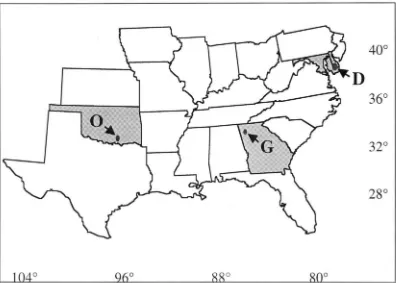
in northwestern Georgia was discovered in 1997 (B. Dickman, personal communication). These locations are separated by at least 1000 km (620 miles) with no intervening populations despite the existence of habitats that seem suitable. There has been much speculation
concerning the origin of this disjunction. Many believe the Delmarva population to be the oldest and that the Oklahoma and Georgia populations are products of introduction by Native
Americans (Stibolt 1981) or settlers. A more plausible explanation, based on taxonomic, chemosystematic, and archeological evidence is that the populations existing today were part of a once-larger range that has been reduced by ecological forces (Furlow 1979).
In Oklahoma A. maritima is limited to Johnston and Pontotoc Counties on fast-moving rivers and streams that are tributaries of the Red River. On the Delmarva Peninsula A.
maritima grows in or along slow-moving waterways of four counties in Maryland (Stibolt
1981) and two counties in Delaware (W.A. McAvoy, Delaware Natural Heritage Program, personal communication 7 /2/98). The population in Georgia is limited to Drummond Swamp, in Bartow County, northwest of Atlanta. There it is found on approximately 50 hectares (123.5 acres), and consists of hundreds of individuals, in a population that was similar to its present condition in 1943 (W. Nelson, Euharlee, Georgia, personal communication 7115/98).
Regardless of its cause, this limited distribution has earned A. maritima an Oklahoma state rank of S2 (imperiled in Oklahoma because of extreme rarity), a Maryland state rank of S3.1 ("Watch List" species that is actively tracked because of global rarity), and a global rank of G3 (either very rare and local throughout its range or found locally in a restricted range) on the
Oklahoma and Maryland Natural Heritage Inventories. Although it has been considered a rare and threatened species since 1975, when it appeared on the original, congressional "Report on Endangered and Threatened Plant Species of the United States" (Ripley 1975), factors
One factor that may limit the reproductive success, and therefore, the distribution of A.
maritima is its timing of seed dispersal. Unlike other North American alders that bloom in the
spring with fruit maturing at the end of the same season, A. maritima blooms in late summer and early autumn. Its female flowers, which are borne in scale-like clusters (strobili) close to
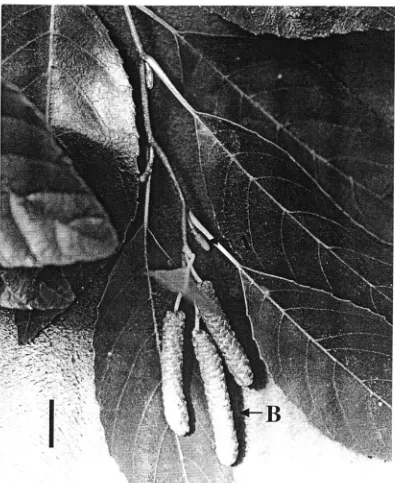
branch ends, and the male flowers, borne in pendulous terminal catkins (Figure 2), are
produced the first season, with fruit maturing at the end of the second season, often persisting for more than two seasons (Mazzeo 1986). This autumnal fruit ripening causes seeds to be either released during winter or held on trees until spring, exposing seeds to potentially
harmful winter temperatures. The Oklahoma and Delmarva populations of A. maritima occur within USDA hardiness zone 7a, where the mean minimum temperature is -15 to -18 C, while the Georgia population occurs in zone 7b (mean minimum temperature= -12 to -15 C). The objectives of this study were to determine if the timing of A. maritima seed dispersal may limit its reproductive success, and to consider how this reproductive limitation might affect its distribution and potential for range increase of A. maritima.
MATERIALS AND METHODS
Newly matured strobili were collected from two trees in Johnston County, Oklahoma,
once on 23 Nov. 1997 (before any seed dispersal had occurred) and again from the same trees on 15 Mar. 1998 (seeds overwintered on trees). Tree #1 was located on the west bank of the
Blue River, within the Blue River Campground (34°19'40" north latitude, 96°35'30" west
longitude) and tree #2 was on the west bank of Pennington Creek at Reagan Road (34°19'20"
Timing of seed dispersal
The number of seeds per strobilus was counted to determine the initial mean, the
percentage of seeds dispersed during winter months, and the percentage that remained on trees after winter.
Effects of overwintering on seed germinability
Two germination trials were performed, one by using seeds collected from the two trees on 23 Nov. 1997 and another by using seeds collected 15 Mar. 1998. The results of these two trials were compared to determine the effects of overwintering on seed
germinability. Germination trials involved 10 experimental units for each seed source per
collection date for a total of 40 units. Experimental units consisted of individual, 100- x 15-mm plastic petri plates containing 50 non-stratified seeds between two pieces of 90-15-mm- 90-mm-diameter filter paper. After weighing the 50 seeds, each unit received 2 rnl of distilled, deionized (dd) H20 and was placed in a sealed plastic bag to prevent water loss. Units were
then randomized on one shelf of a growth chamber and held under germination conditions (24 C in the dark) for 21 days. On day three (after initial imbibition) and day ten of germination conditions, units were given an additional 1.5 rnl and 1.0 rnl of dd H20 ,
respectively. The measure of germination was the first sign of radicle emergence, which was
confirmed by viewing seeds through a dissecting microscope at 15x magnification. A tetrazolium test was planned for evaluating the condition of non-germinated seeds, but was deemed unnecessary because light pressure with forceps on the last day of germination
conditions showed that all non-germinated seeds apparently either lacked an embryo or that the embryo had deteriorated to a milky liquid. This demonstrated that all non-germinated seeds were non-viable rather than in a state of secondary dormancy. The number of seeds
value, and total germination percentage (Czabator 1962). Mean daily germination is the total germination percentage divided by the number of days that the trial lasted (21) and reflects the
completeness of germination. Peak day is the day of the trial on which occurs the point of inflection of the plot of cumulative germination for each unit over time. The peak value is the cumulative germination percentage for each unit on its peak day, divided by the number of days to reach that percentage. Peak value and peak day reflect the rate of germination. The germination value is a composite rating for each unit, which combines both germination rate
and completeness, and is the product of the mean daily germination and the peak value.
Model simulating the fate of seeds dispersed during the winter months
Simulation of the fate of seeds dispersed during winter months was accomplished by fust treating experimental units of seed collected in November with three weeks of cool, moist stratification (1 rn1 dd H20 and 4 C) to mimic probable early winter conditions, then exposing
these seeds to a minimum temperature typical of their native habitat ( -15 C). Additional stratified units were treated to -20 C to model winter conditions north of the native range of A.
maritima. Experimental units were designed identical to those described above (50 seeds per
petri plate), and, after receiving stratification and freeze treatments, units were placed under germination conditions as described above.
There were six replications for each of three treatments: control (stratification but no freeze), -15 C, and -20 C. Replication for the freeze treatments was accomplished with the
germination trial had no true peak day, so were given a 21, representing the poorest score
possible.
RESULTS
Timing of seed dispersal
Mean seeds per strobilus declined from 108 on 23 Nov. 1997 to 37 on 15 Mar. 1998
(0.05 LSD= 13.3, n = 12), showing that 65 .7% of the seeds were dispersed between the two collection dates and 34.3% of the seeds overwintered on the trees. In November, all strobili were completely closed with no loss of seeds, and, in March, strobili were predominately open with most of the remaining seeds localized toward the proximal and distal ends of the strobilus (Figures 3, 4).
Effects of overwintering on seed germinability
The total germination percentage declined from November to March, while the
germination value remained unchanged (Table 1). The two components of germination value (peak value and mean daily germination) changed in opposing ways; peak value increased while mean daily germination decreased over the winter months, accounting for the lack of change in germination value. The increase in peak value and decrease in peak day from
November to March reflected an increase in the rate of germination, while the decrease in mean daily germination and total germination percentage illustrated a decrease in the number of seeds that germinated. Mean mass of 50 seeds decreased by 14% between November and March.
Model simulating the fate of seeds dispersed during the winter months
Both the completeness and rate of germination were lower after the two freeze
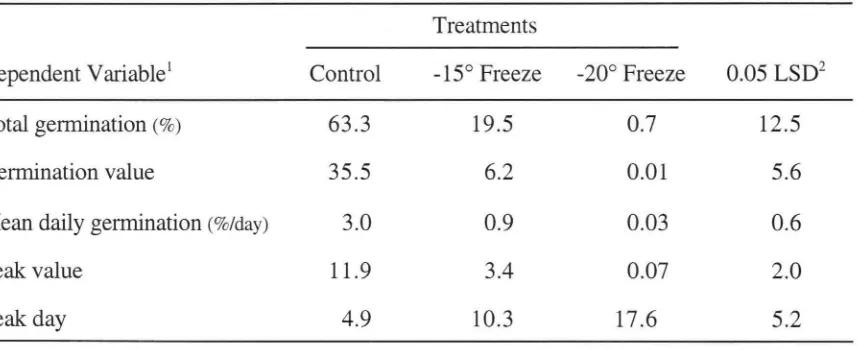
Treatment means were different from one another for all dependent variables, and there was a decrease in seed germinability from the control treatment to the -15 C treatment and from the -15 C treatment to the -20 C treatment. Only four seeds germinated out of the entire 600 that received the -20 C freeze treatment.
DISCUSSION
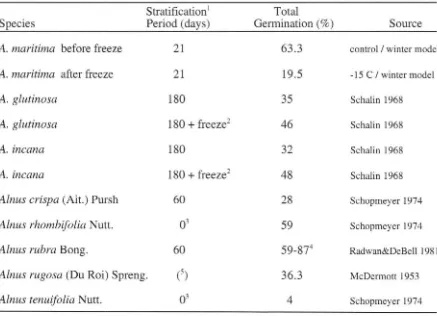
Germinability of stratified A. maritima seeds collected before winter is equal or greater than that of many other alder species when compared to total germination percentages from other studies (Table 3), showing that seed viability is not a factor limiting the reproductive success of A. maritima from Oklahoma. Yet, after three- and six- day exposures of
A. maritima seeds to temperatures typical of native habitats during winter ( -15 C), all but one
of these species exceeds the germination of A. maritima. Unlike A. maritima, stratified seeds from at least two of these species [Alnus glutinosa (L.) Gaertn. and Alnus incana (L.)
Moench] show increased germinability following a three-day freeze treatment at -20 C (Table 3). Although timing of A. maritima seed dispersal is similar to that of A. glutinosa (late fall to early spring) and A. incana (September- December) (Schopmeyer 1974), A. maritima seeds
appear poorly suited for dispersal during winter months. The lower rate and completeness of germination for units receiving freeze treatments (Table 2) suggest that A. maritima seeds dispersed during winter are exposed to environmental conditions that are detrimental to seed survival and germinability. Winter temperatures reduce seed germinability (Table 2, Table 3), yet most A. maritima seeds are dispersed during winter.
Seeds that overwinter on trees are protected somewhat from harsh winter conditions but are still less likely to germinate than those collected in November. Overwintered seeds do show a natural stratification effect, demonstrated by an increased rate of germination (Table 1), but the benefits of this natural stratification are overcome by the reduction in total
seeds from November to March may coincide with the fact that more seeds are lost from the central region of the strobili, than from the ends. We have observed that seeds from the central portion of the strobili are both larger and more uniform in shape, suggesting the
possibility that the most germinable seeds are lost during the winter months, leaving those less germinable to be released in spring. The viability and gerrninability of A. maritima seeds are drastically reduced by the timing of seed dispersal. Whether dispersed during winter or in early spring after overwintering on trees, this seed dispersal habit is a factor limiting the reproductive success of A. maritima.
What are the implications of seed dispersal timing on the distribution and potential for range increase of A. maritima? Our model indicates that the detrimental effects of winter temperatures on seed germinability is one plausible reason why A. maritima only occurs as far north as zone 7a. The fact that 19.5 %of the seeds remained capable of germination after exposure to -15 C indicates that A. maritima can reproduce from seed within its present range. The effects of the -20 C freeze treatment (only 4 out of 600 seeds germinated) indicate that A.
maritima has very little potential for a natural range increase to the north, where mean
minimum temperatures are -20 C and colder. Winter and early spring dispersal of A. maritima
seeds should not deter a range increase into USDA hardiness zone 7b and other zones with milder winter temperatures, yet such a range increase has not been observed.
The situation appears to be much the same for the Georgia population. Drummond Swamp is a spring-fed body of water that drains into Euharlee Creek, which empties into the Etowah River within 3 krn (1.86 miles) of the swamp. The Etowah River flows west into the
Coosa River, which crosses into Alabama and turns south, passing through hardiness zones 7b and Sa. There seems to be sufficient opportunity for seed dispersal, and therefore range increase, down stream, but to date it appears that the Georgia population is confined to Drummond Swamp.
Although we conclude that the timing of fruit development and seed dispersal limits the reproductive success of A. maritima, the restricted distribution of this species cannot be explained solely by this trait. Along with this limiting factor, observations we have made of plants under greenhouse conditions indicate that early seedling vigor may restrict the spread of plants in the wild. Under optimal conditions, shoot development of seedlings is slow during
the formation of the first true leaves. Under less suitable conditions, growth is severely retarded at this stage until the seedling finally dies. Stibolt (1978) observed that seedlings of
A. maritima are not evident in the wild, a phenomenon also supported by our observations in
Delmarva, Georgia, and Oklahoma. This phenomenon, along with the lack of range increase to the south of existing populations, suggests the possibility that present populations of A.
maritima are primarily the result of asexual propagation. Further investigation should be done
LITERATURE CITED
CZABATOR, F.J. 1962. Germination value: An index combining speed and completeness of pine seed germination. Forest Sci. 8: 386-396.
FURLow, J.R. 1979. The systematics of the American species of Alnus (Betulaceae). Rhodora 81 : 1-248.
MAZZEO, P. 1986. Alnus maritima. Amer. Nurseryman 163(11): 146.
McDERMOTT, R.E. 1953. Light as a factor in the germination of some bottomland hardwood
seeds. J. Forest. 51: 203-204.
RADWAN, M.A. & D.S. DEBELL. 1981. Germination of red alder seed. Research Note PNW-370. U.S. Dept. Agric. For. Serv. Pac. N.W. For. Range Exp. Stn. Portland, OR.
RIPLEY, S.D. 197 5. Report on Endangered and Threatened Plant Species of the United States. U. S. Congressional Report. House Document: 94-51. Serial No. 94-A.
U.S. Gov. Print. Off. Washington D.C.
SCHALIN, I. 1968. Germination analysis of grey alder (Alnus incana) and black alder(Alnus glutinosa) seeds. In: Biology of Alder. J.M. Trappe, J.F. Franklin, R.F. Tarrant, and G.M. Hansen (Eds.). U.S. Department of Agriculture. Portland, Oregon. ScHOPMEYER, C.S. 1974. Alnus B. Ehrh. In: Seeds of Woody Plants in the United States.
U.S. Dept. of Agric. Agriculture Handbook No. 450: 206-211. U.S. Gov. Print. Off. Washington, D.C.
STIBOLT, V.M. 1978. The ecology and systematics of Alnus maritima Muhl. ex Nutt. (Betulaceae). M.S. Thesis, University of Maryland.
Table 1. Outcome of November and March germination trials showing the changes in germination due to overwintering of seeds on trees
Dependent Variable 1 November March 0.05 LSD
Total germination (%) 57 .9 39.7 5.1
Germination value 2 16.2 13.5 3.0
Mean daily germination (%/day) 2.77 1.89 0.23
Peak value 5.27 6.68 0.76
Peak day 10 5 0.3
Mass of 50 seeds (mg) 83.2 71.5 3.2 1 n
=
20.Table 2. Results of model simulating the fate of seeds dispersed during winter months Treatments
Dependent Variable1 Control -15° Freeze -20° Freeze 0.05 LSD2
Total germination (%) 63 .3 19.5 0.7 12.5 Germination value 35.5 6.2 0.01 5.6
Mean daily germination (%/day) 3.0 0.9 0.03 0.6
Peak value 11.9 3.4 0.07 2.0
Peak day 4.9 10.3 17.6 5.2
I
n
= 12.
[image:31.548.65.494.94.269.2]Table 3. Germination of A. maritima compared to that of other alder species including
Alnus glutinosa (L.) Gaertn. and Alnus incana (L.) Moench, which were tested for effects of freeze treatment at -20 C
Total Species Stratification
1
Period (days) Germination (%)
A. maritima before freeze 21
A. maritima after freeze 21
A. glutinosa 180
A. glutinosa 180
+
freeze2 A. incana 180A. incana 180
+
freeze2Alnus crispa (Ait.) Pursh 60
Alnus rhombifolia Nutt.
Alnus rubra Bong. 60
Alnus rugosa (Du Roi) Spreng.
CS)
Alnus tenuifolia Nutt. 03
1 Stratification, when used, was in a moist medium at 1 to 5 C.
2 Stratified with an additional three-day freeze treatment at -20 C.
63 .3 19.5 35 46 32 48 28 59 59-874 36.3 4 Source
control I winter model
-15 C I winter model
Schalin 1968
Schalin 1968
Schalin 1968
Schalin 1968
Schopmeyer 1974
Schopmeyer 1974
Radwan&DeBell 1981
McDermott 1953
Schopmeyer 1974
3 A. rhombifolia and A. tenuifolia germination (Total Germination
%) was equally good for stratified and nonstratified seeds.
4 Range of six seed lots.
[image:32.554.58.495.145.461.2]D
[image:33.551.66.462.87.370.2]0 0 0 0
Figure 2. Reproductive structures ofAJ#zJJ mCZrZ',Zc777CZ. Appearance of
pistillate strobili (A) and staminate catkins (B) from plants in Oklahoma on
I
I
r,I
~.\
Figures 3, 4. Condition of mature Alnus maritima strobili before overwintering or seed dispersal (Figure 3) and during the third season, after
CHAPTER 3. SEED GERMINATION AND SEEDLING GROWTH OF
ALNUS MARITIMA
FROM ITS THREE DISJUNCT POPULATIONS
A paper to be submitted to the Journal of the American Society for Horticultural Science
James A. Schrader and William R. Graves
ADDITIONAL INDEX WORDS. seaside alder, germination percentage, germination value,
genotypic variation, morphology, provenance, threatened and endangered species
ABSTRACT. Genotypic variation and horticultural potential of Alnus maritima [Marsh.] Nutt.
(seaside alder), a large shrub or small tree found naturally in only three small, disjunct
populations, have not been studied. We examined effects of population of origin and
environment on seed germination and the growth and morphology of seedlings. Our first
experiment showed that six weeks of cold stratification optimized germination of half-sibling
seeds from Oklahoma at 73.2%. When this treatment was applied to multiple groups of
half-siblings from all populations in a second experiment, seeds from Oklahoma had a higher
germination percentage (55.0%) than seeds from both Georgia (31.4%) and the Delmarva
Peninsula (14.7%). In a third experiment, morphology and growth of multiple groups of
half-siblings from all three populations were compared in one environment. Leaves of
seedlings from Oklahoma were longer ( 12.8 em) and more narrow (2.15 length: width ratio)
than leaves of seedlings from Georgia (12.0 em long; ratio=1.76) and the Delmarva Peninsula
(11.6 em long; ratio=1.86). Seedlings from Oklahoma and Georgia had higher rates of dry
weight accumulation (181 and 160 mg•day"1, respectively) than did seedlings from Delmarva
(130 mg•day·'), while seedlings from Oklahoma and Delmarva were more densely foliated
(0.72 and 0.64leaves and lateral shoots per em of primary stem, respectively) than those from
Georgia (0.46 per em). These differences indicate genetic divergence among the three disjunct
populations and the potential to exploit genetic variation to select horticulturally superior A.
Introduction
Alnus maritima (seaside alder) is a rare, North American species indigenous to only
three small, disjunct areas separated by ~1000 km. Alnus maritima occurs naturally in two
counties in south-central Oklahoma, one county in northwestern Georgia, and six counties on the Delmarva Peninsula (Eastern Shore of Maryland and southern Delaware) in soils saturated with fresh water. The presence of this species in Oklahoma and the Delmarva Peninsula has been recognized for many years (Furlow, 1979; Stibolt, 1981), while the population in Georgia was discovered in 1997 (B. Dickman, personal communication). Because of its restricted range, A. maritima is considered rare or imperiled both globally and at the state level in the Natural Heritage Inventories of Oklahoma and Maryland. The need to conserve A.
maritima is one reason why its reproductive and population biology should be understood.
Its aesthetic and physiological attributes suggest A. maritima may merit use in
managed landscapes. In the wild, A. maritima grows 10 m tall with several trunks ::;; 15 em in diameter (Furlow, 1979). Particularly appealing are its glossy foliage, which is darker green than that of all other North American alders, and pendulous male catkins that are yellow in late
summer and early autumn (Furlow, 1979; Mazzeo, 1986). Alnus maritima also may be unusually well adapted to poor edaphic conditions. Although they grow only in wet soils in nature, plants of A. maritima respond more favorably to drought than do plants of the more commonly used Alnus glutinosa (L.) Gaertn. (Hennessey et al., 1985). The capacity of A.
maritima to associate with nitrogen-fixing bacteria (Furlow, 1979) also suggests plants would
perform relatively well under conditions that lead to physiological stresses in other woody taxa (Benson and Sylvester, 1993).
Genetic differences among and within the three disjunct populations of A. maritima
populations if plants in them consistently have superior growth rates or foliar qualities. Data on sexual reproductive capacity would aid plant propagators and would help in judging the potential for this species to be invasive outside of its natural habitat.
The overall objective of this research was to describe environmental and population effects on seed germination and seedling growth of A. maritima. Embryo dormancy is the major hindrance to germination of viable seeds of other alders, but moist stratification at :::5
oc
improves germination (Bewley and Black , 1994). The optimum stratification period varies among alder species (Dirr and Heuser, 1987) but is not known for A. maritima. We used seeds from a single plant in Oklahoma to examine effects of duration of cold stratification. A second experiment included seeds from multiple plants from each population to assess genetic variation in seed germinability, while a third experiment was designed to examine growth and development of seedlings. The three populations of A. maritima were found to vary in their reproductive biology, growth, and morphology in ways that will be significant tohorticulturists.
Materials and Methods
Seed germination
GERMPLASM. Seeds were acquired by collecting newly matured strobili during
November (Oklahoma) and December (Delmarva and Georgia) 1997. In Oklahoma, fruit
were collected from plants along the Blue River (latitude 34°19'40"N; longitude 96°35'30"W)
and along Pennington Creek (latitude 34°19'20"N; longitude 96°42'20"W) in Johnston
County. On the Delmarva Peninsula, fruit were collected from plants along Marshyhope
Creek (latitude 38°37'50"N; longitude 75°49'0"W). Plants sampled in Georgia were located
in and around Drummond Swamp (latitude 34°08'0"N; longitude 84°57' 15"W) in Bartow
moisture content during storage was 10.1% (International Seed Testing Association, 1985).
EXPERIMENTAL UNITS. Fifty half-sibling seeds between two pieces of
90-mm-diameter filter paper within a 100- x 15-mm, plastic petri plate constituted an experimental unit for both experiments. The 50 seeds in each unit were first weighed, then disinfested by
submerging seeds in 10% sodium hypochlorite for 2 min, followed by two, 1-min rinses in distilled, deionized water (dd H20). Units assigned to no stratification received 2 rn1 of dd
H20 and were randomized in a growth chamber at 24 ± 1 °C in the dark for 21 d. Each
stratified unit received 1 rn1 dd H20 and was held in the dark at 4 ± 1
oc
for various durations.All units were held in individual sealed, plastic bags to minimize evaporation. After
stratification, these units were given 1.75 rn1 of dd H20 and were held at 24 ± 1
oc
in the dark.On day 3 and day 10 of germination conditions, each stratified and nonstratified unit was given 1.5 rn1 and 1.0 rn1 of dd H20, respectively.
MEASURES OF GERMINATION. Emergence of a radicle, confirmed by viewing seeds
at 15x magnification, constituted germination in both experiments. Seeds germinated in each unit were counted on days 3, 4, 6, 8, 10, 12, 14, 16, 18, and 21, and total germination
percentage, peak day, peak value, and germination value were calculated (Czabator, 1962). Germination distribution was determined to represent the uniformity of germination as the
number of days over which radicle emergence took place in each unit. Units with no germinated seed after 21 d had no true peak day and were ascribed a 21 , the poorest score possible.
EFFECTS OF STRATIFICATION DURATION. Experimental units with half-sibling
seeds from one tree from Oklahoma were assigned to stratification treatments of 0, 2, 4, 6, 8, 12, and 16 weeks in a completely randomized design with ten replications for each treatment. A tetrazolium test (International Seed Testing Association, 1985), with eight replications of 50 seeds each, was performed to determine the viability of seeds from this source.
half-sibling seeds from 27 trees (10 from Oklahoma, 10 from Delmarva, and seven from Georgia) were assigned to one of two treatments, a non-stratified control or a six-week stratification.
This stratification period was chosen because it improved germination during the first experiment with one group of half-sibling seeds from Oklahoma. A randomized complete block design with nine blocks was used. Each block contained 27 units, one from each of the 27 maternal trees. One block was placed into stratification conditions each day for 6 d. The remaining three blocks were assigned to the non-stratified control treatment.
Growth and morphology of seedlings
INFLUENCE OF POPULATION AND SEED SOURCE. Stratified seeds from the 27 trees
representing the three populations were germinated in petri plates as described. An
experimental unit consisted of a 6.7-cm-diameter, square pot (height=5.9 em; volume=170 cm3) containing germination mix (Strong Lite® Horticulture Products, Seneca, Ill.) and two
germinated seeds. A total of 324 experimental units was an·anged in a randomized complete
block design on a greenhouse bench from 11 May 1998 to 14 Sept. 1998, with 12 blocks that each contained one unit from each of the 27 seed sources. After three weeks, units were thinned to one seedling per pot. Plants were held under 16-h photoperiods by using two 400-W, high-pressure sodium lamps to supplement natural irradiance. Environmental conditions were monitored twice each week with a modell600 steady-state parameter (LI-COR,
Lincoln, Nebr.) between 1200 and 1300 HR. The air averaged 23.1 °C, mean relative
humidity was 47.2%, and mean photosynthetically active radiation was 442 Jlmol·m·2·s·1•
Units were irrigated with tap water every other day and received fertilizer solution of 11 .0 rnM N from a mixture of Peters® Excel All-Purpose and Cal-Mag (16.5N-2.2P-13.5K) in tap water once a week. All irrigations were to container capacity. Six blocks were randomly selected and harvested after 12 weeks. The other six blocks were transplanted into 11.4-cm-diameter, round pots (height=9.8 em; volume=700 cm3) with additional germination mix and
At both harvests, width perpendicular to the midvein at the widest point, length from the apex to the petiole, and length:width ratio of the first fully expanded leaf of each plant were determined. Surface area of all leaves longer than 1 em on each plant was measured by using a model 3100 area meter (LI-COR). Leaf area ratio (Harper, 1977), leaf weight after 3d at 60
°C, and specific leaf weight (dry weight divided by surface area) also were determined. Expression of bullate leaf surfaces was described by assigning each plant a rating of 1 or 2 when <50% or ;::50% of the leaves were bullate, respectively.
Stem thickness at the cotyledonary node was measured with calipers. Plants were ascribed a stem curvature rating of 1 if the stem was uniformly upright or a 2 if the primary stem was distinctly curved or twisted. Overall angle of the primary stem was measured as the deviation from a line perpendicular with the upper plane of the pot, such that the smaller the
angle, the more upright the growth habit. Length of the internode directly basipetal to the first fully expanded leaf was measured, and the epicotyllength of the primary stem was
determined. The number of leaves plus axillary shoots longer than 1 em was divided by epicotyllength to represent vegetative density of the primary shoot.
Dry weights of root and shoot systems and the root: shoot dry weight ratio of each plant were determined. Net assimilation rate and relative growth rate for weeks 12 through 18 were calculated as described by Harper (1977). Simple growth rate was calculated by
dividing the change in mean plant dry weight from week 12 to week 18 by the number of days of growth.
Data analysis
linear and quadratic effects of stratification duration on seed gerrninability. A correlation procedure was used to examine if treatment effects on seeds from the various populations and
sources were consistent.
Results
Seed germination
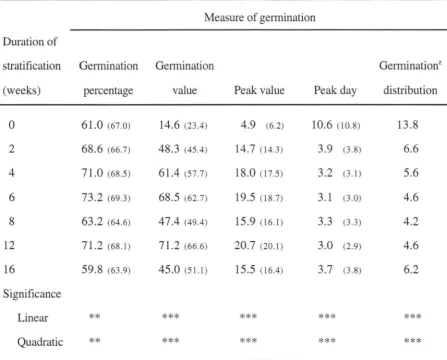
EFFECTS OF STRATIFICATION DURATION. Six weeks of stratification resulted in the
highest germination percentage, while 12 weeks evoked the most pronounced increases in germination value and peak value (Table 1). Stratification for 12 and 8 weeks gave the lowest peak day and germination distribution, respectively. Analysis of covariance revealed that
germination percentage (P::; 0.0001), germination value (P::; 0.0001), peak value (P =
0.0007), and peak day (P
=
0.0548) increased linearly with increasing seed weight, whilegermination distribution was not affected (P
=
0.90). After adjusting data for effects of seedweight by calculating the least square means, treatments giving the highest responses within parameters remained the same (Table 1). Regression analysis of the unadjusted means showed that quadratic functions best represented germination percentage (y
=
63.03+
2.08[weeks]- 0.14[weeks2
]; r2
=
0.15), germination value (y=
22.91+
9.72[weeks]-0.52[weeks2]; r2
=
0.45), peak value (y=
7.37+
2.69[weeks]- 0.14[weeks2]; r2
=
0.59),peak day (y
=
8.60- 1.34[weeks]+
0.07[weeks2]; r2=
0.67), and germination distribution (y= 12.02- 1.80[weeks]
+
0.09[weeks2]; r2 = 0.54).
VARIATION AMONG AND WITHIN POPULATIONS. A population-by-treatment
interaction was found for all parameters (P ~ 0.0001) except germination percentage (P
=
0.08). Six weeks of stratification caused a greater increase in germination value and peak value for seeds from Oklahoma (increased 5.7 and 4.7 times, respectively), than for seeds
from Georgia (increased 4.3 and 3.1 times, respectively), and the Delmarva Peninsula (increased 3.3 and 3.1 times, respectively) (Table 2). Stratification decreased peak day more for seeds from Oklahoma (decreased 3.1 times), than for seeds from Georgia (decreased 1.9
times) and the Delmarva Peninsula (decreased 2.2 times).
Non-stratified seeds from Oklahoma had greater germination percentage, germination
value, and peak value than non-stratified seeds from the other two populations, but peak day was not different for seeds from Oklahoma and Georgia (Table 2). All four germination measures for non-stratified seeds from Georgia were intermediate to those of Oklahoma and
Delmarva, but different from Delmarva for peak day only (Table 2). After 6 weeks of stratification, seeds from Oklahoma had the highest germination percentage, germination value, and peak value, as well as the lowest peak day. Germination of stratified seeds from
Georgia differed from that of seeds from Delmarva for germination percentage only. Germination varied among individual, half-sibling groups of seed within each population. Means by group for germination percentage ranged from 38 to 82 (Oklahoma), 12 to 58 (Georgia), and 4 to 29 (Delmarva Peninsula) after seeds received 6 weeks of stratification. Eight of the highest 10 germination percentages were for groups from Oklahoma. The highest germinability was shown by stratified seeds from one group from Oklahoma with a germination percentage of 82%, germination value of 89.0, peak value of
22.7, and peak day of 3. The lowest germinability was shown by non-stratified seeds from one group from the Delmarva Peninsula with a germination percentage of 0.67, germination value of 0.005, peak value of 0.056, and a peak day of 18.
peak value, and decreased peak day (Table 2). There was a correlation between the results for non-stratified and stratified seeds. Correlation coefficients and significance were r
=
0.84, P ~0.0001 for germination percentage; r = 0.80, P ~ 0.0001 for germination value; r = 0.79 and
P ~ 0.0001 for peak value; and r
=
0.50, P=
0.008 for peak day.Growth and morphology of seedlings
INFLUENCE OF POPULATION AND SEED SOURCE. Growth and morphology of
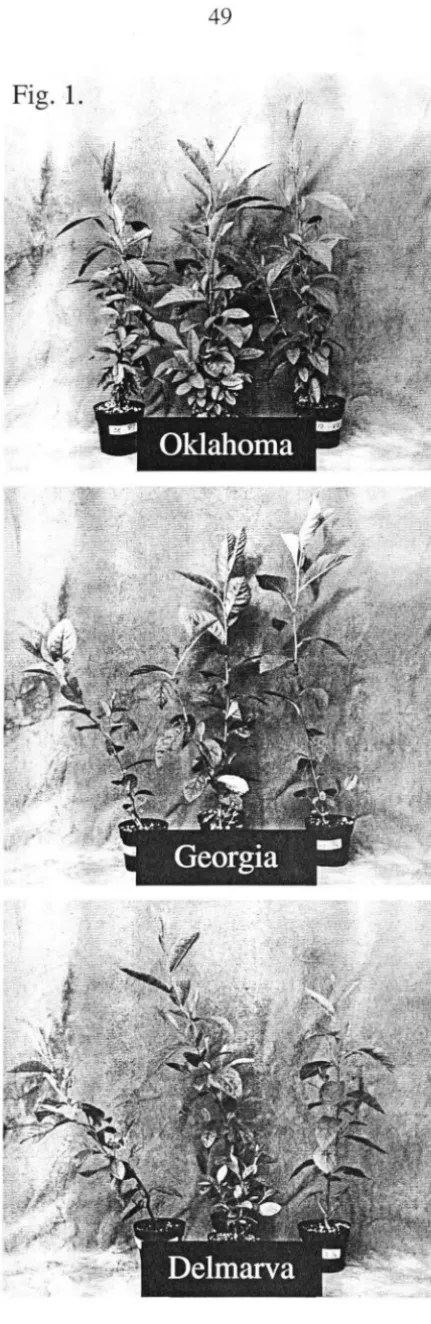
seedlings varied among populations. Stems of seedlings from Oklahoma were thicker than stems from the other two populations, while stems of seedlings from Delmarva and Georgia had more curvature and deviation from vertical (Table 3, Fig. 1). Leaves of plants from Oklahoma were longer, had a higher length:width ratio, and were less frequently bullate than those from plants of the other two populations (Table 3, Fig. 2).
Seedlings from Oklahoma and Georgia had higher simple growth rates and leaf, root, shoot, and total dry weights after 18 weeks than seedlings from the Delmarva Peninsula
(Table 3). Epicotyls of plants from Georgia were 18% longer than the combined mean length of epicotyls of plants from the other two populations. Seedlings from Georgia also had longer internodes than seedlings from Oklahoma (Table 3). Seedlings from Oklahoma were densely foliated. They had 23% more leaves and axillary shoots and 26% more leaf area than the combined means of the other two populations. Compared to seedlings from Georgia, seedlings from Oklahoma and the Delmarva Peninsula had more leaves and shoots per unit length of primary stem and a higher leaf area ratio (Table 3). Plants from Oklahoma had a higher root:shoot ratio than plants from the other two populations, while plants from Georgia had the highest specific leaf weight (Table 3).
seedlings in nine out of ten half-sibling groups from Oklahoma, six out of seven from Georgia, and eight out of ten from Delmarva were not different. Six out of ten half-sibling groups from Oklahoma, six out of seven from Georgia, and eight out of ten from Delmarva had similar numbers of leaves and shoots per unit length of stem.
Discussion
Stratification increases the rate, uniformity, and completeness of germination (Table 1), which will be critical if A. maritima is promoted as a new nursery crop produced from seed (Czabator, 1962; Hartmann et al., 1990; Matthews and Powell, 1986). The results for germination value, which is the best single measure of quality and germinability of seeds of
woody plants (Czabator, 1962; Hartmann et al., 1990), show that 6 to 12 weeks of
stratification is best for overcoming embryo dormancy (Table 1). Quadratic models show that 7.4, 9.3, 9.6, and 10.0 weeks of stratification optimize germination percentage, germination value, peak value, and germination distribution, respectively. The mean of these values (9.1 weeks) may provide the best overall treatment duration for propagating A. maritima from seed. The shorter duration required to optimize germination percentage (7 .4 weeks) suggests that although longer stratification periods are efficient for breaking seed dormancy, they can