City, University of London Institutional Repository
Citation
: Poirier, Elizabeth Suzanne Rachel (2012). Slow information in theory and
practice: a qualitative exploration into the implications of a Slow perspective of human information behaviour. (Unpublished Doctoral thesis, City University, London)This is the accepted version of the paper.
This version of the publication may differ from the final published
version.
Permanent repository link:
http://openaccess.city.ac.uk/19825/Link to published version
:
Copyright and reuse:
City Research Online aims to make research
outputs of City, University of London available to a wider audience.
Copyright and Moral Rights remain with the author(s) and/or copyright
holders. URLs from City Research Online may be freely distributed and
linked to.
City Research Online: http://openaccess.city.ac.uk/ [email protected]
Slow information in theory and practice: a qualitative
exploration into the implications of a Slow perspective
of human information behaviour
Volume I
Elizabeth Suzanne Rachel Poirier
Submitted for PhD examination
City University, London
Department of Information Science, School of Informatics
Contents: Volume I
TITLE PAGE 1
CONTENTS 2
LIST OF FIGURES & TABLES 7
ACKNOWLEDGMENTS & DECLARATION 8
ABSTRACT 9
1. CHAPTER ONE: BACKGROUND AND NEXUS OF ISSUES 10
1.1 Introduction 13
1.1.1 Research questions & structure 13 1.1.2 Methodological approach 14
1.1.3 Ethics 17
1.2 Human information behaviour 20 1.2.1 Theory & theorising 22
1.2.1.1 Layers 23
1.2.1.2 Metatheory 24
1.2.1.3 Theory 24
1.2.1.4 Models 25
1.2.1.5 Examples 25
1.2.1.6 Summary: end-points & ‘successful’
information behaviour 31 1.2.2 Information literacy 32 1.2.3 Information pathologies 35 1.2.4 Everyday pathologies 40 1.2.4.1 Popular perceptions of overload 40 1.2.4.2 Further perceptions 43 1.2.5 Everyday solutions 46
1.3 The Slow Movement 49
1.3.1 History & applications 49
1.3.2 Broad principles 51
1.3.3 Key themes & information 53
1.3.3.1 Time 54
1.3.3.2 Consumption & consumerism 56
1.5 Chapter One references 64 1.5.1 Newspaper references 75
2. CHAPTER TWO: CONCEPTUAL FOUNDATIONS 81
2.1 Introduction 82
2.2 Layer A: the information culture 85 2.2.1 The Information Society 85 2.2.2 Definitional groups 85
2.2.2.1 Summary 93
2.2.3 Raymond Williams & culture 93
2.2.3.1 Etymology 94
2.3 Layer B: the communication of knowledge 97
2.3.1 What is information? 97
2.3.2 Typologies 98
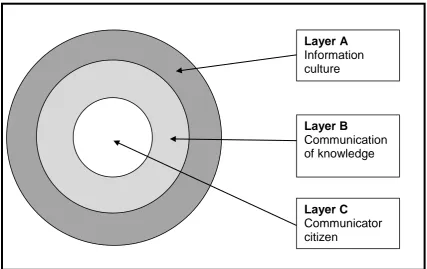
2.3.3 Information as the communication of knowledge 101 2.3.4 Raymond Williams & communication 102 2.4 Layer C: the communicator citizen 104 2.4.1 A unified notion of the information actor? 104 2.4.2 A cog in the system: the ‘user’ in IR 105 2.4.3 Human information behaviour 106 2.4.3.1 Worker & student 106 2.4.4 Momentary frames & lifelong learning 107 2.4.5 The communicator citizen 108
2.5 Summary 109
2.6 Chapter Two references 110
3. CHAPTER THREE: THE DELPHI STUDY 116
3.1 Introduction 119
3.2 Rationale 122
3.3 History 124
3.3.1 The Delphi in LIS 126
3.4 Key variant features 129
3.5 Summary of the method 134 3.6 The Delphi & Grounded Theory 135
3.7 The Slow Delphi 138
3.7.1 Panel selection 138
3.8 Round One 142
3.8.1 Orientation 142
3.8.2 Panel response & demographics 143
3.8.3 Analysis 144
3.8.3.1 Initial thematic reading 146 3.8.3.2 Problems with thematic reading &
coding in a Delphi context 147 3.8.3.3 Breaking submissions into units 148 3.8.3.4 Arranging units according to conceptual
layers 153
3.8.3.5 Comparison of units 155 3.8.4 Generation of statements 156 3.8.4.1 Grounded thematic reading 156 3.8.4.2 Language & interpretation 157 3.8.4.3 Verification & negotiation 159
3.9 Round Two 162
3.9.1 Consideration of statements 162
3.9.2 Analysis 162
3.9.3 Discussion & selection of key statements 163 3.9.3.1 Area 1: perspectival differences within
LIS, and between LIS & ‘reality’ 164 3.9.3.2 Area 2: information literacy 166 3.9.3.3 Area 3: speed & scale 167 3.9.3.4 Area 4: overload 169 3.9.3.5 Area 5: consumerism 171 3.9.4 Summary of key statements 173
3.10 Round Three 174
3.10.1 Consideration of key statements 174 3.10.2 Elaboration & revision of position 174
3.11 Discussion of output 176
3.11.2 Statement Two 180
3.11.3 Statement Three 185
3.11.4 Statement Four 188
3.11.5 Statement Five 192
3.12 Summary 196
3.13 Introductory Slow discussion 198 3.14 Chapter Three references 200
4. CHAPTER FOUR: THE FOCUS GROUP 204
4.1 Introduction 207
4.2 Rationale 209
4.3 History & format 210
4.3.1 Focus groups in LIS 211
4.4 Key elements 213
4.4.1 Group dynamics 213
4.4.2 Control: moderator & questions 214 4.4.3 Recording the session 217
4.5 Summary of the method 219
4.6 Focus groups & Grounded Theory 220
4.7 Design steps 222
4.7.1 Recording & outputs 222
4.7.2 Format 224
4.7.2.1 The moderator 224
4.7.2.2 Question route 225
4.7.2.3 Piloting 226
4.7.3 Participant selection 228 4.7.4 Logistics of execution 229
4.8 Execution 234
4.8.1 Demographics 234
4.8.2 The session 235
4.9 Analysis & discussion 237 4.9.1 Slow meaning & practice 237
4.9.2 Life today 242
4.9.3 Slow & information 247
4.11 Chapter Four references 254
5. CHAPTER FIVE: CONCLUSIONS AND IMPLICATIONS 256 5.1 Research questions & methods revisited 258
5.2 New knowledge 261
5.2.1 RQ3: Slow & everyday information practices 261 5.2.1.1 Informational balance 261 5.2.1.2 Withdrawal and/or avoidance 263 5.2.1.3 Principles of rejection 265 5.2.2 RQ2: Slow & the theory of information behaviour 268 5.2.2.1 The experiential nature of information 268 5.2.2.2 The temporal fluidity of information behaviour 270 5.2.2.3 The disruption of information literacy 272 5.2.3 RQ1: A Slow perspective 275
5.3 The research landscape 279
5.3.1 The information culture 279 5.3.2 Informational balance, information literacy & a ‘domain
of the everyday’ 281
5.3.3 Breathing spaces 282
5.3.4 The Slow social construction of research 285
5.4 Final thoughts 288
5.5 Chapter Five references 289
List of figures & tables
FIGURES
1. Figure 1 22
A nested model of the information seeking and information searching research areas (Wilson, 1999)
2. Figure 2 84
The conceptual framework
3. Figure 3 275
An illustration of the implications of a Slow perspective of information behaviour
TABLES
1. Table 1 150
An example of a dissected Delphi submission
2. Table 2 231
An overview of the focus group session schedule
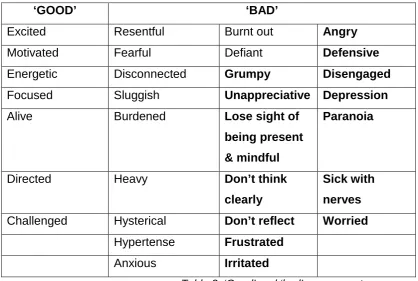
3. Table 3 244
Acknowledgements
This research was funded by a full grant from the Arts & Humanities Research Council. I am hugely grateful for their early injection of belief in my ideas.
I continue to be stunned by the generosity of the strangers who came together to participate in the project’s two studies. Without their input, there would be no project, and I am therefore indebted to every one of them.
I am also indebted to my supervisory team, Dr Lyn Robinson and Professor David Bawden in the Department of Information Science. They have always shown curiosity and offered encouragement, which I could not have done without.
The friendship of fellow research students in the School has proved invaluable, and especially the camaraderie of Charlie and Deirdre, who are very lovely people. Friends beyond academia have offered unwavering understanding of my extended absence from their lives, which I will set about repairing as soon as possible. My family too have an apparently endless supply of patience for which I will always be grateful. Mum and Dad will characteristically have no idea how important they have been to me during the course of my studies.
Lastly, my partner Lar’s tolerance is the stuff of legend. It isn’t just my life that has been on hold for the past few years but Lar has never once told me to shut up or hurry up, and has always been there with a cup of tea and a biscuit. I could not, and would not, have done this without her.
Declaration
Abstract
This research project was motivated by the question of how a Slow perspective may relate to and impact upon theories of information behaviour and upon everyday information practices. Two related qualitative studies were undertaken to explore the relevance of Slow principles to the notion of the information society. The task-based, fixed end-points of existing theories of information behaviour and information literacy are shown to inadequately reflect the complexity of life in a social landscape characterised by the acceleration, and subsequent proliferation, of information channels.
The project progressed through three distinct but related phases which are reported here. First, the conceptual foundations of a Slow perspective were hypothesised during reviews of the literature and existing conceptions of the information society. A Delphi study was then executed to facilitate discussion of the issues between experts in information behaviour. Thirdly, a focus group session was held to engage Slow experts in similar discussion of the issues from a practice perspective. Each phase was guided by a social constructivist methodology which encouraged participants and moderator to engage in conscious consideration of their perspective by connecting and discussing with others, echoing the Slow principles that the project sought to explore.
A Slow perspective is shown to challenge received notions of information behaviour in three ways. The first two relate to fixed causal processes wherein the temporal progression of information behaviour and, relatedly, information literacy, is disrupted by a focus on tempo. The third challenge disrupts what ‘information’ is when society itself is perceived as information-based, shifting from an instrumental to an experiential view.
Elements of a Slow approach were reported in practice as a means of attaining ‘informational balance’, which in turn can be seen to encourage everyday information literacy. Specifically Slow attitudes were reported in some withdrawal and avoidance behaviours, and were also rejected when the
pressure of informational speed and scale proved too beneficial, or indeed, too addictive.
The project concludes with an illustration of the implications of a Slow
1. Chapter One
1. Chapter One
Background and nexus of issues
1.1 Introduction 13
1.1.1 Research questions & structure 13 1.1.2 Methodological approach 14
1.1.3 Ethics 17
1.2 Human information behaviour 20 1.2.1 Theory & theorising 22
1.2.1.1 Layers 23
1.2.1.2 Metatheory 24
1.2.1.3 Theory 24
1.2.1.4 Models 25
1.2.1.5 Examples 25
1.2.1.6 Summary: end-points & ‘successful’
information behaviour 31 1.2.2 Information literacy 32 1.2.3 Information pathologies 35 1.2.4 Everyday pathologies 40 1.2.4.1 Popular perceptions of overload 40 1.2.4.2 Further perceptions 43 1.2.5 Everyday solutions 46
1.3 The Slow Movement 49
1.3.1 History & applications 49
1.3.2 Broad principles 51
1.3.3 Key themes & information 53
1.3.3.1 Time 54
1.3.3.2 Consumption & consumerism 56
1.1 Introduction
This research project is motivated by the question of how a Slow perspective may relate to and impact upon theories of information behaviour and upon everyday information practices. Personal and institutional management
strategies come under increasing pressure as information channels accelerate and proliferate. Furthermore, the capacity for an individual to be information literate is increasingly challenged as people become overloaded. This work is intended to assess the potential of a Slow perspective as a means of alleviating that overload and increasing information literacy by reframing information
management strategies at both personal and institutional levels.
1.1.1 Research questions & structure
The research question can be broken into three constituent and contributory questions:
1. What is a Slow perspective?
2. What, if any, are the implications of a Slow perspective for the study and theory of information behaviour?
3. What, if any, are the implications of a Slow perspective on everyday information practices?
Each of these questions will be explored in order to achieve the overall aim of providing a Slow framework for effective information practices, including both its production and consumption. This framework is likely to encourage the critical appreciation of the speed and choice inherent in many contemporary
information channels, and all three research areas will hinge on these aspects.
The first question is explored by reviewing the relevant literature, and then by establishing an appropriate Slow perspective for considering information and information use. A conceptual framework will be built to support this
established ideas about the Information Society and notions of culture,
communication and everyday practices. The literature is reviewed in Chapter One and the framework built in Chapter Two.
Question Two will be explored by testing the assumptions of the model in light of existing theories of information behaviour, through further conceptual
analysis and also via a Delphi study which was devised to engage experts in the field in a discussion about the key elements of speed and choice. This phase of the research investigated the relevance of Slow to disciplinary perspectives that exist within LIS, and its potential as a metatheoretical or methodological lens. This constitutes Chapter Three.
To answer Question Three, the discussion from the Delphi was developed into an empirical study of Slow information behaviour amongst Slow adherents. This took the form of a focus group discussion about attitudes towards Slow
principles in everyday information practices. This included discussion about everyday pressures, overload and coping mechanisms which might be included under a Slow umbrella. This phase provides the experiential evidence to round out the framework suggested earlier in the piece. This is described and
discussed in Chapter Four. Chapter Five provides a summary of research findings, tentative conclusions and recommendations for applications and further research.
1.1.2 Methodological approach
Before describing the project’s methodological approach, a distinction needs to be made between what is meant by ‘methodology’ and what is meant by
‘methods’. This is a similar distinction to that described by Brenda Dervin as exists between metatheory and methods, and the bridges that must be devised between them (Dervin, 1999). For this project, the methodology, or
analysis choices. These methods are described in the ensuing relevant
chapters: the rationale, history and modifications made for the purposes of this research are also described there. Each method has been used because it correlates with the methodological assumptions of the overarching approach, and these represent the bridges of Dervin’s distinction.
The methodological approach, then, derives from Slow principles which are, for want of a better word, ‘soft’. The approach is entwined with and reflects what the research investigates. The conceptual implications of a Slow perspective of information are explored fully in the next chapter, but the assumptions which accompany it can be outlined here as the methodological approach. These inform the research agenda of the project, and are themselves dictated by the purpose and intentions of the work. ‘Soft’ does not imply ‘weak’, rather it demands creative design, sensitivity to data and reflexive reporting.
First, and most broadly, this project is therefore qualitative in nature. This stems from Slow being concerned with human thought and action. As such, human experience, perception and behaviour are the objects of study and “themes, patterns, concepts, insights, [and] understandings” (Quinn Patton, 2002, p. 5) the likely findings. Human behaviour is infinitely varied and research which aims to explore and describe it has similarly numerous potential forms. “Traditional methodology is an outcome of a rationalistic view”, which then often fails to support the irrational nature of both researcher and researched (Seale et al, 2007, pp. 8-9). As a result, qualitative enquiry should be situated in the research context it aims to explore, which can be interpreted as there being no concrete set of defined rules to cover all eventualities and contexts.
Second, and in order to rein in the apparently limitless possibilities, this project rests on a foundation of specifically social constructivism. This stance holds that humans construct knowledge through their experiences, as in cognitive
constructivism (Talja et al, 2005) but as Kim (2001) outlines, three specific assumptions underlie social constructivism:
• Epistemological: “individuals create meaning through their interactions with each other and the environment they live in”
• Learning: “meaningful learning occurs when individuals are engaged in social activities”, although not exclusively
Adopting this stance does not deny other theories of reality or knowledge, but defines the perspective which underpins the project and guides the research design. It is important also in distinguishing that this work is not concerned with discourse analytics, as would be the case in a constructionist approach.
Social constructivism is relevant to the Slow principle of connection, which centralises knowledge sharing and development as crucial. Whilst the processes of constructing socially and culturally determined norms are not themselves a point of enquiry, it is an assumption of this approach that this is how we understand and interpret reality. The two interrelated studies were designed in order to engender social interaction and discussion with this assumption in mind. The outputs of each study were analysed in specifically constructive ways, most appreciably by using elements of Constructive
Grounded Theory (CGT; Charmaz, 2006). Only elements were used because the intention was not to generate theory per se, but to remain grounded in data that had itself been socially constructed.
Third, the approach is reflexive, as suggested by its qualitative nature. As with the Slow principle of mindfulness or critical awareness, the project encourages reflection through the design of each study. Engaging theorists to reflect on their own assumptions in the Delphi study and building “thinking pauses” into the focus group are examples of this consciously reflexive approach. The project itself is an exercise in critical appraisal of accepted, perhaps dominant, patterns of thinking. The conceptual framework was devised to establish where the project sits in relation to other, not necessarily LIS-based, perspectives and is an example of this critical evaluation of positions.
1.1.3 Ethics
When undertaking research of any kind, it is important to be aware of the ethical implications of design, execution and analysis in order to ensure research integrity. A researcher should engage with the subject of enquiry in a sensitive and honest manner, and should treat any participants with respect. It is
important to appreciate the responsibility that comes with conducting research. This is applicable in both desk based and empirical scenarios, though at
understandably different levels with different implications. This project involves both kinds of work.
The first two chapters of the thesis involve largely desk based research in the analysis of literature and the development of a relevant conceptual framework. The key ethical responsibility here was to reference others’ work honestly and explicitly, to apportion credit to all relevant sources and, in so doing, avoid plagiarism. As such, it has been a conscious endeavour to cite works clearly, consistently and thoroughly.
This project subsequently involves two empirical phases: a Delphi study and a focus group. There was a responsibility here to undertake both studies
responsibly; to treat participants with respect; to handle data sensitively, confidentially and appropriately; to record and report each process honestly. Both studies passed the City University ethics checklist and only minimal and predictable risks to both researcher and participant were identified.
Furthermore, neither study involved covert data capture (Quinn Patton, p. 269) nor appreciably sensitive subjects, and were therefore deemed to represent minor interventions.
There were four areas to consider in the ethical design of each study, as laid out by the ESRC in the design section of the Research ethics guidebook (Boddy et al, 2012).
• Consent • Confidentiality • Methods
Participation in the Delphi was sought through voluntary involvement, which represents purposive and self-selecting sampling. This panel of people was relevant to the project because of their expert status. There was no structured consent form for participation in the Delphi, but written agreement to take part was sought and this represented valid consent. The panel’s research
backgrounds and knowledge of the subject put them in a position to agree to participate, or indeed to decline involvement. It was made clear that they were free to leave at any point. It was also made clear that all comments would be anonymised, unless it became necessary to identify contributors and only then by arrangement. The confidentiality of participants was thus ensured. The study was exploratory in nature and so its precise direction was impossible to outline at the start, but participants were actively involved in the Delphi’s development over time and were therefore aware of what it involved. They were also
constantly reminded of the opportunity to ask questions or withdraw from the process. The purpose and methods were made clear throughout the study.
Recruitment for the focus group was similarly self-selecting and purposive: participation was sought on a voluntary basis from groups involved with the Slow Movement. These groups are relevant to the project and the participation of people selected in this way was appropriate to the task in hand. Informed consent was sought from these participants as they were deemed to be less ‘naturally’ aware of what might be expected of them than the experts in the Delphi. As such, information sheets were distributed to explain the nature and purpose of the study, their expected participation, recording and outputs of the session, and the eventual publication of results. Consent forms were distributed alongside the information sheets. This process obtained valid and informed consent from all participants (Quinn Patton, p. 407). It was made clear that they were free to leave at any point without prejudice. It was also explained that comments would be anonymised, and that all contributions would be kept in a locked filing cabinet or password protected digital folders. This ensured
outlined from the start: that the study involved a discussion group to which they were being asked for verbal and written contributions.
1.2 Human information behaviour
This project’s essential area of enquiry is how people interact with and use information, and how those interactions are theorised and explored by the Library & Information Science (LIS) discipline. This first section, therefore, looks at “human information behaviour” (HIB) as a field within the academic discipline of LIS.
As Wilson suggests, research into information behaviour was occurring before Library & Information Science had developed an academic identity (Wilson, 1999). He cites a 1948 meeting of the Royal Society Scientific Information Conference as an early indicator of the interest in user studies; early in relation to the establishment of “information science” which emerged some years later. At the time of publication of Wilson’s first information behaviour model, user studies constituted a large proportion of research endeavours in the discipline, second only to information retrieval (Wilson, 1981; reprinted 2006a). More recently, Wilson observes that “information retrieval has now migrated to the field of computer science and is unlikely ever again to constitute a strong research area in “information science”’ (Wilson, 2006b). This, the author suggests, leaves user studies, or its descendant disciplines of information seeking behaviour and information behaviour, as the largest research endeavours in the field.
In contrast, Ingwersen & Järvelin (2005) assert that although the fields of information retrieval and information seeking rarely overlap, there is an opportunity and a necessity to bring them closer together. By stressing and exploring the human social context in which information retrieval occurs, their work seeks to create the holistic research area of Information Seeking &
Retrieval, or IS&R, by reframing the models and methods of each in light of the other. This approach is in direct contrast to that of Wilson who perceives an unbridgeable gap between the two.
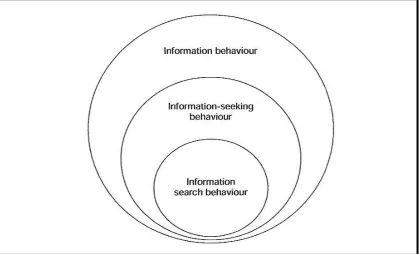
with limited relevance to the tasks at hand. It is acknowledged, however, that Ingwersen & Järvelin’s attempts to bring system oriented research together with social science oriented research under the LIS umbrella are more in keeping with the holistic intentions of this project than Wilson’s segregated perspective. In its narrowest sense then, the subfield of information behaviour is interested in how people seek information. This “behaviour is so commonplace that it is generally not an object of concern until time pressure makes it so” (Case, 2007, p. 5). It can however encompass a swathe of research endeavours which are not limited to observing the search process but are also concerned with pre-and post-search phenomena. “Information behaviour” in this broader sense covers a range of information related areas and explores “those activities a person may engage in when identifying his or her own needs for information, searching for such information in any way, and using or transferring that information” (Wilson, 1999). These activities include “how people need, seek, manage, give, and use information in different contexts” (Fisher, Erdelez & McKechnie, 2005). Or it includes “encountering, needing, finding, choosing and using information” (Case, 2007).
Figure 1: A nested model of the information seeking and information
searching research areas (Wilson, 1999, p. 263).
1.2.1 Theory & theorising
The development of theory is important to academic disciplines because it establishes a sense of identity and reputation: “disciplines require theories that originate from within to attain recognition as an independent field of scientific enquiry” (Pettigrew & McKechnie, 2001). This is particularly important in the case of fledgling disciplines, such as LIS, and an issue which has sparked much internal debate (Hjørland, 1998; Wilson, 1999). In their 2001 analysis of LIS research, Pettigrew & McKechnie found indications of a “growing body of theory unique to IS”. The identification of 71 newly proposed theories suggested to the authors that theory was playing a more central role than previously thought.
solutions, but these too are theoretical in origin. This practical, perhaps
humanistic and certainly contextual, nature of LIS research questions may be a reason for the multitude of individual mini-theories that arise from studies in the field.
The multiplicity of theories, particularly in relation to information behaviour, has been cause for concern. “Many researchers seem to prefer to develop their own models or frameworks from scratch, rather than to test and develop established models” (Bawden, 2006). This results in a lack of cohesion between theoretical concepts and effectively weakens the scientific claims of the discipline (Wilson, 1999). As Bawden points out, though, this may be as a result of a more
humanistic approach (which seems understandable in a subfield, such as information behaviour, that is rooted in the human element of information phenomena) or indeed an egoistic approach to the subject whereby each researcher feels the need to develop their own, rather than build on prior, theories. Case points out that “it is difficult to generalize about a behaviour that varies so much across people, situations, and objects of interest, and so much of it takes place inside a person’s head” (2007, p. 5). This might be another reason for there seeming to be a model for every empirical, or indeed conceptual, investigation.
1.2.1.1 Layers
Whether theory is being generated or tested, it is possible to distinguish
between different layers of theoretical engagement when undertaking any piece of research. A useful distinction is made by Bates (2005) between the following three layers:
• Metatheories: “the fundamental set of ideas about how phenomena of interest in a particular field should be thought about and researched” (p. 2)
• Models: “a kind of proto-theory, a tentative proposed set of relationships, which can then be tested for validity” (p. 3)
This project engages with the subject of information behaviour on each of these levels, as will be illustrated in Chapter Two. An overview of Bates’ typology follows.
1.2.1.2 Metatheory
According to Bates (2005), and also Hjørland (2005), metatheories are methodologically important to LIS. They direct research agendas, inform analysis, and to some degree dictate the recommendations which might be made at the conclusion of a piece of research. They colour the perspective from which we approach our subject and therefore highlight different things as
problematic or worthy of study. “Metatheories are theories about the description, investigation, analysis or criticism of theories in a domain” (Hjørland, 2005). A special issue of Journal of Documentation (2005) devoted to LIS and the philosophy of science highlights the range of metatheoretical perspectives and their impact on research agendas and design. This is both good and bad news: good because “we now have a much more diverse array of assumptions, approaches, theories, and methods from which to choose” and bad “because there is disagreement on what kinds of perspectives or actions are most appropriate” (Case, 2007, p. 143).
1.2.1.3 Theory
“Theories are explanations. They are generalizations. Theories are statements that try to explain relationships among various phenomena” (Case, 2007, p. 145). Theory is important to information behaviour. Working out why something is happening tends to be more useful than simply describing it and even when practical solutions are sought (as is often the case in information behaviour research), theory underpins and directs those solutions and should be
research because different authors refer to theories using different terminologies (2001).
“A theory remains a mental construct. A ‘good’ theory is one that matches well our perception of whatever the theory is about” (Buckland, 1991).
1.2.1.4 Models
Models are important because they constitute the building blocks for theory. This is not necessarily always the case (for example, Grounded Theory arises from empirical observations and can be seen to skip over the model stage) but it is often so in information behaviour research. Models are numerous in
information behaviour. Conceiving of an LIS spectrum, models tend either towards the computer science end (IR especially) or towards the social science end (user studies especially). These spectrum ends correlate with whether models are search based (computers, IR) or broad social behaviour based (humans, users). As Bates says, most theory in LIS is actually at the model stage (2005).
1.2.1.5 Examples
Terms such as ‘model’ and ‘theory’ are used with different intentions by different people within HIB, so that it is not always clear or consistent at what level of theoretical engagement their research operates. For example, the 71 Theories of information behavior (Fisher, Erdelez & McKechnie, 2005) are not
necessarily all theories of the kind that Bates describes above: there are concepts, frameworks and models. Whilst Bates outlines her interpretation of the distinctions between different layers, not all writers in the field state their meaning with such clarity, if at all. The following works have been termed as both theories and models, by their creators and by subsequent commentators and researchers.
theoretical in nature. They are here described in order to suggest the type of work that occurs in this field, and also to intimate the areas which are explored in this project’s two empirical studies. These examples have been selected because they are still used and developed in the field, and “are
concerned…with a broader perspective of the information search than simply the use of computer-based information retrieval systems” (Wilson, 1999) which fits the scope of the project. However, the existence of IR search models is acknowledged. The examples here presented are in a roughly chronological order, with the exception of Wilson’s revised model, included alongside the original, and Dervin’s methodological approach whose essentially different character is introduced last.
• Wilson (1981 & 1996)
As with all but one of the following examples, and in contrast to the Wilson diagram already reproduced, the 1981 model is concerned with information
seeking behaviour, rather than a broader notion of any interaction with information. More specifically, this model was devised as an attempt to bring order to the disparate field of “user studies” by “defining some concepts and by proposing the basis for a theory of the motivations for information-seeking behaviour” (Wilson, 2006).
According to this model, the motivation for information seeking is the existence of an information need. However, the model’s key assertion is that information needs arise from other primary, and not necessarily information-related, needs. These may be physiological, affective or cognitive in nature, and may, in turn, also prevent the effective satisfaction of that primary need by forming a barrier (Wilson, 1999). The model therefore stresses the effect that an enquirer’s context will have on the success, or otherwise, of information seeking at that point.
predecessor by describing the different modes of information seeking behaviour which may result from the information need: passive attention, ongoing search and so on. But this model is purposely limited to describing those stages before
information seeking occurs.
Both of Wilson’s models invoke situations where a specific need motivates a person to seek information, although that search may assume a relatively passive form. This in turn suggests that the enquirer must initially identify that a need exists, although that may be a primary rather than a specifically
informational need. This implied ability to identify or recognise a need also appears more explicitly in many definitions of information literacy, to be discussed later.
• Ellis (1989)
The Ellis model was devised as an empirically grounded approach to information-seeking behaviour, rather than the prevailing use of cognitive studies in the field (Ellis, 2005). The intention was to more usefully inform the design of IR systems and, in so doing, be of general interest to LIS. It provides an expansion of the behaviours that occur in the information seeking process. Ellis stresses that this model does not represent a clear-cut sequence of stages that a user goes through but that its ‘features’ are interrelated and their
interaction will be affected by the specific situation of the person involved (Ellis, 1989).
The Ellis model scopes active seeking behaviours which were empirically observed in a variety of academic and industrial research environments. The emphasis on possibly non-sequential behaviours reiterates the impact of context on information seeking seen in Wilson, and the idea of ‘differentiating’ depicts a critical awareness and capacity to evaluate information as the process develops.
• Kuhlthau (1991)
In contrast to Ellis’ model, Kuhlthau’s Information Search Process explicitly denotes stages through which a user moves during “information seeking for a complex task that has a discrete beginning and ending” (Kuhlthau, 2004). It attempts to reimagine this process from the user’s perspective which further grounds such behaviour in the experience of the person in context. The stages of Kuhlthau’s model are in effect a process of refinement as the user constructs knowledge about the problem which initiated the search (Wilson, 1999).
The model is holistic in that thoughts, feelings and actions are attached to each stage in recognition of the complexity of such behaviours (Kuhlthau, 1991). In this way, the ‘initiation’ stage is characterised by uncertainty which becomes increasingly focussed as the process unfolds through ‘exploration’ and
‘formulation’ where feelings of clarity, confidence and relief are more prevalent. The key premise of this model is that it is founded on the concept of the
‘uncertainty principle’. Uncertainty about meaning or knowledge initiates the search process and commonly increases in the early stages of information seeking.
• Dervin (1983)
Dervin’s Sense-Making is similar to Kuhlthau’s approach because of its user-centric core. It was devised to facilitate a shift away from source or system research to focus on the individuals engaged in information seeking. This
approach deems information seeking and use to be examples of communicative practices. It differs from all the previous models, however, by most often being designated as a methodology rather than a model or theory. It is a whole way of research life. It foregrounds metatheory and dictates, to a degree, the methods by which it can be explored. It can and has been used “as a tool for
metatheoretical critique, as methodology for research, as theory about communication, as research method, and/or as guidance for communication design and practice” (Dervin, 1999).
At root of the approach is a perceived gap between an individual’s current situation and their desired situation. Information seeking can be seen as one activity that is undertaken to bridge the gap, or in other words to make sense of the gap. Where Wilson, Ellis and Kuhlthau explicate different points, features or stages of information behaviour, Dervin’s approach is to draw together “needs, seeking and use into [a] unified investigation of the processes by which people become informed” (Tidline, 2005).
Because of Dervin’s metatheoretical and methodological intentions, this ‘model’ operates at a different level to those previously described. It is broader in its general perspective of an individual’s context which includes information behaviour, but it is also narrower in the implications on method and practice which this perspective generates. This appears to be a uniquely comprehensive approach in LIS.
• Savolainen (1995)
A relatively recent addition to information behaviour models is Savolainen’s
relevant because this project seeks to understand everyday informational pressures and coping strategies.
Work in this area began to emerge during the 1970s (Savolainen,1995; Carey, McKechnie & McKenzie, 2001) and the model was formalised in the mid-1990s to address “the need to elaborate the role of social and cultural factors that affect people’s way of preferring and using information sources in everyday settings” (Savolainen, 2005). The author also sought to elaborate on the terminological issues inherent in information behaviour research, and to
legitimise research into non-work information contexts which was perceived to be neglected in the classic models (McKenzie, 2003). Case (2007) describes our daily life as “peppered with instances in which we become interested in learning more about a topic after we accidentally encountering some bit of information about it” (p. 5). As a result, the information seeker or information user is framed as an information citizen (rather than worker or professional) whose daily or everyday life is the context of interest (Huotari & Chatman, 2001). Indeed, ELIS can be seen to emerge from ‘citizen information seeking’ (Savolainen, 1995).
The focus is on variety of experience and motivation which contrasts with the systematic nature of workplace research. “ELIS…is fluid, depending on the motivation, education, and other characteristics of the multitude of ordinary people seeking information for a multitude of aspects of everyday life” (Spink & Cole, 2001). It is, by definition, an unsystematic approach which might
exacerbate the fractured multiplicity of HIB research introduced above, even though it is the role of LIS research to forge theoretical frameworks to unite the discourse and agendas that are being used and promoted (ibid.). The
metatheoretical implications of ELIS are discussed by Dervin (1994) whose Sense-Making methodology is another example of a non-work approach.
second moves away from studying single information needs in workplace settings towards “a holistic view of the variety of information behaviours
individuals describe in their everyday lives”; and the third new angle, like Ellis, is a shift away from the cognitive approach which “fails to capture the richness of information as constructed through the interaction of the individual and the sociocultural context”. These three elements illustrate the interwoven nature of metatheory, theory and model.
Savolainen’s ELIS model is built on the concepts of ‘way of life’ and ‘mastery of life’. The former relates to a socially and culturally determined system of
perceptions and values, and the latter relates to an individual’s active
“preparedness to approach everyday problems in certain ways in accordance with one’s values” (Savolainen, 2005). The proposition is that information seeking is a fundamental way in which people establish mastery of life within a culturally determined system. McKenzie’s extension of ELIS seeks to illustrate the variety of information problems and practices that can occur, at the same time, within that system (McKenzie, 2003).
ELIS has, in many studies, become synonymous with ‘leisure’ practices because of its contrast with workplace settings and because of Savolainen’s own original distinction between working and leisure time under the heading ‘structure of time budget’ (Savolainen, 2005). This may suggest levity and has been combatted by Stebbins’ ‘Serious leisure’ (Stebbins, 2009) and Hartel’s use of Stebbins’ theory in information seeking research (Hartel, 2003, 2006; Kari & Hartel, 2007).
1.2.1.6 Summary: end-points & ‘successful’ information behaviour
Dervin’s approach is fundamentally without end because the behaviour it encapsulates is constant as individuals seek to make sense of their situation. This may occur in time-bounded scenarios with fixed desired outcomes, but can also be thought of as perpetual. The context changes the minutiae, but the overarching behaviour remains. In this way, the model becomes
In contrast, Wilson, Ellis and Kuhlthau imply, and in some cases make clear, the contextual boundaries of the behaviours involved. They look specifically to proactive information behaviour in the form of seeking. This is usually initiated by the recognition of some need, then progresses through stages or displays typical features, and is ultimately resolved. Resolution may be unsatisfactory, but there is an end point to the activity or behaviour being described. These models may be termed task-based.
Savolainen’s model also describes tasks which are undertaken, but on a routine or everyday basis. These are often non-work practices yet there remains the proactive context in the sense that individuals are displaying search and
monitoring behaviour, or indeed withdrawal and avoidance. These are ongoing behaviours which may not have a defined end point.
The task-based models imply that individuals are successful or information literate, or that information seeking is effective, if they complete the task at hand, that is, if they proceed through the model (in whichever order context dictates) to the end-point. They may not be satisfied with the outcome, but they have reached one nonetheless. These examples can be thought of as
describing the information literate person, and this disciplinary cross-over has received some recent attention (Shenton & Hay-Gibson, 2011). An introduction to the notion of information literacies now follows.
1.2.2 Information literacy
library and information professionals in the UK, CILIP, defines information literacy thus:
Information literacy is knowing when and why you need information, where to find it, and how to evaluate, use and communicate it in an ethical manner. This definition implies several skills. We believe that the skills (or competencies) that are required to be information literate require an understanding of:
• A need for information • The resources available • How to find information • The need to evaluate results • How to work with or exploit results • Ethics and responsibility of use
• How to communicate or share your findings • How to manage your findings
(CILIP, 2011)
There are parallels with some features of the task-based models described above. Identifying the need for information is explicitly noted, and other elements of information seeking behaviour are recognisable in understanding the resources available and how to find information from those sources. Further, the end-points of several models are reflected in the CILIP guidelines of
understanding how to exploit results, and communicate or manage findings.
The parallel between models of information literacy and models of information behaviour is further illustrated through the sections presented in, for example, the Open University’s Safari tutorial. These are:
• Understanding information • Unpacking information • Planning a search
• Organising information • Where do I go from here?
(Open University, 2012)
Information literacy can also be seen as a general notion which encompasses a number of specific skills-based literacies, including library, media and computer literacy (Bawden, 2001). It is also seen to encompass a far more complex set of attitudes and ways of thinking than these skills would seem to suggest (Mutch, 1997). There are numerous and varied interpretations and applications of the term which have an impact on how these skills or attitudes are to be taught and learnt (see Bawden 2001 for a thorough review).
Teaching the skills-based elements of information literacy is often the preserve of librarians whose knowledge of sources and the technical aspects of access puts them in prime position (O’Connor, 2009). How best to combine faculty level teaching and library led instruction is an ongoing area of research within LIS (Oakleaf, Millet & Kraus, 2011; Miller, 2010; Miller et al, 2010). The more complex aspects of ‘true’ information literacy are relatively unteachable since they do not conform to a list of competencies but rather are related to, or indeed centred upon, the capacity to think critically (Brouwer, 1997) which can be regarded as a product of lifelong learning, or ‘learning how to learn’.
Being information literate in this broad sense has been noted as important to an individual’s sense of and capacity for citizenship (Owens, 1991) and as vital to the future of the Information Society (Oxbrow, 1998). It has also been
1.2.3 Information pathologies
It is useful to now introduce those situations in which effective or efficient behaviour is somehow hindered, and what steps have been observed or
suggested to overcome that hindrance. Information behaviour and practices can be interrupted or hindered by the existence or perception of ‘information
pathologies’. For example, “the idea that there is too much information to hand, exacerbated by the multiple formats and channels available for its
communication, has led to the concept of information overload, perhaps the most familiar of the ‘information pathologies’” (Bawden & Robinson, 2008). Having too much information is in direct contrast to the related concept of information poverty, or being in “a state of ignorance about something” (Case, 2007, p, 103).
Overload, however, is not a particularly recent phenomenon: Bawden &
Robinson identify the writer of Ecclesiastes as having felt overwhelmed by too many books and Wurman (2001) credits Georg Simmel with recognising the modern form of overload. Although it has been on the agenda for some time, in the last decade or so it has “become more widely recognised and
experienced…exacerbated by the rapid advances made in information and communication technology” (Edmunds & Morris, 2000). Chan (2001) and Melgoza et al (2002) both describe the increasing amount of information
available as being the reason for and evidence of overload. People with limited processing ability are “singularly unable to cope with this amount of information” (Chan, 2001), which is described as exponential, overwhelming and
bombarding library users in particular (Melgoza et al, 2002).
Before tracing where attention to overload has occurred in LIS literature, it is worth noting several caveats as suggested by Bawden & Robinson (2008). First, overload is often scoped anecdotally rather than systematically. The approach is understandable, the authors say, because of the increasingly central role that information plays in everyday life.
which they can develop solutions. In drawing comparisons with the
pharmaceuticals industry, Bawden & Robinson warn that “the information professions may exaggerate the pathologies of information”. Further, the professions may develop solutions for which they need to find problems, and this too may be a reason for the increasing professional attention paid to these issues.
Lastly, Bawden & Robinson “acknowledge that there is an element of fashion in the choice of the information pathology du jour”, so that overload has
diminished in resonance since the turn of the millennium when there was a peak in LIS literature relating to it. However, as Tidline suggested in one of those papers, overload can also be seen as an enduring concept to the point of being “an overarching prescriptive belief” (Tidline, 1999). The assertion is made that “the abundance of solutions proffered for overload reduction emphasizes presumed cause and effect, precluding any need for systematic investigation of how people actually experience and cope with this modern-day problem”.
With these pinches of salt in mind, it is interesting to note the presence of overload terminology in LIS literature of the last 30 years or so. What begins during the 1980s as a library-based concern develops over 30 years into a seemingly pervasive quotidian phenomenon with, as Tidline (1999) suggests, little attention paid to verifying its origins or real existence. However, some early studies did seek to investigate the causes and nature of overload: Rudd & Rudd (1986) explored whether an increase in information load (the amount of
information in a library system) necessarily resulted in information overload (users experiencing a “tuning out”, “confusion”, or “shutdown”). They conclude that the information explosion need not lead to overload, and that
“computerization will soon be seen as a major way in which library users may access larger amounts of information than ever before, while simultaneously being less and less threatened by information overload”.
The librarian’s role in negating overload issues was also a concern in the earlier literature. This role was seen to be developing towards helping “users in
knowledge would be an increasingly important part of the job (Hopkins, 1995). A previous paper highlights the absence of need for librarians in most searches and perceives a situation in which they “have consistently failed to establish themselves as primary information professionals” (Biggs, 1989). Hensiak (2003) presents a variation to the usual approach by focusing on the effect of
information overload on law librarians who are more often framed as helping others in such situations.
The impact of overload (rather than the causes) has been looked at outside of the library environment by, for example, Savolainen (2007), whose ELIS model was introduced previously. The author explored people’s everyday coping strategies and found that, in practical terms, overload was rarely mentioned spontaneously. Some participants felt that overload was of such minor
importance that it did not occur to them to employ coping strategies. Others felt especially that the internet and email contributed to a very real sense of
overload, and employed filtering and withdrawal strategies to negotiate the situation.
There is an ongoing sense throughout literature that technology, whilst not necessarily single-handedly responsible for overload, exacerbates and exaggerates its impact. Usually investigated as a workplace issue, email is highlighted as a particularly overloading information technology (Ingham, 2003; Belotti et al, 2005). Workplace settings are a rich area for overload research (see Edmunds & Morris, 2000) both within LIS and also within the related disciplines of management and organisation science. However, there is a distinction to be made between these usually systemic views of overload, and a more human approach which characterises overload as an individual,
psychological experience (Case, 2007, p. 103).
Eppler & Mengis’ much-cited 2004 review of overload studies covers literature from organisation science, accounting, marketing and management information systems (Eppler & Mengis, 2004). This review identifies overload as an
general findings across these disciplines as showing a positive correlation between performance and information quantity only up to a certain point, after which performance declines rapidly.
Eppler & Mengis analysed the literature along three key topic clusters: causes, symptoms and countermeasures. The causes were identified as:
• The information
• “The person receiving, processing or communicating information” • The tasks in which the person is involved
• The organisational structure • The technologies involved
Overload is seen to result from a mixture of these causes, rather than one single driving factor. Moreover, these factors influence both the processing capacity of the individual and the processing requirements of the task at hand: when these two elements are mismatched, overload can ensue.
The symptoms of information overload identified by Eppler & Mengis relate, as stated, to the individual’s capacity to make adequate decisions. They too vary in nature:
• Limited search and retrieval strategies • Arbitrary analysis and organisation • Suboptimal decisions
• Strenuous personal situation
There is, the authors say, “a wide consensus today that heavy information load can affect the performance of an individual negatively (whether measured in terms of accuracy or speed)”.
means of spreading the load laterally (Edmunds & Morris, 2000) and by others as a possible cause of overload in itself (Bawden, 2001).
The framework devised by Eppler & Mengis as a result of their literature review underlines the central position that overload research has assumed within some management disciplines. It is of enough concern for frameworks and, moreover, paradigms to be generated around it. The importance that theory and models have to a discipline was discussed in earlier sections (1.2.1, pp. 22-32). This position as a well-worn lens is especially clear in relation to decision making behaviour, and even more so in relation to consumer decision and choice which continues to grow as a research area (Sasaki et al, 2011; Messner & Waenke, 2011; Sicilia & Ruiz, 2010).
Information behaviour is entwined with decision making behaviour. A significant portion of the information behaviour literature mentions decisions to be made or problems to be solved (Case, 2007, p. 85). This is most often considered in terms of one-off information seeking tasks. A variation on this is evident in Savolainen’s ELIS which focuses on everyday repeated behaviours, or
practices, that assume a standard status. As Case suggests, the existence of these standard procedures that are altered only in the event of negative feedback is highly relevant to everyday information seeking (2007, p. 87). Overload is one such piece of negative feedback which interrupts standard procedures.
This review shows that information overload can exist at multiple levels, from the personal to the organisational. At its core is the perception that there is more information than can be adequately dealt with, and that this abundance of information interrupts an individual’s capacity to make decisions and act
1.2.4 Everyday pathologies
Having considered overload in a specifically informational sense, this section establishes the notion of overload as an ongoing and current situation to be addressed in everyday life. In order to do so, popular perceptions of the phenomenon and suggested remedies are introduced.
This is a means of grounding the project in the real world beyond the academy, as well as positioning it within the literature. It is very necessary to situate the research problem as a qualitatively felt phenomenon in this way, as will be underlined in Chapter Two’s treatment of the conceptual framework, and also during the Delphi panel’s consideration of the difference between a field of study and the object of its attention (3.9.3.1, pp. 164-166 and 3.11.1, pp. 177-180).
1.2.4.1 Popular perceptions of overload
In order to look at everyday perceptions of overload, a broad search of newspaper articles from UK publications was executed, for the period from January 1st 2000 to the end of 2011. This search [“INFORMATION
OVERLOAD”] was conducted using NexisUK News Search. It is acknowledged that writers using the term are likely to view the situation as problematic
because of its inherent negativity. However, it was assumed that anyone arguing for the positives of the situation would just as likely use the term because of its anecdotal and widespread use. Selected results are presented here, and the search was complemented with other news stories which were identified on an ad hoc basis.
The results of the search indicate significant popular acknowledgement of the negative aspects of the expanding and accelerating communication of
There is a sense, amongst the journalists and commentators involved that information overload can no longer be seen as “a fantasy of panicky Luddites” (Burkeman, Guardian, 2001). Indeed, over the course of the period under review, the term assumes an overarching quality used to describe
contemporary society. Information overload defines “the age” (Evans, Times, 2011; Davidovitz & Levitte, Guardian, 2011); “the climate” (Kelly, Sun, 2011); “our world” (Tobin, Guardian, 2011); and “an era” (Rushe, Observer, 2011). Society is variously in its grip (Day, Observer, 2011) and blighted by it (Mesure, Independent on Sunday, 2011). “Perhaps the least controversial observation it’s possible to make about the world is that we live in an era of Too Much
Information” (Burkeman, Guardian, 2011a).
People really do feel mentally and physically dragged down by the onslaught of digital information (Leith, Observer, 2009). Information overload is not a brand new phenomenon, but digital technologies and instant connectivity have made the problem more acute (Burkeman, Guardian, 2011a; Wighton, Times, 2011). People are unable to step aside from its snowballing path (Cartner-Morley, Guardian, 2009). The abundance of information is reported to have a range of adverse effects on health and well-being (Doyle, Telegraph, 2004; Cavendish, Times, 2005), as much as causing bewilderment (Soderblom, Times, 2000) and a sense of loss of control (Haywood, Sun, 2011).
Several articles offer practical suggestions on how to cope with the surge in communication (Oaff, Guardian, 2000; Bateson, Mail, 2000b; Kinchen, Sunday Times, 2011), and it is also reported that email has become a specific source of stress for surveyed workers (MacErlean, 2000). People are described as
enslaved to their computers (Moody, 2000) and under pressure directly
because of email (Hoare, Times, 2000). This is felt to such a degree that their brains are liable to “buckle and die with the stress of knowing too much” if the technology doesn’t break down first (Burkeman, Guardian, 2001). One answer, it is suggested, is to actively monitor how much time is spent plugged in, and whose decision it is to stay connected (Burkeman, Guardian, 2011b).
So what drives people into these quite desperate situations? The feeling of being swept up in a spiral of perpetually developing gadget technology is documented (Johnson, Guardian, 2005), along with a candidate for both its cause and effect: connectivity (Cavendish, Times, 2005). Although many people are reported to feel that they can’t cope with the sheer number of gadgets and associated operational information (Vickers, Express, 2004), others, though a minority in terms of this search, seem quite blissful in the face of such choice (Margolis, Mail, 2009). Indeed, one article bemoans the almost daily publication of another “crazy new scarestory about how we’re burning out brains out with information overload” (Malbon, Telegraph, 2010).
The repercussions of this bewilderment are reported in a selection of the material. These repercussions include general, though serious, malaise as noted above (Leith, Observer, 2009) as well as a more specific instability in relation to knowledge and learning. The mass of information available via the internet and, specifically, social media is felt to disrupt chains of trust and truth (Bunting, Guardian, 2011; Williams, Guardian, 2011). In particular, young people are, it is reported, “becoming stupid” because of an increasing inability “to distinguish between important and unimportant information” (Norton, Sunday Times, 2001). This perception ties in with a more recent view that the education system should provide an antidote to the frenzy of modern life by offering a stable structure (Alibhai-Brown, Evening Standard, 2009; Evans, Telegraph, 2011).
According to this broad search then, overload is keenly felt in the ‘real world’. It is bound up with the speed of technology and communication, the quantity of information that this creates and the convenience such speed and such choice affords. There is also a sense of expectation that people should just keep up and participate in the acceleration by, for example, replying to emails instantly and buying the latest gadgetry to assist with this. The repercussions of failing to keep up, or trying too hard to do so, are described in terms of anger, frustration and general unhappiness.
1.2.4.2 Further perceptions
• Too fast: James Gleick & Thomas Hylland Eriksen
A central observation in both Gleick (1999) and Eriksen (2001) is that time has undergone increasing compartmentalisation since its standardisation during the Industrial Revolution. This is illustrated through the scientific history of atomic and rubidium clocks, the reclaiming of leap seconds and the division of
nanoseconds (Gleick, pp. 4-7).
This relentless scientific segmentation means “time is hacked up into such small pieces that there is hardly anything left of it” in everyday experience too
(Eriksen, p. 5). It gives the impression that there are now somehow more time units available, filling the gaps that were otherwise free (Eriksen, p. 21). This in turn suggests that there is more opportunity to save time, at work and in leisure, and exploiting these opportunities has in itself become something which we spend time doing (Gleick, p. 10). The cumulative effect is a sense of
compressed, and therefore accelerated, time.
The qualitative experience of this compression is addictive, so much so that reclaiming even hundredths of seconds is “an obsession in all but a few segments of our society” (Gleick, p. 12). It is also presented as contagious, extending from the demands we make of technology and the media, to the frustration we feel waiting for a bus. “If one gets used to speed in some areas, the desire for speed will tend to spread to new domains” (Eriksen, p. 71). The primacy of instantaneity in the network is mirrored in our emotional lives (Gleick, p. 13).
The repercussions of this desire for speed, and of speed itself, are felt as a scarcity of control (Eriksen, p. 22), and as anxiety and stress (Gleick, p. 15). In relation to the communication of information “the wave patterns of all these facts and choices flow and crash about us at a heightened frequency” (Gleick, p. 10). We are, it is argued, in danger of being overwhelmed by the perceived
• Too much: John Naish & Barry Schwartz
Society is operating at a faster pace and one vital repercussion is that “there is a growing amount of everything” (Eriksen, p. 89). Life is not simply quicker, it is now fuller than before, which makes choosing the right option even more complex. Naish’s (2009) focus is on the human behaviour which drives this overabundance of work, food, ‘stuff’ and information, while Schwartz (2004) explores the associated surfeit of choice.
Living at breakneck speed has engendered a culture whose “founding creed [is] that everything is much better if we can get hold of it sooner” (Naish, 2009, p. 243). This drives the creation of more and more ‘stuff’ to satisfy this belief, which consequently drives transient attitudes to possessions (p. 104), a preference for instant gratification (p. 247) and a general expectation of convenience (p. 249). The acquisition of, for example, more ‘stuff’ and more information is accelerated, in “the belief that there is no real point pushing on after the novelty…has worn off” (p. 249).
Where Naish cites convenience as the primary driver of our excessive
behaviour, Schwartz highlights our cultural belief in “freedom, self-determination and variety” and our reluctance to surrender them (Schwartz, p. 3). The
opportunity to rebuild durability and sustainability in this context is damaged by the quantity of options we are faced with. “As more decisions are required and more options are available, the challenge of doing the decision making correctly becomes ever more difficult to meet” (p. 74). This inability to identify the best option is compounded by a blindness to how important each decision might be (p. 75).
The repercussions are “considerably higher than mild disappointment” ranging from the fundamental issue of poor or inefficient decision making, to feelings of helplessness and regret (Schwartz, p. 201). Naish imagines the repercussions spiralling out on a global scale, the cycle of overproduction and
approaching happiness. Indeed, the quest for happiness is held up as a barrier to itself by Naish (p. 11). It must also be said that not one wholeheartedly yearns for slower, simpler times. The solutions are not as easy as that, as will be reviewed in due course and in discussion of the Slow Movement.
• Consumer expectation
A common thread through these four texts is the consumerist tendencies which sustain the speed and choice deemed to be so problematic. This is illustrated by Naish’s focus on convenience culture and Schwartz’s exploration of
consumer choice. The argument is, as we have seen, that because
instantaneity saves us time it is desirable (Eriksen, p. 71), and because we can obtain instantaneity in consumer contexts they too are desirable (Naish, p. 104), and so we pursue comparable efficiencies in all contexts of our daily lives, no matter the negative repercussions. The supporting argument is that because we have such freedom and variety of choice in consumer contexts (Schwartz, p. 99), this too is desirable, regardless of the potential overload. We expect as much freedom in all our decision making.
Another point to tease out of this material is that consumerist behaviour is not seen to just be about making the best choice as quickly as possible. Consumers are not as rational as that (Schwartz, p.19). It is also linked to projecting ideas about social comparison and status (ibid., pp. 189-190), relative prosperity (Naish, pp. 89-90) and the broad spectrum of people against whom we can now compare ourselves given the rise and reach of celebrity (ibid., p.81).
1.2.5 Everyday solutions
Three of these writers directly suggest remedies for the issues that they have each observed and presented. These prepare the ground for discussion of the Slow Movement by representing elements of that approach, without embodying it entirely. What is interesting at this point is that remedies are at least