FORMULATION AND DEVOLOPMENT OF
FLOATING MATRIX TABLETS OF LAMIVUDINE
A dissertation submitted to
THE TAMILNADU Dr.M.G.R MEDICAL UNIVERSITY
CHENNAI- 600 032.
In partial fulfillment of the requirements for the award of Degree of
MASTER OF PHARMACY
IN
PHARMACEUTICS
Submitted By
Reg No:261211156
DEPARTMENT OF PHARMACEUTICS
EDAYATHANGUDY.G.S PILLAY COLLEGE OF PHARMACY
FORMULATION AND DEVOLOPMENT
OF FLOATING MATRIX TABLETS OF
LAMIVUDINE
A dissertation submitted to
THE TAMILNADU Dr.M.G.R MEDICAL UNIVERSITY
CHENNAI- 600 032.
In partial fulfillment of the requirements for the award of Degree of
MASTER OF PHARMACY
IN
PHARMACEUTICS
Submitted By
Pavan Kumar Bodigalla
(Reg No:261211156)Under the guidance of
Mr.M.Pitchaipillai,
M.Pharm.,DEPARTMENT OF PHARMACEUTICS
Prof.Dr.D.Babu Ananth,
M.Pharm., Ph.D.,Principal,
Edayathangudy.G.S.Pillay College of Pharmacy,
Nagapattinam – 611 002.
CERTIFICATE
This is to certify that the dissertation entitled
“
FORMULATION
AND DEVOLOPMENT OF FLOATING MATRIX TABLETS OF
LAMIVUDINE
”
submitted by
PAVAN KUMAR BODIGALLA
(Reg
No:261211156) in partial fulfillment for the award of degree of Master of
Pharmacy to the Tamilnadu Dr. M.G.R Medical University, Chennai is an
independent bonafide work of the candidate carried out under the
guidance of
Mr.M.Pitchaipillai,M.Pharm.,
Assistant
Professor,
Department of Pharmaceutics, Edayathangudy.G.SPillay College of
Pharmacy during the academic year 2013-2014.
Place: Nagapattinam
Prof.Dr.D.BabuAnanth,
M.Pharm., Ph.D.,I would like to express profound gratitude to
Chevalier
Thiru.G.S.Pillay,
Chairman, E.G.S.Pillay College of Pharmacy, and
Thiru. S.Paramesvaran,
M.Com., FCCA.,Secretary, E.G.S.Pillay College
of Pharmacy.
I express my sincere and deep sense of gratitude to my guide
Mr.M.Pitchaipillai,
M.Pharm., Assistant Professor,Department of
Pharmaceutics, E.G.S.Pillay College of Pharmacy, for his invaluable and
extreme support, encouragement, and co-operation throughout the course
of my work.
It is my privilege to express my heartfelt thanks to
Prof.Dr.D.Babu Ananth,
M.Pharm, Ph.D.,
Principal, E.G.S.Pillay
College of Pharmacy, for providing me all facilities and encouragement
throughout the research work.
I wish to express my great thanks to
Prof.Dr.M.Murugan,
M.Pharm.,Ph.D.,
Director cum Professor , Department of
Pharmaceutics, E.G.S.Pillay College of Pharmacy, for his support and
valuable guidance during my project work.
I wish to express my great thanks to
Prof.K.Shahul Hameed
Maraicar,
M.Pharm., (Ph.D),Director cum Professor , Department of
Pharmaceutics, E.G.S.Pillay College of Pharmacy, for his support and
valuable guidance during my project work.
I would like to extend my thanks to all the
Teaching Staff
and
Non Teaching Staff
, who are all, supported me for the successful
completion of my project work.
INDEX
S.NO
CONTENTS
PAGE NO
1
INTRODUCTION
1
2
LITERATURE REVIEW
24
3
AIM & OBJECTIVE
32
4
PLAN OF WORK
33
5
DRUG PROFILE
34
6
MATERIALS & METHODS
44
7
RESULTS & DISCUSSION
54
8
CONCLUSION
64
INTRODUCTION
Oral route is the most desired, convenient and preferred method of administering the drug
for its systemic effect due to its ease of administration, low cost of therapy and patient
compliance. Oral route of administration has received more attention in the pharmaceutical field
because of more flexibility in the designing of dosage form than the other routes of drug
delivery1
. The release of drug from the delivery system may be by diffusion, dissolution or by
combination of both mechanisms in a desired and controlled manner. One main prerequisite for
the oral performance of the drug delivery system is that drug should have good absorption
throughout the gastrointestinal tract (GIT).
Floating drug delivery systems (FDDS) are aimed to retain the drug in the stomach and are
useful for drugs that are poorly soluble or unstable in intestinal fluids. The principle is very
simple i.e., to make the dosage form less dense than the gastric fluids so that it can float on them.
Floating systems or Hydrodynamically controlled systems are low-density systems that have
sufficient buoyancy to float over the gastric contents and remain buoyant in the stomach without
affecting the gastric emptying rate for a prolonged period of time. After release of drug, the
residual system is emptied from the stomach. This result an increased gastric residence time and
a better control of the fluctuations in plasma drug concentration. The principle of buoyant
preparation offers a simple and practical approach to achieve increased gastric residence time for
the dosage form and sustained drug release 1. Under certain circumstances prolonging the gastric
retention of a delivery system is desirable for achieving greater therapeutic benefit of the drug
substance. For example, drugs that are absorbed in the proximal part of the gastrointestinal tract
and drugs that are less soluble in or are degraded by the alkaline pH may benefit from prolonged
gastric retention. In addition, for local and sustained drug delivery to the stomach and proximal
small intestine to treat certain conditions, prolonged gastric retention of the therapeutic moiety
may offer numerous advantages including improved bioavailability and therapeutic efficacy, and
possible reduction of dose size.2
Gastro retentive drug delivery systems are the systems which are retained in the stomach for a
longer period of time and thereby improve the bioavailability of drugs3
Gastric emptying of dosage form is an extremely variable process and ability to prolong and
control emptying time is a valuable asset for dosage forms, which reside in the stomach for a
longer period of time than conventional dosage forms .Several difficulties are faced in designing
controlled release systems for better absorption and enhanced bioavailability .One of such
difficulties is the inability to confine the dosage form in the desired area of the GIT .Drug
absorption from the GIT is a complex procedure and is subject to many variables, it is widely
acknowledged that the extent of gastro intestinal tract drug absorption is related to contact time
with the small intestinal mucosa. Thus small intestinal transit time is an important parameter for
drugs that are incompletely aabsorbed4.
The oral controlled drug delivery systems should be primarily used to achieving more
predictable and increased bioavailability of drugs. Prolonged gastric retention improves
bioavailability, reduces drug waste, useful for drugs acting locally in the GIT, drugs which are
poorly soluble and unstable in the intestinal fluids. Among the various gastro retentive systems,
gastric floating drug delivery systems (GFDDS) offer numerous advantages over the gastric
retentive systems. These systems have a density lower than the gastric fluids and thus remain
buoyant in the stomach without affecting the gastric emptying rate for a prolonged period of time
.While the system is floating on the gastric contents, the drug is released slowly at a desired rate
from the stomach. Floating drug delivery and mucoadhesive systems gained significant attention
in the past decade because of its effectiveness in gaining bioavailability, cost-effective compared
to other NDDS and better scale up technical opportunities.
Issues related to gastric emptying:
It is well recognized that the stomach may be used as a ‘depot ‘for sustained release dosage
forms, both in human and veterinary applications. Anatomically the stomach is divided into 3
regions: fundus, body and anthrum (pylorus). The proximal part made of fundus and body acts as
a reservoir for undigested material, where as the anthrum is the main site for mixing motions and
act as a pump for gastric emptying by propelling actions5.
Gastric emptying occurs during fasting as well as fed states. The pattern of motility is however
distinct in the 2 states. During the fating state an inter digestive series of electrical events take
This is called as the inter digestive myloelectric cycle or migrating myloelectric cycle (MMC),
which is further divided into following 4 phases as described by Wilson and Washington6
.
1. Phase I (basal phase) lasts from 40 to 60 minutes with rare contractions.
2. Phase II (pre burst phase) lasts for 40 to 60 minutes with intermittent action potential and
contractions. As the phase progresses the intensity and frequency also increases gradually.
3. Phase III (burst phase) lasts for 4 to 6 minutes .It includes intense and regular contractions for
short period. It is due to this wave that all the undigested material is swept out of the stomach
down to the small intestine .it is also known as house keeper wave. Phase IV lasts for 0 to 5
minutes and occurs between phases III and I of 2 consecutive cycles. After the ingestion of a
mixed meal, the pattern of concentrations changes from fasted to that of fed state.
This is also known as digestive motility pattern and comprises continuous contractions as in
phase II of fasted state. These contractions result in reducing the size of food particles (to less
than 1mm), which are propelled towards the pylorus in a suspension form. During the fed state
onset of MMC is delayed resulting in showdown of gastric emptying rate.
Scintigraphic studies determining gastric emptying rates revealed that orally administered
controlled release dosage forms are subjected to basically 2 complications, that of short gastric
emptying residence time and unpredictable gastric emptying rate. Yet another major adversity
encountered through the oral route is the first-pass effect, which leads to reduced systemic
bioavailability of a large number of drugs. Overall, the relatively brief GI transit time of most
drug products, which is approximately 8-12 hours, impedes the formulation of a once daily
dosage form for most drugs such as age, race, sex and disease states, as they may seriously affect
the release of a drug from the DDS. It is, therefore desirable to have a CR product that exhibits
an extended GI residence and a drug release profile independent of patient related variables7
[image:9.612.80.533.611.684.2].
Need for gastro retentive drug delivery system
Various drugs have their greatest therapeutic effect when released in the stomach, particularly
when the release is prolonged in a continuous, controlled manner. Drugs delivered in this manner
have a lower level of side effect and provide their therapeutic effects without the need for
repeated dosages or with a low dosage frequency. Sustained release in the stomach is also useful
for therapeutic agents that the stomach does not readily absorb, since sustained release prolongs
the contact time of the agent in the stomach or in the upper part of the small intestine, which is
where absorption occurs and contact time is limited. Under normal or average conditions, for
example material passes through the small intestine in as 1-3 hours. In general, appropriate
candidates for CRGRDF are molecules that have poor colonic absorption but are characterized
by better absorption properties at the upper parts of the GIT7
:
I. Drugs acting locally in the stomach
E.g. Antacids and drugs for H.Pylori viz., Misoprostol
II. Drugs that are primarily absorbed in the stomach
E.g. Amoxicillin
III. Drugs that is poorly soluble at alkaline PH
E.g. Frusemide, Diazepam, Verapamil, etc.
IV. Drugs with a narrow window of absorption
E.g. Cyclosporine, Methotrexate, Levodopa, etc
V. Drugs which are absorbed rapidly from the GIT.
E.g. Metronidazole, tetracycline.
VI. Drugs that degrade in the colon.
VII. Drugs that disturb normal colonic microbes
E.g. Antibiotics against H.Pylori.
Drugs that would benefit from GRDDS
CNS drugs (for Parkinson disease, epilepsy, Alzheimer and migraine), Anti-viral products (for
HIV, herpes and hepatitis) and certain antibiotics, Anti-hypertension drugs, Anti-diabetic agents
for Type-2 diabetes, Drugs for local treatment of GI infections and gastric enzyme replacement8
.
Formulation considerations for GRDDS
It must be effective retention in the stomach to suit for the clinical demand
I) it must have sufficient drug loading capacity
II) It must be control the drug release profile
III) It must have full degradation and evacuation of the system once the drug release is over
IV) It should not have effect on gastric motility including emptying pattern
V) It should not have other local adverse effects9
.
Approaches to gastric retention
Various attempts have been made to retain the dosage form in the stomach as a way of increasing
the retention time. These attempts include introducing floating dosage forms, swelling and
expanding systems, Mucoadhesive systems, High density systems, Modified shape systems.
Gastric emptying delaying devices and co-administration of gastric delaying drugs. Among
these, the floating dosage forms have been used most commonly.
A. Floating drug delivery system:
Floating drug delivery systems (or) hydro-dynamically balanced systems have a bulk density
lower than gastric fluid and thus remain buoyant in the stomach without affecting the gastric
emptying rate for a prolonged period of time. While the system is floating on the gastric
the residual system is emptied from the stomach. This results an increase in the gastric retention
time and better control of fluctuations in the plasma drug concentration.
The floating sustained release dosage forms present most of the characteristics of hydrophilic
matrices and are known as hydro dynamically balanced systems(HBS) since they are able to
maintain their low apparent density, while the polymer hydrates and builds a gelled barrier at the
outer surface. The drug is released progressively from the swollen matrix, as in the case of
conventional hydrophilic matrices.
These forms are expected to remain buoyant (3-4 hours) on the gastric contents without affecting
the intrinsic rate of emptying because their bulk density is lower than that of gastric contents.
Among the different hydrocolloids recommended for floating form formulations, cellulose and
ether polymer are most popular, especially hydroxy propyl methyl cellulose. Fatty material with
a bulk density lower than one may be added to the formulation to decrease the water intake rate
and increase bouncy10, 11
.
Parallel to formulation studies, investigations have been undertaken in animals and humans to
evaluate the intra gastric retention performances of floating forms. These assessments were
realized either indirectly through pharmacokinetic studies with a drug tracer, or directly by
means of x-ray and gamma scintigraphic monitoring of the form transit in the gastrointestinal
tract. when a floating capsule is administered to the subjects with a fat and protein meal, it can be
observed that it remains buoyant at the surface of the gastric content in the upper part of the
stomach and moves down progressively while the meals empties. The reported gastric retention
times range from 4 to 10 hours.
Pharmacokinetic and bioavailability evaluation studies confirm the favorable incidence of this
prolonged gastric residence time12
.
The floating drug delivery system (FDDS) can be divided into effervescent systems and non
effervescent systems.
I. Effervescent systems:
A drug delivery system can be made to float in the stomach by incorporating a floating chamber,
which may be filled with vacuum, air or inert gas13.
These are matrix type systems prepared with the help of swellable polymers such as HPMC,
with the gastric contents, Co2 is liberated and gets entrapped in swollen hydrocolloids, which
provides buoyancy to the dosage forms14
.
i) Volatile liquid / vacuum Containing Systems:-
These have an inflatable chamber which contains a liquid e.g. ether, cyclopentane, that gasifies
body temperature to cause the inflation chamber in the stomach. These systems are osmotically
controlled floating systems containing a hollow deformable unit. There are two chambers in
system first contains the drug and the second chamber contains the volatile liquid .These systems
are classified into 3 categories
1. Intra gastric floating drug delivery system 2. Inflatable gastrointestinal delivery systems
3. Intra-gastric osmotically controlled drug delivery system
a) Intra gastric floating gastrointestinal drug delivery system:-
These systems can be made to float in the stomach because of floatation chamber, which may be
a vacuum (or) filled with air (or) a harmless gas, while drug reservoir is encapsulated inside a
microporous compartment.
b) Inflatable gastrointestinal delivery systems
In these systems an inflatable chamber is incorporated, which contains liquid ether that gasifies
at body temperature to cause the chamber to inflate in the stomach. These systems are fabricated
by loading the inflatable chamber with a drug reservoir, which can be a drug, impregnated
polymeric matrix, then encapsulated in a gelatin capsule. After oral administration, the capsule
dissolves to release the drug reservoir together with the inflatable chamber. The inflatable
chamber automatically inflates and retains the drug reservoir compartment in the stomach. The
drug continuously released from the reservoir into the gastric fluid.
c) Intragastric osmotically controlled drug delivery system:-
It is comprised of an osmotic pressure controlled drug delivery device and an inflatable floating
support in a biodegradable capsule. In the stomach, the capsule quickly disintegrates to release
the intragastirc osmotically controlled drug delivery device. The inflatable support inside forms a
inflate the bag. The osmotic pressure controlled drug delivery device consists of two
components; drug reservoir compartment and an osmotically active compartment.
The drug reservoir compartment is enclosed by a pressure responsive collapsible bag, which is
impermeable to vapor and liquid and has a drug delivery orifice. The osmotically active
compartment contains an osmotically active salt and is enclosed within a semi-permeable
housing.
In the stomach, the water in the GI fluid is continuously absorbed through the semi-permeable
membrane into osmotically active compartment to dissolve the osmotically active salt. An
osmotic pressure is thus created which acts on the collapsible bag and in turn forces the drug
reservoir compartment to reduce its volume and activate the drug reservoir compartment to
reduce its volume and activate the drug release of a drug solution formulation through the
delivery orifice.
The floating support is also made to contain a bio-erodible plug that erodes after a predetermined
time to deflate the support. The deflated drug delivery system is then emptied from the stomach.
ii) Gas generating systems:
These buoyant delivery systems utilizes effervescent reaction between carbonate/bicarbonate
salts and citric/tartaric acid to liberate Co2, which gets entrapped in the jellified hydrocolloid
layer of the system, thus decreasing its specific gravity and making it float over chime. A
multiple unit type of floating pills, which generate co2, have also been developed.
The system consists of a sustained release pill as seed, surrounded by double layers. The inner
layer is an effervescent layer containing sodium bicarbonate and tartaric acid. The outer layer is
of a swellable membrane layer containing PVA, shellac etc. Another effervescent system
consisting of a collapsible spring, which controls the release of drug from the polymer matrix,
has also been developed.
The common approach for preparing these systems involves resin beads loaded with bicarbonate
of water. Thus carbon dioxide is released, causing the beads to float in the stomach15
. Earlier we
have reported fabrication of gas liberating Lanzoprazole microsphere16
.
iii) Matrix tablets
Single layer matrix tablet is prepared by incorporating bicarbonates in matrix forming
hydrocolloid gelling agent like HPMC, chitosan, alginate or other polymers and drug.
Bilayer tabet can also be prepared by gas generating matrix in one layer and second layer with
drug for its sustained release effect.
Floating capsule also prepared by incorporating such mixtures. Triple layer tablet also prepared
having first swellable floating layer, second sustained release layer of two drugs (metronidazole
and tetracycline) and third rapid dissolving layer of bismuth salt. This tablet is prepared as single
dosage form for triple therapy of H.Pylori14
.
II. Non effervescent system:
Non effervescent floating dosage forms use a gel forming or swellable cellulose type of
hydrocolloids, polysaccharides, and matrix-forming polymers like polycarbonate, polyacrylate,
poly methacrylate, and polystyrene. The formulation methods include a simple approach of
thoroughly mixing the drug and the gel forming hydrocolloid. After oral administration the
dosage form swells in contact with gastric fluids and attains a bulk density of less than one. The
air entrapped within the swollen matrix imparts buoyancy to the dosage form. These formed
swollen gel-like structure acts as a reservoir and allows sustained release of drug through the
gelatinous mass 17, 18
. Corresponding author have utilized compressed carbon dioxide in the
system slurry to produce microspheres with air pockets by which it becomes buoyant19
.
i) Hydro dynamically balanced systems:
Hydro dynamically balanced (HBS), which contains drugs with gel forming hydrocolloids meant
to remain buoyant on the stomach content. These are single unit dosage form, containing one or
more gel-forming hydrophilic polymers. Hydroxy propyl methyl cellulose(HPMC), hydroxyl
(NaCMC), polycarbophil, polystyrene, polyacrylate, agar carrageenans or alginic acid are
commonly used excipients to develop these systems. The polymer is mixed with drugs and
usually administered in hydro dynamically balanced system capsule.
The capsule shell dissolves in contact with gastric fluids; the hydrocolloids in the system hydrate
and form a colloidal gel barrier around its surface. This gel barrier controls the rate of fluid
penetration into the device and consequent release of the drug 4, 17, 18
.
ii) Micro porous compartment systems:
This technology is based on the encapsulation of a drug reservoir inside a micro porous
compartment with apertures along its top and bottom walls. The peripheral walls of the drug
reservoir compartment are completely sealed to prevent any direct contact of the gastric mucosal
surface with the undissolved drug. Gastric fluid enters through the aperture, dissolves the drug
for continuous transport across the intestine for drug absorption.19
iii) Multi particulate system: Floating beads
Multi particulate drug delivery systems are mainly oral dosage forms consisting of a multiplicity
of small discrete units, each exhibiting some desired characteristics. In these systems, the dosage
of the drug substances is divided on a plurality of subunit, typically consisting of thousands of
spherical particles with diameter of 0.05-2.00mm. Thus multi particulate dosage forms are
pharmaceutical formulations in which the active substance is present as a number of small
independent subunits. To deliver the recommended total dose, these subunits are filled into a
sachet19
.
iv) Micro balloons / hollow microspheres:
There are various approaches in delivering substances to the target site in a controlled release
fashion. One such approach is using polymeric micro balloons as carrier for drugs. Hollow
microspheres are known as the micro balloons.
Hollow microspheres loaded with drugs in their other polymer shelf were prepared by simple
time of the dosage form20
.Commonly used polymers to develop these systems are polycarbonate,
cellulose acetate, calcium alginate, Eudragit S, agar and low methoxylated pectin etc. Buoyancy
and drug release from dosage form are dependent on quantity of polymers, the plasticizer and
polymer ratio and the solvent used for formulation. The micro balloons floated continuously over
the surface of acidic dissolution media contain surfactant for more than 12 hours21
. At present
hollow microspheres are considered to be one of the promising buoyant systems because they
combine the advantages of multiple-unit system and good floating.
B. Mucoadhesive systems:
Mucoadhesive systems are those which bind to the gastric epithelial cell surface or mucin and
serve as a potential means of extending the gastro retention of drug delivery system (DDS) in the
stomach by increasing the intimacy and duration of contact of drug with the biological
membrane.
A bio/muco-adhesive substance is a natural or synthetic polymer capable of producing an
adhesive interaction based on hydration –mediated, bonding mediated or receptor mediated
adhesion with a biological membrane or mucus lining of GI mucosal surface 22, 23
.
C. Swellable systems:
Swellable systems are also retained because of their mechanical properties. The swelling usually
results from osmotic absorption of water. On coming in contact with gastric fluid, the polymer
imbibes water and swells. These are the dosage forms, which after swallowing, swells to an
extent that prevents their exit from the pylorus. As a result, the dosage form is retained in the
stomach for a longer period of time. These systems may be named as plug type systems.
Sustained and controlled drug release may be achieved by selection of polymer of proper
molecular weight and swelling of the polymer retards the drug release.
D. Expandable system:
After being swallowed, these dosage forms swell to a size that prevents their passage through the
pylorus24
. As a result, the dosage form is retained in the stomach for a longer period of time.
lodged at the pyloric sphincter. As dosage form coming in contact with gastric fluid, the polymer
imbibes water and swells. The extensive swelling of this polymer is a result of the presence of
physical-chemical crosslink’s in the hydrophilic polymer network. These crosslink’s prevented
the dissolution of the polymer and thus maintain the physical integrity of the dosage form. A
balance between the extent and duration of swelling is maintained by the degree of cross linking
between the polymeric chains. A high degree of cross-linking retards the swelling ability of the
system and maintains its physical integrity for a prolonged period .On the other hand, a low
degree of cross-linking results in extensive swelling followed by the rapid dissolution of the
polymer25. An optimum amount of cross linking is required to maintain a balance between
swelling and dissolution .The swollen system eventually will lose its integrity because of a loss
of mechanical strength caused by abrasion or erosion or will burst into small fragments when the
membrane ruptures because of continuous expansion26
. These systems also may erode in the
presence of gastric juices so that after a predetermined time the device no longer can attain or
retain the expanded configuration
The expandable GRDFs are usually based on three configurations 27
:
I) A small collapsed configuration which enables sufficient oral intake
II) Expanded form that is achieved in the stomach and thus prevents passage through the pyloric
sphincter.
III) A smaller form that is achieved in the stomach when the retention is no longer required i.e.
after the GRDF has released its active ingredient, thereby enabling evacuation.
The expansion can be achieved by
I) swelling system
E. Self-unfolding systems/Modified shaped system:
These are non-disintegrating geometric shapes molded from silastic elastomer or extruded from
polyethylene blends which extend the GRT depending on size, shape and flexural modulus of the
drug delivery system28
.
The self unfoldable systems are capable of mechanically increasing in size relative to the initial
dimensions. This increase prevents the system from passing via the pylorus and provides for its
prolonged stay in the stomach .A drug can be either contained in a polymeric composition of the
gastro retentive system or includes as a separate compartment. Several methods were suggested
to provide for the self –unfolding effect29.
1) The use of hydro gels swelling in contact with the gastric juice.
2) Osmotic systems, comprising an osmotic medium in a semi permeable membrane.
3) System based on low boiling liquids converting into a gas at the body temperature.
F. Magnetic systems:
This system is based on a simple idea that the dosage form contains a small internal magnet and
magnet placed on the abdomen over the position of the stomach. Despite numerous reports bout
successful tests, the real applicability of such systems is doubtful because the desired results can
be achieved only provided that the magnet position is selected with very high precision.
Probably, the development of new conveniently applied magnetic field sources will improve this
concept 30, 31
.
G. High density systems:
These systems with a density of about 3g/cm3 are retained in the anthrum part of the stomach
and are capable of withstanding its peristaltic movements. The only major draw backs with such
system is that it is technically difficult to manufacture such formulations with high amount of
drug (>50%) and to achieve a density of about 2.8g/cm3. It is necessary to use diluents like
barium sulfate, zinc oxide, titanium dioxide, iron powder etc to manufacture such high density
formulations 32, 33
H. Raft forming systems:
Raft forming systems have received much attention for the delivery of antacids and drug delivery
for gastrointestinal infections and disorders. The mechanism involved in the raft formation
includes the formation of viscous cohesive gel in contact with gastric fluids, where in each
portion of the liquid swells forming a continuous layer called a raft. These systems contains a gel
forming agent and alkaline bi carbonate or carbonates responsible for the formation of CO2 to
make the system less dense and float on the gastric fluids6. Formulations also typically contain
antacids such as aluminum hydroxide or calcium carbonate to reduce gastric acidity. Because raft
forming systems produce a layer on the top of gastric fluids, they are often used for gastro
esophageal reflux treatment as with liquid gaviscon 25, 26, 27.
I. Super porous hydro gels:
Although these are swellable systems, they differ sufficiently from the conventional types to
warrant separate classification with pore size ranging between 10nm and 10micro meter
.Absorption of water by conventional hydro gel is very slow process and several hours may be
needed to reach an equilibrium state during which premature evacuation of dosage form may
occur. Super porous hydro gel ,average pore size >100 micro meter, swell to equilibrium size
within a minute, due to water uptake by capillary wetting through numerous inter connected
open pores. Moreover they swell to a large size (swelling ratio 100 or more) and are intended to
have sufficient mechanical strength to withstand pressure by gastric contractions. This is
achieved by a co-formulation of a hydrophilic particulate material, Ac-Di-Sol (croscarmellose
sodium).
3. Factors affecting the gastro retentive systems:
Various attempts have been made to retain the dosage form in the stomach as a way of increasing
the retention time. Most of approaches are influenced by a number of factors that affect their
bioavailability and efficacy of the gastro retentive system34
3.1. Dosage related physical factors
The density of a dosage form also affects the gastric emptying rate and determines the location of
the system in the stomach. Dosage forms having a density lower than the gastric contents can
float to the surface, while high density systems sink to bottom of the stomach .Both positions
may isolate the dosage system from the pylorus. A density of <1.0gm/cm3 is required to exhibit
floating property.
Size and shape have found to have effect on gastro retention. Dosage form units with a diameter
of more than 7.5mm are reported to have an increased GRT compared with those with a diameter
of 9.9mm. Tetrahedron and ring shaped devices with a flexible modulus of 48 and 22.5 kilo
pounds per square inch (KSI) are reported to have better GRT 90% to 100% retention at 24 hours
compared with other shapes.
3.2. Single or multiple unit formulation:
Multiple unit formulations show a more predictable release profile and insignificant impairing of
performance due to failure of units, allow co-administration of units with different release
profiles or containing incompatible substances and permit a larger margin of safety against
dosage form failure compared with single unit dosage forms. For single unit dosage form, either
the whole dosage form retains within the stomach, but if fails no drug will be released in the
gastric region, thus shows ‘all or non hypothesis’.
3.3. Fed or unfed state:
Under fasting conditions, the GI motility is characterized by periods of strong motor activity or
the migrating myoelectric complex (MMC) that occurs every 1.5 to 2 hours. The MMC sweeps
undigested material from the stomach and, if the timing of administration of the formulation
coincides with that of the MMC, the GRT of the unit can be expected to be very short. However,
in the fed state, MMC is delayed and GRT is considerably longer 25
.
3.4. Nature and frequency of meal:
Feeding of indigestible polymers or fatty acid salts can change the motility pattern of the
stomach to a fed state, thus decreasing the gastric emptying rate and prolonging drug release35.
GRT can be increased by 4 to 10 hours with a high calorie meal (in proteins and fats) 36, 37. The
GRT can increase by over 400 minutes when successive meals are given compared with a single
meal due to the low frequency of MMC.
3.5. Gender, age, exercise and body posture of subject:
Mean ambulatory GRT in males (3.4 +-0.6 hours) I less compared with their age and race
matched female counterparts (4.6+_1.2 hours), regardless of the weight, height and body
surface36. Elderly people, especially those over 70 years of age, have a significant longer
GRT25. Vigorous physical activity retards gastric emptying. Gastric emptying is favored while
standing and by lying on the right side since the normal curvature of the stomach provides a
downhill path where as lying on the left side or in supine position retards it since the contents
have to go against gravity 37
.
3.6. Emotional state of subject:
The influence of emotional factors on gastric motility and secretion may be either augmentative
or inhibitory depending upon whether the emotional experience is of an aggressive or a
depressive type34
3.7. Gastro intestinal PH:
Gastric emptying is retarded at low stomach PH and promoted at higher or alkaline PH.
Chemicals that effect gastrointestinal PH also alters gastric emptying. The inhibitory effect of
various acids on gastric emptying decreases with increase in molecular weight and is in the
following order HCL>Acetic>lactic>tartaric>citric acids. With alkaline solutions, a low base
concentration (1% NaHCO3) increases the gastric emptying rate more than the 1 of higher
concentration (5%).
3.8. Concomitant drug administration and disease state:
Anti cholinergics like atropine and propantheline, opiates like codeine and prokinetic agents like
metoclopramide and cisapride can affect floating time. Gastric ulcer, diabetes, hypothyroidism
increase GRT. Hyperthyroidism, duodenal ulcers decrease GRT 7, 24
.
Evaluation of Floating Drug Delivery System38, 39 :
I. Pre-compression parameters like angle of Repose (θ), Compressibility Index. bulk density, tapped density, Carr’s index.
II. Post-compression parameters: Shape of Tablets40
: Compressed tablets were examined under the magnifying lens for the shape of the tablet.
Tablet Dimensions: Thickness and diameter were measured using a calibrated varniear caliper. Three tablets of each formulation were picked randomly and thickness was measured
individually.
Determination of hardness of tablet: Randomly sampled twenty tablets in each batch of formulations should be used for the determination of hardness with the help of Monsanto type
hardness tester.
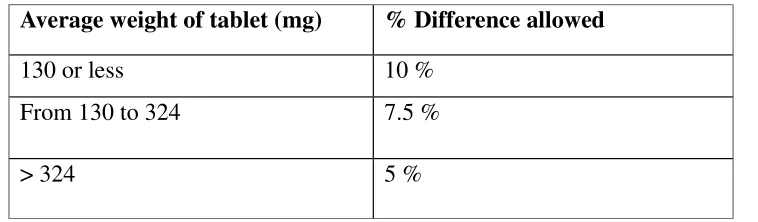
Determination of weight variation: Twenty tablets selected at the random are weighed accurately and the average weight of the tablet is calculated. Then the deviation of individual
Determination of thickness of the tablet: The individual crown – to – crown thickness of ten tablets is determined using slide calipers for each batch.
Measurement of Floating Capacity:
Three individual tablets are put in individual flask containing 400ml of 0.1(N) HCL solutions.
Then the time in minutes for each tablets to go from the bottom to the top of the flask (floating
lag time) and the time for which tablets constantly float on the water surface (duration of
floating) are measured. The sample mean and standard deviation are then calculated.
Measurement of the Density of the formulation40
: The apparent densities of the tablets are calculated from their volumes and masses in triplicate. The volume V of the cylindrical tablets
are calculated from their height h and radius (both determined with a micrometer gauge) using
the mathematical equation for a cylinder
(V = A × r2 × h).
Determination of drug content in tablets: Three tablets from each batch are selected randomly and transferred to a 100ml volumetric flask filled up with 0.1(N) HCL. Kept it for 48hours then
took 1ml from each of volumetric flask and transferred to the test tubes. Samples are then
filtered, suitably diluted and analyzed spectrophotometrically at a suitable wavelength.
In-vitro dissolution study: The tablet was placed inside the dissolution vessel. 5ml of sample were withdrawn at time intervals of 1h, 2h, 3h, 4h, 5h, 6h, 8h, 10 h and 12h. The volume of
dissolution fluid adjusted to 900 ml by replacing fresh 5ml of dissolution medium after each
sampling. The release studies were conducted with 3 tablets, and the mean values were plotted
versus time. Each sample was analyzed at maximum wavelength using double beam UV visible
spectrophotometer against reagent blank and the corresponding concentration was determined
from the respective calibration curve.
Buoyancy / Floating Test: The time between introduction of dosage form and its buoyancy on the simulated gastric fluid and the time during which the dosage form remain buoyant were
Time (FLT) or Buoyancy Lag Time (BLT) and total duration of time by which dosage form
remain buoyant is called Total Floating Time (TFT)41
.
Swelling Study: The swelling behavior of a dosage form was measured by studying its weight gain or water uptake. The dimensional changes could be measured in terms of the increase in
tablet diameter and/or thickness over time. Water uptake was measured in terms of percent
weight gain, as given by the equation.
WU = (W1 – W0)/ W0 x 100
Where, Wt = Weight of dosage form at time t.
W0 = Initial weight of dosage form.
Advantages of Floating Drug Delivery System42
: Floating dosage systems are important technological drug delivery systems with gastric retentive behavior and offer several advantages
in drug delivery. These advantages Include:
1. Improved drug absorption, because of increased GRT and more time spent by the dosage form
at its absorption site.
2. Controlled delivery of drugs.
3. Delivery of drugs for local action in the stomach.
4. Minimizing the mucosal irritation due to drugs, by drug releasing slowly at controlled rate.
5. Acidic substances like aspirin cause irritation on the stomach wall when come in contact with
it. Hence HBS formulation may be useful for the administration of aspirin and other similar
drugs.
6. Administration of prolongs release floating dosage forms, tablet or capsules, will result in
dissolution of the drug in the gastric fluid. They dissolve in the gastric fluid would be
available for absorption in the small intestine after emptying of the stomach contents. It is
7. When there is a vigorous intestinal movement and a short transit time as might occur in
certain type of diarrhea, poor absorption is expected. Under such circumstances it may be
advantageous to keep the drug in floating condition in stomach to get a relatively better
response.
8. Treatment of gastrointestinal disorders such as gastro esophageal reflux.
9. Simple and conventional equipment for manufacture.
10. Ease of administration and better patient compliance.
11. Site-specific drug delivery.
Disadvantages of Floating Drug Delivery System 42
The major disadvantage of floating system is requirement of a sufficient high level of fluids in
the stomach for the drug delivery to float. However this limitation can be overcome by coating
the dosage form with the help of bioadhesive polymers that easily adhere to the mucosal lining of
the stomach .
I. These systems require a high level of fluid in the stomach for drug delivery to float and
work efficiently.
II. The drugs that are significantly absorbed through out gastrointestinal tract, which
undergo significant first pass metabolism, are only desirable candidate.
III. Some drugs present in the floating system causes irritation to gastric mucosa.
IV. Gastric emptying of floating forms in supine subjects may occur at random and becomes
highly dependent on the diameter and size. Therefore patients should not be dosed with
floating forms just before going to bed.
Criteria Selection of Drug Candidate for FDDS42
1. Absorption from upper GIT e.g. Ciprofloxacin.
3. Drugs having reduced solubility at higher pH, e.g. Rosiglitazone maleate, captopril and
chordiazepoxide.
4. Local action as it seen in the treatment of Helicobacter pylori by Amoxicillin.
5. The bioavailability of drugs that get degraded in alkaline pH can be increased by
formulating gastro-retentive dosage forms, e.g. Doxifluridine, which degrades in small
intestine.
6. To minimize gastric irritation this may be sudden increase of drug concentration in the
stomach, e.g. NSAID.
Limitations of FDDS42
1. The residence time in the stomach depends upon the digestive state. Hence, FDDS should
be administered after the meal.
2. The ability to float relies in the hydration state of the dosage form. In order to keep these
tablets floating In vivo, intermittent administration of water (a tumbler full, every 2 hrs) is beneficial.
3. The ability of drug to remain in the stomach depends upon the subject being positioned
upright.
4. FDDS are not suitable for the drugs that have solubility or stability problems in the
gastric fluid.
5. Drug like Nifedipine is well absorbed along the entire GIT and undergoes significant first
pass metabolism, but it is not a desirable candidate for FDDS since the slow gastric
emptying may lead to the reduced systemic bio-availability.
Application of FDDS42
1. Recent study indicated that the administration of diltiazem floating tablets twice a day
might be more effective compared to normal tablets in controlling the blood pressure of
2. Modapar® HBS containing L-DOPA and Benserazide, here the drug was absorbed over a
period of 6-8 hrs and maintained substantial plasma concentration for Parkinsonian
patients. Cytotech® containing Misoprostol, a synthetic prostaglandin–EL analogue, for
prevention of gastric ulcer caused by non-steroidal anti-inflammatory drugs (NSAIDS).4
3. Site specific drug delivery: These systems are particularly advantageous for drugs that are
specifically absorbed from stomach or the proximal part of the small intestine, e.g.,
Riboflavin and Furosemide.
4. FDDS also serves as an excellent drug delivery system for the eradication of Helicobacter pylori, which causes chronic gastritis and peptic ulcers.
5. Developing HBS dosage form for Tacrin provide better delivery systems and reduced its GI
side effects.
Literature review
Literature review for understanding the study was done by referring to various national and
international journals, published articles in various official standard books and referring to
various websites.
K.Karunakar et. al 71., prepare and evaluate floating drug delivery system of Lamivudine. Floating matrix tablets of Lamivudine were developed to prolong gastric residence time and
increase its bioavailability. Rapid gastrointestinal transit could result in incomplete drug release
from the drug delivery system above the absorption zone leading to diminished efficacy of the
administered dose. The tablets were prepared by direct compression technique, using polymers
such as hydroxyl propyl methyl cellulose (HPMC E15), Ethyl cellulose and Xanthan gum
combination and other standard excipients. Sodium bicarbonate was incorporated as a
gas-generating agent. The effects of different concentrations of HPMC, EC and Xanthan gum on
drug release profile and floating properties were investigated. Comparable release profiles
between the commercial product and the designed system were obtained. The model fitting
showed that the optimized formulation F2 formulations followed Korsmeyer and Peppas model,
which had a higher value of correlation coefficient (r). While tablet hardness had little or no
effect on the release kinetics and was found to be a determining factor with regards to the
buoyancy of the tablets.
Varun Dasari et. al72
., Formulation of potent drug molecules as dosage form still draws continuous interest and challenges against its optimization towards pharmacokinetics parameters
like absorption, bioavailability, onset of action, duration of action Besides it has been proved that
by increasing gastric retention time will increase the drug absorption effectively..Lamivudine is
an potential anti-HIV agent, used for the long term treatment of HIV-1 infection.It is approved by
the U.S Food and Drug Administration (FDA). The dissolution characteristics of optimized multi
unit formulation MF8 is compared with that of the pure drug and Marketed formulation
(EPIVIR). Compatibility among the drug and optimized polymer i.e., Geleol Pastilles was
assessed by performing IR spectroscopy studies Characteristics with the aid of Geleol Pastilles as
Lamivudine, further there is a scope to conduct the bioavailability studies in human volunteers to
know the exact pharmacokinetics of the developed multi unit GFDDS of Lamivudine.
Ichikawa et al 43
developed a new multiple type of floating dosage system composed of
effervescent layers and swellable membrane layers coated on sustained release pills. The inner
layer of effervescent agents containing sodium bicarbonate and tartaric acid was divided into 2
sublayers to avoid direct contact between the 2 agents. These sublayers were surrounded by a
swellable polymer membrane containing polyvinyl acetate and purified shellac. When this
system was immersed in the buffer at 37ºC, it settled down and the solution permeated into the
effervescent layer through the outer swellable membrane. CO2 was generated by the
neutralization reaction between the 2 effervescent agents, producing swollen pills (like balloons)
with a density less than 1.0 g/mL. It was found that the system had good floating ability
independent of pH and viscosity and the drug (Para-amino benzoic acid) released in a sustained
manner (Figure 1, A and B).
Stock well et al44
prepared floating capsules by filling with a mixture of sodium alginate and
sodium bicarbonate. The systems float during in vitro tests as a result of the generation of CO2
that was trapped in the hydrating gel network on exposure to an acidic environment. The
carbonates also provide the initial alkaline microenvironment for polymers to gel. Moreover, the
release of CO 2 helps to accelerate the hydration of the floating tablets, which is essential for the
formation of a bioadhesive hydrogel. This provides an additional mechanism (‘bioadhesion’) for
retaining the dosage form in the stomach, apart from floatation. Floating dosage forms with an in
situ gas generating mechanism are expected to have grater buoyancy and improved drug release
characteristics. However, the optimization of the drug release may alter the buoyancy and,
therefore, it is sometimes necessary to separate the control of buoyancy from that of drug release
kinetics during formulation optimization.
Yang et al 45
developed a swellable asymmetric triple-layer tablet with floating ability to prolong
the gastric residence time of triple drug regimen (tetracycline, metronidazole, and
clarithromycin) in Helicobacter pylori–associated peptic ulcers using hydroxy propyl methyl
cellulose (HPMC) and poly (ethylene oxide) (PEO) as the rate-controllingpolymeric membrane
tablet approach. Hydroxypropylmethylcellulose and poly (ethylene oxide) were the major
rate-controlling polymeric excipients. Tetracycline and metronidazole were incorporated into the core
layer of the triple-layer matrix for controlled delivery, while bismuth salt was included in one of
the outer layers for instant release. The floatation was accomplished by incorporating a
gas-generating layer consisting of sodium bicarbonate: calcium carbonate (1:2 ratios) along with the
polymers. The in vitro results revealed that the sustained delivery of tetracycline and
metronidazole over 6 to 8 hours could be achieved while the tablet remained afloat. The floating
feature aided in prolonging the gastric residence time of this system to maintain high-localized
concentration of tetracycline and metronidazole.
Fahan Jalees ahmed46
et al., Development and Evaluation of Floating Matrix Tablets of Acyclovir October – December 2011 RJPBCS Volume 2 Issue 4 Page No. 547 Acyclovir
[9-(2-hydroxyethoxymethyl) guanine] is an acyclic nucleoside analogue of guanosine that is a potent
and selective antiviral agent. It has a relatively short plasma half-life (3 hr). When orally
administered, it is slowly and scarcely absorbed from the gastrointestinal tract. The plasma
concentration reaches its therapeutic level in 1.5 to 2 hr. The short biological half life of drug
favors the development of a sustained release formulation which retain in the stomach for a
prolonged period of time.The present work emphasis on the study of dissolution studies and in
vitro buoyancy of acyclovir floating system.
A. M Mahale et al, formulation and in-vitro evaluation of gastroretentive drug delivery system for acyclovir. International journal of comprehensive Pharmacy, DOI : 2011 47
Floating matrix tablets of acyclovir were developed to prolong gastric residence time and
increase its bioavailability. The tablets were prepared by direct compression technique, using
polymers such as Hydroxypropylmethylcellulose (HPMC, Methocel K100M), Carbopol and
Sodium alginate alone or in combination. Sodium bicarbonate and Citric acid was incorporated
as a gas-generating agent. All the tablets passed the compendial tests and other tests like weight
variation, drug content, hardness, friability. The floating time was found to be more than 12 hrs.
T. Akelesh et al. Formulation development of gastro retentive floating tablet of acyclovir using natural gums, Scholars Research Library,2011,3(1): 254-26148
.
Floating tablets of Acyclovir was developed by using gas forming agents like sodium
bicarbonate and natural gums like Locust bean gum, Sodium alginate and Xanthan gum by
effervescent technique. Various combinations of floating polymers were used in this formulation.
The floating tablets were evaluated for uniformity of weight, hardness, friability, drug content, in
vitro buoyance, and buoyancy lag time and dissolution studies. The formulation optimized for
different concentration of natural gums like Locust bean gum, Sodium alginate and Xanthan
gum.
J. Padmavathy et al, Formulation and evaluation of ofloxacin floating tablets using HPMC, International Journal of Pharmacy and Pharmaceutical Sciences, Vol 3, Issue 1, 201149
The present study outlines a systematic approach for designing and development of Ofloxacin
floating tablets to enhance the bioavailability and therapeutic efficacy of the drug. Different
formulations were formulated by wet granulation technique using HPMC K4M, HPMC K15M
and HPMC K100M (floating agent) as polymers along with sodium bicarbonate as gas
generating agent. The formulations were evaluated for their physicochemical properties,
buoyancy lag time, total floating time, swelling index and invitrodrug release. It was found that the hardness of the tablets affects the Buoyancy characteristic of the dosage form. All six
formulations possessed good floating properties with total floating time between 8 – 12 hrs.
Jaimini Manish et. al.50
, delayed release tablets of Losartan Potassium were formulated using two different grades of methocel K100 and K15 by effervescent technique. Sodium bi carbonate
was employed as gas generating agent. Tablets prepared by wet granulation method were further
evaluated for hardness, friability, weight variation, drug content, in-vitro buoyancy and
dissolution studies. All the prepared tablets showed good in-vitro buoyancy. The effect of citric
acid and two different grades of methocel on drug release profile and floating property were
Kumar.et. al.51
developed floating tablets of metformin hydrochloride and evaluated for increase
bioavailability by increasing gastric residence time and sustained release of drug on the upper
part of gastrointestinal tract thereby diminishing side effects and enhanced patient compliance.
Metformin hydrochloride, an oral anti-diabetic having narrow absorption window in the upper
part of gastrointestinal tract, was formulated as floating matrix tablet using gas generating agent
(potassium bicarbonate) and hydrophilic gelling polymer hydroxyl propyl methyl cellulose
(hypromellose) by wet granulation technique. The prepared formulations were evaluated for
floating time and in-vitro drug release studies by modified dissolution method.
Chodavarapuet al 52
., investigated that the effectiveness of the edible gum of
Abelmoschusesculentus as a polymer in the development of a gastric floating dosage form of
metformin HCl. Abelmoschusesculentus, popularly known as okra, was shown to aid in the
formulation of floating tablets. In the present study, it was used as a pharmaceutical excipient
along with HPMC E15 in the formulation of floating tablets. The prepared tablets were tested for
physicochemical properties, drug content uniformity, in-vitro drug release patterns and FT-IR spectral analysis. From the study, it was evident that the formulations which included
abelmoschusesculentus gum (F1, F3, and F4) have lesser floating capacity but show a
sustained release of drug whereas the formulation (F2) which contained only HPMC has higher
floating capacity but poor sustained release of drug. The formulation of okra gum manifested a
prolonged release of the activeingredients.
Kshirsagaret al53
.,have developed a hydro dynamically balanced system of metformin as a single
unit floating tablet. Various grades of low‐density polymers were used for the formulation of this
system. They prepared by physical blending of metformin and the polymers in varying ratios.
The formulation was optimized on the basis of in-vitro buoyancy and in-vitro release in simulated gastric fluid pH 1.2. Tablets prepared with HPMC K15M and carbopol showed best
In-vitro drug release tests of the tablets indicated the sustained release of metformin HCl was reported.
Narayanet al54
.,have formulated the salbutamol sulphate as a floating matrix tablets and control the drug release up to 24 h for administration as once daily dose. Salbutamol sulphate is a short
acting bronchodilators which have short biological half life about 2-4 h. Floating matrix tablets
were formulated by using swelling polymer like methylcellulose, hydroxy propyl methyl
cellulose (K100M, K4M) with different concentrations in the preparation of floating matrix
tablets. Their formulation variables like hardness, polymer concentrations, and shape of the
tablets were optimized to achieve the floating nature of the tablet in stomach for 24 h. In addition
stearic acid is included in this formulation to evaluated release characteristics.
Liandong et al55.,have developed the dextromethorphan hydrobromide sustained-release
(DMB-SR) tablets using floating technique to prolong the gastric residence time and compared
pharmacokinetic behaviour with conventional sustained release tablets. DMB-SR floating tablets
wereprepared employing hydroxypropyl methylcellulose as hydrophilic gel material, sodium
bicarbonateas gas-generating agent and hexadecanol as floating assistant agent. An orthogonal
experimentdesign method was used to select the optimized formulation. The floating tablets were
evaluated foruniformity of weight, hardness, friability, drug content, floating characteristics, in-vitro release and in-vivo bioavailability.
Varmaet al.56
,have developed sustained release gastroretentive dosage forms which were enabled
to prolong the drug input to the upper parts of gastrointestinal tract and improve the
bioavailability of medication that is characterized by narrow absorption window. Metformin
hydrochloride was selected as a model drug because of poor absorption from low GI tract and
less bioavailability above 50%. Hydroxy propyl methyl cellulose (HPMC K4M) and carbopol
934P were used as polymers and sodium bicarbonate as gas generating agent to reduce floating
lag time. Tablets were prepared by wet granulation method. Floating tablets were evaluated for
Deshpande et al. 57
(Deshpande et al., 1997a; Deshpande et al., 1997b) developed a
controlled-release gastric retention system composed of a swellable core, which consisted of the drug,
chlorphenamine maleate or riboflavin 5′ phosphate, and the expanding agents polyvinyl
pyrrolidone (PVP), Carbopol 934P and calcium carbonate. The tablet core was coated with a
permeable coating, consisting of blends of Eudragit RL® 30 D and NE 30 D in different ratios.
The tablets swelled to 2- 4 times their original volume, while releasing the drug in a controlled
manner. The optimal ratio of Eudragit® RL 30 D: NE 30 D was found to be 70: 30, which was
optimum for sufficient elasticity to withstand the pressure of expansion during the initial
swelling phase, and allowing the breakdown of the tablet following release of the drug.
Shalaby et al.58
described enzyme-digestible hydrogels consisting of poly(vinyl pyrrolidone)
crosslinked with albumin (Shalaby et al., 1992; Shalaby and Park, 1990). These
gastroretentivehydrogels, swelled to a significant extent depending on the albumin content and
degree of albumin alkylation and were degraded in the presence of pepsin. Even under fasted
conditions, the gastric residence time in dogs exceeded 24 h. These hydrogels were used to
deliver flavin mononucleotide, which is known to be absorbed only from the upper part of the
small intestine, where the drug could be detected up to 50 h after administration in the blood,
suggesting its efficient retention in the stomach.
Omidianet al.59
developed superporous hydrogel hybrids, which are prepared by crosslinking a
water-soluble or water-dispersible polymer to the formed superporous hydrogel (Omidian et al.,
2005; Omidian et al., 2006). Examples for hybrid agents are polysaccharides, such as sodium
alginate, pectin, chitosan or synthetic water-soluble hydrophilic polymers, e.g. poly(vinyl
alcohol). Unlike superporous hydrogels and superporous hydrogel composites, superporous
hydrogel hybrids are not easily breakable when stretched due to their highly elastic properties in
the swollen state, which may be very useful for developing gastrointestinal DDS.
Yuasa et al.60
(Yuasa et al., 1996) developed intragastric floating and sustained release granules
of diclofenac sodium using a polymer solution of HPC-L grade and EC, and calcium silicate as a
floating carrier, which has a characteristically porous structure. The coated granules acquired
floating ability from the air trapped in the pores of calcium silicate when they were coated with a
Whitehead et al.61
(Whitehead et al., 1996) developed multiple unit floating freeze dried calcium
alginate beads. These beads maintained a positive floating force for over 12 h, and the density
measurement, using a helium pycnometer, was less than 1 g/cm. The in vivo behavior of this system compared to non-floating multiple-unit dosage forms manufactured from identical
material have also been performed using γ-scintigraphy in the fed state (Whitehead et al., 1998).
Prolonged gastric residence times of over 5.5 h were achieved for the floating formulations,
while the non-floating beads displayed short gastric residence times, with a mean onset emptying
time of 1 h.This approach provides floating drug delivery systems based on the formation of
CO2 gas. It utilizes effervescent components such as sodium bicarbonate (NaHCO3) or sodium
carbonate, and additionally citric or tartaric acid (Rubinstein and Friend, 1994). Alternatively
matrices containing chambers of liquids that gasify at body temperature could be used (Michaels,
1975; Micheals, 1974; Ritschel, 1991). Upon contact with the acidic environment, a gas is
liberated, which produces an upward motion of the dosage form and maintains its buoyancy. A
decrease in specific gravity causes the dosage form to float on the chyme.
Gröning et al62
(Gröning et al., 2007; Groning et al., 2006) developed gastroretentive dosage
forms prepared from compressed collagen sponges. The sponges were manufactured by
freeze-drying a riboflavin-containing collagen solution. The precompressed collagen was transported
into a tablet machine for tablet compression. A second type of tablet was manufactured by
combining compressed collagen sponges with hydrophilic matrix layers of hydroxypropyl
methylcellulose (HPMC) containing captopril or acyclovir into a bilayer tablet. Following
contact with aqueous fluids, the collagen sponge expanded to a large size. Both systems released
AIM
1. The basic goal of therapy is to achieve a steady state blood level that is therapeutically
effective and non-toxic for an extended period of time. The design of proper dosage regimens is
an important element in accomplishing this goal.
2. Floating tablets are drug delivery systems that are designed to achieve a prolonged therapeutic
effect by continuously releasing medication over an extended period of time after administration
of single dose in stomach region.
3. The main aim is to Formulate and Evaluate Floating tablets of Lamuvudine using various
hydrophilic polymers.
Objective of the study:
The present study is planned with the following objectives:
To prepare Lamuvudine floating tablets.
To improve the floating time of the tablet.
To prepare tablets by direct compression method.
To investigate the pre compression & post compression parameters of the developed formulations.
In-vitro characterization of the developed floating tablets.
PLAN OF WORK
I. Literature survey
II. Pre-formulation studies
a) Pre-formulation study of Lamuvudine b) Organoleptic Properties
c) Melting point of drug d) Determination of solubility
e) Drug-Excipient compatibility studies
III. Evaluation of blends a) Bulk density b) Tapped density c) Angle of repose
d) Carr’s Index (Compressibility Index) e) Hausner’s Ratio
IV. Preparation of Floating tablets by using various concentrations of Polymers
• Direct compression Technique.
V. Evaluation of Matrix tablets
• Thickness • Hardness
• Weight variation • Friability
DRUG PROFILE63, 64
Lamivudine: A reverse transcriptase inhibitor and zalcitabine analog in which a sulfur atom
replaces the 3' carbon of the pentose ring. It is used to treat Human Immunodeficiency Virus
Type 1 (HIV-1) and hepatitis B (HBV).
Structure
Structure of Lamivudine
Chemical name:
4-amino-1-[(2R, 5S)-2-(hydroxymethyl)-1, 3-oxathiolan-5-yl]-1,2 dihydropyrimidin-2-one
Molecular formula: C8H11N3O3S
Molecular weight: 229.25
Category: Antiretroviral (Nucleoside Reverse Transcrip