University of Southern Queensland
Faculty of Engineering and Surveying
Developing a Model to Predict Water
Main Failures
A dissertation submitted by
Glen Alanne
In fulfillment of the requirements of
Courses ENG4111 and 4112 Research Project
Towards the degree of Bachelor of Engineering in Civil Engineering
Developing a Model to Predict Water Main Failures Page ii
EXECUTIVE SUMMARY
Many water authorities own water mains that date to the beginning of the
last century. As these assets begin to reach the end of their useful lives,
failures are becoming increasingly more common. With only limited
financial resources available, water authorities are faced with the challenge
of whether to repair or replace damaged water mains. A useful decision
making tool in this area is a water main failure prediction model.
ActewAGL is a water utility operating and maintaining the water supply
network in the ACT for the asset owner Actew Corporation. The network
consists of in excess of 3000 kilometres of water mains and services
approximately 360,000 customers. Although not currently considered a
problem, the water main failure rate in the ACT appears to be on the rise.
Therefore, Actew recognizes the need to better understand the causes of
water main failures and to be proactive in developing policies to most
efficiently deal with the effects of failure.
The objective of this study was to investigate the methods, parameters and
theory used in existing water main failure models and to use these findings
to develop a customised water main failure prediction model taking into
account limitations with the type and quality of water main failure data
available.
Research showed that the key factors influencing the structural
performance of buried pipes are the pipe characteristics, soil embedment
conditions and the internal/external loadings on the buried pipe. Any
significant impacts on these factors can lead to failure. Water main failure
prediction models endeavour to use this knowledge to predict the likelihood
Developing a Model to Predict Water Main Failures Page iii physically based model that predicts time to failure for an individual water
main based on the actual pipe condition and local environmental influences.
However, difficulties and costs associated with obtaining input data for a
physical model has resulted in the popularity of a more cost effective
statistical failure prediction model which attempts to identify trends in past
performance data and assumes that these will continue on into the future.
Analysis of historical water main failure data in the ACT identified a number
of data limitations including missing or incomplete data and a lack of the
necessary data to develop a physical model. Most failures in the ACT were
shown to occur in small diameter cast iron water mains during the winter
period or low rainfall periods. The occurrence of these failures was
attributed to soil moisture or frost loads and temperature differentials
caused by low ground temperatures.
Although it was clear that a physical water main failure prediction model
would be ideal for the ACT, data and resource limitations meant that a
statistical failure prediction model was considered most appropriate. Two
multivariate failure prediction models (see Figures 1 and 2) were proposed
using multiple regression techniques with the dependent variable being total
number of failures and the explanatory variables time (month for Model 1
and year for Model 2) and rainfall (12 month totals - mm). Ground
temperatures were also considered for the models. However, analysis
showed that its inclusion did not significantly improve the models accuracy
due to its high correlation with rainfall.
Further testing and validation of the models is required. However,
preliminary analysis showed promising results with Model 1 and Model 2
obtaining coefficients of multiple determination of 78% and 76%
respectively. Residual analysis identified possible concerns with
Developing a Model to Predict Water Main Failures Page iv model. This would also include investigating the possibility of adding more
explanatory variables to the model.
RECOMMENDATIONS
As a result of this study a number of recommendations were made for
further work in order to improve Actew’s ability to monitor system
performance and predict water main failures. These are as follows.
• Compile historical failure records into a central water main failure
database and add links to the GIS and asset management systems.
• Incorporate physical parameters into water main failure data collection
processes.
• Conduct further testing, validation and improvement of the multivariate
statistical models developed in this study.
• Conduct preliminary investigations into the development of a physically
based water main failure prediction model.
Figure 1 – Equation for Model 1
Total Number of Failures
=
123
.
997
+
237
.
33
e
0
.
0025
X
1−
0
.
175
X
2where x1 = time (month)
x2 = rainfall (mm)
Figure 2 – Equation for Model 2
Total Number of Failures
=
145
.
259
+
241
.
68
e
0
.
0304
X
1−
0
.
206
X
2where x1 = time (year)
Developing a Model to Predict Water Main Failures Page v
University of Southern Queensland
Faculty of Engineering and Surveying
ENG4111 Research Project Part 1 &
ENG4112 Research Project Part 2
Limitations of Use
The Council of the University of Southern Queensland, its Faculty of Engineering and Surveying, and the staff of the University of Southern Queensland, do not accept any responsibility for the truth, accuracy or completeness of material contained within or associated with this dissertation.
Persons using all or any part of this material do so at their own risk, and not at the risk of the Council of the University of Southern Queensland, its Faculty of Engineering and Surveying or the staff of the University of Southern Queensland.
This dissertation reports an educational exercise and has no purpose or validity beyond this exercise. The sole purpose of the course "Project and Dissertation" is to contribute to the overall education within the student’s chosen degree programme. This document, the associated hardware, software, drawings, and other material set out in the associated appendices should not be used for any other purpose: if they are so used, it is entirely at the risk of the user.
Professor Frank Bullen Dean
Developing a Model to Predict Water Main Failures Page vi
Certification
I certify that the ideas, designs and experimental work, results, analyses and conclusions set out in this dissertation are entirely my own effort, except where otherwise indicated and acknowledged.
I further certify that the work is original and has not been previously submitted for assessment in any other course or institution, except where specifically stated.
Glen Alanne
Student Number: 0050027669
Signature
Date
Developing a Model to Predict Water Main Failures Page vii I would like to take the opportunity to acknowledge and thank my
supervisors Dr. Vasantha Aravinthan from the University of Southern
Queensland and Mr Ian Macrae from ActewAGL for their invaluable
assistance and support during the preparation of this dissertation.
I would also like to acknowledge my wife Naomi for all her help and support
Developing a Model to Predict Water Main Failures Page viii
CONTENTS PAGE
EXECUTIVE SUMMARY ...II
ACKNOWLEDGEMENTS ... VII
CONTENTS PAGE ... VIII
LIST OF TABLES ... XI
LIST OF FIGURES ... XII
LIST OF APPENDICES ... XV
1. INTRODUCTION ...2
1.1. Outline of the Study ...2
1.2. Background ...3
1.3. Research Objectives ...5
1.4. Scope of the Project ...6
1.5. Dissertation Overview ...6
2. LITERATURE REVIEW ... 10
2.1. Introduction ... 10
2.2. Buried Pipe Design ... 10
2.2.1. Development of Design Procedure ... 10
2.2.2. Factors in the Structural Performance of Buried Pipes ... 12
2.2.3. AS/NZS 2566.1:1998 Design Procedure ... 18
2.2.4. Summary ... 18
2.3. Water Main Failures ... 20
2.3.1. What is a Water Main Failure? ... 20
2.3.2. Why do Water Mains Fail? ... 21
2.3.3. Water Main Failure Modes ... 25
2.3.4. Failure Mechanisms ... 28
2.3.5. Summary of Review... 32
2.4. Water Main Failure Prediction Models ... 33
2.4.1. What is a Water Main Failure Prediction Model?... 33
2.4.2. Physically Based Models ... 34
2.4.3. Statistical Models ... 37
2.4.4. Alternative Models/ Improvements to Existing Models ... 39
2.4.5. Summary ... 40
Developing a Model to Predict Water Main Failures Page ix
3.1. Introduction ... 43
3.2. Literature Review ... 43
3.3. ACT Water Main Failure Data Analysis... 43
3.4. Collation of Data ... 44
3.5. Model Development ... 45
3.5.1. Regression Analysis ………45
3.5.2. Testing of the Significance of the Model ……….50
3.6. Chapter Summary ... 51
4. ACTEW WATER MAIN FAILURE DATA ANALYSIS ... 53
4.1. ACT Water Supply Network ... 53
4.2. Actew Water Main Failure Records ... 54
4.2.1. Overview ... 54
4.2.2. Adequacy of Existing Failure Records ... 57
4.2.3. Water Works ... 58
4.3. Previous Data Analysis ... 62
4.4. Data Analysis... 62
4.4.1. General Analysis ... 62
4.4.2. Spatial Analysis ………..62
4.4.3. Temporal Analysis ... 70
4.5. Findings ... 71
4.6. Future Data Improvements ... 75
4.7. Chapter Summary ... 75
5. DEVELOPMENT OF A CUSTOMISED WATER MAIN FAILURE PREDICTION MODEL ... 77
5.1. Introduction ... 77
5.2. Selection of Model Type and Parameters ... 78
5.3. Development of Model ... 79
Developing a Model to Predict Water Main Failures Page x 6. COMPARISON OF PROPOSED MODELS WITH EXISTING FAILURE
PREDICTION MODELS ... 108
6.1. Purpose ... 108
6.2. Input Variables ... 108
6.3. Model Output ... 109
6.4. Model Accuracy ... 109
6.5. Chapter Summary ... 110
7. CONCLUSIONS AND RECOMMENDATIONS... 112
7.1. Conclusions ... 112
7.2. Recommendations ... 113
REFERENCE LIST ... 116
Developing a Model to Predict Water Main Failures Page xi
Table 3.1 Example of a Correlation Matrix ………..………….46
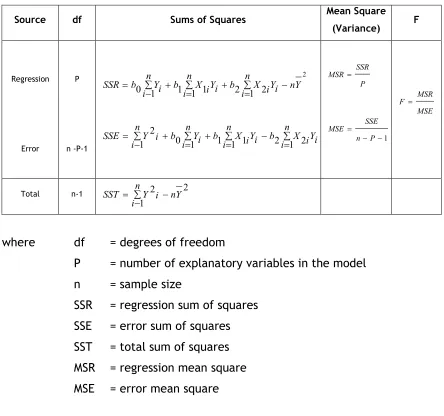
Table 3.2 ANOVA Table ………..……..49
Table 4.1 Pipe Size Distribution ………..………54
Table 4.2 Pipe Material Distribution ………..……….54
Table 4.3 Pipe Failure by Size 2001-2008 ………..……….64
Table 4.4 Pipe Failure by Material 004-2008……….……….64
Table 4.5 Pipe Failure Modes 2005-2008 ………66
Table 5.1 Correlation Matrix for Variable for Model 1 ………..80
Table 5.2 Model 1 - Partial F-Test for including Rainfall in a Model already including Time ……….……….82
Table 5.3 Model 1 - Partial F-Test for including Ground Temperature in a Model already including Time ……….……….82
Table 5.4 Model 1 - Partial F-Test for including Ground Temperature in a Model already including Time and Rainfall ……….……..83
Table 5.5 Correlation Matrix for Variable for Model 1 ………..94
Table 5.6 Model 2 - Partial F-Test for including Rainfall in a Model already including Time …….……….96
Table 5.7 Model 2 - Partial F-Test for including Ground Temperature in a Model already including Time ……….……….….…….96
Developing a Model to Predict Water Main Failures Page xii
LIST OF FIGURES
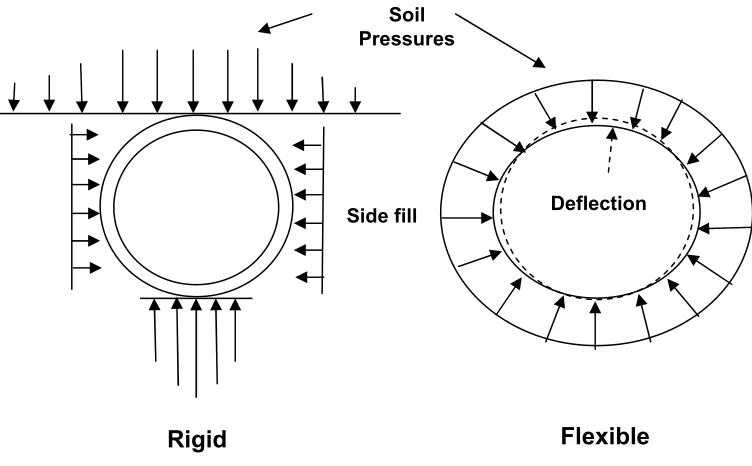
Figure 2.1 Comparison of Soil Pressure against Rigid and Flexible Pipes .13
Figure 2.2 Important Characteristics of a Buried Pipe ………15
Figure 2.3 Buried Flexible Pipe Installation Terminology (AS/NZS 2566.1:1998) ……….15
Figure 2.4 Embedment Geometry (AS/NZS 2566.1:1998) ……….16
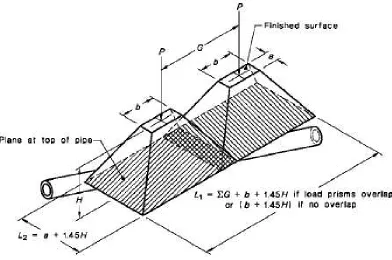
Figure 2.5 Traffic Load Effects (AS/NZS 2566.1:1998) ……….……….17
Figure 2.6 Conditions Leading to Corrosion (Rajani and Kleiner 1999) ….24 Figure 2.7 Failure Modes for Buried Pipes (Rajani and Kleiner 1999) ..….26
Figure 2.8 Common Water Main Failure Modes for Australian Conditions (WSAA 2006) ………..27
Figure 2.9 Circumferential Break in a Cast Iron Pipe (WSAA 2003) ………..28
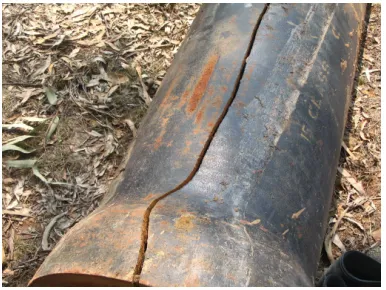
Figure 2.10 Longitudinal Split in a Cast Iron Pipe ……….………..29
Figure 2.11 Blowout in a Ductile Iron Pipe ……….………..…..30
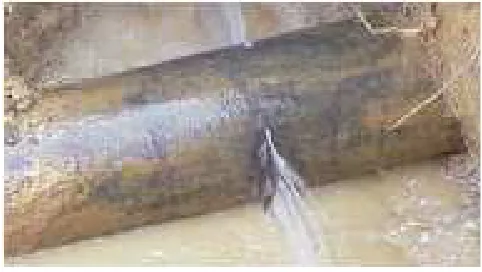
Figure 2.12 Pinhole Leak in a Ductile Iron Pipe (WSAA 2003) ………..………..30
Figure 2.13 Joint Failure Caused by a Perished Lead Joint ………..31
Figure 2.14 Life of a Buried Pipe ……….………..38
Figure 3.1 Correlation Coefficient Formula ……….………..46
Figure 3.2 Sample Output from Regression Analysis in Excel ………47
Figure 3.3 Coefficient of Multiple Determination Formula ….………48
Figure 3.4 Adjusted Coefficient of Multiple Determination Formula ………48
Figure 3.5 Partial SSR Formula ………..………50
Developing a Model to Predict Water Main Failures Page xiii
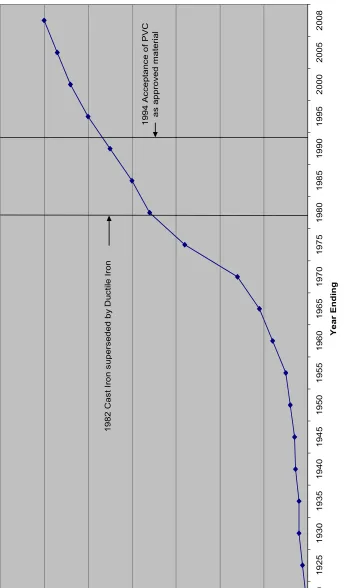
Figure 4.2 Growth of ACT Water Supply Network over Time ……….56
Figure 4.3 Sample Water Main Failure Record from Water Works ………….60
Figure 4.4 Water Works Search Function ………61
Figure 4.5 Influence of Pressure on Kaleen Failures 2005 – 2008 …..………67
Figure 4.6 Spatial Distribution of ACT Water Main Failures 2005 – 2008 ..69
Figure 4.7 Temporal Distribution of ACT Water Main Failures 1978 – 2008 ………72
Figure 4.8 Seasonal Distribution of ACT Water Main Failures 1997 – 2008 ………73
Figure 4.9 Total Number of Failures versus Rainfall 1978 – 2008 ………74
Figure 5.1 Exponential Time Relationship with Failures ………81
Figure 5.2 Line of Best Fit for ACT Water Main Failures 1978 – 2008 …….84
Figure 5.3 Comparison of Predicted versus Actual Failures for the ACT 1978 – 2008 ………88
Figure 5.4 Regression Analyses for Failure Prediction Model 1 ………89
Figure 5.5 Standardised Residuals versus Predicted Value (Yi) ………90
Figure 5.6 Standardised Residuals Plotted in Sequential Order ………91
Figure 5.7 Partial Regression Plot of Failures versus Time ……….92
Figure 5.8 Partial Regression Plot of Failures versus Rainfall ………93
Figure 5.9 Line of Best Fit for ACT Water Main Failures 1978 – 2008 …….95
Figure 5.10 Comparison of Predicted versus Actual Failures for the ACT 1978 – 2008 ………101
Figure 5.11 Regression Analyses for Failure Prediction Model 2 ……….102
Developing a Model to Predict Water Main Failures Page xiv Figure 5.13 Standardised Residuals Plotted in Sequential Order ………104
Figure 5.14 Partial Regression Plot of Failures versus Time ………105
Developing a Model to Predict Water Main Failures Page xv Appendix A Project Specification ……….……120
Appendix B Project Raw Data ……….………122
CHAPTER 1
Developing a Model to Predict Water Main Failures Page 2
1.
Introduction
1.1.
Outline of the Study
In recent years much has been said about the importance of taking steps to
ensure water supply sustainability for future generations. With most
attention being focussed on securing additional supply options, an important
aspect often overlooked is the maintenance, replacement and renewal of
existing water supply networks. This too is an important consideration in
ensuring water supply needs remain sustainable.
Water authorities in Australia have made large investments in water
infrastructure. According to the report ‘Time Running Out: Shaping
Regional Australia’s Future’ (2000) the total replacement costs of water
infrastructure assets in Australia is estimated at being in excess of $90
billion. Water supply network assets make up a significant proportion of this
replacement cost.
Many water supply networks date from early last century and are beginning
to show signs of deterioration. A major challenge facing the owners of these
networks is the problem of how best to cope with aging infrastructure.
Engineers Australia (2005) in the Australian Infrastructure Report Card
reported that spending on water asset renewals is not enough to keep up
with the rate of deterioration. As network assets begin to reach the end of
their useful lives the frequency of network failures appears to be on the
increase. This makes it increasingly more difficult to meet legislative
requirements and customer service standards.
The Water Service Association of Australia (WSAA) identifies water main
failures as a key indicator of the performance of a water supply network.
Water main failures result in large financial and social costs to both the
Chapter 1 - Introduction
Developing a Model to Predict Water Main Failures Page 3 costs of repairing or replacing damaged assets, restoration of the damaged
environment and compensation for damaged property. Social costs include
increased rates and taxes, environmental damage, loss of reputation, public
inconvenience and the perceived waste of a precious resource at time of
drought and water restrictions.
With only limited financial resources available to operate and maintain
water supply pipe networks, it is critical that these are spent wisely and
efficiently. This means it is important to be able to analyse how a network
is currently performing, identify potential areas of risk and predict likely
future performance in order to determine when a water main should be
repaired or when it should be replaced. This will lead to better, more
informed decisions regarding water main renewal, replacement and
maintenance strategies. A useful tool in predicting future performance is a
water main failure prediction model.
The purpose of this project is to investigate the structural design of buried
pipes, common water main failure modes and existing water main failure
prediction models and to develop a customised water main failure
prediction model based on these findings.
1.2.
Background
ActewAGL is a multi-utility providing electricity, gas, water and
waste-water services to the Australian Capital Territory (ACT) and surrounding
areas. ActewAGL operates and maintains the water supply network for the
asset owner Actew Corporation.
The ACT water supply network services an estimated 360,000 customers and
consists of more than 3000 kilometres of water mains. The first reticulation
Developing a Model to Predict Water Main Failures Page 4 of the network has been constructed since the 1960’s when rapid growth
was experienced in the ACT.
According to the Actew Corporation Asset Management Plan (2007) water
main failures in the ACT are below the Australian industry average and do
not currently pose a significant problem. Analysis, however, has shown that
the overall rate of water main failures has been increasing gradually and is
likely to become a problem in the future.
Due to the relatively low water main failure rates, Actew’s current primary
maintenance strategy is to run water mains to failure. Water main
replacement programs have also been implemented to replace asbestos
cement (AC) mains and other sections of main that experience relatively
high rates of failure.
Despite the current relatively low overall water main failure rate, it is
recognised that an aging network, increasing failure rate and more stringent
service level agreements and environmental requirements will ultimately
result in maintenance strategies needing to become more proactive in
identifying mains that pose a potential failure risk and taking steps to
prevent failure or to replace the mains before they become a significant
problem.
Actew is looking at taking steps to improve the quality of water main failure
data recorded in order to carry out further analysis of failure trends.
Failure analysis conducted so far has been used to develop asset
management plans and water main replacement programs.
The aim of this project is to build upon existing water main failure analysis
and to develop a model that can be used to analyse system performance
Chapter 1 - Introduction
Developing a Model to Predict Water Main Failures Page 5
1.3.
Research Objectives
The objectives of this research project are to:
1. Investigate the structural design of buried pipes to identify the
factors that determine how a buried pipe performs in service.
2. Investigate common water failure modes and their causes.
3. Critically evaluate existing water main failure prediction models.
4. Analyse the performance of Actew’s distribution/reticulation system
in relation to water main failures using findings in Objectives 1 and 2.
5. Develop a customised water main failure prediction model based on
the analysis of Actew performance data in Objective 4.
The project specification is included in Appendix A.
In order to reach these objectives the research will be conducted in three
stages.
The first stage of the project will be carried out in the form of a literature
review covering the first three objectives. The purpose of this is to gain an
understanding of the scope of works already relating to the topic.
Information sources include textbooks, journal articles, conference
proceedings, international standards and design manuals. Findings from the
literature review will be used in the remainder of the project.
The second stage of the project relates to objective four. This will involve
firstly compiling and reviewing Actew water main failure data to determine
data quality and quantity and to identify limitations in the available data.
Secondly this compiled data set will be analysed using the parameters
identified in the literature review. Findings of the review will determine
Developing a Model to Predict Water Main Failures Page 6 The third stage of the project is the development of a customised water
main failure model. The model developed will be the one deemed the most
appropriate taking into account resource and data limitations.
1.4.
Scope of the Project
The scope of this project involves looking at current practice on the topic of
water main failure prediction and using this knowledge to develop a
customised failure prediction model. It is recognised that many years of
research has gone into developing some of the existing failure prediction
models and fully developing a customised model is a long term project
beyond the scope of this study. It is not the intent to develop a model that
could be considered best practice in this field, but rather to lay the
foundations for a customised model taking into account current data and
resource limitations. Marked improvements would be required before a best
practice model could be considered.
1.5.
Dissertation Overview
This dissertation has been divided into seven chapters as outlined below.
Chapter 1 – Introduction
Chapter 1 provides an introduction to the research project that has been
conducted. Details covered in the chapter include the importance of this
topic, background into the specific need of this study, research objectives,
Chapter 1 - Introduction
Developing a Model to Predict Water Main Failures Page 7 Chapter 2 – Literature Review
Chapter 2 is a comprehensive review of literature relating to water mains
and water main failure prediction models. The review has focussed on three
main areas – the structural performance of buried pipes, the causes and
types of water main failures and existing water main failure prediction
models.
Chapter 3 – Methodology
Chapter 3 outlines the methodology used in the study to develop the
customised water main failure prediction model. More specifically it details
the methods used to analyse existing water main failure data in the ACT and
provides the background to regression analysis which was used to develop
the models in Chapter 5.
Chapter 4 – Actew Water Main Failure Data Analysis
Chapter 4 details the data analysis conducted on historical water main
failure data in the ACT. The analysis concentrated on identifying general,
spatial and temporal trends and patterns in the data and findings influenced
the type of failure prediction model proposed in Chapter 5.
Chapter 5 – Customised Water Main Failure Prediction Model
Chapter 5 details the development of the two customised water main failure
prediction models. The chapter also outlines some of the analysis carried
out to assess the quality of the model and discusses the significance of any
Developing a Model to Predict Water Main Failures Page 8 Chapter 6 – Comparison of Proposed Models with Existing Failure Prediction
Models
Chapter 6 acknowledges some of the difficulties in comparing different
types of water main failure prediction models. It then compares the
proposed models to existing failure prediction models by looking at the
different uses of models, model input variables, model output and model
accuracy.
Chapter 7 – Conclusion and Recommendations
Chapter 7 summarises the outcome of the study and how well the research
objectives were able to be met. It describes some of the positives that have
come out of the project and some of the areas that still need further
investigation. The chapter concludes by making some recommendations for
CHAPTER 2
Developing a Model to Predict Water Main Failures Page 10
2.
Literature Review
2.1.
Introduction
A wide variety of literature has been published on the subject of water main
failures. The aim of the literature review is to analyse this available
literature with a view to finding information applicable to Actew’s water
supply network that will be useful in developing a customised water main
failure prediction model.
Material for the literature review was obtained from a variety of sources
including textbooks, papers published by researchers and research
institutions, technical groups, technical libraries, international standards
and online resources
The scope of the literature review covers three main areas – buried pipe
design, water main failures and water main failure prediction models.
2.2.
Buried Pipe Design
An overview of the theory of buried pipe design is included to highlight the
factors that are critical in the performance of a water main in service and
thus have a bearing on water main failures.
2.2.1.
Development of Design Procedure
According to Watkins and Anderson (2000) the need for detailed design
procedures for buried pipes was identified in the 1920’s. Prior to this,
design was mostly empirical. The purpose of detailed design procedures
was to prevent water main failures that were quite common at the time but
Chapter 2 – Literature Review
Developing a Model to Predict Water Main Failures Page 11 Pioneering work in the development of buried pipe design standards was
carried out by Marston, Spangler and Watkins. Marston (1929) proposed a
theory for predicting soil loads on buried rigid pipes. He reasoned that pipe
failures could be avoided by ensuring that the soil loads acting on the buried
pipe were less than the failure strength of the buried pipe allowing for a
factor of safety.
Spangler (1941) discovered that flexible pipes, new to the market at the
time, performed differently in situ to rigid pipes and that pipe deflection
and embedment soil stiffness play an important role in the structural
performance of buried flexible pipes. Experimentation showed that
excessive deflection had an adverse effect on pipe performance, so Spangler
sought to limit pipe deflection below 5%. In order to predict the deflection
of buried flexible pipes Spangler developed the Iowa Formula which is based
on Marston soil loads, pipe ring stiffness and the stiffness of the embedment
soil.
The soil parameters in Spangler’s formula were determined empirically and
did not give reliable results in all cases. To overcome this problem Watkins
(1958) modified the Iowa formula introducing a modulus of soil reaction
which is a function of depth of soil cover and pipe ring stiffness.
The work of Marston, Spangler and Watkins forms the basis of buried pipe
design today. Others also have made a contribution to design procedures by
proposing modifications to existing methods to improve accuracy and
correct deficiencies. As the complexity of the structural performance of
buried pipes has become better understood, additional factors have been
included in pipe design procedures including hydrostatic loads,
superimposed surface loads, circumferential wall strain and ring buckling.
Alternative design methods of varying levels of complexity and accuracy
have been proposed and some of these used in design procedures. However,
Developing a Model to Predict Water Main Failures Page 12 intrinsic variability of parameters used in the analysis, for example soil
parameters. Also, it is not always easy to validate these designs in the
field. Despite some of the different methods used to calculate parameters,
design procedures follow the same basic processes.
2.2.2.
Factors in the Structural Performance of Buried
Pipes
In order to understand the structural performance of buried pipes it is first
necessary to distinguish between rigid (cast iron) and flexible (ductile iron
and PVC) pipes which differ in the way they resist loads.
A technical note by Vinidex (2000) explains the difference between rigid and
flexible pipe. Rigid pipes carry loads by transferring the load from the top
of the pipe, through the pipe wall to the bedding. The imposed load is,
therefore, concentrated over a small area at the base of the pipe and a high
wall thickness is required.
On the other hand, flexible pipes resist load by transferring the load from
the top of the pipe to the bottom and side support of the trench. The
mechanism that causes load transfer is vertical deflection of the pipe under
load which results in horizontal deflection of the pipe into the side support
of the trench.
Flexible pipes are more efficient than rigid pipes because they can shed load
over a larger area by deforming without causing structural damage. This
means wall thicknesses can be reduced for the same carrying capacity.
Figure 2.1 illustrates the difference in soil loads acting on rigid and flexible
pipes.
The improved qualities of flexible pipe have lead to the superseding of cast
iron as a material in water supply construction. Despite this, the structural
performance of cast iron pipes is still relevant as it remains the dominant
Chapter 2 – Literature Review
[image:28.595.87.463.74.307.2]Developing a Model to Predict Water Main Failures Page 13
Figure 2.1 Comparison of Soil Pressures against Rigid and Flexible Pipes
Rigid Pipes
With the integration of ductile iron and PVC into water supply construction
practices, the original design methods for cast iron pipe are now obsolete or
superseded and difficult to obtain. However, Rajani and Makar (2000) and
Makar et al (2000) outline basic design procedures and discuss relevant
factors in the structural performance of cast iron pipes that original design
methods overlook.
According to these two studies, cast iron pipe design methods originally only
recognised the effects of known earth loads and internal pressures on the
performance of a cast iron pipe and thus used these to determine the
required pipe wall thickness. Subsequent studies have shown other factors
that affect the structural performance of buried cast iron pipes include
corrosion pitting which reduces pipe wall thickness and induced loads due to
differential soil movement, thermal effects and frost load effects.
Side fill
Flexible Rigid
Deflection Soil
Developing a Model to Predict Water Main Failures Page 14 Flexible Pipes
In Australia the standard applicable for the structural design of buried
flexible pipelines is AS/NZS 2566.1:1998 Buried Flexible Pipelines – Part 1:
Structural Design.
AS/NZS 2566.1:1998 shows that that the structural performance of a buried
flexible pipe is dependent on three main factors a) pipe characteristics, b)
soil embedment characteristics and c) the magnitude of internal and
external loadings. If these three factors are kept within acceptable limits
successful design is possible.
Pipe Characteristics
Pipe characteristics determine how a pipe performs in service when
subjected to internal operating pressures and imposed loads. Therefore,
pipe selection must match the intended function of the pipe without
reaching its performance limits which are pipe failure (collapse, bursting,
and fracture) and/or excessive pipe deformation as defined by Watkins and
Anderson (2000).
Important pipe characteristics for design purposes are pressure rating, pipe
wall thickness and pipe ring stiffness. Pressure ratings determine a
pipeline’s maximum allowable operating pressure, pipe strength is a
function of the pipe wall thickness and pipe ring stiffness is important in
resisting deflections.
Other important factors that affect pipe durability and performance include
the pipe manufacturing process, pipe tolerances and pipe coatings and
linings. The pipe manufacturing process can introduce pipe defects due to
metal inclusions, incorrect rate of cooling or dimensions outside tolerance
Chapter 2 – Literature Review
Developing a Model to Predict Water Main Failures Page 15 to an increased risk of corrosion. Figure 2.2 illustrates important pipe
characteristics used in design.
Figure 2.2 Important Characteristics of a Buried Pipe
Soil Embedment Characteristics
Soil embedment characteristics are important in the performance of buried
flexible pipes. Factors that must be controlled in buried pipe design include
embedment geometry, embedment materials, compaction and soil moduli.
Figure 2.3 illustrates key pipe installation terminology.
Figure 2.3 Buried Flexible Pipe Installation Terminology (AS/NZS 2566.1:1998) Pipe Wall
Thickness
Pipe Diameter STRENGTH
Developing a Model to Predict Water Main Failures Page 16 Embedment geometry is shown in Figure 2.4 and includes embedment
width, depths of bedding and overlay and minimum cover. These need to
be controlled because they can affect the magnitude of loads imposed on
the buried pipe.
Figure 2.4 Embedment Geometry (AS/NZS 2566.1:1998)
Embedment materials must be free of organics and corrosive materials and
meet strict specifications. This is to prevent differential soil settlement
that may impart stresses on the pipe, chemical attack of the pipe coating
and to promote effective soil compaction.
Careful compaction must be undertaken to achieve optimum soil density and
uniform compaction. If this does not occur then it can result in pipe
damage.
Pipe deflection is a function of the soil moduli or stiffness. Soil stiffness is
determined from the modulus of native soil and embedment soil. If pipe
must be laid in poor quality soil then it is important to select embedment
Chapter 2 – Literature Review
Developing a Model to Predict Water Main Failures Page 17 Internal and External Loadings
The structural performance of buried pipes is influenced by the magnitude
of internal and external loads imposed on the buried pipe. To perform
successfully a buried pipe must be able to safely resist imposed loads with a
sufficient margin of safety.
Loads taken into account for design include trench or embankment fill,
external hydrostatic loads, superimposed dead and live loads and the mass
of the contents of the pipe. Figure 2.5 illustrates the effects of a
superimposed live surface load due to traffic. Successful design requires
that all loads are accurately predicted with a sufficient margin of safety.
The factors discussed above help to understand the structural performance
[image:32.595.110.502.415.675.2]of buried pipes and form the basis for design procedures.
Developing a Model to Predict Water Main Failures Page 18
2.2.3.
AS/NZS 2566.1:1998 Design Procedure
The design criteria for AS/NZS 2566 is explained in the commentary to the
standard published by Standards Australia (1998) and described as the
adoption of rationally based design equations that are expressed as simply
as possible while still yielding acceptably accurate predictions. Some feel
that the application of the design standard results in a conservative design.
AS/NZS 2566.1:1998 shows that the structural performance of a buried
flexible pipe depends on the pipe characteristics, soil stiffness and the type
and magnitude of internal and external loadings. To achieve a satisfactory
design a designer may need to vary one or more of these parameters.
A satisfactory design involves selecting a pipe-soil system that will safely
meet strength and deflection requirements. To assist in this the design
standard provides design equations for predicting design loads and the
critical pipe ring performance criteria of vertical deflection, strength and
buckling. These equations are based on a design life, or long term basis, of
50 years. The actual service life of a buried flexible pipe can be expected
to exceed 50 years.
2.2.4.
Summary
A review of literature relating to buried pipe design has been conducted to
highlight the critical factors in buried pipe design. Generally design
procedures are in agreement. Some have proposed more accurate and
complex design procedures, however the increased complexity is
questionable due to the inherent variability of some of the design
parameters.
The three most important considerations in buried pipe design are the pipe,
the embedment conditions and the pipe loadings. The job of the designer is
Chapter 2 – Literature Review
Developing a Model to Predict Water Main Failures Page 19 Loads cannot always be accurately predicted and are prone to change over
time due to changed embedment conditions. This means that some pipe
failures are inevitable.
As more research is carried out into how buried pipes perform in service it is
likely that more accurate design methods will be adopted in the future.
Until these new methods are validated against actual field data the existing
simplified design methods will continue to be used.
Developing a Model to Predict Water Main Failures Page 20
2.3.
Water Main Failures
An overview of why and how water mains fail can aid in understanding the
methods and parameters used in water main failure modelling.
Most of the literature regarding water main failure modes and failure
mechanisms is relatively recent. This is because increasing numbers of
water mains are beginning to reach the end of their useful lives and water
authorities are looking to understand the complex processes that lead to
failures so they can learn how to best cope with them.
2.3.1.
What is a Water Main Failure?
The Dictionary of Civil Engineering (2008) defines a failure as ‘a condition at
which a structure meets a limit state. It may be due to leakage, deflection
or cracking, but it usually does not involve rupture because most structures
are considered to be unsafe, therefore unusable, before they collapse.’
Water Services Association of Australia (WSAA) defines a water main break
or failure as a break, leak or burst in any potable or reuse water main and
includes failure of fittings such as hydrants, valves, tapping points and pipe
joints. This definition was developed to provide an indication of overall
network performance and frequency of customer disruption.
This research project is focussed primarily on the performance of potable
water mains in service and thus failures in reuse mains, hydrants and valves
Chapter 2 – Literature Review
Developing a Model to Predict Water Main Failures Page 21
2.3.2.
Why do Water Mains Fail?
The mechanisms that lead to water main failures are complex and have only
recently begun to be understood. Water main failures can generally be
attributed to one or more of the following causes.
Manufacturing Defects/Limitations
Makar et al (2001) and Nicholas and Moore (2007) describe typical pipe
defects or flaws resulting from poor quality control in manufacturing. These
include uneven pipe wall thicknesses, porosity and impurities.
Manufacturing defects are points of weakness that could potentially initiate
cracks or other problems. Also pipe characteristics are influenced by the
method of manufacture. For example, cast iron pipes manufactured using
the ‘Super De Levaud’ have reduces corrosion resistance compared to sand
cast pipes.
Human Error
Water mains are prone to fail because of human influences. Makar et al
(2001) lists a number of human errors that could potentially lead to water
main failures. These include design errors, poor handling or installation
techniques, third party damage and poor repair techniques. Design errors
can lead to failure due to excess pressures or loads. Poor handling or
installation techniques can damage pipe and lead to additional forces being
induced upon the buried pipe. Third party damage may be caused by
excavation without accurate utility clearances, superimposed surface loads
due to construction equipment or construction directly over a water main.
Previous repairs may become a weak point in a pipeline which could
Developing a Model to Predict Water Main Failures Page 22 Corrosion
It was once thought that corrosion was the sole cause of a number of water
main failures. Studies have now shown that in many failures corrosion
weakens the pipe but other mechanisms such as internal pressures can
actually cause the failure. Makar (2000), Makar et al (2001) and Nicholas
and Moore (2007) identify two types of corrosion for iron pipes – pitting that
reduces the pipe wall thickness and graphitisation where iron is leached
from the pipe leaving a weaker matrix of graphite flakes. The overall effect
is to reduce pipe wall thickness and thus pipe strength. The CSIRO (2007)
and Hu and Hubble (2007) show that corrosion can be a problem with PVC
and asbestos cement water mains also. Figure 2.6 shows an illustration of
the conditions leading to corrosion reproduced from the study by Makar et al
(2001). These include corrosive soils, differential aeration, dissimilar
metals and stray currents.
Excess Internal Pressures
Pipeline design typically includes allowances for pressure surges associated
with normal pipeline operation. However, pressure transients due to
malfunctioning equipment or pumping against a closed valve can cause
water mains to fail due to bursting or blow out.
Changed Soil Embedment Conditions
Soil embedment conditions can change due to a number of causes including
expansive soils, voids or hard spots in bedding materials due to water leaks
or differential ground movement, groundwater movement and reduced soil
cover. The effect of these changes is increased loading on buried pipes
Chapter 2 – Literature Review
Developing a Model to Predict Water Main Failures Page 23 Thermal Effects
Many studies have acknowledged the effects a change in water and ground
temperature can have on water main failures. For example, Habibian (1993)
associated the development of tensile forces on a restrained pipe with the
contraction of pipe materials from a large drop in water temperature
flowing through a pipe. Habibian further discussed the effects of
differential loading due to temperature differences on the inside and
outside of a pipe and increased external loading due to frost loads. McNeill
and Edwards (2002) also highlighted the increased corrosion rate caused by
a drop in temperature in winter.
Material Fatigue/Deterioration
All materials are subject to fatigue from prolonged loading as well as
deterioration over time. Due to the long service life of a water main,
fatigue and deterioration can reduce a pipes ability to resist imposed loads
F
ig
u
re
2
.6
–
C
o
n
d
it
io
n
s
L
e
a
d
in
g
t
o
C
o
rr
o
si
o
n
(
R
a
ja
n
i
a
n
d
K
le
in
e
r
1
9
9
9
[image:39.595.128.461.94.758.2]Chapter 2 – Literature Review
Developing a Model to Predict Water Main Failures Page 25
2.3.3.
Water Main Failure Modes
Published literature is generally in agreement regarding the typical modes
of water main failures although some differences exist according to
different material types. Rajani and Kleiner (1999) described four main
failure modes – referring to three failure modes (circumferential,
longitudinal and split bell) as classified by O’Day et al (1986) and added to
this pinholes. An illustration of the failure modes reproduced from this
study is shown in Figure 2.7. Makar et al (2000) observed similar failure
modes in grey cast iron water mains as well as bell shearing and spiral
cracking. Hu and Hubble (2007) confirmed similar failure modes for
asbestos cement water mains.
Recent studies have been conducted by NCRC (1995), the UK Water Industry
Research (2002) and WSAA (2003) with the aim of analysing regional water
main failure data to develop a database of common water main failure
modes. The findings of these studies show that the failure modes described
previously accurately reflect actual pipe performance in the field. The type
of failure mode is a function of the pipe type (rigid or flexible) and the pipe
material.
WSAA (2003) published a table defining common failure modes in pressurised
pipeline systems applicable to Australian pipes, environments and operating
conditions. This is reproduced in Figure 2.8. In addition to the failure
modes described earlier WSAA also lists perforation, pipe wall rupture/tear,
tapping failures and third-party damage. These failure mode descriptions
F
ig
u
re
2
.8
–
C
o
m
m
o
n
W
a
te
r
M
a
in
F
a
il
u
re
M
o
d
e
s
fo
r
A
u
st
ra
li
a
n
C
o
n
d
it
io
n
s
Developing a Model to Predict Water Main Failures Page 28
2.3.4.
Failure Mechanisms
Water mains typically fail according to one of the failure types discussed
previously. A number of possible failure mechanisms have been proposed to
describe why each of these failure types occurs and are outlined below.
Circumferential Breaks
Circumferential breaks are breaks around the circumference of the pipe wall
and are caused by longitudinal stresses. Figure 2.9 illustrates a
circumferential break in a cast iron pipe and Figure 2.7 the mechanisms
leading to circumferential breaks.
Rajani and Kleiner (1999) attribute the causes of circumferential breaks to
thermal contraction acting on a restrained pipe, bending stresses due to soil
differential movement or large voids in the bedding near the pipe,
inadequate trench and bedding practices and third party interference.
Rajani and Makar (2000) and Makar et al (2001) also discuss the contribution
of corrosion to circumferential failures and refer to a spiral cracking type
failure which starts off as a circumferential failure but then propagates
[image:43.595.177.418.534.670.2]down the pipe in a spiral fashion.
Chapter 2 – Literature Review
Developing a Model to Predict Water Main Failures Page 29 Longitudinal Breaks
Longitudinal breaks are caused by transverse or hoop stresses and occur
along the pipe wall. Figure 2.10 shows a longitudinal break on a cast iron
pipe. Figure 2.7 illustrates the mechanisms leading to longitudinal breaks.
Rajani and Kleiner (1999) discuss causes of longitudinal breaks including
hoop stresses due to internal pressure in the pipe or ring stress due to soil
cover load, imposed live traffic loads or penetrating frost loads. Rajani and
Makar (2000) and Makar et al (2001) outline similar failure mechanisms for
[image:44.595.202.395.342.487.2]longitudinal pipe failures.
Developing a Model to Predict Water Main Failures Page 30 Blowout/Pin Holes
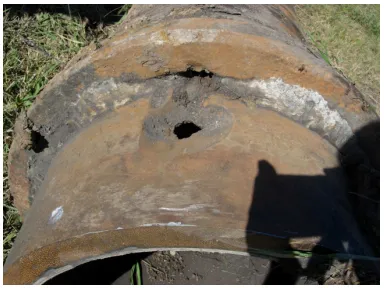
Hole failures in water mains typically consist of a small section being blown
out of the wall of a pipe as shown in Figure 2.11 or a small pin hole leak
occurring due to deterioration of the pipe wall shown in Figure 2.12.
Makar (2000) and Makar et al (2001) show that blowout holes may be caused
by corrosion only or a combination of corrosion and internal pressures. Hu
and Hubble (2007) distinguish between failures due to corrosion and internal
pressure and failures due to corrosion describing the former as blowouts and
[image:45.595.203.393.321.466.2]the latter as pinholes.
Figure 2.11 Blowout in a Ductile Iron Pipe
[image:45.595.198.399.531.666.2]Chapter 2 – Literature Review
Developing a Model to Predict Water Main Failures Page 31 Joint Failures
Joint failures include leaking joints, split or sheared collars and
disconnected joints. Figure 2.13 illustrates a pipe failure caused by a
perished lead joint.
Makar et al (2001) show that joint failures can be attributed to different
thermal coefficients of expansion for jointing compounds or the pushing of a
pipe spigot into the bell of the neighbouring pipe by compressive forces thus
[image:46.595.202.394.300.444.2]producing split bells.
Developing a Model to Predict Water Main Failures Page 32
2.3.5.
Summary
As the importance of understanding and preventing water main failures
comes to the fore, the number of studies on water main failures has been
increasing. A review of some of these studies has highlighted the
importance of maintaining complete and accurate water main failure
records. It is vital to record as much data as possible at the time of the
failure. In the past the value of this data wasn’t fully recognised and this is
reflected in the limited failure data available. As water main failure data
recording systems improve so too will the understanding of the mechanisms
that lead to water main failures.
As will be seen in the next section, failure modes and the mechanisms that
cause these failures play an important role in the development of water
Chapter 2 – Literature Review
Developing a Model to Predict Water Main Failures Page 33
2.4.
Water Main Failure Prediction Models
Many sources recognise the benefits of using modelling techniques to predict
water main failures. Organisations that have made significant progress in
this area include the NCRC in Canada and CSIRO in Australia. The purpose of
this part of the literature review is to investigate some of the techniques
used in existing water main failure prediction models.
2.4.1.
What is a Water Main Failure Prediction Model?
The ultimate aim of a water main failure prediction model is to predict the
time until failure for individual water mains taking into account the actual
physical conditions of a water main and its environment.
The cost and complexities of obtaining the necessary data for developing a
model to predict individual water main failures has meant this is not a
realistic option for most authorities. To overcome this, a number of
different failure prediction models using available data have been
developed to predict the average rate of water main failures for pipe
networks or pipe cohorts.
A comprehensive review of existing water main failure prediction models
was carried out by Rajani and Kleiner (1999) and Kleiner and Rajani (2000).
These reviews identified two types of failure prediction models – physically
Developing a Model to Predict Water Main Failures Page 34
2.4.2.
Physically Based Models
Physically based failure prediction models attempt to use physical
parameters to quantify the mechanisms that lead to pipe failure. The
advantage of physically based models is the output of the model reflects the
actual condition of the pipe and local environmental influences. The
harsher the conditions acting on the pipe are, the shorter it’s remaining
useful life. A negative to physically based models is that the methods used
are complex and require data that is difficult, if not impossible, for most
authorities to obtain.
Rajani and Kleiner (1999) describe physical mechanisms that influence the
structural performance and likelihood of failure of buried pipes including
pipe structural properties, internal loads, external loads and material
deterioration. Some models attempt only to address one or a few of these
mechanisms, while others attempt to take a more comprehensive approach.
Rajani and Kleiner’s study reviews research conducted on three physical
mechanisms frost loads, pipe-soil interaction and corrosion for inclusion in
failure prediction models.
Frost Loads
A physical mechanism that attempts to explain the high frequency of water
main failures in winter are frost loads. Rajani and Zhan (cited in Rajani and
Kleiner 1999) presented methods to estimate frost loads acting on buried
pipes in trenches. Frost loads are calculated using time, frost depth, frost
heave, trench geometry and the soil characteristics of the backfill and
trench sidewalls.
According to Rajani and Kleiner, calculated frost loads appear to agree with
field measurements although further validation is required. Methods used
Chapter 2 – Literature Review
Developing a Model to Predict Water Main Failures Page 35 the work by Rajani and Zhan helps to explain the effects of frost loads on
buried pipes.
Pipe-Soil Interaction
Another physical mechanism that attempts to explain the structural
performance of buried pipes is the pipe-soil interaction. Rajani et al (cited
by Rajani and Kleiner 1999) developed a pipe–soil interaction analysis model
to determine the in plane and longitudinal stresses acting on a pipe taking
into account pipe and soil characteristics, temperatures, internal pressures
and external loads. The model appears to be successful in explaining the
high frequency of failures during colder months and in small diameter
mains.
Rajani and Kleiner noted some limitations with the model including failure
to take into account soil shrinkage during dry months or existing pipe
degradation. Data required for the models is readily available except for
soil reaction moduli and ground temperatures.
Corrosion
A major physical mechanism that leads to water mains failures is corrosion.
Various studies have been conducted looking at explaining how corrosion
leads to failure including those by Kiefner and Vieth, Rajani et al and Kumar
et al (all cited by Rajani and Kleiner 1999).
Kiefner and Vieth developed an analytical failure model for steel pipes in
the gas industry to determine the pressure at which a corrosion pit would
fail. Measurements required for the model are expensive to obtain and it is
Developing a Model to Predict Water Main Failures Page 36 Rajani et al conducted an experimental study on cast iron pipe to determine
the nominal tensile stress at which fracture took place based on material
and corrosion pit dimensions. Further validation is required on this study.
Kumar et al proposed modifying for the water industry a corrosion status
index originally developed for the gas industry. More research needs to be
conducted into the validity of these methods.
Rajani and Kleiner further classified physically based models into
deterministic and probabilistic models.
Deterministic Models
Physical deterministic models attempt to relate corrosion pit depth and age
to remaining wall thickness. Various models have been proposed by Doleac,
Doleac et al, Randall-Smith et al and Rajani and Makar (all cited by Rajani
and Kleiner 1999).
Doleac et al developed a model based on the power function proposed by
Rossum (cited by Rajani and Kleiner 1999) to relate corrosion pit depth with
pipe age to predict the remaining wall thickness of pit cast mains. The
average wall thickness was then used to calculate pipe hoop stress. Pipe
failure was defined as the point where a pressure surge of 50% of the
working pressure raised the hoop stress to the material’s elastic limit.
Randall et al proposed a linear model to estimate the remaining service life
or residual life of water mains. This model was based on an assumption that
corrosion pit depth has a constant growth rate. Rajani and Kleiner question
the validity of this assumption.
Rajani and Makar described a methodology to estimate the remaining
service life of grey cast iron mains. This method was based on studies
Chapter 2 – Literature Review
Developing a Model to Predict Water Main Failures Page 37 corrosion and employed methods developed by Doleac et al. The method
proposed by Rajani and Makar is limited by uncertainties in estimating
corrosion rates and needs to be validated against field data.
Probabilistic Models
Physical deterministic models attempt to predict the probability of failure
based on parameters such as residual strength. Rajani and Kleiner cite a
number of physical probabilistic models such as those by Ahammed and
Melchers (1995) and Hong (1997. Many of these have been developed for
the oil and gas industry and do not strictly apply to water mains. Another
limitation of probabilistic models is the difficulty in predicting the effects of
corrosion.
In summary, Rajani and Kleiner conclude that physically based modelling is
more robust than other methods and the ultimate goal in failure prediction
as it eliminates the need for statistics in identifying breakage patterns.
However, physically based modelling has a number of limitations including
complex methods and data that is impossible or expensive to obtain.
2.4.3.
Statistical Models
The study by Kleiner and Rajani (2000) defines statistical models as those
that use available historical data on past failures to identify pipe breakage
patterns. These patterns are then assumed to continue into the future in
order to predict the future breakage rate of a water main or its probability
of breakage. The life of a buried pipe is described by the bathtub curve
illustrated in Figure 2.14. The bathtub curve contains three distinct phases
including burn in, in usage and wear out. Most models tend to deal with the
wear out phase only because failure records are not usually available for the
Developing a Model to Predict Water Main Failures Page 38 Figure 2.14 – Life of a Buried Pipe
Kleiner and Rajani consider two classes of statistical models – deterministic
and probabilistic.
Deterministic Models
Kleiner and Rajani looked at two types of deterministic models including
time-exponential and time linear models.
Time exponential models attempt to relate a pipe’s breakage to the
exponent of its age. Shamir and Howard (1979) proposed a simple two
parameter model. Walski and Pelliccia (1982) sought to enhance this model
by proposing extra parameter to take into account previous breakages and
different breakage rates in different size mains. Clark et al (1982) proposed
further improvements by transforming it into a two phase model comprising
of a linear equation describing time until first break and an exponential
model to describe subsequent failures. Time linear models assume a linear
relationship between pipe breaks and age. Models have been developed by
Kettler and Goulter (1985), McMullen (1982) and Jacobs and Karney (1994).
Kleiner and Rajani observed that although simple to apply, deterministic
Chapter 2 – Literature Review
Developing a Model to Predict Water Main Failures Page 39 Probabilistic Models
Kleiner and Rajani looked at two groups of probabilistic models -
Multi-variate and Single-Multi-variate Group-Processing Models. Limitations of these
models are that they require significant technical expertise and data to
apply and hence will not be discussed in detail here.
Multi-variate probabilistic models include proportional hazard, accelerated
lifetime and time dependent poisson models. These models can consider
many covariates influencing breakage patterns which means the need to
group water mains into homogenous groups is reduced.
Probabilistic single-variate models include cohort survival, bayesian
diagnostic, break history as a semi-Markov process and break clustering
models. These models use probabilistic processes on grouped data to derive
probabilities of pipe life expectancy, probability of breakages and analysis
of break clustering phenomenon.
Kleiner and Rajani conclude that despite the limitations of statistical
methods of failure prediction it remains an economically viable approach for
analysing failures in smaller diameter mains.
2.4.4.
Alternative Models/ Improvements to Existing Models
Along with the models reviewed by Rajani and Kleiner (1999) and Kleiner
and Rajani (2000) a number of other models have been suggested. Achim et
al (2007) proposed the use of neural networks to predict water pipe asset
life. Preliminary findings suggest that more accurate results can be
achieved than those obtained from common statistical models. Studies are
continuing. Dehgan et al (2008) proposed a non-parametric approach for