U
NIVERSITY OF
S
OUTHERN
Q
UEENSLAND
Faculty of Engineering and Surveying
Managing the Effect of Infiltration
Variability on the Performance of Surface
Irrigation
A dissertation submitted by
Malcolm Horace Gillies
For the Award of
Doctor of Philosophy
ii
ABSTRACT
Infiltration variability is a major issue during the design phase and management for all
types of irrigation systems. Infiltration is of particular significance for furrow
irrigation and other forms of surface irrigation as the soil intake rate at any given
position not only determines the depth applied but also governs the distribution of
water to other locations in the field. Despite this, existing measurement and evaluation
procedures generally assume homogeneous soil infiltration rates across the field to
simplify data collection and computational requirements. This study was conducted to
(a) determine whether spatial and temporal variations in soil infiltration characteristics
have a significant impact on the performance of surface irrigation and (b) identify
more appropriate management strategies that account for this variability and
substantially improve irrigation performance.
The soil infiltration rate is typically expressed as an empirical function of opportunity
time. The infiltration function parameters cannot be directly measured but are
commonly estimated from field hydraulic measurements using an appropriate
simulation model. The volume balance model as used in the inverse solution for
infiltration (e.g. Two Point Method) was modified to enable runoff data collected
during the inflow period to be used in the estimation of the infiltration parameters.
The resulting model, IPARM also accommodates the full (variable) inflow
hydrograph rather than relying on a constant inflow assumption. Inclusion of runoff
data in the inverse solution improved the accuracy of the infiltration curve during the
runoff phase and hence offered the greatest benefit where the irrigation time exceeded
the completion of advance. Analysis of field data collected from multiple furrows at a
single site indicated that accounting for the variable inflow in IPARM both reduced
the variability (e.g. reduction in the coefficient of variance (CV) of cumulative
infiltrated depths of 18.6% and 11.5% at opportunity times of 100 and 500 minutes,
respectively) and standardised the shape of the estimated infiltration curves. Hence, a
significant proportion of the apparent variability in soil infiltration rates was shown to
be a consequence of the constant inflow assumption. Sensitivity analysis indicated
that IPARM is highly sensitive to the runoff measurements but is not influenced by
iii
estimated infiltration parameters using the full hydrodynamic model SIRMOD
showed that the inclusion of runoff data in the inverse procedure did not compromise
the ability to predict the measured advance trajectory but significantly improved the
fit to the measured runoff volumes (average decrease in absolute error of simulated
runoff volumes of 84%). Whereas the use of runoff data enabled SIRMOD to estimate
runoff volumes, accounting for variable inflow improved the fit of the predicted
runoff rates to the shape of the measured outflow hydrograph.
Field data collected from several sites across the Darling Downs, Queensland has
shown that the infiltration rates vary significantly (e.g. by up to 65% at 500 minutes),
both spatially between furrows and temporally over the season. For the sites studied,
the spatial variance in infiltration was surpassed by the seasonal variance (e.g. average
CV of infiltration of 33.1% compared to 12.5%) but no consistent trends were
identified. It was found that the lognormal distribution provided the best fit for the
variance in the infiltration curves which was in turn strongly related to the statistical
distribution of the infiltration term of the volume balance. From this research, a
procedure was developed to predict the infiltration parameters using a single advance
point and any number of “known” infiltration curves from the same field.
The IrriProb model was developed to extend the process of simulation from a single
furrow scale to the whole field scale. IrriProb performs the full hydrodynamic
simulation for multiple independent furrows which are combined to form a spatial
representation of the water application. Each furrow can have a unique infiltration
rate, inflow rate (Q), time to cut off (TCO) and soil moisture deficit. Validation of
IrriProb using multiple sets of field data demonstrated that the single furrow
simulations failed to predict the true whole field irrigation performance (e.g. furrow
distribution uniformity (DU) between 72.2% and 86.2% compared to the whole field
DU of 64.8%).
An optimisation routine was developed within IrriProb to maximise irrigation
performance through identification of optimal values of Q and TCO. The optimisation
iv
performance criteria. The user selects the appropriate performance terms and the
optimal management is determined through a graphical overlay of the complying
ranges of Q and TCO. Hence, the objective function of IrriProb retains the importance
of each individual performance term, an advantage over those based on numerical
combinations of weighted terms. Simulation of the whole field application under
practical ranges of Q and TCO demonstrated the complex interactions between the
performance indices (e.g. the trade off between requirement efficiency (RE) and
application efficiency (AE)). In cases of low infiltration variability it was possible to
optimise the whole field performance using a single value of Q and TCO. However,
under increased infiltration variability it was more appropriate to manage the field
using two or more different management strategies. Irrigation optimisation based on
measurements from a single furrow or the average infiltration curve, cannot identify
the optimal combination of Q and TCO for the whole field. Simulation of field
management based on the optimisation strategy obtained from single furrow
measurements results in lower whole field performance than estimated from
simulation of the single furrow data (e.g. field RE, AE and distribution uniformity of
the root zone up to 26%, 18% and 66% lower than predicted). Field trials were used to
demonstrate the ability to estimate whole field infiltration variability, evaluate whole
field irrigation performance and optimise whole field irrigation management while
v
CERTIFICATION OF DISSERTATION
I certify that the ideas, designs, experimental work, software code, results, analyses
and conclusions presented in this dissertation are entirely my own effort, except
where otherwise indicated and acknowledged.
I further certify that the work is original and has not been previously submitted for
assessment in any other course or institution, except where specifically stated.
____________________________ ___________
Malcolm Horace Gillies, Candidate
Date
Endorsement:
____________________________ ___________
Prof. Rod Smith, Principal supervisor
Date
____________________________ ___________
vi
ACKNOWLEDGEMENTS
The completion of this research is a testimonial to the assistance I have received from
a great many people. I would like to take the time here to express my gratitude to
some of those who have helped and inspired me during the past three and a half years.
I would like to express my thanks to my supervisors Prof. Rod Smith and Prof. Steven
Raine for their guidance during the last few years. I sincerely thank them for their
enthusiasm, technical assistance and patience during my PhD studies. Finally I would
like to thank Steve and Rod for the proof reading of this dissertation, I know that my
English expression can be a little crude at the best of times.
To the staff at the NCEA for their support during my research and help in the
collection of irrigation data. In particular to Dr J. McHugh and Dr J. Eberhard for
assistance in collection of data for the Lagoona field trial. I would also like to thank
John Hornbuckle (CSIRO) for use of his field data. A major part of this research
would have not been possible without the simulation model and guidance provided by
David McClymont.
I acknowledge the scholarship funding provided by the University of Southern
Queensland and the Australian Federal Government. Also to the CRC for Irrigation
Futures for providing additional funding for operational costs. I am grateful to the
members of the CRC IF for their support and constructive criticism during my study.
To my brother and sisters and especially Mum and Dad who have encouraged me
throughout my life. I am forever indebted to you for all your support and inspiration
that has led me to this point.
Finally, to my wife Dennielle, words cannot express the appreciation I have for your
love and understanding over the past few years. To you Dennielle, I dedicate this
vii
LIST OF PUBLICATIONS FROM THIS
RESEARCH
Gillies, M.H. and Smith, R.J. (2005), Infiltration parameters from surface irrigation
advance and run-off data,
Irrigation Science
, Vol. 24, No.1, pp 25-35.
Gillies, M.H. and Smith, R.J. and Raine, S.R. (2006) Is it possible to extract
infiltration rates for variable inflow furrow irrigation? National Conference, Irrigation
Association of Australia. 9-11 May, Brisbane. pp 63-64.
Gillies, M.H. and Smith, R.J. and Raine, S.R. (2007), Accounting for temporal inflow
variation in the inverse solution for infiltration in surface irrigation,
Irrigation
Table of Contents
viii
TABLE OF CONTENTS
ABSTRACT ...II
CERTIFICATION OF DISSERTATION ... V
ACKNOWLEDGEMENTS ...VI
LIST OF PUBLICATIONS FROM THIS RESEARCH... VII
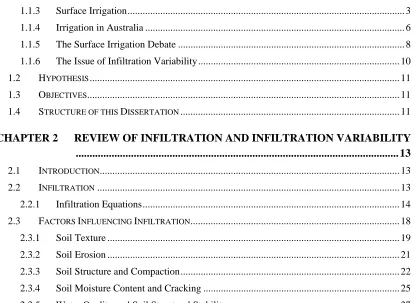
[image:8.595.112.526.427.730.2]TABLE OF CONTENTS ... VIII
TABLE OF FIGURES... XV
LIST OF TABLES ...XIX
LIST OF ABBREVIATIONS ... XXII
LIST OF SYMBOLS ...XXIII
CHAPTER 1 INTRODUCTION ... 1
1.1 BACKGROUND... 1
1.1.1 Irrigation... 1
1.1.2 Irrigation Performance... 2
1.1.3 Surface Irrigation... 3
1.1.4 Irrigation in Australia ... 6
1.1.5 The Surface Irrigation Debate ... 8
1.1.6 The Issue of Infiltration Variability ... 10
1.2 HYPOTHESIS... 11
1.3 OBJECTIVES... 11
1.4 STRUCTURE OF THIS DISSERTATION... 11
CHAPTER 2 REVIEW OF INFILTRATION AND INFILTRATION VARIABILITY ... 13
2.1 INTRODUCTION... 13
2.2 INFILTRATION... 13
2.2.1 Infiltration Equations... 14
2.3 FACTORS INFLUENCING INFILTRATION... 18
2.3.1 Soil Texture ... 19
2.3.2 Soil Erosion ... 21
2.3.3 Soil Structure and Compaction... 22
2.3.4 Soil Moisture Content and Cracking ... 25
Table of Contents
ix
2.3.6 Soil Organisms ... 31
2.3.7 Other Irrigation Water Effects ... 33
2.4 MEASURING SOIL INFILTRATION... 34
2.4.1 Soil Moisture and Laboratory Measurements... 34
2.4.2 Field Infiltrometers... 35
2.4.3 Inverse approach... 39
2.5 INFILTRATION VARIABILITY... 40
2.5.1 Spatial Variability... 41
2.5.2 Seasonal Variability... 43
2.6 EFFECT OF INFILTRATION VARIABILITY ON IRRIGATION PERFORMANCE... 46
2.6.1 Consequence of Assuming Spatially Average Infiltration... 46
2.6.2 Using a Single Furrow to Estimate the Irrigation Performance... 47
2.6.3 Variability and Performance... 47
2.6.4 Impact of Infiltration Variability on Crop Yields and Productivity... 49
2.7 ESTIMATING INFILTRATION RATES WHILE ACCOUNTING FOR INFILTRATION VARIABILITY... 51
2.7.1 Relating Infiltration to Other Parameters... 51
2.7.2 Estimating Infiltration Variability through Statistical Analysis ... 52
2.7.3 Real-Time Estimation of Infiltration Parameters... 56
2.7.4 Cost of Sampling ... 56
2.7.5 Accuracy versus Sample Number... 57
2.8 IRRIGATION STRATEGIES TO REDUCE INFILTRATION VARIABILITY AND/OR IMPROVE PERFORMANCE... 58
2.8.1 Surge Irrigation... 58
2.8.2 Cutback Irrigation... 61
2.8.3 Increased Discharge... 62
2.8.4 Alternate and Wide Spaced Furrow... 62
2.8.5 Cablegation... 64
2.8.6 Deficit Irrigation... 64
2.8.7 Real-Time Control... 65
2.8.8 Application of Polyacrylamide ... 67
2.9 CONCLUSION... 67
CHAPTER 3 HYDRAULIC SIMULATION OF FURROW IRRIGATION... 69
3.1 PURPOSE OF THE SIMULATION MODEL... 69
3.1.1 Identification of Field Characteristics ... 69
3.1.2 Evaluation of the Current Irrigation Performance ... 69
3.1.3 Optimisation of Field Design and Management ... 70
3.2 HYDRAULIC MODEL THEORY... 70
3.2.1 Full Hydrodynamic Model ... 72
Table of Contents
x
3.2.3 Kinematic Wave Model... 73
3.2.4 Volume Balance Model ... 73
3.2.5 Simulating Longitudinal (Within Furrow) Variation... 74
3.3 ESTIMATING INFILTRATION THROUGH INVERSE SIMULATION OF SURFACE IRRIGATION... 76
3.3.1 Full Hydrodynamic Model ... 76
3.3.2 Zero Inertia Model... 77
3.3.3 Volume Balance Model ... 77
3.3.4 Discussion of the Inverse Procedures ... 79
3.4 APPARENT INFILTRATION VARIABILITY IN THE INVERSE SOLUTION AND SIMULATION PROCESSES... 80
3.4.1 Inflow Rate ... 80
3.4.2 Wetted Perimeter ... 82
3.4.3 Surface Storage... 85
3.5 SIMULATION MODELS TO EVALUATE AND OPTIMISE PERFORMANCE... 86
3.5.1 SIRMOD ... 86
3.5.2 SRFR ... 87
3.5.3 FIDO... 87
3.5.4 Other Models ... 88
3.6 CONCLUSIONS... 89
CHAPTER 4 DEVELOPMENT OF IPARM ... 90
4.1 INTRODUCTION... 90
4.2 VOLUME BALANCE MODEL FOR INVERSE SOLUTION OF INFILTRATION... 91
4.2.1 Volume Balance Model ... 91
4.2.2 Advance Phase ... 91
4.2.3 Runoff Phase ... 97
4.2.4 Variable Inflow... 99
4.3 IPARMMODEL DEVELOPMENT... 101
4.3.1 Advance Phase ... 101
4.3.2 Runoff Phase ... 103
4.3.3 Depletion and Recession Phases... 105
4.3.4 Variable Inflow... 107
4.3.5 Objective function ... 111
4.3.6 Solution Scheme... 112
4.3.7 The IPARM Computer Software ... 115
4.4 EVALUATION OF IPARM ... 117
4.4.1 Input Data ... 117
4.4.2 Estimation of Infiltration Parameters... 121
4.4.3 Validation of the Surface Storage Smoothing Approach... 127
Table of Contents
xi
4.5.1 Prediction of Advance Trajectory... 130
4.5.2 Prediction of the Runoff Hydrograph ... 133
4.5.3 Prediction of Irrigation Performance and Distribution of Infiltrated Depths... 135
4.6 INFLOW AS A SOURCE OF VARIABILITY IN SPATIAL ESTIMATES OF INFILTRATION... 137
4.7 SENSITIVITY OF IPARM TO SECTION OF INPUT DATA POINTS... 140
4.7.1 Introduction ... 140
4.7.2 Selection of Advance Measurements... 141
4.7.3 Selection of Runoff Measurements ... 142
4.7.4 Weighting of Runoff Compared to Advance Data ... 144
4.8 DISCUSSION... 145
4.8.1 Data Collection Recommendations ... 145
4.8.2 IPARM User Intervention ... 147
4.8.3 Parameter Starting Estimates... 148
4.8.4 Conclusion... 148
CHAPTER 5 FIELD VARIABILITY OF INFILTRATION... 150
5.1 INTRODUCTION... 150
5.2 PREVIOUS ATTEMPTS TO ASSESS INFILTRATION VARIABILITY... 151
5.3 DESCRIBING INFILTRATION VARIABILITY WITH STATISTICAL TECHNIQUES... 152
5.3.1 Review of Statistical Distribution Models... 152
5.3.2 Sampling Distribution, a Tool to Determine Required Number of Measurements ... 156
5.4 MULTIPLE FURROW FIELD DATA... 157
5.4.1 Collection of Field Data using Irrimate™ Equipment... 157
5.4.2 Downs... 159
5.4.3 Chisholm ... 160
5.4.4 Turner ... 160
5.4.5 Additional Field Data for Seasonal Trends... 161
5.4.6 Estimating Surface Storage using Manning’s n... 161
5.5 ESTIMATION OF THE INFILTRATION CURVES... 162
5.5.1 Downs... 162
5.5.2 Chisholm ... 163
5.5.3 Turner ... 164
5.6 VARIABILITY OF INFILTRATION... 166
5.6.1 Variability between Infiltration Curves ... 166
5.6.2 Seasonal (Between Irrigation Events) Infiltration Variability ... 167
5.6.3 Significance of Temporal and Spatial Variability ... 170
5.6.4 Seasonal Compared to Spatial Variability ... 171
5.7 MINIMUM NUMBER OF INFILTRATION CURVES REQUIRED TO ESTIMATE WHOLE FIELD VARIABILITY... 173
Table of Contents
xii
5.7.2 Sampling Distributions ... 174
5.7.3 Number of Field Samples Required to Reach a Given Accuracy... 176
5.8 DESCRIBING INFILTRATION VARIABILITY USING STATISTICAL DISTRIBUTION FUNCTIONS.. 181
5.8.1 Statistical Test Methodology ... 181
5.8.2 Downs... 182
5.8.3 Chisholm ... 185
5.8.4 Turner ... 186
5.8.5 Discussion ... 187
5.9 ESTIMATING INFILTRATION USING PROBABILITY... 188
5.9.1 Development of an Infiltration Prediction Procedure... 189
5.9.2 Validation of the Infiltration Prediction Procedure ... 195
5.9.3 The Predictive Procedure Compared to Scaling ... 199
5.10 CONCLUSIONS... 200
CHAPTER 6 WHOLE FIELD SIMULATION MODEL ... 202
6.1 INTRODUCTION... 202
6.2 COMPONENTS OF THE SIMULATION MODEL... 203
6.2.1 Introduction to IrriProb... 203
6.2.2 FIDO Simulation Engine ... 204
6.2.3 Calculation of Performance Parameters ... 206
6.2.4 Calculation and Visualisation of the Whole Field Performance... 210
6.3 SURFACE IRRIGATION OPTIMISATION FRAMEWORK... 212
6.3.1 Development of the Optimisation Tool ... 212
6.3.2 Validation of the IrriProb Simulation Model... 215
6.4 SIMPLE FURROW AVERAGES CANNOT REPRESENT THE FIELD PERFORMANCE... 216
6.5 IRRIGATION PERFORMANCE IN HETEROGENEOUS CONDITIONS UNDER MEASURED FIELD MANAGEMENT... 218
6.6 CONCLUSION... 220
CHAPTER 7 OPTIMISING IRRIGATION PERFORMANCE CONSIDERING INFILTRATION VARIABILITY... 222
7.1 INTRODUCTION... 222
7.2 THE FURROW IRRIGATION OPTIMISATION PROCESS... 223
7.2.1 Factors to Consider in Addition to the Standard Performance Terms ... 223
7.2.2 Existing Techniques to Optimise Irrigation Management ... 225
7.2.3 Optimising Irrigation Performance at the Field Scale ... 226
7.3 THE OPTIMISATION OBJECTIVE FUNCTION... 227
7.3.1 Arithmetic Objective Function ... 227
7.3.2 Boolean Objective Function ... 229
7.3.3 Optimisation Methodology... 230
Table of Contents
xiii
7.4.1 Interactions between Inflow and Performance ... 231
7.4.2 The Trade-off between the Performance Terms in the Objective Function... 234
7.4.3 Movement of the Optimised Point in the Inflow Rate/Inflow Time Domain ... 237
7.5 CAN THE OPTIMAL FIELD MANAGEMENT BE IDENTIFIED FROM A SINGLE FURROW? ... 240
7.5.1 Introduction ... 240
7.5.2 Furrow Based Performance Terms Compared to Field Values ... 240
7.5.3 Example: Optimising the Downs Field using Opt 1 ... 242
7.5.4 Summary of Results ... 244
7.5.5 Optimising Using the Average Infiltration Curve ... 246
7.6 IMPROVING THE PERFORMANCE OF FURROW IRRIGATION USING RECIPE MANAGEMENT STRATEGIES... 247
7.7 OPTIMISING IRRIGATION MANAGEMENT IN HETEROGENEOUS CONDITIONS USING THE WHOLE FIELD APPROACH... 250
7.8 RELATIONSHIPS BETWEEN INDIVIDUAL FURROW OPTIMA AND THE WHOLE FIELD OPTIMUM... ... 252
7.9 CONCLUSION... 256
CHAPTER 8 PRACTICAL DEMONSTRATION: THE LAGOONA FIELD TRIAL . ... 259
8.1 INTRODUCTION... 259
8.2 FIELD DATA... 259
8.3 CALIBRATION OF THE INFILTRATION CURVE... 262
8.3.1 Estimation of Infiltration Curves using IPARM... 262
8.3.2 Minimum Distance for Field Measurement... 263
8.3.3 Predicting Infiltration Parameters using the Final Advance Time... 265
8.4 OPTIMISING PERFORMANCE... 266
8.4.1 Current Performance ... 266
8.4.2 Optimising the Time to Cut-off ... 268
8.4.3 Optimising Inflow ... 269
8.5 SENSITIVITY OF OPTIMISATION PROCESS TO UNCERTAINTIES IN FIELD MEASUREMENTS.... 270
8.6 CONCLUSIONS... 271
CHAPTER 9 CONCLUSIONS AND RECOMMENDATIONS... 272
9.1 CONCLUSIONS FROM THIS RESEARCH... 272
9.1.1 Estimation of Infiltration Parameters from Field Measurements... 272
9.1.2 Statistical Nature of Infiltration Variability... 274
9.1.3 Whole Field Simulation and Optimisation Model ... 275
9.2 KEY RESEARCH OUTCOMES... 278
9.3 RECOMMENDATIONS FOR FURTHER RESEARCH... 278
9.3.1 Inverse Techniques to Estimate Infiltration... 279
Table of Contents
xiv
9.3.3 Statistical Description of Infiltration Variability ... 281
9.3.4 Simulation Models for Heterogeneous Conditions... 281
LIST OF REFERENCES ... 283
APPENDIX A FIELD DATA FOR IPARM VALIDATION... 295
APPENDIX B C++ CODE FOR KOSTIAKOVCALIBRATIONOBJECT... 307
APPENDIX C EXTRA RESULTS FOR IPARM VALIDATION ... 332
APPENDIX D FIELD DATA FOR INFILTRATION VARIABILITY AND WHOLE FIELD SIMULATION ... 335
APPENDIX E RESULTS FROM SAMPLE SIZE ANALYSIS ... 346
APPENDIX F RESULTS FROM INFILTRATION PREDICTION... 349
APPENDIX G VALIDATION OF THE FIDO SIMULATION ENGINE USED BY IRRIPROB ... 352
APPENDIX H IRRIPROB: IRRIGATION PERFORMANCE UNDER MEASURED CONDITIONS... 358
Table of Figures
xv
TABLE OF FIGURES
Figure 1-1 Large scale level basin irrigation of rice/wheat field in Griffith region, southern
NSW ...5
Figure 1-2 Furrow irrigation of cotton near Moree, northern NSW showing siphon application ...5
Figure 2-1 Cross section view of the (a) single ring and (b) double ring infiltrometer (Reynolds et al. 2002) ...36
Figure 2-2 Sample inflow hydrographs for alternative inflow regimes ...58
Figure 3-1 Control volume for Saint-Venant equations...71
Figure 3-2 Screenshot of SIRMOD III: simulation of the Kooba field with variable inflow (infiltration estimated using advance and runoff with variable inflow) ...86
Figure 4-1 Volume balance model during the advance phase ...91
Figure 4-2 Explanation of the Surface Storage Smoothing calculation ...110
Figure 4-3 Screen shot of main user interface for IPARM version 1.1.2...116
Figure 4-4 Screen shot of main user interface for IPARM version 2 ...116
Figure 4-5 Measured inflow hydrographs for IPARM validation...119
Figure 4-6 Calibrated infiltration curves for IPARM validation...124
Figure 4-7 Cumulative infiltrated volumes comparing infiltration from the volume balance (actual/measured) with predicted infiltration from parameters estimated from the advance and storage phases ...126
Figure 4-8 Comparing infiltration curves estimated using the variable inflow hydrograph between original surface storage and surface storage smoothing (SSS) technique ...128
Figure 4-9 Comparing the surface storage smoothing (SSS) calculation with the standard variable and constant inflow approach (Merungle Hill data) ...129
Figure 4-10 Measured and SIRMOD simulated advance (Benson data) ...131
Figure 4-11 Measured and SIRMOD simulated advance (Printz data) ...131
Figure 4-12 Measured and predicted runoff hydrographs using different infiltration parameters ...134
Figure 4-13 Effect of infiltration parameter estimation on the predicted water depth profile (Merungle Hill data)...137
Figure 4-14 Measured inflow hydrographs for Kooba site ...138
Figure 4-15 Infiltration curves for the Kooba site estimated using advance data with constant inflow ...139
Table of Figures
xvi
Figure 4-17 Infiltration curves estimated using different advance measurements (Merkley
data)...143
Figure 4-18 Infiltration curves estimated using different runoff measurements (Merkley data)...143
Figure 4-19 Sensitivity of IPARM to the weighting (w) between runoff and advance errors (Merkley data) ...145
Figure 5-1 Irrimate™ siphon flow meter ...158
Figure 5-2 Irrimate™ advance sensor...158
Figure 5-3 Irrimate™ flume flow meter ...158
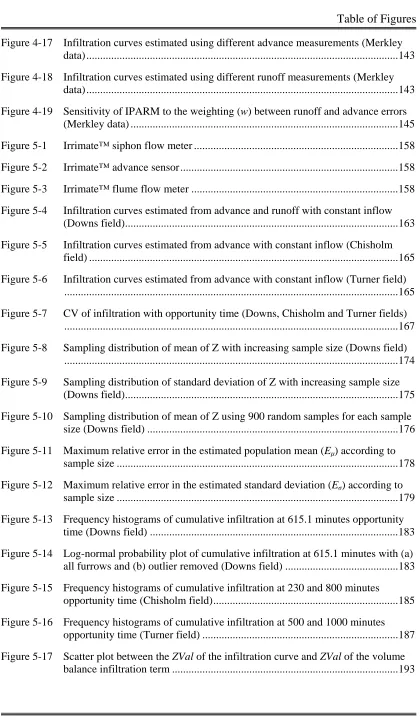
Figure 5-4 Infiltration curves estimated from advance and runoff with constant inflow (Downs field)...163
Figure 5-5 Infiltration curves estimated from advance with constant inflow (Chisholm field) ...165
Figure 5-6 Infiltration curves estimated from advance with constant inflow (Turner field) ...165
Figure 5-7 CV of infiltration with opportunity time (Downs, Chisholm and Turner fields) ...167
Figure 5-8 Sampling distribution of mean of Z with increasing sample size (Downs field) ...174
Figure 5-9 Sampling distribution of standard deviation of Z with increasing sample size (Downs field)...175
Figure 5-10 Sampling distribution of mean of Z using 900 random samples for each sample size (Downs field) ...176
Figure 5-11 Maximum relative error in the estimated population mean (Eµ) according to sample size ...178
Figure 5-12 Maximum relative error in the estimated standard deviation (Eσ) according to sample size ...179
Figure 5-13 Frequency histograms of cumulative infiltration at 615.1 minutes opportunity time (Downs field) ...183
Figure 5-14 Log-normal probability plot of cumulative infiltration at 615.1 minutes with (a) all furrows and (b) outlier removed (Downs field) ...183
Figure 5-15 Frequency histograms of cumulative infiltration at 230 and 800 minutes opportunity time (Chisholm field)...185
Figure 5-16 Frequency histograms of cumulative infiltration at 500 and 1000 minutes opportunity time (Turner field) ...187
Table of Figures
xvii
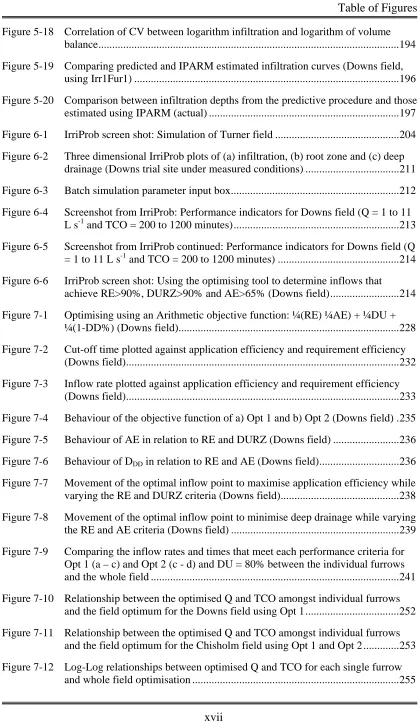
Figure 5-18 Correlation of CV between logarithm infiltration and logarithm of volume balance...194
Figure 5-19 Comparing predicted and IPARM estimated infiltration curves (Downs field, using Irr1Fur1) ...196
Figure 5-20 Comparison between infiltration depths from the predictive procedure and those estimated using IPARM (actual) ...197
Figure 6-1 IrriProb screen shot: Simulation of Turner field ...204
Figure 6-2 Three dimensional IrriProb plots of (a) infiltration, (b) root zone and (c) deep drainage (Downs trial site under measured conditions) ...211
Figure 6-3 Batch simulation parameter input box...212
Figure 6-4 Screenshot from IrriProb: Performance indicators for Downs field (Q = 1 to 11 L s-1 and TCO = 200 to 1200 minutes)...213
Figure 6-5 Screenshot from IrriProb continued: Performance indicators for Downs field (Q = 1 to 11 L s-1 and TCO = 200 to 1200 minutes) ...214
Figure 6-6 IrriProb screen shot: Using the optimising tool to determine inflows that achieve RE>90%, DURZ>90% and AE>65% (Downs field)...214
Figure 7-1 Optimising using an Arithmetic objective function: ¼(RE) ¼AE) + ¼DU + ¼(1-DD%) (Downs field)...228
Figure 7-2 Cut-off time plotted against application efficiency and requirement efficiency (Downs field)...232
Figure 7-3 Inflow rate plotted against application efficiency and requirement efficiency (Downs field)...233
Figure 7-4 Behaviour of the objective function of a) Opt 1 and b) Opt 2 (Downs field) .235
Figure 7-5 Behaviour of AE in relation to RE and DURZ (Downs field) ...236
Figure 7-6 Behaviour of DDD in relation to RE and AE (Downs field)...236
Figure 7-7 Movement of the optimal inflow point to maximise application efficiency while varying the RE and DURZ criteria (Downs field)...238
Figure 7-8 Movement of the optimal inflow point to minimise deep drainage while varying the RE and AE criteria (Downs field) ...239
Figure 7-9 Comparing the inflow rates and times that meet each performance criteria for Opt 1 (a – c) and Opt 2 (c - d) and DU = 80% between the individual furrows and the whole field ...241
Figure 7-10 Relationship between the optimised Q and TCO amongst individual furrows and the field optimum for the Downs field using Opt 1...252
Figure 7-11 Relationship between the optimised Q and TCO amongst individual furrows and the field optimum for the Chisholm field using Opt 1 and Opt 2 ...253
Table of Figures
xviii
Figure 8-1 Advance meter at 0 m (head-ditch) in Lagoona trial...260
Figure 8-2 Lagoona field trial layout ...261
Figure 8-3 Time taken to reach final advance point (761 m) for the Lagoona field ...262
Figure 8-4 Infiltration curves for Lagoona estimated using IPARM ...263
Figure 8-5 Correlogram of final advance times (761 m) for Lagoona...264
Figure 8-6 Predicted infiltration curves for Lagoona...266
Figure E.1 Chisholm: Sampling distributions of the mean ...347
Figure E.2 Chisholm: Sampling distributions of the standard deviation...347
Figure E.3 Turner: Sampling distributions of the mean...348
Figure E.4 Turner: Sampling distributions of the standard deviation ...348
Figure G.1 Simulated advance trajectories (Downs, Irr2 Fur3) ...354
Figure G.2 Simulated runoff hydrographs (Downs, Irr2 Fur3) ...354
List of Tables
xix
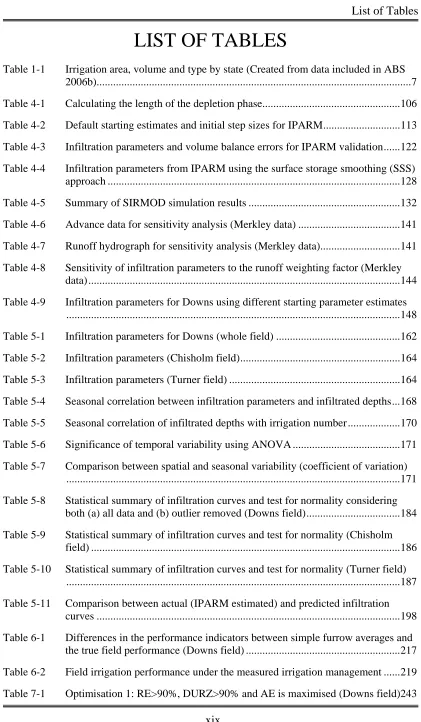
[image:19.595.105.526.44.766.2]LIST OF TABLES
Table 1-1 Irrigation area, volume and type by state (Created from data included in ABS
2006b)...7
Table 4-1 Calculating the length of the depletion phase...106
Table 4-2 Default starting estimates and initial step sizes for IPARM...113
Table 4-3 Infiltration parameters and volume balance errors for IPARM validation...122
Table 4-4 Infiltration parameters from IPARM using the surface storage smoothing (SSS) approach ...128
Table 4-5 Summary of SIRMOD simulation results ...132
Table 4-6 Advance data for sensitivity analysis (Merkley data) ...141
Table 4-7 Runoff hydrograph for sensitivity analysis (Merkley data)...141
Table 4-8 Sensitivity of infiltration parameters to the runoff weighting factor (Merkley data)...144
Table 4-9 Infiltration parameters for Downs using different starting parameter estimates ...148
Table 5-1 Infiltration parameters for Downs (whole field) ...162
Table 5-2 Infiltration parameters (Chisholm field)...164
Table 5-3 Infiltration parameters (Turner field) ...164
Table 5-4 Seasonal correlation between infiltration parameters and infiltrated depths...168
Table 5-5 Seasonal correlation of infiltrated depths with irrigation number...170
Table 5-6 Significance of temporal variability using ANOVA ...171
Table 5-7 Comparison between spatial and seasonal variability (coefficient of variation) ...171
Table 5-8 Statistical summary of infiltration curves and test for normality considering both (a) all data and (b) outlier removed (Downs field)...184
Table 5-9 Statistical summary of infiltration curves and test for normality (Chisholm field) ...186
Table 5-10 Statistical summary of infiltration curves and test for normality (Turner field) ...187
Table 5-11 Comparison between actual (IPARM estimated) and predicted infiltration curves ...198
Table 6-1 Differences in the performance indicators between simple furrow averages and the true field performance (Downs field) ...217
Table 6-2 Field irrigation performance under the measured irrigation management ...219
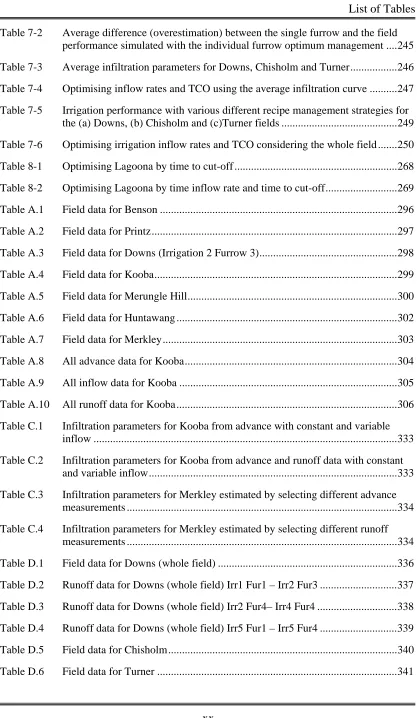
List of Tables
[image:20.595.108.525.46.764.2]xx
Table 7-2 Average difference (overestimation) between the single furrow and the field
performance simulated with the individual furrow optimum management ....245
Table 7-3 Average infiltration parameters for Downs, Chisholm and Turner...246
Table 7-4 Optimising inflow rates and TCO using the average infiltration curve ...247
Table 7-5 Irrigation performance with various different recipe management strategies for the (a) Downs, (b) Chisholm and (c)Turner fields ...249
Table 7-6 Optimising irrigation inflow rates and TCO considering the whole field ...250
Table 8-1 Optimising Lagoona by time to cut-off ...268
Table 8-2 Optimising Lagoona by time inflow rate and time to cut-off...269
Table A.1 Field data for Benson ...296
Table A.2 Field data for Printz...297
Table A.3 Field data for Downs (Irrigation 2 Furrow 3)...298
Table A.4 Field data for Kooba...299
Table A.5 Field data for Merungle Hill...300
Table A.6 Field data for Huntawang ...302
Table A.7 Field data for Merkley...303
Table A.8 All advance data for Kooba...304
Table A.9 All inflow data for Kooba ...305
Table A.10 All runoff data for Kooba...306
Table C.1 Infiltration parameters for Kooba from advance with constant and variable inflow ...333
Table C.2 Infiltration parameters for Kooba from advance and runoff data with constant and variable inflow...333
Table C.3 Infiltration parameters for Merkley estimated by selecting different advance measurements ...334
Table C.4 Infiltration parameters for Merkley estimated by selecting different runoff measurements ...334
Table D.1 Field data for Downs (whole field) ...336
Table D.2 Runoff data for Downs (whole field) Irr1 Fur1 – Irr2 Fur3 ...337
Table D.3 Runoff data for Downs (whole field) Irr2 Fur4– Irr4 Fur4 ...338
Table D.4 Runoff data for Downs (whole field) Irr5 Fur1 – Irr5 Fur4 ...339
Table D.5 Field data for Chisholm...340
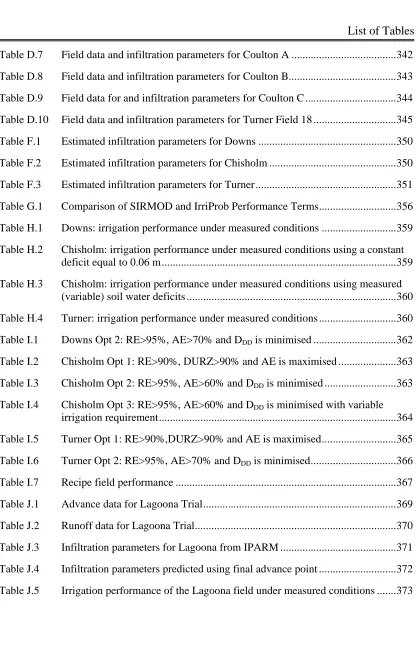
List of Tables
[image:21.595.109.525.24.696.2]xxi
Table D.7 Field data and infiltration parameters for Coulton A ...342
Table D.8 Field data and infiltration parameters for Coulton B...343
Table D.9 Field data for and infiltration parameters for Coulton C ...344
Table D.10 Field data and infiltration parameters for Turner Field 18 ...345
Table F.1 Estimated infiltration parameters for Downs ...350
Table F.2 Estimated infiltration parameters for Chisholm ...350
Table F.3 Estimated infiltration parameters for Turner...351
Table G.1 Comparison of SIRMOD and IrriProb Performance Terms...356
Table H.1 Downs: irrigation performance under measured conditions ...359
Table H.2 Chisholm: irrigation performance under measured conditions using a constant deficit equal to 0.06 m...359
Table H.3 Chisholm: irrigation performance under measured conditions using measured (variable) soil water deficits ...360
Table H.4 Turner: irrigation performance under measured conditions ...360
Table I.1 Downs Opt 2: RE>95%, AE>70% and DDD is minimised ...362
Table I.2 Chisholm Opt 1: RE>90%, DURZ>90% and AE is maximised ...363
Table I.3 Chisholm Opt 2: RE>95%, AE>60% and DDD is minimised ...363
Table I.4 Chisholm Opt 3: RE>95%, AE>60% and DDD is minimised with variable irrigation requirement...364
Table I.5 Turner Opt 1: RE>90%,DURZ>90% and AE is maximised...365
Table I.6 Turner Opt 2: RE>95%, AE>70% and DDD is minimised...366
Table I.7 Recipe field performance ...367
Table J.1 Advance data for Lagoona Trial...369
Table J.2 Runoff data for Lagoona Trial...370
Table J.3 Infiltration parameters for Lagoona from IPARM ...371
Table J.4 Infiltration parameters predicted using final advance point ...372
List of Abbreviations
xxii
LIST OF ABBREVIATIONS
ADU absolute distribution uniformity
AE application efficiency
AELQ application efficiency of the low quarter
AER application efficiency accounting for tail water recycling
AT average advance time (time of the final advance point for a set of furrows)
CV coefficient of variation
CU Christiansen's uniformity coefficient
DD deep drainage/deep percolation below the root zone DDD average depth of deep drainage
DU low quarter distribution uniformity DURZ distribution uniformity of the root zone EC electrical conductivity
EM electromagnetic survey ESP exchangeable sodium percentage
ETc crop evapo-transpiration calculated from the reference evaporation
FIDO Furrow Irrigation Design Optimiser Fur furrow
GPS global positioning system
IPARM infiltration parameters from advance and runoff model Irr irrigation
MIC model infiltration curve
NCEA National Centre for Engineering in Agriculture NSW New South Wales
Opt optimisation (objective function to optimise performance) PAM Polyacrylamide
PRD partial root-zone drying
Q inflow rate Qld Queensland
RE requirement efficiency
RMSE root mean square error SAR sodium adsorption ratio SCS US Soil Conservation Service SSE standard square error
SSS surface storage smoothing (technique to estimate the surface storage term)
List of Symbols
xxiii
LIST OF SYMBOLS
α significance level
β curvature constant for surface water storage
γ semivariance
ζ empirical exponent of Q for variation of infiltration with inflow
η dynamic viscosity (Pa s)
θ decrease in infiltration over time from Horton equation
λ ratio of current time to end of advance µ population mean
σ population standard deviation
σs sample standard deviation
σy surface storage coefficient for advance
phase
σys surface storage coefficient for storage
phase
σz1 subsurface storage coefficient of the
transient infiltration term
σz2 subsurface storage coefficient of the
steady infiltration term
τ infiltration opportunity time (min)
0
f
τ
time constant of the Branched Kostiakov equationφ empirical parameter for variation of infiltration with wetted perimeter
χ2
chi squared statistic
ωCV coefficient to calculate CVInfiltration from
CVVB
ωZVal coefficient to calculate ZValInfiltration from
ZValVB
a empirical Kostiakov/Modified Kostiakov infiltration parameter
A cross-sectional area of flow (m2)
A0 upstream area of flow (m2)
ACF autocorrelation coefficient
AT average time value of the last measured advance point (min)
c coefficient of the power relationship of furrow width to depth
C crack infiltration term (m3 m-1)
CVInfiltration time averaged CV for the
logarithm of the Modified Kostiakov infiltration
CVVB CV for the logarithm of the infiltration
term of the volume balance
D volume of infiltration per unit area of soil (m)
LQ
D
average of D over the quarter of the field with the lowest infiltration (m)LQ RZ
D
average of DRZ over the quarter of thefield with the lowest infiltration (m)
DDD volume of deep drainage per unit area of
soil (m)
Dmin minimum value of D across the field (m)
Dreq required volume of infiltration per unit
area or soil moisture deficit (m)
DRZ volume infiltrated and stored in the root
zone per unit area of soil (m)
E[] the expected value
ER efficiency of the tail-water recycling
system
f0 semi-empirical steady state infiltration
parameter of the Modified Kostiakov (m3 m-1 min-1)
F rapid surface storage term from the Horton equation
FS scaling factor of infiltration function for
the MIC approach
g acceleration due to gravity (9.81 m s-2)
G group iteration factor (default = 0.01)
h lag distance (between samples)
H pressure head (m)
I infiltration rate (m3 m-1 min-1)
ICF irrigation condition factor
List of Symbols
xxiv
Jatemp record of Ja for the last round of
individual parameter searches
JC equivalent to Ja butfor C JCtemp equivalent to Jatemp butfor JC
Jf0 equivalent to Ja butfor f0
Jf0temp equivalent to Jatemp but for Jf0
Jk equivalent to Ja butfor k
Jktemp equivalent to Jatemp butfor Jk
k empirical Kostiakov/Modified Kostiakov infiltration parameter (m3 m-1 min-a)
K hydraulic conductivity (m3 m-2 min-1)
Ks saturated hydraulic conductivity (m3 m-2
min-1)
Kwet hydraulic conductivity at field capacity
(m3 m-2 min-1)
L field length (m)
m exponent of the power relationship of furrow width to depth.
n Manning roughness coefficient
N number of data points
Na number of advance points
Nr number of runoff points
OBJ objective function for optimisation of irrigation management
p parameter of the power advance function
P wetted perimeter (m)
P0 upstream wetted perimeter (m)
qr steady runoff rate (m3 min-1)
Q discharge (m3 s-1)
Q0 inflow rate at upstream end of furrow
(m3 min-1)
Qr outflow discharge (m3 s-1)
Qx flow rate at point x in a furrow (m3 s-1)
r exponent of power advance function
R Pearson correlation coefficient
s distance measured from the upstream end of the field (m)
sZ2 variance of Z
S sorptivity as present in the Phillip equation
S0 field slope
Sf friction slope
t time (min or sec)
tStat t statistic from the t-distribution
tx time taken to reach point x (min)
tw time taken for a change in upstream area
to have effect over the wetted furrow length (min)
Tadvance length of the advance phase at the
current time (min)
Tdepletion length of the depletion phase (min)
v flow velocity (m s-1)
vx flow velocity at point x (m s-1)
Vf volume surface storage at end of storage
phase (m3)
VI volume of infiltration (m3)
VR volume of runoff (m3)
i R
V
measured runoff volume at data point, i(m3)
VS volume of surface storage (m3)
Vw velocity of a wave or small disturbance
(m s-1)
VZx volume of infiltration at the time tx (m3)
VolDD volume of infiltration that drains below
the rootzone as deep percolation (m3)
VolInfiltration volume of infiltration (m3)
VolRZ volume of infiltration stored in the root
zone (m3)
Volreq volume of infiltration required to refill
the rootzone (m3)
VolRunoff volume of runoff (m3)
VolInflow volume of inflow (m3)
w weighting factor for advance and runoff errors in IPARM (%)
W top width of flow within the furrow (m)
WB bottom width of the furrow (m)
WM furrow width at half the total height (m)
Ws furrow spacing (m)
WT furrow width at the total height (m)
x advance distance (m)
xi measured advance distance at data point,
List of Symbols
xxv
xt predicted advance distance if the
advance continued beyond the end of the field (m)
X a continuous variable
Xi a continuous variable measured at point i
y depth of flow (m)
y0 upstream depth of flow (m)
YT total height of furrow (m)
y
centroid of the area of flow (m)yw depth of the wetting front (m)
Z infiltrated depth per unit length of furrow (m3 m-1)
ZS scaled infiltration depth per unit length
of furrow (m3 m-1)
Zx infiltrated depth at distance x (m3 m-1)
ZVal standard normal variate
ZValInfiltration time averaged ZVal for the
logarithm of the Modified Kostiakov infiltration
ZValVB ZVal for the logarithm of the infiltration