Feature Selection for Summarising: The Sunderland DUC 2004 Experience
Shao-Fen Liang Siobhan Devlin John Tait
University of Sunderland School of Computing & Technology
St. Peters Campus Sunderland, Tyne & Wear SR6 0DD
+44(0)191 5153410
{shaofen.liang, siobhan.devlin, john.tait}@sunderland.ac.uk
Abstract
In this paper we describe our participation in task
1-very short single-document summaries in DUC
2004. The task chosen is related to our research
project, which aims to produce abstracting
summaries to improve search engine result
summaries. DUC allowed us to produce summaries
no longer than 75 characters, therefore we focused
on feature selection to produce a set of key words as
summaries instead of complete sentences. Three
descriptions of our summarisers are given. Each of
the summarisers performs very differently in the six
ROUGE metrics. One of our summarisers which
uses a simple algorithm to produce summaries
without any supervised learning or complicated NLP
technique performs surprisingly well among different
ROUGE evaluations. Finally we give an analysis of
ROUGE and participants’ results. ROUGE is an
automatic evaluation of summaries package, which
uses n-gram matching to calculate the overlapping
between machine and human summaries, and indeed
saves time for human evaluation. However, the
different ROUGE metrics give different results and it
is hard to judge which is the best for automatic
summaries evaluation. Also it does not include
complete sentences evaluation. Therefore we suggest
some work needs to be done on ROUGE in the future
to make it really effective.
1
Introduction
Section 2 we give a description of our three systems, and in Section 3 we give the results of six ROUGE evaluations. A comparison among participants in ROUGE is given in Section 4. Finally we conclude in Section 5 and indicate our plans for future work.
2
System Description
As we are first year participants, our system was initially developed using data from DUC 2003, which was slightly different to the real data from DUC 2004. In DUC 2003 the data collection had 60 TDT English clusters and each cluster contained from 8 to 14 documents. The format in each document had a few lines of title tags, and the main body started from <TEXT> tag and ended with </TEXT> tag. Inside the main body, paragraphs were split by <P> and </P> tags. Therefore a normalisation process to remove noise from each document was required. But in DUC 2004 the data had 50 TDT English clusters and each cluster contains 10 documents as the input documents, so 500 summaries in total are required. (The documents come from the AP newswire and New York Times newswire). The format in DUC 2004 did not split documents into several paragraphs but only into one big paragraph, which was the only difference. For adapting to the new format, our system had a little modification of the normalisation process to extract text between <TEXT> and </TEXT> tags. Task 1 gave participants a limitation to produce each summary of no more than 75 characters including punctuation and spaces. The length of each summary is only about 2/3 of one line in a standard American letter size. It is almost impossible to produce a complete sentence to address the concepts
of an original news document half a page to two pages in length. Therefore, we focused on feature selection to pick up people’s names, groups, events, places and so on to produce headline-like summaries. The following sections describe our three entries.
2.1
System one
Sentence selection from a large text is a useful step for document summarisation. Related work includes Teufel [9], Goldstein [3] and McDonald [7]. The approach we used is also based on the sentence level. The input documents therefore need to be segmented into a set of sentences. In addition, we included the consideration of cue words, title words, key words and sentence location from Edmundson [2] and the term weighting from Salton [8].
Diagram 1 The Approach of System One
System one (diagram 1) was our priority of the three systems, which received a run number 76 from the ROUGE evaluation. The algorithm first of all normalises each input document into desired text
Assign Score to Each Word Calculate Words Frequency
Remove Stop Words
Extract 75 characters from The Beginning of the Sentence
Finalise Sentence Replace ',' with Stop Words
Highest Score Sentences Pick Highest Score Sentence Calculate Sentence Location
+ Word Frequency Assign Sentence Location
Sentence Segmentation Document Normalisation
then the process splits into two parallel ones. The left hand side process splits each document into a set of words and removes stop words. The remaining words then have their frequency calculated. Next they are put into an array in descending order of frequency as [W1, W2, ... Wn], where W1 is the most
frequent word and Wn the least. These words are
then given a score each as W1=n, W2=n-1,
W3=n-2, … Wn=1. On the right hand side process,
firstly the original document (D) is split into a set of sentences which retain their original sequence as D = [S1, S2, S3, …Sn]. Each sentence is assigned a
location score as S1L=n, S2L=n-1, … SnL=1.
Therefore each sentence can be weighted as following:
S
W= S
L+ Ws (1)
SW representing Sentence Weighting, SL representing
Sentence Location and Ws representing Word Score.
The
Ws
can be calculated as follows.Ws =
∑
= n
1 i
Wi
(2)∑
= n1 i
Wi
representing total score of i words, whichappear in the sentence. The highest scoring sentence is chosen as the most important sentence for further summarisation processing. The summarisation process firstly removes stop words from the chosen sentence and replaces them with a ‘,’. The idea for using ‘,’ instead of just removing stop words or replacing them with white spaces was to split the sentence into elements and observe more easily any error that might happen. Secondly, if two or more ‘,’s appear between two words, they would be reduced into one ‘,’. Thirdly, we finalise the sentence by removing redundant spaces
appearing in front of or after a ‘,’. Finally, the sentence from the first character to the 75th character is selected as the summary. An example is given as follows.
Government and opposition parties have asked King Norodom Sihanouk to host a summit meeting after a series of post-election negotiations between the two opposition groups and Hun Sen's party to form a new government failed. ---The highest score sentence from APW19981016.0240 in D30001t
Government , opposition parties , , King Norodom Sihanouk , host , summit meeting , , series , post-election negotiations , , two opposition groups , Hun Sen's party , form , new government failed---Removed stop words
Government,opposition parties,King Norodom Sihanouk,host,summit meeting,series,post-election negotiations,two opposition groups,Hun Sen's party, form,new government failed --- Finished sentence
Government,opposition parties,asked King Norodom Sihanouk,host,summit meeti --- Final summary
2.2
System 2
characters would remain after removing words in the sentence. Four things are removed and do not appear in our summaries, which are: 1. A list of stop words. 2. Words appearing between a pair of brackets like (…). 3. Reported speech such as ``No-one should internationalize Cambodian affairs. It is detrimental to the sovereignty of Cambodia,'' he said. 4. Date and Time such as January … December, Monday … Sunday, morning, afternoon, evening, night and so on. We decided to cut the document at 4 times the allotted character length of 75 i.e. 300 characters, to avoid the finished sentence being shorter than 75 after the removal. The cut sentence was put in the summarisation process as described in section 2.1 to produce summaries. The following is an example.
Cambodian leader Hun Sen on Friday rejected opposition parties' demands for talks outside the country, accusing them of trying to ``internationalize'' the political crisis. Government and opposition parties have asked King Norodom Sihanouk to host a summit meeting after a series of post-election neg --- 300 characters were cut from the beginning of the document APW19981016.0240 in D30001t.
Cambodian leader Hun Sen on Friday rejected opposition parties' demands for talks outside the country, accusing them of trying to the political crisis. Government and opposition parties have asked King Norodom Sihanouk to host a summit meeting after a series of post-election neg --- Words appearing in quotation marks were removed.
Cambodian leader Hun Sen,rejected opposition parties,demands,talks,country,accusing,
trying,political crisis.Government,opposition parties, asked King Norodom Sihanouk,host,summit meeting, series,post-election neg --- Finished sentence
Cambodian leader Hun Sen,rejected opposition parties,demands,talks,country, --- Final summary
System 2 was modified from system one and the process only took a few minutes to make sure it ran successfully.
2.3
System 3
We started to design these three systems from late January 2004 so we didn’t have sufficient time to implement a better summariser. Therefore we used one component of system 1 to be our system 3 and it received a run number 78 from the ROUGE evaluation. This system simply presented the most frequent words as the final summaries, extracting the first 75 characters from [W1, W2, ... Wn] list. An example result is shown below.
opposition Rainsy Sam two election country government Ranariddh form talks--- Most frequent words in the document APW19981016.0240 in D30001t.
3
The results from ROUGE
evaluations
package. Our three runs performed very differently in the ROUGE evaluations. They are shown as numbers 76, 77, 78 in the figure below.
Run Number 50-79
0 10 20 30 40 50 60
50 51 52 53 54 75 76 77 78 79
Run Number Ra n k in g ROUGE-1 ROUGE-2 ROUGE-3 ROUGE-4 ROUGE-L ROUGE-W
Figure 1 The ROUGE result of run number 50 to 79
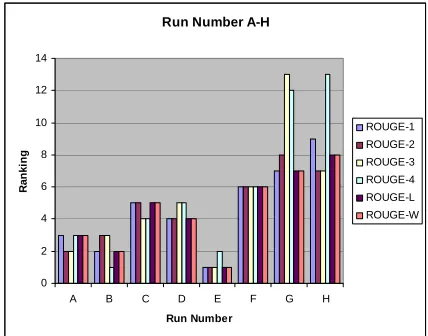
The priority one run, number 76, didn’t perform as well as we hoped: it was worse than 77 but better than 78 on average. It was ranked 36 in ROUGE-1, 27 in ROUGE-2, 22 in ROUGE-3, 22 in ROUGE-4, 34 in ROUGE-L and 35 in ROUGE-W. Although the algorithm combines weights for sentence location and word frequency scores in each sentence, the selected sentence didn’t present a better feature selection approach if compared with human summaries (Figure 2). In addition, the sentence obviously did not include enough important key words, which did appear in the human summaries. The run number 77 was ranked 13 in ROUGE-1, 14 in ROUGE-2, 14 in ROUGE-3, 15 in ROUGE-4, 12 in ROUGE-L and 13 in ROUGE-W (Figure 3). The simple algorithm performed surprisingly well among different ROUGE evaluations. Excluding runs number A-H (human summaries), the run number 77 was ranked between 4th and 7th.
Run Number A-H
0 2 4 6 8 10 12 14
A B C D E F G H
Run Number Ra n k in g ROUGE-1 ROUGE-2 ROUGE-3 ROUGE-4 ROUGE-L ROUGE-W
Figure 2 The ROUGE result of human summaries run number A to H
Top Ten from ROUGE-L
0 0.05 0.1 0.15 0.2 0.25 0.3 0.35
A B C D E F G H 1 6 32 52 77 80
[image:5.595.316.530.104.272.2]13 1 13 5 13 6 Run Number Sc or e ROUGE-1 ROUGE-2 ROUGE-3 ROUGE-4 ROUGE-L ROUGE-W
Figure 3 Top 10 run number based on ROUGE-L
ROUGE Evaluation Result
0 0.05 0.1 0.15 0.2 0.25 0.3 0.35
1 6 9 10 18 25 26 31 32 33 50 51 52 53 54 75 76 77 78 79 80 87 88 89 90 91 92 98 99 100 101 110 128 129 130 131 132 135 136 137 A B C D E F G H
Run Number
Sc
o
re
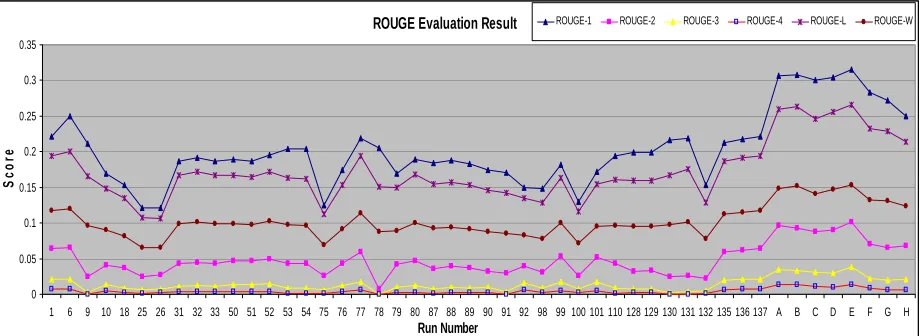
[image:6.595.69.529.104.272.2]ROUGE-1 ROUGE-2 ROUGE-3 ROUGE-4 ROUGE-L ROUGE-W
Figure 4 Results of all participants from six ROUGE evaluations
it improved its performance, to reach 36and reached 39 in ROUGE-W. The result indicated that the most frequent words are likely to appear in human summaries. Therefore term frequency is still a good way to pick out key words from unknown documents. However number 78 dropped into the bottom in ROUGE-2, ROUGE-3 and ROUGE-4 evaluations because it is a unigram summariser, and these are n-gram metrics.
4
Comparison among all
participants relating to ROUGE
Automatic evaluation is essential to conquer the time consuming task of human evaluation, especially for evaluating large numbers of results like the competition in DUC. ROUGE indeed saves time for humans and performs a good n-gram overlapping calculation algorithm but as can be seen in Figure 4 very few automatic systems perform well enough on ROUGE-3 (let alone ROUGE-4) for the results against these metrics to be meaningful. These two lines point out that although n-grams can be applied to any number of n, calculating the overlap between
Selected Run Number
0 10 20 30 40 50 60
9 10 53 54 78 92 130 131
Run Number
Ran
k
in
g
ROUGE-1 ROUGE-2 ROUGE-3 ROUGE-4
[image:7.595.66.280.102.272.2]ROUGE-L ROUGE-W
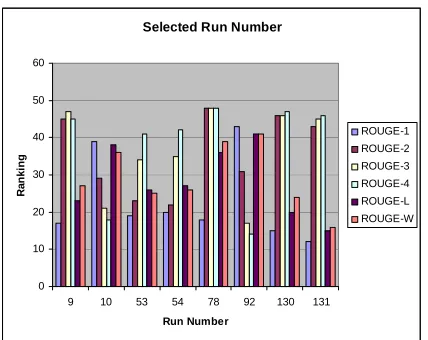
Figure 5 Gaps of over 20 between lowest and highest ranking
not follow this relation. On the other hand our 78 is reasonable following the ROUGE rule. Although ROUGE-1 is better, ROUGE-2, 3, 4 are worse and therefore ROUGE-L and W are also relatively worse. Another unusual situation happens in numbers 10 and 92. They both perform badly on ROUGE-1, ROUGE-L and W, which indicate their summaries do not contain enough overlapping with human summaries and also the Longest Common Subsequence mapping yet their results improve if the n-gram is bigger. This phenomenon is hard to explain. Theoretically, ROUGE-W should be the best evaluation model among ROUGEs but empirically from the task 1 result, we can see that there is conflict between different ROUGEs, which gives ROGUE more space to improve its evaluation algorithm. So for evaluating a complete sentence as a summary, we would suggest that current ROUGE needs further improvement.
5
Conclusion and future work
The primary conclusion from our work so far is that simple extraction of the first three hundred words
works very well in DUC 2004 task 1: it performs better than combining weighting words and sentence location or unigram extraction. Similar conclusions have been drawn on previous work in the news domain. We have presented an analysis of participant results and ROUGE evaluations and find that although ROUGE has expanded from single word mapping to n-gram mapping and also to longest common sub-string mapping, we are still unsure which implementation of ROUGE is the best for evaluating summaries.
In our own work, in the future we will continue our aim to improve search engine result summaries by investigating other methods to improve our feature selection and also expand our summariser to produce complete sentence like summaries.
References
[1] DUC. http://tides.nist.gov/
[2] Edmundson, H.P. 1969. New methods in automatic abstracting. Journal of the Association for Computing Machinery 16 (2): 264-285.
[3] Goldstein, J., Kantrowitz, M., Mittal, V. and Carbonell J. 1999 Summarizing text documents: sentence selection and evaluation metrics. In proceedings of the 22nd annual international ACM SIGIR conference on Research and development in information retrieval, pages 121-128, August.
Machine Learning Research, Volume 3 pages 1157-1182.
[5] Liang, S.F. & Devlin, S. & Tait, J. 2004. Can automatic abstracting improve on current extracting techniques in aiding users to judge the relevance of pages in search engine results. In Proceeding of the 7th Computational Linguistics UK, pages 154-159.
[6] Lin, C.Y. and Hovy, E. 2003. Automatic evaluation of summaries using n-gram co-occurrence statistics. In Proceedings of HLT-NAACL, Edmonton, Canada, May.
[7] McDonald, D., Chen, H. 2002. Summarization and question answering: Using sentence-selection heuristics to rank text segments in TXTRACTOR. In proceedings of the second ACM/IEEE-CS joint conference on Digital libraries, pages 28-35, July.
[8] Salton, G. and Buckley, C. 1988. Term-weighting approaches in automatic text retrieval. Information Processing and Management, Vol 24, pages 513-523.