
The end of the formal programming period for 2000-2006. Review of programme developments : Summer-Autumn2006
31
0
0
Full text
(2) European Policies Research Centre University of Strathclyde Graham Hills Building 40 George Street Glasgow G1 1QE United Kingdom Tel: +44 (0) 141 548 3932 Fax: +44 (0) 141 548 4898 E-mail: [email protected] http://www.eprc.strath.ac.uk/eprc/default.htm http://www.eprc.strath.ac.uk/iqnet/iq-net/index.html. December 2006.
(3) The End of the Formal Programming Period for 2000-2006 – Review of Programme Developments: Summer-Autumn 2006. PREFACE The research for this paper was undertaken in preparation for the 21st IQ-Net meeting which is taking place in Antwerp, Flanders, Belgium, from 15-17 January 2007. The paper has been written by Dr Sara Davies and Tobias Gross. This paper is the product of desk research and fieldwork visits among national and regional authorities in Member States (notably among partners in the IQ-Net Consortium) and in DG REGIO during autumn 2006. The field research team comprised: •. Tobias Gross (Austria). •. Frederike Gross (Belgium, France). •. Prof. Henrik Halkier (Denmark). •. Rona Michie (United Kingdom). •. Dr. Sara Davies (Germany). •. Laura Polverari (Italy). •. Carlos Méndez (Portugal, Spain). •. Heidi Vironen (Finland, Sweden). •. Dr. Martin Poland). •. Maria-Amalia Vergoula (Greece). Ferry. (United. Kingdom,. Many thanks to all those who participated in the research. EPRC also gratefully acknowledges the financial support provided by participating national and regional authorities, whose contributions are co-financed by technical assistance from the European Regional Development Fund. The report is, however, the responsibility of the authors alone. A current list of IQ-Net Partners and their relevant organisations is as follows: Austria. •. State Government of Niederösterreich (Economic and Tourism Department). •. State Government of Steiermark (Economic Policy Department). Belgium • Denmark •. Finland. France. Agency for the Economy of Vlaanderen (Europe Economy) Nordjylland County Council (Industrial Policy Division). •. National Agency for Enterprise and Housing. •. Western Finland Alliance. •. Ministry of the Interior. •. Délégation interministérielle à l’amenagement et à la compétitivité des territories (DIACT). Germany • •. Ministry of Economics and Labour (EU Affairs Unit), Nordrhein Westfalen Ministry of Economics, Sachsen-Anhalt. IQ-Net Review Paper 19(1). i. European Policies Research Centre.
(4) The End of the Formal Programming Period for 2000-2006 – Review of Programme Developments: Summer-Autumn 2006. Greece. Italy. •. Ministry of Economy and Finance (General Secretariat for Investment and Development, through the CSF Management Organisation Unit). • •. Lombardia Region, Presidency, Central Directorate for Integrated Programming Ministry of Economic Development and Institute for Industrial Promotion (IPI/MAP). •. Śląskie Voivodeship (Marshal’s Office). Poland. Portugal •. Regional Ministry for Environment, Spatial Planning and Regional Development, Department of Regional Development. Spain •. Department of Economics and Finance (País Vasco). Sweden • •. County Administrative Board for Gävle County Administrative Board for Norrbotten County. UK. • • • •. Government Office North East Department of Communities and Local Government Strathclyde European Partnership Ltd Welsh European Funding Office. For further information about IQ-Net, and access to the full series of IQ-Net Papers, please visit the IQ-Net website at: http://www.eprc.strath.ac.uk/iqnet/default.cfm. Disclaimer: It should be noted that the content and conclusions of this paper do not necessarily represent the views of individual members of the IQ-Net Consortium.. IQ-Net Review Paper 19(1). ii. European Policies Research Centre.
(5) The End of the Formal Programming Period for 2000-2006 – Review of Programme Developments: Summer-Autumn 2006. THE END OF THE FORMAL PROGRAMMING PERIOD FOR 2000-2006 Review of Programme Developments: Summer-Autumn 2006. TABLE OF CONTENTS 1.. INTRODUCTION .............................................................................. 1. 2. 2.1 2.2 2.3 2.4. FINANCIAL ABSORPTION ................................................................... 1 Financial performance in the EU-25......................................................... 1 Financial absorption in the IQ-Net partner Programmes................................. 3 Reasons for difficulties with financial absorption......................................... 7 Actions targeted at increasing absorption ................................................10. 3.1 3.2. STRATEGIC CHANGES AND OPERATIONAL CHALLENGES IN THE IQ-NET PARTNER PROGRAMMES ................................................................. 13 Strategic changes .............................................................................13 Operational challenges .......................................................................14. 4.1 4.2 4.3 4.4. PROGRAMME CLOSURE ................................................................... 16 European Commission guidelines and advice .............................................16 What are the main challenges for partners? ..............................................17 What steps are the partners taking with regard to closure? ...........................19 Celebrating the Programmes ................................................................22. 3.. 4.. 5.. CONCLUSIONS AND ISSUES FOR DISCUSSION......................................... 23. IQ-Net Review Paper 19(1). iii. European Policies Research Centre.
(6) The End of the Formal Programming Period for 2000-2006 – Review of Programme Developments: Summer-Autumn 2006. IQ-Net Review Paper 19(1). iv. European Policies Research Centre.
(7) The End of the Formal Programming Period for 2000-2006 – Review of Programme Developments: Summer-Autumn 2006. THE END OF THE FORMAL PROGRAMMING PERIOD FOR 2000-2006 Review of Programme Developments: Summer-Autumn 2006 EXECUTIVE SUMMARY Although the 2000-06 programming period is drawing to a close, significant work still remains for the authorities responsible for ensuring that funds are fully spent and that programme closure activities are completed successfully. The main concern for many partners in relation to the 2000-06 programmes is financial absorption, but some have also introduced new strategic changes in recent months, or have faced new operational challenges. A range of tasks is also being undertaken in relation to programme closure. Data at the level of the EU-25 show satisfactory levels of financial absorption across Member States. The highest rates of absorption are seen in Austria and Ireland, and the lowest levels in the new Member States, whose programmes did not start until July 2004. Spending levels in the new Member States have increased strongly in the past year, particularly in Malta, Hungary and Poland. In the case of the EU-15, Greece, Luxembourg and the Netherlands have the lowest absorption rates. This picture is broadly similar for the IQ-Net partner programmes. In most, payment rates are on track, with some programmes even having formally closed a small number of Measures. However, some still show payment rates which are rather low (e.g. 50-60 percent) and will therefore face ongoing challenges in the next two years. A number of Managing Authorities foresee possible difficulties with the n+2 rule either in 2006 or in 2007-08, although none expect to see the de-commitment of significant funding. A small number of partners have seen the emergence of new issues in recent months. In two cases (Greece, Portugal), strategic changes have been introduced at the level of their respective Community Support Frameworks, involving significant amounts of funding. In the UK, new challenges have appeared in relation to the application of EU rules on financial control and audit. Finally, Poland continues to experience difficulties with the implementation of EU funds, not least because the Structural Funds systems are still relatively new in the Polish context, so that partners have not yet fully internalised their implications. Lastly, most partners have started to undertake the necessary tasks for programme closure, although a minority do not see this as an important focus at present. Many have introduced new communication or cooperation mechanisms, including working groups and seminars. The task of checking the data in electronic monitoring systems has already been undertaken in many programmes, although there remain challenges in this area for some. Extensive monitoring and communication work at project level is also underway, particularly in the case of major projects. Finally, some Managing Authorities are planning a range of activities to celebrate the achievements of Structural Funds programmes.. IQ-Net Review Paper 19(1). v. European Policies Research Centre.
(8) The End of the Formal Programming Period for 2000-2006 – Review of Programme Developments: Summer-Autumn 2006. IQ-Net Review Paper 19(1). vi. European Policies Research Centre.
(9) The End of the Formal Programming Period for 2000-2006 – Review of Programme Developments: Summer-Autumn 2006. THE END OF THE FORMAL PROGRAMMING PERIOD FOR 2000-2006 Review of Programme Developments: Summer-Autumn 2006 1.. INTRODUCTION. The 2000-06 Structural Funds programmes have reached the end of the final year of the formal programming period, although funds will continue to be paid out and, in many programmes, also committed in 2007 and 2008. In most Member States and regions, the prime focus has shifted towards the financial, strategic and administrative implications of the future programmes. Nevertheless, significant challenges remain in many of the 2000-06 programmes, particularly in ensuring the full absorption of Structural Funds resources. A small number of partners have also introduced relatively important strategic changes in recent months, or are facing ongoing operational challenges. Other issues relate to the administrative and organisational tasks associated with programme closure. There are concerns in some Member States and regions that the shift of focus towards the new programmes may imply a reduction in effort and resources for addressing outstanding difficulties relating to financial absorption and programme closure in the current programmes. In most cases, however, systems are in place to address these challenges over the next two years, so that the majority of funds should be absorbed successfully, and most programme managers do not expect to experience major problems with closure procedures. The paper examines these challenges in more detail. The next section provides an overview of the situation in relation to financial absorption, first at the level of the EU-25 and then in more detail for the IQ-Net partner programmes. This section also identifies the reasons for any outstanding difficulties with absorption and explores the steps that IQ-Net partners are taking to address these issues. The paper then examines strategic changes which two IQ-Net partners have introduced in recent months, as well as the operational challenges facing other partners. The final section focuses on programme closure, looking first at partners’ views of the European Commission’s draft guidelines and then at the challenges faced by Managing Authorities, before examining the specific steps being taken by different Member States and regions to ensure effective programme closure.. 2.. FINANCIAL ABSORPTION. 2.1. Financial performance in the EU-25. In line with observations made in past IQ-Net reviews, further progress has been made with respect to commitment and payment rates. The European Commission notes that “regarding the European Regional Development Fund (ERDF) commitment execution has reached 100 percent, while payment execution is at the level of 83 percent. Further payment claims are being received and all payment credits are expected to be executed by IQ-Net Review Paper 19(1). 1. European Policies Research Centre.
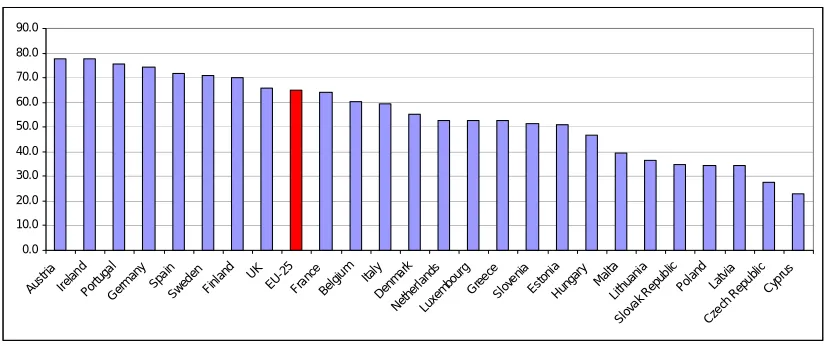
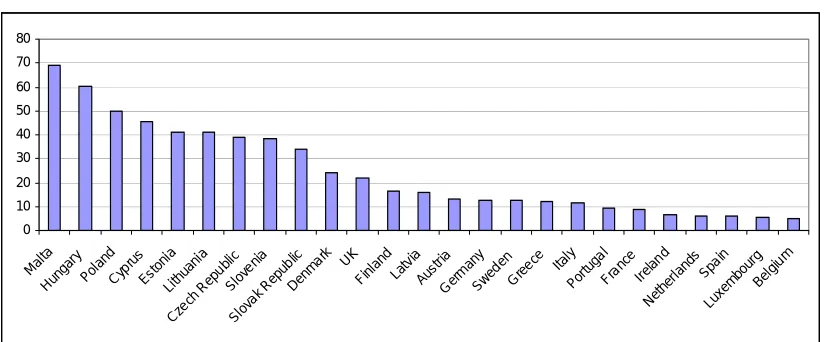
(10) The End of the Formal Programming Period for 2000-2006 – Review of Programme Developments: Summer-Autumn 2006. the end of the year.” 1 When looking at the different Member States, Figure 1 shows that Austria and Ireland have the highest rates of financial absorption for all Funds (77.8 and 77.7 percent respectively) in terms of both commitments and expenditure. Eight EU-15 Member States are above the overall EU-25 average of 64.8 percent. All new Member States are well below the EU average, although this is not surprising because their programmes only started in mid 2004. Greece has been confronted with significant challenges related to domestic co-financing and shows the lowest ratio in the EU-15 of payments relative to commitments. Figure 1: Commitment-payment ratio for the ERDF, ESF, EAGGF and FIFG (in percent), 5 December 2006. 90.0 80.0 70.0 60.0 50.0 40.0 30.0 20.0 10.0. Ita ly en m N a et rk he r Lu l an ds xe m bo ur g G re ec e Sl ov en ia Es to ni a H un ga ry M al t Sl Li th a ov ua ak ni a R ep ub lic Po la nd C La ze tv ch ia R ep ub li c C yp ru s D. U K EU -2 5 Fr an ce Be lg iu m. Au st. ria Ir e la n Po d rtu ga G l er m an y Sp a Sw in ed en Fi nl an d. 0.0. Source: European Commission, DG REGIO; own calculations. When looking more closely at changes in payment rates compared to the last IQ-Net review, it can be seen in Figure 2 that the new Member States have made significant progress with respect to absorbing EU funds. In particular Malta, Hungary and Poland have strongly increased spending, with rises of 68, 60 and 50 percent respectively over the past six months. Similarly, spending progress in Denmark accelerated by 24 percent in the same period. In contrast, spending has risen more slowly in Spain (5.8 percent), Ireland (6.4 percent) and Belgium (4.7 percent). Again, this is not surprising as these countries have made relatively good progress over the entire period, and only limited funding remains to be spent. The majority of Member States have seen progress of between 11 percent (Italy) and 33 percent (Slovak Republic) and are planning to spend the remaining funds in 2007 and 2008.. 1. European Commission (2006), Press Release IP/06/1712, Date: 08/12/2006, available: http://europa.eu/rapid/pressReleasesAction.do?reference=IP/06/1712&format=HTML&aged=0&langu age=EN&guiLanguage=fr (accessed: 11 Dec. 06) IQ-Net Review Paper 19(1). 2. European Policies Research Centre.
(11) The End of the Formal Programming Period for 2000-2006 – Review of Programme Developments: Summer-Autumn 2006. Figure 2: Changes to the overall payment rate between 1 June 2006 and 5 December 2006 (in percent) 80 70 60 50 40 30 20 10. n Cy d pr us Es to n C z L i th i a ec ua h R e ni a pu Sl bli c Sl o ov v ak en Re ia pu De b lic nm ar k UK Fi nl an d La tv ia Au s G tr ia er m a Sw n y ed e G n re ec e Ita Po l y r tu g Fr a l an ce I Ne r ela n th er d la nd s L u Sp a xe i m n bo ur Be g lg iu m. y. Po. ar. al. ng. M. Hu. la. ta. 0. Source: European Commission, DG REGIO.. As regards changes in commitment rates, these remain marginal in most cases, at between zero and two percent. It is only in Denmark that there has been a major rise in the level of commitments (27.7 percent) in the last six months. As a consequence, the main focus for most Member States in the remaining two years of the period will clearly be to ensure that funds are spent, in order to avoid any loss of resources under the automatic decommitment rule. Similar observations can be made for the IQ-Net partner programmes. These will be discussed in greater detail in the following sections.. 2.2. Financial absorption in the IQ-Net partner Programmes. As the formal end of the 2000-2006 period approaches, most IQ-Net partner programmes have committed close to 100 percent of funds, although many also intend to commit or recommit some resources in 2007 and 2008. Payment levels vary more widely, although most programmes have reached between 70 and 90 percent of total financial allocations. Clearly, there are some exceptions to this situation, notably in the case of the Polish region of Śląskie, where implementation did not start until July 2004. Some partner programmes face challenges in relation to financial absorption, while others are generally satisfied with spending progress and are optimistic that all funds can be absorbed. Some programmes have already faced automatic de-commitments under the n+2 rule, while a number of others anticipate potential problems in 2006, 2007 or 2008 as the scope to shift funds between priorities narrows significantly. The deadline for reallocating resources between priorities and Funds was 31 December 2006. This section outlines the extent of the challenges that partner programmes are confronted with in relation to financial absorption. It also examines the diverse reasons why programmes may face such challenges. In general partners can be grouped into three broad categories, namely those which expect few problems in relation to the n+2 rule; those which are facing more challenges in 2006; and those expecting challenges as the programmes come to an end in 2007 and 2008.. IQ-Net Review Paper 19(1). 3. European Policies Research Centre.
(12) The End of the Formal Programming Period for 2000-2006 – Review of Programme Developments: Summer-Autumn 2006. 2.2.1 Programmes where no major n+2 problems are expected A first group of programmes has not seen any major problems regarding n+2 to date and does not expect any significant problems in future. Progress with financial absorption has been evenly balanced over the whole period without major obstacles, although some may have seen the de-commitment of a very small amount of funding in past years. The process of successful absorption is likely to continue in the final years of the period. For example, the two Austrian partners Niederösterreich and Steiermark reported satisfactory results and some measures have already been closed. Both regions were planning to reach a 100 percent commitment rate by the end of 2006 and have spending levels of 67 percent for Niederösterreich and 89 percent for Steiermark. Similarly, financial progress continues to be strong in the Bizkaia component of the País Vasco SPD, with spending in excess of 95 percent of programmed funds (as at 30 June 2006). Expenditure on one of the most important measures (‘Roads and motorways’), which represents 70 percent of the IQ-Net partner’s sub-programme, is running at 98 percent of its total allocation. Of the remaining eight measures, five have already spent their entire allocation. The slowest performing measure is ‘Multi-modal transport systems and transport centres’, with an expenditure rate of 52 percent, although no problems are expected in absorbing the remaining funding. Thus, given the high level of financial absorption, no problems are foreseen in meeting n+2 targets. A further example of strong financial absorption is the Swedish Objective 2 region of Norra which does not anticipate n+2 problems in the future as payment levels are already high (77 percent) and projects are going to plan, with one measure already having been closed. Nevertheless, even in such well-performing programmes, funds will continue be committed and paid out in 2007 and 2008. In Norra, the next project application date has been set for 15 December 2006, with decisions on project selection due in February 2007. Financial absorption is also strong in some States which receive large allocations of funding, although there are often differences in performance between programmes. In Portugal, for example, the commitment rate for the entire Community Support Framework (CSF) stands at 99 percent, with the payment rate at 70 percent of the total financial allocation. Thus, although a small amount of funds was lost to automatic de-commitment in 2005, no difficulties are expected with the n+2 rule in 2006 or 2007 at the level of programmes or Funds. There is, however, considerable variation between the 20 programmes which make up the CSF, with payments data ranging from 84 percent for the Employment, Training and Social Development Programme, to less than 50 percent in the Knowledge Society Programme, and 37 percent under the Public Administration OP (although the latter was only set up after the mid-term review). With respect to the regional programmes, expenditure rates vary from around 80 percent in the Azores, as well as in Lisboa and Vale do Tejo, to less than 65 percent in Algarve, and Alentejo.. IQ-Net Review Paper 19(1). 4. European Policies Research Centre.
(13) The End of the Formal Programming Period for 2000-2006 – Review of Programme Developments: Summer-Autumn 2006. 2.2.2 Programmes where difficulties could emerge in 2006 A second group of programmes is also generally showing positive performance, but programme managers have some concerns that they were going to see the automatic decommitment of relatively limited amounts of resources in 2006. In Italy’s Objective 1 Local Entrepreneurial Development (LED) Programme, no decommitment is anticipated under the ERDF component in 2006, but there may be a risk that a limited amount of European Social Fund (ESF) resources will be lost, as happened in 2005. This is despite a total commitment rate of well over 100 percent and a payment rate of around 90 percent. One reason for the differing performance of the ERDF and ESF components of the programme is that ERDF allocations were concentrated in the early years of the programme, while ESF resources are focused on the final years. A further issue is that the difficult economic context means that some businesses are deciding to postpone training projects and are thus returning funds to the Managing Authorities, so that these resources have to be re-committed. In Greece, the commitment rate in October 2006 was over 75 percent for the entire Community Support Framework (CSF) and the aim was to reach 90 percent by the end of 2006. The payment rate for the CSF stood at 47-48 percent in October 2006, with the goal of reaching 60 percent (€19 billion) by the end of the year. Greece saw the de-commitment of some funds under the n+2 rule in 2004 and 2005, although the amount was smaller than had been anticipated. For the year 2006, it is expected that losses will be much lower than in previous years, not least due to an agreement with the European Commission on the restructuring of the CSF (see Section 3.1.2). The situation varies across programmes; for example the partner programme of Kentriki Makedonia has not seen any de-commitment of funds to date. Despite remaining challenges, no major problems are anticipated in 2007-08. However, the authorities note that some challenges could emerge because the CSF’s financial allocations are back-loaded towards the end of the programming period, leading to an additional workload for administrators. In France, the authorities estimate that the risk of further de-commitments is relatively limited. According to a simulation based on data for 1 November 2006, two out of six Objective 1 regions will be able to avoid automatic de-commitment for the ERDF (Guyane and Nord-Pas de Calais). Overall, however, expenditure figures lie below the optimal level of 76 percent, ranging from 52 percent for the ESF programme to 63 percent for the ERDF. With respect to Objective 2, it is likely that eleven regions will be able to avoid automatic de-commitment for the ERDF but only four will do so in the case of the ESF. Less than six percent of ERDF funding allocated in 2004 is likely to be subject to automatic decommitment, whereas over 50 percent of ESF funding could fall into this category. The Aquitaine region shows a commitment rate of 98 percent and an expenditure rate of 66 percent.. IQ-Net Review Paper 19(1). 5. European Policies Research Centre.
(14) The End of the Formal Programming Period for 2000-2006 – Review of Programme Developments: Summer-Autumn 2006. 2.2.3 Programmes which foresee possible challenges in 2007-08 A final group of programmes are performing well and do not anticipate difficulties with the n+2 rule in 2006. However, programme managers foresee more difficulties as the end of the period approaches because individual measures or sub-measures continue to show persistent weaknesses in financial absorption. For others, challenges seem more manageable than in the past, as steps have been taken to address systemic weaknesses in implementation or spending systems, but there are still concerns that some difficulties with the n+2 targets could emerge. For example, some partners noted that challenges could develop if some projects do not perform as planned. In Vlaanderen, the Managing Authorities expect that the n+2 rule will easily be met but there is some concern with respect to certain projects. Delays or failures could lead to the de-commitment of a small amount of funds in 2008. There are similar concerns in Sweden’s Norra Norrland programme, notably in relation to resources under the ESF and the EAGGF. Similar issues have also been noted in the UK, although at the moment commitment and payment rates are on track, and no problems with the n+2 rule are anticipated for 2006. Some programme managers foresee possible difficulties in 2007 and 2008; for example, if projects fail to be completed, it will be difficult to find and approve new projects on time. A complicating factor is generated by Euro-Sterling exchange rate shifts, which lead to uncertainty over the precise level of resources that need to be committed and spent at the end of each year. In Finland, no n+2 problems have occurred in the past in the Länsi-Suomi Objective 2 programme, and commitment (99 percent) and payment (72 percent) rates are good. However, there is seen to be some risk that a limited amount of funds might be decommitted in the remaining years of the programme. Other partners are concerned at the performance of certain individual measures or submeasures, resulting in potential challenges as the scope for reallocating funds narrows. Spending levels in Germany’s Sachsen-Anhalt programme are currently on target for individual Funds and priorities, and no resources will be de-committed under the n+2 rule in 2006. However, there is some concern over a number of sub-measures with low commitment and payment rates which could potentially lead to de-commitments in future years. At present, the out-performing sub-measures compensate in numerical terms for the weaker ones. However, as the end of the programme draws near and spending target levels move towards 100 percent, the scope for such compensation is reduced. The Land plans to continue to shift funds between measures in 2006 and 2007. In Italy, no problems are anticipated in relation to the n+2 rule in 2006 for the Lombardia programme, although the payment rate (56 percent) is lower than in some other programmes. In this case, ongoing success with financial absorption will depend on the effectiveness of the steps which have been taken in relation to monitoring and overbooking.. IQ-Net Review Paper 19(1). 6. European Policies Research Centre.
(15) The End of the Formal Programming Period for 2000-2006 – Review of Programme Developments: Summer-Autumn 2006. Special reference should be made to the Polish region of Śląskie, which was confronted by the automatic de-commitment rule for the first time at the end of 2006. The n+2 rule is not seen as likely to pose a challenge for the Integrated Regional Operational Programme (IROP) in 2006 or 2007. The programme did not start until July 2004 so attention has to date been focused on project generation and selection, as well as on general implementation systems. In the partner region of Śląskie, the level of funds committed is close to 100 percent but the level of actual payments remains relatively low at around 21 percent. One source of concern for the future is that some of the larger, more strategic infrastructure projects are due to be finished only at the very end of the programming period, and this could create difficulties for financial absorption.. 2.3. Reasons for difficulties with financial absorption. Programmes face a variety of challenges in ensuring timely financial absorption. Some of the difficulties relate to the implementation of major projects, the structure of interventions, the provision of domestic co-financing, and institutional challenges.. 2.3.1 Major projects Some partners have seen recurring challenges in relation to large and strategic projects, resulting in pressure on Managing Authorities to ensure that resources are absorbed. Difficulties may emerge because of unforeseen delays or weaknesses in estimating the time needed for administering large and complex projects. Moreover, if a major project cannot be completed, it is often difficult to find appropriate alternatives for relatively large amounts of funds. In Vlaanderen the authorities note that, due to delays with one large railway project which accounts for one third of the budget, the Antwerpen programme may not respect the n+2 rule in the final years of the period. The Kempen sub-programme may be able to absorb some additional funds, though not to the same degree as in previous years. A general problem with payment claims in Vlaanderen is that municipalities wait until the project is finished before making payments, and this can lead to delays at programme level. Moreover, some major projects are still in the planning phase because they were programmed for the second half of the period. Although these are complex projects facing difficulties with permits and co-financing, their completion is envisaged for the end of 2008. However, problems could potentially arise if there are delays or failures, due to the fact that scope for making changes to the financial tables declines towards the end of the period. In the case of Poland, the IROP programme is planned to run until June 2008. Many projects, particularly the larger ones, are due to finish in the last six months of this period. However, certain delays have been reported. For instance, some large, strategic projects are being held up due to difficulties with Poland’s public procurement law. The authorities also have some concerns that many beneficiaries do not fully understand the concrete implications of the n+2 rule. As a result there are plans to set up a regional group to provide better information on this issue to beneficiaries.. IQ-Net Review Paper 19(1). 7. European Policies Research Centre.
(16) The End of the Formal Programming Period for 2000-2006 – Review of Programme Developments: Summer-Autumn 2006. Greece has experienced delays in relation to a number of projects, notably in the construction of major railway and road networks, partly due to outstanding legal problems. In order to solve these issues, the authorities are engaged in detailed project monitoring. They have also negotiated changes in the CSF with the Commission, with a view to transferring some components of some major projects to the next programming period. This will lead to the release of additional ERDF funds for the current CSF. This funding will be re-directed to measures providing support for SMEs and tourism in the regional programmes.. 2.3.2 The structure of interventions: European Social Fund As observed in previous IQ-Net reports, some programmes experience more challenges in absorbing ESF funds than they do with ERDF resources. One reason may be that, in some cases, the authorities tend to focus first on Objective 3 which operates in all areas except Objective 1, resulting in fewer administrative resources being focused on absorbing Objective 2 ESF funding. Other reasons may be programme-specific, for example if there is one ESF measure in each priority this may lead to complications with re-programming. Similarly, some programmes may backload ESF resources, leading to challenges at this late stage in the programming period. Specific issues have arisen in Finland in relation to the use of the ESF in the Objective 2 programmes. One problem relates to ESF funding for students who have moved from an eligible area to a non-eligible area, thus removing their eligibility for funding. This has led to a review of possible non-eligible expenditure and a subsequent correction, forecast at around €2.4 million over the entire programming period. Another problem is that ESF measures are distributed throughout programmes’ priority areas. Re-programming requires, therefore, Commission approval as it means shifting funding either between priorities or between Funds. Challenges have also been experienced in the absorption of ESF funds in Italy’s OP LED. This is partly due to the back-loading of ESF resources towards the end of the programming period; in early years, the programme instead saw greater difficulties in absorbing ERDF funds which were loaded towards the beginning of the period. The Managing Authorities’ also note that the take-up of ESF resources has recently been slow due to broader economic weaknesses which mean that firms are less willing to invest. This has resulted in resources being clawed back from projects; these now have to be re-committed. The claw-back procedures are, however, lengthy and it is difficult to find new projects which can absorb the funds. To resolve this problem, the Managing Authority has signed a covenant with the Tourism Department of the Ministry of Cultural Activities allowing some of the programme’s ESF funding to be used for internship projects in tourism firms. This follows a covenant signed in October 2004 with the Ministry of Welfare allowing the programme funds to be used to support internship projects in industrial firms.. IQ-Net Review Paper 19(1). 8. European Policies Research Centre.
(17) The End of the Formal Programming Period for 2000-2006 – Review of Programme Developments: Summer-Autumn 2006. 2.3.3 Provision of domestic co-financing A key feature of Structural Funds programmes is that they must be co-financed jointly by EU and domestic funding. A lack of domestic resources can, therefore, lead to challenges in absorbing EU funds. Such problems can emerge either due to broad-based fiscal constraints that affect all public authorities and spending streams, or to more specific resource constraints in individual policy fields. Particular difficulties can be seen in individual programmes. For example, domestic actors may have diverging views about which projects should be supported. In Niederösterreich, negotiations with the federal level on a project implemented by the Austrian Federal Railway were lengthier than anticipated. This led to unforeseen delays and to changes in the financial tables. Similarly, in Steiermark, extensive Land internal negotiations have led to delays in the provision of funding for a thermal spa project (‘Grimming Therme’). In other cases, long and complex processes of cost reimbursement can lead to shortages in domestic co-financing. In Poland, Structural Funds projects are financed through a special budget reserve, where funding is managed on an annual basis. Money paid out to beneficiaries is clawed back on an annual basis and then reallocated at the end of every financial year. This system can result in insufficient domestic co-financing and delays in cash flows. A further issue in Poland is that regional authorities have only limited financial resources for co-financing EU projects. In comparison, municipalities and cities have greater financial resources, although these are mainly used for small-scale local projects. Finally, fiscal consolidation can lead to budget constraints which may significantly reduce scope for action. In Portugal, for example, delays in large infrastructure projects under the Transport and Accessibility OP are partly related to a shortage of domestic co-financing over the last three years. More severe challenges have been experienced in Greece, leading to an agreement with the European Commission that, by raising the EU co-financing rates for different priorities and measures (within the EU-ceilings for different types of interventions), the domestic co-financing contribution for the year 2006 be cancelled.. 2.3.4 Domestic institutional and administrative frameworks The administration of EU funds is often seen as a complex and challenging task which requires effective domestic structures able to deal efficiently with EU systems and procedures. EU rules can at times conflict or overlap with the domestic approach to programming and the spending of public funds, forcing domestic authorities to find ad hoc solutions to particular problems. Difficulties can arise where there are weaknesses in domestic institutional and administrative frameworks, whether in terms of the capacity to find flexible solutions, or in terms of the efficiency of planning and implementation mechanisms. Challenges may be strongest in some of the new Member States, which have only had limited time to adjust to EU systems, and where domestic frameworks are sometimes also complex. In Poland, a number of delays have arisen for administrative reasons. One example is that the necessary decisions have not yet been taken on the notification of State aid rules in the fields of tourism, air quality and renewable energies. As a result public IQ-Net Review Paper 19(1). 9. European Policies Research Centre.
(18) The End of the Formal Programming Period for 2000-2006 – Review of Programme Developments: Summer-Autumn 2006. authorities cannot proceed to implement measures in these fields. Further issues relate to systems for project selection and approval, which at present appear to be too complex and overregulated. There is also a degree of uncertainty in relation to management and implementation procedures; for example, the Ministerial Decree on IROP Implementation was amended three times in 2006. Moreover, programmes continue to see a high turnover of staff, leading to a loss of experience and institutional memory. Other issues relate to cost reimbursement procedures, and public procurement systems. Institutional challenges have also caused delays in the Greek region of Kentriki Makedonia and have prevented projects being completed on time. Other programmes in Greece have also experienced administrative problems, not least the OP for the Information Society, where the authorities note that participating bodies were not sufficiently prepared. One issue was that the number of final beneficiaries under this OP was larger than anticipated. This led to an unexpected workload for public authorities in relation to monitoring and financial control tasks.. 2.4. Actions targeted at increasing absorption. 2.4.1 Reallocating funds A standard means of resolving financial absorption challenges is to reallocate funds between interventions. The deadline for shifting resources between priorities and Funds was 31 December 2006. Most partners therefore reallocated funds between different programme components over the past year. In some cases, however, the amounts of funding moved have been limited, and have been focused only at measure level. Relatively important changes have been introduced in some States and regions. Greece, for example, undertook an extensive review of financial tables in 2006, leading to the reallocation of funds within the CSF. In particular, due to administrative delays and to shortages in domestic co-financing, strategic changes are to be introduced to reduce the amount of ERDF funding allocated to infrastructure projects. Some of these resources will instead be re-allocated to measures to support SMEs and tourism, particularly for interventions funded in the regional Operational Programmes. Portugal has also seen funding reallocations at the level of the CSF as a whole. In particular, funding (€164 million) has been shifted out of key measures in the Transport and Accessibility Operational Programme which were performing weakly. Funds have instead been transferred to interventions in the fields of youth and adult training, support for business and innovation, and certain regional infrastructure projects (see Section 3.1.1). In other partner programmes, more limited changes have been introduced. In Steiermark, for example, €6.65 million has been reallocated since June 2005, mainly from priority 2 (‘Support of competitive locations and preparation for the information society’) and priority 3 (‘Integrated regional development, tourism and culture’) to priority 1 (‘Support of industry and service sector’). In particular a broadband initiative was not performing as planned due to a lack of projects. Hence reallocations are being planned to measures which have reserve projects and can absorb additional funds.. IQ-Net Review Paper 19(1). 10. European Policies Research Centre.
(19) The End of the Formal Programming Period for 2000-2006 – Review of Programme Developments: Summer-Autumn 2006. In Italy’s OP LED, commitment and expenditure rates have been slower than expected under the measure which finances the provision of Integrated Packages of Aid (PIA). This is partly because projects are complex, as they link support for capital investment with support for R&D, training and/or networking activities. A further issue is the novelty of this instrument, and the fact that tendering and project selection procedures have taken considerably longer than expected. Due to slow progress under this measure, and having considered the good performance of the OP’s measure 1, the Managing Authority has decided to shift €117.5 million to measure 1, where commitments exceed 150 percent of the financial allocations, and which finances traditional State aid instruments. In the Western Scotland programme, there have been some relatively minor changes to the financial tables, with funds being moved from measures where funds were not going to be fully spent, to others which were over-committed. Following agreement from the Commission in September 2006, the Western Scotland programme has also agreed to transfer funds to the East of Scotland programme. The Commission agreed to this approach on condition that the funds were transferred to another Objective 2 programme with sufficient additional public sector co-financing available and projects ready for approval. The technical requirements and scope of approach were discussed with the Commission in September 2006 and were then subject to further local consultation.. 2.4.2 Monitoring and target setting Problems with financial absorption have also led some authorities to focus more strongly on monitoring and target-setting activities, or to make greater use of financial monitoring systems as a means of checking spending progress and triggering stronger intervention by Managing Authorities in certain measures or priorities. As noted in the previous IQ-Net review, the Managing Authority of Lombardia aims to use the monitoring system and review process as a means of facilitating financial absorption. The authority set stringent targets for the expenditure to be undertaken in the year 2006 at the level of each measure and sub-measure, and has since monitored progress towards these targets. Every month, the measure managers have to submit expenditure forecasts which are checked against the monitoring data. This system proved successful, as the forecast outlook is very positive: to date, the forecast expenditure for 2006 exceeds the expenditure targets by around €3 million. Nevertheless, a degree of caution is needed as the reliability of forecast data is not always verified. In Greece, two new units have been set up in the Ministry of Economy and Finance to improve systems for financial monitoring and management, namely the Monitoring and Forecasts Unit and the Management Systems Unit. These are responsible for estimating progress on spending, proposing any necessary changes and briefing decision-makers. In addition, a separate team (the ‘n+2 support team’) within the Ministry of Economy and Finance undertakes the technical work of monitoring and forecasting progress towards n+2 targets. This team is also responsible for providing ‘on the spot’ advice and support to programme managers who experience problems in meeting n+2 targets. For example, the team can provide additional human resources to help solve technical issues if a major project is facing significant implementation delays. IQ-Net Review Paper 19(1). 11. European Policies Research Centre.
(20) The End of the Formal Programming Period for 2000-2006 – Review of Programme Developments: Summer-Autumn 2006. 2.4.3 Overbooking and reserve projects Unforeseen delays at project level are not unusual problems for many programmes. Although project selection systems are sophisticated and well developed, there is always a risk that, for a variety of reasons, projects do not perform as anticipated. Because of this, a number of partners now develop lists of reserve projects, or ‘overbook’ funds under certain measures, as part of their standard approach to programming. In Lombardia, overbooking has been funded by using resources from the regional budget and also by drawing on funds which are returned in the form of loan repayments under the programme’s ‘Infrastructure Fund’. It is estimated that, over the next 20 years, €175 million will be returned to this Fund in the form of loan repayments, generating resources which can subsequently be reinvested. However, additional funds are still needed from the regional budget; indeed, the resources currently provided by the regional authority are not seen as sufficient to fund all overbooked projects. The Managing Authority of Lombardia has therefore requested another €8 million from the regional budget, and it is expected that these resources will be allocated in February/March 2007. In Vlaanderen’s Kempen sub-programme, the authorities plan to develop back-up schemes to ensure financial absorption. One possibility is that projects which had previously been refused funding would in future be awarded support on a retrospective basis (so-called ‘reserve projects’). Similarly, an increased amount of funding could be awarded to larger projects. After 2006, new financial commitments will be based on funds returned from existing projects and these resources will mainly be allocated to reserve projects under the business infrastructure measure. Authorities managing the UK’s North East England programme also intend to re-allocate funding to a list of reserve projects. This decision was drawn up on the basis of a strategy, agreed in 2005, for re-allocating funding to such projects. In contrast, in Sweden’s Norra programme, a reserve list has been drawn up at measure level, identifying those measures which will receive additional funding if further resources are clawed back from existing projects.. 2.4.4 Simplification Finally, the authorities in Portugal have taken steps to accelerate project selection. Delays at this stage in a project’s life-cycle are seen as one reason for weaknesses in financial absorption. The aim has been to simplify decision-making processes and procedures by shifting responsibility for project selection from the Ministry level to the Managing Authorities and Intermediary Bodies, notably in the field of business support. It is estimated that, as a consequence of this change, the time needed to take formal decisions on project selection will be reduced by one month.. IQ-Net Review Paper 19(1). 12. European Policies Research Centre.
(21) The End of the Formal Programming Period for 2000-2006 – Review of Programme Developments: Summer-Autumn 2006. 3.. STRATEGIC CHANGES AND OPERATIONAL CHALLENGES IN THE IQ-NET PARTNER PROGRAMMES. Relatively few of the partner programmes for 2000-06 saw significant changes in the second half of 2006 although, as described in Section 2, funds have still been moved between different components of the programmes in order to facilitate financial absorption. Nevertheless, some partner programmes have undergone important strategic changes in recent months, notably in Greece and Portugal. These are discussed in Section 3.1. In addition, Poland and the UK have seen the emergence of new operational challenges in the past six months. These are analysed in the following section.. 3.1. Strategic changes. Both Portugal and Greece have recently reached agreement with the Commission on important strategic changes in the existing CSF. In Portugal, the changes were primarily introduced to ensure that the Structural Funds programmes would clearly support the core strategic goals of the new national government. In contrast, the main issue in Greece has related to broader public finance challenges, which have generated significant problems in relation to the provision of domestic co-financing. In both Member States, there have been important recent changes to the financial tables at the level of the CSFs.. 3.1.1 Strategic reallocations of funds in Portugal Portugal decided in July 2006 on the core reallocations of funds to be introduced to the CSF, based on the new government’s National Reform Programme. This strategic revision of the CSF involves three main changes, namely the introduction of new interventions to improve training and education; new actions aimed at attracting foreign direct investment; additional investment in infrastructure in less developed regions. These new interventions will be financed by compensating cuts in other components of the CSF, particularly those which are performing relatively weakly in financial terms. The first of these changes focuses on the ‘New Opportunities’ Initiative, set out in Portugal’s National Reform Programme. This involves setting up of new interventions for youth and adult training with the aim of raising the general level of qualifications in Portugal in line with a key strategic priority of the government for the coming years (€183.7 million). The second set of changes in Portugal’s CSF relates to the creation of new actions for the promotion and attraction of foreign direct investment, with the goal of boosting economic growth and employment and improving business competitiveness. The aim is to concentrate resources on the production of internationally tradable goods and services, and to stimulate the generation of positive externalities in relation to SMEs and regional knowledge centres (€125 million). The third set of changes focuses on a number of infrastructure projects in Portugal’s less developed regions. These will include the acceleration of the conclusion of the Alqueva project, a major dam in Alentejo; the completion of the Beja airport project; and several educational infrastructure projects and related investments (€41.8 million). IQ-Net Review Paper 19(1). 13. European Policies Research Centre.
(22) The End of the Formal Programming Period for 2000-2006 – Review of Programme Developments: Summer-Autumn 2006. In order to finance these strategic changes, resources are being transferred from across the whole CSF. In particular, funds are being taken from those Measures of the Transport and Accessibility Operational Programme which are performing most weakly (and which account for a significant percentage of financial resources) (€164 million).. 3.1.2 Major revisions to Greece’s Community Support Framework The Commission has agreed to a number of significant changes in the Greek CSF, aimed at addressing some serious challenges relating to the provision of domestic co-financing. The Greek government had to take major steps to reduce public indebtedness in 2005-06, including cuts in public spending, after the ECOFIN Council decided to start an excessive deficit procedure against Greece in 2005 under the EU’s Stability and Growth Pact. This followed the radical revision of national accounts data by the new Greek government elected in March 2004, resulting in the upward re-calculation of data on the general government deficit and gross public debt, both of which are monitored under the Stability and Growth Pact. The fiscal constraints which have thus emerged in Greece since 2005 have generated serious difficulties for the authorities in providing sufficient domestic cofinancing for the CSF. As a consequence, agreement has been reached between the European Commission and the Greek government on substantial changes to the CSF, as outlined in a letter from Commission President Barroso to Greek Prime Minister Karamanlis in November 2006. First, the 2000-06 programmes will be revised to allow new projects to be adopted, involving around €0.5 billion in terms of EU co-financing. Second, a list of around 180 identified projects from the current programmes (amounting to around €1 billion of EU co-financing) will be automatically transferred to the 2007-13 programming period. Third, overall EU cofinancing rates for different priorities and measures will be raised (within the EU-ceilings set for different types of interventions), in order to allow the domestic co-financing contribution for the year 2006 to be cancelled. This package of measures is to be set out formally in a memorandum between the Greek government and the Commission. In addition, the Greek government has decided to create a high-level ‘Inter-ministerial Committee for Community Programmes’ to facilitate the political action seen to be needed in order to limit loss of funds under the 2000-06 CSF, and also to improve preparations for the 2007-13 CSF. The committee will be chaired the Minister of Economics; other participants will be the Minister of Development, the Minister of the Environment, Physical Planning and Public Works, and the Minister of Employment and Social Protection.. 3.2. Operational challenges. In addition to the strategic changes introduced in Portugal and Greece, some new operational challenges have emerged in the United Kingdom and Poland. In the UK, the key issues relate to financial control and audit procedures, while Poland faces a range of different problems relating to the introduction and implementation of Structural Funds systems and procedures since mid 2004.. IQ-Net Review Paper 19(1). 14. European Policies Research Centre.
(23) The End of the Formal Programming Period for 2000-2006 – Review of Programme Developments: Summer-Autumn 2006. 3.2.1 Financial control and audit issues in the United Kingdom A key issue has emerged in both England and Scotland following DG REGIO audits in 2005, relating to weaknesses in the UK programmes’ systems for on-the-spot verification of expenditure (Regulation 438/2001 Article 4). DG REGIO argued that the project verification work undertaken by UK programme managers has not covered a sufficient percentage of total expenditure and, in some cases, also notes weaknesses either in project-level documentation or in the systems used for verifying expenditure claims. In England, the Commission is considering suspending payments until auditing procedures are improved. If these issues are not resolved, financial penalties (a flat-rate correction) could potentially be imposed on non-compliant programmes. In response, the central State Ministry responsible for coordinating implementation issues in England (the Department for Communities and Local Government) has issued new instructions to the regional Government Offices, emphasising the need for more monitoring visits to projects and better reporting. In addition, the group responsible for this work in the UK (made up of representatives of the regional Government Offices) is endeavouring to provide UK-wide strategic coordination and advice, although most practical issues are being dealt with at programme level. The aim is to ensure that systems show clear improvements by March 2007. In the North East England programme, for example, managers are facing new targets in relation to the verification of expenditure: 30 percent of declared expenditure now needs to be checked by 31 March 2007, with 10 percent of expenditure being verified on the basis of original documentation. In total, around 600 visits will have to be carried out in North East England between the end of 2006 and the end of 2008, representing a significant administrative challenge for programme management staff.. 3.2.2 The challenges of Structural Funds systems for Poland In Poland’s Śląskie region, the partners are experiencing a number of ongoing implementation challenges, largely due to the fact that the Structural Funds systems were not introduced until the programmes started in mid-2004. The heavy administrative burden of Structural Funds programmes means that administrators have had to introduce complex new systems which are not always fully compatible with existing Polish mechanisms. It is therefore to be expected that systems and procedures still show some weaknesses and are not yet functioning fully efficiently. One issue concerns project generation, selection and contracting. This has been a major focus of all the Polish programmes to date, given the large amount of funding to be allocated and spent in a rather short programming period. Within the Integrated Regional Operational Programme, different intermediary bodies take diverse approaches to these tasks. In Śląskie, for example, the Marshal’s Office and the Regional Development Agency have succeeded in accelerating commitments for business support measures by streamlining procedures. However, there are greater delays in commitments for some ESF measures which have mainly used calls for tender.. IQ-Net Review Paper 19(1). 15. European Policies Research Centre.
(24) The End of the Formal Programming Period for 2000-2006 – Review of Programme Developments: Summer-Autumn 2006. A second set of issues relates to the Poland-wide electronic data monitoring system, which is seen as complicated and unwieldy. The Śląskie Marshal’s Office has started to enter data into the system but has so far only covered 2004. Partners in Śląskie have some concerns in relation to the monitoring system. They question whether data are being used effectively by central State Ministries. Moreover, the monitoring system will be revised for the 2007-13 period, and this could lead a lack of continuity in terms of the data categories used for the current period.. 4.. PROGRAMME CLOSURE. 4.1. European Commission guidelines and advice. The Commission issued guidelines on programme closure in July 2006 2 , with information on topics such as treatment of expenditure, documents to be submitted at closure, the application of the n+2 rule at closure, and payment of the final contribution. A number of partners view these guidelines as a useful input into Managing Authorities’ work, not least because they provide a comprehensive overview of the different activities to be undertaken, and set deadlines in relation to specific tasks. Some partners (Finland, Sachsen-Anhalt) felt that the draft guidelines should have been provided at an earlier stage, although others (Vlaanderen) saw their provision as sufficiently timely.. 4.1.1 An ongoing need for clarification for some partners In addition to the formal guidelines, Commission staff have provided information to many programme partners, or have clarified the meaning of individual paragraphs in the guidelines (Lombardia, Sachsen-Anhalt). However, some programme managers are still seeking further advice or information from Commission staff on issues relating to programme closure (Aquitaine, Niederösterreich, Norra Norrland). For example, Sweden’s Norra Norrland Managing Authority is waiting for advice from the Commission on the preparation of the final winding-up document. The Niederösterreich authorities have asked whether they need to wait for Commission approval of the 2007-13 regional aid map before making commitments under the new schemes to be introduced for the new period. The aid schemes ended in December 2006, yet the Commission’s DG Competition has not yet approved the new legal frameworks on regional aid proposed by the Austrian Authorities for 2007-13.. 4.1.2 Remaining criticisms of the EU guidelines A number of partners have also criticised aspects of the EU guidelines, which they see as creating obstacles to effective programme closure. Some authorities (Finland, Steiermark) argue that there should be scope to transfer more than two percent of funds between priorities (EU Guidelines, Section 8.1, Calculation of the final contribution). In these. 2. European Commission (2006) Decision of the Commission Guidelines on closure of assistance (20002006) from the Structural Funds. Brussels. IQ-Net Review Paper 19(1). 16. European Policies Research Centre.
(25) The End of the Formal Programming Period for 2000-2006 – Review of Programme Developments: Summer-Autumn 2006. programmes, it is often difficult to shift funds between measures within a single priority because different measures have different co-financing rates. A second issue also relates to co-financing, but in this case (Niederösterreich), the Managing Authority is disputing the Commission’s interpretation of rules on the use of public and private domestic co-financing. The authority wishes to be able to increase the percentage of private co-financing in total domestic co-financing, as this would facilitate the closure of specific measures and priorities. However, the Commission refused to answer questions on this issue in the most recent monitoring committee meeting in summer 2006.. 4.2. What are the main challenges for partners?. Partners have widely differing views of the main challenges relating to programme closure. Indeed, it should be noted that, while some authorities had started planning for closure by mid 2005 (Sachsen-Anhalt), others still do not see this as a major issue (Vlaanderen’s Kempen sub-programme, Italy’s OP LED, and Śląskie). The Polish programme can perhaps be seen as a specific case because it only started in mid 2004, so that projects in many cases did not start until 2005 and the programme is very much still underway. While some partners raised issues over financial absorption, others noted uncertainty or a loss of focus caused by the transfer to the 2007-13 programmes. Finally, some programme managers focused on the specific administrative tasks associated with programme closure (see Section 4.3).. 4.2.1 Financial absorption In many programmes, the main challenges are seen as relating to financial absorption. In Finland, for example, the focus is on the ongoing need to shift funds within the programme in order to ensure that resources are fully absorbed and to facilitate the completion of projects by the end of 2008. Similarly, in Sweden’s Norra Programme, the main concern is that too many uncompleted projects still remain. In Austria’s Niederösterreich programme, various steps are being taken to ensure financial absorption, including trying to persuade the Commission to change its approach to the treatment of domestic private and public cofinancing (see Section 4.1). As noted in Section 3.1.2, Greece is introducing a number of major changes with a view to ensuring financial absorption.. 4.2.2 Uncertainty over human and organisational resources In number of programmes, partners are facing some uncertainty in terms of human resources or organisational roles because the authorities have decided to allocate responsibility for the 2007-13 programmes to different bodies. In Sweden, for example, the National Agency for Economic and Regional Growth (NUTEK) will take on the role of Managing and Paying Authority for the ERDF (but not the ESF) in 2007-13, leading to some concerns among staff in the County Administrative Boards which will retain responsibility for managing and closing the 2000-06 programmes. There is a similar situation in England and Scotland. Implementation tasks for the new English programmes are to be shifted from the regional Government Offices to the Regional Development Agencies, although the former will retain responsibility for closing the 2000IQ-Net Review Paper 19(1). 17. European Policies Research Centre.
(26) The End of the Formal Programming Period for 2000-2006 – Review of Programme Developments: Summer-Autumn 2006. 06 programmes. There are concerns that this will lead to a loss of experienced and skilled staff, who may move either to the Regional Development Agencies or to other departments of the regional Government Offices. An additional problem is that the level of staffing in the Government Offices is due to be reduced by one third. Similar problems are likely to be seen in Scotland, where changes to delivery mechanisms have been proposed for the 200713 programmes. The current Programme Management Executives will be responsible for the closure of the 2000-06 programmes only until the end of 2008 and it is not yet clear who will meet closure reporting requirements after this date. The Commission has asked the Scottish Executive to ensure that steps are taken so that programme closure commitments are met. The Managing Authorities are also to be re-organised in Portugal, leading to the closure of some existing management structures. The new authorities will be organised on the basis of cross-cutting themes affecting several central State Ministries, instead of along ministerial lines as at present. There are some concerns that these changes in organisational arrangements and staff could potentially lead to future challenges in the collection of all the documents needed for programme closure. Similar situations could arise in other locations, where decisions on the organisational structure of the 2007-13 programmes have not yet been taken. In Lombardia, for example, one possibility is that a different unit in the same regional Ministry would take on responsibility for managing the 2007-13 programme, while the current Managing Authority would focus solely on closing the 2000-06 programme. Moreover, a significant number of staff in the current Managing Authority are on fixed term contracts and these contracts are due to close at the end of 2007, leading to concerns over the availability of human resources for programme closure. Similarly, no decision on future administrative responsibilities had been taken in Vlaanderen at the time of fieldwork. There is seen to be a risk that, if tasks are transferred to a different organisation, problems could emerge with programme closure in terms of the availability of resources and the allocation of responsibilities.. 4.2.3 Shift of focus to the new Programmes A further set of challenges concerns the broader shift of focus to the new programmes. This may mean, for example, that partners have less interest in the closure of the current programmes than in the allocation of funds in 2007-13. Moreover, staff have many tasks relating to the preparation of the new programmes and thus less time for closure activities. In both the UK and in Vlaanderen, one difficulty relates to the ongoing attendance of partners in programme monitoring committees, particularly as little funding remains to be committed under the 2000-06 programmes. This problem is seen as likely to grow once the new programmes are running, as there would then need to be two sets of monitoring committee meetings. In Vlaanderen and France, partners intend to use written procedures from 2007 in order to streamline management. In Vlaanderen’s Kempen sub-programme region, for example, projects will in future be approved automatically if no objections are raised by members of the management board.. IQ-Net Review Paper 19(1). 18. European Policies Research Centre.
(27) The End of the Formal Programming Period for 2000-2006 – Review of Programme Developments: Summer-Autumn 2006. In Wales, the Managing Authority noted that the attention of staff also tends to be diverted to the new programmes, not least due to the volume of work to be undertaken. Programme closure is sometimes viewed as an activity that is undertaken by a small number of specialists, even though there is a need for a much wider range of individuals to cooperate in providing information and ensuring that all procedures relating to the closure of projects and the programme are completed on time.. 4.3. What steps are the partners taking with regard to closure?. Partners are taking varying steps in relation to closure. Even where this is not yet a priority for some Managing Authorities, many existing mechanisms will contribute towards effective programme closure, notably financial and other monitoring systems; re-programming procedures; and mechanisms for communicating with intermediary bodies and projectholders to ensure that they respect project and programme deadlines. In addition, many programmes have introduced further systems or procedures which are focused specifically on programme closure. The main areas where steps are being taken relate to communication and coordination between partners; the provision of domestic guidelines and advice; financial control and audit; and project management. Other steps relate to forward-planning and time-tabling (Sweden) and the recruitment of additional assistance (using the Technical Assistance budget) to undertake programme closure activities (Lombardia).. 4.3.1 Formal coordination mechanisms A number of Member States and regional authorities have set up working groups specifically to coordinate the closure of the current programmes, sometimes at national level (e.g. for each EU Fund) and sometimes also at regional or programme level. In other programmes, the main emphasis is on the need for greater efforts at communication and coordination between all partners. In Finland, programme closure groups were set up in spring 2006 within the Ministry of the Interior (for the ERDF) and Ministry of Labour (for the ESF). To date, these meetings have focused on closure timetables and guidelines. In Sweden, the national body, NUTEK, recently set up a working group on programme closure. The UK’s Programme Closure Group aims to ensure that all necessary systems are in place. The Group is led by the central State’s Department for Trade and Industry (DTI); other participants are additional relevant central State Ministries (the Department for Communities and Local Government, and the Department for Work and Pensions), as well as representatives from the Scottish Executive, the Wales European Funding Office, the Northern Ireland administration, and England’s regional Government Offices. The Group has been meeting regularly since mid 2005. In addition, the UK’s Department for Communities and Local Government has set up a Transition Group to manage the change in programme management responsibilities in England. Implementation tasks are to be shifted in 2007-13 from the regional Government Offices to the Regional Development Agencies. The Transition Group includes representatives of the Regional Development Agencies, the Unit that coordinates the IQ-Net Review Paper 19(1). 19. European Policies Research Centre.
(28) The End of the Formal Programming Period for 2000-2006 – Review of Programme Developments: Summer-Autumn 2006. activities of the Government Offices, and the Department for Trade and Industry. The Group will address various themes, including human resources, training, and communication. Moreover, some regions (e.g. Lombardia, Norra Norrland) have set up ad hoc regional working groups on this issue. In the UK, the Scottish Executive has created a Steering Group with representatives from each Managing Authority. Similarly, Wales has established a Closure Continuity Group which includes staff who are still working on the closure of the 1994-99 programmes, as well as staff responsible for the declaration to be made at the winding-up of the assistance (under Article 15 of Regulation 438/2001). The Group aims to ensure that all information systems are in place for programme closure, and is also responsible for setting a timetable of activities, adapting UK documents to the Welsh situation, and making sure that tasks are completed. In North East England, the regional Government Office has also set up a programme closure team, made up initially of staff working on financial management.. 4.3.2 Domestic seminars, guidelines and advice Many domestic authorities have organised seminars or workshops to inform programme managers, intermediary bodies and project-holders about the challenges and requirements of programme closure. Some national and regional authorities have, in addition to the EU guidelines, drafted guidelines for Managing Authorities, intermediary bodies or projectholders. In some Member States, national bodies have taken on the task of organising seminars for partners on programme closure. In Austria, for example, the national body responsible for evaluation (ÖROK) and the national agency tasked with financial monitoring (the ERP Fund) jointly organised an information seminar for partners in March 2006. The aim was to harmonise closure procedures across all Austrian programmes. Similarly, in France, DIACT has organised two meetings for programme managers, the first (in April 2006) providing basic information and the second (in May 2006) involving more detailed advice and drawing on the expertise of the Certification Authority. The central coordinator in Portugal, the Directorate General for Regional Development, has held two meetings on programme closure with the Managing Authorities of all programmes. The first (June 2005) focused on the first draft of the EU guidelines, while the second (November 2005) discussed the final version of the guidelines. It is also planned that workshops on programme closure will be held with all programme Managing Authorities in January 2007. The Managing Authorities of individual regional programmes have also organised seminars for intermediary bodies. In Lombardia, an initial seminar was held for all intermediary bodies in the SPD, as well as for regional managers in charge of ESF and EAGGF funds. It focused on the new procedures for verifying irregularities. A second seminar in November 2006 targeted only the intermediary bodies under certain priorities and examined the methodologies and procedures needed to close the programme.. IQ-Net Review Paper 19(1). 20. European Policies Research Centre.
Figure
Related documents
A federal education official says that the education department’s focus on school discipline “is a given now, and five years ago it wasn’t.” In addition to the Supportive
The positive and signi…cant coe¢ cient on the post shipment dummy in the fourth column implies that prices charged in post shipment term transactions are higher than those charged
Automotive component and precision machining sales increased by HUF 130 million, or 3.6%, comparing to the same period of 2003, while agricultural and general machinery sales
From the landing page you will have access to Agent Tasks where you are able to create an account for an applicant and/or start a new application..
• Based on intention to treat, VRET achieves more rapid responses, and higher response rates, than imaginal exposure for PTSD. • Combination VRET with pharmacotherapy has
The optimization goal is to compute routes (starting at the depot, visiting the locations and finishing at the depot) for all the vehicles in the given time horizon, which minimize
Transfer the membrane to a glass tray filled with 200ml of washing solution I.. Shake the glass tray at RT for
The prototype consists of a temperature control system consisting of two temperature sensors thermocouple type K with the module Max6675 that are sensing the
