Health of conflict-affected children in
South Sudan
Children’s roles, skills and competencies in
identifying health threats, proposing solutions and
implementing action
Thesis submitted in accordance with the requirements of the University
of Liverpool for the degree of Doctor in Philosophy
By
Brigitte Elisabeth Müller-Schmid
DECLARATION
The material presented in this thesis is a result of my own work and has not
been presented, nor is it currently being presented, either in part or wholly as part of
ABSTRACT
Background: This research was conducted in 2010, in Akobo County, Jonglei State, South Sudan, a region with a long history of inter-ethnic conflict.
Consideration of children in situations of armed conflict tends to focus on their protection and frequently portrays children as passive victims. Previous research and evaluations of child participatory programming, however, provide powerful testimonies as to the capacities and desire of children to be more involved. The aim of this research was to explore children’s health needs from a child perspective and to determine existing and potential opportunities and challenges for children to participate in health decision making.
Methodology: This research uses qualitative and quantitative methods for different but well defined purposes within the same overall research project. Qualitative methods including interviews, focus group discussions, non-participant observations and workshops were used to explore knowledge and perspectives related to children’s health needs, children’s risk exposure and available means of protection as well as children’s roles, skills and capabilities to engage in decision making. Subsequently, a cross sectional mental health survey was conducted to investigate exposure to traumatic events, Post-traumatic Stress Disorder (PTSD), anxiety and depression using the Harvard Trauma Questionnaire (HTQ) and the Hopkins Symptom Checklist (HSCL-25). Positive outcomes were identified using the Post-traumatic Growth Inventory (PTGI). Multivariate linear regression analysis was used to define associations between variables.
Results: One hundred and forty-four children aged 7-18, 88 adult community members and 20 staff of service providers participated in the qualitative study. Psychological distress was identified as the main perceived health threat and as a potential challenge to children’s participation. The qualitative findings further illustrate children’s suffering, but also the resilience and adaptability of children affected by armed conflict and their capacity and motivation to contribute and take action to improve their everyday life. Adult community members showed a high level of trust and belief in children’s strength, ability and willingness to address issues, take risks and make decisions. At the same time, adults voiced great concerns about losing authority and control over their children if children were given more rights. Interviews with service providers showed that half of them had consulted with children at some point during program implementation. A higher degree of children’s participation, where children have the initial idea and decide how the project is to be carried out, with adults available but not taking charge, was found to be an issue of concern to child mandated agencies alone.
death, abduction and injury of loved ones’ (p<0.01) and adverse mental health outcomes. The PTGI demonstrated a high prevalence of positive change (PTG) as a result of the most traumatic event in children in all five categories: ‘spiritual change’ (73%), ‘relating to others’ (67%), ‘personal strength’ (60%), ‘appreciation of life’ (54%) and ‘new possibilities’ (52%). Regression analysis showed a significant positive relationship between PTG and post-traumatic stress (p<0.001) suggesting that growth and symptom severity may be independent of each other, that is, both growth and psychological distress can co-exist.
Conclusion: The direct impact of armed violence has significantly contributed to extremely high levels of trauma exposure while the long term consequences of conflict such as poverty, the destruction of social networks and family relationships have deprived children of their support system. Our findings indicate that PTG and posttraumatic stress can go hand in hand. According to the theory that PTG results from the struggle with highly challenging life circumstances these findings indicate that the trauma categories associated with post-traumatic growth have threatened children’s pre-trauma view in a significant way, thus fostering PTG in the individuals attempt to assimilate the traumatic event into a new, modified world view.
ACKNOWLEDGMENTS
My most sincere thanks go to the children and adult community members of
Nyandit and Bilkey Payams who interrupted their daily activities to talk to me and the
members of the research team. Their hospitality and the many hours spent together
made this research an outstanding experience which impressed me deeply.
I would also like to thank my Sudanese Key co-investigator and translator Wal
Makuach Wiu whose empathy with the children and the community was outstanding.
He managed to organise simply anything in the field and was without a doubt my
greatest supporter during the entire period of data collection. Many thanks are also
expressed to my permanent research assistants and data collectors who worked
with great enthusiasm in extremely difficult conditions to collect high quality data. I
would also like to thank the children who became a part of the research team for
their great support in creating child friendly research instruments and for keeping our
focus on what was really important for children affected by conflict.
Very special thanks are addressed to my supervisor Dr. Timothy O’Dempsey
who was always available for all his input and encouragement throughout the
development, data collection and writing up of my thesis. I also wish to thank Prof.
Barry Munslow for his feedback and valuable comments and Dr. Brian Faragher for
his support with the statistical analysis of my survey data.
Many special thanks go to Chris Lewis, emergency medical advisor of Save the
Children UK who supported this research from the very beginning and suggested to
collect the data in Akobo County. I am equally grateful to Save the Children in South
Sudan (SCiSS) for their great support in all possible ways and their hospitality and
stimulating discussions that made this study a truly memorable experience.
I would also like to thank Dr. Olivia Lomoro, Undersecretary, Ministry of Health,
Government of South Sudan for authorising this research as well as the Akobo
County authorities and the County Health Department for welcoming and assisting
us and ensuring our safety for the duration of this study.
Last, but far from least, my most heartfelt thanks are directed to my husband
Peter who was without a doubt my greatest supporter, in all possible ways, during
Table of Contents
Page
DECLARATION ... II
ABSTRACT... III
ACKNOWLEDGEMENTS ... V
ACRONYMS ... XII
GLOSSARY ... XIV
LIST OF TABLES ... XVII
LIST OF FIGURES ... XIX
AIMS AND OBJECTIVES ... XXI
STRUCTURE OF THE THESIS ... XXII
1.
Introduction ... 1
Background : Sudan’s history dominated by chronic warfare ... 2
1.1. 1.1.1. Tribal violence and its causes ... 4
1.1.2. The impact of violence on health needs and service delivery ... 7
1.1.3. Guns and the destruction of the Nuer society ... 8
Background : pastoralism and cattle loss ...11
1.2. 1.2.1. The ecological cycle in ‘Nuerland’ ...15
2.
Literature review ... 18
2.1. Child participation: search strategy ...18
2.2. Child participation: theory and practice ...18
2.3. Challenges and barriers to child participation ...24
2.4. Benefits of child participation for the children and their communities 25 2.5. Mental health; search strategy and selection criteria ...27
2.6. Mental and psychosocial health of children in conflict settings ...29
2.6.1. Introduction conflict and mental health ...29
2.7. Mental health outcomes, risk and protective factors: reviews ...30
2.8. Mental health of conflict affected children in Africa: primary studies .33 2.8.1. Overview and prevalence of psychological distress ...34
2.8.2. Risk and protective factors: individual factors ...35
2.8.3. Risk and protective factors: family factors ...37
2.8.4. Risk and protective factors: community factors ...39
2.8.5. Risk and protective factors: societal factors ...40
2.9. Post-traumatic growth ...49
2.9.1. Measurement of PTG in young people ...51
2.9.3. Associations between PTG and conceptually relevant variables in
children and adolescents: review. ...53
2.9.4. PTG and conceptually relevant variables in children and adolescents affected by armed conflict: primary studies ...54
2.10. Rationale and justification for this research ...59
3.
Background to the study area ... 61
3.1. Local context ...61
3.2. Geography of the area ...61
3.3. Background to the conflict ...61
3.4. The population ...63
3.5. Health and nutrition ...65
3.6. Service providers ...65
3.7. The children of Akobo ...67
4.
Methodology ... 70
4.1. Study aims and objectives ...70
4.1.1. Conceptual framework ...71
4.2. Study design ...72
4.2.1. The primary qualitative approach ...73
4.2.2. The complementary quantitative approach ...75
4.3. Selection criteria and sampling methods ...76
4.3.1. Study area ...77
4.3.2. Sampling methods: qualitative ...78
4.3.3. Sampling methods: cross sectional survey ...79
4.4. Primary data study respondents ...79
4.4.1. Selection of children ...79
4.4.2. Selection of adult community members and key informants ...80
4.4.3. Selection of service providers ...81
4.4.4. Sample size: mental health survey ...81
4.4.5. Selection of children for the mental health survey ...82
4.5. Data collection methods and research instruments ...84
4.5.1. Focus group discussion ...84
4.5.2. Unstructured and semi-structured interviewing...87
4.5.3. Participatory workshops ...89
4.5.4. Face to face structured questionnaire interviewing ...91
4.5.5. The survey instrument ...91
4.5.6. Pre-testing of the data collection tools ...94
4.6. The research team ...95
4.7. Ethical considerations ...97
4.8. Qualitative data analysis ...98
4.8.1. Familiarisation, transcription and the validity of transcripts ...99
4.8.2. Identifying a thematic framework ... 100
4.8.3. Indexing and coding of the transcripts using the thematic framework ... 101
4.8.4. Charting and interpreting the data ... 102
4.8.5. Reflexivity and research practice ... 105
4.8.6. Trustworthiness of the data ... 105
4.9. Quantitative data management and analysis ... 106
5.
Results: case study ... 108
5.1 Adult community members views, experiences and perspectives .. 108
5.1.1. Sample characteristics of adult community respondents ... 110
5.1.2. Main source of income ... 111
5.1.3. Security and happiness ... 112
5.1.4. The adult perspective, the past, the present and the future ... 114
5.1.5. Chronic violence, cultural change and impact on child health ... 118
5.1.5.1. Raising children: daily duties and risk exposure ... 119
5.1.5.2. Early marriage and negative health impact ... 123
5.1.5.3. Mental health ... 128
5.1.6. Children’s health risks related to ‘blood strength’ ... 134
5.1.7. Children’s rights, roles and responsibilities ... 138
5.1.8. Cultural change and the role of children in decision making ... 139
5.1.9. Child participation ... 142
5.1.10. Historical timeline and blood strength ... 146
5.2. The children’s views, experiences and perspectives ... 149
5.2.1. Sample characteristics of the children ... 149
5.2.2. Happiness and security ... 151
5.2.3. The child perspective: the past, the present and the future ... 154
5.2.4. Children’s roles and responsibilities, the child’s view... 159
5.2.5. Children's perceived health risks and their responses ... 161
5.2.5.1. Diarrhoea and underlying causes ... 163
5.2.6. Trauma exposure and mental health ... 166
5.2.6.1. Experienced trauma exposure related to armed violence ... 167
5.2.6.2. Experienced trauma exposure related to cultural, social and material stressors ... 170
5.2.7. Children’s involvement in decision making ... 177
5.2.9. Children’s capacity and motivation to participate in health decision
making. ... 180
5.3. The service providers’ views, experiences and perspectives ... 191
5.3.1. Perceived challenges to service provision ... 191
5.3.2. Service providers understanding of children’s health needs and their living situation ... 193
5.3.3. Service providers understanding of children’s roles, capacities and responsibilities ... 197
5.3.3.1. Service providers understanding of cultural challenges to children’s participation ... 198
5.3.4. Engagement with children - mechanisms of participation ... 200
5.4. Summary of responses from three respondent groups: children, adult community member and service providers. ... 203
6.
Results mental health survey ... 205
6.1. Sample characteristics of the respondents ... 206
6.2. Timeframe since the most frightening event ... 208
6.3. Exposure to trauma ... 209
6.3.1. Prevalence of experienced trauma by categories and by gender ... 210
6.3.2. Prevalence of experienced individual traumas variables by gender ... 211
6.3.3. Number of traumatic events experienced ... 218
6.4. Mental health outcomes ... 219
6.4.1. PTSD ... 221
6.4.2. Anxiety disorder ... 227
6.4.3. Depression ... 229
6.5. Associations between individual variables and mental health outcomes ... 232
6.5.1. Association between demographic variables and mental health outcomes ... 234
6.5.2. Association between the number of experienced trauma and mental health outcomes ... 234
6.5.3. Association between trauma categories and mental health outcomes ... 235
6.5.4. Associations between individual trauma variables and PTSD, anxiety and depression by gender. ... 237
6.6. Post-traumatic growth ... 240
6.6.1. Post-traumatic growth categories and individual variables ... 240
6.6.2. Associations between demographic variables, the number of experienced trauma and post-traumatic growth by gender ... 246
6.6.4. Associations between individual trauma variables and post-traumatic
growth by gender ... 248
6.6.5. Associations between PTSD, anxiety and depression symptoms and post-traumatic growth by gender ... 249
6.7. Children’s own resources and coping strategies ... 250
6.7.1. Children’s priorities for the future ... 251
6.7.2. Children’s pride and their sources of strength ... 252
6.7.3. Family relationships and change since the event ... 253
6.8. Summary mental health survey ... 255
7.
Discussion ... 256
7.1. Children’s participation: key findings ... 256
7.1.1. Context specific challenges and opportunities to children’s participation ... 257
7.1.1.1. Challenges: embedding children’s participation within the society and the protection of children excluded from society ... 259
7.1.1.2. Opportunities: addressing mental health through children’s participation and children’s participation as a strengthener of relationships. ... 261
7.2. Mental health of children affected by armed conflict: risk and protective factors. ... 265
7.2.1. Risk and protective factors at the individual level: mental health outcomes ... 265
7.2.1.1. Trauma exposure ... 266
7.2.1.2. Age and gender ... 268
7.2.1.3. Revenge and forgiveness ... 270
7.2.1.4. Post-traumatic growth ... 271
7.2.2. Risk and protection: family factors... 273
7.2.2.1. Raising children to be strong and resilient ... 274
7.2.3. Risk and protection: community factors ... 277
7.2.3.1. Social support and community acceptance ... 277
7.2.3.2. Stigma and daily hardship ... 277
7.2.4. Risk and Protection: societal factors ... 281
7.2.4.1. Social, economic and cultural context ... 281
7.2.4.2. Early child marriage ... 282
7.2.4.3. Ideological and religious context ... 285
7.2.4.4. Education and livelihood opportunities ... 287
7.3. Limitations ... 290
7.3.1. Limitations: qualitative study ... 290
8.
Conclusions and recommendations ... 295
8.1. Conclusions ... 295
8.2. Recommendations for practice and policy ... 298
8.3. Recommendations for further research ... 300
9.
References ... 302
10.
Appendix ... 320
10.1. Mental Health Assessment: survey questionnaire ... 321
10.2. Glossary of translated variables different to the English version of the survey questionnaire ... 328
10.3. Question guide for interviews with children ... 330
10.4. Question guide for FGD’s with children ... 333
10.5. Observation guide children ... 334
10.6. Question and activity guide for children attending workshops ... 334
10.7. Demographic data children: case study ... 338
10.8. Question guide adult community members ... 339
10.9. Question guide FGD’s adult community members ... 342
10.10. Activities FGD’s adult community members ... 343
10.11. Demographic data adult community members: case study... 345
10.12. Question guide service providers ... 346
ACRONYMS
AIDS Acquired Immune Deficiency Syndrome
APEBA Alternative Poverty Eradication Bureau for Africa
CRC UN Convention on the Rights of the Child
CPA Comprehensive Peace Agreement of 2005
DSM-IV Diagnostic and Statistical Manual of Mental Disorder-IV Edition
FGDs Focus Group Discussions
FEWSNET Famine Early Warning System Network
GAM Global Acute Malnutrition
GoS Government of Sudan
GoSS Government of South Sudan
HIV Human Immunodeficiency Virus
HTQ Harvard Trauma Questionnaire
HSCL-25 Hopkins Symptoms Checklist -25
iDMC Internal Displaced Monitoring Centre
IDPs Internally Displaced Persons
IMC International Medical Corps
IMR Infant Mortality Rate
LRA Lord’s Resistance Army
MCH Maternal and Child Health
MMR Maternal Mortality Rate
MoH Ministry of Health
MSF Médecins sans Frontières
NGO Non-Governmental Organisation
PAHO Pan American Health Organisation
PHCC Primary Health Care Centre
PHCU Primary Health Care Unit
PI Primary Investigator
PRDA Presbyterian Relief and Development Agency
PTGI Post-Traumatic Growth Inventory
PTSD Post-Traumatic Stress Disorder
RUF Revolutionary United Front
SAF Sudan Armed Forces
SAM Severe Acute Malnutrition
SCI Sudanese Co-Investigator
SCiSS Save the Children in South Sudan
SHHS Sudan Household Health Survey, 2006
SP Service Providers
SPLA/M Southern Sudan People’s Liberation Army/Movement
SSRRC South Sudan Relieve and Rehabilitation Commission
TBA Traditional Birth Attendant
U5MR Under 5 Mortality Rate
UN-OCHA UN Office for the Coordination of Humanitarian Affairs
VCT Voluntary HIV Counselling and Testing
GLOSSARY
Capacity: A combination of all the strengths and resources available
within a community, society or organisation that can reduce
the level of risk (Tedeschi & Calhoun, 2004).
Child: Any human being below the age of eighteen (UNICEF,
1989).
Child
participation:
Children influencing issues affecting them by speaking out
or taking action in partnership with adults. The extent to
which child participation is possible depends on age and
maturity of children but also on the energy behind child
participation such as acceptance of children’s rights and the
level of community development (Lansdown, 2010).
Complex Political
Emergency:
An emergency characterised by extensive violence, loss of
life, massive population displacement and complete
destruction of livelihood and the local economy exceeding
local government capacity, requiring an international
response beyond the capacity of a single agency
(UNOCHA, 2006).
Coping capacity: The means by which people or organisations use available
resources and abilities to mitigate (limit) adverse life
circumstances (Tedeschi & Calhoun, 2004).
Gender: The social construction of sex. Gender as a social construct
determines roles and social differences between
‘masculinity’ and ‘femininity’ (Richard, 1994).
Internally
Displaced
Persons:
Persons or groups of persons who have been forced or
obliged to flee or to leave their homes or places of habitual
residence, in particular as a result of, or in order to avoid the
effects of armed conflict situations of generalised violence,
violations of human rights or natural or human-made
disasters, and who have not crossed internationally
Mental and
physical ill-health:
The terms refer to different aspects/perspectives of illness.
Illness is understood as (1) the individual experience of
disease; and (2) the ‘lay model’ which permits people to
give meaning to and express this experience (Boyd, 2000).
Post-traumatic
Growth (PTG):
Refers to the experience of positive change that occurs as a
result of the struggle with major life crises. PTG is an
ongoing process and not a static outcome that goes beyond
an ability to resist and not be damaged by highly stressful
life circumstances: it involves a movement beyond
pre-trauma level (Tedeschi & Calhoun, 2004).
Orphan and
half-orphan:
UNICEF and global partners label any child who has lost
one or both parents as an orphan. In this research an
orphan is defined as a child who has lost both parents; a child who has lost one parent is defined as a half-orphan. A
maternal orphan is a child whose mother has died, a
paternal orphan is a child whose father has died (UNAIDS, 2008).
Protective factors: Protective factors are associated with positive outcomes in
the context of adversities, encompassing attributes of
individuals’, social relationships and environments (Masten
& Gerwitz, 2006).
Protective
processes:
Protective processes operating in the family, peer groups,
school and community which serve to decrease the
likelihood of negative outcomes (Benard, 1995).
Resilience: Is considered to be the ability to go on with life after
hardship and adversity. It is an attainment of desirable
social outcomes and emotional adjustment, despite
exposure to considerable risk (Tedeschi & Calhoun, 2004).
Resilience is not a fixed or immutable trait that is present or
absent, but rather a process that develops responsively in
Risk: A psychological adversity or event that would be considered
a stressor to most people and that may hinder normal
functioning (Masten, 1994). Risk factors affecting children’s
mental health can be conceptualised as personal, social
and environmental factors that might adversely affect
psychological and emotional development (Masten, 2001).
Service providers: Refers to all organisations and includes governmental,
private, national and international non-governmental
organisations and UN organisations present in Akobo.
Trauma: A vital discrepancy experience between the magnitude of
the threat of a situation and the individual capacity to cope,
which goes along with feelings of helplessness and
defencelessness that may permanently shatter a person’s
self-perception and world view (Fischer & Riedesser,
1998:79).
Tribe: A social division of a people who share a common ancestry
culture and territory. The word ‘tribe’ is frequently used
among the Nuer and referrers to each of the smaller
subgroups of the Nuer ethnic group. For example the Lou
Nuer or the Jikany Nuer. Tribes are further divided by Clans
(Hutchinson, 1996).
Tribal conflict: Refers not only to violent conflict between tribes in Southern
Sudan. It has become a label that is used for anything from
family disputes, to disputes between clans and tribes, to
attacks by criminal gangs, militia groups or marauding
former soldiers in Southern Sudan (Schomerus, 2010).
Vulnerability: The conditions determined by physical, social, economic
and environmental factors or processes, which increases
the susceptibility of children and adults to the impact of
LIST OF TABLES
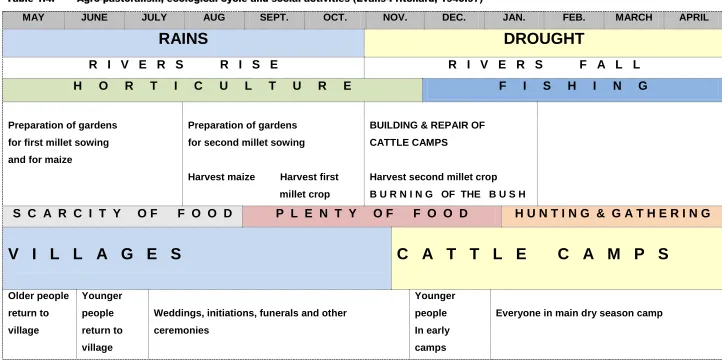
Table 1.4: Agro-pastoralism, ecological cycle and social activities ... 16
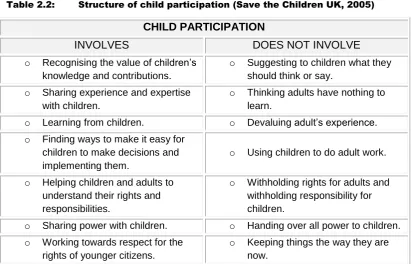
Table 2.2: Structure of child participation ... 23
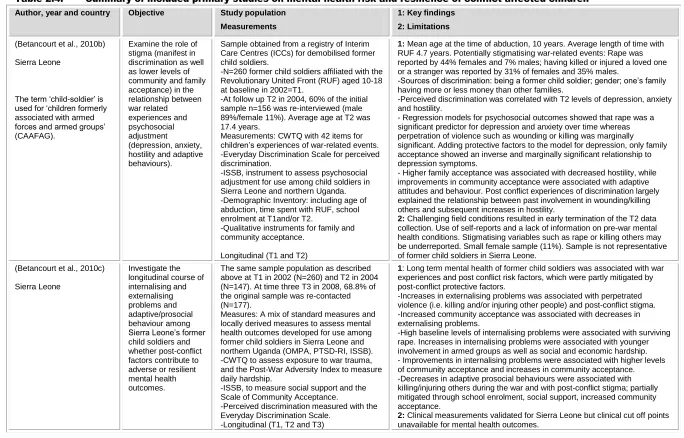
Table 2.4: Summary of included primary studies on mental health risk and resilience of conflict affected children ... 42
Table 2.6: Summary of included primary studies on PTG in children affected by armed conflict ... 57
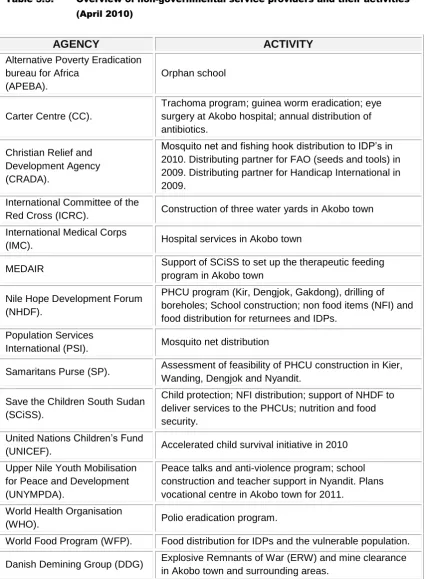
Table 3.3: Overview of NGO’s and their activities in Akobo County ... 66
Table 4.4: The stages of adolescent PAHO classification ... 86
Table 4.5: Strengths and weaknesses of FGD’s ... 87
Table 4.6: Strengths and weaknesses of interviews ... 88
Table 4.8: Example illustrating coding process: Analysis of how children who lost both parents viewed their situation ... 103
Table 5.2: Characteristic of adult respondents ... 110
Table 5.6: Quotes on early child marriage and reproductive health ... 127
Table 5.7: Behavioural changes of children described by adults ... 130
Table 5.8: Quotes on child mental health, risk and protective factors ... 132
Table 5.10: Quotes on general health threats for children ... 136
Table 5.11: Quotes on children’s rights, roles and responsibilities... 141
Table 5.12: Quotes on the adult perception of children’s participation . 144 Table 5.14: Characteristics of the child respondents ... 150
Table 5.17: Quotes on children’s experiences with malaria and diarrhoea ... 165
Table 5.19: Ranking of the main perceived health threats by age and gender ... 181
Table 5.22a: Matrix for measuring the scope of participation... 186
Table 5.22b: Matrix for measuring the quality of participation ... 187
Table 5.22c: Matrix for measuring the project effect of participation ... 188
Table 6.2: Characteristics of respondents ... 207
Table 6.5a: Exposure to traumatic events: individual variables in the category ‘material deprivation’ by gender ... 211
Table 6.5c: Trauma exposure: individual variables in the category
‘bodily injuries’ by gender ... 213
Table 6.5d: Trauma exposure: individual variables in the category ‘forced confinement, coercion’ by gender ... 214
Table 6.5e: Trauma exposure: individual variables in the category ‘forced to harm’ by gender ... 215
Table 6.5f: Trauma exposure: individual variables in the category ‘witnessed abduction, death and injuries of loved ones’ by gender ... 217
Table 6.5g: Trauma exposure: individual variables in the category ‘witnessed general violence’ by gender ... 218
Table 6.6: Number of experienced traumatic events by gender ... 218
Table 6.9: Experienced symptoms for PTSD in the past month ... 222
Table 6.10: Experienced symptoms for anxiety in the past month ... 228
Table 6.11: Experienced symptoms for depression in the past month . 230 Table 6.12: Multivariate analysis of the influence of demographic characteristics on mental health outcomes ... 234
Table 6.13: Relationships between trauma and mental health outcomes ... 235
Table 6.14: Multivariate analysis of trauma categories and their association with PTSD, anxiety and depression by gender ... 236
Table 6.15: Multivariate analysis of individual trauma variables and their association with PTSD, anxiety and depression ... 238
Table 6.17 Experienced PTG since the life altering event ... 244
Table 6.18: Demographic variables and their association with PTG .... 246
Table 6.19: Number of trauma and their association with PTG ... 246
Table 6.20: Multivariate analysis of trauma category and their association with PTG by gender ... 247
Table 6.21: Multivariate analysis of trauma variables and their association with PTG by gender ... 249
LIST OF FIGURES
Figure 1.1: Study location ... 1
Figure 1.2: Impact of conflict on health systems ... 7
Figure 1.3: Cattle on the move ... 12
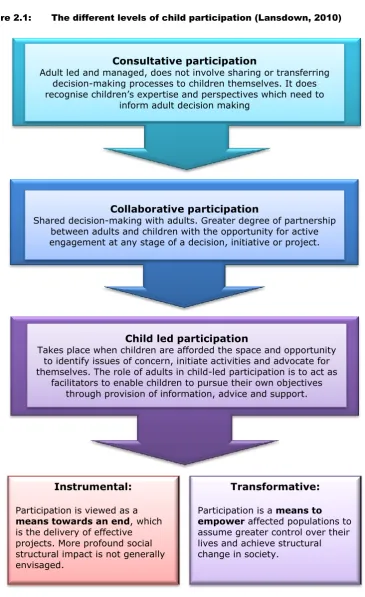
Figure 2.1: The different levels of child participation ... 22
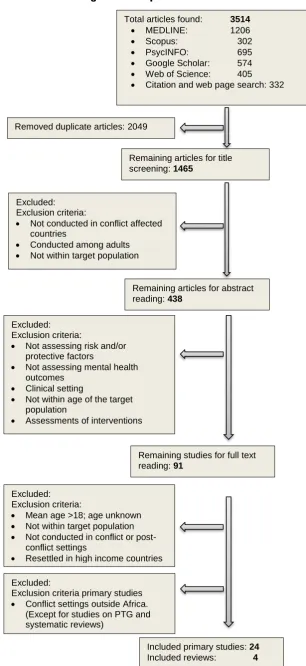
Figure 2.3: Flow diagram of the procedure for literature exclusion... 28
Figure 2.5: Hypothesized model of post-traumatic growth in children ... 53
Figure 3.1: Village burned to the ground in Nyandit Payam ... 62
Figure 3.2: Jonglei State approximate territories of principal ethnic groups ... 64
Figure 3.4a: Major attacks involving the Lou Nuer in 2009 and 2010 ... 68
Figure 3.4b: Major attacks involving the Lou Nuer in 2011 - May 2012 ... 69
Figure 4.1: Conceptual framework, a study outline ... 71
Figure 4.2: Inductive and deductive analysis ... 76
Figure 4.3: Approximate research area in Akobo County ... 77
Figure 4.7: Ethical issues in involving children ... 98
Figure 5.1: Waiting for food distribution in Akobo town ... 109
Figure 5.3: Main source of income ... 111
Figure 5.4: General feelings of happiness ... 112
Figure 5.5: General feelings about security ... 113
Figure 5.9: The use of impregnated mosquito nets ... 135
Figure 5.13: The concept of blood strength: the past, the present and the future ... 147
Figure 5.15: Happiness ... 152
Figure 5.16: Security ... 153
Figure 5.18: Girls taking care of their family and younger siblings ... 179
Figure 5.20: Workshop with young boys: ranking exercise ... 182
Figure 5.21: Workshop at the orphan school ... 184
Figure 5.23: Summary of responses from the three respondent groups: children, adult community members and service providers ... 204
Figure 6.1: Data collection at the beginning of the rainy season ... 205
Figure 6.3: Timeframe since the most terrifying event ... 208
Figure 6.7: Prevalence rates for symptoms of PTSD, anxiety disorder
and depression ... 219
Figure 6.8: Mean scores for PTSD, anxiety disorder and depression by living situation ... 220
Figure 6.16: Prevalence of PTG factors by category and gender ... 241
Figure 6.23: Children’s priorities for their future ... 251
Figure 6.24: Children’s strength ... 253
AIM AND OBJECTIVES
The aim of this study
To explore children’s health needs from a child perspective and to determine
existing and potential opportunities and challenges for children to participate in
health decision making.
General objective 1:
To assess children’s capacity to become key contributors in identifying health
threats prioritising them, proposing solutions and implementing action.
General objective 2:
To explore the communities’ understanding and perception of children’s health
needs, their roles, responsibilities and capacity in health decision making.
General objective 3:
To explore health service providers’ perception of children’s health needs and
the capacity of children to participate in health decision making.
General objective 4:
To investigate mental health effects of experienced traumas and the
relationships between experienced trauma, post-traumatic growth and mental health
outcomes1.
STRUCTURE OF THE THESIS
Chapter 1 introduces the thesis and provides an overview of important themes that
provide the basis for this study.
Chapter 2 provides an overview of available studies and reports on the subject of
child participation with an emphasis on the barriers to child participation and the
benefits of child participation for children and their communities. Secondly it
provides a review of the available literature on the subject of mental health of conflict
affected children in Africa, with a special emphasis on risk and protective factors
affecting mental well-being.
Chapter 3 gives a detailed description of the local context and of people’s exposure
to armed violence in Akobo County. It gives an overview of the social economic and
health care system and the geography of the area.
Chapter 4 describes the study methodology. It outlines the study design,
justification, sampling strategies, method of data collection and analysis, ethical
considerations and the reflexivity of the researcher.
Chapter 5 presents the findings from the case study in three sections according to
the respondents interviewed: community members, children and service providers.
Chapter 6 presents the findings from the cross sectional, community based mental
health survey.
Chapter 7 discusses the key findings of this research and addresses the limitations
of this study.
Chapter 8 draws conclusions from this research, and provides recommendations for
1.
Introduction
The introduction chapter provides an overview of Sudan’s long history of
violence and how it has affected people’s lives, the health sector, the provision of
humanitarian aid and the Nuer society. The relevant cultural aspects are explained
with a particular focus on the significance of the proliferation of arms and the loss of
cattle in Nuer society.
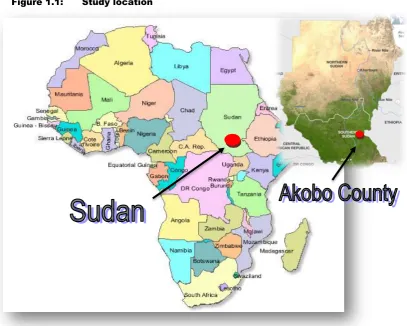
This study was conducted in 2010 among the Lou Nuer in Akobo East County,
Jonglei State, South Sudan (Figure 1.1).
At the time of data collection, South Sudan was part of the Republic of Sudan,
the largest country in Africa with over 2.5 million km2. On July 9th 2011 South Sudan became Africa’s youngest nation and is now bordered by the Republic of Sudan to
the north, Ethiopia to the east, Kenya and Uganda to the southeast, the Democratic
Republic of the Congo to the south and the Central African Republic to the
[image:23.595.102.510.422.748.2]southwest.
Background : Sudan’s history dominated by chronic warfare 1.1.
Before the secession of the south, the Republic of Sudan was not only divided
into east and west sides by the river Nile, but also into north and south by the two
main cultural and religious roots of its people. The north of Sudan was inhabited
primarily by Muslims who considered themselves culturally Arabic. The south of
Sudan was peopled primarily by Christians and animists. They considered
themselves culturally sub-Saharan. This division was further emphasised by the
British policy of ruling the north and the south under separate administrations. From
1924, people from the north were not allowed to go further south than the 10th
parallel, while the southerners were not allowed to go further north than the 8th
parallel. This increased their isolation from each other and arguably sowed the
seeds of conflict in the years to come (Collins & Robert, 2008).
In 1946, the policy of the British Empire changed and the two separate regions,
north and south Sudan, were merged into one administrative entity as part of the
new British strategy in the Middle East. This measure was taken without consulting
the southerners, who feared being dominated by the political power of the north.
Tensions increased when, in 1953, the United Kingdom and Egypt agreed to grant
independence to Sudan. As Independence Day (1st January 1956) approached, the
tensions escalated into conflict as the southerners perceived the northern leaders as
backing away from commitments to create a federal government that would grant
the south substantial autonomy (El Mahdi, 1965).
Following independence, Sudan suffered 17 years of civil war followed by ethnic,
religious, and economic conflicts culminating in the second civil war in 1983
(UNOCHA, 2006). This conflict marked a continuation of the first civil war and was
rooted in long-term political, economic and cultural grievances between the south
and the Government of Sudan. The signing of the Comprehensive Peace
Agreement (CPA) in January 2005 marked the end of the 21 year civil conflict
between the Government of Sudan (GOS) and the Southern Sudan People’s
Liberation Movement/Army (SPLM/A). The CPA also paved the way for the south
Sudanese to determine through a referendum whether they wanted to secede.
Sudan’s independent history was dominated by chronic warfare, which had a
devastating effect on civilians and further divided the country on racial, religious, and
southern Sudanese; while half a million people sought refuge abroad (Pantuliano,
2008). The UN estimated that two million people died as a result of fighting, famine
and disease.
The lack of investment during war time, particularly in the south meant that
generations lost access to basic health services, education and jobs. Sudan’s
economy has remained severely impaired despite significant support from the
international community in the past years.
After the CPA was signed, many returned to their homeland, and it was
estimated that by 2009, a total of 2.5 million internally displaced persons (IDPs) and
refugees had returned to their homes in Southern Sudan (iDMC, 2010). Despite all
efforts, durable solutions and reintegration of returnees proved difficult because
Southern Sudan remained one of the poorest areas in the world with very limited
access to basic resources and infrastructure. Many receiving communities were just
as vulnerable as the returnees and had little capacity to help them rebuild their lives
(Pantuliano, 2009).
Food shortages became widespread in many areas in Southern Sudan, even
more so after drought and crop failure in 2009. Displacement due to an increase in
violence and intensity of inter-ethnic clashes further contributed to the food
shortages. Many people who cultivated the land left their villages for urban areas in
search of security. At the beginning of 2010 the United Nations World Food Program
(WFP) projected that almost half the population in Southern Sudan, about 4 million
people, would depend on food aid at some point in 2010 if severe malnutrition was
to be avoided (UNOCHA, 2010).
The term ‘tribal violence’ is widely used in South Sudan. In Jonglei state where
this study was conducted an estimated 125,000 people were displaced in 2009 as a
result of ‘tribal violence’ which represented twice as many as in the year 2008
(UNOCHA, 2010).
However, the term ‘tribal violence’ is far from being a clear cut phenomenon
1.1.1. Tribal violence and its causes
‘Tribal violence’, is a powerful term, particularly for those with an interest in
rallying groups against each other to strengthen their own support base
(Schomerus, 2010). As a result, the interpretation of violence is often misleading
with a great deal of uncertainty about who the actual perpetrators are and about the
extent to which ‘tribal clashes’ are politically motivated. The term ‘tribal conflict’ is
probably best described as follows:
“Local violence is driven by conflicts between tribes. The tribal label is applied
to anything from family disputes, to disputes between clans and tribes, to
attacks by criminal gangs, militia groups or marauding former soldiers”
(Schomerus, 2010).
In southern Sudan local violence has increased steadily since the signing of the
CPA in 2005 (UNOCHA, 2010). A study conducted in 2010 looking at the ‘dynamics of conflict and predicaments of peace in Southern Sudan’ argues that both the
Government of South Sudan (GoSS) and the international agencies working in
southern Sudan failed to achieve what they intended to do in the previous years,
thus contributing to the dynamics of violence. The authors concluded that the
inability to set up accountable government structures at all levels and reliable
service delivery led to intense political contest down to the local level for positions of
power and authority. At the same time, the absence of institutions capable of
controlling violence and protecting returnees and residents resulted in poor
investigation of clashes and often misleading interpretations of violence
(Schomerus, 2010).
Despite the impressive achievement of being built from scratch, the new
Government failed to reach the great majority of the people. The South Sudanese’s
expectations of the Government were high, but remained largely unfulfilled. This
was seen as an important reason for the resurfacing of war-like behaviour
(Schomerus, 2010; Pantuliano, 2009).
The state building approach emphasised the creation of strong institutions and
decentralisation, but the very same institutions lacked accountability, particularly at
the local level where most violence was perpetrated. Political manipulation of the
‘tribal’ label thus became possible and created decentralised government structures
A major contributor to violence was the lack of reliable entities to deal with
clashes when they occurred. There was confusion in the first place about where
authority lied and ultimately who should take charge in dealing with violent conflict.
One reason why such a responsibility gap opened was the existence of local
indigenous structures that were strengthened without questioning their political
accountability in connection with violent conflict (Pantuliano, 2008). At the same
time, newly established legal government structures of community based
administrations were only half-heartedly implemented, often competing with the old
traditional authorities. In the absence of a reliable legal system and without any
expectations of facing repercussions, individuals and groups started taking
resources for their own personal gain and acted in ways that violated ideas about
morals and traditions, or were simply criminal and unconstitutional (Schomerus,
2010).
On a local level, access to land was seen as an important trigger of violent
clashes since land ownership was the key to wealth and power. Local borders and
administrative boundaries were often not clearly defined or changed over time,
leading to an exacerbation of hostilities. Land was often in possession of those
people who had stayed at home during the war. In other places the land was
occupied by former SPLA soldiers who felt that their struggle to ‘liberate the land’
was justification enough to own any land they wished. Also IDPs who left their
villages because of insecurity or attacks were under pressure to return to their
homes as they were soon occupied by others (Pantuliano, 2008).
Another important trigger for violence and revenge killing in South Sudan was
cattle raiding. Cattle raiding was not a new phenomenon, but it had become more
violent in recent years. Many ethnic groups were cattle-keepers. Cattle were not
only a source of livelihood, but also a symbol of prestige and wealth; cattle simply
represented life. Such units of wealth in the community were often targeted by other
pastoralist tribes and as a result, cattle-raiding had a long tradition in many places in
South Sudan. It had become synonymous with what was termed as ‘inter-tribal
clash’. Often cattle raids were about cattle and land, both of great value to local
people (Schomerus, 2010).
Many different opinions existed among the population regarding the root causes
of cattle-raiding. Those most often mentioned were: lack of authority, extreme
arms (cattle raiders were often better armed than the police or even the army),
economic reasons (a successful raid could be worth several thousand dollars),
increase in bride-price, but also the lack of future perspective particularly for boys
who were often involved in cattle-raids at an early age (Schomerus, 2010).
In 2009 a dramatic change in the nature of violence was observed with a shift
away from stealing cattle to targeting people, including women and children. This
was demonstrated in the much higher number of deaths compared to wounded
people2. In addition, clashes that occurred outside the dry season, the traditional ‘cattle rustling season’, were unlikely to be conducted to steal cattle as it was
impossible to return with them through the mud in time before the village that was
attacked was able to mobilise to retaliate and recover the stolen cattle.
Furthermore, in some locations armed groups of young men ostensibly raiding
for cattle were found to be linked to former militia commanders aligned to the North.
It was argued that they were still controlled by the North’s military intelligence in
order to destabilise the South (Medecin Sans Frontieres, 2009; Schomerus, 2010).
The description of local violence as ‘tribal’ in nature is in many ways unhelpful
and superficial as it conflates symptoms of underlying problems with their causes.
Although there are situations in which cattle rustling, competition over pastures, or
claims over land are associated with ‘tribal groupings’, this is not always the case
(Schomerus, 2010). The interference of the Government of Sudan (GoS) as a
default explanation for the ongoing violence in the south is also debated. On the one
hand Khartoum is accused of financing cattle raids as part of a northern strategy to
reduce the population of the south and on the other hand local authorities and
civilians testify that such reports are mostly anecdotal (Schomerus, 2010).
The newest nation in Africa has inherited some formidable humanitarian
challenges and it is unlikely that violence will fade away as long as most citizens feel
disconnected from their government, competition for resources continue, legal
representation of the people are missing and credible social reconciliation are
lacking.
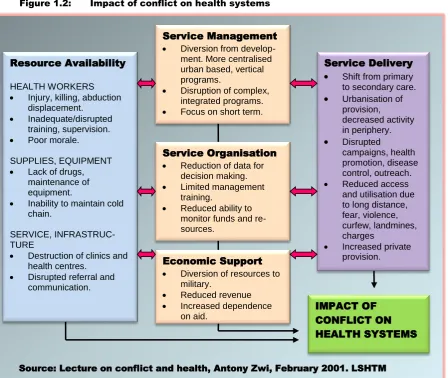
Resource Availability
HEALTH WORKERS Injury, killing, abduction
displacement. Inadequate/disrupted
training, supervision. Poor morale.
SUPPLIES, EQUIPMENT Lack of drugs,
maintenance of equipment.
Inability to maintain cold chain.
SERVICE, INFRASTRUC-TURE
Destruction of clinics and health centres.
Disrupted referral and communication.
Service Management Diversion from
develop-ment. More centralised urban based, vertical programs.
Disruption of complex, integrated programs. Focus on short term.
Service Organisation Reduction of data for
decision making. Limited management
training.
Reduced ability to monitor funds and re-sources.
Economic Support Diversion of resources to
military.
Reduced revenue Increased dependence
on aid.
Service Delivery
Shift from primary to secondary care.
Urbanisation of provision, decreased activity in periphery. Disrupted campaigns, health promotion, disease control, outreach. Reduced access
and utilisation due to long distance, fear, violence, curfew, landmines, charges
Increased private provision.
IMPACT OF CONFLICT ON HEALTH SYSTEMS
Source: Lecture on conflict and health, Antony Zwi, February 2001. LSHTM 1.1.2. The impact of violence on health needs and service delivery
From a health perspective, South Sudan is marked by extremely high health
needs and extremely limited health service provision (Moszynski, 2008). The health
system has virtually collapsed and suffers from a severe shortage of health workers
and facilities with only 16% of people accessing health services (Wakabi, 2011).
NGOs still provide 86% of these services and pay salaries to 75% of all health staff.
Up to the present time, the government lacks the human, financial and technical
capacity to take over these services (Wakabi, 2011). Affected populations have
increasingly suffered from public health consequences, even more so when they
have been displaced from home. A combination of direct violence, displacement,
food shortages, destruction of housing and health facilities, severe disruption of
outreach activities and damage to water and sanitation facilities led to a rapid
increase in malnutrition and communicable diseases such as measles, diarrhoea
and pneumonia (SCUK & MEDAIR, 2010). The impact of conflict on health systems
[image:29.595.94.543.388.766.2]is summarised in Figure 1.2.
1.1.3. Guns and the destruction of the Nuer society
The culture of the Nuer in Southern Sudan was first studied by the ethnographer
Sir Edward E. Evans-Pritchard in the early 1930’s. According to Hutchinson, he
produced what was, arguably, the most comprehensive and detailed ethnographic
portrait of any people in the whole of the anthropologic literature (Hutchinson, 1996).
Fifty years later Sharon Hutchinson, an anthropologist, returned to Nuerland and
combined fresh ethnographic evidence and contemporary theoretical perspectives
to show what has happened to the Nuer since their 1930s encounter with
Evans-Pritchard, and how civil war and violence have affected the Nuer society. The work
of Evans-Pritchard and Hutchinson provide an important, authoritative and
respected historic perspective and cultural insights that the relevant information
presented in this chapter is mainly derived from the literature published by these two
anthropologists.
Evans-Pritchard found that violence was not a new phenomenon and that the
Nuer had always solved their conflict through fighting long before the colonial times.
He described that people were frequently killed in fights and noted that the fighting
rather subsided during the colonial era since the Nuer learned to fear government
interventions. (Evans-Pritchard, 1940:152).
Hutchinson argued that it was not the amount of fighting as such, but the
proliferation of arms that had been the crucial turning point. She demonstrated that
‘the gun’ had not only challenged traditional beliefs and the social order, but also
destroyed the collectiveness of Nuer society. She pointed out that “the ethics and
tactics of warfare were radically different in a world where the powers of guns and of the government increasingly replaced those of divinity as the primary creators and destroyers of the moral and social universe” (Hutchinson, 1996:51). Hutchinson
observed that while everybody agreed that to kill someone with a spear was to
accept full responsibility for the death, it was not so in the case of inter-Nuer gun
slaying. Bullets were not only liable to be fired unintentionally, but also their
trajectories were not always precise and their fatal consequences were not easy to
trace in major inter-tribal confrontation.
Evans-Pritchard was the first to describe the complexity and sophistication of the
Nuer justice system that existed in pre-colonial times. His observations indicate what
social consequences would ensue for the Nuer society if such a framework could
only obliged the slayer to admit freely to his crime, but also to pay compensation
according to the gravity of the offence. No slayer would ever attempt to cover up his
deed, because of the ‘avenging’ capability of the blood of the killed person that was
believed to pass into the body of the slayer. If the slayer drank or ate anything
before the ‘embittered’ blood was removed through an incision made by the ‘leopard-skin-chief’, he would soon die of a highly dangerous and contagious form of ‘pollution’ called ‘nueer’:
“As soon as a man slays another; he hastens to the home of a leopard-skin chief
to cleanse himself from the blood he has spilt and to seek sanctuary from the
retaliation he has incurred. He may neither drink nor eat till the blood of the dead
man has been let out of his body, for it is thought to pass into it in some way, and
to that end the chief makes one or two vertical incisions on his arm by a
downward stroke from the shoulder with a fishing spear […]. As soon as the
kinsmen of the dead man know that he has been killed, they seek to avenge his
death on the slayer, for vengeance is the most binding obligation on paternal
kinship and an epitome of all its obligations.
By living with the chief as his guest from the moment his arm has been cut
until the final settlement of the blood feud [by the payment of bloodwealth cattle]
the slayer has asylum, for the chief is sacred and blood must not be spilled in his homestead….It is essential that a blood feud be settled if the parties to it live in the same neighbourhood, not only for reasons of security but also on the account
of the serious danger [of contracting “nueer”, in which] both the dead man’s kin and the slayer’s kin are placed by the homicide. If either side eats or drinks with
the other or from vessels which the other side has used, the penalty is death, and
it may be brought on kinsmen on either side by a person who belongs to neither
party eating or drinking in the home of both. This intolerable state of interdiction can only be ended by sacrifice by a priest when compensation has been paid”. (Evans-Pritchard, 1940:293-295).
Despite the payment of up to fifty blood-cattle and the sacrifices made, close
kinsman on either side would not eat together for months, years or even
generations. In spite of the sacrifices, such feuds could go on forever. Such an
offence could be settled with bloodwealth but it would never be forgiven and had to
be paid for with a life. Ideally, every bloodwealth settlement led to the marriage of a
wife in the name of the deceased (ghost-wife) who would bear him sons to avenge
their father’s death with the blood of his enemies. However, there were
circumstances where feuds could easily be stopped. It was far more difficult to stop
village or between neighbouring villages. If people had to live in close proximity, the
sense of community was much stronger and there were many ties and affinities.
People recognised that it was vital for them to get along. A state of feud was
therefore seen as incompatible with corporate life and permanent settlements of
such conflicts were usually reached between people who depended on each other
(Evans-Pritchard, 1940:156-157).
When the civil war began and firearms became widespread, the Nuer started to
wonder whether the use of guns in inter-Nuer slaying would have the same spiritual
and social consequences. There was a fundamental difference between the force of
a spear and the force of a gun. While the power of a spear was seen to be directly
connected to the force of the person who hurled it, the force of a gun was seen as
completely independent of its bearer since all a person had to do was aim. The
deadly force came from the rifle itself and not from its bearer. As a consequence:
“the idea that relations of feud emanated outwards from a mysterious blood bond
forged between slayer and slain at the moment of death became increasingly difficult for people to maintain in those areas where gun warfare predominated.”
(Hutchinson, 1996:51).
As more and more Nuer were incorporated into the national army and regional
police forces, many were forced to kill fellow Nuer in the line of duty. Furthermore,
men and women were more and more pressured into accepting that intra-ethnic
homicides carried out in the name of the Government were completely devoid of
spiritual dangers and long term social consequences. This created profound moral
dilemmas. Hutchinson noted that up to then the ‘pollution’ concept of ‘nueer’ had
remained remarkably stable (Hutchinson, 1996:107).
As a result of the brutal realities of gun slaying that people experienced through
the war, they started to doubt whether the blood curse would be operative in any
case or whether this was only true in situations where the assailant and victim had
previously known each other. In addition people began to develop an analogy
between the mysterious inner force of firearms (and their often unpredicted impact)
The introduction of guns and the two civil wars highly challenged the Nuer
pastoralist society whose livelihood strategies depended on strong relationships and
the sense of community.
Background : pastoralism and cattle loss 1.2.
The culture of the Nuer has remained interwoven with and ‘determined’ by their cattle3. Furthermore, the ecologic and climatic conditions of ‘Nuerland’ clearly favour
cattle husbandry over cultivation.
“From a European’s point of view, Nuerland has no favourable qualities, unless its severity be counted as such, for its endless marshes and wide savannah
plains have an austere, monotonous charm. It is throughout hard on man and
beast, being for most of the year either parched or swamped. But the Nuer
think that they live in the finest country on earth and it must be admitted, for herdsmen their country has many admirable features.” (Evans-Pritchard,
1940:51).
Nuerland, with its few settlements scattered over a territory larger than Rwanda,
remains a vast savannah and marshland area covered with tall grasses during the
rainy season. Despite the harsh climate, ecologic conditions favour the biannual
migration between relatively permanent wet season settlements and the temporary
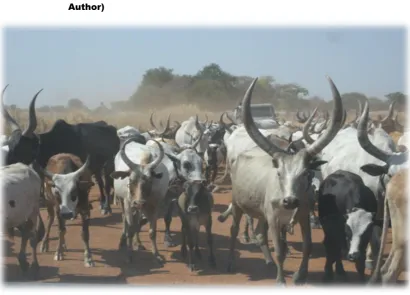
dry season cattle camps (Figure 1.3). Yet, the large herds once owned by Nuer
families have been dramatically reduced by decades of civil war and cattle raiding.
The volatile security situation and the ferocity of the perpetrated violence have
turned the biannual migrations with the remaining herds into highly dangerous
undertakings for man and beast.
3
Figure 1.3: Cattle on the move: Cattle are being driven back to Nyandit from the dry-season camps at the beginning of the rainy season (Source: Author)
For a better understanding of the meaning of cattle loss it is important to capture
the cultural and spiritual importance of cattle in Nuer society which is best described
by Evans-Pritchard. In his book, The Nuer:A Description of the Modes of Livelihood and Political Institutions of a Nilotic People (1940), Evans-Pritchard described in great detail how deeply Nuer culture was shaped by their cattle.
“They are always talking about their beasts. I used sometimes to despair that I
never discussed anything with the young men but livestock and girls, and even
the subject of girls led inevitably to that of cattle. Start on whatever subjects I
would, and approach it from whatever angle, we would soon be speaking of cows
and oxen, heifers and steers, rams and sheep, he-goats and she-goats, calves
and lambs and kids. I have already indicated that this obsession – for such it
seems to an outsider – is due not only to the great value of cattle but also that
they are links in numerous social relationships. Nuer tend to define all social
processes and relationships in term of cattle. Their social idiom is a bovine idiom.
Consequently he who lives among Nuer and wishes to understand their social life must first master a vocabulary referring to cattle and to the life of the herds”. (Evans-Pritchard, 1940:19).
The importance of the herds in people’s lives and thoughts is still expressed in
a preferred bull. The same accounts for women and children who call one another
by a cow or an ox name. Some of the men, women and children receive such a
name at birth.
Cattle are still the most cherished possession and have always played a key role
in religious ceremonies and rituals. A man was only able to establish contact to the
ghosts and spirits through his cattle. Evans-Pritchard concluded: “If one is able to
obtain the history of each cow in a kraal, one obtains at the same time not only an account of all the kinship and affinities of the owners but also of all their mystical connections” (Evans-Pritchard, 1940:18).
Such descriptions not only provide insights into the extraordinary bonds between
cattle and people, at the same time it fosters the belief that the Nuer are somehow
above history and beyond change.
When Hutchinson returned to Nuerland almost fifty years later for her
ethnographic study, to describe how the people had confronted moral, political and
social dilemmas of a changing world determined by civil war and violence, she found
a different people. By the 1980s, the Nuer of the 1930s described as a profoundly
egalitarian people without chiefs or kings, whose political system was based on
kinship and residency affiliation, loosely divided into eleven major territorial
groupings4, were no longer found to be the isolated, independent, cattle-minded
warriors as described by Evans-Pritchard. Hutchinson found: ”They (the Nuer) had
been drawn from an indigenous society allegedly devoid of institutionalized rulers into a bewildering spiral of local government authorities, district councils, party bureaucracy, regional assemblies and national parliaments – all of which were constantly being reshuffled, reorganised and disbanded” (Hutchinson, 1996:26).
In the 1980s the daily lives of the vast majority of the Nuer still revolved around
their cherished cattle, however, trading activities had started and small market
centres had been set up by Nuer merchants throughout the region. Fifty years
earlier Evans-Pritchard did not give the Nuer much credit for their trading
capabilities, mainly because of their great interest in their herds: “Nuer have nothing
to trade except their cattle and have no inclination to dispose of these: all they greatly desire is more cattle, and, apart from the difficulty that they have nothing to
offer in exchange for them, herds are more easily increased by raiding the Dinka”
(Evans-Pritchard, 1940:42).
By the time Hutchinson had arrived, young Nuer, in the search for independence
and a shortcut to marriage, travelled to bigger cities in the North looking for
employment. Money was introduced as a new medium into Nuer culture through
trade and employment and many of these young people invested their money into
bridewealth cattle. Out of this new money/cattle equation a new type of cattle was
created, the ‘cattle of money’ and it was not unusual for the father of a bride to
accept money in place of a bridewealth cow.
Hutchinson further noted that as a result of the seventeen years civil war
(1955-1972) the men and women she encountered had become highly politicised people
deeply conscious about the vast, untapped oil wealth on their lands. She also found
that the topics of conversation had shifted and Nuer men and women did not only
discuss cattle but also political issues, regional troop movements, the Jonglei Canal
scheme and people’s urgent needs for more schools, health centres, roads,
veterinary services and the like. Hutchinson described an important shift from the
ancient key media of interpersonal bonding such as ‘blood’, ‘cattle’ and ‘food’ to
other more powerful media coming from outside their social world, namely ‘money’, ‘guns’ and ‘education’ (Hutchinson, 1996:25).
While some of the sociocultural patterns from ‘the old times’ have faded or
changed, others remained seemingly unaffected. Despite an almost total loss of
people’s livestock in many places, including Akobo County, men’s and also boy’s
work remained connected with cattle keeping activities even if there were no cattle
to be kept. The Nuer culture and social organisation is built around the herds. In the
absence of alternative sources to earn money, wealth and prestige continue to be