IN THE SCHOOL SITUATION
Phillipa Butcher
Being a thesis submitted as partial requirement for the degree of Master
Page
CHAPTER 1 - INTRODUCTION • • • . . • . • . • • •
. .
.
.
.
1 .!!::e Reference Group Perspective • . . . • . .. . 2Identification of the Adolescent '·s Reference Groups. • . 4 The School Situation. '
.
.
.
.
Summary
. .
.
.
. . . .
.
.
.
.
.
.
.
.
.
.
. .
.
. .
....
.
CHAPTER 2 - METHODOLOGY.
. .
.
.
.
.
.
.
.
.
.
.
.
.
.
.
.
.
.
'.
lO
l7
22
The Sample . . . • . . . o • • • • • • • 22 Response • • • • • • • . • .
.
.
..
.
.
.
.
.
.
.
.
'.
Interview Location.The Interview Schedule
.
.
.
.
. .
.
.
.
.
.
. .
.
.
.
.
..
.
..
.
.
..
.
..
.
26
27
27
Reliability • • • . • . . .. • • • • . • . .. • .. . • . • 30 Validity • . •
..
.
'.
. . .
.
.
Interpretation and Analysis
Generalization of the Results
.
.
.
.
.
.
.
.
.
.
.
'.
.
. . .
.
.
.
.
.
.
Summary
.
.
.
. .
. .
. . . . .
. .
.
.
.
.
.
CHAPTER 3 - PARENTS AND FRIENDS AS REFERENCE GROUPSIdentification of the Adolescent's Reference Groups
The Areas of Influence of Parents and Peers in the School Situation
The Perception of Differences between Peer and Parental Norms
Conclusion and Sununary
.
.
..
. .
.
.
.
.
.
CHAPTER 4 - PEER AND PARENTAL INFLUENCE IN THE SCHOOL SITUATION
Parental Influence on the Boys' Aspirations
The Implications of Future Aspirations for Present Performance at School
The Values of Schoolfriends - Academic or Anti-Academic
The Effect of Involvement in Leisure Activities on Academic Performance and Study
Conclusion and Sununary.
.
.
.
.
.
.
..
.
.
..
CHAPTER 5 - CONCLUSION
.
.
.
.
.
-
.
.
.
.
.
.
.
.
.
. .
. . .
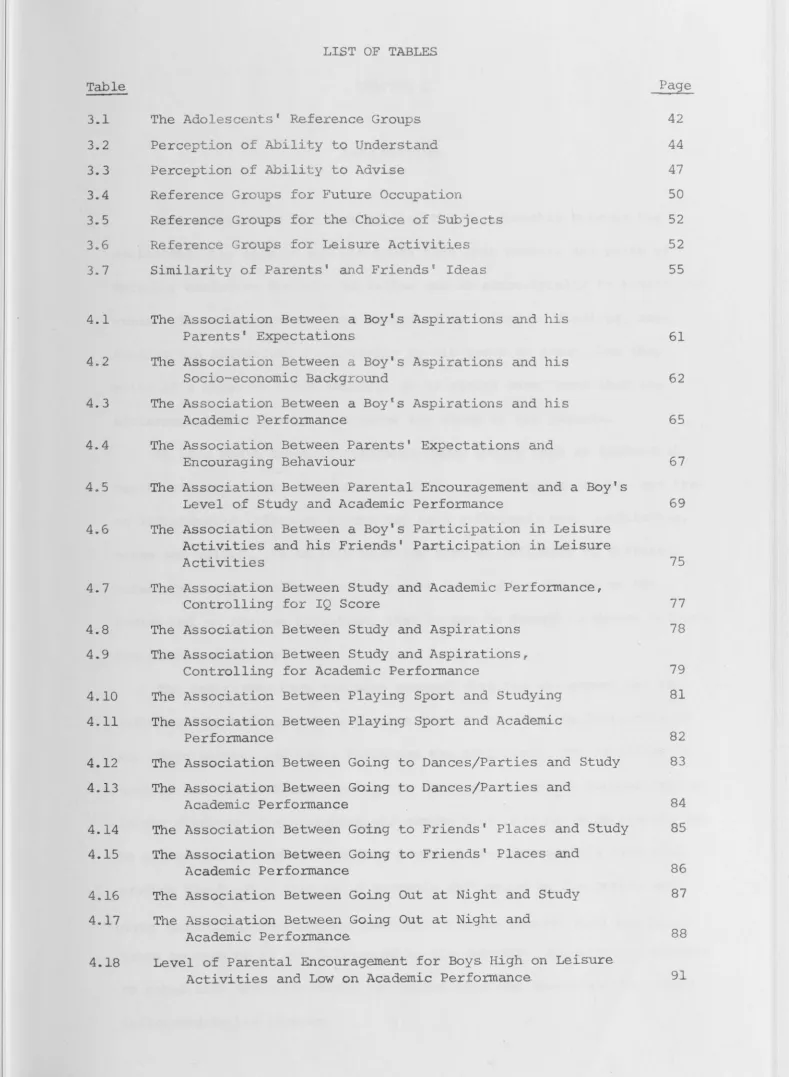
Table 3.1 3.2 3.3 3.4 3.5 3.6 3.7 4.1 4.2 4.3 4.4 4.5 4.6 4.7 4.8 4.9 4.10 4.11 4.12 4.13 4.14 4.15 4.16 4.17 4.18
LIST OF TABLES
The Adolescents' Reference Groups Perception of Ability to Understand Perception of Ability to Advise
Reference Groups for Future Occupation
Reference Groups for the Choice of Subjects Reference Groups for Leisure Activities Similarity of Parents' and Friends' Ideas
The Association Between a Boy's Aspirations and his Parents' Expectations
The Association Between a Boy's Aspirations and his Socio-economic Background
The Association Between a Boy's Aspirations and his Academic Performance
The Association Between Parents' Expectations and Encouraging Behaviour
The Association Between Parental Encouragement and a Boy's Level of Study and Academic Performance
The Association Between a Boy's Participation in Leisure Activities and his Friends' Participation in Leisure Activities
The Association Between Study and Academic Performance, Controlling for IQ Score
The Association Between Study and Aspirations The Association Between Study and Aspirations,
Controlling for Academic Performance
The Association Between Playing Sport and Studying The Association Between Playing Sport and Academic
Performance
The Association Between Going to Dances/Parties and Study The Association Between Going to Dances/Parties and
Academic Performance
The Association Between Going to Friends' Places and Study The Association Between Going to Friends' Places and
Academic Performance
The Association Between Going Out at Night and Study The Association Between Going Out at Night and
Academic Performance
Level of Parental Encour_agement for Boys Hi.gh_ on Leisure Activities and Low on Academi.c Performance.
[image:4.815.17.806.35.1112.2]CHAPTER l
INTRODUCTION
Most researchers who have studied the relationship between the adolescent, his parents and his peers have cast parents and peers as
mutually exclusive forces - to follow one is automatically to reject the
other. These researchers have turned up inconsistent findings, some finding the adolescent's conformity to his peers so great that they write of a separate youth culture, while others have found that the adolescent is still very much under the thumb of his parents.
It is a basic tenet of reference group theory that an individual may be simultaneously influenced by different reference groups, and that
an individual's reference groups may have different, even conflicting, norms and values. It is only when the area of influence of different reference groups overlap, and they make conflicting demands on the
individual in the one situation, that he may be forced to choose between
the different groups.
The few researchers who have assumed that the adolescent may be influenced by both parents and peers have found that, in fact, this is
so. Both parents and peers influence the adolescent, but in different area of his life. These findings to some extent explain inconsistencies in the findings of researchers who assume that only peers or parents can be influential. Emphasis on some areas of the adolescent's life will produce the finding that he is strongly influenced by his peers, and
given the differences between peer and parental values, this has been taken to mean he is not influenced by his parents. Conversely, emphasis on other life areas is likely to suggest that the adolescent is mainly
The basic hypothesis of this. study is that the adolescent will be
influenced by both peers and parents, although they may have different,
even conflicting, norms and values. The study will centre around an
investigation of peer and parental influence on the adolescent in the
school situation. The school situation was specifically se.lected because
the literature suggests that here the adolescent will come under
conflicting pressures from parents and peerso The school situation should therefore constitute a demanding test of the adolescent•·s ability to meet
the possibly conflicting demands of both parents and friends.
The Reference Group Perspective.
The hypothesis underlying this study is that the adolescent will be
influenced by both parents and peers, although they may have different,
·even conflicting norms and values. Since the reference group is a precise concept for measuring interpersonal influence, the hypothesis can be
stated:
The adolescent will take both parents and peers as reference
groups even though they may have different, even conflicting norms.
Reference group will be used here to denote 'any group to which a
person relates his attitudes'. 1 The problem has been approached from the perspective of reference group theory because the concept reference
group was developed specifically to cope with the fact that in a highly
differentiated society, the individual has had to learn to live with· different and not necessary compatable, influences from the groups he
associates with. Cottrell & Foote have pointed out that Sullivan coined
the term significant other because Mead's generalized other, developed at
a time when society was still a l fairly wholesome web'· had limited
application in a highly differentiated society. 2 Simi.larly, Sherif has
argued that in a stable, integrated and less differentiated society there
membership often carries with it the possibility that the individual will come under pressure from his membership groups to conform to different and possibly conflicting norms. The extent to which he
follows a group's norms will depend on the extent to which he accepts it as a reference group. It seems likely that for most adolescents,
parents and peers will constitute membership groups with different, even conflicting norms, and the extent to which the adolescent follows peer and parent norms will depend on the extent to which he takes them as reference groups.
Basic to reference group theory is the assumption that different
reference groups .may influence different areas of an individual's
cognitive structure or even different aspects of his attitudes. Thus, if an attitude is assumed to consist of a relationship between a person and an object, one reference group may influence the person's self
concept, while another may influence his conception of the object. Further, reference group theorists argue that the reference groups of most individuals tend to be mutually sustaining.4 They do not deny the possibility of conflict between an individual's reference groups, but
suggest that it does not usually occur over basic issues and need not necessitate rejection of one or other of the conflicting groups. They point out that most people live more or less compartmentalized lives, participating in a number of different social worlds and acting out
5
different roles in each world. It is only when different social worlds overlap and reference groups define the same situation
differently and make conflicting demands that a choice may have to be
6 made between reference groups.
The implications of reference group theory for the study of the interrelation of peer and parental influence on the adolescent are:
differences between peer and parental norms without one or other group
having to be rejected. Only if peers and parents made conflicting
demands on the adolescent in the same situation would this be likely
to occur.
Literature on the youth culture suggests that the school situation may be one situation in which parents and peers will make conflicting demands. Parents will emphasise the educational and occupational
implications of the school and their implications for academic
performance, and press the adolescent to study. Peers will develop short term status systems centering around non-academic aspects of the school, devaluing academic achievement and distracting the adolescent from his studies. Because this may be a situation where peers and parents make different, and conflictin~ demands on the adolescent, a
study of the interrelationship of peer and parental influence on the adolescent in the school situation should constitute a demanding test of
the hypothesis.
'rhere will be four steps in this investigation
(1) the determination of whether both parents and peers will be taken as reference. groups
(2) the specification of the area of influence of peers and parents in the school situation
(3) the assessment of the nature of the conflict between peer and
parental norms
(4) the identification of the content of peer and parental pressure in the areas of the school situation in which they are
accepted as reference groups.
Identification of the Adolescent's Reference Groups
are almost unanimous in their claim that adolescents reject all
influence from their parents. Some r esearch supports this , while other research has found that parental infl uence remains paramount~ A few researchers, working within the reference group framework, have found both parents and peers to be influential, but in different areas.
Theorists of psychology and sociology alike argue that parents are not taken as reference. groups by their adolescent children.
Psychologists argue that, the developmental t asks of adolescence the need to come to terms with reawakening sex drives and to establish an autonomous self i ndependent of t he fami ly - disrupt the close family
relationships of childhood, and drive the adolescent into the arms of his friends. Friends share his new fears, feelings and doubts, and
support him in the drive for independence from his parents. Parental influence, already weakened by the adolescent's turmoil, is further diminished as the peer group, in return for its support, demands
conformity to its norms. Thus Douvan & Gold write;
The adolescent is propelled into friendship by the psychic
conflicts of his age and by the ego t ask he faces ~--· He needs friends desperately and the character of the adolescent's needs gives friendship at this period its peculiar cast. Theoretically at least, adolescents cleave to peer norms as though any
deviation - in dress or attitude or behaviour - somehow threatened the inner integrity.
Sociologists focus on the social and cultural conditions which 'create' the adolescent condition and argue that these render parents useless as guides for the adolescent. In a rapidly changing society, parents can no longer act as models for thei r children. Their
occupational skills are often either obsolscent , or too specialised for their children to understand. Further, in the face of rapid change, they come to doubt their own understanding of society, and
and the world they have created where there is no longer any 'man's
10 11
work', and where the goal is suburbia. Finally, the segregation of children from the rest of society that is effected by the school combines with the i nadequa.ey of parents to turn adolescents to each other as the source of new values. On a broad enough scale, the new value systems form a youth culture, separate from, and often in
opposition to, adult society.
Industrial society has spawned a peculiar phenomenon most evident in America, but emerging in other western societies, adolescent subcultures with values and activities quite distinct from those of the adult society - subcultures whose members have most of their important associat ions with themselves and few with adult society. 12
The argument of psychologists and sociologists alike then, is that there are strong pressures in the situation of the adolescent which lead him to reject his parents as reference groups and to turn to his peers as the source of values and standards.
But research findings do not give clear and unchallenged support to the existence of a separate youth culture. Since its existence was first noted thirty years ago, l 3 a number of researchers have identified
. . . f 14
a youth culture which cuts across and undermines parental in luence.
The most impressive evidence for the existence of such a youth culture is
15
given by Coleman. On the basis of extensive research in ten schools of varying socio-economic status, he claimed to have identified an
adolescent society with its own subcultural values and status system which cut across the academic goals of parents and the school by
devaluing academic achievement and rewarding athletic and social skills. However, critics of Coleman's work have argued that he exaggerated the influence of peers. Epperson rephrased the question on which Coleman based his claim that adolescents are more influenced by peers than
parents so that the consequences of differing from peers and parents were 16
parents. Berger has disputed the separateness of the youth culture by pointing out that the values of Coleman's adolescent society are derived
from and shared direct ly with parents, as, for instance, when fathers l7
take their sons to the football match.
Other research disputes the claim that adolescents are most
strongly influenced by their friends. On the basis of an intensive study of twenty adolescents and their parents in Montreal, Elkin and Westley present a picture of a peer group that is integrated into, and managed by,
18
the adult community. They found that adolescents relied very much
upon their parents, turning to them for support even in social activities, and that parents were able to guide peer group activities to the very
goals they themselves held for their children. Turner studied the senior students of ten Los Angeles high schools. 19 He found that
relationships with parents continued to be important. Conformity to peer group norms was segmental in that they affected only a part of an
adolescent's life, and ritualistic in that peer group values could be acted out perfectly without inner conviction. Finally, on the basis of a study almost as comprehensive as Coleman's, Douvan & Adelson concluded:
We think most writers have overplayed both the potency of peer norms and the amount of discrepancy between parental and peer
standards - for most adolescents there is no great discrepancy. 20 They did not claim that there were no revolts on the part of the
adolescent, but they pointed out that these occurred over small issues of taste and manners that were often of little concern to parents
-rebellions that were psychically necessary, but produced no real examination of, or challenge to, parental values.
These researchers present a picture of the adolescent that is in almost complete opposition to that of the proponents of the youth culture.
the adolescent as very much under the thumb of his parents, have subscribed implicitly to what Kandel & Lesser call the texclusive
theory' of influence;
the assumption that if the adolescent leans much upon one
external agent, he will lean little upon another; if not parents then peers; if not peers then parents. 21
One example of this is the question Coleman used to determine whether
adolescents were more oriented to their peers or to their parents. Which one of these things would be hardest for you to take -your parents' disapproval, your teachers' disapproval, or breaking with your friend. 22
The respondent is simply not given the chance to say that both parents and peers are important to him, and, noting the differences between parental
and peer rnnns, these researchers have argued:
the stronger the rejection of adult standards, the stronger the acceptance of peer standards; and conversely the stronger the acceptance of adult standards, the less the need for accepting peer influence. 23
Reference group theory suggests this approach is unrealistic in that i t does not reflect the complexity of the process of influence.
Research which has assumed that both parents and peers may influence the
adolescent has produced findings midway between this picture of adolescents as mainly influenced by parents and that of a cohesive
adolescent subculture. In an analysis of changing orientation to parents
and peers between the fourth and tenth grade, Bowerman & Kinch meas-ured
three different aspects of orientation
(1) the group with which the child identified
(2) the group the child thought of as having norms and values most like his own
(3) the group the child preferred to associate with. 24
They measured changes both in overall orientation and in each aspect of orientation. They found overall that orientation to peers increased, while orientation to parents decreased. However, the change in
Association showed the greatest change away from parents, with 55.7% of
tenth graders preferring to spend leisure time with their friend$.
Identification showed the least change. Only 26.6% of tenth graders
identified more closely with their friends.
Remmers & Radler found that teenagers considered their parents1
opinions more important, and by implication accepted them as reference 25
groups, with regard to politics, handling money, and personal problems.
Friends' opinions were considered more important on issues such as what
to wear to a party and.how to act when out with the gang. Brittain
found that adolescent girls took their parents as_ guides to the broader
society, where statuses to which they could aspire as an adult were
26
located. Friends were taken as guides on issues of short term status,
such as how to dress for a party. These findings suggest that
adolescents take both parents and friends as reference groups but for
different areas of their lives. There is substantial agreement over the
areas of peer and parental influence. Peers will be accepted as
reference groups for leisure activities - what clubs to join, how to act
when out with the ga_ng, what dress to wear to a party. Brittain has
sununed these up as issues of short term status based on leisure
activities within the peer society. Parents will be taken as reference
groups on political, financial, and broad moral issues - issues summed
up by Brittain as having to do with the broader society where the
statuses to which the adolescent can aspire as an adult are found.
These are also the issues which adolescents themselves consider are
. 27
most important.
These findings offer an explanation of why other researchers
have reached inconsistent conclusions. Research which focusses on the
short term leisure values of the peer culture is likely to find that
adolescents are peer oriented and the implicit acceptance of the
cannot be - leads them to conclude that adolescent s are influenced
mainly by peers. Similarly, research which focuses on i ssues of long
term consequence is likely to exaggerate the influence of parents.
Because the findings that both parents and peers infl uence adolescents
are based on a real i stic measure of the influence process, and because
they are able to reconcile conflicting research findings based on less
realistic measures of influence,it seems reasonable t o accept that both
parents and peers will be taken as reference groups by the adolescent.
The School Situation
(i) Areas of parental and peer influence in the school situation.
The school situation has both. long and short term implications,
as the literature on the youth_ culture suggests. The basic meaning of
school lies in the implications of academic performance for future
educational and occupational status. Parents are likely to emphasise
this meaning. However, systems of short term status based on popularity,
social activities and athletics often grow up within the school and
detract from the academic goals of the school . Friends emphasise these.
Research findings reported in the previous section suggest that parents
are taken as guides on issues of long term significance to do with
future status in the adult world, while peers are taken as guides in
areas of short term status, centering around leisure and social activities.
It seems, therefore,that parents will be taken as reference groups for
the long term implications, of the school situation, specifically the
adolescent's educational and occupational aspirations, and that peers
will be taken as reference groups in areas of short term status centering
around leisure activities.
(ii) The Extent of Conflict between Peer and Parental Norms.
It is difficult to assess the extent and nature of the conflict
between peer and parental norms. On the one hand, Elkin & Westley found
. h . 28
into t e adult conununity. On the other hand, Parsons characterized
the peer culture in terms of
compulsive independence of and antagonism to adult expectations and authority. 29
Reference_ group theory suggests that since research has found that both
parents and peers are taken as reference groups, a position intermediate
between Elkin & Westley's picture of no conflict at all and Parson's
picture of complete conflict, is more probable. Most theorists are
agreed that an individual's reference groups are likely to be mutually
sustaining, and that where differences do exist, they are likely to be
. h 1 d b 1· · 30
perip era, an overcome y compartmenta 1zat1on. One basis for this
lies in the fact that reference groups act as both independent and
dependent variables. Turner distinguishes between 1identification
groups', or reference groups which are the source of an individuals
values, and 'valuation groups', or groups which serve not as a source of
new values, but as standards against which the individual compares
himself. He labels this form of reference group a valuation group
because i t is adopted by the individual on the basis of values he
31
already holds. This suggests that values acquired from earlier
reference groups are instrumental in determining which other groups will
be selected as reference groups. Research on the selection of new
reference groups supports this by its findings that new reference
groups are chosen at least partly on the basis of their similarity with
32
existing reference groups. This does not mean that new reference
groups will not go to develop new values in the areas in which they
operate, or that these values will be the same as those of earlier
reference groups. But i t is unlikely that there will be basic
differences in the values of the reference groups with which an
33 individual is closely associated.
Since the peer group only assumes importance after the child's
34
basic socialization is complete, it would seem that which peers will
be used as reference groups will be determined.partly by values
internalized during childhood. The peer group, however, opens up a
whole new field of social and leisure activities, and these may produce
conflict with. parents. But they will not necessarily challenge basic
parental values. Within the peer group the adolescent has the
opportunity to play sex and leadership roles which are essential to his
development as an adult, but which cannot be played within the sex and
power structure of the family. 35 Thus Gold & Douvan describe peer
group experience as a 1:benign apprenticeship' to adulthood. 36 It is
quite likely that the enactment of these roles will bring the adolescent
into conflict with his parents, particularly if he wants to become too
adult too fast. But this confli.ct is not a challe_nge of adult values,
but rather an endors.ement of them. Adolescents do not reject adults,
but rather seek themselves to become adult too early. Douvan & Adelson
found that conflict between parents and adolescents tended to occur in
areas the parents were not basically concerned about - in one family
37 'father and son locked horns in a bitter dispute about popular music'.
But on issues about which parents were concerned, they found little
difference between peer and parent opinion. Similarly, Turner found
that peer values affected only a segment of adolescent life, and did not 38
challenge the value on academic achievement internalized in childhood.
This suggests that while peer and parental norms may conflict, the
conflict will probably be peripheral, and the basic values of the parents will not be challenged.
(iii) The Content of Peer and Parental Influence in the School Situation. Research findings reported in the previous sections, suggest
that parents and peers will be taken as reference groups in different
areas of school life, and that they may make conflicting demands on the
is able to satisfy the demands of both groups, the content of these
demands must be specified more precisely. In section (i) it was argued
that parents will be taken as reference groups for those aspects of
school life which relate to the adolescent's status in the broader
society, specifically his educational and occupational aspirations. A
substantial amount of research has been done on the way parents attempt
to influence their children's aspirations, and this suggests three basic
ways in which parental influence is exerted. First, parents influence
their children's educational and occupational plans by the goals they
encourage them to achieve. Kahl conducted an in-depth study of
·24 working class boys who were matched on intelligence, but who
differed in aspirations - half planned to go to college, while half did
39
not. Kahl found that parents' expectations had a crucial effect on
the boys' aspirations. The parents of unambitious boys tended to feel
that their way of life was to be preferred. They had no aspiration to
rise any higher on the occupational scale and were content just to 'get
by'. They exerted no pressure on their sons to aim any higher than they
themselves had. Parents of ambitious boys, in striking contrast, felt
that they had not risen as high as they should, and were concerned to
get ahead. They saw occupational stratification in terms of education
differences and were convinced that their lack of education had been a
handicap. They encouraged their sons to take school very seriously and
to aim for college. Kahl found that the boys learned to an extraordinary
degree to view the occupational system from their parents' perspective,
and set their goals accordingly. Further studies confirmed and
elaborated Kahl's findings. Bordua studied adolescents from three
different religious groups and found that in each case parental
encouragement of educational and occupational goals contributed
th I • • 40
significantly to e adolescent ·s aspirations. In perhaps the most
!
college aspirations of intelligence, socio-economic status and parental encouragement. 4l They found that, partialling out the effects of
socio-economic status and intelligence, parental encouragement had the highest significant correlation with aspirations.
Secondly, parents influence their children's aspirations indirectly through the background correlates of socio-economic status. It is a truism that children from high socio-economic status
backgrounds are more likely to go on to higher education. 42 Many
different studies, defining variables differently, have found that the intention to go to university is positively related to socio-economic status, and that the relationship continues to be significant when other variables associated with both socio-economic status and aspirations -sex, intelligence, academic achievement, neighbourhood characteristics
-43 are controlled.
Although both of these pressures are applied to the adolescent's future goals, they will have a very real implications for his present behaviour because research has shown that adolescents recognize that
their present academic performance must be congruent with their future
44
goals.
Parents, too, are very well aware of the implications of present performance for future prospects. Parental concern for the adolescent's
future is not expressed only in pressure on his aspirations. Some parents impress upon their children the importance of school and of doing well now. As Toby has pointed out:
i t should not be taken for granted that any child, whatever his socio-economic origin, will find school a pleasant experience from the very first grade. On the contrary there is reason to believe that starting school is an unpleasant shock. 45
To the child, school is aninvasion of freedom, an obligation imposed by adults. However, some parents make i t quite clear to their children that school must be taken seriously. They constantly reinforce the
II
prestige and authority of the teacher and if the child has difficulty with
his work, they are eager and competent to help. Kahl found that the
parents of ambitious boys started applying pressure on their sons very
early, encouraging good marks and stressing the value of school. 46
In section (i) i t was argued that peers would be taken as
reference groups on issues of short term status centering around
leisure activities. Research findings suggest that the content of peer
influence on the adolescent's leisure activities will have a negative
effect on his academic achievement.
There are two ways peers will exert their influence. The first
is through the effect of peer values on the adolescent's attitude to
academfc achievement. In his investigation, Coleman found that the peer
culture held anti-academic values. Most students preferred the image of
star athlete, or leader in extra-curricular activities to the image of
brillant student. Membership in student elites was based on personality,
47
good looks and social skills rather than on academic achievement. In
a replication of Coleman'-s study, Kandel & Lesser also found that
popularity and athletic success were preferred to the brilliant student
48 They concluded that ~the climate of American high schools does
linage.
not appear to reward academic achievement'·.. 49 Similarly, Tannenbaum
50
found that athletic ability was highly valued, while studiousness was not.
In a study of Queensland adolescents, Campbell found that academic
excellence was valued far less than sporting prowess or popularity. He
concluded, in the same vein as Kandel & Lesser, that
there seems little doubt that, in general, peer groups do not
give strong support to school authorities and academic learning. 51
One lone study stands out against this. Turner found that academic
d. d 52
achievement was positively valued by the Los Angeles students he stu i e .
The second way the peer group influences the adolescen~s response
to the school situation is through the effect of involvement in youth
culture activities on the adolescent's limited resources of time. A number of studies have found that by the time the student reaches high
53
school, academic success demands a good deal of study. Involvement in
youth culture activities, whether they support or undennine the academic
values of the school, may eat into time that should be devoted to study.
Research findings here are inconsistent. Turner found that high
involvement in social activities did not necessarily produce a low rating
. h ' 54
on academic ac ievement.
55
found a similar situation.
In a re-analysis of Coleman's data, Snyder
In seven of the ten schools studied by
Coleman, Snyder found that athletic stars had higher than average grades.
On the other hand, Kahl found that involvement in youth culture
activities was coupled with low academic achievement. 56 Studies of
British adolescents also found that conunitment to youth culture
57
activities was associated with low academic perfonnance.
Research findings specifying the way parents and peers will
influence the adolescent in the school situation suggest it may be a
potential conflict situation. On the one hand, the adolescent is
pressured by his parents to hold educational and occupational aspirations
which both he and they know imply certain levels of academic achievement
in the present. On the other hand the adolescent is pressured by his
friends to join in the leisure activities which confer short term status,
and may eat into time that should be devoted to study. The pressures
exerted by parents and peers on the adolescent in the school situation
can be depicted schematically:
IQ 58
Score
Friends' /
Attitudes
Occupational Aspirations
I
Academic PerformanceSES
Hours Youth culture ~ S t u d y Commitment
Parents' Atti tudes
Through an investigation of the adolescent's response to these pressures, the hypothesis that the adolescent will take both parents and peers as reference groups, even though they may have different, even conflicting norms and values, will be tested.
Summary
The object of this study is to discover whether the
adolescent will take both parents and friends as refernce groups, even when they have different, and possibly conflicting norms and values. The study will centre around four issues:
(1) determination of whether both parents and peers will be taken as .
reference groups by the adolescent. Research findings reported in this chapter suggest that they will be.
(2) specification of the area of influence of peers and parents in the school situation. Research findings reported in this chapter suggest that parents will be taken as reference groups for the long term
implications of the school situation, specifically educational and occupational aspirations. Peers will be taken as reference groups on issues of short term status centering around leisure and social
(3) assessment of the nature of any conflict between peer and parental
norms and values. Research findings reported in this chapter suggest that there will indeed be conflict between peer and parental norms and values, but that i t will not be fundamental conflict, challenging deeply held parental values.
(4) the identification of the content of peer and parental pressure on the adolescent in the school situation, in the area he accepts them as reference groups. Research findings reported in this chapter suggest the school situation is a potential conflict situation. Parents will pressure the adolescent to hold educational and occupational aspirations which both he and they realize imply certain levels of academic
achievement in the present. Peers will pressure the adolescent to join in the leisure activities that confer short term status, and may eat into time that should be devoted to study. The adolescent's response to these pressures will reveal the extent to which he is able to satisfy the
demands of both groups.
Footnotes
1 Kelley, H.H. "Two Functions of Reference Groups" in Swanson, G.E., Newcomb, T.M. & Hartley, E.L. (eds ) Readings in Social Psychology
New York, Henry Holt, 1952. p.410
2 Cottrell, L.S. & Foote, N.N. "Sullivan's Contributions to Social
Psychology", quoted in Haller, A.O. & Woelfel, J. "Significant
Others abd their Expectations: Cpncepts and Instrunents to Measure Interpersonal Influence on Status Aspirations". Rural Sociology,
3
37 (4) I 1972, p. 593.
Sherif, M. "The Concept of Reference in Sheri f, M. & Wilson, M.O. (eds )
New York, Harper Brothers, 1953.
Groups in Human Relationships", Group Relations at the Crossroads
I
4. Shibutani, T. "Reference Groups as Perspectives" in Manis, J.G. &
Meltzer, B.N. (eds) Symbolic Interaction: A Reader in Social Psychology Boston, Allyn & Bacon, 1972 p. 168;Kuhn, M.H. "The
Reference Group Reconsidered u in Manis, J. G. & Meltzer, B., N.
a
p
.
cit. p. 178.7 Gold, M. & Douvan, E. Adolescent Development: Readings in Research
and Theory. Boston, Allyn & Bacon, i969, p.171.
8 Blos, P. "The Child Analyst Looks at the Young Adolescent" in "Twelve to Sixteen: Early Adolescence" Daedalus, 100(4), 1971, p.973.
9 Riesman, D. The LonelX Crowd. New Haven, Yale University Press, 1961. 10 Goodman, P. Growing Up Absurd. New York, Vintage Books, 1960.
11 Bettelheim, B. "The Problem of Generations" in nYouth: Change and Challenge" Daedalus, 91(1), 1962.
12 Coleman, J.S. "The Adolescent Subculture and Academic Achievement" American Journal
?f
Sociology, 65(4), 1960, p.337~13 Parsons, T. "Age and Sex in the Social Structure of the United States", American Sociological Review, 7(l), 1942.
14 Gordon W. The Social System of the High School. Glencoe, Free Press 1957. England, R.W. "A Theory of Middle Class Delinquency" in
Vaz, E.W. (ed) Middle Class Juvenile Delinquency, New York, Harper & Rowe, 1967. Myerhoff, H.L. & Myerhoff, ·B.G. "Field Observations of Middle Class Gangs" in Vaz, E.W. op. cit.
15 Coleman, J .S. The Adolescent Society. Glencoe Free Press of Glencoe 1961. 16 Epperson, D.C. "A Re-assessment of Indices of Parental Influence in
'The Adolescent Society'" Americart Sociological Review, 29(1), 1964. 17 Berger, B.M. "Adolescence and Beyond" Social Problems, 10(4), 1963. 18 Elkin, F. & Westley, W.A. "The Myth of Adolescent Culture" American
Sociological Review, 20(6), 1955. Westley, W.A. & Elkin, F. "The Protective Environment and Adolescent Socialization" Social Forces,
35(3), 1957.
19 Turner, R.H. The Social Context of Ambition, San Francisco, Chandler, 1964, pp.144-47.
20 Douvan, E. & Adelson, J. The Adolescent Ex~erience. New York,
John Wiley, 1966, p.81.
21 Kandel, D.B. & Lesser, G.S. Youth in Two Worlds. London, Jessey-Bass,
1972, p.8.
22 Coleman, J.S. The Ad?lescent Society_, Appendix, Fall Students' Questionnaire, Boys' Version, p.6.
23 Kandel, D.B. & Lesser, G.S.
ov.
cit. p.7.24 Bowerman, CoE. & Kinch, J.W. "Changes in Family and Peer Orientation
of Children between Fourth and Tenth Grades" Social Forces, 1959, 37(3). 25 Remmers, H.H. & Radler, D.H. The Americart Teenager. New York, Bobbs
-Merrill, 1957, p.222.
27 Brittain, C.V. "An Exploration of the Basis of Peer Compliance and
Parent Compliance" Adolescence 2 (8Jr 1968.
28 Elkin F. , & Westley, W.A. opo cit.
29 Parsons, T. "Psychoanalysis and the Social Structure" quoted Elkin, F. & Westley, W.A. op. cit. p.681.
30. Shibutani, T.
op.
cit. p.16831 Turner, R.H. "Role Taking, Role Standpoint, and Reference Group
Behaviour" American Journal of Sociology, 61(4il956,p.328
32 Hartley, R. "Norm Compatability, Norm Preference and the Acceptance of
New Reference Groups" Journal of Social Psychology, 52, 1960
·~elationship Between Perceived Values and Acceptance of a New
Reference Group" Journal of Social Psychology, 51(1960) Newcomb, T.M.
"Student Peer - Group Influence" in Rosen, B.C., Crockett, H.J. &
Nunn,
c.z
.
Achievement in American Society Cambridge (Mass~Schencl<rnan, 1969, p. 308.
33 Kuhn, M.H. op. cit. p. 178.
34 Eisenstadt, S.N. From Generation to Generation: Age Groups and Social
Structure New York, The Free Press, 1956. p.187
35 Dunphy, D. Cliquesr Crowds and Gangs. Melbourne, Cheshire, 1969,
pp. 17-20.
36 Gold, M. & Douvan, E. op. cit., p.175.
37 Douvan, E. & Adelson, J. op.cit., p.81 • .
38 Turner, R.H. The Social Context of Ambition, .PP· 144-47.
39 .Kahl, J.A. "Educational and Occupational Aspirations of Corrunon Man
Boys11
Harvard Educational Review, 23, 1953.
40 Bordua, D.J. "Educational Aspirations and Parental Stress on College"
Social Forces, 38(3), 1960.
41 Sewell, W.H. & Shah, V.P. "Social Class, Parental Encouragement and
Educational Aspirations" American Journal of Sociology, 73(5) ,1968
42 ibid p.559
43 Baldock, C.V. Vocational Choic~ ~~nd Opportunity, New Zealand,
University of Canberra, 1971, p.19.
44 Spady, W.G. "Lament for the Letterman: Effects of Peer Status and
Extra-curricular Activities on Goals and Achievement" American Journal
of Sociology, 75(5)1970, p.685.;Sewell, W.W., Haller, A.O. &
Ohlerendorf, G.W. "The Educational and Early OccupationalAttainment
Process, Replication and Revision", American Sociological Review,
35 (6),1970, 1025.
45 Toby, J. "Orientation to Education as a Factor in the School
46 Kahl, J.A. op. cit.
47 Coleman, J.S. The Adolescent Society
48 Kandel, D.B. & Lesser, C.S. op. cit.
49 Kandel, D.B. & Lesser, C.S. "Parental and Peer Influences on
Educational Plans of Adolescentsn An'lerican Sociological Review,
34(2),1969, p.222.
50. Tannenbaum, A.J. "Adolescent"s Attitudes towards Academic Brilliance11
cited in Campbell, W.J. & Mcsweeney, R.V. "The Peer-Group Context"
in Campbell, W.J. (ed) Scholars in Context, Sydney, John Wiley &
Sons, 1970, p.139.
51 Campbell, W.J. & Mcsweeney, R.V., ibid.
52 Turner, R.H. The Social Context of Ambition, p.148.
53 Kahl, J.A. op. cit.iFinger: J .A. & Silverman, Ao "Changes in
Academi c Performance in the Junior High School'~ Personnel Guidance Journal, 45, 1966.
54 Turner, R.H. The Social Context of Ambition p.148
55 Snyder, E.E. "A Longitudinal Analysis of the Relationship Between High School Student Values, Social Participation, and Educational-, o'Ccupational Achievement'~ Sociology of Education 42 (3) , 1969.
56 Kahl, J.A. op. cit.
57 Hargreaves, D. Social Relations in a Secondary School, London,
Routledge and Kegan Paul, 1967. Sugarman, B. "Involvement in Youth Culture, Academic Achievement, and Conformity in School" British Journal of Sociology, 18(2)1 1967.
58 IQ score was included as a control variable because of the close link bewteen IQ score, academic achievement and aspirations. See for
example Sewell, W.H. & Shah, V.P. "Socioeconomic Status, Intelligence
and the Attainment of Higher Education" Sociology of Education, 40(1) 1967.
CHAPTER 2
METHODOLOGY
Data for the study were colle.cted by semi-structured interviews with fourth form boys at a Canberra high school. The decision to use semi-structured interviews, together with the time limits of the project,
limited the number who could be interviewed and made t he se.lection of the sample very important. The decision to use semi-structured
interviews, and the reasons for using as respondents fourth forrn boys at a particular high school are explained in this chapter. The interpretation of the data, particularly problems of validity and reliability, and the
extent to which relationships based on a small sample can be generalized are also discussed.
The Sample.
(i) Selection of Boys.
Data were collected from fourth form boys at a Canberra high. school. The decisions to focus on (1) boys (2) fourth formers and (3) a single high school all require explanation.
Boys only rather than both boys and girls were interviewed. Douvan and Adelson have pointed out that girls have closer relations with their
1
parents than boys. Murdock and Phelps found that boys and girls
wife and children. His soci.al skills are less important t an how well
he does in school. For girlsr the. situation is not as clear. The most
usual female occupation is still housewife-mother. The achLevement of
this status demands t he succes.sful development of social skills,
particularly with age-mates. A recent study of Sydney adoles-cents
suggests that adolescent gi rl s emphasise social skills more than do
3
boys of the same age. While they acknowl6:dge the need to work hard i n
school to secure their future occupation, they see the development of
social skills as almost as import ant. 4 overseas research has found a
similar situation. Douvan & Adelson found t hat a boy•:s occupational
goals give meaning to his present acti vities , but that girls1
occupational plans are full of discrepancies and have little meaning
unless they are seen as a means of expressi ng femi nine needs, and of
5
attaining the feminine goals of marriage and motherhood~ Gribbons &
Lohnes found similar differences between the at t itudes of boys and girls
to occupations. 6 The implication of this is that for girls, the
academic and non-academic sides of school life may both have vocational
relevance. Pressure from peers to participate in youth culture
activities will not necessari ly come into conflict with parents1 concern
for their daughter's vocational future.
(ii) Selection of Fourth Formers.
Adolescence is a developmental process and there will therefore be
considerable differences between boys of different ages. Gottlieb &
Ramsey also suggest that participation in the youth culture is affected
7
by age. Therefore, to mi nimize variability based on age differences, it was decided to focus on one form alone. Fourth form rather than fifth
or sixth was selected because it provided a more. representative
sample of the age group concerned ... The school leaving age in New South
in fourth form. Thus they cannot leave before starting fourth fonn. An
incentive to complete fourth form is provided by the fact that passes in
the School Certificate examination taken at the eid of fourth form are
required for acceptance into most apprenticeships. Thus the majority
of adolescents remain in school until they have completed fourth form. A
substantial proportion then leave. In 197l, 94.7% of 15 year old and
75.5% of 16 year olds were still in school, compared t1ith only 47.3% of 8
17 year olds.
Focuss_ing on fourth formers, however, raised the problem of the
vocational maturity of the respondents. Ginzberg has suggested that
occupational· choice is a process that occurs over an extended period of
time. 9 He noted three stages.
(i) the fantasy stage, which lasts until the child is about l l years.
(ii) the tentative stage, from about 11 years to l6 years, in which the
adolescent begins to consider first the structure of occupational
opportunity, and then his own abilities.
(iii) the realistic stage, from about 17 years on, when environmental and
personal factors are integrated into a fairly definite occupational choice.
'
If Australian adolescents pass through the stages at about the same ages
as Ginzberg's subjects did, then fourth form boys may be too young to talk
realistically about their aspirations and the people who have influenced
them. However, other research has qualified the timing Ginzberg suggested
for the stages of occupational choice. Ginzberg based his estimates on
studies of upper class familieso Work on lower class youth has found that
the realistic stage is reached earlier. lO Further, work done outside the
United States has also found that the realistic stage is reached earlier.ll
It seems that the timing of the stages of occupational choice is strongly
affected by factors in the adolescents' inunediate environment. Clarity and
realism in aspirations is to a large extent forced on fourth form boys of
I
take up at the end of the year while the latter must decide which of the
broad range of matriculation subjects must be taken to ensure acceptance
into the university course they hope ultimately to enter. Only five of
the 44 boys interviewed did not have fairly definite educational goals,
while only seven did not have fairly definite occupational goals.
(iii) Selection of a Single High School.
It was decided to focus on one particular school as the effect
that the school boy attends has on his aspirations is not clear. Boyle
argued that the high school 'climate' in the schools he studied had a
considerable effect on the aspirations of their students. 12 Sewell &
Armer found that high school climates had only a slight effect .. 13
Other research suggests that the slight overall effect is composed
of a larger positive effect combined with a smaller negative effect. l4
Schools in high status neighbourhoods are more likely to produce higher
proportions of boys planning to go to university, but they are also more
likely to foster doubts in their students about their ability to do well
academically. These findings suggest that the high school a boy attends
could very well affect some of the key variables in this project, SQ it was
decided to focus on one particular high school rather than to attempt to
draw a random sample which could produce a variety of high school affects.
The use of a random sample was further discouraged by the fact that a
comparison of the boy's plans and attitudes with his friends' plans and
attitudes was to be an integral part of the analysis. The researcher's
own personal experience suggested that most adolescents who are attending
school have most of their important social contacts with their school
fellows. Pretests supported this, and, although 12 boys mentioned friends
who were not attending the school, in the event, only four of the 44 boys
interviewed said their closest friends were not attending the school.
The high school in which the interviewing was carried out was
'
selected for three reasons .. First, it had a bet ter mixture of
socio-economic backgrounds than most Canberra high schools, drawing its
students from a very high status suburb and a very l ow status suburb. is
Second, there were 60 boys in fourth fonn at the school. It was
hoped that, after non~response, there would be enough respondents to
make the project worthwhile, but not too many for one interviewer
working within certain constraints of time and money. Finally, and
perhaps most importantly, the heaarnaster of the school was prepared to
have the i nterviews conducted in his school.
Response
Data were collected by interviews wjth all the boys who would agree
to be interviewed. The initial contact with respondents was made
through the school. A letter explaining the object of the research
project was sent from the school to all parents of fourth form boys with
the request that they return an attached form giving their consent for
their son t o be interviewed. The initial response was 22 (.37%}.
agreements, 17 {28%) refusals and 21 {35%) nonresponses. All of the
boys who had either declined to be interviewed, or failed to respond
were approached personally by the interviewer, the reasons for the
interview explained in more detail, and their co-operation requested.
The personal approach was far more successful, and the final response ·
rate was 44 (73%).
On the basis of their class in school and their home address, i t is
possible to specify some of the characteristics of the non-respondents
that are relevant to this study. In terms of academic performance,
non-respondents were under represented in the top three~quarters of the
class and drastically over represented
in
the bottom quarter. Onlythree of the 16 were not doin9 the majority of their subjects at
ordinary or modified levels. Non-respondents were also more likely to
non-respondents lived in the lower class suburb, suggesting that more of
them were f rom the lower socio-economic strata. 16
Interview Location.
Intervi ews were conducted in the teacher's reading room in the school
library. There were only two possible sites for the interview, the boys'
homes, or the school. Each seemed to have disadvantages. It was
doubtful whether all the boysv homes could provide a place for the
interview t o be held with the necessary privacy. 17 Further, one of the
main tasks of the interview was to assess the influence the boy's parents
had on him. It was unlikely that boys would be able to talk about their
parent s freely and frankly in their own homes, knowing that their parents
were somewhere about in the background. The teachers' reading room,
seemed an ideal compromise because the library, although at the school,
was quite different in both atmosphere and appearance from the classrooms.
The interviews were held in August, September and October 1973.
Most were held in the lunch hour, although seven were held after school,
. .
and · 13 in the vacation. The interview took on the average one hour.
The shortest took 40 minutes, and the longest almost two hours ..
The Interview Schedule.
A copy of the interview schedule can be found in Appendix 1. The
questions were desi gned to gather information on four broad areas:
(i) the attitudes of t he boys, their parents and their friends to school
(ii) the attitudes of the boys, their parents and their friends to work
(iii) the attitudes of the boys, their parents and their friends to
leisure activities
(iv) measures of social influence.
Demographic data was also obtained. Most of the questions were constructed
by the researcher, using questions used in previous research as a guide.
18
questions was decided on the basis of pretests with 10 fourth form boys
from other Canberra high schools. Generally, there was one question for
each subsection of the subject area, and each question consisted of a
series of smaller questions arranged in order of increasing specifity.
First t he topi c was approached broadly to guage the immediacy of the issue
to the respondent and his seneral feelings about it. Then more specific
questions were asked to elicit information on areas of particular
importance to the project, and to discover the basis for the respondent's
answers. Question 10 exemplifies this process.
How do your parents feel about school? Do they think i t is impor:.ant? Why?
Are they interested in how you're going? How do they show their interest?
Do t hey think you work hard enough at your schoolwork?
What makes you think this?
Responses to even simple questions depend on the respondent's frame
of reference. This may be different from that which the interviewer
hypothesised the respondent would use, and from the frame of reference of
other respondents. All responses were open to permit the respondent's
frame of reference to direct his answers, and probing was used to ensure
that the interviewer understood the respondent's frame of reference,
Thi s was particularly important for the question used to identify the
boys' reference groups. Questions that had been used for this purpose in
other research were tried out during pretests, but they were not very
successful. For example, in his response to one question supposed to
identify an individual's reference groups
"who are th,, e people whose good opinion of you is most important
to you? 19
one boy di d not mention his parents¥ When questioned about this he replied
'Well, your parents don't have an opinion of you do they?' Ultimately it
was decided t o use the simple question 'Who are the people who have most
influence on the way you feel and behave?' followed by "How do they
influence you? ' The word 'influence' could have had broader connotations
for the respondents than social influence, for example influence based on
authority or power. On the other hand, some of the processes of social
influence, for exa~ple internalization, are more subtle than the question
suggests. 'I'o find out how the boys were interpreting the question, and to
allow them to think through what is a rather complex process they were
encouraged to elaborate on how the people they mentioned as sources of
influence influenced them, until the interviewer understood what they
understood by influence. The following excerpt illustrates how one boy
interpreted influence, and how he thought through the process by which
his parents influence him.
I think my parents used to have more influence. They still have a
certain degree of influence, but they don't influence me so much now
-it's more what they told me to do and that while I was young. They've
always told me don't steal things like that. I suppose my parents
and friends have an equal influence. Like I wouldn't steal anything,
neither would my friends. We don't indulge in crime or anything
because my parents - I've always taken notice of them, especially
when I was young, so I suppose it's mainly my parents influence me
even now. Though my friends do have a certain amount of influence.
By talking through the way he saw his parents as influencing him, this
respondent gradually realized how the values he had learned from his
parents in childhood still governed much of his behaviour. His awareness
of the way his parents still influenced him increased as he talked about
it, so that his answer was perhaps different from what it would have been
if he had only had to answer yes or no.
Open responses were also used for the more factual information on·
how often the boys engaged in different leisure activities as the
researcher had no basis for developing categories that would be meaningful
1.n advance.
IQ scores for all but three of the boys were obtained from the
19
New South Wales Department of Education. The boys' academic
performance was assessed on the basis of school records of examination
. 20
and assignment results.
The interviews were tape recorded and later transcribed. Most of the
boys were unperturbed by the use of a tape recorder and the few who were
at first, soon settled down. Tape recording was used as i t has decided
advantages in this sort of interviewing because i t allows both the
interviewer and the respondent to concentrate on the discussion without
21
the interruptions of note taking. Overall, the boys responded to the
interview rather well. Each respondent was scored for his openness
and receptivity during the interview. The majority 25, 58%, were scored
as good, 11, 25%, as medium and 7, 16%, as poor. Only one interview had
to be discarded, and this was for language problems. There was little
variation in the score received according to whether the boy had agreed
to be interviewed at the first approach or at a later date.
Interpretation of the Data.
Before the methods used to interpret and analyze the data can be
discussed, the adequacy of the data, its reliability and validity, must be
assessed.
Reliability.
Reliability is used here in its simplest sense to mean the stability 22
of the responses. There are two aspects to this (1) the effect of the
interviewer on the responses obtained. (2) the stability of the responses
themselves over time. Interviews were conducted on school premises and
approaches to the boys were made through school authorities. The
intervi ewer herself obviously came from the class of young university
educated women from which many female high school teachers come. There
was therefore a large chance that the interviewer might be categorised by
the boys as teacher-like. The fact that students on se eral occasions
mistook the interviewer for a teacher did nothing to increase her
confidence that the disinterestedness on the interviewer role would be
understood by the respondents. The effect this could have on questions