Motivational Dynamics: the interaction
of motivational and affective systems on
implicit processing of food stimuli
Thesis submitted in accordance with the
requirements of the University of Liverpool for the
degree of Doctor of Philosophy by Graeme Robert
Davidson
November 2015
Frequent Abbreviations
AB Attentional Blink
AVAS Appetite visual analogue scale BMI Body Mass Index
DEBQ Dutch Eating Behaviour Questionnaire EBA Emotional Blink of Attention
EEG Electroencephalogram
fMRI Functional Magnetic Resonance Imaging NA Nucleus Accumbens
NPANAS Negative scale of Positive Affect Negative Affect Scale PANAS Positive Affect Negative Affect Scale
Contents
Chapter 1: General Introduction ... 1
1.1. Background ... 1
1.2. Evolved problems: Obesogenic Environment ... 3
1.3. Motivation as evolved opportunism ... 5
1.4. Incentive salience ... 6
1.5. Establishing Pleasure: Learning to ‘like’... 7
1.6. Incentive salience and fluctuations in hedonic-value: explicit and implicit processing ... 8
1.7. Incentive salience and attention. ... 10
1.8. Motivational state: influence of hunger state and food consumption on cognitive processing. ... 13
1.9. Role of affect in motivation ... 16
1.10. Hypothesis and Aims ... 18
Chapter 2: General Methods... 21
2.1. Questionnaires ... 21
2.2. Appetite Visual Analogue Scale (AVAS; Blundell et al 2010) ... 21
2.4. Dutch Eating Behaviour Questionaire (DEBQ; van Strien, Frijters, Bergers, & Defares, 1986) ... 24
2.5. Labeled Magnitude Scale (Pleasantness/valence VAS; (Lishner, Cooter, & Zald, 2008) ... 25
2.6. Attentional Measures ... 26
Selective attention ... 26
Measuring attentional selection ... 27
2.8. Pilot: Comparing the Quantity of Affective information to influence attentional processing in RSVPs ... 31
2.8.1 Method ... 32
2.8.2 Procedure ... 32
2.8.3. Results ... 33
3.1. Introduction ... 37
3.2. Method ... 40
3.2.1. Participants ... 40
3.2.4. Procedure ... 43
3.2.5. Data analysis ... 45
3.3. Results ... 46
3.3.1. Appetite... 46
3.3.2. EBA performance ... 46
3.3.3. Lag-2 accuracy ... 46
3.3.4. Lag-4 accuracy ... 51
3.3.5. Reaction time... 52
3.3.6. Valence ... 53
3.3.7. Affect state ... 54
3.4. Discussion ... 55
3.4.1. Pre-prandial increases in attention ... 56
3.4.2. Category-specific post-prandial changes in attentional bias ... 57
3.5. Conclusion ... 59
Chapter 4: ... 61
4.1. Introduction ... 61
4.2. Experiment 1 ... 66
4.2.1. Method ... 66
4.2.1.1. Participants ... 66
4.2.1.4. Procedure ... 69
4.2.1.5. Data analysis ... 72
4.2.2. Results ... 73
4.2.2.1. Appetite ... 73
4.2.2.2. EBA performance ... 74
4.2.2.3. EBA Accuracy ... 74
4.2.2.4. Reaction time ... 78
4.2.2.5. Affective State ... 78
4.2.2.6. Valence scores ... 79
4.2.3. Discussion ... 80
4.3.1. Method ... 81
4.3.1.1. Participants ... 81
4.3.1.2. Procedure and materials ... 81
4.3.1.3. EBA adaptations ... 82
4.3.2. Results ... 83
4.3.2.1. EBA performance ... 83
4.3.2.2. Accuracy ... 84
4.3.2.3. Reaction time ... 89
4.3.2.4. Affective State ... 89
4.3.2.5. Valence scores ... 90
4.3.3. Discussion ... 91
4.4. General Discussion... 92
Chapter 5: 5.1. Introduction ... 101
5.2. Method ... 108
5.2.1. Participants ... 108
5.2.2. Visual stimuli ... 109
5.2.3. Procedure ... 109
5.2.4. Data Analysis ... 111
5.3. Results ... 112
5.3.1. Appetite... 112
5.3.2. Affective state ... 112
EBA performance ... 114
5.3.3. Lag-2 accuracy ... 114
5.3.4. Lag-2 reaction times ... 116
5.3.5. Lag-4 accuracy ... 116
5.3.6. Lag-4 reaction times ... 117
5.3.7. Valence ... 118
5.4. Discussion ... 119
Chapter 6: 6.1. Introduction ... 127
6.2. Method ... 130
6.2.2. Emotional Blink of Attention Task ... 131
6.2.3. Visual stimuli ... 134
6.2.4. Procedure ... 135
6.2.5. Data analysis ... 136
6.3. Results ... 137
6.3.1. Appetite Scores ... 137
6.3.2. Positive Affect ... 138
6.3.3. Negative affect ... 139
6.3.4. EBA accuracy ... 140
6.3.5. Reaction times ... 144
6.3.6. Valence ... 145
6.4. Discussion ... 146
6.4.1. Limitations ... 149
Conclusion ... 150
Chapter 7: General Discussion ... 153
7.1. Summary of main findings ... 154
7.1.1. Appetitive state and Attentional processing ... 154
7.1.2. Hedonic value and salience ... 157
7.1.4. A consequence of affect: Exogenous Motivational Processing .. 162
7.1.5. Motivational fluctuations and affective priming ... 164
7.2. Theoretical Implications ... 165
7.3. Limitations and methodological considerations ... 170
7.4. Application of findings ... 170
List of Tables
Number Title Page
No. 2.8.1 Pairwise Comparisons of Average Target Detection
Accuracy: Distractor Type X Prime Number 34
3.2.1 Schedule of testing 45
3.3.1 Multiple-Regression of change in target detection over
pre-prandial testing sessions (T2-T4) 48
4.2.1 Cheesecake energy and macronutrient content 70
4.2.2 Schedule of testing 72
4.2.3 Pre-prandial (T3) target detection accuracy by distractor
type (% correct responses) 76
4.2.4 Post-prandial (T4) target detection accuracy by distractor
type (% correct responses) 77
4.3.1 Fruit energy and macronutrient content 82 4.3.2 Pre-prandial (T3) for target detection accuracy by
distractor type 85
4.3.3 Post-prandial means (±SD) for target detection accuracy
by distractor type 88
4.3.4 Pre-prandial valence ratings of image types 99 4.3.5 Post-prandial valence ratings of image types 100 5.3.1 Target detection accuracy under lag 4 streams: between
priming groups and distractor types (% correct responses) 125
5.3.2 Target detection accuracy under lag 4 streams: between
priming groups and distractor types (% correct responses) 126
6.2.1 Schedule of testing 133
6.3.1 Post-hoc comparisons of target detection accuracy at T4: Within priming groups and between distractor types (% correct responses)
143
6.3.2 Target detection accuracy at pre and post prandial testing
sessions: Between distractor types (% correct responses) 151
6.3.3 Comparison of target detection accuracy at T4 between
priming sessions by distractor types (% correct responses) 152
Number Title Page No. 2.8.1 Diagram of EBA summation task with positive primes 32 2.8.2 Comparison of target detection between distractors by
number of positive primes 35
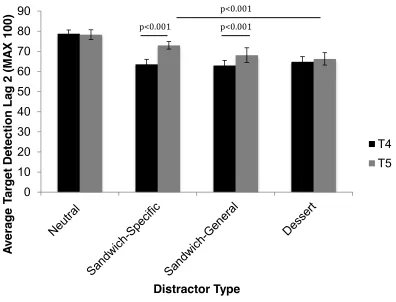
3.2.1 Diagram of EBA task, with different sandwich
categories 42
3.3.1 Pre-prandial lag-2 target detection accuracy T1-T4 47 3.3.2 EBA lag-2 target detection accuracy pre-and
post-prandial 49
3.3.3 Average EBA reaction times across sessions 53 3.3.4 Pre- and post-prandial food images pleasantness ratings 54 3.3.5 Pre- and post-prandial affective ratings 55 4.2.1 Diagram of EBA stream with distractor options relative
to cheesecake meal 68
4.2.2 Average EBA target detection accuracy pre- and
post-prandial 75
4.2.3 Pre and post- prandial affective scores 79 4.2.4 Average pre- and post-prandial valence scores 80 4.3.1 Diagram of Fruit EBA stream with distractor options 83 4.3.2 Average pre- and post-prandial EBA target detection 86 4.3.3 Average pre- and post-prandial average PANAS ratings 90 4.3.4 Average pleasantness ratings pre- and post prandial 91 5.1.1 Representations of EBA trials for the neutral (A) and
positive affective priming streams (B) 107
5.1.2 Influence of positive priming on attentional processing
of food 108
5.3.1 Representations of EBA trials for the neutral (A),
positive affective priming (B) 111
5.3.2 Comparison of appetite scores before (T1) and after
(T2) EBA testing 112
5.3.2 Comparison of positive scale PANAS score pre- and post
EBA testing 113
5.3.3 Comparison of Negative scale PANAS score pre- and
5.3.4 Target detection accuracy between priming groups
under different distractor categories at lag 2 115
5.3.5 Reaction times for each priming groups for streams with different distractor categories at lag 2 116
5.3.6 Target detection accuracy between priming groups
under different distractor categories at lag 4 117
5.3.7 Reaction times between priming groups under different
distractor categories at lag 4 118
5.3.8 Comparison of average valence ratings of images
between priming groups 119
6.2.1
6.2.2
Diagram of EBA rapid visual streams with
landscape/standard fillers, neutral priming condition
Diagram of EBA rapid visual streams with positive fillers, neutral priming condition
132
134
6.3.1 Average AVAS of each testing session 138
6.3.2 Comparison of average positive affect score on PANAS
across testing session 139
6.3.3 Comparison of average positive affect score on NPANAS
across testing session 140
6.3.4 Comparison of average EBA target detection following each distractor type at T3 (pre-prandial), with no affective priming
141
6.3.5 Comparison of EBA correct target detection for each distractor type between affective priming conditions at T4
142
6.3.6 EBA average reaction times between distractor types at
T3 144
6.3.7 EBA reaction times of lag 4 streams between distractor
types and priming at T4 145
6.3.8 Comparison of image pleasantness ratings 146 7.1 Affective priming RSVPs used in Chapter 5. Positive
priming (A), negative priming (B). 162-163
7.2 Diagram of the interaction of motivational and affective
Acknowledgements
I would like to thank my Supervisor Prof T C Kirham for his invaluable guidance contributions to both my theoretical understanding and writing, along with much needed moral support. A vital influence in the development
of this thesis was also Dr Timo Giesbrecht of Unilever who provided incredible support, and encouragement while I was developing the experimental chapters of the thesis. I would also like to thank Dr P Bulsing for her support over the last few years. In addition my gratitude goes out to many of the people who I have had the pleasure to work with and consider important influences on my thinking and friendship: Paweł Jedras (you are
the Ubermensch!), Catherine Slevin, Helen Ruddock, and Una Masic.
I would also like to thank my parents and family for supporting me throughout the PhD, which cannot have been easy at times. And my irreplaceable friends Mr. Stephane Corbel and Dr. Mike Field who have kept
me sane since 2007, helping me to finished to get through my BSc let alone a doctorate. And finally my undying gratitude goes to Carolina Tikerpe, your
thinking helped me realise many years ago that emotion and food consumption are connected.
Abstract
The studies reported here were intended to examine how affective and motivational factors influence attentional processing of goal objects, such as food, by exploiting modified versions of an Emotional Blink of Attention (EBA) task originally reported by Piech, Pastorino & Zald (2010).
Attentional capture by food distractors presented within a rapid serial visual stream (RSVP) was measured by the extent to which they induced an attentional blink and prevented the correct identification of a subsequently presented, specific visual target.
Initially, we explored temporal changes in attention to food images in relation to spontaneous changes in appetite that naturally occur before and after a sandwich lunch. Replicating earlier reports that fasting-induced hunger increases attention to food images, we found that attention to food depended on the level of appetite: increasing pre-prandially as hunger increased, and falling to a minimum after satiation. Moreover, changes in attention to food were seen to reflect subjective ratings of food pleasantness associated with the phenomenon of sensory-specific satiety. Notably, images of the consumed food became less distracting after lunch than images of non-consumed foods belonging to the same sandwich category or, more particularly, those representing very different food types. The EBA data also demonstrated that attentional bias for images of highly palatable, high-calorie desserts was largely immune to changing levels of appetite.
Subsequent experiments confirmed that high palatability/high calorie foods with high intrinsic incentive value (cheesecake) potently capture attention even after being eaten to satiety. By contrast, satiation on palatable, sweet fruits did produce sensory-specific changes in attentional bias to fruit images in the EBA. These findings indicate that attention to food images is
dependent, via separate processes, on the motivational salience and incentive value of food stimuli.
increased positive affect. The relationship between affect, eating motivation and attention were explored further using an ‘Affective EBA’ paradigm, in which neutral filler images within the RSVP were substituted by images of faces displaying positive or negative emotions. Positive affective priming using this technique resulted in an enhancement of attentional bias to food distractors (but not to neutral or romantic distractors). Negative priming, by contrast had no effect.
A final experiment explored whether the ability of positive affective priming to increase attentional bias to food might attenuate the previously noted, food-specific, postprandial decline in attentional capture by food stimuli. We found that in sated individuals, positive priming did produce a general increase in attention to food which was in opposition to the expected, satiety-related decline in attentional bias.
Chapter 1: General Introduction
1.1. Background
What is motivation?
“Motivation is the process of arousing action, sustaining the activity in progress, and regulating the pattern of activity.”
Paul Thomas Young (1961, p25)
Motivation was captured by the Greeks long ago with myth of Tantalus, a son of the god Zeus. According to the myth, Zeus invited his son to Olympus, and told him many secrets important to the gods. However, after leaving Olympus Tantalus discussed the secrets with others, and insulted the gods of Olympus. For this betrayal Zeus punished Tantalus, sending him to the underworld where he was tortured. Rather than physical harm, Tantalus was condemned to stand in a lake filled with fresh fruit just out of reach.
Whenever he tried to drink the water receded and whenever he tried to eat the fruit would move away. Essentially, Tantalus was eternally driven by the need to consume without satiation; the myth accurately captures both the motivation to consume, and the anticipated pleasure to be derived.
the sheer adaptability of the motivational processes. Functionally, ‘motivation’ is a multivariate process that may associate any beneficial outcomes of interactions with the environment, with particular behaviours and stimuli. For instance, humans play computer games for fun with no tangible reward other than feeling good or less stressed (Asgari & Kaufman, 2004; Charsky & Ressler, 2011; Eglesz, Fekete, Kiss, & Izso, 2005; M. D. Griffiths, 1998; Holmes, James, Coode-Bate, & Deeprose, 2009; Malone, 1981; Reinecke, 2009; Skosnik, Chatterton, Swisher, & Park, 2000), gamble for amusement (Gupta & Derevensky, 1998; Neighbors, Lostutter, Cronce, & Larimer, 2002), collect stamps for enjoyment. All of these are done merely to achieve some satisfaction, or feeling of reward - as the result of merely
achieving the some arbitrary target, that has no bearing on survival. However, these behaviours and their consequences are all examples of acquired motivations. Effectively, these behaviours are irrelevant to genetic survival, but instead these behaviours and their ‘rewarding’ outcomes are learnt, recruiting underlying systems that have ostensibly developed to aid survival.
There are, of course, a plethora of targets of drives, acquired or innate, that may be investigated to understand the mechanisms underlying motivation. However, the vast majority of research has settled on investigations
motivation is such a fundamental factor for survival of mammals, that hunting and foraging for food have been the largest factors influencing the evolution of hominids (Lieberman, 2006). In particular, evolution has biased the selection of ‘genes’ that provide successful cognitive and behavioural repertoires that, in conjunction with nutritional requirements, adapted to fluctuations in food availability (Chakravarthy, 2003; Eaton & Eaton, 2003; Eaton, Konner, & Shostak, 1988; Kuzawa, 1998; Loos & Rankinen, 2005; J. B. Miller, Mann, & Cordain, 2004). Evolutionary pressures and the drive to obtain essential nutrients has had a huge influence on the development of
Homo sapiens as they appear in the world today (Lieberman, 2006).
1.2. Evolved problems: Obesogenic Environment
The environment in which of the ancestors of homo sapiens evolved was harsh and unpredictable, creating an advantage to genes which sensitised motivational systems to optimal foraging and eating strategies (Chakravarthy, 2003; Cosmides & Tooby, 2013; Lieberman, 2006) Kuzawa, 1998). For instance, neural systems, which detected food more easily, would have a greater chance of improving the survival of the individual and therefore the propagation of their genes, essentially biasing evolution towards reward-sensitive motivation systems. Furthermore, an individual who was highly biased towards reward would also be more likely to over-consume even in the absence of extremis. In contemporary environments these advantageous adaptations persist, although they now are considered a disadvantage to many in the parts of the world where food is readily available. The
world today (Armelagos, 2014; Lieberman, 2006; Popkin & Gordon-Larsen, 2004; E. A. Smith & Winterhalder, 1981).
In 2008 the World Health Organisation (WHO) reported that 35% of the world’s population aged 20+ were categorised as overweight (BMI ≥ 25 kg/m2), with an even distribution between both sexes. By 2014 this had increased to 39%, significant increases in developing nations, while 11-14% (> 500,000,000) of people were classified as obese (Chestnov, 2014). This epidemic is largely attributed to the over consumption of energy in relation to energy expenditure from the basal metabolic rate (BMR) and exercise. Statistics of countries experiencing obesity epidemics, such as the USA, have reported that the average intake of energy (Kcal) exceeds national
recommendations required for the average individual (National Center for Health Statistics, 2010). Similar findings have been reported in the UK, with the average UK national also exceeding national recommendations for daily calorie consumption, when accounting for BMR in low activity populations, according to British Nutritional Society (Centre, 2015). Overall, this
overconsumption would not be an issue if obesity was not accompanied by debilitating health issues. Being overweight or obese increases several health risks that impact on the life of the individual and society at large. In
particular, obesity increases the likelihood of developing the following conditions: hypertension, heart disease, osteoarthritis, gout, sleep apnea, diabetes and some forms of cancer, amongst many other problems
(Environment, 2013; Swinburn et al, 2011). In addition, the cost of
These statistics are intended to emphasize the problems associated with a normally functioning motivational system in the contemporary world. Despite the considerable problem posed by overconsumption, there is pronounced variation in the types of foods that individuals respond to, the times that they respond to them, and how particular populations respond to food (why isn’t everyone over weight?). Due to the multifaceted and complex nature of motivation there is no single unified framework that encapsulates each aspect: there is a plethora of neurocognitive and physiological
interactions with the world, none of which operate in isolation. Therefore, in order to understand motivation, it is essential to look at these fundamental processes that define or contribute to it. Understanding the underlying neurocognitive processes and their influence on the processing and selection of food for consumption may provide valuable insight into the continuing global trend of weight gain.
1.3. Motivation as evolved opportunism
The ability to detect and respond to food-related stimuli was an important advantage to the survival of the ancestors of Homo sapiens. However, as noted above, opportunistic feeding strategies promoted by the healthy functioning motivational system have inevitably led people to over consume in obesogenic environments, particularly when that food is palatable.
salience is the most widely supported explanation of motivational processing with regards to both food consumption and addiction.
1.4. Incentive salience
The sensation of pleasure is a fundamental motive that drives individuals into pursuing rewards necessary for survival. And yet in contemporary environments the abundance of rewards such as food make the pleasure of rewards and reward seeking a maladaptive pursuit leading to behaviour such as unnecessary over consumption of food. The central factor of motivation, as described by the incentive salience theory, comes from understanding the neural circuitry of reward and its functions. Three principle psychological components have emerged from researching the ‘reward system’: wanting (process of incentive salience), liking (hedonic value/assessment), and learning (classical or instrumental associations resulting in cognitive
representations)(Berridge & Kringelbach, 2015; Berridge & Robinson, 2003). While these processes may occur conjointly anytime during the ‘reward-behavior cycle’, they each tend to dominate specific phases: ‘wanting’ primarily driving the initial appetitive phase, while the ‘liking’ component dominates the subsequent consummatory phase, which plays a role in the analysis of pleasure derived from the food, and may have a role in satiety (Berridge & Kringelbach, 2008). Crucially, learning occurs throughout the motivational cycle, influencing recall of the effectiveness of behaviours of both seeking food, and the resulting outcome/pleasure derived from the eventual consumption of the motivational target.
Neurologically, ‘liking’ is thought to be primarily based in the nucleus accumbens and ventral pallidum, with research suggesting that its primary role is to measure or assign hedonic-value (level of pleasure), either
values to food, changes in the ‘wanting’ system (nucleus accumbens, ventral pallidum, amygdala and ventral tegmentum) are thought to modulate
hedonic values and the ‘liking’ process itself (Berridge & Kringelbach, 2008; 2015; Reynolds & Berridge, 2008; T. E. Robinson & Berridge, 2008a). Thus changes in motivational state may influence the hedonic value of food and the pleasure derived from its consumption (Berridge & Kringelbach, 2008; 2015; Epstein, Truesdale, Wojcik, Paluch, & Raynor, 2003). For instance, studies have shown that hunger state influences food ratings, with
individuals rating food more positively when hungry than when sated. This interaction also influences food choices while shopping, with a greater likelihood of purchasing greater quantities of food or selecting food with more calories than individuals intended (Mela, Aaron, & Gatenby, 1996; Nederkoorn, Guerrieri, Havermans, Roefs, & Jansen, 2009).
1.5. Establishing Pleasure: Learning to ‘like’
The processes of selecting and acting on a particular aspect of the
environment depends to a some extent on acquired knowledge about the relationships between actions, such as foraging, and stimuli. Although it is important to acknowledge motivational stimuli such as food have properties which engage innate and unlearnt components. Information is required for predicting rewards, anticipating responses, guiding behaviour through responses to cues, and for goal-directed action. Fundamentally, learning processes are either associative or cognitive, and the products of learning are either declarative or procedural. Learning can be broadly split across two elements stimulus–stimulus learning which encapsulates associations and are predictive of reward (Berridge & Kringelbach, 2015). And stimulus– response associations and representations of response-outcome. Generally, this kind of associative learning refers to either classical conditioning or instrumental learning. Classical conditioning is a procedural form of reward prediction, from which conditioned responses may be obtained from
conditioned motivations that are appropriate to unconditioned/naturally rewarding stimuli with which conditioned responses have become
associated. For instance, food-packaging may prompt increased salivation due to individuals, consciously or unconsciously, anticipating consuming food shortly afterwards. Instrumental learning modulates behavioural
responses that are strengthened or weakened by the outcome of interactions with stimuli – depending on the reinforcer. For example, an individual may focus their attention on food packaging despite being sated because the potential for highly rewarding stimuli is predicted, if the food is inside the behaviour (opportunistic foraging) is reinforced. Ultimately, learning mechanisms determine the representation of rewards, associated stimuli, and the actions to obtain them. The level of these prediction and strength of rewards are established through initial experiences, and both judged and continuously modulated by the reward system. As food is a naturally rewarding stimulus, positive associations are easily made. However, the interactions between the ‘reward system’, involving the development of a reward representation/memory, depend on the initial interactions that are maintained over time by further experiences, and motivational states (i.e. ‘wanting’) which influence the selection of information and guide behaviour.
1.6. Incentive salience and fluctuations in hedonic-value: explicit and implicit processing
and to increase the volume of the drink consumed (Berridge & Winkielman, 2003).
Berridge and Robinson (Berridge & Robinson, 1998; T. E. Robinson & Berridge, 2008b) have demonstrated that wanting and liking involve distinct neural circuitry. Thus, stimulation of dopaminergic pathways ascending from the VTA to NAcc specifically energise ‘wanting’, and stimulate instrumental responses which lead to the consumption of rewards. This occurs independent of ‘liking’ processes. Blocking dopamine transmission in this pathway reduces goal-seeking activity but leaves hedonic responses to positive stimuli intact. Similarly, it is possible to stimulate specific
neurochemical components of accumbens pathways (notably the opioid peptides) to enhance hedonic evaluation of stimuli without any impact on the organism’s desire to approach them. Incentive salience, therefore, does not account for the affective component of reward but merely the
Following the establishment of hedonic-values through learning and ‘liking’/pleasure, incentive salience operates through the activation of ‘wanting’ components, by either endogenous or exogenous cues, interacting with associated memory. The interaction of these two processes drive
motivational priority and orientate an organism to appropriate targets, without activating the pleasure/‘liking’ component. For instance, the feeling of hunger makes humans more likely to seek out food. According to Berridge (Berridge & Kringelbach, 2015) “motivational salience is never neutral”, and neither is valence fixed. Instead, the incentive salience marks the stimulus and its cues with an intrinsic value that causes the stimulus to be more attractive than other environmentally available features, and more attention grabbing (salient). Changes in an associated motivational state are theorized to influence the overall incentive value of a motivationally-relevant stimulus and it representations. Essentially this means that increases in hunger (‘wanting’) should increase the incentive value and salience of food. As we will discuss below, this shift, may then be considered to enhance the ability of food-related stimuli to grab attentional processes and guide
behaviour in an appropriate direction.
As motivational and affective processes may operate outside awareness to influence attention, implicit processing may allow objective investigation of these processes if they may be dissociated from subjective feelings and assessments (Berridge & Kringelbach, 2015).
1.7. Incentive salience and attention.
The intrinsic rewarding properties of food arise from, and indicate, the energy and nutrients needed for survival. Food and its related-cues develop hedonic-values that are greater than mundane or less motivationally
signal’) and the orbital frontal cortex (OFC), both of which are involved with coding stimulus value (Damasio & Carvalho, 2013; O'Doherty, 2004;
Reynolds & Berridge, 2008; L. Tremblay & Schultz, 1999; Winkielman, 2005). The process of assigning hedonic values evidently leads to stimuli, such as food, to be represented differently from mundane perceptual stimuli, such as brick walls. As a result, findings in cognitive neuroscience show that merely observing food increases neural activity by 24% overall, in
comparison to neutral images (G.-J. Wang et al., 2004). Ultimately these hedonic value systems play a critical role in incentive salience; namely to increase the likelihood of interaction with the goal object, in this case food. The main effect of such a system would be firstly to increase implicit processing of food: through increased salience, increase attentional processing of food. While the second, and equally important function of hedonic values would be to increase the explicit evaluation of food, and its related stimuli, to increase interaction/consumption. Support for this has been garnered from a number of studies, which utilise explicit valence measures to assess the attractiveness of food and related cues. Studies investigating food valence have generally found that food is rated more positively than everyday objects or scenes (Lang & Bradley, 2007; I. Nijs, 2010; Tapper & Pothos, 2010), regardless of motivation. According to
Anderson these learnt hedonic values modulate attention to food, with highly hedonic stimuli being more salient than less tractive stimuli (B. A. Anderson, Laurent, & Yantis, 2011).
This links well to incentive salience theory which suggests that the majority of this hedonic value processing occurs sub-cortically, and often below awareness, influencing both explicit and implicit levels of cognition
has been predicted that highly energizing states of motivational extremis, and levels of arousal produced by the hedonic-value of objects attract
attentional faculties to particular stimuli (Mohanty & Sussman, 2013; Most, 2012). Concurrent research supports this position, with recent studies finding that the hedonic value of food compared to neutral imagery, vary in their ability to modulate neural activity in the ‘reward system’ (Frank et al., 2010). This is fundamentally critical as the interaction of motivational state and the hedonic-valuation process at an implicit level not only influence the attentional processing of food, but initiate changes in food-seeking behaviour below awareness (Ziauddeen et al., 2011).
Importantly, these differences in hedonic-values increase the salience of food-related stimuli allowing them to compete with other stimuli for attentional selection. A few studies utilising implicit measures have
attentional processes in busy and complicated environments.
Further support for the influence of incentive values on attention comes from recent research conducted by Piech et al (Piech et al., 2010)
investigating implicit processing, using an implicit processing task, the Emotional Blink of Attention paradigm (EBA: detailed discussion in Method chapter). The participants’ task during the EBA is to detect a rotated neutral image within a rapid visual stream of similar images. However, before the target is displayed, a distracting emotional (romantic scene) or motivational image (food) is presented – designed to create a blink of attention and
interfere with target identification. Piech et al (Piech et al., 2010) found that participants’ attention during in the EBA task was drawn to food more
readily than neutral images, but not more than romantic images, reflecting the similar explicit valence ratings of food and romantic images. Importantly, attentional capture by food stimuli was significantly increased when
participants were hungry compared to when they were sated.
1.8. Motivational state: influence of hunger state and food consumption on cognitive processing.
Although ‘liking’ plays a crucial role in the development and maintenance of salience, most humans are not constantly consuming food. And, as found by Piech et al (Piech et al., 2010), attention to food changes relative to
motivational state. The role of motivational state or drive/’wanting’,
to unconsumed foods that are rated similarly pleasant prior to pre-satiation ratings (Berridge, 1996; Mela, 1999). This leads us to an important question: ‘Does implicit processing reflect the phenomena observed in studies
investigating explicit processing off food findings such as SSS?’. According to cognitive neuroscientists, the fundamental processes of motivation, ‘liking’ and ‘wanting’, often operate independently of awareness (see Berridge et al., 2009; Berridge & Robinson, 2003; Finlayson, King, & Blundell, 2007).
Critically measures of explicit processing tap into conscious attitudes utilising subjective ratings of food (e.g. Brunstrom & Mitchell, 2006; Weijzen, Zandstra, Alfieri, & de Graaf, 2008). However, individuals rarely apply consciously attention towards analysing their attitudes towards food (B. A. Anderson et al., 2011; Griffioen-Roose, Finlayson, Mars, Blundell, & de Graaf, 2010). In general, behaviour is energised by changes in the
motivational systems outside awareness and directed by spontaneous environmental interactions (Griffioen-Roose et al., 2010). Essentially, the ‘reward system’ which specifies salience biases perceptual processing towards motivationally relevant stimuli to stimulate and direct behaviour (Corbetta & Shulman, 2002; Desimone & Duncan, 1995; Serences & Yantis, 2006; Serences, Shomstein, & Leber, 2005), thereby resolving the
competition between objects in our environments for attention (B. A. Anderson et al., 2011).
Two studies have tracked these changes in attentional processing relative to appetitive state. In the first study Castellanos et al (2009) asked participants to fast for 8 hours before being assigned to either a fasted or fed condition. In the fed condition participants were given a liquid meal until they were sated. All participants completed a dot-probe task in which they were required to respond to a probe appearing after the presentation of two
images: food or neutral. Participants then took part in the opposite condition a week later. The study (Castellanos et al., 2009) found that response times were slower to probes appearing under neutral images when participants were hungry compared to the sated condition. Essentially, attention was drawn towards food related stimuli when participants were hungry but not when they were sated.
Another study conducted by di Pellegrino et al (2011) investigated changes in attentional processing to food related stimuli before and after eating. In the first session of this study participants were required to respond to a SSS taste test followed by a dot-probe task. Participants were then fed one of the foods tasted in the taste test: Ritz crackers, Canestrelli cookies or bran
biscuits. After eating these to satiety participants were again asked to rate the pleasantness of the food in a taste test and to again respond to the dot-probe task employing images of the food used in the taste tests. Pleasantness ratings of the food displayed typical SSS devaluations. Crucially, response times to visual probes reflected SSS devaluations with attention to the food consumed being decreased after consumption.
While both of these studies are fascinating, they each present similar problems. Firstly, they did not use foods that individuals might commonly consume for a meal. A further problem is that they quite obviously
Furthermore, both studies required participants to fast, which is known to have a confounding effect on how individuals process food related stimuli (see Cameron et al., 2014).
1.9. Role of affect in motivation
Motivational processes emerging from interactions between the reward system and the environment provide a fundamental basis for understanding of how organisms are energised towards targets that promote evolutionary goals. Commonly, research has focused on hedonic value (‘liking’) and motivational state (‘wanting’) to interpret these interactions. The focus has been on internalised changes in motivational processing relative to hunger level or the value of the stimulus consumed/presented: i.e., hunger increases attention to food, satiation reduces attention to and the ‘pleasantness’ of food (Brondel et al., 2006). However, the environments in which Homo sapiens exist provide a enormity of information that inform assessments and engagement. Isen (Isen & Reeve, 2006), de Houwer (De Houwer, Teige-Mocigemba, Spruyt, & Moors, 2009), and Mengarelli (Mengarelli, 2012) have suggested that neuroaffective systems simplify endogenous and exogenous factors into affective information which influences interactions and decisions at both explicit and implicit levels. Research in cognitive neuroscience has shown that that the neurocognitive architecture of
motivational and affective systems are strongly interconnected (Berridge et al., 2009; Panksepp, 2011b; E. T. Rolls, 2013; Toates, 2006) and that affective information regulates attentional processing (Carretié, Martín-Loeches, Hinojosa, & Mercado, 2001; Vuilleumier, 2005). Attentional
processing has also been widely shown to be influenced by affective state and affective information (Mohanty & Sussman, 2013; Most, Chun, Widders, & Zald, 2005). Specifically, Mohanty et al (Mohanty & Sussman, 2013) has suggested that endogenous (top-down) and exogenous (bottom-up)
weigh the importance of each piece (Ahn & Picard, 2005; Isen, 2001; Isen & Reeve, 2006; Panksepp, 2011b). According to Mohanty et al (2013) the competition between the significance environmental and internal information is resolved, or perhaps more accurately summarised by
emotional arousal relative to the endogenous affective state. In neuroscience Panksepp (Panksepp, 2011b) also suggest that affective processes may act as a gating process for sensory information. Similarly Mohanty et al (Mohanty & Sussman, 2013) suggest that affective processing or information may
regulate attention toward stimuli. Essentially affective information reduces the quantity of information available into positive and negative inputs
received from either the environment or within, and regulate the importance of important stimuli and therefore the attention it receives. Importantly, affective information influences implicit processing regardless of the attention grabbing properties of stimuli or endogenous motivational state (Mather & Sutherland, 2011).
Regarding the processing of food, variations in affective state are known to modify hunger (Macht, 2008). Although, oddly enough, research
investigating the influence of affect on appetite has focused on investigations of negative affect, despite food consumption being generally a positive
experience. This focus is likely due to the association of increased appetite or food craving related to increases in negative affect, and emotional eating – eating in response to stress. For instance, studies inducing negative affect suggest that food develops increased reward value, due to its potential to provide relief from a negative state (Bekker, van de Meerendonk, &
in its salience. The influence of positive effect on appetite and attention is not a consistent finding however, with studies finding that positive affect increases eating motivation (Evers, Adriaanse, & de Ridder, 2013; Evers, de Ridder, & Adriaanse, 2009; Macht, Roth, & Ellgring, 2002), decreases it (Turner, Luszczynska, Warner, & Schwarzer, 2010), or has no influence at all (Lowe & Fisher, 1983; Yeomans & Coughlan, 2009). However, positive affect is theorised to have a generalised influence to bias the evaluation of implicitly presented stimuli (Murphy & Zajonc, 1993; Wong & Root, 2003), and more specifically to increase attention towards rewarding stimuli (Tamir & Robinson, 2007). A recent study by Tamir and Robinson (2007) provided support for this. They used films to induce a positive mood in participants; after experiencing positive ‘priming’ attention was biased towards rewarding words in dot probe tasks, when compared to ‘neutral priming’.
Affect then seems to have an important role in influencing attentional and motivational processing. However few studies have investigated the crucial role of affective processing on motivation and attentional systems, despite an abundance of affective neuroscience suggesting its importance (Berridge & Kringelbach, 2008; 2015; Reynolds & Berridge, 2002; 2003; 2008; Seibt, Häfner, & Deutsch, 2006).
1.10. Hypothesis and Aims
It is predicted that an individual will be more reactive to food-related stimuli when hungry. Following the groundwork set by cognitive neuroscience, particularly coming from the research that led to the frameworks of
measures, and attention to different food-types been compared over natural hunger cycles. Another aim of the thesis was to investigate the influence of bottom-up affective information on attentional processing. Generally, it is hypothesized that changes in both eating-motivation and affective state will lead to reciprocal changes in the attentional processing of food-related stimuli. The thesis aimed to track these processes over the time leading up to a meal and following it.
By focusing on attentional processing over the natural time course of a meal it was hoped that we could provide some of the first experimental evidence of the implicit cognitions underlying food-related motivational processing.
The primary hypotheses of the thesis are as follows:
1. Food-related stimuli will be processed differently from neutral, non-food stimuli, both implicitly and explicitly.
2. Different food-types may capture attention to varying degrees.
3. Attention to food-related stimuli will fluctuate relative to motivational state, and may reflect sensory-specific changes
4. Bottom-up affective information (primed) will influence attentional processing of food related stimuli.
Specific goals central to each chapter are as follows are as follows:
Chapter 3:
Investigate changes in attentional processing of food relative to its consumption and changing motivational state over time preceding and following food consumption.
Thirdly to establish the viability of the EBA as an implicit measure for studying appetite.
Chapter 4:
Firstly to examine to differences in attentional processing of highly appetising foods relative to their consumption and appetitive state. Secondly to investigate changes in affective state relative to food consumption
Chapter 5:
To investigate implicit processing of motivational stimuli, specifically food and erotic stimuli, under affective priming conditions.
In addition to investigate the influence of affective priming in the EBA on affective state.
Chapter 6
Chapter 2: General Methods
2.1. Questionnaires
Multiple measures were taken at the beginning and throughout many of the studies in this thesis. The majority of these measures were consistently employed across each of the six studies presented here; therefore the format and backgrounds of each measure are described in detail in this instance only. In particular, this chapter will detail and provide the rationale for each of the measures described, as well as their psychometric properties.
2.2. Appetite Visual Analogue Scale (AVAS; Blundell et al 2010) The AVAS was used at the beginning of each experiment to assess
participants’ level of eating motivation. The AVAS requires participants to rate 4 items related to subjective level of hunger, appetite and satiety, each using a 100 mm visual analogue scale (VAS), between two anchoring terms: ‘Not at all’ and ‘Extremely’.
Hunger, appetite and satiety are known to have objective and subjective components. However, individuals are likely to aggregate these terms to describe the subjective experience of them as a single sensation used to gauge when to alter behaviour (i.e., feeling hungry provokes food seeking). Past research has shown that the sensation of hunger differs quantitatively and qualitatively between individuals (Monello & Mayer, 1967). In
particular, a study of 603 individuals, conducted by Monello and Mayer (1967), found no clear pattern of traits, sensations or characteristics that typified hunger (Monello & Mayer, 1967). Essentially, measuring hunger-related motivations within subjects is currently considered the best method of gauging appetite. Since hunger is a subjective construct, the most
(Stubbs et al., 2000). As a consequence, scales for assessing hunger motivation are based around recording changes within a participants arbitrary self-assessment of state, using VAS. Visual analogue scales are commonly used in studies of appetite (de Graaf, Schreurs, & Blauw, 1993; Hill & Blundell, 1983; Hill, Magson, & Blundell, 1984) for recording changes in appetite. Generally VAS provide a simple and fast method for participants to record their subjective appetite state in a quantifiable way, that also allows for within-participant discrimination over time, whilst simultaneously giving researchers a quantifiable measure of these internalized states that can be compared between participants due to the standardized nature of the format. The studies presented in this thesis utilized a shortened version of an appetite measure taken from Hill & Blundell (1982), which contained four items: ‘How hungry do you feel?’; ‘How full do you feel?’; ‘How strong is your desire to eat?’, and ‘How much do you think you could eat now?’. An investigation of this measure by Reid et al (1998) using principal component analyses found that the average of the questionnaire item scores was the best measure of appetite, explaining 85% of the variation observed, and
accounting for general motivation to eat and a sense of gastrointestinal repletion. This finding influenced our decision to use average AVAS scores.
The reliability and validity of VAS-based appetite measures has been difficult to gauge, as subjectively-expressed hunger is strongly influenced by
individual differences (Stubbs et al., 2000). Inter-subject variation accounts for 50% of the variance in participant responses, meaning that AVAS should be analysed using within-subject comparisons (Stubbs et al., 2000).
2.3. Positive Affect Negative Affect Scale: Visual Analogue (PANAS; Watson, Clark and Tellegan, 1988).
The PANAS questionnaire is a 20-item self-report measure of: 10 positive (PA) and 10 negative affective (NA) items. Scores from are either totalled or averaged across the 10 items of each scale. The PANAS was administered, in pen and paper form (P&P), to assess changes in mood. It is generally
considered that most of these affects/feelings may be broadly defined between two underlying constructs: positive affect (PA( and negative affect (NA). Positive affect is understood as the extent to which individuals experience endogenous or/and exogenous pleasure from interactions between the environment and intrinsic state. While high levels of NA are epitomized by distress and displeasure from engagement between the
individual and their environment. Essentially, high levels on either scale are considered to reflect the activation of positive or negative affect, while low levels are merely the absence of these feelings (Watson, Wiese, & Vaidya, 1999).
As a tool to measure mood, the PANAS scale has been found to have strong internal consistency. Crawford et al (Crawford & Henry, 2004) found a high reliability, between .85 and .89, in a large study of 1003 participants.
Furthermore, the PANAS has been found to have high test-retest reliability, whilst also having high cross-cultural validity (Thomson, 2007). It is,
therefore, an effective measure for studying changes in affective states between participants and over time.
(Grant et al., 1999; Hasson & Arnetz, 2005).
2.4. Dutch Eating Behaviour Questionaire (DEBQ; van Strien, Frijters, Bergers, & Defares, 1986)
The DEBQ was used in four of the studies, in order to assess trait-based differences between participants. The DEBA focuses on three factors that impact on food consumption: restraint, emotional eating and external eating.
Restrained eating theory attributes overeating to dieting (Polivy & Peter Herman, 1976). This measure comes from the paradox that individuals who are ‘dieting’ homeostatically preserve body weight. However, restricting food intake to reduce body weight engages physiological defences, such as
lowering the metabolic rate (Goldsmith et al., 2009; Major, Doucet, Trayhurn, Astrup, & Tremblay, 2007) and arouses a persistent state of hunger. This state of self-control may be compromised if the ‘dieter’ experiences disinhibiting substances or events/feelings, such as alcohol, anxiety, depression - or even the consumption of high-calorie foods. Essentially, inhibitions/restraint to diet may easily be abandoned after
experiencing disinhibition (Herman & Polivy, 2004). Counter-regulation may then occur, resulting in excessive food intake (Polivy & Herman, 1985). As a result, intense dieting may lead to patterns of overeating (Emotional or
External eating), as arousal and external stimuli are also known to disrupt the cognitive restraint exercised by dieters experiencing persistent hunger (Herman, Van Strien, & Polivy, 2008).
The DEBQ was developed to measure the three factors influencing food consumption. It is comprised of 33 items that utilize Likert-type scales ranging from 1 = seldom to 5 = very often. The Emotional Eating
order to not become heavier?”). Only one item is reversed in the whole scale, item 21 of the external component (“Do you find it hard to resist eating delicious foods?”).
Analyses of the three scales of the DEBQ has found them to have good psychometric properties, with good internal structure (21-47%), reliability (0.90-0.94) and predictive validity (21-47%) (Bozan, Bas, & Asci, 2011; Lluch et al., 1996; Van Strien & Van de Laar, 2008; Wardle & Beales, 1987).
2.5. Labeled Magnitude Scale (Pleasantness/valence VAS; (Lishner, Cooter, & Zald, 2008)
Labeled magnitude scales were used throughout the thesis, as explicit measures of pleasantness for visual stimuli. These were used to assess the valence of images as well as changes in pleasantness that may occur due to manipulations of appetitive state or after affective priming. In each valence task, participants rated 10 images of each category type used during the emotional blink of attention tasks (e.g., fruit, cheesecake, positive affective facial images, etc). Images were randomly selected from their respective image banks, with each image being rated for pleasantness (valence) and arousal using a labelled magnitude scale (Lishner et al., 2008). The images were presented with 100 mm visual analogue scales, anchored with the terms ‘Extremely pleasant’ and ‘Extremely unpleasant’, on which
participants indicated their ratings of the images. These terms were used as they convey maximal intensity (Lishner et al., 2008).
Measures like these have been used in a variety of experiments investigating pleasantness (Krieglmeyer, De Houwer, & Deutsch, 2013; Krieglmeyer, Deutsch, De Houwer, & De Raedt, 2010), and specifically in studies investigating attentional processing (Piech et al., 2010) and hunger
al., 2010; Stoeckel et al., 2007).
2.6. Attentional Measures
Selective attention
The mammalian brain has a limited processing capacity. As a result, environmentally available perceptual representations must compete, or rather be selected by attentional systems, for further processing. Competition for attention is resolved by selective attentional processes, with perceptual biases typically favouring motivationally relevant (salient) stimuli (Corbetta & Shulman, 2002; Desimone & Duncan, 1995; Serences et al., 2005; Serences & Yantis, 2006). The outcome of attentional selectivity is two-fold:
attentional capture and inattentional blindness. Inattentional blindness, is a phenomenon whereby an individual fails to notice stimuli presented inside their visual field while cognitively preoccupied with an attentionally
demanding task (Mack & Rock, 1998). When a stimulus is selected
involuntarily, that stimulus has captured attention. This capture can present an adaptive advantage when a stimulus signals danger or opportunity
(Laurent, 2008). Regarding food, this can be apparent in the inability to maintain attention on a task when a food-related stimulus is presented.
For the purposes of this thesis, attentional capture was operationalized as… ”Salient but task-irrelevant stimuli have been found to slow visual search for a target in a spatially-specific manner (e.g., (B. A. Anderson & Folk, 2010; Hickey, McDonald, & Theeuwes, 2006; Theeuwes, 2010; Theeuwes & Godljn, 2002)); this is known as salience-based attentional capture.” (B. A. Anderson et al., 2011).
environmentally available stimuli (discussed below). Failures in attending to visual targets in these tasks is used as a measure of attentional capture by another distracting visual stimulus, such as a food image presented shortly before a task-specific target stimulus.
Measuring attentional selection
2.7. Emotional Blink of Attention (EBA; (Most, Smith, Cooter, & Levy, 2007))
The attentional blink task is a recently developed cognitive measure of implicit processing. The measure was first developed after Broadbent and Broadbent (D. E. Broadbent & Broadbent, 1987) discovered attentional blinks (AB (inattentional blindness)) when presenting participants with RSVP streams of words containing two targets, defined as either a category or letter case. Broadbent and Broadbent found that on trials where the first target was reported correctly, identification of the second target was
Although attention blinks occur in response to cognitive demands,
individuals are prone to attending to emotional stimuli even when they are task irrelevant (e.g. Most et al., 2005; Vuilleumier, 2005; Vuilleumier, Armony, Driver, & Dolan, 2001). Commonly, studies use response times to infer the degree of emotional facilitation or interference (Field & Cox, 2008; Fox, Russo, Bowles, & Dutton, 2001; MacLeod, Mathews, & Tata, 1986; Ohman, Flykt, & Esteves, 2001). Attended stimuli are typically processed quickly and accurately, while unattended stimuli typically remain unnoticed even when presented to the visual field {Chun & Marois, 2002; Mack & Rock, 1998; Most, Scholl, Clifford, & Simons, 2005; Most et al., 2001}.
Crucially, attention to task irrelevant stimuli induces a temporary visuo-attentional impairment (Most et al., 2005) when stimuli are particularly salient, such as threatening images. This effect may occur even when participants are required to ignore irrelevant stimuli or actively search for other stimuli (Piech et al., 2010). While original RSVP tasks required participants to detect two targets which create attentional blinks (AB), the current literature has reported that attentional blinks may occur when individuals search for single targets (Asplund, Todd, Snyder, Gilbert, & Marois, 2010; Barnard, Scott, Taylor, May, & Knightley, 2004; Folk, Leber, & Egeth, 2002; Most et al., 2005; Pashler & Shiu, 1999).
More recently emotional or motivationally relevant stimuli within RSVP streams have been found to elicit spontaneous attentional blinks despite being task irrelevant. In these Emotional Blink of Attention (EBA)
effects occur even when participants were offered monetary incentives to avoid being distracted (Piech et al., 2010).
The EBA task is conceptualized as an attentional selection task, with stimuli competing for space within the limited attentional capacity of individuals (Most et al., 2005). It is possible that attentional blinks may only occur when stimuli compete within common capacity-limited attentional resource. The more attention that is deployed for a distractor, either because it is more salient or task relevant, the less capacity is available to process subsequent targets (see Dux & Marois, 2009). Neuroimaging evidence supports this, with attention blink manipulations activating frontal-parietal area
responsible for attentional allocation (Colzato, Slagter, Spapé, & Hommel, 2008; Hommel et al., 2005; Marois & Ivanoff, 2005), and supporting the view that attentional blinks represent a deficit of selective attention. This makes the EBA an important measure of implicit processing, as attention is regarded…
“…as the mechanism by which motivationally relevant stimuli, such as targets, are selectively processed over other items, such as
distractors (Pashler & Shiu, 1999). Thus, any stages of information processing that are involved in achieving that behavioural goal may be the recipient of attention, and hence contribute to the attentional blink deficit.” Most (Most et al., 2005).
Adapted Emotional Blink of Attention (aEBA, Affective Priming).
emotional faces based on salience ratings (Calvo & Nummenmaa, 2008; Vermeulen, Godefroid, & Mermillod, 2009), whilst observing images of others displaying facial expression of fear or disgust also impacted on attentional processing in observers (T. Stein, Zwickel, Ritter, Kitzmantel, & Schneider, 2009; Vermeulen et al., 2009). Other studies have found
affective state can influence the speed of affective processing. For instance, Vermeulen et al(Vermeulen et al., 2009) found that negative state reduces the attentional processing of affective stimuli. This is theorized to occur as a result of negative states inducing systematic/analytical processing, while positive affect favours automaticity (Schwarz & Bless, 2007). A study investigating the impact of affective state on attentional processing was carried out using an attentional blink paradigm (Vermeulen, 2010). Similarly to the theoretical position outlined by Bless and Schwarz (Schwarz & Bless, 2007), Vermeulen discovered that a participant’s affective state moderated attentional process. Specifically, positive affect improved task performance while negative affect decreased target (T2) detection. Importantly these and other findings demonstrate that inducing affective states can influence attentional processing (Jefferies, Smilek, Eich, & Enns, 2008; G. Rowe, Hirsh, & Anderson, 2007).
Many studies inducing affective states typically use film clips or music. However, emotional priming can be achieved using only brief presentation of affective imagery. Such visual priming provides the possibility of investigating the impact of affective information on attention to other stimuli. For
found to influence the affective assessment of nonsense target stimuli (Raymond, Fenske, & Tavassoli, 2003).
Based on the apparent power of briefly presented emotional images to influence psychological responding, we explored this phenomenon in relation to the possibility of influencing attention to emotionally or motivationally salient stimuli. No previous version of the EBA had
specifically incorporated emotional primes, therefore we constructed an EBA task to investigate the influence of affective priming on detection of a
motivationally salient target (food images).
We adapted the EBA task outlined by Piech et al (Piech et al., 2010). This consisted of several RSVPs, with the participant’s task being to detect a target image rotated on its side within the stream. Motivationally salient or neutral distractor images were incorporated in each stream in order to produce an attentional blink. As outlined in more detail in the following chapters, the inclusion of emotional facial images (primes) within the RSVP before distractor presentation was found to exert a marked effect on target identification accuracy. We subsequently explored the extent to which the number of prime images was critical to this effect.
2.8. Pilot: Comparing the Quantity of Affective information to influence attentional processing in RSVPs
(landscape scenes) images used in the study were replaced in with varying numbers of affective images.
2.8.1 Method
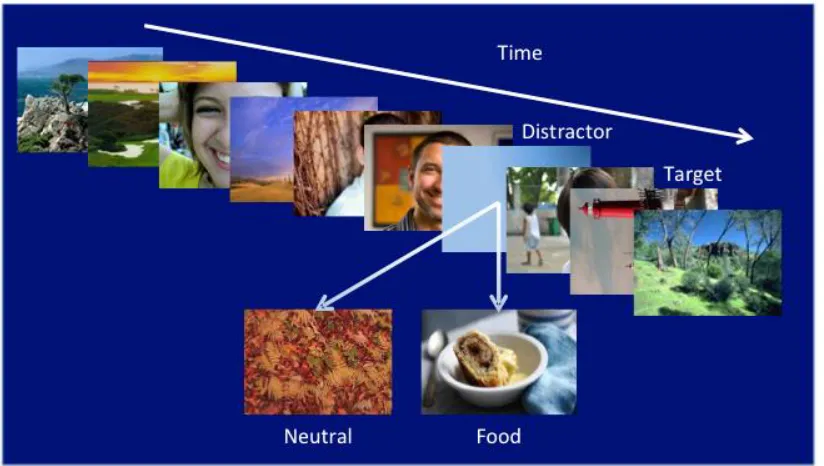
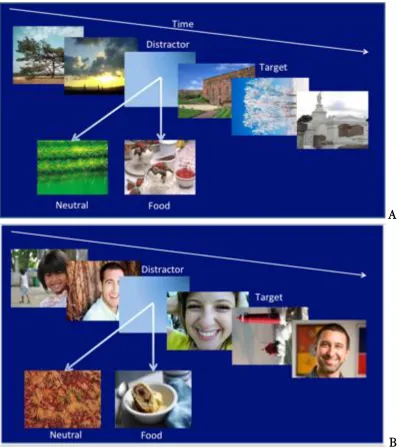
[image:45.595.115.527.378.611.2]Participants (n = 28) were exposed to 4 blocks of 50 RSVPs (trials). Within each block visual streams of 17 images (each presented for 100 msec) were spit into two types, streams with neutral or food distractors. The majority of streams had positive affective images (smiling faces) (see figure 2.8.1).. The numbers of positive primes preceding the distractors were: 0, 2, 3, 5 or 7. Number of primes and distractor types were distributed equally across the four blocks, with random selection of stream type within each block.
Figure 2.8.1. Diagram of EBA summation task with positive primes. Note. positive images varied as mentioned above 0 to 7 positive images.
2.8.2 Procedure
possible to the questions: ‘Did you see the picture rotated on its side?’, and ‘Did you see the image rotated on its side?’ appearing after each RSVP. The reaction time and correctness of each response were automatically recorded for each stream.
2.8.3. Results
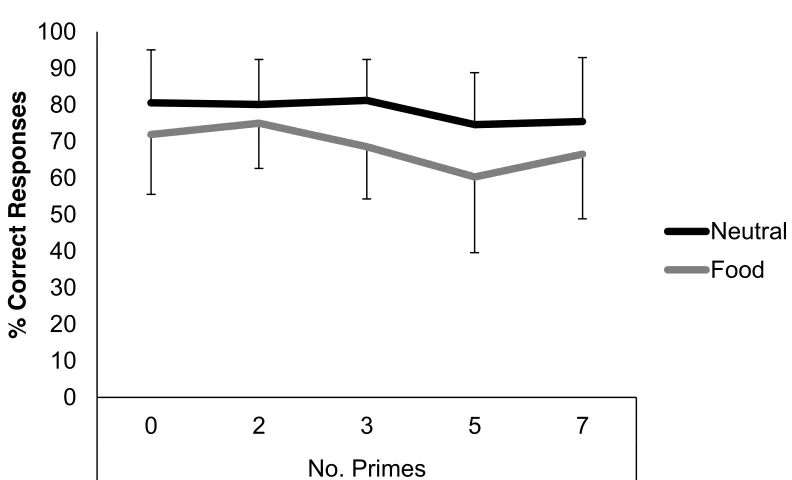
Analysis of correctness of response, showed that positive primes had a significant influence on the ability of distractors to capture attention
(F(1,276) = 30.49, p < 0.001, partial η2 = 0.1), while the number of primes also had a small influence on target detection (F(4,276) = 3.97, p < 0.01, partial η2 = 0.03). Although the interaction didn’t show a combined
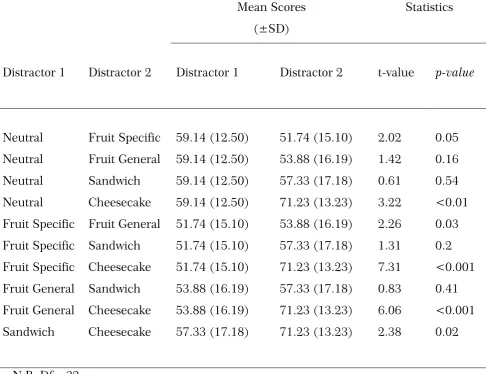
Table 2.8.1. Pairwise Comparisons of Average Target Detection Accuracy: Distractor Type X Prime Number
Correct response Mean ± SD
Statistics
No. Positive Primes
Distractor 1
Distractor 2
Distractor 1 Distractor 2 t-value
p-value
0 Neutral Food 80.58 (14.47) 71.88 (16.33) 2.64 0.01 2 Neutral Food 80.13 (12.27) 75.00 (12.38) 2.03 0.05 3 Neutral Food 81.25 (11.15) 68.53 (14.28) 3.99 <0.001 5 Neutral Food 74.57 (14.23) 60.27 (20.71) 4.48 <0.001 7 Neutral Food 75.45 (17.51) 66.52 (17.70) 2.5 0.02
Primes had little effect on accuracy within trials with neutral distractors. However, decreases in performance occurred in food distractor trials that showed some relation to the number of primes presented before the
[image:48.595.125.521.283.523.2]distractor. Interestingly, target detection was only reliably affected after 3 or more primes were presented in streams with food distractors: two compared with three (t(27) 2.57, p = 0.02, r = 0.44); three compared with four (t(27) 2.42, p = 0.02, r = 0.42); four compared with five primes (t(27) -1.59, p = 0.12, r = 0.29).
Figure 2.8.2: Comparison of target detection between distractors by number of positive primes
The affective priming EBA was found to have no influence on hunger (t(27)-1.46, p= 0.16, r = 0.27). Although affective priming appeared to have some influence on self-reports of positive (t(27)3.76, p< 0.001, r = 0.59) and negative (t(27)2.39, p= 0.02, r = 0.42) affect, pre and post EBA. Specially reductions in negative affect and increases in self-reports of positive affect.
0 10 20 30 40 50 60 70 80 90 100
0 2 3 5 7
No. Primes
%
Co
rre
c
t
Res
ponse
s
Chapter 3:
Temporal changes in attentional bias to food reflect sensory-specific satiety: satiety as inattention to food
3.1. Introduction
A broad range of studies have demonstrated that we possess an innate
attentional bias for food stimuli, such that there is a preferential allocation of cognitive resources to the detection of nutritive items within our
environment. Moreover, as might be expected, the ability of food to capture our attention is enhanced when our motivation to eat is increased. Thus, while a preferential bias toward food is evident even in the absence of need (e.g. Nummenmaa et al., 2011), experiments using a variety of spatial and temporal attentional tasks have found that being hungry increases
attentional bias to food-related stimuli in Stroop, visual probe, eye-tracking and attentional blink paradigms (Castellanos et al., 2009; Channon & Hayward, 1990; Lavy, van Oppen, & van den Hout, 1994; Loeber,
Grosshans, Herpertz, Kiefer, & Herpertz, 2013; Mogg et al., 1998; I. M. T. Nijs, Franken, & Muris, 2009; Piech et al., 2010; Placanica, Faunce, & Soames Job, 2002).
An important consideration when considering how attention to food might vary in relation to meal taking is that satiety is not an absolute phenomenon. The termination of eating of a particular food might be associated with subjective reports of a reduced desire to eat or feelings of fullness, but a recrudescence of the motivation to eat and further consumption are easily induced by the presentation of new, tempting foods – commonly referred to as the “dessert effect”. This phenomenon, which relates directly to the impact of the hedonic evaluation and incentive salience of food, is known as sensory-specific satiety (B. J. Rolls, 2009; B. J. Rolls, Rolls, Rowe, &
consumed. Consequently, appetite may be prolonged and overconsumption stimulated by the availability of a variety of, particularly highly palatable, foods: a phenomenon that is apparent in buffet meal situations, and which underlies the division of meals into distinct courses that is found in many cuisines (Havermans, Janssen, Giesen, Roefs, & Jansen, 2009; Hetherington & Rolls, 1996; Remick, Polivy, & Pliner, 2009).
In relation to attentional bias to visual food stimuli, sensory-specific satiety might be predicted to be reflected in changes in the ability of different foods to capture our attention, dependent on their relative motivational or
emotional (hedonic) salience, and to be linked to the consumption of particular foods. To date, this possibility has been investigated in only a single study (di Pellegrino et al., 2011). Di Pellegrino and colleagues used a visual probe task to assess attention to pictures of two palatable test foods (crackers and cookies, that were initially rated to have equivalent levels of pleasantness). Attentional bias to the food stimuli was assessed in 6-hour fasted participants, before and after they had eaten to satiety on one of the foods. Before eating, the two foods were able to capture attention to a similar degree. However, after satiation there was a marked attenuation of
attentional bias to, and reduction in pleasantness ratings of, the food that had been consumed. Moreover, for the food that had been consumed, the greater the reduction in its reported pleasantness, the greater was the reduction in attentional bias. Thus, the authors concluded that the transitory changes in the relative preference for different foods that characterize sensory-specific satiety are mirrored by adjustments to the allocation of visual attention, away from food that has been recently consumed and that is consequently hedonically devalued (di Pellegrino et al., 2011). For the omnivore, such a mechanism would favour the optimal exploitation of a range of available food resources and promote a varied diet, so avoiding potentially injurious overconsumption of a single food and
and energy (Kirkham, 2009; B. J. Rolls et al., 1981).
So far, studies into the relationships between eating motivation and attention to food have simply contrasted responses in individuals who are either fed (sated) or fasted. In the majority of cases, hunger has been induced through quite lengthy fasting – for as long as twenty-four hours. While such extreme manipulations are clearly effective in increasing appetite, they are hardly typical of the everyday, spontaneous fluctuations in eating motivation that accompany typical, habitual meal patterns. An additional limitation of some previous studies is their use of different groups of participants to compare hungry or sated attentional responses; or, when the same individuals have been tested, fasted and fed conditions commonly did not occur in the same experimental session.
In the present study, we were concerned to investigate the extent to which attentional bias to food cues is linked to the rise and fall of appetite that naturally precede and follow food consumption at predictable mealtimes. Consequently, we monitored naturalistic temporal changes in these variables before and after an ad libitum lunch, in individuals who attended the
laboratory without any prior restriction on their food intake and who
followed their normal breakfasting routine. In addition, we wished to further characterize the attentional correlates of sensory-specific satiety.
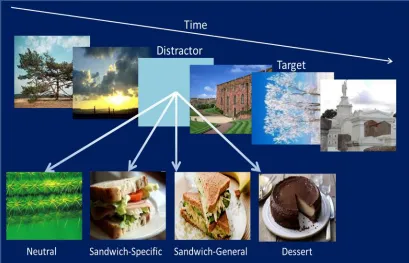
Accordingly, we adopted the emotional blink of attention (EBA) methodology of Piech et al (Piech et al., 2010), in which the presentation of a