Delivering cognitive skills
programmes in prison:
a qualitative study
Home Office Online Report 27/04
Alan Clarke
Delivering cognitive skills programmes in
prison: a qualitative study
Alan Clarke, Rosemary Simmonds and Sarah Wydall
Institute for Social Research, University of Surrey
Online Report 27/04
Foreword
Recent evaluations of the effectiveness of prison-based cognitive skills training programmes in reducing reconvictions have produced mixed results. The present study adopts a qualitative evaluation methodology in order to explore what constitutes effective programme implementation, impact and outcomes. This approach is based on the assertion that the nature and context in which a programme is delivered can affect treatment quality and ultimately influence treatment success. Thus, understanding how programmes are delivered and received can help us to interpret findings from reconviction studies by providing an insight into how factors such as the institutional context in which programmes operate can have an impact on treatment success.
Acknowledgements
The authors would like to thank Professor Roger Tarling (University of Surrey) for his help in the production of milestone reports for this project and for his expert guidance throughout the research.
Many thanks are also due to the Treatment Managers and programme staff in the six prisons for making arrangements for us to interview prisoners and members of staff.
Special thanks also to Ray Little, Area Manager with Surrey Probation Service for his positive assistance in the recruitment of men on licence in the community who had previously completed a cognitive skills programme in prison.
The authors would also like to thank all the interviewees who volunteered to take part in this project. The experiences and thoughts they shared with us are greatly valued.
Contents
Foreword ii
Acknowledgements iii
Summary v
1. Introduction 1
Background 1
Previous evaluative studies 2 Aims of the research 4
Methodology 4
Structure of report 7
2. Perceptions of programmes 8
Programme graduates’ perceptions of the purpose 8 of cognitive skills programmes Programme staff perceptions of the purpose 9 of cognitive skills programmes
Perceived strengths and limitations of programmes 10 Perspectives of reconvicted graduates 15 Perspectives of ‘desisting’ Programme graduates 16
3. Programme staff: recruitment, training and support 18
Recruitment and selection of programme tutors 18
Training 20
Experiences of supervision and support 22 Perceptions of staff morale 23
4. The institutional context of cognitive skills programmes 25
Perceptions of non-programme staff 25 The institutional context and the operation of programmes 27
5. Perceptions of motivation 31
Accounts of motivation 32 Institutional factors impacting on motivation 35
6. Non-reconviction benefits for prisoners and prisons 37
7. Conclusions 40
References 43
List
of
tables
Table 1.1 Prisons by type of programme and ISR and IQR scores 5
Table 1.2 Number of prisoners interviewed at each establishment 7
Summary
The dual purpose of this research was to develop an understanding of what factors influenced the successful or unsuccessful delivery and impact of accredited cognitive skills training programmes for adult male prisoners, and to identify whether or not there were any non-reconviction benefits arising from the provision of such programmes. As such, the study contributes to the debate about ‘What Works’ in practice by providing an insight into how, and in what contexts,cognitive skills programmes produce beneficial results.
A qualitative evaluation research methodology was adopted. Face to face interviews were conducted with prisoners and prison staff at six prisons in England. Included among the interviewees were: 62 prisoners who had successfully completed either an Enhanced Thinking Skills (ETS) or Reasoning and Rehabilitation (R&R) course (Programme graduates); ten prisoners who had been reconvicted having completed a cognitive skills course during a previous custodial sentence (reconvicted graduates); 33 members of staff directly involved in the administration and delivery of cognitive skills training (programme staff) and eight members of staff with no involvement in course provision (non-programme staff). Five ex-prisoners who had undergone a prison-based cognitive skills programme and were currently on supervision in the community were also interviewed (desisting graduates).
Key findings
Perceptions of the aims, objectives and rationale of cognitive skills programmes
• Prisoners reported that the sources and quality of information about the aims of programmes varied from hearsay among inmates to a range of written and oral information from prison staff. Some interviewees reported that prison staff had given the impression that programme participation was mandatory, especially to secure a favourable parole report.
• Few programme participants or programme staff referred to the link between the aims of programmes and the ultimate objective of desistance from offending.
• A minority of programme staff volunteered information about the theoretical rationale that underpins cognitive skills programmes.
Perceived strengths and weaknesses of programmes
Programme strengths
• Programme staff appeared dedicated, hardworking, caring and enthusiastic about the merits of cognitive skills programmes. Programme tutors were held in high regard by Programme graduates. Occupational background was considered to be irrelevant by Programme graduates when it came to determining what made a good tutor.
• The majority of Programme graduates enjoyed group work, role-play and games as part of programme delivery. Listening to the viewpoints of others was cited as an important learning experience by many Programme graduates.
• Interviewees reported that most participants benefited in some way from programme participation. Programme staff thought that three types of prisoners benefited the most: men who had underachieved in statutory education; men whose behaviour was impulsive and some men with addiction problems. Evidence from the study suggests that some prisoners who had been convicted of drugs-related crimes benefited from programme participation in the short term.
Programme limitations
• Some prisoner interviewees reported that including sex offenders in a group did not work well because it inhibited other group members, particularly those with children.
• Interviewees thought that selecting programme participants on the basis of parole date order disadvantaged some highly motivated prisoners who were not at the parole stage of their sentences, whilst simultaneously giving access to some parole stage prisoners who were not motivated to change.
• The timing of access to programmes in a prison sentence was an issue for programme participants. Access to courses at mid-sentence was preferred so that skills could be practised and refined in the prison environment before release.
• Most Programme graduates reported the need for ongoing post-programme support in prison so that learning could be consolidated and skills developed.
• A ‘one size fits all’ approach to programme delivery, content and pace was reported to be unresponsive to the needs of certain types of prisoners, such as very able participants; prisoners with literacy problems; men for whom English was not their first language and participants with low IQ levels.
• Rigid adherence to programme manuals was seen as counterproductive by some programme staff. Tutors would have welcomed the opportunity to make slight alterations to the programme content in order to reflect the varying life experiences of programme participants and enhance participatory learning.
The recruitment, training and support of programme staff
• A difficulty in recruiting prison officers as tutors was reported in all six prisons. Tutor selection procedures were seen by some programme staff to be biased in favour of applicants from a human sciences background. The perception, among some prison officers, that tutoring was a ‘soft’ role also acted to deter prison officer applicants.
• The majority of programme tutors thought the two-week training course was too intensive and that more time should be given for trainees to deliver sessions from all of the key components of the programmes.
• Not many tutors remembered the theoretical aspect of their two-week training course because they felt overloaded with information. Tutors would have preferred this part of the training to be separate.
• The perceptions of the support provided by the Offending Behaviour Programmes Unit (OBPU) varied a great deal among programme staff – most felt that OBPU was insufficiently staffed and that they were operating in a constant state of crisis management, resulting in a patchy service.
• Audit reports of video monitoring by OBPU elicited some strong feelings among programme staff. Tutors found the audit reports demoralising and some interviewees thought that only the superficial elements of programme consistency were being monitored by OBPU.
Perceptions of staff morale and retention of programme tutors
• Heavy workloads, shortages of tutors and a lack of institutional support were reported to be affecting the morale of programme staff.
• Unequal pay structures for programme tutors had affected staff morale and the retention of programme tutors.
The institutional context of cognitive skills programmes
• The nature and extent of support for programmes at an institutional level affected programme delivery, with subsequent implications for treatment impact. From an operational perspective, difficulties were reported in maintaining the continuity of programme delivery when sessions were disrupted because of delays in unlocking prisoners and escorting them to classrooms. From a cultural perspective, where there was a lack of a rehabilitative ethos at the institutional level, the negative attitudes of some prison officers to the aims of cognitive skills training adversely affected the way in which prisoners viewed programmes.
• Programme staff reported that some prison officers were uncooperative at the operational level of programme delivery.
• Programme staff reported that overt support for programmes from senior management improved staff morale and endorsed the importance of cognitive skills programmes throughout the prison.
• The role of the programme manager, in promoting staff awareness and developing a pro-programme culture among non-programme staff, was considered to be a key to the successful implementation of programmes.
Perceptions of motivation
• Among both staff and prisoners, motivation was identified as a key factor in producing positive treatment outcomes. Individual characteristics of programme participants, institutional climate and programme processes all had a bearing on motivation.
• Long waiting lists for access to programmes by parole date order affected the quality and levels of motivation of programme participants.
• Interviewees’ accounts of motivation were analysed and three main themes identified: self-development; instrumental thinking; hostile attitudes and behaviours. These three themes underpinned the four main types of accounts of motivation which corresponded with aspects of ‘the cycle of change’ model developed by Prochaska and DiClemente (1982). This model describes the psychological processes underlying behaviour change and outlines the stages that people pass through as they adopt new behaviours.
Non-reconviction benefits for prisoners and prisons
• The non-reconviction benefits for prisoners included: improved social interactions with prison officers and other prisoners; increased levels of self-confidence; enhanced problem-solving skills and improved literacy skills. For some men the experience had sparked an interest in further learning and self-development.
• Benefits for prison management were illustrated through examples of improved prisoner behaviour as a result of programme participation.
• Some staff and prisoners reported that cognitive skills programmes were effective in preparing men to participate in other offending behaviour programmes.
The perceptions of reconvicted and ‘desisting’ Programme graduates
• Reconvicted Programme graduates cited unsuccessful resettlement experiences, addiction problems and lack of maturity as reasons for their re-offending. Some men reported seeing cognitive skills training as a prison experience and not something that was relevant to their lives on release.
• In contrast to the reconvicted graduates, those graduates who had desisted from offending seemed to live structured lives with secure anchor points such as work, training courses, secure accommodation and supportive personal relationships.
• Those desisting Programme graduates who had addiction problems showed signs of having adopted a proactive approach to coping with their condition.
• Programme graduates who had not reoffended gave examples of how they had practised cognitive skills training in everyday situations following their release from prison.
• Programme graduates who were living in the community and had not re-offended reported being frightened of the possibility of going back to prison. Given that they had found employment and developed stable personal relationships they had come to the realisation that they had ‘too much to lose’ by engaging in any further criminal activity.
Recommendations: policy and practice
While caution should always be exercised when drawing policy and practice recommendations on the basis of a single research study a number of observations, based on the findings, are worthy of mention as they have implications as far as the potential effectiveness of programmes is concerned.
• The ‘one size fits all’ approach to programme delivery was considered problematic for prisoners with poor literacy or language skills and/or a low IQ. Therefore, an adapted version of the ETS course might provide more effective treatment for these prisoners.
• Audit reports of video monitoring may not be achieving the desired aims of ensuring programme integrity and quality because of the strong negative feelings they can evoke among programme tutors.
• The inclusion of sex offenders in tutor groups alongside other prisoners was considered to have an inhibiting effect on the other group members. It may be appropriate for sex offenders to complete ETS in groups together.
• A number of prisoners expressed a need for access to programmes at an earlier stage in their prison sentence; this may have implications for the efficacy of the present system of access by parole date order.
• Prisoner interviewees reported a need for ongoing support in order to help them to apply newly acquired thinking skills while in custody and later when released. The provision of cognitive skills booster sessions in prison and in the community would help to consolidate learning and support the maintenance of improved behaviours.
• Cognitive-behavioural approaches alone will not prevent reoffending. As evidence from interviews with reconvicted graduates and desisting graduates has indicated, resettlement issues (accommodation, work, training and help with addictions) play an important part in determining the likelihood of re-offending. The effectiveness of cognitive skills training will be enhanced if it forms part of a structured resettlement plan.
1. Introduction
Background
Recent years have witnessed a rapid expansion in the provision of treatment programmes designed to rehabilitate offenders both in community and custodial settings. The pessimism generated by the ‘nothing works’ doctrine about rehabilitation, which might have still been influencing the seeds of renewed optimism in the 1990s, has been replaced by a growing ‘cautious optimism’ that some types of intervention can have a positive impact on reducing offending behaviour (Vennard et al., 1997: 1). Since the mid-1990s, there has been a year-on-year increase in the number of prisoners undertaking offending behaviour programmes. In a twelve-month period spanning 1996-1997, just over 1,300 prisoners completed an accredited offending behaviour programme; the comparable figure for 2002-2003 was 7,303 prisoners. The target for 2003-2004 is to have 8,900 prisoners completing offending behaviour courses in over 100 establishments in England and Wales (HM Prison Service, 2003: 35). These figures do not include prisoners undertaking specialist drug rehabilitation courses or sex offender treatment programmes.
Research evidence suggests that the more successful offending behaviour programmes are those that feature a cognitive-behavioural approach and focus on cognitive skills training (McGuire, 1995). Within the prison context, the two most widely adopted programmes are Reasoning and Rehabilitation (R&R) (Ross, et al., 1988) and Enhanced Thinking Skills (ETS) (Clark, 2000). One of these programmes is running in around three-quarters of all the prison establishments in England and Wales. The R&R programme was first introduced into the prison system in 1992. The following year, a modified version of this programme was launched, entitled Thinking Skills. This too underwent some modification and became the ETS programme (Clark, 2000). The original curriculum on which the R&R programme was founded has been updated and revised in recent years (Ross, et al., 2000). Although the changes have focused on programme content and delivery, the underlying principles and conceptual framework have remained the same.
The R&R programme is based on a substantial research literature that indicates that many offenders either lack, or have poorly developed, cognitive skills (Ross and Fabiano, 1985). As a result of these basic cognitive deficits, offenders are seen as acquiring an anti-social lifestyle largely because they are ‘…unaware of how their thinking is propelling them into difficulties, and … are unable to extricate themselves since they lack the skills to do so’ (Porporino and Fabiano, 2000: 13). Consequently, the programme uses cognitive-behavioural modification techniques to replace well-established, maladaptive patterns of thinking with cognitive skills that promote both appropriate reactions and pro-social behaviour. The idea was to modify impulsive and egocentric ways of thinking by teaching programme participants to reflect, or ‘stop and think’, before acting. The programme is best described as ‘a structured curriculum-based educational model’ (Ross, et al., 2000: 10). It is founded on the premise that the application of cognitive skills can be taught through a process of step by step instruction and purposeful reinforcement. Six key areas of social-cognitive functioning are addressed by the programme: self-control and self-management; interpersonal problem-solving and social interaction; rigid/inflexible thinking; social perspective taking; analytical thinking and moral reasoning.
In 1996, the Prison Service introduced a system of accreditation for treatment programmes delivered to prisoners. This initiative was extended in 1999, with the setting up of the Joint Prison/Probation Accreditation Panel, later renamed the Correctional Services Accreditation Panel, which effectively introduced a comprehensive and systematic process for the regulation and monitoring of intervention programmes in both prison and community settings. The purpose of the accreditation system is to ensure that individual programmes are designed in line with the principles of evidence-based practice and are consistently delivered to maximise the effect of the treatment. The underlying assumption is that if an accredited programme is delivered as specified, it will lead to a reduction in reconviction rates. In order to achieve and maintain accredited status, a programme must demonstrate that it meets certain assessment criteria (Home Office, 2000). Each site offering accredited cognitive skills training is subject to an annual audit by the Prison Service to ensure that the accreditation criteria are met.
Not only has there been a sustained annual increase in the number of prisoners participating in accredited R&R and ETS programmes over recent years, but additional courses have also been introduced into the Prison Service’s repertoire of accredited cognitive skills programmes. Some of these new programmes target specific types of offenders. For example, the Controlling Anger and Learning to Manage programme (CALM) is designed for individuals whose offending behaviour is associated with a failure to deal with their emotions and control their anger. The Cognitive Self-Change programme is targeted at high-risk violent adult offenders, while ‘Healthy Relationships’ is an accredited programme that focuses on domestic violence.
Some commentators maintain that this widespread adoption of cognitive-behavioural programmes has taken place despite any firm empirical evidence supporting the efficacy of this type of treatment for offenders (Merrington and Stanley, 2000). Clearly, if research is to inform practice in offender rehabilitation, we need to acquire a fuller understanding of the advantages to be gained from using cognitive-behavioural techniques as an intervention strategy. Systematic evaluation studies are needed to identify the components and contexts of effective treatment programmes. Some recent progress has been made in this area, particularly in respect of the R&R and ETS programmes. The following section provides a brief introduction to previous research in this area.
Previous evaluative studies
A number of meta-analytic studies and reviews of offender rehabilitation programmes were conducted throughout the 1980s and 1990s, largely based on work in North America. In general, the results of this work showed that some interventions had an important effect in reducing reoffending rates (Andrews, et al., 1990; Lipsey, 1992; Losel, 1995). Although not all the individual meta-analytic studies reported positive findings (Whitehead and Lab, 1989), it has been estimated that, when taken together, the results from meta-analyses show a net intervention effect of a reduction in recidivism of between ten to twelve percentage points (McGuire and Priestly, 1995; McGuire, 2000).
twelve-month follow-up period a seven-percentage point reduction in reconviction was observed. However, this initial reduction was not sustained over time.
It is only relatively recently that any attempt has been made to undertake a systematic evaluation of the impact of prison-based R&R and ETS programmes in the UK. As regards outcome analysis, Friendship, et al., (2002; 2003a) found, using a retrospective quasi-experimental research design, that when comparing the treatment group with the comparison group, the percentage point reduction in reconviction was 14 per cent in the case of medium-to-low risk offenders and 11 per cent for medium-to-high risk offenders.
This study was based on adult male prisoners who participated in cognitive skills training during the period 1992 to 1996. However, subsequent evaluations based on samples of male offenders completing prison-based cognitive skills programmes between 1996 and 1998 (Falshaw et al., 2003) and 1998 and 2000 (Cann et al., 2003) found no significant differences in reconviction rates between treatment groups and matched comparison groups. Although Cann et al., (2003) reported no difference in reconviction rates between adult men who had started a cognitive skills programme and a matched comparison group, after removing non-completers from the data, a significant treatment effect was observed for adult male completers. Within this group there was a more marked treatment effect for high-risk programme offenders, with a 6.9 percentage point difference in reconviction rates compared to the matched comparison group.
A feature of previous studies of the effectiveness of prison-based offending behaviour programmes is that they have relied largely upon reconviction as the sole measure of treatment outcome. As a result of this narrow focus, information is lacking on precisely what works, how a positive impact is achieved and under what conditions successful outcomes are produced. Some research has focused on the short-term impact of cognitive skills training and how this might be influenced by aspects of programme implementation and delivery. For example, Blud et al., (2003) have reported positive short-term changes in treatment target behaviours and attitudes. These changes were found to be more marked among prisoners who were assessed as being in the ‘high-need’ treatment category and located in establishments where tutors were delivering programmes more frequently.
Clearly, there is a need for a more detailed understanding of the ingredients of effective treatment programmes. In this context, Friendship et al. have suggested the adoption of ‘an integrated model of evaluation … to assess the real impact of treatment’ (2003b: 124). One of their key recommendations was that reconviction data should be supplemented with other measures of treatment outcomes. In this vein, they have proposed that short-term outcome measures, such as prisoners’ experiences of the treatment process and programme completers’ behaviour whilst in prison, should be introduced into evaluation studies to ensure that a broader view of treatment effectiveness is obtained.
Aims of the research
The following two key questions provided the focus for this evaluation of HM Prison Service's accredited cognitive skills programmes:
• What factors contribute to successful and unsuccessful treatment delivery, impact and outcome?
• What are the non-reconviction benefits, if any, for prisoners and prisons arising from the provision of cognitive skills training programmes?
Prior to addressing these two questions it was necessary to determine what constituted successful treatment outcome(s) and non-reconviction benefits? For the purposes of this study, non-reconviction benefits were defined as reported instances, from both prisoners and members of staff, of observed improvements in thinking and behaviour that reflected programme content. As such, non-reconviction benefits were interpreted as examples of successful treatment outcomes at an intermediate level. Thus it was assumed that the factors and mechanisms that affect these short-term, intermediate outcomes were also likely to affect the longer-term outcome of cognitive skills training as measured by reconviction rates.
Methodology
In programme evaluation, quantitatively-oriented experimental and quasi-experimental methodologies help us to ascertain what works, but tell us little, if anything, about how specific interventions or programmes actually work (Chen and Rossi, 1981). Consequently, these research designs, when used in isolation to measure treatment effect, have limited clinical application. As Friendship et al. note, a quasi-experimental methodology, with a narrow focus on reconviction as the sole outcome measure, ‘ignores vital differences between individual participants in their response to treatment’ (2003a: 119). Thus, it should not be assumed that a particular therapeutic intervention has the same benefit for each individual programme participant. It is necessary to gain an understanding of ‘what works for whom in what circumstances’. According to this evaluative strategy, it is not programmes themselves that are seen to ‘work’, but it is the actions of the stakeholders that make them work. As Pawson and Tilley assert, ‘…the causal potential of an initiative takes the form of providing reasons and resources to enable programme participants to change’ (1997: 215).
Given that the dual purpose of the current research was to develop an understanding of issues around the implementation and delivery of cognitive skills programmes, and to explore the views about treatment benefits and impacts held by prison staff and prisoners who had completed such programmes, a qualitative evaluation research design was adopted. Despite there being no single good practice model for qualitative programme evaluation (Shaw, 1999: 85), there is a long established tradition of the use of qualitative research methods in evaluation contexts (Greene, 1994; Patton, 1987; 1990). Qualitative inquiry, in the form of a naturalistic study of process-outcome relations, brings an important dimension to evaluation research design. The emphasis placed on the importance of interpretation (Denzin, 1989) ensures that a qualitative approach to data collection and analysis has much to offer when it comes to investigating the experiences of programme providers and recipients. These methods also have a key role to play in ‘change-process research’ (Reid, 1990), where intermediate ‘micro-outcomes’ can be identified in the examination of the formal and structured elements of programme initiatives.
As described in Table 1.1, the sample contained both local and training prisons. Some prisons provided ETS programmes only, whereas some offered both ETS and R&R programmes. In compiling the sample, consideration was given to the Implementation Quality Rating (IQR) and the Institutional Support Rating (ISR) each prison received in the 2002/2003 annual audit of cognitive skills programmes conducted by the Offending Behaviour Programmes Unit (OBPU). The overall IQR score is an amalgam of the scores awarded for performance in the following four areas: (1) Treatment Management: this covers tutor selection, training, assessment and supervision, staff turnover and the procedures for selecting programme participants. (2) Throughcare: this examines the continuity of programme delivery with particular reference to the links made with other services and agencies such as the offender’s community probation officer. (3) Quality of Delivery: this is determined by monitoring dropout rates and video monitoring programme sessions to ensure that cognitive skills training is delivered in accordance with the programme manual. (4)
Institutional Support: this embraces all operational and programme management aspects.
[image:14.595.90.516.390.507.2]As illustrated in the table, there was some variation between individual prisons with regards to ISR and IQR scores. The prisons in the sample were chosen to represent establishments from the top end and bottom end of the distribution of rating scores. However, given the nature of the rating scheme used in the annual audit, the range of scores produced was fairly narrow. This may be indicative of the fact that there is indeed little variation between establishments with regards to the quality of the organisation, implementation and delivery of accredited cognitive behaviour programmes. Alternatively, it may be a reflection of the fact that the scoring method is not sufficiently sensitive to reflect the variation in institutional performance across the prison estate.
Table 1.1: Prisons by type of programme and ISR and IQR scores
Prison establishment
Type of programme
Prison category
ISR * 2002-2003
IQR # 2002-2003
1 ETS B Training 100% 100%
2 ETS C Training 100% 100%
3 ETS & R&R B Local 98.61% 100% 4 ETS & R&R C Training 94.44% 100%
5 ETS B Local 94.44% 95%
6 ETS & R&R B Training 93.06% 95%
* Institutional Support Rating # Implementation Quality Rating
As part of the preparatory fieldwork, members of the research team made initial visits to each establishment. In each of the prisons the organisation, administration and delivery of cognitive skills programmes was managed by a tripartite management team, composed of a treatment manager, programme manager and throughcare or resettlement manager. All treatment managers had a background in psychology, were trained programme tutors and actively involved in programme delivery. They had responsibility for recruiting and assessing potential programme participants, monitoring programme integrity and assessment procedures, and providing guidance and support for programme tutors. Programme managers were responsible for ensuring that all the practical arrangements were in place to support the delivery of cognitive skills training. In addition to this they organised staff awareness training, to ensure that all non-programme staff in the establishment were made aware of the nature and content of cognitive behaviour training programmes. Throughcare managers were responsible for liaising with the prisoners’ community-based probation officers and encouraging their attendance at post-course review meetings held for prisoners who had completed the programme.
all the tutors were either psychologists or psychological assistants. Where prison officers were trained as tutors they were either employed as full-time, dedicated tutors or undertook tutoring on a part-time basis and continued to maintain responsibility for carrying out certain operational tasks associated with their role as a prison officer.
Interviews were conducted with both members of prison staff and prisoners selected from within the six establishments. In the main, interviewees were drawn from four broad groupings:
1. ‘Programme graduates’: adult male offenders over the age of 21 years who had recently completed a cognitive skills programme;
2. ‘Reconvicted graduates’: adult male offenders over the age of 21 years who having completed a cognitive skills programme on a previous sentence had since been reconvicted and returned to prison;
3. Programme staff: principally programme managers, treatment managers, resettlement managers and course tutors (both experienced and recently qualified); and
4. Non-programme staff: members of prison staff with no involvement in the organisation, administration or delivery of cognitive skills training courses. This group included prison officers and civilian tutors.
Additional interviews were also conducted with five men who had been released from prison on licence and were being supervised by the Probation Service. These men were deemed to be ‘desisting Programme graduates’, on account of having completed a cognitive skills programme, been released from prison and not reconvicted for a further crime. At the time of interview these men had been on licence for five months, six months, seven months, 14 months and 19 months respectively.
Given that a central focus of the research specification was to explore prisoners’ views and experiences of the whole treatment process and investigate their perceptions of the benefits arising from cognitive skills training, it was decided to exclude from the sample of interviewees those prisoners who had failed to complete a cognitive skills programme (i.e. programme dropouts). The characteristics of programme dropouts and the nature of the attrition process are worthy of separate investigation.
In general, the interviews with prisoners and programme staff were designed to explore issues around the implementation and impact of cognitive skills training programmes. The interview schedules covered four key areas: views and experiences of the treatment process; issues around offenders’ ability and motivation to change; factors perceived to affect treatment success and failure; the type of treatment benefits to be gained from undergoing cognitive skills training. Slightly modified versions of the interview schedule were used for interviewing non-programme staff and reconvicted graduates.
Table 1.2: Number of prisoners interviewed at each establishment
Prison establishment
Programme graduates
Reconvicted graduates
1 10 1
2 10 2
3 11 1
4 11 1
5 10 1
6 10 3
Total 62 10*
*One additional interview was conducted at a prison that was not in the original sample.
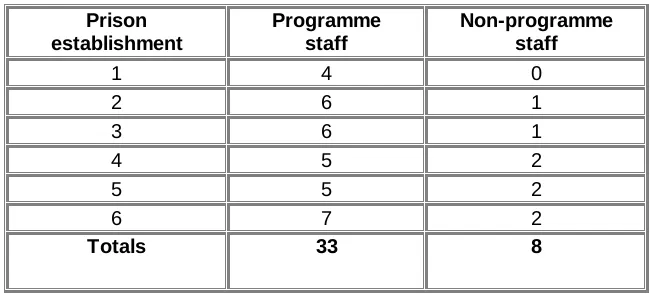
Table 1.3: Number of prison staff interviewed at each establishment
Prison establishment
Programme staff
Non-programme staff
1 4 0 2 6 1 3 6 1 4 5 2 5 5 2 6 7 2
Totals 33 8
Structure of report
[image:16.595.93.418.311.458.2]2. Perceptions of programmes
This chapter explores the perceptions and experiences of programme participants and programme staff in relation to ETS and R&R programmes. A total of 62 Programme graduates, ten reconvicted graduates and five ‘desisting’ graduates were interviewed, along with 33 programme staff. Programme staff included programme managers, treatment managers, programme tutors, resettlement managers, a psychological assistant and senior prison psychologists.
Programme graduates’ perceptions of the purpose of cognitive skills programmes
There is evidence that the way in which programme participants were informed about the purpose of cognitive skills programmes affected the nature of their motivation to participate. Furthermore, the quality of motivation and level of commitment displayed by programme participants were found to influence group dynamics and programme impact and thus have implications for programme outcomes.
During the process of ‘recruitment’ to cognitive skills programmes a minority of prisoners were given the strong impression, by prison staff, that participation was mandatory especially in order to secure parole. For example, as part of the interview schedule, a Programme graduate was asked if he was given any information about ETS at the recruitment stage to the programme. He replied "Not that I remember, no. I didn’t feel I had a choice, they stipulated that I had to do ETS as part of parole; without doing it I wouldn’t get parole, so in a sense I was made to do it" (Programme graduate: 219).
As discussed in Chapter 5, motivation is a complex factor. A ‘stick and carrot’ approach to programme participation could encourage more instrumental motivations in prisoners that may not translate into lasting change in thinking patterns and offending behaviours.
The majority of Programme graduates had reported being given some basic information about the purpose of cognitive skills programmes. One Programme graduate had discussed the R&R programme with a prisoner officer prior to participation and this interviewee commented that he had been told:
…Not a great deal, but he did try to come over as being positive. What I did find from other officers was that in order to benefit from the R&R and ETS your social skills should be quite basic really, so if you are quite limited in social skills or problem-solving skills the R&R or the ETS will be very useful for you…(Programme graduate: 412).
Another interviewee had discussed participating in a programme with a programme tutor and he had been informed that the purpose of the course was:
…to give people tools to deal with everyday life, problem solving, social skills, encouraging people to see the whole picture, rather than a blinkered
view…(Programme graduate: 412).
However, for some programme participants, other prisoners were the main or only source of information about the courses. One Programme graduate recounted how he first heard about the purpose of an ETS course as follows:
While there were numerous examples of this kind of factual information being passed on by former programme participants, interviewees also referred to the negative comments about cognitive skills programmes they sometimes encountered from inmates who had not
participated in a course. As one interviewee commented:
…Well I will be honest, there was so many people slagging it off, saying oh, you shouldn’t do that it’s a load of rubbish, but then you realise why they are slagging it off – because they haven’t done it themselves…the majority of people, I think, that have done it, have got something out of it …(Programme graduate: 619).
In general, it is interesting to note that in referring to the purpose of cognitive skills programmes, very few interviewees (either programme participants or programme staff) emphasised the link between the aims of the courses and the ultimate objective of desistance from offending. For many the programmes were seen as providing the skills necessary for tackling a whole range of personal issues and social circumstances, but at the same time they were not viewed as offering a singular, universal solution. For example, one reconvicted graduate when asked why ETS had failed to stop him reoffending replied: "Well, you see it wasn’t ETS… see people have to understand that groups are stepping stones, I don’t believe that any one group, is going to be the remedy to any one prisoner’s ills" (Reconvicted graduate: 64).
This reconvicted Programme graduate drew attention to the fact that prisoners often suffered multiple problems, particularly where offending behaviour was drugs-related. He argued that ETS should not be seen as the solution to all problems but rather as a foundation course that underpins a number of specific approaches to addressing a variety of offending behaviours.
Programme staff perceptions of the purpose of cognitive skills programmes
From the ‘`What Works’ literature (McGuire, 1995) it is known that knowledgeable and skilled programme staff constitute a key element in the successful delivery and impact of cognitive skills programmes. To illustrate this point, McGuire argues that “practitioners must have a sound theoretical and intellectual understanding of the basis for the programmes that are being used” (1995:232). In the light of this, it was important that the current study explored what programme staff perceived as the objectives of ETS and R&R programmes and examined their understanding of how these programmes worked. Interviews with programme staff were therefore designed to discover their perceptions of the objectives of cognitive skills programmes and the theory and ethos that underpins the content of programmes. Responses to these questions fell into three broad categories according to levels and quality of description.
The first category of responses included programme staff who perceived the programmes as a means of improving the general life skills and social skills of prisoners. The prevention of further offending was not mentioned as a primary programme objective. As an illustration of the first grouping, a recently trained and inexperienced programme tutor explained what she thought were the aims and objectives of ETS as follows: “To try and teach grown men stuff that they had perhaps not picked up when they were younger, we are just teaching general social and life skills” (A new tutor: 214).
The final category of responses included programme staff who had a clear understanding of the objectives of programmes and how cognitive skills programmes are intended to work. Their responses demonstrated some knowledge of the theoretical underpinnings of programmes. These interviewees also talked about ‘non-reconviction benefits’ for prisoners and prisons. The following comment from an experienced tutor is illustrative of this third category of responses.
…I think they are trying to get group members to understand their own thinking patterns more so that they are aware of where their thinking comes from, so they learn that they can actually change…then through the aims of the course they can address their offending behaviour indirectly by getting them to consider consequences more, by getting them to develop a range of alternatives so they don’t follow the same patterns…to develop a range of skills so that they interact with others more pro-socially so that they can solve their problems in a more effective way…( Experienced tutor: 25)
From the responses illustrated above and the feedback about the training programme staff received, there is scope for teaching the conceptual and theoretical underpinnings of cognitive skills programmes more effectively.
Perceived strengths and limitations of programmes
From interviews with programme participants and programme staff a number of programme strengths and limitations were identified in relation to issues of delivery, content, impact and outcomes.
Programme strengths
As regards programme delivery, interviews with Programme graduates revealed that tutors were generally held in high regard and described as being honest, sincere, patient, skilled, helpful and able to respond to different learning styles. Praise for tutors was unequivocal, with very little distinction being made between tutors from different professional backgrounds. The occupational background of a tutor (psychologist, prison officer, probation officer etc.) was seen as being irrelevant when it came to determining what made a good tutor. Prisoners insisted that personal qualities and individual characteristics were more important than professional background in this respect. The qualities most cited in a good tutor were: confidence, skill in group work/group dynamics, patience, integrity, a caring attitude and a sense of humour. One Programme graduate described the qualities of a good tutor and talked about the tutors on his programme in the following way:
…Being able to deliver the programme itself and listen and talk to you and if you had got problems sit and talk to you, yes, it’s the way they deliver it, especially (names of tutors) they could pull a situation on board and talk you through it, and they would always talk calmly, never rush things and if you ask a question they would answer and yes, they were perfect… (Programme graduate: 30).
Prisoner interviewees also reported appreciation at being treated with respect and as an equal by tutors and programme staff. The reciprocal use of first names when addressing one another within the context of the classroom was a novel and important experience for many programme participants. It fostered an atmosphere conducive to learning and created an informal environment in which group work was undertaken.
effectiveness of cognitive skills programmes, despite some of the negative experiences she encountered on a daily basis. She said:
…Well I think for me, my belief is when I see positive results in individuals in the group that is the only way you can be positive about the programme really, because you see it emerge as the sessions go on. You see someone learning skills and become better at using certain skills and recognising different things in themselves and learning things about themselves…I mean statistics are OK to relay to other people…but it’s definitely just seeing it in the individual…(Experienced tutor: 613).
This excerpt was representative of how most programme staff viewed the usefulness of cognitive skills programmes.
When interviewees were asked about the kind of prisoner who might benefit the most from programme participation, an experienced tutor described a type of prisoner who had typically underachieved in the statutory education system as follows:.
…I feel that it helps reasonably bright people who haven’t, for whatever reason, got on with school and suddenly find themselves being able to understand something about themselves and about the way that their mind works…they are suddenly learning stuff and get very excited about the fact that it is not too difficult for them…they are getting positive feedback from people in the prison, which is important…and finding out that they are quite bright…they are sort of fired up and see a better future for themselves… (Ref: Experienced tutor: 516)
This excerpt illustrates how participation in a cognitive skills programme can have a positive impact on the self-esteem of prisoners. Increasing levels of self-esteem in programme participants has been found to be associated with reduced reconviction rates and less severe further offences (Robinson et al, 1998; Annis and Chan, 1983).
Another programme tutor felt that the type of prisoner who benefited the most from programme participation was one who had underachieved in the statutory education system. She explained “I have seen the benefit in those people who have not done particularly well at school and they have come and learnt new skills and they have actually taken it on board…”
(Programme tutor: 613). However, she continued by adding:
…and those who have got into drugs a lot, I have seen quite positive responses coming from those kinds of people who have had problems with drugs, because they have never been able to see the impact it has had on other people before…(Programme tutor: 613).
To endorse this comment, evidence from the interview data suggests that some prisoners who had committed drugs related crimes showed short-term benefits from programme participation.
An ex-prisoner officer tutor felt that prisoners who were impulsive benefited the most from programmes and she commented “it is the impulsive prisoners…the biggest change you see in people is with that type of prisoner, I’m not saying it works for all of them, but you can see a change" (A senior prison officer: 518).
However, the same interviewee added “everyone benefits from the course…I think different people benefit in different areas” (Senior prison officer: 518). Another interviewee, the head of a prison psychology department, made a similar point:
them the difference between facts and opinions and to consider all factors…(Head of psychology department: 617).
These three comments are representative of the different kinds of responses from programme staff about their perceptions of prisoners who were seen to benefit from programme participation. However, the majority of programme staff responded by saying that they felt nearly everyone benefited in some way.
Delivery of programmes through group work was a topic that elicited a range of responses from Programme graduates. The majority of prisoner interviewees found working in a group useful and enjoyable. To illustrate a positive experience of group work a Programme graduate narrated his experience as follows:
…the lads were always encouraging of each other, you wouldn’t put anyone down, you know – even on breaks and that… you can tell a group is actually interested in doing well when they are coming out on a smoke break or a coffee break and they are still talking about the subject that’s been discussed…that was a regular thing with our group, you know, you would have a laugh and a joke…you would come out and you would want a light for me cigarette and you would say “right I am going to use me negotiating skills...” (Programme graduate: 14).
Another Programme graduate described how aspects of delivery by group work, through role plays and games, made a good contrast to sitting and listening, he commented “…at the end of the day the group work gave you something to do, you were really participating after sitting there for an hour listening to repeat after repeat after repeat, while my attention faded
away…”(Programme graduate: 17). This endorses the finding from the ‘What Works’
literature (McGuire, 1995) that active and participatory methods of treatment delivery are more effective with prisoners than more passive approaches to treatment.
Being able to listen to other people’s views was also cited by Programme graduates as a positive aspect of group work as one Programme graduate explained:
I mean I was able to listen to other people and get their points of view, so that’s probably the only thing that I really got from it, just sitting down there and listening to other people, how they interpreted the situation, probably different from what I could see, so it was just that (Programme graduate: 112).
A number of interviewees reported that hearing differing viewpoints was quite a revelation to them and reported that this had helped them to reappraise their own beliefs and to understand that other people might see things differently.
With regard to programme content, the majority of programme participants thought that at least some aspects were interesting and useful. Parts of the programme most frequently mentioned and remembered in positive terms were ‘stop and think’, problem-solving, social skills and perspective taking. To illustrate some of these points a Programme graduate explained:
Well, apart from, you know, stop and think it’s looking from other people’s point of views, do you know what I mean? I thought that was good as well. Not speaking for myself, but criminals don’t look from other peoples’ point of view, it’s a self-gratification thing…if you felt for the people you rob, you wouldn’t have done it in the first place, so it’s self gratification (Programme graduate: 116).
When interviewees were asked about course content they invariably referred to the impact particular aspects of the course had made on them. For example, when one interviewee was asked what part of the course he found the most useful he replied:
…Stop and think – to stop me being impulsive and to think about the consequences
aware that, you know, you have got to be able to listen to somebody and see their point of view – that is one thing that… if you want me to summarise it, the course has changed me a lot and has given me a lot of different beliefs…(Programme graduate: 38).
Another Programme graduate described how the programme had made an impact on his aggressive behaviour by helping him to identify alternative strategies for dealing with problems. As he explained:
…Well I would personally say that I had tunnel vision; I saw one track and my own personal beliefs, what I said was gospel, sort of thing, no matter what everybody else said, I wasn’t listening to them, my way is the right way, even though it was the wrong way…getting new perspectives on situations gave you a number of alternatives which opened a whole new variety of doors to deal with that situation…(Programme graduate: 49).
From these extracts it could be argued that being exposed to the views of others, in a controlled but relaxed environment, is an important element that underpins the successful impact of programme content.
An experienced programme tutor reported on how he felt the content of programmes impacted on participants as follows:
…I think the ‘I’ language and the assertiveness in practice and making them aware of how their beliefs affect their behaviour and how their behaviour affects the way people treat them. That has a big impact… (Experienced tutor: 25).
Programme staff also made observations about how the impact of programme participation had translated into positive changes for prisoners. To illustrate these observations an experienced programme tutor talked about the changes that he had noticed in programme participants: “we can see how someone becomes more confident, interacting better with other members of staff and they have actually said this. The guy I talked about earlier, you could see a significant change as the five weeks went on” (Experienced tutor: 25). This particular excerpt illustrates some of the short-term benefits and outcomes that can be gained through prisoners participating in cognitive skills programmes. (The issue of programme impact is returned to later in Chapter 6 when discussing perceived non-reconviction benefits.)
Programme limitations
In terms of programme delivery, a minority of programme participants reported that they would have preferred a one-to-one delivery or some one-to-one support outside of the programme. This was particularly expressed by prisoners with literacy problems; those for whom English was not the first language and those who found role-play difficult and stressful. Furthermore, group work had not been a happy experience for some interviewees, mainly because of the disruptive behaviour of other group members. Some interviewees also reported that including prisoners with sex offences in a group did not work well because it inhibited group discussion. Some participants did not feel comfortable about discussing family issues, particularly involving children, in a group setting that included sex offenders. Some programme staff observed that the way programmes were ‘rolled out’ could have a negative impact on programme effectiveness. A minority of programme staff felt that the delivery of more than three sessions in a week to one group could interfere with learning. An experienced ex-tutor explained how too much time in the classroom could be counter productive. She said:
do their homework by Monday night, they may not have been out of their cell in that time and therefore not had the opportunity to practice… so I think four sessions a week was probably too heavy going. If you did Monday, Wednesday and Friday then they’ve got an extra day to do their assignments and also to practise whatever it is they’ve done in the session that day… (Senior prison officer: 518).
This ex-tutor stressed the importance of having the opportunity of putting skills into practice so that new ways of behaving could be rehearsed until learnt, thus increasing the likelihood that these newly acquired skills would be transferred successfully to life outside prison.
Other critical perceptions about how programmes were delivered centred upon the rigidity of programme content and delivery. A number of programme staff felt that delivery of programmes through strict adherence to manuals, made the content of programmes inflexible, out of touch with the experiences of participants, and at times, patronising. To illustrate one of these points a treatment manager commented:
…it’s good what they’ve been taught but I think how they’re being taught could maybe change. I find sometimes it can be quite patronising, talking to inmates as if they can’t solve problems…one of the things is not to install sort of middle class values on people but the way it’s taught is almost saying OK well if you have a problem you go up to someone and use this assertiveness script, but people don’t talk like that, you know we’re dealing with people whose backgrounds – they wouldn’t even know how to start to talk like the way you try and get them to talk, so what we’re teaching them is good, but how we’re teaching them I think could be changed…(Treatment manager: 13).
This illustrates a perception of a misfit between the way programmes were delivered and the reality of life for a lot of prisoners. Another interviewee, an experienced tutor, also felt that the content of programmes could be patronising:
…When I’m tutoring it feels quite patronising and a lot of the examples that we have to use during the course are not things that they can relate to at all, you know we ask them daft questions…they just can’t relate to them and because they can’t, they can’t apply the skills to their lives…I think they find it really difficult to take away what we’re trying to teach them… (Experienced tutor: 13).
The majority of programme tutors and treatment managers recognised the importance of programme integrity but also felt that a little more flexibility in the delivery of programmes could allow for a better match between the needs of programme participants and the contents of the programmes. As one programme tutor said “you are tied to actually having to use a lot of this material as standard – maybe there should be more sort of leeway” ( Programme tutor: 36).
A rigid ‘one size fits all’ approach to programme delivery was considered by programme staff to be unresponsive to the needs of prisoners with literacy problems, low IQ, the very bright or those for whom English was not their first language. To illustrate one of these points a resettlement manager talked about the feedback he received from Programme graduates about ETS and R&R programmes. He explained:
…I mean you have got ten people in a group of varying abilities, um, a lot of the feedback I get at reviews is, it’s too quick, it’s bang, bang, bang, we are going onto the next thing, there is no time in between to recap or to review and I think the slower ones struggle with the pace of it… I’ve never done R&R but I’ve been told the brighter people – they were getting bored with it because there was a lot of repetition…there is insufficient time now [on ETS] for people to really retain and practise what they have learned and it comes up time and time again in review… (Resettlement manager: 313).
A number of programme staff interviewees were of the opinion that in order to cater for the needs of prisoners with literacy problems or with lower IQ levels, there should be an adapted version of ETS. As one experienced ex-tutor explained:
…they do something in SOTP – the adaptive programme for people that have sort of like low/medium levels of IQ, whatever it is, and I definitely think they need to do something like this for ETS. I mean we’ve excluded, we’ve not given people the opportunity to do ETS because they can’t read or write and some of the skills [ETS] can be taught in other ways which are a bit more inventive…( Senior prison officer: 518).
Furthermore, programme staff reported that participants, for whom English was not the first language, also had difficulties with the course. Programme tutors found it difficult to assess the progress of these prisoners. According to one prison officer tutor:
…people whose English isn’t particularly good struggle with the course, just for the assignments and it’s difficult to assess their level of understanding because we’re asking them to give it to us in a written format, so they may have a good understanding but putting it down on paper, they just can’t do…(Programme tutor: 518).
Another issue that programme staff and graduates perceived as an important programme limitation was the way in which participants gained access to programmes by parole date order and received one intensive programme dose before being released. The majority of programme staff and programme participants would have preferred prisoners to have had access to cognitive skills training at an earlier stage in their sentence; this was considered particularly pertinent for men serving long prison sentences. A commonly expressed view was that prisoners would benefit from cognitive skills programmes early on in a prison sentence, as this would give them an opportunity to practise newly acquired skills whilst in custody. Furthermore, it was felt that early cognitive training would help prisoners to work through their sentence plans and ensure that they were suitably prepared to take advantage of other specialist courses. A number of prisoners and programme staff also suggested that booster or refresher sessions in cognitive skills training should be run for prisoners shortly before their release.
The perspectives of reconvicted graduates
Interviews were conducted with ten reconvicted Programme graduates in order to explore their experiences of programme participation and to try and establish why they had reoffended after being released from prison. Although it is not possible to draw firm inferences about programme failure on the basis of such a small number of cases, two main themes emerged from the interviews.
First, a couple of reconvicted graduates claimed that they had encountered some difficulties in following the cognitive skills courses they had initially joined. For example, one interviewee felt that he had not completely understood the R&R course he had taken during his previous custodial sentence because English was not his first language. However, his English had since improved and with the help of some one-to-one tuition he had recently successfully completed an ETS programme. One or two interviewees also expressed the view that they had not really been ready for cognitive skills training and had not taken it seriously.
Second, it was clear from the accounts given by a number of interviewees that they had found themselves in particularly difficult circumstances when released from prison. As one reconvicted Programme graduate commented:
come out of prison after a drug offence, straight back into accommodation where the other two people who were staying there were heroin users…(Reconvicted programme graduate: 620 ).
At the time of interview this particular prisoner was planning more constructively and proactively for his release this time around and had applied for a place in a probation hostel in another area. He commented that he was now using his problem-solving skills to plan for his release, so as to avoid making the same mistake again.
The perspectives of ‘desisting’ Programme graduates
A total of five Programme graduates were interviewed about their experiences since being released from prison on licence, under the supervision of the Probation Service.
The interviews explored the extent to which they felt they had made use of the cognitive skills training they had received in prison. As resettlement problems and addiction relapse (mainly substance misuse) had been given as reasons for programme failure by reconvicted Programme graduates, particular attention was paid to the individual resettlement circumstances and experiences of the released graduates to enable comparisons to be made between the two groups. When evaluating the responses of the desisting Programme graduates it needs to be borne in mind that they had only been out of prison for a relatively short period of time, ranging for five months to nineteen months.
In contrast with the reconvicted graduates, all of the desisting graduates had secured accommodation, were in employment or undergoing training and reported having supportive relationships with significant others such as family members, partners, friends and probation officers. Where applicable, some interviewees had also distanced themselves from previous criminal environments and associates. In contrast with the reconvicted graduate subsample, the desisting group seemed to be dealing with addictive behaviours more proactively and effectively. Two of the interviewees had addiction problems and were attending voluntary support groups. One was receiving support from Alcoholics Anonymous (AA) and one was attending sessions run by Gamblers Anonymous. The interviewee with an alcohol problem had already attended AA for six years in prison, completed a prison-based accredited drugs awareness course and undergone counselling for two years. On release from prison he also attended a substance misuse rehabilitation centre for six months. Another interviewee, a sex offender, also seemed to be adopting a realistic approach to his risk factors. This interviewee had returned to the neighbourhood where he had committed his crimes. However, although he had suffered some verbal and physical abuse from people who were aware of his crime, he felt being known as a sex offender had helped to prevent him from relapsing.
All five interviewees claimed that they had used improved thinking skills in their everyday lives since leaving prison. The examples they gave covered a wide range of activities and behaviours and showed improvements in the following areas: the application of basic social skills; thinking ahead and considering the consequences; setting goals and personal targets; and controlling impulsive behaviour and emotional responses. As one interviewee explained:
…Last week I had a £10 note in my pocket and found myself thinking ‘shall I buy a bottle of vodka or shall I keep this money in case I need it for petrol, or whatever’ and I think I do constantly compare who I am now with what I was before and it came to my conscious mind that oh! I have learnt to think of the future and to think of the consequences. The kind of man I was before would have got me into trouble…I would have just wasted it… (Desisting graduate: 4).
…I have got my routines now because before, I don’t think my life was structured…I write things down a lot now and I give myself schedules and I give myself goals and I done that goal, I tick it off and I go for another goal…(Desisting graduate: 2).
Whilst discussing the importance of creating a structured life, another interviewee reflected on how he was aware of the need to maintain this on a daily basis.
…I still have to maintain it daily – it is ongoing, I haven’t forgotten this time where I have come from, before, after I come out a couple of months, I had forgotten all about prison – I don’t forget that today, I remember where I have come from because I really don’t want to go back there, which gives me the incentive to move on and keep working on myself… (Desisting graduate: 5).
The fear of going back to prison was articulated as a strong motivating factor for ‘going straight’ amongst this group of interviewees. This was not only because of the deprivations associated with imprisonment but also stemmed from a realisation that they now had too much to lose if they reoffended. As noted above, these men had established important anchor points in terms of jobs and stable personal relationships. They had an investment in the community and expressed hope for the future; however, they had all arrived at this point in their own time, some quite quickly and others after many years of ‘failures’ and relapses.
While the possibility of future incarceration served as a strong deterrent to engaging in criminal activity, interviewees were adamant that any rehabilitative measure would only work if individual offenders had reached a stage where they wanted to change. One desisting graduate, who had reoffended after completing his first cognitive skills programme, explained why his initial participation had not prevented him from committing further crimes by commenting that:
… (I’ve) been in and out of prison quite a few times and I’m a recovering alcoholic…I was in denial for a long time with my alcoholism and when I went in this time, I
wanted to change, you have got to want to change…(Desisting graduate: 5).
3. Programme staff: recruitment, training and
support
Recruitment and selection of programme tutors
The recruitment procedures for programme tutors are organised in four stages. Stage one includes the completion of an application form and an informal interview with a treatment manager. Stage two comprises the completion of a semi-structured interview with a treatment manager to evaluate the candidate’s level of cognitive ability. Stage three is an assessment day comprising a written exercise, a psychometric test, a presentation by the candidate to the tripartite team followed by questions and feedback from a treatment manager and finally an interview with the tripartite team. The fourth stage is a final assessment by the tripartite team based on the candidate’s scores on each of the core competencies for the post and notes from the application form, informal interview and semi-structured interview. Successful candidates are put forward for the Cognitive Skills Assessment Centre and undergo a further appraisal during a three-day residential assessment course.
A multidisciplinary approach to the delivery of cognitive skills programmes necessitates recruitment from three main occupational groups: prison staff (disciplinary and non-disciplinary), probation staff and psychology staff. However, recruitment is not exclusive to these groups and anyone can apply to be a tutor as long as they meet some fairly basic educational criteria for the post.
From interviews with programme staff a number of key themes emerged around the issue of recruitment of tutors:
• Both pris