ADOPTED: 17 October 2018 doi: 10.2903/j.efsa.2018.5469
Assessment of genetically modi
fi
ed maize MZHG0JG for
food and feed uses, import and processing under
Regulation (EC) No 1829/2003 (application
EFSA-GMO-DE-2016-133)
EFSA Panel on Genetically Modi
fi
ed Organisms (GMO),
Hanspeter Naegeli, Jean-Louis Bresson, Tamas Dalmay, Ian Crawford Dewhurst,
Michelle M Epstein, Leslie George Firbank, Philippe Guerche, Jan Hejatko,
Francisco Javier Moreno, Ewen Mullins, Fabien Nogu
e, Nils Rostoks,
Jose Juan S
anchez Serrano, Giovanni Savoini, Eve Veromann, Fabio Veronesi, Yann Devos,
Michele Ardizzone, Franco Maria Neri, Nikoletta Papadopoulou, Giacomo De Sanctis,
Antonio Fernandez Dumont, Andrea Gennaro, Jose Angel Gomez Ruiz and
Konstantinos Paraskevopoulos
Abstract
The scope of application EFSA-GMO-DE-2016-133 is for food and feed uses, import and processing of genetically modified (GM) maize MZHG0JG in the European Union. Maize MZHG0JG was developed to confer tolerance to the herbicidal active substances glyphosate and glufosinate-ammonium. The molecular characterisation data and bioinformatic analyses do not identify issues requiring food/feed safety assessment. None of the identified differences in the agronomic/phenotypic and compositional characteristics tested between maize MZHG0JG and its conventional counterpart needs further assessment, except for early stand count (pre-thinning). The GMO Panel does not identify safety concerns regarding the toxicity and allergenicity of the mEPSPS and PAT proteins as expressed in maize MZHG0JG, and finds no evidence that the genetic modification would change the overall allergenicity of maize MZHG0JG. The nutritional impact of food/feed derived from maize MZHG0JG is expected to be the same as that of food/feed derived from the conventional counterpart and commercial non-GM maize reference varieties. The GMO Panel concludes that maize MZHG0JG is nutritionally equivalent to and as safe as the conventional counterpart and non-GM maize reference varieties tested, and no post-market monitoring of food/feed is considered necessary. In the case of accidental release of viable maize MZHG0JG grains into the environment, maize MZHG0JG would not raise environmental safety concerns. The post-market environmental monitoring plan and reporting intervals are in line with the intended uses of maize MZHG0JG. In conclusion, the GMO Panel considers that maize MZHG0JG, as described in this application, is as safe as its conventional counterpart and the tested non-GM maize reference varieties with respect to potential effects on human and animal health and the environment.
©2018 European Food Safety Authority.EFSA Journalpublished by John Wiley and Sons Ltd on behalf of European Food Safety Authority.
Keywords: GMO, maize (Zea mays), MZHG0JG, herbicide tolerance, Regulation (EC) No 1829/2003
Requestor:Competent Authority of Germany
Question number:EFSA-Q-2016-00583
Panel members: Jean-Louis Bresson, Tamas Dalmay, Ian Crawford Dewhurst, Michelle M Epstein, Leslie George Firbank, Philippe Guerche, Jan Hejatko, Francisco Javier Moreno, Ewen Mullins, Hanspeter Naegeli, Fabien Nogue, Nils Rostoks, Jose Juan Sanchez Serrano, Giovanni Savoini, Eve Veromann and Fabio Veronesi.
Acknowledgements: The Panel wishes to thank the members of its Working Groups for the preparatory work on this scientific opinion and the EFSA staff members Sylvie Mestdagh, Irene Mu~noz Guajardo and Claudia Paoletti for the support provided to this scientific opinion.
Suggested citation: EFSA GMO Panel (EFSA Panel on Genetically Modified Organisms), Naegeli H, Bresson J-L, Dalmay T, Dewhurst IC, Epstein MM, Firbank LG, Guerche P, Hejatko J, Moreno FJ, Mullins E, Nogue F, Rostoks N, Sanchez Serrano JJ, Savoini G, Veromann E, Veronesi F, Devos Y, Ardizzone M, Neri FM, Papadopoulou N, De Sanctis G, Dumont AF, Gennaro A, Gomez Ruiz JA and Paraskevopoulos K, 2018. Scientific Opinion on the assessment of genetically modified maize MZHG0JG for food and feed uses, import and processing under Regulation (EC) No 1829/2003 (application EFSA-GMO-DE-2016-133). EFSA Journal 2018;16(11):5469, 26 pp. https://doi.org/10. 2903/j.efsa.2018.5469
ISSN: 1831-4732
©2018 European Food Safety Authority.EFSA Journalpublished by John Wiley and Sons Ltd on behalf of European Food Safety Authority.
This is an open access article under the terms of the Creative Commons Attribution-NoDerivs License, which permits use and distribution in any medium, provided the original work is properly cited and no modifications or adaptations are made.
Summary
In the present scientific opinion, the scientific Panel on Genetically Modified Organisms of the European Food Safety Authority (hereafter referred to as the ‘GMO Panel’) reports the outcome of its risk assessment of maize MZHG0JG in the context of its scope as defined in application EFSA-GMO-DE-2016-133.1 The GMO Panel conducted the assessment of maize MZHG0JG in line with the principles described in Regulation (EU) No 503/2013 and its applicable guidelines for the risk assessment of genetically modified (GM) plants.
The molecular characterisation data establish that maize MZHG0JG contains a single insert consisting of one copy of the mepsps and pat expression cassettes. Bioinformatics analyses of the sequences encoding the newly expressed proteins and other open reading frames present within the insert or spanning the junctions between the insert and genomic DNA do not indicate significant similarities to toxins and allergens. The stability of the inserted DNA and introduced trait is confirmed over several generations. The methodology used to quantify the levels of the mEPSPS and PAT proteins is considered adequate. The protein characterisation data comparing the structural, biochemical and functional properties of plant- and microbe-derived mEPSPS and PAT proteins indicate that these proteins are equivalent, and the microbe-derived protein can be used in safety studies.
None of the identified differences in the agronomic/phenotypic and compositional characteristics tested between maize MZHG0JG and its conventional counterpart needs further assessment, with the exception of early stand count (pre-thinning) whose environmental impact is assessed.
The GMO Panel does not identify safety concerns regarding the toxicity and allergenicity of the mEPSPS and PAT proteins as expressed in maize MZHG0JG, and finds no evidence that the genetic modification would change the overall allergenicity of maize MZHG0JG. The nutritional impact of food/ feed derived from maize MZHG0JG is expected to be the same as that of food/feed derived from the conventional counterpart and commercial non-GM maize reference varieties. The GMO Panel concludes that maize MZHG0JG is nutritionally equivalent to and as safe as the conventional counterpart and non-GM maize reference varieties tested, and no post-market monitoring of food/feed is considered necessary.
Considering the introduced trait, the outcome of the comparative analysis, and the routes and levels of exposure, the GMO Panel concludes that maize MZHG0JG would not raise safety concerns in the case of accidental release of viable GM maize grains into the environment. The post-market environmental monitoring plan and reporting intervals are in line with the intended uses of maize MZHG0JG.
Based on the relevant publications identified through the literature searches, the GMO Panel does not identify any safety issues pertaining to the intended uses of maize MZHG0JG. In the context of post-market environmental monitoring, the applicant should improve future literature searches according to the GMO Panel recommendations given in this scientific opinion.
In delivering its scientific opinion, the GMO Panel took into account application EFSA-GMO-DE-2016-133, additional information provided by the applicant, scientific comments submitted by the Member States and relevant scientific publications. The GMO Panel concludes that maize MZHG0JG, as described in this application, is as safe as its conventional counterpart and the tested non-GM maize reference varieties with respect to potential effects on human and animal health and the environment.
1 The scope of the application EFSA-GMO-DE-2016-133 is for food and feed uses, import and processing of maize MZHG0JG
Table of contents
Abstract... 1
Summary... 3
1. Introduction... 6
1.1. Background... 6
1.2. Terms of Reference as provided by the requestor... 6
2. Data and methodologies... 6
2.1. Data... 6
2.2. Methodologies... 7
3. Assessment... 7
3.1. Systematic literature review... 7
3.2. Molecular characterisation... 7
3.2.1. Transformation process and vector constructs... 7
3.2.2. Transgene constructs in the GM plant... 8
3.2.3. Protein characterisation and equivalence... 8
3.2.3.1.mEPSPS characterisation and equivalence... 8
3.2.3.2.PAT characterisation and equivalence... 9
3.2.4. Information on the expression of the insert... 9
3.2.5. Inheritance and stability of inserted DNA... 9
3.2.6. Conclusion on molecular characterisation... 9
3.3. Comparative analysis... 10
3.3.1. Overview of studies conducted for the comparative analysis... 10
3.3.2. Experimentalfield trial design and statistical analysis... 10
3.3.3. Suitability of selected test materials... 10
3.3.3.1.Selection of the GM maize line and comparator... 10
3.3.3.2.Selection of commercial non-GM maize reference varieties... 11
3.3.3.3.Seed production and quality... 11
3.3.3.4.Conclusion on suitability... 11
3.3.4. Representativeness of the receiving environments... 11
3.3.4.1.Selection offield trial sites... 11
3.3.4.2.Meteorological conditions... 11
3.3.4.3.Management practices... 11
3.3.4.4.Conclusion on representativeness... 12
3.3.5. Agronomic and phenotypic analysis... 12
3.3.5.1.Agronomic and phenotypic characteristics tested underfield conditions... 12
3.3.5.2.Agronomic and phenotypic characteristics tested under controlled conditions... 12
3.3.6. Compositional analysis... 12
3.3.7. Conclusion on comparative analysis... 13
3.4. Food/feed safety assessment... 14
3.4.1. Effects of processing... 14
3.4.2. Influence of temperature and pH on newly expressed proteins... 14
3.4.3. Toxicology... 14
3.4.3.1.Testing of the newly expressed proteins... 14
3.4.3.2.Testing of new constituents other than the newly expressed proteins... 14
3.4.3.3.Information on altered levels of food/feed constituents... 14
3.4.3.4.Testing of the whole genetically modified food/feed... 15
3.4.4. Allergenicity... 17
3.4.4.1.Assessment of allergenicity of the newly expressed proteins... 17
3.4.4.2.Assessment of allergenicity of the whole GM plant... 17
3.4.5. Dietary intake assessment of endogenous and new constituents... 18
3.4.5.1.Nutritional assessment of endogenous constituents... 18
3.4.5.2.Dietary exposure to new constituents... 18
3.4.6. Post-market monitoring of GM food/feed... 20
3.4.7. Conclusion on the food/feed safety assessment... 20
3.5. Environmental risk assessment and monitoring plan... 20
3.5.1. Environmental risk assessment... 20
3.5.1.1.Persistence and invasiveness of the GM plant... 20
3.5.1.2.Potential for gene transfer... 21
3.5.1.3.Interactions of the GM plant with target organisms... 22
3.5.1.5.Interactions with the abiotic environment and biogeochemical cycles... 22
3.5.2. Post-market environmental monitoring... 22
3.5.3. Conclusion on the environmental risk assessment and monitoring plan... 22
4. Conclusions... 23
Documentation provided to EFSA... 23
References... 24
1.
Introduction
The scope of application EFSA-GMO-DE-2016-133 is for food and feed uses, import and processing of the genetically modified (GM) herbicide-tolerant maize MZHG0JG in the European Union (EU).
1.1.
Background
On 27 September 2016, the European Food Safety Authority (EFSA) received from the Competent Authority of Germany application EFSA-GMO-DE-2016-133 for authorisation of maize MZHG0JG (Unique Identifier SYN-∅∅∅JG-2), submitted by Syngenta (hereafter referred to as ‘the applicant’) according to Regulation (EC) No 1829/2003.2
Following receipt of application EFSA-GMO-DE-2016-133, EFSA informed EU Member States and the European Commission, and made the application available to them. Simultaneously, EFSA published the summary of the application.3
EFSA checked the application for compliance with the relevant requirements of Regulation (EC) No 1829/2003 and Regulation (EU) No 503/20134, and, when needed, asked the applicant to supplement the initial application. On 10 January 2017, EFSA declared the application valid.
From validity date, EFSA and its scientific Panel on Genetically Modified Organisms (hereafter referred to as the ‘GMO Panel’) endeavoured to respect a time limit of six months to issue a scientific opinion on application EFSA-GMO-DE-2016-133. Such time limit was extended whenever EFSA and/or its GMO Panel requested supplementary information to the applicant. According to Regulation (EC) No 1829/2003, any supplementary information provided by the applicant during the risk assessment was made available to the Member States and European Commission (for further details, see Section ‘Documentation’, below).
In accordance with Regulation (EC) No 1829/2003, EFSA consulted the nominated risk assessment bodies of the Member States, including national Competent Authorities within the meaning of Directive 2001/18/EC.5 Member States had three months to make their opinion known on application EFSA-GMO-DE-2016-133 as of date of validity.
1.2.
Terms of Reference as provided by the requestor
According to Articles 6 and 18 of Regulation (EC) No 1829/2003, EFSA and its GMO Panel were requested to carry out a scientific risk assessment of maize MZHG0JG in the context of its scope as defined in application EFSA-GMO-DE-2016-133.
According to Regulation (EC) No 1829/2003, this scientific opinion is to be seen as the report requested under Articles 6(6) and 18(6) of that Regulation, and thus will be part of the EFSA overall opinion in accordance with Articles 6(5) and 18(5).
In addition to the present scientific opinion, EFSA was also asked to report on the particulars listed under Articles 6(5) and 18(5) of Regulation (EC) No 1829/2003, but not to give an opinion on them, because they pertain to risk management.6
2.
Data and methodologies
2.1.
Data
The GMO Panel based its scientific risk assessment of maize MZHG0JG on the valid application EFSA-GMO-DE-2016-133, additional information provided by the applicant during the risk assessment, relevant scientific comments submitted by the Member States and relevant peer-reviewed scientific publications.
2
Regulation (EC) No 1829/2003 of the European Parliament and of the Council of 22 September 2003 on genetically modified food and feed. OJ L 268, 18.10.2003, p. 1–23.
3
Available online:http://registerofquestions.efsa.europa.eu/roqFrontend/questionLoader?question=EFSA-Q-2016-00583. 4 Commission Implementing Regulation (EU) No 503/2013 of 3 April 2013 on applications for authorisation of genetically
modified food and feed in accordance with Regulation (EC) No 1829/2003 of the European Parliament and of the Council and amending Commission Regulations (EC) No 641/2004 and (EC) No 1981/2006. OJ L157, 8.6.2013, p. 1–48.
5 Directive 2001/18/EC of the European Parliament and of the Council of 12 March 2001 on the deliberate release into the
environment of genetically modified organisms and repealing Council Directive 90/220/EEC. OJ L 106, 12.3.2001, p. 1–38. 6 These particulars can be found in the technical report by EFSA on application EFSA-GMO-DE-2016-133, made available in the
2.2.
Methodologies
The GMO Panel conducted its assessment in line with the principles described in Regulation (EU) No 503/2013, its applicable guidelines (i.e. EFSA GMO Panel, 2010a,b, 2011a,b, 2015) and explanatory notes (i.e. EFSA, 2014, 2017a,b) for the risk assessment of GM plants.
For the assessment of 90-day animal feeding studies, the GMO Panel took into account the criteria included in the 2011 EFSA Scientific Committee guidance on conducting repeated-dose 90-day oral toxicity study in rodents on whole food/feed and the explanatory statement for its applicability (EFSA, 2014).
The GMO Panel also assessed the applicant’s literature searches, which include a scoping review, in accordance with the recommendations on literature searching outlined in EFSA (2010, 2017a).
In the frame of the contracts OC/EFSA/GMO/2013/01 and OC/EFSA/GMO/2014/01, contractors performed preparatory work and delivered reports on the methods applied by the applicant in performing bioinformatic and statistical analyses, respectively.
3.
Assessment
3.1.
Systematic literature review
7The GMO Panel assessed the applicant’s literature searches on maize MZHG0JG, which included a scoping review, according to the guidelines given in EFSA (2010, 2017a).
A systematic review as referred to in Regulation (EU) No 503/2013 has not been provided in support to the risk assessment of application EFSA-GMO-DE-2016-133. Based on the outcome of the scoping review, the GMO Panel agrees that there is limited value of undertaking a systematic review for maize MZHG0JG at present.
Although the overall quality of the performed literature searches is acceptable, the GMO Panel considers that future searches on maize MZHG0JG should be improved. The GMO Panel therefore recommends the applicant to:
•
Ensure that enough search term variation is used (covering possible synonyms, related terms, acronyms, spelling variants, old and new terminology, brand and generic names, lay and scientific terminology, common typos, translation issues);•
Use controlled vocabulary (subject indexing) in the electronic bibliographic databases where it is available, and, where subject headings are available, use both free-text terms and controlled vocabulary in the searches;•
Include intended trait-specific search terms;•
Assess the relevance and risk assessment implications of publications retrieved via searches beyond electronic bibliographic databases.Based on the relevant publications identified through the literature searches, the GMO Panel does not identify any safety issues pertaining to the intended uses of maize MZHG0JG.
3.2.
Molecular characterisation
83.2.1.
Transformation process and vector constructs
Maize MZHG0JG was developed by Agrobacterium tumefaciens (also known as Rhizobium radiobacter)-mediated transformation. Immature embryos of maize (Zea mays) line NP2222 were co-cultured with a disarmed A. tumefaciens strain ABI containing the vector pSYN18857. The plasmid pSYN18857 used for the transformation contains two expression cassettes between the right and left borders of the T-DNA, containing the following genetic elements:
•
The mepsps expression cassette consists of the e35S promoter from Cauliflower mosaic virus(CaMV), the Ubi158 maize ubiquitin constitutive promoter, the chloroplast transit peptide (CTP) based on CTP sequences from Heliathus annuus and Z. mays, the mutated epsps from
Z. mays that confers tolerance the herbicidal active substance glyphosate, and the terminator from the maize ubiquitin (ZMU29158-3) gene;
7 Dossier: Part II–Section 7; Additional information: 28/5/2018, 16/7/2018 and 17/7/2018. 8
•
The pat expression cassette consists of the 35S promoter from CaMV, the codon-optimized version of the pat gene from Streptomyces viridochromogenes strain T€u494 that confers tolerance the herbicidal active substance glufosinate-ammonium, and the terminator sequence from theA. tumefaciens nosgene.The vector backbone contains elements necessary for the maintenance of the plasmid in bacteria.
3.2.2.
Transgene constructs in the GM plant
Molecular characterisation of maize MZHG0JG was performed by Southern analysis, polymerase chain reaction (PCR) and DNA sequence analysis, in order to determine insert copy number, size and organisation of the inserted sequences, and confirm the absence of plasmid backbone sequences. The approach used is acceptable both in terms of coverage and sensitivity.
Southern analyses indicate that maize event MZHG0JG contains a single insert, which consists of a single copy of the T-DNA in the same configuration as in the pSYN18857 transformation vector. The insert and copy number are confirmed by multiple restriction enzyme/probe combinations covering the T-DNA region and flanking regions. PCR analyses confirm the results obtained by the Southern analyses. The absence of vector backbone sequences is demonstrated by Southern analysis using backbone-specific overlapping probes.
The nucleotide sequence of the entire insert of maize MZHG0JG together with 1,000 bp of the 50 and 1,000 bp of the 30 flanking regions were determined. The insert of 8,910 bp is identical to the T-DNA of pSYN18857, except for the truncation of the right and left borders, and the insertion of 4 bp at the 50 end of the MZHG0JG insert and 39 bp at the 30 end of the insert.
A comparison with the pre-insertion locus indicates that 22 bp are deleted from the maize genomic DNA. The possible interruption of known endogenous maize genes by the insertion in maize MZHG0JG was evaluated by bioinformatics analyses of the pre-insertion locus and the genomic sequences flanking the insert. The results of these analyses do not reveal the interruption of any known endogenous gene in maize MZHG0JG.
The results of segregation (see Section3.2.5) and bioinformatics analyses establish that the insert is located in the nuclear genome.
Updated bioinformatic analyses of the amino acid sequence of the newly expressed mEPSPS and PAT proteins reveal no significant similarities to known toxins and allergens. In addition, updated bioinformatics analyses of the newly created open reading frames (ORFs) within the insert or spanning the junctions between the insert and genomic DNA indicate that the expression of an ORF showing significant similarities to toxins or allergens is highly unlikely. To assess the possibility for horizontal gene transfer (HGT) by homologous recombination (HR), the applicant performed a sequence identity analysis of the regions of bacterial origin in maize MZHG0JG. The likelihood and potential consequences of plant-to-microorganisms gene transfer are described in Section3.5.1.2.
3.2.3.
Protein characterisation and equivalence
Maize MZHG0JG expresses two new proteins, mEPSPS and PAT. Given the technical restraints in producing large enough quantities from plants, these proteins were recombinantly produced in
Escherichia coli. A set of biochemical methods was employed to demonstrate the equivalence between the maize- andE. coli-derived mEPSPS and PAT proteins. Purified proteins from these two sources were characterised and compared in terms of their physicochemical, structural and functional properties.
3.2.3.1. mEPSPS characterisation and equivalence
3.2.3.2. PAT characterisation and equivalence
SDS-PAGE and western blot analysis show that both plant- and microbe-derived PAT proteins have the expected molecular weight of~20.5 kDa and are comparably immunoreactive to PAT protein specific antibodies. Glycosylation detection analysis demonstrated that none of the PAT proteins are glycosylated. Amino acid sequence analysis by MS methods shows that both PAT proteins match the deduced sequence as defined by thepatgene. Functional equivalence was demonstrated by a biochemicalin vitro
activity assay which shows that plant- and microbe-derived PAT proteins have comparable activity. The protein characterisation data comparing the structural, biochemical and functional properties of plant- and microbe-derived mEPSPS and PAT proteins, indicate that these proteins are equivalent. Therefore, the GMO Panel accepts the use of the mEPSPS and PAT proteins produced in bacteria for safety studies.
3.2.4.
Information on the expression of the insert
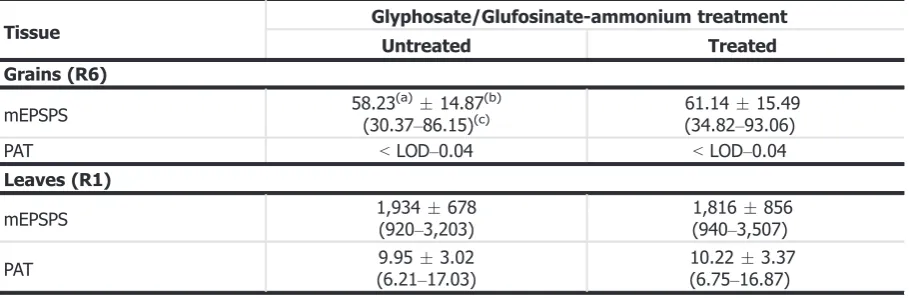
Protein levels of mEPSPS and PAT were analysed by enzyme-linked immunosorbent assay (ELISA) in material harvested from a field trial across four locations in the USA during the 2013 growing season. Samples analysed included leaves (V6, R1, R6 and senescence), root (V6, R1, R6 and senescence), whole plant (V6, R1 and R6), pollen (R1) and grains (R6 and senescence) from plants both treated and non-treated with glyphosate- and glufosinate-ammonium-containing herbicides. The mean values, standard deviations and ranges of protein expression levels in grains (R6, n = 20) and leaves (R1, n = 20) of the mEPSPS and PAT proteins are summarised in Table1.
3.2.5.
Inheritance and stability of inserted DNA
Genetic stability of maize MZHG0JG insert was assessed by Southern analysis of genomic DNA from five consecutive generations and segregation analysis of both herbicide tolerance traits in maize MZHG0JG. For the Southern analysis, the restriction enzyme/probe combinations used were sufficient to conclude that all the plants tested retain the single copy of the insert and flanking regions, which were stably inherited in subsequent generations. The results support the presence of a single insertion, segregating in a Mendelian fashion.
3.2.6.
Conclusion on molecular characterisation
[image:9.595.72.527.358.507.2]The molecular characterisation data establish that maize MZHG0JG contains a single insert consisting of one copy of the mepsps and pat expression cassettes. Bioinformatics analyses of the sequences encoding the newly expressed proteins and other ORFs present within the insert or spanning the junctions between the insert and genomic DNA indicate that the expression of an ORF showing significant similarities to toxins or allergens is highly unlikely. The stability of the inserted DNA and introduced trait is confirmed over several generations. The methodology used to quantify the levels of the mEPSPS and PAT proteins is considered adequate. The protein characterisation data
Table 1: Means, standard deviations and ranges of protein levels in grains (n = 20) and leaves (n =20) (lg/g dry weight) in maize MZHG0JG
Tissue Glyphosate/Glufosinate-ammonium treatment
Untreated Treated
Grains (R6)
mEPSPS 58.23
(a)14.87(b)
(30.37–86.15)(c)
61.14 15.49 (34.82–93.06)
PAT <LOD–0.04 <LOD–0.04
Leaves (R1)
mEPSPS 1,934(920–3,203)678 1,816(940–3,507)856
PAT (6.219.95–17.03)3.02 10.22(6.75–16.87)3.37
comparing the structural, biochemical and functional properties of plant- and microbe-derived mEPSPS and PAT proteins indicate that these proteins are equivalent, and the microbe-derived protein can be used in safety studies.
3.3.
Comparative analysis
93.3.1.
Overview of studies conducted for the comparative analysis
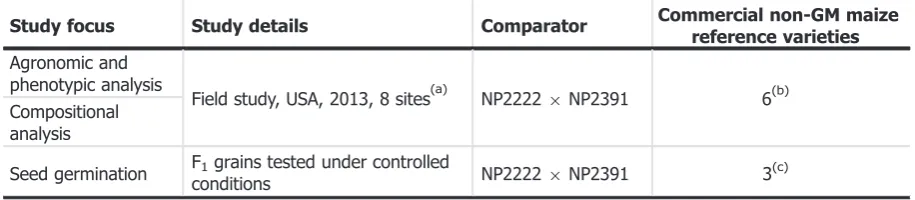
Application EFSA-GMO-DE-2016-133 presents data on agronomic/phenotypic characteristics, as well as forage and grain composition, of maize MZHG0JG derived from field trials performed at eight sites in the USA in 2013. In addition, the application contains data on characteristics of seed from maize MZHG0JG (Table 2).10
3.3.2.
Experimental
fi
eld trial design and statistical analysis
At each field trial site, the following materials were grown: maize MZHG0JG, the conventional counterpart maize NP22229 NP2391 and six commercial non-GM maize reference varieties, all treated with conventional herbicides management regimes; and maize MZHG0JG exposed to the intended glyphosate- and glufosinate-ammonium-containing herbicides, in addition to the conventional herbicides. The agronomic/phenotypic and compositional data were analysed as specified by EFSA GMO Panel (2010b, 2011a,b). This includes, for each of the two treatments of maize MZHG0JG, the application of a difference test (between the GM maize and its conventional counterpart) and an equivalence test (between the GM maize and the set of non-GM maize reference varieties).11 The results of the equivalence test are categorised into four possible outcomes (I–IV, ranging from equivalence to non-equivalence).
3.3.3.
Suitability of selected test materials
3.3.3.1. Selection of the GM maize line and comparator
Maize MZHG0JG was obtained through the transformation of the inbred line NP2222. This GM inbred line was then crossed with the inbred line NP2391 to produce the maize MZHG0JG hybrid used in the comparative analysis.
[image:10.595.69.527.249.349.2]The comparator used in the field trials is the non-GM maize hybrid NP23919 NP2222, which has the same genetic background as maize MZHG0JG (as documented by the pedigree), and is therefore considered to be the appropriate conventional counterpart.
Table 2: Main comparative analysis studies to characterise maize MZHG0JG provided in application EFSA-GMO-DE-2016-133
Study focus Study details Comparator Commercial non-GM maize
reference varieties
Agronomic and phenotypic analysis
Field study, USA, 2013, 8 sites(a) NP22229NP2391 6(b) Compositional
analysis
Seed germination F1grains tested under controlled
conditions NP22229NP2391 3
(c)
GM: genetically modified.
(a): Thefield trials were located in Richland, IA; York, NE; Seymour, IL; Bagley, IA; Larned, KS; Stewardson, IL; Wyoming, IL; and Germansville, PA. Additional sites were present in Carlyle, IL and Delavan, WI and were excluded from the statistical analysis due to unfavourable weather conditions (see additional information 24/10/2017 and 15/2/2018).
(b): The commercial non-GM maize reference varieties used in the 2013field trials are the hybrids: H-7191, H-7540, SY GENEROSO, NK LUCIUS, CISKO and SY PROVIAL.
(c): The commercial non-GM maize reference varieties used in the seed germination study are the hybrids: NK OCTET, NK LUCIUS and CISKO.
9Dossier: Part II–Section 1.3 and 7; Additional information: 24/10/2017, 15/2/2018 and 14/5/2018. 10 A study on pollen germination is also provided, and is discussed in Section3.3.5.2.
11
Maize MZHG0JG and its conventional counterpart have a comparative relative maturity (CRM) ranging between 105 and 107, and are suitable for growing in a range of environments across North America.
3.3.3.2. Selection of commercial non-GM maize reference varieties
Six commercial non-GM maize reference varieties with a CRM ranging from 93 to 115 were grown at each field trial site (see Table2). Based on the information on the relative maturity classes, the GMO Panel considers that the selected non-GM maize reference varieties are appropriate for the comparative analysis.
3.3.3.3. Seed production and quality
Seeds of maize MZHG0JG and its conventional counterpart used in the field trials (see Table 2) were produced, harvested and stored under similar conditions. The genetic purity of maize MZHG0JG seed lots was confirmed via event-specific real-time PCR analysis.
The applicant tested the germination rate of seeds harvested from maize MZHG0JG (F1 seeds), the
conventional counterpart and three non-GM maize varieties.12 Germination was tested in growth chambers under controlled conditions at six different temperature regimes. The endpoints analysed were the numbers of normal germinated seeds, abnormal germinated seeds, dead seeds, and dormant and hard seeds.
A statistically significant reduction in germination rate is observed between maize MZHG0JG and its conventional counterpart at two of the six different temperature regimes (i.e. constant 25°C regime and the alternating 20°C/30°C regime), but these differences are considered of small magnitude (less than 3%).
The test materials used in the seed germination study derive from seed lots other than the one used for the field trials. Therefore, the GMO Panel considers that the study does not allow drawing conclusions on the specific germinability of the test materials used for the comparative analysis, but only on possible unintended effects due to the presence of event MZHG0JG.
Although the applicant refers to seed dormancy when discussing the generated data on seed characteristics of maize MZHG0JG, no data on induced seed dormancy were supplied.
3.3.3.4. Conclusion on suitability
The GMO Panel is of the opinion that the maize MZHG0JG hybrid, its conventional counterpart and non-GM maize reference varieties were properly selected, and are of sufficient quality. Therefore, the test materials are considered suitable for the comparative analysis.
3.3.4.
Representativeness of the receiving environments
3.3.4.1. Selection offield trial sites
The eight sites selected for thefield trials were located in commercial maize-growing regions of North America. Soil types of the selected sites were diverse,13 corresponding to optimal and near-optimal conditions for the cultivation of maize (Sys et al., 1993). The GMO Panel considers that the selected sites reflect commercial maize-growing regions in which the test materials are likely to be grown.
3.3.4.2. Meteorological conditions
Maximum and minimum mean temperatures and sum of precipitations were provided on a monthly basis. No exceptional weather conditions were reported at any of the selected field trial sites. The GMO Panel considers that the meteorological dataset falls within the range of climatic conditions normally occurring at these sites.
3.3.4.3. Management practices
The field trials conducted, included plots containing maize MZHG0JG exposed to the intended herbicides (glyphosate and glufosinate-ammonium) in addition to the conventional herbicides, plots with the conventional counterpart treated with conventional herbicides, and plots with maize MZHG0JG treated with the same conventional herbicides. Glufosinate-ammonium-containing herbicides were applied at the V3–V4 growth stage and glyphosate-containing herbicides at the V5–V6 growth stage.
12
Test materials were collected from three sites of the 2012field trials: Story, Iowa (IALL); Warren, Illinois (ILMN); and Lehigh, Pennsylvania (PAGR).
13
At some field trial sites, planting was done later than usual, resulting in a shorter growing cycle. The additional information indicated that the shorter growing cycle was unlikely to affect the agronomic/phenotypic and compositional data. In addition, thinning was applied to achieve a more homogeneous plant density across plots.
3.3.4.4. Conclusion on representativeness
The GMO Panel concludes that the geographical locations, soil characteristics, meteorological conditions of the field trial sites and most of the management practices applied are typical for receiving environments where the tested materials could be grown.
3.3.5.
Agronomic and phenotypic analysis
3.3.5.1. Agronomic and phenotypic characteristics tested under field conditions
Ten agronomic/phenotypic endpoints14 as well as information on abiotic stressors, disease incidence and insect damage were collected from all field trial sites (see Table 2). Two endpoints (early stand count post-thinning and total lodging) were not subjected to a formal statistical analysis (Section 3.3.2) because they did not fulfil the assumptions of analysis of variance.
The test of difference and the test of equivalence were applied to eight endpoints, with the following results:
•
For maize MZHG0JG (treated with conventional herbicides), the test of difference identified statistically significant differences for early stand count (pre-thinning) and yield. Yield fell under equivalence category I, while early stand count (pre-thinning) fell under category IV;15•
For maize MZHG0JG (treated with the intended herbicides), the test of difference identified a statistically significant difference for plant height, which fell under the equivalence category II. Early stand count (pre-thinning) for the GM maize fell under equivalence category IV, but was not significantly different from the conventional counterpart.15For early stand count (pre-thinning), the lack of equivalence observed for both treatments could indicate a different establishment of maize MZHG0JG compared to non-GM maize reference varieties. The applicant thinned the plots in order to remove the differences in early stand count (pre-thinning) between maize MZHG0JG, the conventional counterpart and non-GM maize reference varieties. As no further impact on the subsequent crop development endpoints was observed, the GMO Panel considers that the comparative analysis was not affected by this possible differential establishment.
Whether the difference in early stand count (pre-thinning) that fell under category IV can lead to an environmental adverse effect is considered in Section 3.5.1.1.
3.3.5.2. Agronomic and phenotypic characteristics tested under controlled conditions
The applicant reports data on pollen grain diameter and the results of Lugol staining of pollen of maize MZHG0JG, its conventional counterpart and three commercial non-GM maize reference hybrids16 grown under field conditions in the USA.17 No significant differences between maize MZHG0JG and its
conventional counterpart are observed in pollen diameter and stain uptake the latter being used to measure pollen viability.
3.3.6.
Compositional analysis
Maize MZHG0JG grains and forage harvested from thefield trials in the USA in 2013 (Table 2) were analysed for 82 constituents (9 in forage and 73 in grain), including the key constituents recommended by OECD (2002). The statistical analysis was not applied to 15 grain constituents,18
14
Early stand count (pre-thinning), early stand count (post-thinning),final stand count, days to 50% pollen shed, days to 50% silking, total lodging, plant height, grain moisture, test weight and yield.
15
The estimated mean values for early stand count pre-thinning (plants/m2) were: 7.32 for maize MZHG0JG (treated with conventional herbicides); 7.43 for maize MZHG0JG (treated with the intended herbicides); and 7.54 for the conventional counterpart. The equivalence limits were (7.79, 8.29).
16 Non-GM maize hybrids were: NK OCTET, NK LUCIUS and CISKO. 17 Thefield trial site was located in Mebane, NC.
18
because more than half of the observations were below the limit of quantification (LOQ), and to moisture levels in grain, as the grains were dried before the analytical measurements.
The statistical analysis was applied to the remaining 66 constituents (9 in forage19and 57 in grain20); a summary of the outcome of the test of difference and the test of equivalence is presented in Table 3:
•
For maize MZHG0JG (treated with conventional herbicides), significant differences with the conventional counterpart were identified for 29 endpoints (26 in grain and 3 in forage), which all fell under equivalence category I or II. Among the 37 endpoints for which no significant difference was observed, acid detergent fibre and ferulic acid fell under equivalence category III/IV.•
For maize MZHG0JG (treated with the intended herbicides), significant differences with the conventional counterpart were identified for 34 endpoints (31 in grain and 3 in forage), which all fell under equivalence category I or II. Among the 32 endpoints for which no significant difference was observed, ferulic acid in grain fell under equivalence category IV.The GMO Panel assessed all significant differences between maize MZHG0JG and its conventional counterpart, taking into account the potential impact on plant metabolism and the natural variability observed for the set of commercial non-GM maize reference varieties. No endpoints showing significant differences between maize MZHG0JG and its conventional counterpart and falling under category III/ IV have been identified.
3.3.7.
Conclusion on comparative analysis
The GMO Panel concludes that, except for early stand count (pre-thinning), none of the differences identified in the agronomic/phenotypic characteristics tested between maize MZHG0JG and its conventional counterpart needs further assessment. The identified difference for early stand count (pre-thinning) and its potential environmental impact are discussed in Section3.5.1.1.
Table 3: Outcome of the comparative compositional analysis in grains and forage for maize MZHG0JG. The table shows the number of endpoints in each category
Test of difference(a)
Not treated(c) Treated(c)
Not different
Significantly different
Not different
Significantly different
Test of equivalence(b)
Category I/II 35 29(d) 31 34(d)
Category III/IV 2(e) – 1(e) –
Total endpoints 66 66
(a): Comparison between maize MZHG0JG and its conventional counterpart.
(b): Four different outcomes: Category I (indicating full equivalence to non-GM maize reference varieties); category II (equivalence is more likely than non-equivalence); category III (non-equivalence is more likely than equivalence); and category IV (indicating non-equivalence).
(c): Not treated/treated with the intended glyphosate- and glufosinate-ammonium-containing herbicides.
(d): Endpoints with significant differences between maize MZHG0JG and its conventional counterpart falling under equivalence category I–II (treated and non-treated).
For grain, both treated and untreated: carbohydrates, NDF, copper, iron,b-carotene, pyridoxine,a-tocopherol, alanine, arginine, aspartic acid, glutamic acid, histidine, isoleucine, leucine, phenylalanine, proline, serine, threonine, tryptophan, valine, heptadecanoic acid (17:0) andp-coumaric acid; only treated: protein, thiamine, cystine, lysine, methionine, palmitic acid (16:0), linolenic acid (18:3), behenic acid (22:0) and inositol; only untreated: potassium, niacin, folic acid and phytic acid. For forage, both treated and untreated: protein and carbohydrates; only treated: calcium; only untreated: phosphorus. (e): Endpoints in grain with no significant differences between maize MZHG0JG and its conventional counterpart and falling
under equivalence category III–IV: ferulic acid (both treated and untreated) and ADF (only untreated).
19
Moisture, protein, fat, ash, carbohydrates, acid detergentfibre (ADF), neutral detergentfibre (NDF), calcium and phosphorus. 20 Proximates andfibre content (protein, fat, ash, carbohydrates, acid detergentfibre (ADF), neutral detergentfibre (NDF) and
The GMO Panel concludes that none of the compositional changes identified in maize MZHG0JG with respect to its conventional counterpart and the commercial non-GM maize reference varieties needs further assessment regarding food/feed safety.
3.4.
Food/feed safety assessment
213.4.1.
Effects of processing
Based on the outcome of the comparative assessment (Section3.3.7), processing of maize MZHG0JG into food/feed products is not expected to result in products different from those of commercial non-GM maize varieties.
3.4.2.
In
fl
uence of temperature and pH on newly expressed proteins
Effects of temperature and pH on mEPSPS and PAT proteins have been previously evaluated by the GMO Panel in the context of other applications (e.g. EFSA GMO Panel, 2007, 2009). Additional studies, published in the literature or performed by the applicant, addressing effects of temperature and pH on these proteins were provided in the context of this application. The outcome of these studies is consistent with previous analogous studies assessed by the GMO Panel.
3.4.3.
Toxicology
3.4.3.1. Testing of the newly expressed proteins
The two proteins newly expressed in maize MZHG0JG (mEPSPS and PAT) have been extensively characterised (Section 3.2.3).
The mEPSPS and PAT proteins were previously assessed by the GMO Panel in the context of other applications (i.e. EFSA GMO Panel, 2007, 2009) and no safety concerns for humans and animals were identified. Updated bioinformatics analyses reveal no similarities of the mEPSPS and PAT proteins with known toxins. The GMO Panel is not aware of any new information that would change the conclusion that the mEPSPS and PAT proteins do not raise safety concerns.
Based on scientific knowledge, no synergistic or antagonistic interactions raising food/feed safety concerns exist between the mEPSPS and PAT proteins.
Evidence provided by the applicant confirms that E. coli-produced mEPSPS and PAT proteins from bacterial recombinant systems are equivalent to the plant-produced ones.
a) In vitro degradation studies
Data onin vitroprotein degradation of the mEPSPS and PAT proteins were previously evaluated by the GMO Panel (i.e. EFSA GMO Panel, 2007, 2009). Additional data gathered by the applicant and relevant publications give no indications of safety concerns, confirming the outcome of former studies.
b) Acute oral toxicity testing
A bacterial mEPSPS and PAT protein was administrated at the dose of 2000 mg/kg body weight (bw) to male and female Alpk:APfCD-1 mice and Crl:CD-1 mice, respectively. No adverse effects related to the mEPSPS and PAT proteins are observed.
3.4.3.2. Testing of new constituents other than the newly expressed proteins
No new constituents other than newly expressed proteins have been identified in seed and forage from maize MZHG0JG. Therefore, no further food/feed safety assessment of components other than the newly expressed proteins is required.
3.4.3.3. Information on altered levels of food/feed constituents
No altered levels of food/feed constituents have been identified in seed and forage from maize MZHG0JG. Therefore, no further food/feed safety assessment of components other than the newly expressed proteins is required.
3.4.3.4. Testing of the whole genetically modified food/feed
Based on the outcome of the studies considered in the molecular characterisation and comparative analysis, no substantial modifications in the composition of maize MZHG0JG, and no indication of possible unintended effects relevant to food/feed safety have been identified. Therefore, animal feeding studies with food/feed derived from maize MZHG0JG are not considered necessary by the GMO Panel (EFSA GMO Panel, 2011a). In accordance with Regulation (EU) No 503/2013, the applicant provided a 90-day oral repeated-dose toxicity study on whole food/feed from maize MZHG0JG in rats. In addition, a 42-day broiler study with animals fed diets containing maize MZHG0JG material was provided. These studies are evaluated by the GMO Panel.
90-day feeding study in rat
Pair-housed Han Wistar rats (RccHan:WIST) (10 per sex per group) were allocated to four groups using a randomised complete block design withfive replications per sex.
Groups were fed test or control diets containing 10% or 41.5% (w/w) ground grain from maize MZHG0JG plants treated with the intended herbicides (test item) or from the conventional counterpart (control material), respectively.
The study was adapted from OECD (1998), aligned with EFSA Scientific Committee (2011), and complies with the principles of good laboratory practice (GLP) with some deviations not impacting the study results and interpretation (i.e. test item stability, homogeneity and concentration), which are detailed below.
Event-specific PCR analysis confirms the presence of the event MZHG0JG in the GM grains and GM diets and excludes the presence of the event in the respective controls. ELISA analyses also confirm the presence of event MZHG0JG only in the test diets. Both test item and control materials were analysed for nutrients, mycotoxins and pesticides. Balanced diets were based on the CT1 diet prepared by Special Diet Services Limited, with ground grain inclusion rate of 10% or 41.5% (w/w).
In accordance to product expiration standards declared by the diet manufacturer, the constituents of the basal diets are considered stable for the duration of the treatment. However, the stability of the test and control materials was not verified in this study. Diet preparation procedures and regular evaluations of the mixing methods guarantee the homogeneity and the proper concentration of the test or control substances in them.
Feed and water were providedad libitum. Animals were checked twice daily for mortality and clinical signs. Detailed physical examinations were conducted on all animals pretreatment and then weekly during the dosing period. Individual body weights were recorded pretreatment and then weekly during the dosing period and on the first day of the scheduled necropsy. Feed consumption was determined once during pretreatment and then weekly during the study. Ophthalmoscopy was recorded on all animals pretreatment and at the end of the study (week 13). Detailed function observations (DFO) were recorded on all animals at the end of the study (week 12). Clinical pathology (i.e. haematology, clinical chemistry and coagulation, urine analyses) and necropsy examination with organs weighing were conducted at the end of the treatment period on all animals. The animals were not fasted prior to blood collection. Organs and tissues from all animals were collected and those from animals that consumed the 41.5% incorporation level test and control diets were subjected to a detailed histopathological examination. Upon completion of the histopathologic assessment of all tissues, histopathology was reviewed by a peer review pathologist.
In the first analysis provided by the applicant, test and control diets were compared by pooling data from diets at 10% inclusion rate (10% diets) and at 41.5% inclusion rate (41.5% diets). However, the GMO Panel noted that the 10% and 41.5% diets had a different composition in terms of ingredients (for both test and control), and therefore considers it inappropriate to pool data from two qualitatively different diets groups in the analysis. For this reason, the applicant was requested to analyse the data for the 10% and 41.5% diets separately. The GMO Panel bases its risk assessment on the results of the latter analysis.
separately for males and females. The two-way ANOVA model is also used to analyse sex-specific organ weights. Normality, homogeneity of variance and the presence of outliers were checked in a preliminary analysis22 and a log transformation was applied in case of heterogeneity of variance. Outliers were identified for eight parameters: for each of those, the ANOVA was run with and without outlier to check if there were changes in the outcome of the tests.23
Sex-by-treatment interactions were observed for several endpoints. For these, gender specific analyses were conducted, which revealed no statistically significant differences.
All animals survived the treatment period. No test diet-related clinical signs and ophthalmoscopic findings are observed.
No statistically significant differences in mean body weights and feed consumption are observed between animals fed the test and control 10%-diets or the test and control 41.5%-diets.
No statistically significant differences in DFO parameters are observed between animals fed the test and control 10%-diets or the test and control 41.5%-diets, with the exception of basic and fine motor activity tests between animals (across sex analysis, i.e. males and females analysed together) fed the test and control 41.5%-diets. These differences are the only changes observed among all the DFO parameters examined, occurring only at a single measurement time interval (the interval between 36 and 40 min) of a total of 13 time intervals analysed, without impacting on the overall score of the test; therefore these changes are not considered to be test substance related.
No statistically significant differences in haematological and coagulation parameters are observed between animals fed the test and control 10%-diets or the test and control 41.5%-diets, with the exception of mean red blood cell count (RBC) and haematocrit (Hct) between females fed the test and control 10%-diets and mean cell haemoglobin concentration (MCHC) between animals (across sex analysis) fed the test and control 10%-diets. The magnitude of the lower RBC count (~5%) and Hct concentration (~ 4%) and the higher MCHC (~ 1%) in animals fed the test diet compared to control is minimal and not considered to be toxicologically relevant.
Statistically significant decreases are observed in mean globulin values (~ 6%) in females fed the test 10%-diets and in mean alkaline phosphatase (ALP) activity (~13%) in animals (across sex analysis) fed the test 10%-diets, compared the respective controls. The difference in mean globulin values are minimal and not associated with other changes in related endpoints (e.g. A/G ratio and total protein concentration) and therefore not considered to be toxicologically relevant. The isolated decrease in ALP activities in the absence of other clinical or pathological signs is not considered to be toxicologically relevant.
Statistically significant decreases in mean lactate dehydrogenases (LDH) activity (~30%) in males fed the test 41.5%-diets, compared controls are observed. The isolated decrease in LDH values in the absence of other clinical or pathological signs is not considered to be toxicologically relevant.
Statistically significant differences are observed for absolute and relative uterus weights (~40%) in females fed the test and control 41.5%-diets and for absolute brain (~ 2% adjusted and non-adjusted) and thyroid weights (~6% unadjusted only) between animals (across sex analysis) fed the test and control 10%-diets. The magnitude of the differences observed in brain and thyroid weights is minimal, the uterus weights in animals fed the control 41.5%-diets are lower than weights in other groups and no test substance-related histological changes are noted in all three organs. Therefore, the GMO Panel does not consider these changes as adverse effects.
No treatment-related gross lesions in all groups (10%- and 41.5%-diet groups) or microscopic findings in the 41.5%-diet groups are noted in organs or tissues. Sporadic histopathological findings are considered compatible with the spontaneous background pathology of rats of this strain and age.
The GMO Panel concludes that no maize MZHG0JG-related adverse effects are observed in this study.
The GMO Panel notes that the applicant only tested one dose level with the full set of OECD parameters. However, the dose tested is close to the highest possible without inducing nutritional imbalance according to the current knowledge, and in accordance with the limit test dose as described in OECD (1998). Therefore, this is not considered to affect the above conclusions.
22 Normality was checked by visual inspection of residual plots. Homogeneity of variance was checked both visually and with
Levene’s test. 23
42-day broiler study
A total of 600 (300 per sex) 1-day-old chicken broilers (Ross 708) were randomly allocated tofive dietary groups with 120 chicks per treatment (10 pens per treatment, half for each sex, 12 birds per pen) and fed-balanced diets24 containing up to 59% maize MZHG0JG grain, from maize sprayed with the intended herbicides (test item), or from the conventional counterpart (control diet) or one of the three commercial non-GM maize reference varieties selected (reference diets). Diets (as crumbled pellets or pellets) and water were offeredad libitum.
No statistically significant difference between the group fed test and control diets are observed in mortality (about 4%). Feed consumption and body weight in the test group are consistently higher throughout the study compared to the control group, showing statistical significance at some time points. However, these findings are not associated to statistically significant differences in the feed conversion ratio and thus not considered adverse. Furthermore, no statistically significant differences are observed in carcass and absolute/relative tissue weight between the test and control groups, with the exception of a lower relative mean breast weight in the test group.
The GMO Panel concludes that the administration of diets containing up to 59% maize MZHG0JG grain to broilers does not cause adverse effects. Moreover, the measured performance endpoints are similar between groups of animals fed-balanced diets containing maize MZHG0JG and the conventional counterpart.
3.4.4.
Allergenicity
The strategy to assess the potential risk of allergenicity focuses on the source of the recombinant protein, on the potential of the newly expressed protein to induce sensitisation or to elicit allergic reactions in already sensitised individuals, and on whether the genetic transformation may have altered the allergenic properties of the modified plant.
3.4.4.1. Assessment of allergenicity of the newly expressed proteins
A weight-of-evidence approach is followed, taking into account all of the information obtained on the newly expressed protein, as no single piece of information or experimental method yields sufficient evidence to predict allergenicity (Codex Alimentarius, 2009; EFSA GMO Panel, 2010c, 2011a).
The mepsps and the pat genes originate from Z. mays and S. viridochromogenes, respectively, which are not considered to be common allergenic sources.
Updated bioinformatic analyses of the amino acid sequences of the mEPSPS and PAT proteins, using the criterion of 35% identity in a sliding window of 80 amino acids, reveal no significant similarities to known allergens.
The studies on resistance to degradation of the mEPSPS and PAT proteins by pepsin are described in Section 3.4.3.1. No indications pointing to safety concerns are identified. The GMO Panel has previously evaluated the safety of the mEPSPS and PAT proteins in the context of other applications and no concerns on allergenicity were identified (i.e. EFSA GMO Panel, 2007, 2009). The GMO Panel is not aware of any new information that would change this conclusion.
There is no information available on the structure or function of the newly expressed mEPSPS and PAT proteins that would suggest an adjuvant effect of the individual proteins or their simultaneous presence in maize MZHG0JG, resulting in or enhancing an eventual specific immunoglobulin E response to a bystander protein.
In the context of the present application, the GMO Panel considers that there are no indications that the newly expressed mEPSPS and PAT proteins in maize MZHG0JG may be allergenic.
3.4.4.2. Assessment of allergenicity of the whole GM plant
The GMO Panel regularly reviews the available publications on food allergy to maize. However, to date, maize is not considered to be a common allergenic food (OECD, 2002).25 Therefore, the GMO Panel does not request experimental data to analyse the allergen repertoire of GM maize.
24 Starter (0–7 days), grower (8–21 days) andfinisher (22–42 days) diets.
25 Regulation (EU) No 1169/2011 of the European Parliament and of the Council of 25 October 2011 on the provision of food
The applicant provided spontaneous information where lipid transfer protein (LTP, a known allergen in maize) levels in maize MZHG0JG were compared to those in the conventional counterpart and commercial non-GM maize reference varieties. No changes in LTP levels raising concern are identified by the GMO Panel.
In the context of this application and considering the data from the molecular characterisation, the compositional analysis and the assessment of the newly expressed proteins, the GMO Panel finds no reason of concern regarding the allergenicity of food/feed derived from maize MZHG0JG with respect to that derived from its conventional counterpart.
3.4.5.
Dietary intake assessment of endogenous and new constituents
3.4.5.1. Nutritional assessment of endogenous constituents
The intended traits of maize MZHG0JG are herbicide tolerance, with no intention to alter nutritional parameters. Comparison of the seed and forage composition of maize MZHG0JG with the conventional counterpart and the commercial non-GM maize reference varieties does not identify differences that would require a nutritional assessment as regards food/feed (see Section 3.3.6). From these data, the GMO Panel concludes that the nutritional impact of food/feed derived from maize MZHG0JG is expected to be similar to that from the conventional counterpart and commercial non-GM maize reference varieties.
3.4.5.2. Dietary exposure to new constituents
In line with Regulation (EU) No 503/2013, the applicant provided dietary exposure estimates to mEPSPS and PAT proteins which are newly expressed present in maize MZHG0JG.
Human dietary exposure
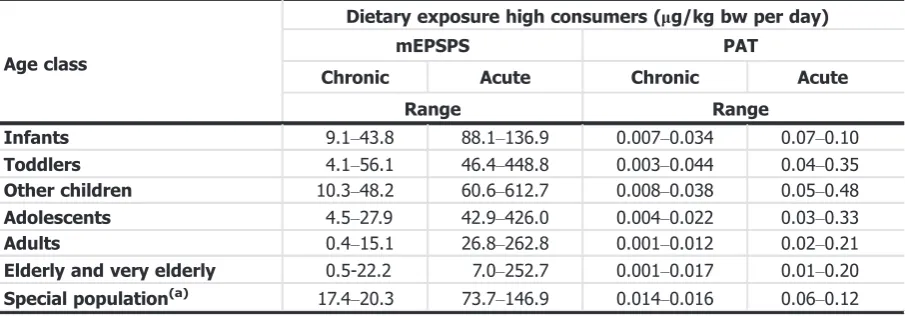
Chronic and acute dietary exposure estimates for mEPSPS and PAT proteins newly expressed in maize MZHG0JG were provided by the applicant. Dietary exposure is estimated across different European countries on different population groups: young population group (infants, toddlers, other children), adult population group (adolescents, adults, elderly and very elderly) and special population groups (pregnant and lactating women) (see below Table 4).
For the purpose of estimating dietary exposure, the mean protein expression levels in mature grains (from senescent plants) treated with the intended herbicides from four field trial locations in the USA were used by the applicant.25 A mean value of 31.88lg/g (fresh weight, n =20) is reported for mEPSPS; all samples for the PAT protein are below the limit of detection (LOD) and this value (0.025 lg/g fresh weight) is used as worst-case scenario. Since the concentrations of the mEPSPS and PAT proteins were not analysed in processed foods, their concentration in these commodities is estimated using the ratio between the total protein contents of processed foods and maize grains. The assumption is that no losses of the newly expressed proteins occur during processing.
Regarding consumption data, a conservative scenario with 100% replacement of conventional maize is considered, as no specific data are available on the consumption of commodities containing maize MZHG0JG. Maize oil is excluded from the assessment because proteins are not expected to be present in oil. Consumption data of the relevant commodities (e.g. corn bread, cornflakes, corn milling products, cornmeal porridge, corn grain, corn snacks, sweet corn, popcorn, etc.) were retrieved by the applicant from the available summary statistics of the EFSA Comprehensive European Food Consumption Database (accessed in April 2018).26 EFSA’s consumption database contains information on food consumption data at individual level from the most recent national dietary surveys in different EU Member States (EFSA, 2011; Huybrechts et al., 2011; Merten et al., 2011), and is regularly updated with new consumption data collected in the context of the EU Menu project.27
Acute dietary exposure in high consumers within each dietary survey and age class is estimated by summing the exposure derived from the 95th percentile consumption for the dominant food commodity28 among consumers only and those exposures derived from the mean consumption of the remaining food categories in the total population (EFSA, 2015). Among the young population, the highest acute exposure is estimated in other children (3–10 years old) following the consumption of popcorn (612.7 lg/kg bw per day and 0.48 lg/kg bw per day for mEPSPS and PAT, respectively). In
26
https://www.efsa.europa.eu/en/applications/gmo/tools 27 https://www.efsa.europa.eu/en/efsajournal/pub/3944 28
adults (18–65 years old), the consumption of maize-popped cereals leads to the highest acute exposure estimates, 262.8 lg/kg bw per day and 0.21lg/kg bw per day for mEPSPS and PAT, respectively.
Chronic dietary exposure in high consumers is estimated using only dietary surveys representing long-term consumption (at least with 2 days). Among the young population group, the highest chronic exposure is estimated in toddlers (1–3 years old) with corn chips as the main average contributor (56.1 lg/kg bw per day and 0.044 lg/kg bw per day for mEPSPS and PAT, respectively). In the adult population group, the highest chronic exposure is estimated for elderly and very elderly (> 65 years) with 22.1lg/kg bw per day and 0.017lg/kg bw per day for mEPSPS and PAT, respectively, with cornmeal porridge as the main average contributor.
Animal dietary exposure
Daily dietary exposure (DDE) to the mEPSPS and PAT proteins newly expressed in maize MZHG0JG was provided by the applicant across different livestock animal species (e.g. poultry, swine, cattle and sheep) based on EU estimates issued by OECD (2013) for animal body weight, daily feed intake and the inclusion rates (percentage) of maize grains and maize grain by-products (i.e. milled by products, hominy meal, gluten feed and gluten meal) in animal diets.
A conservative scenario with 100% replacement of the conventional maize (maize grains, milled by products, hominy meal, gluten feed and gluten meal) is considered.
The levels of mEPSPS (42.79lg/g fresh weight) and PAT (LOD= 0.025lg/g fresh weight) proteins in grains from maize MZHG0JG25 are used as occurrence data and to estimate levels (as fed) of these proteins in maize grain by-products,29 based on the protein content in feed fractions relative to maize grain and assuming that no protein is lost during the processing. The mEPSPS and PAT levels are in line with mean levels (n = 20) reported for grains (R6) treated with the intended herbicides (see Section 3.2.4). Fresh to dry weight conversion for maize grains and by-products is based on the dry matter content as reported in OECD (2013) (88% for grain and hominy, 85% for milled by-products and 40% for gluten feed and gluten meal); dry matter content (90%) for gluten meal is also considered.
Estimated DDE to mEPSPS was calculated by the applicant as the sum of the estimated intake of grain and gluten meal (by-product containing the highest amount of mEPSPS and PAT), ranging from 2.36 mg/kg in breeding swine to 9.32 mg/kg in lambs using gluten meal 40% dry matter (DM) and 1.49 mg/kg in breeding swine to 4.49 mg/kg in lambs using gluten meal 90% DM.
[image:19.595.72.525.217.375.2]Estimated DDE to PAT was calculated by the applicant as the sum of the estimated intake of grain and gluten meal (by-product containing the highest amount of mEPSPS and PAT), ranging from 0.0013 mg/kg in breeding swine to 0.0054 mg/kg in lambs using gluten meal 40% DM and 0.00087 mg/kg in breeding swine to 0.00262 mg/kg in lambs using gluten meal 90% DM.
Table 4: Dietary exposure (chronic and acute) to mEPSPS and PAT proteins in high consumers (lg/ kg bw per day) estimated across European dietary surveys and different age classes
Age class
Dietary exposure high consumers (lg/kg bw per day)
mEPSPS PAT
Chronic Acute Chronic Acute
Range Range
Infants 9.1–43.8 88.1–136.9 0.007–0.034 0.07–0.10
Toddlers 4.1–56.1 46.4–448.8 0.003–0.044 0.04–0.35
Other children 10.3–48.2 60.6–612.7 0.008–0.038 0.05–0.48
Adolescents 4.5–27.9 42.9–426.0 0.004–0.022 0.03–0.33
Adults 0.4–15.1 26.8–262.8 0.001–0.012 0.02–0.21
Elderly and very elderly 0.5-22.2 7.0–252.7 0.001–0.017 0.01–0.20
Special population(a) 17.4–20.3 73.7–146.9 0.014–0.016 0.06–0.12
bw: body weight.
(a): Pregnant women and lactating women.
29 Calculated to be 1.06, 0.9, 2.13 and 6.38-folds than that in grain in hominy, milled by-products, gluten feed and gluten meal,
The GMO Panel estimates DDE to the mEPSPS and PAT proteins across different livestock animal species (beef and dairy cows, lamb and breeding swine) based on default values provided for the EU by OECD (2013) for animal body weight, daily feed intake and inclusion rates (percentages) of field maize forage/silage in animal diets (information that was not provided by the applicant). A conservative scenario with 100% replacement of conventional maize (forage) by the GM maize is considered. Mean values of 298lg/g and 0.41lg/g25 (dry weight, n =20) in herbicide-treated maize whole plant (including the root ball, R6) are used as occurrence data for mEPSPS and PAT respectively. LOQ = 0.063lg/g (dry weight) and LOD= 0.025lg/g (dry weight) were considered in the calculation of the PAT mean values as a worst-case scenario in whole plant (R6). Estimated DDEs to the mEPSPS protein, based on the consumption of GM maize forage, is 5.7 mg/kg bw in beef, 6.9 mg/kg bw in dairy cow, 3.8 mg/kg bw in lamb and 1.4 mg/kg bw in breeding swine.
Estimated DDEs to the PAT protein, based on the consumption of GM maize forage, is 0.008 mg/kg bw in beef, 0.009 mg/kg bw in dairy cow, 0.005 mg/kg bw in lamb and 0.001 mg/kg bw in breeding swine.
3.4.6.
Post-market monitoring of GM food/feed
The GMO Panel concludes that maize MZHG0JG is nutritionally equivalent to and as safe as the conventional counterpart and commercial non-GM maize reference varieties tested. No post-market monitoring (EFSA GMO Panel, 2011a) of food/feed is considered necessary.
3.4.7.
Conclusion on the food/feed safety assessment
The GMO Panel does not identify safety concerns regarding the toxicity and allergenicity of the mEPSPS and PAT proteins as expressed in maize MZHG0JG, and finds no evidence that the genetic modification would change the overall allergenicity of maize MZHG0JG. The nutritional impact of food/ feed derived from maize MZHG0JG is expected to be the same as that of food/feed derived from the conventional counterpart and commercial non-GM maize reference varieties. The GMO Panel concludes that maize MZHG0JG is nutritionally equivalent to and as safe as the conventional counterpart and non-GM maize reference varieties tested, and no post-market monitoring of food/feed is considered necessary.
3.5.
Environmental risk assessment and monitoring plan
303.5.1.
Environmental risk assessment
Considering the scope of the application EFSA-GMO-DE-2016-133, which excludes cultivation, the environmental risk assessment (ERA) of maize MZHG0JG mainly takes into account: (1) the exposure of microorganisms to recombinant DNA in the gastrointestinal tract of animals fed GM material and of microorganisms present in environments exposed to faecal material of these animals (manure and faeces); and (2) the accidental release into the environment of viable maize MZHG0JG grains during transportation and/or processing (EFSA GMO Panel, 2010a).
3.5.1.1. Persistence and invasiveness of the GM plant
Maize is highly domesticated, not winter hardy in colder regions of Europe, and generally unable to survive in the environment without appropriate management. Occasional feral GM maize plants may occur outside cultivation areas in the EU (e.g. Pascher, 2016), but survival is limited mainly by a combination of low competitiveness, absence of a dormancy phase and susceptibility to plant pathogens, herbivores and cold climate conditions (OECD, 2003). Field observations indicate that maize grains may survive and overwinter in some EU regions, resulting in volunteers in subsequent crops (e.g. Gruber et al., 2008; Palaudelmas et al., 2009; Pascher, 2016). However, maize volunteers have been shown to grow weakly andflower asynchronously with the maize crop (Palaudelmas et al., 2009). Thus, the establishment and survival of feral and volunteer maize in the EU is currently limited and transient.
It is unlikely that the intended traits of maize MZHG0JG and the observed reduction in early stand count (see Section 3.3.4) will provide a selective advantage to maize plants, except when they are exposed to glyphosate- and/or glufosinate-ammonium-containing herbicides. However, this fitness advantage will not allow maize MZHG0JG to overcome other biological and abiotic factors (described above) limiting plant’s persistence and invasiveness. Therefore, the presence of the intended traits and
30