White Rose Research Online URL for this paper:
http://eprints.whiterose.ac.uk/120097/
Version: Accepted Version
Article:
Dykeman, Eric Charles (2017) A model for viral assembly around an explicit RNA
sequence generates an Implicit fitness landscape. Biophysical Journal. pp. 506-516. ISSN
0006-3495
https://doi.org/10.1016/j.bpj.2017.06.037
[email protected] https://eprints.whiterose.ac.uk/ Reuse
This article is distributed under the terms of the Creative Commons Attribution-NonCommercial-NoDerivs (CC BY-NC-ND) licence. This licence only allows you to download this work and share it with others as long as you credit the authors, but you can’t change the article in any way or use it commercially. More
information and the full terms of the licence here: https://creativecommons.org/licenses/
Takedown
If you consider content in White Rose Research Online to be in breach of UK law, please notify us by
sequence with applications to viral evolution and
fitness landscapes
Eric Charles Dykeman1
21 June 2017
1Corresponding author. Address: Department of Mathematics, University of
Previously, a stochastic model of ssRNA virus assembly was created to
model the cooperative effects between capsid proteins and genomic RNA
that would occur in a packaging signal-mediated assembly process. In such
a assembly scenario, multiple secondary structural elements from within the
RNA, termed packaging signals (PS), contact coat proteins and facilitate
efficient capsid assembly. In this work, the assembly model is extended to
incorporate explicit nucleotide sequence information as well as simple
as-pects of RNA folding which would be occurring during the RNA/capsid
co-assembly process. Applying this new paradigm to a dodecahedral viral
capsid, a computer derived nucleotide sequence is evolved de novo that is
optimal for packaging the RNA into capsids, while also containing
capac-ity for coding for a viral protein. Analysis of the effects of mutations on
the ability of the RNA sequence to successfully package into a viral capsid
reveals a complex fitness landscape where the majority of mutations are
neu-tral with respect to packaging efficiency with a small number of mutations
resulting in a near complete loss of RNA packaging. Moreover, the model
shows how attempts to ablate PSs in the viral RNA sequence may result in
redundant PSs already present in the genome fulfilling their packaging role.
This explains why recent experiments that attempt to ablate putative PSs
may not see an effect on packaging. This modelling framework presents an
parameter important for viral biology, i.e. viral capsid yield, with potential
applications to theoretical models of viral evolution.
Key words: RNA; Virus; Viral Assembly; Viral Evolution; Fitness
Introduction
Self-assembly of proteins into large biomolecular structures is ubiquitous
throughout protein biochemistry. One well known and well studied example
is the self-assembly of viral capsids, the protein containers which surround
and protect a virus’ genetic material. Although viruses employ several
differ-ent mechanisms of capsid assembly and genome packaging (1–3), this paper
focuses on the co-assembly mechanism that is present in plus sense
single-stranded RNA (ssRNA) viruses, one of the largest class of viruses infecting
a variety of hosts including humans, plants and animals. In the co-assembly
process, nucleic acid and coat proteins interact to spontaneously assemble
the capsid shell around the viral genome. Recent experimental and
theoret-ical modeling work has demonstrated for a number of ssRNA viruses that
specific interactions between sites within the nucleic acid (termed
packag-ing signals - PSs) and coat proteins, facilitate the co-assembly process and
are important for efficient assembly of the virion (4–6). Additional
experi-ments with the plant satellite tobacco necrosis virus (7) have also shown that
fragments of the wild-type viral genomic RNA sequence are better able to
promote assembly than mutated versions, suggesting that the overall RNA
sequence is important for fitness contributions related to assembly and
pack-aging. Although theoretical descriptions of the co-assembly process exist for
ssRNA viruses (8–12), none of these models are able to take the specific
se-quence effects on the assembly process into account, or by implication, the
effects that sequence mutations would have on the packaging capacity of a
The observed link between a viral RNA sequence and its capacity to
package presents an opportunity to construct an implicit
genotype-phenotype-fitness landscape for a ssRNA virus, where genotype-phenotype-fitness is measured by the yield of
correctly assembled virus particles. Single-stranded RNA viruses are under
a unique set of constraints to ensure that their genomes have high
assem-bly and packaging fitness due to the fact that their genomes must perform
multiple functions in the host cell. First, they must act as messenger RNAs
(mRNA) by providing a template for host ribosomes to translate viral
pro-teins. Moreover, since they do not enter a DNA stage in which DNA is
integrated into the cellular genome, they must also regulate the synthesis of
the different viral proteins to ensure that each is present at the concentration
required for optimal replication. In addition, they must also be packaged
into their protective protein shells, but only late in the infection cycle, since
premature packaging of the viral RNA would result in low titres of progeny
virus due to a lack of mRNA templates. Finally, the presence of other
cellu-lar mRNA competitors presents the virus with an additional challenge: how
to distinguish viral RNA from host RNA.
The temporal coordination of viral protein translation and RNA
pack-aging events that occurin vivo is critical for the efficient assembly of viral
progeny and is believed to be controlled in part by RNA dynamics.
Specif-ically, as the RNA genome folds into different secondary structures, it will
present different structural elements with competing regulatory roles. Such
regulatory elements have been identified in bacteriophage MS2 where the
translational repressor (TR) serves as both a regulatory element to shut off
A further example is in the plant Turnip crinkle Virus (TCV), where RNA
structures at the 3’ end control minus strand synthesis (14). Packaging
sig-nals themselves also serve a regulatory role in facilitating efficient packaging
of RNA into viral capsids. The ability of these PSs (or any regulatory
ele-ments in general) to be presented in the RNA genome will potentially impact
on viral processes such as translation of viral proteins and/or packaging of
viral genomes into capsids.
In order to develop a modelling paradigm which can explore the role of
RNA dynamics in virus capsid assembly, as well as more broadly the
regula-tion of the overall viral life-cycle, this paper focuses on the development of a
new stochastic framework which incorporates RNA dynamics into models for
packaging signal-mediated virus assembly. The resulting model fully
incor-porates the primary sequence of the RNA (i.e. an RNA sequence of A,U,G,
and Cs) and uses RNA folding rules based on the BARRIERS method (15)
and the Turner rules (16) to generate simplified dynamics. The model is then
applied to a dodecamer capsid model where the capsid shell is built from 12
pentameric units, similar to capsid assembly in picornaviruses, to generate
a small RNA sequence which has enhanced assembly efficiency when
com-pared with other random RNA sequences. An interesting consequence of
this model is that, by coupling RNA sequence to assembly yield, an implicit
fitness landscape can be constructed where single or multiple mutations to
a sequence and their effects on fitness can be assessed. This presents the
opportunity of modeling recent experimental observations of PS mutations
and their effects on assembly (4, 7). The need for biologically realistic fitness
by Stadler (17) and this model presents a potential framework in which viral
evolution could be explored using a more realistic fitness function. Some of
the features of the implicit fitness landscape arising from the model, such as
large regions of neutrality and examples of epistasis, are discussed.
Theory and Methods
A number of different theoretical modelling techniques exist for the
predic-tion of viral capsid assembly kinetics. These include stochastic methods
such as the Gillepsie method (8, 12), theoretical models based on energy
minimization(11, 18), ODE based methods (19), and Brownian dynamics
models (10). Several of these methods have been adapted to study the
spe-cific problem of RNA-coassembly that occurs in the class of ssRNA viruses
(8, 10, 12). However, when incorporating the explicit RNA sequence into
the model along with features of RNA dynamics such as hairpin folding,
is-sues of computational complexity must be considered. Any assembly model
which includes the RNA and its sequence specific effects, as well as
muta-tional effects, on capsid assembly must be able to compute RNA folding
kinetics fast enough such that multiple assembly simulations can be
com-pleted in minutes to hours of computational time. Thus, more advanced
Brownian dynamics models will be likely too computationally expensive to
accomplish this. Instead, the Gillespie method developed for the assembly
of viral capsids around a static RNA genome (8) is adapted for simulating
RNA hairpin folding using a variant of the Gillespie algorithm, i.e. the next
it will allow for the construction of a binary queuing system with a
compu-tational cost per reaction fired of O(Log2(N)) in contrast to the O(N) cost
in the traditional Gillespie algorithm, allowing for effects such as mutations
to the RNA sequence and its impact on assembly to be explored in less
computational time.
RNA Folding Kinetics Model for ssRNA Virus Assembly
The RNA kinetics model that is used in combination with the assembly
model for ssRNA viruses is based on the BARRIERS method (15). The
BARRIERS method uses the Wuchty sub-optimal RNA folding algorithm
(21) to identify a set of RNA folds that are within a specified energy
differ-ence of the minimum free energy fold. Given this set of RNA folds
represent-ing a subspace of the complete RNA foldrepresent-ing space, BARRIERS identifies a
set of local minima and saddle points. Once all local minima and saddles
have been identified, BARRIERS constructs transitions between pairs of
lo-cal minima that connect through a saddle point and lo-calculates the transition
rate based on the height of the energy barrier between the two local
min-ima. The BARRIERS method can then perform RNA kinetics using the set
of local minima as the different RNA folding states and a stochastic based
method (such as Gillespie (22)), or a numerical method for solving the set
of coupled differential equations that results, can be used to simulate the
kinetics of RNA folding.
The general BARRIERS method will produce RNA structures which
have long-distance interactions, hairpins, and multi-loops. However, for a
virus (5), and Human Parecho virus (4), experiments have shown that the
RNA structures which are involved in the binding to coat proteins are short
simple hairpins (of about 20 nt) with specific sequence or structural features.
Moreover, many ssRNA viruses, such as those from the picornavirus family,
are also believed to assemble from the 5’ ends of RNAs during synthesis
of the plus strand. This suggests that local hairpin structures are likely
to be more important than long range interactions for some ssRNA viruses
such as those from the picornavirus family. Given this information, the
RNA folding model for virus assembly is simplified to only include local
hairpins spanning a user-specified number of nucleotides which will allow
for a substantial increase in the computational efficiency of the RNA folding
part of the assembly algorithm. This results in the RNA sequence being
modelled as a linear chain of RNA hairpins with different sequence, bulge,
and apical loop configurations which can fold and melt at different rates
depending on their base-pairing and stacking interactions. To simplify the
transitions between RNA states, individual hairpins can either form or melt,
but cannot transition to another hairpin state (c.f. Figure 1c). Finally, based
on the sequence and structure of the RNA hairpin, the on and off binding
rates to coat protein can then be assigned based on user specified rules
which will depend on the specific virus of interest. It may be possible in the
future to incorporate long distance interactions in RNA kinetics, however
current coarse grained folding algorithms can take up to 24 hours to complete
100 seconds of folding (23), which is not currently fast enough to simulate
multiple thousands of assembly reactions.
variant of the Waterman-Byers algorithm (24), all RNA hairpins that are
on a given RNA sequence which contain a user-specified maximum number
of nucleotides are computed. Second, hairpins which are local minima are
identified by testing if the removal or addition of a base-pair results in a
lower energy structure. Finally, the energy barrier is calculated between
the folded and unfolded states of the hairpin and the folding and melting
rates computed.The construction of the RNA folding states only needs to
be pre-computed once prior to simulating the assembly of the virus. Once
the RNA folding states are computed (i.e. the set of all possible hairpins
that can form), the assembly simulation chooses from a set of reactions to
fire which include CP binding/unbinding to the folded RNA hairpins and
CP-CP association dissociation (Figure 1b), or RNA hairpin folding/melting
(Figure 1c).
Next Reaction Method for Virus Assembly with RNA Folding
Before presenting the next reaction method for virus assembly and RNA
folding, the Gillespie model for virus assembly around a static RNA (8) is
first briefly discussed as its algorithmic procedure serves as the basis for the
assembly model which incorporates RNA folding. The Gillespie method for
virus assembly around a static RNA containing a number of binding sites
(as depicted in Figure 1a), stores information on the PS binding sites, their
affinities, as well as the capsid proteins which these PSs are in contact with
for each RNA in the simulation. From this configuration information, one
can quickly calculate the total number reactions that are possible for any
PS-CP binding/unbinding as depicted in Fig. 1b. The reaction flux a0(α) for
a single RNA α in the simulation is then calculated by summing over all
i = {1, Mα} reaction rates, ai(α), that are possible for this RNA/capsid
complex
a0(α) =
Mα
X
i=1
ai(α). (1)
From this, the total reaction flux Φ is computed for the entire system of
α = {1, Nr} RNAs by summing over the reaction flux for each individual
RNA, i.e.
Φ =
Nr
X
α=1
a0(α). (2)
To choose a reaction to ”fire”, the assembly algorithm first chooses a random
numberrbetween zero and one,r = [0,1], then computes ¯Φ =rΦ. Following
the traditional Gillespie stochastic algorithm, the RNAµis identified which
satisfies the partial sum inequality
µ X
α=1
a0(α)≥Φ¯. (3)
After choosing the RNA µ based on the value ¯Φ, a specific reaction to fire
out of the Mµ possible reactions for this RNA is identified by finding the
reactionj such that
µX−1
α=1
a0(α) +
j X
i=1
ai(µ)≥Φ¯. (4)
Now that the specific reaction to fire in RNAµhas been chosen, the system
according to
τ = −ln(r)
Φ , (5)
where r is a random number between zero and one. Since only one RNA
and its list of reactions and reaction rates change after each Gillespie step,
a binary tree containing partial sums of the reaction fluxes for each RNA,
a0(α), can be used to quickly identify in Log2(Nr) time the RNA µ
con-taining the reaction to fire next as well as re-sum the total flux Φ, greatly
speeding up the reaction selection and total flux summation tasks. This
procedure follows a similar binary tree method which was used to speed up
a Gillepie model of RNA kinetics at single base-pair resolution (25).
To incorporate RNA folding into this algorithm, a variant of the
tradi-tional Gillespie method called the next reaction method is used (20). The
next reaction method differs to the traditional Gillespie method in two key
ways. First, instead of calculating the total flux Φ in Eq. 2, picking a
reac-tion to fire, and then calculating the time that reacreac-tion occurs using Eq. 5,
the next reaction method samples the wait time for each possible reaction
i= [1, Mα] in RNAα using
τi(α) =
−ln(ri(α))
ai(α)
, (6)
where the ri(α) are random numbers between zero and one. Second, wait
times are only sampled once, i.e. the random numbers are re-used, until
the reaction actually fires. The next reaction method simulates a series of
chemical reactions by selecting the smallest wait time to be the next reaction
the reaction and the process repeats. Although the procedure of selecting
the reaction to fire in the next reaction method differs from the traditional
Gillespie algorithm, one can show that they are mathematically equivalent
and sample the same chemical kinetics (20).
In the case of virus assembly with RNA folding, where the RNA is a
simple linear chain of Nh hairpins that are either present or not, a queue
table in the form of a binary tree can be employed to allow for the selection
of the next reaction with minimum wait time in O(1) time with update of
the queue table inO(Log2(Nh)) time. Consider the case ofNh = 2nhairpins
which can have states of either folded (and thus present in the RNA strand)
or un-folded. Assign to each hairpin a wait time to fold or unfold (depending
on its current state) according to Eq. 6 and construct a queue table in the
form of a binary tree on an array of lengthNh. Once the sorted binary tree
has been constructed, them=Nh/2 element of array points to the hairpin
number which has the minimum wait time. After either folding/unfolding
the hairpin with the minimum wait time, a new wait time for the hairpin to
unfold/fold is sampled using Eq. 6 and the queue table can be updated in
O(Log2(Nh)) steps. Supplementary Figure 1 illustrates the queue table and
the selection and update process. When an unfolded hairpin (hairpin A)
which has minimum wait time in the queue overlaps with another hairpin
in the RNA sequence (hairpin B) which is already present, a new folding
time for hairpin A is queued, corresponding to the time to wait for hairpin
B to unfold plus the time to wait for hairpin A to fold. In this fashion,
reactions that are forbidden due to changes in the RNA fold are re-queued
reaction method over the traditional Gillespie algorithm is that it removes
the time consuming step of looping over all possible hairpin reactions (which
may be in the thousands even for a small RNA sequence), checking if each
can occur, and then adding the appropriate reaction flux for that hairpin
folding/melting reaction into the total flux which would requireO(Nh) time
whenever a reaction is fired. A similar queue system can be constructed for
the capsid assembly reactions for consistency. Benchmarking of the assembly
model has shown that the simulation of capsid assembly with around 2000
copies of a 360 nt RNA sequence can be completed in around 10-20 min on
a single processor, making it feasible to explore RNA sequence space and its
impact on assembly via a genetic algorithm.
Results
To illustrate the features of the assembly model and the resulting implicit
fitness landscape, the assembly of a small capsid comprising 12 pentameric
units which assemble into a dodecahedral capsid around a small 360 nt RNA
is examined using the next reaction method. As before, we consider the
as-sembly model depicted in Figure 1 which requires 12 PS sites to be present
in the genome, one for each pentameric unit, with appropriate affinities to
successfully promote virus assembly. In this way, this model follows previous
work (8), but with the added complexity that the explicit RNA sequence is
present and must fold PSs to present to the coat protein for binding. As
a result, not all PSs may be able to fold due to competing hairpins which
al-though long-distance interactions are neglected to simplify the computation,
this assembly scenario is related to the picornavirus genus of viruses which
includes the virus families Parechoviruses (HPEV), Apithoviruses (FMDV),
and Enteroviruses (Polio). In these viruses, assembly is believed to take
place during synthesis of the plus strand via interaction with local hairpin
structures (4). After choosing model parameters in the next section, an
RNA sequence with high assembly efficiency is evolved using the assembly
model and details of the sequence’s fitness are examined.
Choice of Model Parameters
There are only three types of model parameters that are required to be
cho-sen in order to model capsid assembly; (1) the CP-CP association/dissociation
rates, (2) the CP-RNA binding/unbinding rates for each hairpin, and (3) the
folding/melting rates for each hairpin. The CP-CP association/dissociation
rates,κa and κd, can be determined from the relation
κa
κd
=e−β∆Gp, (7)
whereβ= 1/kbT, and ∆Gp is the change in free energy due to coat protein
association with a partially formed capsid. Assuming the CP-CP
associa-tion rate κa has a rate of κa = 106s−1, consistent with previous RNA-CP
assembly models (8), dissociation ratesκd can then be computed using Eq.
7 and the number of contacts nc made between the incoming CP and the
partially formed capsid, i.e. ∆Gp = ncC. In this model, a free energy
the value needed for free pentamers to assemble into complete capsids in
the RNA-free situation (19).
The remaining constants are attributable to the Nh individual hairpins
that have been identified via the BARRIERS method. Each hairpin will
have a total of four rates associated with it; a rate of binding to CP, a rate
of unbinding from CP, a rate of folding, and a rate of melting. The folding
and melting rates for hairpin i, κf(i) and κm(i), are calculated from the
minimum free energy barrier between the folded and single stranded states,
∆Gf(i), using the formula
κf(i) =Ae−β∆Gf(i) (8)
κm(i) =Ae−β∆Gm(i) (9)
where ∆Gm(i) = ∆Gf(i)−G(i) is the free energy barrier for melting and
G(i) is the free energy of the fully folded hairpin i, calculated using the
Turner rules (16). The constant A is related to the attempt frequency in
the Arrhenius equation and is set toA = 107 which yields folding rates on
the order of 10−100ns, consistent with estimates for small hairpins (26, 27).
For the binding and unbinding rates for hairpini,κb(i) andκu(i),
affini-ties are assigned based on both the secondary structure of the hairpin as well
specific features of its sequence. First, the secondary structure of the hairpin
is checked against the three possible structures that are allowed to bind to
CP (c.f. Figure 1d). If the hairpin matches one of these, it is assigned the
generic dissociation constant for that structure as shown in Figure 1d. Next,
depending on the specific nucleotide sequence of the hairpin at the three
spe-cific positions (numbered in Figure 1d). For each position i= [1. . .3], the
multiplicative factor Fi is obtained from Table 1. Once F has been
calcu-lated, the total dissociation constant for hairpini,KD(i), is obtained. The
following relation can then be used to calculate the binding and unbinding
ratesκb(i) and κu(i)
KD =
ku(i)
kb(i)
=eβ∆Gb, (10)
whereku(i) =κu(i) and κb(i) = kbV(i). Stopped flow kinetic binding
experi-ments have estimated the binding rate for these hairpins to CP are diffusion
limited and are roughly on the order kb = 1.1×10⁷ M−1s−1 (28). The
same value is used here for all hairpins with one of the three structural
types shown in Figure 1d. Using a volume ofV = 0.7µm3, a typical volume
of a small cell, the generic binding rate for binding competent hairpins is
κb(i) = 0.0261s−1. The unbinding rate is then computed from Eq. 10 using
theKD(i) value calculated for the hairpin based on its sequence. All other
hairpin structures not shown in Figure 1d, binding and unbinding rates are
set to a value consistent with very weak binding, e.g ∆Gb >−3.0kcal/M.
An RNA capable of efficient assembly
In order to identify an RNA sequence with high assembly efficiency, a genetic
algorithm which searches the ensemble space of all RNA sequences of length
360 nucleotides is employed. Using a starting population of 2000 random
RNAs which have been seeded with 12 hairpins that can bind CP according
respect to assembly efficiency (i.e. fast assembly) and yield of correctly
as-sembled particles containing one packaged RNA. Each of the RNA sequences
is subjected to assembly in the presence of 24000 CP pentamers, enough to
package all 2000 RNAs into complete capsids. Assembly is stopped after 200
seconds has elapsed, which provides the selective pressure for fast assembly.
This time is reduced in later rounds to further increase the selective pressure.
After each of the 2000 RNAs has been tested for its assembly yield after 200
seconds (or smaller time), the top 25% of sequences which have the most
virus capsids assembled are selected to move on to the next round and
pro-vide the sequence diversity for the subsequent generation. Single nucleotide
mutations at random positions in the genome and recombination events
be-tween pairs of RNA sequences which swapped up to 30 nt bebe-tween a pair
of RNAs are used to construct a new population of 2000 RNAs. Despite
the enormous search space of 4360 ≈ 10216 different sequences, the genetic
algorithm converges rapidly (within 30-40 generations) to sequences which
can package > 90% of the 2000 RNAs into completed capsids in less then
200 seconds. This sequence optimization process was repeated 3 more times
with different starting populations. Each of these additional optimization
runs also converged in a similar number of generations, but to different
se-quences with similar yields (see supplementary Figure 2), suggesting that
the sequence space has many equivalent solutions. Although the optimized
sequences have different genotypes, they do have a distribution of PSs with
similar affinities indicating that they have similar phenotypes. The fast
con-vergence (within 30-40 generations) combined with the fact that different
are a huge number of RNA sequences capable of efficient packaging in the
sequence space.
Since ssRNA viral sequences must also have the ability to code for viral
gene products as well as assemble, the sequences were checked for their
ability to code for a gene product with a single AUG start codon followed
by a series of codons coding for amino acids and terminating in a single stop
codon (UAA, UAG, UGA). Figure 2 illustrates the assembly kinetics for one
such RNA sequence which will be referred to as the ”wild type” sequence.
Figures 2a and 2b show the assembly kinetics for intermediates containing
2-11 coat proteins with the dashed line labelled capsid indicating the fully
formed correctly assembled viruses. As can be seen from the figure, 95% of
the RNAs are able to be packaged into capsids. Figure 2c shows the RNA
sequence with the amino acid sequence of the gene product and PSs used
during packaging below and above the nucleotide sequence, respectively.
Packaging signals with square brackets indicate PSs that are used 50-90%
of the time while those with round brackets are used over 90% of the time
during assembly, while Figure 2d illustrates the PSs secondary structure
(numbered 1-12, c.f. Figure 1b).
It should be noted that an alternative way of searching for a WT sequence
with both high assembly efficiency and the ability to code for an amino
acid sequence would be to first fix an amino acid sequence, then perform
synonymous mutations on the RNA until a sequence with high assembly
efficiency is identified. Although this method may actually be closer to
the type of mutational pressures that a virus might be subject to since the
difficult to implement in practice since it is not clear that every amino acid
sequence is able to be optimized for assembly under synonymous mutations.
Furthermore, for a given amino acid sequence, it may be possible to make
non-synonymous mutations to a few of the amino acids so that the sequence
is then able to be optimized for assembly while the structure and function
of the protein is preserved. These issues make a full study of such a search
scenario difficult.
Exploration of the fitness landscape and effects of mutations
on assembly
The assembly model developed here links an explicit nucleotide sequence to
the number of capsids assembled, a measure of viral fitness, presenting an
opportunity to explore the implicit fitness landscape which is formed as a
result, as well as the effect of mutations. Although the size of the search
space makes a complete exploration of the fitness landscape impossible, the
local neighbourhood of the fitness landscape around the WT sequence can
be explored. The local neighbourhood of sequences comprise of the set of
sequences which are a mutational distance of 1 away from the WT sequence.
Mutations can be either a single nucleotide insertion, deletion, or
polymor-phism. For the 360 nt WT sequence, there are a total of 2880 sequences
in this local neighbourhood. Note that a subset of these 2880 sequences
will be synonymous mutations which preserve the protein coding sequence.
Each of these sequences were generated and then tested for their viral yield
after 200 seconds of simulated assembly. Figure 3 shows the distribution of
neighbourhood of mutated sequences. Interestingly, most of the sequences
in the local neighbourhood (approximately 75%) have very little difference
in assembly yield when compared to the WT sequence. However, a small
fraction of the sequences in the local neighbourhood of the WT sequence
(approximately 6%) have essentially no capsid assembled after 200 seconds.
Similar behaviour is seen in another sequence solution where roughly 7%
of mutations are deleterious (see supplementary Figure 3). Thus the
muta-tions associated with these sequences represent the critical areas of the WT
sequence which are very sensitive to mutation and would be expected to be
highly conserved in a real viral sequence. The sensitivity of some areas of
the genome to mutation leads to the natural question of whether these sites
are associated with areas of the genome which are critical for forming the
secondary structures of the PSs needed for interaction with the CP during
assembly. The surprising answer is most but not all; 12 out of the 244
mu-tations which reduce the yield of capsid to<10% are outside of PSs and in
the regions between them.
To further investigate this, mutant sequences in the local neighbourhood
of the WT sequence were identified which ablate the ability of either PS 11 or
PS 6 to bind to CP while preserving the WT protein coding sequence (i.e.
synonymous mutations). Three synonymous mutations (G277U, G277A,
and G277C) were identified which ablate WT PS 11 binding to CP. Figure
4a shows their effect on the secondary structure of PS 11 while Figures 4b-c
illustrate their impact on virus assembly. Although the mutations disrupt
binding of CP to PS 11, their effect on assembly is mostly small (G277A
mutation ablates PS 11 binding to CP, an alternative PS 11 (PS 11 mut in
Figure 4a) can fulfil the role of the WT PS 11 and complete assembly. The
small reduction in viral capsid yield from the G277A and G277C mutations is
due to the formation of a hairpin competitor in these cases which is unable
to bind CP. This results in a temporary kinetic trap where the partially
formed capsid must wait for the hairpin competitor to melt and the PS 11
mutant to fold in its place.
In contrast to PS 11, ablating PS 6 binding to CP via the mutation
G163A dramatically reduces the viral assembly yield from over 95% to less
then 1.0%, roughly a 2 log reduction in yield (Figure 5). The G163A
mu-tation is unable to produce a stem-loop which is capable of binding CP in
the place of WT PS 6 and, as a result, assembly is permanently stalled in
the capsid intermediate containing 5 CPs (c.f. Figure 5b and c). Secondary
mutations which both restore assembly and preserve the ability of the RNA
to code for protein can be identified by examining the local neighbourhood
of sequences that are one mutation away from the G163A sequence and
calculating their assembly fitness. There are 6 possible secondary
muta-tions which restore assembly fitness (listed in Figure 5d). Interestingly, all
6 will result in a change to the primary protein sequence. Moreover 4 of
the mutations (marked with a black dot in Figure 5d), when assessed
in-dividually in the absence of the G163A mutation, do not significantly alter
the assembly yield with respect to the WT sequence. This suggests that
several mutational pathways in the fitness landscape exist such that the
G163A mutation can be incorporated into the RNA sequence without
simple dimensional slice of the fitness landscape. To illustrate the
two-dimensional landscape, a pair of mutations are selected and their effect on
the assembly yield are shown using bar graphs. Figure 6a shows the effects
of the G163A and C167A mutations on the WT sequence in isolation and
together. The WT sequence and its yield are shown in the bottom left
cor-ner of the square. Each edge of the square represents the presence of either
the G163A or C167A mutation. The empty box at the top of the square
represents the yield of capsid (less then 1%) after the G163A mutation is
applied to the WT sequence. One can see that application of either the
G163A or C167A mutations results in a reduction in viral yield, with the
combined mutation restoring assembly yield to WT levels, suggesting an
epistatic effect. In contrast, for the pair of mutations G163A and G166C
shown in Figure 6b, the G166C mutation alone is able to maintain WT
as-sembly yields. These results suggest that the fitness landscape which results
from this simple RNA folding and assembly model is highly complex with
areas of neutrality as well as complex epistatic effects.
In addition to monitoring assembly yield, the assembly model can also
monitor the effect of mutations on the choice of the 12 PSs used by the RNA
sequence during assembly. Figure 6c illustrates how the structure of PS 6
is altered to the mutant PS 6 under the two mutations C167A followed by
G163A. After the first mutation, an alternative structure (PS 6 option 2)
is created, allowing CP to choose between option 1 and option 2. However,
the binding rules make PS 6 option 2 unable to bind to CP due to the larger
bulge. This presents a competing structure which affects the yield of capsid.
the bulge of option 2, making PS 6 mutant which is CP binding competent
and restoring capsid yield. In contrast, Figure 6d illustrates how PS 6 usage
and structure evolves during the G166C and G163A mutations. Mutating
G166C creates a second binding competent PS 6 (option 2). Both are able to
bind equally well and the effect on assembly is minimal. Mutating G163A
ablates PS 6 option 1 and strengthens the stem of option 2, maintaining
capsid yield at WT levels. Figure 6d illustrates how a virus may undergo
random drift in the protein coding space (since G166C alters the primary
protein sequence) while capsid assembly efficiency is unaltered. However,
it is clear from the mutational study of G163A that not all areas of the
sequence space may be directly assessable without specific compensatory
mutations elsewhere in the sequence.
Discussion
RNA viruses present an example of cooperative co-assembly where
RNA-CP contacts, termed packaging signals, mediate packaging of the genomic
RNA into the capsid container. Previously it has been demonstrated using a
stochastic assembly model with fixed PSs that the position and affinity of the
PSs in the linear genomic sequence enables the virus to efficiently assembly.
Extension of this model to incorporate both genomic sequence information
as well as RNA folding effects has allowed for further exploration of the roles
that PSs may play during capsid assembly.
An additional feature of this assembly model is that specific RNA
virus particles that are completely assembled within a given time frame.
Admittedly, viral fitness is an abstract concept since in a biological context
”fitness” is likely a complex interplay between replication speed, replication
efficiency, the ability to evade host immune responses, and success at
produc-ing infectious virions in the host cell. While only one aspect of viral fitness is
examined here, number of infectious viral copies produced due to successful
genome packaging, the resulting implicit fitness function does reveal some
interesting features which may be relevant to virus evolution. Figure 7
il-lustrates the implicit fitness mapping which arises as a consequence of the
assembly model. Given an RNA sequence, kinetic folding of the RNA using
the folding rates allows the hairpin structures of the RNA to fold and melt
in competition with each other. The kinetics of the folding process gives rise
to a dominant phenotype for that RNA sequence which may contain small
hairpins that are capable of binding to CP with varying affinity. In the
pres-ence of CPs that bind to specific RNA sequpres-ences and secondary structures,
this phenotype can then be assigned a fitness value, i.e. the number of viral
capsids that are successfully assembled, using the RNA virus assembly rules
and CP-RNA binding rules. The genotype to phenotype to fitness mapping
introduced here extends previous work which introduced an implicit
pheno-type to fitness mapping for virus assembly based on a simple 12-dimensional
space of possible RNA phenotypes, with each dimension representing the
affinity of a packaging signal and fitness measured by viral yield (31).
Ad-ditionally, genotype to phenotype mappings have also been used previously
in evolutionary models of RNA folding (32). In this example, Schuster and
assign the sequence a phenotype based on the sequences ability to form into
a tRNA structure. The resulting implicit mapping links a sequence to a
biologically relevant phenotype, in this case the tRNA structure. Here, the
implicit fitness function performs both mappings simultaneously, linking a
genotype directly to a fitness parameter relevant to ssRNA viruses, i.e. the
ability to package a viral genome into the capsid container efficiently.
The recent interest in the experimental identification of packaging signals
in a number of RNA viruses using SELEX (4, 5) has led to a number of
ex-periments which attempt to ablate these putative PS sites in order to prove
function. The ability of the assembly model to map sequences to biologically
relevant fitness measures allows for mutational effects on viral capsid
assem-bly to be explored and hence theoretically predict the effects of mutations
which ablate PSs on assembly fitness. Paradoxically, the assembly models
show that mutating the RNA sequence such that the binding of a PS to CP
is ablated may not have any effect at all on assembly yield, leading an
ex-perimentalist to conclude (incorrectly) that this PS is not truly a packaging
signal and has no biological function. However, the model shows how a PS
could have a proper biological function (promotion of assembly) but have
no effect on assembly if it was mutated in such a way that it cannot bind to
CP. This is due to alternative options for PSs existing at some sites within
the genome and ablating the main PS causes an alternative PS structure to
be utilized in its place. This highlights the potential difficulties in designing
PS knockout experiments via reverse genetics and may explain why recent
PS knockout experiments in Human Parechovirus (4) were ”hit and miss”
resulted in viral titres that were similar to WT. The model here suggests
that this could be due to some PSs being sensitive to mutational change
(e.g. PS 6 in the simulation above) while others are more mutationally
ro-bust since they have mutually exclusive PSs to replace the ablated one (e.g.
PS 11).
It is the hope that the model developed here will enable more
sophis-ticated theoretical modelling of RNA virus assembly as well as lead to the
incorporation of additional features of the viral life cycle. Such models will
present opportunities to develop implicit fitness landscapes that are
biolog-ically relevant and allow for the exploration of the evolutionary landscape
of RNA viruses. Although the framework developed here has a very
simpli-fied RNA folding model with room for improvement, the model discussed
here has provided one example of how an implicit genotype to phenotype to
fitness mapping can be made for ssRNA viruses.
Author Contributions
ECD designed the research, performed the research, contributed analytic
tools, analyzed data and wrote the paper.
Acknowledgments
ECD would like to thank the Leverhulme Trust for support via an Early
Career Fellowship (ECF-2013-019) and for constructive conversations with
Prof. Reidun Twarock, Dr. Richard Bingham, and Dr. German Leonov.
https://github.com/edykeman/RNAassembly.
References
1. Rao, A., 2006. Genome packaging by spherical plant RNA viruses.
Annu. Rev. Phytopathol. 44:61–87.
2. Sun, S., V. B. Rao, and M. G. Rossmann, 2010. Genome packaging in
viruses. Current opinion in structural biology 20:114–120.
3. Hutchinson, E. C., J. C. von Kirchbach, J. R. Gog, and P. Digard, 2010.
Genome packaging in influenza A virus. Journal of general virology
91:313–328.
4. Shakeel, S., E. C. Dykeman, S. White, A. Ora, J. J. Cockburn,
S. Butcher, P. Stockley, and R. Twarock, 2017. Genomic RNA
fold-ing mediates assembly of human parechovirus. Nature communications
In Press.
5. Bunka, D. H., S. W. Lane, C. L. Lane, E. C. Dykeman, R. J. Ford,
A. M. Barker, R. Twarock, S. E. Phillips, and P. G. Stockley, 2011.
Degenerate RNA packaging signals in the genome of satellite tobacco
necrosis virus: implications for the assembly of a T= 1 capsid. Journal
of molecular biology 413:51–65.
6. Dykeman, E. C., P. G. Stockley, and R. Twarock, 2013. Packaging
mechanism and geometry of the packaged genome. Journal of molecular
biology 425:3235–3249.
7. Patel, N., E. C. Dykeman, R. H. Coutts, G. P. Lomonossoff, D. J.
Rowlands, S. E. Phillips, N. Ranson, R. Twarock, R. Tuma, and P. G.
Stockley, 2015. Revealing the density of encoded functions in a viral
RNA. Proceedings of the National Academy of Sciences 112:2227–2232.
8. Dykeman, E. C., P. G. Stockley, and R. Twarock, 2013. Building a viral
capsid in the presence of genomic RNA. Physical Review E 87:022717.
9. Dykeman, E. C., P. G. Stockley, and R. Twarock, 2014. Solving a
Levinthal’s paradox for virus assembly identifies a unique antiviral
strat-egy. Proceedings of the National Academy of Sciences 111:5361–5366.
10. Perlmutter, J. D., and M. F. Hagan, 2015. The role of packaging sites
in efficient and specific virus assembly. Journal of molecular biology
427:2451–2467.
11. Hagan, M. F., and R. Zandi, 2016. Recent advances in coarse-grained
modeling of virus assembly. Current opinion in virology 18:36–43.
12. Smith, G. R., L. Xie, and R. Schwartz, 2016. Modeling Effects of RNA
on Capsid Assembly Pathways via Coarse-Grained Stochastic
Simula-tion. PloS one 11:e0156547.
13. Peabody, D. S., 1990. Translational repression by bacteriophage MS2
a protein-RNA interaction. Journal of Biological Chemistry 265:5684–
5689.
14. Simon, A. E., 2015. 3 UTRs of carmoviruses. Virus research 206:27–36.
15. Flamm, C., I. L. Hofacker, P. F. Stadler, and M. T. Wolfinger, 2002.
Bar-rier trees of degenerate landscapes.Zeitschrift f¨ur Physikalische Chemie
International journal of research in physical chemistry and chemical
physics 216:155.
16. Mathews, D. H., J. Sabina, M. Zuker, and D. H. Turner, 1999. Expanded
sequence dependence of thermodynamic parameters improves prediction
of RNA secondary structure. Journal of molecular biology 288:911–940.
17. Stadler, P. F., 2002. Fitness landscapes. In Biological evolution and
statistical physics, Springer, 183–204.
18. Yu, Z., M. J. Dobro, C. L. Woodward, A. Levandovsky, C. M. Danielson,
V. Sandrin, J. Shi, C. Aiken, R. Zandi, T. J. Hope, et al., 2013. Unclosed
HIV-1 capsids suggest a curled sheet model of assembly. Journal of
molecular biology 425:112–123.
19. Zlotnick, A., 1994. To build a virus capsid: an equilibrium model of
the self assembly of polyhedral protein complexes. Journal of molecular
biology 241:59–67.
20. Anderson, D. F., 2007. A modified next reaction method for simulating
chemical systems with time dependent propensities and delays. The
21. Wuchty, S., W. Fontana, I. L. Hofacker, P. Schuster, et al., 1999.
Com-plete suboptimal folding of RNA and the stability of secondary
struc-tures. Biopolymers 49:145–165.
22. Gillespie, D. T., 1977. Exact stochastic simulation of coupled chemical
reactions. The journal of physical chemistry 81:2340–2361.
23. Huang, J., and B. Voß, 2014. Analysing RNA-kinetics based on folding
space abstraction. BMC bioinformatics 15:60.
24. Waterman, M. S., 1995. Introduction to computational biology: maps,
sequences and genomes. CRC Press.
25. Dykeman, E. C., 2015. An implementation of the Gillespie algorithm
for RNA kinetics with logarithmic time update. Nucleic acids research
43:5708–5715.
26. Zhang, W., and S.-J. Chen, 2006. Exploring the complex folding
kinet-ics of RNA hairpins: I. General folding kinetkinet-ics analysis. Biophysical
journal 90:765–777.
27. Proctor, D. J., H. Ma, E. Kierzek, R. Kierzek, M. Gruebele, and P. C.
Bevilacqua, 2004. Folding thermodynamics and kinetics of YNMG RNA
hairpins: specific incorporation of 8-bromoguanosine leads to
stabiliza-tion by enhancement of the folding rate. Biochemistry 43:14004–14014.
28. Lago, H., A. M. Parrott, T. Moss, N. J. Stonehouse, and P. G. Stockley,
trans-lational operator complex: identification of a protein conformer unable
to bind RNA. Journal of molecular biology 305:1131–1144.
29. Beckett, D., H.-N. Wu, and O. C. Uhlenbeck, 1988. Roles of operator
and non-operator RNA sequences in bacteriophage R17 capsid assembly.
Journal of molecular biology 204:939–947.
30. Dykeman, E. C., P. G. Stockley, and R. Twarock, 2013. Packaging
signals in two single-stranded RNA viruses imply a conserved assembly
mechanism and geometry of the packaged genome. Journal of molecular
biology 425:3235–3249.
31. Bingham, R., E. C. Dykeman, P. G. Stockley, and R. Twarock, 2017.
A Quasi-species theory based model of RNA virus evolution reveals a
drug target with a high barrier to resistance.Proceedings of the National
Academy of Sciences Submitted.
32. Fontana, W., and P. Schuster, 1998. Continuity in evolution: on the
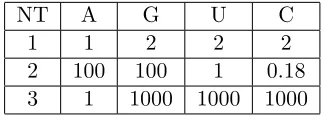
Table 1: Effects of mutations on coat protein RNA binding. NT labels the nucleotide number in Figure 1d which, when altered according to the ta-ble, changes the dissociation constant KD by the factor listed. Mutations
to multiple nucleotide positions affect KD in a multiplicative manner.
Es-timates for the dissociation constant are based on experimental data for bacteriophage MS2 (see ref. (29) and (30)).
NT A G U C
1 1 2 2 2
2 100 100 1 0.18
[image:34.595.224.386.415.473.2]Figure Legends
Figure 1.
A stochastic assembly model for ssRNA viruses with RNA folding
reactions. (a) In the packaging signal mediated model of viral assembly,
viral coat proteins (pentamer shapes) co-assembly with viral ssRNA to form
a viral capsid containing the viral RNA genome. The coat proteins interact
via RNA secondary structures (here RNA hairpins) present in the RNA
genome. (b) Two types of reactions are used to model capsid assembly, an
RNA/CP reaction where CP can bind at rateκb or unbind at rateκu to any
hairpin present in the RNA genome and a CP/CP reaction where two coat
proteins which neighbour on the RNA strand associate or dissociate from
each other with ratesκaandκd, respectively. Binding rates for the RNA/CP
reactions vary depending on the sequence and secondary structure features of
each RNA hairpin. (c)During assembly of the capsid, CP-free RNA hairpins
can melt and ssRNA areas can fold altering the local secondary structure
of the RNA. Rates of folding and melting (κf and κm) are sequence and
structure dependant and are estimated using the BARRIERS methodology
and the Turner 99 rules. (d) Structures of hairpins with high affinity for
MS2 CP (KD = 1nM) which represent the three structures which can bind to
CP in the model. The three critical sequence elements effecting the binding
of RNA to CP (labeled 1 to 3) where probed experimentally by Ulenbeck et
al. (29). Table 1 lists the effects of mutations at these sites on the binding
affinity. Multiple mutations are modelled as being multiplicative in their
Figure 2.
A genotype with high fitness and protein coding capacity evolved
from a random population of RNAs. Assembly kinetics for 2000 copies
of the WT sequence for RNA/Capsid intermediates containing(a)two to six
CPs and(b)seven to twelve CPs. (c)Nucleotide sequence of the identified
high fitness RNA. Packaging signals (PSs) that are used during assembly
more then 90 percent of the time are shown above the RNA sequence with
parentheses while PSs that are used less then 90 precent of the time are
shown with square brackets. The protein sequence is shown below the RNA
sequence with the stop codon labelled by a star. (d)Secondary structures
and nucleotide positions of the PSs interacting with CP during capsid
as-sembly in the majority of capsids.
Figure 3.
Effect of single nucleotide mutations (insertion, deletion, or
poly-morphism) on viral assembly fitness of the wild type sequence. The
majority of mutations (> 75%) result in at least 85% of the RNAs being
packaged into complete capsids within a 200 second time frame. A small
minority of mutations (≈ 6%) are deleterious and result in essentially no
capsid being assembled.
Figure 4.
Effects of G277N, a synonymous mutation ablating PS11, on viral
(boxed) is mutated to the three alternative codons (GUC,GUU,GUA) which
alters the secondary structure of PS11 and ablates its ability to bind to CP
according to the RNA-CP binding rules used in the assembly model. The
result of all three mutations is the creation of a mutant PS11 capable of
binding CP. G277A and G277C also create a stable hairpin unable to bind
CP which competes with PS10 and PS11. (b) Assembly kinetics of the
G277U mutant showing essentially unaltered assembly compared with WT.
(c)Assembly kinetics for G277A mutant showing a temporary kinetic trap
formed at RNAs bound to nine CPs. The trap is formed due to a delayed
folding of PS10 and PS11 from the hairpin competitor shown in (a). (d)
Assembly kinetics for G277C mutant. A less severe temporary trap is formed
due to the folding of the non-CP binding RNA competitor shown in (a).
Figure 5.
Effects of G163A, a synonymous mutation ablating PS6, on viral
assembly fitness. (a)Mutation of the arginine (AGG) in the WT RNA
sequence (underlined in the sequence and boxed in the secondary structure)
to the alternative codon AGA results in a mutant PS6 which is unable to
bind to CP according to the binding rules of the assembly model. Assembly
kinetics of RNAs containing (b) two to six CPs show that the majority
of RNAs are permanently trapped in intermediates containing five CPs in
complex with RNA. (c) Only six single nucleotide mutations are able to
restore assembly fitness and keep protein coding capacity. Each of these
mutations require an amino acid change in the protein sequence. Four of
with respect to the WT sequence (i.e. in absence of the G163A mutation).
Figure 6.
Two dimensional assembly fitness landscapes and mutational
path-ways. (a)The assembly fitness of WT, the two single mutants G163A and
C167A, and the double mutant containing both mutations are arranged in
a two dimensional fitness plot. Assembly fitness (in terms of percentage
of capsid assembled) are illustrated as shaded boxes. Edges in the two
di-mensional landscape indicate either the G163A or C167A mutation to the
genome, with the corner opposite to WT containing the double mutation.
(b)Same as in (a) but for the mutations G163A and G166C.(c)The
muta-tion C167A (lower case a) alters the WT PS6 and creates an alternative PS6
(option 2). Option 2 is unable to bind to CP under the binding rules due to
a larger bulge and thus acts as a competitor to the option 1 PS6 and results
in a kinetic trap and reduced viral capsid yield as shown in (a). The
muta-tion G163A alters PS6 opmuta-tion 2 to become binding competent, ablates PS6
option 1 and restores assembly efficiency. (d) The mutation G166C (lower
case c) alters WT PS6 and also creates an alternative, binding competent
PS6 (option 2) which results in the RNA retaining assembly efficiency. The
subsequent mutation G163A ablates PS6 option 1 and further stabilizes
op-tion 2.
Figure 7.
An implicit genotype to phenotype to fitness mapping based on
RNA secondary structure phenotype via RNA folding and melting reactions
in the model. The kinetics and competition between different hairpins in the
sequence determines the ability of the RNA sequence to present secondary
structures capable of promoting CP binding and assembly. The CP-RNA
binding rules and assembly reactions allow the phenotype to be mapped to
a value of assembly yield, i.e. the number of correctly assembled capsids