EFFECTIVENESS OF ICE COMPRESS APPLICATION UPON THE LEVEL OF PAIN AMONG PATIENTS WITH CHEST DRAINAGE
BY SANDHYA.R
A DISSERTATION SUBMITTED TO THE TAMILNADU DR.M.G.R MEDICAL UNIVERSITY, CHENNAI, IN PARTIAL FULFILLMENT OF THE
REQUIREMENTS FOR THE DEGREE OF MASTER OF SCIENCE IN NURSING
EFFECTIVENESS OF ICE COMPRESS APPLICATION UPON THE LEVEL OF PAIN AMONG PATIENTS WITH CHEST DRAINAGE
Approved by the dissertation committee on : _________________ Research Guide : _________________ Dr.Latha Venkatesan,
M.Sc (N)., M.Phil (N)., Ph.D (N), Principal,
Apollo College of Nursing, Chennai – 600 095.
Clinical Guide : _________________
Prof.Lizy Sonia .A, M.Sc (N), Ph.D (N), Vice Principal,
Apollo College of Nursing, Chennai – 600 095.
Medical Guide : ___________________ Dr. Madhu Sankar. N M.S., Ph.D., Dip. N.B,
Chief Cardiothoracic Surgeon, Dept. of Cardiothoracic Surgery, Apollo Hospitals, Ayanambakkam. Chennai – 600 095.
A DISSERTATION SUBMITTED TO THE TAMILNADU DR.M.G.R MEDICAL UNIVERSITY, CHENNAI, IN PARTIAL FULFILLMENT OF THE
REQUIREMENTS FOR THE DEGREE OF MASTER OF SCIENCE IN NURSING
DECLARATION
I hereby declare that the present dissertation entitled “Effectiveness of Ice Compress Application Upon the Level of Pain Among Patients with Chest Drainage” is the outcome of the original research work undertaken and carried out by me under the guidance of Dr.Latha Venkatesan, M.Sc (N)., M.Phil (N)., Ph.d (N), Principal, Apollo College of Nursing, and Prof.Lizy Sonia. A, M.Sc (N), Ph.d (N), Vice Principal, Apollo College of Nursing, Chennai. I also declare that the material of this has not found in anyway, the basis for the award of any degree or diploma in this university or any other university.
ACKNOWLEDGEMENT
I thank God Almighty for showering his blessings upon me and showing me the way to conduct my work with spirit of enthusiasm throughout my study.
I dedicate my heartfelt thanks and sincere gratitude to our esteemed leader Dr.Latha Venkatesan, M.Sc (N)., M.Phil (N)., Ph.D (N), Principal, Apollo College of Nursing for her constant support, valuable suggestions and tireless motivation to carry out my study successfully.
I take this opportunity to express my warm pleasure and deep sense of gratitude to my guide Prof.Lizy Sonia. A, M.Sc (N), Ph.D (N), Vice Principal, Apollo College of Nursing for her tremendous help and continuous encouragement and inspiring guidance throughout my study.
My special gratitude to Prof. K. Vijaya Lakshmi, M.Sc (N), Ph.D (N), Research Coordinator, Apollo College of Nursing for her timely suggestions and valuable guidance throughout my study.
My genuine gratitude to Dr.N.Madhu Sankar, Chief cardio-thoracic surgeon, Apollo hospitals, Ayanambakkam for his valuable suggestions and opinions towards the study.
I owe my special thanks to Dr.Radha Rajagoplan, Director of Medical Education, Apollo Main Hospital for permitting me to conduct my study.
ii
My genuine gratitude to Mrs.Nesa Sathya Satchi, M.Sc (N)., Professor and course coordinator for her consecutive ideas and enormous concern.
I also extend my special thanks to all the Faculties in the Department of Medical Surgical Nursing for rendering their valuable guidance in completing my study.
I am immensely grateful to all the Experts for validating the tool. I am thankful to all the Head of the Departments, Faculties and my Colleagues who helped me directly or indirectly in carrying out my study.
I express my sincere gratitude to the Librarians of Apollo College of Nursing and the Tamil Nadu Dr.M.G.R. Medical University, for their help throughout the study.
I thank all the Participants of my study for their wonderful participation and cooperation without whom I could not have completed my study. My special gratitude to Mr.Kannan, Universal Computers for his constructive and creative efforts in typing the dissertation.
SYNOPSIS
An Experimental Study to Assess the Effectiveness of Ice Compress Application upon the Level of Pain among Patients with Chest Drainage in Global Hospitals and Health City, Chennai.
The Objectives of the Study were,
1. To assess the level of pain before and after ice compress application among the control and experimental group of patients with chest drainage.
2. To evaluate the effectiveness of ice compress by comparing the pre test and post test level of pain among the control and experimental group of patients with chest drainage.
3. To find out the association between selected demographic variables and the level of pain of control and the experimental group of patients with chest drainage before and after ice compress application.
4. To find out the association between the selected clinical variables and the level of pain of control and the experimental group of patients with chest drainage before and after ice compress application.
5. To determine the level of satisfaction among the experimental group of patients with chest drainage before and after ice compress application.
iv
In this study, true experimental research design was adopted. The present study was conducted at Global Hospitals and Health City, Chennai among patients with chest drainage. The sample size for the present study was 60 patients with chest drainage, among which, 30 patients were assigned to control group and 30 patients to experimental group who satisfied the inclusion criteria.
The investigator used the demographic and clinical variable proforma of patients to obtain the baseline data. Standardized Numerical rating pain assessment scale and Mc Gill pain questionnaire were used to assess the level of pain before and after ice compress application and rating scale to assess the level of satisfaction of patient about ice compress application. The data collection tools were validated and reliability was established. After the pilot study, the data collection of the main study was conducted for period of 4 weeks. The collected information was tabulated and analyzed by using appropriate descriptive and inferential statistics.
The Major Findings of the Study
Most of the patients were in the age group of 41-60 years (40%, 66.67%), were males (53.34%, 86.67%), living in urban region (63.34%, 66.67%), majority were moderate workers (93.34%, 76.67%), were non vegetarians(70%, 90%),most of them had no family history of cardiovascular and respiratory diseases (53.34%, 66.67%), in control and experimental group respectively.
were on oral NSAIDs (100%, 100%) respectively. Majority of them had no previous experience with chest drainage (96.67%, 90%), and most patients had co morbid illness (60%, 56.67%) in control and experimental group respectively.
Majority of patients in control group had severe level of pain in pre test as well as in post test (100%, 100%) respectively. In the experimental group almost everybody had severe level of pain in pre test (100%). However after ice compress application, majority of them had mild level of pain (90%) in experimental group of patients.
Majority of patients in control group had stabbing type of pain(33.34%, 30%), most of them had sharp and burning pain (23.34%, 23.34%) in pre test and post test respectively. In experimental group, majority of patients experienced sharp pain (46.67%, 46.67%), most of them had stabbing type of pain (30%, 20%) in pre test and post test respectively
vi
Majority of the patients (93.33%) were highly satisfied with the approach of researcher, (90%) of patients were highly satisfied with the method of ice compress application and (93.33%) of patients were highly satisfied with the effectiveness of ice compress application.
There was no significant association between selected demographic variables namely age, educational status, marital status, type of diet, family history and level of pain in control and experimental group of patients. But there was a significant association between history of smoking and alcoholism (χ2 =4.80, df=1), (p<0.05) and the level of pain in experimental group of patients. Hence the null hypothesis Ho4 was partially rejected with regard to history of smoking and alcoholism.
There was no significant association between selected clinical variables like type and number of chest drain, BMI, previous experience of chest drainage, ambulation, and level of pain in control and experimental group of patients. But there was a significant association between those who had undergone cardiac surgeries (χ2=5.48, df=1), (p<0.02) and the level of pain in experimental group of patients. Hence the null hypothesis Ho5 was partially rejected with regard to diagnosis of cardiac surgeries.
Recommendations
A similar study could be undertaken on larger scale for more valid generalization.
This study could be replicated in different settings.
The study could be conducted to compare different non pharmacological methods of pain management.
TABLE OF CONTENTS
Chapter CONTENTS Page No.
I INTRODUCTION 1-15
Background of the Study 1
Need for the Study 3
Statement of the Problem 7
Objectives of the Study 8
Operational Definitions 8
Assumptions 10
Null Hypotheses 10
Delimitations 10
Conceptual Frame work 11
Summary 15
Organization of Research Report 15
II REVIEW OF LITERATURE 16-25
Literature Related to Sensation and Experience of Pain during for Chest Drainage Removal
17
Literature Related to Interventions for Pain Management during Chest Drain Removal
19
Literature Related to Ice Application for Pain Management during Chest Drain Removal
viii
III RESEARCH METHODOLOGY 26-35
Research Approach 26
Research Design 27
Variables 27
Research Setting 29
Population, Sample, Sampling techniques 29
Sampling Criteria 30
Selection and Development of Study Instruments 30 Psychometric Properties of the Instruments 32
Pilot Study 33
Protection of Human Rights 34
Data Collection Procedure 34
Problems Faced during Data Collection 35
Plan for Data Analysis 35
IV ANALYSIS AND INTERPRETATION 36-58
V DISCUSSION 59-69
VI SUMMARY, CONCLUSION, IMPLICATIONS AND
RECOMMENDATIONS
70-78
REFERENCES 79-81
LIST OF TABLES
Table No. Description Page No.
1 Frequency and Percentage Distribution of Demographic Variables in control and Experimental Group of Patients with Chest Drainage
38
2 Frequency and Percentage Distribution of Clinical Variables in Control and Experimental Group of Patients with Chest Drainage
43
3 Frequency and Percentage Distribution of Level of Pain in Control and Experimental Group of Patients with Chest Drainage before and after Ice Compress Application
48
4. Frequency and Percentage Distribution of Level of Satisfaction Scores of Ice Compress Application in the Experimental Group of Patients with Chest Drainage
49
5. Comparison of Mean and Standard Deviation of Level of Pain before Ice Compress Application between Control and Experimental Group of Patients with Chest Drainage and after Ice Compress Application of Patients with Chest Drainage
50
6 Frequency and Percentage Distribution of Level of Satisfaction Scores on Ice Compress Application in Experimental Group of Patients with Chest Drainage
52
7 Association between Selected Demographic Variables and Level of Pain before and after Ice Compress Application in Control and Experimental Group of Patients with Chest Drainage
x
8 Association between Selected Clinical Variables and Level of 56 Pain before and after Ice Compress Application in Control and
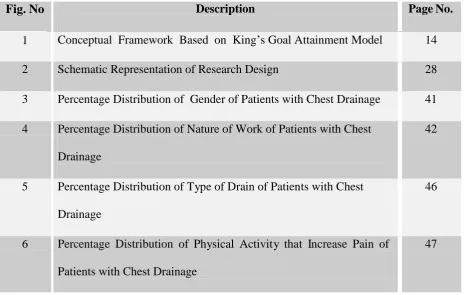
LIST OF FIGURES
Fig. No Description Page No.
1 Conceptual Framework Based on King’s Goal Attainment Model 14 2 Schematic Representation of Research Design 28 3 Percentage Distribution of Gender of Patients with Chest Drainage 41 4 Percentage Distribution of Nature of Work of Patients with Chest
Drainage
42
5 Percentage Distribution of Type of Drain of Patients with Chest Drainage
46
6 Percentage Distribution of Physical Activity that Increase Pain of Patients with Chest Drainage
[image:14.596.95.562.116.411.2]xii
LIST OF APPENDICES
Appendix Description Page No.
I Letter Seeking Permission to Conduct the Study xiii II Letter Stating Completion of the Study xv
III Ethical Committee Clearance Letter xvi
IV Letter Seeking Permission for Content Validity xx
V List of Experts for Content Validity xxii
VI Content Validity Certificate xxiv
VII Letter Seeking Consent from Participants xxv
VIII Certificate for English Editing xxvi
IX Certificate for Tamil Editing xxvii
X Plagiarism Originality Report xxviii
XI Demographic Variable Proforma xxix
XII Clinical Variable Proforma of Patients with Chest Drainage xxxv XIII Rating Scale on Patient Satisfaction of Ice Compress
Application of Patients with Chest Drainage
xlvii
XIV Standardized Pain Assessment – Mc Gill inventory xlviii
XV Numerical Rating Scale l
XVI Data Code Sheet liii
XVII Master Code Sheet liv
1 CHAPTER I INTRODUCTION Background of the Study
“It is easier to find men who will volunteer to die, than to find those who are willing to
endure pain with patience’’
- Julis Caesar In the last two decades of human life, changing lifestyles and patient’s rights have been impredictable and thus it plays an important role in physiological and psychological behavior of human life. With an enormous increase in chronic non communicable disorders, the incidence of cardiac and thoracic surgeries has increased throughout with concomitant rise in interventions required to treat these disorders.
The need for relief of pain is of serious health concern of today in this society. The word pain is an unpleasant feeling often caused by intense or damaging stimuli, such as stubbing a toe, burning a finger, putting alcohol on a cut.
The International Association for the Study of Pain's widely used definition states, pain is an unpleasant sensory and emotional experience associated with actual or potential tissue damage, or described in terms of such damage. Pain makes an individual to withdraw from damaging situations, motivates them to protect a damaged body part while it heals, and to avoid similar experiences in the future.
healing of the body; and sometimes pain arises in the absence of any detectable stimulus, damage or disease.
Pain is the most common reason for physician consultation. It is a major symptom in many medical conditions, and can significantly interfere with a person's quality of life and general functioning. Psychological factors such as social support, hypnotic suggestion, excitement, or distraction can significantly modulate pain's intensity or unpleasantness.
As pain now being a serious matter of concern in the public, health care and global health care organizations like WHO focuses on pain management by implementing pain ladders, therapies of alternative and complimentary, heat and cold application. Cryotherapy and ice massages have gained confidence in reducing the perception of pain by diminishing nervous system response of pain; it increases the blood circulation to the abdominal organs, activates metabolic functions, reduces inflammation and calms the nervous system.
3
Nursing is not simply a collection of specific skills and the nurse is not simply a person trained to perform specific tasks whereas nursing is a profession. No one factor absolutely differentiates a job from a profession, but the difference is important in terms of how nurses practice. The practice of professional nursing and nursing knowledge has been developed over time through development of nursing theories and research.
In order to provide a high quality of care, it is necessary that nurses should use best available cost effective basic nursing skills to enhance patient comfort and satisfaction without any adverse physiological effects. Thus use of ice compress to relieve pain during chest drain removal can be incorporated into clinical practice and formulate a protocol for chest drain removal.
The nursing care for patients with chest drain includes physical and broadened psychosocial care. Specific standards are needed to provide efficient care for patients with chest drainage. But still relief from pain is a major task for the nurses who handle patients with chest drainage as pain is more a sensory and an emotional experience for a patient.
Need for the Study
Maintaining individual health and quality of life is dependent upon many variables. One such variable is pain. The presence of pain has been a factor negatively affecting the quality of life (Mason 2009). To alleviate pain quickly many health care providers will prescribe narcotic and non narcotic analgesics.
According to National Institute on Drug Abuse (NIDA 2005), 5, 73,000 people were first time users of pain relievers in the year 1990; by the year 2000, the number increased to 2.5million.
Additionally, according to the face sheets provided by United States drug enforcement agency 2010 prescription for narcotics increased significantly from 88 million in the year 2000 to 130 million prescription by the year 2006. This enormous rise in numbers reflects noticeable increase in use of narcotic pain medications.
The ineffective treatment of pain interferes with rest, sleep, deep respirations; coughing, ambulation, mood and performing general activities (Watt-Watson, 2004).Thus removal of chest tube reduce pain and improve ventilator function independent of surgical access surgical access and particularly in immediate post operative phase. A fast track chest drain removal policy may favour patient’s recovery.
Therefore treating pain effectively can improve patient recovery and outcome at an earlier phase of hospitalisation. Pain management is of paramount importance if experience of chest drain to be improved.
5
assumption that all discomfort was caused by pain. It turned out that in addition to pain, patients described the pulling and burning sensations they felt as equally uncomfortable. Pain management continues to be a major concern in hospitalized patients.
Pain during chest drain removal can be moderately to severely intense and distressing to patients. Patients describe chest tube removal as painful event in postoperative recuperation. No national standards have been set associated with chest tube removal. Little evidence based research has guided clinicians to alleviate pain.
Analgesics are always not effective in eliminating pain and it has its known untoward adverse effects. Utilisation of non pharmacological intervention may assist in alleviating pain with no adverse effects.
Ice is an inexpensive, yet astoundingly effective treatment for pain and swelling. Unfortunately it is a grossly underutilized tool. A big reason for this is that many healthcare providers themselves do not appreciate the benefits of ice packs and other cold treatment modalities for pain or swelling. Some providers simply do not know about the benefits and therapeutic use of ice.
Ice initially constricts local blood vessels and decreases tissue temperature. Overall, ice will decrease inflammation, decrease pain, speed nutrients to the area, promote healing, decrease swelling, decrease tissue damage, decrease muscle spasm.
intensive care unit experiences for these patients. Pain associated with chest tube removal (CTR) has been poorly controlled.
Several epidemiological studies have shown intensity of pain among certain disorders and certain procedures, of which pain perceived by chest drain removal also figures out with 47.9% as per recent report of WHO statistical report on 2010. Removal of chest tubes causes patients to feel pain and interventions used for reducing the pain owing to the removal of chest tubes are not sufficient.
A study with conducted by Nurcan, et al. (2011) with 140 patients was conducted, of whom 70 patients were in the experimental group and 70 patients were in the control group, in a thoracic hospital in Turkey. The Visual Analogue Scale score was measured immediately after the chest tube removal in the experimental group was 3·85, compared with 5·60 in the control group. There were significant differences on pain with cold application between the two groups prior and after the intervention.
Pain is highly individualized. Having knowledge that cold application plays a major role in relaxing muscle, improves blood circulation and numbness of pain respectively intended the investigator to take up this intervention to minimize pain. Moreover this measure is simple, affordable and can be performed by patients too with no side effects.
7
A hospital may be soundly organized; the hospital will fail in its responsibility of providing care.
Thus as a part of nursing care, it is important for nurses to assess the level of pain and relive the patient from pain using clinical assessment and best available nursing skill. Nurses can use their basic available non pharmacological nursing measures to relieve the patient from paint and enhance patient comfort which requires no orders from physician.
Non pharmacological measures lay a first line platform to relive from pain and anxiety. Use of ice application to treat pain are also greatly welcomed by the patients as the effect of ice applications to relieve pain is greatly known and it is a human fact which is ought to reduce pain with no adverse effects.
In short, implementation of ice compress application during chest drain removal effectively minimises pain and improves the quality of nursing care. By implementing ice compress application in clinical practice, the ultimate goal of pain relief for hospitalised patients with chest drainage to improve patient satisfaction to gain better social and economic benefits. Since the ice compress application has more significant effect upon patients undergoing chest drain removal and also it’s a new practice used to minimise pain during chest drain removal, the researcher decided to conduct this study.
Statement of the Problem
Objectives of the Study
1. To assess the level of pain before and after ice compress application among the control and experimental group of patients with chest drainage
2. To evaluate the effectiveness of ice compress by comparing the pre test and post test level of pain among the control and experimental group of patients with chest drainage.
3. To find out the association between selected demographic variables and the level of pain of control and the experimental group of patients with chest drainage before and after ice compress application
4. To find out the association between the selected clinical variables and the level of pain of control and the experimental group of patients with chest drainage before and after ice compress application
5. To determine the level of satisfaction among the experimental group of patients with chest drainage before and after ice compress application.
Operational Definitions Effectiveness
In this study, effectiveness refers to the reduction in the level of pain perception after ice compress application among experimental group of patients with chest drainage which is assessed by standardized pain assessment scale which includes numerical rating scale and Mc gill pain questionnaire.
Experimental research
9
selected variables. In this study ice compress application is an independent variable and level of pain perception is dependent variable.
Ice compress
Ice of 4 degree centigrade is placed within a dry guaze for 10 minutes at 10 minutes interval for four times to minimise the level of pain associated with chest drainage.Ice compress applied to an acute injury for the purpose of decreasing swelling and pain.
Chest drain
A chest tube is a flexible plastic tube that is inserted through the side of the chest into the thoracic cavity either post operatively in a cardio thoracic surgery or for medical treatment for cardio pulmonary disorders.
Pain
In this study, pain refers to unpleasant sensory and emotional experience of a patient during chest drainage removal.
Patients
In this study, it refers to patients with chest drainage tubes are taken as population.
Level of satisfaction
Assumptions The study assumes that,
Presence of chest drainage causes pain and discomfort.
Non pharmacological measurements are easily accepted by the patients.
Pain tolerance and perception differs from patient to patient.
There are different measures practiced to reduce pain.
Ice compress causes numbness of the area applied.
Null Hypothesis The null hypotheses stated are
Ho1: There will be no significant difference in the level of pain perception of control and the experimental group of patients with chest drainage before and after ice compress application. .
Ho2: There will be no significant association selected demographic variables and the level of pain of control and the experimental group of patients with chest drainage before and after ice compress application.
Ho3: There will be no significant association selected clinical variables and the level of pain of control and the experimental group of patients with chest drainage before and after ice compress application.
Delimitations
1. The study was limited to patients with chest drainage. 2. The study was limited to adult patients.
11
Conceptual Framework for the study
The conceptual framework deals with the interrelated concepts that are assessable together in some rational scheme by virtue of their relevance to a common theme (Polit and Beck, 2010).
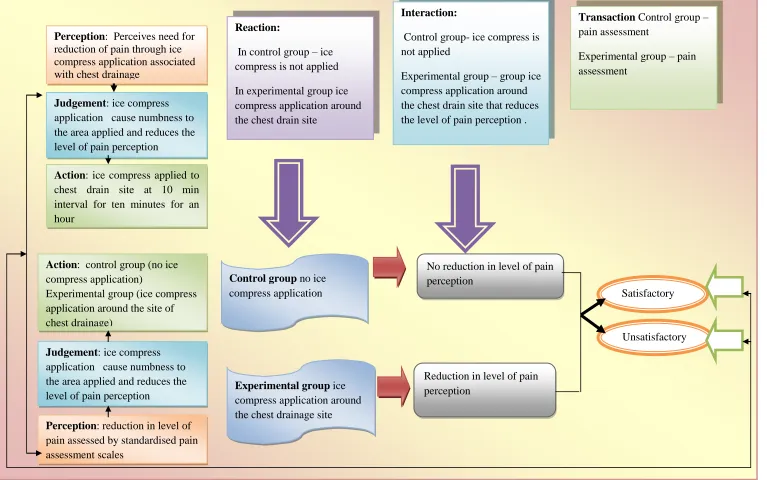
Conceptual framework of present study is based on King’s Goal Attainment Theory. According to Imogene King; Nursing is defined as the process of action, reaction, interaction, whereby nurses and clients share the information about their perception. Through perception and communication they identified the problem through which they set goals and take necessary action.
King’s goal attainment theory is based on the concepts of personal, interpersonal and social systems including perception, judgement, action, reaction, interaction, transaction and perception.
Perception
Judgement
Analyze the areas of action to be carried out. In this study the nurse investigator judges that ice compress application around the chest drain site cause numbness and reduces the level of pain perception of the patients with chest drainage. Thus the researcher takes decision to implement the ice compress application therapy.
Action
Individuals export the perceived energy demonstrated as observable behaviours by taking physical activity. Nurse investigator takes action by the development of ice compress therapy around the chest drain site to relieve patients from pain owing to chest drainage removal.
Reaction
Reaction is the experience or outcome that are expected as a part of goal attainment. The ice compress therapy around the chest drain in experimental group patients was highly satisfied. The nurse investigator makes the arrangement for disseminating the information regarding ice compress therapy and in turn the patients were benefitted.
[Interaction
13
Action leads to interaction where the nurse investigator executes her ice compress therapy upon the level of pain associated with chest drainage and thereby patient’s pain level is reduced.
Transaction
Imogene King says that the transaction is two individuals mutually identify goals and the means to achieve them. They reach an agreement about how to attain these goals and then set about to realise them.
In this study subjects from the experimental group shows highly satisfactory in reduction in the level of pain through ice compress application and developed no complications.
Feedback
Nurse researcher
+
+
Patient
Perception: Perceives need for reduction of pain through ice compress application associated with chest drainage
Reaction:
In control group – ice compress is not applied
In experimental group ice compress application around the chest drain site
Interaction:
Control group- ice compress is not applied
Experimental group – group ice compress application around the chest drain site that reduces the level of pain perception .
Transaction Control group – pain assessment
Experimental group – pain assessment
Judgement: ice compress application cause numbness to the area applied and reduces the level of pain perception
Action: ice compress applied to chest drain site at 10 min interval for ten minutes for an hour
Action: control group (no ice compress application)
Experimental group (ice compress application around the site of chest drainage)
Judgement: ice compress application cause numbness to the area applied and reduces the level of pain perception
Perception: reduction in level of pain assessed by standardised pain assessment scales
Control group no ice compress application
No reduction in level of pain perception
Satisfactory
Experimental group ice compress application around the chest drainage site
Reduction in level of pain perception
[image:30.842.44.811.34.514.2]15 Summary
This chapter has dealt with the background, need for the study, and statement of the problem, objectives, operational definitions, assumptions, null hypotheses, delimitations and conceptual framework.
Organization of the report
Further aspects of the study are presented in the following five chapters. CHAPTER – II Review of literature
CHAPTER – III Research methodology – which includes research approach, design, Setting, population, sample and sampling techniques, tool description, content validity and reliability of tools, pilot study, data collection procedure and plan for data analysis.
16 CHAPTER -II
REVIEW OF LITERATURE
A literature review is an organized written presentation of what has been published on a topic by scholars (Burns & Groove,2004).The task of reviewing literature involves the identification ,selection, critical analysis and reporting of existing information on the topics of interest. A review acquaints the researcher with what has been done in the field and it minimizes possibilities of unintentional duplications. It justifies the need for replication provides the basis of future investigations and help to relate the findings of one study to another.
This chapter deals with a review of published and unpublished research studies and from related material for the present study. The review helped the investigator to develop an insight into the problem area. This helped the investigator in building the foundations of the study.
The review of literature for this study is presented under the following headings.
1. Literature Related to Sensation and Experience of Pain during for Chest Drainage Removal.
2. Literature Related to Interventions for Pain Management in Patients with Chest Drainage Removal.
Literature Related to Sensation and Experience of Pain during for Chest Drainage Removal
A longitudinal study aimed to determine the impact of chest drain removal on pain and pulmonary function after pulmonary resection was studied by Refai et al. (2012) upon 164 patients. Post operative chest pain was controlled by standardised combination of oral and intravenous non opoids. Static and dynamic pain and forced expiratory capacity at one minute were assessed using numerical rating scale before and one hour after chest drain removal and measurement were compared by wilcoxon sign rank test. The results showed that the pain scores were significantly reduced by 42% and 41% in static and dynamic measurement respectively after chest drain removal and forced expiratory capacity also increased by 12% after chest drain removal.
An exploratory study conducted by Minnaugh, et al. (2002) with 62 hospitalized patients to determine the types and intensity of sensations that patients experience when chest tubes and Jackson Pratt abdominal tubes were removed. Each subject was interviewed after tube removal. Sensations were identified, and intensity of sensation was marked on a Visual Analogue Scale. The most frequently reported sensations were pain which accounted to be 77% on Jackson Pratt tube removal and pulling type of sensation which constituted 90% upon chest drain removal.
18
and 47% of staffs recommended use of analgesia and 40 % of the staffs advised to use analgesia as and when required which was supported by 70% of patients.
Owen et al. (2000) conducted a research to understand the patients experience with chest drainage. An exploratory study with convenient sampling of 60 cardio thoracic patients were taken and assessed using numerical rating scale. The results revealed that 68% patients drew attention to the persistent discomfort and pain experienced by patients throughout the entire time that the chest drain remained in situ. 60% of the patients also experienced short lasting but intense pain when the chest drain was removed.
A randomised double blinded study by Mueller et al. (1999) to analyze the duration of chest tube drainage on pain intensity and distribution among 80 patients who had cardiac surgery in two different hospitals were compared. However, in one hospital chest tubes were removed by postoperative day 2 or 3, while in the second hospital all the drains were usually removed on first post operative day. There was a trend toward less pain in the short drainage group, with a statistically significant difference on second post operative day (P=0.047). A policy of early chest drain ablation limits pain sensation and simplifies nursing care, without increasing the need for repeated pleural puncture. Therefore, a policy of short drainage after cardiac surgery should be recommended.
of which 24 were men and 12 were women, had either a mediastinal or a pleural tube removal. Sensations were assessed using a visual analogue scale within 15 minutes after tube removal. The most frequently reported sensation during chest tube removal was burning, followed by pain and pulling with mean intensities of 64, 62, and 45, respectively. The sensations and intensities did not differ for those who did and did not receive analgesia or for those having a pleural tube versus a mediastinal tube removed. Women reported pain more frequently than men.
Literature Related to Interventions for Pain Management in Patients with Chest Drainage Removal.
20
A randomized study conducted by Christina Ryan, et al. (2007) compared two methods of pain management during chest drain removal for 27 post operative cardio surgical patients Pharmacological measures like injection.Ketorolac versus injection. Midazolam were compared as against injection. Morphine and injection. Midazolam and pain intensity were measured using observational pain scale at 15 minutes later chest drain removal. The results revealed that a combination of injection.Ketorolac and injection.Midazolam significantly lowered the pain. The differences in pain score from 4.43 to 0.94 in a combination of injection.Ketorolac and injection.Midazolam and 5.63 to 1.29 when injection.Morphine and injection.Midazolam was administered was found statistically and clinically significant.
A randomized double blinded controlled trial was undertaken upon 74 patients who underwent cardiac surgery by Puntillo et.al (2006) to assess the pharmacological and non pharmacological interventions to alleviate pain during chest tube removal. Four interventions were tested as injection. Morphine and procedural information; injection. Ketorolac and procedural information; injection. Morphine plus procedural and sensory information; and Inj. ketorolac plus procedural and sensory information. Pain intensity and pain distress were measured before analgesic administration, immediately after chest tube removal, and 20 minutes later .Using ANNOVA the results revealed that procedural pain intensity (mean 3.26, SD 3.00) and pain distress (mean 2.98, SD 3.18) scores for all were low. The pre education significantly reduces patient anxiety and pain distress.
22
Broscious et al. (2004) demonstrated the effects of music therapy for pain during chest tube removal after open heart surgery upon 156 patients which consisted of control group, white noise, or music. The patient's heart rate and blood pressure were measured; pain intensity was measured using numeric rating scale. The patients rated their pain immediately after the chest tube removal and 15 minutes later. Physiological variables were assessed every 5 minutes until 15 minutes after the chest tubes were removed. The results revealed that the pain intensity, physiological responses, after the chest tube removal did not differ significantly among the 3 groups, whereas most subjects enjoyed listening to the music, and therefore the use of music as an adjuvant to other therapies may be an appropriate nursing intervention.
Literature Related to Ice Compress Application for Pain Reduction in Patients with Chest Drainage.
A single blinded randomized study by Leyla et al. (2012) to investigate the effect of cold application on pain and anxiety during chest tube removal in 90 patients who had undergone cardiac surgery. The application of cold, placebo, or control therapies was randomized into three different groups. Sixty minutes before chest tube removal was scheduled, 10mg/kg paracetamol intravenously was given to all study subjects. Cold and warm packs covered with gauze dressing were applied to the area surrounding the chest tubes for 20 minutes. Pain intensity, pain quality and situational anxiety for chest tube removal were measured using visual analogue scale and Mill Gill pain inventory. The data showed that patients in the cold group had significantly lower pain intensity than the placebo group. The application of cold prolonged the length of time until analgesics were needed after chest tube removal. Thus the results showed that cold application reduced patient’s intensity of pain due to chest tube removal but did not affect anxiety levels or the type of pain.
24
measured immediately after the chest tube removal in the experimental group was 3·85, compared with 5·60 in the control group. There were significant differences on pain with cold application between the two groups prior and after the intervention. Age, gender, the number of days the chest tube was inserted and the chest tube insertion indication had no effect on the pain owing to chest tube removal.
A study was conducted by Demir, et al. (2010) to evaluate the effectiveness of the use of ice for the control of pain associated with chest tube irritation. A sample of 40 patients who underwent thoracotomy with chest tube placement was taken. Ice in the form of flexible and bendable cold gel packs wrapped in fine cloth sheaths was applied to the chest tube insertion site at the 24th, 28th, 36th, and 40th postoperative hours for 20 minutes. To assess the effectiveness of ice application, Verbal Category Scale and Behavioural Pain Scale methods were used to measure the severity of pain. Average pain severity scores during the mobilization activities, including coughing and walking, were compared and found to be significantly lower in the study group patients who received cold therapy than in the control group patients (p < .05). Additionally, analgesic consumption was lower in the study group than in the control group patients (p < .05). As a result, the application of ice to the chest tube insertion site reduced pain associated with irritation along with the need for analgesics.
using the McGill Pain Questionnaire. A significant change in pain over time was noted in both groups, with pain intensity and distress being most severe during actual chest tube removal. Both groups used all the quality descriptors on the MPQ-SF for the sensory and affective components of pain, with cramping and gnawing as the most frequently chosen words.
Summary
CHAPTER III
RESEARCH METHODOLOGY
The methodology of the research study is defined as the way the client information is gathered in order to answer the research question or analyze the research problem.
The present study was conducted to assess the effectiveness of ice compress application and the level of pain perception among chest drainage patients. It deals in brief the different steps undertaken by the investigator for the study. It includes research approach, research design, the setting, population, sample and sampling techniques, development and description tool, validity, reliability, pilot study, data collection procedure and plan for data analysis.
Research Approach
27
Research Design
A research design is the most important methodological design that a researcher works in conducting a research study (Polit and Hungler 1999)
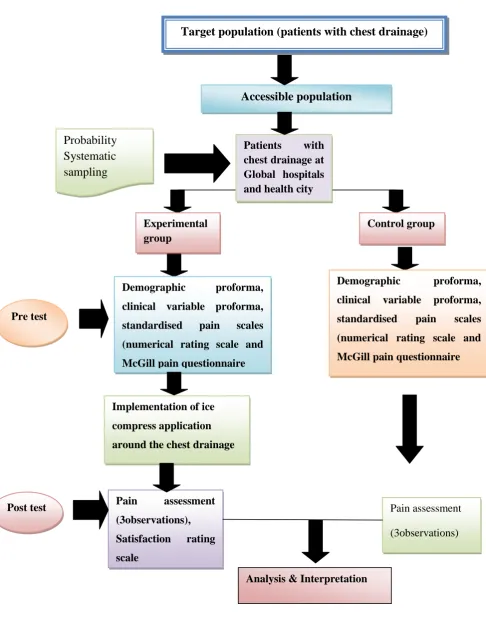
The research design of nurses is represented diagrammatically as follows: R O1 O2 O3 O4
R O1 x O2 O3 O4
X - Application of ice compress around the chest drainage site O1 – pre-test to assess the baseline level of pain.
O2 – post test before chest drain removal.
O3 – post test immediately after chest drain removal. O4 – post test 15 minutes after chest drain removal.
Variables
Independent variable
The variable that is believed to cause or influence the dependent variable is the independent variable (Polit and Beck, 2008).In this study, the independent variable was Ice compress application intended to relieve pain during chest drainage removal.
Dependent variable
The variable hypothesized to depend on or be caused by another variable is the dependent variable. In this study, the level of pain is considered as dependent variables. Attribute variables
Pre test post test design Experimental
group
Control group
Demographic proforma,
clinical variable proforma,
standardised pain scales
(numerical rating scale and
McGill pain questionnaire
Demographic proforma,
clinical variable proforma,
standardised pain scales
(numerical rating scale and
McGill pain questionnaire
Implementation of ice
compress application
around the chest drainage
site Probability Systematic sampling
Patients with chest drainage at Global hospitals and health city
Target population (patients with chest drainage)
Accessible population
Post test Pain assessment
(3observations),
Satisfaction rating
scale
Analysis & Interpretation
Pain assessment
(3observations)
[image:46.595.68.555.60.683.2]Pre test
29
Research Setting
Settings are the most specific places where data collection will occur (Polit& Beck 2006). The present study was conducted at Global Hospitals and Health City in Sholinganallur, Chennai. This is an NABH accredited hospital and specializes in multi speciality surgical procedures; approximately 3 to 5 cardiothoracic surgeries are performed every day. The study was conducted in cardio-thoracic intensive care unit, which has 23 beds with all advanced equipments necessary to receive post operative cardiac thoracic patients .The hospital also performs heart and lung transplants . Setting was chosen on feasibility in terms of availability of adequate subjects.
Population
Population is the entire aggregation of cases which meet designated set of criteria (Polit & Beck 2004).
Target population is the group of population the researcher aims to study and to whom the study findings will be generalized. In this study the target population comprises of all patients with chest drainage.
Accessible population is the list of population that the researcher finds in the study area. The accessible population in this study was the patients with chest drainage in Global Hospitals and Health City, Chennai.
Sample
A sample of 60 patients with chest drainage were selected for the study out of which 30 were assigned to experimental group .Among 60 patients, 30 were assigned to control group and sampling is done by systematic sampling method.
Sampling Criteria Inclusion criteria
1. Post operative cardiac patients with chest drain 2. Post operative thoracic patients with chest drain 3. Patients on medical treatment with chest drain 4. Those who are willing to participate in study
5. Those who are available at the time of data collection 6. Both male and female
7. Patients aged between 20 to 60 yrs.
Exclusion criteria
1. Patients with low GCS.
2. Patients on sedations and anesthesia on mechanical ventilation. 3. Not willing to participate in the study.
4. No paediatric population.
Selection and Development of Study Instruments
31 1. Demographic Variable Proforma. 2. Clinical Variable Proforma.
3. Standardized Pain scale to assess pain distress, intensity, sensory and affective component by using Numerical rating scale and Mc Gill pain questionnaire. 4. Level of Satisfaction rating scale.
Demographic variable proforma
This includes age , gender , marital status , education , occupation , income , type of work,dietary pattern,lifestyle,family history .
Clinical variable proforma
This includes diagnosis, type of chest drain, number of chest drainage and days, BMI, co morbid, treatment for pain, ambulation of patient with chest drain and previous experience.
Standardized pain scale to assess pain distress, intensity, sensory and affective component
(Numerical rating scale and Mc Gill pain questionnaire) Scoring interpretation (Numerical rating scale)
Scoring interpretation (Mc Gill pain questionnaire) Score Interpretation
0 – 11 No pain 11 – 22 Mild pain 22 – 33 Moderate pain 33 – 45 Severe pain
Satisfaction rating scale
The patient’s satisfaction on ice compress application was assessed by using rating scale. This scale had 20 statements regarding the effects of the therapy; the method of ice compresses application and the approach of the researcher. The responses extend as highly satisfied (score = 4), moderately satisfied (score = 3), just satisfied (score = 2) and dissatisfied (score = 1).
Scores Percentage Level of satisfaction 4 - 10 <25% Dissatisfied
11 - 20 25 – 50% Just satisfied
21 - 30 51-75% Moderately Satisfied 31 - 40 > 75% High satisfied
Psychometric Properties of the Instruments
Validity
33
specific modifications in the objectives and rating scale. The modifications and suggestions of experts were incorporated in the final preparation of the project.
Reliability
Reliability is the degree of consistency with which an instrument measures the attribute it intended to measure (Polit & Beck,2009).The reliability of the tools was determined by using inter rater technique and split half method and Karl pearson’s ‘r’ was computed for finding out the reliability.
Standardised numerical pain scale - Inter rater technique (r = 0.88) Standardised McGill pain inventory - Inter rater technique (r = 0.85) Rating scale on patient satisfaction – Split half method (r = 0.80)
Pilot study
According to Polit and Hungler (2006), a pilot study is a miniature or some part of the actual study, in which the instrument is administered to the subjects drawn from the population. It is a small scale version or trial run, done in preparation for the major study. The purpose is to find out the feasibility to conduct the main study.
Protection of Human Rights
The study was conducted after obtaining clearance from medical guide and ethical committee, Apollo hospitals and Global hospitals, Chennai
Consent was obtained from all the participants before the data collection.
Confidentiality was maintained throughout the study.
Data Collection Procedure
The investigator collected the data from Global Hospitals and Health City , Chennai .The study participants were selected using systematic sampling method.
Step 1: Administration of demographic and clinical variable proforma and standardized pain assessment scale as a pretest to know the baseline pain level.
Step 2: Ice compress was applied around the site of chest drainage for ten minutes at an interval of ten minutes for one hour to the experimental group of patients.
Step 3: The level of pain was assessed by using standardized pain assessment scales before chest drain removal for control and experimental group respectively.
Step 4: The level of pain was assessed by using standardized pain assessment scales immediately after chest drain removal for control and experimental group respectively.
35
Problems Faced During the Study The problems faced during the data collection were,
Few patients were not willing for the study
Few patients felt that the temperate of ice compress was not sufficient enough.
Plan for Data Analysis
Data analysis is the systematic organization and synthesis of research data and testing of null hypotheses by using the obtained data (Polit & Beck,2004).Data analysis and interpretation were carried out using descriptive and inferential statistics like mean, standard deviation, paired ‘t’ test and chi square
Summary
36 CHAPTER 1V
ANALYSIS AND INTERPRETATION
Data analysis is conducted to reduce, organize and give meaning to the data. The results obtained from data analyses require interpretation to be meaningful. Interpretation of data involves examining the results from data analysis forming conclusions, considering the implications for nursing, exploring the significance of the findings and suggesting further studies (Polit & Beck, 2010).
This chapter deals with analysis and interpretation of data including both descriptive and inferential statistics. The data were analysed according to the objectives and hypothesis of the study. Analysis of the data was compiled after all the data was transferred to the master coding sheet. The data were analyzed, tabulated and interpreted using appropriate descriptive and inferential statistics.
Organisation of Findings
The findings of the study was organised and presented under the following headings.
Frequency and percentage distribution of selected demographic variables in the control and experimental group of patients with chest drainage.
Frequency and percentage distribution of clinical variables in the control and experimental group of patients with chest drainage.
Frequency and percentage distribution of level of satisfaction scores of ice compress application in the experimental group of patients with chest drainage.
Comparison of mean and standard deviation of level of pain before ice compress application between control and experimental group of patients with chest drainage and after ice compress application of patients with chest drainage.
Association between the selected demographic variables and the level of pain before and after ice compress application in the control and experimental group of patients with chest drainage.
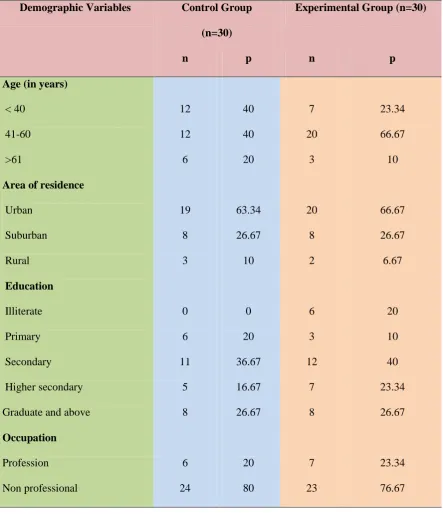
38 Table. 1
Frequency and Percentage Distribution of Demographic Variables in the Control and Experimental Group of Patients with Chest Drainage.
Demographic Variables Control Group
(n=30)
Experimental Group (n=30)
n p n p
Age (in years)
< 40 12 40 7 23.34
41-60 12 40 20 66.67
>61 6 20 3 10
Area of residence
Urban 19 63.34 20 66.67
Suburban 8 26.67 8 26.67
Rural 3 10 2 6.67
Education
Illiterate 0 0 6 20
Primary 6 20 3 10
Secondary 11 36.67 12 40
Higher secondary 5 16.67 7 23.34
Graduate and above 8 26.67 8 26.67
Occupation
Profession 6 20 7 23.34
Annual income( Rs)
1lakh – 3lakh 11 36.67 9 30
3lakh – 5lakh 15 50 14 46.67
Above 5lakh 4 13.34 7 23.34
Marital status
Unmarried 6 20 1 3.34
Married 23 76.67 29 96.67
Widow 1 3.34 0 0
Divorcee 0 0 0 0
Type of diet
Vegetarian 9 30 3 33.34
Mixed 21 70 27 90
Frequency of consuming
Non veg foods
Once a week 11 36.67 10 33.34
Twice 6 20 9 30
Often 4 13.34 3 10
Rare 4 3.34 2 6.67
History of smoking and
alcoholism
Smoking 4 13.34 1 3.34
Alcoholism 3 10 5 16.67
Both 4 13.34 6 20
40 Family history of cardio
vascular and respiratory
diseases
Yes 14 46.67 10 33.34
No 16 53.34 20 66.67
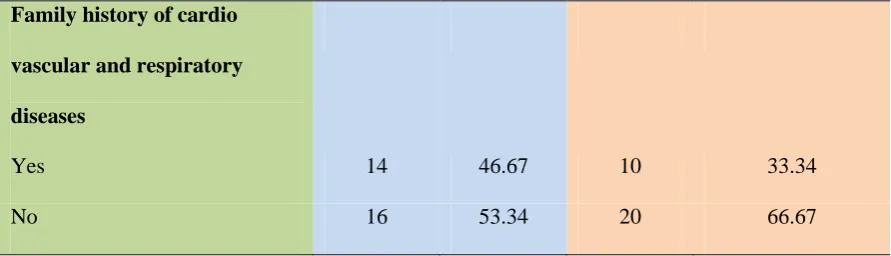
It can be noted in table 1 that, most of the patients were in the age group of 41-60 years (40%, 66.67%), living in urban region (63.34%, 66.67%), majority were non vegetarians(70%, 90%),most of them had no family history of cardiovascular and respiratory diseases (53.34% ,66.67%), in control and experimental group respectively.
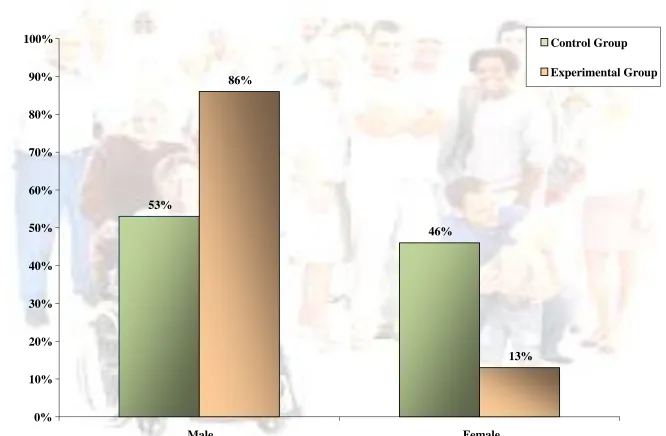
Fig.3 shows that majority of them were males (53%, 86%), and significant percentage of them were females (46%, 13%) in control and experimental group respectively.
[image:59.595.94.540.104.232.2]Fig.3 Percentage distribution of Gender in Control and Experimental group of patients with Chest drainage. 53%
46% 86%
13%
0% 10% 20% 30% 40% 50% 60% 70% 80% 90% 100%
Male Female
42
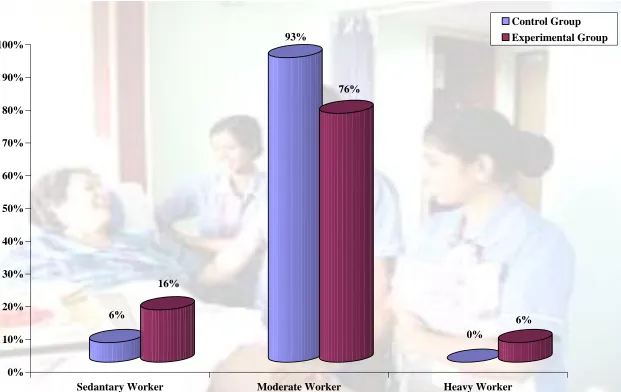
Fig. 4 Percentage Distribution of Nature of Work in Control and Experimental Group of Patients with Chest Drainage 6%
16%
93%
76%
0%
6%
0% 10% 20% 30% 40% 50% 60% 70% 80% 90% 100%
Sedantary Worker Moderate Worker Heavy Worker
Table. 2
Frequency and Percentage Distribution of Clinical Variables in the Control and Experimental Group of Patients with Chest Drainage.
Clinical Variables Control Group (n=30)
Experimental Group (n=30) n p n p Diagnosis
Undergone cardiac surgery 24 80 22 73.34
Undergone thoracic surgery 6 20 8 26.67
On medical treatment for cardio vascular or
pulmonary disorders
0 0 0 0
Any other 0 0 0 0
Number of days on chest drainage
< 1 day 2 6.67 2 6.67
1 – 3 days 27 90 25 83.34
More than 3 days 1 3.34 3 10
Number of chest drainage tubes
One 7 23.33 1 3.34
Two 12 40 8 26.67
Three 11 36.67 21 70
More than three 0 0 0 0
BMI in Sq.m
< 20 12 40 7 23.34
20 - 25 12 40 12 40
25 – 30 6 20 11 36.67
44
Treatment for pain
Oral NSAIDs 30 100 30 100
Parenteral NSAIDs 0 0 0 0
Narcotic analgesics 0 0 0 0
On NSAIDs and narcotics 0 0 0 0
Previous experience of chest drainage
Yes 1 3.34 3 10
No 29 96.67 27 90
Ambulated with chest drainage
Yes 4 13.34 4 13.34
No 26 86.67 26 86.67
Co morbid illness
Yes 18 60 17 56.67
No 12 40 13 43.34
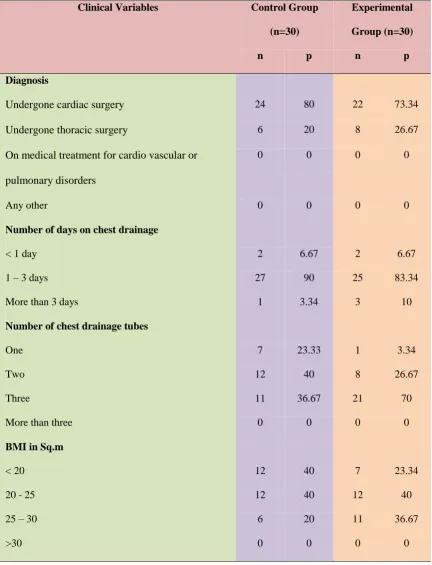
It can be inferred from table 2 that, majority of the patients in the control and experimental group have undergone cardiac surgery (80%, 73.34%), had chest drain for one to three days (90%, 83.34%),a significant percentage of patients were in BMI 20 – 25sq.m (40%, 40%) and all the patients were on oral NSAIDs (100%, 100%) respectively.
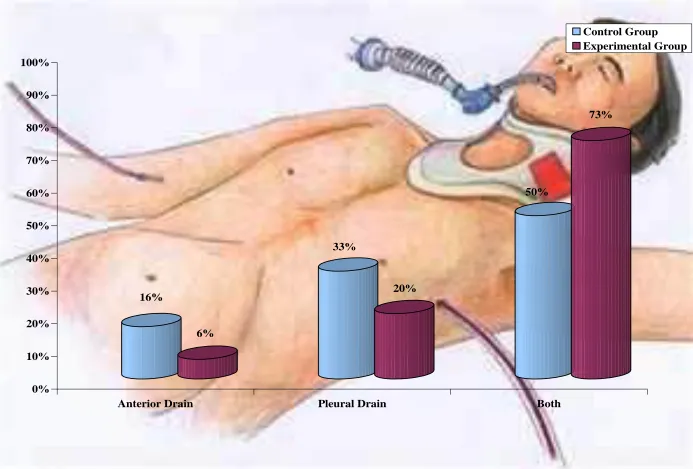
Fig.5 reveals that, majority of patients had both anterior and pleural drain (50%, 73%), most of the patients had pleural drain (33%, 20%) and significant percentage of them had anterior drains (16%, 6%) in control and experimental group respectively.
46
Fig. 5 Percentage Distribution of the Type of Chest Drain Tube in Control and Experimental group of Patients 16%
6%
33%
20%
50%
73%
0% 10% 20% 30% 40% 50% 60% 70% 80% 90% 100%
Anterior Drain Pleural Drain Both
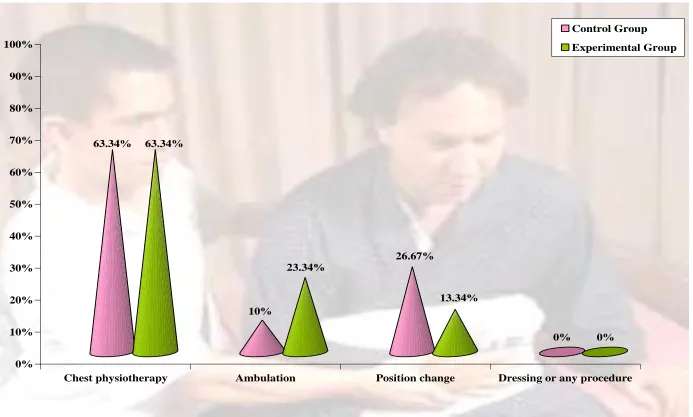
Fig. 6 Percentage Distribution of the Type of Physical Activity that Increase Pain in Control and Experimental Group of
63.34% 63.34%
10%
23.34%
26.67%
13.34%
0% 0% 0%
10% 20% 30% 40% 50% 60% 70% 80% 90% 100%
48 Table. 3
Frequency and Percentage Distribution of Level of Pain in the Control and Experimental Group of Patients with Chest Drainage before and after Ice Compress Application.
Variables
Control Group (n=30) Experimental Group (n=30)
pretest posttest pretest posttest
n p n p n p n p
PAIN
None 0 0 0 0 0 0 1 3.34
Mild 0 0 0 0 0 0 27 90
Moderate 0 0 0 0 0 0 2 6.67
[image:67.595.95.518.201.422.2]Severe 30 100 30 100 30 100 0 0
Table 3 reveals that majority of patients in control group had severe level of pain in pre test as well as in post test (100%, 100%) respectively. In the experimental group almost everybody had severe level of pain in pre test (100%). However after ice compress application, majority of them had mild level of pain (90%) in experimental group of patients.
Table 4.
Frequency and Percentage Distribution of Type of Pain Assessed using Mc Gill Questionnaire in Control and Experimental Group of Patients with Chest Drainage Before and After Ice Compress Application.
Data from table 4 reveals that, majority of patients in control group had stabbing type of pain(33.34%, 30%), most of them had sharp and burning pain (23.34%, 23.34%) in pre test and post test respectively. In experimental group, majority of patients experienced sharp pain (46.67%, 46.67%), most of them had stabbing type of pain (30%, 20%) in pre test and post test respectively
Pain Description
Control Group (n=30) Experimental Group (n=30)
pretest posttest pretest posttest
n p n p n p n p
Sharp 7 23.34 7 23.34 14 46.67 14 46.67
Stabbing 10 33.34 9 30 9 30 6 20
Burning 7 23.34 7 23.34 2 6.67 1 3.34
Fearfull 3 10 1 3.34 1 3.34 1 3.34
Aching 1 3.34 1 3.34 1 3.34 1 3.34
Heavy 1 3.34 - - - -
50 Table.5
Comparison of Mean and Standard Deviation of Level of Pain before Ice Compress Application between Control and Experimental Group of Patients with Chest Drainage and after Ice Compress Application of Patients with Chest Drainage.
***p< 0.001
Data from table 5 shows that, in control group the mean and standard deviation of level of pain measured using Numerical rating scale (M=9.13,7.06 & SD=0.62, 0.77) and Mc Gill pain questionnaire (M=3,2 & SD=0.17, 0.51) before and after chest drain removal, whereas in experimental group mean and standard deviation of level of pain measured using Numerical rating scale (M=9, 1.8 & SD=0.81, 1.11) and Mc Gill pain questionnaire (M=3, 0.1 & SD=0, 0.39) before and after administration of ice compress therapy. The difference was found to be statistically significant at p<0.001 and since‘t’ Level of pain
Control group
(n = 30)
Experimental group
(n = 30) ‘t’ test
Mean Standard deviation Mean Standard deviation
Numerical
rating scale
Pre test 9.13 0.61 9 0.81 1.34
Post test 7.06 0.77 1.8 1.11 35.39***
Mc Gill pain
questionnaire
Pre test 3 0.17 3 0 0
52 Table.6
Frequency and Percentage Distribution of Level of Satisfaction Scores of Ice Compress Application in the Experimental Group of Patients with Chest Drainage.
(N = 30)
Domain Experimental group
Highly Satisfied
Moderately Satisfied
Just Satisfied Dis satisfied
n P n p n p n p
Researcher 28 93.33 2 6.67 - - - -
Ice compress application
27 90.00 3 10.00 - - - -
Effectiveness of ice compress application
28 93.33 2 6.67 - - - -
Table. 7
Association between the Selected Demographic Variables and the Level of Pain before and after Ice Compress Application in the Control and Experimental Group of Patients with Chest Drainage.
Demographic Variables
Control Group (n=30) Experimental Group (n=30) pretest posttest pretest posttest
U p to m ean A bo ve m ea n χ2 U p to m ean A bo ve m ea n χ2 U p to m ean A bo ve m ea n χ2 U
p to
m ean A bo ve m ea n χ2
Age (in years)
≤ 40 7 3 0.08
(df =1)
15 4 0.835
(df =1)
3 3 2.08
(df =1)
1 6 0.54
(df =1)
> 40 15 5 7 4 9 9 12 11
Gender
Male 10 6 2.05
(df =1)
12 5 0.27
(df =1)
18 8 1.67
(df =1)
10 16 0.192
(df =1)
Female 12 2 8 5 4 0 2 2
Area of residence
Urban 13 6 0.639
(df =1)
15 4 0.835
(df =1)
14 6 0
(df =1)
7 13 0.25
(df =1) Suburban &
Rural
9 2 7 4 7 3 5 5
Education
Primary&
Secondary
13 4 0.197
(df =1)
12 5 0.27
(df =1)
11 4 0
(df =1)
6 19 0
(df =1) Higher
secondary &
graduate