0022-538X/96/$04.0010
Copyrightq1996, American Society for Microbiology
Herpes Simplex Virus Type 1 Protein IE63 Affects the Nuclear
Export of Virus Intron-Containing Transcripts
A. PHELAN, J. DUNLOP,ANDJ. B. CLEMENTS*
Institute of Virology, University of Glasgow, Glasgow, Scotland G11 5JR
Received 11 March 1996/Accepted 29 April 1996
Using in situ hybridization labelling methods, we have determined that the herpes simplex virus type 1 immediate-early protein IE63 (ICP27) affects the cellular localization of virus transcripts. Intronless tran-scripts from the IE63, UL38, and UL44 genes are rapidly exported to and accumulate in the cytoplasm throughout infection, in either the presence or absence of IE63 expression. The intron-containing transcripts from the IE110 and UL15 genes, while initially cytoplasmic, are increasingly retained in the nucleus in distinct clumps as infection proceeds, and the clumps colocalize with the redistributed small nuclear ribonucleoprotein particles. Infections with the IE63 mutant virus 27-lacZ demonstrated that in the absence of IE63 expression, nuclear retention of intron-containing transcripts was lost. The nuclear retention of UL15 transcripts, which demonstrated both nuclear and cytoplasmic label, was not as pronounced as that of the IE110 transcripts, and we propose that this is due to the late expression of UL15. Infections with the mutant virus 110C1, in which both introns of IE110 have been precisely removed (R. D. Everett, J. Gen. Virol. 72:651–659, 1991), demon-strated IE110 transcripts in both the nucleus and the cytoplasm; thus, exon definition sequences which regulate viral RNA transport are present in the IE110 transcript. By in situ hybridization a stable population of polyadenylated RNAs was found to accumulate in the nucleus in spots, most of which were separate from the small nuclear ribonucleoprotein particle clumps. The IE63 protein has an involvement, either direct or indirect, in the regulation of nucleocytoplasmic transport of viral transcripts, a function which contrasts with the recently proposed role of herpes simplex virus type 1 Us11 in promoting the nuclear export of partially spliced or unspliced transcripts (J.-J. Diaz, M. Duc Dodon, N. Schaerer-Uthurraly, D. Simonin, K. Kindbeiter, L. Gazzolo, and J.-J. Madjar, Nature [London] 379:273–277, 1996), the significance of which is discussed.
Primary transcripts of genes transcribed by RNA polymerase II generally are processed by 59capping, splicing, and 39 pro-cessing before transportation to the cytoplasm (reviewed in references 35, 36, and 71). Direct labelling methods have dem-onstrated that splicing occurs at sites of transcription (80); however, polyadenylated unspliced intermediates can be de-tected both in vivo and in vitro (53). Splicing of 59-proximal introns can precede polyadenylation of large transcripts (39), and Liu and Mertz (40) have demonstrated that poly(A) site selection, but not necessarily cleavage, precedes excision of the 39-terminal intron in vivo; the temporal order in which these RNA processing functions occur is variable. The 59 cap and poly(A) tail are believed to act as RNA transport signals (13), whereas the presence of introns inhibits transport to the cyto-plasm as splicing factors are recruited to intron-containing transcripts which are then retained in the nucleus until they are spliced and/or actively transported to the cytoplasm (2).
A number of factors govern the nucleocytoplasmic transport of mRNA, although this process is still poorly understood. Nuclear export occurs in two stages: (i) transport from the gene to the nuclear periphery and (ii) translocation across the nuclear membrane (13). The first step involves ribonucleopro-teins (RNPs) (45), which bind RNA cotranscriptionally (51, 57). The mechanism by which a transcript passes through the nuclear pore is thought to involve RNP interactions; binding of heterogeneous nuclear RNP L correlates with efficient mRNA processing and transport, and heterogeneous nuclear RNP L
facilitates binding of other heterogeneous nuclear RNPs to the RNA (41).
Regulation of nucleocytoplasmic transport has been identi-fied in a number of viral systems. The human immunodefi-ciency virus (HIV) type 1 protein Rev together with a cellular factor, Rab, induces the cytoplasmic appearance of unspliced and partially spliced virus transcripts via a direct and sequence-specific interaction with the Rev response element, which is contained within all intron-containing HIV transcripts (11, 18); a similar mechanism has been identified for the human T-cell leukemia virus (HTLV) type 1 Rex protein (3). In contrast to Rev and Rex, the influenza virus NS1 protein has an inhibitory effect on the transport of spliced polyadenylated RNAs and inhibits splicing (19, 59, 60). The adenovirus E1B protein en-hances the relocation of viral mRNAs to particular subnuclear compartments and facilitates their export to the cytoplasm (38, 55). The herpes simplex virus type 1 (HSV-1) Us11 late protein has been implicated as having effects similar to those of Rev and Rex, as it can functionally substitute for their functions in vitro (12). We show here that the HSV-1 IE63 protein acts to inhibit nuclear export of intron-containing transcripts; whether Us11 acts to promote export of unspliced transcripts in HSV-infected cells, in which case IE63 and Us11 would be in ap-parent competition, remains to be seen.
HSV-1 is a nuclear-replicating DNA virus (64) the genes of which are expressed in a temporal cascade (9, 30). Immediate-early (IE) regulatory genes are expressed first; these stimulate early gene expression, which provides many of the functions required for viral DNA synthesis; and finally the late virus genes, which encode mainly structural proteins, are expressed (64, 77). Of the more than 70 HSV-1 genes, only 4 of those expressed during lytic infection contain introns (21). Thus, the virus has only a very limited requirement for the cell’s splicing
* Corresponding author. Mailing address: Institute of Virology, Uni-versity of Glasgow, Church St., Glasgow, Scotland G11 5JR. Phone: 141 330 4017. Fax: 141 337 2236.
5255
on November 9, 2019 by guest
http://jvi.asm.org/
machinery; however, lytically expressed viral transcripts are capped and polyadenylated. Of the four spliced transcripts, three (IE110, IE68, and IE12) are expressed from IE times postinfection, and the fourth (UL15) is expressed from late times (10). Another late gene, UL44, has been associated with splicing, as it is apparently located within an intron and its transcripts are produced only in the absence of splicing (21).
HSV-1 infection represses host protein synthesis (17, 29), and this is initially accomplished by the virion host shutoff function, the action of an incoming viral tegument protein (37, 61, 72), which acts by induction of an RNase activity which destabilizes viral and cellular mRNAs and disrupts polyribo-somes (34, 37, 75). A second stage of host shutoff, which requires virus gene expression, further reduces the levels of host protein synthesis (16), and the IE63 protein was required for efficient reduction of host protein synthesis (65), implicat-ing this protein as a strong candidate for the second host shutoff function.
An inhibition of splicing has been identified following HSV infection. Schroder et al. (69) found that splicing ofb-tubulin RNA was reduced, and Hardwicke and Sandri-Goldin (24) demonstrated a decrease in the levels of three spliced cellular RNAs which was not due to effects on transcription or RNA stability. More recently, Hardy and Sandri-Goldin (26), using an IE63 mutant virus, 27-lacZ, demonstrated that IE63 was required for inhibition of splicing in vitro, and Hibbard and Sandri-Goldin (28) found a reduction in cellular mRNA levels and nuclear accumulation of pre-mRNAs which required IE63 expression. Inhibition of splicing resulted in the nuclear export of some unspliced transcripts (26), suggesting that regulation of RNA export was also affected.
The IE63 (ICP27) protein is a nuclear phosphoprotein and is one of only two IE functions essential for lytic virus replica-tion (62). IE63 plays a key role in the switch from early to late gene expression at the posttranscriptional level (46, 48, 49, 62, 65, 68), has both positive and negative effects on gene expres-sion (25, 50, 70, 73), and functionally interacts with two other IE proteins, IE175 and IE110 (70, 81). IE63 affects the phos-phorylation states of a number of proteins (one of which is thought to be the U1 small nuclear RNP [snRNP]) (66), binds RNA directly (32), and acts to stabilize the 39ends of normally labile mRNAs (6). Further, IE63 has been shown to be both necessary and sufficient to cause a redistribution of the cellular splicing snRNPs from a diffuse speckled pattern within the nucleus to a highly punctate distribution (56); this redistribu-tion effect was originally observed by Martin et al. (44). Fur-thermore, we showed that IE63 colocalizes with the snRNPs (56), and more recently, Sandri-Goldin and Hibbard (66) have shown this interaction by coimmunoprecipitation studies. The distribution of the polyadenylation factors remains largely un-affected during HSV infection (48).
Disruption of snRNP organization can be observed under a number of conditions; for example, inhibition of RNA poly-merase II transcription bya-amanitin (7), inhibition of splicing by using antisense RNA molecules or antibodies (54), and heat shock treatments (4) cause snRNPs to cycle into interchroma-tin granule storage sites. Infections with adenovirus (5, 33, 58) and influenza virus (20) also cause a redistribution of the snRNPs. Adenovirus RNAs are extensively spliced, and the splicing factors are recruited into virus transcription and pro-cessing sites; in contrast, influenza virus has little requirement for splicing and inhibits cellular splicing, indicating that the redistributed snRNPs in influenza virus-infected cells are in-active aggregates (20).
IE63 can inhibit splicing and can interact and colocalize with the snRNPs, which suggests that this protein inhibits splicing
by removing snRNPs from sites of transcription and polyade-nylation. Although splicing is largely inhibited by HSV-1 in-fection, there is evidence for a residual amount of ongoing splicing, as the few intron-containing viral transcripts and some cellular genes are processed. Presumably this residual splicing could be carried out by the remaining snRNPs diffusely dis-tributed throughout the nucleoplasm.
Previous studies which have examined the effects of HSV-1 on splicing have been based largely on in vitro assays and transient-expression systems. In this study we have directly examined the intracellular localization of spliced and unspliced viral RNAs by using in situ hybridization experiments over a time course of HSV-1 infection. The IE and late intron-con-taining transcripts studied (IE110 and UL15) were increasingly retained in the nucleus in distinct clumps as infection pro-ceeded, whereas intronless IE and late transcripts (IE63, UL38, and UL44) were detected predominantly in the cyto-plasm. Double-labelling experiments have demonstrated that these intron-containing transcripts colocalize with the redis-tributed snRNP clumps. IE63 is required for the nuclear re-tention of intron-containing transcripts, since in its absence, all transcripts were predominantly cytoplasmic. Cells infected with an IE110 mutant virus in which both introns have been precisely removed (14) demonstrated a localization of IE110 transcripts in both the nucleus and cytoplasm, showing more nuclear label than would be expected for an intronless tran-script but more cytoplasmic label than seen with intron-con-taining transcripts. This suggests the presence of exon defini-tion sequences in the IE110 transcript by which splicing signals are recognized (53, 80). Interestingly, the UL15 late transcript demonstrated a similar intermediate phenotype with both nu-clear and cytoplasmic label, and we believe that this is a re-flection of the time postinfection of its expression. We have utilized poly(dT) in situ hybridization to locate polyadenylated RNAs and found poly(A)1 RNA in the cytoplasm and in distinct nuclear spots at later times postinfection. However, only a small proportion of these distinct spots colocalized with the redistributed snRNPs, suggesting the presence of either a stable population of poly(A)1RNA which is retained in the nucleus but whose function is unknown (8, 31) or transient storage forms of incompletely or abnormally processed pre-mRNA (76).
MATERIALS AND METHODS
Cell culture and viruses.HeLa cells were grown as monolayers in Dulbecco’s modified minimal essential medium supplemented with 5% newborn calf serum and 5% fetal calf serum. Vero 2-2 cells (73) were maintained in Glasgow minimal essential medium supplemented with 5% newborn calf serum and 5% fetal calf serum. BHK cells were grown in Glasgow minimal essential medium supple-mented with 10% newborn calf serum. All cells were grown at 378C in an atmosphere of 5% CO2.
Stocks of wild-type HSV-1 (strain 171) and the HSV-1 mutant 110C1, a gift from R. Everett, in which both introns of IE110 have been precisely removed (14), were grown at 378C on BHK monolayers. Virus 27-lacZ, a gift from R. Sandri-Goldin, in which the IE63 gene is inactivated by insertion of a lacZ cassette, was grown on the complementing Vero 2-2 cell line (73).
HSV-1 infection of cell monolayers.All cells were grown as monolayers on sterile glass coverslips previously treated with 10% poly-L-lysine for 10 min after sterilization. Subconfluent cell monolayers were infected with either wild-type or mutant HSV-1 at a multiplicity of infection of 10 PFU per cell. After 1 h at 378C, the infected medium was removed and replaced with fresh prewarmed medium until the time of harvesting. Coverslips were harvested at 2-h intervals until 16 h postinfection. Mock-infected (uninfected) cells were treated in an identical man-ner with the omission of virus.
RNA in situ hybridization.RNA in situ hybridization was performed by two methods.
(i) Riboprobe in situ.Cells fixed for 10 min at room temperature (RT) in 3.7% paraformaldehyde in CSK buffer {100 mM NaCl, 300 mM sucrose, 10 mM PIPES [piperazine-N,N9-bis(2-ethanesulfonic acid)], 3 mM MgCl2, 1 mM EGTA [ethylene glycol-bis(b-aminoethyl ether)-N,N,N9,N9-tetraacetic acid], pH 8} were labelled as described in the Amersham RNA Colour Kit protocol with the
on November 9, 2019 by guest
http://jvi.asm.org/
omission of the proteinase K step. Fluorescein-UTP-labelled riboprobes between 200 and 400 bp in length were transcribed in vitro to produce both sense (Sp6 RNA polymerase) and antisense (T7 RNA polymerase) riboprobes. Sites of hybridization were detected with anti-fluorescein alkaline phosphatase-conju-gated antibodies and alkaline phosphatase color development (Amersham kit). Digoxigenin-UTP-labelled sense and antisense riboprobes were synthesized from the same set of templates. Regions of hybridized probe were detected by using an anti-digoxigenin fluorescein-conjugated antibody at a dilution of 1:10 (Boehr-inger Mannheim).
A number of negative control experiments were performed. Treatment with RNase A (200mg/ml) and RNase H (100 U/ml) at 378C for 20 min prior to hybridization removed all signal. RNase H treatment after hybridization re-moved any DNA-RNA hybrids and reduced the background label but did not affect the genuine signal; RNase A treatment after hybridization removed all unhybridized probe. Treatment with DNase (100 U/ml) for 1 h prior to hybrid-ization removed the background label but had no effects on the signal obtained.
(ii) Biotinylated RNA oligonucleotides.Cells grown as monolayers on cover-slips were permeabilized with 0.5% Triton in CSK buffer for 30 s on ice prior to fixation for 10 min at RT with 3.7% paraformaldehyde in CSK buffer. Biotiny-lated 29-O-methyl RNA oligonucleotides were hybridized for 1 h at RT at a final probe concentration of 1 pmol/ml (7) in a humidified chamber as follows. Fixed cells were rinsed in 63SSPE (13SSPE is 0.18 M NaCl, 10 mM NaH2PO4, and 1 mM EDTA [pH 7.7]) and incubated for 5 to 15 min with tRNA (0.5mg/ml in 63SSPE–53Denhardt’s solution), the probe was added in an equal volume of 63SSPE–53Denhardt’s solution, and hybridization was for 1 h at RT. Cells were washed in 63SSPE, and the probe was detected with Avidin-fluorescein isothiocyanate (FITC) diluted 1:500 in Avidin wash buffer (20 mM HEPES [N-2-hydroxyethylpiperazine-N9-2-ethanesulfonic acid] [pH 7.9], 150 mM KCl, 0.05% Tween). Coverslips were either mounted with Mowiol or double labelled by using a monoclonal anti-B0U2 snRNP antibody and a rhodamine-conjugated secondary antibody as described in “Immunofluorescence and antibodies” below.
In situ riboprobes.Fluorescein-UTP- or digoxigenin-UTP-labelled sense and antisense riboprobes were synthesized as described in the Amersham RNA Colour Kit. Essentially, riboprobes of between 200 and 400 bp in length were transcribed in vitro by using Sp6 or T7 RNA polymerase with linearized plasmids encoding the various gene-specific probe regions as the template. Probes against the following HSV-1 gene transcripts were generated: IE63 transcriptional trans-activator (genomic map positions [47] 115035 to 115435), 400-bp probe; IE110 transcriptional transactivator, exon 3 (120480 to 121033), 210-bp probe; UL15 DNA packaging protein, exon 1 (29419 to 29823), 404-bp probe; UL44 glyco-protein C (97444 to 97844), 400-bp probe; and UL38 capsid glyco-protein (86016 to 85616), 400-bp probe.
Biotinylated 29-O-methyl RNA oligonucleotides kindly provided by Cruachem, Ltd., Glasgow, Scotland, were generated against U1 snRNP (biotin-CC UGC CAG GUA AGU AU) (16-mer) (7), IE110 exon 3 (biotin-UGU UAC UGC UGC CGU GU) (17-mer), and IE110 intron 1 (biotin-UAU GUG UUG GGG GUC UGU A) (19-mer). These probes were used in conjunction with immuno-fluorescence assays.
DNA in situ hybridization.A biotinylated poly(dT) DNA oligonucleotide (18-mer) was used to locate polyadenylated RNAs in the nucleus, using the method described for the RNA oligonucleotides.
Immunofluorescence and antibodies. Indirect-immunofluorescence experi-ments were performed as previously described (56). All antibodies were diluted in phosphate-buffered saline before use. The U2 splicing snRNPs were labelled with the B0monoclonal antibody 4G3 (23) at a dilution of 1:5.
Microscopy.Labelled cells were examined with a Nikon light and fluorescence microscope. Photographs of alkaline phosphatase-labelled cells were taken with 160T Fuji films. Fluorescently labelled cells were photographed with ASA 400 Ektachrome films.
RESULTS
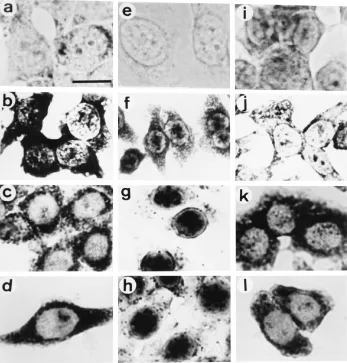
Intron-containing transcripts are retained in the nuclei of infected cells.HeLa cells infected with wild-type HSV-1 for 0, 2, 4, 8, and 16 h were labelled with antisense fluorescein-labelled riboprobes directed against the coding portion of IE63, an intronless transcript (Fig. 1a to d), and exon 3 of IE110, a transcript which contains two introns (Fig. 1e to h), and the hybridized probes were detected by alkaline phos-phatase color development. The viral probes hybridized spe-cifically to virus transcripts and did not label the uninfected cells (Fig. 1a and e). At 2 h postinfection, cells labelled with the anti-IE63 riboprobe demonstrated predominantly cytoplasmic label with some faint nuclear stain (Fig. 1b). As infection proceeded, labelling became more intense, with the pattern remaining constant and with IE63 transcripts being predomi-nantly cytoplasmic at the 8-h (Fig. 1c) and 16-h (Fig. 1d) time points. The IE110 exonic riboprobe demonstrated a strikingly
different labelling pattern. At 2 h postinfection, the label was largely cytoplasmic with some quantity of nuclear stain (Fig. 1f). By 4 to 6 h a large proportion of the label was found in the nucleus in distinct densely staining clumps, and cytoplasmic label was noticeably reduced (Fig. 1g). This became more pronounced, and by 8 h (not shown) and 16 h (Fig. 1h) the nucleus was packed with accumulated IE110 transcripts (some-what obscuring the discrete clump formation), and little cyto-plasmic label was seen. RNase A (Fig. 1k) and RNase H (Fig. 1l) treatments of cells labelled with an anti-IE63 riboprobe 8 h postinfection demonstrated that the hybridization was specific: RNase A removed any unhybridized probe and reduced the background label slightly; RNase H digested any RNA-DNA hybrids and removed some background label, but the bulk of the signal was unaffected. Sense riboprobes against IE110 (Fig. 1i) and IE63 (Fig. 1j) did not hybridize.
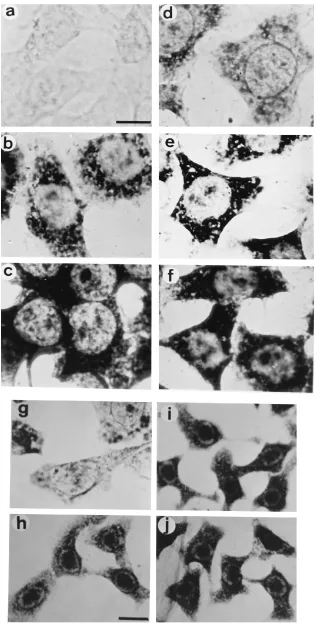
To investigate whether these two distinctive labelling pat-terns were exhibited by other spliced and unspliced viral RNAs, the locations of three additional viral transcripts were examined throughout infection. HeLa cells were labelled with antisense riboprobes against the late genes UL38 (Fig. 2a to c), UL44 (Fig. 2d to f), and UL15 (Fig. 2g to j). The intronless UL38 and UL44 transcripts were detected almost exclusively in the cytoplasm throughout infection (Fig. 2a to c and d to f, respectively), with very little nuclear label observed. Occa-sional nonspecific label was found associated with nucleoli (Fig. 2f); this could be removed by posthybridization RNase A treatment (not shown). An antisense riboprobe against the UL15 transcript, which contains a single intron, labelled in-fected nuclei with an intermediate nuclear and cytoplasmic phenotype (Fig. 2g to j). Throughout infection (0 to 16 h), UL15 transcripts could be detected in the nucleus in large clumps, but there was also a significant amount of cytoplasmic label, a phenotype intermediate between those of IE63 and IE110 transcripts. Sense riboprobes against UL38, UL44, and UL15 (not shown) exhibited no hybridization under these con-ditions. RNase A, RNase H, and DNase I treatments of the cells hybridized with the antisense UL15 probe after labelling at 8 h postinfection did not alter the labelling patterns (not shown), except that nonspecific nucleolar labelling was re-moved.
IE110 transcripts which lack introns are still retained in the nucleus. HeLa cells infected with the virus 110C1, in which both introns of IE110 have been precisely removed, were la-belled with an antisense IE110 riboprobe from exon 3 over a time course of infection, and sites of hybridization were de-tected by alkaline phosphatase color development.
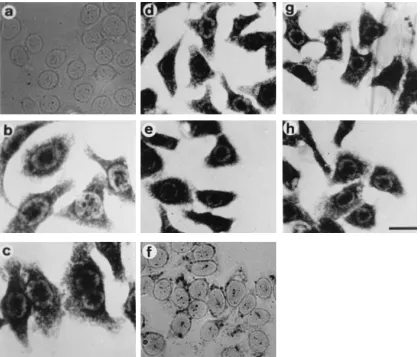
The mock-infected cells were not labelled with this probe (Fig. 3a). Cells labelled 2, 4, 8, and 16 h postinfection with 110C1 (Fig. 3b to e) demonstrated an intermediate phenotype, with considerably more label retained in the nucleus than ob-served for a transcript without introns (compare Fig. 3c with Fig. 1c) and also with more cytoplasmic label than seen with the IE110 intron-containing transcripts (compare Fig. 3c with Fig. 1g). The IE110 sense riboprobe did not label the cells (Fig. 3f), and RNase A and RNase H treatments posthybridization had no effect on the signal obtained (Fig. 3g and h).
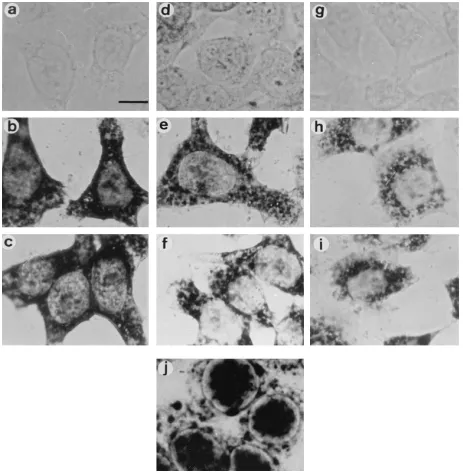
IE63 protein is required for the nuclear retention of intron-containing viral transcripts.HeLa cells infected with the IE63 mutant virus 27-lacZ for 0, 4, 8, and 16 h (not shown) were labelled with an antisense fluorescein-labelled riboprobe di-rected against the coding portion of IE63 (Fig. 4a to c), IE110 exon 3 (Fig. 4d to f), and UL15 exon 2 (Fig. 4g to i), and the hybridized label was detected by alkaline phosphatase color development. Mock-infected cells were not labelled with any of the probes used (Fig. 4a, d, and g). The antisense IE63
on November 9, 2019 by guest
http://jvi.asm.org/
probe detected IE63 transcripts in the cytoplasm throughout infection (Fig. 4b and c); the IE63 sense probe did not hybrid-ize to cells (not shown).
The IE110 antisense riboprobe labelled transcripts which were present exclusively in the cytoplasm throughout the course of 27-lacZ infection (Fig. 4e and f). The IE110 sense probe did not hybridize under these conditions (not shown). The antisense UL15 riboprobe detected all UL15 transcripts exclusively in the cytoplasm at both 4 h (Fig. 4h) and 8 h (Fig. 4i) postinfection. The UL15 sense probe did not hybridize with the cells under these conditions (not shown).
27-lacZ infection of the complementing 2-2 cell line dem-onstrated wild-type labelling patterns such that cells at 8 h postinfection demonstrated the distinctive nuclear retention of IE110 transcripts in large clumps (Fig. 4j). RNase A and RNase H treatments of 27-lacZ-infected HeLa cells labelled with the anti-IE110 riboprobe had no effect on the signal obtained (not shown).
The intron-containing transcripts retained in the nucleus colocalize with the redistributed snRNPs at later times postin-fection.HeLa cells at 0, 8, and 16 h postinfection with HSV-1 were fixed and labelled with biotinylated RNA
oligonucleo-tides against either the intronic or exonic regions of IE110, which was followed by Avidin-FITC detection, and with an antibody against the B0component of the U2 snRNP, which was followed by antimouse rhodamine detection. In mock-infected cells the U2 snRNP demonstrated a normal diffuse, speckled pattern (Fig. 5b), and the IE110 exon and intron probes only weakly labelled these cells (Fig. 5a). At 8 h (Fig. 5c) and 16 h (not shown) postinfection, IE110 exonic portions of the transcript were detected in clumps within the nucleus, and redistributed snRNP clumps (Fig. 5d) predominantly co-localized with these concentrated spots of IE110 probe. Cells at 16 h postinfection double labelled with probes specific to the exonic (Fig. 5e) and the intronic (Fig. 5f) portions of the IE110 transcript demonstrated that a large proportion of the two probes colocalize.
[image:4.612.132.479.73.436.2]At late times postinfection, polyadenylated RNAs are dis-tributed in distinct nuclear spots. HeLa cells at 0, 4, 8, and 16 h postinfection with wild-type HSV-1 were labelled with a biotinylated poly(dT) DNA oligonucleotide, which was fol-lowed by Avidin-FITC detection, and with an antibody against the B0 component of the U2 snRNP, which was followed by antimouse rhodamine detection. In mock-infected cells, both FIG. 1. Intron-containing transcripts are retained in the nucleus. Uninfected HeLa cells (a) and HeLa cells infected with wild-type HSV-1 for 2 h (b), 8 h (c), and 16 h (d) were labelled with an antisense riboprobe against IE63, and the hybridized probe was visualized by immunolabelling and alkaline phosphatase color development. HeLa cells were also labelled with an antisense riboprobe against IE110 in mock-infected cells (e) and in cells 2 h (f), 6 h (g), and 16 h (h) postinfection. As controls, cells at 16 h postinfection were labelled with sense probes against IE63 (i) and IE110 (j). Posthybridization RNase A (k) and RNase H (l) treatments of cells labelled with an antisense IE110 riboprobe 8 h postinfection were performed. Bar, 10mm.
on November 9, 2019 by guest
http://jvi.asm.org/
FIG. 2. Intronless transcripts are rapidly exported to the cytoplasm. Mock-infected HeLa cells (a and d) and HeLa cells infected with HSV-1 (b, c, e, and f) were labelled with antisense riboprobes against UL38 (a to c) and UL44 (d to f) at 8 h (b and e) and 16 h (c and f) post-infection. Mock-infected cells (g) and infected cells (h to j) were labelled with an antisense riboprobe against UL15 at 4 h (h), 8 h (i), and 16 h (j) postinfection. The hybridized probe was detected by alkaline phosphatase color development. Bars, 10mm.
on November 9, 2019 by guest
http://jvi.asm.org/
demonstrated a diffuse, speckled labelling pattern (Fig. 6a and b) with a ringing of the dT label around the nucleoli (Fig. 6a). At 4 h the snRNPs had become clumped in appearance, but the poly(dT) label remained unaltered (not shown) except for a noticeable increase in the amount of cytoplasmic polyadeny-lated RNA. By 8 h postinfection, the snRNPs were quite punc-tate in distribution (Fig. 6d) and the poly(A)1RNA was dis-tributed throughout the nucleus and cytoplasm (Fig. 6c). At 16 h postinfection, the snRNPs were highly punctate in distri-bution (Fig. 6f) and the poly(A)-containing RNA was present in a large number of brightly labelled nuclear foci in most cells and diffusely throughout the cytoplasm, but the intensity of the cytoplasm relative to the nucleus means that the cytoplasmic label is not clearly visible at the exposure shown (Fig. 6e). Only a small proportion of the poly(dT) foci colocalize with the redistributed snRNP spots. DNase treatment prior to hybrid-ization did not remove the signal, demonstrating that the probe was RNA specific (not shown).
DISCUSSION
Cellular locations of spliced and unspliced viral transcripts. The data of Hardy and Sandri-Goldin (26) and Hardwicke and Sandri-Goldin (24) showed that HSV infection causes an
[image:6.612.98.518.70.427.2]in-hibition of splicing both in vitro and in vivo such that pre-mRNAs accumulate in the nucleus and, further, that IE63 protein is required for this effect. Here, we have directly ex-amined the accumulated intracellular localizations of viral transcripts which contain or lack introns and which are ex-pressed at different times postinfection, and we have deter-mined the involvement of IE63 in their localization. Intronless transcripts such as those from the IE63, UL38, and UL44 genes were almost exclusively cytoplasmic in location, and very little RNA was found in the nucleus, indicative of rapid nucle-ocytoplasmic transport. The IE110 transcript which contains two introns was detected predominantly in the cytoplasm at IE times; however, as infection proceeded from 4 to 6 h onwards, very little cytoplasmic label was detected and the nucleus be-came filled with accumulated transcripts present in large clumps. Double-label experiments demonstrated that intronic and exonic IE110 probes colocalized in the nucleus at later times, but whether this represents unspliced transcripts or spliced RNAs with excised introns remaining close by cannot be distinguished. Xing et al. (79) have shown that excised neurotensin introns were free to diffuse, whereas unprocessed RNAs remained associated with the nuclear substructure; thus, colocalization of the intronic and exonic IE110 probes most likely represents unspliced pre-mRNAs. The intron-containing FIG. 3. Exon sequences can define the nuclear retention of IE110 transcripts. Mock-infected HeLa cells (a) and cells infected with the IE110 mutant virus 110C1 for 2 h (b), 4 h (c), 8 h (d), and 16 h (e) were labelled with an antisense riboprobe against the IE110 transcript, and the hybridized label was detected by alkaline phosphatase color development. Cells at 16 h postinfection with 110C1 were also labelled with a sense IE110 probe (f). Posthybridization RNase A (g) and RNase H (h) treatments were performed on cells 16 h postinfection, labelled with the antisense IE110 riboprobe. Bar, 10mm.
on November 9, 2019 by guest
http://jvi.asm.org/
transcript from the UL15 late gene cannot be detected at IE times, but once detected it was present in both the nucleus and the cytoplasm throughout infection, forming the characteristic nuclear clumps. Infections with virus 27-lacZ, during which splicing is not inhibited, unambiguously demonstrated that IE63 was required for the nuclear retention of intron-contain-ing transcripts, since in the absence of IE63, all transcripts were rapidly transported to the cytoplasm.
Intron-containing transcripts retained within the nucleus colocalize with the redistributed snRNPs. HSV-1 infection (44), and more specifically IE63 expression (56), caused a redistribution of the splicing snRNPs away from their diffuse, speckled nuclear pattern to a highly punctate organization, and
IE63 colocalized with these snRNP clusters. Sandri-Goldin et al. (67) have shown that the C terminus of IE63 is required for this snRNP redistribution effect, implicating this as a candidate region for causing the nuclear retention of intron-containing transcripts.
[image:7.612.76.539.70.543.2]Intron-containing IE110 transcripts retained within the nu-cleus colocalized with the redistributed snRNPs. A possible explanation is that the punctate snRNPs are active in splicing and intron-containing transcripts are recruited there for pro-cessing prior to nuclear export; thus, the sites of transcript accumulation represent processed but nontransported RNAs. Alternatively, intron-containing transcripts may localize to the snRNP clumps through an affinity of splicing snRNPs for FIG. 4. IE63 is required for the nuclear retention of intron-containing transcripts. Mock-infected HeLa cells (a, d, and g) and cells infected with the IE63 mutant virus 27-lacZ for 4 h (b, e, and h) and 8 h (c, f, and i) were labelled with antisense riboprobes against IE63 (a to c), IE110 (d to f), or UL15 (g to i), and the hybridized label was detected by alkaline phosphatase color development. (j) 2-2 cells, the complementing cell line for the 27-lacZ virus, were infected with 27-lacZ for 8 h and labelled with an antisense riboprobe against IE110, and the label was detected by alkaline phosphatase color development. Bar, 10mm.
on November 9, 2019 by guest
http://jvi.asm.org/
RNA, but since the snRNPs are now clumped into nonfunc-tional storage sites, trapped RNAs which cannot be spliced or transported accumulate. Using an anti-interchromatin granule antibody, Besse et al. (1) have shown that the redistributed snRNPs are condensed into these regions, which are believed to function only as storage sites, not as active sites of process-ing or transcription. We favor the view that the redistributed snRNPs are inactive in splicing, and we have shown by direct labelling methods that these clumps are not coincident with sites of viral transcription or viral DNA replication (unpub-lished results). Mermoud et al. (52) and others have identified changes in the phosphorylation state of splicing factor SR domains which target RNA-processing proteins, and this may trigger the movement of splicing factors between storage and active sites (22, 74). Sandri-Goldin et al. (67) have data which suggest that while the IE63-mediated impairment of host cell
splicing correlates with the redistribution of the snRNPs, these alterations are not sufficient to fully inhibit splicing in vitro or splicing of introduced reporter constructs. Their test condi-tions detected splicing in the presence of redistributed snRNPs, suggesting that either the redistributed snRNPs were active or sufficient snRNP remained diffusely distributed in the nucleoplasm to perform the amount of splicing required. Malim and Cullen (43) suggest that the cellular factors most probably responsible for the nuclear retention of pre-mRNAs are splicing factors, and it has been found that IE63 affects the phosphorylation states of at least two cellular proteins, one of which appears to be the 70-kDa component of the U1 snRNP (66). This could represent the mechanism whereby IE63 pro-motes the snRNP redistribution effect.
The fate of spliced transcripts. The UL15 late transcript, which contains a single intron, is present in both the nucleus and the cytoplasm throughout infection, forming the charac-teristic nuclear clumps. Since virus-induced inhibition of splic-ing is well under way by the time UL15 transcripts are made, these transcripts are immediately susceptible to the nuclear retention effect; however, at later times a considerable propor-FIG. 5. The intron-containing transcripts retained in the nucleus colocalize
[image:8.612.75.278.69.448.2]with the redistributed snRNPs. Mock-infected HeLa cells (a and b) and cells at 8 h postinfection with HSV-1 (c and d) were double labelled with a biotinylated 29-O-methyl RNA oligonucleotide against IE110 exon 3 (a and c) and an anti-body against the B0component of the U2 snRNP (b and d); the probe and antibody were detected with FITC and Texas Red, respectively. HeLa cells at 16 h postinfection with HSV-1 were double labelled with a biotinylated IE110 exonic RNA oligonucleotide (e) together with a digoxigenin-labelled IE110 intronic probe (f); the hybridized probes were detected with Texas Red and FITC, respectively. Arrows and arrowheads indicate areas of colocalization. Bars, 10mm.
FIG. 6. Polyadenylated RNAs accumulate in the nucleus during the course of infection. Mock-infected HeLa cells (a and b) and cells at 8 h (c and d) and 16 h (e and f) postinfection with HSV-1 were double labelled with a biotinylated poly(dT) oligonucleotide (a, c, and e) and an antibody against the B0component of the U2 snRNP (b, d, and f); the two labels were detected with FITC and Texas Red, respectively. Bar, 10mm.
on November 9, 2019 by guest
http://jvi.asm.org/
[image:8.612.345.526.69.433.2]tion of UL15 transcripts is found in the cytoplasm, in contrast to the situation found with the IE110 transcripts. Hardy and Sandri-Goldin (26) showed that 30% of cytoplasmic UL15 RNA at late times was unspliced, suggesting that there are less-stringent controls governing the export of UL15 than gov-erning that of IE110. Everett et al. (15) have identified a truncated form of the IE110 protein during wild-type infection, which arises from a failure to remove the second intron, with the result that an in-frame stop codon within this intron ter-minates translation. This suggests the possibility of alternative or aberrant splicing events affecting IE110 expression. It is possible that the differences in localization of IE110 and UL15 transcripts relate directly to the time postinfection of their expression; however, while IE transcription peaks at around 3 to 4 h postinfection, there is a low level of IE transcription and a persistence of transcripts throughout infection (27, 78), with the result that some IE110 transcription would be occurring at the time of UL15 expression. Another consideration is the fact that IE110 contains two introns as opposed to one for UL15; this could result in IE110 transcripts being more tightly re-tained in the nucleus, but such a theory has not yet been proven.
Exon sequences cause the nuclear retention of intron-con-taining transcripts. The distribution of IE110 transcripts in cells infected with the mutant virus 110C1, in which both in-trons of IE110 have been precisely removed, indicates that exonic sequences are dictating the interaction of this transcript with the splicing snRNPs. A considerable amount of IE110 transcripts was detected in the cytoplasm throughout infection with 110C1; however, the IE110 exonic probe labelled the nuclei in large spots from early times, a pattern different from that shown by the wild-type IE110 intron-containing transcript, in which very little cytoplasmic RNA was present even at early times. Niwa et al. (53) suggest that the exon rather than the intron is the unit of recognition in vertebrate splicing; factors binding 39 and 59 splice sites communicate across exons to define them as the first units of spliceosome assembly, which precedes the definition of introns for removal. Sequences lo-cated within an exon downstream of a 39splice site can facil-itate initial spliceosome complex formation, and a number of such preassembly complexes have been identified (63). Liu and Mertz (40) have demonstrated that selection of, but not nec-essarily cleavage at, a polyadenylation site precedes excision of the 39-terminal intron in vivo, further supporting the exon definition theory. snRNP recognition of IE110 transcripts from the virus 110C1 must be due to exonic sequences.
Polyadenylated RNAs accumulate in the infected-cell nu-cleus.To examine the localization of viral and cellular poly-adenylated RNAs, we utilized a poly(dT) in situ hybridization procedure. In uninfected cells and up to 6 to 8 h postinfection, the poly(A)-containing RNA was distributed widely through-out the nucleoplasm and the cytoplasm. At later times, a large number of spots of accumulated poly(dT) were seen in the nucleus, and only a small proportion of these colocalized with the redistributed snRNPs. These colocalized sites represent polyadenylated (possibly intron-containing) transcripts which are interacting with snRNPs; the remaining poly(A)1 RNA spots represent RNAs awaiting transport or a stable poly(A)1 population retained in the nucleus. A similar reorganization of poly(A)1RNA was observed by Huang et al. (31) when RNA polymerase II activity was inhibited and by Visa et al. (76) following heat shock treatment of cells; Huang et al. (31) proposed that the nuclear population of polyadenylated RNAs may serve some unknown functional role.
Other viral proteins with comparable posttranscriptional effects. IE63 is a complex protein with regulatory functions
affecting virus transcription, RNA processing, and DNA rep-lication. Its posttranscriptional functions have counterparts in other viral systems. During influenza virus infection, the snRNP and associated factors become more punctate in dis-tribution, and Fortes et al. (20) determined that the NS1 pro-tein was essential for this effect. NS1 causes an inhibition of splicing of its own mRNA (42, 60) with a resulting accumula-tion of splicing intermediates (19) and has been found to in-duce a generalized block of mRNA nucleocytoplasmic trans-port (19, 59). Like that of HSV-1, the influenza virus genome contains few introns (20); hence, an inhibition of splicing pri-marily affects the host. In contrast, the HIV type 1 Rev protein promotes the export of partially spliced or nonspliced tran-scripts to the cytoplasm in a sequence-specific manner by bind-ing directly to the Rev response element present in intron-containing RNAs, in conjunction with a cellular cofactor, Rab (3). Recently, Diaz et al. (12) have shown that the Us11 late HSV-1 protein can functionally substitute for HTLV Rex, and to a lesser extent for HIV type 1 Rev, in promoting the cyto-plasmic accumulation of incompletely spliced HIV RNAs while cellular mRNA remains in the nucleus. In HSV-infected cells, Us11 is packaged into virions, and its precise function is unclear; whether Us11 can promote the transport of HSV-1 transcripts remains to be determined but could account for the cytoplasmic accumulation of unspliced UL15 transcripts also expressed at late times.
In conclusion, the HSV-1 IE63 protein causes the nuclear retention of or a failure to export intron-containing IE110 and UL15 transcripts throughout infection; intronless transcripts are unaffected by the presence or absence of IE63. Further-more, these nuclear accumulated transcripts colocalize with the redistributed cellular splicing snRNPs but represent only a small proportion of total nuclear polyadenylated RNAs. Elu-cidation of the mechanisms by which the IE63 protein carries out so many functions and of its involvement in the nucleocy-toplasmic transport of viral transcripts provides an interesting challenge for future work.
ACKNOWLEDGMENTS
Project grant support from the Medical Research Council to A.P., J.D., and J.B.C. is gratefully acknowledged.
We thank R. D. Everett for critical review of the manuscript.
REFERENCES
1. Besse, S., M. Vigeron, E. Pichard, and F. Puvion-Dutilleul. 1995. Synthesis and maturation of viral transcripts in HSV-1 infected HeLa cells: the role of interchromatin granules. Gene Exp. 4:143–161.
2. Boelens, W. C., C. Dargemony, and I. W. Mattaj. 1995. Export of mRNA through the nuclear pore complex, p. 173–183. In A. I. Lamond (ed.), Pre-mRNA processing. Springer-Verlag, R.G. Landes Company, Austin, Tex.
3. Bogerd, H. P., R. A. Fridell, S. Madore, and B. R. Cullen. 1995. Identification of a novel cellular cofactor for the Rev/Rex class of retroviral regulatory proteins. Cell 82:485–494.
4. Bond, U. 1988. Heat shock but not other stress inducers leads to the disrup-tion of a sub-set of snRNPs and inhibidisrup-tion of in vitro splicing in HeLa cells. EMBO J. 7:3509–3518.
5. Bridge, E., M. Carmo-Fonseca, A. I. Lamond, and U. Petersson. 1993. Nu-clear organization of splicing small nuNu-clear ribonucleoprotein particles in adenovirus-infected cells. J. Virol. 67:5792–5802.
6. Brown, C. R., M. S. Nakamura, J. D. Mosca, G. S. Hayward, S. E. Staus, and
L. P. Perera.1995. Herpes simplex virus trans-regulatory protein ICP27 stabilizes and binds to 39ends of labile mRNA. J. Virol. 69:7187–7195. 7. Carmo-Fonseca, M., R. Pepperkok, M. T. Carvalho, and A. I. Lamond. 1992.
Transcription-dependent colocalisation of the U1, U2, U4/U6 and U5 snRNPs in coiled bodies. J. Cell Biol. 117:1–14.
8. Carter, K. C., K. L. Taneja, and J. B. Lawrence. 1991. Discrete nuclear domains of poly (A) RNA and their relationship to the functional organi-sation of the nucleus. J. Cell Biol. 115:1191–1202.
9. Clements, J. B., R. J. Watson, and N. M. Wilkie. 1977. Temporal regulation
on November 9, 2019 by guest
http://jvi.asm.org/
of HSV-1 transcription: localisation of transcripts on the viral genome. Cell
12:275–285.
10. Costa, R. H., K. G. Draper, T. J. Kelly, and E. K. Wagner. 1985. An unusual spliced herpes simplex virus type 1 transcript with sequence homology to Epstein-Barr virus. J. Virol. 54:317–328.
11. Cullen, B. R. 1996. New tricks from an old foe. Nature (London) 379:208– 209.
12. Diaz, J.-J., M. Duc Dodon, N. Schaerer-Uthurraly, D. Simonin, K.
Kindbe-iter, K. Gazzolo, and J.-J. Madjar.1996. Post-transcriptional transactivation of human retroviral envelope glycoprotein expression by HSV Us11 protein. Nature (London) 379:273–277.
13. Elliot, D. J., F. Stutz, A. Lescure, and M. Rosbash. 1994. mRNA nuclear export. Curr. Opin. Genet. Dev. 4:305–309.
14. Everett, R. D. 1991. Construction and characterisation of HSV viruses with-out introns of immediate-early gene 1. J. Gen. Virol. 72:651–659. 15. Everett, R. D., A. Cross, and A. Orr. 1993. A truncated form of herpes
simplex virus type 1 immediate-early protein Vmw110 is expressed in a cell type dependent manner. Virology 197:751–756.
16. Fenwick, M. L., and J. Clark. 1982. Early and delayed shuttoff of host protein synthesis in cells infected with HSV. J. Gen. Virol. 61:121–125.
17. Fenwick, M. L., and M. J. Walker. 1978. Suppression of the synthesis of cellular macromolecules of HSV. J. Gen. Virol. 41:37–51.
18. Fischer, U., J. Huber, W. C. Boelens, I. W. Mattaj, and R. Luhrmann. 1995. The HIV-1 rev activation domain is a nuclear export signal that accesses an export pathway used by specific cellular RNAs. Cell 82:475–483. 19. Fortes, P., A. Beloso, and J. Ortin. 1994. Influenza virus NS1 protein inhibits
pre-mRNA splicing and blocks nucleocytoplasmic transport. EMBO J. 13: 704–712.
20. Fortes, P., A. I. Lamond, and J. Ortin. 1995. Influenza virus NS1 protein alters the subnuclear localisation of cellular splicing components. J. Gen. Virol. 76:1001–1007.
21. Frink, R. J., R. Eisenberg, G. Cohen, and E. K. Wagner. 1983. Detailed analysis of the portion of the herpes simplex virus type 1 genome encoding glycoprotein C. J. Virol. 45:634–647.
22. Gui, J.-F., W. S. Lane, and X.-D. Fu. 1994. A serine kinase regulates intra-cellular localisation of splicing factors in the cell cycle. Nature (London)
369:678–682.
23. Habets, W. J., M. H. Hoet, B. A. W. de Jong, A. van der Kemp, and W. J. van
Venrooij.1989. Mapping of B cell epitopes on small nuclear ribonucleopro-teins that react with human autoantibodies as well as with experimentally-induced mouse monoclonal antibodies. J. Immunol. 143:2560–2566. 24. Hardwicke, M. A., and R. M. Sandri-Goldin. 1994. The herpes simplex virus
regulatory protein ICP27 contributes to the decrease in cellular mRNA levels during infection. J. Virol. 68:4797–4810.
25. Hardwicke, M. A., P. J. Vaughan, R. E. Sekulovich, R. O’Conner, and R. M.
Sandri-Goldin.1989. The regions important for the activator and repressor functions of herpes simplex virus type 1aprotein ICP27 map to the C-terminal half of the molecule. J. Virol. 63:4590–4602.
26. Hardy, W. R., and R. M. Sandri-Goldin. 1994. Herpes simplex virus inhibits host cell splicing, and regulatory protein ICP27 is required for this effect. J. Virol. 68:7790–7799.
27. Harris-Hamilton, E., and S. L. Bachenheimer. 1985. Accumulation of herpes simplex virus type 1 RNAs of different kinetic classes in the cytoplasm of infected cells. J. Virol. 53:144–151.
28. Hibbard, M. K., and R. M. Sandri-Goldin. 1995. Arginine-rich regions suc-ceeding the nuclear localization region of the herpes simplex virus type 1 regulatory protein ICP27 are required for efficient nuclear localization and late gene expression. J. Virol. 69:4656–4667.
29. Hill, T. M., R. K. Sinden, and J. R. Sadler. 1983. Herpes simplex virus types 1 and 2 induce shutoff of host protein synthesis in Friend erythroleukemia cells. J. Virol. 45:241–250.
30. Honess, R. W., and B. Roizman. 1974. Regulation of herpesvirus macromo-lecular synthesis: cascade regulation of the synthesis of three groups of viral proteins. J. Virol. 14:8–19.
31. Huang, S., T. J. Deerinck, M. H. Ellisman, and D. L. Spector. 1994. In vivo analysis of the stability and transport of nuclear poly (A)1RNA. J. Cell Biol.
126:877–899.
32. Ingram, A., A. Phelan, J. Dunlop, and J. B. Clements. Immediate early protein IE63 of HSV-1 binds RNA directly. J. Gen. Virol., in press. 33. Jimenez-Garcia, L. F., and D. L. Spector. 1993. In vivo evidence that
tran-scription and splicing are co-ordinated by a recruiting mechanism. Cell
73:47–59.
34. Jones, F. E., C. A. Smibert, and J. R. Smiley. 1995. Mutational analysis of the herpes simplex virus virion host shutoff protein: evidence that vhs functions in the absence of other viral proteins. J. Virol. 69:4863–4871.
35. Keller, W. 1995. 39-end cleavage and polyadenylation, p. 113–128. In A. I. Lamond (ed.), Pre-mRNA processing. Springer-Verlag, R.G. Landes Com-pany, Austin, Tex.
36. Kramer, W. 1995. The biochemistry of pre-mRNA splicing, p. 35–55. In A. I. Lamond (ed.), Pre-mRNA processing. Springer-Verlag, R. G. Landes Com-pany, Austin, Tex.
37. Kwong, A. D., J. A. Kruper, and N. Frenkel. 1988. Herpes simplex virus
virion host shutoff function. J. Virol. 62:912–921.
38. Leppard, K. N., and T. Shenk. 1989. The adenovirus E1B 55kDa protein influences mRNA transport via an intranuclear effect on RNA metabolism. EMBO J. 8:2329–2336.
39. Levitt, N., D. Briggs, A. Gil, and N. J. Proudfoot. 1989. Definition of an efficient synthetic poly (A) site. Genes Dev. 3:1019–1025.
40. Liu, X., and J. E. Mertz. 1993. Polyadenylation site selection cannot occur in vivo after excision of the 39terminal intron. Nucleic Acids Res. 21:5256– 5263.
41. Liu, X., and J. E. Mertz. 1995. HnRNP L binds a cis-acting RNA sequence element that enables intron-independent gene expression. Genes Dev.
9:1766–1780.
42. Lu, Y., X.-Y. Qian, and R. M. Krug. 1994. The influenza virus NS1 protein: a novel inhibitor of pre-mRNA splicing. Genes Dev. 8:1817–1828. 43. Malim, M. H., and B. R. Cullen. 1993. Rev and the fate of pre-mRNA in the
nucleus: implications for the regulation of RNA processing in eukaryotes. Mol. Cell. Biol. 13:6180–6189.
44. Martin, T. E., S. C. Barghusen, G. P. Leser, and P. G. Spear. 1987. Redis-tribution of the nuclear ribonucleoprotein antigens during herpes simplex virus infection. J. Cell Biol. 105:2069–2082.
45. Matunis, M. J., J. Xing, and G. Dreyfuss. 1994. The hnRNP F protein: unique primary structure, nucleic acid binding properties and subcellular localisation. Nucleic Acids Res. 22:1059–1067.
46. McCarthy, A. M., L. McMahon, and P. A. Schaffer. 1989. Herpes simplex virus 1 ICP27 mutants exhibit altered patterns of transcription and are DNA deficient. J. Virol. 63:18–27.
47. McGeoch, D. J., M. A. Dalrymple, A. J. Davison, M. C. Frame, D. McNab,
L. J. Perry, J. E. Scott, and P. Taylor.1988. The complete DNA sequence of the long unique region in the genome of HSV-1. J. Gen. Virol. 69:1531–1574. 48. McGregor, F., A. Phelan, J. Dunlop, and J. B. Clements. 1996. Regulation of herpes simplex virus poly(A) site usage: the early-late switch and the action of immediate-early protein IE63. J. Virol. 70:1931–1940.
49. McLauchlan, J., A. Phelan, C. Loney, R. M. Sandri-Goldin, and J. B.
Clem-ents.1992. Herpes simplex virus IE63 acts at the posttranscriptional level to stimulate viral mRNA 39processing. J. Virol. 66:6939–6945.
50. McMahon, L., and P. A. Schaffer. 1990. The repressing and enhancing functions of the herpes simplex virus regulatory protein ICP27 map to C-terminal regions. J. Virol. 64:3471–3485.
51. Mehlin, H., B. Danehalt, and U. Skoglund. 1992. Translocation of a specific pre-messenger ribonucleoprotein particle through the nuclear pore studied with electron microscope tomography. Cell 69:605–613.
52. Mermoud, J. E., P. T. W. Cohen, and A. I. Lamond. 1994. Regulation of mammalian spliceosome assembly by a protein phosphorylation mechanism. EMBO J. 13:5679–5688.
53. Niwa, M., C. C. MacDonald, and S. M. Berget. 1992. Are vertebrate exons scanned during splice-site selection? Nature (London) 360:277–280. 54. O’Keefe, R. T., A. Mayeda, C. L. Sadowski, A. R. Krainer, and D. L. Spector.
1994. Disruption of pre-mRNA splicing in vivo results in reorganisation of splicing factors. J. Cell Biol. 124:246–260.
55. Ornelles, D. A., and T. Shenk. 1991. Localization of the adenovirus early region 1B 55-kilodalton protein during lytic infection: association with nu-clear viral inclusions requires the early region 4 34-kilodalton protein. J. Vi-rol. 65:424–429.
56. Phelan, A., M. Carmo-Fonseca, J. McLauchlan, A. I. Lamond, and J. B.
Clements.1993. A herpes simplex virus type-1 immediate early gene product, IE63, regulates small nuclear ribonucleoprotein distribution. Proc. Natl. Acad. Sci. USA 90:9056–9060.
57. Pinol-Roma, S., and G. Dreyfuss. 1992. Shuttling of pre-mRNA binding proteins between the nucleus and cytoplasm. Nature (London) 355:730–732. 58. Puvion-Dutilleul, F., J.-P. Bachellerie, N. Visa, and E. Puvion. 1994. Rear-rangements of intranuclear structures involved in RNA processing in re-sponse to adenovirus infection. J. Cell Sci. 107:1457–1468.
59. Qiu, Y., and R. M. Krug. 1994. The influenza virus NS1 protein is a poly(A)-binding protein that inhibits nuclear export of mRNAs containing poly(A). J. Virol. 68:2425–2432.
60. Qiu, Y., M. Nemeroff, and R. M. Krug. 1995. The influenza virus NS1 protein binds to a specific region in human U6 snRNA and inhibits U6-U2 and U6-U4 interactions during splicing. RNA 1:304–316.
61. Read, G. S., and N. Frenkel. 1983. Herpes simplex virus mutants defective in the virion-associated shut off of host polypeptide synthesis and exhibiting abnormal synthesis ofa(immediate early) polypeptides. J. Virol. 46:498– 512.
62. Rice, S. A., V. Lam, and D. M. Knipe. 1993. The acidic amino-terminal region of herpes simplex virus type 1aprotein ICP27 is required for an essential lytic function. J. Virol. 67:1778–1787.
63. Robberson, B. L., G. J. Cote, and S. M. Berget. 1990. Exon definition may facilitate splice site selection in RNAs with multiple exons. Mol. Cell. Biol.
10:84–94.
64. Roizman, B., and A. E. Sears. 1993. Herpes simplex viruses and their repli-cation, p. 11–68. In R. J. Whitley and C. Lopez (ed.), The human herpesvi-ruses. Raven Press, New York.
65. Sacks, W. R., C. C. Green, D. P. Ascaan, and P. A. Scaffer. 1985. Herpes
on November 9, 2019 by guest
http://jvi.asm.org/
simplex virus type 1 ICP27 is an essential regulatory protein. J. Virol. 55: 796–805.
66. Sandri-Goldin, R. M., and M. K. Hibbard. 1996. The herpes simplex virus type 1 regulatory protein ICP27 coimmunoprecipitates with Sm anti-serum, and the C terminus appears to be required for this interaction. J. Virol. 70:108–118.
67. Sandri-Goldin, R. M., M. K. Hibbard, and M. A. Hardwicke. 1995. The C-terminal repressor region of herpes simplex virus type 1 ICP27 is required for the redistribution of small nuclear ribonucleoproteins and splicing factor SC35; however, these alterations are not sufficient to inhibit host cell splic-ing. J. Virol. 69:6063–6076.
68. Sandri-Goldin, R. M., and G. E. Mendoza. 1992. A herpesvirus regulatory protein appears to act post-transcriptionally by affecting mRNA processing. Genes Dev. 6:848–863.
69. Schroder, H. C., D. Falke, K. Weise, M. Bachman, M. Carmo-Fonseca, T.
Zaubitzer, and W. E. G. Muller.1989. Change of processing and nucleo-plasmic transport of mRNA in HSV-1 infected cells. Virus Res. 13:61–78. 70. Sekulovich, R. E., K. Leary, and R. M. Sandri-Goldin. 1988. The herpes
simplex virus type 1a protein ICP27 can act as a trans-repressor or a
trans-activator in combination with ICP4 and ICP0. J. Virol. 62:4510–4522.
71. Sharp, P. A. 1994. Split genes and RNA splicing. Cell 77:805–815. 72. Smibert, C. A., D. C. Johnson, and J. R. Smiley. 1992. Identification and
characterisation of the virion-induced host shutoff product of herpes simplex virus gene UL41. J. Gen. Virol. 73:467–470.
73. Smith, I. L., M. A. Hardwicke, and R. M. Sandri-Goldin. 1992. Evidence that the HSV immediate early protein ICP27 acts post transcriptionally during infection to regulate gene expression. Virology 186:74–86.
74. Spector, D. L. 1993. Nuclear organisation of pre-mRNA processing. Curr. Opin. Cell Biol. 5:442–448.
75. Sydiskis, R. J., and B. Roizman. 1967. The disaggregation of host polysomes in productive and abortive infection with HSV. Virology 32:678–686. 76. Visa, N., F. Puvion-Dutilleul, F. Harper, J.-P. Bachellerie, and E. Puvion.
1993. Intranuclear distribution of poly A RNA determined by electron mi-croscopy in situ hybridisation. Exp. Cell Res. 208:19–34.
77. Wagner, E. K. 1985. Individual HSV transcripts, p. 45–104. In B. Roizman (ed.), The herpesviruses, vol. 3. Plenum Publishing Corp., New York. 78. Weinheimer, S. P., and S. L. McKnight. 1987. Transcriptional and
post-transcriptional controls establish the cascade of herpes simplex virus protein synthesis. J. Mol. Biol. 195:819–833.
79. Xing, Y., C. V. Johnson, P. R. Dobner, and J. Bentley-Lawrence. 1993. Higher level organisation of individual gene transcription and RNA splicing. Science 259:1326–1329.
80. Zhang, G., K. L. Taneja, R. H. Singer, and M. R. Green. 1994. Localisation of pre-mRNA splicing in mammalian cells. Nature (London) 372:809–812. 81. Zhu, Z., W. Cai, and P. A. Schaffer. 1994. Cooperativity among herpes simplex virus type 1 immediate-early regulatory proteins: ICP4 and ICP27 affect the intranuclear localization of ICP0. J. Virol. 68:3027–3040.