A Comparative Study of Performance Oriented
Mobility in Elderly with and without Falls
DISSERTATION SUBMITTED FOR
M.D. DEGREE EXAMINATION
BRANCH – XVI GERIATRIC MEDICINE
MADRAS MEDICAL COLLEGE
AND RESEARCH INSTITUTE
CHENNAI – 600 003
THE TAMILNADU DR.M.G.R. MEDICAL UNIVERSITY
CHENNAI
CERTIFICATE
This is to certify that
Dr.E.LESLIE ANAND
is a bonafide student of the Department of
Geriatric Medicine, Madras Medical College, Chennai and this study titled
“A
Comparative Study of Performance Oriented Mobility in Elderly with and without
Falls”
is the original work done by him for his dissertation towards the partial
fulfillment of requirements for the M.D(Geriatric Medicine) Degree 2003 – 2006.
Dr.B.Krishnaswamy, M.D.,
Professor and Head,
Department of Geriatric Medicine, Madras Medical College and Government General Hospital, Chennai – 600 003.
Prof. Kalavathy Ponniraivan, M.D
Dean,
ACKNOWLEDGEMENT
I owe my sincere thanks to our Dean,
Prof. Kalavathy Ponniraivan,
Madras Medical
College, Chennai for allowing me to use the resources of this institution.
I thank my Head of the Department,
Prof . B. Krishnaswamy, M.D.,
for his valuable
guidance and encouragement during the course of the study.
Thanks are due to
Dr.G.S.Shanthi, M.D.,
Assistant Professor of Geriatric Medicine, for
her valuable guidance and suggestions.
Thanks are due to
Dr.S.Deepa, M.D.,
Assistant Professor of Geriatric Medicine, for her
valuable guidance and suggestions.
Finally, I thank my elderly subjects without whom this study would have been
CONTENTS
1.
INTRODUCTION
1,2
2.
AIM OF THE STUDY
3
3.
REVIEW OF LITERATURE
4 – 29
4.
MATERIALS AND METHODS
30 - 41
5.
OBSERVATIONS
42 – 47
6.
DISCUSSION
48 – 50
7.
CONCLUSION
51
8.
APPENDIX
REFERENCES
Introduction
As the number of people 60 years and older increases, so does the number of people who fall. Approximately 30% of all community-dwelling elderly aged 60 years and older fall each year. Upto 50% of falls result in some injury. Approximately 10% of falls require hospitalisation because of injuries sustained, including bone and hip fractures. Three percent of those 60 years and older who fall will sustain a fracture1.The Centers for Disease Control and Prevention (CDC) in the United States reported unintentional injuries as the seventh leading cause of death in the 60 and over age group in 19972. Falls were listed as the primary cause of death in this category, which represented 9,023 fatalities (28.7% of the total number of deaths).3
There are both significant financial and personal costs after an individual falls and requires medical attention. Persistent pain and mobility limitation are common after a fall-related injury. Falls are associated with increased risk of functional decline and fear of falling.
Risk factors include Vision impairment, muscle weakness, peripheral neuropathy, balance and gait abnormalities, use of psychotropic medications, impaired cognition, foot problems, lower extremity arthritis, neurological diagnoses such as Stroke and Parkinson’s Disease, Orthostatic Hypotension and recent hospitalisation. Risk factors for injury with a fall include older age, low body mass index, previous fracture, low bone mineral density and loss of Consciousness.
Aim of the Study
Review of Literature
A fall results in a person coming to rest on the ground or another lower level; sometimes a body part strikes against an object that breaks the fall. Typically, events caused by acute disorders (eg, stroke, seizure) or overwhelming environmental hazards (eg, being struck by a moving object) are not considered falls. Falls are potentially preventable sources of morbidity and mortality in older adults.
Several studies found that a history of recent falls is a risk factor for subsequent falls.4-6 Three or more falls are associated with an increased risk of an individual having multiple falls.5 More falls may also increase the risk for sustaining a hip fracture.6 An increased number of falls was noted in individuals who had recently been hospitalized.
Medications can increase the risk of falls in all elderly regardless of their living situation. Studies have shown that sedative use increases fall risk in both community-dwelling and institutionalized elderly.4,8 Using four or more medications may also increase a person’s risk for falls.4,9
A history of chronic lung disease, arthritis, Parkinson’s disease, and stroke has been shown to increase fall risk.5,6 Incontinence and orthostatic hypotension have also been identified as increasing fall risk.5,9 The presence of the palmomental reflex is identified as a risk factor since it may represent involvement of the central nervous system.8
institutionalized, have more hip weakness, poor balance, and use more prescription drugs than nonfallers.
Falls can breakself-confidence as well as bones: up to a quarter of those who have fallen limit their daily activities because they fear fallingagain8,11. Some who fall are unable to get up, usually becauseof frailty, injury, or acute illness. If no help is available,they may become dehydrated, suffer pressure injuries, and evendie.
In an institutionalized elderly population, Tinetti et al found that decreased spinal extension and decreased neck range of motion both increase the risk of falls in the elderly.8 Sensory impairments that may contribute to an increased risk of falling include decreased vibratory sense and proprioception. A number of visual deficits are risk factors including low contrast visual acuity and contrast sensitivity. Decreased visual fields and the presence of cataracts have also been associated with falling in the elderly.
Functional limitations such as inability to perform activities of daily living (ADLs) and problems with mobility may indicate an increased fall risk.8,9 Individuals who use assistive devices are at an increased risk of falling.8,11 Tinetti et al identify several balance and gait characteristics associated with an increased risk of falling. Balance impairments include unsteadiness during stand to sit, turning, and after a sternal nudge. An inability to do single limb support is also more prevalent in fallers.
Gait impairments that identify fallers include increased trunk sway, inability to increase speed of walking, and more path deviations. Lord et al were able to discriminate fallers with more than one fall by the amount of postural sway present when the subject was standing on foam with eyes open.
can not be ranked by importance. It may not be possible to screen individuals on all of the possible risk factors in the clinical setting due to time constraints.
Aetiology
The best predictor of falling is a previous fall. However, falls in elderly people rarely have a single cause or risk factor. A fall is usually caused by a complex interaction among intrinsic factors (age-related decline in function, disorders, and adverse drug effects), extrinsic factors (environmental hazards), and situational factors (related to the activity being done--eg, rushing to the bathroom).
Intrinsic factors: Age-related changes can impair systems involved in maintaining balance and stability (eg, while standing, walking, or sitting). In the vestibular system, labyrinthine hair cells and nerve fibers are lost, preventing the brain from receiving vestibular sensory input. Proprioception in the lower extremities declines. Visual acuity, contrast sensitivity, depth perception, and dark adaptation decline. Changes in muscle activation patterns may impair the ability to maintain or recover balance in response to perturbations (eg, stepping onto an uneven surface, being bumped).
Chronic and acute disorders and use of drugs are major risk factors for falls. The risk of falls increases with the number of drugs taken. Psychoactive drugs are the drugs most commonly reported as increasing the risk of falls and fall-related injuries.
house).
Situational factors: Certain activities or decisions may increase the risk of falls and fall-related injuries. Examples are walking in stockinged feet or in footwear with poor heels, rushing to the bathroom (especially at night when not fully awake or when lighting may be inadequate), and rushing to answer the telephone.
Complications
Falling, particularly falling repeatedly, increases risk of injury, hospitalization, and death. Longer-term complications can include decreased physical function, fear of falling, and institutionalization.
Over 50% of falls among elderly people result in an injury. Although most injuries are not serious (eg, affect soft tissue), fall-related injuries account for about 5% of hospitalizations in patients ≥ 65. About 5% of falls result in fractures of the humerus, wrist, or pelvis. About 2% of falls result in a hip fracture. Other serious injuries (eg, head and internal injuries, lacerations) occur in about 10% of falls. Some fall-related injuries are fatal. About 5% of elderly people with hip fractures die while hospitalized; overall mortality in the 12 mo after a hip fracture ranges from 18 to 33%.
Many elderly people who fall are frail and have preexisting deficits in activities of daily living and instrumental activities of daily living; these people are at increased risk of other complications after a fall. About half of them cannot get up without help. Remaining on the floor for > 2 h after a fall increases risk of dehydration, pressure ulcers, rhabdomyolysis and pneumonia.
previous level of mobility. After falling, elderly people may fear falling again, so mobility is sometimes reduced because confidence is lost. Some people may even avoid certain activities (eg, going out of the house, cleaning) because of this fear. Decreased activity can increase joint stiffness and weakness, further reducing mobility. Falls reportedly contribute to 40% of nursing home admissions in western countries.
Diagnosis
Some falls are promptly recognized because of an obvious fall-related injury or concern about a possible injury. However, because elderly people often do not report falls, they should be asked about them at least once per year.
Patients who report a single fall should be evaluated for a balance or gait problem using the Get-Up-and-Go Test. For the test, patients are observed as they rise from a standard armchair, walk a fixed distance in a straight line, turn, walk back to the chair, and sit back down. Observation may detect lower-extremity weakness, imbalance while standing or sitting, or an unsteady gait.
History and physical examination
When a more complete assessment of risk factors is needed, the focus is on identifying intrinsic, extrinsic, and situational factors that can be reduced by interventions targeted at them.
Patients are asked open-ended questions about the most recent fall or falls, followed by more specific questions about when and where a fall occurred and what they were doing. Witnesses are asked the same questions. Patients should be asked whether they had premonitory or associated symptoms (eg, palpitations, shortness of breath, chest pain, vertigo, light-headedness) and whether consciousness was lost. Patients should also be asked whether any obvious extrinsic or situational factors may have been involved. The history should include questions about past and present medical problems, use of prescription and OTC drugs, and use of alcohol. Because eliminating all risk of future falls may be impossible, patients should be asked whether they could get back up without help after falling and whether any injuries occurred; the goal is reducing the risk of complications due to future falls.
The physical examination should be comprehensive enough to exclude obvious intrinsic causes of falls. If the fall occurred recently, temperature should be measured to determine whether fever was a factor. Heart rate and rhythm should be assessed to identify obvious bradycardia, resting tachycardia, or irregular rhythms. BP should be measured with patients supine and after patients stand for 1 and 5 min to rule out orthostatic hypotension. Auscultation can detect many types of valvular heart disorders.
examination by an optometrist or ophthalmologist. The neck, spine, and extremities (especially the legs) should be evaluated for abnormalities, pain, and limitation in range of motion.
A neurological examination should be done; it includes testing muscle strength and tone, sensation (including proprioception), coordination (including cerebellar function), stationary balance, and gait.
Basic postural control and the proprioceptive and vestibular systems are evaluated using the Romberg test (in which patients stand with feet together and eyes closed). Tests to establish high-level balance function include the one-legged stance and tandem gait. If patients can stand on one leg for 10 sec with the eyes open and have an accurate 10-ft tandem gait, any intrinsic postural control deficit is likely to be minimal. Vestibular function and mental status should be evaluated.
Performance tests
The Performance-Oriented Assessment of Mobility or Get-Up-and-Go Test can identify problems with balance and stability during walking and other movements that may indicate increased risk of falls.
Laboratory testing
Carotid massage under controlled conditions (IV access and cardiac monitoring) has been proposed to determine carotid hypersensitivity and ultimately who might respond to pacemaker treatment. The most appropriate use of carotid massage may be in patients with recurrent, unexplained falls, especially when the history involves falls of the abrupt "drop attack" variety. Spinal x-rays and cranial CT or MRI are indicated only when the history and physical examination detect new neurologic abnormalities.
Identifying Those At Risk
Identifying elderly individuals who are at risk for falling can be partially accomplished through screenings. Ideally, a screening should be quick to perform, inexpensive, transportable, and reliable. Commonly used tests for screening elderly individuals include Single Limb Support, Functional Reach, and the Timed Up & Go. These tests are easy to perform in any setting and require little or no equipment. However, these tests may miss individuals with higher level deficits who still may be at significant risk for falls.
Daleiden and Lewis found that there were specific diseases and physical dysfunctions associated with falling including: hemiplegia, Parkinson’s disease, Alzheimer's disease, depression, dizziness, vertigo, syncope, and drop attacks 12. Cardiac arrhythmia, epilepsy, and postural hypotension have also been implicated as antecedents of a fall 13. A fall may also be the first sign of an acute problem such as a respiratory, gallbladder, or urinary tract infection 13. Those elders affected by a disease or with multiple diagnoses are at greatest risk of falling.
are at greatest risk for a falling episode is paramount in targeting these individuals for prevention programs. While developing a fall risk index, Tinetti and associates found that alterations in gait and posture control mechanisms were more reliable in predicting falls than any other variable, including chronological age 14. Normal gait and balance involve a network of neural connections and centers regulated by peripheral and internal feedback mechanisms. An integrative nervous system with normal functioning at all levels including the cerebral cortex, cerebellum, basal ganglia, brain stem and spinal cord is necessary 15. Several neurologic and musculoskeletal factors such as decreased ankle dorsiflexion strength, reduced sensation, and increased reaction times contribute to postural instability and falls 16.
Other studies have demonstrated correlations between hip 17, knee and ankle strength 18, and the incidence of falls in the elderly. Several proposed mechanisms may explain the age-related decline in muscle strength; such as loss of excitable muscle mass, changes in muscle morphology, changes in the nervous system and motor units, and decreased physical activity levels 19. In the neuromuscular system, structural changes include muscle atrophy, a decrease in the number of functional motor units, and a decrease in the proportion of fast-twitch muscle fibers 13. Decreased isokinetic force production in lower extremity muscles, but especially in ankle dorsiflexors, is a risk for falling 19. These muscles need to generate enough tension to stabilize the weight of the entire body during postural adjustments.
Balance and Postural Sway
maintenance of a position, postural adjustment to voluntary movements, and reactions to external stress 20. To maintain balance, the postural control system keeps the body's center of gravity over the base of support. This postural control process is referred to as dynamic stability. In maintaining this position, subjects use a limited repertoire of stereotyped responses to external perturbation 21. The most common strategy, that of the ankle, involves shifts of the center of body mass as a rotation about the ankle joint with little or no movement of the hips. Hip strategy shifts the center of body mass by flexing or extending at the hips. The hip and ankle strategies can be employed separately or in combination. The choice of strategy depends in part on the size of the perturbation and length of the support surface. A larger perturbation may also require a stepping response. Manchester, Woollacoatt, Zeberbauer-Hylton, and Marin found that older adults in their study used a hip strategy significantly more often than young adults in response to platform perturbation 22.
Effective control of balance depends on the interaction of many factors including integration of visual, vestibular, and proprioceptive information (neurological feedback) concerning body position, appropriate biomechanical alignment, sufficient muscle strength; and quick, coordinated muscle activation patterns. Impairment in any of these domains will reduce an individual's ability to balance the multiple links of the musculoskeletal system while standing or during ambulating.
cognitive dysfunction, and lower extremity weakness are stressors that can interact to overpower the ability of the aging sensorimotor system to control balance, resulting in a fall. Nonetheless, healthy active elders do not fall more frequently or for any different reasons than younger people do.
Physiological components of balance that have been measured include sense of vibration, proprioception, vision, reaction time, vestibular function, and range of joint motion 11. According to Chandler, Duncan and Studenski the major quantitative methods that have evolved to measure balance include
1) timed balance tests
2) measure of static and dynamic postural sway that use force platforms or other instruments to measure body sway, and
3) balance tests that challenge the postural control system by perturbing the base of support and that analyze motor responses by integrated electromyography 24.
Balance has been measured through the utilization of a number of different techniques including: spontaneous postural sway, induced anterior-posterior sway, induced medial-lateral sway, one-leg stance, a clinical balance assessment scale, backward walking, and functional reach or the maximal distance one can reach forward beyond arm's length while maintaining a fixed base of support when standing 11.
measure for use with older individuals 22. The most common technique for assessing the balance control system has been the use of static tests 25. These tests examine the ability of a person to maintain an upright stance in different support configurations (2 feet, 1 foot) and visual conditions (eyes open/closed). Performance is typically assessed using time measures and measures of postural sway. Displacement of the center of pressure and the movement profile of the center of gravity of the body often characterize postural sway.
Balance corrections elicited in response to a relation of the support-surface have been compared between healthy elderly and young normal participants using surface electromyography records from the soleus, tibialis anterior, and neck extensor muscles, and measurements of trunk angular acceleration and ankle torque 26. EMG response latencies were found to be significantly longer in the elderly. The normal linear correlation between stabilizing ankle muscle activity and ankle torque was disturbed, and the magnitude of neck muscle activation was increased in the elderly, indicating an increased compensation at the head for trunk angular acceleration.
Sway while standing has been determined to increase with advancing age 27. Tinetti, Williams and Mayewski found that the relative risk for balance problems increased by a factor of 1.7 with each additional 10-year age increment 14. The amount of time that an individual could balance on one leg decreases with age 27. Peripheral vision is particularly important for stabilization of body sway, which diminishes with physiologic aging 27.
Gait
heel width, heel height, toe height, and hip, knee, and ankle angular excursion 28. Alterations in gait are common in patients with a variety of diseases such as Parkinson's disease 29, hemiplegia/hemiparesis 30, normal pressure hydrocephalus 31, diabetic neuropathy 31, knee and hip osteoarthritis 32, congestive heart failure 33, Alzheimer's disease 34, and depression 35.
Studies have shown that between 28% and 68% of elderly who fall do so during some form of activity 36. Elderly with physical impairments may markedly reduce their usual speed of walking in an attempt to prolong the double support phase of the gait cycle 36. Critchley used the term "senile gait" to describe the pattern of a broad base with small, slow steps, flexed posture, loss of associated arm swing, poor trunk mobility, and inability to perform tandem gait 37. Senile gait is sometimes used in broad characterizations of walking patterns of the elderly, but is more applicable to old people with physical disability 38. Walking slowly probably helps individuals use available visual and somatosensory information more accurately 37.
Elderly individuals who refuse to ambulate due to their increased fear of falling develop postural problems because long periods of sitting accentuate the thoracic kyphosis and decrease lumbar lordosis already present. Flexor muscles of the hip and knee also loose flexibility with long periods of sitting. The functional status of the sedentary elderly individual is reduced, placing them at greater risk for a fall 39.
arm swing amplitude, upper-lower extremity synchrony, and cautiousness of movement 40.
Past assessment of gait consisted of nine parts: initiation of gait, step height, step length, step symmetry, step continuity, path deviation, trunk stability, walk stance, and turning while walking 41. Mobility functions were measured through short walks,mobility skills, and reach. Mobility was also measured using motion analysis systems, force plate, and EMG equipment used to collect data on ankle, knee, and hip movement, vertical ground reaction forces, vertical and horizontal velocity of the head, and activity from selected muscles 42. Biomechanical variables of walking patterns have been measured including: temporal and cadence measures, heel and toe trajectories, joint kinematics, joint moments of force, and joint mechanical power generation and absorption.
Over the years, a variety of techniques have been utilized in the quest to obtain data on gait performance. Relatively simple techniques that yield information on velocity, step length, and other temporal distant information range from using a stop-watch 43 to utilization of optical beams 44, ultrasonic pulses 45, measured from film on a sonic digitizer 45, visual recording 46, grid-patterned walkways 47, ink footprints 48, and even a trolley attached to the individuals heels 49.
measure trunk acceleration patterns to discriminate between the walking patterns of elderly individuals with and without stability problems. More complex techniques analyze forces associated with movement or gait kinetics such as the data collected from a treadmill 42 or a floor force plate 42.
Measurement of Balance and Gait
To date there is no one universally acceptable laboratory or clinical method to measure balance or gait 21. Clinical observance of balance and gait disorders tends to be subjective, generally qualitative in nature, and only moderately reliable 53. It should also be kept in mind that exposure to complicated apparatus and special laboratory conditions may in itself affect the confidence of an elderly person and adversely affect test results 54. According to Tideiksaar, the goals of fall prevention are to maximize mobility, to reduce the threat of falls and their complications and to maintain autonomy 55
.
It is important to focus on not only why individuals fall, but also which measures best predict a falling episode 56. Once one can predict who will fall and when that fall is most likely to occur, actions can be taken to prevent an individual from falling. As described earlier, previous studies into balance and gait reported significant differences in competencies between elderly fallers and non-fallers.
Further Research
Due to equipment limitations and shortcomings of the measuring instruments utilized in previous studies both balance and gait were measured under unrealistic conditions. The uses of instruments such as force platforms do not realistically replicate elements found in the elderly person's environment.
The literature indicates that several biomechanical variables possess the potential be used to continuously kept track of the potential for a fall. Among these is heel to heel distance 57, head sway 58, and limb segment acceleration 59.
D Electromagnetic Tracking System. Using this system, the computer captures true 3-D coordinates of body positions at up to 100 samples/second (100HZ). Each sample includes x, y, z coordinates, yaw, pitch and roll for each of the body segments. These positions then drive a three dimensional image of a human mannequin. The mannequin consists of between three and five thousand polygons, depending upon the level of resolution used. This unique system allows the tracking of the whole body directly into the computer without any manual digitizing or positioning of the mannequins. In brief, this method provides a very high level of fidelity in the reconstruction and analysis of real, 3-D activities.
Building upon this research by utilizing modern technology should enable the development of an electronic instrument that can continuously assess dynamic postural indices. The development of a fall monitor which individuals could wear while ambulating could alert the wearer to changes in a recorded biomechanical parameter suggesting instability. This instrument would measure how much of a particular gait measure is acceptable and when does this measure indicates that a fall is likely.
Therapy and Prevention
how treatment will affect quality of life. When a fall is caused by an obvious acute problem, treatment may be relatively simple, direct, and effective (for example, discontinuing therapy with medication that causes postural hypotension). However, most patients fall because of chronic interacting conditions, and treatment will require a combination of medical, rehabilitative, environmental, and behavioral intervention strategies (for example, treating an underlying cause of syncope, lowering bed height, and advising a patient to wear safe footwear). In other cases, the intervention required to prevent falls (for example, limiting ambulation and using restraints) may be more detrimental to the patient than a possible fall.
interactions among falls, activity levels, frailty, and injury need to be studied much more carefully. Currently, many large randomized trials are being done to study fall prevention strategies for nursing home and community-dwelling older persons, and these should provide some additional results that can be translated into practice guidelines. Until that time, identification of risk factors, especially those associated with injurious falls, and focused treatment interventions appear to be the most sensible approach to fall prevention.
Weakness and Impaired Function
In addition to physical therapy or exercise training programs, simple walking programs may also improve strength and function. Patients should be encouraged to be as physically active as possible, even if that only consists of walking with assistance a few minutes each day, as long as it can be done with reasonable safety.
Gait and Balance Impairments
Patients with gait and balance disturbances should be evaluated for the underlying process. This can usually be categorized after examination into problems with strength, sensation, pain, joint mobility, spasticity, or central processing or commonly a combination of these . Treatment approaches should be tailored accordingly but generally involve programs of gait training, specific exercises, and prescription of assistive devices. Gait training, usually under the supervision of a physical therapist, can be particularly helpful for persons with stroke, hip fracture, arthritis, or parkinsonism. Exercise interventions for weakness have been discussed above. Assistive devices include walkers, crutches, canes, orthotics, and shoe modification. Because the assistive device must be tailored individually, it should be prescribed in consultation with a physiatrist or physical therapist.
Dizziness Syndromes
benign positional vertigo may benefit from learning desensitization exercises. Antihistamines and antiemetic agents, which are often prescribed to treat vertigo, should be used with caution because of their tendency to sedate or cause confusion in older persons.
Postural Hypotension
Postural hypotension can also stem from many causes. Hypotension caused by hypovolemia or drugs has obvious therapeutic approaches. More difficult is treating postural hypotension that is caused by autonomic dysfunction, which is particularly common among patients with diabetes and parkinsonism. Several techniques may help residents with persistent orthostatic hypotension caused by autonomic dysfunction: sleeping in a bed with the head raised to minimize a sudden decrease in blood pressure on rising; wearing elastic stockings to minimize venous pooling in the legs; rising slowly or sitting on the side of the bed for several minutes before standing up; and avoiding heavy meals and activity in hot weather. If such conservative measures are ineffective, the volume of circulating blood can be increased by liberalizing dietary salt, provided that associated medical conditions are not a contraindication. Rarely, if disabling postural hypotension persists, mineralocorticoid therapy can be initiated with low doses of fludrocortisone acetate (a dose of 0.1 to 0.2 mg/d will usually suffice in elderly patients). Extreme caution must be used to avoid precipitating congestive heart failure, fluid overload, hypokalemia, and hypertension.
Polypharmacy and Inappropriate Medications
by the patient. When choosing medications, the clinician should consider drugs that are least associated with postural hypotension, are short-acting, and are less likely to have sedative effects. Positive outcomes shown by these interventions include reductions in the number of drugs prescribed per patient and the number of doses taken per patient; however, a corresponding reduction in the number of falls has not been documented specifically.
Environmental Assessment
The environmental assessment identifies and removes potential hazards (for example, clutter, poor lighting, and uneven floor surfaces) and modifies the environment to improve mobility and safety (for example, installation of grab bars and raised toilet seats and the lowering of the bed height). Specific environmental interventions should include the following: adequate lighting in all areas of the house, bathroom grab bars next to the toilet, raised toilet seats, handrails in the living room , and furniture that is easy to rise from. Of special importance is bed height. Proper bed height is such that when the patient sits on the side of the bed with feet touching the floor, the knees are bent at a 90-degree angle. Furniture can also be rearranged to support an unstable patient for ambulation to the bathroom. Although not usually considered a part of the environment, proper footwear is important for safety. Ill-fitting shoes, shoes with worn soles and heels, heels that are too high or too narrow, or shoes left untied or unbuckled are unsafe.
Fall Prevention Devices
patients from injuries from falls are currently being developed and marketed as possible alternatives to restraints for many high-risk patients. The most widely available devices are various alarm systems that are activated when patients try to get out of bed or move unassisted. An infrared scanning system that activates an alarm in the nursing station when a patient sits up or gets out of bed was found to reduce the incidence of nighttime falls from 2.8 to 1.0 falls per month when installed on a psychogeriatric unit. Video recording systems are also being used as a means of providing closer monitoring of patient activities.
Injury-prevention alternatives such as hip protective pads are also being tested but are not generally available. A recent Danish study tested hip protective pads in a nursing home where hip fractures had been extremely common. In wards randomly assigned to use the pads, hip fracture rates were markedly lower than those in the comparison wards, with a risk reduction of almost 60%. Even more striking was that no hip fractures occurred among patients actually wearing external hip pads.
Aerobic Fitness and Falls
epidemiological study that illustrated the relationship between physical fitness and longevity.
Physical fitness is aerobic capacity, muscular strength and endurance, flexibility, and body composition. While the importance of aerobic capacity to longevity and lifestyle cannot be overstated, the purpose of this presentation is to focus on the physiological aspects of aging that relate to balance, stability, and falls. Most of these are found in muscle, joints, and the skeleton. A decline in muscle mass signals a loss of muscle strength and power; while increased stiffness and mechanical stress in joints causes decreased stability and mobility, loss of flexibility, and osteoarthritis. A decline in mineral content in bones increases the risk of osteoporosis and fractures. Increased body fat impairs mobility and increases the risk of disease. Inactivity reduces muscle function and strength; an exercise program can help the average elderly person. Staying in good shape can help fight the “trip and fall” syndrome caused by a deteriorating sensory system because it delays the deterioration and keeps the coordination of one’s motor and sensory systems well tuned.
million restricted activity days each year.
A second major area of health that affects balance and stability is loss of muscle mass and strength. This is associated with increased risk of falls and hip fractures. It also is a major determinant of the elderly’s ability to maintain an active lifestyle. The muscle groups that are most predictive of a person’s ability to function appear to be those of the calf and ankle. Weaknesses in ankle dorsiflexion may be especially important in falls among the frail elderly. A person needs coordinated ankle dorsiflexion and ankle plantar flexion to recover lost balance more quickly. People with strong calf and ankle muscles are less likely to fall, and exercises that strengthen these areas are important. Strong quadriceps muscles are necessary for good balance and walking; while lower extremity and trunk strength can improve gait, thus possibly reducing the risk of falls.
There is evidence that strength training reduces risk factors for falls, but there is no data that show a reduction in falls after strength training. Studies have shown that strength training and aerobic training can improve neuromuscular function, gait, and balance in the elderly. Both strength and aerobic training improve walking mechanics, while aerobic training improves gait and kinematics. Strength training improves ankle plantar flexion velocity. Improvement in these factors suggests a reduction of risk of falling.
others have shown that bone mineral density was maintained as a result of aerobic training. Such changes demonstrated a decreased hip fracture risk when comparing active and inactive women, but women who were already active did not lower their risk after training.
Some researchers have estimated that bone mineral density would have to be increased 20% or more to provide protection against bone fractures resulting from falls. Because most studies have reported only a 5% increase in bone mineral density after training, it is likely that exercise training plays a more significant role in prevention of falls rather than fractures once the fall occurs.
Materials and Methods
The subjects were recruited from the patients attending the Outpatient clinics at the Geriatric Medicine Department in Government General Hospital and in Government Peripheral Hospital, Periyar Nagar, Chennai. 50 subjects were chosen at random for the study. 25 of those were fallers and the remaining subjects were non-fallers. Subjects were asked a single question about previous falls. Those who answered “yes” were recruited into the fallers group, and those who answered “no” were recruited into the non-fallers group. Informed consent was obtained from all the participants.
A detailed questionnaire was administered to the patients, and the information was recorded. The details were later entered into a Microsoft Excel Worksheet.
Any Neurological illness, whether volunteered by the patient or detected on examination was considered an exclusion criterion.
The questionnaire is reproduced below:
Name : Age : Sex :
Previous Accidental Falls : Forward / Backward All past :
Orthostatic symptoms :
Vertigo :
Non-specific Giddiness :
Vision :
Hearing :
Peripheral Neuropathy :
Co-morbid illness :
DM :
HT :
IHD :
TB :
COPD / BA : Liver disease : Thyroid Disease :
Stroke :
Cancer :
Fractures :
Arthritis : Hip / Knee / Ankle
Timed Get up & Go Test :
Smoking :
Alcohol :
PERFORMANCE ORIENTED ASSESSMENT OF BALANCE
1. Sitting Balance :
2. Arising from Chair :
3. Immediate Standing Balance :
4. Standing Balance :
5. Balance with eyes closed :
6. Turning Balance :
7. Nudge on Sternum :
9. One leg Standing Balance :
10. Back Extension :
11. Reaching up :
12. Bending down :
13. Sitting down :
TOTAL :
PERFORMANCE ORIENTED ASSESSMENT OF GAIT
1. Initiation of Gait :
2. Step Height :
3. Step Length :
4. Step Symmetry :
6. Path Deviation :
7. Trunk Stability :
8. Walk Stance :
9. Turning while walking :
TOTAL :
Description of the Tinetti Assessment Scale
PERFORMANCE ORIENTED ASSESSMENT OF BALANCE
The following scores were given to the described responses:Normal : 2 Adaptive : 1 Abnormal : 0
• Sitting Balance
Normal: Steady, Stable
Adaptive: Holds onto chair to keep upright
Abnormal: Leans, Slides down in chair
• Arising from Chair
Normal: Able to arise in a single movement without using arms
Adaptive: Uses arms (on chair or walking aid) to pull up or push up; and / or moves forward in chair before attempting to arises
Abnormal: Multiple attempts required or unable without human assistance
• Immediate standing balance (first 3-5 s)
Normal: Steady without holding onto walking aid or other objects for support
Adaptive: Steady, but uses walking aid or other object for support
• Standing balance
Normal: Steady, able to stand with feet together without holding object for support
Adaptive: Steady, but cannot put feet together
Abnormal: Any sign of unsteadiness regardless of stance or holds onto object
• Balance with eyes closed (with feet as close together as possible)
Normal: Steady without holding onto any object with feet together
Adaptive: Steady with feet apart
Abnormal: Any sign of unsteadiness or needs to hold onto an object
• Turning balance (360°)
Normal: No grabbing or staggering; no need to hold onto any objects; steps are continuous (turn is a flowing movement)
Adaptive: Steps are discontinuous (patient puts one foot completely on floor before raising other foot)
Abnormal: Any sign of unsteadiness or holds onto an object
• Nudge on sternum (patient standing with feet as close together as possible, examiner pushes with light even pressure over sternum 3 times; reflects ability to withstand displacement)
Adaptive: Needs to move feet, but able to maintain balance
Abnormal: Begins to fall, or examiner has to help maintain balance
• Neck turning (patient asked to turn head side to side and look up while standing with feet as close together as possible)
Normal: Able to turn head at least half way side to side and be able to bend head back to look at ceiling; no staggering, grabbing, or symptoms of lightheadedness, unsteadiness, or pain.
Adaptive:Decreased ability to turn side to side to extend neck, but no staggering, grabbing, or symptoms of lightheadedness, unsteadiness, or pain.
Abnormal: Any sign of unsteadiness or symptoms when turning head or extending neck
• One leg standing balance
Normal: Able to stand on one leg for 5 s without holding object for support
Abnormal: Unable
• Back extension (ask patient to lean back as far as possible, without holding onto object if possible)
Normal: Good extension without holding object or staggering
Adaptive: Tries to extend, but decreased ROM (compared with other patients of same age) or needs to hold object to attempt extension
• Reaching up (patient attempts to remove an object from a shelf high enough to require stretching or standing on toes)
Normal: Able to take down object without needing to hold onto other object for support and without becoming unsteady
Adaptive: Able to get object but needs to steady self by holding on to something for support
Abnormal: Unable or unsteady
• Bending down (patient is asked to pick up small objects, such as pen, from the floor)
Normal: Able to bend down and pick up the object and is able to get up easily in single attempt without needing to pull self up with arms
Adaptive: Able to get object and get upright in single attempt but needs to pull self up with arms or hold onto something for support
Abnormal: Unable to bend down or unable to get upright after bending down or takes multiple attempts to upright
• Sitting down
Normal: Able to sit down in one smooth movement
Adaptive: Needs to use arms to guide self into chair or not a smooth movement
PERFORMANCE ORIENTED ASSESSMENT OF GAIT
The following scores were given to the described responses:Normal : 2 Abnormal : 0
• Initiation of gait (patient asked to begin walking down hallway)
Normal: Begins walking immediately without observable hesitation; initiation of gait is single, smooth motion
Abnormal :Hesitates; multiple attempts;initiation of gait not a smooth motion
• Step height (begin observing after first few steps: observe one foot, then the other, observe from side)
Normal: Swing foot completely clears floor but by no more than 1-2 in
Abnormal: Swing foot is not completely raised off floor (may hear scraping) or is raised too high (> 1-2 in)
• Step length (observe distance between toe of stance foot and heel of swing foot; observe from side; do not judge first few or last few steps; observe one side at a time)
Normal: At least the length of individual's foot between the stance toe and swing heel (step length usually longer but foot length provides basis for observation)
• Step symmetry (observe the middle part of the patch not thefirst or last steps; observe from side; observe distance between heel of each swing foot and toe of each stance foot)
Normal: Step length same or nearly same on both sides for most step cycles
Abnormal: Step length varies between sides or patient advances with same foot with every step
• Step continuity
Normal: Begins raising heel of one foot (toe off) as heel of other foot touches the floor (heel strike); no breaks or stops in stride; step lengths equal over most cycles
Abnormal: Places entire foot (heel and toe) on floor before beginning to raise other foot; or stops completely between steps; or step length varies over cycles
• Path deviation (observe from behind; observe one foot over several strides; observe in relation to line on floor [eg, tiles] if possible, difficult to assess if patient uses a walker)
Normal: Foot follows close to straight line as patient advances
Abnormal: Foot deviates from side to side or toward one direction
• Trunk stability (observe from behind; side to side motion of trunk may be a normal gait pattern, need to differentiate this from instability)
abducted in effort to maintain stability
Abnormal: Any of preceding features present
• Walk stance (observe from behind)
Normal: Feet should almost touch as one passes other
Abnormal: Feet apart with stepping
• Turning while walking
Normal: No staggering; turning continuous with walking; and steps are continuous while turning
0 2 4 6 8 10 12 14
Male Female
Fallers Non-Fallers
0 2 4 6 8 10 12 14
60-65 66-75 76-85
Fallers Non-Fallers
Observations
[image:46.595.117.458.210.410.2]Among the 25 fallers, 14 were male and 11 were female. Among the 25 non-fallers also, there were 14 males and 11 females.(Figure 1)
Fig.1 : Sex distribution
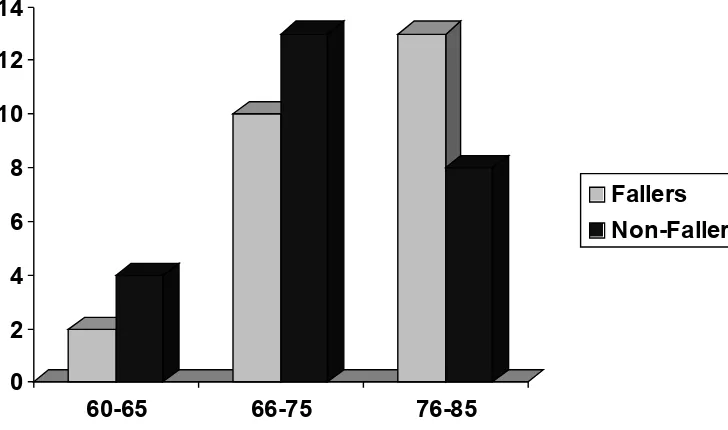
Among the fallers, 2 (8%) were in the 60+ age group, 10 (40%) were in the 66+
[image:46.595.122.486.500.715.2]0
1
2
3
4
5
6
7
8
9
1
2
3
>3
Fallers
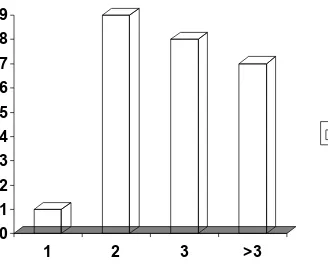
age group and 13 (52%) were in the 76+ age group. Of the non-fallers, 4 (16%) were in the 60+ age group, 13 (52%) were 66+ and 8 (32%) were 76+ (Figure 2) [image:47.595.115.443.219.490.2]Of the fallers, 1 ( 4%) had one fall, 9 (36%) had two falls, 8 (32%) had three falls, and 7 (28%) had more than 3 falls. (Figure 3)
Fig.3 No. of Falls among Fallers
A large percentage ( 23 / 25 92%) had sustained atleast one fall in the month preceding the evaluation. 42 out of 72 events (58.3%) had occurred in the month preceding the evaluation.
0 2 4 6 8 10 12 14 16
Non-Fallers Fallers
Visual Problems
0 1 2 3 4 5 6 7 8
Non-Fallers Fallers
[image:48.595.130.475.68.656.2]Hearing Problems
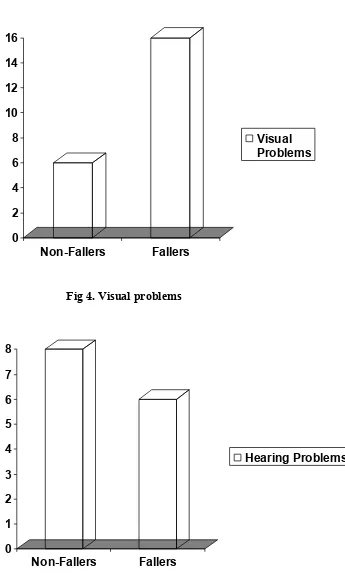
[image:48.595.134.440.91.335.2]Fig 4. Visual problems
Fig 5. Hearing Problems
16
17
18
19
20
21
22
23
Non-Fallers
Fallers
Lower
Extremity
Arthritis
0
2
4
6
8
10
12
14
Fallers
Non-Fallers
[image:49.595.121.484.82.328.2]Diabetes
Fig.6 Lower Extremity Arthritis
Lower extremity arthritis was found in a significant percentage of both fallers and non fallers. Most of the cases were due to Osteoarthritis of the Knees. There was no statistically significant difference in the prevalence of Lower Extremity Arthritis in patients with and without falls.(Figure 6)
There was no statistically significant difference in the prevalence of common
[image:49.595.134.416.554.799.2]47
36
45
31
48
40
46
30
0
5
10
15
20
25
30
35
40
45
50
Arising
Sternal
Push
Path-Dev
Walk-Turn
Non-Fallers
Fallers
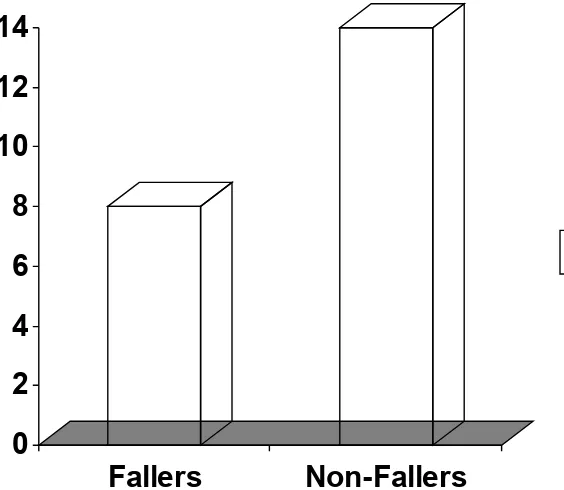
and chronic disorders between fallers and non-fallers. The chart showing the prevalence of diabetes is enclosed.(Figure 7)
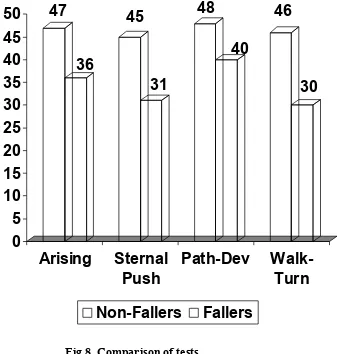
[image:50.595.131.468.248.602.2]A total of 22 different parameters were tested. Of these 13 tests assessed static and static-dynamic balance. 9 parameters were used to assess gait function. The results of selected parameters are tabulated below.(Figure 8)
Fig 8. Comparison of tests
42.9
35.8
24
29
34
39
44
49
Non Fallers
Fallers
[image:51.595.105.393.89.349.2]Mean Scores
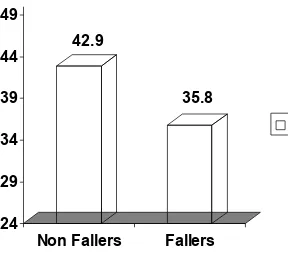
Fig 9. Mean Scores
Discussion
The goal of the health care community for the older person is to maintain function into very old age. The outcome of successful aging is functional independence and a good quality of life. Inherent in the achievement of these goals are an understanding of physical and physiological functions in the elderly and the identification of risk factors that threaten these goals. The ability of the human body to meet the demands of daily living depends on maintenance of these physical and physiological functions. The ability to meet unexpected stress is dependent on the system’s reserve capacity. This implies a capacity that when the need arises the individual can call on the reserve to ensure completion of the task.
Many of the physical changes blamed on aging are really problems of inactivity, poor eating habits, and stress. Fiatarone and Evans (1993) stated that “a relatively sedentary lifestyle with age is a nearly universal phenomenon in industrialized nations.” Studying populations in these nations has led researchers to recognize what many practitioners have previously believed—that normal age changes cannot be distinguished from disuse atrophy. These problems are not an evitable part of life, nor are many of the chronic diseases that are so common. Wellness is about taking charge. It is taking positive steps toward good health and disease prevention. Good nutrition, fitness, and stress management can help one achieve wellness and enjoy an active life.
Accidents are the sixth leading cause of death in persons over 60 years of age, and falls account for two-thirds of those deaths. Falls also cause 40% of the traumatic injuries that occur in the elderly population. Nearly 70% of emergency room visits by persons over the age of 75 are related to falls, while 40% of hospital admissions in this group are the result of fall-related injuries. The average length of stay is 11.6 days. Of patients hospitalized for a fall, only about 50% are alive a year later; of those surviving, half are unable to walk unassisted and 25% live as permanent residents of a nursing home. Two-thirds of the elderly who experience a hip fracture and survive will not return to the prefracture level of function. The incidence of hip fractures has been steadily rising the last 30 years even after adjusting for an aging population. There is evidence that the increase is possibly the result of more sedentary living and a less fit older generation than ever before. Only 5-10% of persons over 65 years have an appropriately active lifestyle.
Intrinsic factors, such as muscle weakness, gait problems, and balance disorders account for approximately 50% of falls in the elderly. Other factors in falls include: dementia, impaired vision, postural hypotension, effects of medications, nonsafety-proofed environments, and functional disabilities of the nervous and musculoskeletal systems. In addition to the physical damage caused by falls, there is also considerable economic loss. Research has shown that among the intrinsic factors, impaired balance and mobility greatly increase the probability for falls, fractures, and functional dependence among older adults.
aerobic fitness was required.
25 elderly people who had fallen atleast once in the previous year were made to undergo the assessment. There were a total of 72 events in the group, with 42 of these events occuring during the month prior to the assessment. This group was compared with 25 other elderly individuals who had never fallen before.
As neurological disorders were well known to be associated with falls, persons with neurological disease were excluded from the study.
Not Surprisingly, Giddiness (not suggestive of vertigo or Orthostatic hypotension) was a major complaint of both fallers and non-fallers, with fallers having more complaints. The difference was not statistically significant. This implies that giddiness as a symptom cannot reliably distinguish fallers from Non-fallers, and also establishes the non-specific and non-diagnostic nature of “giddiness”.
Significantly more people who fell had Visual impairment. This is in agreement with earlier studies which indicate that Visual impairment is the single most important risk factor in determining falls in susceptible elderly. This suggests a major role for correction of visual defects in fall prevention programs.
Chronic disorders like Diabetes, Hypertension and Ischemic Heart Disease as well as habits like Smoking or Alcohol intake were not significantly associated with falls.
Conclusion
• The Tinetti Assessment Scale is a useful measure for assessment of physicalfunction in elderly at risk for falls
• The Performance Oriented Assessment of Gait and Balance can be performed easily and with minimum equipment and is a suitable bedside assessment tool of fall risk
References
1. Falls and Hip Fractures Among Older Adults (Factsheet). Atlanta: National Center for Injury Prevention and Control, Centers for Disease Control and Prevention; 1999. US Department of Health and Human Services.
2. 10 Leading Causes of Death, United States, 1997, All Races, Both Sexes. Atlanta: Office of Statistics and Programming, National Center for Injury Prevention and Control, Centers for Disease Control and Prevention; 1999. US Department of Health and Human Services.
3. 1997 United States Unintentional Injuries and Adverse Effects. Atlanta: Office of Statistics and Programming, National Center for Injury Prevention and Control, Centers for Disease Control and Prevention; 1999. US Department of Health and Human Services
4. Tinetti ME, Williams TF, Mayewski R. Fall risk index for elderly patients based on number of chronic disabilities. Am J Med. 1986;80:429-434.
5. Nevitt MC, Cummings SR, Kidd S, Black D. Risk factors for recurrent nonsyncopal falls. JAMA. 1989;261:2663-2668.
6. Cumming RG, Klineberg RJ. Fall frequency and characteristics and the risk of hip fractures. J Am Geriatr Soc. 1994;42:774-778.
7. Mahoney J, Sager M, Dunham NC, Johnson J. Risk of falls after hospital discharge. J Am Geriatr Soc. 1994;42:269-274.
8. Tinetti ME, Speechley M, Ginter SF. Risk factors for falls among elderly persons living in the community. N Engl J Med. 1988;319:1701-1707.
9. Robbins AS, Rubenstein LZ, Josephson KR, Schulman BL, Osterweil D, Fine G. Predictors of falls among elderly people: results of two population-based studies. Arch Intern Med. 1989;149:1628-1633
10. Studenski S, Wolter L. Instability and falls. In: Duthie EH Jr, Katz PR, eds. Practice of geriatrics. 3d ed. Philadelphia: Saunders, 1998:199-206, and Tinetti ME, Doucette J, Claus E, Marottoli R. Risk factors for serious injury during falls by older persons in the community. J Am Geriatr Soc 1995;43:1214-21.
11. Nevitt MC, Cummings SR, Kidd S, Black D. Risk factors for recurrent nonsyncopal falls: a prospective study. JAMA 1989;261:2663-2668
12. Daleiden, S., & Lewis, C. (1990). Clinical Implications of Neurologic Changes in the Aging Process. In Carole Bernstein Lewis "Aging: The Health Care Challenge", 162-180.
13. Isaacs, B. & Nayak, U.S. (1987). How dangerous are falls in old people? British Medical Journal, 282:1548.
14. Robbins, A. S., Rubenstein, L. Z., Josephson, K. R., Schulman, B. L., Osterwell, D. & Fine, G. (1989). Predictors of falls among elderly people. Results of two population-based studies. Archives of Internal Medicine, 149:1628-1633.
15. Whipple, R. H., Wolfson, L. I. & Amerman, P. M. (1987). The relationship of knee and ankle weakness to falls in nursing home residents: an isokinetic study. Journal of the American Geriatric Society, 35: 13-20.
16. Winegard, K. J., Hicks, A. L., Sale, D. G. & Vandervoort, A. A. (1996). A 12-year follow-up study of ankle muscle function in older adults. Journal of Gerontology 51A: B202-207.
17. Tinetti, M. E., Williams, T. F. & Mayewski, R. (1986). Fall risk index for elderly patients based on number of chronic disabilities. American Journal of Medicine, 80: 429-434.
18. Trueblood, P. R. & Rubenstein, L. Z. (1991). Assessment of instability and gait in elderly persons. Comprehensive Therapy, 17: 20-29.
19. Wipple, R. H., Wolfson, L. I. & Amerman, P. M. (1987). The relationship between knee and ankle weakness to falls in nursing home resident: An isokinetic study. Journal of the American Geriatric Society, 35:13-20.
20. Gibson, M. J., Andres, R. O., Isaacs, B., Radebaugh, T. & Worm-Petersen, J. (1987). The prevention of falls by the elderly. Danish Medical Bulletin, 34 (Supplement 4).
21. Berg, K. (1989). Balance and its measure in the elderly: A review. Physiotherapy Canada, 41: 240-246.
and somatosensory contributions to balance control in the older adult. Journal of Gerontology, 44: M118-127.
23. Alexander, N. B. (1994). Postural control in older adults. Journal of the American Geriatric Society, 42: 93-108.
24. Chandler, J. M., Duncan, P. W. & Studenski, S. A. (1990). Balance performance on the postural stress test: Comparison of young adults, healthy, elderly, and fallers. Physical Therapy, 70: 410-415.
25. Patla, A., Frank, J. & Winter, D. (1990). Assessment of balance control in the elderly: Major issues. Physiotherapy Canada, 42: 89-97.
26. Sheldon, J. H. (1963). The effect of age on the control of sway. Gerontologia Clinica, 5:129-138. 27. Knutsson, E. (1972). An analysis of Parkinsonian gait. Brain, 95: 475-486.
28. Ochs, A. L., Newberry, J., Lenhart, M. L. & Harkins, S. V. (1985). Neural and vestibular aging associated with falls. In J. E. Birren & K. W. Schaie (Eds.). Handbook of the psychology of aging, (2nd edition), (pp. 378-399). New York, NY: Van Nostrand Reinhold.
29. Murray, M. P. (1967). Gait as a total pattern of movement. American Journal of Physical Medicine, 46: 290-333.
30. Knutson, E. & Lying-Tunellu (1985). Gait apraxia in normal-pressure hydrocephalus: Patterns of movement and muscle activation. Neurology, 35:155-160.
31. Mueller, M. J., Minor, S. D., Sahrmann, S. A., Schaaf, J. A. & Strube, M. J. (1994). Differences in the gait characteristics of patients with diabetes and peripheral neuropathy compared to age-matched controls. Physical Therapy, 74:299-313.
32. Messier, S. P. (1994). Osteoarthritis of the knee and associated factors of age and obesity. Medical Science and Sports Exercise, 26:1446-1452.
33. Hausdorff, J. M., Forman, D. E., Ladin, Z., Goldberger, A. L., Rigney, D. R. & Wei, J. Y. (1994). Increased walking variability in elderly persons with congestive heart failure. Journal of the American Geriatric Society, 42:1056-1061.
34. Alexander, N. B., Molio, J. M., Giordani, B., Ashton-Miller, J. A., Schultz, A. B., Grunawalt, J. A. & Foster, N. L. (1995). Maintenance of balance, gait patterns and obstacle clearance in Alzheimer's disease. Neurology, 45: 908-914.
35. Sloman, L. (1982). Gait patterns of depressed patients and normal subjects. American Journal of Psychiatry, 139: 94-97.
36. Gills, B., Gilroy, K., Lawley, H., Mott, L. & Wall, J. C. (1986). Slow walking speeds in healthy young and elderly females. Physiotherapy Canada, 38: 350-352.
37. Critchley, M. (1948). Senile disorders of gait. Geriatrics, 3: 364-370.
38. Barman, P. (1985). Gait problems: Age is only one ingredient. Perspectives in Geriatrics, 4: 39-48.
39. Hogue, C. C. (1984). Falls and mobility in late life. Journal of the American Geriatric Society, 32: 858-861.
40. Ferrandez, A., Paihous, J. & Durup, M. (1990). Comparison of gait of young men and elderly men. Physical Therapy, 69: 79-89.
41. Meldrum, D. & Finn, A. M. (1993). An investigation of balance function in elderly subjects who have and have not fallen. Physiotherapy, 79: 839-842.
42. Cerny, K. (1984). Pathomechanics of stance. Clinical concepts for analysis. Physical Therapy, 64:1851-1859.
43. Chen, H. C., Ashton-Miller, J. A., Alexander, N. B. & Schultz, A. B. (1991). Stepping over obstacles: Gait patterns of healthy young and old adults. Journal of Gerontology, 46: M196-203. 44. Hendry, A., Gilchrist, W., Duncan, G., Evans, A. L. & Smith, D. C. (1990). Measurement of
walking speed in elderly inpatients. Medical & Biological Engineering & Computing, 28: 602-604.
45. Smith, D. C., Evans, A. L., Gilchrist, W., Duncan, C. & Hendry, A. (1990). Novel instrument for measuring the walking speed of elderly patients. Medical & Biological Engineering & Computing, 28: 605-607.
46. Stuberg, W., Straw, L. & Devine, L. (1990). Validity of visually recorded temporal-distance measures at selected walking velocities for gait analysis. Perception and Motor Skills, 70: 323-333.
impaired patients. Standards for outcome assessment. Physical Therapy, 66: 1530-1539.
48. Klenerman, L., Dobbs, R. J. & Weller, C. (1988). Bringing gait analysis out of the laboratory and into the clinic. Age and Aging, 17: 397-400.
49. Smidt, G. L., Deusinger, R. H., Arora, J. & Albright, J. P. (1977). An automated accelerometry system for gait analysis. Journal of Biomechanics, 10: 367-375.
50. Smidt, G. L. & Mommens, M. A. (1980). System of reporting and comparing influence of ambulatory aids on gait. Physical Therapy, 60: 551-55.
51. Alexander, N. B. (1996). Gait disorders in older adults. Journal of the American Geriatric Society, 44: 434-451.
52. Perry, J. (1992). Gait analysis: Normal and pathological function. Thorofare, NJ: Slack.
53. MacKinnon, C. D. & Winter, D. A. (1993). Control of whole body balance in the frontal plane during human walking. Journal of Biomechanics, 26: 633-644.
54. Fried, A. V., Cwikel, J., Ring, H. & Galinsky, D. (1990). ELGAM - Extra-laboratory gait assessment method: Identification of risk factors for falls among the elderly at home. International Disability Studies, 12: 161-168.
55. Tideiksaar, R. (1996). Preventing falls: How to identify risk factors, reduce complications. Geriatrics, 51: 43-55.
56. Tideiksaar, R. & Kay, A. D. (1986). What causes falls? A logical diagnostic procedure. Gerontologist, 27: 32.
57. Gehlsen, GM., & Whaley, MH. (1990). Falls in the elderly: Part I, Gait. Archives of Physical Medicine & Rehabilitation, 71 (10), 735-8.
58. Keshner, EA, Allum, JH, & Honegger, F. (1993). Predictors of less stable postural responses to support surface rotations in healthy human elderly. Journal of Vestibular Research, 3 (4), 419-29.