This is a repository copy of Current situation on the availability of nanostructure-biological activity data.
White Rose Research Online URL for this paper: http://eprints.whiterose.ac.uk/82618/
Version: Accepted Version
Article:
Oksel, C, Ma, CY and Wang, XZ (2015) Current situation on the availability of
nanostructure-biological activity data. SAR and QSAR in Environmental Research, 26 (2). 79 - 94. ISSN 1029-046X
https://doi.org/10.1080/1062936X.2014.993702
[email protected] https://eprints.whiterose.ac.uk/ Reuse
Unless indicated otherwise, fulltext items are protected by copyright with all rights reserved. The copyright exception in section 29 of the Copyright, Designs and Patents Act 1988 allows the making of a single copy solely for the purpose of non-commercial research or private study within the limits of fair dealing. The publisher or other rights-holder may allow further reproduction and re-use of this version - refer to the White Rose Research Online record for this item. Where records identify the publisher as the copyright holder, users can verify any specific terms of use on the publisher’s website.
Takedown
If you consider content in White Rose Research Online to be in breach of UK law, please notify us by
Current Situation on the Availability of Nanostructure-Biological Activity Data
Ceyda OKSEL, Cai Y. MA and Xue Z. WANG*
Institute of Particle Science and Engineering, School of Chemical and Process Engineering, University of Leeds, Leeds, LS2 9JT, UK
*Correspondence author: Professor Xue Z. Wang
Chair in Intelligent Measurement and Control Institute of Particle Science and Engineering School of Chemical and Process Engineering University of Leeds
Leeds LS2 9JT Tel: 0113 343 2427 Fax: 0113 343 2405
Abstract
The recent developments in nanotechnology have not only increased the number of
nanoproducts on the market, but also raised concerns about the safety of engineered
nanomaterials (ENMs) for human health and the environment. As the production and use of
ENMs are increasing, we are approaching the point at which it is impossible to individually
assess the toxicity of a vast number of ENMs. Therefore, it is desirable to use time- effective
computational methods, such as the quantitative structure-activity relationship (QSAR)
models, in order to predict the toxicity of ENMs. However, the accuracy of the
nano-(Q)SARs is directly tied to the quality of the data from which the model is estimated.
Although the amount of available nanotoxicity data is insufficient for generating robust
nano-(Q)SAR models in most cases, there are a handful of studies that provide appropriate
experimental data for (Q)SAR-like modelling investigations. The aim of this study is to
review the available literature data that are particularly suitable for nano-(Q)SAR modelling.
We hope that this paper can serve as a starting point for those who would like to know more
about the current availability of experimental data on the health effects of ENMs for future
modelling purposes.
1. INTRODUCTION
Nanotechnology is an emerging and rapidly growing field of engineering that has already
been used in a wide range of consumer products and industrial applications. It is now very
likely for one to encounter nanotechnology-based products in our daily lives. Therefore, it is
of vital importance for us to properly and carefully examine all of the possible risks that may
occur as a result of the exposure to these newly developed materials at the same time as they
are being commercialised. Clearly, the risk assessment of engineered nanomaterials (ENMs)
has fallen behind the development in nanotechnology, due to the uncertainties regarding the
toxicological behaviour of materials at nano-scale dimensions. On the one hand, the complex
nature of the nano-systems and the lack of regulatory frameworks specific to the applications
that use nanotechnology make the assessment of the potential risks of ENMs to human health
and the environment challenging [1]. On the other hand, there is now a large number ENMs
with unknown health risks and it will soon be impossible to individually evaluate their
toxicities [2]. Hence, it has been highlighted by many researchers [3-5] that alternative
methods and approaches are needed in order to help close the research gap in nanotoxicology,
before it widens any further.
The integration of computational methods with nanotoxicology is considered to be the most
cost– and time–effective solution to the problem of evaluating the risks of human exposure to
a large number of ENMs. Among the wide variety of in silico methods that have been
developed and employed in predictive toxicology, quantitative structure-activity relationship
(QSAR) models are a common choice for nano-systems as they eliminate the need to test
every single nanoparticle (NP) on an individual basis, by relating the physicochemical
characteristics of nanostructures to their biological activities. The (Q)SAR approach is based
on a very simple assumption: toxicity depends on structure. As the name suggests, the
biological activity of a (homogeneous) class of compounds is expressed as a function of
physicochemical characteristics [6].
The modelling effort required for the development of (Q)SARs increases linearly with the
complexity of the endpoints to be modelled. Considering the large number of factors that are
likely to influence the biological activity of ENMs, it is possible to conclude that traditional
(Q)SAR approach needs serious reconsiderations in order to be applied to nanomaterials
(NMs) [5]. As the properties of ENMs are significantly different from the same materials in
their bulk form, the toxicological behaviour of these nano-sized materials might also be
associated with different characteristics. Therefore, the development of novel descriptors that
are able to express the specificity and the size-dependency of nano-characteristics is one of
the most critical requirements for the successful application of (Q)SAR-like methods in order
to predict the toxicity of ENMs [3, 7-9].
Moreover, similar to other data-driven methods, the accuracy of nano-(Q)SAR models is
directly tied to the quality of the data from which the model is estimated. Therefore, the
development of robust nano-(Q)SAR models can only be made possible with the availability
of high-quality, consistent and systematically obtained toxicity data for ENMs that have been
comprehensively characterised under relevant exposure conditions, prior to toxicological
testing [6].
The research in nanotoxicology has grown rapidly in recent years, which has significantly
increased the amount of the nanotoxicity data available in the literature. However, the vast
majority of the existing nanotoxicity-related studies are very limited in nature, especially in
terms of sample sizes. In other words, these studies are usually focused on a small number of
characterised [10]. The nano-(Q)SAR approach, on the other hand, requires a large set of
systematically gathered data on the biological activity of a diverse collection of NPs .
The predictive power of nano-(Q)SAR models can be affected by many factors such as the
quality of input data and the selection of the data pre-processing or mining algorithms to be
used for model development [11]. The collection of empirical data can be considered to be
one of the most critical components for the successful application of (Q)SAR methodologies,
as no data-driven model can be built without adequate data input. Therefore, one of the first
steps that all modellers should take when attempting to build a nano-(Q)SAR model is to
collect toxicity data on a structurally diverse set of ENMs from existing data sources, unless
one intends to gather one’s own research data. The main objective of this study is to develop
an annotated bibliography of the primary sources of nano-(Q)SAR data. This paper aims to
summarize the available literature data containing information on the biological activities of
ENMs in order to provide a starting point for those wishing to develop (Q)SAR-like models
for ENMs. To that end, the papers that contain relevant experimental data on ENM toxicity
will be reviewed and evaluated in terms of their usefulness for nano-(Q)SAR research.
Moreover, the available nano-(Q)SAR models derived from these datasets will be introduced
and discussed.
2. NANO-(Q)SAR
In nanotoxicology, it is desirable to use non-testing (Q)SAR methods with the aim of
predicting the potential adverse effects of untested ENMs by making the best possible use of
existing experimental data, wherever possible. The main steps involved in the process of
“[Insert Figure 1 about here]”
The nano-(Q)SAR modelling process begins with the acquisition of experimental data on the
biological activity of a range of nano-compounds. The next step is the measurement and/or
computation of the molecular characteristics that are going to be used as the descriptors of the
physicochemical features and the predictors of the observed biological activity. In the data
pre-processing step, the data should be trimmed and normalised in order to remove
non-physical values and bring the variables into alignment. Depending on the nature of the
collected data, different data-mining algorithms can be employed in order to develop
classification- or regression-based (Q)SAR models. After the model construction phase, the
validity of the derived model should be checked both internally (i.e. performance on the
sample used to develop the model) and externally (i.e. performance on a different
population). Finally, the model’s applicability domain and the uncertainties in the constructed
(Q)SAR model should be clearly and transparently reported by the model builder.
There are many key issues that complicate the development of predictive nano-(Q)SAR
models, such as the lack of knowledge of the interactions between ENMs and biological
systems, the scarcity of systematic and consistent toxicological data, the lack of in vivo
verification of in vitro findings and the absence of NP-specific descriptors that are able to
express the novel and size-dependent characteristics of ENMs. However, these challenges
should not be seen as formidable obstacles, but rather, as the areas that need further
improvement. Despite these limitations, there is a growing literature on the use of
(Q)SAR-like models in nanotoxicology studies. There are a great number of reviews [3, 5, 10, 12-14]
and research articles [15-28] devoted to the investigations of in silico modelling of ENM
2.1.Input data for nano-(Q)SAR analysis
(Q)SAR approach is designed to predict the biological activity of a compound based on its
physical and compositional features. To that end, two particular types of data are needed:
experimental biological activity data and experimental/computational physicochemical
characterization data. Currently, the most important sources of information regarding the
biological activity of ENMs are in vivo and in vitro studies, the results of which can be used
as indicators of toxicological effects (i.e. dependent variables) in nano-(Q)SAR analysis.
Molecular descriptors, on the other hand, can be determined either from experimental data or
theoretical calculations. However, a certain amount of uncertainty exists in both descriptor
types.
The first step in the computation of theoretical descriptors is the representation of the
molecular structure, which shows how the atoms and bonds are aligned. This symbolic
representation enables the computation of the predicted values of physicochemical properties
(the so-called ‘descriptors’). However, the full structure of the nano-substances cannot be
simply represented with the use of traditional techniques, mainly because of the complexity
and the non-uniformity of the molecular architecture of NMs. More research is needed in
order to develop a new format and notations for the appropriate transformation of the
nanostructures into a language for computer representation.
The main problem that exists in the experimental characterization of ENMs is the lack of
nano-specific guidelines and standardised protocols, which give rise to incomplete and
incomparable findings in nanotoxicology. Since the majority of the published toxicological
studies are limited in terms of characterization, the nano-(Q)SAR models have to rely on a
small amount of ‘available’ physicochemical descriptors, rather than the complete list of
not directly associated with the toxicity endpoints to be modelled, as the characterisation is
usually performed in the absence of relevant cell medium. In an ideal world, nano-(Q)SAR
models would be based on a large set of data that is obtained by following a standardised
protocol and assessed in terms of quality/suitability for modelling, prior to model
construction.
Figure 2 shows the general data collection framework for (Q)SAR studies, together with the
issues that directly affect the reliability and suitability of the data collected for modelling
purposes. The sufficiency of the data for modelling and the feasibility of developing
nano-(Q)SAR models should be properly evaluated, with careful attention being given to (1) the
reliability of the data source, (2) the quality and quantity of the dataset and (3) the suitability
of the data for computational analysis. One of the unique studies addressing the quality and
suitability of the existing research data for nano-(Q)SAR purposes has been conducted by
Lubinski et al. [2]. These authors presented a data evaluation framework, that places a strong
focus on the source, quality and quantity of the data, for assessing not only the quality of the
data but also its suitability for modelling purposes.
“[Insert Figure 2 about here]”
2.2.Literature data available for the (Q)SAR modelling of nanomaterial toxicity
As previously noted, the majority of the existing toxicological studies on ENMs are very
limited in terms of sample size and the type of compounds included. However, as listed in
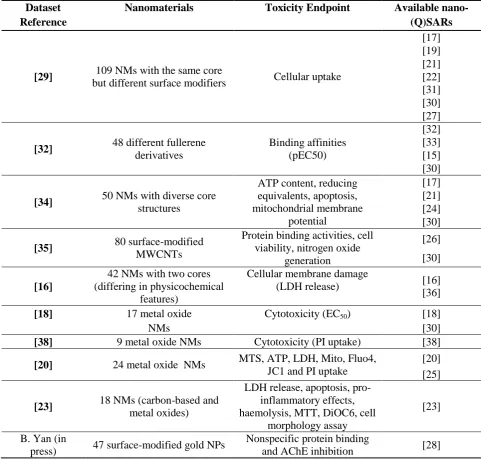
Table 1, there are some pioneering studies that provide useful data for nano-(Q)SAR
(Q)SAR modelling attempts and that have already been used for the development of
nano-(Q)SARs will be discussed.
“[Insert Table 1 about here]”
One of the most comprehensive nanotoxicology studies ever performed was carried out by
Weissleder et al. [29]. These authors tested the cellular uptake of 109 NPs with the same core
(cross-linked iron oxide) but different surface modifiers in five cell types (PaCa2, HUVEC,
U937, GMCSF and RestMph). Of the five cell lines, only PaCa2 (human pancreatic cancer
cell line) and HUVEC (human umbilical vein endothelial cells) showed surface
chemistry-sensitive responses. The raw data generated by Weissleder et al. [29] have been examined
below in the context of their ability to be used for developing nano-(Q)SARs:
Material group: The data are associated with (magnetic) iron oxide NMs.
Homogeneity: The data are homogeneous as they contain no other than super
paramagnetic iron oxide core NPs.
Sample size: The data set is large and contains more than a hundred NPs, which are
decorated with different small molecules. The data size is large enough (in terms of
the number of compounds being included) to develop and validate computational
models.
Characterization: Although the authors stated that all materials were characterized
by size measurements, relaxometry, amine content and mass spectrometry, the
characterization data was not presented in the paper or supplementary document. The
main reason why this dataset has been repeatedly used for (Q)SAR analysis despite
the limited information on the physicochemical characteristics of NPs is that it
surface-modifying molecules, as all of the screened NPs have the same pre-dominant
core.
The results of PaCa2 cell uptake for the 109 NPs are given in the supplementary information
(Table- S1). This dataset has been used by seven different research groups [17, 19, 21, 22, 27,
30, 31] for nano-(Q)SAR development. The modellers employed different software packages
(i.e. Dragon, ADRIANA, PaDEL, Cerius, Chemistry Development Kit and in-house
modelling software) in order to calculate a wide range of ‘theoretical’ descriptors based on
the structure of the organic surface modifiers.
Secondly, Durdagi et al. [32] analysed the binding affinities of a series of fullerene
derivatives. They also developed 3D-(Q)SAR models in order to predict the binding affinities
of 48 fullerene-based derivatives based on their structures. The raw data generated by these
authors [32] are examined for their suitability to be used for developing nano-(Q)SARs and
the results are summarised below:
Material group: The data are associated with fullerenes.
Homogeneity: The data are very homogeneous and contain only fullerene
derivatives.
Sample size: The data size is large in terms of the number of compounds (48) it
covers.
Characterization: In this study, the authors did not provide any characterization data
(i.e. they attempted to develop 3D-(Q)SARs based on field contributions which are
measured in silico).
The dataset including the experimental binding energies of these materials is presented in
Table- S2. Later on, Toropov et al. [33] calculated a number of SMILES-based descriptors
derivatives, using a portion of the data gathered by Durdagi et al. [32]. In a follow up study,
Toropova et al. [15] used CORAL (correlations and logic) software packages in order to
develop (Q)SAR models considering all of the fullerene (48) binding affinity data. More
recently, Singh and Gupta [30] derived classification and regression (Q)SAR models with the
use of decision tree forest and decision tree boost algorithms for predicting the binding
affinities of the same set of fullerenes.
In another study, Shaw et al. [34] determined the biological activity of 50 different NPs with
diverse metal cores under 64 different sets of conditions (four doses x four cell types x four
assays). They performed four replicates for each toxicity measurement and expressed the
results in terms of standard deviations (Z scores). The raw data collected by Shaw et al. [34]
have been examined below in the context of their ability to be used for developing
nano-(Q)SARs:
Material group: The data are associated with metal-core NPs, especially iron-oxide
based NPs (FexOy-core).
Homogeneity: The data are reasonably homogeneous as the great majority of NPs
included contain iron-oxide core.
Sample size: The data is large in terms of the number of compounds (50) and toxicity
endpoints screened.
Characterization: The authors reported seven different qualitative and quantitative
descriptors for most of the screened NPs: core composition, coating type, surface
modification, size, relaxivities (R1 and R2) and zeta potential. Although the number
of measured (physicochemical) properties is limited, it is still possible to gain some
The results of the characterization and the toxicity testing of these NPs are given in Table-
S3. This dataset has been widely used by several nano-(Q)SAR modellers. Firstly, Fourches
et al. [17] performed support vector machine-based classification on this dataset. They used
four experimental descriptors (size, zeta potential and relaxivities) that were available for 44
of the studied NPs. Secondly, Epa et al. [21] used this dataset for their modelling studies.
They examined the possible relationship between the biological effects (apoptosis assay) of
31 different NPs and their structural descriptors (relaxivities and zeta potential). They
observed a significant relationship between one of the relaxivity values (R1) and the
apoptosis response. However, they concluded that relaxivity could be a correlative variable,
not a causative one, as it directly depends on the core of the material. Therefore, they defined
three indicator variables describing the material core, coating and zeta potential and used
these values as descriptors in their study. In the modelling section, they performed linear (e.g.
multiple linear regression) and nonlinear (e.g. artificial neural networks) modelling methods.
In another study, Liu et al. [24] developed nano-SAR models based on multiple toxicity
assays and a few experimental descriptors provided by Shaw et al. [34]. Recently, Singh and
Gupta [30] employed the same dataset in order to develop classification and regression
nano-(Q)SARs.
The full datasets collected by Weissleder et al. [29] and Shaw et al. [34] can be downloaded
from the bottom of the following webpage (section called “NP screening data”):
https://csb.mgh.harvard.edu/information/links.
In 2008, Zhou et al. created a library containing 80 multi-walled nanotubes (MWNTs) with
known biological activities [35]. They tested the toxicity of these decorated nanotubes using
six different toxicity endpoints (four protein binding activities, cell viability and nitrogen
building block and the biocompatibility. The raw data generated by Zhou et al. [35] have
been assessed below to find out their suitability for developing nano-(Q)SAR models:
Material group: The data are associated with multi-walled carbon nanotubes.
Homogeneity: The data are very homogeneous as the designed library contains 80
surface-modified multi-walled carbon nanotubes.
Sample size: The dataset obtained is large in terms of the number of compounds (80)
and biological endpoints tested.
Characterization: The following analyses were made for selected MWNTs:
elemental analysis, transmission electron microscopy (TEM) analysis, nuclear
magnetic resonance (NMR) and Fourier transform infrared (FTIR) spectroscopy
analysis. The dataset also allows the computation of the theoretical descriptors.
Table-S4 lists the toxicity endpoint values for the 29 most nano-toxic decorated nanotubes. In
a later study, Shao et al. [26] calculated a set of theoretical descriptors based on the surface
structure of the 29 most toxic nanotubes and used these values as input variables in their
(Q)SAR investigations.
In another study, Sayes and Ivanov [16] assessed the presence of ENM-induced cell damage
based on the release of lactate dehydrogenase (LDH) from cells. They prepared different
concentrations (25, 50, 100, and 200 mg/L) of TiO2 and ZnO particle suspensions and
analysed them for LDH (lactate dehydrogenase) release. They also measured six different
physical properties (i.e. primary particle size, size in water and buffered solutions,
concentration and zeta potential) of these NP suspensions. The raw data generated by Sayes
and Ivanov [16] have been reviewed below in the context of their ability to be used for
Material group: The data are associated with two specific metal oxide NMs, TiO2
and ZnO.
Homogeneity: The data are homogenous as they are made up of two kinds of NMs
Sample size: The sample size of data is small from the (Q)SAR modelling point of
view but it allows the investigation of the effect of different TiO2 and ZnO features on
the cellular membrane damage.
Characterization: The authors reported five different TiO2 features and six different
ZnO characteristics (e.g. primary particle size, size in water and buffered solutions,
concentration and zeta potential).
Their complete dataset is summarized in Table- S5. They attempted to perform multivariate
linear regression (MLR) and linear discriminant analysis (LDA) classification techniques on
the collected dataset. Although they were unable to build a regression model, they managed
to produce a triplet-wise classifier with zero re-substitution error. Later on, Toropova and
Toropov [36] employed this dataset in their modelling study.
The dataset used by Puzyn et al. [18] includes the in vitro toxicities of 17 different metal
oxide NPs against the bacterial species Escherichia coli. The authors gathered the toxicity
data for ten different metal oxide NPs in their laboratory and combined them with the toxicity
data taken from their previous study [37]. The raw data collected by Puzyn et al. [18] have
been examined below in the context of their ability to be used for developing nano-(Q)SARs:
Material group: The data are associated with metal oxide NPs.
Homogeneity: The data are homogenous and include a panel of 17 metal oxide NPs
that are widely used in industrial applications.
Sample size: The sample size of data is not huge but large enough to investigate the
Characterization: The authors calculated a pool of 12 different quantum-mechanical
descriptors based on the electronic (structural) properties of 17 metal oxide NPs.
Their complete dataset is provided in Table- S6. In the modelling section of their study, they
used the semi-empirical PM6 (parameterization method) in the MOPAC (molecular orbital
package) quantum chemistry software package for calculating the structural descriptors. They
managed to derive a regression model based on the cytotoxicity data and one
quantum-mechanically calculated descriptor, the enthalpy of the formation of a gaseous cation having
the same oxidation state as that in the metal oxide structure ( HMe). They were one of the
first research groups who developed a quantitative model relating the structural features of
metal oxide NPs to their toxicity. Apart from that, this dataset has also been employed by
Singh and Gupta [30] for nano-(Q)SAR modelling purposes. These authors encoded the
structure of the materials in the form of SMILES (simplified molecular input line entry
system) and calculated a set of 32 molecular descriptors (topological, geometrical and
constitutional) based on the SMILES notations. However, their approach is questionable, as
the SMILES notations are not able to reflect the size-dependent properties of particles and
hence distinguish between the bulk and nano-scale materials.
In 2011, Liu et al. [38] measured the in-vitro toxicity of nine different metal oxide NPs;
Al2O3, CeO2, Co3O4, TiO2, ZnO, CuO, SiO2, Fe3O4 and WO3. Of these nine NPs, only three
of them (ZnO, CuO and SiO2) were identified as being toxic according to the results of the
plasma membrane integrity assay. In the modelling section, they used a set of fourteen
descriptors ranging from number of metal and oxygen atoms to surface charge as input
parameters. The raw data generated by Liu et al. [38] have been assessed below in the context
of their ability to be used for developing nano-(Q)SARs:
Homogeneity: The data are homogenous.
Sample size: The sample size of the data is small as it only covers nine different
compounds.
Characterization: The authors [38] provided a set of simple constitutional
descriptors (e.g. number of metal and oxygen atoms, atomic mass of the nanoparticle
metal, molecular weight of the metal oxide, group and period of the NP metal,
atomization energy) and a few experimental descriptors (e.g. NP primary size, zeta
potential, isoelectric point and different concentration measures) which can be used as
an input variables in nano-(Q)SAR analysis. These characterization data (although far
from ideal and complete) can help developing classification-based (Q)SAR models.
Their full dataset (toxicity and characterization) is given in Table-S7. Based on these data,
they developed a set of nano-SAR models using a logistic regression method. This dataset
has not been used in any other work as the number of metal oxide NPs is too low for
modelling purposes.
In another nanotoxicity-related study, Zhang et al. [20] assessed the toxicity of 24 different
metal oxide NPs in a set of single-parameter (i.e. MTS, ATP and LDH) and multi-parameter (Fluo-4, JC1, PI, MitoSox and DCF) toxicity assays. They performed a regression tree analysis
in order to establish the relationship between the particle descriptors (i.e. band gap energy
levels and metal dissolution) and the measured cytotoxicity. The raw data generated by
Zhang et al [20] have been evaluated below in the context of their ability to be used for
developing nano-(Q)SARs:
Material group: The data are associated with metal oxide NPs.
Sample size: The sample size of the collected data is sufficiently large in terms of the
number of ENMs and toxicity endpoints studied.
Characterization: The characterization part of this study is relatively detailed as the
authors [20] have performed following physicochemical characterization studies:
I. Measurement of the primary size and shape of NPs by Transmission Electron Microscopy (TEM),
II. Measurement of hydrodynamic sizes by Dynamic Light Scattering (DLS), III. Measurement of band gap energies by Ultraviolet–visible (UV-Vis)
Spectroscopy
IV. Measurement of metal dissolution by inductively coupled plasma-mass spectrometry
V. Measurement of zeta-potential and point of zero zeta-potential by Zeta Analyser
VI. Computation of conduction and valence band energies
In a follow-up study, Liu et al. [25] determined a set of 30 descriptors capturing the
physicochemical properties of NPs and developed classification-based SAR models.
Although the descriptor datasets used for nano-SAR development have been provided in the
electronic supplementary information by Liu et al. [25], the tabulated toxicity dataset has not
been released by Zhang et al. [20]. As the contributors to this study have a stake in
determining data use and all external data distributions must be approved by all contributors,
the best way to proceed in order to be able to work on this dataset might be to contact the
corresponding author: Dr. Andre Nel.
The research conducted by Wang et al. [23] has been revealed to be one of the most useful
datasets for nano-(Q)SAR modelling. The authors selected a panel of 18 ENMs with varying
structures and conducted a set of in vitro cytotoxicity assays, including LDH release,
apoptosis, necrosis, viability, MTT and haemolytic effects. The raw data generated by Wang
et al. [23] have been examined below in the context of their ability to be used for developing
Material group: The data are mostly associated with metal (oxide) NPs as the
majority (i.e. 11 out of 17) of the compounds screened are metal-based NPs.
Homogeneity: The dataset can be considered as slightly heterogeneous as it contains
different types of ENMs (e.g. metal oxide NPs and carbon-based NMs).
Sample size: The dataset is limited in terms of the number of compounds included
(i.e. 18 ENMs) but it is still useful to test the hypothesis that ENM toxicity is a
function of some structural or compositional features.
Characterization: The particle characterisation section of this study includes the
measurement of several physicochemical properties (e.g. particle size and size
distribution, surface area, morphology, metal content, reactivity and free radical
generation). This is probably the most comprehensive characterization dataset used in
nano-(Q)SAR investigations.
In their data-mining section, Wang et al. [16] identified the structural and compositional
features that contribute to the toxicity of the NPs that were involved in this study. This is the
only modelling attempt that has been performed on this dataset, as the authors have not
released the gathered data so far. The full dataset collected by Wang et al. [23] is presented in
Table- S8.
More recently, Yan et al. (private communication) conducted a study on the nonspecific
adsorption and acetylcholinesterase (AChE) inhibition of a library of 47
surface-functionalized gold NPs. Although this manuscript is currently in press, the modelling section
of the Yan’s project has already been published. Winkler at el. [28] performed two different
machine learning methods, multiple linear regression and neural networks, on the dataset
containing a number of 2D DRAGON descriptors and the biological responses of 47 gold
The raw data generated by Yan et al. (private communication) have been examined below in
the context of their ability to be used for developing nano-(Q)SARs:
Material group: The data are associated with functionalised gold NPs.
Homogeneity: The data included in this combinatorial library are very homogeneous
as they only contain surface-modified gold NPs.
Sample size: The dataset collected can be considered as large in terms the number of
Characterization: Although, Yan et al. (private communication) characterized
selected gold NPs using TEM images and zeta potential measurements, the
characterization data is not publically available yet. However, this dataset can be still
useful for nano-(Q)SAR studies as it enables the computation of molecular
descriptors.
This dataset is not publicly available at present as the original research has not been
published yet. However, it might be obtained by communication with Yan’s research group,
if the parties agree on a joint work.
The datasets introduced in this section are already being used by a number of modellers for
nano-(Q)SAR analysis. However, the readily available nano-(Q)SAR models derived from
these datasets do not necessarily imply that the same data cannot be employed for further
modelling attempts. In fact, a single dataset can be used for multiple nano-(Q)SAR
investigations, as long as the method for mining the data is different or the original data pool
is enriched with the computation of new descriptors. At this stage, nano-(Q)SAR model
builders have to rely on the existing dataset until some newer and hopefully more
2.3.Nano-(Q)SAR modelling tools
A wide range of methods can be used to predict the toxicity of NPs based on their measured
or calculated physicochemical properties.
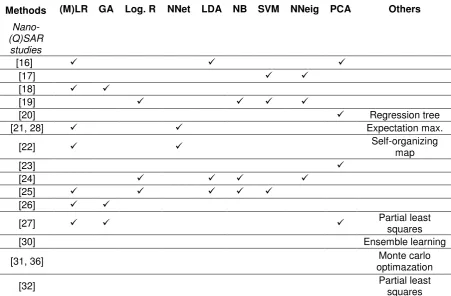
“[Insert Table 2 about here]”
Initially, various methods such as genetic algorithms, stepwise multiple linear regression,
principal component analysis and random forest, are used for data pre-processing and
descriptor selection. After variable selection step, several techniques ranging from linear
regression to artificial neural networks can be applied for the construction of nano-(Q)SAR
models. The most common regression and classification methods used in (Q)SAR analysis
are multiple linear regression, principal component analysis, partial least squares, decision
trees, support vector machine, linear discriminant analysis and artificial neural networks. The
nano-(Q)SAR approach requires the same computational efforts as the traditional (Q)SAR
analysis, but some additional considerations should be taken into account as the available
nanotoxicity data is still limited and the quality of the available datasets is far from ideal. It is
our view that, at present, the nano-(Q)SAR tool selection should be made based on the
model’s ability (1) to handle with small datasets, (2) to select/identify the descriptors that are
associated with the toxicological outcome and (3) to develop transparent and interpretable
models. The list of statistical methods that have been used in existing nano-(Q)SAR studies
are given in Table 2. After model construction, different approaches, such as cross validation,
bootstrapping, Y-scrambling, can be applied to validate the model internally and externally.
3. NANOTOXICITY DATABASE INITIATIVES
Currently, there are a number of ongoing studies and projects dedicated to improving our
amount of data on nanotoxicology will soon become available. At this stage, there are two
issues that need to be dealt with: the development of standardised data sharing formats and
the development of property-based ENM toxicity libraries.
ISA-TAB-NANO is a specification for representing and sharing research data on NMs and
their characterization [39].It uses four different spreadsheet-based file formats: Investigation,
Study, Assay and Material. Although the main aim of ISA-TAB-NANO is to facilitate the
data exchange between different nanotechnology resources, this data logging system is also
useful for accomplishing broad range of goals (e.g. transparent sharing of NM data and
recording of data in a (Q)SAR-ready format). There are several reasons why data exchange
standards and common terminology are needed in the nanotechnology community, including
the diversity of (1) ENMs (e.g. different cores and surface modifications), (2) test systems
(e.g. cell lines, species etc.) and (3) characterization methods/conditions. Due to the
complexity of nano-systems and the lack of standardized protocols for nano-characterization
and nanotoxicity testing, the data obtained by different material scientists and toxicologists
are often incomparable and include different types of endpoints measured in different ways.
Therefore, the presence of standard data exchange format is critical to simplify the issues
caused by the complexity of nano-systems, and consequently to have high-quality and
sufficiently comprehensive data that can be used by different researchers for different
purposes (e.g. data exchange/comparison). Undoubtedly, the structured and consistent storage
of experimental data regarding ENMs would have a positive impact on the development of
computational models for ENMs, as it would support data curation.
There are an increasing number of research groups that are involved in the creation of data
The Cancer Nanotechnology Laboratory Web portal (caNanoLab) [40] is a data
repository that is designed to facilitate the sharing of nanotechnology research
data.
The Nanomaterial Registry [41] is a nanotechnology information resource that
has been developed specifically to provide consistent information on the
physicochemical characteristics and the environmental/biological effects of NMs.
The NHECD (nano health and environmental commented database) [42] employs
text-mining tools, not manual information entry systems, in order to extract
nanotoxicity-related information from relevant scientific papers.
While the use of text-mining algorithms can assist manual data curation in
nanotechnology, their current performance is not satisfactory due to the non-standardised
recording of ENM research data. This paper contains only a brief mention of database
initiatives in nanotechnology that may provide useful data for predictive modelling. For more
detailed information in this regard, the reader can refer to the review by Panneerselvam and
Choi [43].
4. CONCLUSIONS
The widespread use of ENMs for commercial purposes has made human exposure to these
materials almost inevitable. There is an urgent need to fully assess the potential toxicity of
these newly manufactured materials in order to protect human health and the environment
from their potential side effects. However, nano-sized materials behave as new substances
when their properties (i.e. size, shape and surface composition) vary. The need to evaluate the
hazards of not only a large number of newly manufactured NMs, but also their variants (i.e.
those of different sizes, shapes and coatings) greatly increases the effort required in order to
effective computational methods for predicting the risk associated with the exposure to each
ENM seems to be the most rational way to deal with this situation.
The nano-(Q)SAR modelling approach has great potential for providing an alternative, fast
and cheap way of evaluating the risks of ENMs and predicting their toxicological behaviour
in biological systems. However, the quality and the amount of empirical data that is currently
available in the literature is still insufficient to support the development of predictive
nano-(Q)SAR models. Undoubtedly, the scarcity of the systematically gathered data on the
biological activity and structural properties of the diverse collection of ENMs is one of the
most important factors limiting the performance of (Q)SAR-like modelling methods, as the
accuracy of the nano-(Q)SAR model outputs cannot exceed the quality of the data that are
used to derive the model itself.
As stated before, there is currently only a very limited number of large nanotoxicity datasets
that are useful for computational studies. Combining the existing datasets in order to create
more comprehensive datasets that the in silico approaches require might be the solution that
first comes to mind, but in many cases this is not practical for the following reasons:
Different assays/endpoints used to measure toxicity;
Different cell lines;
Different experimental procedures (e.g. dispersion protocols);
Different exposure times and doses;
Different metrics (e.g. surface area dose or volume dose);
Lack of detailed information about the conditions mentioned above.
In this paper, we reviewed the available literature data that mostly meet the needs of
We believe that this paper can help the readers who wish to explore the available literature
data on ENM toxicity that might be used as a starting point for nano-(Q)SAR investigations.
Acknowledgements
The authors would like to acknowledge financial supports from EU FP7 (Projects: 236215
MARINA - MAnaging RIsks of NAnomaterials, FP7-NMP.2010.1.3-1; 604305 SUN-
Sustainable Nanotechnologies FP7-NMP-2013-LARGE-7;) and UK government's Defra
(Department for Environment, Food & Rural Affairs) (Project: 17857 Development and
Evaluation of (Q)SAR Tools for Hazard Assessment and Risk Management of Manufactured
Nanoparticles) in support of EU FP7 project entitled NANoREG A common European
approach to the regulatory testing of nanomaterials, FP7-NMP-2012-LARGE-6.
Bibliography
[1] J.A. Shatkin, Nanomaterials: Risks and Benefits, NATO Science for Peace and Security Series C: Environmental Security, Nanomaterials: Risks and Benefits 1 (2009).
[2] L. Lubinski, P. Urbaszek, A. Gajewicz, M. Cronin, S. Enoch, J. Madden, D. Leszczynska, J. Leszczynski, and T. Puzyn, Evaluation criteria for the quality of published experimental data on nanomaterials and their usefulness for QSAR modelling, SAR QSAR Environ Res 24 (2013), pp. 995-1008.
[3] E. Burello, and A.P. Worth, QSAR modeling of nanomaterials, Wiley Interdisciplinary Reviews: Nanomedicine and Nanobiotechnology 3 (2011), pp. 298-306.
[4] T. Puzyn, and J. Leszczynski, Towards Efficient Designing of Safe Nanomaterials: Innovative Merge of Computational Approaches and Experimental Techniques, The Royal Society of Chemistry, 2012.
[5] D.A. Winkler, E. Mombelli, A. Pietroiusti, L. Tran, A. Worth, B. Fadeel, and M.J. McCall, Applying quantitative structure-activity relationship approaches to nanotoxicology: current status and future potential, Toxicology (2012).
[6] T. Puzyn, J. Leszczynski, and M.T. Cronin, Recent advances in QSAR studies, challenges and advances in computational chemistry and physics 8 (2010).
[7] T. Puzyn, D. Leszczynska, and J. Leszczynski, T D N Q“AR
Advances and Challenges, Small 5 (2009), pp. 2494-2509.
[9] B. Fadeel, A. Pietroiusti, and A.A. Shvedova, Adverse effects of engineered nanomaterials: exposure, toxicology, and impact on human health, Academic Press, 2012.
[10] D. Fourches, D. Pu, and A. Tropsha, Exploring quantitative nanostructure-activity
relationships (QNAR) modeling as a tool for predicting biological effects of manufactured nanoparticles, Comb Chem High Throughput Screen 14 (2011), pp. 217-225.
[11] P. Gedeck, B. Rohde, and C. Bartels, QSAR-how good is it in practice? Comparison of descriptor sets on an unbiased cross section of corporate data sets, J Chem Inf Model 46 (2006), pp. 1924-1936.
[12] A. Poater, A.G. Saliner, M. Solà, L. Cavallo, and A.P. Worth, Computational methods to predict the reactivity of nanoparticles through structure-property relationships, Exp Opin Drug Deliv 7 (2010), pp. 295-305.
[13] E. Burello, and A. Worth, Computational nanotoxicology: Predicting toxicity of nanoparticles, Nat Nanotechnol 6 (2011), pp. 138-139.
[14] A.e.a. Gajewicz, Advancing risk assessment of engineered nanomaterials: Application of computational approaches, Adv Drug Deliv Rev (2012).
[15] A.P. Toropova, A.A. Toropov, E. Benfenati, D. Leszczynska, and J. Leszczynski, QSAR modeling of measured binding affinity for fullerene-based HIV-1 PR inhibitors by CORAL, J Math Chem 48 (2010), pp. 959-987.
[16] C. Sayes, and I. Ivanov, Comparative Study of Predictive Computational Models for
N I C , Risk Anal 30 (2010), pp. 1723-1734.
[17] D. Fourches, D. Pu, C. Tassa, R. Weissleder, S.Y. Shaw, R.J. Mumper, and A. Tropsha,
Q N A R M , Acs Nano 4 (2010), pp.
5703-5712.
[18] T. Puzyn, B. Rasulev, A. Gajewicz, X. Hu, T.P. Dasari, A. Michalkova, H.-M. Hwang, A. Toropov, D. Leszczynska, and J. Leszczynski, Using nano-QSAR to predict the cytotoxicity of metal oxide nanoparticles, Nat Nanotechnol 6 (2011), pp. 175-178.
[19] Y.T. Chau, and C.W. Yap, Quantitative nanostructure activity relationship modelling of nanoparticles, RSC Advances 2 (2012), pp. 8489-8496.
[20] H. Zhang, Z. Ji, T. Xia, H. Meng, C. Low-Kam, R. Liu, S. Pokhrel, S. Lin, X. Wang, and Y.-P. Liao, Use of metal oxide nanoparticle band gap to develop a predictive paradigm for oxidative stress and acute pulmonary inflammation, ACS nano 6 (2012), pp. 4349-4368.
[21] V.C. Epa, F.R. Burden, C. Tassa, R. Weissleder, S. Shaw, and D.A. Winkler, Modeling Biological Activities of Nanoparticles, Nano Lett 12 (2012), pp. 5808-5812.
[22] M. Ghorbanzadeh, M.H. Fatemi, and M. Karimpour, Modeling the cellular uptake of
magnetofluorescent nanoparticles in pancreatic cancer cells: a quantitative structure activity relationship study, Ind Eng Chem Res 51 (2012), pp. 10712-10718.
[23] X.Z. Wang, Y. Yang, R.F. Li, C. McGuinnes, J. Adamson, I.L. Megson, and K. Donaldson, Principal Component and Causal Analysis of Structural and Acute in vitro Toxicity Data for Nanoparticles, Nanotoxicology 8 (2014), pp. 465-476.
[24] R. Liu, R. Rallo, R. Weissleder, C. Tassa, S. Shaw, and Y. Cohen, N “AR D Bioactivity of Nanoparticles with Considerations of Decision Boundaries, Small (2013). [25] R. Liu, H.Y. Zhang, Z.X. Ji, R. Rallo, T. Xia, C.H. Chang, A. Nel, and Y. Cohen, Development of
Structure-Activity Relationship for Metal Oxide Nanoparticles, Nanoscale (2013).
[26] C.-Y. Shao, S.-Z. Chen, B.-H. Su, Y.J. Tseng, E.X. Esposito, and A.J. Hopfinger, Dependence of QSAR Models on the Selection of Trial Descriptor Sets: A Demonstration Using Nanotoxicity Endpoints of Decorated Nanotubes, J Chem Inf Model 53 (2013), pp. 142-158.
[27] S. Kar, A. Gajewicz, T. Puzyn, and K. Roy, Nano-quantitative structure activity relationship modeling using easily computable and interpretable descriptors for uptake of
[28] D. Winkler, F. Burden, B. Yan, R. Weissleder, C. Tassa, S. Shaw, and V. Epa, Modelling and predicting the biological effects of nanomaterials, SAR QSAR Environ Res 25 (2014), pp. 161-172.
[29] R. Weissleder, K. Kelly, E.Y. Sun, T. Shtatland, and L. Josephson, Cell-specific targeting of nanoparticles by multivalent attachment of small molecules, Nat Biotechnol 23 (2005), pp. 1418-1423.
[30] K.P. Singh, and S. Gupta, Nano-QSAR modeling for predicting biological activity of diverse nanomaterials, RSC Advances 4 (2014), pp. 13215-13230.
[31] A.A. Toropov, A.P. Toropova, T. Puzyn, E. Benfenati, G. Gini, D. Leszczynska, and J. Leszczynski, QSAR as a random event: Modeling of nanoparticles uptake in PaCa2 cancer cells, Chemosphere 92 (2013), pp. 31-37.
[32] S. Durdagi, T. Mavromoustakos, N. Chronakis, and M.G. Papadopoulos, Computational design of novel fullerene analogues as potential HIV-1 PR inhibitors: Analysis of the binding interactions between fullerene inhibitors and HIV-1 PR residues using 3D QSAR, molecular docking and molecular dynamics simulations, Bioorg Med Chem 16 (2008), pp. 9957-9974. [33] A.A. Toropov, A.P. Toropova, E. Benfenati, D. Leszczynska, and J. Leszczynski, “MILE“
Q“AR HIV PR
balance of correlations, J Comput Chem 31 (2010), pp. 381-392.
[34] S.Y. Shaw, E.C. Westly, M.J. Pittet, A. Subramanian, S.L. Schreiber, and R. Weissleder, Perturbational profiling of nanomaterial biologic activity, Proc Natl Acad Sci 105 (2008), pp. 7387-7392.
[35] H. Zhou, Q. Mu, N. Gao, A. Liu, Y. Xing, S. Gao, Q. Zhang, G. Qu, Y. Chen, and G. Liu, A nano-combinatorial library strategy for the discovery of nanotubes with reduced protein-binding, cytotoxicity, and immune response, Nano Lett 8 (2008), pp. 859-865.
[36] A.P. Toropova, and A.A. Toropov, Optimal descriptor as a translator of eclectic information into the prediction of membrane damage by means of various TiO2 nanoparticles,
Chemosphere 93 (2013), pp. 2650-2655.
[37] X. Hu, S. Cook, P. Wang, and H.-m. Hwang, In vitro evaluation of cytotoxicity of engineered metal oxide nanoparticles, Sci Total Environ 407 (2009), pp. 3070-3072.
[38] R. Liu, R. Rallo, S. George, Z. Ji, S. Nair, A.E. Nel, and Y. Cohen, Classification NanoSAR development for cytotoxicity of metal oxide nanoparticles, Small 7 (2011), pp. 1118-1126. [39] D.G. Thomas, S. Gaheen, S.L. Harper, M. Fritts, F. Klaessig, E. Hahn-Dantona, D. Paik, S. Pan,
G.A. Stafford, and E.T. Freund, ISA-TAB-nano: a specification for sharing nanomaterial research data in spreadsheet-based format, BMC Biotechnol 13 (2013), p. 2.
[40] S. Gaheen, caNanoLab Overview, Nanoinformatics, Arlington, VA, 2010.
[41] M.L. Ostraat, K.C. Mills, K.A. Guzan, and D. Murry, The Nanomaterial Registry: facilitating the sharing and analysis of data in the diverse nanomaterial community, Int J Nanomedicine 8 (2013), p. 7.
[42] O. Maimon, and A. Browarnik, NHECD-Nano health and environmental commented database, in Data Mining and Knowledge Discovery Handbook, Springer, 2010, pp. 1221-1241.
Table 1: The list of literature data on nanotoxicity and the (Q)SARs built on these datasets
Dataset Reference
Nanomaterials Toxicity Endpoint Available nano-(Q)SARs
[29] 109 NMs with the same core
but different surface modifiers Cellular uptake
[17] [19] [21] [22] [31] [30] [27]
[32] 48 different fullerene derivatives Binding affinities (pEC50) [32] [33] [15] [30]
[34] 50 NMs with diverse core structures
ATP content, reducing equivalents, apoptosis, mitochondrial membrane potential [17] [21] [24] [30] [35] 80 surface-modified
MWCNTs
Protein binding activities, cell viability, nitrogen oxide
generation
[26] [30]
[16]
42 NMs with two cores (differing in physicochemical
features)
Cellular membrane damage
(LDH release) [16] [36]
[18] 17 metal oxide Cytotoxicity (EC50) [18]
NMs [30]
[38] 9 metal oxide NMs Cytotoxicity (PI uptake) [38] [20] 24 metal oxide NMs MTS, ATP, LDH, Mito, Fluo4,
JC1 and PI uptake
[20] [25]
[23] 18 NMs (carbon-based and metal oxides)
LDH release, apoptosis, pro-inflammatory effects, haemolysis, MTT, DiOC6, cell
morphology assay
[23]
B. Yan (in
press) 47 surface-modified gold NPs
Nonspecific protein binding
Table 2: The statistical methods used in existing nano-(Q)SAR studies ((M)LR:(multiple)
Linear Regression, GA: Genetic Algorithms, Log.R: Logistic Regression, NNet: Neural Networks, LDA: Linear Discriminant Analysis, NB: Naïve Bayes, SVM: Support Vector Machine, NNeig: Nearest Neighbours, PCA: Principal Component Analysis)
Methods (M)LR
GA Log. R NNet LDA NB SVM NNeig PCA Others Nano-(Q)SAR studies
[16]
[17]
[18]
[19]
[20] Regression tree
[21, 28] Expectation max.
[22] Self-organizing
map
[23]
[24]
[25]
[26]
[27] Partial least
squares
[30] Ensemble learning
[31, 36] Monte carlo
optimazation
[32] Partial least
squares
Figure 1: The (Q)SAR modelling workflow
[image:29.595.74.526.154.450.2]