This is a repository copy of Identifying drivers of household coping strategies to multiple
climatic hazards in Western Uganda: implications for adapting to future climate change.
White Rose Research Online URL for this paper:
http://eprints.whiterose.ac.uk/80114/
Version: Accepted Version
Article:
Berman, RJ, Quinn, CH and Paavola, J (2014) Identifying drivers of household coping
strategies to multiple climatic hazards in Western Uganda: implications for adapting to
future climate change. Climate and Development. 1 - 14. ISSN 1756-5529
https://doi.org/10.1080/17565529.2014.902355
[email protected] https://eprints.whiterose.ac.uk/ Reuse
Unless indicated otherwise, fulltext items are protected by copyright with all rights reserved. The copyright exception in section 29 of the Copyright, Designs and Patents Act 1988 allows the making of a single copy solely for the purpose of non-commercial research or private study within the limits of fair dealing. The publisher or other rights-holder may allow further reproduction and re-use of this version - refer to the White Rose Research Online record for this item. Where records identify the publisher as the copyright holder, users can verify any specific terms of use on the publisher’s website.
Takedown
If you consider content in White Rose Research Online to be in breach of UK law, please notify us by
1
Identifying drivers of household coping strategies to multiple climatic hazards
in Western Uganda: implications for adapting to future climate change
Abstract
This paper investigates what drives household coping strategies in rural Uganda under different climatic hazards. Rural households in sub-Saharan Africa draw on various coping strategies to reduce the impact of climatic hazards on their livelihoods. Research to date provides only limited
understanding of how the coping strategy portfolio of changes depending on the climatic stress. Using empirical data from Uganda, this research contributes to this gap by 1)
exploring how household coping strategy relates to household characteristics and livelihood activity; and 2) how these coping strategies vary depending on the hazard. Coping strategy is found to be hazard specific for households that lack orientated activities, whereas those with market-access rely on economic activities regardless of hazard. The implications that choice of coping strategy has on future adaptation are discussed. To maintain and improve the livelihoods and coping strategies of those most vulnerable to climatic variability and change, policies that advocate diversification away from a sole reliance on customary activities need to recognise the level and opportunity for market-based activities. These interventions must account for different sensitivities to different hazards as well as the homogeneity of the community in order to effectively support rural communities to cope with climate variability.
Keywords:
Coping strategies; climate variability; livelihoods; extreme events; Uganda
1
Introduction
2
It is argued that will enable more targeted
and appropriate climate adaptation policies (Adger and Vincent 2005). Earlier studies have examined slow-onset climatic hazards such as droughts (Roncoli et al. 2001), as well as household responses to rapid-onset events such as floods (Motsholapheko et al. 2011), showing the importance of short-term labour switching, as well as longer short-term diversification. The majority of these studies focus on one stress, whilst a few have addressed strategies used to cope with multiple stresses (Osbahr et al. 2008; Quinn et al. 2011) with the latter remaining focused on the variety of strategies used. This paper provides empirical evidence that helps attribute preferred strategies to specific stresses, with a focus on understanding the factors that shape this choice of strategy.
Different hazards cause different impacts. Therefore the association of household responses with hazard must be better understood to target policy and resource allocation. Where studies have previously tried to attribute strategies to stress, for example such as Hisali et al. (2011) in Uganda, they have done so at a national level which has not accounted for the impact of local contexts. Place-based studies help to understand the role of context specific factors (Eriksen et al. 2005) which must be accounted for if associated policies are to benefit those they target. For this reason, this paper examines drivers of household coping strategies to floods and droughts in two communities in rural Uganda. The specific objectives are:
1) to identify the coping strategies used by households in response to floods and droughts; 2) to examine the factors that influence choice of strategy;
3) to explore what this means for adaptation policy in rural communities.
Uganda is typical of many sub-Saharan countries due to the predicted increase in more erratic rainfall episodes (IPCC 2012) as well as the dependence of many livelihoods on natural resource activities: over 90% of the population depend on rain-fed agriculture, with fishing the second most important labour employment sector (UBOS 2009). Uganda thus provides a suitable case-study context in which the drivers of choice of coping strategy to climatic hazards can be explored. Empirical data is collected from two communities, both having experienced multiple floods and droughts in the past two decades: one is a traditional subsistence agricultural community, the other an inland fishing community. We used a mixed-methods approach with quantitative household surveys and qualitative interviews to identify factors that influence households responses to climate variability and change. Both the climatic hazards of floods and droughts are related to extremes in
precipitation (IPCC 2012) (IPCC
2012, p558) and
3 normal seasonal variability in weather. Climate projections for Uganda include both increased and decreased rainfall (McSweeney et al. 2010), and therefore investigating both flood and drought events is important given future uncertainty.
Our results contribute towards understanding how adaptation and development policy can better support rural communities facing multiple climatic stresses. Adaptation research has focused on the marginal or most vulnerable, with targeted policy recommendations for coping strategies to (general or a single specific) stress. We identify that the levels of market access affect whether households vary coping strategy by hazard: the ability to cope with one climatic hazard does not provide assurance that the same coping strategy will be successful with other hazards. Yet policy recommendations to diversify towards market-based activities do not guarantee the enhancement of current coping capacities. Interventions must recognise and account for different hazards, varying levels of homogeneity in community activities, and the institutional barriers and opportunities of different communities.
2
Coping with climate induced hazards in rural households in Uganda
How rural households in natural resource dependent communities respond to and cope with livelihood shocks has been examined through the use of the Sustainable Livelihoods Framework (SLF)(Chambers 1987; Scoones 1998). The SLF is now commonly used to help understand how rural livelihoods are diversified as part of a strategy to cope with shocks (Ellis 1998). For example, livelihood diversification includes diversification of income sources from farm to non-farm income (Paavola 2008), agricultural diversification including the use of better suited crop varieties (Deressa et al. 2009) and migration, often to provide remittances (Konseiga 2006). Whilst livelihood diversifications are considered planned changes made in response to stress, coping strategies are widely understood as impromptu responses to sudden shocks (Ellis 1998). Therefore short-term
4 discussions on household coping strategies to floods and droughts are often relevant to discussions on household adaptation, and vice-versa.
Across the climate change literature, household coping strategies have been considered from both hazard vulnerability and political economy perspectives. Early studies considered hazard impact to be determined by the biophysical characteristics of an event (Liverman 1990; Lewis 1999). For example the differentiation between the resulting impact stems from how rapid-onset events such as floods may occur with limited warning and require an immediate response in order to reduce their impact (Blaikie et al. 1994) whilst slower-onset drought events often have long lead-up times, providing opportunity to prepare for the event. However, recent studies have focused
an
developments (Pelling 2003). Therefore whilst two households may have the same asset base and livelihoods, in different locations they will be embedded within different social, political and
economic systems: it may be individual circumstances that will determine whether a household can take advantage of the opportunity to prepare for a drought, rather than the characteristics of the drought itself. Typically floods are relatively short term hazards compared to droughts which may last many months. However, floods in sub-Saharan Africa have been known to last several months, such as the floods in Mozambique in 2000 (Hellmuth et al. 2007). Significant attention is now given to understanding how the wider process, power relations and values of society shape both the hazard vulnerability and the success of the associated household coping strategies (Adger 2003; Brooks et al. 2005; Adger et al. 2009).
Where the wider adaptation literature has sought to better understand coping and adaptation responses, there is now a broadly recognised set of factors that are known to potentially influence the adoption of a particular coping strategy. For example, behavioural factors such as risk
5 adaptation and whilst food insecure households were found to undertake fewer adaptive actions, the relationship is too complex to recommend a single solution. Other studies in Uganda have shown that selling livestock is widely used to deal with covariate natural disasters, but this did not account for individual climatic shocks(Helgeson et al. 2013). Therefore explicitly identifying how factors such as wealth, age and choice of livelihood affect coping strategies of particular hazards contributes towards further understanding of drivers of climate adaptation activities, especially considering the ways different farmers may perceive climatic variations (Osbahr et al. 2011).
Strategies to cope with multiple stressors are important. Adaptation (and coping) strategies do not automatically reduce household poverty, just like poverty reduction activities do not
automatically improve capacity to respond to climatic stresses (Eriksen and O'Brien 2007). There are complex dynamics that exist in determining levels of poverty (see for example Okwi et al. 2007; Krishna et al. 2006). The literature provides valuable arguments concerning the need to consider both the direct impact of other stressors, and how coping with one stress can indirectly shape
T stand
how climate, environmental, economic and political shocks can compound each other (Silva et al. 2010; O'Brien and Leichenko 2000). Furthermore, similar tensions can be found within the temporal difference between hazards. For example, as Tarhule (2005) found, households prone to drought may relocate closer to water sources to cope with reduced water availability, yet in doing so increase their exposure and vulnerability to unexpected short term shocks such as flooding.
Comparably, coping strategies to short term shocks will differ from those used for long term trends, or between rapid onset and slow-onset events. Research into coping with multiple stresses has challenged perceptions about those most vulnerable to environmental stress, showing the need to consider those directly and indirectly affected (Hjerpe and Glaas 2011; Quinn et al. 2011). If
(O'Brien and Leichenko 2000), then
likewise analysing multiple climatic hazards can help to substantially contribute towards current climate adaptation debates.
This review has shown how context specific drivers and more generalised factors are important in understanding choice of coping strategy. Whilst the differing characteristics of floods and
6
3
Methods
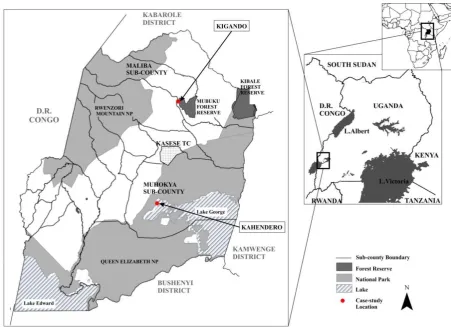
This study focuses on two communities in Uganda, specifically in Kasese district where both floods and droughts occur, and where the population is highly vulnerable to future climatic changes (Oxfam 2008). A short-list of study villages were identified through discussions with key-informants to identify locations that had experience of both floods and droughts. Two villages, Kigando and Kahendero1, were then selected to provide evidence from locations with different customary and market-based opportunities in order to explore the range of strategies used by different households (Figure 1), whilst being largely representative of villages in the wider Kasese district. Between January and June 2012 we surveyed 108 households in Kigando (96%) and 190 in Kahendero (76%) to capture information on household demographics, assets, and livelihood activities, the perceived impact of floods and droughts on activities, and market access. A selection of households were then purposefully sampled to obtain a cross-section of households based on age, gender, education level, wealth, and livelihood activity (n=17 in Kigando and n=19 in Kahendero). Interviews and surveys enabled triangulation of the data, supported by observation and informal conversations. Questions about livelihoods were asked first, enabling a progressive enquiry towards floods and droughts, and later towards longer term climatic changes without biasing respondents.
7 Figure 1. Location map of study sites, Kasese District, Uganda. Data provided by Kasese District Local Government (KDLG, 2012).
3.1
Characterisation of case studies and development of socio-economic
indicators
The surrounding environs of both Kigando and Kahendero and the associated resource constraints shape the different activity profiles of the two communities. Fisheries based livelihoods are afforded to residents in Kahendero by the lakeshore location, whereas crop farming and livestock keeping are restricted due to the proximity of Queen Elizabeth National Park (QENP) and therefore the presence of wildlife corridors and the reduced availability of land. Livestock keeping is more prevalent in Kigando due to the neighbouring forest reserve providing land for livestock grazing. However
K are restricted from substantial engagement in market-based activities due to the
limited trading activity within the village. Distinct livelihood groups were identified within each village and the subsequent livelihood strategies are shown in Table 1. In Kigando, the dominant crop was beans, followed by maize then cotton. In Kahendero, cotton was most frequently grown,
8 Table 1. Livelihood strategies (proportion of households)
Strategy Activities* Overall Wet Season Dry Season
Kigando
Crop Crop 28 (25%) 28 (25%) 36 (33%)
Diversified Crop Crop, NR or Livestock 69 (64%) 69 (64%) 62 (58%)
Service Crop, NR or Livestock, Service 11 (11%) 11 (11%) 10 (9%)
Kahendero
Fish Fish 30 (16%) 44 (23%) 51 (27%)
Diversified Fish Fish, Crop/NR 82 (43%) 68 (36%) 59 (31%)
Crop Crop or NR (or both) 24 (13%) 34 (18%) 35 (18%)
Service Service (and other) 51 (27%) 41 (21%) 40 (21%)
No activity No activity 3 (2%) 3 (2%) 5 (3%)
*In both villages, 25% of households surveyed engage in only one activity. Out of this 25%, in Kigando, this was all crop farming and in Kahendero, fishing = 57%, service-based = 18%, trading food stuffs = 12% and crop farming = 6%.
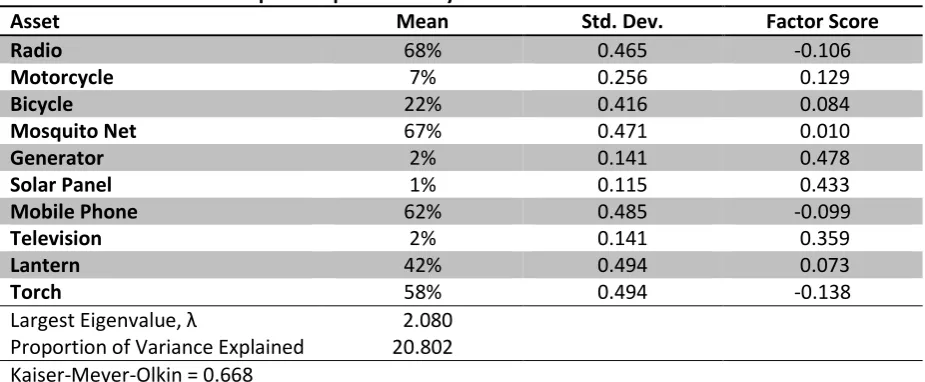
Whilst the literature review identified wealth as a key factor to be investigated it was not possible to directly record income during the survey due to the variation in dependence on subsistence activity across both villages. Instead, estimated wealth levels were computed using asset indicators to create a relative wealth index (Filmer and Prtichett 2001; Córdova 2008). Following the method of Córdova (2008) we used Principal Component Analysis (PCA) to assign weights to household assets to
wealth index Assets with most variation across households are weighted greater than those more commonly found. Both villages were jointly analysed due to the data requirements of PCA (Tabachnick and Fidell 2013) and given both were reported to have similar poverty levels (KDLG 2012). Table 2 summarises the results of the PCA. Wealth groups were then computed for each village based on the wealth index score of each household: average wealth scores were greater in Kahendero than in Kigando (except the moderately wealthy) and the majority of households in both villages were very poor (Table 3).
Table 2. Results from Principal Component Analysis to determine Factor scores for wealth index
Asset Mean Std. Dev. Factor Score
Radio 68% 0.465 -0.106
Motorcycle 7% 0.256 0.129
Bicycle 22% 0.416 0.084
Mosquito Net 67% 0.471 0.010
Generator 2% 0.141 0.478
Solar Panel 1% 0.115 0.433
Mobile Phone 62% 0.485 -0.099
Television 2% 0.141 0.359
Lantern 42% 0.494 0.073
Torch 58% 0.494 -0.138
L E 2.080
[image:9.595.67.530.575.766.2]9 Table 3. Distribution of wealth groups
Classification
KIGANDO KAHENDERO
Households (Number)
Households (Percent)
Ave. Wealth*
Households (Number)
Households (Percent)
Ave. Wealth*
Very Poor 39 36.1% -0.3817 104 54.7% -0.3990
Poor 27 25.0% -0.1304 32 16.8% -0.1377
Moderate 23 21.3% 0.1076 37 19.5% 0.0964
Relatively
Wealthy 19 17.6% 1.0164 17 8.9% 2.2913
*Mean scores for First Principal Component
3.2
Socio-economic drivers of livelihood strategy
The use of a mixed-methods approach to this study requires a preliminary analysis of the quantitative survey data to provide a background to the main analysis. What follows is a brief analysis of how livelihood activities were characterised by different socio-economic household characteristics which then informs the interpretation of the main results into what drives choice of coping strategy.
In Kahendero, a statistically significant relationship between livelihood strategy and education, gender and wealth2 is observed (Table 4). Service-related activities were undertaken by more educated households whilst less educated households undertook a mix of fishing, arable farming or other natural resource activities. Fishing was dominated by male-headed households, largely due to cultural tradition. Furthermore, where younger members of a household would have been
introduced to fishing through paternal activity, this was limited in female headed households. Relatively wealthy households did not exclusively engage with fishing, with at least half of these households relying on service related activities. In fact, 70% of households who depended entirely
. The lack of initial investment required to work as barias (crew) made fishing a popular activity amongst the poor. Yet income from fishing often exceeds that from crop farming. Therefore the characterisation of fishing based result from both higher income levels and the traditional male-dominance of fishing3. In contrast, the household profile in Kigando is more homogenous in terms of wealth, education level and livelihood activity, and therefore households are not easily differentiated by socio-economic variables or livelihood activity (. Relationship between livelihood activity and socio-economic household characteristics
Characteristic
Kigando Kahendero
df p df p
Age 12.116 6 0.059 18.481 12 0.102
Gender 1.572 2 0.456 20.274**a 4 <0.000
Education level 4.186 4 0.381 27.392**b 8 0.001
10 * p<0.05, ** p<0.01
a 40% of cells have expected count less than 5, and test for independence is violated. b 3 cells (20%) have expected count less than 5. Minimum expected count is 0.70
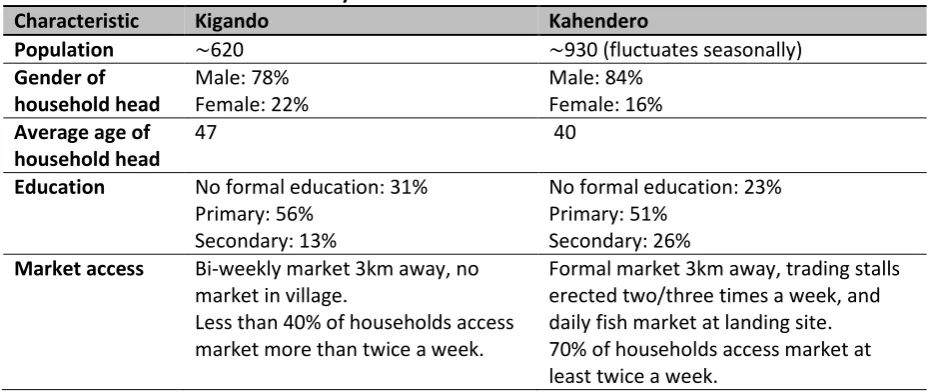
[image:11.595.66.534.248.330.2]Table 5). Market-access, indicated by the frequency in which households visit a market (to buy or sell goods) is greater in Kahendero: 70% of respondents directly accessed a market at least twice a week, compared to just under 40% in Kigando. Therefore whilst households in both villages have at least some degree of market-access, this was more apparent in Kahendero.
Table 4. Relationship between livelihood activity and socio-economic household characteristics
Characteristic
Kigando Kahendero
df p df p
Age 12.116 6 0.059 18.481 12 0.102
Gender 1.572 2 0.456 20.274**a 4 <0.000
Education level 4.186 4 0.381 27.392**b 8 0.001
Wealth group 6.550 6 0.364 26.219**a 12 0.010
* p<0.05, ** p<0.01
[image:11.595.65.532.397.593.2]a 40% of cells have expected count less than 5, and test for independence is violated. b 3 cells (20%) have expected count less than 5. Minimum expected count is 0.70
Table 5. Characteristics of case-study areas
Characteristic Kigando Kahendero
Population 620 930 (fluctuates seasonally)
Gender of household head
Male: 78% Female: 22%
Male: 84% Female: 16% Average age of
household head
47 40
Education No formal education: 31%
Primary: 56% Secondary: 13%
No formal education: 23% Primary: 51%
Secondary: 26%
Market access Bi-weekly market 3km away, no
market in village.
Less than 40% of households access market more than twice a week.
Formal market 3km away, trading stalls erected two/three times a week, and daily fish market at landing site. 70% of households access market at least twice a week.
11 Table 6. Household and village characteristics of customary and market-based livelihoods
Customary-based rural livelihoods Market-orientated rural livelihoods
Household Older household heads
Less educated households Poorer households
Younger household heads More educated
Wealthier households
Village Low diversity of activities
Lower overall community wealth
Isolated communities disconnected from markets
Wider diversity of activities Greater overall community wealth Communities connected with market opportunities
Example Kigando Kahendero
4
Results
4.1
Household coping strategies
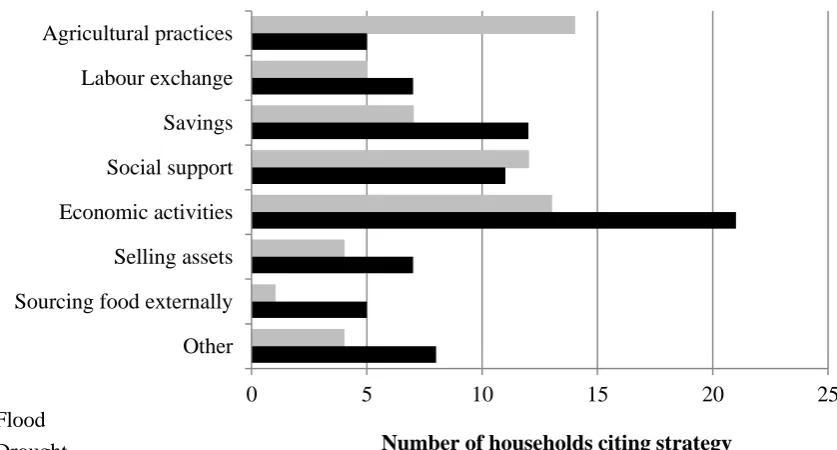
12 Figure 2. Flood and drought coping strategies identified during semi-structured interviews
The inherent characteristics of floods and droughts lead some coping strategies to be more suited to one hazard or another. Agricultural practices were most commonly used during floods rather than droughts, such as digging trenches to divert flood water. However, whilst respondents were aware of using techniques such as mulching and water conservation (techniques) during periods of low rainfall, these were only identified as ways to maximise crop yields rather than as specific drought coping strategies. Likewise, savings and selling assets were more important during droughts than floods. Conserving assets during the wet season enabled households to sell them off during a drought, whereas reduced farming activity in a typical dry season makes it harder to build up assets to prepare for flooding. However, there remain variances within the adoption of particular coping strategies as shown in Figure 2, which indicates how different hazards demand different strategies.
Yet Figure 2 does not indicate whether any specific household uses the same coping strategy regardless of hazard. Savings (in Kahendero) and social support (in Kigando) were the only two strategies that were found to be used by the same households in both hazards4, confirming that most households undertake different coping strategies during different hazards. To understand what drives this choice of coping strategy it is necessary to investigate at both the household and village level.
4.2
Drivers of coping strategy
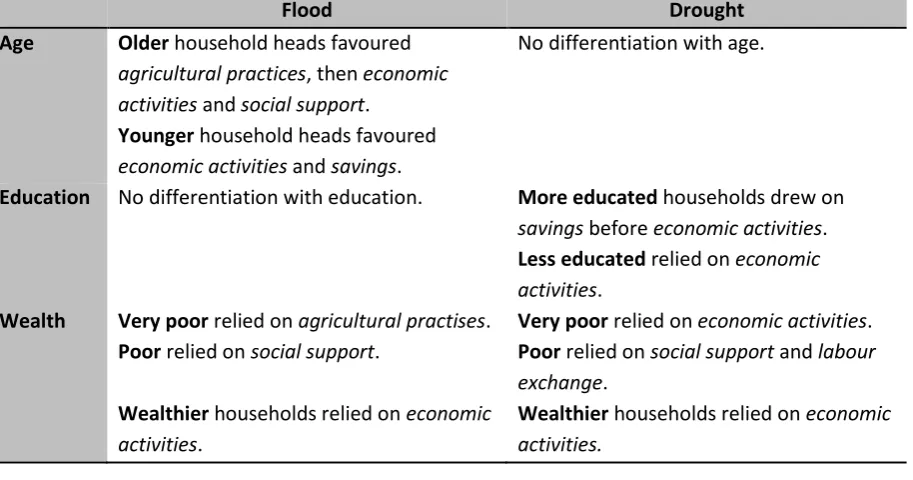
Socio-economic factors are important in choice of coping strategy, particularly those of age,
education and wealth, as shown in Table 7. During floods, we observed older households were more
0 5 10 15 20 25
Agricultural practices
Labour exchange
Savings
Social support
Economic activities
Selling assets
Sourcing food externally
Other
Number of households citing strategy
Str
at
egy
13 likely to rely on social support than younger households. Whilst other studies argue that older farmers are most likely to reduce consumption (Hisali et al. 2011), this is likely to lead households to rely on social support to access basic levels of food and resources.
Table 7. Household drivers of coping strategy
Flood Drought
Age Older household heads favoured
agricultural practices, then economic activities and social support.
Younger household heads favoured
economic activities and savings.
No differentiation with age.
Education No differentiation with education. More educated households drew on
savings before economic activities.
Less educated relied on economic
activities.
Wealth Very poor relied on agricultural practises.
Poor relied on social support.
Wealthier households relied on economic
activities.
Very poor relied on economic activities.
Poor relied on social support and labour
exchange.
Wealthier households relied on economic
activities.
Education was also found to drive choice of coping strategy. More educated households relied most on savings, likely to result from these households being known to more easily secure savings (Kiiza and Pederson 2001) due to greater livelihood diversity. However less educated households whom undertook diverse livelihood strategies preferred relying on social support regardless of hazard. This could reflect the market activity of the communities: households from Kigando (where there was a lower level of education) who depend most on customary activities and the lower income returns associated with those activities, rely more on social support than savings.
14 Alongside the preliminary analysis which showed the two villages differed in terms of market-opportunities and land access, coping strategy is seen to vary by location (Figure 3). Whilst differences between responses may have been symptomatic of the risk variance of each hazard, some strategies were more common in one village than the other.
Figure 3. Flood (3a) and drought (3b) coping strategies, as undertaken within each village.
Village determinants of coping strategy
Selling assets, such as durables and livestock was most common in Kigando. In Kahendero, the risk of heavy fines and imprisonment if their livestock was found within QENP meant only 13% of households kept livestock. However the surrounding environs enabled 61% of households in
0 10 20 30 40 50
Agricultural Practices
Labour exchange
Savings
Social support
Economic activities
Assets
Sourcing food externally
Other
Percentage of households citing strategy
F
lood
Str
at
egy
Kigando Kahendero
0 10 20 30 40 50
Agricultural Practices
Labour exchange
Savings
Social support
Economic activities
Assets
Sourcing food externally
Other
Percentage of households citing strategy
D
rought
Str
at
egy
15 Kigando to keep livestock and therefore draw on this resource as a coping strategy. These
households openly discussed using the adjacent Mubuku Forest Reserve for grazing, despite its protected status. The surrounding physical environs and the customary and formal land tenure arrangements have determined how successful the use of selling assets is as a coping strategy. Access rights to land surrounding Kigando enabled households to keep livestock which can be sold in times of stress, whereas in Kahendero restricted access rights limited livestock selling options. However, new co-management regulations and policies that will impact on the Mubuku Central Forest Reserve adjacent to Kigando risk impacting on future livelihood and coping options:
I sometimes graze my cattle in the forest, which is from the Government and
sometimes...if they find me here, they would fine me. But this is the only land that can accommodate my cattle.
(Kigando livestock keeper, 2012) Beyond the impact of the surrounding environs, which village the households was located in was found to further influence coping strategy: both labour exchange and economic activities were found to significantly vary by village (Table 8). Only households in Kigando cited labour exchange as a strategy (mostly off-farm agricultural practises). Despite households in Kahendero engaging in non-farm labour exchange such as fishing for others, this was only recognised as part of a wider
[image:16.595.76.531.511.591.2]livelihood strategy, rather than a specific coping option. These households in Kahendero however were significantly more likely to engage in economic activities, largely as a result of the developing service activity around the lake-shore landing site which provides greater opportunities for households to access markets than in Kigando.
Table 8. Chi-square tests for independence between coping strategies and village
Flood Drought
Labour Exchange Economic Activities Labour Exchange Economic Activities
4.236*1 6.397* 7.261**2 7.023**
p 0.039 0.011 0.007 0.008
phi -0.425 0.479 -0.519 0.498
1 1 2 cells (50%) have expected count less than 5. Minimum expected count is 2.36 2 2 2 cells (50%) have expected count less than 5. Minimum expected count is 3.31
* p<0.05, ** p<0.01
16 their savings activities. In Kigando, social support networks provided access to off-farm and non-farm labour exchange opportunities as additional coping strategies. Supplementing these support networks were savings groups, but unlike in Kahendero these were relied upon more during challenges indirectly linked to climatic hazards than as specific flood or drought coping strategies:
I realise I can go and get a loan to help me buy these seeds then after I've planted and harvested I can then try and return this money.
(Kigando farmer, 2012) In Kigando, the majority of savings resulted from the sale of crop yields, thus climatic events could indirectly affect households across the village:
My home is not affected by floods, but is affected by hunger and famine. It is not affected by floods, but it is affected by savings.
(Kigando savings group member, 2012) Income sources in Kahendero were less sensitive to climatic hazards, enabling some residents to regularly deposit with these savings groups. This steady income for the savings group afforded households that were affected by floods or droughts better access to loans compared to those in Kigando.
5
Discussion: Livelihood activity and coping responses
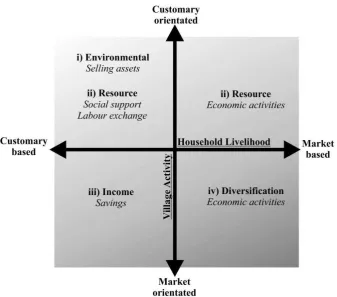
17 Figure 4. Coping strategy framework showing the interaction between village activity (vertical axis), household activity (horizontal axis) and the resulting drivers of household coping strategy: environmental, resource, income and diversification.
i. Environmental drivers
Whilst physical characteristics of a hazard event play a role in determining the impact a hazard has (Lewis 1999; Liverman 1990), the physical characteristics of the context a household is placed within will affect their choice and ability to undertake a particular coping strategy. The access rights to the surrounding environs can disadvantage some communities (Hisali et al. 2011), such as Kahendero, whilst these rights are increasingly important to others. Livestock is an important form of security (Mogues 2006), especially within the more customary-orientated locations, such as Kigando. However, changing land tenure arrangements will impact future adaptation options, whereby policies and actions designed to conserve land can undermine the coping strategies that some households utilise during times of climatic stress. Relying on coping strategies which can be so readily affected by external processes can lead to increased vulnerability of these households.
ii. Resources drivers
18 However, non-farm income generating activities may not be reliable during droughts as the overall income and therefore spending within a community dependent on natural resources may decrease (Eriksen et al. 2005). Nonetheless, some studies observed such activities increase during drought (Cunguara et al. 2011) especially in market-orientated communities where there is more continuous trading activity. Thus economic activities may prove a more resilient coping option where there is strong market-access but may leave households in more customary-orientated communities vulnerable to repeated drought events.
However, households in more market-orientated contexts may also be constrained in their choice of strategy. Economic activities and savings strategies may prove necessary in order to overcome reduced levels of social capital (Bryan et al. 2009). For example, Kahendero is both larger than Kigando, experiences high level of in-migration due to the attraction of market opportunities, and has seasonal population fluctuations due to the fishing activity. These factors negatively impact on social cohesion, limiting household coping abilities to environmental impacts (Pretty 2003). Therefore residents in communities such as Kahendero actively seek alternate coping options. Hence, coping strategies in more customary based locations with greater social cohesion may be more dominated by social support based activities. The dependence on labour exchange as a
strategy in Kigando reflects the opportunities afforded to households through social networks, which are known to be important in diminishing risk (Osbahr et al. 2008; Adger 2003). Likewise, labour exchange was not cited by households in Kahendero, where there was also less utilisation of social support strategies. Therefore social support systems have both a direct and in-direct role to play in enabling the adoption of particular coping strategies.
Yet can social support provide coping options regardless of hazard? Whilst the covariate nature of droughts can disrupt the social support network more than floods, the different impacts that different hazards present to households also dictates choice of strategy. For example, sudden disruptions from floods may require reliance on social support, whilst slower-onset events such as droughts enable households to prepare themselves.
iii. Income drivers
19 Meanwhile, less diverse communities who largely engage in natural-resource activities are likely to experience fluctuations in income in line with climatic shocks. In turn, this results in savings groups being unable to supply loans. Households therefore rely less on savings as a direct coping strategy for climatic hazards, similarly reported elsewhere as reductions in borrowing and begging strategies (Helgeson et al. 2013). Therefore providing there is diversity in community livelihoods, service-based activities buffer households in natural resource dependent communities from drought induced income reductions.
iv. Diversification drivers
Livelihood diversification and coping strategies are recognised as separate activities (Ellis 1998), yet diversification can improve coping opportunities (McLeman and Smit 2006). Whilst households with diverse long-term livelihood strategies are known to be better positioned to offset climate risk than those who rely on non-farm work as short-term coping strategies (Cunguara et al. 2011), this success depends on existing customary livelihoods. Limited market opportunities restrict households in Kigando from alternate livelihood strategies, let alone coping strategies. Yet even where diversification is possible, it may not always reduce risk (Silva et al. 2010). For example, income diversification risks eroding social cohesion that has built up around particular activities, thereby reducing alternate coping strategies. Or for instance in Kahendero, diversifying into fishing may increase income yet it carries greater risk through fluctuating fish stocks and renewing expensive equipment if broken. Whilst declines in fish stocks were acknowledged by respondents, the associated risk of reduced market opportunities was not. Both reduced market activity from a decreasing fishing market, and that continual increases in new businesses could over-saturate the local market were both under recognised.
Diversification arguments are also not devoid of gender considerations. Socio-economic factors clearly drive choice of coping activity. Indeed our findings resonate for example, with those of Eriksen et al. (2005) that gender is important in household decisions to specialise in an activity. However, we find it is not so much choice but restrictions that lead to specialisation such as the traditional absence of women participation in fishing. Thus, the lower income-return activities that female headed households are restricted to also subsequently limit their available coping strategies through both livelihood dependent strategies and additional strategies, such as savings.
Consequently it is not only household or community culture that is important (Nielsen and Reenberg 2010; Motsholapheko et al. 2011), but also the culture of the activity itself.
20 between coping with different hazards (Tarhule 2005). For example, flood strategies may be
restricted by reducing off-farm labour exchange opportunities as a result of reduced on farm
activity. Diversification may therefore erode current coping capacities without providing sustainable alternatives. Whilst can, and do, transition from traditional resource dependent livelihoods to more market-based activities, it may remain difficult for a whole community to follow. In Kahendero, fishing, and to a lesser extent crop farming enables market trading to exist, thus if households transition away from these activities, the local market may collapse.
Implications for coping and adaptation policy
By investigating household and village drivers of household coping strategy, our findings highlight the importance of considering how the interactions of these drivers shape the available coping strategy of a household. More specifically, environmental, resource, income and diversification drivers shape different support mechanisms due to the different coping strategies they enable. The literature calls for adaptation policies that target the marginal in society, such as women, children, elderly, or the poor (Cunguara et al. 2011; Tanner and Mitchell 2008), arguing that these groups will remain most vulnerable. Yet these groups do not respond to climatic hazards
homogeneously: the poor, or the elderly, or the less educated adapt their coping strategy depending on the hazard experienced. Adaptive strategies also depend on the heterogeneity of the community as well as wider factors including access and provision of markets and security of credit schemes. Policy must support households to diversify income activities to continue to cope in times of drought, whilst ensuring that they support and foster social capital which is increasingly relied on during floods. For instance, the poorest households vary strategy by hazard and need support to participate in savings groups, especially where market-based opportunities are limited. Enhancing a supportive social foundation provides the groundwork from which members of such groups can collectively diversify their activities, especially where social capital is more readily available than financial capital. Indeed participation in such groups is an important mechanism through which households receive formal support, for example, through the National Agricultural Advisory Service, NAADS (see further discussion in Bahiigwa et al. 2005; Osbahr et al. 2011).
Market access is widely identified as important in determining levels of diversification (see for example Motsholapheko et al. 2011; Cunguara et al. 2011; Paavola 2008) yet caveats remain. The level of customary activities and market opportunities must be considered for livelihood
21 access to non-farm activities make diversification unsuitable for all rural communities. Further research is necessary to understand the contexts in which these limits and constraints exist.
6
Conclusion
In this study, we have shown how household livelihood strategies of two communities in Uganda are ultimately shaped by socio-economic household characteristics as well as the surrounding cultural, economic and environmental contexts. By using a framework that analyses coping strategies along interacting axes of household and village activities, we have discussed how the contexts that determine household coping strategy arise from different levels of customary activities and market access. It is important to consider socio-economic household characteristics in order to provide a targeted approach to specific groups, and further research is needed to specifically address the types of strategies each group may require. Such research may further develop the proposed framework. By examining the two different community contexts of Kigando and Kahendero we have shown how these factors shape the available coping strategies of different households: labour exchange and social support were common coping strategies within Kigando, whilst economic activities and savings were preferred in Kahendero. Analysing these drivers from the perspective of two different climatic hazards, floods and droughts, we have also shown that household coping mechanisms differ under different manifestations of climatic variability.
Whilst our findings are context-specific, they reveal characteristics of communities that should be considered in wider coping and adaptation debates. For example, the level of customary-based activities and opportunities for market-orientated activities must be considered within coping and adaptation, especially in order to consider the barriers and constraints concerning diversification activities. Unforeseen trade-offs between different (formal and informal) structures will determine the success of different coping strategies. How current coping strategies affect future adaptation options will depend on the interaction between socio-economic household characteristics and the wider village context, and will manifest differently depending on the hazard experienced.
Notes:
1
K Kahendero I Kahendero II. For the purpose
of this research, Kahendero I was selected as a case-study and is referred to throughout as Kahendero.
2
Minimum expected cell counts were violated for these tests. At least 80% of cells should have expected frequencies of 5 or more. Yet, observations made during data collection provide evidence to support these relationships.
3
22 4
Chi-squared result were for savings in Kahendero (1, n=19) = 10.72 p<.01 and social support in Kigando (1, n=17) = 4.38 p<.05).
7
Acknowledgments
This research was funded by a UK Economic and Social Research Council (ESRC) award
(ES/I010521/1) with fieldwork supported by an RGS (IBG) Dudley Stamp Memorial Award. It forms part of the work of the Centre for Climate Change Economics and Policy (CCCEP). The views
presented do not necessarily reflect those of the associated bodies. The authors would like to thank Dr Julia Leventon (University of Leeds) for her comments on an earlier draft of this paper, as well as two anonymous reviewers for valuable comments.
References
ADGER, W. N. 2003. Social capital, collective action, and adaptation to climate change. Economic Geography,79(4), pp.387-404.
ADGER, W. N., S. DESSAI, M. GOULDEN, M. HULME, I. LORENZONI, D. NELSON, L. O. NAESS, J. WOLF and A. WREFORD. 2009. Are there social limits to adaptation to climate change? Climatic Change,93(3), pp.335-354.
ADGER, W. N., S. HUQ, K. BROWN, D. CONWAY and M. HULME. 2003. Adaptation to climate change in the developing world. Progress in Development Studies,3(3), pp.179-195.
ADGER, W. N. and K. VINCENT. 2005. Uncertainty in adaptive capacity. Comptes Rendus Geosciences, 337(4), pp.399-410.
AGRAWAL, A. 2008. The Role of Local Institutions in Adaptation to Climate Change. Social Dimensions of Climate Change, Washington, DC.
ANTWI-AGYEI, P., A. J. DOUGILL, E. D. G. FRASER and L. C. STRINGER. 2012. Characterising the nature of household vulnerability to climate variability: empirical evidence from two regions of Ghana. Environment, Development and Sustainability,14(6).
BAHIIGWA, G., D. RIGBY and P. WOODHOUSE. 2005. Right Target, Wrong Mechanism? Agricultural Modernization and Poverty Reduction in Uganda. World Development,33(3), pp.481-496. BELOW, T. B., A. ARTNER, R. SIEBERT and S. SIEBER. 2010. Micro-level Practices to Adapt to Climate
Change for African Small-scale Farmers: a review of selected literature. IFPRI Discussion Paper 00953.
BELOW, T. B., K. D. MUTABAZI, D. KIRSCHKE, C. FRANKE, S. SIEBER, R. SIEBERT and K. TSCHERNING. 2012. Can farmers' adaptation to climate change be explained by socio-economic
household-level variables? Global Environmental Change-Human and Policy Dimensions, 22(1), pp.223-235.
BIRKMANN, J. 2011. First- and second-order adaptation to natural hazards and extreme events in the context of climate change. Natural Hazards, pp.1-30.
BLAIKIE, P., T. CANNON, I. DAVIS and B. WISNER. 1994. At Risk: Natural hazards, People's vulnerability, and disasters. London: Routledge.
23 BRYAN, E., T. T. DERESSA, G. A. GBETIBOUO and C. RINGLER. 2009. Adaptation to climate change in
Ethiopia and South Africa: options and constraints. Environmental Science & Policy,12(4), pp.413-426.
CHAMBERS, R. 1987. Sustainable Livelihoods, Environment and Development: Putting Poor Rural People First. IDS Discussion Paper, Brighton: Institue of Development Studies.
CHUKU, C. A. and C. OKOYE. 2009. Increasing resilience and reducing vulnerability in sub-Saharan African agriculture: Strategies for risk coping and management. African Journal of
Agricultural Research,4(13), pp.1524-1535.
CÓRDOVA, A. 2008. Methodological Note: Measuring relative wealth using household asset indicators. AmericasBarometer Insights,6.
CUNGUARA, B., A. LANGYINTUO and I. DARNHOFER. 2011. The role of nonfarm income in coping with the effects of drought in southern Mozambique. Agricultural Economics,42(6), pp.701-713.
DERESSA, T. T., R. M. HASSAN, C. RINGLER, T. ALEMU and M. YESUF. 2009. D choice of adaptation methods to climate change in the Nile Basin of Ethiopia. Global Environmental Change,19(2), pp.248-255.
ELLIS, F. 1998. Household strategies and rural livelihood diversification. Journal of Development Studies,35(1), pp.1-38.
ERIKSEN, S. H., K. BROWN and P. M. KELLY. 2005. The dynamics of vulnerability: locating coping strategies in Kenya and Tanzania. Geographical Journal,171, pp.287-305.
ERIKSEN, S. H. and K. O'BRIEN. 2007. Vulnerability, poverty and the need for sustainable adaptation measures. Climate Policy,7, pp.337-352.
FILMER, D. and L. H. PRTICHETT. 2001. Estimating wealth effects without expenditure data - or tears: an application to education enrollments in states of India. Demography,38(1).
GROTHMANN, T. and A. PATT. 2005. Adaptive capacity and human cognition: The process of
individual adaptation to climate change. Global Environmental Change Part A,15(3), pp.199-213.
HELGESON, J., S. DIETZ and S. HOCHRAINER. 2013. Vulnerability to Weather Disasters: the Choice of coping Strategies in Rural Uganda. Ecology & Society,18(2), p2.
HELLMUTH, M. E., A. MOORHEAD, M. C. THOMSON and J. WILLIAMS. eds. 2007. Climate Risk Management in Africa: Learning from Practice. Columbia University, New York: International Research Institute for Climate and Society.
HISALI, E., P. BIRUNGI and F. BUYINZA. 2011. Adaptation to climate change in Uganda: Evidence from micro level data. Global Environmental Change,21(4), pp.1245-1261.
HJERPE, M. and E. GLAAS. 2011. Evolving local climate adaptation strategies: incorporating influences of socio economic stress. Mitigation and Adaptation Strategies for Global Change,17(5), pp.471-486.
IPCC. 2012. Managing the Risks of Extreme Events and Disasters to Advance Climate Change Adaptation. A Special Report of Working Groups I and II of the Intergovernmental Panel on Climate Change. Cambridge, UK: Cambridge University Press.
KDLG, K. D. L. G. 2012. District Development Plan - 2010/11 2014/15 Kasese District Kasese District Local Government.
KIIZA, B. and G. PEDERSON. 2001. Household financial savings mobilisation: Empirical evidence from Uganda. Journal of African Economies,10(4), pp.390-409.
KONSEIGA, A. 2006. Household Migration Decisions as Survival Strategy: The Case of Burkina Faso. Journal of African Economies,16(2), pp.198-233.
KRISHNA, A., D. LUMONYA, M. MARKIEWICZ, F. MUGUMYA, A. KAFUKO and J. WEGOYE. 2006. Escaping poverty and becoming poor in 36 villages of Central and Western Uganda. Journal of Development Studies,42(2), pp.346-370.
24 households making changes in their farming practices? Evidence from East Africa. Food Security,4(3), pp.381-397.
LEWIS, J. 1999. Development in Disaster Prone Places: Studies of Vulnerabilty London: Immediate Technology Publications.
LIVERMAN, D. M. 1990. Vulnerability to global environmental change. Understanding Global
Environmental Change: The contributions of Risk Analysis and Management Clark University, The Earth Transformed Program Report ET 90- 01., Worcester, MA.
MCLEMAN, R. and B. SMIT. 2006. Migration as an adaptation to climate change. Climatic Change,76. MCSWEENEY, C., M. NEW and G. LIZCANO. 2010. UNDP Climate Change Country Profiles: Uganda.
New York: UNDP.
MOGUES, T. 2006. Shocks, Livestock Asset Dynamics and Social Capital in Ethiopia. DSGD Discussion Paper
MOTSHOLAPHEKO, M. R., D. L. KGATHI and C. VANDERPOST. 2011. Rural livelihoods and household adaptation to extreme flooding in the Okavango Delta, Botswana. Physics and Chemistry of the Earth,36(14-15), pp.984-995.
NIELSEN, J. O. and A. REENBERG. 2010. Cultural barriers to climate change adaptation: A case study from Northern Burkina Faso. Global Environmental Change-Human and Policy Dimensions, 20(1), pp.142-152.
O'BRIEN, K. and R. LEICHENKO. 2000. Double exposure: assessing the impacts of climate change within the context of economic globalization. Global Environmental Change,10, pp.221-232. OKWI, P. O., G. NDENG'E, P. KRISTJANSON, M. ARUNGA, A. NOTENBAERT, A. OMOLO, N.
HENNINGER, T. BENSON, P. KARIUKI and J. OWUOR. 2007. Spatial determinants of poverty in rural Kenya. Proc Natl Acad Sci U S A,104(43), pp.16769-74.
OSBAHR, H., P. DORWARD, R. STERN and S. COOPER. 2011. SUPPORTING AGRICULTURAL
INNOVATION IN UGANDA TO RESPOND TO CLIMATE RISK: LINKING CLIMATE CHANGE AND VARIABILITY WITH FARMER PERCEPTIONS. Experimental Agriculture,47(2), pp.293-316. OSBAHR, H., C. TWYMAN, W. N. ADGER and D. S. G. THOMAS. 2008. Effective livelihood adaptation
to climate change disturbance: Scale dimensions of practice in Mozambique. Geoforum, 39(6), pp.1951-1964.
OXFAM. 2008. Turning up the Heat: Climate Change and Poverty in Uganda. Kampala, Uganda: Oxfam GB.
OYEKALE, A. S. and K. E. GEDION. 2012. Rural households' vulnerability to climate-related income shocks and adaption options in central Malawi. Journal of Food Agriculture & Environment, 10(3-4), pp.1505-1510.
PAAVOLA, J. 2008. Livelihoods, vulnerability and adaptation to climate change in Morogoro, Tanzania. Environmental Science & Policy,11(7), pp.642-654.
PELLING, M. 2003. The vulnerabilities of cities: Social resilience and natural disaster. London: Earthscan.
PRETTY, J. 2003. Social capital and the collective management of resources. Science,302, pp.1912-1914.
QUINN, C. H., G. ZIERVOGEL, A. TAYLOR, T. TAKAMA and F. THOMALLA. 2011. Coping with Multiple Stresses in Rural South Africa. Ecology and Society,16(3).
RONCOLI, C., K. INGRAM and P. KIRSHEN. 2001. The costs and risks of coping with drought: livelihood impacts and farmers' responses in Burkina Faso. Climate Research,19(2), pp.119-132. SCOONES, I. 1998. Sustainable Rural Livelihoods: a framework for analysis. IDS Working Paper,72. SILVA, J. A., S. ERIKSEN and Z. A. OMBE. 2010. Double exposure in Mozambique's Limpopo River
Basin. Geographical Journal,176, pp.6-24.
25 TABACHNICK, B. G. and L. S. FIDELL. 2013. Using Multivariate Statistics London: Pearson.
TANNER, T. and T. MITCHELL. 2008. Entrenchment or Enhancement: Could Climate Change Adaptation Help to Reduce Chronic Poverty? IDS Bulletin,39(4), pp.6-15.
TARHULE, A. 2005. Damaging Rainfall and Flooding: The Other Sahel Hazards. Climatic Change,72(3), pp.355-377.
THORNTON, P. K., R. B. BOONE, K. A. GALVIN, S. B. BURNSILVER, M. M. WAITHAKA, J. KUYIAH, S. KARANJA, E. GONZALEZ-ESTRADA and M. HERRERO. 2007. Coping strategies in livestock-dependent households in east and southern Africa: A synthesis of four case studies. Human Ecology,35(4), pp.461-476.