International Journal of Innovative Technology and Exploring Engineering (IJITEE) ISSN: 2278-3075, Volume-8 Issue-7 May, 2019
Published By:
Abstract: Internet of Things gives a new development in the area of farming and agriculture sector. It provides accurate solutions for the advanced problems involved in the agriculture by decreasing extra manpower. In this paper we are executing IoT based services to the agricultural sector. The main aim of this paper is to detect the insect pests in the tomato crop by using the various sensors. Now days the quality agriculture is always a strong area, where the technology based on sensors plays a vital role. Most commonly; sensors provide real time data in the field. By deploying sensors and Mapping fields farmers can start to comprehend their products in miniaturized scale. With the use of Fog computing and Wi-Fi based distance network in IoT, the pest data can be collected by the farmer in the early stages of the crop diseases via message. Fog Computing has a main aim in enlarging by bringing the cloud its required power of computation, storage and communication capabilities with respect to IoT to the edge of the network. Instead of walking down the field, the farmer today can take necessary measures to reduce the pest’s population by using the automatic sprinkler mixed with pesticides by using soil moisture sensor.
Index Terms: IoT, WIFI, Fog Computing, automatic sprinkler, Soil Moisture sensor.
I. INTRODUCTION
Agronomy is measured as the base of lifecycle for hominoid kind as it is the major cause in nutrition materials. The next era smart agriculture will be completely based on IoT. Smart agriculture, otherwise called Precision agriculture enables agriculturists to expand yields utilizing negligible assets. The major problems involved in agriculture sector are insect pest and diseases. Unfortunately, many farmers are still
employing their traditional methods to eradicate the crop diseases and leads to consume much time. They prone to be the biggest threat to high yield crop. There are many solutions for agricultural problems traditionally but not technically. Our paper aims to place the sensors in different locations of the field in order to detect the pest sound. The Advanced sensors can be used depending upon the type of crop and types of pests that affects. The farmer can use variety of tools to rapidly and accurately. The fog node is used to process the data of the pest sound completely in efficient way. This greatly reduces the time involved to process the data. The main objective of the paper is reducing the latency and bandwidth issues. Based on the fog node information the
Revised Manuscript Received on May 06, 2019
R. Srinivasan, Department of Computer Science and Engineering, Vel Tech Rangarajan Dr. Sagunthala R&D Institute of Science and Technology, Chennai, India.
Dr. Kavitha M, Department of Computer Science and Engineering, Vel Tech Rangarajan Dr. Sagunthala R&D Institute of Science and Technology, Chennai, India.
D. Shashank Reddy, Department of Computer Science and Engineering, Vel Tech Rangarajan Dr. Sagunthala R&D Institute of Science and Technology, Chennai, India.
C.NagaHarshitha, Department of Computer Science and Engineering, Vel Tech Rangarajan Dr. Sagunthala R&D Institute of Science and Technology, Chennai, India.
farmer can take necessary precautions to eradicate the crop pests in the early stages of growth. Since early detection can successfully control disease. This is most optimizing way to measure, monitor and analyze data. Without the human intervention the pests can be controlled by placing the automatic sprinkler in different locations of the field mixed with the pesticides. This can be applicable both in large and small areas. monitor their crop.
Fog Computing goes for broadening cloud by fetching the power of computation, stockpiling and correspondence dimensions to the power of the system, in help of IoT. Division, versatile arrangement of various several functions over the continuum from things to cloud are testing task, because of heterogeneity, various leveled structure. In this examination, we audit writing identified with bugs checking for agribusiness and propose a straightforward, yet broad model to help haze hub organization of multi segment of use to foundation. The model depicts operational foundational characteristics of accessible framework (idleness, data transfer capacity and for the future work we run with the dynamic organization) collaborations among programming to decide qualified arrangements for a submission to a Fog Set-up are exhibited. A Kubernetes, and Docker stage, will be prototyped for a bug identification in yield application as the future work.
II. LITERATUREREVIEW
Here at first in one of the researches they have conducted experiments by collecting the readings at a distance of 10cm, 20cm and 30cm by using a piezoelectric sensor in a wheat grain at several different stages of the pests. From this research collecting the readings for at most two distances will be more useful for setting the threshold limit by performing several analyses [1]. In another paper they have mentioned about the advanced scheme which was real to acquire pest count precisely and mechanically which delivers important spatial-temporal information that allows for efficient combined pest administration in greenhouse operations. This would be mostly useful for the indoor farming up to a certain area [2]. The action of bugs inside a scrap unpackaged crops sounds in the perceptible variety of wavelengths, which can be noticed by in height presentation audio sensors. Here we can use the electret microphone sensor as an acoustic sensor for obtaining the pests sounds easily [3]. The role of Fog Computing is to control several problems that arises with the cloud and here many issues like privacy, latency, bandwidth can be controlled easily. We can use fog nodes and here we use Raspberry Pi as the fog node and it is used for processing the information as fast as possible [4].Combining of Raspberry pi and the Arduino is making a low-cost device for several applications. So here we can use the Arduino as the sensor node and the
Raspberry Pi as the fog node [5].
Precision Agriculture Using Fog-Edge Computing
2540
Published By:
Blue Eyes Intelligence Engineering & Sciences Publication
Retrieval NumberG5579058719 /19©BEIESP
The microphone can also be used for collecting the insects creeping sound in the grain and perform several analyses. They have performed Fast Fourier Transform and used some of the denoising techniques that are used for setting the threshold limit [6]. A comparative study on Arduino and the Raspberry pi gives the knowledge of how to use the input and the output pins and how to connect sensors for these boards [7].
Generally wireless sensor networks are used for greenhouse monitoring for controlling several problems. Several sensors can be integrated easily to collect the necessary data and control the farm [8]. The entire farm can be automated by sending the information from all the sensors to a single network. Creating a user interface can be more useful for monitoring the data easily [9]. Finally, here with the use of Fog computing we can easily control several issues and mainly we can control the latency and the bandwidth problems [10].
III. PROPOSEDSYSTEM
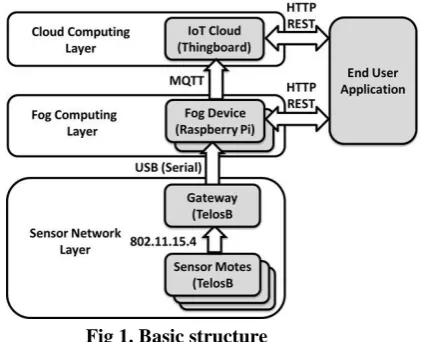
[image:2.595.80.291.434.605.2]The proposed system has to create on effective automated system and here we had made this. At first the noise of the pests is detected by using an Acoustic sensor up to a certain distance like 10cm and 20cm. Several readings will be obtained and after analyzing all the data by using some denoising techniques we set a threshold limit and if the value again crosses the threshold limit, we develop an automated system like the farmers would receive the alert messages and also an automatic sprinkler gets on to control the level of pests up to some extent as well as to control the soil when it is wet by also using the soil moisture sensor.
Fig 1. Basic structure
Here we use the spark fun electret microphone for detecting the noise upto a specified frequency and from that sensor we send the data to the raspberry pi which acts as a fog node and it sends data to the fog server i.e., computer or PC for further analysis. Here we use the MATLAB for the sound signal analysis in order to find the exact frequency where the pests sound is detected and from there, we set a threshold limit so that we can control the pests upto some extent. Finally, in order to control the latency and the bandwidth issues we create an automated messaging system that sends messages to the farmers based on the amplitude range it detects from the sensor and an automated sprinkler will be set up along with the relay to spray the pests when the sound is detected. We also place a soil moisture sensor to find the soil moisture
situations because some pests also reduce the moisture content in the soil.
The messaging system is done by the ThingSpeak server which uses IFTTT protocol to send the messages to the respective mobile numbers that we register in it.
Fig 2 Proposed model
IV. FEASIBILITY STUDY
Nowadays real time monitoring of data was made easy by the wireless sensor networks which is used for several applications. One of the applications is the precision agriculture. Recently the agricultural sector has united WSN for supporting its chief nursing processes. Accuracy farming is one of the main sciences of detailed which understands, estimates and evaluates yields illness for using the proper fertilizers and the real needs of irrigation. But now we use if for monitoring the types of pests, its sounds and also find the type of pest attacking the plant and also send the indications to the farmer indicating the plant disease, productivity and also the current status by sending messages. We also setup an automated sprinkler which sprinkles the farm and controls the farm upto sometime easily.
Numerous WSN requests have been planned so distant in accuracy farming, which incorporate checking vineyards in Italy and Spain to different natural products vegetable just as plant development in rustic zones and lime households in Portugal, Ireland, Netherlands; and some exploration is as yet going in India also. Nuisance location and control is at any rate as old as agribusiness in light of the fact that there has dependably been a need to keep crops free from vermin. Various strategies so far proposed for irritation control in agribusiness utilizing remote sensor arrange. In this piece of the paper we will survey and present diverse kinds of proposed systems and procedures and investigate the exploration exertion of various creators and think about the comparative upsides and downsides. Table I show crops and their connected irritation that looked into in writing. Several crops were present and each and every crop has a type of insects or pests that attack it. This is shown in the figure which is given below that comprises of several different insects with their scientific names.
International Journal of Innovative Technology and Exploring Engineering (IJITEE) ISSN: 2278-3075, Volume-8 Issue-7 May, 2019
Published By: Fig 4(a) Crop vs Pest
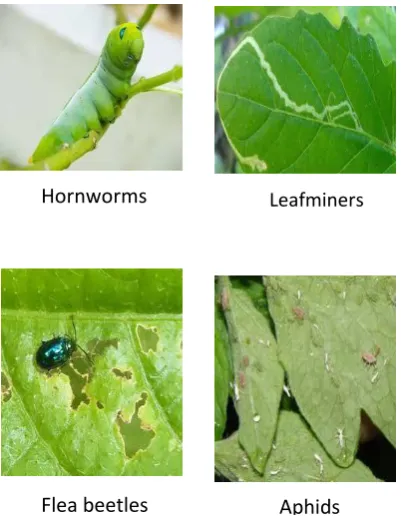
Here since we are taking the tomato plants as an example the pests which cause harm to these plants are classified as follows
Fig 4(b) Major pests in tomato plant
V. SIGNALCOLLECTIONANDPROCESSING The attenuation of the sound is always lesser in air than that of soil and also the frequency of sounds which are low i.e., less than 5kHz) which travel through the soil which is sandy is easily detected type 5-50cm detectable transmission of the noise was reported from the plants and several leaf mats for a distance upto 8m based upon the sensors we use.
Here we use some small breakout sensor boards that use an Electret microphone ranging from(100Hz-10kHz) with a mic attached to it which is 60x preamplifier mic which amplifies the noise easily which is loud enough that can be picked up by it with the help of the analog to digitalconverter attached to it and comes with a voltage of 2.7V to 5V.
Now the electret microphone breakout captures the amplitude between the wo plates which are conducted in the microphone and it then converts it into electrical waves easily. After that these signals will be easily picked by the microcontroller’s ADC.
A. Gain Adjustment
Generally, the amplifiers gain is always set by R5/R4 which can be upto 82V/V app. By simulating it and testing it we get the gain closer to 60V/V.
B. Signal analysis
Here at first, we collect the data from the raspberry pi which we used as a gateway and as a fog node. It collects the data to the ThingSpeak server and we use MATLAB for analyzing the signal based on some denoising techniques which helps us to know the exact frequency of the sound made by the pests. There are two techniques named filter denoising and wavelet denoising techniques.
So, we use the filter denoising technique here to analyze the data and set a threshold limit by using MATLAB and find the limit value for the sensor.
[image:3.595.47.248.210.471.2]
Fig 5 graphical results
VI. DESIGN PHASE A. Steps for Analysis
Fig 6(a) Analysis of sound
Here the step by step procedure is show about how we analyze the sound by using MATLAB and find the threshold limit finally to control the automated system easily. We find the frequency spectrum and analyze the sounds at several different frequencies.
B. UML Diagram
Hornworms
Flea beetles
Aphids
Leafminers
i
Information
2542
Published By:
Blue Eyes Intelligence Engineering & Sciences Publication
Retrieval NumberG5579058719 /19©BEIESP Fig 6(b) Data Flow
This shows the flow of data how it is sent to the cloud for processing and analyzing.
VII. EXPERIMENTAL RESULTS
Now-a-days the main problem for the agriculture is about the pests and the diseases caused by them. There are many types of pests that effect a particular crop and also some of the pests causes damage to the crop when there is low soil moisture level detected in the crop or the plant. We would like to design an acoustic model and perform experimental analysis for knowing the frequency range by placing the sensor which covers the plant up to 8m and can detect the signals easily and calculate the threshold value. So that we could control the damage for the crop by automatically turning on the sprinkler and also send the alert messages to the farmer. Based on the experimental values the peak amplitude can be found and we can set the limit easily.
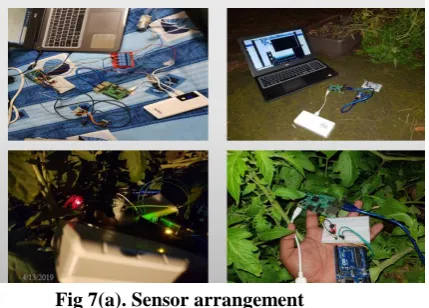
Fig 7(a). Sensor arrangement
Here we would collect the reading from a distance of 10cm and 20cm from the plant which we have considered as an example (tomato plant). After collecting the readings, we perform further analysis and find the frequency and the amplitude range of the sounds found in both the cases. After that we would consider one of the best cases by comparing it with the other methods and set a threshold limit for the sound so that we can automatically operate the system easily. The various results obtained here are classified as follows Acoustic sounds from the sensor at different cases:
VIII. EFFICIENCY OF THE PROPOSED SYSTEM
Here we obtain the exact max minus min values i.e., the peak amplitude and use the Fourier transform and detect the original signal of the pest and set the threshold limit. ThingSpeak is used for entire analysis of the data and stores the data i.e. obtained from the sensor in a proper way and plots the graph based upon the peak to peak amplitude and further these readings are used for the analysis of the data. Based upon the results obtained we can prevent damage of crop up to some extent and also send the alert messages and also develop an automated model. Here just for our assumption we have used water for spraying instead of pesticides because if we implement as in our real time, we can mix some chemicals along with the water for spraying and control the pests. We couldn’t estimate the exact frequency of the pests’ sound since it is based upon the sensor we have used. Next, we use Thing Speak to send the SMS notification to the respective members who wants to monitor that particular crop.
IX. CONCLUSION
Thus, the high percentage of crops are damaged due to many different pests in a very short period. This is reduced by the use of smart sensors for detection of pests in the field and fog nods to early alert the farmer about the pest occurrence in initial stage. Furthermore, this method employed for the use of the Internet of things. Internet of things enabled the agriculture pest monitoring easy and to increase the crop productivity. Based on the pest level the sprinkler is automated without farmer walk down to the fields directly. By this the pest level is decreased and productivity increases before the pest affected the whole crop.
X. FURTHER ENHANCEMENTS
A proper user interface can be developed to monitor the data easily. Here we have used spark fun sound sensor but there are few other sensors which has more capability to cover large areas easily. Image sensors can also be used to capture the images of the pests and send the data to the respected people for taking precautions. After
developing a proper
application, we can deploy it by implementing docker and
Fig 7(b) Sounds from the background noise
[image:4.595.62.277.409.563.2]International Journal of Innovative Technology and Exploring Engineering (IJITEE) ISSN: 2278-3075, Volume-8 Issue-7 May, 2019
Published By: the Kubernetes platform to run the microservices. This leads
to dynamic deployment of the fog nodes since we have implemented the concept of Fog computing in it.
REFERENCES
1. S.F. Mousavi, M. H. Abbas pour, M. H. Aghkhani.Acoustic Detection Possibility of Different Stages of the Confused Flour Beetle (Triboium confusum) in Grain Bulks utilizing sound sensor. J.Agr.Sci. Tech. (2017) Vol.19:1551-1563
2. Dan Jeric Arcega Rustia, Ta-Te Lin An IoT-based Wireless Imaging and Sensor Node System for Remote Greenhouse Pest Monitoring… VOL. 58,2017.
3. F. Fleurat-Lessard, B. Tomassini, L. Kostine, B. Fuzeau.Acoustic recognition and programmed recognizable proof of bug stages action in grain masses by clamor spectra handling through order algorithms.PS5-13-6304
4. Mirjana Maksimović Faculty of Electrical Engineering, University of East Sarajevo, BH, Implementation of Fog Computing in IoT-based Healthcare System…. A general overview DOI: 10.7251/JIT1702100M
5. Ryan Krauss Combining Raspberry Pi and Arduino to frame a minimal effort, ongoing self-governing vehicle stage July 2016 DOI: 10.1109/ACC.2016.7526714 Conference: 2016 American Control Conference (ACC)
6. Senlin Geng 1, a), Xiuqin Zhang2, b) and Wei Zhao 1, c) 1 College of Mathematics and Physics, Weinan Normal University, Weinan 714000, P.R. China 2 College of Chemistry and Material, Weinan Normal University, Weinan 714000, P.R. Recognition and investigation of the put away grain bug crawling sound.
7. A Comparative Study of Arduino, Raspberry Pi and ESP8266 as IoT Development Board Dinkar R Patnaik Patnaikuni Department of Electronics and Telecommunications Walchand Institute of Technology, Solapur, MH, India.
8. Suciu L1, Sumălan R, Moga D Integrated sensor-based observing framework for bug and infection control in nurseries.
9. Dr.D.K. Sreekantha, Kavya. A. Teacher, Department of Computer Science and Engineering, NMAM Institute of Technology, Agricultural Crop Monitoring utilizing IOT-A Study 2017 eleventh International Conference on Intelligent Systems and Control (ISCO). 10. Augur H (2016) Is Fog registering the eventual fate of the Cloud?
Dataconomy, Availableat: http://dataconomy.com/2016/03/haze registering future-cloud/. Gotten to on September 1, 2017.
11. Saeed Azfar, Adnan Nadeem, Abdul Basit Pest recognition and control strategies utilizing remote sensor arrange: A survey E-ISSN: 2320-7078 P-ISSN: 2349-6800 JEZS 2015; 3 (2): 92-99 © 2015 JEZS. 12. Prakash P, Darshaun K.G, Yaazhlene. P, Medidhi Venkata Ganesh,
Vasudha B "Haze Computing: Issues, Challenges and Future Directions "Worldwide diary of electrical and Computer Engineering (IjECE), Vol-7, No.6, December 2017, pp.3669-3673, ISSN:2088-8708, DOI:10.11591
13. Nikesh gondchawar, Prof.Dr.R.S. Kawitkar," IoT based Smart Agriculture "Universal Journal of Advanced Research in Computer and Communication Engineering. Vol.5, Issue-6, June 2016. 14. Mrs.T. Vineela, J. NagaHarini, CH. Kiranmai, G. Harshitha.
Adhilakshmi "IoT based Agriculture Monitoring and Smart Irrigation System Using Raspberry pi" International Research diary of Engineering Technology (IRJET), volume-5, issue-01 Jan 2018. 15. Mohammad Aazam, Sherali Zeadally, Khaled A. Harras "Haze
Computing Architecture Evaluation and Future Research Directions" IEEE, Volume-56 Issue-5
16. Muthunoori Naresh, P Munaswamy" Smart Agriculture System Using IOT Technology "Universal Journal of late Technology and Engineering (IJRTE) ISSN:2277-3878, Volume-7 Issue-5 january-2019.
17. M. K Gayatri, J. Jayalakshmi, Dr.G.S. Anandhamala, "Giving Smart agribusiness to Farmers for better Yielding Using IoT", IEEE International Conference on Technology Innovations in ICT for Agriculture and Rural.
18. P. Lashitha Vishnu Priya, N. Sai Harshith, Dr.N.V. K Ramesh" Smart Agriculture checking framework utilizing IoT", International Journal of Engineering and Technology,7(2.7) (2018) 308-311.
19. Nelson Sales, Artur Arsenio, "Remote Sensor and Actuator System for Smart Irrigation on the Cloud" Published in IEEE Xplore, Jan-2016. 20. Dr.M Suchitra, Ashwini T, Charumathi M.C, Ritu N Lal," Monitoring
of Agriculture Crops Using Cloud and IoT with Sensor Data Validation
"Worldwide diary of unadulterated Applied Mathematics, Volume-119, No.12 2018,14327-14335.
AUTHORSPROFILE
Srinivasan Rajkumar , working as an Associate Professior of Vel Tech Rangarajan Dr. Sagunthala R&D Institute of Science and Technology. He completed his Masters in computer science and engineering in the year 2006. Completed his bachelor in computer science and engineering in 2002. He has published 10 papers in the reputed Scopus indexed journal.
M.Kavitha, working as an Associate Professor, Department of Computer Science and Engineering of Vel Tech Rangarajan Dr. Sagunthala R&D Institute of Science and technology, Chennai, Tamil Nadu, India. She completed her Bachelor of Computer Science Engineering from Madras University in Vel Tech Engineering College, Avadi, Chennai in the year of 2001, Master of Computer Science Engineering from Anna University in Vel Tech MultiTech Engineering College, Avadi, Chennai in the year of 2009 and Doctor of Philosophy in Computer Science and Engineering in Vel Tech Rangarajan Dr.Sagunthala R&D Institute of Science and Technology, Avadi, Chennai in the year of 2016. She has published 15 papers in National Conferences, 12 papers in International Conferences, 8 papers in various International Journals. Her research area of interest is Image Processing and Data mining.
D.Shashank Reddy, pursuing his Bachelor of Technology in Department of Computer Science and Engineering of Vel Tech Rangarajan Dr. Sagunthala R&D Institute of Science and technology, Chennai, Tamil Nadu, India. He is yet to finish his final year and published a paper in reputed Scopus indexed journal.