Abstract-WSNs have for some time been an appealing domain to the analysts and researchers due to its simplicity in distribution and upkeep. In this exploration, we target the increase of network duration that has turned into a significant problem in sensor networks. Clustered association of nodes with accumulation of information at the CH ends up one of the noteworthy intents to expand the future of the network. In this article, we propose an energy aware routing protocol for WSN. Our plan depends on the EA-HEED algorithm and Modified cat swarm optimization (MCSO) algorithm. With the qualities of EA-HEED and MCSO, our protocol can keep away from the creation of routes and offer reinforcement routes. In addition, coordinating cat swarm optimization can viably give preferable proficiency over past works. The execution assessment of our proposed method is completed as for the notable cluster based sensor network protocols, EA-HEED separately. The simulation elucidates the adequacy of our proposed work over its relatives as far as network period, average packet communications, CH selection iterations upheld by EA-HEED, and MCSO diminishes energy utilization definitely.
Keywords: Wireless sensor network (WSN), Modified CAT swarm optimization, Energy-aware clusters, Intra-cluster distance, Cluster Head (CH), Base Station (BS).
I. INTRODUCTION
WSNs comprise an expansive amount of small and reasonable sensors, which observes and senses wireless zones. This sensor gathers the information and transfers them to a base station, which in turn sends it to a wireless centre. Because of their minimal effort and flexibility in different zones, WSNs [1] can be conveyed in various capacities, for example, crisis reaction, reconnaissance, climate determining, smart traffics, business, and volcanic tremors expectation. WSNs frame networks in an ad hoc way, and can likewise be utilized freely in harsh conditions for people.
Energy effectiveness is an imperative viewpoint in the life expectancy of WSNs in light of the fact that there is normally no prospect of recharging or providing new batteries [2]. Along these lines, creating an energy proficient algorithm is exceedingly vital. In the course of recent years, numerous researches have been done for upgrading energy utilization in these conditions.
Clustering is a beneficial method of organizing a large number of ad-hoc sensors, especially if we are considering the neighboring nodes for similar events. The linear communications of every independent node with the base station do not involve a productive strategy for WSNs, and
Revised Manuscript Received on May 10, 2019
Krishnadas J, Department of CSE, Karpagam Academy of Higher Education (Deemed to be University), Coimbatore, India.
Dr.Manimegalai P, Department of ECE, Karpagam Academy of Higher Education (Deemed to be University), Coimbatore, India.
Dr.Prasanna Venkatesan G K D, Dean, FOE, Karpagam Academy of Higher Education (Deemed to be University), Coimbatore, India.
may likewise lead to data of network collisions and blockages of traffic. Utilizing clustering strategies, every sensor is gathered into little clusters, and every cluster has one CH. Energy Aware-Hybrid Energy Efficient Distributed clustering algorithm (EA-HEED) is presented to address WSN that surpass communication extents of a single sensor. EA-HEED tends to information detecting [3], accumulation and retransmission problems and goes for guaranteeing diminished power utilization and expanded network duration. It additionally permits utilizing distinctive communication cost estimates like various nodes in a cluster or average energy needed to convey with nodes in a cluster [4]. This paper likewise presented the idea of intra-cluster and inter-cluster communication extents and their relationship that guarantees accordance of the WSN. Recent works by Lin et al. and, Huang et al. presented another condition for the availability of clustered network and accomplished little clusters in generally few rounds, particularly in inadequate networks.
The real EA-HEED algorithm works in three stages. In the initialization stage, every node tunes in to communicate information from its neighbors and communicates something specific containing its communication cost. Additionally, every node figures the underlying likelihood of turning into a cluster head in view of the rest of the energy [5]. The probability is constantly greater than some pmin to guarantee that the algorithm ends in a predefined number of cycles. The second stage, called Main Processing, performs in Niter repetitions. Every node ends this stage when either its possibility of turning into a cluster head CHprob achieves 1 or turns into a normal node and joins some cluster. If a customary node has in excess of one CH in its communication range it unites the cluster with the lesser cost of communication to the CH [6]. In the event that there are no cluster heads adjacent, the node chooses to end up as cluster head by itself. After every emphasis, the probability CHprob is multiplied and once the value CHprob is 1, the node turns into a last cluster head. In the final stage, a node that is a last cluster head (is last CH set) or has no last cluster heads in its neighborhood, sends a communicate information with its ID and expense, and turns into a last CH. In the event that the node is anything but a last CH and has no less than one CH in communication extent [7], it unites the cluster with the minimum cost.
An enhanced EA-HEED algorithm is exhibited in this segment. The selected network here comprises N quantity of sensor nodes conveyed arbitrarily in an M × M region of sensor [8]. The nodes and the base station are static after deployment. The nodes are energy heterogeneous, i.e. the deployed nodes are of different initial energy. The BS is long out of the sensor field and its region is thought to be familiar to every node. The nodes
utilize power to change the communication power based upon the communication
A Performance Evaluation of Secured Hcte
Routing Protocol Using Mcso and Ea-Heed
range [9]. The nodes are not location-aware, but can form an estimate of the distance to another node developed on the received signal strength; the links being assumed to be symmetric. The CHs could transfer its information specifically through BS. The control messages (CM) and data messages (DM) are broadcasted over remote connections. Moreover, it is accepted that the information detected with the nodes are much related.
The transmitter consumes energy in running the radio electronics circuitry and the transmit amplifier circuitry, whereas the receiver’s energy consumption is only in radio electronics part. Likewise, based upon the broadcasting range, the free space ε fs and multipath blurring εmp channel models are utilized [10]. If the range is to a lower degree over a limit range, the free space type is utilized; or else, the multipath type is utilized. When transmitting the l-bit data to a distance d, the radio expends.
In the real EA-HEED convention, in the declaration for competition range, just the range among the nodes and BS, the nodes’ leftover vitality is considered. With the purpose to represent the cost engaged in total, the proposed plot likewise thinks about the number of neighbors, notwithstanding the over two components, while choosing the contest radii. The competition range to the presented conspire is an element of range for the BS, the remaining CH energy, and the quantity of local nodes [11]. Nodes with moderately max leftover energy, more prominent range out of the BS, and less quantity of local nodes need to have a higher competition extent. Energy aware HEED has been reached with a specific end goal to enhance the life expectancy of WSN [12]. The clusters shaped are of uneven dimension with the utilization of an unequal contest range. The clusters nearer to BS have a little dimension over clusters which are a long way out of the BS. The nodes are doled out unequal contest extent using various variables, viz. the range to BS, the leftover vitality and the quantity of local [13]. Along these lines, the energy utilization between the CH nodes is all viably adjusted. Moreover, the node of relay determination method for sending the information over the base station is based straightforwardly as far as energy cost [14]. The simulation results demonstrate that network life expectancy is drawn out adequately in every situation contrasted with the EA-HEED and MCSO protocols. The result of this examination will be valuable for taking care of the energy gap issue in information gathering systems.
The remaining article is composed as given below: Section II analyzes the related work, Section III exhibits the proposed protocol task in detail, Section IV depicts simulation results, Section V examines the execution condition, Section VI presents the outcomes of our sensor distributing plans and discourse of protocols and VII section gives conclusions.
II. RELATED WORK
Y. Harold Robinson preceded EMPSO strategy to improve energy aware multipath routing in view of PSO in MANET. Change of predictable routing with the usage of PSO was chatted. The foreseen EMPSO strategy had used the PSO technique to discover the ideal course to lessen the routing overhead and certify the stability in MANET. Another technique for energy aware multipath directing sourced on PSO was produced to ensure steady routing in MANET.
CRNN was used to find multipath between nodes by methods for reliability estimates like transference expense, energy factor, an ideal traffic proportion.
A packet could be advanced while picking an ideal path. This was another technique to enhance stability in directing between nodes. It ensured consistent routing during data transmission when it trailed the PSO method. Simulation results showed that the predicted EMPSO framework discovered astounding results conversely with related plans. It ended up by anticipating EMPSO supported multipath routing that could be a probable result for real time multimedia applications. Future investigation was directed to utilize simulated annealing method to improve energy efficiency. Lingping Kong, exhibited an energy aware routing protocol in light of ladder dispersion and CSO. Like LD, our process can ignore a creation of circle route, decrease the energy utilization and give routes of back-up. Besides, the proposed convention additionally diminishes the performance energy and time utilization contrasted with LD.
Palvinder Singh Mann proposed Bee-Swarm, a SI based, energy effective hierarchal routing protocol for WSNs. Bee Swarm presented a basic yet strong method to face the requests of resource requirement WSNs with an extensive variety of information arranged applications. Their outcomes of simulation demonstrated Bee-Swarm as an effective protocol as far as packet delivery, energy utilization with expanded network period above other SI based hierarchal conventions. The explanations for this enhanced execution were: (1) SI based hierarchal method (2) productive clustering (3) coordinated three stage structure and (4) self-association. Their outcomes influenced Bee-swarm appropriate for extensive scale organizations with delayed network period.
Ossama Younis, exhibited a dispersed, energy proficient clustering technique for ad hoc sensor networks. This technique was hybrid: CHs are probabilistically chosen with respect to their residual energy and minimum communication cost. They envision semi-stationary networks where the nodes are region insensible and have indistinguishable importance. A key feature of our technique is that it utilizes the accessibility of numerous transmission power levels at sensor nodes. Attributable to this method, they started the HEED protocol that deduces in a steady no. of cycles, self-representing of network breadth. Results uncover that HEED expands network duration, and the clusters it creates show various intriguing attributes. HEED factors, similar to least determination possibility and network activity interim, could be easily made to improve resource procedure as per the density of network and requirements of application.
RafalPawlak, recommended an uncomplicated form of HEED method for WSN – HEED. By methods for theoretical investigation and broad simulation, they demonstrated that the qualities of the algorithm for an extensive variety of sensible parameters were tantamount to that of a significantly more difficult and communication requesting algorithm. They gave ideal parameters of radio transmission range and quantity of nodes to be conveyed for highest network life time and energy effectiveness.
Varinder Pal Singh Sandhu proposed an E-HEED protocol which diminished energy
deploying nodes in 300 X300 m area. The idea had been advocated by the correlation of execution measurements which were ascertained in the simulation. The cluster might stop transmission when CH utilizes the entire remaining energy, and it would break the idea of HEED which is the selection of CH sourced on residual energy.
Harneet Kour envisioned H-HEED protocol for the heterogeneous WSN. Here, they started various range of heterogeneity: 2, 3 and multilevel as for the node energy. He surveyed the presentation of the predictable H-HEED with HEED protocol by methods for Matlab. It was seen that there was a critical change in the duration if there should be an occurrence of HHEED protocol in correlation with HEED protocol if the quantity of rounds was high with multilevel H-HEED.
III.PROPOSED METHOD
HCTE is the clustering-based routing algorithm that has two CHs namely initial and second CHs in each cluster, and is based on multi-hop transmitting mechanism in the data routing from the CHs to sink. Each one of these CHs has separate assignments in the cluster.
A progressive method splits the network into layers of clusters. Nodes are gathered into clusters with a CH which has the duty of directing out of the cluster to the next CHs or BS. Information is passed through a lower clustered region to an unrivaled one. Despite the fact that it begins from a single node, it wraps unrivaled ranges. This shifts the information quickly to the base station. Theoretically, the inertness in such a method is substantially lower than in the multi-hop method.
A.Hierarchical protocols
Same as different transmission networks, adaptability is another leading plan quality of sensor networks. A single level set-up could attach the gateway to overload through the growth of density of sensors. Specific over-load may lead to delay in communication and deficient analysis of occasions. Moreover, the one-gateway configuration is not versatile to a superior arrangement of sensors ranging to a more extensive region of interest as the sensors are normally not proficient for whole deal transmission. To permit the framework to deal with extra weight and to be skilled to wrap a substantial region of interest without debasing the administration, clustering of networking would follow particular routing strategies. The first goal of various leveled routing is to capably proceed with the energy utilization of nodes of sensor by interfacing them in multi-hop transmission inside a specific group and by executing information total and combination so as to diminish the aggregate of transferred information to the sink. Cluster arrangement is generally supported on the energy storage of sensors and sensors closeness to the CH.
As the obligation of a CH is energy devouring [15], consequent to a specific measure of transmissions, a new arrangement of clusters is created. Specifically, the groups are supported for a little term entitled a round. A round includes an election stage and a data transfer stage. The sensor nodes self-sort into a new cluster set in the election phase, where every cluster includes a headset. In the information exchange network, the headset individuals communicate an unequivocal measure of long-distance transmissions to BS.
a. Election Phase
Over an election stage clusters are made by methods for a threshold function as exact in (1).
T (n) =p/1-p(r mod 1/p), for all n ∈G (1)
where, p the qualification of the favored level of the cluster heads, Cp, and level of held clusters, Rp. Essentially pr0, as in the network there are no clusters, r the present round, and G the arrangement of nodes which do not in any case progress toward becoming head-set individuals for the final 1/p rounds.
At first, every node creates an irregular number, which is somewhere in the range of 0 and 1. If the irregular number is not as much as T (n), the node turns into a headset part and goes about as a CH for this election stage. Chosen CH communicates a short-run notice. Every sensor node depended on the signal qualities and picks its CH of the acquired commercials. The sensor nodes transmit short-distance affirmations to advise their CHs [16] about their choice. The CHs that have moderately vast cluster sizes select a pre-characterized number of extra headset individuals for their clusters; the extra headset individuals are picked in light of the signal quality of the affirmation messages. The chosen headsets individuals cannot progress toward becoming head-set individuals until the rest of the nodes have moved toward becoming CHs. Every headset part checks on the off chance that it has adequate energy for the following round. If that the energy of any headset part falls below the given limit rate, it is expelled from the headset; the rest of the head-set individuals refresh their schedules as needs be.
b. Data Transmission Phase
At the data communication segment, the part nodes transfer information to their CHs and the CHs transfer totaled information to the BS. Essentially, part nodes transmit data as indicated by their TDMA plan. The resulting CH acquires the messages from the part nodes. As headset individuals progress toward becoming CH on a round-robin premise, just CH gets the messages and the rest take set individuals off their radios. Third, CH transmits the totaled information to the BS. Fourth, CH checks the rest of the energy. In the event that the energy level is not as much as the provided threshold rate, CH will expel itself from the headset. Fifth, the resigning CH informs the approaching CH about its choice to proceed with the headset part or ends up being a cluster part. If the active CH pulls back from the headset, the rest of the head-set individuals notify their schedules appropriately.
HCTE is a clustering-based routing algorithm that considers the adjusting of energy among nodes. In the algorithm, there are two CHs in every cluster namely, introductory and second CH. HCTE utilizes multi-hop directing for transferring information out of CH to sink. The algorithm continues in 5 stages: the initial stage is the underlying CH declaration in that the likelihood of nodes getting to be CH is ascertained. In the second stage, cluster development happens; nodes combine the clusters in view of their certainty rate or relying upon their sending range. In the third stage, the second CH is declared in light of certainty rate, the node having the most elevated certainty rate among cluster individuals is chosen as second CH.
B.The improved EA-HEED
The clustering technique utilized is comparative in task to EA-HEED protocol [17]. The protocol works in rounds. Since nodes are conveyed, every node initially processes its range out of BS. For this, base station communicates a signal that is gathered by every node. Depending on the acquired signal quality, every node predicts its range to BS. Every round contains a cluster setup stage and relentless condition where information sending happens. The setup stage is then sub-isolated into three sub periods of terms T1 to T3 separately. The primary sub-stage is the loca node data gathering. Toward the start of data accumulation sub stage, every node communicates a Node_Msg that has its residual vitality alongside its ID. Each one of the nodes that isin its range of radio, gets the Node_Msg out of every one of its local. All nodes at that point work out the normal remaining vitality, Eavg_res, of the group as per Eq. (2).
Eavg_res= (∑ j-1Sj.Er)/nb (2)
Where, sj is anode, sj. Er the remaining energy of sj, and nb the quantity of locals. Since T1 has planned out, the activity of the following sub-stage, i.e. CH contest, begins where its span is T2. Heads are picked in this sub-stage cluster. Toward the end of the data accumulation stage, every node figures its delay time for transmitting the Head_Msg.
The possibility of considering of neighborhood data for cluster head determination alongside energy accessing and energy separation are utilized in a few current protocols, viz. an unequally clustered multi-hop routing protocol (UCMR)and hybrid unequal clustering with layering protocol (HUCL). In the HUCL and UCMR protocols, the quantity of locals isn't reasoned when figuring the opposition radius. The cluster radius count in this research work utilizes the separation factors as those of Energy-Efficient Unequal
Clustering (EEUC) and Unequal Cluster Depend Routing (UCDR) protocols. In the UCMR convention, the quantity of local nodes is consolidated in the load estimation which is another element in the CH determination method. In the HUCL convention, the area data, i.e. quantity of locals, is utilized amid computation of the holdup period that is a stage in the set up of cluster. Since CH contest sub-stage, in which CHs are picked [18], cluster development sub-stage begins, and that term is T3.
In this stage, the typical nodes pick the closest CH. Through transferring the Join_Msg, the group is framed. The CH communicates a TDMA Schedule_Msg to its group part's information sending. The part nodes in this manner could awaken just amid its schedule vacancy also on different occasions, and they could stay in a rest condition. It supports in preserving the energy. Since the system is set up as groups, the relentless condition stage starts [19]. In this stage, information sending happens. To start with, the part nodes transmit their detected information as indicated by the schedule arranged with its individual CHs. This sending is single hop and called intra-cluster transmission.
The CH gets the detected information out of its nodes part and saves the average total information. As the individuals chosen in a group are those that were closer to its particular CHs, it is suitable to total the approaching information into single packet. The assignment of intra-cluster transmission is performed at the same time in all clusters. The CHs transfer the information packet to the base station whether straightforwardly or by communicating. In the event that the separation from the individual cluster goes to base station is more prominent over the threshold range (dist_th), inter-cluster transmission is done; otherwise coordinated sending is performed [20]. For inter-cluster transmission, the choice of CH anode of next hop (hand-off node) is then pulled.
So as to additionally enhance the execution, the cluster head revolution isn't completed in each round. Rather, when the group setup is acquired, that is held to a couple of iterations [21]. In one cycle of protocol task, the information sending stage runs various occasions. For this, the enduring state stage involves various real spaces, 'M'. Each significant opening further includes various smaller than usual spaces, 'm'. In every little opening, the entire procedure of information sending’ eliminate’ is conveyed. Amid the last small opening, the node’s part sends its remaining energy alongside the information.
Since a noteworthy opening is finished, the CH turns inside the group limit is completed. The old CH gets supplanted by another CH in a similar group contingent upon the residual vitality of the nodes and the separation out of the present CH. The part node having maximum outstanding vitality and least separation out of it is picked as the new CH. The old CH comes over the individual rundown to the new CH [22] [23]. At the point when the new CH arrives, other significant changes will appear. Since the fruition of the quantity of significant spaces, a new round of protocol performs involving the setup state and steady state stage [24] [25].
C.A brief review of Modified CAT Swarm optimization
Step 1: Develop N cats, arbitrarily order the cats on the M-dimensional arrangement region inside the threshold distances of the underlying rate, and arbitrarily divide it on groups G [26]. Create a momentum to every measurement of every cat and fix the movement signals which characterize the mode, and the cat has a place in accordance with the client-predefined estimation of MR, where MR ∈ [0, 1] (here, MR remains to the proportion of individuals shifted) [27] & [31 – 35].
MR additionally influences the proportion of artificial operators to perform in the development and investigation. The Searching method presents an exploitative limit. Following mode presents investigation limit.
Step 2: By bringing the cats' directions into wellness capacity to assess the wellness esteems, separately, advance the good facilities and the wellness estimation of the cat that has the great wellness esteem figured up until this point.
Step 3: Shift the cats through the looking for method operation or the following method operation. On the off chance that the cat is doled out into searching method, it took (4) and (5). Else, it take (6)–(9) as per the status of the movement signal.
Step 4: Reset the movement signal for every cat. Reselect and divide [N × (1 − MR)] cats on the following method and the remaining on the searching method.
Step 5: Verify either the quantity of repetitions comes for prelimited repetition numerals or not. In the event that it is fulfilled, run the data exchange operation.
Step 6: Validate either the end standards is fulfilled. Twisting path Packet Aggregation algorithm
If the appropriate response is certain, then the yield regulates better results at the end of the procedure. Else, return to Step 2 and repeat the procedure.
a. The Seeking Mode Process.
Tsai et al. characterized 4 fundamental elements in the searching method: searching extent of the chosen dimension (SRD), the checks of dimension to change (CDC), the searching memory pool (SMP) and the self-position considering (SPC). These elements influence the seeking capacity straightforwardly, due to which they are identified with the amount of the progressions caused to the cats [28].
b. Network Model Deployment
In this work, we select the two-dimensional static level condition and accept every node furnished by similar settled communication extent. The network area is a round with a radius of 350. It should be considerably simpler and less expensive than predefined position sending.
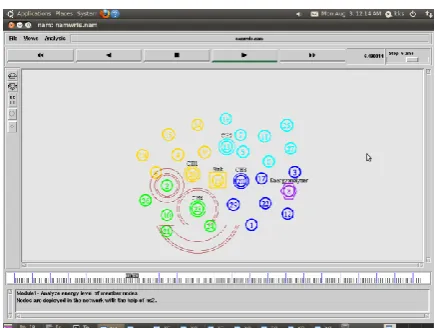
For decreasing the basic nodes workload and afterward delaying the entire network duration [28], we present a plan to the sensor layout. The proximity to the node of sink results in the maximum power utilization, andis an unequivocal actuality in sending nodes of sensor as in figure 1. Adding nodes near sink nodes helps in power minimization
FIG 1: STAGE 2 ANALYSIS OF NETWORK DEPLOYMENT
IV. SIMULATION RESULTS
The results for simulation are performed in NS2. Consider a sensor of heterogeneous node coordinates with 100nodes of sensors which are heedlessly appropriated on the 100m*100m space. The BS is situated at centre (50, 50). To fix minimal chance to a suitable CH (pmin) to 0.0001 and basically, the group set out plausibility toward each one of the nodes is 0.05. The factors utilized for simulation are represented in Table 1.
TABLE I: LIST OF SIMULATION PARAMETER
FIG 2: ANALYSIS OF ENERGY LEFT IN THE NODES
FIG 3: ANALYSIS OF ENERGY LEVEL OF THE MEMBER NODE
V. PERFORMANCE EVALUATION
a. Simulation environment
Three situations are decided for simulations:
Situation 1: 100 nodes are consistently sent through a region of 200 × 200 m2.
Situation 2: 100 nodes are non-consistently sent by much quantity of nodes of sensor gathered in the area over the right part of sensor position, i.e. close to the BS, over a zone of 200 × 200 m2.
Situation 3: 100 nodes are non-consistently conveyed with much quantity of sensor nodes gathered in the area over the left half of sensor part, i.e. a long way out of BS, over a region of 200 × 200 m2.
To perceive the impact of the proposed strategy for registering competition range and procedure of separation of information communication stage into larger and smaller than usual openings independently, the outputs of the proposed protocol, the enhanced EA-HEED, and MCSO are shown in figure 4.
FIG 4: ANALYSIS OF END TO END DELAY
In the primary usage, specifically enhanced EA-HEED, the proposed protocol utilizes the technique for clustering and just sending without fusing the division of information communication phase. In the second execution, in particular enhanced EA-HEED, the strategy for clustering and sending alongside the procedure of division of information communication phase is consolidated.
VI. RESULTS AND DISCUSSIONS
The result of simulation is done in NS2. In the simulation exploration, the data accumulation models and the energy type are utilized. The aftereffects of simulations are normal after a few investigations are executed. The consequent execution measurements are recorded in this article:
• The Number of CHs: This metric spreads from impact of node appropriation in every situation as appeared in figure 5. • Average energy utilization per iteration: This metric refers to the average vitality utilization through each one of the network nodes in a single iteration.
FIG 5. ENERGY ANALYZER FOR CH SELECTION
[image:6.595.318.537.465.655.2]FIG 6: ENERGY LEVEL ANALYSIS
• Network lifetime-FND: This parameter is estimated as far as information accumulation iterations, and portrays the time while the network’s initial node expires.
[image:7.595.60.278.48.243.2]• Network lifetime-PNA: This parameter compares the duration of time out of the moment the network begins working to the moment while ten percent of nodes expire [29].
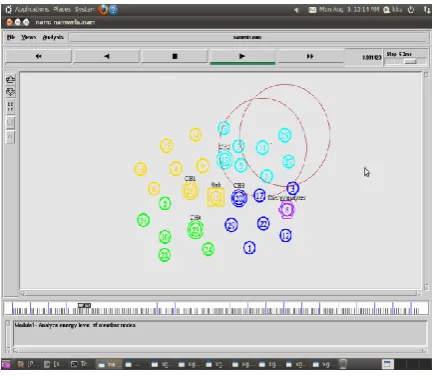
FIG 7: REPRESENTATION OF SENSOR NODES AND SINK NODES
• The quantity of alive nodes: The parameter demonstrates the quantity of nodes which are alive at the concerning iterations.
CH deployment assessment Fig. 7 demonstrates the average quantity of CHs created in every situation. The CHs are disseminated and the quantity of CHs is additionally controlled. The enhanced EADUC protocol delivers the constant quantity of CHs as found in Fig. 7. This is on the ground that the opposition range observes that there is just a single cluster head in every opposition radius.
a. Energy consumption evaluation
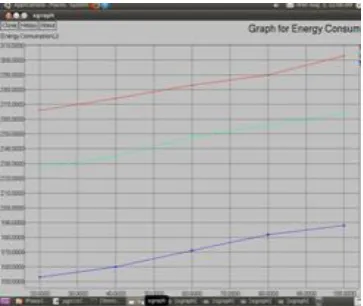
The utilization of EA-HEED average energy and enhanced EA-HEED convention is assessed to the three situations intended here. Fig. 8 demonstrates the utilization of average energy per iteration in network, while every protocol keeps running till its period for the three unique situations.
FIG 8: REPRESENTATION OF CONSUMPTION OF ENERGY BY THE NODES IN CLUSTER
[image:7.595.336.518.49.202.2]Energy utilization of a round includes the energy expended amid clustering topology development and information communication. The utilization of mean energy in our enhanced EA-HEED protocol is marginally not as much as that in the event of EA-HEED protocol, and is considerably less if there is an occurrence of enhanced EA-HEED protocol.
FIG 9: ENERGY EFFICIENCY COMPUTATION OF THE PROPOSED EA-HCTE
Network residual energy assessment Fig. 9 demonstrates the aggregate outstanding energy of the network in enhanced EA-HEED protocol as for various adjusts in every situation. It is seen that the nodes leftover energy in the network decreases at nearly a similar value.
b. Network lifetime evaluation
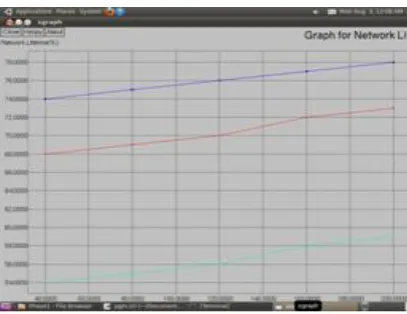
[image:7.595.46.265.355.531.2]FIG 10: COMPUTATION OF NETWORK LIFETIME
The real HCTE, EA-HEED, and modified MCSO are kept running in the three situations. As in Figs. 5 and 6, there is an enhancement in the duration of the network period.
Besides, when contrasted with the past protocol, our enhanced EA-HEED protocol has better network period as far as PNA and FND parameter. The network duration, PNA and FND, improve by 109%, 55% and 166% separately, and by 28%, 9%, and 10% individually, if there should arise an occurrence of situations 1 to 3. This upgrade is because of the distinction in the technique of CH choice and detected information routing [30]. The quantity of control messages created by our presented protocol is low when contrasted with protocol of EA-HEED, as it utilizes HUCL procedure.
c. Number of alive nodes evaluation
FIG 11: GRAPH INDICATION OF PACKET DROP RATE
The enhancement increases with our enhanced EADUC standard and is additionally spread out in all the three situations. Figs. 11 and 12, separately, demonstrate the quantity of alive nodes concerning iterations if there should be an occurrence of packet drop rate situations.
FIG 12: PACKET DELIVERY RATE REPRESENTATION
As noticed, the enhanced EA-HEED protocol accomplishes preferable energy effectiveness and adjusting over the EA-HEED and HCTE protocols. This is on the ground that the enhanced EA-HEED protocol intends the effects of both inter and intra-cluster transmission loads amid activity.
VII. CONCLUSIONS
In this article, an energy aware disseminated unequal clustering protocol (EA-HEED) has been reached out with a specific end goal to enhance the life expectancy of WSN. The non-uniform clustering method has been utilized in this process. The clusters shaped are of unequal size by utilizing unequal competition radii. The clusters nearer to BS have fewer dimensions than those which are long way out of the BS. The nodes are relegated to unequal competition range by the utilization of various parameters, viz. the separation to BS, the remaining energy and the quantity of neighbors. Subsequently, the energy utilization between the CH nodes is all the more adequately adjusted. Besides, the relay node determination method to send the information over the BS depends specifically on energy cost. The simulation outputs of EA-HEED protocols and MCSO demonstrate that system life expectancy is drawn out successfully in every situation contrasted with the present protocols. The result of this investigation will be valuable for taking care of the packet drop issue, energy utilization emergency by expanding the packet delivery proportion and by diminishing the conclusion to end delay in clustering networks.
REFERENCES
1. Nasrin Azizi, 2012,“HCTE: Hierarchical Clustering based routing algorithm with applying the Two cluster heads in each cluster for Energy balancing in WSN” International Journal of Computer Science Issues, Vol. 9, Issue 1, No 2.
2. Peng Jiang,2016, “Dynamic Layered Dual-Cluster Heads RoutingAlgorithm Based on Krill Herd Optimizationin UWSNs” Sensors, 16, 1379; doi:10.3390/s16091379.
3. ShahrzadDehghani, 2016,“Comparison on energy-efficient cluster based routing algorithms in wireless sensor network”, Procedia Computer Science 72, 535 – 542,Elsevier.
4. Francisco José Estévez, 2016,“DARAL: A Dynamic and Adaptive RoutingAlgorithm for Wireless Sensor Networks”, Sensors, 16, 960; doi:10.3390/s16070960.
Networking and Applications, Volume: 02, Issue: 02, Pages: 570-580. 6. Ossama Younis and Sonia Fahmy, 2004, “HEED: A Hybrid,
Energy-Efficient, DistributedClustering Approach for Ad-hoc Sensor Networks”, IEEE.
7. Seema Bandyopadhyay, 2003,“An Energy Efficient Hierarchical Clustering Algorithm for Wireless Sensor Networks”, IEEE.
8. Shio Kumar Singh, 2010,“A Survey of Energy-Efficient Hierarchical Cluster Based Routing in Wireless Sensor Networks”, Int. J. of Advanced Networking and Applications, Volume: 02, Issue: 02, Pages: 570-580.
9. Kemal Akkaya,2005, “A survey on routing protocols for wireless sensor networks”, Ad Hoc Networks 3, 325–349,Elsevier.
10. Elizabeth M. Royer, 1999,“A Review of Current Routing Protocols forAd Hoc Mobile Wireless Networks”, IEEE.
11. Sajid Hussain,“Hierarchical Cluster based Routing inWireless Sensor Networks”, IEEE.
12. R. Swathi, 2015,“Energy Efficient Hierarchical Clustering Based Routing Protocol with TDMA forWireless Sensor Networks”, International Journal of Innovative Research in Computerand Communication Engineering”, Vol. 3, Issue 4.
13. Sumaiya Begum D, 2014,“Energy Efficient Hierarchical Cluster Based Routing Protocols in WSN - A Survey”, International Journal for Innovative Research in Science & Technology| Volume 1 | Issue 7 |ISSN (online): 2349-6010.
14. Sabet Maryam,2015, “A decentralized energy efficient hierarchical cluster-based routingalgorithm for wireless sensor networks”, International Journal of Electronics andCommunications (AEÜ),Elsevier.
15. Sonam PaldenBarfunga,2012, “Energy Efficient Cluster Based Routing Protocol for Wireless Sensor Networks”, International Conference on Computer and Communication Engineering (ICCCE 2012), 3-5. 16. Z.W. Siew, 2011, Energy Efficient Clustering Algorithm in Wireless
Sensor Networks using Fuzzy Logic Control,2011 IEEE Colloquium on Humanities, Science and Engineering Research.
17. Zaib Ullah, 2016,“A comparison of HEED based clustering algorithms- introducing ER-HEED”, IEEE,DOI 10.1109/AINA.2016.87.
18. Vijay M. Galshetwar, 2014,“Energy Efficient and Reliable Clustering Algorithms HEED and ADCP of Wireless Sensor Networks: A Comparative Study”, International Conference on Communication and Signal Processing, April 3-5, IEEE.
19. Divya.P,2016, “Comparison of GSTEB, HEED and PEGASISProtocols”, IEEE.
20. Mohammed Omari and WardaHadj Fateh,2015, “Simulation, Comparison and Analysis of Wireless Sensor Networks Protocols: LEACH, LEACH-C, LEACH-1R, and HEED”, IEEE.
21. Huaiyu, Qingwei,2016, “NHEED: An Energy-Efficient Multi-Hop Routing Protocol Based on HEED”, 2016 12th World Congress on Intelligent Control and Automation (WCICA), 12-15.
22. Vijay M. Galshetwar, AmuthaJeyakumar,2014, “Energy Efficient and Reliable Clustering Algorithms HEED and ADCP of Wireless Sensor Networks: A Comparative Study”, International Conference on Communication and Signal Processing, 3-5, IEEE.
23. Ossama Younis, 2004, “HEED: A Hybrid, Energy-Efficient,Distributed Clustering Approachfor Ad Hoc Sensor Networks”, IEEE Transactions on Mobile Computing, Vol. 3, No. 4.
24. Chia-Hung Lin, 2006,“A Comment on “HEED: A Hybrid,Energy-Efficient, Distributed ClusteringApproach for Ad Hoc Sensor Networks”, IEEE Transactions on Mobile Computing, Vol. 5, No. 10.
25. HarneetKour, 2015,“Performance Evaluation of HEED and H-HEED Protocol for Realistic Models in WSN”, IEEE International Conference on Computer, Communication and Control.
26. Anuj Kumar Jain, 2015,“Reliable state full hybrid energy efficient distributed clustering protocol for wireless sensor networks: RS-HEED” 978-1-4673-6747-9/ IEEE.
27. Lingping Kong, 2015,“A Balanced Power Consumption Algorithm Based on EnhancedParallel Cat Swarm Optimization for Wireless Sensor Network”, International Journal of Distributed Sensor Networks. 28. Lingping Kong,2014, “An Energy-Aware Routing Protocol UsingCat Swarm Optimization for WirelessSensor Networks”, DOI: 10.1007/978-94-007-7262-5_36, Springer Science+Business Media Dordrecht.
29. Palvinder Singh Mann,2016, “Energy-Efficient Hierarchical Routing for WirelessSensor Networks: A Swarm Intelligence Approach”, Springer Science+Business Media New York.
30. Archana Sarangi, 2015,“System Identification by Crazy-Cat SwarmOptimization”, IEEE.
31. Rajendran T and Sridhar K P. (2018). Epileptic seizure classification using feed forward neural network based on parametric features. International Journal of Pharmaceutical Research. 10(4): 189-196. 32. Hariraj V, et al. (2018). Fuzzy multi-layer SVM classification of breast
cancer mammogram images. International Journal of Mechanical Engineering & Technology. 9(8): 1281-1299.
33. Rajendran T and Sridhar K P. (2019a). Epileptic Seizure-Classification using Probabilistic Neural Network based on Parametric Features. Journal of International Pharmaceutical Research. 46(1): 209-216. 34. Emayavaramban G, et al. (2019). Identifying User Suitability in sEMG
Based Hand Prosthesis Using Neural Networks. Current Signal Transduction Therapy. DOI: 10.2174/1574362413666180604100542. (Article in Press).
35. Rajendran T and Sridhar K P. (2019b). An Overview of EEG Seizure Detection Units and Identifying their Complexity- A Review. Current
Signal Transduction Therapy. DOI:
10.2174/1574362413666181030103616. (Article in Press).
AUTHORSPROFILE
Mr.J.Krishnadas received the B.E degree in Information Technology from Bharathidasan University, India, and M.Tech. degree in Information Technology from Sathyabama Institute of Science and Technology (Deemed to be University) and Pursuing Ph.D. degree from Karpagam Academy of Higher Education (Deemed to be University), India. Now he is working as an Assistant Professor in Sahrdaya College of Engineering and Technology, India. His current research interests include networking and soft computing.