1
Ottoboni S*1, Price C J1,2, Steven C1,2,4, Meehan E3, Barton A4, Firth P4, Mitchell A5, Tahir, F5.
Development of a novel continuous filtration unit
for pharmaceutical process development and
manufacturing
1EPSRC Centre for Innovative Manufacturing in Continuous Manufacturing and Crystallisation, University of Strathclyde, Glasgow, G1 1RD, UK
2Department of Chemical and Process Engineering, University of Strathclyde, Glasgow, G1 1RD, UK 3AstraZeneca, Pharmaceutical Technology & Development, Macclesfield, SK10 2NA, UK
4Alconbury Weston Ltd, Stoke-on-Trent, ST4 3PE, UK
5Perceptive Engineering Ltd, Sci-Tech Daresbury, WA4 4AB, UK
Sara Ottoboni
EPSRC Centre for Innovative Manufacturing in Continuous Manufacturing and Crystallization, University of Strathclyde, Glasgow G1 1RD
Phone: 01414447109 Email: [email protected] 0000-0002-2792-3011
Abstract
The lack of a commercial laboratory, pilot and small manufacturing scale dead end continuous filtration and drying unit it is a significant gap in the development of continuous pharmaceutical manufacturing processes for new APIs (Active Pharmaceutical Ingredients). To move small-scale pharmaceutical isolation forward from traditional batch Nutsche filtration to continuous processing a continuous filter dryer prototype unit (CFD20) was developed in collaboration with Alconbury Weston Ltd (AWL). The performance of the prototype was evaluated by comparison with manual best practice exemplified using a modified Biotage VacMaster unit to gather data and process understanding for API filtration and washing. The ultimate objective was to link the chemical and physical attributes of an API slurry with equipment and processing parameters to improve API isolation processes. Filtration performance was characterised by assessing filtrate flow rate by application of Darcy’s law, the impact on product crystal size distribution and product purity were investigated using classical analytical methods. The overall performance of the two units was similar, showing that the prototype CFD20 can match best manual lab practice for filtration and washing while allowing continuous processing and real-time data logging. This result is encouraging and the data gathered provides further insight to inform the development of CFD20.
Key Words: Continuous filtration, washing, drying, agglomeration, impurity, optimisation
Introduction
2
Few examples of small-scale continuous isolation equipment have been commercialized. The Steadfast rotary drum filter is a cross-flow isolation unit principally designed for clarification of suspensions from bioprocessing where the desired product is in the solution phase and the solid phase is a waste stream. The capacity is around 3 litres per minute of slurry.8-9 In 2010, researchers at MIT developed a small-scale continuous Linear Motion Pharmaceutical Filtration Module, which ran for 250 hours and was capable of processing 1 L of mother liquor per hour, corresponding to 100g of API per hour.10 In 2011 researchers at Pfizer proposed a new filter and dryer prototype, which they termed the D&M continuous filter and dryer. It filters small aliquots of slurry (15-30 mL per aliquot), using a 3-way valve. The Pfizer prototype was able to process approximately 1g of filter cake per minute or 1.4 kg/day.11 Moving to large-scale continuous isolation units; in 2015 BHS marketed a Continuous Indexing Vacuum Belt filter. This comprised a vacuum filter with either co- or counter-current washing also with vacuum, it also has convection, pressing and steam drying capabilities, and is reported to filter cake of 5 to 150 mm in thickness and process up to 85 kg/hr of solid crystalline material with cake moisture target of 45%.12
None of the commercial or prototype continuous isolation units combine dead end filtration(1) with washing and drying capabilities. The REMEDIES project13 aims to address this gap in collaboration with Alconbury Weston Ltd (AWL) by developing a dead end isolation unit which can operate from lab scale to small scale manufacture. The unit performs filtration, washing and drying in a fully automated, semi-continuous manner. The unit may be coupled with a continuous upstream process and can be located in a laboratory fume hood.
The target is to reduce processing time and cost whilst minimising negative impacts on API particle physical properties in order to deliver API that is optimal for final processing into drug products.
Typically the critical quality attributes to be established during the isolation of active pharmaceutical compounds are purity and particle size distribution. Both are achieved principally by the upstream process of crystallization in which particles of the required size and purity are generated in suspension in impure mother liquors. Filtration, washing and drying steps are needed to isolate API without dissolving, breaking or granulating the crystals or precipitating dissolved product or impurities.
Multiple chemical, physical and technological factors affect filtration: the feed suspension viscosity, particle size distribution, and the interaction between solvents and particles affect filtration rate, ease of washing and propensity for filter blockage.14-18
Equipment design affects filtration performance. The size and geometry of the filtration chamber and the slurry feed system should favour the formation of a uniform cake whilst minimising wall effects.19 The filter medium should retain product particles whilst maximising solution flow. Media clogging caused by particle retention and the build-up of a consolidated heel potentially become problems during extended continuous operation.14
Without effective washing, impurities which are in solution in any filtrate which is retained in the filter cake are incorporated in the product during drying. Any dissolved solute is also deposited and tends to promote granulation, changing the product particle size distribution. A washing step is usually employed to minimise these problems.20
In order to determine how the AWL CFD20 prototype addresses the challenges outlined above and to determine filtration and washing performance a set of experiments were designed and performed to compare the prototype with manual best practise using the modified Biotage VacMaster unit:
a) Select test materials and characterise their key attributes.
b) Perform filtration and washing experiments using manual lab best practice to establish a performance base line and to identify operational challenges which a filtration and washing system must address. c) Conduct tests on the evolving prototype system, evaluating the performance of each sub-operation, either
confirming success or identifying items requiring further improvement.
3
d) Confirm process understanding of how chemical and physical properties of the API slurries interact with process parameters as a basis for designing and improving API isolation processes.
The success criteria used to compare the AWL CFD20 prototype’s performance with manual best practice exemplified in the Biotage VacMaster unit were:
a) Achieve comparable or better purity than can be achieved using Biotage unit; b) Maintain the PSD of the input particles;
c) Translate the simplicity of process operation and flexibility of the Biotage unit to an automated continuous isolation unit (for example offering the capability to halt filtration at dry land2 or breakthrough).
The CFD20 was used in optimisation mode to process one slurry aliquot per time and be able to collect for each experiment filtrates and cake samples.
The aim of this part of the project was to determine if the CFD20 could perform in a similar way to the best practise manual unit. Using the results gathered from these experiments the prototype will be further developed to improve the unit’s operability and process robustness. In future, the unit will be tested with more challenging material to understand the efficiency of the CFD20 to reduce time required to develop API isolation strategies using a DOE approach. In addition the unit will be tested in production mode to evaluate the capability of the system to operate for an extended period and produce consistent isolated dried cakes.
Methods
Paracetamol was selected as a representative test compound with characteristics typical of APIs. It is commercially available, as are its impurities of synthesis. Two extremes of size distribution (granular and micronized) were selected to challenge different aspects of filtration, washing and drying. The granular material (Mallinckrodt Inc., Staines-upon-Thames, UK, batch 161713J561) represents a challenge for uniform particle suspension and transfer into the filter and exhibits very rapid settling and filtration. The micronized material (Mallinckrodt, Inc., batch 042213E407) settles and filters slowly, has a large wetted surface area to wash and is more challenging to dry than the granular material.
Wash performance and cake purity were evaluated using a solvent soluble dye, Patent Blue V sodium salt (Sigma Aldrich, LOT: BCBP1872V). The dye aids visualisation of the filtration and washing process as well as being readily quantified spectroscopically.
Ethanol (Absolute, ≥99.8%, Sigma Aldrich) was used to create the feed suspension; it is widely used as crystallization solvent. Millipure water was selected as wash solvent due to paracetamol’s relatively low aqueous solubility and because Patent Blue V dye is very soluble in in water, as reported by Newton et al.21
Material characterisation suspension and wash preparation
Granular and micronized paracetamol were characterized by measuring true and tapped density, particle size distribution (PSD) and particle morphology. Tapped density was repeated 4 times using the autotap and following the International Pharmacopeia procedure 22. Both samples were confirmed to be polymorphic form I by Powder X-ray diffraction. The solubility of paracetamol in ethanol and water was taken from the literature23, compared with predictions made using COSMOTherm, and confirmed experimentally. An appropriate concentration of Patent Blue V dye was selected based on its absorbance maximum determined using UV-vis spectrometry.
Paracetamol particle suspensions were prepared by dissolving Patent Blue V dye in ethanol at a concentration of 28.6 mg/L. Paracetamol was then added in two portions; the first to dissolve and form a saturated ethanolic solution at 20°C, the second to remain undissolved with minimal change to the particle size distribution. The
4
combined paracetamol mass per 50 mL aliquot of ethanol was 19.34 g which resulted in a 49% solids loading by mass. Wash solvent was produced by preparing a solution of paracetamol in water which was saturated at 10°C to form a slightly undersaturated wash solution at 20°C. Mother liquor density and viscosity were measured and compared with pure ethanol values.24
Biotage manual filtration system overview
A modified Biotage VacMaster was used to filter and wash the paracetamol suspensions using manual best practice 25. The rack inside the filter chamber was modified to accommodate 50 mL graduated cylinders, the valve assembly on the chamber lid comprised a pair of PTFE valves. One valve remained with the filter tube to prevent leakage during transfer and weighing steps, the other prevented ingress of air when the filter tube was removed. The pressure driving force was controlled using a Buchi V850 vacuum controller.
Biotage ISOLUTE 70mL double fritted polypropylene reservoirs with 20µm pore size were used to filter, wash and deliquor the cake. The pre-weighed filter tube was connected to the PTFE valves on top of the tank. Inside the tank pre-weighed glass graduated cylinders were positioned to collect filtrate, wash liquors and final deliquoring residue prior to drying.
A new filter tube was used for each experiment. 50 mL of sample slurry was transferred to the filter tube and if necessary some liquor was transferred back to the slurry vessel to allow rinsing to achieve as complete a slurry transfer as possible. When the selected vacuum was reached inside the glass tank, the valve below the filter tube was opened to allow filtrate to flow through the medium into the graduated cylinder. On reaching dry land, or if specified breakthrough, both PTFE valves were closed. The filter tube and the upper PTFE valve were removed and the mass of tube and filter cake was measured along with the filter cake thickness. The tube was then placed on the next valve on the top of the filter chamber in preparation for washing.
The required quantity of wash solvent was transferred to the top of the cake by slowly running the wash down the wall of the filter tube using a disposable pipette. Great care was taken to minimise disturbance of the filter cake surface and mixing of the clean wash liquor with the mother liquors in the cake. This procedure was repeated for each washing step, if more than one was required. The final wash was followed by cake deliquoring after which each of the collected filtrates was weighed, their volumes recorded and samples were taken to quantify the Patent Blue V dye spectroscopically. The operative procedure is fully described in the supporting information section.
CFD20 continuous filtration, washing and drying system overview
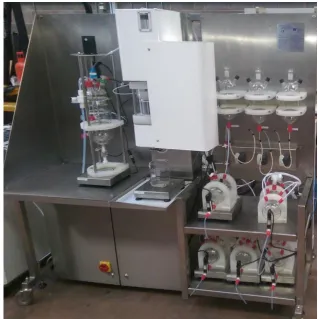
The CFD20 unit shown in Figure 1 allows filtration followed by up to four washing steps with two different solvents, deliquoring and drying. The unit is controlled through a touch-screen panel. Three different operating approaches can be used: fully manual, semi-automated, called ‘Optimisation Mode’, and fully continuous mode, called ‘Production Mode’. Manual mode is used when the operator requires full control of each step of isolation; this method uses the maximum available vacuum (900mbar) to filter the cake and as the camera cannot be used to halt filtration at dry land the operator must manually stop the filtration step. In addition, the operator may manually control wash quantity, wash solvent deliquoring and drying. Optimisation mode is used when cakes are processed one at a time: this mode is recommended for process development. To set filtration, washing and drying parameters a setup screen is used to program the unit. Production mode is fully automated and can simultaneously process a cake in each port and so isolate multiple aliquots of slurry, this mode is used once the process has been optimised and allows for maximum throughput.
The key components are: an agitated slurry tank, a slurry transfer system and the filter carousel. The carousel contains ten identical open-ended glass tubes of inner diameter 20mm. These tubes rotate above a base with ten filter apertures, nine of which contain a BOPP Poremet 20 filter mesh.26 The filter chambers are formed when the carousel is compressed against the base plate with each glass tube located above a filter. The final position without a filter plate is used for product discharge.
5
Figure 1 CFD20 Carousel filtration unit.
During operation, a selected volume of slurry was transferred into the first glass filter tube using a vacuum slurry transfer system. Filtration was performed at a set pressure by modulating a vacuum valve. Filtrate was collected in a receiver on a load-cell allowing the filtration rate to be logged. The filtration was either halted at dry land by a vision system on the CFD or allowed to continue to breakthrough by bypassing the automatic control and stopping the filtration manually.
After filtration the carousel was rotated taking the filter cake along with it. Once in position above the second filter plate, the carousel was again compressed against the base plate to form a seal. This second position was then used for displacement washing. A set volume of solvent was dispensed onto the cake - using an atomizer that gently dispense the wash solvent on cake surface without disturbing the surface of the cake - and driven through the cake in a similar manner to the first filtration. So that the cake is washed by displacement washing. The wash liquid was collected in a separate receiver on a load cell. Separate receivers allowed samples of mother liquor and wash liquor to be recovered for analysis.
After the filtration and washing steps were completed, the filter cake was thoroughly deliquored by applying vacuum for 300 seconds. The filter carousel was then rotated to its final position and a piston ejected the filter cake as product.
Experimental design
Five sets of experiments were performed using the Biotage and CFD20 units to evaluate their performance against two key filtration and washing success criteria:
Purity (API should be both chemical and phase pure with negligible residual solvent); Particle size (no breakage, granulation, dissolution or fines precipitation).
6
Two filtration end point approaches were evaluated; halting the process at dry land and continuing to breakthrough. Halting the process at dry land when the liquid interface reached the cake surface ensured that the cake remained fully saturated and established ideal conditions for displacement washing. Continuing filtration and washing to breakthrough minimised the mother liquor hold up in the cake but risked cake cracking establishing a low resistance path for subsequent wash solvent to pass through the cake unevenly limiting the effectiveness of washing.27
Equivalent data was collected from both systems. In the case of Biotage, data collection was performed manually, recording the quantity of filtrate collected against time. The CFD20, controlled locally through a touchscreen HMI (Human Machine Interface) and PharmaMV software, was used to collect all the process data in real time. Final cake and filtrate mass were recorded manually by weighing each sample to verify the load cell data collected using Pharma MV.
[image:6.595.71.525.285.397.2]Biotage experiments
Table 1 Experimental code.
EXPERIMENT CODE MATERIAL
2 and 4 Micronised (M)
1 and 3 Special granular (SG)
a No wash solvent
b 1 * 5mL wash solvent
c 1 * 10mL wash solvent
d 2 * 5mL wash solvent
e 2 * 10mL wash solvent
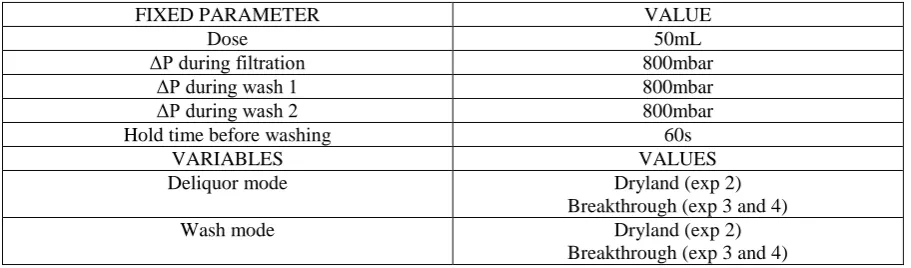
Table 2 DOE fixed parameters and variables.
FIXED PARAMETER VALUE
Dose 50mL
ΔP during filtration 800mbar
ΔP during wash 1 800mbar
ΔP during wash 2 800mbar
Hold time before washing 60s
VARIABLES VALUES
Deliquor mode Dryland (exp 2)
Breakthrough (exp 3 and 4)
Wash mode Dryland (exp 2)
Breakthrough (exp 3 and 4)
The experiments set out in Table 1 were performed using the Biotage and CFD20 systems:
For Biotage experiments separate 50 mL aliquots of slurry were prepared for each experiment to ensure a constant slurry solid loading.
CFD20 experiments
The CFD20 experiments were performed by automation in optimisation mode during the filtration step and in manual mode during washing and drying.
[image:6.595.71.527.439.573.2]7
Off-line filtrate and cake characterization techniques
Each product filter cake was characterised to assess residual solvent content after drying, purity by UV-vis spectrometry and particle size distribution. The Patent Blue V concentration was selected to achieve a peak absorption equal to 1000mAbs to maximise the sensitivity of analysis. This corresponded to a composition of around 0.2mL per mL of ethanol when using a 2mm path length cuvette. A zero/baseline correction was applied. The main absorption band of Patent Blue V did not overlap with the main paracetamol absorption peak at around 243nm. A calibration curve was constructed to allow the concentration of the Patent Blue V to be rapidly assessed by measuring absorbance at 638nm.
The blue dye content of the corresponding mother liquors and wash liquors was also determined.
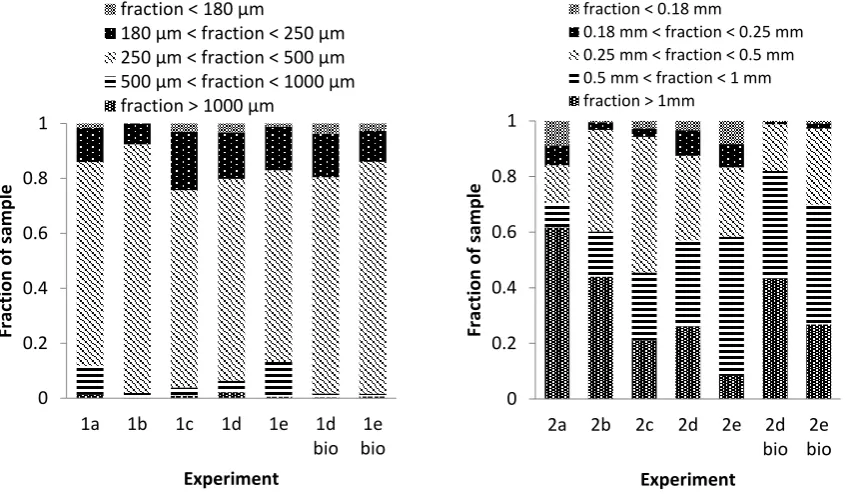
The extent and strength of agglomeration occurring during static drying was assessed using a cake friability and agglomeration test. This evaluation was performed by transferring the product particles to a sieve stack comprising 1 mm, 500 µm, 250 µm and 180 µm sieves. The sieve column was shaken for 180 seconds using a vortex shaker. The mass fraction retained on each sieve was weighed to evaluate the extent of particle agglomeration or breakage.
The particle size distributions of the dried filter cakes were measured using a Sympatec QICPIC 28 with a Rodos/L M4 vibri feeder operating at a feed pressure of 1 bar, a feed rate of 50% and with 1mm gap width.
The residual wash solvent in the deliquored filter cake was determined by weighing the cake before and after drying in a vacuum oven until constant cake mass was attained.
Results and discussions
CFD20 optimization
Several material handling challenges are commonly encountered in manual filtration and washing experiments performed with the Biotage system. The approaches to overcoming these using the CFD machine are presented below.
The CFD20 is a continuously operating, automated semi-batch filter which employs dead end filtration that is familiar to most prospective operators. It uses commercial BOPP filter media and employs well established filtration theory. 14, 29-30 Furthermore it can be coupled with a continuous upstream process and can be located in a laboratory fume hood.
The first obstacle to successful filtration is achieving and maintaining a uniform particle suspension whilst transferring this to the filter. Classical manual processing involves swirling the slurry in laboratory glassware and pouring the required volume into the filter. Particle settling occurs during decantation of the suspension and leads to incomplete solids transfer. As a consequence the solids loading of successive sub-samples increases where the first batch dosed from the bulk slurry contains significantly less product than the second and third doses of slurry processed. In the context of continuous manufacturing the incoming API suspension will be collected in a stirred feed vessel from which aliquots of material will be transferred into the filtration chamber, typically every 180-300s, depending on the filtration rate.
A related problem is incomplete recovery of solid material from the glassware. This often requires successive back-transfers with the mother liquor to recover all of the particles. An additional consequence of this is that the particles in the filter tube settle and form a cake prior to filtration.
8
adhesion to the walls. By draining from the bottom of the dosing vessel and leaving the valve open during filtration, almost all the slurry is transferred to the filtration chamber. Leaving the valve open during filtration also helps eliminate dripping from the vessel that cause liquid level disturbance during filtration with consequent difficulties for the camera to halt at dry land.
Another challenge in manual filtration is accurate determination of the end point when halting at dry land, rather than breakthrough. This requires precise observation combined with quick and consistent responses from the operator.
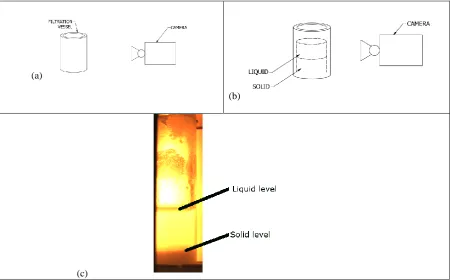
The CFD20 employs a vision system to determine the relative heights of the liquid phase and accumulated solids. This data is processed in real time using the premise that when dry land is reached both the liquid and solid will report the same height. Through processing and filtering the raw image, the measurement can be made robust enough to determine the liquid height, even for challenging situations where multiple, indistinct boundaries are present. Figure 2 illustrates how the vision system finds the height of the filter cake and liquid separately. The blue crosses indicate how as dry land is approached, the two points come closer together before finally meeting at the end point (Figure 2).
(a)
(b)
[image:8.595.75.526.269.549.2](c)
Figure 2 Schematic of the camera arrangement for the vision system. (a) The camera looks through the side of the glass tube (filtration vessel). (b) The liquid and solid interfaces are visible to the camera. (c) The raw camera image with the solid/ liquid interface and liquid/ gas interface labelled.The vision system software
identifies and monitors these two levels to control the filtration end point.
The next material handling challenge is dosing the required volume of wash solvent onto the top of the filter cake without disturbing it. Rapidly adding wash solvent re-suspends the upper layer of the cake causing mother liquor back mixing with the wash solvent; it may also cause a thin spot in the cake to form establishing a preferred wash pathway further reducing the effectiveness of washing. Manual best practice is to slowly transfer the wash liquid running it down the sides of the filter tube using a disposable pipette to minimise cake disturbance. This is not implementable in the CFD20 unit so an alternative strategy was devised. The CFD20 uses atomising spray nozzles to dispense droplets of around100 µm in diameter. The atomisation also allows the wash solvent to be dispensed across the whole surface of the cake and the filter tube walls, assisting in washing the whole cake volume efficiently and helping residual particles left on the walls to be washed down onto the cake.
9
positions the filter cake above the point in the base plate which has an opening to the cake discharge tube in place of the filter medium located at the other positions. Here a pneumatic piston is used to discharge the filter cake. Material losses are limited to a thin layer of product on the wall of the filter tube and a small quantity of dry powder escaping around the piston.
Obtaining reliable data is an essential component in process development allowing process models to be created and deepening process understanding. During manual filtration, the times taken to collect specific volumes of mother liquor are recorded. This is labour intensive and requires careful attention to detail on the part of the experimentalist. The filtrate and spent wash receivers on the CFD rest on individual load cells which are logged using Perceptive Engineering Ltd’s PharmaMV software. This allows mass vs time data to be collected during each phase of processing for each sample.
At the end of processing the filter must be cleaned. In the case of manual filtration this involves the experimentalist recovering the product and sampling and disposing of the filtrate and spent wash solvent. This brings the potential for exposure to APIs which are biologically active. The CFD includes a clean–in-place (CIP) mode in which the system is thoroughly cleaned with the cleaning solvent collected in a waste receiver for safe removal and disposal. This is a substantial improvement on manual best practice, which relies on engineering controls and personal protective equipment to protect the experimentalist.
Filtration rate, cake and media resistance and loss on drying
The process of dead end filtration is described in the equation first formalised by Darcy, which in its most compact and widely used form is shown in equation 1. 29-31
The volumetric flow rate of the filtrate (𝑑𝑉/ 𝑑𝑡) can be described by: 𝑑𝑉
𝑑𝑡 =
𝐴2 ∆𝑃
𝜇 (𝛼𝑐𝑉 + 𝐴𝑅𝑚) (1)
ΔP (kg m-1 s-2) is the pressure drop along the filter axis, A (m2) is the filter area, µ (kg m-1 s-1) is the filtrate viscosity, α (m kg-1) the specific cake resistance is related to the cake filterability, R
m(m-1) is the filter medium resistance and c (kg m-3) is the dry cake mass per volume filtrate.
Integrating Equation 1 and rearranging allows α and Rm to be obtained from a t/V versus V plot, as shown in Equation 2. α can be calculated by using the gradient of the curve and Rm the filter medium resistance is calculated by using the intercept with the y-axis (Equation 3 and 4).
𝑡
𝑉=
𝜇𝛼𝑐
2𝐴2 ∆𝑃 𝑉 +
𝜇 𝑅𝑚
𝐴 ∆𝑃 (2)
𝛼 = 2 𝑔𝑟𝑎𝑑𝑖𝑒𝑛𝑡 𝐴
2 ∆𝑃
𝜇 𝑐 (3)
𝑅𝑚=
𝑖𝑛𝑡𝑒𝑟𝑐𝑒𝑝𝑡 𝐴 ∆𝑃
𝜇 (4)
10
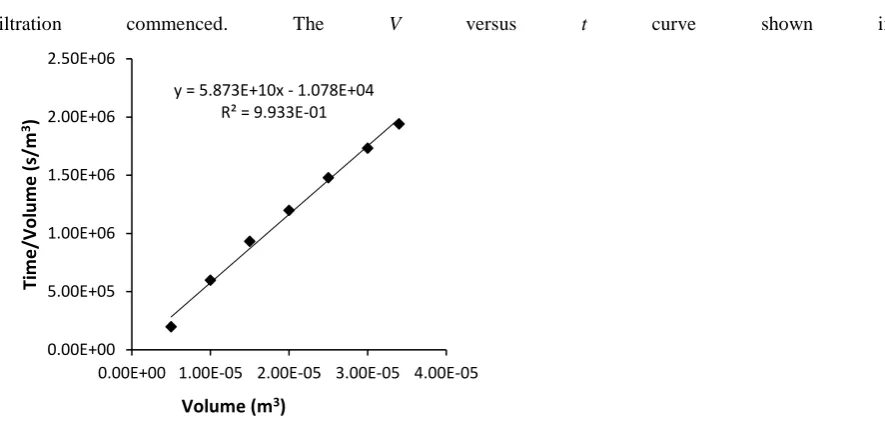
filtration commenced. The V versus t curve shown in
Figure 3(a) reveals how the filtrate flow rate decreased with time. Plotting the corresponding t/V versus V profile
for micronized paracetamol in
Figure 3(b) yielded a nearly linear response with a positive slope and a near zero, but fractionally negative intercept. The negative intercept is physically unrealistic and may arise from the first time point being collected whilst the pressure within the system stabilises and the suspension wets and is drawn into the filter medium.
Particle size plays a major role in settling as Wakeman et al. report;32 a similar trend is not observed with granular material in Figure 6.
y = 5.873E+10x - 1.078E+04 R² = 9.933E-01
0.00E+00 5.00E+05 1.00E+06 1.50E+06 2.00E+06 2.50E+06
0.00E+00 1.00E-05 2.00E-05 3.00E-05 4.00E-05
Ti
m
e
/Vo
lu
m
e
(
s/m
3)
Volume (m3)
y = 5.873E+10x - 1.078E+04 R² = 9.933E-01
0.00E+00 5.00E+05 1.00E+06 1.50E+06 2.00E+06 2.50E+06
0.00E+00 1.00E-05 2.00E-05 3.00E-05 4.00E-05
Ti
m
e
/Vo
lu
m
e
(
s/m
3)
[image:10.595.76.519.66.283.2] [image:10.595.203.447.320.503.2]11
Figure 3(a) Time versus filtrate volume curve obtained during experiment 2d, filtration of micronized paracetamol with Biotage unit. (b) Time/volume versus volume collected during experiment 2d filtration with
Biotage unit.
Experiment 3 was conducted with special granular paracetamol suspension using the CFD20. The results presented in
Figure 4(a) show an almost constant filtrate flow rate with time. This is consistent with the large paracetamol particles having settled to form a low resistance filter cake with an open pore structure before filtration was initiated. This phenomenon is described by Stamatakis.18 This outcome was anticipated for the special granular material which was selected to challenge the prototype system’s capability to reliably dispense a material where the large PSD favoured rapid sedimentation. This results in a virtually constant flow rate and negligible slope of the t/V versus V plot, as shown in
y = 5.873E+10x - 1.078E+04 R² = 9.933E-01
0.00E+00 5.00E+05 1.00E+06 1.50E+06 2.00E+06 2.50E+06
0.00E+00 1.00E-05 2.00E-05 3.00E-05 4.00E-05
Ti
m
e
/Vo
lu
m
e
(
s/m
3)
Volume (m3)
y = -3.804E+09x + 6.359E+05 R² = 1.118E-01
0.00E+00 2.00E+05 4.00E+05 6.00E+05 8.00E+05 1.00E+06
0.00E+00 1.00E-05 2.00E-05 3.00E-05
Ti
m
e
/ vo
lu
m
e
(
s/
m
3)
Volume (m3)
0.00E+00 5.00E-06 1.00E-05 1.50E-05 2.00E-05 2.50E-05 3.00E-05 3.50E-05 4.00E-05
0 50 100
Vo
lu
m
e
(
m
3)
[image:11.595.87.519.75.266.2] [image:11.595.84.310.365.531.2]12
Figure 4(b), the filtration is very rapid due to the low resistance of the large granular particles, which did not increase the resistance to filtrate flow above that of the filter medium.32-35
Figure 4 (a) Filtrate volume versus time curve obtained during experiment 3 (special granular paracetamol) filtration with CFD20 unit. (b) Time/volume versus filtrate volume collected profile obtained during experiment
3 (special granular paracetamol) filtration with CFD20 unit)
A similar trend to that seen in the Biotage experiment 2e was observed in CFD20 experiment 4e when processing micronized paracetamol. This experiment also showed decreasing filtrate flow rate as cake resistance increased during filtration. This can also be observed in Figure 5(a and b). The CFD20 filter medium had an appropriate pore size and resistance for the particles to be filtered.
y = -3.804E+09x + 6.359E+05 R² = 1.118E-01
0.00E+00 2.00E+05 4.00E+05 6.00E+05 8.00E+05 1.00E+06
0.00E+00 1.00E-05 2.00E-05 3.00E-05
Ti
m
e
/ vo
lu
m
e
(
s/
m
3)
Volume (m3)
y = -3.804E+09x + 6.359E+05 R² = 1.118E-01
0.00E+00 2.00E+05 4.00E+05 6.00E+05 8.00E+05 1.00E+06
0.00E+00 1.00E-05 2.00E-05 3.00E-05
Ti
m
e
/ vo
lu
m
e
(
s/
m
3)
Volume (m3)
0.00E+00 5.00E-06 1.00E-05 1.50E-05 2.00E-05 2.50E-05 3.00E-05
0 5 10 15
Vol
u
m
e
(m
3)
[image:12.595.86.308.76.244.2] [image:12.595.88.520.462.632.2]13
Figure 5 (a) Time versus filtrate volume curve obtained during experiment 4e filtration with CFD20 unit (b) Time/volume versus filtrate volume collected curve obtained during experiment 4e filtration with CFD20 unit.
Comparison of Biotage experiments 2d and 2e with CFD 4d and 4e experiments (Table 3) show the same order of cake resistance and permeability, although experiments 4d and 4e present slightly higher values. However, a big difference is observed in the media resistance. The filter media resistance in the Biotage unit is lower than that in the CFD experiments this is consistent with the different materials and construction of the different media.
Table 3 Cake and filter medium resistance values calculated using Darcy's equation to analyse the data collected in experiments 2 and 4, conducted using the Biotage and CFD20 systems.
UNIT EXPERIMENT CAKE
RESISTANCE (α, m/kg)
MEDIA RESISTANCE
(Rm, m-1)
PERMEABILITY (k, kg/m)
Biotage 2d(micronized 2 x 5mL wash)
2.22E+09 2.06E+09 4.51E-10
Biotage 2e(micronized 2 x 10mL wash)
2.19E+09 1.04E+08 4.56E-10
CFD20 4d(micronized 2 x 5mL wash)
9.24E+09 -5.92E+09 1.08E-10
CFD20 4e(micronized 2 x 10mL wash)
5.25E+09 -2.94E+09 1.9E-10
Purity
The washing performance of the CFD20 and Biotage filtration system were compared by assessing the extent to which the soluble impurity, Patent Blue V dye, was removed. Using the extinction coefficient of the patent blue dye, the concentration in the mother liquors and each sample of spent wash solvent was calculated from the absorbance at 638nm. Combining this with the quantity of liquid recovered at each stage enabled the construction of Figure 6 which shows the effectiveness of successive washing steps.
y = 9.266E+10x + 6.698E+05 R² = 9.879E-01
0.00E+00 5.00E+05 1.00E+06 1.50E+06 2.00E+06 2.50E+06 3.00E+06 3.50E+06 4.00E+06
0.00E+00 1.00E-05 2.00E-05 3.00E-05
Ti
m
e
/ vo
lu
m
e
(
s/
m
3)
volume (m3)
0 0.000005 0.00001 0.000015 0.00002 0.000025 0.00003
0 50 100
Vo
lu
m
e
(
m
3)
[image:13.595.89.509.74.252.2]14
Figure 6 (a) Normalized patent blue mass removal at each stage in the filtration and washing of special granular paracetamol (D = 2 x 5 mL wash, E = 2 x 10 mL wash) f = filtrate, w1 = wash 1, w2 = wash 2, c =
cake). (b) Normalized patent blue mass removal at each stage in the filtration and washing of micronised paracetamol.
For the granulated paracetamol shown in Figure 6 (a) and micronized paracetamol, Figure 6 (b) the mass of dye measured at each stage of washing showed relatively good agreement between the two filtration platforms. As expected for a solvent soluble impurity the mass of dye in the filtrate is significantly higher than at any other stage. The 10 mL washes (1E) are much more effective than 5 mL washes (1D) in removing the dye. With the larger wash volume, less patent blue remained to be removed by the second wash, hence this removed less material. The mass of residual patent blue left in the cake was small in all cases.
The residual dye in the filter cakes is shown in Figure 7.
Figure 7 (a) Normalized residual patent blue mass in filter cakes comparing the CFD and Biotage. (1= granular 2 = micronized, d = 2 x 5ml e = 2 x 10 ml). (b) Residual patent blue mass in filter cakes comparing
filtration to dry land (exp 2) and breakthrough (exp 4) for micronised paracetamol, b = 1 x 5mL, c = 1 x 10 mL, d = 2 x 5mL, e = 2 x 10 mL)
From Figure 7 it is possible to evaluate that washing the cake using two aliquots of 5mL each is more effective than using a single dose of 10mL of wash solvent. Washing an impure cake with a bigger aliquot of wash solvent and leaving the wash solvent in contact with the impure mother liquor produces a back-mixing effect. The prolonged contact of two liquids, one pure and the second that contain impurity produce the mixing of the two system with migration of impurity into the pure solvent with consequent reduction of washing efficiency.
Overall, the CFD20 tended to leave approximately 2 µg more patent blue dye in the filter cake than the Biotage. For micronized paracetamol, filtration to breakthrough Figure 7(b) gave much less successful results than halting at dry land. When the wash volume was limited to one 5 mL wash, 2-3 times more patent blue was left in the filter
0 0.1 0.2 0.3 0.4 0.5 0.6 0.7 0.8 0.9 1
1D f 1D w1
1D w2
1d c 1E f 1E w1 1E w2 1e c Fr ac tion al o f to tal p ate n t b lu e m as s Sample AWL CFD Biotage 0 0.1 0.2 0.3 0.4 0.5 0.6 0.7 0.8 0.9 1
2d f 2d w1
2d w2
2d c 2e f 2e w1 2e w2 2e c Fr ac tion o f to tal p ate n t b lu e m ass Sample AWL CFD Biotage 0 0.001 0.002 0.003 0.004 0.005 0.006
1d c 1e c 2d c 2e c
Fr ac tion al o f to tal p ate n t b lu e m ass Experiment AWL CFD Biotage 0 0.005 0.01 0.015 0.02
b c d e
Pate n t b lu e r e si d u e in c ake ( mg ) Experiment
[image:14.595.86.511.75.255.2] [image:14.595.85.479.430.589.2]15
cake when filtration continued to breakthrough as opposed to being halted at dry land. For 10 mL washes there was less difference in the quantity of blue dye remaining but filtration to dry land still resulted in a purer product which is consistent with previous findings.27
Particle size distribution
The extent of particle agglomeration following washing and drying was quantified using a sequence of test sieves. The resulting data are presented in Figure 8.
Figure 8(a) granular paracetamol, CFD20 (first five columns) and Biotage (last two columns) mass fraction determined by sieve analysis. (b) Micronized paracetamol, CFD20 (first five columns) and Biotage (last two
columns) determined by sieving
Figure 8 (a) shows the effect of different washing strategies on the agglomeration of already granular paracetamol (experiment 1). The majority of product particles were retained between the 250 µm and 500 µm sieves which is broadly consistent with the starting material (D10 269 µm, D90 466 µm). The data suggest that increasing wash quantity from b, (1x 5 mL) to e, (2 x 10 mL) results in increased agglomeration on the CFD system leading to a similar result to not washing. This counter-intuitive result can be explained by the effect of back mixing: as explained in Figure 7, the prolonged time of contact of impure mother liquor with clean wash solvent bring to reduction of washing efficiency. This is not observed with larger wash quantities using the Biotage; 1d = 2 x 5 mL 1e = 2 x 10 mL. Lump formation or agglomeration arises from incomplete removal of crystallization solvent during washing. During the subsequent drying step the trapped residues of crystallization solvent evaporate depositing dissolved paracetamol at the points of contact between crystals. The resulting solid bridges between crystals cause the particle size to increase due to lump formation or agglomeration.
The extent of agglomeration of the isolated product arising from filtration, washing and drying of micronized paracetamol was also analysed by sieving and the data is shown in Figure 8 (b). Substantial agglomeration took place; this was confirmed by particle sizing using the QICPIC. The fraction retained by the 1 mm sieve declines with increasing wash quantity indicating the role the quantity of material dissolved in the residual solvent in the wet cake plays in agglomeration during static drying. This trend is observed in both CFD20 and Biotage experiments. This trend in particle agglomeration is confirmed by QICPIC particle size analysis which demonstrates that increasing the number of washes and therefore reducing amount of dye and by implication ethanol in cake resulted in the particle size of the isolated material in both the CFD20 and the Biotage equipment trending towards, though still some way off the size of the input micronized material. This observation is
0 0.2 0.4 0.6 0.8 1
2a 2b 2c 2d 2e 2d
bio 2e bio
Fr
ac
tion
o
f sam
p
le
Experiment fraction < 0.18 mm
0.18 mm < fraction < 0.25 mm 0.25 mm < fraction < 0.5 mm 0.5 mm < fraction < 1 mm fraction > 1mm
0 0.2 0.4 0.6 0.8 1
1a 1b 1c 1d 1e 1d
bio 1e bio
Fr
ac
tion
o
f sam
p
le
Experiment
fraction < 180 µm
[image:15.595.88.512.194.441.2]16
consistent with the fact that paracetamol is slightly soluble in water and as a result some crystalline bridges between particles are likely to be formed on drying.
Conclusions
The pharmaceutical industry requires the development of a continuous system capable of filtering, washing and drying crystallised APIs. Such a system has been prototyped in collaboration with Alconbury Weston Ltd to produce a continuous filtration and drying unit called the CFD20. This work has identified key performance measures and developed some testing methodologies to evaluate device performance. The CFD20, as a prototype continuous filtration, washing and drying unit, was tested against the obvious success criteria of; achieving comparable cake purity at the end of isolation with respect to the Biotage unit, delivering and unaltered product PSD consistent with the material produced by crystallization and achieving the flexibility and simple operability of the Biotage system but with enhanced control and automated data collection.
Key challenges of suspending material uniformly, transferring a representative sub sample to a filtration chamber, halting filtration at an appropriate point and recovering the filtered material were identified. These challenges were evaluated using a manual system representative of current best practice in pharmaceutical process development and compared to the solutions embodied in the CFD20. In each area, the CFD20 performed comparably well, if not better, than manual best practice.
Comparing the filtration performance of the approaches, the parameters derived from Darcy’s law showed good agreement. Automated data collection supports improved understanding of filtration process development.
Wash performance was evaluated by the removal of patent blue V from two very different filter cakes prepared from micronised and granular paracetamol. Overall the performance of the units was similar.
Particle damage or agglomeration was assessed by sieving the isolated product; both platforms caused considerable changes in particle size after filtering and washing which is consistent with industrial experience. Micronized particles showed a substantial increase in size caused by agglomeration. Careful washing of the micronized powder caused some reduction in the extent of formation of very large agglomerates but the filtered washed and dried material did not recover the same particle size distribution as the feed material. Back-mixing of mother liquor and wash solvent is responsible of reduction of cake purity and enhance of agglomeration in AWL experiments (see Figure 7 and 8).
This work has shown the potential for an automated solution to address challenges encountered in manual filtration, washing and drying processes and indicates how automation can facilitate continuous isolation. The CFD20 performed comparably well with the Biotage system, and required much less manual intervention and material handling. In future work operation with more challenging materials will be evaluated including the removal of structurally related impurities and filtration of traditionally hard to filter crystals with plate-like and needle like habits. Automating and repeatedly operating batch isolation provides a platform for systematic process development and optimisation; linking this with a predictive model of filterability will support rapid determination of filtration parameters for new materials. Scale up to continuous operation then represents lower risk compared to classical continuous plant, which has very different characteristics to manual laboratory process development or to current batch operations.
References
1. Poechlauer, P., Manley, J., Broxterman, R., Gregertsen, B., Ridemark, M. Continuous Processing in the Manufacture of Active Pharmaceutical Ingredients and Finished Dosage Forms: An Industry Perspective. Org. Process Res. Dev. 2012: 16, 1586–1590.
2. Poechlauer, P., Colberg, J., Fisher, E., Jansen, M., Johnson, M.D., Koenig, S.G., Lawler, M., Laporte, T., Manley, J., Martin, B., O’Kearney-McMullan, A. Pharmaceutical Roundtable Study Demonstrates the Value of Continuous Manufacturing in the Design of Greener Processes. Org. Process Res. Dev. 2013: 17, 1472–1478.
17
4. Mollan J M J, Mayur L. Continuous processing in pharmaceutical manufacturing. Pharmaceutical Manufacturing Magazine. 2004: 1-9.
5. Kossik, J. Think Small: Pharmaceutical Facility Could Boost Capacity and Slash Costs by Trading in Certain Batch Operations for Continuous Versions. Pharmamag.com, article ID/DDAS-SEX 52B/ http://www.pharmamanufacturing.com
6. US Food and Drug Administration, Center for Drug Evaluation and Research: Guidance for Industry PAT A Framework for Innovative Pharmaceutical Manufacturing and Quality Assurance. August 2003 http://www.fda.gov/cder/guidance/5815dft.htm
7. Murugesan S, Sharma P K, Tabora JE. Design of Filtration and Drying Operations p315-346 in Chemical Engineering in the Pharmaceutical Industry: R&D to Manufacturing. Wiley NewYork; 2010.
8. Kossik J. Small Scale Continuous Cake Filtration using the Disposable Rotary Drum Filter. Filtration and Separation. 2003 Nov:40 (9): 26-27.
9. Kossik J. Operation of a Disposable Rotary Drum Filter. AIChE 2001 Nov 4-9
10. Wong K W S. Design of a small-scale continuous linear motion pharmaceutical filtration module. https://dspace.mit.edu/handle/1721.1/60210#files-area Accessed 30 Aug 2017.
11. Am Ende D J, Pfisterer D, Girard K P, Blackwood D, Plocharczyk E. Development of a Continuous Filter-Drier for Lab to Kilo-Lab Scale. AIChE 2011 Oct 16-21.
12. Garrick J. Process Design Strategy: The Advantages of Continuous Filtration for Pharmaceutical Manufacturing. informEx 2015 Feb 3-5.
13. REMEDIES (RE-configuring MEDIcines End-to-end Supply) Advanced Manufacturing Supply Chain Initiative. Workstream App. “B” – Primary to Secondary. http://remediesproject.com/research-2/project-structure/app-b/ Accessed 02 Sept 2016.
14. Tien C. Cake filtration research—a personal view. Powder technology. 2002;127(1):1
15. Tien C, Bai R, Ramarao BV. Analysis of cake growth in cake filtration: Effect of fine particle retention. AIChE J. 1997 Jan 1;43(1):33–44.
16. Tien C, Bai R. An assessment of the conventional cake filtration theory. Chemical Engineering Science. 2003 Apr;58(7):1323–36.
17. Bürger R, Concha F, H. Karlsen K. Phenomenological model of filtration processes: 1. Cake formation and expression. Chemical Engineering Science. 2001 Aug;56(15):4537–53.
18. Stamatakis K, Tien C. Cake formation and growth in cake filtration. Chemical Engineering Science. 1991;46(8):1917–33.
19. Tiller FM, Haynes S, Lu W-M. The role of porosity in filtration VII effect of side-wall friction in compression-permeability cells. AIChE J. 1972 Jan 1;18(1):13–20.
20. Kuo MT, Barrett EC. Continuous filter cake washing performance. AIChE J. 1970 Jul 1;16(4):633–8. 21. Newton DW, Breen PJ, Brown DE, Mackie JF, Kluza RB. Physicochemical Characteristics of Patent
Blue Violet Dye. Journal of Pharmaceutical Sciences. 1981 Feb;70(2):122–7.
22. World Health Organisation. Bulk density and tapped density of powders. The International Pharmacopoeia, March 2012.
23. Granberg RA, Rasmuson ÅC. Solubility of Paracetamol in Pure Solvents. J Chem Eng Data. 1999 Nov 1;44(6):1391–5.
24. McConville FX. The pilot plant real book: a unique handbook for the chemical process industry,1st ed. FXM Engineering and Design; 2002.
25. Biotage® VacMaster™ 10 & 20 Sample Processing Station Operation Manual, 2017. Biotage. http://www.biotage.com/product-page/biotage-vacmaster-10-and-20 (accessed March 25, 2017). 26. BOPP filter, http://www.bopp.ch/en-US/Anwendung/Produkte-Produktion/Einlagige
Filtergewebe/Filtergewebe-von-BOPP.aspx (accessed April 29, 2018).
27. Ruslim F, Nirschl H, Stahl W, Carvin P. Optimization of the wash liquor flow rate to improve washing of pre-deliquored filter cake. Chemical Engineering Science. 2007 Apr; 62: 3951-3961.
28. QICPIC. AMS Laboratory Techniques. http://www.sympatec.com/en/particle-measurement/sensors/dynamic-image-analysis/qicpic/ (accessed April 18, 2017).
29. Tien C. Principle of Filtration, ELSEVIER; 2012.
30. Svarovsky L. Solid-Liquid Separation, Fourth Edition, Butterworth-Heinemann; 2000.
31. Beckmann W. Crystallization Basic Concepts and Industrial Applications, WILEY-VCH Verlag GmbH & Co. KGaA; 2013.
32. Wakeman RJ, Sabri MN, Tarleton ES. Factors affecting the formation and properties of wet compacts. Powder Technology. 1991 Mar;65(1–3):283–92.
18
34. Dullien FAL. Porous media fluid transport and pore structure, 2nd ed. Academic press inc.; 1992. 35. Wakeman R. The influence of particle properties on filtration. Separation and Purification Technology.
2007 Dec;58(2):234–41.
Acknowledgements
The authors wish to acknowledge the contributions of colleagues in each of their organisations. We are grateful to:
Sadie Finn and Claire Macleod of AstraZeneca for guidance in project design, to Tudor Grecu and Paul Ferguson of AstraZeneca materials characterisation.
Azeem Kahn of Strathclyde University for investigating slurry sampling for Biotage experiments, Bruce Wareham of Strathclyde University for performing COSMOTherm calculations, and Paul Mulheran of Strathclyde University for discussion on process modelling.
Richard Sutherland of Alconbury Weston Ltd for development and optimisation of the Control software.
The authors wish to acknowledge our funders:
Chris Price: EPSRC Manufacturing Fellowship and the Centre for Innovative Manufacturing in Continuous Manufacturing and Crystallisation (Grant Ref. EP/L014971/1).
Sara Ottoboni: EPSRC Doctoral Training Centre for Innovative Manufacturing in Continuous Manufacturing and Crystallisation (
Grant Ref. EPK503289)
.Chris Stevens: Knowledge Transfer Partnership, Innovate UK (KTP No. 010280).
Alconbury Weston Ltd: REMEDIES (RE-configuring MEDIcines End-to-end Supply) project is part of the Advanced Manufacturing Supply Chain Initiative.
Supplementary information
Table 1 supplementary information: true and bulk density of special granular and micronized paracetamol raw materials.
Figure 1 supplementary information: modified Biotage with VacMaster vacuum controller manual filtration unit
Figure 2 supplementary information: Biotage experimental procedure.
Figure 3 supplementary information: AWL CFD20 schematic operative procedure.
Figure 4 supplementary information (a): uneven solids distribution after filtering successive batches of the same slurry; (b): Particles and liquid left in a measuring cylinder after dispensing slurry and followed by repeated back transfers
Figure 5 supplementary information (a): the stirred slurry vessel, (b): the filtration unit with dosing vessel above and (c): the slurry dosing vessel
Figure 6 supplementary information: extract from processed images of the filtration. The blue box shows the camera inspection region. Within this region, the software identifies the liquid and solid levels with blue crosses. As the filtration proceeds, the two levels move closer together until the end point is reached and the two crosses report the same level
19
Table 3 supplementary information: solubility concentration of paracetamol in ethanol and water predicted with COSMOTherm and literature data19
Table 4 supplementary information: viscosity and density of pure ethanol18 and experimental density and viscosity values for paracetamol mother liquor
Figure 7 supplementary information: example of cake agglomeration after drying. On the top left Biotage experiment 1d cake, on the top right Biotage experiment 1e cake, on the bottom left Biotage experiment 2d and on the bottom right Biotage experiment 2e. This effect is due to evaporation of solvent from bulk to surface that also move remaining impurity present in trapped liquid blocked in cake bulk through the sample surface
Figure 8 supplementary information: dry cake produced during experiment 2a. From cake fraction on the right hand side migration of impurity on the surface and consequently sample bulk impurity free areas are observed