READING DEVELOPMENT
by
Sonia Binns, B.A.(Hons)
Submitted in partial fulfilment of the requirements for the degree of
Master of Psychology (Clinical)
University of Tasmania
for the award of any other higher degree or graduate diploma in any university and to the
best of my knowledge and belief this thesis contains no material previously published or
written by another person except where due reference is made in the text of this thesis.
Signed:
First and foremost I would like to express my sincere thanks to my supervisor,
Frances Martin. I am extremely grateful for all her help and guidance, for being so
generous with her time and so patient with me.
Thanks also go to members of the Reading Research Team for their help and
support.
I wish to thank the principals, teaching and administrative staff, and students of
the schools who so willingly gave up their time to participate in and help me with my
research.
Thanks to all my friends and work colleagues who have been so supportive and
helpful, especially Annie, Sam, Catherine and Bob for "not dropping the ball".
Finally, I would like to thank my parents, Ted and Trudi, my brother, Nigel, my wonderful sister, Narelle, and Aunty Jan, Uncle Gary, and David for their support and
Page No.
Acknowledgements iii
Table of Contents iv-v
List of Tables vi
List of Figures vi
Section A : Literature Review
Abstract 1
Normal reading development 3
Word recognition models 7
Phonological awareness 9
Flexible use of decoding strategies 11
Working memory 14
Summary and conclusions 23
References 27
Phonological and orthographic strategy use in normal reading development
Abstract
Introduction
Method
Page No.
1
2
11
Participants 11
Design 11
Word stimuli 13
Procedure 14
Results 15
Correct response data 16
Spelling and reading data 20
Working memory data 21
Correlational data 24
Discussion 25
References 33
Appendix A 38
Appendix B 56
Appendix C 59
Appendix D 68
Page No.
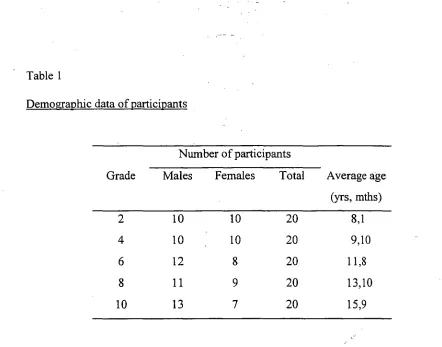
Table 1: Demographic data of participants 12
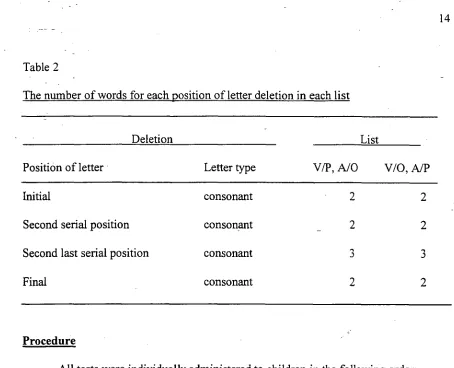
Table 2 : The number of words for each position of letter deletion in each list 14
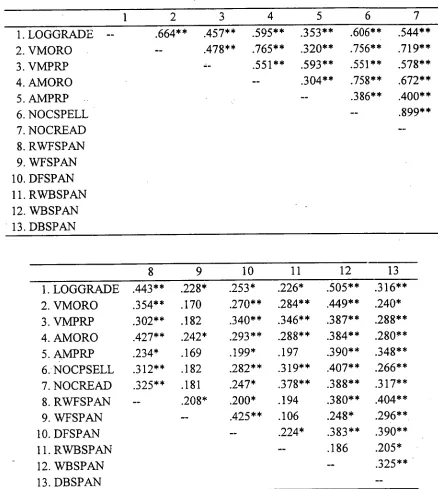
Table 3 : Correlations between test scores 26
List of Figures
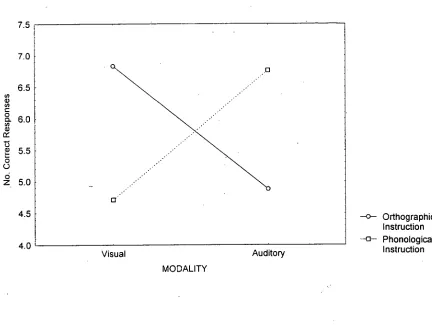
Figure 1 : Number of correct orthographic and phonological responses
in phoneme/grapheme deletion task as a function of presentation
modality for all grades. 17
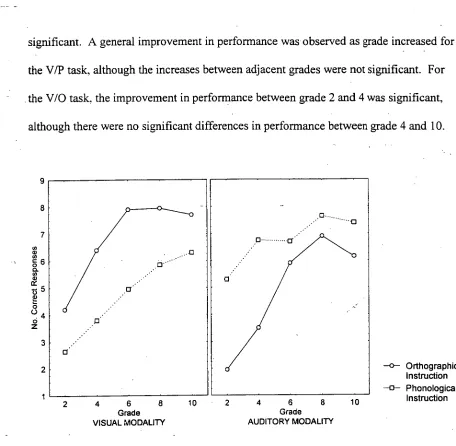
Figure 2 : Number of correct orthographic and phonological responses
as a function of presentation modality for each grade. 18
Figure 3 : Number of correct consistent and inconsistent responses
as a function of grade for phoneme/grapheme deletion task. 19
Figure 4 : Number of correct responses for spelling and reading tasks
for each grade. 21
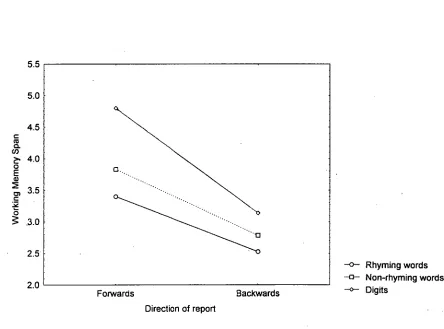
Figure 5 : Working memory span for rhyming and non-rhyming words
and digits as a function of direction of report. 22
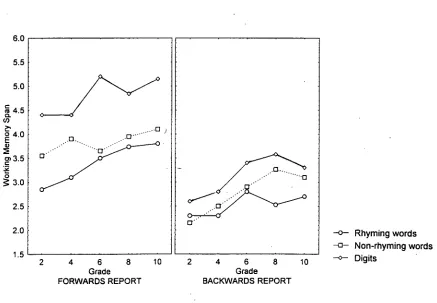
Figure 6 : Working memory span for rhyming and non-rhyming words
and digits as a function of direction of report for each grade. 23
Abstract
Theories of normal reading development commonly propose that
children move through various stages of reading development from using visual
cues to developing phonological awareness and learning letter-to-sound
correspondences. Current evidence suggests a reciprocal relationship between
phonological awareness and reading ability. Dual-route models of word
recognition can be interpreted as conceptualising phonological and orthographic
decoding as two independent word processing routes. Flexible use of these
strategies is considered necessary for successful reading and can be assessed
using a phoneme/grapheme deletion task. Several current models assume that
working memory plays an important role in reading since poor readers have been
found to have poor working memory skills. This may be related to the capacity
of working memory which increases during childhood. Studies of reading have
often been criticised for studying disrupted forms of reading by using distracter
tasks or subjects with neurological damage. To study reading without disruption
a correlational approach may be used to identify cognitive processing
Reading or the rapid and efficient integration of information from the
printed page is a complex process involving not only visual, cognitive, and
auditory processes, but also linguistic and working memory processes. Printed
words are distinctive strings of letters representing sound combinations that
correspond to individual letters or letter combinations influenced by the word's
spelling. The visual appearance (shape, length, and spelling) of a word is
orthography and sound (blended letter sounds) is phonology. Normal readers
decode words by either orthographical or phonological means. The study of
normal reading development examines whether children differ in their reliance
on orthographical and phonological cues in word processing at different ages
and whether skilled readers are flexible in using either orthographic or
phonological processing strategies. In addition, effective reading involves
information retention in some store to allow further information integration.
This process must apply at least at the letter, word, and sentence level. Hence
the role of working memory in the reading process is of prime importance.
The aim of this review is to delineate various theories and models of
normal reading processes and development and word recognition models. The
dual-route model of word recognition proposes separate phonological and
lexical routes to word recognition and these can explain reading successes and
failures. The importance of phonological awareness to reading development
and mastery will be shown and evidence of flexible reliance on the two decoding
strategies outlined. The usefulness of phoneme/grapheme deletion tasks in
general literacy development and more specifically in identifying preferred
capacity and its role in the ability to successfully perform a phoneme/grapheme
deletion task will be considered.
Normal reading development
Children bring a degree of knowledge and skills to the task of learning
to read and then develop skills required to change written text into the more
familiar spoken form so that the message contained in the text may be accessed.
Children establish the correspondences between written words and spoken
words by developing skills for decoding the written word in order to find its
equivalence in the spoken form, so as to determine the meaning being conveyed
(Garton & Pratt, 1989). Within the general progression of skill acquisition from
developing some initial understanding of what reading is to mastering the
reading process, there is a complex network of skills that develop in different
ways for different children. When children start to read they sometimes make
errors with letters of the same shape but different orientation, such as "b", "d",
"p", "q". Previously, it was assumed children had difficulty visually
discriminating different letters. As Tunmer (1988) pointed out, it is not a visual
discrimination problem but rather difficulty with determining what are the
salient features in need of attention. Before learning to read, children have
learnt to ignore orientation when labelling objects, for example, a chair is always
a chair regardless of its orientation. Thus, children need help in learning what
features of print they should pay attention to in order to learn rules which enable
them to decode it, for example, that orientation is important when decoding
Most children embark on the decoding process by starting to recognise
some words encountered frequently, so words recognised and cues used for
recognition vary between children. Gough and Hillinger (1980) suggested that
children may learn about 40 words using strategies involving visual cues before
the system fails due to insufficient visual features to distinguish new words.
However, at some stage children exhaust the number of distinctive visual cues
they can effectively use and so must develop other strategies for learning words
based on letter-sound correspondences. Learning grapheme-phoneme
correspondence rules is important for children to become independent and
accurate readers able to decode unfamiliar printed words using sound strategies
(Garton & Pratt, 1989).
Goswami (1986) showed that children can use sound patterns associated
with letter strings when learning to read. She suggested that children were
using the complete sound pattern corresponding to the string rather than the
individual grapheme-phoneme correspondences contained within the string.
Juel, Griffith, and Gough (1986) also state that there are certain types of words
in which knowledge of the correspondence rules is not sufficient to decode them
so children must develop specific knowledge about the words to assist them in
this task. These include words in which more than one option for the
correspondence between letters and sounds exists. For example, children need
to determine whether the pair of letters "ea" contained in "steak" sound like
"stake", "steek" or "stek". In order to establish what sound it represents,
children tend to combine knowledge of the possible sounds with clues about
what word will fit from the context provided by the rest of the sentence. It has
combination of strategies to assist them when they encounter new words in print
and that children should use their developing knowledge of grapheme-phoneme
correspondence rules to extract from the text some sound cues, while using
their knowledge of language and the world to find words that match these cues.
However, this process cannot develop effectively if children encounter words in
isolation, so reading material for children should be contextualised and
meaningful.
Evidence for the importance of phonological processes in the
development of reading ability comes from studies which have examined the
relationship between phonological skills in spoken language and later reading
achievement. In many studies, the correlation between sound segmentation skill
and later reading achievement has been highly significant (e.g., Bradley &
Bryant, 1983; Lundberg, Olofsson, & Wall, 1980; Tunmer, Herriman, &
Nesdale, 1988 as cited in Rack, Snowling, & Olson, 1992). Bradley and Bryant
(1985 as cited in Rack, Snowling, & Olson, 1992) demonstrated lasting effects
of phonological awareness training, provided alphabetic symbols were used. To
benefit from phonics instruction, children must have developed some degree of
phonological awareness and be capable of accessing individual word sounds.
Bryant, Bradley, Maclean, and Crossland (cited in Garton & Pratt, 1989)
showed that early experience with rhyme could predict later reading
performance.
Most recent models of reading development are stage models (Ehri &
Wilce, 1985; Frith, 1985; Marsh, Friedman, Welch, & Desberg, 1981). These
models emphasise an initial visual stage of reading which leads to a
phonological stage of reading development, children acquire knowledge of
letter-sound relationships which they can use to determine the pronunciation of
printed words. This important developmental skill allows comprehension of
words that, although not visually familiar, have familiar spoken forms. For
example, Frith (1985) describes an initial logographic phase during which
children recognise words based on salient visual and contextual features,
followed by an alphabetic phase in which a letter-to-sound translation strategy is
used. The final stage is fluent orthographic reading. Frith proposed that
children enter the alphabetic phase when they need to acquire alphabetic skills
for use in spelling.
Ehri (1987; Ehri & Wilce, 1987) proposed an alternative model of
reading development in which phonological processes are important to the
development of sight word recognition. Ehri also proposes three phases of
reading acquisition: visual cue reading, phonetic cue reading, and phonemic map
reading. Visual cue reading corresponds closely to Frith's logographic reading.
In the phonetic cue reading phase, children use the phonetic characteristics of
words at a fairly basic level to help them access pronunciations and meanings.
Ehri and Wilce (1985) showed that once children have some letter-sound
knowledge, they are more likely to learn systematic nonwords (GRF for giraffe)
than arbitrary nonwords (XBT for giraffe). The letter string GRF does not
contain all information needed to assemble a pronunciation but conveys more
phonological information than XBT so the pronunciation of "giraffe" can be
accessed (or addressed) more easily. The phonetic cue phase of reading begins
as soon as children have some letter-sound knowledge and involves phonetic
knowledge is used in the phonemic map stage; a prerequisite for this stage is the
ability to segment speech at the phonemic level. Development is conceptualised
as a process of building on and refining earlier skills in Ehri's model so the
stages are not as clearly separated as the stages in Frith's model. Ehri argues
that phonological principles used for decoding influence the acquisition of
rapidly recognisable sight words so the direct route of dual-route theory is a
visual route with phonological information leading into lexical memory.
Ehri and Wilce (1985) suggest that when children begin reading, they
shift from visual cue processing of words to phonetic cue processing. Phonetic
processing involves recognising and remembering associations between letters
when spelling words and sounds when pronouncing words. This learning
mechanism is purported to explain how children first develop the ability to read
single words reliably, rather than using a visually based sight-word learning or
sounding out and blending mechanism. Ehri and Wilce (1987) recognise that
children use both visual and phonetic cues in the early stages of learning to read
words.
Word recognition models
As originally proposed, word recognition involves at least two,
potentially independent, processes: a "direct" lexical recognition process for
recognising irregular words such as "yacht" and an "indirect" phonological
process for sounding out unfamiliar words or nonsense words (Coltheart,
1978): Recently, it has been argued that the distinction between these two
processes (or routes) is artificial (Seidenberg & McClelland, 1989; Van Orden,
(1987) argued that phonological processes may influence the recognition of
irregularly spelled words since although "yacht" is irregular, the "y" and "t" do
receive regular (or predictable) pronunciations. Likewise, various
nonphonological factors, such as priming by orthographic, syntactic, and
semantic contexts, have been shown to influence nonword pronunciation (Rack,
Snowling, & Olsen, 1992).
Seidenberg and McClelland (1989) described a "connectionist" model
which uses the same system for pronouncing irregular words and nonsense
words. The correspondence between the computer model and behavioural data
is not particularly strong (Besner, Twilley, McCann, & Seergobin, 1990).
However, the model shows, at least in principle, that a single system can replace
the dual-route system.
Coltheart, Curtis, Atkins, and Haller (1993) suggest that a dual-route
model remains the most tenable model of learning to read and skilled reading as
it accounts for more basic facts about reading than can single-route models such
as that proposed by Seidenberg and McClelland (1989). According to the
dual-route model, phonological (or sublexical) and orthographic (or lexical) decoding
are conceptualised as two independent word processing routes (Barron, 1986).
The phonological route involves pre-lexical, phonological word representations
being assembled according to rules of grapheme-to-phoneme conversion (GPC).
GPC is the conversion of single letters (graphemes) or digraphs, such as "sh"
and "th", into corresponding single sounds (phonemes). GPC rules are context
sensitive (e.g., the vowel sound "a" in "ate" is elongated by "e") and learning to
apply them requires awareness of letter names, phonological awareness, and
characteristics of the word onto a lexical, orthographic whole word
representation in order to retrieve post-lexical 'addressed' phonology (Barron,
1986). Skilled reading requires flexible use of both routes, since the
orthographic route is inefficient in decoding low frequency, unfamiliar and
nonsense words without lexicon stored representations whereas the
phonological route is inefficient in decoding high frequency, familiar words
because of complex GPC rules in English and exception words which violate
GPC rules (Pugh, Rexer, & Katz, 1994). Recent research (e.g., Share, 1995)
questions the validity of a strict dual route model suggesting that normal readers
probably use both processes as appropriate, direct visual access for short or
familiar words and the phonological strategy for longer or unfamiliar words
(Siegel, Share, & Geva, 1995).
Phonological awareness
Phonological awareness is concerned with awareness of sounds of
language which are important for reading. To master reading and writing
processes, children must learn correspondences between individual sounds of
language, phonemes and letters that represent those sounds, graphemes (Garton
& Pratt, 1989). Phonemes are the most basic units of language which combine
to form words, however, focusing on them is difficult for children because as
Liberman, Cooper, Shankweiler, and Studdert-Kennedy (1976) have shown,
although we perceive phonemes they do not exist as separate entities in the flow
of speech. Bryant et al. (1987 as cited in Garton & Pratt, 1989) claim that
rhyme and early experience with nursery rhymes enhances development of
phonological awareness.
Children may be able to segment words into phonemes but once they
can spell words, the number of letters becomes a more salient cue and so they
use this strategy. Essentially they do not have the high degree of control
processing required to focus attention on phonemes, which are less salient than
letters.
The direction of causality between reading and phonological awareness
development has been debated. Read, Yun-Fei, Hong-Yin, and Bao-Qing
(1986) concluded that phonological analysis ability depends on alphabetic
literacy. However, several studies have shown the opposite, that phonological
awareness is necessary for reading development (Lundberg, Frost, & Peterson,
1988; Cunningham, 1990). Stuart (1990) reports a growing consensus that the
relationship between phonological awareness and reading development is
reciprocal. Phonological awareness contributes to successful reading
development, and vice versa. Perfetti, Beck, Bell, and Hughes (1987) found
reading ability facilitated deletion gains, which in turn facilitated reading
development. This reciprocity requires that several different forms of
phonological awareness be distinguished. Morais, Alegria, and Content (1987)
proposed three levels of awareness. Firstly, awareness of phonological strings,
which precedes and contributes to reading development, is the ability to
disregard meaning and attend to form which Morais et al. (1987) suggest is
tested by rhyme and alliteration tasks. Phonetic awareness, which may precede
literacy skill acquisition, is awareness of speech as a sequence of phonetic
awareness is the ability to represent speech as a sequence of phonemes
(classically speaking, the minimal units relevant for meaning differentiation) and
it is likely that experience of alphabetic orthography is necessary for phonemic
awareness development.
Flexible use of decoding strategies
Flexible reliance on either orthographic or phonological decoding
strategies, depending on factors such as frequency, spelling regularity, type of
orthography of words, and reading experience is demonstrated by numerous
studies (cited in Pugh et. al. 1994). Evidence of variable reliance on
phonological or visual information would challenge single-route reading
processing models. Brysbaert and Praet (1992) demonstrated strategic use of
-phonetic information in a target word recognition task where usefulness of
phonological decoding was manipulated. Paap and Noel (1991) found subject's
naming times for reading an "all exception" word list were faster than for a
"50% exception and 50% regular" list. They assumed that subjects in the
former condition bypassed assembled phonology, which would have competed
with the lexical route providing incorrect answers, and used addressed
phonology. Thus, concluding that the lexical route is automatic and the
phonological route is intentional.
The dual-route theory that reading development involves shifting from
indirect, phonological strategy use to faster direct, lexical access strategy use, is
the basis of the 'developmental by-pass hypothesis' (Pennington, Lefty, & Van
Orden, 1987). This states that in later reading development orthographic
subjects approve fewer orthographically incorrect but phonologically correct
sentences than younger subjects. However, Pennington et al.'s (1987) findings
that phonological skill continues to develop and contribute to reading
development in adulthood discredits the 'by-pass hypothesis'. An alternative
hypothesis is that skilled reading involves greater flexibility in strategy use.
Manis, Custodia, and Szeszulski (1993) observed older skilled readers avoid
using phonological decoding strategies on orthographic tasks better than young
readers. Condry, McMahon-Rideout, and Levy (1979) found younger children
were less flexible in their strategy use.
Flexibility in using orthographic and phonological decoding strategies
can be directly assessed in a phoneme/grapheme deletion task. In the first
reported usage of a phoneme deletion task, Bruce (1964) asked children to
report what word was obtained when the sound In/ was removed from "snail".
Pronunciation of the residual word in a deletion task varies according to
whether a phonological strategy is demanded, so the phonological cues of the
initial word are referenced, or whether an orthographic strategy is needed, so
the remaining spelling is referenced. Phoneme deletion is sensitive to literacy
and orthography (Scholes, 1991). Scholes and Willis (1987a) showed that
literacy, and not age, facilitates phonemic awareness, reporting that phoneme
deletion could not be done by adult illiterates but could be done quite well by
third grade children who were successfully learning to read. Scholes and Willis
(1987b) found native-English speaking literate university students responded
with phonologically correct and orthographically correct (but phonologically
incorrect) answers equally often in a phoneme deletion task (e.g., stimuli such as
'thaw' and the phonologically incorrect but orthographically correct response
being `though').
Speakers' awareness of the phonemic segmentation of speech (phonemic
awareness) is enabled by the ability to internally represent speech as writing,
particularly, as alphabetic writing (Scholes, 1991). Subjects who are literate but
represent language in non-alphabetic forms (e.g. Chinese) show poor ability to
do phoneme deletion tasks (Read, Zhang, Nie, & Ding, 1986). Stuart (1990)
found that children who are good at reading and spelling used both
phonological and orthographic strategies in the deletion task. Children who
were not good at reading and spelling were largely incorrect in the deletion task.
Where they did perform correctly, they were significantly more likely to
accomplish the task by a phonological strategy. Incorrect responses provide
additional evidence of phonological strategy use.
Literacy skills play an indirect role in good reader/speller ability to
perform deletion tasks by allowing orthographic knowledge use to solve the
phonological test question (Bertelson & de Gelder, 1988). The interaction of
orthographic strategy use with stimulus lexicality suggests use of the
orthographic strategy depends on ability to access a stored orthographic
representation. Stuart (1990) found that poor readers/spellers have fewer
stored orthographic representations and so cannot use an orthographic strategy.
Good readers/spellers were also significantly better than poor readers/spellers at
deletion using a phonological strategy. Ability to perform the phoneme deletion
task was linked to literacy levels by Bruce (1964). In addition to the literacy
requirement for ability to do phoneme deletion there is also a maturational
(1979) also found that poor readers have poor working memory skills. In
particular it is thought that the capacity of working memory is smaller in poor
readers (Cordoni, O'Donnell, Ramaniah, Kurtz, & Rosenshein, 1981 as cited in
Baddeley, 1990).
Working memory
The capacity of verbal working memory increases up to about 11 years
of age (Hitch, Halliday, & Littler, 1984 as cited in Baddeley, 1990).
Phonological coding use in the store and rehearsal of auditory stimuli in the
phonological loop is demonstrated in children as young as four years
(Gathercole & Baddeley, 1993). There is no evidence of phonological coding
or rehearsal with visual stimuli (pictures, digits, letters) until about eight years
of age (Hitch, Halliday, Dodd, & Littler, 1989 as cited in Baddeley, 1990). At
about this time children become proficient readers, and demonstrate ability to
read silently (Gathercole & Baddeley, 1993).
The term working memory refers to the assumption that some form of
temporary information storage is necessary for performing a wide range of more
complex information processing skills/cognitive tasks including comprehension,
learning, and reasoning (Baddeley, 1986). An important factor in evaluating
any model of working memory is its capacity to explain such skills. A
successful model should provide a framework for studying cognitive skills in a
way that increases understanding of each skill, and also enriches and develops
the model of working memory.
Baddeley and Hitch (1974) argued that the concept of a unitary
working memory model which comprises an attentional control system, the
central executive, aided by slave systems responsible for temporary storage and
manipulation of either visual material (the visuo spatial sketchpad), or verbal
material (the phonological loop).
The central executive is a limited-capacity system responsible for
providing the link between the slave systems and long term memory (LTM), and
is responsible for strategy selection and planning (Baddeley, 1995). There is
concern (Baddeley, 1992) that the concept of a central executive may reflect
nothing more than a convenient homunculus, however, researchers are now
attempting to specify and understand the various subcomponents of executive
control.
Good evidence appears to exist (Baddeley, 1986) for a temporary
visuo-spatial store (visuo-visuo-spatial sketchpad), capable of retaining and manipulating
images, and susceptible to disruption by concurrent spatial processing. It seems
likely that the system has both a visual component, concerned with factors such
as colour and shape, and a spatial component concerned with location.
Research results suggest a visuo-spatial system, somewhat analogous to the
articulatory loop (Baddeley, 1990). Like the loop, the visuo-spatial system can
be fed either directly through visual perception or indirectly through visual
image generation. An unattended picture effect (Logie, 1986) suggests
obligatory access to the store by visual information, similar to the articulatory
loop. The system appears to be used in setting up and using visual imagery
mnemonics, but does not appear responsible for the imageability effect in
long-term verbal memory. Initially, the system appeared spatial rather than visual in
system, with both visual and spatial dimensions, or possibly two separate
systems.
The articulatory or phonological loop is responsible for maintaining and
manipulating speech-based information. It is assumed to consist of two
subcomponents: a phonological memory store, which can hold traces of
acoustic or speech-based material and a process of articulatory sub-vocal
rehearsal (articulatory control process based on inner speech) which maintains
traces assumed to fade within about two seconds unless refreshed by this
rehearsal process, a conclusion also supported by a recent PET-scanning study
(Paulesu, Frith, & Frackowiak, 1993 as cited in Baddeley, 1995). This serves
two useful functions: maintaining the memory trace by subvocal rehearsal and
registering visually presented material by subvocal naming. The memory trace
can be refreshed by a process of reading off the trace into the articulatory
control process which then feeds it back into the store, the process underlying
subvocal rehearsal. The articulatory control process is also able to take written
material, convert it into a phonological code and register it in the phonological
store (Baddeley, 1990). The major phenomena that have led to the formulation
of the phonological loop model are the phonological similarity effect, the
word-length effect, articulatory suppression, the irrelevant speech effect, and STM
patients.
The first convincing evidence of the importance of phonological coding
in STM was produced by Conrad (1964) who observed that when subjects
attempted to recall strings of visually presented consonants, their errors were
acoustically or phonologically similar to the target item, hence B was more
words that are similar in sound lead to poorer immediate serial recall (Conrad &
Hull, 1964) indicating a phonological similarity effect. This is assumed to occur
because the phonological store relies purely on a phonological code; similar
codes present fewer discriminating features between items, leading to impaired
retrieval and poorer recall (Baddeley, 1992). This phonological confusion had
presumably occurred in immediate memory, not in perceiving the letter since the
letters were visually presented. It was suggested that these effects indicate an
acoustically based short term store. Baddeley (1966a) later used words to
confirm that similar-sounding items (man, mat, cap, map, can) led to poorer
immediate serial recall than phonologically dissimilar words (pit, day, cow, pen,
rig), whereas similarity of meaning (huge, big, large, great, tall) caused few
problems. However, when long-term learning was required, the pattern was
reversed and meaning became the dominant factor (Baddeley, 1966b) with
phonological similarity ceasing to be important, a finding extended by Kintsch
and Buschke (1969).
Initial studies tended to refer to the phonological similarity effect as
acoustic, implying that the crucial factor was sound similarity of items being
remembered, suggesting the short term store was acoustically based, while the
long term store favoured semantic coding. However, it was subsequently
suggested that coding might be articulatory (coding assumed to be based on
speech production) rather than acoustic (Hintzman, 1967 as cited in Baddeley,
1986) since there is good evidence short-term memory relies on subvocal
rehearsal (Sperling, 1967; Waugh & Norman, 1965; Atkinson & Shriffrin, 1968
as cited in Baddeley, Lewis & Vallar, 1984). More convincing evidence for
hear, some congenitally deaf children (rated as good speakers by their teachers)
showed phonological confusions in remembering consonant sequences. This
result suggests articulatory coding, but does not exclude the possibility that
normal hearing subjects also code acoustically. The phonological similarity
effect appears to be a function of the short-term store which is maintained and
refreshed by the process of articulation, and which can be used to feed the
articulatory process. This store appears accessible either through auditory
presentation or by the articulatory coding of visually presented material.
The principal source of evidence for the importance of articulation in the
phonological loop comes from the word length effect, a tendency for memory
span to decline as words increase in length. This is assumed to occur because
rehearsal occurs in real time, so long words take longer to rehearse, increasing
the opportunity for the memory trace to decay before or during recall
(Baddeley, Thomson, & Buchanan, 1975; Cowan, 1984 as cited in Baddeley,
1995). Baddeley et al. (1975 as cited in Baddeley, 1995) observed a consistent
tendency for subjects to do better at recalling short duration words than long
duration words when two sets of words were matched for number of syllables
and number of phonemes. A correlation existed between speech rate and
memory span indicating that memory span may represent the number of items of
whatever length that can be uttered in about two seconds. A subsequent study
found that spoken word duration not length in terms of syllables was the crucial
variable in memory span since word sequences that tend to have long vowels
and be spoken slowly such as "Friday" and "harpoon" lead to somewhat shorter
spans than words with the same number of syllables and phonemes that can be
with a trace decay hypothesis suggesting duration is important since longer
words take longer to say so the memory trace is refreshed less frequently which
leads to more forgetting. If item presentation leaves a memory trace which
decays over time then re-presentation of an item either by the experimenter, or
by subject rehearsal will refresh the trace and stop the decay process. The
amount retained will therefore be a joint function of decay rate and rehearsal
rate. With very few items, the subject can rehearse the complete sequence in
less time than it takes the memory trace to decay, allowing the sequence to be
maintained indefinitely (Vallar & Baddeley, 1982). As the sequence length
increases so too does time needed to rehearse the entire sequence, until a point
is reached at which decay time for an individual item is less than the time to
rehearse the total sequence and this is when errors begin to occur. Thus, it is
possible to express memory span in terms of either number of items or total
spoken duration. This is more plausible than an interference theory or
displacement model which would argue that number of syllables is the crucial
factor. Some theorists (see Baddeley, 1986) have argued that one component
of STM is a system containing a limited number of slots or memory locations so
when the number of items to be remembered exceeds this number, forgetting
occurs. If each slot held a fixed number of syllables, then polysyllabic words
would overload the system more rapidly than monosyllables.
Evidence of more direct relevance to normal memory is provided by the
phenomenon of articulatory suppression. In a series of experiments, Murray
(1965 as cited in Baddeley, 1986) varied the strength of overt vocalisation
required of the subject, generally finding a greater amount of articulation
digits and prevented from subvocal rehearsal by uttering an irrelevant sound,
Murray found that performance was significantly poorer. While this effect can
be attributed to suppression of articulatory coding, it could also be argued that
irrelevant sound articulation merely acted as a general distracter. However, this
interpretation does not adequately explain Murray's findings that subjects
required to remember visually presented sequences of consonants show no
evidence of a phonological similarity effect when required to suppress
articulation. Articulatory suppression eliminates the phonological similarity
effect with visually presented material (e.g., Levy, 1971; Estes, 1973; Peterson
& Johnson, 1971 as cited in Baddeley, 1986). This contrasts with auditory
presentation, where the phonological similarity effect withstands suppression.
Baddeley et al., (1984) showed consistently that similarity has a marked effect
whether suppression is at input only or at both input and recall with auditorily
presented material. Suppression interferes with the subvocal naming process
whereby visual information is registered in the phonological store. Thus
articulatory suppression eliminates the phonological similarity effect for visually
presented material, but not when presentation is auditory, as this guarantees
access to the phonological store without need for subvocal naming (Baddeley,
1995).
Articulatory suppression eliminates the word length effect whether
presentation is auditory or visual, presumably because it prevents rehearsal.
The word length effect depends on the subvocal rehearsal rate so if subvocal
rehearsal is prevented, then word length is no longer relevant to performance
(Baddeley et al., 1984). Since the word length effect is assumed to reflect the
effect, regardless of presentation modality. However, this occurs only when
suppression is prevented during both input and recall. Interestingly, when long
and short words are presented visually, suppression during input is sufficient to
remove the word length effect. This difference between visual and auditory
presentation probably reflects the greater compatibility of an articulatory
response to auditory material than to visual. It seems likely that part of the
language learning process involves an in-built capacity for repeating heard
stimuli. This is reflected both in the ease of such responses in adults (Davis,
Moray, & Treisman, 1961; McLeod & Posner, 1984 as cited in Baddeley et al.,
1984) and the much earlier age at which children rehearse auditorily presented
words as opposed to names of visually presented pictures (Hitch & Halliday,
1983 as cited in Baddeley et al., 1984).
Available evidence suggests that phonological similarity and word length
effects reflect different components of the articulatory loop system (Baddeley,
1986). The word length effect appears to reflect the process of articulatory
rehearsal, because longer words take longer to say and thereby reduces the rate
at which an item can be rehearsed. Articulatory suppression appears to be
sufficient to stop the process of rehearsal and so remove the word length effect.
With visual presentation, patients with short-term memory deficits
typically do not show either phonological similarity or word length effects
(Vallar & Baddeley, 1984; Vallar & Shallice, 1990 as cited in Baddeley, 1992).
These patients are assumed to have a defective phonological store so they gain
no benefit from attempting to phonologically store visually presented items,
The presentation of irrelevant spoken material also disrupts immediate
serial recall. The disrupting effect is independent of the meaning of the
irrelevant material, being as great when in a foreign language as when in the
subject's native language. The disrupting material must be speech-like since
white noise has no effect and non-vocal music produces a level of disruption
in-between that of noise and speech whereas sound intensity is not an important
variable (Colic & Welsh, 1976; Salame & Baddeley, 1982; 1989 as cited in
Baddeley, 1992). It is assumed that irrelevant speech accesses the phonological
store and corrupts the memory trace, leading to impaired recall (Baddeley,
1992).
Baddeley, Papagno, and Vallar (1988 as cited in Baddeley, 1992)
studied a patient with a very pure phonological memory deficit, finding that she
performed normally at standard paired associate learning but performed very
badly at new phonological learning. Later studies attempted simulation using
articulatory suppression with normal subjects, showing that paired associate
learning is unaffected by suppression whereas foreign language vocabulary
learning is clearly impaired (Papagno, Valentine, & Baddeley, 1991 as cited in
Baddeley, 1992).
A number of current models (e.g., Just & Carpenter, 1980; Kintsch &
van Dijk, 1978 as cited in Baddeley, 1986) assume working memory plays an
important role in reading, and have been tested by Glanzer and his colleagues.
Glanzer, Dorfman, and Kaplan (1981) showed that interposing a filler task
between successive sentences of prose led to slower reading of the sentence that
accuracy. There does appear to be good evidence for general working memory
involvement in fluent reading comprehension (Baddeley, 1986).
Summary and conclusions
Most approaches to the study of fluent reading have attempted to break
down performance in some way, either by presenting stimuli very briefly, by
accompanying reading by some distracting secondary task, or by taking
advantage of the disruption of reading that sometimes occurs following brain
damage. These may be valuable ways of gaining insight into the process of
fluent reading, but are criticised for studying an impaired or disrupted form of
reading which may not give results directly applicable to fluent reading. One
possible way of studying reading without disruption is to take advantage of the
individual differences that occur in reading ability across subjects. Subjects are
given a range of tasks, and a correlational approach used to identify which
components of cognitive processing appear to be associated most closely with
capacity to read fluently. Using this approach, Daneman and Carpenter (1980
as cited in Baddeley, 1986) attempted to test the hypothesis that reading
depends on general working memory. Earlier studies (e.g., Perfetti & Lesgold,
1977 as cited in Baddeley, 1986) used standard digit span measures as a
measure of working memory, and found only a weak relationship between digit
span and reading skill.
Daneman and Carpenter (1980 as cited in Baddeley, 1986) developed a
measure of working memory capacity based on a task that required the subject
to read a series of sentences and subsequently recall the last word of each. The
simple word span task. They found a robust correlation between working
memory span measure and performance on standard tests of reading
comprehension. In a subsequent study, Daneman and Carpenter (1983) found
subjects with a low working memory span were more likely to be misled by
inappropriate context than subjects with a high working memory span. Studies
by Oalchill, Yuill, and Parkin (1988 as cited in Baddeley, 1995) were concerned
with children who were good readers in that they were able to pronounce
printed words, but poor comprehenders. They found that such children perform
poorly on working memory span tasks and when asked to draw inferences from
the text. Kemper (1992 as cited in Baddeley, 1995) studied language
comprehension in the elderly and suggested a deterioration in working memory
capacity results in difficulties producing or comprehending certain types of
syntactic structure.
A feature of memory development in children is the tendency for digit
span to increase systematically with age. Nicolson (1981 as cited in Baddeley,
1990) found a clear relationship between the speed at which children of different
ages could articulate and their memory span suggesting a tendency for older
children to rehearse faster. This finding was replicated and extended by Hulme,
Thomson, Muir, and Lawrence (1984 as cited in Baddeley, 1990) and Hitch,
Halliday, and Littler (1984 as cited in Baddeley, 1990). Children of various
ages were tested for immediate serial recall of items with names of varying
lengths. When presentation was auditory, length effected children as young as
four. Results suggested that increased age enhances performance simply
Models of reading processes have attempted to map the development of
normal reading resulting in a number of models which assume that children pass
through various stages when learning to read. Proponents of these models
(e.g., Ehri & Wilce, 1985; Frith, 1985) have emphasised the importance of
phonological processes and skill development to enable children to become
proficient readers. Other researchers have considered the importance of
phonological and other factors when developing models of word recognition.
Debate has arisen in this area regarding the efficacy of single-route and
dual-route models as explanations of word recognition processes. Theorists now
recognise that skilled reading requires the flexible use of both orthographic and
phonological processing routes. The relationship between the development of
phonological awareness (letter-to-sound correspondences) and reading skill is
thought to be reciprocal and successful reading development requires flexible
use of both orthographic and phonological decoding strategies. Such flexibility
in strategy use can be assessed using a phoneme/grapheme deletion task.
Baddeley (1986) reports evidence suggesting the involvement of working
memory in reading comprehension and several models have assumed the
importance of working memory in reading processes. Previously, studies of
fluent reading have considered performance which has been disrupted in some
way (e.g., distracter tasks, neurological damage). However, a more direct way
to study reading is to use a correlational approach to identify components of
cognitive processing that are associated with ability to read fluently. Thus,
separate studies have used a variety of tasks with different groups. The
opportunity now exists to collate some of this research by exploiting the
during normal reading development to find which tasks best identify the
References
Baddeley, A.D. (1966a). Short-term memory for word sequences as a function
of acoustic, semantic and formal similarity. Quarterly Journal of Experimental Psychology, 18, 362-365.
Baddeley, A.D. (1966b). The influence of acoustic and semantic similarity on
long-term memory for word sequences. Quarterly Journal of Experimental Psychology, 18, 302-309.
Baddeley, A.D. (1979). Working memory and reading. In P.A. Kolers, M.E.
Wrolstad, & H. Bouma (Eds.) The processing of visible language
(pp.355-370). New York: Plenum.
Baddeley, A.D. (1986). Working Memory. Oxford: Clarendon Press. Baddeley, A.D. (1990). Human Memory: Theory and Practice. London:
Lawrence Erlbaum Associates Ltd.
Baddeley, A.D. (1992). Is working memory working? The fifteenth Bartlett
lecture. The Quarterly Journal of Experimental Psychology, 44A, 1-31. Baddeley, A.D. (1995). Working memory. In M.S. Gazzaniga (Ed.), The
cognitive neurosciences (pp. 755-764). Cambridge, USA: MIT Press/Bradford Books.
Baddeley, A.D. & Hitch, G. (1974). Working Memory. In G.A. Bower (Ed.),
Recent advances in learning and motivation (Vol. 8) (pp. 47-89). New York: Academic Press.
Baddeley, A.D., Lewis, V., & Vallar, G. (1984). Exploring the articulatory
Barron, R.W. (1986). Word recognition in early reading: A review of the direct
and indirect access hypotheses. Cognition, 24, 93-119.
Bertelson, P. and de Gelder, B. (1988). Learning about reading from illiterates.
In A.M. Galaburda (Ed.). From neurons to reading. Cambridge, MA: MIT Press.
Besner, D.B., Twilley, L., McCann, R.S., & Seergobin, K. (1990). On the
association between connectionism and data: Are a few words necessary
? Psychological Review, 97, 432-446.
Bradley, L. & Bryant, P.E. (1983). Categorizing sounds and learning to read - a
causal connection. Nature, 310, 419-421.
Bruce, D.J., D.J. (1964). The analysis of word sounds by young children.
British Journal of Educational Psychology, 34, 158-169.
Brysbaert, M. & Praet, C. (1992). Reading isolated words: No evidence for
automatic incorporation of the phonetic code. Psychological Research,
54, 91-102.
Coltheart, M. (1978). Lexical access in simple reading tasks. In G. Underwood
(Ed.), Strategies of information processing (pp. 151-216). San Diego, CA: Academic Press.
Coltheart, M., Curtis, B., Atkins, P., & Haller, M. (1993). Models of reading
aloud: Dual-route and Parallel Distributive Processing approaches.
Psychological Review, 100(4), 589-608.
Condry, S.M., McMahon-Rideout, M., and Levy, A.A. (1979). A
developmental investigation of selective attention to graphic, phonetic,
Conrad, R. (1964). Acoustic confusion in immediate memory. British Journal of Psychology, 55, 75-84.
Conrad, R. (1970). Short-term memory processes in the deaf. British Journal of Psychology, 61, 179-195.
Conrad, R. & Hull, A.J. (1964). Information, acoustic confusion and memory
span. British Journal of Psychology, 55, 429-432.
Cunningham, A.E. (1990). Explicit versus implicit instruction in phonemic
awareness. Journal of Experimental Child Psychology, 50, 429-444. Daneman, M. & Carpenter, P.A. (1983). Individual differences in integrating
information between and within sentences. Journal of Experimental Psychology: Learning, Memory and Cognition, 9, 561-584.
Doctor, E.A. & Coltheart, M. (1980). Children's use of phonological encoding
when reading for meaning. Memory and Cognition, 8, 195-209. Ehri, L.C. (1987). Learning to read and spell words. Journal of Reading
Behaviour, 19, 5-31.
Ehri, L.C. & Wilce, L. S. (1985). Movement into reading: Is the first stage of
printed word learning visual or phonetic ? Reading Research Quarterly, 20(2), 163-178.
Ehri, L.C. & Wilce, L. S. (1987). Cipher versus cue reading: An experiment in
decoding acquisition. Journal of Educational Psychology, 79, 3-13. Frith, U. (1985). Beneath the surface of developmental dyslexia. In K.E.
Patterson, J.C. Marshall, & M. Coltheart, (Ed.), Surface Dyslexia.
London: Routledge & Kegan Paul.
Gathercole, S. & Baddeley, A.D. (1993). Working Memory and Language.
Hove, Sussex: Erlbaum.
Glanzer, M., Dorfman, D., & Kaplan, B. (1981). Short-term storage in the
processing of text. Journal of Verbal Learning and Verbal Behaviour, 20, 656-670.
Goswami, U. (1986). Children's use of analogy in learning to read: A
developmental study. Journal of Experimental Psychology, 42, 73-83. Gough, P.B. & Hillinger, M.L. (1980). Learning to read: An unnatural act.
Bulletin of the Orton Society, 30, 179-96.
Juel, C., Griffith, P.L., & Gough, P.B. (1986).Acquisition of literacy: A
longitudinal study of children in first and second grade. Journal of Educational Psychology, 78, 243-55.
Kintsch, W. & Buschke, H. (1969). Homophones and synonyms in short-term
memory. Journal of Experimental Psychology, 80, 403-407.
Liberman, A.M., Cooper, F.S., Shanlcweiler, D.P., & Studdert-Kennedy, M.
(1976). Perception of the speech code. Psychological Review, 75, 431- 61.
Logie, R.H. (1986). Visuo-spatial processing in working memory. Quarterly Journal of Experimental Psychology, 38A, 229-247.
Lundberg, I., Frost, J., & Peterson, O.P. (1988). Effects of an extensive
program for stimulating phonological awareness in preschool children.
Reading Research Quarterly, 23, 263-284.
Maths, F.R., Custodia, R., & Szeszulslci, P.A. (1993). Development of
phonological and orthographic skill: A two year longitudinal study of
Marsh, G., Friedman, M., Welch, V., & Desberg P. (1981). A
cognitive-developmental theory of reading acquisition. In G.E. MacKinnon & T.G.
Waller (Ed.), Reading Research: Advances in theory and practice,
Vol.3. New York: Academic Press.
Morais, J., Alegria, J., & Content, A. (1987). The relationships between
segmental analysis and alphabetic literacy: an interactive view. European Bulletin of Cognitive Psychology, 7(5), 415-439.
Paap, K.R., & Noel, R.W. (1991). Dual route models of print to sound: Still a
good horse race. Psychological Research, 53, 13-24.
Pennington, B.F., Lefly, D.L., & Van Orden, G.C. (1987). Is phonology
bypassed in normal or dyslexic development ? Annals of Dyslexia, 37,
62-89.
Perfetti, C.A., Beck, I., Bell, L.C., & Hughes, C. (1987). Phonetic knowledge
and learning to read are reciprocal: A longitudinal study of first grade
children. Merrill-Palmer Quarterly, 33(3), 283-319.
Pugh, K.R., Rexer, K., & Katz, L. (1994). Evidence of flexible coding in visual
word recognition. Journal of Experimental Psychology: Human Perception and Performance, 20(4), 807-825.
Rack, J.P., Snowling, M.J., & Olsen, R.K. (1992). The nonword reading deficit
in developmental dyslexia: A review. Reading Research Quarterly, 27(1), 29-53.
Read, C., Yun-Fei, Z., Hong-Yin, N., & Bao-Qing, D. (1986). The ability to
manipulate speech sounds depends on knowing alphabetic writing.
Read, C.A., Zhang, Y., Nie, H., and Ding, B. (1986) The ability to manipulate
speech sounds depends on knowing alphabetic writing. Cognition, 24,
31-44.
Scholes, R.J. (1991). Phoneme deletion literacy in native and non native
speakers of English. Journal of Research in Reading, 14(2), 130-140. Scholes, R.J. & Willis, B.J. (1987a). Language and literacy. Journal of Literacy
Semantics, XVI/1, 3-11.
Scholes, R.J. & Willis, B.J. (1987b). Age and education in oral language skills.
Developmental Neuropsychology, 3, (3 & 4), 239-253.
Seidenberg, M.S. & McClelland, J.L. (1989). A distributed, developmental
model of word recognition and naming. Psychological Review, 96(4),
523-568.
Share, D.L. (1995). Phonological recoding and self-teaching: Sine qua non of reading acquisition. Cognition, 55, 151-218.
Siegel, L.S., Share, D., & Geva, E. (1995). Evidence for superior orthographic
skills in dyslexics. Psychological Science, 6(4), 250-254.
Stuart, M. (1990). Processing strategies in a phoneme deletion task. The Quarterly Journal of Experimental Psychology, 42(2a), 305-327.
Stuart, M. & Coltheart, M. (1988).Does reading develop in a sequence of
stages ? Cognition, 30, 139-181.
Tunmer, W.E. (1988). Cognitive and linguistic factors in learning to read. In P.
Gough (Ed.). Reading Acquisition. Hillsdale, NJ: Erlbaum. Vallar & Baddeley, A.D. (1982).
Van Orden, G.C. (1987). A ROWS is a ROSE: Spelling, sound and reading.
Van Orden, G.C., Pennington, B.F. & Stone, G.O. (1990). Word identification in reading and the promise of subsymbolic psycholinguistics,
USE IN
NORMAL READING DEVELOPMENT
by
Sonia Binns, B.A.(Hons)
Submitted in partial fulfilment of the requirements for the degree of
Master of Psychology (Clinical)
University of Tasmania
Flexible use of orthographic and phonological processing are necessary for
skilled reading. Working memory is also thought to be important in reading
development since evidence suggests that the phonological loop plays an important role
in learning to read. A phoneme and grapheme deletion task was used to investigate the
phonological and orthographic strategy use of children during normal reading
development from grade 2 to 10. Working memory tasks were also used to investigate
the development of working memory capacity. Strategy choice was manipulated by
presenting words orally or visually, and instructing children to address the word's sound
(phonology) or spelling (orthography). Younger children were expected to be more
successful at using a phonological strategy than an orthographical strategy whereas older
children were expected to be flexible and use both strategies successfully. Spelling and
reading performance were expected to correlate with phoneme/grapheme deletion task
performance. Younger children were expected to have smaller working memory
capacities than older children such that digit span would be greater than span for
non-rhyming words followed by non-rhyming word span. Generally, the results supported these
hypotheses suggesting that decoding ability improves and working memory capacity
increases with age. Grade was more highly correlated with performance on the
phoneme/grapheme deletion tasks and spelling/reading performance than with
Fundamental differences exist between the skills involved in dealing with print
and with speech. The primary linguistic activities of listening and speaking (Mattingly,
1972), which emerge through maturational processes, do not require an explicit
awareness of the internal phonological structure of words. However, a metalinguistic
awareness that words comprise of syllables and phonemes is needed when language
users turn from the primary language activities of speaking and listening to the
secondary language activities of reading, versification, and word games (Liberman,
1971; Mattingly, 1972, 1984). The possibility that reading experience plays a
particularly important role in the development of phonological awareness arises from
the many studies that reveal an association between phonological awareness and success
in learning to read an alphabetic orthography. Performance on tasks which require
manipulations of phonological structure not only distinguishes good and poor readers in
early grades (Alegria, Pignot, & Morais, 1982; Katz, 1982; Liberman, 1973 as cited in
Mann, 1986) but also correlates with older children's scores on standard reading tests
(Perfetti, 1985; Treiman & Baron, 1983). Present evidence suggests that the _ -
relationship between phonological awareness and reading ability is a two-way street
(Perfetti, 1985) which may depend on the level of awareness being addressed.
Awareness of syllables is not very dependent on reading experience whereas awareness
of phonemes may depend upon the experience of learning to read the alphabet and on
methods of instruction that draw attention to phonemic structure.
Although there are many theories on development of reading most of these
theories allow that children move through various stages of learning to read. Six phases
of reading development are assumed to exist (Raison, 1994). Reading development
begins with role play reading in which children display reading-like behaviour as they
children use their memory of familiar texts to match some spoken words and written
words. In the early reading phase, children may read unfamiliar texts slowly and
deliberately as they focus on reading exactly what is on the page. Children may
sometimes comment on and question texts while also beginning to reflect on their own
strategies, for example, for working out unknown words. Readers then enter a
transitional reading phase where they begin to integrate a variety of reading strategies.
Reading then becomes purposeful and automatic in the independent reading phase.
Children become aware of the reading strategies they use only when encountering
difficult text or reading for a specific purpose. The final phase is advanced reading
when readers are able to critically reflect on and respond to text, recognise specific
language forms, and are able to select, use, monitor, and reflect on appropriate strategies
for different reading purposes amongst other skills.
Most children embark on the decoding process of reading by starting to
recognise some frequently encountered words which can be remembered using salient
cues. The words recognised and the cues used for recognition will vary from one child
to another. Children may learn up to about 40 words using strategies involving visual
cues, before this system fails because there are insufficient visual features to distinguish
new words (Gough & Hillinger, 1980). Ehri and Wilce (1985) concluded that children
make use of' relevant phonetic cues (which make use of individual letter sounds) earlier
in the reading acquisition process than Gough and Hillinger claimed. Children most
probably use a combination of strategies as they shift from relying on visual features to
making use of their developing knowledge of grapheme-phoneme correspondences.
Ehri and Wilce (1987) recognised that children use both visual and phonetic cues in the
It has been shown that working memory is important in reading development
which is thought to occur in a series of stages and may be affected by the developing
capacity of working memory in children. The capacity of verbal working memory
increases up to about 11 years of age (Hitch, Halliday, & Littler, 1984 as cited in
Baddeley, 1990). Children as young as four years have demonstrated the use of
phonological coding in the store and rehearsal of auditory stimuli in the phonological
loop (Gathercole & Baddeley, 1993). However, there is no evidence of phonological
coding or rehearsal with visual stimuli (pictures, digits, letters) until about eight years of
age (Hitch, Halliday, Dodd, & Littler, 1989 as cited in Baddeley, 1990). Children
become proficient readers and demonstrate the ability to read silently at about this time
(Gathercole & Baddeley, 1993).
Working memory is responsible for temporarily storing and manipulating
information in connection with performing other, more complex tasks (Baddeley, 1986).
A multicomponent concept of working memory comprises an attentional control system
(central executive) aided by slave systems responsible for the temporary storage and
manipulation of either visual material (visuo-spatial sketchpad) or verbal material
(phonological loop). The central executive is a limited-capacity system responsible for
providing the link between the slave systems and long term memory and for strategy
selection and planning.
The phonological loop has two components, a memory store capable of holding
phonological information for a couple of seconds and an articulatory control process
(Baddeley, 1986, 1992). Memory traces may be refreshed by subvocal articulation, a
process that can also be used to feed the store, when the subject registers visually
presented material by subvocal naming (Baddeley, 1995). The system is assumed to
at which the memory trace fades and the rate at which it can be refreshed by subvocal
rehearsal (Baddeley, 1995). Baddeley, Lewis, and Vallar's (1984) results are consistent
with the concept of a loop comprised of a phonological store, responsible for the
phonological similarity effect. Conrad (1964) first observed that when subjects recall
visually presented sequences of consonants, their errors were phonologically similar to
the target item, hence B is more likely to be misremembered as V than the visually
similar R. Letters or words that sound similar lead to poorer immediate serial recall
(Conrad & Hull, 1964) indicating a phonological similarity effect. This occurs because
the phonological store relies purely on a phonological code; similar codes present fewer
discriminating features between items, leading to impaired retrieval and poorer recall
(Baddeley, 1992). The phonological similarity effect appears to be a function of the
short-term store, maintained and refreshed by the process of articulation, and which can
be used to feed the articulatory process. This store appears accessible either through
auditory presentation or by articulatory coding of visually presented matci iai.
Evidence seems to suggest that the phonological loop plays an important role in
learning to read (Jorm, 1983). One of the common features of a group of children
selected because they have a specific problem in learning to read, despite normal
intelligence and supportive background, is an impaired memory span (Miles & Ellis,
1981 as cited in Baddeley, 1990). Reduced digit span is a prominent feature of children
suffering developmental dyslexia (Jorm, 1983; Torgeson & Houck, 1980). They also
tend to perform poorly on tasks that do not directly test memory but involve
phonological manipulation or require phonological awareness such as phoneme deletion
or judging whether words rhyme. Consequently, controversy exists as to whether the
deficit underlying normal reading development is one of memory, phonological
Content, 1987). Clear evidence exists for a reciprocal relationship between these factors
and learning to read, such that learning to read enhances performance on memory span
and phonological awareness, which in turn are associated with improvements in reading
(Ellis, 1988 as cited in Baddeley, 1990). Morais et al. (1987) have shown that illiterate
adults tend to show impaired phonological awareness, and to improve as they learn to
read. There is little doubt, then, that in normal reading development these factors
interact and it seems likely that phonological deficits are related to the development of
the phonological loop system. Baddeley (1992) cites a number of studies which lend
support to the view that the phonological loop plays an important role in the early stage
of reading and suggests that it is concerned with the acquisition of the association
between letters and sounds; a task that Byrne and Fielding-Barnsley (1989) have shown
is an important factor in the early stages of acquiring reading. Children can learn to read
by more than one route (Campbell & Butterworth, 1985) and while there are many
factors involved in reading acquisition, Baddeley (1992) suspects that the usual and
most effective method of reading acquisition places a major load on the phonological
loop at this critical stage.
Pugh, Rexer, and Katz (1994) cite studies demonstrating flexibility in the degree
of dependence on phonological or visual codes by subjects depending on factors such as
word frequency, spelling regularity, reading experience, and type of orthography. Pugh
et al. (1994) suggest that the very existence of flexibility suggests that both phonological
and direct processing are required in everyday reading, and that coding flexibility is
highly practiced. Readiness for strategic variation in decoding methods by adult readers
suggests that this flexibility is useful for everyday reading. Condry, McMahon-Rideout,