INTERVAL RESTRICTION.
A composition system
and its automation.
by
Jirr
.
ah Walker MacArthur (B.A. Hons.)
Submitted in partial fulfilment of the
Requirements for the degree of
Master of Music (Research)
Conservatorium of Music
University of Tasmania
December 1999
This thesis contains no material which has been accepted for a degree or diploma
by the University or any other institution, except by way of background
information duly acknowledged in the thesis, and to the best of my knowledge
and belief no material previously published or written by another person except
where due acknowledgment is made in the text of the thesis.
This thesis may be made available for loan and limited copying in accordance
with the
Copyright Act 1968.et
of-
ABSTRACT
ACKNOWLEDGMENTS
Eternal gratitude is reciprocated to Stephanie Ryan. Thanks to my supervisor Raffle Marcellino.
Table of Contents
1. INTRODUCTION 2
2. IRC. INTERVAL RESTRICTION COMPOSITION 5
FIGURE 2.1 INTERVALLIC ANALYSIS. 7
FIGURE 2.2 INTERVAL RESTRICTION TABLES 8
FIGURE 2.3 SEARCHING FOR POSSIBLE SETS. 9
FIGURE 2.6 INTERVAL PERMUTATIONS APPLIED TO DIRECTION VECTORS. 16
FIGURE 2.7 SCHEMATIC REPRESENTATION OF IRC 17
FIGURE 2.8 HARMONIC INTERVALS AGAINST NUMBER OF VOICES. 18
3. A SURVEY OF COMPUTER ASSISTED COMPOSITION TOOLS 21
4. RICE. RESTRICTED INTERVAL COUNTERPOINT ENGINE 32
FIGURE 4.1 RICE's INTERVAL RESTRICTIONS TABLES. 33
FIGURE 4.2 RICE's PITCH CLASS RESTRICTIONS TABLE. 34
FIGURE 4.3 AN EXAMPLE OF AN EXPONENTIALLY RESIZED HARMONIC-INTERVALS
TABLE. 35
FIGURE 4.4 RICE'S PIANO ROLL DISPLAY FOR MUSICAL DATA. 36
FIGURE 4.5 FLOW CHART FOR RICE'S SEARCH ENGINE. 38
FIGURE 4.5 EXTRACT A. 39
FIGURE 4.5 EXTRACT B. 39
FIGURE 4.5 EXTRACT C. 40
FIGURE 4.5 EXTRACT D. 41
FIGURE 4.5 EXTRACT E. 41
FIGURE 4.6 A PALETTE OF POSSIBLE SETS. 42
FIGURE 4.7 A DIRECTIONAL SEARCH. 43
FIGURE 4.8 THE RESTRICTION SET MANAGER WINDOW. 46
[image:6.545.63.486.39.810.2]FIGURE 4.9 THE CANON MANAGER. 49
FIGURE 4.10 AN EXAMPLE OF RICE'S TEXT FILE OUTPUT. 51
5. MUSICAL APPLICATION OF RICE 53
5.1 THREE SONGS FOR SOPRANO AND PIANO 53
FIGURE 5.1 FORMAL DIVISIONS IN MORNING SONG. 59
FIGURE 5.2 FORMAL DIVISIONS IN THE NIGHT DANCES. 63
5.2 TEN PRAYERS FOR MIXED CHOIR. 67
FIGURE 5.3 VOICING OF TEN PRAYERS FOR MIXED CHOIR. 67
FIGURE 5.4. A RESTRICTION SET USED IN GOD BLESS THIS TINY LITTLE BOAT. 68
5.3 FOUR FUGUES 72
5.4 THREE REHARMONIZED JAZZ STANDARDS 77
6 DISCUSSION AND SUMMARY 79
REFERENCES 89
1. INTRODUCTION
This dissertation presents a composition project. It details a composition method called Interval Restriction Composition. Computer automation of this method is described, and a supporting folio of music from the application of the method is presented. The musical worth of the composition method and its automation are then evaluated. This introductory chapter provides an overview of the dissertation's content.
Chapter 2 presents Interval Restriction Composition (IRC). IRC is a conceptually simple method of maintaining intervallic integrity on the surface-level of a composition. To limit and unify the sound of the composition or parts thereof, the composer draws up tables of intervals that are permitted linearly and vertically. These tables apply to each voice, and in between each voice-pair in the composition. The composer then plots a musical 'path ' through these restrictions ensuring that each new musical event conforms to the interval tables. This method achieves surface-level intervallic unity, and allows for flexible evolution of the intervallic sound during composition through the alteration of the restriction tables.
This simple method is impractical. The number of possible musical paths that the composer must test against the interval tables for a single musical event is huge. This number grows exponentially in proportion to the number of voices in the composition and the number of intervals in the tables. For a composition of reasonable complexity, a short chord progression would take an impractical length of time to calculate.
The problem with IRC is that the workload required of the composer is unreasonably high. Massive searches must be solved accurately, and this is an extremely time consuming and dull task. Searching interval space and storing the solutions is a repetitive and routine task ideally suited to computer automation. The computer automation of musical tasks falls within the field of Computer Assisted Composition, and Chapter 3 surveys this field. The field of Computer Assisted Composition (CAC) is very diverse, including all possible ways in which
a computer may be employed during the compositional process, from notation, audio synthesis through to automatic music generation. For the purposes of this dissertation, CAC software tools are defined as tools which help the composer generate precompositional material in the equal tempered chromatic. Chapter 3 reviews software tools which fall within this scope, and assesses them for their suitability for application to the automation of IRC. Although there are a number of tools that perform similar functions to the automation of IRC, none are ideally suited, and a custom software tool is needed.
A software tool called Restricted Interval Counterpoint Engine (RICE) is presented in Chapter 4. RICE automates the repetitive and time-consuming elements of IRC. In addition to this, it provides musically useful auditioning features for the composer.
The essential functions of RICE include: • Searching interval space,
• Intervallic analysis of music fragments,
• Storage and management of interval Restriction Sets,
• Storage, management and auditioning of precompositional material.
Chapter 5 discusses four RICE-assisted compositions presented in the accompanying folio. The folio consists of:
• Three Songs for Soprano and Piano, • Ten Prayers for Mixed Choir, • Four Fugues,
• Three Reharmonized Jazz Standards.
2.
1RC. INTERVAL RESTRICTION COMPOSITION
Interval Restriction Composition (IRC) is a compositional method in which the main intention is to control the interval content of portions of composed music, resulting in a distinctive harmony. The application of IRC in this research uses intervals from the equal tempered chromatic. IRC is designed to generate precompositional material and voices may be combined or used in any number up to a predetermined maximum. Concrete rhythmic values need to be applied to each voice's melodic movement, while maintaining the melodic and harmonic intervallic integrity. IRC does not provide a method a generating or controlling large-scale form; it is primarily concerned with surface-level material.
Formal examinations of the mathematics and practical considerations of IRC reveal that the method is not so straightforward to use in real life. The work demanded of the composer is extraordinarily onerous even for modest musical undertakings. Computer automation of IRC has been implemented, making the method practical.
Interval Restriction Composition requires that a composer works with a number of structural voices during precompositional stage. These voices may be manipulated during the later compositional process to obtain chords, counterpoint and various textures not present in the precompositional material.
Each discrete voice is assigned two tables of intervals. These tables determine the melodic and harmonic intervals that each voice must conform to as all the voices move together. The intervals in the melodic-interval table dictate how each voice may move from one pitch to the next. The intervals in the harmonic-interval table dictate which intervals may appear in between voices in the texture.
table. The pitches in voices that move by unison are carried over into each new set.
As a starting point for generating music, an Initial Set is required, which must be a dyad or larger so harmonic intervals are present. The Initial Set serves as a point of departure for each yoke. Because each voice must move by a defined interval there must be no rests in the Initial Set, since the interval between a pitch and a rest is undefined. The Initial Set need not be used in the final composition.
To generate musical material, the application of IRC is a heuristic process of moving voices by intervals in the melodic-interval tables, and then checking the resultant set against the table of harmonic intervals to ascertain that it conforms to the allowable harmonic intervals. Since the melodic interval table is used generate the new sets, there is no need to check that each voice conforms to the melodic tables. If the new set does not conform to the tables, it must be discarded and a new combination of melodic intervals applied to obtain another set, which in turn must be checked for conformation. If the set does conform, then it may be added to a list of Possible Sets that may follow the Initial Set.
The purpose of searching for and finding conforming sets is to allow the composer to use their discretion and choose a set that will follow the Initial Set. Once enough Possible Sets have been found to make a considered selection, one Possible Set is selected to follow the Initial Set. That new set then becomes the starting point from which the voices may move, ie, the selected Possible Set becomes the 'Initial Set', although it is no longer called that.
music. These tables can then be used to generate more music with the same intervallic content and hence the same sound.
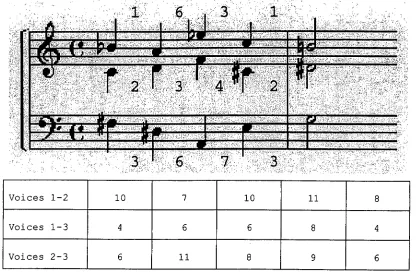
[image:11.548.68.484.194.467.2]In Figure 2.1, an intervallic analysis has been performed on a simple fragment for three instruments.
FIGURE 2.1 Intervallic analysis.
Voices 1-2 10 7 10 11 8
Voices 1-3 4 6 6 8 4
Voices 2-3 6 11 8 9 6
In Figure 2.1, the melodic intervals are marked in between adjacent pitches in each melodic line, and the intervals between each voice-pair are listed below each set. All intervals are named by semitone size, and are modulo twelve.
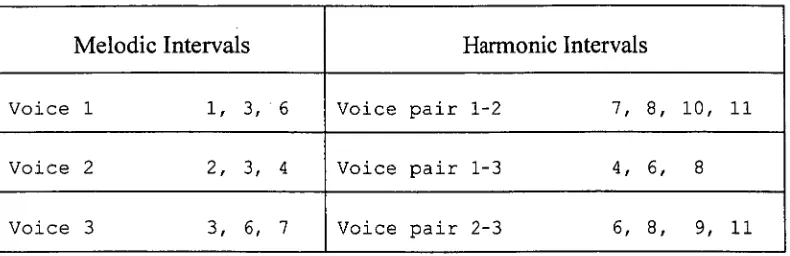
FIGURE 22 Interval Restriction Tables
Melodic Intervals Harmonic Intervals
Voice 1 1, 3, 6 Voice pair 1-2 7, 8, 10, 11
Voice 2 2, 3, 4 Voice pair 1-3 4, 6, 8
Voice 3 3, 6, 7 Voice pair 2-3 6, 8, 9, 11
Once the tables of interval restrictions have been compiled, an Initial Set needs to be selected as a starting point. In this instance the last set from Figure 2.1 will form the Initial Set, [B, D#, G]. This is an appropriate choice, since the trio will continue from this point, however any other conforming three-voice set might have been used.
(a) (b) (c) (d)
(e) # (f) # (g) = (h)
(i) = (k)
it-
•
•
•
•
•
•-■•••■•
•
I V I
•
•
4-
6
r"1
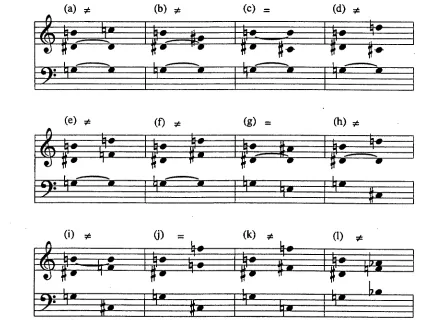
,. [image:13.548.52.478.236.563.2]Figure 2.3 shows twelve different sets which have been generated from the Initial Set [B, D#, G]. These new sets were generated by moving combinations of the three-voices by intervals specified in the melodic-interval tables in Figure 2.2. Each new set was then compared against the harmonic-intervals table, and given a = if the set conformed, otherwise it was given a Sets marked with an = can be considered Possible Sets.
FIGURE 2.3 Searching for Possible Sets.
In Figure 2.3 (a) only the first voice was moved. It rose by a semitone from B to
In Figure 2.3 (b), Voice One fell 3 semitones, while the other voices remained fixed. Again, the resultant set did not conform to the harmonic-intervals table, since the intervals [G#, D#] is not permitted between Voices One and Two.
The first Possible Set is found in bar 2.3 (c). The second voice has fallen a tone while the other two voices remain static. All three harmonic intervals conform to the harmonic-intervals table; interval 10 between Voices One and Two, interval 6 between Voices Two and Three, and the unchanged interval 4 between the outer voices.
In bars 2.3 (d, e, f), the upper two voices were moved simultaneously by permissible intervals, but no Possible Set was found. In 2.3 (g) however, when the two outer voices fell by a semitone and a minor third respectively, another Possible Set was uncovered with all the intervals conforming to the harmonic interval table. Bars 2.3 (h, i, k, 1) all prove unsuccessful, but bar 2.3 (j) yielded a
Possible Set with all three voices moving at once.
The example in Figure 2.3 contains twelve examples as this was considered enough to demonstrate the process. Many more could have been generated. Three of the sets conformed to the harmonic-intervals table, and are considered Possible Sets. The next step would be to choose just one of these three Possible Sets to become the next Initial Set. The process of searching for Possible Sets can then continue from the newly chosen set.
Only one Possible Set can be chosen to succeed a given Initial Set. Possible Sets are not connected to each other, but rather to the Initial Set from which they are generated. A list of Possible Sets is unordered, and the melodic intervals formed between successive sets in a list of Possible Sets are arbitrary . There is no more value in using a succession of Possible Sets than there is in arbitrarily connecting any sets that conform to the harmonic-intervals table, unless the composer finds them of value.
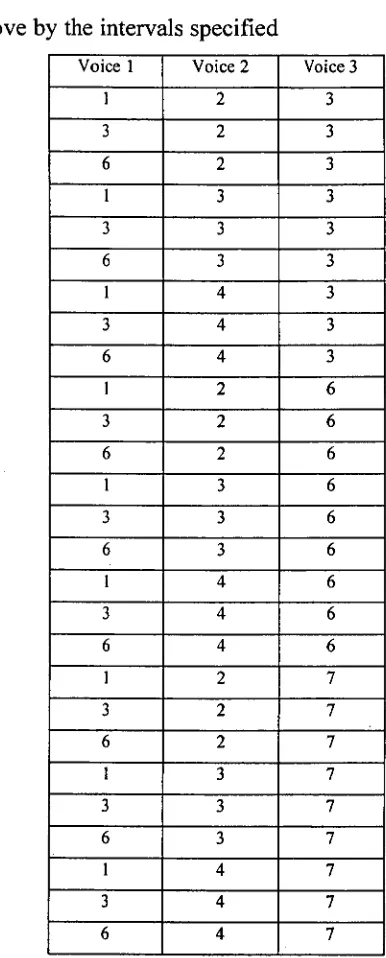
In 2.3, the twelve generated sets were not an exhaustive catalogue of all the sets. For a composer to be satisfied that the best Possible Set has been selected from all the Possible Sets, every set needs to be generated and tested, so that every Possible Set can be discovered. To be sure that every set is generated and tested, a methodical and exhaustive approach is required. Generating every set is achieved by working through two connected sets of permutations. The first layer of permutations involves applying every combination of melodic intervals for each voice. This layer is called the Interval Permutations. For each permutation of intervals, every combination of each voice' s possible direction is applied to generate a set. This is the second, connected layer of permutations and they are called Direction Vectors. Each voice in the texture may move up or down by their respective intervals, or they may remain static.
FIGURE 2.4 Interval Permutations.
Each voice will move by the intervals specified
Voice 1 Voice 2 Voice 3
I 2 3
3 2 3
6 2 3
1 3 3
3 3 3
6 3 3
1 4 3
3 4 3
6 4 3
1 2 6
3 2 6
6 2 6
I 3 6
3 3 6
6 3 6
1 4 6
3 4 6
6 4 6
1 2 7
3 2 7 6 2 7
I 3 7
3 3 7
6 3 7
1 4 7 3 4 7
6 4 7
• intervals table. Every possible Interval Permutation is accounted for in between
the first and last.
The total number of Interval Permutations is 27. The number of Interval Permutations can be calculated by the formula:
Ip = mil mi2 . min
Ip is the resultant number of Interval Permutations, and mil represents the number of permitted melodic intervals for Voice One, mi2 represents the number of permitted melodic intervals for Voice 2, up to min where n represents the maximum number of voices. In this case, there are three-voices, each with three permitted intervals in the melodic intervals table, so:
Ip = 3 . 3 . 3 = 27
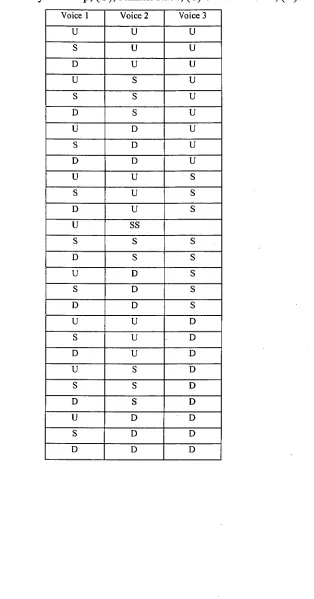
FIGURE 2.5 Direction Vectors.
Each voice may move up, (U), remain static, (S) or move down, (D). Voice 1 Voice 2 Voice 3
U U U
S U U
D U U
U S U
S S U
D S U
U D U
S D U
D D U
U U S
S U S
D U S
U SS
S S S
D S S
U D S
S D S
D D S
U U D
S U D
D U D
U S D
S S D
D S D
U D •D
S D D
D D D
There are 27 Direction Vectors in Figure 2.5. This is coincidentally the same number of Interval Permutations as in Figure 2.4. Each row represents the directions in which each respective voice will move. The number of Direction Vectors for any number of voices may be calculated using the following formula:
Dv = n 3
Dv represents the number of Direction Vectors, while n represents the number of voices. The exponent 3 is a constant, representing the three direction possibilities, U, S and D. So, for three-voices:
Dv = 3 3 = 27
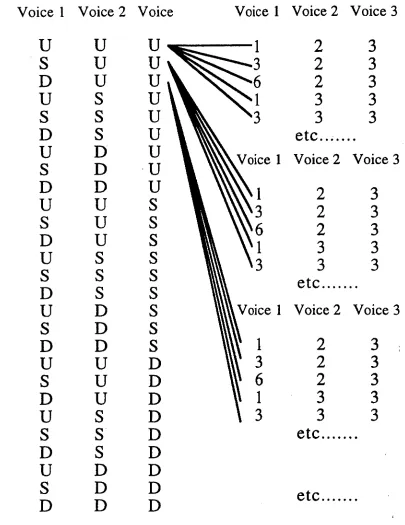
FIGURE 2.6 Interval Permutations applied to Direction Vectors.
Direction Vectors Interval Permutations
Voice 1 Voice 2 Voice
Voice 1 Voice 2 Voice 3
U
U U 1 2 3
S U U 3 2 3
D
U U 6 2 3
U
S U 1 3 3
S S U 3 3 3
D
S U
etc
U
D U
Voice 1 Voice 2 Voice 3
1 2 3
3 2 3
6 2 3
1 3 3
3 3 3
etc
U
D S
Voice 1 Voice 2 Voice 3
S D S
D
D S 1 2 3
U
U D 3 2 3
S U D 6 2 3
D
U D 1 3 3
U
S D 3 3 3
S S D
etc
D
S D
U
D D
S D D
etc
D
D D
The total number of sets which are generated by applying Interval Permutations to Direction Vectors in Figure 2.6 is 27*27 = 189. This can be generalised by the formula:
Ts = Ip . Dv
All the sets which conform the
to harmonic-intervals tables
Ts
represents the total number of sets, and ip and
Dvare defined from the
previous formulae for calculating Interval Permutations and Direction Vectors.
The full
Tsformula is :
Ts = (mil . mi2 . min) . (n3)
Once all the 189 sets have been generated from the Initial Set from the trio in
Figure 2.1, each must be checked against the harmonic-intervals table to ascertain
which can be considered Possible Sets. The number of Possible Sets cannot be
determined until each generated set has been checked. However, once all the sets
have been checked, the composer may be sure that every Possible Set has been
found, thus making available the widest palette of choice for the next set.
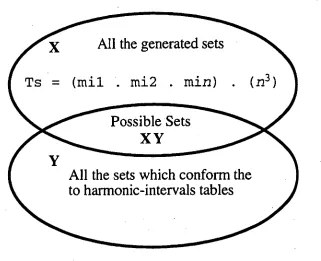
[image:21.545.120.441.347.608.2]Figure 2.7 schematically illustrates the exhaustive approach to IRC.
FIGURE 2.7 Schematic representation of IRC
The domain X represents all the sets which can be generated from the Initial Set,
and the domain y represents all the sets which conform to the harmonic-intervals
table. The intersection xy represents the Possible Sets.
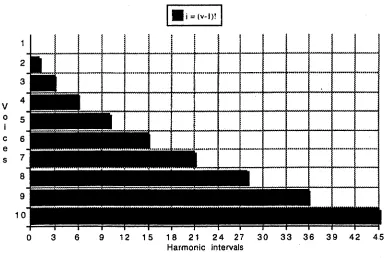
the sum of the number of adjacent and imbricated intervals in a set increases in a non-linear curve according to the formula :
Hi = (n - 1) 1
Hi represents the number of intervals in the set, and n represents the number of voices in the set. The number of harmonic intervals in a three-voice texture can be calculated as follows:
Hi = (3 — 1) !
Hi = 2!
Hi = 2 + 1 + 0 = 3
[image:22.554.66.455.385.643.2]Figure 2.8 graphically presents the number of intervals for one voice textures through to ten voice textures.
FIGURE 2.8 Harmonic intervals against number of voices.
I
Ili
= (v-1)!11
11E1
i I
.
t
ill/1U
1111111111111111111
----111
111111111
111111.1111111
---111
9011/11
1
11
.—
0 3 6 9 12 15 18 21 24 27 30 33 36 39 42 4
Harmonic intervals
If the composer want to uncover all possible options, the methodical and exhaustive approach discussed above must be applied. This means, however, that the work demanded of the composer is extremely high. Huge volumes of sets may be generated by the method described above. Any reasonable number of voices
1
2 3 V 4
5 C 6
7 8 9
may be used, and arbitrary numbers of intervals may be permitted for each voice and between each voice pair.
Application of the Ts formula reveals that these problems are exponentially compounded when music of greater complexity is considered. To exhaustively realise each set of a quartet with three intervals per voice would require just over five thousand sets to be generated.
Ts = (3.3.3.3) . 4 3 = 5,184
A sextet with five melodic intervals per voice would require a staggering 3.4 million sets to be generated, checked for conformity, and all dispensed with except one.
Ts = (5.5.5.5.5.5) .6 3 = 3,375,000
3.
A SURVEY OF COMPUTER ASSISTED COMPOSITION
TOOLS
For the scope of this dissertation Computer Assisted Composition (CAC) tools are defined as the software tools that help composers generate precompositional or compositional material that is derived from the equal tempered chromatic. This discussion narrows towards tools that have the same features as those required for the automation of IRC.
The use of digital computers in music is such a recent and rapidly changing phenomenon that little work has been done in tracing the historical circumstances that lead to the current state. Most historical discussions focus on the hardware and software development over the last 40 years, and these discussions generally appear in an introductory style when setting the context for the discussion of a new tool or resource.
A brief historical perspective is given by Carola Bohm in Automated Music, Interdisciplinary aspects of a musical developmental history, (1996). Bohm points out that besides notation being the major musical achievement of the Middle Ages, the parallel codification of composition was an equally significant achievement. The ability to deseribe a closed system such as a compositional method also had its roots in the Renaissance. Bohm observes that the reconvergence of mathematics and music with the arrival of modem computing is an event that "stems in its most inner prerequisite from these ages and their 'automated music'.".
David Zicarelli's Music Technology as a Form of Parasite ICMC (1992) is an insightful philosophical discussion of the role of contemporary technology in music, and how technology creates a need for itself just by virtue of its presence and potential. This is an important article for anyone involved in the use or development of music tools that impact on the creative process.
The majority of literature relating to CAC tools is documentary. Only a small component is independently critical of the tools available and critical of CAC as a phenomenon. MIDI, the Musical Instrument Digital Interface is often used in C.A.C. tools that use the equal tempered chromatic and although MIDI is a often a lynchpin in musical applications, the frustrations of composers musicians, and programmers with the limitations of MIDI are well documented. Miller Puckette's keynote addresses Is there life after MIDI? ICMC (1994) is an amusing review of the impact that MIDI has had on the computer music community, painting a picture where MIDI is an instant gratification environment, and a potential technology trap. While Miller' s paper deliberately is black and white to make his point, (MIDI is more useful than just a "box that spits out notes"), he correctly notes that MIDI has polarised the computer music community, and composers who use the standard must be aware of its limitations, and indeed be aware of potential prejudices from instrumentalists, other composers and computer musicians. Christopher Yavelow's paper in 1986 (ICMC), The Impact of MIDI
upon Compositional Methodology, was written just three years after the introduction the MIDI standard. He also discusses the "way MIDI is reshaping compositional methods.", and he includes recommendations for future MIDI developments. Although the MIDI standard is designed for expansion no significant modifications have been made to date, probably due to Version 1.x' s deep entrenchment.
In Novelty, Progress and Research Method in Computer Music Composition,
(1994) Jeff Pressing discusses a list of factors that he believes contribute to the "lack of attention [in electroacoustic music] from the general public". These factors include what he calls "working methods, and the credibility and viability of compositional research".
musical materials.", "(B) Development of materials by interaction with an instrument."
Pressing observes that if composers don't build works from internally heard cognitive maps, listeners are less likely to build or find one. He suggests that the success and value of composers music reflects their working methods.
Pressing observes that in CAC research, "... the wheel keeps being rediscovered ... to a degree not found in most fields.". He complains that articles about compositional procedures often fail to cite previous work, and often there is no attempt to integrate the current work with previous work. Pressing gives two case studies that illustrate his point.
Undoubtedly it is wasteful for research papers to replicate work that has been done previously. The rapidly changing hardware and software platforms demand that tools be redeveloped regularly, which may account for some of the apparent duplication of research work. However, in the case of software development, no two tools that are designed to archive the same result will ever be identical in function and features. Provided there is no avoidable replication, it is healthy to have abroad range of tools available to composers in order that they may be selective, matching and mixing according to their idiosyncratic needs.
describe their developmental work. Significantly, they conclude that as their research progresses,
"...an overriding requirement is to avoid prescriptive elements which restrict creativity by coercing composers into using 'good practice' tools and methods, and this method distinguishes artistic from engineering support systems.".
Eaglestone and Lunden' s concluding remarks describe an important philosophy in the development of CAC tools. These tools aid a creative pursuit, and vital for an artistic field's creative health is variety in inspiration and method. Good practice tools in music can encourage a 'sameness' in creative output from a variety of users. Examples of 'good practice' tools are General MIDI, MAX, C Sound, and the standard "piano-roll" sequencer design. This is because specific tools facilitate specific methods and creative process, and this is reflected accordingly in the creative output. The implicit conclusion that can be drawn from Eaglestone and Lunden' s work is that variety in compositional assistance tools is desirable, if not essential to maintain diversity in musical creative endeavour.
Composers' compositional demands are idiosyncratic. There is no equivalent to the engineering "good practice" model in composition, since there are vastly differing goals, aesthetics, intentions and personalities at work in the field of composition. Therefore, it is desirable to have a collection of tools that perform similar tasks differently, all with different strengths and weaknesses, to afford composers better access to tools that actually do what they want. Composers' actions must not be defined by the tools they use, but vice-versa. A straightforward example of composers' actions being defined by the tools they use can be termed 'Mouse Music', where streams of musical events are generated by moving a computer mouse. The nature of the computer mouse defines the music. Sever Tipei discusses the use of computer assistance in generating equal tempered intervallic precompositional material in his 1995 paper For an Intelligent use of
the use of computer in composition. Tipei observers that the "gone fishing"' attitude to algorithmic composition is often praised, where the software is left to ramble and the composer "catches something of use.". Tipei sees this as an abdication of the composer's responsibilities, letting commonplace banalities take over." To take this further, the image of musically impoverished composer waiting for musical jewels to come their way by sheer luck springs to mind. Tipei also argues against tampering with the musical output to make apiece more likeable, since he regards this as asymptomatic repair of flaws, and what should be attended to is either the algorithm or the data. He regards abetter option to be forcing the composer to re-evaluate the process, and that way the computer helps the composer learn more about his own ways of thinking. Tipei concludes by observing that "computers are meaningful in composition when they help expand limits".
above, the idiosyncratic nature of composition demands that there be many different tools available, since diversity is essential to creativity when computers are involved.
There is a large body of work that deals with attempting to codify and generate music using the tonal system. This area of work is a useful test bed for developing CAC tools because the tonal style is well documented and understood, and the success of the methods that the tools apply can easily be assessed independently of the composition system. In his paper, Computer Analysis of Surface Details in
Tonal Music, Ficici (1991) discusses a system for analysing and identifying the function of surface-level material in tonal music. The model identifies dissonant tones, and then applies a contextual assessment to determine the function of the tone. Ficici presents an example of how the model works in practice. The work of Haig et al (1990), Steels (1986), Ebcioglu (1984) and Cope (1991) provides a cross section of tools that perform harmonisations of tonal melodies.
One of the most important features CAC software must have is the ability to search musical space. Techniques for searching are very well researched and documented in the parent field of Computer Science, and this research flows into Computer Music Programming. Some relevant searching methods, strategies and implementations are discussed.
In his 1990 paper Music Composition as a Constraint Satisfaction Problem at ICMC Russel Ovans "investigates the benefits of abandoning all other forms of knowledge representation (rules, logic frames etc), in favour of viewing music composition strictly as a constraint satisfaction problem (CSP).". He observes that rule based systems are frequently inefficient due to their reliance on chronological backtracking. Rule based systems typically backtrack intelligently when failure occurs, however constraint satisfaction solutions avoid failure rather than reacting when it occurs, and as a result they provide more efficient algorithms for the generation of compositions.
generally solved using backtracking methods, and this method is susceptible to poor performance since it can require exponential time to solve. Ovans demonstrates how first species counterpoint may be encoded as a constraint satisfaction problem, and then makes clear that the backtracking method would be very expensive when working with four or more voices. He demonstrates that when solving all the possible counterpoints for a given cantus with backtracking, the search faces a branching factor of 25. Using constrain satisfaction the branching factor is just 5.42, with only 20 backtracks for 2746 solutions.
Assayag and Rueda (1993) discuss the "IRCAM Music Representation Group", that aims to set the "boundaries of ... music formalisation directed toward composition and analysis.". The output includes academic works, CAC tools, and a concentration of the knowledge and the musical philosophy of significant composers in the last forty years. Assayag and Rueda discuss four projects, of which the fourth is relevant here, "Partially Instantiated Musical Structure, (PIMS).". PIMS is a generalisation of structure in the functional sense, whose elements are sets and augmented with a collection of relations call Constraints. PIMS employs a hierarchical structure of sets, relations and elements, which respectively have domains, structuring and filtering behaviour. Assayag and Rueda say that "Building musical material in PIMS is a two-stage process: first constructing a suitable PIMS, and then solving the PIMS instantiation problem." Assayag and Rueda proceed to describe the algorithms for solving the instantiation. They observe that the composer generally conceives musical constraints as having degrees of importance, and proceed to discuss Soft Constraints in PIMS. Soft Constraints are described as constraints that have an importance index "between zero, (useless constraint) and one (required constraint).". Assayag and Rueda refer to Schiez (1992) for details of how these soft constraints are handled.
interface. Degazio's work discusses the application of Genetic Algorithms (GAs) in effectively searching unmanageably large musical spaces. He describes GAs non-specific nature, their solid theoretical background, and similarities in process to human creative activity, Degazio discusses what he sees as the simplistic application of GAs in musical projects, with a few exceptions. Degazio's work involves generating musical organisms, (which appear to be sets of MIDI events organised in a contrapuntal manner), and presenting them visually and aurally to the user for evaluation. The user then indicates the "fitness" of these organisms, and then the "fittest" organisms are bred, while the "unfit" organisms are discarded. This cycle of selection, breeding and rendering is repeated until an organism is generated which is acceptable as a musical composition. Much of the rest of the paper is concerned with the technical aspects of applying GA' s to musical problems, however, he concludes by proposing further work which would apply GA' s to larger scale musical elements, such as saturation, periodicity, fragmentation and varying forms of continuity.
Three software tools whose features closely overlap with the domain of Interval Restriction Composition merit discussion at this point. These tools are David Jones's Counterpoint Assistant, Malcolm Bell's MAX Counterpoint Generator and David Cope's Composers' Underscoring Environment,
The work of Jones (1992) describes a software tool called Counterpoint Assistant.
Jones's tool "computes all possible realisations of a multi-voice contrapuntal texture according to user-defined palettes of allowable melodic lines and harmonies,", Counterpoint Assistant returns all the possible solutions given a precomposed two part counterpoint, and works within the confines of academic species counterpoint. In default mode, Counterpoint Assistant attempts to harmonise the input with canonically varied copies of the input, but the user may configure melodic and harmonic palettes as a source of harmonisation material that are stored as pitch-class sets. The user then specifies the number of voices, which voices the original input should be mapped to and what the note offsets are, and then Counterpoint Assistant returns all possible harmonisations.
three, four, five and more voices is significantly more difficult ... than counterpoint in two voices and points out the obvious benefit of computer assistance in this circumstance. (Jones is referring to the exponential characteristics of the vi. formula presented in Chapter 2). At the Middle Level, the composer can act as director, auditioning a number of possible solutions, and then sculptor, cutting and combining contrapuntal segments. This process of screening is completely different to composing 'by hand'. Lastly in the Top Level, Jones states that he is interested in producing the best music he can, and that this involves discarding a lot of machine generated music, and modification of the output. He sees algorithmic composition (composition without direct composer participation) as simply an "unadulterated report of the efficiency of their compositional system.".
Jones's justification for developing this prototype is that it allows the composer to work from a distance while obtaining results which given enough time, could have been produced by hand, allowing correct but unpredictable realisations from the given constraints.
Similar to Jones's work, the software developed by Bell (1995) A MAX Counterpoint Generator for Simulating Stylistic Traits of Stravinsky, Bartok, and Other Composers is a real-time interactive program that "can generate an accompanying contrapuntal line" in response to MIDI input. The generated line is dependent of the proper analysis of the style. This analysis involves building tables of melodic and harmonic intervallic frequencies and by calculating percentage weightings of the appearance of different rhythmic denominations. This analysis is required to consist of "8 rhythmic patterns and 4 harmonic pitch intervals and 4 horizontal pitch intervals.". These tables may be altered during performance. The accompanying counterpoints' pitch component is generated stochasticly from the interval analysis tables, and is filtered through the pitch table. When in "free counterpoint mode", the rhythms are generated stochasticly from the rhythmic denomination weightings tables. When no output is possible for a certain situation, the program will optionally ignore the horizontal interval tables, or simply insert a rest in the output.
result to be forthcoming. This solution works due to the simplicity of writing in only two voices. Due to the exponential rise in complexity when more voices are added to a texture, a solution involving the insertion of rests or temporarily ignoring the restriction tables would not be necessarily be satisfactory in more complex music, since there may be so many rests and relaxations of the system that the system would be in danger of being compromised.
David Cope's latest work CUE, Composers Underscoring Environment (Cope 1996) is a mature reworking of his previous tools. Cope observes that most interactive music composition programs generate musical material by a variety of well-known processes, allowing the composer to use or discard the material as they see fit. He notes that his own previously developed tools, (Cope 1990, 1991,
1992, 1996) have "created complete works, rather than composing interactively with users.". Cope discusses the need for a compositional tool that can track a composition in progress, and combine found harmonic, motivic and structural elements with more generic elements of a composer's style to create situationally relevant music. Cope then presents Composer' s Underscoring Environment (CUE); a software tool that interactively employs his well known style imitation algorithms in Experiments in Musical Intelligence, (EMI). (Cope 1991).
CUE allows composers to experimentally extend passages, and develop the potential of germ ideas and compose as much relevant music as desired in the style as evident in the previously composed music in CUE's database and in the style of the composition. CUE uses a pattern-matching algorithm to search for "signatures" (Cope 1991) in extant music, and uses a coupling algorithm that possesses "rules inheritance" for "producing highly original recompositions". Cope demonstrates with a recomposition of a Bach chorale that stylistic rules are inherited through signatures and these rules maintain integrity through recomposition, even though these rules are not explicitly held in the program's
database.
Program recognises structural patterns as "earmarks" which play a "critical role in CUE's ability to analyse and generate logical musical structures."
CUE's interface provides a "series of view levels", from standard notation out to "larger frames of the in-progress composition". The highest level shows the entire composition, complete with foreground, middleground and background depiction of earmarks and signatures. Cope concludes that CUE is designed to imitate, not to create anew, and comments that "highly original work music be accomplished by users.".
The fact that Copes' algorithms replicate tonal music successfully without the context of tonal music is significant. Tonal music and the characteristics of the music of individual tonal composers are familiar to everyone, and success in the tonal style replication can serve as an acid test for algorithms and CAC tools. If an algorithm can arbitrarily replicate musical styles without context, (including the tonal style) the algorithm must be able to style-replicate any composer's idiosyncratic style without the context that explicit rules provide.
Cope' s CUE is the result of decades of research into musical style replication and CAC and as such is the most sophisticated CAC tool related to IRC available. At the time of writing CUE is unavailable due to technical difficulties, but will appear as an adjunct to a forthcoming book titled The Algorithmic Composer.
4. RICE. RESTRICTED INTERVAL COUNTERPOINT ENGINE
This chapter presents a software tool devised by the author that automates Interval Restriction Composition. The software tool is called 'Restricted Interval Counterpoint Engine'.
RICE was developed in the programming language C using the Metrowerks CodeWarrior development environment for the Apple Macintosh platform. It makes use of the Graphic User Interface (GUI) for visualisation and manipulation of musical data. MIDI is used for RICE's musical input and output.
An Appendix that contains the RICE software and the accompanying manual supports this discussion of RICE. The manual describes every feature of the RICE software in detail and provides an understanding of how to make practical use of the software. This dissertation does not attempt to duplicate the function of the manual and so does not provide an introduction to the practical use of the software.
Automation of IRC has been under consideration by the author since early 1994 when it was understood that the method required exponential time to employ. The development of IRC was a response to a problem which confronts many composers, namely "How do I control the harmonic and the melodic consistently and accurately?". Controlling the sound of compositions by simply restricting where and when specific intervals may appear in, and in-between voice pairs appeared to be a very straightforward solution to the problem.
As identified in Chapter 3, a tool that automates the IRC must include searching facilities, analysis functions, and restrictions that shape the interval content of the musical material. Auditioning of musical material is also essential to IRC. In addition, facility for storing the musical material must be incorporated along with routines that allow that material to be modified in musically useful ways. The discussion covers the following nine features of RICE:
• Restrictions Tables,
• Lists of Sets formed by Independent Voices, (musical material)
• A Search Engine,
• Auditioning of musical material,
• Analysis of musical data for Restrictions Tables data,
• Manipulation of Restrictions Table data,
• Manipulation of Lists of Sets,
• Musical input and output,
• Permanent storage of works in progress.
All these features are interdependent.
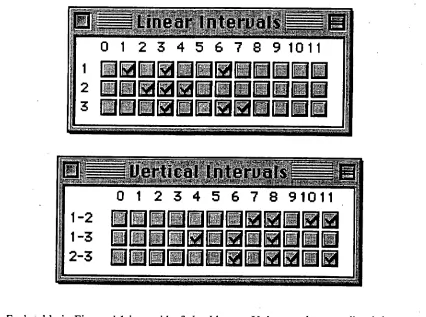
[image:36.545.63.489.411.728.2]Figure 4.1 shows how RICE represents tables of restricted intervals. The content
of the tables are the same as the tables shown in Figure 2.2.
FIGURE 4.1 RICE's Interval Restrictions Tables.
top of each table. Each row tabulates all twelve intervals for each voice or voicepair, and each column contains like intervals. A check indicates that the interval is permitted in that row's voice or voice-pair. For example, the melodic intervals permitted in Voice One are 1, 3 and 6.
[image:37.551.121.381.259.417.2]In addition to holding tables of melodic and harmonic intervals, RICE also provides the capacity to control the occurrence of each pitch-class in each voice. This is outside the domain of IRC described formally in Chapter 2, however it was considered a musically useful extension of the method. Figure 4.2 shows the Pitch Class Restrictions Table.
FIGURE 4.2 RICE's Pitch Class Restrictions Table.
09 3
1 2 3
0 1 2 3 4 5 6 7 8 9 1011
rarrrrgrArryrr
ElEr ET:FP:EP:Fr Fr
h-d
111.:Krr
I, r
IE
Pitch Classes in Figure 4.2 are notated in numerical Pitch Class format, where [c= 0]. By default, all pitch classes are permitted. RICE can work with up to eight independent voices. It is possible to alter the number of voices at any stage within RICE. When this is done, the Restrictions Tables dynamically resize to accommodate the new number of voices. Both the Melodic-Interval Restrictions Table and the pitch-class Restrictions Table resize linearly in accordance with the number of voices selected. The harmonic-interval table resizes exponentially in accordance with the Hi = (n - 1) ! formula presented in Figure 2.5. Figure 4.3 shows an example of the exponential resizing. The contents of the table in Figure 4.3 are derived from a RICE assisted musical analysis.
0 1 2 3 4 5 6 7 8 91011
REM
LJ
EJ
rat
012Mr1210
MOn
[Z67;
OOM g
@OH 0
MO RI
:1000
@ OD
RODO
DO 00 02
v.;
00
02220
LIU
1LiEEJ
DOODEaW
1-2 1-4 1-5 1-6 2-3 2-4 2-5 2-6 3-4 3-5 3-6 4-5 4-6 5-6ID@
Ft113
•
[image:38.548.129.421.112.452.2]Li
FIGURE 4.3 An example of an exponentially resized harmonic-intervals table.
This table is configured for six-voices, and tabulates the fifteen voice-pairs.
•!•::
[image:39.551.170.341.180.496.2]Sets in RICE are visually presented in the traditional sequencer "Piano Roll" style, where each pitch is represented by an object within a scrollable window. Figure 4.4 shows how RICE displays the trio's chord progression that was introduced in Figure 2.1.
FIGURE 4.4 RICE's Piano Roll display for musical data.
Clicking on any on any pitch with the mouse cursor will play that pitch via MIDI, and clicking anywhere in the space of a set will play the entire set. Dragging across the sets will play the sets in succession, thus allowing aural auditioning of the precompositional material in sequence. The dotted column represents the end of the file and is repositioned according to how much musical data is present. The black rectangle in Figure 4.4 outlining the last set in the sequence is called the Centre Control, and may be repositioned by the composer. The function of the Centre Control is to indicate to RICE which set is the "Initial Set". The Initial Set is used by the Search Engine to determine where searches for Possible Sets will begin.
The routine at the core of RICE's functioning is the Search Engine. The Search Engine's functioning is represented schematically in Figure 4.5.1.
Generate a set from the
Initial Set using the current
Interval Permutation, and
the current Direction
Vector.
Obtain a single
Direction Vector
from the user
F
Generate the next
Direction Vector
permutation
.11111■0
Yes
Exhaustive Search?
Generate the next
Interval Permutation
Display the
Possible Sets
Obtain a single (
set from
the user
Yes No
Add the generated
set to the list of
Possible Sets
[image:41.551.57.456.83.627.2]No
FIGURE 4.5 Flow chart for RICE's Search Engine.
The main function of the Search Engine is to reduce the composer' s workload by
quickly and accurately by finding all the Possible Sets which may follow an Initial
Set. This is the essential encapsulation of IRC described in Chapter 2. Figure 4.5
shows the different stages and processes that the Search Engine goes through to
find all the Possible Sets for any given Initial Set. The Search Engine incorporates
Yes
No
Obtain a single
Direction Vector
from the user
Generate the next
Direction Vector
permutation
4--
filters that are not included in Figure 4.5 for the sake of clarity. Before generated sets are checked for conformity with the harmonic-interval Restrictions Table, they are checked for conformity with the pitch-class Restrictions Table, and are discarded if they fail. Sets that succeed this stage are then checked for duplicate pitch classes, ie octave and unison intervals. Sets that have duplicate pitch classes are discarded, since octaves and unisons undermine the independence of each voice, effectively reducing of number of voices.
[image:42.545.78.469.519.704.2]In RICE, the Initial Set is indicated by the position of the Centre Control as shown in Figure 4.4. An Initial Set is required to begin the Search Engine's processes. The rectangle with curved ends in Figure 4.5 represents the start or end of a process.
FIGURE 4.5 Extract A.
Once the Initial Set has been determined, the Search Engine is able to perform two different types of searches, Exhaustive searches, and Directional Searches. The diamond shape and a Yes/No query represent this binary choice.
FIGURE 4.5 Extract B.
Direction Vector. An Exhaustive Search applies every possible Direction Vector to the Initial Set, while a Directional Search applies a single Direction Vector supplied by the composer. In Figure 4.5 Extract B the parallelogram indicates that there is input from the composer, while the rectangle represents a task completed by the computer.
Directional Searches are not explicitly expressed in IRCs' domain as described in Chapter 2, however they prove to be musically useful in limiting the number Possible Sets to those which are of direct interest to the composer.
The Search Engines next task in Figure 4.5 is to "generate the next Interval Permutation for the current Direction Vector". Here the Search Engine applies every Interval Permutation in turn. At this stage, only one Interval Permutation is generated, the rest will be generated when the Search Engine repeatedly loops back.
[image:43.551.148.362.515.709.2]Then the Search Engine "Generates a set from the Initial Set using the current Interval Permutation and the current Direction Vector." This set is then tested against the harmonic-intervals table to check for conformity. If the set conforms, it is considered a Possible Set and is added to the list of Possible Sets. If the set does not conform to the harmonic-intervals table it is discarded. After checking the generated set for confirmation, the Search Engine then checks if there are more sets that need to generated.
V
Generate the next
Direction Vector
permutation
[image:44.545.80.479.122.255.2] [image:44.545.192.415.386.518.2]If there are, the Search Engine returns to either of the following two steps, depending on whether it has finished generating all the Interval Permutations for a current Direction Vector.
FIGURE 4.5 Extract D.
Obtain a single
Direction Vector
from the user
If it has not finished generating all the Interval Permutations, the Search Engine will return to "Generate the next Interval Permutation" in Figure 4.5 Extract D. Otherwise it will return to "Generate the next Direction Vector Permutation" in Figure 4.5 Extract D. If the there are no more sets to generate, the Search Engine calls a routine to display the list of Possible Sets that were found.
FIGURE 4.5 Extract E.
FIGURE 4.6 A Palette of Possible Sets.
In RICE, sets to the right of the Centre Control are Possible Sets. Sets to the left of the Centre Control are extant sets. The set under the Centre Control is the Initial Set that the Search engine began searching from. On the colour computer screen, the background of the display window is coloured light green_ to remind the composer that the sets they are looking at include a Palette of Possible Sets, not just a sequence of extant sets. In contrast, the standard background colour is light grey. A second scroll bar appears under the Centre Control, allowing to composer to scroll through large numbers of Possible Sets should that be necessary.
Pitches in the Palette of Possible Sets (to the right of the Centre Control) have short stems attached to them, either going up or down. These stems indicate the direction that each voice moved in to arrive at that specific Possible Set. The absence of a stem indicates that that voice did not move to form that specific particular Possible Set. The stems attached to each pitch in a set graphically represent the Direction Vector that generated that particular Possible Set.
It is important to 'keep in mind that sets in the Palette of Possible Sets do not form a meaningful sequence, unless considered so by the composer.
accepting a single Direction Vector as input from the composer. When this happens, a Direction Vector is applied to the Initial Set, under the Centre Control. The composer is able to attach directional "stalks" 2 to each pitch in the Initial Set, and these guide the Search Engine in returning only the Possible Sets that conform to this Direction Vector. Figure 4.7 shows the results of a Directional Search, using the same trio as in Figure 2.1.
FIGURE 4.7 A directional search.
The directional search shown in Figure 4.7 yielded only one Possible Set. This single possible set appears in the grey dotted Auditioning Box just to the right of the Centre Control. The Direction Vector on the single Possible Set is the same as
the Vector that was applied to the Initial Set. The single Possible Set is a subset of all the Possible Sets shown in Figure 4.6, where the same set can be found. Since there is only one Possible Set, it is the only set that can be auditioned from this search. If the composer does not want to use this set, another different search can be performed.
Because Directional Searches place severe limitations on which Possible Sets may be included in the palette, it is not uncommon for the palette to be empty. When this occurs, the composer can modify various elements of RICE to undertake a different search that yields Possible Sets. The composer may apply a different Direction Vector to the Initial Set, alter the Initial Set, or change the contents of the current Restriction Set.
The composer is required to choose one Possible Set from the palette to succeed the Initial Set. To assist in this choice, the composer is free to audition the contents of the Palette of Possible Sets. The palette may be colorised according to voice and/or pitch class, and specific sets can be auditioned via MIDI by clicking in the space of a set.
In RICE, the composer chooses a single Possible Set by placing it in the "Auditioning Box". The Auditioning Box is the grey dotted line that encircles the set directly to the right of the Initial Set under the Centre Control. The Box only appears when a Palette of Possible Sets is displayed. Because the Auditioning Box is adjacent to the Centre Control, it allows the composer to hear the selected Possible Set in the context of the Initial Set and the proceeding set progression. By dragging the mouse cursor from left to right, the composer can hear a set sequence that includes the Initial Set and the selected Possible Set in the Auditioning Box. If the Possible Set in the Auditioning Box is not satisfactory, it may be replaced by another Possible Set. Once a satisfactory Possible Set is placed in the Auditioning Box it may be accepted.
Accepting a Possible Set copies the set from the palette and inserts it in the set sequence after the Initial Set. Once a set has been accepted, the Palette of Possible Sets is cleared, and the Centre Control is placed over the newly accepted set. This automatic repositioning of the Centre Control allows the newly accepted set to assume the role of Initial Set for a new search.
RICE provides the capacity to analyse fragments of music for intervallic and pitch class content. This provides the composer with a powerful method of configuring the Restrictions Tables automatically. RICE is able to analyse musical data from a Type 1 MIDI file, in addition to the ability to analyse portions of musical material already present in RICE.
[image:48.545.61.500.229.805.2]Trio section
Coda
[image:49.551.60.454.84.456.2]Alternate Bridge set
FIGURE 4.8 The Restriction Set Manager Window.
A list of all the available Restriction Sets is shown at the top left of the Restriction Set Manager Window. The composer is free to select anyone Restriction Set at any time. In Figure 4.8, the Restriction Set named "Bridge" is selected.
The Restriction Set Manager provides the capacity to save the Restriction Sets independently of the other RICE data. This facility is provided to allow Restriction Sets to be loaded or merged into different RICE files thereby allowing the composer to create libraries of Restriction Sets that may be applied to any musical data.
Restriction Sets can be Created, Deleted and Renamed via the Restriction Set Manager. The contents of the each Restriction Set may be cleared, filled or inverted en masse. Clearing a Restrictions Table removes all the checks from the table, while Filling a Restrictions Table fills every checkbox with a check.
Inverting a Restrictions Table toggles the state of each checkbox. The three Checkboxes that appear at the bottom of the Restriction Set Manager Window control which Restrictions Tables in a Restriction Set will be modified by a mass action.
In Figure 4.8, the checkboxes representing the Melodic and Harmonic intervals Restrictions Tables are selected. 3
Once the Restrictions Tables and the Initial Set are configured, the Working Method begins with a composer-initiated search for Possible Sets. The computer searches for and returns a Palette of Possible Sets. The composer auditions the sets in the palette, and then accepts just one set according to aesthetic criteria that are extrinsic to RICE and IRC, and intrinsic to the composer. Then the Accepted Set becomes the Initial "Set and the process is repeated. This is the Search-Audition-Accept Working Method.
The product of the cyclic Search-Audition-Accept Working Method is a succession of sets that form precompositional material. This set succession is made of n independent voices, which conform to the interval and pitch-class restrictions configured in RICE's current Restriction Set.
Each set in RICE represents a single rhythmic event, and each graphic bar represents an abstract rhythmic unit. For example, if a semiquaver is considered to be the rhythmic unit, then a graphic bar represents a semiquaver. Two graphic bars on the same pitch in the same voice would represent the duration of a quaver, and three graphic bars would represent the duration of a crotchet. This rhythmic unit can be chosen, changed and tied arbitrarily when the precompositional material is composed out.
Complex cross rhythms across voices can be constructed in RICE by selecting set sequences that contain oblique motion in between voices. Coupled with contrary motion, oblique motion is a key factor in defining inter-vOice rhythmic complexity and independence of line. Set sequences rich in oblique motion may be composed out into complex and rhythmically independent voices. Set
sequences without oblique motion must be composed out into homophonic textures if the intervallic integrity of IRC is to be maintained.
RICE provides the composer with a suite of editing functions that can be applied the any musical material. These include:
• Standard Cut and Paste editing functions, • Transposition,
• Pitch locking, • A Canon Manager, • A 'Perform' Mode, • Octave Box.
Any portion of musical material may be transposed in pitch space and time using easily accessible QWERTY keyboard commands. Any editing or transposition function can apply to any subset of voices. Since many of these editing functions can potentially destroy the intervallic integrity of RICE generated musical material the composer is warned to use them with care. Analysis or reanalysis of sections of edited musical data may be required to maintain intervallic integrity. By default, pitches in RICE are freely modifiable. However this is not always desirable, and RICE provides the capacity to Lock Pitches. Locking a pitch fixes its register and temporal location relative to other Locked Pitches4. Whole sections of musically important data may be locked to insure against accidental modification.
In addition to providing this basic safeguard, Locking Pitches has a musically useful application. It is possible to harmonise musical material entered into RICE using Locked Pitches. For example, a chorale melody may be entered into a single voice, and then all the pitches locked. Then, beginning from an Initial Set at the start of the melody, the standard Search-Audition-Accept Working Method can be applied. Every time the Search Engine is executed, the set directly after the Initial Set is checked to see if it contains any Locked Pitches. Any Locked Pitches are then used as a filter which is applied to the Palette of Possible Sets, and only
Welatarlflif
on Souce
of \lobe *ice Dest. Rhythmic Offset Tiers- Aug- Imeton Focus pose ment off pitch
1
2 10 -61
1
1
1
0
1
1
1
1
0
1
rff
Possible Sets which contain the same pitches as those which are locked are returned. Because of this feature, the chorale melody will be preserved and harmonised as the Search-Audition-Accept Working Method progresses.
[image:52.544.93.451.382.566.2]A feature of RICE called the Canon Manager makes extensive use of Locked Pitches. The functioning of the Canon Manager is integrated into Search-Audition-Accept Working Method. The Canon Manager allows pitches from "Accepted" Possible Sets to be copied, placed a specific distance ahead of the Centre Control and then locked. As the Search-Audition-Accept Working Method progresses, the Locked Pitches generated by the Canon Manager become incorporated into the Search Engines' functioning, and consequently become incorporated into the precompositional material. This allows canonic style thematic unity to be embedded in the precompositional material. Figure 4.9 shows the Canon Manager configuration window.
FIGURE 4.9 The Canon Manager.
As discussed above, RICE allows aural auditioning of precompositional material by clicking on sets and pitches with the mouse cursor. A "Perform Mode" provides an additional method of playing back the sequence of precompositional material. Normally, RICE responds to incoming MIDI data by storing it as extant music. However, when Perform Mode is engaged incoming MIDI data is interpreted differently, and any incoming MIDI note immediately triggers the playback of a single set in the sequence of precompositional material. The precompositional material can thus be played back sequentially, with each set triggered by a single incoming MIDI note. The playback of sets matches the duration and volume of incoming MIDI pitches. The Perform Mode allows the composer to "play" the sequence of precompositional material from a MIDI controller, imposing rudimentary rhythm and dynamics. This MIDI "performance" of the precompositional material with the rhythmic information may be captured by other MIDI software, and then modified further by the composer.
RICE does not provide any direct method of ascertaining a pitches letter name other than by colour or playing it. This is a deliberate design decision which is intended to direct the composers focus toward contour, and melodic and harmonic interval. However, it is occasionally useful to gauge the relative intervals of sections of music and RICE provides a feature called the "Octave Box" to assist with this. The Octave Box feature displays a box that is always an octave high and a rhythmic unit wide. This box follows the position of the mouse cursor, and is useful for gauging whether portions of music fit within an octave. Consequently, it is useful for checking if harmonic intervals are compound or simple, and it is particularly useful in gauging if certain precompositional material will fit comfortably with a pianist's hand span.
RICE also recognises the Standard MIDI File Format. Extant music may be loaded into RICE by importing Type 1 MIDI Files. RICE can also write Type 1 MIDI files that contain the sequence of precompositional material generated by the Search-Audition-Accept Working Method. The rhythmic unit in these RICE generated MIDI files is always a crotchet.
[image:54.543.69.482.284.467.2]In addition to the MIDI file format, RICE can write the sequence of precompositional material out to a plain-text file that may be opened by a word processor. This text file contains the letter name and MIDI pitch number of each pitch in each set. Figure 4.10 shows an example of the text output.
FIGURE 4.10 An example of RICE's text file output.
VI V2 V3 V4 V5
75 Eb 70 Bb 68 Ab 60C 42F#
69 A 66 F# 64 E 61 C# 43 G
68 Ab 63 Eb 59B 58 Bb 41F
68 Ab 65 F 60 C 58 Bb 42 F#
75 Eb 72 C 70 Bb 65 F 51 Eb
Each voice' s line is tabulated in a column, and each set forms a row. This text file output is useful for composers who want to use with their precompositional material without the assistance of a computer, or for shifting RICE generated precompositional material into a software package which does not recognise the MIDI standard. RICE cannot read text files.
Printing from RICE is not possible. There is no visual data generated in RICE that is useful when out of the context of the RICE software.
5. MUSICAL APPLICATION OF RICE
This chapter discusses four musical works that are included in the accompanying folio. Each of the works are RICE assisted compositions. The four musical works are:
• Three Songs for Soprano and Piano, • Ten Prayers for Mixed Choir, • Four Fugues,
• Three Reharmonized Jazz Standards.
The role that RICE played in each works' creation is discussed, along with formal design and compositional detail. The complete scores and recordings for these works can be found in the accompanying folio.
5.1 THREE SONGS FOR SOPRANO AND PIANO
Each of the three songs are settings of complete poems by Sylvia Plath, titled
You're, Morning Song and The Night Dances. These poems are all drawn from different phases of Plath's writing. Although they were written separately from each other there is a common thread through the three poems, in that they trace the birth of her son. Together, the three songs take around 10 minutes of performance time.
The formal structure of You're is simple, consisting almost completely of a single unvarying texture from start to finish. The only change in texture is the tonal climax passage at bars 67-70 discussed belOw. The soprano's line can be divided into three formal sections, bars 1-18, 19-52 and 53 to the end. The reason for these formal divisions is that the soprano's melodic motives cycle repeatedly, and with each repetition of the opening theme, the word 'you're' is inserted into the text to mark each of these melodic restarts.