Nurses and information technology
nurses and information technology
An Australian Nursing Federation
project funded by the Australian
Government Department of Health
Acknowledgement:The authors would like to thank all the nurses in Australia who responded to the survey; the members of the stakeholder and focus groups; and Erin Bowly, Annette Nanka and Rebecca Shaw for administrative support. The authors would also like to thank the members of the project steering group for their contribution to the study:
Wendy Armstrong Association for Australian Rural Nurses Fiona Stoker Australian Healthcare Association Victoria Gilmore Australian Nursing Federation
Margaret Baltais Australian Private Hospitals Association Debra Thoms Chief Nursing Officers Group
Jennifer Hardy Council of Deans of Nursing and Midwifery (Australia and New Zealand) Sue Kildea Council of Remote Area Nurses of Australia
Yvonne Aggett Department of Health and Ageing Susan Emerson Geriaction
Moya Conrick Nursing Informatics Australia Barbara Carter Royal College of Nursing Australia
© Commonwealth of Australia 2007
ISBN 978-0-909599-55-3
This work is copyright. Apart from any use as permitted under the Copyright Act 1968, no part may be reproduced by any process without written permission from the Commonwealth. Requests and inquiries concerning reproduction and rights should be addressed to the Commonwealth Copyright Administration, Intellectual Property Branch, Department of Communications, Information Technology and the Arts, GPO Box 2154, Canberra ACT 2601 or posted at http://www.dcita.gov.au/cca.
The opinions expressed in this report are those of the authors and are not necessarily those of the Australian Government.
Nurses and Information
Technology
Final Report
1 Centre for Rural and Remote Area Health, University of Southern Queensland 2 Australian Nursing Federation
Professor Desley Hegney
1Dr Elizabeth Buikstra
1Dr Robert Eley
1Dr Tony Fallon
1Ms Victoria Gilmore
2Dr Jeffrey Soar
3June 2007
Table of contents
1. Executive Summary
1.1. Background 1.2 Methodology 1.3 Results
Objective 1 Objective 2 Objective 3 Objective 4
Objective 5 and recommendations Objective 6 and recommendations
1.4 Conclusion
2. Literature Review
2.1 National strategies to support health care through information technology 2.2 Electronic health records
2.3 Potential benefits of the adoption of information technology
2.4 Adoption and use of information technology in health and aged care 2.4.1 Knowledge based systems
2.4.2 Evidence based practice 2.4.3 Telehealth
2.4.4 Wireless and hand held technologies 2.4.5 Use of the internet
2.5 Internet access in rural and remote areas 2.6 Barriers to the adoption of information technology 2.7 Nurse information technology competencies
2.7.1 Training
3. The Nurses and Information Technology study
3.1 Study aim 3.2 Study objectives
3.3 Defining information technology 3.4 Ethics
3.5 Project steering group
4. Methodology
4.1 Data collection methods 4.1.1 Stakeholder interviews 4.1.2 Focus groups
4.1.3 The survey tool 4.1.4 Piloting the survey tool 4.2 The survey instrument 4.3 Sampling
4.4 Distribution 4.5 Data entry 4.6 Data analysis
4.6.1 Quantitative data 4.6.2 Qualitative data
5. Results
5.1 Survey responses and stratification 5.2 Demographics
5.2.1 Sex 5.2.2 Age
5.2.3 Employment
5.3 Access and use of information technology
5.3.1 Level of experience and confidence in using hardware and software 5.3.2 Access to computers
5.3.3 Use of information technology applications 5.3.4 Access to and use of intranet and internet
5.4 Knowledge of current health information technology initiatives 5.4.1 Information technology developments within the workplace 5.4.2 Adoption of a national electronic health record
5.4.3 Knowledge of HealthConnect
5.4.4 Knowledge of state and territory health initiatives 5.5 Employment requirement for information technology skills
5.5.1 Employment requirement for information technology skills 5.5.2 Importance of access to and use of information technology in
choice of employment
5.5.3 Importance of information technology in remaining in current employment 5.5.4 Importance of access to and use of information technology in choice of
future employment
5.6 Training and education in information technology 5.6.1 Formal information technology qualifications 5.6.2 Barriers to accessing training
5.7 Barriers to the use of information technology 5.8 Technical support
5.8.1 Level of technical support 5.9 Management attitudes and support 5.10 Security, confidentiality and privacy issues
5.11 Free comments about information technology in the workplace
6. Discussion
6.1 Survey responses
6.2 Experience and confidence in use of information technology 6.3 Access to computers
6.4 Use of information technology 6.5 Access to the intranet and internet
6.6 Knowledge of health information technology initiatives 6.7 Employment requirements for information technology 6.8 Education and training in information technology 6.9 Barriers to the use of information technology 6.10 Technical support
6.11 Management attitudes and support 6.12 Security, confidentiality and privacy issues 6.13 Thematic analysis
6.14 Stakeholder and focus groups
List of Tables
1. Definition of position titles used in the study
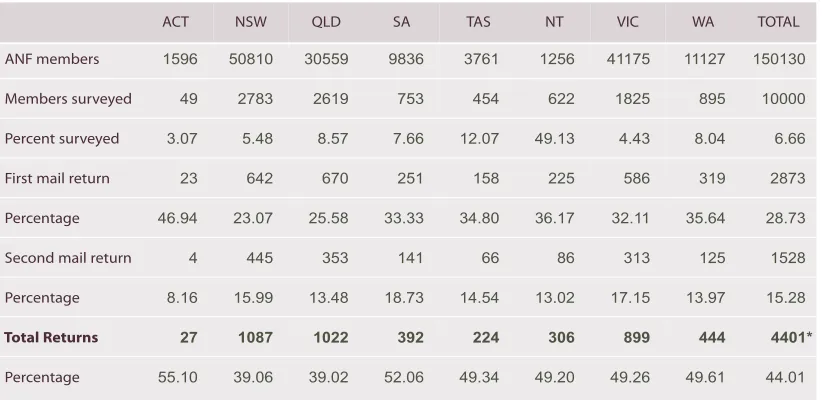
2. Number and percentage of nurses within jurisdictions surveyed 3. Number of nurses surveyed and their response rates
4. Responses within states and territories
5. Australian Standard Geographical Classification of respondents
6. Distribution by Australian Standard Geographical Classification of respondents by state and territory
7. Sex of the respondents
8. Sex and Australian Standard Geographical Classification 9. Level of position and sex
10. Age of respondents 11. Sex and age of nurses
12. Comparison of age of respondents with data from the Australian Institute of Health and Welfare
13. Level of position
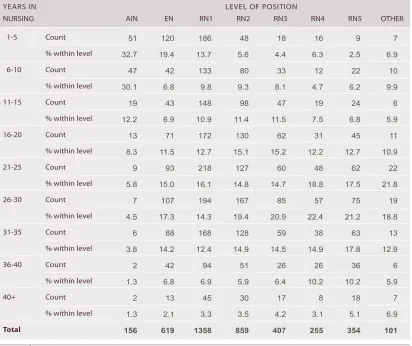
14. Level of position and length of time in nursing 15. Aboriginal or Torres Strait Islander origin 16. English as first language
17. English as first language and level of position 18. Main workplace
19. Main role in nursing
20. Frequencies of year started work
21. Pre-registration (pre-enrolment) student status 22. Student status and age group
23. Experience and confidence in using hardware and software 24. Proportion of respondents who agreed with statements
25. Place of access for use of a computer for work related activities 26. Use of home computer
27. Reason for home computer use for work related activities 28. Purpose of use of computer for work related purposes 29. Use of different applications for work related purposes 30. Location for accessing email, intranet and internet 31. Location at work of access to the intranet and internet 32. Purpose for accessing the intranet and internet 33. Degree of restriction to using the intranet and internet
34. Awareness of information technology development at the workplace 35. Benefit of national electronic health records
36. Knowledge of HealthConnect
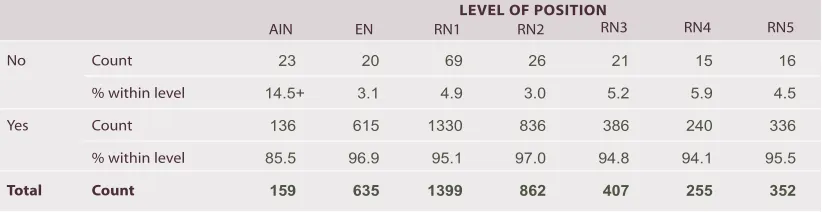
37. Requirement for information technology in position and level of position
38. Training pre-registration or pre-enrolment and as continuing professional education 39. Employer support of information technology training by level of position
40. Barriers to accessing training
41. Interest in national competency in information technology 42. Barriers to use of computers
43. Technical support policy exists within organisation 44. Provider of information technology support 45. Level of weekday technical support 46. Level of technical support on weekends 47. Rating of management attitude and support
48. Support by management for health and safety issues 49. Rating of security
50. Themes from qualitative analysis
Glossary of Terms
ACT Australian Capital Territory
AIN Assistant in Nursing
ASGC Australian Standard Geographical Classification
CPE Continuing Professional Education
EN Enrolled Nurse (registered nurse division 2 in Victoria)
IMS Information Management System
IR Inner Regional
IT Information Technology
MCC Major Capital City
NSW New South Wales
NT Northern Territory
QLD Queensland
OR Outer Regional
PC Personal Carer
RN Registered Nurse (registered nurse division 1 in Victoria)
RVR Remote/Very Remote
SA South Australia
TAS Tasmania
VIC Victoria
Executive Summary
Synopsis: A study of 10,000 nurses in Australia (44% response rate) on their use of information
technology has clearly identified that nurses recognise benefits to adopting more information
technology in the workplace. They are however frustrated by limitations of access to the technology;
software that is not always fit for purpose; and lack of opportunities for training. The level of use of
information technology and information management systems is generally low and confidence in
use is low even among those nurses who are users. There is evidence that familiarity, use and
confidence in use are slightly higher in nurses who have recent tertiary education. Nurses feel
poorly informed about information technology health initiatives and poorly consulted about
implementation of these initiatives. Workload, number of computers, inadequate technical support
and lack of training are principal barriers to the use of information technology. Technical support is
especially poor in more remote locations. Neither the full potential of information technology in the
provision of health and aged care nor the recognition by all nurses that information technology is
an integral part of nursing will be realised until these limitations are addressed.
1.1
Background
The Australian Nursing Federation was commissioned by the Australian Government to carry out a
research study into the use of information technology by nurses in Australia. The objectives of the
study were to:
1. identify the extent to which nurses have access to and use information technology and
information management systems;
2. identify the purposes for which nurses use information technology and information
management systems;
3. identify the readiness of nurses to participate in e-health initiatives such as HealthConnect
(including MediConnect);
4. understand the barriers that prevent nurses from benefiting from information technology and
information management systems;
5. recommend ways to overcome these barriers and provide opportunities for nurses to better
use information technology and information management systems within the Government
policy framework; and
6. prepare a road map for access, education and training to meet the needs of nurses.
1.2
Methodology
The study surveyed 10,000 nurses in Australia. The survey tool, a questionnaire, was developed
from key issues identified by:
telephone interviews with 26 key stakeholders from the state and territory governments, national nursing and other peak health and aged care organisations;
focus groups of representatives of national nursing organisations; and
a review of the literature.
Using the member database of the Australian Nursing Federation, 10,000 questionnaires were distributed to nurses in all states and territories of Australia. Members polled included assistants
in nursing, enrolled nurses and all levels of registered nurse (levels 1-5)1. Stratification of the
sample for the survey was by geographic location using the Australian Standard Geographical Classification. The overall response rate was 44% distributed evenly among the four geographic
locations (major capital cities; inner regional; outer regional; and remote/very remote). From
responses to the demographic questions, the respondents to the survey would appear to be representative of the nursing workforce in Australia.
Access and attitudes to information technology by nurses have been demonstrated by others to be affected by a number of factors including: geographic location; age of nurse; length of time in
nursing; level of position; and employment sector. Analysis of the current data was undertaken using all these factors.
1.3
Results
OBJECTIVE 1: Identify the extent to which nurses have access to and use information
technology and information management systems.
There was a high adoption of information technology into the nursing workplace. Over 85% of nurses
use a computer for some aspect of their work. In remote/very remote areas and among the most senior of registered nurses (levels 3-52) the figures rise to 93% and 95% respectively. No effects
of age or length of time in nursing were seen.
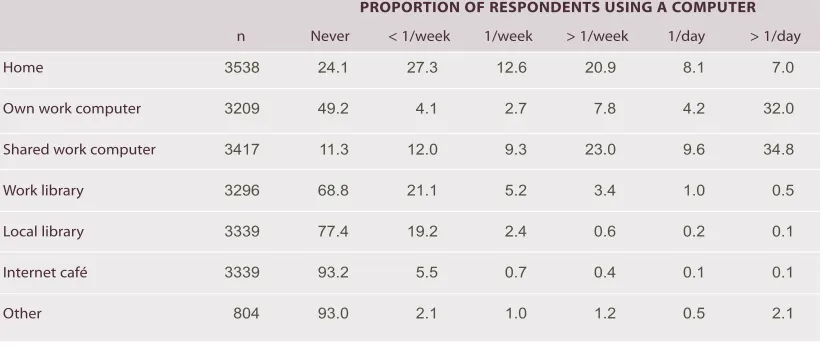
Shared work computers were used by 90% of nurses and own work computers by 50% with access
to the latter correlated with seniority. Home computer use for work-related purposes was reported
by almost three quarters of the respondents who used a computer. The overwhelming reason for working at home was workload, with over half the nurses who worked at home indicating this reason.
Lack of access to computers and convenience, were also reported by those nurses who used their
home computer for work.
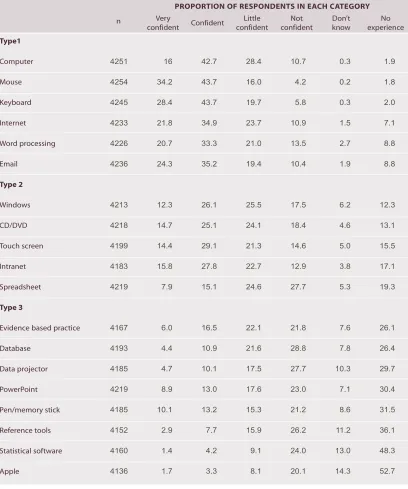
Despite the high rate of adoption, nurses did not exhibit a great deal of familiarity with general
computer applications other than email, the internet and word processing. Overall, confidence in the use of computer-based applications was not high. Experience in use of hardware and software
was negatively correlated with age. For nurses with experience in the application of information technology, confidence was slightly greater for younger nurses and for those having more recent
tertiary education. Experience and confidence with information technology applications associated
with administrative functions was also higher for registered nurses (levels 3-5).
In general, registered nurses were most experienced in the use of information technology if they
worked in community health, followed by public hospitals and other public facilities. Private hospital and nurses working in aged care had the least experience.
Low levels of experience, confidence and use of computers were seen generally in aged care
facilities. In that sector fewer than 20% of assistants in nursing, 45% of enrolled nurses and only 55% of registered nurses (levels 1-2) used a computer. Even at the most senior levels of registered
nurse (levels 3-5), 20% did not use a computer at all. These figures compared to 44% (assistants
in nursing), 84% (enrolled nurses) and greater than 95% of all registered nurses in other sectors who used computers.
Work place policies generally permit nurses access to computers, with fewer than 4% of nurses who use a computer for work-related activity reporting they were not allowed any access to a work
computer. However access to computers was a major concern of nurses with over one quarter of
all respondents commenting on this theme. Low numbers of available computers was the principal concern.
The degree of access to computer networks (intranet and internet) was highly related to the level
of position. Access to an intranet was greater than the internet for many nurses even though their
place of work had internet capacity. It was reported by many nurses that restriction to the internet,
although not as severe as the stakeholder interviews had suggested, was often based on 'prevention
of inappropriate use' rather than financial or access issues.
Results from questions about access and use of computers demonstrated that if more computers
were accessible to nurses and they had the time to use the systems, the benefits of using technology
in knowledge transfer could be realised more fully.
Security of patient/client data in the workplace was rated high by respondents with a rating of 'good'.
The issue of security and confidentiality generated less than 1% of all the thematic comments offered.
OBJECTIVE 2: Identify the purposes for which nurses use information technology and
information management systems.
Nurses were asked how frequently they used 20 applications covering patient/client management,
clinical use, administration and professional development. The most frequently used health-specific information technology applications were for: accessing patient records and results; applications associated with continuing professional education (CPE); and for communication. However these 'most used' applications were used 'frequently' or 'always' by fewer than 40 percent of total
respondents to the study. Nurses who had never used these applications ranged from 18% for CPE to 72% for information technology applications used in the operating theatre.
Applications used for patient management and clinical use tended to be used more frequently by younger nurses and by nurses more recently qualified. The opposite effect was seen in the use of software for administrative functions, such as rostering and finance, which were used more
frequently by older nurses who had been nursing longer and registered nurses at levels 3-5.
Although differences were small, nurses in rural and remote areas used patient management and clinical tools less frequently than nurses in other locations and in particular the major capital cities. The exceptions were medication and poisons management where the greatest use was in rural and remote areas.
The type of work undertaken at home was largely for the purposes of professional development,
research and communication. In addition registered nurses (levels 3-5) often reported undertaking
administrative work at home. Professional development was undertaken by all levels of nurse thus
illustrating the opportunities offered by the use of information technology for education and training
In aged care facilities there was less availability of many applications to assistants in nursing and
enrolled nurses. The frequency of use for those nurses for whom applications were available was
also lower. For registered nurses there were no sector differences with respect to availability of
applications but there were sector differences in the frequency of use. Appointment scheduling in
aged care and bed management in community health were of low use while use for consultations
in community care and access to results in public hospitals were high.
Use and frequency of use of personal digital assistants (PDA's), telehealth, journals and
knowledge-based information technology systems were also examined. Use was generally low with over 60%
of nurses never accessing information systems and 71% never accessing telehealth. However 70%
of nurses who used computers reported they had used MIMS3online and almost 60% had used
online journals. For these two applications where use was highest, frequency of use, 'frequently'
or 'always', was 34% and 25% respectively.
Only nurses who use computers were asked their opinions about use, and the advantages and
disadvantages of computer use in the work place. Nurses agreed that learning about computers
was essential and that computer use had improved information access. Overall there was a
positive attitude to information technology and the benefits that it could offer to patient / client /
resident care.
This acceptance of information technology must be stated with the qualification that many nurses
did not equate their use of information technology with the role of caring. Registered nurses (levels 3-5)
and those working in community health were more likely to recognise the benefits of integrating
information technology into the caring aspects of their role.
In the opinion of those surveyed some benefits of information technology have not been realised.
Many nurses expressed frustration that their use of information technology often failed to reduce
errors in data entry. For many nurses duplication of data entry had increased although this was
least in the aged care sector. The major contributing factors to the frustration were the lack of data
entry at the point of care and computer software that was not fit for purpose. Overall, respondents
did not consider that the use of information technology in the workplace made their working lives
easier; this view was greater among senior registered nurses (levels 3-5).
OBJECTIVE 3: Identify the readiness of nurses to participate in e-health initiatives such
as Health
Connect
(including Medi
Connect
)
The survey contained four questions about knowledge of health initiatives. Nurses were asked
about whether they were kept aware of general information developments in their workplace and
health initiatives at state or territory level. In the workplace, respondents were equally divided with
41% considering they were not kept aware and 45% considering they were. Level of awareness
improved with more advanced level of position.
Enrolled nurses and registered nurses (levels 1-2) in aged care reported less awareness than their
counterparts in other sectors. Community health nurses considered themselves to be best informed.
The data suggest that mechanisms for the presentation of information may need to be addressed.
More than 65% of nurses considered that a national health record would be beneficial, 23% had no
opinion, and less than 10% disagreed. Older nurses and those working for longer were less likely
to agree. The responses were unaffected by level of position or sector.
The readiness of nurses to participate in e-health initiatives was tested by asking nurses how they
would rate their knowledge of HealthConnect.Over half the respondents (52%) stated they had never heard of HealthConnectand of those who had heard of it, only 26% considered their knowledge of HealthConnect to be average or better. Knowledge was slightly better among registered nurses (levels 2-5) and there were no sector effects. Only 33 respondents provided comments related to
this objective. The majority of comments were positive with only one participant commenting negatively
about the initiative. The requirement for training and the recognition that using this technology was
part of nursing work (and time allocated for its use) was noted by several nurses.
OBJECTIVE 4: Understand the barriers that prevent nurses from benefiting from
information technology and information management systems.
In addition to the section specifically entitled 'Barriers to your use of computers', barriers to use of
information technology and information management systems were identified through sections on
the questionnaire devoted to access, training, technical support and management attitudes. The
main barriers to computer use were workload, access to computers, technical support and lack of
information technology knowledge. Age, lack of interest in information technology and health and
safety issues, were not considered to be barriers to computer use by the vast majority of nurses.
Barriers differed according to geographical location, age, length of time in nursing, level of position
and sector of employment.
Workload
By far the greatest barrier to effective use of information technology was workload. Over 55% of
nurses indicated this to be 'very often' or 'always' a barrier and a further 33% noted that use of
computers did not fit into other work demands. Workload was also cited as the main reason that
home computers were used for work-related activities.
Workload was also the greatest barrier to accessing training with fewer than 20% of nurses
indicating that time and lack of relief staff were 'never' or 'rarely' a barrier. In the thematic analysis
many nurses presented the view that information technology created extra work rather than
decreased their workload.
Access to computers
Not enough computers was identified by over half the nurses as being a barrier to computer use.
Location of computers with respect to point of care was also considered to be a major barrier.
Number and location of computers was less of a barrier for nurses who had been in nursing longer.
Technical support
Technical support for information technology systems was more limited as remoteness increased.
However even in cities where support was the highest, technical support was mostly limited to
eight hours each weekday. In a work environment that operates 168 hours per week (24 hours
a day, seven days a week) support that accounts for only one quarter of the time was considered
Information technology knowledge
Confidence in information technology use was generally low and half the respondents thought
their level of information technology literacy a barrier to use. A quarter considered that knowledge
was restricting their career development. Age and length of time in nursing were both negatively
correlated to the level of literacy with younger and more recently qualified nurses more literate in
the use of information technology.
Age
Age was seen more as a barrier by older nurses. Overall however, very few nurses identified age
as a barrier.
Lack of training
Nurses who had worked for less than 10 years had received more pre-registration or pre-enrolment
training in information technology than nurses who had worked longer. The opposite occurred for
continuing professional education with an increase in the proportion of nurses receiving training
through CPE with length of time in nursing. Overall however, fewer than 17% of respondents had
received formal training in computer skills or software applications pre-registration or pre-enrolment.
Information technology training as continuing professional education had been received by between
12% and 28% of nurses.
Almost half the nurses considered that training in information technology was required for them to
better meet the requirements of their role. The level of formal up-skilling was low: very few nurses
had received both pre-registration or pre-enrolment training and continuing professional education.
Nurses who had already received some training were only around 10% less likely to indicate
further training was required for any applications.
When training in information technology was undertaken, the quality and appropriateness of
training was considered by nurses to be good. However availability of training courses and the
effect of remoteness in access to training were also important. Over half the respondents said
that training was not referred to at all in their work place. The majority of nurses were not very
well informed about their facility's training policy.
Consultation
Only a quarter of respondents considered that consultation by management, or the provision
of in-house information technology support systems to ensure that computers and information
technology applications are used in ways that are most suited to nursing practice, was 'good'
or 'excellent'.
Geographic location
The Australian Standard Geographical Classification was used as the stratification strategy for the
study. The expected differences among the locations and particularly between the urban and remote
regions were largely unrealised. For the most part those differences that did exist were attributable
to role requirements, differing facilities, or the greater proportion of higher-level registered nurses
(levels 3-5) in remote areas. The two major differences that did occur were: access to training and
Level of employment
The largest variability to access and use of information technology was associated with the level
and sector of employment. Assistants in nursing had the least access to information technology, the
most restrictions, the least training, the poorest knowledge and the least support. Enrolled nurses
and registered nurses (levels 1-2) improved on all these parameters. Registered nurses (levels 3-5)
had most access, support and had the most knowledge. Their administrative responsibilities were
reflected in greater familiarity, use, and training in applications developed for management purposes.
Sector of employment
Sector analysis revealed valuable data which offers solutions to barriers to the use of information
technology. The greatest barriers of work demands, knowledge and confidence did not differ among
sectors. In the public hospital setting the number of computers available, as well as access to
computers and management attitudes to training, were a major issue. In the community health
setting and also in remote areas, technical support and network issues were identified as being
particularly important. Access to and use of information technology in the aged care sector is low
even for the most senior registered nurses (levels 4 and 5).
Recognition of the value of information technology in nursing
Less than one third of all nurses and half the registered nurses (levels 3-5) had an employment
requirement for information technology skills built into their position description. Results suggest
that information technology was often considered to be a management tool and not a tool for clinical
care. Three times as many nurses stated that access to and use of information technology would
be a consideration in choice of future employment as had considered access to and use of information
technology when entering their current position. Results indicated that information technology access
and use is already influencing and will continue to influence the decision of nurses entering different
sectors of the health industry.
OBJECTIVE 5: Recommend ways to overcome these barriers and provide opportunities
for nurses to better utilise information technology and information management
systems within the Government policy framework.
Recommendations
1.
That the Australian Government Department of Health and Ageing:
1.1 endorse and authorise publication of the final report of the research project on Nurses and
Information Technology on the Department's website (www.health.gov.au), and on the
website of the Australian Nursing Federation (www.anf.org.au);
1.2 facilitate dissemination of the report by the Australian Nursing Federation and the University
of Southern Queensland through presentation of the findings at nursing conferences, in
nursing publications and links with relevant industry websites; and
1.3 approve release of the de-identified data from the survey to state and territory health
2.
That the Australian Nursing Federation, together with Royal College of Nursing Australia,
establish a Nursing Informatics Standing Committee of the National Nursing Organisations
in order to:
2.1 produce and disseminate a range of resources demonstrating ways that information technology
and information management systems can be used for the purpose of nursing care eg
identifying case studies and developing best practice guidelines; and
2.3 encourage and facilitate access to information technology and information management
systems in the residential aged care setting.
3.
That the Australian Nursing Federation through their state and territory Branches provide
the results of the survey conducted as part of the research project to state and territory
health departments and other employers of nurses in health and aged care in order to:
3.1 encourage employers of nurses to review systems currently in use for their value to nursing
practice, including issues of error reduction, duplication of data and effort, and interoperability
between systems;
3.2 inform employers of nurses about the barriers to the use of information technology in nursing
and how they might be reduced to ensure that nurses' use of information technology is
supported through the availability of twenty-four hour seven day a week availability of
technical support and that all nurses have free access to the internet;
3.3 ensure the clinical needs of nurses and workflow issues are fully considered when acquiring,
designing, implementing or upgrading information technology and information management
systems and involve nurses at all stages, including planning, evaluation, trialing or piloting,
workflow review, education and communication strategies; and
3.4 identify the opportunities to increase the use of a wide range of information technology and
information management systems and equipment that improve the delivery of nursing care
in hospitals, the community and residential aged care facilities including (but not limited to):
personal digital assistants, decision support systems, bedside terminals, handheld devices,
voice recognition systems, barcode readers, sensors and monitoring systems.
OBJECTIVE 6: Prepare a road map for access, education and training to meet the needs of
nurses.
Recommendations
4.
That the Australian Nursing Federation, together with Royal College of Nursing Australia:
4.1 seek research funding to develop national information technology and information
management competency standards for nurses;
4.2 promote the inclusion of the developed information technology competency standards in
nursing position descriptions and the adoption of a competency model, such as the international
4.3 work with nursing education providers to build a national competency program in all
pre-registration and pre-enrolment education programs for nurses based on the developed
national competency standards in information technology and information management; and
4.4 lobby employers of nurses to include information technology and information management in
nursing orientation / induction / preparation for practice programs; provide dedicated learning
centres or education hubs in clinical areas to facilitate continuing education opportunities to
allow nurses to upgrade and maintain their skills and knowledge in information technology and
information management; and ensure there are funds for backfilling to allow nurses to undertake
education and training for new information technology and information management systems.
1.4 Conclusion
This study of nurses and information technology has clearly identified that nurses recognise
benefits to adopting more information technology in the workplace. They are however frustrated by
limitations of access to the technology; software that is not fit for purpose; lack of opportunities for
training; and workload preventing access. The level of use of information technology and information
management systems is generally low and confidence in use is low even among users. There is
evidence that familiarity, use and confidence in use is slightly higher in nurses who have recent
tertiary education. Results largely confirm conclusions from smaller studies in Australia and several
larger international studies. Nurses feel poorly informed about information technology health
initiatives and poorly consulted about their implementation. Workload, number of computers and
technical support are the principal barriers to use of computers. Technical support is largely
insufficient especially in more remote locations. Neither the full potential of information technology
in the provision of health and aged care nor the recognition by nurses that information technology
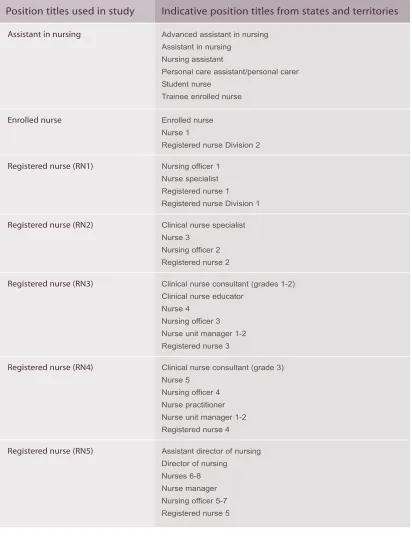
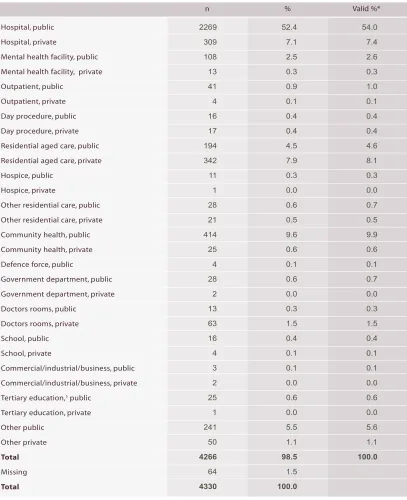
Table 1: Definition of position titles used in the study
44. For a breakdown of position titles by state and territory and in public and private sectors refer to Appendix 4.
Assistant in nursing Advanced assistant in nursing Assistant in nursing
Nursing assistant
Personal care assistant/personal carer Student nurse
Trainee enrolled nurse
Enrolled nurse Enrolled nurse Nurse 1
Registered nurse Division 2
Registered nurse (RN1) Nursing officer 1 Nurse specialist Registered nurse 1 Registered nurse Division 1
Registered nurse (RN2) Clinical nurse specialist Nurse 3
Nursing officer 2 Registered nurse 2
Registered nurse (RN3) Clinical nurse consultant (grades 1-2) Clinical nurse educator
Nurse 4 Nursing officer 3 Nurse unit manager 1-2 Registered nurse 3
Registered nurse (RN4) Clinical nurse consultant (grade 3) Nurse 5
Nursing officer 4 Nurse practitioner Nurse unit manager 1-2 Registered nurse 4
Registered nurse (RN5) Assistant director of nursing Director of nursing Nurses 6-8 Nurse manager Nursing officer 5-7 Registered nurse 5
Literature Review
It is important that nursing information systems are planned and implemented to complement
and articulate with medical management systems in the health care agency. This means that
nurses must be involved at an early stage when computer systems are being contemplated…
The challenge is before us. We can accept it and work together to achieve professional goals;
the price of letting the opportunity pass is likely to be that we will find others, not nurses, are
controlling nursing practice.
(Royal Australian Nursing Federation, 1984)
Access and attitudes to information technology by nurses have been demonstrated by others to be
affected by a number of factors including: geographical location; age of the nurse; length of time in
nursing; level of position; and employment sector. Analysis of the current data was undertaken
using all these factors.
Health care is an information intensive industry, in which quality and timely information is a critical
resource. Computer systems are used within most health care entities such as pharmacies, general
medical practices, pathology and radiology services and hospitals. However many of the information
exchanges between health care providers are still paper based with the attendant inefficiencies of
data entry, the difficulty of sharing paper based records between clinicians, loss of the physical
record, difficulties in reading handwriting, the potential for error, and the difficulties in extracting
information from large paper files. There is also uneven access to information technology across
health care and aged care facilities and between the professions.
In hospitals, information systems support patient administration, billing and finance; staff rostering
and human resource management; and departmental management, such as pathology, medical
imaging and pharmacy. Clinical systems, including systems to support the specific needs for nursing
care, are less common.
2.1
National strategies to support health care through information technology
The Australian National Health Information Strategy(Health Online) aims to improve the quality of care through better information systems for carers and consumers. Its major project to build
the national Electronic Health Record (EHR) is HealthConnect(Commonwealth of Australia 2001). HealthConnect is based on information and technology architecture, information and data standards, and a security and privacy framework for application across Australia. It defines an Electronic
Health Record as an electronic longitudinal collection of individual health information, entered or
accepted by health care providers. The National e-Health Transition Authority (NeHTA) will develop
the e-health architecture and the HealthConnectinfrastructure (http://www.nehta.gov.au). A specific information strategy for aged care, Aged Care eConnect, is also under development (www.health.gov.au).
These national strategies provide a framework and standards with which other health information
initiatives in Australia will need to integrate.
There are similar initiatives in many developed countries to provide electronic health records to
support more integrated approaches to care delivery which in almost all countries is still episodic
and provider driven. For example in the United Kingdom (UK) the National Program for Information
Technology (NPfIT) aims to improve patient care and services through information technology
(http://www.npfit.nhs.uk/). Part of this involves training leading to the European Computer Driving
License (ECDL).
2.2
Electronic health records
Electronic patient records are a fundamental component of most national health information strategies.
Electronic health records allow data and images to be shared across authorised carers of a patient
and are expected to facilitate improved communication between clinicians, reduction of errors and
loss of data, leading to enhanced quality and safety of care. It is intended that electronic health
records will link disparate systems with the core modules of the patient record (Ayres, Soar and
Conrick 2006).
The UK aims to make all patient records available electronically by 2010. The NHS Care Records
Service (NHS CRS) is being designed so that a variety of health care professionals (for example:
GPs, hospital doctors, nurses, and allied health professionals) may share information such as viewing
records simultaneously in several locations in order to discuss a patient's test results and ongoing
care (http://www.connectingforhealth.nhs.uk/).
2.3
Potential benefits of the adoption of information technology
Potential benefits of information technology use in the health care industry include those anticipated
within any other industry or business such as improved efficiency and communication. A goal of
information technology within health care is also to improve patient care in a cost effective manner.
Medical Health Institute surveys of the use of EHR in the United States of America (USA) and
Canada indicate that among physicians and nurses the primary motivation for adoption of information
technology is the need to improve clinical processes or workflow efficiency and to improve clinical
care. Lack of adequate funding or resources was found to be the principal barrier to use. A major
concern for implementation was security and confidentiality of data (http://www.medrecinst.com/).
Information technology is expected to be of benefit in improving patient safety including the reduction
of medication errors. O'Farrell (2002) reported that more than 400 errors were noted in Tallaght
Hospital in Ireland in 2001. In Britain in the same year it was estimated that more than 10,000
recorded errors in drug administration resulted in 1100 deaths (O' Farrell 2002). Barcode reading
in one USA hospital was reported to decrease medication administration errors in individual nursing
units by up to 70% and also had a positive effect on nursing satisfaction (Anderson and Wittwer
2004). In Australia, the adoption of information technology is seen as critical to improve quality and
safety and reduce the number of adverse events that result in death and disability. The additional
hospital bed days from adverse events are estimated to cost the health system in excess of $800
million dollars each year (Australian Health Ministers' Advisory Council 1996).
Not all impacts of information technology adoption are positive. Many of the negative effects may
be due to lack of integration among applications or systems which result in duplication of effort.
and cause duplication of work (Webster et al 2003). A concern expressed by nurses in the UK is
that, in contrast to paper systems that stay with the patient, information technology generally
requires input of patient information at a desk away from the bedside. This results in delays in data
entry and potential errors (Timmons 2003). Handheld and wireless technologies are expected to
better facilitate data entry and retrieval at the point of care (Gururajan, Murugesan and Soar 2005).
2.4
Adoption and use of information technology in health and aged care
There are disparities across the health industry in terms of the extent to which information
technology has been embraced. Investment in hospital information technology is managed by
health departments in most states and there is a range of products in use for patient administration,
diagnostic information management and increasingly for the management of patient clinical
information and support for clinical decision making. Most hospitals have systems in place for
patient administration. Not all have systems for nursing access such as care planning, documentation
and procedures.
Most general medical practices use computers for administrative purposes, but increasingly they
are being used for clinical work which includes prescribing medication, medication cross-referencing,
and the recording of patient health data in the electronic health record (Nielsen 1997; Western
et al 2001). The use of computers during general practice consultations for clinical purposes (patients'
health records and prescribing) is becoming widespread. There is concern about how such computer
use is viewed by patients however one study in Sydney found favourable responses with patients
considering the system was beneficial to the consultation process (Bevis and Callen 2004).
The aged care industry has been slower to adopt information technology with barriers occurring
at both the individual and organisational level. Six major categories of barriers to the adoption
of information technology were elaborated by Yu (Yu and Comensoli 2004). They were: lack of
management/stakeholder support; cultural resistance toward the adoption of information technology;
cost considerations; staffing issues; work practices; and the capacity to manage change. While
most aged care facilities have computers and high computer literacy among registered nurses,
computer use among enrolled nurses is low. Demirjan et al (2004) found an interest among aged
care staff in learning more about information technology. Investment in information technology
in aged care is increasing with twice as many aged care facilities in NSW using computers for
resident information in 2004 as had been the case four years previously (Albert Research 2004).
Recent Australian Government initiatives including a cash grant to residential aged care facilities
(RACFs) should further stimulate information technology investment.
2.4.1 Knowledge based systems
The internet offers a vast amount of information of variable quality. Smart 'mining' tools are being
developed to allow internet searches to yield only appropriate information. Many services exist
to collect and disseminate data ranging from small personal collections to large resource hubs.
These knowledge-based systems (KBS) are developed to provide clinicians with a vast array
of information which can be used in clinical management, organisational management, research,
Most state departments of health in Australia have developed their own knowledge based systems
to suit their own particular environments. For example, in 2001 Queensland Health developed the
Clinicians Knowledge Network providing access to information retrieval databases such as Medline,
CINAHL and the Cochrane Library (http://ckn.health.qld.gov.au/), as ell as 400 full text journals
made available through OVID, MIMS and online texts such as the Merck Manual. Similar intranet
systems operate in other states. For example in New South Wales, the Clinical Information Access
Project (CIAP; http://www.clininfo.health.nsw.gov.au/); in Victoria, the Clinicians' Health Channel
(CHC; http://www.health.vic.gov.au/clinicians/); in Western Australia, the Clinical Information Access
Online (CIAO; http://www.ciao.health.wa.gov.au/); and in the Northern Territory, the Clinical
Resources on Call (CROC; http://www.hcn.com.au/croc).
2.4.2 Evidence based practice
One application of knowledge based systems is to support evidence based practice. In Canada,
one early study of nurses who were trained in how to use literature searches on CD-ROMs reported
the nurses were able to answer clients' questions better (Royle et al 1995).
Access to technology must be supported by training (Griffiths and Riddington 2001). Griffith's study
looked at nurses' general use of computers and of three databases, CINAHL, MEDLINE and the
Cochrane Library. Results showed limited confidence in use of computers and low frequency of use
of all databases. Computer use was higher by those nurses who had a home computer or familiarity
with higher education. The authors concluded that provision of access is not sufficient and that
training is required if nurses are to make use of electronic resources to contribute to evidence based
practice. In Scotland a study of 608 midwives from 22 maternity units found use to be 23.4% at
home but 69% at work. The greatest use was for access to patients' data. The Cochrane Library
was used regularly by 27% to support evidence based practice (Hillan, McGuire and Cooper 1998).
The nurses stated that the computers would be used more if they were more accessible and if they
had better skills to use the resource. Webster's research (Webster et al 2003) concluded that in
order for evidence based practice to become the norm and to really influence patient care more
training was required.
Westbrook researched the use of the CIAP (Clinical Information Access Project) knowledge based
system in New South Wales and found nurses were less likely than physicians to have heard about
it (58% versus 71%) and those nurses who knew about it were also less likely to use it (71% versus
82%). Nurses used the system less than doctors for access to clinical knowledge (79% versus
70%) but more than doctors for continuing education (60% versus 45%); 93% of doctors and 84%
of nurses indicated they thought CIAP had the potential to improve patient care; and 54% doctors
and 34% nurses reported they had direct experience of CIAP resulting in improved patient care.
The authors noted that access to resources was positively correlated with number of patient
admissions and concluded this demonstrated that clinicians used the system to inform direct
2.4.3 Telehealth
Telehealth has been defined as delivery of health services over a distance using telecommunications
(General Practice Computing Group 2004). Applications for telenursing include home monitoring
of physiologic parameters, video consultation, and enabling self management of chronic illness.
Clinical information can be shared with other professional colleagues including national and
international experts. It has been estimated in the USA that up to 50% of all home care visits could
be replaced by telenursing. In the UK, 15% of in-home care episodes reported the need for
telecommunications technology. Up to 2000 articles on telenursing are available on the International
Council of Nurses web site (http://www.icn.ch/matters_telenursing.htm).
Increased telehealth investment is planned by most state and territory governments in Australia.
In Queensland there are almost 200 videoconferencing sites within health facilities.
Home telecare is rapidly evolving as a means of providing care in home or community settings
with the primary role of providing support for the patient rather than the health professional.
The application for this methodology is particularly attractive in rural and remote areas. In a trial
in Sydney and Wagga Wagga patients with little or no computer background were able to use the
system on a daily basis after only one hour of training. All but one of the 22 patients on the trial
and all but one of the fourteen general medical practitioners (GPs) were satisfied with the system
(Celler, Lovell and Basilakis 2003). In Celler's review of 175 articles on telecare and telemedicine
in chronic disease management however few looked at cost-effectiveness (Celler et al 2003).
One study from the USA did find that for patients with congestive heart failure (CHF) readmission
charges were 86% lower on the telecare group (US$5,850 versus US$44,479), with fewer
CHF-related emergency department visits (Jerant, Azari and Nesbitt 2001).
2.4.4 Wireless and handheld technologies
Clinicians are increasingly using PDAs (Personal Digital Assistants) for patient tracking, medical
reference, and drug dosage, as well as personal use. Almost three-quarters of physicians in the
USA were found to use handheld technology such as a PDA (De Groote and Doranski 2004).
A limitation is the ease or otherwise of connecting to hospital and other databases. One survey
revealed that handheld technology was used more for administrative functions rather than for
clinical purposes (http://www.himss.org/pressroom/ASP/releaseDetail.asp?ContentID=23146).
In the USA over half a million nurses are reported to be using PDAs. The barriers to using PDAs
were reported to be: cost, confidentiality issues and ease of reading in addition to similar factors
such as age and education. Benefits were: quick access to information, convenience, point of entry
of patient data and flexibility (Davenport 2004).
In Australia, the Royal District Nursing Service (RDNS) has been testing handsets using infrared
or Bluetooth connectivity to connect Palm-top devices to their server. While costs were low for this
solution, the Palm-top screen hardware was considered too small for ease of point of care data
entry and the speed inefficiencies made email and internet impractical. Different hardware was
used that enabled the RDNS to communicate with their nurses in the field via email without having
them come into the office and also provide field access to the RDNS intranet site and the internet
2.4.5 Use of the internet
Barriers to internet use in the clinical setting include: lack of administrative support; negative
attitudes toward computer technology; lack of expertise; and time constraints in the workplace
(Estabrooks et al 2003). One study reported that nurses felt ill equipped to conduct effective data
searching on the internet (Lakeman 1998); while another study cited time, lack of confidence, and
nurses' attitudes as barriers to use of a networked computer in the practice setting (Royle et al 2000).
There have been suggestions that the introduction of internet access to nurses will encourage time
wasting (Duffy 2000) because unlike other technologies, internet use is somewhat difficult to regulate
(Hynes-Gay and Nagle 2000).
In 2004 another study was undertaken in the north of England to determine the use of the internet
in a clinical nurse setting (Morris-Docker et al 2004). Over a one year period the use by about 90
nurses of the internet was monitored. It was found that the majority of nurses used the technology
during quiet periods throughout the day and night for a combination of work and non-work-related
activities. Use was for email and search related activities but with very little use of library based
resources. The authors concluded that use was appropriately integrated into clinical activity.
'Information enthusiasts' were identified who helped enhance the development of information
search and retrieval skills by other less frequent users. Interviews with the nurses identified factors
relating to the organisation, workplace culture and training which influenced internet use. The study
demonstrated how engagement with information technology had progressed since a study in 1997
where just over half the nurse participants showed positive attitudes to the technology (Simpson
and Kendrick 1997).
2.5
Internet access in rural and remote areas
A Rural Health Support, Education and Training (RHSET) project noted that while remote health
services may have internet access, there was a lack of education and management support (Kildea
and Barclay 2004). A survey by the Council of Remote Area Nurses of Australia in 2000 found that
74% of rural area nurses considered that the quality of connectivity affected their ability to access
the internet (Taylord Services 2000). In 2005, the National Rural Health Alliance recommended:
'that advanced practice rural and remote area nurses have access to reliable and relevant information
technology, including the internet, as well as access to appropriate training and mentoring in
information technology skills and technical support (National Rural Health Alliance 2005).
2.6
Barriers to the adoption of information technology
Barriers to adoption of information technology include: employee resistance to change; perceptions
of information technology use as an administrative task and consequently either of lower priority
than care delivery or even as outside the scope of practice of clinicians; high work-loads that provide
little time for adopting new practices; and scepticism of the benefits of information technology.
Evaluating nurses' attitudes toward computer use is an area that has received attention in the
literature (see Curtis et al 2002; Marasovic et al 1997; Darbyshire 2000). A variety of instruments
(Birx; Castleberry and Perry 1996); Nurses' Attitudes Toward Computer Use Instrument (Burkes 1991);Nurses' Attitudes Toward Computers Questionnaire (Stronge and Brodt 1985); and Attitudes Toward Computing in Nursing (Thomas 1990).
Generally nurses accept computerisation and recognise the value. Attitudes to the adoption of
information technology are affected by: age, gender, education, employment satisfaction and years
in nursing. Those with exposure to higher education and computer experience are more positive
thus demonstrating a need for training and education that is targeted (Darbyshire 2000).
Some studies found that nurses became less favourable toward the technology as time progressed.
The greatest reason for the change was related to confidentiality of records. This may be due to
software design problems rather than computers per se (Sleutel and Guinn 1999). Other criticisms
were: password difficulties; access to equipment; navigability; technical support; and printing ease.
Users saw some of the use as duplication rather than replacement for other processes.
In most cases refusal to use information technology is not an option available to nurses. Forms
of resistance include minimising use and extensive criticism. Timmons (2003) found that this
resistance was not because the advantages of the technology were not understood but that its
use was not seen as conducive to patient care. Lack of access to information technology at the
point of care was a fundamental problem. One particularly interesting observation was that siting
of the terminals often resulted in patients and visitors wondering why the nurses were 'wasting
time'. Reliability issues, 'crashes', slow systems or downtime of systems were other reasons for
uptake reluctance (Timmons 2003).
Incorporating the use of a computerised information system into clinical practice requires not only
overcoming any resistance to change, but also encouraging nurses to be willing users and creative
operators of information technology (Levy and Williams 1999). Levy found that on the whole, nurses
have positive attitudes toward computer use and recognised that manual processes are inefficient.
However concern was expressed about the accuracy of systems.
The results about attitude appear to be quite universal. A 2003 study assessed the computer
knowledge, attitude, and skill of 169 nurses working at the People's Hospital Beijing Medical
University (BMU). Computer knowledge, attitude, and skill were measured using a nurses' computer
knowledge questionnaire (NCKQ); nurses' computer attitude scale (NCAS); and nurses' computer
skill scale (NCSS); respectively. Data analysis showed the overall computer knowledge and skill of
nurses were at moderate levels and computer attitudes were neutral. Nurses' computer skills were
significantly and positively correlated with both computer knowledge and computer attitude; however
no significant correlation was found between computer knowledge and computer attitude (Liu et al
2000).
The issue of age and attitude is quite a contentious one. Expectations are that older nurses are
less knowledgeable about information technology and less likely to embrace it. Chan et al (2004)
undertook a small survey consisting of 70 respondents (Chan, Brew and de Lusignan 2004a). They
attempted to determine the influence of age and nursing area of practice (practice nurses, district
nurses and health visitors) on the use of information technology in Sussex Primary Care Trust in
The questionnaire covered issues such as: access, training, confidence, and use of information
technology. Practice nurses had more computers at their disposal, but all had good access.
Older nurses (over 50) had received more formal training but were less confident and used the
computers less, still preferring paper based information resources. The study also showed that
sharing facilities and varying clinical systems meant that, with the exception of email, many nurses
made infrequent use of the applications provided or to access libraries, read journals or access
online resources. (Chan, de Lusignan and Brew 2004c).
Webster and colleagues surveyed nurses at the Royal Brisbane and Royal Brisbane Women's
Hospitals Queensland, Australia. Computer use at work was noted by 98.5% of the 590 respondents,
who agreed that computers made life easier and were of value to nursing practice. However over
one third of the nurses considered that computers detracted from nursing care and created
duplication (Websteret al 2003). Past experience with computers and their use both in the workplace
and at home made a major contribution to a positive attitude toward adoption (Stricklin, Bierer and
Struk 2003). Furthermore when compared to previous studies by the same team of authors, nurses
have made enormous gains in acquiring information technology skills and access to computers
(Chan, de Lusignan and Pritchard 2004b; Pritchard, de Lusignan and Chan 2002). Consequently
new studies are of great interest to determine the current attitudes of nurses.
Two large studies have been undertaken in the UK in the last couple of years. The first was
undertaken in 2004 on behalf of the Royal College of Nursing UK which, in recognition of the
information technology investment made into the NHS, wished to raise awareness and develop
nurses' knowledge and skills. Over 15,000 nurses, midwives and health workers were polled
with 2,020 responses received. It was acknowledged that the respondents may not have been
representative of the general nurse, midwife and health worker workforce at large however they
were likely to be interested in information technology and therefore offered an important overview
of the current situation. The authors summarised the findings by stating that nurses value the new
technology which they see as beneficial to themselves and their patients. However nurses do not
consider they receive adequate information; are not consulted sufficiently to ensure systems are
designed appropriately; nor do they receive adequate training. In addition they want equity of
access (Nursix 2004a, 2004b). These results appear to have immediate relevance to the situation
in Australia.
In 2004, another Royal College of Nursing UK survey was undertaken to determine the information
needs of nurses (Royal College of Nursing UK 2005). Questionnaires from 1,800 respondents were
evaluated to explore access to computers and the internet; awareness of information technology
sources; desired training and improvements; and use of information technology for evidence based
practice. The report concluded that access to computers and the internet is still limited; nurses in
the independent sector have less access to information; and there is a very high demand for more
information skills training.
An Australian thesis titled: The study of Queensland nurses' attitude and behaviour toward computerisation in the workplacewas completed in 2004 (Ho 2004). Preliminary data of the survey of just over 300 nurses in Queensland published previously (Ho and Hovenga 1999) suggested
More than half of the respondents maintained that computerisation reduces the quality time of both
nurses and patients because it forces nurses to spend more time in front of the computer in non
clinical activities.
The importance of attitude to the adoption of technology is not however limited to nurses. If health
service managers fail to see the benefits of information technology they are unlikely to be particularly
responsive to requests for its introduction and use. In a revealing study in Victoria Australia it was
found that middle and senior managers exhibited a lack of understanding of information technology
options and benefits to the industry. Although information technology was being used to provide a
supporting infrastructure for users it was not pivotal for organisational strategic advantage (Orr et al 2001).
2.7
Nurse information technology competencies
Various international studies have attempted to define the information technology competencies
that are required for nursing. For example, one study aimed to identify minimum information
technology performance standard expectations for nurses' competencies in the Singapore health
care industry. A needs assessment was conducted with a panel representing nursing education,
nursing management, and nursing practice. The findings of this study could provide suggestions
on how to improve the current diploma and advanced diploma nursing programs curricula to meet
present workforce demands (Yee 2002).
In the USA a national survey of nurse administrators found that the ability to use email effectively,
operate basic Windows applications, and search databases was considered critical information
technology skills for new nurses. Nursing specific software, such as bedside charting and computer
activated medication dispensers, were also considered critical. The authors suggest that nursing
faculties need to incorporate information technology skills into undergraduate nursing curricula
(McCannon and O'Neal 2003). Naturally competency development is somewhat of a 'moving feast'
as technology changes rapidly. Staggers et al produced 281 validated competencies for four general
levels of nursing practice (Staggers, Gassert and Curran 2002). These were later refined by Curran
for nurse practitioner education and practice (Curran 2003).
A recent paper aimed at identifying those competencies required for the nursing profession in
Taiwan also provides a literature review of past studies. In the most recent study, 94 competency
items were sorted into seven domains and these in turn were ranked by experts for importance;
concepts of hardware, software, and networks (6); principles of computer applications (2); skills of
computer usage (5); program design (7); limitations of the computer (4); personal and social issues
(3); and attitude toward the computer (1). Interestingly attitude ranked number one. This study
provides a comprehensive list for nursing professionals to assess their computer competence.
(Jiang, Chen and Chen 2004) The authors also note that although nurses do not need a high
degree of computer expertise, their performance will be much more efficient if they have effective
computer skills.
Another paper from Taiwan in 2004 studied basic computer competence among public health
nurses (Yang et al 2004). The authors assessed Word, Excel, PowerPoint, and Windows operating
systems and internet applications. The study found that, in agreement with other cited studies,
employment, position and age. No differences were found due to geographical location (urban, rural, mountain areas and offshore islands), although type of education which varies across these locations did have an effect. The researchers concluded that a greater emphasis on computers at
work was necessary to increase the usefulness of computers for distance learning programs for nurses. Furthermore, while recognising that age is not a significant barrier to acquiring skills, older nurses would benefit from special curricula tailored to their needs.
McDaniel et al (1998) investigated the computer skills of 607 hospital nurses using a self assessment method. Their results revealed that 18% of the nurses rated themselves as 'novices'; 38% as
'beginners'; and 31% considered themselves as 'competent'.
Saba et al (2004) provides highlights of the informatics competencies that were proposed as the nursing informatics field advanced. Also provided is an overview of the American Nurses Credentialing Center (ANCC) nursing informatics credentialing process and the new process for international certification titled: Nursing Informatics Competency Recognition Certificate. The Nursing Informatics Special Interest Group of the International Medical Informatics Association (IMIA/NI-SIG) approved this certificate at their general assembly meeting during 2003 in Rio de Janeiro, Brazil. The certification is based on a professional portfolio that demonstrates expertise in this field for nurses outside the USA and Canada (Saba, Skiba and Bickford 2004).
In both Australia and New Zealand, nursing informatics groups were established before the
establishment of multidisciplinary health informatics bodies. Nursing Informatics (www.nursing-informatics.com) was set up in 2000 to offer registered nurses an online tool for self assessment of their competencies as a professional development exercise. A paper funded by the Australian Government Department of Health and Ageing and published in 2004 by Nursing Informatics
Australia, a special interest group of the Health Informatics Society of Australia (HISA), outlines the informatics vision for nursing in Australia (Conrick et al 2004). The group emphasise the need for the nursing profession to be engaged in all stages of planning for information technology in health. The specific focus of the study was on HealthConnectbut includes details on the education and information needs of nursing, and the engagement of nurses across all practice settings. The report also advises on ways to improve the health informatics capacity of the current nursing workforce and identifies strategies for developing long-term sustainable capacity. As part of the initiative for adoption of a successful electronic health record system Nursing Informatics Australia recommends that a
comprehensive standard nursing language must be adopted to underpin electronic communications and nursing work. Furthermore a comprehensive national education program
must be provided for nurses.
A report from Nursing Informatics Australia states that:
'Nursing education and training programs at undergraduate and postgraduate level must include nursing informatics as a core component of the curriculum. It is essential that beginning practitioners have base competencies in nursing informatics; in particular, they should understand the importance and use of clinical information systems. This provides a basis for the further development of nursing informatics knowledge and skill that must be integrated into t