Higher Education Curriculum Ecosystem Design
A Thesis submitted by
Christopher Cheers MEd, Grad Dip ICTE, Grad Cert TESOL, BEd
For the award of
Doctor of Philosophy
Abstract
This study focuses on the development of a Design Framework for Higher
Education Curriculum Ecosystem design. The study views the world as a digital
ecosystem where the physical and the virtual are fully intertwined and function
through integrated social and technical architecture working together in a seamless
mesh that is persistent and pervasive. This digital ecosystem is an open, flexible,
demand driven, self-organising, collaborative environment. It has enhanced
individuals’ abilities to connect with other people, share ideas, work collaboratively
and form communities. This has inevitably impacted on educational practice in
Higher Education.
The thesis draws together educational theories, curriculum designs, and
concepts drawn from ecological psychology, cognitive apprenticeship, distributed
cognition and activity theory, and extends them through the application of a
Complexity Science lens. A Complexity Science perspective views the world as
comprised of Complex Adaptive Systems. This study explores how authentic
learning processes can be scaffolded within a Complex Adaptive System. The
iterative development and refinement, through three iterations over six years, of a
curriculum ecosystem for a Built Environment Degree Program is used as a case
study for the development of a Higher Education curriculum ecosystem exemplar. A
Design Framework for a Curriculum Ecosystem for Higher Education which has
Certification of Thesis
This thesis is entirely the work of Christopher Cheers except where otherwise acknowledged. The work is original and has not previously been submitted for any other award, except where acknowledged.
Student and supervisors signatures of endorsement are held at USQ.
Professor Glen Postle Principal Supervisor
Acknowledgments
If there has ever been anything written on the edge of chaos it is this thesis. It
has been a long and challenging journey and I would not have made it this far
without the help of three people.
Glen Postle whose generosity of spirit has always shone through as he
guided, mentored and shared with me his wealth of experience in educational
practice at all levels and in all forms.
Chen Swee Eng who opened my eyes to the wonders of complexity science
and in doing so opened the door to another way of viewing our lives and the world
we share.
I thank them both for their friendship, patience, understanding and unwavering
belief that I would eventually find my way through the maze that has led to this
thesis.
The one other person who has always been there giving me encouragement
and confidence is my wife Tirzah who is the foundation of all I achieve
I also thank Dr Jan Stenton and Miss Katrina Wilson who helped to proofread
the final version of the thesis, and acknowledge the support of the Australian
Commonwealth Government Research Training Program (RTP) Fees Offset
Scheme during my canditature.
Higher Education Curriculum Ecosystem Design
1. Introduction 1
1.1 The Problem 1
1.2 Purpose and Significance of the Study 4
1.3 Scope and Aims of the Study 5
1.3.1 Limitations of the Study 6
1.3.2 Research Questions 6
1.4 Researcher 7
1.5 Overview of Thesis 8
2. Literature Review 9
2.1 Overview 9
2.2 A Paradigm Shift 10
2.3 Dynamics of a Complex Adaptive System 13
2.3.1 Complexity Science 13
2.3.2 Metaphors and a Complexity Paradigm 16
2.4 Learning within a Complex Adaptive System 19
2.4.1 Ecological Psychology 19
2.4.2 Distributed Cognition 21
2.4.3 Perspectives on Learning 23
2.4.4 Experiential Space 25
2.4.5 Cognitive Apprenticeship 27
2.4.6 Authentic Learning 30
2.4.7 Critical Reflective Practice 31
2.5 Scaffolding Learning within a Complex Adaptive System 32
2.5.1 Blended Learning and Learning Online 32
2.5.2 Supporting Learning with Technology 34
2.5.3 Activity Theory 36
2.5.4 Authentic Learning and Problem Based Learning (PBL) 38
2.5.5 Disruptions, Disturbances and Contradictions 43
2.5.6 Community of Inquiry 45
2.6 Curriculum ecosystems 47
2.6.1 Curriculum Development 47
2.6.2 Approaches to Curriculum Design 49
2.6.3 Educational Affordances 51
2.7 Conceptual Framework 53
2.8 Guiding Principles 56
3. Research Design 58
3.1 Overview 58
3.1.1 Research Questions 60
3.2 Grounded Theory 60
3.3 Educational Design Research 61
3.4 Activity Theory and the BEDP Curriculum Ecosystem 64
3.5 Case Study as a Complex Adaptive System 67
3.6 Research Method 68
3.7 Ethical Considerations 72
4. Case Study - Built Environment Degree Program 73
4.1 The BEDP Curriculum Ecosystem 74
4.2 BEDP Learning Design 77
4.2.2. Learning Journey 78
4.2.3. Learning Triggers 78
4.2.4. Student Learning Process Maps 79
4.2.5. Discussion Forums 81
4.2.6. Basecamp 81
4.2.7. Additional Scaffolding for Interaction 82
4.2.8. Assessment 83
5. BEDP Iterations, Data, Analysis and Findings 84
5.1 Overview 84
5.2 Guiding Principles and Course Evaluation Questionnaires 87
5.3 Iteration 1 – Scaffolding (2007 -2008) 91
5.3.1 Design Narrative 91
5.3.2 Design Issues 92
5.3.3 Iteration 1 Activity System Model 93
5.3.4 Design Interventions 93
5.3.5 Data and Analysis 96
5.3.6 Discussion 99
5.4 Iteration 2 – Basecamp (2008 – 2009) 100
5.4.1 Design Narrative 100
5.4.2 Design Issues 100
5.4.3 Iteration 2 Activity System Model 101
5.4.4 Design Interventions 101
5.4.5 Data & Analysis 103
5.4.6 Discussion 107
5.5 Iteration 3 – Moodle (2009, 2010, 2011, 2012) 107
5.5.1 Design Narrative 107
5.5.2 Design Issues 108
5.5.3 Iteration 3 Activity System Model 109
5.5.4 Design Intervention 109
5.5.5 Data & Analysis 111
5.5.6 Discussion 115
5.6 Discussion across Three Iterations 116
5.7 Tutor Interviews 119
5.8 Tutor Reports 122
5.8.1 AUQA Audit 123
5.9 Findings 124
5.9.1 The Research Questions and Design Framework 124
6. Conclusions 127
6.1 Contribution to Higher Education Research 129
6.2 Further Research 131
References 133
Appendix 1 - CEQ 146
Appendix 2 – Tutor’s Report 152
Appendix 3 – BEDP Codes and Technical Terms 156
List of Figures
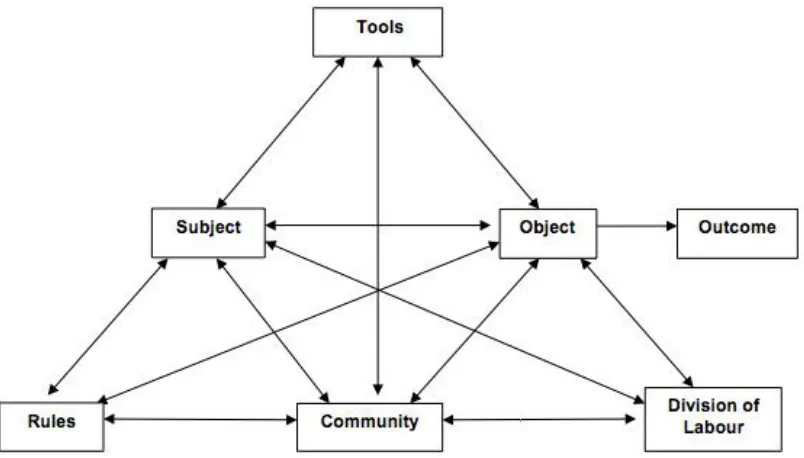
Figure 1: Activity system (Engestrom, 1987) 37
Figure 2: PBL Process 40
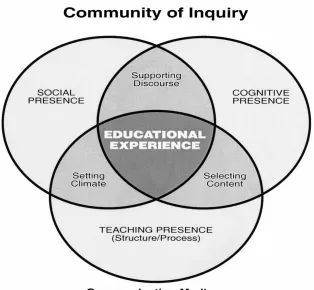
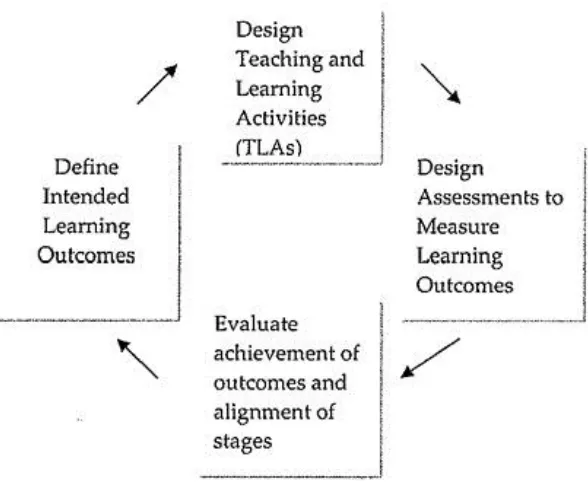
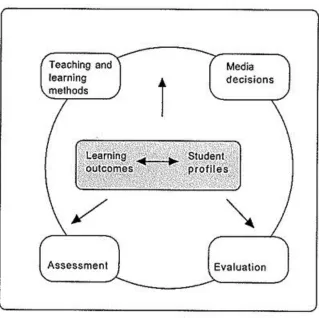
Figure 3: Community of Inquiry model (Garrison & Vaughan, 2008) 46 Figure 4: Curriculum Design Cycle (Mayes & de Frietas, 2004) 49 Figure 5: Flexible Delivery Model (Bell & Lefoe, 1998) 51
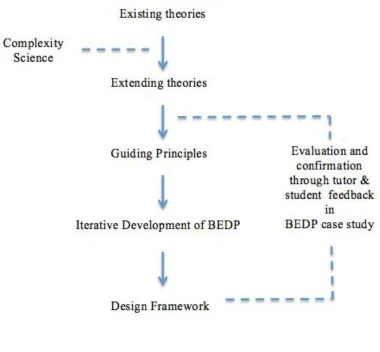
Figure 6: Design for the research 59
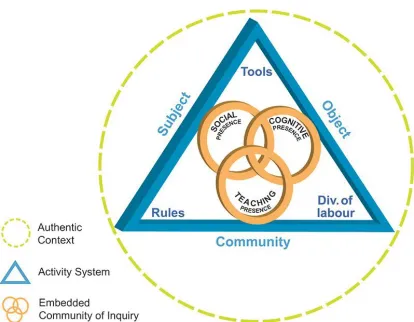
Figure 7: Design Based Research Process (Reeves, 2006) 62 Figure 8: BEDP activity system / Community of inquiry 65
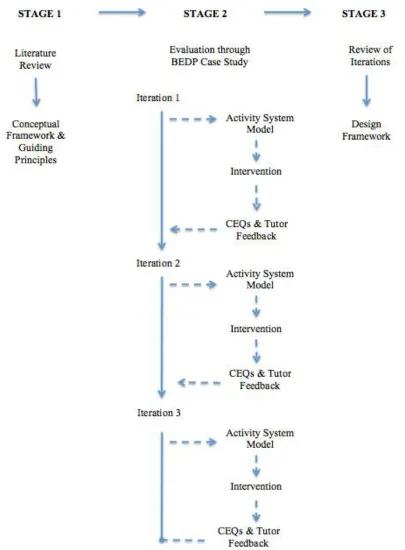
Figure 9: Research Method 70
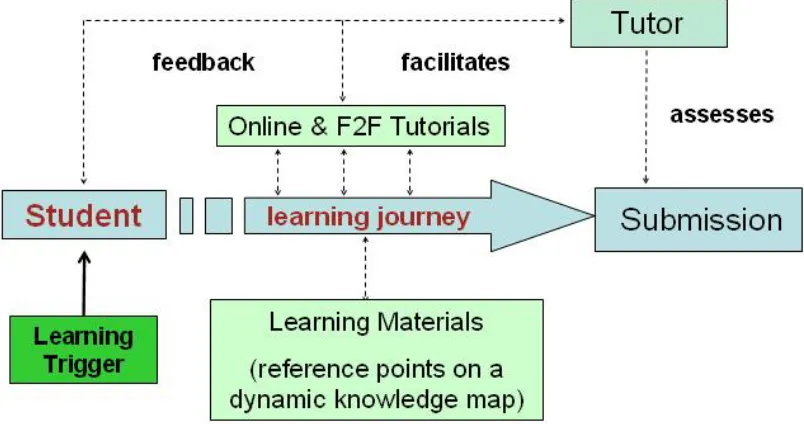
Figure 10: BEDP Learning Journey 78
Figure 11: LSD363 student learning process map 80
Figure 12: Basecamp interface 82
Figure 13: Research process 85
Figure 14: Activity System Model for Iteration 1 93
Figure 15: Flexicomm interface 94
Figure 16: Student Learning Process Map (SLPM) 95
Figure 17: CEQ open comments 2007 97
Figure 18: CEQ results 2007 98
Figure 19: CEQ results 2008 99
Figure 20: Activity System Model for Iteration 2 108
Figure 21: Basecamp interface 102
Figure 22: CEQ results 2009 106
Figure 23: Activity System Model for Iteration 3 116
Figure 24: BEnet interface 111
Figure 25: CEQ results 2010 113
Figure 26: CEQ results 2011 114
Figure 27: CEQ results 2012 115
Figure 28: Registration by Mode Trimester 3 2011 117 Figure 29: Registrations by Mode Trimester 1 2012 117 Figure 30: Registration by Mode Trimester 2 2012 118 Figure 31: Registrations by Mode Trimester 3 2012 118
Figure 32: Curriculum & culture 127
Figure 33: Curriculum Ecosystem Design Framework 130
List of Tables
Table 1: Characteristics of authentic activity (Reeves et al, 2002) 31 Table 2: Thinking about Learning (Adapted from Kimball, 2002) 34 Table 3: Characteristics of a Learning Trigger (Uden & Beaumont, 2006) 42 Table 4: Community of Inquiry Categories and Indicators (Garrison & Vaughan, 2008) 45
Table 5: Conceptual Framework 56
Table 6: Guiding Principles - CEQs 91
1. Introduction
1.1 The Problem
The dynamics of contemporary lives have changed. Senses and cognitive
processes have been extended and supported beyond physical selves. The world
has become a ‘digital ecosystem’ where the physical and the virtual are fully
intertwined and functioning through well-designed, well-integrated social and
technical architecture working together in a wireless mesh that is persistent,
pervasive, and mobile (Suter et al, 2005). This digital ecosystem is an open, flexible,
demand driven, self-organizing, collaborative environment. It can, has, and will
continue to enhance individuals’ abilities to connect with other people, share ideas,
work collaboratively and form communities (Pew Research Center Report 2014).
Many students have become comfortable with this digital world, increasingly
at home with its tools and processes. Increasingly learners have access to, and use
a broad range of social networking tools and technologies that provide a constantly
evolving multiplicity of opportunities for communication, and availability of interactive
resources for information. As such, learners expect to see this diversity reflected in
their educational experiences. These new technologies are having a disruptive
impact on how people live, learn and work (Bower & Christensen, 1995). If
educational practices are to remain relevant higher education institutions must also
embrace the dynamics and opportunities of this evolving digital age which can
support a rich, learner centred approach to education (JISC Web 2.0 Report 2009).
However, traditional transmission models of education (reinforced by
This situation is mirrored in the ongoing corporatisation of Higher Education
institutions, through the implementation of corporate management structures and
calls for educational activities and research to contribute to growth in revenue, with
an emphasis on throughput, and the catch cries of branding, marketing and intense
competition. And where the implementation of technology is seen as a way to
improve the ‘bottom line’ rather than a rich opportunity to improve educational
practice.
“Technological innovation in higher education has been largely restricted to
administration and research. The significant technological innovations in
teaching and learning have been confined to addressing issues of access and
convenience. However, addressing the relevance and quality of the learning
experience demands that higher education take a fresh look at how it
approaches teaching and learning and utilizes technology.” (Garrison &
Vaughan, 2008, p.10)
Virtual learning environments and social networking solutions have the
capacity to cater for a diverse range of learner initiatives and interactions. Higher
Education practices have yet to evolve and reflect the dynamics of the digital
ecosystem that the world has become. Educators have an obligation to provide
students with educational experiences that will enable them to develop the attitudes,
skills and knowledge needed to meet the challenges they will face as professionals
in this constantly evolving digital age. Some researchers have even gone so far as to
"Deep, radical and urgent transformation is required in Higher Education ...
models of higher education that marched triumphantly across the globe in the
second half of the 20th century are broken" (Barber, Donnelly & Rizvi, 2013)
There are also strong concerns in regards to graduate employability and that
current higher education curriculum design does not reflect the required outcomes
for professions in the increasingly complex world of the 21st century (Bennett,
Richardson, Mahat, Coates, MacKinnon & Schmidt, 2015).
While the world has moved from industrial to knowledge based, our
educational institutions, to a large extent, seem to have yet to reflect this change.
Industrial age models instead of the complex dynamics of the digital age still seem to
drive curriculum design and educational practice. The adoption of the new
technologies so far seems to have been more about the preservation of the status
quo than any real fundamental change. Laurillard, Oliver, Wasson and Hoppe (2009)
argue that educational practice needs to include the development of expertise in the
skills of knowledge negotiation, taking the skills of inquiry, critique, and evaluation
beyond the understanding of ideas to the development and representation of the
new knowledge that comes from being a practitioner in a field.
Current curricula are not designed to mirror the complex dynamics of the
contemporary world in which students are expected to be able to function and
succeed as professionals. Higher education practices have to meet the needs of a
changing world as it evolves and as new technologies are integrated even more
broadly across professional practices. Curricula and educational practice need to be
guided by a paradigm that reflects the dynamics, challenges and opportunities of the
A paradigm is embodied in exemplars that model roles, responsibilities and
tasks, and define and guide related activities. Exemplars based on this emerging
alternative paradigm can be developed to provide concrete models relevant to the
real world as it is now, not as it was in the past. Recognition of a fundamental
paradigm shift needs to occur throughout Higher Education and this alternative
paradigm has to be at the core of curriculum design if there is to be a fundamental
change in educational practice.
1.2 Purpose and Significance of the Study
Current literature points to Complexity Science as holding at least part of the
answer to this challenge (Doll 2005, 2012; Barab & Roth, 2006; Smitherman, 2005).
A complexity paradigm views the world as complex and unpredictable, and
relationships as non-linear and dynamic. A world made up of Complex Adaptive
Systems (CAS) where intelligent agents anticipate the behaviour of others and the
external environment, and modify their behaviour accordingly.
When curriculum design is viewed from a complexity science perspective the
focus shifts from curriculum content to the underlying processes of the complex
adaptive system that is a discipline, a profession (Abel, 1998). Curricula can then be
designed to enable the facilitation and support of educational practice within a
dynamic, evolving ecosystem. An ecological view of the world requires a shift of
focus in education to learner’s interactions with others and the environment within
which they live and work, rather than the dissemination of information. Exemplars
based on a complexity paradigm can be developed to provide concrete models to
1.3 Scope and Aims of the Study
The central aim of this study is to develop a set of guiding principles and a
design framework for curriculum ecosystem design for Higher Education. It explores
current literature using a Grounded Theory approach (Glaser & Strauss, 1967;
Bryant & Charmaz, 2010), where the literature is seen as a source of data (Strauss &
Corbin, 1990 as cited in Bloomberg & Volpe, 2008), drawing together educational
theories and curriculum designs, and interpreting and extending them through the
application of a Complexity Science lens and related concepts drawn from ecological
psychology, distributed cognition and activity theory. This approach is intended to
provide a perspective that can inform curriculum design, curriculum ecosystem
design and the development and refinement of a Higher Education curriculum
ecosystem exemplar.
The literature is approached through a lens of educational practice within a
Complex Adaptive System (CAS). The literature review explores the dynamics of a
Complex Adaptive System, learning processes, and how that learning can be
scaffolded within a Complex Adaptive System. Key guiding principles are then
articulated through this process.
A case study of the iterative revision and redevelopment, based on these
guiding principles, of the Holmesglen Built Environment Degree Program (BEDP) is
used to gather insights into design and development of a Higher Education
curriculum ecosystem exemplar and the development of a Design Framework.
An educational design research approach is used to trace and explore the
evolution of the Built Environment Degree Program curriculum ecosystem through
within the BEDP curriculum ecosystem. Activity Theory is used throughout this
process both as a method for informing design decisions and as an evaluation tool.
1.3.1 Limitations of the Study
This study focuses on one case study, a Built Environment degree program,
which can be seen as a limitation. However the aim of the study is to expand
theories not to undertake statistical generalisation (Burns, 1997). The case study is
employed to gain an in depth understanding of processes in context rather than a
specific variable (Merriam, 1998). It is foundational research which provides a tool, a
framework, for exploring possibilities within other Higher Education programs and
curricula.
More broadly, it is acknowledged that some researchers may view the study’s
melding of grounded theory, design based research and case study as potentially
being a limitation, in that it does not do justice to each of these well-established
research methods. By contrast, I contend that the fusion of these three methods has
added methodological strength to the study, by mobilising the respective affordances
of each method and thereby enhancing the accuracy, relevance and rigour of the
study’s findings and the associated implications of those findings.
1.3.2 Research Questions
The study is guided by the following research questions:
What guiding principles for curriculum ecosystem design can be drawn from
current literature?
What design framework can be defined through the iterative redevelopment,
informed by these guiding principles, of a Built Environment Degree Program
as a curriculum ecosystem?
1.4 Researcher
This study has grown out of 15 years work by the researcher with
technologically enhanced educational design, development and implementation
across a wide range of Higher Education programs. These experiences started with
multimedia development. Throughout this time it became clear that a key component
in the completed product was missing and that any learning triggered by video, rich
media or other materials had to be supported and guided beyond the passive
viewing of the materials.
These realisations led to further development in projects where learning
resources were embedded into an elearning platform with discussion forums and
other functionality to support learning. However, when implemented, if these were all
treated as supplementary to teacher led classroom based activities there was limited
engagement of learners and minimal impact on learning.
These projects and work on other technologically enhanced educational
design projects re-enforced a realisation that a fundamental shift in approaching the
design of elearning and curriculum was required. A shift in paradigm was needed if
elearning designs were to achieve their full potential. The Built Environment Degree
Programs at Holmesglen Institute in Melbourne, with the requirement for seamless
integration of on-line and off-line learning, provided the test bed for development of
an exemplar reflecting such a paradigm shift.
culture of the industry while working in a range of roles off and on since the age of
fourteen.
1.5 Overview of Thesis
The structure of the thesis is as follows:
Chapter 1 – Introduction
Chapter 2 – A review of literature in the areas of complexity science, learning
theory, curriculum design, online learning, activity theory, ecological
psychology, distributed cognition and related fields. This provides a basis for
an initial set of guiding principles for curriculum ecosystem design.
Chapter 3 – Articulates the research design used in the study. Grounded
theory, design based research, case narrative, activity theory and their
application to the Built Environment Degree Program case study are outlined
and discussed. Methods of data collection and analysis are described.
Chapter 4 – Provides a description of the Built Environment Degree Program
case study.
Chapter 5 – Describes the evolution of Built Environment Degree Program
through three iterations over six years as a curriculum ecosystem. The
collected data are presented, analysed and interpretation of the findings
provided and discussed. The guiding principles and a design framework for
higher education curriculum ecosystems are articulated.
Chapter 6 – Draws conclusions from the study and suggests a way forward
2. Literature Review
2.1 Overview
This literature review is conducted leveraging on a grounded theory approach
where the purpose of the review is to place this study in context and to define and
clarify concepts and the relationships between those concepts to inform the
development of a theory (Bloomberg & Volpe, 2008) of complex adaptive system
design for educational purposes, in the form of a design framework (Reeves et al
2011; Van den Akker et al, 2006) for curriculum ecosystem design for Higher
Education.
The concepts gathered from this literature review are then developed into a
conceptual framework with a set of guiding principles are drawn from it. These
guiding principles are in response to the research question:
What guiding principles for curriculum ecosystem design can be drawn from
current literature?
The review draws on current literature related to learning theories, learning
processes, online learning practices, ecological psychology, distributed cognition,
and curriculum design, and expands on this through a complexity science
perspective. It is a perspective that views the world as one made up of
interconnected ecosystems, which are complex adaptive systems ever changing,
and ever evolving. This literature review explores the nature and dynamics of the
learning process in a Complex Adaptive System (CAS) and how that process can be
outcomes, including professionally relevant attitudes, skills and knowledge for a
digital age.
The literature is organised under the following headings:
Dynamics of a Complex Adaptive System
Learning in a Complex Adaptive System
Scaffolding Learning in a Complex Adaptive System
Curriculum ecosystems
2.2 A Paradigm Shift
The design of curricula should mirror the complex, dynamic, evolving world
we live in with the expectation that our students will be able to function and succeed
in it as professionals. It has been argued that individuals do not learn a set of rules or
abstract theories that they then apply to their interaction with the world. They in fact
internalise a common set of practices, roles and ways of thinking that are provided
by the current predominant paradigm (Imershein, 1977). Knowledge is structured
within a paradigm, supporting a particular worldview that defines an understanding of
what can be achieved; the paradigm itself guides activities along particular
directions. All knowledge is inextricably a product of the activity and situations in
which it is produced (Brown, Collins, & Duguid, 1989).
There has been a gradual emergence of a new paradigm, a shift in the
world-view of those involved in educational practice with moves to broaden the educational
approaches used in Higher Education. These include Jonassen’s Constructivist
Learning Environments (1999), Taylor’s Novex Analysis (1994), Laurillard’s
Conversational Framework (2002), and Garrison and Anderson’s Community of
seen as “anomalies” in the predominant industrial age paradigm, the beginning of the
emergence of an alternative paradigm. This new paradigm is still evolving.
Higher education curricula have their roots in Europe in the 1500’s. They are
based on a reductionist paradigm. Petrus Ramus, Regius Professor of Logic, first
used the term ‘curriculum’ in an educational sense of a course of study at a
university in the late 16th century. Ramus’ ordering and classification of courses and
knowledge is fundamentally reductionist and is still echoed in current educational
practice (Doll, 2005, 2012).
Reductionism is the belief that the whole can be understood if you understand
its parts; that dividing something under examination into as many parts as possible is
the best way to understand that thing. It is the belief that by reducing everything to its
simplest parts universal laws can be discovered and/or applied. It has been the
foundation of scientific method since the time of Descartes and Newton (Mitchell,
2009; Smitherman, 2005).
This situation has led to a prevailing view in education that curriculum design
should be based on the categorisation and organisation of content to be delivered
and learned. This approach has taken the form of what is in effect static curriculum
designs constrained by pre-defined, pre-digested content, timetables, word counts
and delivery hours. A mechanistic, linear process used to achieve easily measured,
prescribed, and standardised outcomes (Doll et al, 2005).
In the sciences it has however been realised that while reductionism has its
place as a scientific method it does not provide the means to explain much of the
world.
nature of living organisms and the diseases that threaten them; the economic,
political and cultural behavior of societies; the growth and effects of modern
technology and communications networks; and the nature of intelligence and the
prospect of creating it in computers” (Mitchell, 2009, p. x).
The paradigm that has enabled explanation of these phenomena has
emerged from Complexity Science (Doll, 2005, 2012; Barab & Roth, 2006;
Smitherman, 2005). A complexity paradigm views the world as complex and
unpredictable, and relationships as being non-linear and dynamic. It is made up of
complex adaptive systems (Abel, 1998) where intelligent agents anticipate the
behaviour of others and the external environment, and modify their behaviour
accordingly.
A complexity paradigm focuses on the dynamics, flow and interactions within
a complex adaptive system. When educational practices are viewed through such a
paradigm learning can be explored as something that occurs and evolves within a
learning ecosystem that is non-linear, fluid, dynamic, and constantly evolving (Barab
& Roth, 2006). Such an ecosystem can be comprised of three interacting elements:
Intelligent adaptive agents (tutors & learners)
The environment which these agents interact with and within
The relationships, processes and interactions between individual
agents, and agents and the environment
In a higher educational context such an ecosystem could be described as a
2.3 Dynamics of a Complex Adaptive System
2.3.1 Complexity Science
When educational practice is viewed from a complexity science perspective
the focus shifts from curriculum content to the underlying processes of the complex
adaptive system that is a discipline or a profession (Abel, 1998) and its underlying
culture. This focus facilitates the discovery of a world where the whole is greater than
the sum of its parts. Through the use of concepts associated with complexity
theories, new visions for educational practice and curriculum design can emerge
(Smitherman, 2005). Curricula can be designed to enable the facilitation and support
of educational practice within a dynamic, evolving ecosystem. When designing a
curriculum ecosystem it needs to be viewed as a complex adaptive system and
developed from a complexity science perspective (Barab & Roth, 2006).
Complexity science is not one theory but a combination of theories and
concepts informing a wide range of disciplines including physics, biology, chemistry,
mathematics, economics, sociology and a growing number of others.
According to Mitchell (2009), the common properties of complex systems, in
terms of Complexity Science, are:
1. Complex collective behaviour: They consist of large networks of individual
components (eg. ants, neurons, stock-buyers, website creators) each typically
following relatively simple rules. It is the collective actions of large numbers of
components that give rise to the complex, hard-to-predict, and changing
patterns of behaviour.
3. Adaptation: All these systems adapt – that is, change their behavior to
improve their chances of survival or success – through learning or
evolutionary processes.
In an educational context, this involves individuals interacting with each other
and their shared environment in complex and non-linear ways, communicating with
and adapting to each other and that environment.
Complex adaptive systems (CAS) generate unpredictable and non-linear
behaviour. They are dissipative structures that take their form and structure through
a self-organising process that is a result of flows of energy through the system. This
energy is developed through actions and interactions, communications, information,
and resources flowing through the system. The processes in the CAS involve
complex and at times chaotic dynamics between intelligent adaptive agents within
the system. The drivers of these dynamics in an educational context can include the
related learning objectives, the processes and structures of the target profession’s,
or discipline’s culture, and the competitive and/or co-operative behaviour of the
agents.
Concepts drawn from Complexity Science that enable the description of the
dynamics of a complex adaptive system and that are relevant to educational practice
include:
The whole is greater than the sum of its parts: a complex system cannot be
understood by dividing it into parts.
Non-linearity: actions can have more than one outcome and can generate
non-proportional outcomes.
Emergence: the process by which new patterns, features, qualities or
Emergence is driven by the self-organising nature of a system far-from–
equilibrium.
Self-organisation: the tendency of many systems to generate new structures
and patterns over time on the basis of its own internal dynamics – order
emerges from patterns of relationships among individual agents.
Far-from-equilibrium: systems in far-from-equilibrium states evolve and adapt
to changing conditions and spontaneously self-organise with structures of
increasing complexity.
Butterfly effect: the phenomenon of ‘sensitive dependence on initial
conditions’ where small changes can have a large impact on a complex
adaptive system
Co-evolution: the process of mutual transformation that takes place for both
the agent and the environment in which it exists.
Adaptive tension: the catalyst, the driver that initiates a dynamic state that
leads to emergence.
Feedback loops: a process by which change in a variable results in either an
amplification (positive feedback) or a dampening (negative feedback) of that
change
Dissipative systems: systems that maintain themselves in a
far-from-equilibrium state by dissipation and consumption of energy.
Edge of Chaos: The region between order and chaos, where systems are
regarded to be the most innovative and adaptive.
Fitness landscape: a concept where the ‘fitness’, a collection of attributes, of
of possible fitness conditions. The stronger fitness levels are expressed as
peaks separated by valleys.
A complexity perspective sees every structure as the manifestation of
underlying processes. Living form is more than shape, more than a static
configuration of components. There is a continual flow of energy through living
systems; there is growth and decay, regeneration and development. This
perspective views the world as an inseparable web of relationships, and living
systems as self-organising networks whose components are all interconnected and
interdependent (Capra & Luisi, 2014).
Educational practice and curriculum designs that guide that practice should
reflect this complex, chaotic real world. A world that is not static or linear, in
equilibrium, rather a world that is dynamic, in a state of constant change, evolving
and far-from-equilibrium.
2.3.2 Metaphors and a Complexity Paradigm
Metaphors and related mental models are created to guide understandings of
the world. They influence how that world is seen and interpreted. The metaphor of
the machine from the Industrial Age has influenced people’s thoughts, actions and
organisational systems for more than three centuries (Laroche et al, 2007). Systems
influenced by this metaphor have been described as being closed systems as
compared to the open systems of complexity. Doll (2012) describes a closed system
as being a mechanistic, equilibrium-oriented system (such as a heat engine) where
system is a living, far-from-equilibrium system (life itself), where there is an orderly
disorder, which he describes as the very source of creativity.
Complexity concepts provide metaphors, meaningful descriptors of patterns
that emerge in human systems.
"Complexity science is full of rich and engaging metaphors … they are poetic
and easy accessible terms for the lay person. They can also be meaningful
descriptors of patterns that emerge from human systems dynamics ... Using
descriptive metaphors one can think about how 'butterfly effects' name patterns
that appear commonly in human systems. For example, the descriptive
metaphor can represent small deviations in team procedure that may generate
a major shift in direction. Such descriptive applications of the complexity
concepts can help build shared mental models.” (Eoyang, 2004)
These mental models enable educators to apply complexity concepts when
designing and developing an ecosystem for educational purposes. Such an
ecosystem is an open system.
"Open systems ... function to keep just the right amount of imbalance, so that
the systems might maintain a creative dynamism. The human body, democratic
social systems, and the cosmos itself are all illustrations of open systems.
Whereas closed systems 'exchange energy but no matter', open systems
'exchange both energy and matter' (Prigogine, 1961, p.3) and thus can
transform matter into energy, as in an atomic explosion. In simple terms, ones
important for education, closed systems transfer and transmit, open systems
closed system while interpretative inquiry, with its complexity, would exemplify
an open systems approach." (Doll, 2012, p.19)
Curriculum design when viewed from a complexity perspective is flexible,
open, disruptive, uncertain, and unpredictable, and accepts tension, anxiety, and
problem creation as the norm.
According to Iannone, (1995), such a curriculum design should include:
coherent but flexible structures
tolerance of change
open communications
responsiveness to new ideas
tolerance of conflict
a sense of community
When viewed from a complexity perspective Higher Education is
process-oriented with students, within a learning community, actively engaging with the real
world, a world that is made up of interconnected, interdependent complex adaptive
systems. Learning, knowing and meaning making are part of the dynamic interplay
between individuals with each other and their environment. While individuals actively
engage with and respond to change and disruption within that environment, the
dynamics of changing patterns of relationships and interaction provide energy for the
emergence of innovation and creation from this interplay, in a dissipative system on
2.4 Learning within a Complex Adaptive System
2.4.1 Ecological Psychology
Complexity Science provides the language and concepts to describe the
nature and dynamics of the world as an evolving ecosystem, and professional
practice as a complex adaptive system. To build further on this when designing for
educational practice, it is crucial to be able to describe how human beings as
intelligent agents within such a system find meaning, know and interact with and
within an ecosystem. Developments in ecological psychology have provided the
means to do this.
Barab and Plucker (2002) state that many contemporary thinkers from a
variety of domains describe knowing not simply as a psychological construct existing
in the head but as an interaction of individuals and physical and social situations. An
ecological view of the world requires a shift of focus from the dissemination of
information to the learner’s interactions. An ecological view of psychology takes as
fundamental the interaction of agent and environment. Rather than explain things as
all inside the head of the learner, explanations emerge from learner-environment
interactions that are whole-body embedded in lived-in world experiences. Interaction
is dynamic, non-linear and continuous, not static or linear (Young, 2004).
Ecological psychology is based on the premise that perception and knowing is
a property of an ecosystem, not an individual, and is co-determined through the
individual–environment interaction. All environments have certain affordances that
allow an individual to perform an action or actions and achieve a goal.
“Gibson (1979/1986) introduced the relational terms affordance and effectivity
action (Gibson, 1977). Reciprocally, an effectivity is a specific combination of
properties assembled by an individual, taken with reference to the environment,
that allow for the dynamic actualisation of a possibility for action (Shaw &
Turvey, 1981)”. (Barab & Plucker, 2002, p.169)
Professional practice when viewed as a complex adaptive system, can be
seen as an affordance network, that is a collection of facts, concepts, tools, methods,
practices, and even people, taken with respect to an individual, that are distributed
across time and space and are viewed as necessary for the satisfaction of a
particular set of actions or goals (Barab & Roth, 2006). An affordance is a possibility
for action by an individual and an effectivity is the dynamic actualisation of that
affordance. An effectivity set constitutes those behaviours that an individual can
produce so as to realise the potential of an affordance network.
Many educational practices implicitly assume that conceptual knowledge can
be abstracted from the situations in which it is learned and used. This assumption
inevitably limits the effectiveness of these practices. Knowledge is situated, being in
part a product of the activity, context, and culture in which it is developed and used
(Brown et al, 1989). Knowing and meaning, and therefore learning, are part of the
dynamic interplay of individual and environment.
When designing curricula at the core of curriculum ecosystems there is a
need to recognise this and design to support the dynamics and requirements of a
profession or discipline as a complex adaptive system. Learners should be provided
with an affordance network that provides opportunities to develop the effectivities
2.4.2 Distributed Cognition
The concept of distributed cognition provides us with a basis for identifying
these effectivities. It is important to understand the emerging dynamics of interaction
within the complex networked world of a profession. The theory of distributed
cognition has an important role to play in understanding interactions between people,
technologies and environments, what we really do in them and how we coordinate
our activity in them, as its focus is on whole environments.
“The distributed nature of cognition was discussed by Hutchins (1993) who
studied how navigating a vessel is accomplished through a cooperative effort
among its crewman, interacting with one another and the tools available on the
ship. The shared experiences on the ship among the crewmen enable them to
communicate with each other. Each crewman has specific responsibilities in
terms of navigating the ship (e.g., quartermasters share among themselves the
task of the plotter, bearing tracker, the bearing time-recorder), and manipulates
appropriate tools for the task. The result of this cooperation is the community
knowledge around how to navigate the ship. It is the group knowledge, as well
as the tools on the ship, that enable the proper navigation of the naval vessel. “
(Barab & Plucker, 2002, p.170)
Distributed cognition looks for cognitive processes, wherever they may occur,
on the basis of the functional relationships of elements that participate together in a
process. While traditional views look for cognitive events in the manipulation of
symbols inside individual minds, distributed cognition looks for a broader class of
cognitive events. For example, an examination of memory processes in an airline
At least three kinds of distribution of cognitive process have been identified:
Cognitive processes may be distributed across the members of a social group
Cognitive processes may involve coordination between internal and external
(material or environmental) structure
Processes may be distributed through time in such a way that the products of
earlier events can transform the nature of later events
(Hollan, Hutchins & Kirsch, 2000)
Culture, social organisation, the structure added by the context of an activity,
and the tools used to complete that activity, are all forms of cognitive architecture.
“… in the distributed cognition perspective, culture shapes the cognitive
processes of systems that transcend the boundaries of individuals [Hutchins
1995a]. At the heart of this linkage of cognition with culture lies the notion that
the environment people are embedded in is, among other things, a reservoir
of resources for learning, problem solving, and reasoning. Culture is a process
that accumulates partial solutions to frequently encountered problems.
Without this residue of previous activity, we would all have to find solutions
from scratch. We could not build on the success of others. Accordingly,
culture provides us with intellectual tools that enable us to accomplish things
that we could not do without them” (Hollan, Hutchins & Kirsch, 2000, p.178).
Knowing and meaning, both cognitive activities, are constructed from both
internal and external resources, so that the meanings of actions are grounded in the
context of activity. It is not enough to know how the mind processes information, it is
world. Individuals interact with and within the structure in environments that are
ecosystems, complex adaptive systems.
To design effective curriculum ecosystems it is important to know what that
structure is for a particular discipline or profession, the processes individuals and
groups engage in and the resources and tools they use to render their actions and
experiences meaningful. It is also important to have an understanding of information
flow, cognitive properties embedded in systems, social organisations, cultural
processes, and how individuals learn and develop the related effectivities.
2.4.3 Perspectives on Learning
Fundamentals of Teaching and Learning
The fundamentals of effective teaching and learning have been known for
decades. According to Dewey (1938) experience is at the core of learning, and every
experience affects, for better or worse, the attitudes that help decide the quality of
further experiences. He argues that educators should be aware of what surroundings
are conducive to having experiences that lead to effective learning and growth and
that they should know how to utilise the surroundings, physical and social, that exist
so as to extract from them all that they have to contribute to building up experiences
that are worthwhile.
He argues that individuals live in a series of situations and that as an
individual passes from one situation to another, their world, and their environment,
expands or contracts. What is learned in the way of knowledge and skills in one
situation becomes an instrument of understanding and dealing effectively with the
Dewey saw that learning was a direct result of life experiences and the social
and environmental contexts within which they occur. He advocated providing an
“educative” experience that focuses on the transactions and interactions within
situations that provide that experience. This approach is reflected in ecological
psychology and distributed cognition.
Learning Theories as described by Mayes & de Freitas (2004) are relevant to
this study and can be categorised under the following perspectives.
Cognitive
This perspective is embodied in the assumptions of constructivism (Jonassen
1999) where understanding is seen as being gained through an active process of
creating hypotheses and building new forms of understanding through activity.
Conceptual development occurs through intellectual activity rather than by the
absorption of information. Brown et al (1989) argued that it is important to consider
concepts as tools, to be understood through use, rather than as self-contained
entities to be delivered through instruction. This consideration is the essence of the
constructivist approach where the learners’ search for meaning through activity is
central.
The cognitive perspective emphasises conceptual development, stressing the
importance of achieving understanding of the broad unifying principles of a domain.
This view also encourages the framing of learning outcomes in meta-cognitive terms,
with the educational aim of achieving learning how to learn, and encouraging the
Situative
Learners will always be subjected to influences from the social and cultural
setting in which the learning occurs. This view of learning focuses on the way
knowledge is distributed socially. When knowledge is seen as situated in the
practices of communities then the outcomes of learning involve the abilities of
individuals to participate in those practices successfully.
The situative perspective encourages the definition of learning objectives in
terms of the development of disciplinary practices of discourse and representation. It
also focuses on learning outcomes that are dependent upon the establishment of
collaborative learning outcomes, and on learning relationships with peers. This
perspective also encourages the formulation of learning outcomes in terms of
authentic practices of formulating and solving realistic problems.
2.4.4 Experiential Space
Elements of these perspectives (Dewey, 1938; Mayes & de Freitas, 2004) can
be woven together to inform learning designs for educational experiences that reflect
the real world challenges students will eventually face in the complex adaptive
systems of their chosen fields in the knowledge economy of the 21st century. The
key driver in the design needs to be the cognitive architecture embedded in systems,
social organisations, and the cultural processes of the target profession. Whether the
learning activity takes place in a physical or virtual space should not be the driving
factor in the learning design, each space with its particular affordances is but another
An architect talks about space as something that is experienced. An
analogous description might be just as a physical space is defined by containment
(walls, ceiling, floor) and the (experiential) quality of that space influenced by
textures, colours, shapes and volumes, in the end, what a person feels about the
space is subjective, depending on their own perceptions and values and attitudes.
Learning is an experience and therefore rather than describing a learning
space in terms of a location with physical or virtual dimensions, it is possible to start
with the learning experience then support that experience with a range of appropriate
tools which includes physical and/or virtual environments (Cheers, Chen & Postle,
2011). Designing for an educational experience can enable learners to use a broad
range of tools to support their learning in ways that suit them, in spaces of their
choice. These spaces and tools can be virtual, physical or a combination of both.
Any planned learning space can accommodate individual journeys
(experiences), within design parameters, which support pre-defined curriculum
outcomes. Designing for educational experience is designing for engagement and
interaction in a community of learning (Barab & Duffy, 2000; Wenger 1999),
interaction based on trust, openness and dialogue between learners & learners,
learners & tutors and interaction with the environment, and cognitive tools (Jonassen
& Reeves, 1996).
A community of learning within an experiential space, is the result of the
collective behaviour of a group with shared objectives. In formal educational settings,
this involves sharing a common process, values, experiences and intellectual
exchange. Communities are living entities. They need the flow of energy and
activities to keep them alive. They are made up of individuals who have the choice
An experiential space may be defined by containment in four dimensions,
three of the dimensions are the tutor and students, the learning resources, and the
tools. Thefourth dimension is that of time. These are the elements that are
manipulated when such a space is designed. The experiential space is then the
experiential activity (or learning journey) that the student(s) occupy, interacting with
other fellow learners and tutors and moving along the fourth dimension of time
(Cheers, Chen & Postle, 2011). Such an experiential space can be described as a
Complex Adaptive System.
2.4.5 Cognitive Apprenticeship
Taylor (1994) argues that the psychology of teaching and learning should
attempt to understand the development of cognitive structures and processes that
characterise the proficient performance of cognitive skills by experts in particular
disciplines. And that educational design should focus on the structure and
organisation of the knowledge underlying expert cognitive skill performance. It
should have the aim of shifting a learner from novice to expert through the creation
of a series of learning activities that enable them to construct key elements of the
organisation and content of the knowledge base of the expert in their own cognitive
structure.
Taylor (1994) identifies a number of dimensions of domain specific, objective
knowledge, which he calls ‘item-specific knowledge’, ‘relational knowledge’ and
‘strategic knowledge’ as well as two dimensions representing subjective knowledge,
‘affective knowledge’ and ‘empirical knowledge’. He described the difference
“The knowledge bases of the novices are likely to lack the coherence and
connectivity of that of the expert, and may need to be represented as
somewhat fragmented item-specific knowledge rather than organized
frameworks of relational and strategic knowledge. Similarly, the affective and
empirical dimensions of the knowledge bases of novices are unlikely to match
the comprehensive richness of that of the expert” (Taylor, 1994, p.9).
Empirical knowledge is defined as a record of experiences. Taylor (1994)
argues that for a novice to develop the comprehensive richness of an expert, a
situated learning approach to instruction, which includes learning activities based on
complex issues in authentic contexts, with associated provision of scaffolding to
enable novices to operate meaningfully in such realistic environments, should be
used.
Collins, Brown and Newman (1989) define such a process as Cognitive
Apprenticeship. They build on the model of apprenticeships where skills are learnt in
the context of their application to realistic problems, within a culture focused on and
defined by expert practice. Apprentices learn skills and knowledge in their social and
functional context and in the process develop not only the cognitive but also the
metacognitive skills required for expertise.
They argue that applying apprenticeship models to largely cognitive skills
requires the externalisation of processes that are usually carried out internally.
Cognitive apprenticeship has dual focus on expert processes and situated learning.
A culture of expert practice helps situate and support learning by providing learners
with readily available models of expertise-in-use. This provision should include
focused interactions among learners and experts for the purpose of solving problems
To achieve this outcome experts must be able to identify and represent to
students the cognitive processes they engage in as they solve problems. Alternating
between expert and novice efforts in a shared problem-solving context sensitises
students to the details of expert performance as the basis for incremental
adjustments in their own performance. Cognitive apprenticeship involves the
development and externalisation of a producer-critic dialogue that students can
gradually internalise. This development and externalisation are accomplished
through discussion, group problem solving and critical reflection.
Critical reflective practice is the process that underlies the ability of learners to
compare their own performance to the performance of an expert. Such comparisons
are seen as aiding learners in diagnosing difficulties and incrementally adjusting their
performances until they achieve expertise.
Collins, Brown and Newman (1989) argue that teaching methods should be
designed to give students the opportunity to observe, engage in, and invent or
discover expert strategies in context. Such an approach enables students to see how
these strategies fit together with their factual and conceptual knowledge and how
they cue off and make use of a variety of resources in the social and physical
environment. This is the essence of what they mean by situated learning and the
reason why the cognitive apprenticeship method, with its modeling-coaching-fading
paradigm, is successful.
The interplay between observation, scaffolding, and increasingly independent
practice is seen as aiding learners both in developing self-monitoring and correction
skills and in integrating the skills and conceptual knowledge needed to advance
2.4.6 Authentic Learning
Authors, researchers and theorists working in the field of ‘Authentic Learning’
have further supported the work of Taylor, and Collins, Brown and Newman.
Authentic Learning is based on the idea that usable knowledge and skills are best
gained in learning settings that reflect the complexity of the environment where the
final performance is expected to take place.
Authentic Learning designs feature the following characteristics shown in Table 1.
No. Characteristic of authentic
activity Supporting authors, researchers and theorists
1. Have real-world relevance
(Lebow & Wager, 1994) (Cronin, 1993) (Oliver & Omari, 1999) (Brown et al., 1989) (Cognition and Technology Group at Vanderbilt, 1990a) (Jonassen, 1991) (Resnick, 1987) (Winn, 1993) (Young, 1993)
2.
Are ill-defined, requiring students to define the tasks and sub-tasks needed to complete the activity
(Sternberg, Wagner, & Okagaki, 1993) (Lebow & Wager, 1994) (Bransford, Vye, Kinzer, & Risko, 1990) (Young, 1993) (Brown et al., 1989) (Cognition and Technology Group at Vanderbilt, 1990a) (Winn, 1993)
3.
Comprise complex tasks to be investigated by students over a sustained period of time
(Lebow & Wager, 1994) (Bransford, Vye et al., 1990) (Cognition and Technology Group at Vanderbilt, 1990b) (Jonassen, 1991)
4.
Provide the opportunity for students to examine the task from different perspectives, using a variety of resources
(Sternberg et al., 1993) (Bransford, Vye et al., 1990) (Young, 1993) (Cognition and Technology Group at Vanderbilt, 1990b)
5. Provide the opportunity to collaborate
(Lebow & Wager, 1994) (Young, 1993) (Gordon, 1998)
6.
Provide the opportunity to reflect and involve students’ beliefs and values
(Young, 1993) (Myers, 1993) (Gordon, 1998)
7.
Can be integrated and applied across different subject areas and lead beyond domain-specific outcomes
(Bransford, Sherwood et al., 1990 (Bransford, Vye et al., 1990) (Jonassen, 1991)
8. Are seamlessly integrated with assessment
(Reeves & Okey, 1996) (Young, 1995) (Herrington & Herrington, 1998)
9.
Create polished products valuable in their own right rather than as preparation for something else
10. Allow competing solutions and diversity of outcome
(Duchastel, 1997) (Bottge & Hasselbring, 1993) (Young & McNeese, 1993) (Bransford,
Sherwood et al.,1990) (Bransford, Vye et al., 1990)
Table 1: Characteristics of authentic activity (Reeves et al, 2002)
Authentic learning experiences focus on the development of knowledge in
real-world contexts and application of that knowledge to the solving of real-world
problems. Situation and cognition are seen as being interdependent and that
knowledge is a tool to be used dynamically to solve complex, often ill-structured,
real-world problems. (Herrington et al, 2010).
2.4.7 Critical Reflective Practice
Critical reflective practice is central to all these educational practices; both
reflection in action and on action are integral to learning and effective professional
practice (Schon 1983; Cowan, 1998).
According to Larrivee (2000, p.294) “in Dewey’s (1933, 1938) writings, he
asserted that the capacity to reflect is initiated only after recognition of a problem or
dilemma and the acceptance of uncertainty. The dissonance created in
understanding that a problem exists engages the reflective thinker to become an
active inquirer …”
Critical reflection encompasses both the capacity for critical inquiry and self
reflection (Larrivee 2000). It is a process of reflecting on a problem or dilemma and
possible solutions, of evaluating and refining those solutions, taking input from other
learners and peers and accepting, rejecting, and refining that input.
they study, live and work.Whether one is a professional or a student, whenever
learning takes place reflection is an integral part of the process.
Critical reflective practice is at the core of learning where perception and
knowing is a property of an ecosystem and is co-determined through the individual–
environment interaction. Guided by experts in the target professional culture while
solving an authentic problem in a relevant social and environmental context.
2.5 Scaffolding Learning within a Complex Adaptive System
All these preceding concepts and educational practices are the foundations
upon which learning designs for complex adaptive systems can be developed. When
learning in a complex adaptive system where the physical and virtual are intertwined
and interdependent, and the lines between the two become increasingly blurred, well
aligned online learning and blended learning Information and Communications
Technology (ICT) solutions are pivotal to supporting and scaffolding effective
learning practices within a complex adaptive system.
2.5.1 Blended Learning and Learning Online
The evolution of online learning or elearning practices, often categorised as
distance learning, has been described as growing through five generations
(Anderson, 2008).
1. The Correspondence Model based on print technologies
2. The Multi-Media Model based on print, video and audio recording
3. The Tele-learning Model based on video and audio synchronous
teleconferencing and broadcasting technologies
4. The Flexible Learning Model based on online delivery via the internet
5. The Intelligent Flexible Learning Model leveraging on interactivity available via
the internet
Since this description was developed there has been exponential growth of
Web 2.0 and social networking solutions contributing to a worldwide ecosystem that
is rapidly evolving. This growth has had little real impact on underlying approaches to
educational practice (Garrison et al 2003, Laurillard 2006). Even MOOCs (Massive
Online Open Courses) that are now beginning to challenge Higher Education
practices globally do so in manner of delivery only. They are largely lecture and quiz
based.
While there are pockets of innovative development in educational practice
across Higher Education institutions as reflected in the Australian Government’s
Office for Learning and Teaching “Good Practice Reports”, they are however often
the exception rather than the rule.
This situation is contrary to strong ongoing support in the literature over
decades advocating authentic learning practices. Teles (1993) building on the work
of Collins, Brown & Newman applied cognitive apprenticeship methods to online
learning arguing that a carefully designed environment, which provides instances of
collaboration, coaching, scaffolding, reflection, and exploration is essential to
Hung (2002) argues that the use of technology in supporting teaching and
learning should focus on the social process of learning triggered by authentic
problems and tasks.
Garrison and Vaughan (2008) argue that at the core of blended learning is the
goal of engaging students in critical discourse and reflection through increasing
interaction and meaningful problem solving.
2.5.2 Supporting Learning with Technology
When considering the use of educational technologies to support learning
Kimball (2002) argues that it is a question of how educators can engage learners in
more meaningful learning activities. It is argued that there needs to be a shift in
educators thinking (see Table 2). Although Kimball’s work was developed in relation
to distance education, there are important resonances with the contemporary
technologies associated with blended and online education.
Change thinking from Change thinking to Face-to-face learning and teaching is the ideal
environment for learning and other modes represent a compromise.
Diverse learning environments utilised in a pedagogically appropriate way can support high quality learning.
Learning only occurs when teachers interact with students at a fixed time and space.
Learning is ongoing and boundary-less and is most successful when learners take ownership of their own learning.
Managing online learning is about learning how to use the latest technology.
Managing & facilitating learning in any environment requires greater understanding of the learning process.
Table 2: Thinking about Learning (Adapted from Kimball, 2002)
These learning activities should be designed to engage the participants,
connect the individual and collective experiences (Cheers et al, 2009). That is,
learning design should be learner centred.
Learner centred learning has been described as including:
1. Active rather than passive learning
2. An emphasis on deep learning and understanding
3. Increased responsibility and accountability on the part of the student
4. An increased sense of autonomy of the learner
5. An interdependence between teacher and learner
6. A reflexive approach to the teaching and learning process
(Lea et al 2003 as cited in O’Neill & McMahon 2005)
An understanding of learning processes and the nature of authentic
educational experiences provides a solid foundation for learning designs. This
foundation can enable the effective scaffolding of those processes through the
design of curriculum ecosystems, and activities within those ecosystems to provide
relevant learning experiences.
All learning design should be informed by the knowledge that perception and
knowing is co-determined through the individual – environment interaction. Knowing
and meaning, and therefore learning is part of the dynamic interplay between
individual and environment, interactions between people, technologies and tools
embedded in a culture. The structure added by the context of the activity, and the
tools used to complete that activity are all forms of cognitive architecture that inform
and define individuals, and their actions, and that need to be considered and
Activity Theory (Engestrom, 1987) provides a framework for studying human
practices as development processes, with both individual and social aspects
interlinked within an environmental context. This can provide a base upon which to
develop a design framework and scaffold learning activities within a curriculum
ecosystem.
2.5.3 Activity Theory
An Activity Theory perspective focuses on the interaction of human activity
and consciousness within its relevant environmental context and offers a framework
for describing activity and providing a set of perspectives on practice that interlink
individual and social levels (Engeström, 1987; Leont’ev, 1974; Nardi, 1996). Actions
are seen as always being situated in a context and they are impossible to
understand without that context.
Activities are not static or rigid, they are under continuous change and
development and this development is not linear. Dynamism and development at
several levels are recognised as fundamental characteristics of activities.
According to Engeström, a human activity system is object-oriented, tool
mediated and culturally mediated, and composed of “the individual practitioner, the
colleagues and co-workers of the workplace community, the conceptual and practical
tools and the shared objects as a unified dynamic whole” (Engeström, 1991).
Kuutti (1996) defines activity as a form of doing that is directed towards the
fulfillment of an object (an objective) that, in turn, is linked to an anticipated outcome.
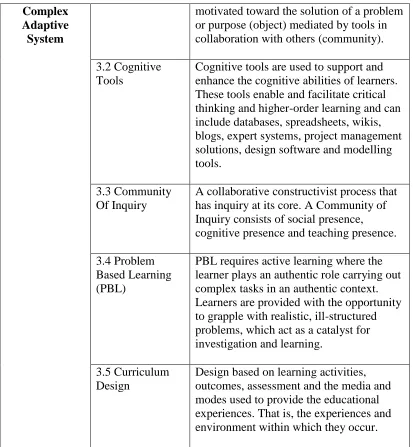
An activity is undertaken by a human agent (subject) who is motivated toward the
solution of a problem or purpose (object) mediated by tools (artefacts) in
collaboration with others (community). The relationship between subject and object
community is mediated by "rules" and the relationship between