UNIVERSITY OF SOUTHERN QUEENSLAND
SELF-DIRECTED LEARNING AND APPRENTICES:
A CONSTRUCTIVIST GROUNDED STUDY
This thesis is submitted by:
Damien Phillip Pearce
VGCMgt(Learn), GradDipTertTeach, MEdLead
For the award of
Doctor of Education
Abstract
Developing the capacity of learners to be self-directed is beneficial for both individual workers and economies alike. This study investigates the development of capability for self-directed learning in a group of apprentices in the building and construction industry and suggests that such capability is best developed in the early years of entry into the workforce. For tradespersons this time is during their apprenticeship.
The purpose of this study was to develop a deep understanding of how apprentices develop the capacity to be self-directed learners. The aim was to develop a substantive theory that illuminated and provided insight into this phenomenon.
The methodology of constructivist grounded theory was used to conduct the study. A sample size of 13 participants in the building and construction industry was recruited. This included apprentices who were employed by a group training organisation (GTO) and a representation of their host employers and vocational teachers located within the southern New South Wales and the Australian Capital Territory geographic regions.
The substantive theory presented in this dissertation makes a contribution to knowledge of value to apprentices, employers, vocational teachers and others who seek to develop an understanding of the process of learning and development associated with apprenticeships and vocational and professional education more broadly.
The substantive theory was achieved through discovering, describing, analysing abstracting and explaining how apprentices moved through the phases (or categories) of committing effort, experiencing work, confirming value, and heightening motivation towards becoming self-directed learners. The substantive theory reveals that as the apprentices progressed through these phases they were constantly engaged in decision-making processes, evaluating and re-evaluating experiences throughout their apprenticeship. The evaluation outcomes could be positive or negative and were dependent upon the expectancies that the apprentices placed on themselves as well as their interpretation of the expectancies placed on them by others.
In this study the manner in which the various conceptual elements, processes and
categories connect revolves around the apprentices’ experiences of sponsorship.
Sponsorship is the term used to describe the more experienced or confident other who has both a personal and professional interest in the apprentice’s development and uses their influence to create a safe learning environment to enable the apprentice to develop expertise.
sponsor was the most important factor determining the quality of the learning environment. Effective sponsors were able to manage the learning context in a manner where the apprentice felt safe to ask questions, make mistakes, develop expertise and eventually accept responsibility, be autonomous and solve complex problems. Indeed, the apprentices became tradespeople who were not only competent but were true self-directed learners.
Certification of Dissertation
I certify that the idea, result, analysis and conclusions reported in this dissertation are entirely my own effort, except where otherwise acknowledged. I also certify that the work is original and has not been previously submitted for any other award expect where otherwise acknowledged.
Signature of Candidate Damien Pearce
Date
Endorsement
Signature of Supervisor Dr. Mark Dawson
Date
Signature of Supervisor Dr. Janice Jones
Acknowledgements
There are many people that I need to thank.
Dr. Mark Dawson and Dr. Janice Jones as my supervisors from the University of Southern Queensland (USQ). Thank you for your professional and personal support throughout this study and for guiding me through my apprenticeship as a researcher, including the peculiarities of academia. This thanks is also extended to the research support office, library and members of the ethics committee at USQ. I would also like
to acknowledge the editing services provided by Ms. Katie Poidomani from Edge
Editing.
A big thank you to the apprentices, host employers, vocational teachers and the supporting organisations that willingly gave up their time to participate within this research and their combined interest in increasing the quality of apprenticeships and their industry stewardship.
I would also like to thank all of my friends, family and colleagues for their ongoing support, robust discussions and humour. This helped to keep me motivated and on task. At the risk of leaving someone out, I do not want to name anyone specifically. You know who you are!
Lastly, a deep and sincere thank you to my wife and best friend, Beck. I wouldn’t have even got close to this point without your love, support and, as it seems, unlimited patience.
Table of Contents
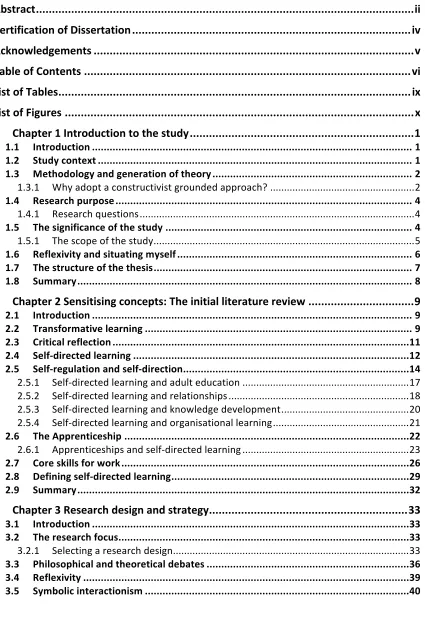
Abstract ... ii
Certification of Dissertation ... iv
Acknowledgements ... v
Table of Contents ... vi
List of Tables ... ix
List of Figures ... x
1 Chapter 1 Introduction to the study ... 1
1.1 Introduction ... 1
1.2 Study context ... 1
1.3 Methodology and generation of theory ... 2
1.3.1 Why adopt a constructivist grounded approach? ... 2
1.4 Research purpose ... 4
1.4.1 Research questions ... 4
1.5 The significance of the study ... 4
1.5.1 The scope of the study ... 5
1.6 Reflexivity and situating myself ... 6
1.7 The structure of the thesis ... 7
1.8 Summary ... 8
2 Chapter 2 Sensitising concepts: The initial literature review ... 9
2.1 Introduction ... 9
2.2 Transformative learning ... 9
2.3 Critical reflection ... 11
2.4 Self-‐directed learning ... 12
2.5 Self-‐regulation and self-‐direction ... 14
2.5.1 Self-‐directed learning and adult education ... 17
2.5.2 Self-‐directed learning and relationships ... 18
2.5.3 Self-‐directed learning and knowledge development ... 20
2.5.4 Self-‐directed learning and organisational learning ... 21
2.6 The Apprenticeship ... 22
2.6.1 Apprenticeships and self-‐directed learning ... 23
2.7 Core skills for work ... 26
2.8 Defining self-‐directed learning ... 29
2.9 Summary ... 32
3 Chapter 3 Research design and strategy ... 33
3.1 Introduction ... 33
3.2 The research focus ... 33
3.2.1 Selecting a research design ... 33
3.3 Philosophical and theoretical debates ... 36
3.4 Reflexivity ... 39
[image:6.612.120.545.118.740.2]3.6 Constructivist and social constructivist perspectives ... 42
3.7 Selecting grounded theory ... 42
3.7.1 Constructivist grounded theory ... 44
3.8 Generalisability ... 46
3.9 Substantive and formal theory ... 46
3.10 Ethical considerations ... 47
3.11 Data collection and analysis ... 49
3.11.1 Initial sampling ... 50
3.11.2 Interviewing ... 51
3.11.3 Analysis (coding) ... 52
3.11.4 Theoretical sampling ... 54
3.11.5 Theoretical saturation ... 55
3.12 Summary ... 55
4 Chapter 4 Exploring the categories: Putting it all together ... 57
4.1 Introduction ... 57
4.2 Overview of the categories ... 58
4.2.1 Committing effort ... 60
4.2.2 Experiencing work ... 60
4.2.3 Confirming value ... 61
4.2.4 Heightening motivation ... 61
4.3 Evaluation and decision making ... 62
4.4 Sponsorship ... 62
4.5 The categories ... 63
4.5.1 Committing effort ... 63
4.5.2 Influence of family and friends ... 66
4.5.3 Experiences with work ... 69
4.5.4 High expectancy of completion ... 70
4.6 Experiencing work ... 71
4.6.1 Gaining employment ... 73
4.7 Discovering place ... 78
4.8 Developing expertise ... 81
4.9 Confirming value ... 86
4.9.1 Learning from others ... 89
4.9.2 Becoming confident ... 92
4.9.3 Developing identity ... 96
4.10 Heightening motivation ... 98
4.10.1 Becoming accepted ... 99
4.10.2 Learning with others ... 101
4.11 Sponsorship within the workplace ... 104
4.12 Summary ... 105
5 Chapter 5 Discussion ... 107
5.1 Introduction ... 107
5.2 Decision making ... 109
5.2.1 Normative decision making ... 112
5.2.2 Descriptive decision making ... 112
5.3 Decision-‐making styles ... 117
5.4 Learning context ... 118
5.5 Transfer of learning ... 121
5.6 Quality of apprentice experience ... 125
5.6.1 Role of the apprentice’s sponsor ... 129
5.7 Belongingness ... 130
5.8 Motivation ... 133
5.8.1 Social cognitive career theory ... 133
5.8.2 Interest model ... 135
5.8.3 Choice model ... 135
5.8.4 Performance model ... 136
5.8.5 Contextual support and barriers ... 137
5.9 Sponsorship and the development of self-‐directed learning in apprentices ... 138
5.10 Summary ... 147
6 Chapter 6 Conclusion ... 149
6.1 Introduction ... 149
6.2 Study’s contribution to knowledge ... 149
6.3 Evaluation of the research ... 151
6.3.1 Answering the research questions ... 151
6.3.2 Substantive theory ... 152
6.4 Observation ... 155
6.5 Implications ... 156
6.6 Future research opportunities ... 157
6.7 Personal reflection ... 157
References ... 159
Appendices ... 183
7 Appendix A ... 183
8 Appendix B ... 185
9 Appendix C: Permission to conduct research (ACT Apprenticeships) ... 187
10 Appendix D: Sample interview questions ... 188
11 Appendix E: Participant letter of consent ... 194
List
of Tables
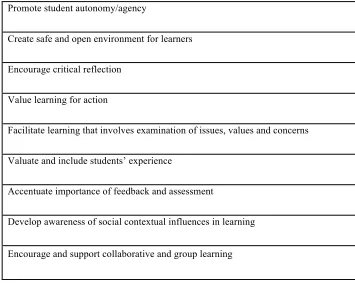
Table 2.1: Primary characteristics for fostering self-directed learning and transformative learning ... 10
Table 2.2: Core skills for work – skills area and skills cluster (Department of Industry & Department of Education, 2013, p. 1) ... 26
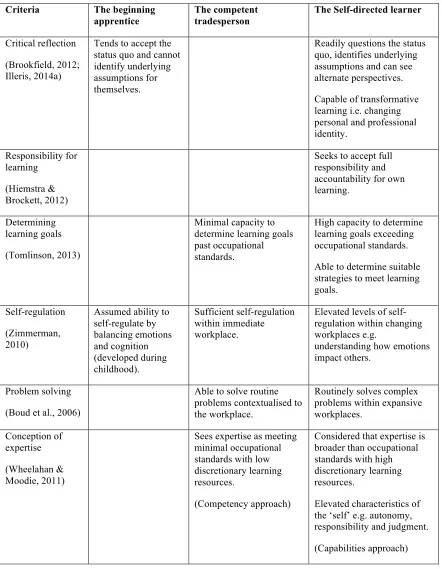
Table 2.3: Summary of learning journey ... 31
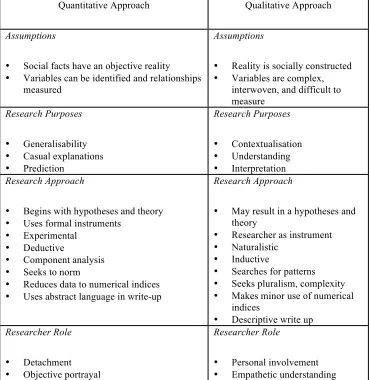
Table 3.1: Predispositions of quantitative and qualitative approaches to research (Glense, 2006, p. 5) ... 35
Table 3.2: Epistemological underpinnings of grounded theory (Charmaz, 2009, p. 139) ... 44
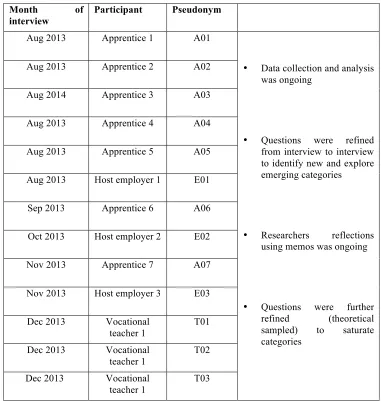
Table 3.3: Schedule of interviews ... 53
Table 4.1: Dreyfus model of skill acquisition (Dreyfus, 2004; Dreyfus & Dreyfus, 1986) ... 83
List
of Figures
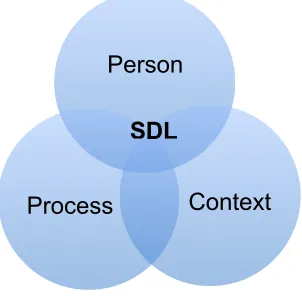
Figure 2.1: PPC model of self-directed learning (Hiemstra & Brockett, 2012, p.
158) ... 19
Figure 3.1: Example of coding ... 52
Figure 3.2: Example of reflective memo ... 54
Figure 4.1: Relationship between categories and subcategories ... 58
Figure 4.2: Evaluation and decision making of the journey towards self-directed learning by apprentices ... 59
Figure 4.3: Conceptualisation of the wider benefits of learning (based on Schuller, 2004, p. 13) ... 64
Figure 4.4: Reflective memo (12 February 2014) – Commodification of labour ... 65
Figure 4.5: Reflective memo (31 August 2014) – Parental values ... 68
Figure 4.6: Reflective memo (10 December 2013) – Seeking an apprenticeship ... 76
Figure 4.7: Reflective memo (17 July 2013) – Conceptualising the apprenticeship ... 80
Figure 4.8: Reflective memo (20 January 2014) – Learning ways ... 85
Figure 4.9: Reflective memo (5 March 2014) – Developing apprentices ... 90
Figure 4.10: Reflective memo (15 December 2013) – Grading competency based training ... 94
Figure 4.11: Reflective memo (25 March 2013) – Excellence in trades ... 95
Figure 4.12: Reflective memo (10 August 2014) – Developing and not developing identity ... 97
Figure 4.14: Reflective memo (10 September 2014) – Being proud ... 100
Figure 4.15: Reflective memo (15 December 2014) – What is happening here? ... 101
Figure 5.1: Evaluation and decision making by apprentices ... 109
Figure 5.3: Examples of complex trade tasks ... 121
Figure 5.4: The expansive-restrictive continuum for apprenticeships (adapted from Fuller & Unwin, 2011, p. 36) ... 126
Figure 5.5: Employer tiers (adapted from Bardon, 2010, p. 10) ... 127
Figure 5.6: Apprentice tiers (adapted from Bardon, 2010, p. 10) ... 128
1
Chapter 1 Introduction to the study
1.1 Introduction
The purpose of this chapter is to provide an introduction to this research. After broadly describing the study context, methodology and the generation of theory, an explanation is provided as to why I chose the methodology of constructivist grounded theory. The chapter continues by detailing the research purpose, research questions and comments on the significance of the study. The chapter concludes by considering my reflexivity, and finally, the structure of the thesis is outlined.
There is growing evidence that in emerging contemporary workplaces the capacity for self-directed learning is essential for sustainable employability of workers and continued economic stability of Australian industry (Tomlinson, 2013). This dissertation begins by establishing that workers in contemporary workplaces need to be proficient at self-directed learning and that such capacity is best developed in the early years of entry into the workforce. For apprentices, this is during the apprenticeship phase.
1.2 Study context
The study was situated geographically within southern New South Wales (NSW) and the Australian Capital Territory (ACT). All thirteen participants involved in this study were tradespersons or apprentices. The apprentices were completing or had completed their third year of their apprenticeship in the building and construction industry. The apprentices, totalling seven, were employed by a Group Training Organisation (GTO). GTOs are generally not-for-profit organisations that act as an intermediary employment agency to directly engage apprentices. During the semester the apprentices attended a regional Registered Training Organisation (RTO) for one day each week. It was in this setting where the off-the-job component of their apprenticeships was completed. The on-the-job component was facilitated by the in conjunction with one or more host employers. The remaining participants were comprised of three of the apprentices’ host supervisors and three vocational teachers.
This research revealed that the development of the capacity for self-directed learning was largely due to the nature of the relationships between the apprentice, the host employer and others in the workplace. In particular, the nature of the relationship with the host-employer was found to be central to the development of self-directed learning. In this study I have used the term ‘sponsorship’ to describe this relationship, which is discussed in detail in Chapter 5.
It is anticipated that the deepened understanding of the development of capacity for self-directed learning to emerge from this study will be useful to those vocational teachers and trainers, supervisors, employers and apprentices who seek to enhance the development of this important component of apprenticeship capacity.
1.3 Methodology and generation of theory
The methodology for this project was framed by the interpretive approach of constructivist grounded theory. As a methodology, constructivist grounded theory considers the conceptual analysis of patterns and relationships (Charmaz, 2006). The study was guided by what Charmaz (2006) refers to as sensitising concepts, which facilitate a starting point for the research from a theoretical perspective. Specifically, the sensitising concept of self-directed learning was utilised.
The sensitising concept of self-directed learning as a theoretical or epistemological perspective guided my initial data collection processes, and informed my interviewing of apprentices’ host employers and vocational teachers who were active participants in terms of the established apprentice training.
1.3.1 Why adopt a constructivist grounded approach?
Classic or orthodox grounded theory was developed by Glaser and Strauss (1967) and it is a research methodology that can be applied within both qualitative and quantitative paradigms of inquiry where the aim is to develop a theory as opposed to testing an existing theory. The classic approach to grounded theory considers the researcher to be removed from the research process as a passive observer and not a participant in the phenomenon being studied. Additional characteristics of classic grounded theory include that no pre-research literature review is conducted, interviews are not recorded or transcribed, and the steps in data analysis (coding) are prescriptive.
Since the inception of classic grounded theory by Strauss and Glaser there has been an
emergence of other approaches that have included the development of dimensional
(comparative) analysis, situational analysis, and constructivist grounded theory. Dimensional (comparative) analysis purports being subtlety different to classic grounded theory in terms of data analysis that focuses on making comparisons between data (Bowers & Schatzman, 2009). Situational analysis embraces the post-structuralist viewpoint in contrast to rigid or structuralist interpretations of theory and the nature of
knowledge (Morse, 2009). Constructivist grounded theory considers that knowledge is
relative, socially constructed, considers multiple standpoints with a reflective stance. Constructivist grounded theory requires the researcher to consider multiple standpoints from a reflective position (Charmaz, 1990, 2009). It differs from the classic approach to grounded theory as it takes into account the perspectives, interactions and priorities of the researcher (Bryant & Charmaz, 2007a), “Grounded theorists working within the constructivist tradition move away from the language of social process to a conceptual analysis of patterned relationships” (Charmaz, 2006, p. 181).
My experience as a learner and educator has led me to believe, consistent with the findings of Vygotsky (1978), that learning is socially constructed. Constructivists study how, and sometimes why, participants construct meanings and actions in specific situations (Charmaz, 2006). This position underpinned my deliberations and informed my choice of constructivist grounded theory as the preferred research methodology for this doctoral thesis. Charmaz (2009) considered classic grounded theory (Glaser & Strauss, 1967) an umbrella which has given rise to contemporary approaches to grounded theory. Constructivist grounded theory appeals to me because it accounts for individual consciousness, which extends to social locations, cultural traditions, relationships and situational contingencies.
grounded theory acknowledges the researcher being a passionate participant where findings are co-created between the participants and the researcher (Lincoln et al., 2013).
It was important that my position and practice as researcher emerged from a moderate position. This ensured that the research was not perceived as threatening. The gatekeepers were those within this research who controlled access to the participants and included the apprentices’ employer (GTO), host employers and the executive of the local vocational institute.
1.4 Research purpose
The purpose of this research was two-fold:
• To develop a deep understanding of the manner in which apprentices in
contemporary Australian work environments develop the capacity for self-directed learning, and
• To develop a substantive theory to explain this psychosocial process. Where this psychosocial process is made up of a number of processes “wherein the psychological outlook of a person is affected by the response from society” (Stern & Kerry, 2009, p. 66).
1.4.1 Research questions
This thesis seeks to answer the following three questions:
• How does self-directed learning develop in apprentices?
• What are the relationships between contemporary vocational pedagogy, self-directed
learning and the emerging professional practices of apprentices in Australia?
• What substantive theory can be used to demonstrate the process through which
apprentices develop the capability for self-directed learning?
1.5 The significance of the study
can be compared to existing theories and the theory development approach of constructivist grounded theory may provide insights that are not obvious to theory testing researchers. Additionally, the importance of this research is reinforced by the knowledge that the capacity for self-directed learning is an essential characteristic of future workers in the Australian economy.
1.5.1 The scope of the study
The purpose of this research was to develop a deep understanding of the manner in which apprentices develop the capacity for self-directed learning. Capacity is defined through out this thesis as the “power or ability (either natural or acquired) of a thing or person, as such one of its real (because casually effective) properties” (Honderich, 1998, p.119).
GTOs are a uniquely Australian model and represent the largest employer network of apprentices and trainees. GTOs act as an intermediary to directly engage apprentices, are generally not-for-profit organisations, and play a key role in skills development in small and medium enterprises (SMEs) (Group Training Australia, 2012). SMEs are defined as firms with less than 200 full-time equivalent employees (Australian Bureau of Statistics, 2012).
The typical employers within this study was engaged in building, extending and renovating residential homes to a maximum of two stories and the fit-out of open plan commercial premises. The enterprises varied in size with the smallest having three full time employees, while the largest has 12 fulltime employees. All of the enterprises in this study used GTOs as an intermediary to develop apprentices.
In Australia the network of 150 GTOs focuses on apprenticeships in trade occupations and has nearly 16% market share (Group Training Australia, 2012). Trade occupations in the Australian and New Zealand Standard Classification of Occupations (Australia and New Zealand Classifications of Occupations, 2006) are classified under the major group: technicians and trade workers, which is composed of traditional trades such as electricians, plumbers, fitter and turners, carpenters and mechanics.
at the judgment of the reader, across a diversity of practice settings (Cohen et al., 2007; Hood, 2007).
1.6 Reflexivity and situating myself
Reflexivity is the process of reflecting critically on the self as a researcher…it is a conscious experience of the self as both inquirer and respondent, as teacher and learner, as the one coming to know the self within the process of research itself (Guba & Lincoln, 2005, p. 210).
My drive in undertaking this Doctor of Education (EdD) research project was to develop a deep understanding of the manner in which apprentices in contemporary Australian work environments develop the capacity for self-directed learning, and to share this with those who are interested in the quality provision of apprenticeships in the Vocational Education and Training (VET) sector within Australia.
As the researcher, I came into this research project as someone who has completed an apprenticeship as a fitter and turner within the military. For the next 10 years I worked within both military and law enforcement environments in the areas of general engineering, firearms and munitions. Although I have always been involved with the development of others, it was not until I moved to a local vocational institute to teach fitting and machining that I was employed and identified professionally as a teacher. After a few years I returned to the law enforcement environment and worked in educational leadership positions until the opportunity presented to commence this research. My career achievements and predisposition for high-level leadership positions was recognised in 2011 by being acknowledged as a Fulbright Scholar for Vocational Education and Training. Through my social interactions within the practice environment as a practitioner researcher in the research process, I see myself as an active contributor to the process through which data and theory development is constructed, as opposed to discovered (Drake & Heath, 2011).
I adopted constructivist grounded theory for this research because I wanted to develop a deep understanding of the learning as experienced by apprentices. This work is important to me, as I also wanted to understand my journey as a learner who was at first disengaged with secondary school, then completed an apprenticeship before becoming a vocational teacher. As those experiences supported my becoming an educational leader and doctoral student, I wanted to understand my own process of becoming.
life journey. This learning and life journey has been vocationally orientated and I identified as a lifelong self-directed learner. However it was not until I commenced graduate study in tertiary education that I began to fully understand the influences, both positive and negative, that had shaped the professional and personal aspects of my life. While this understanding has not allowed me to fully control the influences, being able to recognise and appreciate these influences and the assumptions of others, has enabled some consolation and, in time, allowed me to feel a sense of greater agency and control.
Brookfield’s (1995) work on becoming critically reflective, specifically his seminal
book Becoming a Critically Reflective Teacher later contributed to the development of
my reflective approach.
Brookfield’s (1995) comment resonated with me:
Sooner or later; however, something happens that forces teachers to confront the possibility that they may be working with assumptions that don’t really fit their situations. Recognising the discrepancy between what is and what should be is often the beginning of the critical journey (p. 29).
Brookfield encouraged readers to view their teaching through the lenses of their autobiographies as learners and teachers, as seen through their students’ eyes, and their colleagues’ experiences, and as it was re-interpreted in the light of the theoretical literature.
1.7 The structure of the thesis
This thesis is structured differently from both an orthodox grounded study (Glaser & Strauss, 1967) and a more traditional thesis (Drake & Heath, 2011; Dunleavy, 2003). In a classic grounded theory study it is normal that the literature occurs after the findings of the research are presented and in a grounded theory study the substantive theory
revolves around the core category (Glaser & Strauss, 1967). The core category within
orthodox grounded theory is central to the substantive theory, which relates to the categories. This aspect is also consistent with constructivist grounded theory, however the point of departure is that constructivist grounded theory is not limited to the identification of a single core category being central to the substantive theory, and may incorporate a number of sensitising concepts. Sensitising concepts are unique to constructivist grounded theory: they allow the researcher to begin his or her study from a particular research interest. Importantly, sensitising concepts lead the researcher to ask particular types of questions about the topic (Charmaz, 2006). In this study I have employed the sensitising concept of self-directed learning.
provides a background to GTOs and participants. Chapter 1 also includes a brief discussion of reflexivity and an overview of the thesis structure.
Chapter 2 provides an initial literature review of the sensitising concept of self-directed learning. Self-directed learning is reviewed in terms of scholarly origins and adult education; knowledge development, organisational learning and apprenticeships. The chapter concludes with a succinct definition of self-directed learning.
Chapter 3 considers the research design and strategy. This chapter details the selection of a research design, including philosophical and theoretical debates; background on constructivist grounded theory; ethical considerations; and data collection and analysis.
Chapter 4 presents the categories and subcategories that underpin the substantive theory of how apprentices in this study developed the capacity to be self-directed learners. These categories provide insight into the apprentices; realising value, experiencing work, confirming value and heightened motivation into the process of developing the capacity for self-directed learning. This chapter also identifies the inherent and ongoing evaluation and decision-making process of the apprentices throughout their apprenticeship.
After identifying the inherent decision-making process, categories and subcategories, Chapter 5 revisits and discusses the supplementary literature that was identified during data analysis. The purpose of revisiting this supplementary literature is to compare and contrast my findings to the scholarly contributions of others. This has been achieved through engaging with both the seminal and more current literature in relation to
underpinning the theoretical foundations of decision-making, motivation and the
learning context.
Chapter 6 focuses on what has been found as a result of this study and how these findings are relevant to the central research aims and the dominant themes. The study’s limitations are acknowledged and the implications of the study are presented, along with a brief discussion, which identifies possible opportunities for further research.
1.8 Summary
2
Chapter 2 Sensitising concepts: The initial literature
review
Grounded theorists often begin their studies with certain research interests and a set of general concepts. These concepts give you ideas to pursue and sensitize you to ask particular kinds of questions about your topic (Charmaz, 2006, p. 16).
2.1 Introduction
The previous chapter provided an introduction to the research. This chapter presents an initial review of the literature surrounding the sensitising concept of self-directed learning.
This chapter begins with a discussion of transformative learning and critical reflection and their relationship with self-directed learning. The dimensions of self-directed learning are then discussed in-depth in terms of foundations, self-regulation, adult education, relationships, knowledge development and organisational learning. The chapter concludes with the consideration of self-direction in apprentices in the context of the contemporary Vocational Education and Training (VET) sector within Australia and ultimately defines self-directed learning as applied within this research.
This initial literature review commences with reference to the dominant discourse within adult learning, which Brookfield and Holst (2011) describe as the “holy trinity” (p. 23). The discussion that follows consists of transformative learning, critical reflection and the sensitising concept for this research study, which was self-directed learning.
2.2 Transformative learning
Beginning with an exploration of the relationships between the processes, Mezirow (1985) argued that critical reflection is the key to foster self-directed learning in learners. However, after considering the transformative nature of self-directed learning, Pilling-Cormick (1997) concluded that self-directed learning can lead to transformative learning experiences.
Table 2.1: Primary characteristics for fostering self-directed learning and transformative learning
Promote student autonomy/agency
Create safe and open environment for learners
Encourage critical reflection
Value learning for action
Facilitate learning that involves examination of issues, values and concerns
Valuate and include students’ experience
Accentuate importance of feedback and assessment
Develop awareness of social contextual influences in learning
Encourage and support collaborative and group learning
Transformative learning theory is based on constructivist assumptions (Cranton & Taylor, 2012). The constructivist assumptions of transformative learning theory, according to Mezirow (1991), is that “meaning exists within ourselves rather than external forms such as books and the personal meanings that we attribute to our experiences are required to be validated through human interaction and experience” (p. xiv).
Transformative learning is concerned with how adults makes sense of their life experiences within the world around them (Cranton, 2006; Stuckey, Taylor & Cranton, 2013).
For Mezirow (2009) transformative learning is:
The process by which we transform problematic frames of reference (mindsets, habits of mind, meaning perspectives) – sets of assumptions and expectation – to make them more inclusive, discriminating, open, reflective and emotionally able to change (p. 92).
(2014a, p. 6) accentuates the emotional and social aspects of transformation where if “transformative learning is defined in relation to identity, it becomes possible to establish a direct connection to the current conditions and frames of society that create the growing need for the conditions of the transforming process”.
Mezirow recognised that not all learning is transformative, as transformative learning is about changing our beliefs or attitudes or our entire perspective about a given situation. In this sense, learning that is not transformative adds knowledge to existing meaning without a change in perspective (Mezirow, 1998, 2000). Drawing from Habermas (1975), a change in our perspective is to change our life world (or world view). Habermas (1975), a later member of the Frankfurt School of critical theory, proposed that the everyday concept of life world comprises the self-evident forms of reasoning and conversation that we use to arrive at a common understanding of identity. Building from this tradition, Bauman (2013) contended that identity in a global context is socially constructed by multiple experiences and this “liquid modernity” (p. 15) represents a tome of constant change which can lead to the transformation in our identity. Illeris (2014b) cautioned that this inevitable change can lead to the transformation of identity; however, change may be self-inflicted or forced upon us which may not, or at least not immediately, lead to improved circumstances. An example of this may be moving on with life after the passing of a loved one; or your position of employment being un-expectantly categorised as redundant, forcing you to consider alternative employment opportunities.
Supporting his development of transformative learning theory and the notion that not all learning is transformative, Mezirow (2000) considers that there are three types of reflection that support learning, however only one of which can lead to transformative learning: 1) content reflection, is concerned about the actual experience itself; 2) process reflection is thinking about ways to deal with experience through employing problem-solving strategies; and 3) premise reflection or critical reflection, which is a precursor for transformative learning where long-held, socially constructed assumptions; beliefs, and values about the experience or problem are challenged.
2.3 Critical reflection
Schon (1983) referred to the need for professional practice to move from a historically dominant model of technical rationality to reflection in action, saying to the learner that:
Through reflection he [or she] can surface and criticise the tacit understandings that have grown up and around the repetitive experiences of specialised practice and can make new sense of situations of uncertainty or uniqueness which he may allow himself to experience (p. 64).
Baumgartner (2007) proposed that self-directed learning is learning how to learn, to critically analyse contexts where learning takes place, and to continually reflect on your own learning. Additionally, they suggest that the practice of reflection and learner responsibility as related to self-directed learning supports the learner questioning the status quo and forming educated conclusions based on critical thought processes.
Brookfield (2012) advocated that this critical thought process, which shapes critical thinking, is about hunting for evidence, checking assumptions, seeing things from alternate viewpoints and taking informed action. Brookfield refers to the idea that we often make life decisions based on underlying assumptions: those that could be accepted without further consideration from others (historically, politically or socially) and without asking ourselves in whose interest? (Brookfield, 2012; Newman, 2006).
Brookfield contended that there are three types of assumptions that warrant critical
reflection. These are: paradigmatic assumptions that structure the world into
fundamental categories, prescriptive assumptions about what we think should happen in
a specific situation, and casual assumptions about how the world works and how it may
be changed (Brookfield, 2005, 2012). “We do critical thinking so we can take informed actions – actions that are grounded in evidence, can be explained to others, and stand a good chance of achieving the results we desire” (Brookfield, 2012, p. 24).
The next section builds on the discussion of transformative learning and critical reflection and considers self-directed learning in-depth, commencing with the origins of scholarly interest in self-directed learning.
2.4 Self-directed learning
Compared to research into aspects of learning that include memory, cognition and intelligence, the study of self-directed learning is a relatively new phenomenon (Merriam et al., 2007). The origins of study into self-directed learning are attributed to Houle (1972, 1988), and Tough (1967, 1979) who originally engaged with the notion of self-teaching, built on the work of Houle and Knowles (1973, 1975, 1980). Tough and Knowles, through their writing, have been inclined to stress self-directed learning in terms of a systematic approach to designing learning activities for adults. Knowles (1975) advocated this systematic process as specifically about “diagnosing their [adults] learning needs, formulating learning goals, identifying human and material resources for learning, choosing and implementing appropriate learning strategies, and evaluating learning outcomes” (p. 18).
introducing the now updated Personal Responsibility Orientation (PRO) model for self-directed learning, emphasised a procedural approach similar to that of Knowles (1975). Moreover, Brocket and Hiemstra (1991) recognised the importance of the social context of learning and identified two dimensions of self-directed learning. The first dimension represents the external instructional process where the learner assumes responsibility for planning and evaluating the learning process. The second dimension focuses on the internal preference for assuming responsibility for learning. An updated version of this model by Hiemstra and Brockett (2012) is discussed in the next section.
Cranton (2006) accepted that adult learning is usually described as self-directed, however she considered that the definitions for self-directed learning are varied and confusing. According to Cranton, this confusion commenced with Knowles (1975, 1980) when he suggested that adults have a preference for self-directed learning. Cranton held that often in practice the preference aspect of self-directed learning has been overlooked. Cranton (2006) and Hiemstra and Brockett (2012) echo my experience that self-direction has often been considered as something that adults intrinsically possess and therefore does not need to be developed in adults in order to become their ‘preferred’ approach to teaching and learning. Self-directed learning as a distinguishing characteristic of adult learning was “by no means intended to be an independent or isolating way of learning; however in some applications it became so” (Cranton, 2006, p. 3).
Acknowledging the varied and confusing definitions of self-directed learning, Candy (1991) synthesised the early literature in relation to self-directed learning and developed a helpful framework for learners and educators. The framework consisted of four facets: learner control in terms of people making decisions about their learning; autonomy as a personal characteristic; self-management by the individual planning their educational experience; and the autodidaxy of engaging in formal independent learning projects. Candy (1991) distinguished between autodidaxy and self-directed learning in that autodidaxy occurs outside the learning institution where the learner’s environment enables autonomy and where they are able to exercise freedom of choice and action.
Merriam et al. (2007, p. 107) stated three main goals for self-directed learning:
• To enhance the ability for adult learners to be self-directed in their learning
• Foster transformational learning as central to self-directed learning
• Promote emancipatory learning and social action as integral to self-directed
learning.
assumptions about learning, history, culture, and the wants and needs of the learner (Brookfield, 1986, 1995; Mezirow, 1985). Building on the dependent linkage between self-direction and critical reflection, the third goal extends upon the first. To position self-directed learning more broadly than the individual it promotes emancipatory learning and social action towards a collective outcome (Merriam et al., 2007).
Reigeluth (2009), when considering learning design and emerging educational needs in the information age and the associated implications of knowledge jobs recognised a need to cultivate learners so that they had both the love of, and the skills for learning.
This section has detailed the origins of scholarly interest in self-directed learning and through doing so highlighted tensions and confusions involving the definition and application of self-directed learning. The next part of this chapter considers the similarities between the theory of self-regulation and self-direction.
2.5 Self-regulation and self-direction
Hattie and Timperly (2007) linked self-direction with the notion of self-regulation as the latter “implies autonomy, self-control, self-direction and self-discipline” (p. 93). However, the early childhood literature appears not to engage directly with the ideology of self-directed learning as seen within the discipline of adult education, there are similarities with the notion of self-regulation (Hiemstra, 1996; Scott, 2015). Self-regulation is the development of learner autonomy, which encourages the learner taking responsibility for his or her own learning, to being able to control his or her learning and perceive that the success or failure of that learning is impacted by the learner’s own efforts and strategies (Spratt, Humphreys, & Chan, 2002). For Zimmerman (2010) the development of self-regulation is not represented as determined by mental ability. Instead it is considered as a self-directive process by which learners transform their mental abilities into practical and academic skills:
Self-regulation of learning involves more than detailed knowledge of skill: it involves the self-awareness, self-motivation, and behavioral skills to implement the knowledge appropriately (Zimmerman, 2010, p. 66).
adaptively when faced with contextual and personal demands (Colman, Hardy, Albert, Raffaelli, & Crockett, 2006). Drawing from Zimmerman’s (1989) seminal model of academic self-regulation, the dimensions of behaviour that influence learning include motivation, methods of learning, use of time, control of the learner’s physical environment, and performance. The link with self-directed learning in reference to the adult education literature is apparent.
Supporting Kopp (1982) and Demetriou (2000), Colman et al. (2006) agreed that the development of self-regulation begins in infancy and is marked by a gradual shift from primarily external to internal sources and control. Further, their collective research indicates clear associations between a mother’s maternal protection, rather than a reliance upon more physically punitive parenting strategies in early childhood (ages four to five years), for children to become more likely to be described as competent regulators of their attention, behaviours, emotions and motivation during middle childhood (ages eight to nine years).
Colman et al. (2006) drew upon earlier research to suggest that although children who are poor self-regulators in early childhood will continue to be so in middle childhood compared with their peers, they appear to be open to caregiving influence which suggests the potential for an avenue for intervention. Specifically, this intervention may include programs that support warm and responsive parenting (caregiving and pastoral care) practices, encourage less reliance on physically punitive approaches to discipline, and may assist in the later development of the ability to self-regulate their attention, behaviour, emotions and motivation later in life.
According to Scott (2015), this ability to self-regulate contributes to self-directedness in learning. An important component of academic success is the child’s ability to motivate themselves and take responsibility for their own learning. Less successful students who have little awareness of factors affecting their learning, will be less likely to take charge of their learning, will have difficulty controlling their motivation and may present as being bored both within and outside school (V. Chan, 2010; Dembo & Eaton, 2000). Importantly and still relevant, according to Zimmerman (1989), “learning is not something that happens to students, it is something that happens by students” (p. 21).
ranges from a lower limit of what the child can do autonomously to an upper limit of what they can do with guidance or collaboration. The development of cognitive skills as a precursor of self-regulation is a partnership between the child’s physical, social and emotional systems. The regulation of these systems is important for learning readiness, learning success and learning motivation (Zigler & Bishop-Josef, 2006).
Colman et al. (2006), as previously discussed, considered the early predicators of self-regulation in middle childhood. These predications highlighted the effects of early parenting practices during early childhood upon later self-regulation and learning readiness. Piaget (1932) and Vygotsky (1978) both emphasised the importance of play for cognitive development and self-regulation. Piaget (1932) developed his theory of cognitive development that considered “assimilation” and “accommodation” (p. 5) as complementary processes. He described assimilation as how the child interprets the environment in terms of their present way of thinking. When a child encounters something within their environment that they do not understand, the child is challenged to expand their prior experiences through accommodation. Piaget (1932) contested that play allows the child to interact with their environment and construct their own knowledge about the world.
Similarly, in emphasising the importance of play, Vygotsky (1978) considered play to be the primary source of cognitive development in children. Play at a higher level for a child is noticeable as trial and error learning. This promotes the interaction and regulation with others as a catalyst for self-regulation. Higher level play may also take the form of make-believe play that involves the abstract use of an object that has little resemblance to the real world object (for example, a wooden block being used as a telephone or fire truck), assuming and sustaining specific roles (playing at being a teacher, nurse or police officer) and following the rules and conventions of these pretend scenarios (police have the power of arrest and nurses help the sick) (Bodrova, 2008).
In play the child is always behaving beyond his age, above his usual everyday behavior; in play he is, as it were, a head above himself. Play contains in a concentrated form, as in the focus of a magnifying glass, all developmental tendencies; it is as if the child tries to jump above his usual level. The relationship of play to development should be compared to the relationship between instruction and development (Vygotsky, 1978, p. 74).
The literature establishes a link between regulation and direction where self-regulation may be considered a pre-disposition to self-direction. It also identifies a connection between play and the development of problem solving and logical thinking skills. Building from the thought of the transfer of generic skills from one context to another, the next section considers self-direction in terms of the emancipatory features of adult education.
2.5.1 Self-directed learning and adult education
Self-directed learning has been a fundamental aspect of the practice and identity of adult educators, and there is a broad literature base on adult education. Adult education encompasses the ideology that learning is facilitated as opposed to didactically taught, which has been linked in education theory and practice to the notion that adults direct their own learning, in contrast to learning that is directed by teachers (Kalantzis & Cope, 2012; Merriam et al., 2007). Kalantzis and Cope (2012) observed that “top-down systems of knowledge authority and application are in many places rapidly being replaced by the more grounded and dialogical systems of knowledge-producing communities” (p. 85). This suggests that an apprentice becoming self-directed is indicative of his or her becoming a member of knowledge-producing communities within the workplace.
Foley (2004) observed that this movement towards self-direction for many educators came to be understood as an inherent characteristic of cognition and personality, where the educator facilitated the emergence of these characteristics in adult learners. The meaning of ‘adult’ in the context of adult learning has been subject to ongoing debate and commentary (Kalantzis & Cope, 2012; Merriam & Brockett, 1997). However, pragmatically, adult education may be understood as an organised effort to assist learners whose social age, social roles and self-perception enable them to be held responsible for their actions to develop or enhance their skills, knowledge and personalities (Merriam & Brockett, 1997; Mezirow, 2000). Mezirow (2000) identified that the broad purpose for adult education is “to help adults realise their potential for becoming more liberated, socially responsible and autonomous learners – that make more informed choices by becoming critically reflective” (p. 30). More recently Newman (2014) commented that “life is an accidental and exciting opportunity to make meaning, and the aim of good adult education is to help both learners and teachers take full advantage of that opportunity” (p. 353).
may and do evince the wildest possible variety of intellectual gifts, physical powers, character traits, beliefs, tastes and habits” (p. 13).
Brookfield (2003) contended that adulthood is not a discrete and self-contained stage of life, but observes that there are types of learning which are much more heightened in adults compared to children. This suggests that while every learner, regardless of maturity has similar intrinsic characteristics, some of the characteristics, such as self-direction and depth of experiences, are at elevated levels in adults. This suggests that the delineation that occurs between andragogy and pedagogy in teaching and learning practice is impractical as both approaches are appropriate at different times for different purposes including required outcomes and learner and organisational diversity. Knowles (1980) eventually supported this position and considered these models “are probably most useful when seen not as dichotomous but rather as two ends of a spectrum, with a realistic assumption in a given situation falling in between the two ends” (p. 43).
Andragogy, and the associated principles of adult learning, places a significant tendency on self-direction. Self-direction has been argued as the distinguishing feature of adult educational practice with an ideology that self-directed learners make free, autonomous choices in the individual’s interest. My experience is that some educators, educational administrators, and learners have the image of self-direction as a self-contained, internally driven process where the learner can achieve their goals in isolation, and he or she is able to make coherent choices void of engagement with social, cultural and political isolation. According to Merriam et al. (2007) there is evidence to suggest that organisations have used research in self-direction inappropriately, as an excuse to cut spending on adult education, and confusing self-direction with self-actualisation. Relating self-direction to professional practice Brookfield (2005) pragmatically suggested that:
If we can prevent interpretations of self-directed learning from sliding into an problematized focus on self-actualization, then we have a real chance to use this idea as a foundational element in building critical practice of adult education (p. 85). 2.5.2 Self-directed learning and relationships
personal responsibility for learning as a central concept where personal responsibility does not mean control over life circumstances and environment. In contrast, the notion of personal responsibility, as espoused by some researchers, is such that when the learner assumes ownership for their thoughts and actions, they choose how they will respond to situations, and in doing so this results in the learner taking a proactive approach to their learning.
Hiemstra and Brockett (2012) have expanded and updated their initial PRO model of self-directed learning as they identify limitations that included potentially confusing language (self-direction in learning, learner self-direction and self-directed learning) and relative exclusion of the social context of learning. Additionally, they were concerned that their ideology of personal responsibility was being associated, for political purposes with trends towards blaming the victim for not meeting learning outcomes.
[image:31.612.248.399.422.570.2]Hiemstra and Brocket’s (2012) revised model of Person, Process and Context (PPC) builds on the former and expands on the context aspects of self-directed learning. The PPC model suggests that the individual characteristics of the learner, the teaching process and the socio-political environment contexts carry similar weight in understanding and implementing self-directed learning. Hiemstra and Brockett (2012) advise that although there have been some efforts to study the person and process elements in regard to curricula and instructional strategies for self-directed learning but additional research in this area is needed.
Figure 2.1: PPC model of self-directed learning (Hiemstra & Brockett, 2012, p. 158)
Expanding on the elements of the PPC model of self-directed learning, the element of person, acknowledges the characteristics of the individual, which includes creativity, critical reflection, enthusiasm, life experience, life satisfaction, motivation, previous education, resilience and self-concept. The process element involves the teaching and learning transition that includes facilitation, learning skills, planning, organising, evaluation, teaching styles, and technological skills. The third element of context
Person
Context Process
encompasses the environmental and socio-political climate such as culture, power, learning environment, finances, gender, learning climate, organisational policies, and guidelines, political milieu and sexual orientation (Hiemstra & Brockett, 2012).
All three elements of the PPC model for self-directed learning are treated with equal importance where they are comparable in their influence upon self-directed learning. The PPC model represents the optimal situation for self-directed learning to be most effective when the elements of person, process and context are in equilibrium. Self-directed learning is optimal when the “learner is highly self-Self-directed, the teaching-learning process is set up in a way that encourages the learners to take control of their own learning, and the socio-political context and the learning environment support the climate for self-directed learning” (Hiemstra & Brockett, 2012, p. 159).
This section has summarised the recent work of Hiemstra and Brockett (2012), which contended that for a learner to optimally develop self-direction there needs to be a balance between the apprentice, the learning strategies within apprenticeships and supportive learning and work environments. The following section looks at how knowledge and the types of knowledge that can be developed within work environments through professional practice.
2.5.3 Self-directed learning and knowledge development
Eraut (1994) detailed the kinds of knowledge that are required for professional practice, acknowledging that, “education should aim to enhance the knowledge creation and utilisation capability of individual professionals and professional communities” (p. 41). These types of knowledge are described as “technical” and “practical” knowledge (Eraut, 1994, p. 16). Eraut proposed the distinction between these two types of knowledge; technical knowledge is explicit and is concerned with methodisation in terms of the development and use of a ready made theory; and practical knowledge is implicit and articulated as knowledge that is learnt through experience and the application of theory within practice.
Billett (2011a), drawing together contributions from a number of prolific writers (Anderson, 1993; Mezirow, 1981; Ryle, 1949) proposed a classification system to inform the practice of education. These forms of knowledge are emphasised as interdependent and include: domain-specific conceptual knowledge, domain-specific
procedural knowledge, and dispositional knowledge. Domain-specific conceptual
knowledge is about ‘knowing that’, which includes the formulation of knowing concepts,
facts and propositions. Domain-specific procedural knowledge is about ‘knowing how’,
in terms of routine procedures and techniques. Rounding off the classification system, dispositional knowledge refers to ‘knowledge for’, that is reflective of values that are interconnected to social, cultural and personal attributes related to vocational practice that includes critical thinking or reflection.
Professionals need critical insights and to be reflective in how they apply what they know as requirements for work change or are shaped by particular situational requirements that cause decisions to be made about how to progress amongst a range of possible options (Billett, 2011a, p. 24).
As discussed, the literature identified how individuals may develop distinctive types of knowledge through self-directed professional practice. The next section elevates this discussion upon the importance of promoting self-directed learning within organisations, accepting that it is people that learn within organisations and not the inanimate organisation itself.
2.5.4 Self-directed learning and organisational learning
There is wide acknowledgement that promoting self-directed learning in organisations is a necessity because skills and knowledge have become perishable commodities and all employees must embrace learning as a career and lifelong long learning process (Ellinger, 2004; Tomlinson, 2013).
There is little doubt that the workplace is an environment of ongoing change and increasing focus is being placed on the role played by the workplace learning process.
Piore and Stable (1984) described the late 20th century as a watershed period within the
workplace, identifying two contrasting models of industrial organisation: production
systems and managerial approaches. The production systems model has the
characteristic of stable markets and mass production but this has given way to volatile markets that require increasingly flexible ways in which work is organised, as highlighted by the managerial approach. Boud, Cressy and Docherty (2006) clarify the contrast between these two approaches of industrialism as “…vast differences on worker skills, autonomy, discretion and a shift from [what Piore and Stable call] low to high trust employment strategies” (p. 13).
capable of responding to complex situations with minimal managerial direction. Dogmatic, authoritarian or Taylorist (Taylor, 1915) forms of management are challenged as being inappropriate for modern socio-economic reforms (Boud et al., 2006; Ezzamel, Lilley, & Willmott, 1994; Tomlinson, 2013). In terms of practice this would be manifested by a move away from an emphasis on hierarchy and control structures to an emphasis on organisational learning that facilitates and empowers individuals towards contemporary professional practice.
Boud et al. (2006) advanced a historical synthesis of the changes to organisational learning and determined three key approaches of this transition from “training” to “learning and reflection” (p. 12). These approaches or stages are depicted as “training”, “organisational learning”, and “productive reflection” (p. 14). Each of these approaches has distinct characteristics and of particular note is the connection between approaches to problem solving and the location of learning. The training approach (pre-1990s) has an approach to problem solving that is fragmented, mechanistic or directed with learning largely external to the workplace. Learning defined within the workplace, as an organisational learning approach as practised in the 1990s, is where problem solving is holistic, recursive and where there is a participative approach to problem solving. Finally, productive reflection as manifested in the 2000s has a reflective contingent approach to problem solving and learning is contextualised in the workplace (Boud et al., 2006, p. 14).
As this study concerns the development of self-directed learning in apprentices, an understanding of the context in which this occurs is necessary. The following sections discuss apprenticeships from a historical perspective, and continue to consider the phenomenon of the apprenticeship and self-direction within the Vocational Education and Training (VET) sector with Australia.
2.6 The Apprenticeship
The practice of the apprenticeship was developed in Europe during the Middle Ages. Traditionally young men or boys were indentured to a master craftsman for a fixed time, normally between five and seven years, to work for the master craftsman in exchange for learning the skills of the trade or craft (E. Smith & Keating, 2003). Historically, once a young person had become apprenticed to a master craftsman, parental authority was indentured to the master. The apprentice became part of the master’s household and entered into an arrangement of family-based craft education (Billett, 2011b; Sennett, 2009). This filial relationship between the master and the apprentice is further highlighted by Crawford (2009): “The master has no need for a psychology of persuasion that will make the apprentice compliant to whatever purposes the master might dream up; those purposes are given and determinate” (p. 159).
possible to discuss the notion of the apprenticeship across political, economic and social divides. Fuller and Unwin (2011) additionally suggested that the concept of apprenticeship transcends occupational and educational boundaries; this is that journalists, surgeons, fitters and turners and carpenters often refer to the way they
developed expertise through serving an apprenticeship or doing their time supported by
more experienced others. Collins, Brown, and Newman (1989) agreed that an “apprenticeship is the way we learn most naturally” (p. 41). Fundamentally, an apprenticeship is a relationship between a novice and an expert. An apprenticeship is an “educational process in which the exercise of judgement and the ability to act in the world emerge out of the complex interactions to be found in a community of practice” and “where competence is essentially a result of social rather than individual activities” (Foley, 2004, p. 21).
The seminal work on communities of practice by Lave and Wenger (1991), and Wenger (1998) is applicable to apprenticeships, as the researchers’ main proposition is that learning and practice occurs in situated contexts. They suggest that learning occurs at the convergence of identity (learning as becoming), meaning (learning as experience), community (learning as belonging) and practice (learning by doing) (Wenger, 1998). According to Wenger (1998), it is the community’s combined purpose that represents the tacit and explicit knowledge of the community.
Thus, an apprenticeship is primarily about learning from more experienced others within a community of practice, which can be exemplified as the workplace context. The continued discussion considers the workplace and the conceptualisation of the apprenticeship within the context of industry.
2.6.1 Apprenticeships and self-directed learning
The understanding that self-direction in learning within the Australian workforce is important in the development of competitiveness amongst enterprises was developed during the 1990s. The recognition and development of self-directed learning within the workforce has been associated with skill and knowledge development, and its potential to allow a competitive edge in the rapidly changing global socio