BORANG PENGESAHAN STATUS TESIS
JUDUL: RANDOM E-QUESTION GENERATOR FOR MIDTERM
EXAMINATION: THE CASE STUDY FOR DATA STRUCTURE
SUBJECT (REG)
SESI PENGAJIAN: 200712008
Saya TONG HAN CHERN mengaku membenarkan tesis (PSM-
Fa&&&) ini disimpan di Perpustakaan Fakulti Teknologi Maklurnat dan Komunikasi dengan syarat-syarat kegunaan seperti berikut:
1. Tesis dan projek adalah hakmilik Universiti Teknikal Malaysia Melaka.
2. Perpustakaan Fakulti Teknologi Maklumat dan Komunikasi dibenarkan
membuat salinan untuk tujuan pengajian sahaja.
3. Perpustakaan Fakulti Teknologi Maklumat dan Komunikasi dibenarkan membuat salinan tesis ini sebagai bahan pertukaran antara institusi
pengajian tinggi.
4.
** Sila tandakan
(/)SULIT (Mengandungi maklurnat yang berdarjah
keselamatan atau kepentingan Malaysia
seperti yang termaktub di dalam AKTA
RAHSIA RASMI 1972)
TERHAD (Mengandungi maklumat TERHAD yang
telah ditentukan oleh organisasihadan di
mana penyelidikan dijalankan)
'
TIDAKTERHADI' 1'
(TANDATANGAN PENULIS)
Alamat tetap: No. 3 1 5, Taman INTAN ERMAHANI BT. A JALIL Bahaaia Delima, 72000, Kuala Pilah,
Negeri Sembilan.
Tarikh: 23 June 2008 Tarikh:
%/OB/~
CATATAN: * Tesis dimaksudkan sebagai Laporan Akhir Projek Sarjana Muda(PSM)
**
Jika tesis ini SULIT atau TERHAD, sila larnpirkan surat daripada pihakRANDOM E-QUESTION GENERATOR FOR
MIDTERM EXAMINATION:
THE CASE STUDY FOR DATA STRUCTURE SUBJECT (REG)
TONG HAN CHERN
This report is submitted in partial fulfillment of the requirements for the Bachelor of Computer Science (Software Development)
FACULTY OF INFORMATION AND COMMUNICATION
TECHNOLOGY
DECLARATION
I hereby declare that this project report entitled
RANDOM E-QUESTION GENERATOR FOR MIDTERM EXAMINATION:
THE CASE STUDY FOR DATA STRUCTURE SUBJECT
(REG)
is written by me and is my own effort and that no part has been plagiarized
without citations.
STUDENT : Date : 23 June 2008
DEDICATION
To my beloved parents, your moral support is my greatest divine inspiration. To my
friends, your encouragement is the essence of my determination. To Miss Nor
Haslinda Ismail, my supervisor, your recommendations has truly been my source of
inspiration in the quest of completing this application. To Miss Intan Ermahani bt. A.
Jalil, my previous supervisor, your dedication and effort has truly been my core of
ACKNOWLEDGEMENTS
First of all, thank God for the successful completion of my PSM. Among the
many individuals who helped with this project, I first want to thank Miss Intan
Ermahani binti A. Jalil for giving assistant to complete this project successfully.
Thank a lot to my beloved parents who have been giving me support and motivation
throughout my project. Also for family member and my colleagues who brought me,
ABSTRACT
ABSTRAK
TABLE OF CONTENTS
CHAPTER SUBJECT
ACKNOWLEDGEMENTS ABSTRACT
ABSTRAK
TABLE OF CONTENTS LIST OF TABLES LIST OF FIGURES
LIST OF ABBREVIATIONS LIST OF ATTACHMENTS
CHAPTER I INTRODUCTION
CHAPTER I1 LITERATURE REVIEW AND METHODOLOGY
2.1 INTRODUCTION
2.2 FACTS AND FINDING
2.2.1 Domain
2.2.2 Existing System
2.3 PROJECT METHODOLOGY
2.3.1 OOAD phases
2.3.1 . I Requirement analysis 2.3.1.2 Analysis Modeling 2.3.1.3 Design Modeling 2.3.1.4 Implementation
2.4 PROJECT REQUIREMENTS
2.4.1 Software Requirements
2.4.2 Hardware Requirements 2.4.3 Other Requirements
2.5 PROJECT SCHEDULING AND MILESTONES
2.6 CONCLUSION
CHAPTER I11 ANALYSIS
3.1 INTRODUCTION
3.2 PROBLEM ANALYSIS
3.2.1 Analysis of Current System
3.2.1.1 Flow of Current System
3.2.1.2 Problem Analysis of Current System
3.2.2 Analysis of To-Be System
3.3 REQUIREMENT ANALYSIS
3.3.1 Functional Requirement 3.3.2 Data Requirement
3.3.3 Non Functional Requirement
3.3.4 Other Requirement 3.3.4.1 Software Requirement 3.3.4.2 Hardware Requirement 3.3.4.3 Other Requirement
3.4 CONCLUSION
CHAPTER IV DESIGN
4.1 INTRODUCTION
4.2 HIGH-LEVEL DESIGN
4.2.1 System Architecture 4.2.2 User Interface Design
4.2.2.1 Navigation Design 4.2.2.2 Input Design 4.2.2.3 Output Design
4.2.3 Database Design
4.2.3.1 Conceptual and Logical Database Design
4.3 DETAILED DESIGN
4.3.1 Software Design
4.3.2 Physical Database Design
4.3.2.1 Data Definition Language:
4.4 CONCLUSION
CHAPTER V IMPLEMENTATION
5.1 INTRODUCTION
5.2 SOFTWARE DEVELOPMENT ENVIRONMENT SETUP
5.2.1 Software Architecture Setup 5.2.2 Hardware Architecture Setup
5.3 SOFTWARE CONFIGURATION MANAGEMENT
5.3.1 Configuration Environment setup 5.3.2 Version Control Procedure
5.4 IMPLEMENTATION STATUS
5.5 CONCLUSION
CHAPTER Vl TESTING
6.1 INTRODUCTION 6.2 TEST PLAN
6.2.1 Test Organization 6.2.2 Test Environment 6.2.3 Test Schedule 6.3 TEST STRATEGY
6.3.1 Classes of Tests 6.4 TEST DESIGN
6.4.1 Test Description 6.4.2 Test Data
6.6 CONCLUSION
CHAPTER VII PROJECT CONCLUSION
7.1 OBSERVATION ON WEAKNESS AND STRENGTHS 7.2 PROPOSITION FOR IMPROVEMENT
7.3 CONTRlBUTlON 7.4 CONCLUSION
REFERENCES & BIBLIOGRAPHY
LIST OF TABLES
TABLE TITLE PAGE
TABLE 2.1 : R E G DOMAINS
TABLE 2.2: STRENGTHS AND WEAKNESSES OF SYSTEM QUESTION AND ANSWER V3.1
TABLE 2.3: STRENGTHS AND WEAKNESSES OF RANDOM TEST GENERATOR-PRO
TABLE 2.4: SOFTWARE ITEM COMPILERS AND OPERATING SYSTEM TABLE 2.5: GENERAL TOOL
TABLE 2.6: HARDWARE AND FIRMWARE ITEM
TABLE 2.7: PROJECT MILESTONE
TABLE 3.1 : DATA DICTIONARY FOR REG SYSTEM
TABLE 3.2: SOFTWARE REQUIREMENT FOR DEVELOPING R E G SYSTEM
TABLE 3.3: HARDWARE REQUIREMENT
TABLE 4.1 : INPUT DESIGN FOR R E G SYSTEM TABLE 4.2: E R D RULES
TABLE 4.3: DATA DICTIONARY OF R E G DATABASE
TABLE 5.1 : IMPLEMENTATION STATUS FOR EACH MODULE
TABLE 6.1 : ROLES AND RESPONSIBILITIES OF INDIVIDUAL INVOLVED IN TESTING
TABLE 6.2: R E G TESTING TEST SCHEDULE
TABLE 6.3: LOGIN TESTING DESCRlPTION
TABLE 6.4: ADD NEW USER TEST DESCRIPTION
TABLE 6.5: ADD NEW QUESTION TEST DESCRIPTION
TABLE 6.6: ADD NEW ANNOUNCEMENT TEST DESCRIPTION
TABLE 6.7: ADD EXAMINATION SETTING TEST DESCRIPTION
LIST OF FIGURES
DIAGRAM TITLE PAGE
FIGURE 1.1 : CURRENT EXAMINATION PREPARATION PROCEDURE FIGURE 1.2: QUESTION PREPARATION PROCESS OF REG SYSTEM
FIGURE 2.1: CREATE QUESTIONS BY USING QUESTIONS & ANSWER ~ 3 . 1
FIGURE 2.2: SOFTWARE DEVELOPMENT PROCESS APPROACH
FIGURE 3.1 : USE CASE DIAGRAM OF MANUAL SYSTEM
FIGURE 3.2: ACTIVITY DIAGRAM FOR DECIDE NEXT EXAMINATION SPECIFICATION
FIGURE 3.3: ACTIVITY DIAGRAM FOR PREPARE EXAMINATION QUESTIONS
FIGURE 3.4: ACTIVITY DIAGRAM FOR APPROVE NEW CREATED QUESTIONS
FIGURE 3.5: ACTIVITY DIAGRAM FOR MARK QUESTION PAPER
FIGURE 3.6: ACTIVITY DIAGRAM FOR SIT FOR THE EXAMINATION
FIGURE 3.7: ACTIVITY DIAGRAM FOR WAIT FOR RESULT
FIGURE 3.8: OVERALL USE CASE DIAGRAM FOR TO-BE SYSTEM
FIGURE 3.9: DETAILED USE CASE DIAGRAM FOR R E G SYSTEM
FIGURE 3.10: ACTIVITY DIAGRAM FOR USER AUTHENTICATION
FIGURE 3.1 1 : ACTIVITY DIAGRAM FOR QUESTION REGISTRATION
FIGURE 3.12: ACTIVITY DIAGRAM FOR USER REGISTRATION
FIGURE 3.13: ACTIVITY DIAGRAM FOR TAKE EXAMINATION
FIGURE 4.1 : R E G SYSTEM ARCHITECTURE
FIGURE 4.2: R E G SYSTEM FRAMEWORK
FIGURE 4.3: NAVIGATION DESIGN FOR R E G SYSTEM
FIGURE 4.4: LOGIN SCREEN DESIGN
FIGURE 4.5: ADD NEW LECTURER SCREEN DESIGN
FIGURE 4.6: ADD NEW STUDENT SCREEN DESIGN
FIGURE 4.7: ASSIGN POSITION SCREEN DESIGN
FIGURE 4.8: CREATE NEW EXAMTNATION SCREEN DESIGN
FIGURE 4.9: ASSIGN EXAMMER SCREEN DESIGN
FIGURE 4.10: NULL USERID TEXTFIELD ALERT BOX FIGURE 4.1 1 : NULL PASSWORD TEXTFIELD ALERT BOX
FIGURE 4.12: HOME OUTPUT DESIGN
FIGURE 4.13: USER MANAGEMENT OUTPUT DESIGN
FIGURE 4.14: EXAMINATION MANAGEMENT OUTPUT DESIGN
FIGURE 4.15: HELP OUTPUT DESIGN
FIGURE 4.16: ENTITY RELATIONSHIP DIAGRAM FOR R E G SYSTEM
FIGURE 4 . 1 7 BUSINESS RULES BETWEEN LECTURER AND POSITION
FIGURE 4.18: BUSINESS RULES BETWEEN LECTURER AND ANNOUNCEMENT
FIGURE 4.19: BUSINESS RULES BETWEEN LECTURER AND QUESTION-BANK
FIGURE 4.20: BUSINESS RULES BETWEEN LECTURER AND EXAMINATION
FIGURE 4.22: BUSINESS RULES BETWEEN EXAMINATION AND RESULT
FIGURE 4.23: BUSINESS RULES BETWEEN STUDENT AND RESULT
FIGURE 4.24: BUSINESS RULES BETWEEN CLASS AND EXAMINATION
FIGURE 4.25: BUSMESS RULES BETWEEN STUDENT AND CLASS
FIGURE 7.1 : CURRENT EXAMINATION PREPARATION PROCEDURE
.
. .
X l l l
LIST OF ABBREVIATIONS
API ASP CFML CSS DBMS DDL ER ERD FTMK HTML JDK JSP OOADM
REG
RNG RUP SCM SDLC SQL SSADM TTS UMLApplication Programming Interface Microsoft Active Server Pages ColdFusion Markup Language Cascading Style Sheets
Database management System Data definition language Entity Relationship
Entity Relationship Diagram
Fakulti Teknologi Maklumat dan Komunikasi Hypertext Markup Language
Java Development Kits Java Server Pages
Object Oriented Analysis and Design Method
Random E-Question Generator for Midterm Examination: The Case Study of Data Structure Subject
Random number generator Rational Unified Process
Software configuration management Software Development Life Cycle Structured Query Language Data Flow Diagram
Text-to-Speech
xiv
UTeM Universiti Teknikal Malaysia, Melaka
LIST OF ATTACHMENTS
ATTACHMENT TITLE
1.1
GANTT
CHART1.2
PROJECT
PROPOSAL FORM1.3
LOG BOOK1.4 USER
MANUALCHAPTER 1
INTRODUCTION
This section will explain project background, problem statements, objectives,
scopes, project significance, and conclusion of the proposed system.
1.1 Project Background
This is a project for a system called Random E-Question Generator for
Midterm Examination: The Case Study of Data Structure Subject or in short form
REG. REG is made especially for the benefit of the lecturer of data structure subject
in Universiti Teknikal Malaysia Melaka, UTeM and also for the students that taking
ng examinatior
[image:18.548.106.480.50.297.2]I
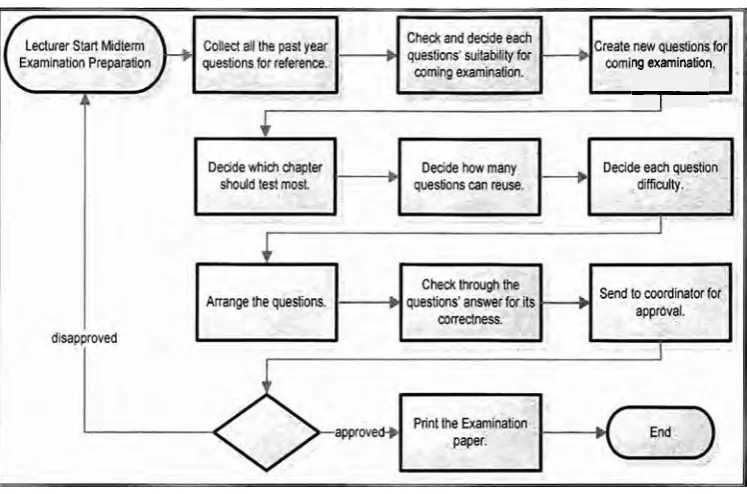
Figure 1.1: Current examination preparation procedure
Figure 1.1 above shows the current examination question preparation by a
lecturer. Before lecturers start preparing the questions for the examination, they need
to collect all the past year's questions for their reference. After that, they need to
check which questions are suitable for next examination. Besides that, they are also
requiring to create new questions for the examination. After the questions have been
created, they need to combine and arrange all the questions. At the end of the
procedure, a coordinator is needed to check through the questions again for its
correctness. If the coordinator found an error or the questions are not suitable, the
whole procedure must be repeated again. Once the questions have been approved, the
set of questions is sent out to print. In the printing process, the questions may leak
out and causes many problems that may require the examination to be retest and the
problems always cost a lot of time and money.
Question Bank but
Figure 1.2: Question preparation process of REG system
The examination preparation is simple due to all the questions that already
came out in previous examination will be reused. In each semester, data structure
lecturer must create new questions to be kept in the Question Bank. Later than that,
the coordinator will check either the questions are suitable or not. If not, the
questions will still be stored in Question Bank but will be labeled as deny for future
reference. After that, the coordinator will decide which chapter should be questioned
most and which chapter is less. As soon as all the preparation is done, the
examination can start any time. When the examination starts, each student will get
different set of questions and it is according to the coordinator choice of chapters.
Besides randomizing the questions, this system also possesses time limit
function and the mark calculation function. The meaning is that the online data
structure examination will finish on exactly the time that has been announced. Soon
after the examination end, this REG system will calculate the result and display it to
the students.
Therefore, with REG it can save up more time, money and make the
1.2 Problem Statement
There are a few weaknesses identified from the current examination system.
Among the main problems identified are listed as below:
>
Time WastingThe time needed to prepare examination paper is extraordinary long and
exhausting. There are such time to collect past year exam paper, time to
check the past year questions, time to arrange the questions, time to get
approval from coordinator and also time that needed to correct the mistake
made during preparation.
>
Examination questions may leak outThere are many possibilities that will lead to the leakage of exam questions
such as the printing company sells the exam paper or cause by student hacks
into lecturer's computer to get the softcopy of exam paper.
>
Money WastingThe cost of each examination is not economical. It cost double if the leakage
of exam questions happened. The examination has to be canceled and the
lecturer needs to redo all the questions and print them all over again.
>
Difficult to set examination durationIt is hard to decide when to end an exam if something emergency occurred
such as the interruption of examination paper distribution.
>
Students cannot check their result on timeStudents have to wait for some time until lecturer finished marking the paper.
Therefore, it is wasting time and human energy.
9 Exam questions is not gathered and organized
Do not have a system to organize all the exam questions and it always needs
1.3 Objective
>
To develop a system that can generate questions randomlyEvery examinee will get different set of question, so that no discipline
problem will occur during examination period.
>
To fix the examination timeIt is unfair to other examinee if some examinee get extra time than those
manage to finish on time.
9 To enable student to check their result on time
Result that announce lately will affect student planning in their study.
9 To manage and store all the examination questions
Collect and check back all past year question is an exhausted task. Therefore,
1.4 Scope
As general this system is a web-based application that can generate question
randomly by online and display the result straight after the examination ends.
9
Only lecturers teaching data structure subject will use this systemThis system can only access by data structure lecturer whether in create
questions or organize a test and only an administrator can register each
lecturer to the system.
P
Only students that registered can use this systemAll students that want to sit for the examination have to register first due to
the result that will be announced right after examination ends.
9 The system will randomize the question. Therefore, that, each student
will get different set of question
Questions provided to each student must be different so that randomization
objective is achieved.
>
Only a lecturer with coordinator titled or "penyelaras" in BahasaMalaysia can set each examination requirement
One lecturer that entitled coordinator can only set the specification for each
examination.
9 The system will end examination when the time is up
The duration for each examination must be set and limited. After certain
duration, the examination will end and start calculating the result.
9 System will display the students' particular result soon after the examination end
1.5 Project Significance
Random e-Question Generator for Midterm Examination is necessary due to
the vulnerable of current manual system. REG possesses some important benefits:
9 Users
The users that are on offer to use this system are lecturer of data structure and
algorithm subject and students who are taking this subject.
9 Save cost and time
By having REG system, lecturers do not need to waste their time in doing the
exam paper all over again. It is quite an exhausted job in doing examination
paper. Sometimes, until it consume the most of the lecturer time causes the
consultation time for students being cut down. Therefore, REG is necessary
to bestow more consultation time for students.
P-
Questions managementAll the questions that are asked in the examination will be saved in the
Question Bank for future review and use. Therefore, it does not need to
consume a lot of time and energy in searching and analyzing the question
repeatedly. Since the questions can be reused, the lecturer will just need to
add new questions to the Question bank.
9 Reduce discipline problems during examination
Due to the randomization of the question that REG system possesses, all
examinees will get different set of question, and they will only know what the
questions are soon after the examination start. Discipline problems will
greatly reduce since every student's question set is different. Therefore, no
P Reduce questions' leakage problem
The problem like the leakage of examination question will not happen any
more. Due to each examinee will get dissimilar set of question. The
examination difficulties is set by the coordinator and letting the system to
choose the questions for each student, hence even the lecturer that teaching
the subject will not know what question will be asked in examination.
P Fix the examination duration
The examination will accurately terminate in an exact duration. There will be
no extra time will be given for those examinee that come late for the
examination.
P Examination's result management
The examinee will be informed for their result soon after the test terminates.
Students can plan and prepare their next semester schedule earlier.
1.6 Expected Output
A web-based application that possesses random features and is able to generates examination questions for data structure midterm from the Question Bank.
It sets up the examination environment by having different set of questions for each
examinee and the examinee must complete it within a specific duration. The