City, University of London Institutional Repository
Citation
:
Pontis, S., Kefalidou, G., Blandford, A., Forth, J., Makri, S., Sharples, S.,
Wiggins, G. & Woods, M. (2015). Academics' Responses to Encountered Information:
Context Matters. Journal of the Association for Information Science and Technology, 67(8),
pp. 1883-1903. doi: 10.1002/asi.23502
This is the accepted version of the paper.
This version of the publication may differ from the final published
version.
Permanent repository link:
http://openaccess.city.ac.uk/15708/
Link to published version
:
http://dx.doi.org/10.1002/asi.23502
Copyright and reuse:
City Research Online aims to make research
outputs of City, University of London available to a wider audience.
Copyright and Moral Rights remain with the author(s) and/or copyright
holders. URLs from City Research Online may be freely distributed and
linked to.
Preprint: accepted for publication 11 December 2014
Academics’ responses to encountered information: context matters
Sheila Pontis1, Genovefa Kefalidou2, Ann Blandford1, Jamie Forth3, Stephann Makri4,
Sarah Sharples2, Geraint Wiggins3, Mel Woods5
Sheila Pontis and Ann Blandford
Interaction Centre, University College London1
Malet Place Engineering Building (8th Floor), Gower Street, London WC1E 6BT Tel: +44 20 7679 7980 / e-‐mail: [email protected]
Tel: +44 20 7679 0688 / e-‐mail: [email protected]
Genovefa Kefalidou and Sarah Sharples
Human Factors Research Group, Faculty of Science, University of Nottingham2
Geospatial Building, Jubilee Campus, Wollaton Road, Nottingham NG8 1BB Tel: +44 11 5823 1420 / e-‐mail: [email protected] Tel: +44 11 5951 4196 / e-‐mail: [email protected]
Jamie Forth and Geraint Wiggins
School of Electronic Engineering and Computer Science, Queen Mary, University of London3
Mile End Road, London E1 4FZ
Tel: +44 20 7882 8286 / e-‐mail: [email protected] Tel: +44 20 7882 5827 / e-‐mail: [email protected]
Stephann Makri
School of Informatics, Department of Computing, City University London4
Northampton Square, London EC1V 0HB
Tel: +44 20 7040 5060 / e-‐mail: [email protected]
Mel Woods
Visual Research Centre, Dundee Contemporary Arts, University of Dundee5
152 Nethergate, Dundee, Scotland DD1 4DY
Tel: + 44 13 8238 4646 / e-‐mail: [email protected]
Academics’ responses to encountered information: context matters
Abstract
An increasing number of tools are being developed to help academics interact with information, but little is known
about the benefits of those tools for their users. This study evaluated academics’ receptiveness to information
proposed by a mobile app, the SerenA Notebook: information that is based in their inferred interests but does not
relate directly to a prior recognized need. The evaluated app aimed at creating the experience of serendipitous
encounters: generating ideas and inspiring thoughts, and potentially triggering follow-‐up actions, by providing
users with information related to their work and leisure interests in the form of suggestions. We studied how 20
academics interacted with messages sent by the mobile app at a rate of 3 per day over ten consecutive days.
Collected data sets were analyzed using thematic analysis. We found that contextual factors (location, activity and
focus) strongly influenced academics’ responses to messages. Academics described some unsolicited information
as interesting but irrelevant when they could not make immediate use of it. They highlighted filtering information
as their major struggle rather than finding information. Some messages that were positively received acted as
reminders of activities participants were meant to be doing but were postponing, or were relevant to ongoing
activities at the time the information was received.
Keywords: Information interaction, Reflection, Relevance, Serendipity
Introduction
Academics seek and interact with information every day to find new sources, expand existing knowledge, or for inspiration. The vast amount of information on the Web can challenge those searching processes. For people at the start of their academic careers, shifting fields or engaging in interdisciplinary research (e.g., Palmer, 1999), the identification of highly relevant information can be particularly challenging. However, “sometimes, information is encountered and used without an explicit need ever having been identified. Perhaps the most interesting of such encounters are generally regarded as ‘serendipitous’” (Blandford and Attfield, 2010:35). Tools have been created to “promote a discovery environment that encourages the searcher to be creative, to be open to accidental discovery” (Race, 2012:140). Other tools provide recommendations for information to consume (e.g. Toms & McCay-‐Peet, 2009), people to meet (e.g. Eagle & Pentland, 2005), places to visit (e.g. Bellotti et al., 2008) or events to attend (e.g. Forsblom et al., 2012) based on users’ personal interests. These studies illustrate the range of efforts to design tools to support serendipity but none of them has really taken off in terms of design. On the other hand, digital information environments have the potential to “kill” serendipity even when they aim to support it. Van Andel (1994:646) stresses that “the very moment [we] can plan or program 'serendipity' it cannot be called serendipity anymore.” Similarly, André et al. (2009:20) argue that when “all elements of chance and accidental finding” are removed, we end “with something barely recognizable as serendipity.” This raises the question whether we can design tools to support serendipity. The motivation of this study was to address that question by exploring how people respond to encountered information when an information need has not been explicitly recognized and information is not being actively sought, and how digital tools support the information journey (Blandford and Attfield, 2010).
Our study aimed to investigate how academics interacted with and made use of messages received on their mobile phones generated by a reflective app based on their interests and notes they took daily, and whether messages were perceived as opportunities for serendipity. To address these aims, we designed an evaluation study to test how participants responded to the information that was sent by the SerenA Notebook app (SerenA app) (Maxwell et al., 2012). The SerenA app was developed to try to integrate serendipity with people’s activities, particularly focusing on the notion of notebooks and capturing the action of note-‐taking. The goal of the app is to assist academics by sending work and leisure messages that are based on their interests, as reflected in the notes that they keep for themselves. Messages contain suggestions (e.g. papers to read, people to visit, events to attend) that the individual might find interesting and unexpected, and may want to follow-‐up on.
In this paper, we first provide an overview of the information interaction process and the phases of the information journey. Then we discuss previous studies related to interactive technology developed to support 1) these phases, and 2) users in making accidental connections and discoveries. We then describe the
methodology used in the study and the data sets collected followed by the analytical rationale used to make sense of the data. We report and discuss our findings, and end the paper with conclusions highlighting further possible studies.
Related work
Interacting with information
Marchionini (2008) describes three elements involved in the information domain: “information objects (e.g., books, articles, and other physical records); humans who create, manage, and use the objects to form mental representations; and the technologies that capture, store, transmit, and manage information objects.” Over time, studies have moved from exploring human and technological elements independently, leaving aside how people acquire, manage and organize information, to investigations taking into account the relationship between people and technology. In other words, studies became more user-‐centered, investigating how people interact with information and how particular technologies support that interaction. The study reported in this paper is concerned with exploring ways in which people interact with different types of information (e.g. pieces of advice, activities, resources) presented to them, how they make use of that information in their daily lives, and ways of supporting that process through interactive systems.
Investigating information interaction beyond the acquisition of information extends the scope of
research towards a holistic understanding of the usefulness of technology to users: how we actually make use of that information, our “actions, feelings and thoughts at the time of information encountering” (Erdelez, 1999). This provides insights on, for example, how we use information to enhance or alter our existing understandings of a topic, how it feeds into our existing research, and how it inspires new avenues of research. Many of these stages are captured in Wilson’s (1999) Human Information Behavior (HIB) model. Wilson reviews earlier models of both information seeking and information searching, proposing a nested model in which information behavior encompasses, but extends beyond, information seeking, and information seeking, in turn, extends beyond search behavior. The main stages of the HIB model are: recognizing the context of an information need; engaging in information seeking behavior; and information processing and use. This includes the important step of information use, but presupposes that an information need has been recognized as a “gap” (Belkin et al, 1982) and that information seeking is active. While Wilson’s model refers to “passive search,” there is no explicit discussion of information encountering. Furthermore, “processing and use” are merged, with little discussion of how information is assessed or interpreted within the context of the individual’s knowledge and interests. These steps (of encountering as well as active seeking, and of interpretation as well as acquisition) are featured more explicitly in Blandford and Attfield’s (2010) “information journey”.
environments, it is often important to consider these aspects so we can try to ensure that we do not just support academics in finding information, but also with the other “downstream information activities” that necessarily take place to incorporate the information found into their work.
In the next section we review the information journey in more detail.
The Information journey
Four phases comprise the information journey, frequently starting with the recognition of an information need and followed by the collection of information. Information is often collected “through active searching, serendipitous finding or being told” (Blandford & Attfield, 2010). Subsequent phases are related to the interpretation and validation of the previously acquired information, and its use, such as in writing a report, making a presentation or making decisions (Figure 1).
Figure 1: Information journey phases (based on Blandford & Attfield, 2010)
By interacting with information, the individual’s understanding of a particular activity evolves. Blandford and Attfield (2010) note that the phases are not sequential as information “may be acquired
incidentally (without the individual having previously recognized the need), and it may be necessary to find and interpret (or make sense of) a lot of information before any of it is overtly used.” The information journey highlights that information interaction extends beyond information seeking and also includes information encountering. Considering information encountering in the context of the information journey highlights the importance of not only supporting users in encountering information unexpectedly, but also in trying to ensure that the information they encounter is useful—so that the information ends up being used in their work.
The information journey adapts to an individual’s information interactions. The reflective interactive system evaluated in this study aimed at supporting the information journey by recommending information to users even when a need has not been recognized. All four phases were investigated in our study, but the focus is on encountering, interpreting and using (or saving or ignoring). A better understanding of the information
Find Information Use
Interpretation
Recognise Need
[image:6.612.170.398.289.444.2]journey may provide key insights to improve the design of reflective interactive tools and how to support the journey.
Reflective systems and tools supporting information interaction
The information journey involves various processes, including information seeking (Kuhlthau, 1991), information retrieval (Ellis, 1989; Vakkari, 2001), sensemaking (Dervin, 1999; Pirolli and Card, 2005; Klein et al., 2007), and information management (Deltor, 2010). Many interactive tools have been created to assist those processes. For example, NewsHarvester (Attfield et al., 2008) provided journalists with integrated support for information seeking and retrieval, and sensemaking in the context of the article writing process.
Interactive tools have also been created to support information interaction through unplanned discoveries. These tools aid users in the act of making connections and may foster serendipitous connections. For example, Stevenson et al. (2008) introduced a library classification system to enhance resource discovery based on hypertextuality of digital resources. Similarly, Thudt et al. (2012) created a “Bohemian Bookshelf” tool that allowed users to explore library collections by interacting with a number of novel information
visualizations. The tool supports unplanned discoveries by encouraging “playful exploration” with the various visualizations. Moreover, other existing interactive systems explicitly support reflection in order to stimulate creative thinking. For example, MIRROR (Karlsen et al., 2011) is a mobile application that helps care home staff solve workplace-‐related problems they have not previously encountered. This is achieved by encouraging carers to use analogical reasoning to apply resolutions to previous problems, from either within or outside their domain, to their current problem.
While existing studies aim at helping a wide range of users experience serendipitous encounters, the app evaluated in this study particularly focuses on supporting academics with making connections, generating new ideas and creating opportunities for discovering information serendipitously.
Coming across information serendipitously in academia
As discussed previously, the information journey involves finding information, validating and
interpreting it, and then making use of the interpretation. Sometimes this involves recognizing an explicit need for particular information (e.g. information on a particular theatre production a friend told us they enjoyed), but other times this recognition of a need may be less explicit. For example, consider coming across an advertisement for a theatre production of a movie we had particularly enjoyed watching: assuming we were previously unaware of the theatre production, this can be regarded as information we “did not know we needed to know.” Furthermore, this can be regarded as coming across interesting information unexpectedly (or
However, much of the time, coming across information serendipitously does not involve people seeking information, but information seeking them.
Foster and Ford (2003) quote from the Oxford English Dictionary in defining serendipity as “the faculty of making happy and unexpected discoveries by accident.” They note that serendipity has particular value for the creative process but also a strong role in academic research.
In a study with experienced searchers, Watson (2008:4) reported that information to be considered serendipity needed to be considered both unexpected or unplanned and useful or valuable. Expanding that study, Makri and Blandford (2012) found that experiences that people described as “serendipitous” involved three essential elements: unexpected circumstances, an “aha” moment of insight, and a valuable, unanticipated outcome. When applied to an information discovery context, this empirically-‐derived definition suggests that information that people come across serendipitously should be both unexpected and valuable (information can drive insight, but cannot be insightful in its own right). Although the study reported here was not solely focused on coming across information serendipitously, we took serendipity dimensions as a way to evaluate whether information suggested by the app triggered serendipitous encounters. In place of value, we used surrogate elements of serendipity provided by a prior study (Kefalidou et al., In preparation) to measure the influence of suggestions generated by the app in users’ lives during the study: together with unexpectedness, we used interestingness and whether or not information was followed up by action, as discussed in more detail below.
Several prior studies have examined the role of serendipity in academics’ information journeys and indicated its benefits for information seeking. Foster and Ford (2003) found that coming across information serendipitously during active information seeking either led to the reinforcement and strengthening of the researcher’s existing conception or solution of their information task, or to the task being reconfigured in some way. They highlighted coming across information serendipitously “as an important source of artistic
stimulation” (2003:322) and a means of revealing “hidden analogies” by making mental connections between information sources and thereby stimulating creativity. In addition, Watson (2008) indicated that coming across information serendipitously could generate follow-‐up actions, such as “propelling” information-‐seeking forwards. Makri and Warwick (2010) found serendipitous information encounters to be both a driver and enabler of inspiration for postgraduate architecture and urban design students.
Existing studies have also investigated how and when academics actually come across information serendipitously. Makri and Warwick (2010) reported that their participants came across information serendipitously often by browsing images of buildings in order to inspire their design work. Sun et al. (2011) found that academics often made unexpected mental connections between people, information and ideas during the course of their work.
The SerenA Notebook
The concept of the SerenA Notebook was developed within a project (www.serena.ac.uk) that aimed to deliver technology that supported serendipitous interactions in research practice. The idea behind the Notebook was that it should infer researchers’ interests from their notes and offer up suggestions of information from resources that the researcher does not normally access to facilitate “serendipitous
encounters”. One of the aims of the study reported here was to evaluate the utility of the SerenA concept. The focus of this paper is on people’s perceptions of, and responses to, suggestions received that are related to their declared interests and their notes. In this context, the SerenA app is a useful experimental instrument, but not the focus of the study, so we provide an outline description of it to set the context for the study.
The SerenA Notebook is an Android-‐based mobile app building on the functionality of physical notebooks and the action of note-‐taking to support serendipity (Maxwell et al., 2012). The app aims to
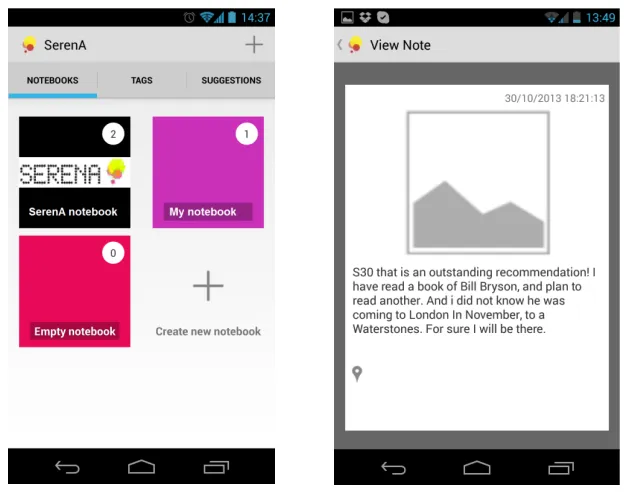
interactively replicate these roles by allowing users to make notes while on the move and tag them with various hashtag keywords to enable later searching or browsing of their notes by keyword (Figure 2). The finalized app will allow users to categorize these notes into notebooks that they create, and to rename, or delete the name and color of existing notebooks.
Figure 2: Screen shots of The SerenA Notebook. Left: Notebooks created using the SerenA app. Right: Note created during the study by participant U5 as a respond to one suggestion.
[image:9.612.157.469.364.610.2]
suggestions will direct users to a Website containing information that they might want to look at, related to notes they had entered in the SerenA notebook. Suggestions will be generated by an underlying agent based system integrated with the notebook making inferences between the text the user enters in their notes and information available on the Web about potential information, people, places or events that are related to the notes the user enters (Forth et al., 2013).
Figure 3: The figure illustrates a suggestion of a potentially interesting and unexpected person to meet related to the notes a user has made.
Study
This study aimed to evaluate academics’ responses to encountered information sent by the SerenA app to (1) better understand how people engage with unsolicited but potentially relevant suggestions from a system, and (2) identify design implications for future systems intended to support serendipity-‐like experiences
Methodology
The app evaluated in this study was a prototype that had reduced functionality. For example, while users could create notes and notebooks, they could not edit notes or delete notebooks; and the suggestion algorithm was not implemented in this prototype. Taking these aspects into account, we designed a multi-‐layered study to evaluate use of the SerenA app in naturalistic settings, and simulate key aspects of the app that were not fully in operation by human “Wizards” (Dahlbäck et al, 1993). This Wizard of Oz (Kelley, 1984) approach required wizards to generate suggestions by simulating the behavior of the underlying agent system and interactive technology as outlined above and presented in more detail by Forth et al. (2013). Wizards made inferences on users’ notes and interests, and then sent them to users by text message in the form of suggestions. Sometimes these inferences were based on an individual note a user made using the app (e.g. “3D printing” or “digital fashion”). At other times, inferences were based on connections between notes (e.g. “3D printing of digital clothing items”). Functionality for the user to provide feedback on the suggestions made was also not implemented. However, it was simulated by issuing users with an assessment log sheet (Appendix B), which was used to record their feedback on the suggestions presented to them.
For the study, we recruited participants as wizards and users. On the one hand, we recruited four wizards with a Masters or BA/BSc qualification, and native level of English through an agency based in
Nottingham. On the other hand, we recruited 20 users from two UK universities: University of Nottingham and University College London. Users were researchers and advanced PhD students (at least on the second year or
“Brenda Dervin has previously presented her work at the
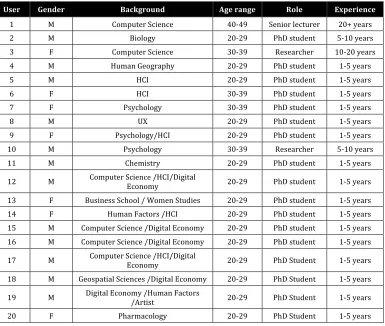
with a minimum of five years of professional experience) from diverse backgrounds (e.g. architecture, psychology, HCI, biology). Table 1 summarizes users’ demographic information. The recruitment process involved an open call sent via mailing lists, and public announcements of the study to the research populations from both participating universities, specifying the need of an Android phone, 4.0 with JellyBean or Gingerbread operating system.
User Gender Background Age range Role Experience
1 M Computer Science 40-‐49 Senior lecturer 20+ years 2 M Biology 20-‐29 PhD student 5-‐10 years 3 F Computer Science 30-‐39 Researcher 10-‐20 years 4 M Human Geography 20-‐29 PhD student 1-‐5 years 5 M HCI 20-‐29 PhD student 1-‐5 years 6 F HCI 30-‐39 PhD student 1-‐5 years 7 F Psychology 30-‐39 PhD student 1-‐5 years 8 M UX 20-‐29 PhD student 1-‐5 years 9 F Psychology/HCI 20-‐29 PhD student 1-‐5 years 10 M Psychology 30-‐39 Researcher 5-‐10 years 11 M Chemistry 20-‐29 PhD student 1-‐5 years
12 M Computer Science /HCI/Digital Economy 20-‐29 PhD student 1-‐5 years
13 F Business School / Women Studies 20-‐29 PhD student 1-‐5 years 14 F Human Factors /HCI 20-‐29 PhD student 1-‐5 years 15 M Computer Science /Digital Economy 20-‐29 PhD student 1-‐5 years 16 M Computer Science /Digital Economy 20-‐29 PhD student 1-‐5 years
17 M Computer Science /HCI/Digital Economy 20-‐29 PhD Student 1-‐5 years
18 M Geospatial Sciences /Digital Economy 20-‐29 PhD Student 1-‐5 years
19 M Digital Economy /Human Factors
/Artist 20-‐29 PhD Student 1-‐5 years 20 F Pharmacology 20-‐29 PhD Student 1-‐5 years
Table 1. Users’ demographic information
To minimize the risk of affecting users’ freedom of expression, users were told that they would be interacting with a computer system and no reference to the wizards was made (Dahlbäck et al., 1993). Users were paid £100 for a training session, ten days of the study, and debriefing interview, and wizards participated for an hourly rate as specified by an agency for home workers. Both users and wizards were given information sheets and consent forms at the beginning of the study (Ethics number: Z6364106/2013/06/12).
Multi-‐layered Study structure
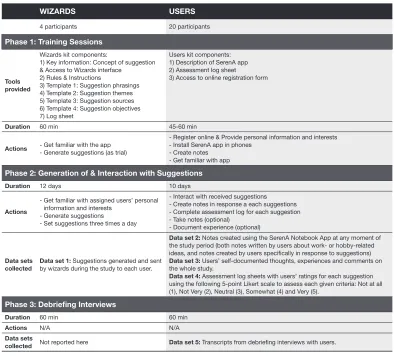
In total, the study ran over 20 days and involved three phases. Table 2 gives an overview of the study structure, and participants’ (wizards and users) roles in each phase of the study.
[image:11.612.126.511.177.503.2]
Table 2. Multi-‐layered structure of the study, and summary of main tasks performed in each phase by participants.
Pilot study
Prior to the beginning of the main study, we conducted a three-‐day pilot study. Two researchers acted as pilot wizards, while two other researchers acted as pilot users. All of them went through each phase of the study described below.
The pilot study provided valuable insights to identify aspects of the app and online interfaces (i.e. wizards’ website and users’ registration form website) which needed improvement. In addition, the pilot study indicated the value of testing instructions and rules for wizards so that they could generate suggestions consistently. Findings from the pilot helped formulate clearer rules including a practice walkthrough example of how to analyze users’ information in order to generate inferences that would lead to suggestions. The identification of particular themes that would be more useful for researchers, and the need to combine strict and flexible rules in the process Wizards will use in generating suggestions, also emerged from the pilot study.
WIZARDS USERS
4 participants 20 participants
Phase 1: Training Sessions
Tools provided
Wizards kit components:
1) Key information: Concept of suggestion & Access to Wizards interface
2) Rules & Instructions
3) Template 1: Suggestion phrasings 4) Template 2: Suggestion themes 5) Template 3: Suggestion sources 6) Template 4: Suggestion objectives 7) Log sheet
Users kit components: 1) Description of SerenA app 2) Assessment log sheet 3) Access to online registration form
Duration 60 min 45-60 min
Actions - Get familiar with the app- Generate suggestions (as trial)
- Register online & Provide personal information and interests - Install SerenA app in phones
- Create notes - Get familiar with app Phase 2: Generation of & Interaction with Suggestions
Duration 12 days 10 days
Actions
- Get familiar with assigned users’ personal information and interests
- Generate suggestions - Set suggestions three times a day
- Interact with received suggestions - Create notes in response a each suggestions - Complete assessment log for each suggestion - Take notes (optional)
- Document experience (optional)
Data sets collected
Data set 1: Suggestions generated and sent by wizards during the study to each user.
Data set 2: Notes created using the SerenA Notebook App at any moment of the study period (both notes written by users about work- or hobby-related ideas, and notes created by users specifically in response to suggestions)
Data set 3: Users’ self-documented thoughts, experiences and comments on the whole study.
Data set 4: Assessment log sheets with users’ ratings for each suggestion using the following 5-point Likert scale to assess each given criteria: Not at all (1), Not Very (2), Neutral (3), Somewhat (4) and Very (5).
Phase 3: Debriefing Interviews
Duration 60 min 60 min
Actions N/A N/A
Data sets
[image:12.612.112.506.70.428.2]Main study
Phase 1. Training Sessions. The first phase of the study aimed at collecting users’ personal information to help wizards with the process of generating suggestions, and gathering initial insights about the concept of the app and its functionality.
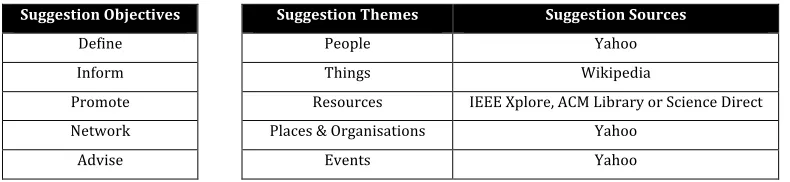
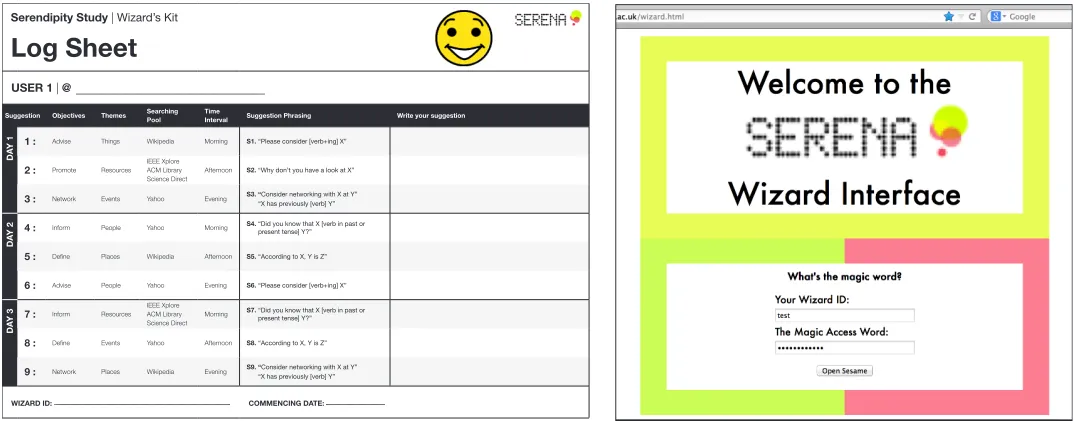
Wizards: At the beginning of the training session, we provided wizards with a kit. The kit included key information (explanation of the concept of “suggestions” and how to access Wizards interface – Figure 4, Right), rules and instructions to generate suggestions (Appendix A), four templates (Suggestions phrasings, themes, sources and objectives) (Tables 3 and 4), and a log sheet (Figure 4, Left).
S(n°): Title-‐statement # URL Example
To define:
S(n): “According to X, Y is Z”
[Define | Places]
S5: According to Wikipedia, the inaugural professional 2014 Big Data World Championship is to be held in Dallas, Texas
http://en.wikipedia.org/wiki/Big_data To Inform:
S(n): “Did you know that X [verb in past or present tense] Y?”
[Inform | People]
S4: Did you know that Tim Brown writes a blog on ‘Design Thinking’? http://designthinking.ideo.co
To advise:
S(n): “Please consider [verb+ing] X”
[Advise | Things]
S1: Please consider looking at the Information Design Association http://en.wikipedia.org/wiki/Information_Design_Association
Table 3: Template 1. Examples of suggestion types of phrasings and contents.
Suggestion Objectives Suggestion Themes Suggestion Sources
Define People Yahoo
Inform Things Wikipedia
Promote Resources IEEE Xplore, ACM Library or Science Direct Network Places & Organisations Yahoo
Advise Events Yahoo
Table 4. Templates 2, 3 and 4. Left: Suggestion objectives. Right: Suggestion themes related to their specific information sources from where each type of those suggestions was generated. For example, suggestions related to
‘People,’ ‘Places’ and ‘Events’ themes were recommending information from Yahoo sources.
[image:13.612.85.528.229.374.2] [image:13.612.119.514.420.511.2]Figure 4. Left: Example of log sheet provided to the wizards. Themes and objectives were randomly generated by an online random number generator. Right: Homepage of Wizards’ interface created for the study.
First, wizards were introduced to their tasks and the process of generating suggestions. Then researchers helped them get familiar with the Wizards’ interface designed for this study through which they could access users’ information (profile information and notes) and send suggestions. The wizards’ main task was to generate suggestions for five different themes and with five different objectives using the specific information sources for each theme described in the templates. To increase the range of users’ interactions, the templates included multiple themes and objectives. The log sheet involved a randomized combination based on the templates of suggestion themes and objectives, and phrasing for each combination to guide and systematize the generation process. Suggestions aimed to be interesting, unexpected, and elicit a response from users in the form of thoughts, ideas, and potentially follow up actions.
At the end of the training session, wizards were shuffled and assigned to more than one user.
Users: At the beginning of the training session we provided users with a kit. The kit included a description of the SerenA app, an assessment log sheet (Appendix B), and information to access the online registration form. First, users generated a profile by completing the online registration form and providing their work and leisure interests, and other personal information (e.g. websites of interests, areas of expertise, places they would like to visit, conferences they would like to attend). Then they installed the SerenA app in their mobile phones, and researchers helped them get familiar with the app. Users also learnt how to create notes and notebooks with the app, and when and how to interact with incoming suggestions. Users main tasks were to interact with received suggestions and create a note as a response to each suggestion. In addition, building on the work of Sun et al. (2011), users could reflect further on the information received by creating at least one extra note per weekday throughout the days of the study using the SerenA app (i.e. potentially creating a
USER 1 | @
Suggestion Objectives Themes Searching Pool Time Interval Suggestion Phrasing Write your suggestion
DA
Y 1 1 : Advise Things Wikipedia Morning S1. “Please consider [verb+ing] X”
2 : Promote Resources IEEE Xplore ACM Library Science Direct
Afternoon S2. “Why don’t you have a look at X”
3 : Network Events Yahoo Evening S3. ““X has previously [verb] Y”Consider networking with X at Y”
DA
Y 2 4 : Inform People Yahoo Morning S4. “Did you know that X [verb in past or present tense] Y?”
5 : Define Places Wikipedia Afternoon S5. “According to X, Y is Z”
6 : Advise People Yahoo Evening S6. “Please consider [verb+ing] X”
DA
Y 3 7 : Inform Resources IEEE Xplore ACM Library Science Direct
Morning S7. “Did you know that X [verb in past or present tense] Y?”
8 : Define Events Yahoo Afternoon S8. “According to X, Y is Z”
9 : Network Places Wikipedia Evening S9. “Consider networking with X at Y”
“X has previously [verb] Y”
WIZARD ID: COMMENCING DATE:
[image:14.612.44.581.71.282.2]minimum of seven extra notes), and documenting their experiences using a diary. However, we clarified that taking extra notes and documenting experiences were not a condition to successfully complete the study.
At the end of the training sessions, users were divided into three cohorts; each cohort commencing on a consecutive day.
Phase 2. Generation of and Interaction with Suggestions. The second phase aimed at testing the process of generating suggestions, users’ interactions with and responsiveness to suggestions, the pertinence of
suggestions, and users’ interactions with the app. During this phase we collected four different types of data sets.
Wizards: At the beginning of this phase, wizards accessed users’ profile information and notes through the Wizards’ interface, and used that information and the log sheet to search for information and generate suggestions (Data set 1). Wizards sent suggestions three times a day for 10 consecutive days to each assigned user; in total they generated and sent 600 suggestions.
Users: During the 10-‐day period of the study, users interacted with the suggestions at their earliest convenience within a working day, and created notes using the app to give feedback to each received suggestion (Data set 2). Following our recommendation, some users created extra notes using SerenA (Data set 2),
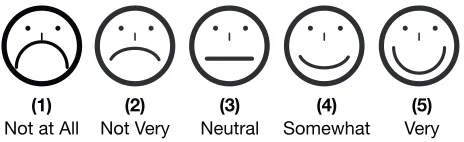
documented thoughts about the experience and the use of the app, and recorded all actions taken in response to received suggestions (Data set 3). All users completed the assessment log sheet to assess their experiences with each suggestion. They chose the number that corresponded most closely to rate each suggestion in terms of three qualities: how interesting, how unexpected, and how it was followed up, each based on a 5-‐point Likert scale (Figure 5) (Data set 4).
Figure 5. Smiley-‐Scale used by users in the study to assess each criterion for suggestions (Bevan, 1995)
The above three qualities emerged from Kefalidou et al. (In preparation). That study evaluated 16 serendipity-‐related concepts (e.g. Makri and Blandford, 2012), and two were found the most representative to measure serendipity encounters: unexpectedness and interestingness. Furthermore, in line with Watson (2008), the study also indicated that when these two qualities were present, the information encounter would be followed up at some point. This “follow-‐up” stage could be long-‐term or short-‐term depending on people’s needs and perceptions at the time, allowing further reflection that may lead to serendipitous connections (Kefalidou and Sharples, Submitted). In short, in this study we measure the degree of serendipity experienced
(1)
Not at All
(2)
Not Very
(3)
Neutral
(4)
Somewhat
(5)
[image:15.612.200.432.457.528.2]by participants using three surrogate elements to the serendipity qualities (insight, value and unexpectedness) introduced by Makri and Blandford (2012).
Phase 3. Debriefing Interviews. The third phase aimed at learning about wizards and users’ experiences during the study, and unpacking users’ responses to suggestions. We designed 1-‐hour semi-‐structured
debriefing interview with each wizard and user. Interviews took place after the 10-‐day period of the study at the university from which each participant had been recruited (University of Nottingham or University College London). During this phase we collected a fifth data set.
Wizards: They were asked about the process of creating suggestions and challenges of responding to users’ interests. Data and analysis of these interviews are not reported in this paper.
Users: Initially, we used an interview guide aimed at eliciting insights about users’ ways of note-‐taking, their experiences with suggestions and serendipity encounters, and the use of the app. Throughout this phase, we modified the interview guide based on emerging aspects. In addition, we asked each participant specific sets of questions based on their self-‐reported experience documented during the study. Interviews were transcribed verbatim (Data set 5).
We collected quantitative and qualitative data. In this paper, we present the analysis of the data gathered from users, not taking into account wizards’ reflections on their experiences. In this analysis, the five collected data sets (Table 2) provided compelling descriptions to gain an understanding of how users interacted with information (i.e. the suggestions received), and their perceptions and thoughts at the time of receiving the information. We explored whether the information recommended by the app provoked any discernable behavior change or any of the suggestions spurred any type of following up actions or opportunities for
serendipity. Assessment ratings (Data set 4) were expanded and discussed during the interview, data sets 1 to 3 were used to identify key areas to unpack, and data gathered from the interviews (Data set 5) helped validate our interpretations when analyzing those same data sets, and identify initial categories to start a top-‐down analysis.
The data analysis involved two layers, and combined thematic analysis (Braun and Clarke, 2006), data triangulation, and basic descriptive statistics to increase accuracy and credibility of findings providing empirical support. Throughout the analysis, we illustrated findings with representative participants’ own words and terminologies.
received (e.g. email, text), (2) note taking (e.g. paper, electronic), (3) preferred suggestion themes (e.g.
academic, hobbies), (4) ways of interacting with information, (5) ways of following up on suggestions (e.g. short term, long term), (6) content scope (e.g. broad, specific), (7) serendipity experiences, (8) qualities of
serendipity, and (9) factors influencing interactions (e.g. context, timing and level of engagement).
Interview Data Extract: Participant U1 Coded for
Well, I consider [a suggestion] interesting if it contained
information which was relevant to me, but I might not have
stumbled across it by chance. I’m just saying I didn’t know it was
there. You know, it’s easy – there’s no point in being given links; some of the links were things that I’ve never seen, but it didn’t surprise me were there. If I’d needed to find something like that, I’d have been able to find it, and I’d have no need to be
told about it when I’m not looking for it, sort of thing.
1. Definition of the concept of “interesting”
2. Role of the concept for experiencing a serendipitous encounter
3. Role of a recognized need 4. Connection between serendipity qualities
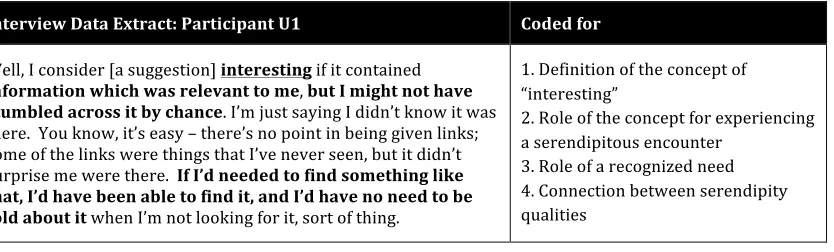
Figure 6. Example of analytical rationale used for the data analysis. The figure illustrates the codes and semantic analysis used to analyze information introduced by User 1 (U1) (Based on Braun and Clarke, 2006).
Data triangulation and descriptive statistics. To make sense of Data set 4, we created basic descriptive statistics for users’ assessments of each of the three qualities (i.e. interestingness, unexpectedness and follow up). After that, we triangulated the nine emerging candidate themes with users’ responses to the suggestions (Data sets 2 and 3), and basic descriptive statistics (Data set 4).
An important part of the analysis aimed to determine whether participants had experienced
serendipitous encounters. While we employed empirically-‐driven concepts related to serendipity that have been previously identified as an evaluation metric for serendipitous encounters, due to the intrinsic subjectivity involved in serendipity and the fact that “trying to decide whether or not to consider an experience to be serendipitous can result in ambiguity” (Makri and Blandford, 2012), it was not possible to objectively measure serendipity per se. For that reason, we used the basic descriptive statistics to measure levels of serendipitous encounters occurring during the study. The analysis led to the identification of different levels of pseudo-‐ serendipity experienced by users. The term pseudo-‐serendipity was originally coined by Roberts (1989:X) to “describe accidental discoveries of ways to achieve an end sought for, in contrast to the meaning of (true) serendipity, which describes accidental discoveries of things not sought for.” Later, van Andel (1994) used the same term to describe something responding to a recognized need that has been discovered, invented or created in an unexpected way. In this paper, we use the term pseudo-‐serendipity to refer to encounters experienced by users that have the potential of being serendipity in that users were able or expressed
[image:17.612.114.531.160.286.2]neutral ratings. Based on these combinations of ratings, we determined four bands of pseudo-‐serendipity experienced during the study.
As a result of triangulating data sets and descriptive statistics, the nine candidate themes were collated and grouped into three core themes: (1) contextual factors, (2) conditions for serendipity, and (3) qualities of pseudo-‐serendipity. Themes are discussed in the following section.
Results
Overall, users interacted with the information generated by the SerenA app in different ways and their responses to the information encountered varied, highlighting the subjectivity involved in serendipity and the difficulty in designing tools to support it. We report our results from a pseudo-‐serendipity rather than a (true) serendipity perspective as our results suggest that concepts previously associated with serendipity may act as well as concepts that can represent pseudo-‐serendipity. The following analysis provides a detailed description of users’ interactions with information sent by the app, contextual factors influencing those interactions, and their perceptions of the suggestions and of pseudo-‐serendipity encounters experienced.
Responses to encountered information: Contextual factors
Users interacted with the information suggested by the app at different moments. Some users engaged with the suggestions as soon as they received them. Others waited until the end of the day to interact with the suggested information, while a third group did not interact at all with some of the suggestions received. Various ways of interacting with the suggestions also emerged, expanding on the findings of prior studies (Sun et al., 2011; Kefalidou and Sharples, Submitted). Most users opened and read the app text messages, and then clicked on the included links to find out more about what each suggestion was recommending. After clicking on the link, some users just read enough to get a better sense of what was being recommended while other users engaged further with the information provided by the link, seeking more information to expand the initial message. A minority of users read the app text messages, but decided not to click on the link. This indicates great diversity in how academics respond to information as different depths of interactions (shallow or deep) and moments when those interactions happen (immediate response or delayed response) emerged.
We identified nine contextual factors that influenced academics’ responses to the suggested information and their openness to experience serendipity. The latter influence is discussed in the following section, while in this section we explore the influence of contextual factors in information interactions.
information was received (morning, afternoon, evening). Most users also stressed the importance of workload as a factor of poor interactions and lower levels of engagement with the suggestions:
It depends basically on how interesting I find the first impression, but also how busy I am at that moment. – U5
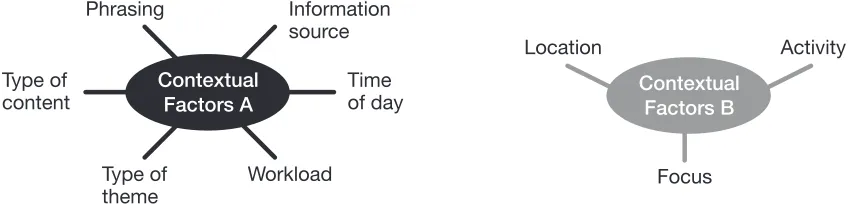
Figure 7. Contextual factors A can have a strong influence in academics’ information journey, while the influence of
contextual factors B is related to their openness to make connections and experience serendipity.
Some of these factors (e.g. the time of day, workload) determined many participants’ level of engagement to further explore the received information, while other factors (e.g. phrasing and source of suggestions) had a stronger influence on a few participants (U3 and U7) making them decide not to click on some suggestion links.
Contextual factors B influenced more directly participants’ openness and receptiveness to experience serendipity. These factors were: the location where participants were when the information was received (e.g. working in the office, commuting, attending a conference); the activity they were doing when the information was received (e.g. working, relaxing, having lunch) which determined their need for information or their openness to that information at that particular time (i.e. coherence between the information and their current focus); and the focus of the information in terms of their background knowledge (e.g. broad information, personalized information). Each of these factors is discussed as follows:
Location. In line with prior studies (Sun et al., 2011; Race, 2012, Kefalidou and Sharples, Submitted), users highlighted location as one factor that greatly influenced the time they spent exploring each suggestion. Most users argued that at the moment of receiving suggestions about events or activities, these were unrelated to their current state of mind or working situation. Therefore those suggestions were described as “interesting,” (U6) but also “irrelevant or unnecessary” (U6). Some users (U3, U4, U6) stressed that receiving suggestions related to the location or context where they would be immersed (e.g. in a conference, in a coffee shop, in a library), would have increased their level of relevance and, consequently, they would have engaged further. U3 explained:
I thought that would have been a recommendation that would have been great to receive, if we so happened to be in the same conference, and we didn’t know each other before, but the application knew we were interested in the same field, that to me would have been a super valuable. (…) If the app used GPS, use some extra context aware information, to know that, the two of us are not actually super far, and we so happen to have similar interests. – U3
Phrasing
Type of content
Type of theme
Information source
Time of day
Workload
Contextual Factors A
Location Activity
Focus
[image:19.612.89.518.160.264.2]
Activity. The second influencing factor highlighted by users was their activity that determined whether they had a recognized need for a particular type of information. The majority of users argued that the
recommended information was not needed in the moment it was received either because they were relaxing on a weekend when they received work-‐related information, or because they received work-‐related information when they were commuting and thinking about something else. In other words, receiving information without a recognized need for it was described as “irritating” (U1) or “pointless” (U7) for some users, even when the information was unknown or interesting:
There’s no point in being given links; some of the links were things that I’ve never seen, but it didn’t surprise me were there. If I’d needed to find something like that, I’d have been able to find it, and I’d have no need to be told about it when I’m not looking for it, sort of thing. – U1
We are receiving information about the different things at different hours so, at the moment, we are getting ready to go to work so if we are receiving notification about something that is work related it might be a good idea because you are in the right frame of mind to receive them. But if you are receiving work related suggestions at the end of the day when you just want to relax it might piss you off because you just want to leave work behind and do something else. – U11
The fact that some users were not searching for any concrete information (i.e. had a recognized need) at the time of receiving suggestions made them less receptive to interact with or explore them. More experienced research users stressed this situation by claiming that they already had a variety of reliable and accurate sources from which they were extracting relevant information for their projects (e.g. email, links and papers recommended by colleagues and sent on Twitter). These sources were “a network (of colleagues and
publication vendors) that [they] have formed over ten years, which had tons of history about [them] and what [they were] interested in.” (U3) She concluded that:
If there was a chance of sending the suggestion at the point in time when I have the highest chance of not being interactive and actually being willing to explore, I would have completely different reactions. – U3
As a result, when users did not have a recognized need for the suggestions sent by the app, even when they were relevant and interesting, some users were “too busy to engage with them” (U10). Similarly, Kefalidou and Sharples (Submitted) found that researchers are less likely to make connections within information that they have not been explicitly seeking than within information they were actively searching for.
Focus. Users also reported the focus of the suggestions as influencing their information interactions. Wizards were meant to generate suggestions combining users’ profile information provided during the