City, University of London Institutional Repository
Citation
: Ma, Tao (2012). Corporate dividend decisions. (Unpublished Doctoral thesis,
City University London)This is the unspecified version of the paper.
This version of the publication may differ from the final published
version.
Permanent repository link:
http://openaccess.city.ac.uk/1947/Link to published version
:
Copyright and reuse:
City Research Online aims to make research
outputs of City, University of London available to a wider audience.
Copyright and Moral Rights remain with the author(s) and/or copyright
holders. URLs from City Research Online may be freely distributed and
linked to.
Corporate Dividend Decisions
Tao Ma
Supervisor
Professor Meziane Lasfer
A thesis submitted for the degree of Doctor of Philosophy
Dedication
Acknowledgements
I would like to gratefully and sincerely thank all the great people who have supported me during my journey of Ph.D, to only some of whom it is possible to give particular mention here.
I am most grateful to my supervisor, Professor Meziane Lasfer, who has been a steady influence throughout my Ph.D phase, for his kindness, patience, and most importantly, his persistent support. His high academic standards, hard work, and great achievements have set an example to me. This doctoral thesis would not have been possible without his exceptional guidance and inspiration. He has always been encouraging me at times of innovative ideas and challenging issues. In particular, he went through several drafts, corrected errors, and provided numerous constructive comments relating to the style and the substance of my thesis. For any errors or inadequacies that may remain in this work, of course, the responsibility is entirely my own.
I would also like to present my deepest gratitude to Professor Gulnur Muradoglu and Professor Ian Marsh who encouraged me and offered great advice at some critical moments in need. I am also grateful to the members of my examination committee, Professor Peter Pope and Professor Ian Garrett, for their time and constructive comments throughout the process.
I also thank the Cass Business School for providing me with the opportunity to complete my doctoral research. I would like to acknowledge Ph.D officers, Malla Pratt and Abdul Momin, who provided me with help and assistance from time to time with smiles on their faces. I have greatly enjoyed the experience to work in the doctoral research center where is full of an atomosphere of academy and friendship.
Declaration
Abstract
The main aims and objectives of my thesis are to test the various conflicting hypotheses developed in the previous literature to explain firms’ dividend policy, focusing specifically on IPOs and cross-country analysis. In particular, I explore the theoretical links in the context of the important dividend theories including signalling, agency costs, lifecycle and catering and then empirically test the hypotheses by using a very large dataset of UK IPOs from 1990 to 2010, which is extracted from offering prospectuses.
The first empirical study focuses on two aspects of post-IPO decision-making: the decision to initiate dividends and the timing of dividend initiation. I develop the testable hypotheses by linking the dividend decisions of IPOs with a number of firm characteristics and IPO-specific factors in the context of the theories relating to dividends and IPO. I find a strong negative relation between underpricing and the propensity of dividend initiation. This finding is in line with the implications of Dividend Discount Model and Rock’s (1986) “winner’s curse”. My results show that the likelihood of initiating dividends is positively associated with managerial ownership, underwriter reputation, firm size, profitability and long-term debt ratio. In addition, the results show that the initiation propensity is negatively influenced by a serial of factors including the length of lockup period, VC backing, managerial stock option, growth opportunities of IPOs, technology intensity, and selection of growth stock exchange (i.e. AIM). Finally, I find that the IPOs issued in the years when the market put a price premium on dividend paying payers are more likely to pay dividend after IPO and initiate dividends earlier. Overall, my results show that IPO characteristics relate to dividend decisions of IPOs through miscellaneous mechanisms of dividends. The most homogeneous results are associated with the life cycle and catering theories. There is also some empirical evidence in support of signaling and agency theory.
The second empirical study examines the determinants on the dividend policies stated in IPO prospectuses. At the stage of preparing for IPO, pre-IPO financial status is very likely to influence the initial dividend policies. My results provide strong evidence that IPOs that experienced superior performance in profitability and cash inflow from operating activities during pre-IPO period tend to make active dividend policies relatively, consistent with the implication of Lintner (1956) and Benartzi, Michaely and Thaler (1997). My results also show that IPOs with higher turnover ratio and lower capital expenditures tend to choose more active dividend policies when going public, consistent with residual theory and free cash flow hypothesis. In addition, the possibility of choosing relatively active dividend strategies at IPO stage is negatively associated with VC backing, length of full lock-up restriction period, stock option, technology focus, and institutional ownership. In contrast, IPOs with more reputable underwriters tend to declare relatively active dividend policy in prospectuses. The evidence relating to long-term debt ratio and managerial ownership is weak. Moreover, IPOs issued in the ‘internet bubble’ period or in 2000s opt for relatively conservative dividend strategies. The overall results in this empirical chapter support lifecycle theory, substitution assumption-based agency theory and free cash flow hypothesis, while the evidence on signaling and catering theories is mixed.
find that dividend-paying companies outperform non-dividend paying counterparts during three post-IPO years, indicating that non-dividend initiating IPOs rather than dividend-initiating ones account for the decline in long-run underperformance. Additionally, I find evidence in support of the conjecture that the dividend policies stated in prospectuses communicate the information, and thus reduce the possibilities that outside investors are overoptimistic over the prospect of the invested companies and that managers overstate the pre-IPO financial data at IPO stage.
The third empirical study examines the trends in dividend policies across seven western countries: U.S., Candada, U.K., Germany, France, Japan and Hong Kong. In general, the proportion of dividend paying firms fell significantly from 1989 through to the early 2000s, with the exception of Japanese firms. Thereafter, the percentage reverted slightly in the US, Canada, Japan and in Hong Kong, but continued to decrease in UK, France, and Germany. In contrast, the aggregate amount of dividends increased continuously across countries and firms retained stable dividend payout ratios, and total payout ratios relatively. Share repurchases took over from dividends as the dominant payout method in the US and the increasing importance of repurchases is observed in Canada and in the UK as well. A declining propensity to pay dividends is seen in all the sample countries apart from in Japan, controlling for key firm characteristics.
Contents
CHAPTER ONE... 1
INTRODUCTION ... 1
1.1 GAPS IN PREVIOUS RESEARCH ... 3
1.2 RESEARCH OBJECTIVES ... 7
1.2.1 Research Objectives for Chapter 3 ... 8
1.2.2 Research Objectives for Chapter 4 ... 9
1.2.3 Research Objectives of Chapter 5 ... 10
1.3 METHODOLOGY ... 11
1.4 SUMMARY OF THE MAIN FINDINGS... 18
1.4.1 Chapter 3 – When Do IPOs Start Paying Dividends? ... 18
1.4.2 Chapter 4 – Determinants of Dividend Decisions at IPO Stage ... 22
1.4.3 Chapter 5 – Trends in Dividend Payments: International Evidence ... 24
1.5 STRUCTURE OF THE THESIS ... 29
CHAPTER TWO ... 31
LITERATURE REVIEW ... 31
2.1 INTRODUCTION ... 31
2.2 SEMINAL STUDIES ON DIVIDEND POLICY ... 32
2.2.1 Lintner (1956) ... 32
2.2.2 Miller and Modigliani’s (1961) Dividend Irrelevancy Proposition ... 33
2.2.3 Black’s (1976) Dividend Puzzle ... 35
2.3 INFORMATION ASYMMETRY AND DIVIDEND SIGNALING ... 36
2.3.1 Theoretical Models ... 36
2.3.2 Empirical Evidence ... 41
2.3.3 Summary ... 47
2.4 RESIDUAL THEORY ... 49
2.4.1 Theoretical Models ... 49
2.4.2 Empirical Evidence ... 51
2.4.3 Summary ... 52
2.5 AGENCY COSTS ... 53
2.5.1 Manager-shareholder Conflict ... 53
2.5.2 Shareholder-creditor Conflict ... 56
2.5.4 Managerial Ownership and Agency cost ... 60
2.5.5 Institutional Shareholders Ownership and Agency Cost ... 62
2.5.6 Stock Options and Agency Cost ... 64
2.5.7 Summary ... 65
2.6 LIFE CYCLE HYPOTHESIS ... 66
2.6.1 Theoretical Model ... 66
2.6.2 Empirical Evidence ... 68
2.6.3 Summary ... 69
2.7 CATERING HYPOTHESIS ... 69
2.7.1 Theoretical Model ... 69
2.7.2 Empirical Evidence ... 71
2.7.3 Summary ... 74
2.8 SUMMARY AND REMARKS ... 75
CHAPTER THREE ... 77
WHEN DO IPOS START PAYING DIVIDENDS? ... 77
3.1 INTRODUCTION ... 77
3.2 LITERATURE BACKGROUND AND HYPOTHESES ... 81
3.2.1 Asymmetric Information and Signaling ... 81
3.2.2 Agency Costs ... 87
3.2.3 Life-cycle ... 94
3.2.4 Catering ... 97
3.3 SAMPLE AND DATA ... 101
3.3.1 Sample Selection ... 101
3.3.2 Data Description... 101
3.4 EMPIRICAL RESULTS ... 108
3.4.1 Univariate Analysis ... 108
3.4.2 Multivariate Binary Logistic Regression Model ... 114
3.4.3 Cox Proportional Hazard Model ... 119
3.4.4 Multivariate Logistic Panel Regression Model ... 124
3.5 ROBUSTNESS TESTS ... 127
3.5.1 Robustness Test for Cross-sectional Logistic Regression Model ... 127
3.5.2 Robustness Test for Cox Proportional Hazard Model ... 132
3.5.3 Robustness Test for Logistic Panel Regression Model ... 136
3.6 FINDINGS AND CONCLUSIONS ... 139
3.6.1 Asymmetric Information and Signaling ... 139
3.6.2 Agency Costs ... 140
3.6.3 Life-Cycle ... 141
CHAPTER FOUR ... 147
DETERMINANTS OF DIVIDEND DECISIONS AT IPO STAGE ... 147
4.1 INTRODUCTION ... 147
4.2 LITERATURE BACKGROUND AND HYPOTHESES ... 152
4.2.1 Asymmetric Information and Signaling ... 152
4.2.2 Agency Costs ... 156
4.2.3 Life-cycle ... 161
4.2.4 Catering ... 163
4.3 SAMPLE AND DATA ... 163
4.3.1 Sample Selection ... 163
4.3.2 Data Description ... 167
4.4 EMPIRICAL RESULTS ... 169
4.4.1 Univariate Analysis ... 169
4.4.2 Logistic Regression Analyses ... 176
4.4.3 Abnormal Returns on Dividend Initiations and Long-Run Aftermarket Performance ... 189
4.5 FINDINGS AND CONCLUSIONS ... 201
4.5.1 Asymmetric Information and Signaling ... 201
4.5.2 Agency Costs ... 203
4.5.3 Life-Cycle ... 204
4.5.4 Catering ... 204
CHAPTER FIVE ... 207
TRENDS IN DIVIDEND PAYMENTS: INTERNATIONAL EVIDENCE ... 207
5.1 INTRODUCTION ... 207
5.2 SAMPLE AND DATA ... 215
5.2.1 Sample Selection ... 215
5.2.2 Data Description ... 218
5.3 INTERNATIONAL TRENDS IN DIVIDEND PAYMENTS AND SHARE REPURCHASES ... 219
5.3.1 Proportion of Firms that Pay Dividends ... 219
5.3.2 Evolution of Dividend Payments and Share Repurchases ... 222
5.3.3 Dividend Payout Ratio and Total Payout Ratio ... 225
5.4 PROPENSITY TO PAY DIVIDENDS ... 228
5.4.1 Determinants on Propensity to Pay Dividends ... 228
5.4.2 Logistic Panel Regressions for the Base Period 1989-1995 ... 231
5.4.3 Estimation of the Propensity to Pay Dividends ... 232
5.5 DETERMINANTS ON DIVIDENDS AND SHARE REPURCHASES... 236
5.5.1 Explanatory Variables ... 236
5.5.3 Amounts of Dividends and Repurchases ... 247
5.6 FIRM CHARACTERISTICS ON VARIOUS DIVIDEND BEHAVIORS ... 252
5.7 RELATIONSHIP BETWEEN DIVIDEND S AND EARNINGS &ADJUSTMENT SPEED OF DIVIDENDS .. 261
5.8 CHANGES IN PAYOUT METHODS ... 264
5.9 FINDINGS AND CONCLUSIONS ... 268
CHAPTER SIX ... 277
SUMMARIES AND CONCLUSIONS ... 277
6.1 CHAPTER 3 ... 277
6.2 CHAPTER 4 ... 280
6.3 CHAPTER 5 ... 283
List of Tables
Chapter Three
Table 3-1 Expected Signs of Explanatory Factors ... 98
Table 3-2 Yearly Distribution of Dividend Initiations ... 106
Table 3-3-A Means and Medians of Characteristics of Initiating and Non-Initiating IPOs ... 110
Table 3-3-B Means and Medians of Characteristics of Dividend-Initiating IPOs at Different Times ... 111
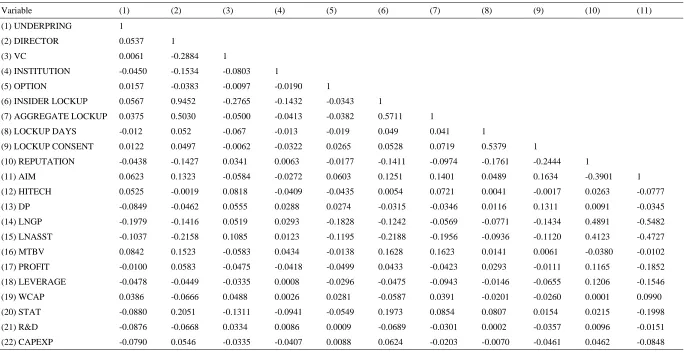
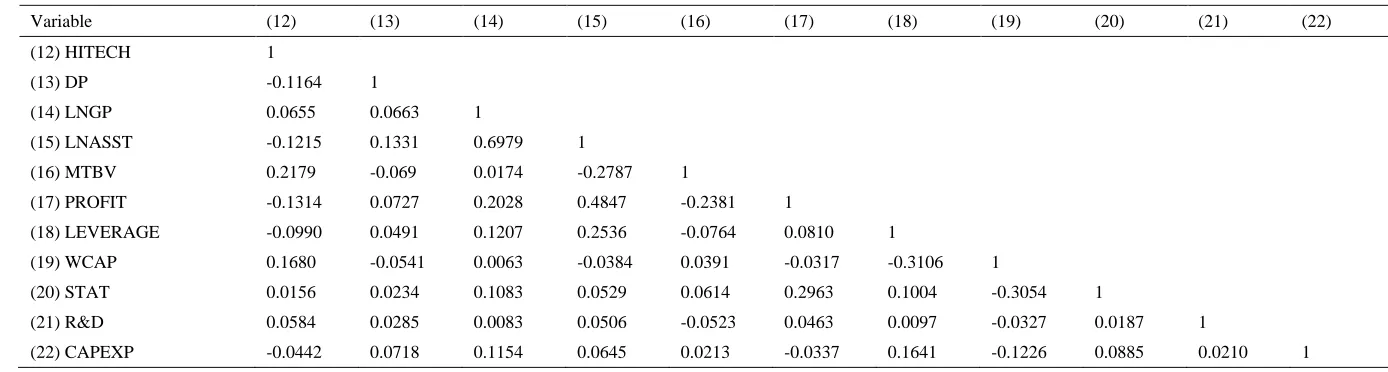
Table 3-4 Correlations between Key Variables ... 112
Table 3-5 Logistic Regressions on Whether Firms Initiate Dividends within Three Years Post-IPO ... 117
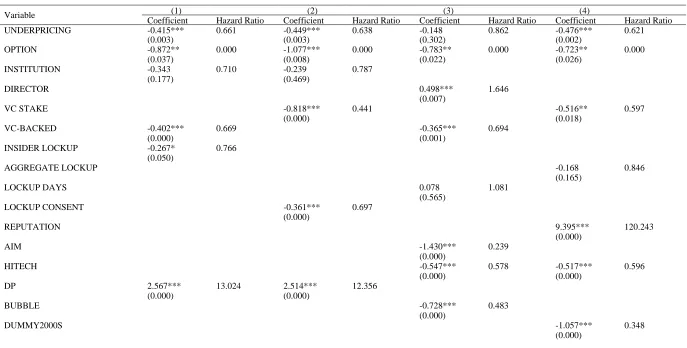
Table 3-6 Cox Proportional Hazard Models on The Timing of Dividend Initiation ... 121
Table 3-7 Logistic Regression on Decision to Initiate Dividends basing on Unbalanced Panel Data ... 126
Table 3-8 Logistic Regressions on Whether Firms Initiate Dividends within One Post-IPO Year ... 128
Table 3-9 Logistic Regressions on Whether Firms Initiate Dividends post IPO ... 130
Table 3-10 Ordered Logistic Regressions on the Timing of Dividend Initiation ... 134
Table 3-11 Linear Probability Model basing on Unbalanced Panel Data ... 137
Table 3-12 Summaries of Results ... 143
Chapter Four Table 4-1 Statistics of Sample ... 164
Table 4-2 Descriptive Statistics ... 167
Table 4-3 Definitions of Variables ... 168
Table 4-4 Comparison of Pre-IPO Financial Ratios between Different Types ... 172
Table 4-5 Logistic Regressions on the Willingness of paying Dividends at IPO stage ... 178
Table 4-6 Ordinal Logistic Regressions on the Willingness of Paying Dividends at IPO stage (1) ... 183
Table 4-7 Ordinal Logistic Regressions on the Willingness of Paying Dividends at IPO stage (2) ... 186
Table 4-8 Abnormal Returns on Dividend Initiation Announcement of IPOs in 1996-2010 ... 192
Table 4-9 Long-Run Abnormal Returns on Full Sample IPOs in 1996-2000 Excluding Initial Returns . 195 Table 4-10 Long-Run Abnormal Returns on IPOs in Contrastive Groups of IPOs in 1996-2000, Excluding Initial Returns ... 196
Table 4-11 Long-Run Abnormal Returns on IPOs in Dividend-Paying and Non-Dividend Paying Groups of IPOs in 1996-2010, Excluding Initial Returns ... 198
Table 4-12 Three-Year Holding Period Returns for Contrastive Groups ... 200
Chapter Five Table 5-1 Statistics of Sample ... 217
Table 5-2 Definitions of Variables ... 218
Table 5-4 Dividend and Total Payout Ratios (%) ... 226
Table 5-5 Descriptive Statistics on Firm Characteristics Used for Baseline Estimation... 230
Table 5-6 Logistic Panel Regressions for Base period 1989-1995 ... 232
Table 5-7 Estimated Propensity to Pay Dividends for Forecast Period 1996-2010 (%) ... 235
Table 5-8 Descriptive Statistics on Further Firm Characteristics ... 240
Table 5-9 Logistic Panel Regressions on the Likelihood to Pay Dividends and Repurchase Shares ... 245
Table 5-10 OLS Panel Regressions on the Amount of Dividends and Share Repurchases ... 250
Table 5-11-A Firm Characteristics for Groups of Dividends Increase, Decrease and Constant ... 254
Table 5-11-B Firm Characteristics for Groups of Start Paying, Stop Paying and Continue to Pay ... 258
Table 5-12 Tests Using Lintner Model ... 263
List of Figures
Chapter Three
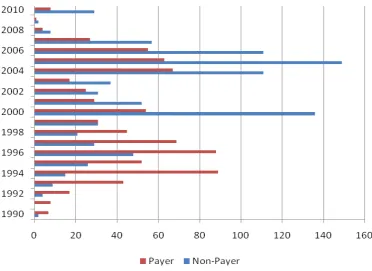
Figure 3-1 Numbers of Payer IPOs and Non-Payer IPOs across Years ... 107
Figure 3-2 Average Number of Days from IPO to Dividend Initiations ... 107
Chapter Four
Figure 4-1 Pre-IPO Changes in Financial Ratios ... 175
Figure 4-2 Cumulative Average Adjusted Returns (%) on IPOs in Contrastive Groups of IPOs in
1996-2010, Excluding Initial Returns ... 197
Figure 4-3 Long-Run Abnormal Returns on IPOs in Dividend-Initiating and Non-Dividend Initiating
Groups of IPOs in 1996-2000, Excluding Initial Returns ... 199
Chapter Five
Figure 5-1 Percentage of Dividend-Paying Firms ... 222
List of Appendices
Chapter Three
Appendix 3-1 Definition of Underwriter Reputation ... 145
Chapter Four
Appendix 4-1 Abnormal Returns around Dividend Initiation Announcement ... 206
Chapter Five
Appendix 5-1 ... 273
Logistic Panel Regressions for Explaining the Likelihood to Pay Dividends and Repurchase Shares .... 273
Appendix 5-2 ... 275
Chapter One
Introduction
Dividend policy is considered in various textbooks (e.g., Damodaran, 2010) to be one of the main corporate finance decisions, together with investment and financing decisions, firms have to make. According to the latest Financial Times dated 29 June 2012, dividends represent 3.74% of the total market value of the 606 UK quoted companies that form the FTSE All Share Index, which is also the return in the form of dividends that companies generate to their shareholders, and 39.8% of earnings generated by these companies. The academic literature is still not clear as to whether, when, why and how companies pay dividends, and whether dividends create or destroy value (see below and Allen and Michaely, 2003; DeAngelo, DeAngelo, Skinner, 2008, for extensive reviews). This controversy stems from the fact that dividends are not only the cash distributed to shareholders, but they are likely to have strong impact on the financing and investments decisions, the agency conflicts between managers, shareholders and debtholders, the information asymmetries between firms and the financial markets, and on the after-tax returns firms generate to their shareholders.
followed by positive (or negative) abnormal returns (Pettit, 1972; Charest, 1978; Aharony and Swary, 1980; Asquith and Mullins, 1983; Michaely, Thaler and Womack, 1995;Grullon, Michaely and Swaminathan, 2002). In addition, corporate dividend policy plays an important role in the survival and progress of listed firms. As a result, a substantial amount of research has been undertaken in the area that aims to answer a diverse number of questions posed by all kinds of market participants such as dividend policy makers, shareholders and researchers. Some of the questions asked include, what are the factors that drive firms to pay dividends? How much cash should firms return to investors? When should firms start paying/omitting dividends? Why do firms change their dividend policy? How do firms choose their method of payout, namely between cash dividends and stock repurchases?
It was Lintner (1956) who laid the foundations of dividend theory. Using a survey of US Chief Finance Officers, he uncovered three main stylized facts that lead to a standard model of dividend payout: (i) firms have long term target dividend payout ratios; (ii) managers focus more on dividend changes than on absolute levels; (iii) dividends changes follow shifts in long-run, sustainable levels of earnings rather than short-run changes in earnings; and (iv) managers are reluctant to make dividend changes that might have to be reversed. This suggests that firms smooth their dividends. Consequently, the empirical evidence shows that dividends at particular year can be explained by current earnings and lagged dividends. Over the years, these two factors which constitute what is known as the Lintner’s model, has become the gold standard of dividend theory, and has been developed and supported by a relatively very large number of subsequent studies (e.g.Fama and Babiak, 1968; Lasfer, 1996; Baker and Powell, 1999; Garrett, Priestley, 2000, 2012; Dhanani, 2005; Brav, Graham, Harvey, Michaely, 2005). The implications of this model is that dividends act as a signal of past as well as future firm’s prospects.
dividends become relevant. Thus, this theory implies that dividends are likely to be affected by information asymmetry (signaling), managerial private benefits (agency costs), taxation, and investors’ preference of dividends (behavioral finance).
The relaxation of the Modigliani and Miller’s assumptions has resulted in the development of relatively very large number of theoretical models and empirical investigations of the impact of each of the factors. While dividends will results in an increase in value when shareholders like dividends, or when dividends operate as a signal of future prospects, and/or mitigate the agency conflicts between managers and shareholders, they will reduce value if there are tax disadvantaged relative to capital gains. These conflicting roles of dividends lead to a number of controversies that can summarized in Black (1976) famous “dividend puzzle” argument when he questioned why firms pay dividends, and why investors are concerned with dividends if it is indeed the case that dividend are irrelevant or tax disadvantaged. In particular, he questioned the practice of paying dividends at the time when the US capital gains are taxed at lower rate1
The main dividend theories will be discussed in detail in the Literature Review that follows in the next chapter. However, it is important to note that the influence of taxes and clientele on dividend policy will not be dealt with in this thesis, as a discussion of this subject matter is beyond the scope of my research. However, these areas might be a suitable topic for further research.
and, thus, firms should not pay dividends, as they will benefit their shareholders by deferring tax payments if they chose to realize capital gains by selling their shares. More recently, Fama and French (2001) added to this controversy by showing that dividends are “disappearing” as the proportion of US firms that pay dividends decreased substantially from 66.5% in 1978 to 20.8% in 1999, and this decline cannot be completely explained by some firms’ fundamental factors defined in the conditions of Miller and Modigliani (1961) or by the practice of share repurchases.
1.1 Gaps in Previous Research
In spite of the extensive research undertaken into dividend policy, gaps in research remain, from both theoretical and empirical perspectives. These gaps are noted by Allen
and Michaely (2003) and DeAngelo, DeAngelo and Skinner (2008) amongst others. In particular, any attempt to achieve a consensus or to find a universal solution to certain dividend problems may not be attainable because dividend policy operates in a real world environment that is multivariate and complicated. Baker, Saadi, and Dutta (2008) note this difficulty of developing a one-size-fits-all explanation for dividend policy, and they explain that factors such as legal regulation, corporate governance, and firm characteristics vary across countries. Frankfurter and Wood (1997) suggest that the, ‘Dividend-payment patterns (or what is often referred to as “dividend policy”) of firms are a cultural phenomenon, influenced by customs, beliefs, regulations, public opinion, perceptions and hysteria, general economic conditions and several other factors, all in perpetual change, impacting different firms differently. Accordingly, it cannot be modeled mathematically and uniformly for all firms at all times.’ (p.31)
This thesis will focus mainly on the dividend policy of IPOs and the impact of cross-country differences on dividend payments of a large sample of firms to shed some light on the decision of newly listed firms to initiate dividends and to identify the forces that shape corporate dividend policy across major western countries. My research is primarily motivated by the following gaps that existed in previous dividend research:
(1) There is limited previous research that focuses on the dividend behaviour of Initial Public Offering (IPO) firms. Recent empirical studies that focus specifically on IPOs (Bulan, Subramanian and Tanlu, 2006; Jain, Shekhar and Torbey, 2009; Kale, Kini and Payne, 2012) have not completely identified the theoretical links between IPOs and post-IPO dividend decisions, and the evidence produced is often contradictory. For instance, Michaely and Shaw (1994) argue that firms who underprice less tend to pay higher dividends, but this contradicts Allen and Faulhaber’s (1989) hypothesis in respect of IPO signaling, and Kale et al. (2012) do not find that underpricing affects dividend initiation decisions in their multivariate regression analysis.
information asymmetry and agency conflicts, but the impact of lockups on dividends of IPOs has so far been undertaken by comprehensive studies.
(3) Previous research on dividend policy of IPOs has been undertaken predominantly on the US basis. Although the US and the UK are relatively similar in terms of governance, there are various institutional settings, including regulation, competition, and tax rules that are different. For example, Faccio and Lasfer (2000) identified a number of differences between the UK and US governance systems relating to the number of companies quoted in each exchange, shareholder activism and differences in the categories of shareholders. Moreover, the corporate governance requirements are relatively stronger in the UK as firms have to split the roles of the CEO and the chairman. Therefore, the testing of the empirical hypotheses on the determinants of dividend policy in a relatively more regulated market such as the UK, but where companies may suffer from the same free cash flow problems as their US counterparts will strengthen the evidence provided to-date. Moreover, although IPO firms in the UK are required to state their dividend policies in their prospectuses, in accordance with disclosure law, existing studies about dividend policy have not examined what factors influence how a firm shapes its dividend policy at IPO stage.
(4) The existing literature does not test for the impact of the pre-IPO financial status on the announcement of dividend policy in the IPO prospectus. Previous studies focus on seasoned firms and analyze the determinants of and the market reaction to dividend initiations (e.g. Asquith and Mullins, 1983; Healy and Palepu, 1988; Christie, 1990), partly because of data collection problems and gaining access to accurate data about IPOs. Such dividends initiations are less likely to be foreseen by outside investors and their announcements lead to significant excess returns to reflect the dividend surprise. However, some IPO do state in their prospectus the dividend policy they will adopt in the post-IPO period. This issue is not explicitly analyzed in previous studies that focus on dividends of IPOs. I will use the pre-IPO accounting information disclosed in the prospectuses, profit and loss statements, balance sheets, and statements of cash flow to assess the determinants of dividend policy as stated in the IPO prospectuses.
payments. Fama and French (2001) argue that there is a declining trend in the propensity to pay dividends, after controlling for company characteristics2 and Denis and Osobov (2008), Eije and Megginson (2008) and Ferris, Sen and Unlu (2009) confirm this trend using the same method. However, Denis and Osobov (2008) find that this declining propensity to pay dividends is not as significant as some research leads us to believe, and they do not rule out the possibility that the trend is limited to newly listed firms. In addition, the method of Fama and French (2001) in measuring the propensity of paying dividends is sensitive to the selection of benchmark period, control variables, the corrections of standard errors for panel data. For example, the sample benchmark period used by Denis and Osobov (2008) and Eije and Megginson (2008) is 1989-1993 and this can be compared to the benchmark period of 1994-1997 used by Ferris et al (2009). Eije and Megginson (2008) do not control for the ratio of retained earnings to total equity as when estimating baseline model, but Denis and Osobov (2008) and Ferris et al (2009) do in their analyses. Fama and French (2001) and Denis and Osobov (2008) utilise Fama and MacBeth’s (1973) procedure as correction of standard errors, but Ferris et al (2009) do not specify what method they use. These controversies motivate my analysis.
(6) Non-US evidence in respect of the substitute relation between dividends and share repurchases is limited. For example, Grullon and Michaely (2002) and Skinner (2008) show that US listed firms are gradually substituting repurchases for dividends to distribute residual cash flow, and Brav et al. (2005) report that managers favour repurchases as a more flexible method of payout. In contrast, Ferris, Sen and Yuiet (2006a) find that the number of repurchases in the UK is small in 1990s. Although Eije and Megginson (2008) observe that the number of repurchases increased across fifteen European countries from 1989 to 2005, their analysis treats different countries as one entity rather than looking at individual countries.
(7) Recent comparable multination-based studies (Denis and Osobov, 2008; Ferris et al, 2009) focus more on examining whether firms pay dividends and the propensity to pay dividends. More dividend behaviors such as dividend changes, dividend initiation and omission have not been empirically investigated using multinational data. Examining
various dividend behaviors contributes to the complete understanding towards global dividend policies. In addition, dividend policies adopted by companies across countries can be driven by far more factors such as cash holdings, technology focus, R&D expenditure, M&A factor and de-listing risk. Eije and Megginson (2008) find that cash holdings have negative effect on cash dividends and positive effect on repurchases, but they do not detail the theoretical argument. The free cash flow theory predicts that technology intensity and R&D expenditure and reduces the residual capital and will adversely affect corporate payouts. To my knowledge, the previous literature did not analyse the effect of M&A factors and delisting on dividends. Jeon, Ligon and Soranakom (2010) only discussed how the pre-merger dividend policies of acquirer and target affect the choice of payout method between stock takeover and cash takeover.
1.2 Research Objectives
The research objectives set for each empirical chapter of this research are devised from the gaps as stated above and by means of a full investigation of previous studies in respect of corporate dividend decision making, as outlined in the literature review chapter. In particular, I use a very large dataset of UK IPOs from 1990 to 2010, which is extracted from their prospectuses. I explore the theoretical links in the context of the important dividend theories including signalling, agency costs, lifecycle and catering and then empirically test the hypotheses by employing a number of IPO-specific factors and fundamental firm characteristics as proxy variables. In addition, I assess the impact of pre-IPO financial status on the dividend policy stated by these IPOs in their prospectuses. Moreover, I expand previous studies that test the disappearing dividends across countries and look at the extent to which repurchases play a role in dividend policy. I investigate the determinants on not only whether firms pay dividends or repurchase shares but also the amount of dividends and repurchases. I also analysis the firm characteristics associated with various dividend behaviours.
separate empirical chapters, and each considers three separate but interrelated topics.
1.2.1 Research Objectives for Chapter 3
This chapter focuses on examining two aspects relating to the dividend behavior of UK IPOs: the likelihood of IPOs to pay dividends and the timing of dividend initiation. I put emphasize on developing testable hypotheses which theoretically link the IPO characteristics and the dividend behaviour of IPOs in the context of signalling, agency costs, lifecycle and catering theories of dividends. Existing research has not provided clear theoretical links, hence, this chapter aims to address this problem. I test the impact of information asymmetries and agency conflicts on the decisions of IPOs to initiate dividends. I also assess whether mature firms have stronger willingness to initiate dividends in comparison to young firms in light of lifecycle hypothesis. In addition, the inclusion of dividend premium as an explanatory variable allows the tests to provide new evidence for catering theory. The chapter details statistical evidence relating to the trends in the likelihood of UK IPOs to pay dividends, and the timing of dividend initiation over the sample period chosen.
The chapter investigates the IPOs’ propensity to pay dividends by using a large number of proxy variables for the main dividend hypotheses. There are two categories of explanatory variables: IPO-specific factors and fundamental financial accounting variables. IPO-specific factors include: underpricing (i.e. first-day returns), directors' ownership, length of lock-ups , the percentage of locked-up agreements, managerial stock options, institutional ownership, venture capital participation, underwriter reputation , dividend catering (dividend premium), high technology firm dummy data, and AIM dummy data. Financial accounting variables include: firm size, profitability, growth opportunity, leverage, sales, R&D, capital expenditure, and working capital.
The sample used in Chapter 3 comprises 1707 Initial Public Offerings (IPOs) listed on the main market and on the Alternative Investment Market (AIM) of the London Stock Exchange with an official admission date of between January 1st, 1990 and December 31, 2010. The information about the list of IPOs is gained from the New Admissions Summary3, DataStream and offering prospectuses4
3 It is publicly accessible from the official website of London Stock Exchange and contains data from June 27, 1995.
. The raw data on IPO-specials is hand-collected primarily from the offering prospectuses supplied by Perfect Filings, and raw data on financial variables is sourced from DataStream and London
Stock Exchange statistics.
1.2.2 Research Objectives for Chapter 4
This chapter examines the determinants of the initial dividend policies as stated in IPO prospectuses. In prospectuses, the issuing firms do not use a standard format to state their post-IPO dividend policies. In other words, dividend policies stated in the prospectuses differ from firm to firm. This chapter attempts to identify the theoretical links between these influential factors and dividend policies at IPO stage within the context of signaling, agency costs, life cycle, and catering theories of dividends.
At the stage of preparing for IPO, the preliminary dividend policy is likely to be directly influenced by its pre-IPO financial status. Therefore, different from previous studies that focus on seasoned firms, this part of study investigates the relation between pre-IPO financial performance and the dividend strategy of IPOs when going public. Additionally, the IPO-related factors which had been used in Chapter 3 are employed as influencers in analysis.
To compare the key firm characteristics and IPO-related factors between IPO groups with different preferences at IPO stage, my study classifies sampled firms into four sub-groups according to the decision makers’ attitudes toward dividend payment, as follows: Type 1 firms declare the most positive dividend policies, stating that they would definitely start dividend payments after admission. Type 2 firms pursue an active or progressive dividend policy5
The sample used in Chapter 4 comprised 932 Initial Public Offerings IPOs listed , but relative to Type 1 firms, they are more likely to default dividend payments if their financial status cannot reach the expected standard. Type 3 firms clearly express that they have no intention to pay dividends in the near future, and Type 4 firms even do not state any information about future dividend policy. One may argue that Type 3 firms resemble Type 4 firms in terms of their style of dividend policy. Therefore, I track the post-IPO dividend patterns of IPOs in the sample and find that the incidence of initiating dividends of Type 3 IPOs is higher than that of Type 4 IPOs in medium term (2-5years). Further, to mitigate the influence of this issue, I pay attention to observe if the empirical results are sensitive to such classification and execute robust tests to check the influence of this issue on the conclusion.
on the main market and AIM of London Stock Exchange during the 15 years from 1996 through to 2010. Historical financial records relating to pre-IPO financial performance are collated manually from profit and loss statements, balance sheets, and statements of cash flow for 3 consecutive pre-IPO years as shown in the offering prospectuses. The raw data includes: total assets, profits for the financial period, net cash inflow from operating activities, increase in cash in the financial period, total turnover, long term debts / debts due after more than one year, net cash outflow from capital expenditure.
1.2.3 Research Objectives of Chapter 5
This chapter examines global trends in dividend policy across seven developed economies, including US, Canada, UK, Germany, France, Japan and Hong Kong, between 1989 and 2010. Moreover, I focus on the extent to which repurchases play a role in dividend policy. This chapter aims to answer a series of questions posed in previous studies about international dividend trends, such as, has the percentage of dividend-paying companies been declining across countries over the past 20 years? Has the percentage of dividend-paying companies started to recover in the recent ten years, as hypothesized by Julio and Ikenberry (2004)? What is the evolution of aggregate dividend amounts in each country? What is the evolution of payout ratios in each country? Have companies substituted stock repurchases for dividends worldwide?
earnings and the speed of adjustment of dividends. Finally, following a method proposed by Grullon and Michealy (2002) I use the transition matrix to examine the changes in payout methods in my sample countries.
The initial sample data includes all non-financial, non-utility firms registered in my sample countries. Of the countries sampled in this research, the US, the UK, Japan, Canada, Germany, and France are also included in the research of Denis and Osobov (2008), but this study adds Hong Kong to the list because it is an influential well-managed Asian economy, subject to common law jurisdiction, has sufficient dividend payers and nonpayers as observations over my sample period. Hence, the inclusion of Hong Kong strengthens the representativeness of the sample and allows me to observe the primary tendency in international dividend patterns. I mainly collected the relevant data from Worldscope via DataStream.
1.3 Methodology
The specific methods of empirical analysis used in this research, including equations formulated for analysis, are explicitly detailed in each relevant empirical chapter. The main methodologies used can be summarised as follows:
(1) Univariate Analysis
Univariate analysis primarily provides descriptive information of data and basic quantitative results, which are then used to compare with those obtained from various multivariate tests. Variables are compared between control groups then the means, medians and t-statistics of the differences in means are reported. T-statistics are calculated using the following equation:
𝑡 = 𝑀1−𝑀2
�𝜎12
𝑁1 +𝑁2𝜎22
(1−1)
In this equation, where 𝑀1and 𝑀2 are mean values of the indicator variables for two types of IPOs, 𝜎12 and 𝜎22 are the variances of the indicator variables, and 𝑁1 and 𝑁2 relate to the number of observations.
(2) Cross-Sectional Binary Logistic Model
events of interest with two possible outcomes, e.g. pay dividends vs. does not pay dividends. The formulation is as below:
𝑙𝑜𝑔 �𝑃(𝑦𝑖=1|𝑋𝑖)
𝑃(𝑦𝑖=0|𝑋𝑖)�=𝛽0+𝛽𝑖𝑋𝑖 (1−2)
The dependent variable 𝑦𝑖 takes on the value of 1 to indicate if a certain event happens and the value of 0 otherwise. Xi represents the vector of control variables that defined and ‘i’ indicates the number of control variables in each model. The probability of event such as paying dividends, (𝑦𝑖 = 1|𝑥𝑖) = 1
1+𝑒−(𝛽0+𝛽𝑖𝑥𝑖) . The nature of logit model
determines that the probability of event has an upper bound of 1 and a lower bound of 0. Cross-sectional logistic regressions are estimated using software Stata that is able to produce pseudo R2
𝑝𝑠𝑒𝑢𝑑𝑜𝑅2 = 1− 𝑙𝑜𝑔 𝐿
𝑙𝑜𝑔 𝐿0 (1−3)
and chi-squared statistic.
In equation (1-3), 𝑙𝑜𝑔𝐿 is the log-likelihood and 𝑙𝑜𝑔𝐿0 is the log-likelihood when the regression only has the intercept. The null hypothesis of chi-squared statistic is that all explanatory variables have the coefficients of 0. Thus, chi-squared statistic indicates the explanatory power of model.
𝐶ℎ𝑖𝑥2=2log 𝐿
𝐿0 = 2(𝑙𝑜𝑔𝐿 − 𝑙𝑜𝑔𝐿0) (1−4)
(3) Cross-Sectional Ordinal Logistic Models
When an event of interest can be classified into more than two categories, and when the values of each category had a meaningful sequential order, an ordinal rather than a binary model is used. For example, when investigating the timing of dividend initiation, the time taken to initiate dividends is categorised into three groups: the “Within 1 year” group, the “Between 2 and 4 years” group, and the “After 4 years” group. These groups were in turn given the value of 1, 2 and 3 respectively, and this enabled all observations in this sample to be ordered according to the timing of dividend initiation. The formula used is as follows:
𝑙𝑜𝑔�𝑃𝑗�=𝛽𝑗+𝛽𝑖𝑋𝑖 (1−5)
Xi corresponds the vector of control variables. ‘i’ indicates the number of control
variables and ‘j’ indicates the critical values (i.e. 1 and 4 for the current example). Notably, the number of odds equals the number of categories minus one.
The terms βj are similar to the intercept term in binary logistic model. However, the coefficients βi are the same for all odds.
(4) Cox’s Proportional Hazards (CPH) Model
Cox’s Proportional Hazards model has been extensively applied in previous research because of its ability to estimate factors that influence the timing of events on censored observations (Shumway (2001)). CPH model is a semi-parametric model (Horowitz 1996). The fundamental formulation of Cox’s model is:
ℎ(𝑡) =ℎ0(𝑡)𝑒(𝑏1𝑥1+𝑏2𝑥2+⋯+𝑏𝑘𝑥𝑘) (1−7)
In Equation (1-7), ℎ(𝑡) represents the hazard function, which can be estimated as the proportion of individuals that experience the event of interest, e.g. dividend initiation, in a certain time interval (Allison, 1984; Le Clere, 2000). h0(t) represents the baseline hazard or the hazard for an individual when all the covariates are equal to 0. Coefficients of the proportional hazards model are estimated by maximizing the partial likelihood. Efron (1977) suggests that partial likelihood estimation is efficient, especially when being applied to the analysis of a large sample. A positive estimated coefficient indicates that the hazard rate increases with the independent variable, and consequently the event of interest takes place earlier.
According to Allison (1995), a hazard ratio indicates the percentage change in the hazard of an event caused by a unit increase in the control covariate when controlling for other covariates. Therefore, Relative Hazard Ratio can be formulated as:
ℎ(𝑡)
ℎ0(𝑡) =𝑒
(𝑏1𝑥1+𝑏2𝑥2+⋯+𝑏𝑘𝑥𝑘) (1−8)
When the hazard ratio exceeded 1, the associated covariate indicated a greater hazard of incidence of dividend initiation. Contrastingly, a hazard ratio of less than 1 indicated that the associated variable causes a decline in the possibility of dividend initiation.
(5) Logistic Panel Regression Model
observations along the time series, the data represents an unbalanced pool sample (Wooldridge, 2002).
The dependent variable is a dichotomous variable, which assumes the value of 1 if a firm initiated dividends in a year and 0 otherwise. Therefore, the formulation of the multivariate binary model is as follows:
𝑙𝑜𝑔 �𝑃(𝑦𝑖𝑡=1|𝑋𝑖𝑡)
𝑃(𝑦𝑖𝑡=0|𝑋𝑖𝑡)�=𝛽0+𝛽𝑖𝑋𝑖𝑡 (1−9)
In equation (1-9), Xit represents the vector of control variables. For each individual ‘i’ in the population, there is a binary response 𝑦𝑖𝑡 applies for each sample year.
The time-series correlated standard errors for the logistic panel model should be validated (Wooldridge, 2002; Petersen, 2009). Skinner (2008) and Eije and Megginson (2008) estimate pooled regressions with robust standard errors clustered across firms. Ferris, Jayaraman, and Sabherwal (2009) estimated panel regressions with clustered standard errors in two dimensions of firm and year. According to Petersen (2009), I estimate panel logistic regressions with clustered standard errors in two dimensions of firm and year in Chapter 5 of this thesis.
Petersen (2009) also points out that the bootstrap method is an alternative solution for addressing standard errors in a panel data set (e.g. Efron and Tibshirani, 1986; Horowitz, 2001; Kayhan and Titman, 2007). Testes conducted by Cheng, Nagar, Rajan (2005), Petersen (2009), and Greene (2010) show that the bootstrapping procedure are efficient in detecting and correcting the clustered standard errors. In addition, Bulan et al. (2007) and Kale et al. (2012) apply the method of bootstrapping6 to estimated standard errors in probit or logit panel regressions. Therefore, I use the bootstrapping method with 200 iterrations to deal with the time-series clustering in logistic regressions in Chapter 3 of this thesis.
(6) The Linear Probability Models (LPM)
By using the Linear Probability Model (LPM) model with OLS, Newey-West method, Generalized Least-Squares (GLS)7
6 Bootstrapping is a popular re-sampling method and Monte Carlo simulation. It can be used as an alternative to using asymptotic approximations for detecting standard errors, confidence intervals, and p-values for test statistics. Computer simulations can be used to estimate complicated non-linear models when traditional optimization methods are not effective (Wooldridge 2000). The equation for Bootstrap Estimation of Standard Error is:
, or Fama-MacBeth procedure, the results gained from the logistic panel model tests can be verified. The formulation is as the following:
𝑠𝑒
�𝐵�𝜃� ∗�=�𝐵−11 ∑𝐵 (𝜃�(𝑏)− 𝜃� ∗����)2
𝒚𝒊𝒕(𝒚𝒊𝒕 =𝟎,𝟏) =𝜷𝟎+𝜷𝒊𝑿𝒊𝒕+𝜺𝒊𝒕 (𝟏 − 𝟏𝟎)
In Equation (1-10), 𝒚𝒊𝒕 is the qualitative dependent variable and this assumes a value of 0 or 1. 𝑿𝒊𝒕 represents the vector control variables and 𝜺𝒊𝒕 is the error term.
(7) Event Study
A standard event study methodology (Brown and Warner, 1985; Mackinlay, 1997)8
where 𝐴𝑅𝑖𝑡, 𝑅𝑖𝑡 and 𝐸𝑅𝑖𝑡 represent abnormal return, actual return and expected return. Follow previous dividend studies
is used to measure the market reaction to dividend initiation announcements. The abnormal return for firm i and a single observed day t in the event window is computed as:
𝐴𝑅𝑖𝑡 =𝑅𝑖𝑡 − 𝐸𝑅𝑖𝑡 (1−11)
9
𝑅𝑖𝑇 =𝛼𝑖 +𝛽𝑖𝑅𝑚𝑇+𝜀𝑖𝑇 (1−12)
, expected return (𝐸𝑅𝑖𝑡) is estimated by market model in which the market portfolio selected is FTSE All-Share Index.
where 𝑅𝑖𝑇 and 𝑅𝑚𝑇 stand for the returns of individual stocks and of market portfolio over the estimation window respectively. 𝜀𝑖𝑇 is the zero mean disturbance term. 𝛼𝑖 and 𝛽𝑖 are then used to calculate 𝐸𝑅𝑖𝑡 with using the actual market return 𝑅𝑚𝑡 over the event
window.
𝐸𝑅𝑖𝑡 =𝛼𝑖 +𝛽𝑖𝑅𝑚𝑡 (1−13)
The average daily abnormal return at the event date t is the mean across the observations:
𝐴𝑅𝑡
�����= 𝑁−1∑ 𝐴𝑅
𝑖𝑡 𝑁
𝑖=1 (1−14)
The cumulative abnormal returns over the event window (t1, t2) can be calculated as: 𝐶𝐴𝑅𝑡1,𝑡2 =∑𝑡2𝑡=𝑡1𝐴𝑅�����𝑡 (1−15)
The t-value of CARs (Rubac, 1982; Bonnier and Bruner, 1989; Mackinlay and Hamill, 1997) is:
𝑡�𝐶𝐴𝑅𝑡1,𝑡2�= 𝐶𝐴𝑅𝑡1,𝑡2
�(𝑡2−𝑡1+1)𝑣𝑎𝑟𝑡1,𝑡2(𝐴𝑅�����𝑡)+2(𝑡2−𝑡1)𝑐𝑜𝑣𝑡1,𝑡2(𝐴𝑅�����𝑡,𝐴𝑅���������𝑡−1)
(1−16)
(8) Long-Run Adjusted Return
According to Ritter (1991) who propose the original method to measure long-run
8
Ball and Brown (1968) and Fama et al. (1969) developed earlier seminal method of event study.
9
performance of IPOs, each sampled event month comprises 21 successive trading days. The market-adjusted return for stock i in event month t is defined as:
𝑎𝑟𝑖𝑡 = 𝑟𝑖𝑡− 𝑟𝑚𝑡 (1−17)
where 𝑟𝑖𝑡 and 𝑟𝑚𝑡 represent the actual return for stock i in event month t and the market return in event month t respectively. The average benchmark-adjusted return for each event month t is computed as:
𝐴𝑅𝑡= 1𝑛∑𝑛𝑖=1𝑎𝑟𝑖𝑡 (1−18)
and the t-statistic for 𝐴𝑅𝑡 is computed as:
𝑡-𝐴𝑅𝑡 =𝐴𝑅𝑡×�𝑛𝑡
𝜎𝑡 (1−19)
Where 𝑛𝑡 and 𝜎𝑡 represent the number of firms trading in event month t and the standard deviation of 𝑎𝑟𝑖𝑡 respectively. The cumulative average market-adjusted return for the event window between the first month and the event month is defined as:
𝐶𝐴𝑅𝑡 = ∑𝑡𝑡=1𝐴𝑅𝑡 (1−20)
and the t-value for 𝐶𝐴𝑅𝑡 is computed as:
𝑡 − 𝐶𝐴𝑅𝑡 =�𝑡×𝑣𝑎𝑟+2𝐶𝐴𝑅𝑇×(×�𝑛𝑡−1𝑡)×𝑐𝑜𝑣 (1−21)
where t is the event month, var is the average cross-sectional variance over 36 months, and cov is the first-order autocovariance of the 𝐴𝑅𝑡 series.
(9) Ordinary Linear Square (OLS) Panel Regression Model
As same as logistic panel regression model, OLS panel regression model has the capability to capture the effect of time-varying factors on response variables. The model specification of OLS pooled regression model is given by
𝑦𝑖𝑡 =𝛼+𝛽𝑖𝑋𝑖𝑡+𝜀𝑖𝑡 (1−22)
In equation (1-5), the dependent variable yit is the dividend ratio which is the cash dividends paid scaled by total assets, or the repurchase ratio which is the share repurchases scaled by total assets10. Xit represents the vector of control variables for each firm-year observation. 𝜀𝑖𝑡 represents unobserved random factors including firm-specific and time-firm-specific shocks11
10 Aivazian and Booth (2003), Lee and Suh (2011) and Alzahrania and Lasfer (2012) have used the same measure to investigate dividends or repurchases.
. Again, as suggested by Petersen (2009) the clustered standard errors for the two elements of firm and year, are corrected in the estimations.
11 There are three assumptions for the error term𝜀
𝑖𝑡 [µ= 0]: (i) No autocorrelation cov(𝜀𝑖𝑡,𝜀𝑖𝑠) = 0 (ii) Homoskedasticity
(10) Measuring the Propensity to Pay Dividends
Chapter 5 of this thesis looks at a firm’s propensity to pay dividends. The basic methodology used is that proposed by Fama and French (2001), which has been widely used in previous studies (Eije and Megginson, 2008; Denis and Osobov, 2008; Ferris et al., 2009). When estimating logistic panel regressions it is essential to find a way to overcome clustering problems. As Petersen (2009) states, in panel data regression analysis the clustering of residuals across firms or across time is very likely and will lead to biased standard errors. Therefore, this research corrects two-dimensional clustered standard errors across firms and across years in the estimation of logistic panel regressions.12
(11) Examining the relationship between dividend payouts and earnings, and
adjustment speed of dividends using the Linter model
Following models suggested by Skinner (2008), and Eije and Megginson (2008), Chapter 5 employs the Lintner’s model to assess the extent to which earnings and lagged dividends explain current dividends. The implied speed of adjustments and optimal payout ratios are then compared across countries. My expectation is that these factors will be country specific and will be affected amongst other things by the corporate governance system in each country.
(12) Transition matrix of payout methods
In order to track changes made in payout methods by the firms sampled, in Chapter 5 of this thesis, a transition matrix is used in order to examine the dynamics of corporate payout methods occurring in the sample countries. This method was first developed by Grullon and Michealy (2002) and has recently been used by Lee and Suh (2011). Moreover, previous studies do not consider the effects of some important IPO-specific factors, such as lock-ups, the proportion of shares retained by insiders, post-IPO institutional ownership, and managerial option plans on the dividend decision in the post-IPO period.
1.4 Summary of the Main Findings
1.4.1 Chapter 3 – When Do IPOs Start Paying Dividends?
The first empirical study, Chapter 3, contributes to identifying the theoretical links between dividend decisions and IPO characteristics by combining dividend policy and the various theories underlyining IPOs. Recent studies (Bulan, Subramanian and Tanlu, 2006; Jain, Shekhar and Torbey, 2009; Kale, Kini and Payne, 2012) have not completely identified these theoretical links. In developing the testable hypotheses, I focus on the signaling, agency costs, life cycle and catering theories of dividends.
Model and Rock’s “winner’s curse” model (1986). Specifically, paying no dividends or postponing the dividend payment suggests that the information asymmetry is substantial, so the issuing firms would intentionally lower the offer price to compensate the uninformed investors.
Consistent with the dividend signaling theory, I show that managerial ownership is positively associated with the IPOs’ propensity to pay dividends. This result is not in line with the findings in preceding studies such as Eckbo and Verma (1994), Lasfer (1996), Chen and Steiner (1999) and Faccio et al. (2001). But Kale, Kini and Payne (2012) also find the dividend initiating firms on average have higher managerial ownership than non-dividend initiating firms although their multivariate regression tests do not support this finding. My finding suggests that informed managers of high-quality IPOs tend to retain a large fraction of shares (Leland and Pyle, 1977; Ross, 1977) and wish to signal positive information by distributing dividends. Similarly, underwriter reputation is positively associated with IPOs’ propensity to pay dividends. This result is comparable with Jain et al (2009), Kale et al. (2012) who find similar relation in univariate analysis. This finding implies that prestigious underwriters provide certification for “good” firms (Booth and Smith, 1986) who have strong motivation and capability to initiate dividends.
My results can be discussed in the context of agency costs theory of dividends. I develop the substitute assumption and complement assumption to interpret the link between dividend policy and corporate governance. The logic of substitute assumption is similar to that of the “substitute model” given by LaPorta et al. (2000) which implies that weak corporate governance leads to higher demand of dividend payouts. Rozeff (1982), Jensen (1986), Smith and Watts (1992), and Gaver and Gaver (1993) also follow the line of argument when they analyse the relation between two devices that can reduce agency costs. The logic of complement assumption is similar to that of “outcome model” of LaPorta et al. (2000) which implies that strong corporate governance leads to higher demand of dividend payouts. Both Fenn and Liang (2001) and Grinstein and Michaely (2005) follow the similar argument line. The results can be summarised as follows.
I find that that the propensity of paying dividends is negatively influenced by the full lockup restriction period, VC backing and managerial stock option provide support for the substitute assumption of agency costs which suggests that weak corporate governance leads to higher demand of dividend payouts (Rozeff, 1982; Jensen, 1986; Smith and Watts, 1992; Gaver and Gaver, 1993; LaPorta et al., 2000; Officer, 2006). For example, IPOs with longer lockup restriction periods find it less necessary to reduce their potential agency costs by paying dividends, because the lockup agreements bond the interests of directors and investors (Brav and Gompers, 2003). These results are in accordance with results from some previous studies. Jain et al. (2009) find that VC backing affects negatively the likelihood to initiate dividends. The documented negative effect of managerial options (OPTION) is consistent with findings reported by Smith and Watts, (1992), Yermack (1995), Weisbenner (2000), and Fenn and Liang (2001). Moreover, the finding in respect of managerial options is consistent with the argument of Lambert, Lanen and Larcker (1989) who suggest that executive stock options motivate managers to reduce dividends because they are not “dividend protected”. In contrast, the results regarding managerial ownership and leverage lend support for the complement assumption of agency costs which suggests that strong corporate governance accompanies higher dividend payment (LaPorta et al., 2000; Fenn and Liang, 2001; Grinstein and Michaely, 2005). Both proxy variables are positively associated with the inclination of IPOs.
Furthermore, firms issued on AIM, a stock market for small and high growth firms, are more reluctant to initiate dividends relative to those issued on main market. These results are consistent with free cash flow hypothesis (Jensen, 1986).
My results can also be analysed in the light of lifecycle theory. I find that VC backing and lockup agreement have negative effect on the dividend policy of IPOs. These results are consistent with the life cycle theory in which mature firms are in a better position to pay dividends. Previous literature (Lerner, 1994; Gompers, 1995; Bergemann and Hege, 1998; Gompers and Lerner, 2000, 2003; Lee and Wahal, 2004; Cumming and Johan, 2008 and Krishnan, 2011) suggests that venture capitalists prefer to invest into early-stage companies that are small, young and technology-focused. Likewise, Brav and Gompers (2000, 2003) find that young firms are associated with longer lockup periods. The other explanation for the negative effect of VC backing can be that venture capitalists prefer short-term capital gains to long-term future dividends stream (Lerner, 1994 and Field and Hanka, 2001).
The results also show that large IPO firms with higher profitability and lower growth opportunities are more likely to initiate dividends and pay earlier, in line with previous studies (Fama and French, 2001; Bulan, et al., 2007; Denis and Osobov, 2008; Eije and Megginson, 2008; Ferris et al., 2009 and Kale et al., 2011). In addition, the findings that IPOs from high technological industry and AIM are reluctant to initiate dividend coincide with life cycle hypothesis since these firms are commonly considered as young and high growth. In addition, the positive relationship between dividends and leverage is consistent with life cycle hypothesis because high leverage may simply indicate that firms are in mature stage (Eije and Megginson, 2008). However, the negative relationship between R&D Expenditure and Capital Expenditures, and dividends that is consistent with the lifecycle hypothesis, can only be found in univariate analysis. Finally, IPOs issued in the years when markets put a price premium on dividend paying payers are more likely to become dividend payers and tend to initiate dividends earlier, consistent with the implication of catering theory (Baker and Wurgler, 2004).
any of the major dividend theories.
1.4.2 Chapter 4 – Determinants of Dividend Decisions at IPO Stage
The second empirical study, Chapter 4, contributes to investigating the determinants of dividend decisions at stage of IPO using hand-collected data from IPO prospectuses. In particular, the influence of the pre-IPO financial status on the preliminary dividend policy is examined. All the sample firms are classified into four control groups according to the decision makers’ attitudes toward dividend payment. Specifically, in offering prospectuses, Type 1 firms declare the most positive dividend policies, stating that they would definitely start dividend payments after admission. Type 2 firms pursue a progressive dividend policy, but relative to Type 1 firms, they are more likely to default dividend payments if their financial status cannot reach the expected standard. Type 3 firms state that they will not declare a dividend in short or medium term, but they will continue to review the appropriateness of its dividend policy, and Type 4 firms even do not state any information about future dividend policy. One may argue that Type 3 firms resemble Type 4 firms in terms of their style of dividend policy. To mitigate the influence of this issue, I check the robustness of the results by using a different setting of dependent variables. Key firm characteristics are then compared between the groups using unique categorical analyses, cross-sectional binary logistic regression and ordinal logistic regression analyses.
The new findings in Chapter 4 are presented as below.
Relative to the counterparts with conservative dividend policies, IPOs with active dividend policies are more profitable, more likely to experience growth in earnings and to maintain positive earnings during pre-IPO period. All these results are strongly robust using various methods. This finding is particularly consistent with Lintner (1956) model in which dividend policy follows the shifts in long-run, sustainable levels of earnings and managers are expected to be highly prudent when initiating dividends in order to prevent from reversing dividend changes in future. These findings are also consistent with Miller (1987), Healy and Palepus (1988) and Benartzi, Michaely and Thaler (1997) who document that there is a strong link between changes in dividend policies and past earnings. In this sense, the dividend policy presented in IPO prospectuses signal the past financial performance of firms.
My results show that lower institutional ownership is associated with stronger propensity to choose relatively active dividend strategies for IPOs, in line with the expected relation derived from signaling by Kale et al. (2012). In detail, IPOs tend to express an intensive willingness of paying aftermarket dividends when the current level of institutional ownership is lower than what it should be, in order to attract informed institutions that prefer firms with dividend payments.
Additionally, the results from binary and ordered regressions show that the relation between the preliminary dividend strategy of IPOs and the level of underpricing is generally not robust. However, the results from univariate comparison are consistent with the hypothesis that issuing firms would compensate uninformed investors who are unable to extract sufficient information from released dividend policy by discounting offer prices. Similar to underpricing, an expected positive relation between managerial ownership and IPO’s willingness to pay can only be found in univariate comparison.
period opt for relatively conservative dividend strategies, and IPOs issued in 2000s are less likely to adopt active dividend policies than those issued in the 1990s.
Furhtermore, I find that Type1 IPOs have lower cumulative abnormal returns (CARs) to dividend initiation announcements compared with non-Type1 counterparts, supporting the conjecture that Type1 IPOs release sufficient information through dividend policies declared in offering prospectuses and therefore their formal dividend initiations fail to shock the market. While TYPE2 has the significant CARs over the major event windows, neither TYPE3 nor TYPE4 has the significant CARs in term of statistics. A possible explanation is that investors do not regard the dividend disbursement made by firms which are more likely technology focused companies (TYPE3 and TYPE4) as good news. I find that dividend-paying companies outperform dividend paying counterparts during three post-IPO years, indicating that non-dividend initiating IPOs rather than non-dividend-initiating ones account for the decline in long-run underperformance. The additional remarkable finding is that Type1 IPOs do not exhibit the expected declining long-run performance. The cumulative average market-adjusted returns for Type1 IPOs remain positive during the 36 holding months after IPO. Long-run performance descends orderly from Type1 to Type4 in the most of observed post-IPO months. This finding supports the argument that the dividend policies stated in prospectuses function to communicate the information, and thus reduce the possibilities that outside investors are overoptimistic over the prospect of the invested companies and that managers overstate the pre-IPO financial data at IPO stage.
Overall, my results suggest that common firm characteristics and IPO-related factors can affect dividend decisions of issuing companies at IPO stage through miscellaneous mechanisms of dividends. The most homogeneous results are associated with the life cycle theory. There is also some empirical evidence in support of signaling and agency theory. However, the evidence supporting catering theory is mixed. The empirical tests do not negate any of the major dividend theories although the evidence supporting the complement assumption of agency costs is relatively weak.
1.4.3 Chapter 5 – Trends in Dividend Payments: International Evidence
complete pitcture of dividend decisions. this study goes further to investigate more dividend behaviors, including dividend increases, dividend decreases, dividend unchanged, starting dividend payments, terminating dividend payments, and dividend continuation. In analysis, more variables that are comprehensive are included to examine the determinants of dividend policy among international markets. The specific findings can be generalized as follows:
My study with the most recent data confirms some findings in the respect of the evolution of dividends and repurchases provided by previous studies. First, over the duration of the sample period, these sampled markets enlarged materially and the number of firms that paid dividends did not decline, except for in the UK. Second, the overall proportion of dividend paying firms falls significantly from 1989 through to the early 2000s, with the exception of Japan. After that, consistent with Julio and Ikenberry (2004) who find that dividends reappear in the US, the percentages of payers revert slightly upwards in the US, Canada, Japan and Hong Kong. However, the ‘reappearing dividends’ trend as described by Julio and Ikenberry (2004) is not evident in the UK, France, or in Germany. Third, in accordance with the findings of Grullon and Michaely (2002) and of Skinner (2008), share repurchases have taken over from dividends as the dominant form of payout by most US corporations, in terms of absolute amounts. The increasing importance of share repurchases can also be observed in the UK, while a large fraction of corporate payouts is still distributed in the form of dividends, consistent with Renneboog and Trojanowski (2011). Share repurchases only counted for a small fraction of corporate payouts in other countries including Canada, Germany, France, Japan, and in Hong Kong. Fourth, as previous studies (Denis and Osobov, 2008; Eije and Megginson, 2008; Ferris et al, 2010), the aggregate amount of dividends paid continuously increased in each country during the sample period.