ENHANCEMENT OF SOLUBILITY OF REPAGLINIDE THROUGH
SOLID DISPERSION METHODS
Dissertation submitted to
THE TAMIL NADU Dr. M. G. R. MEDICAL UNIVERSITY
CHENNAI
In partial fulfillment of the requirement for the Degree of
MASTER OF PHARMACY Submitted By
Reg.No-26091035
OCTOBER 2011
Mrs. R. THARABAI., M.Pharm
Professor and Principal i/c, College of Pharmacy, Madurai Medical College, Madurai– 625020.
CERTIFICATE
This is to certify that the dissertation entitled, “Enhancement of Solubility
of Repaglinide Through Solid Dispersion Methods.” was done by
Mrs. R. KAVITHA in the Department of Pharmaceutics, Madurai Medical College, Madurai – 20, in partial fulfillment of the requirement for the Degree of Master of Pharmacy in Pharmaceutics, is a bonafide work carried out by her, under the guidance and supervision of Prof. Mr.A.Abdul Hasan Sathali, M.Pharm, Professor and Head, in the Department of Pharmaceutics, during the academic year 2010 – 2011.
This dissertation is forwarded to the Controller of Examinations, The Tamilnadu Dr. M.G.R. Medical University, and Chennai.
Prof. Mr. A.Abdul Hasan Sathali, M.Pharm,
Professor and Head,
Department of pharmaceutics, College of pharmacy,
Madurai Medical College, Madurai-625 020
CERTIFICATE
This is to certify that the Dissertation entitled “ENHANCEMENT OF SOLUBILITY OF REPAGLINIDE THROUGH SOLID DISPERSION METHODS” submitted by Mrs. R. Kavitha in partial fulfillment of the requirement for the degree of Master of Pharmacy in Pharmaceutics is a bonafide work carried out by her, under my guidance and supervision during the academic year 2010 – 2011 in the Department of Pharmaceutics, Madurai Medical College, Madurai-20.
I wish her success in all his endeavors.
Place: Madurai
Date: (Prof. Mr.A.Abdul Hasan Sathali)
ACKNOWLEDGEMENT
“I humbly dedicate this little piece of work to Almighty”
It is my pleasure to express my respectful regards and thanks to Dr. Edwin Joe., M.D.F.M, B.L. Dean, Madurai Medical College, Madurai for
providing all kinds of supportive facilities required to carry out my project work.
It is my privilege to extend my gratitude to Prof. Mrs. R. Tharabai, M.Pharm, Principal in charge, College of pharmacy, Madurai Medical College, Madurai for her support to carry out my project work.
It is my immense pleasure and honour to express my deep sense of gratitude and heartfelt thanks to Prof. Mr. A. Abdul Hasan Sathali, M.Pharm, Head and Professor, Department of Pharmaceutics for his excellence in guidance, contribution and encouragement which helped me in the successful completion of each and every stage of my project work.
With immense pleasure I record here my indebtness and hearty thanks to Mr. K. Arun, M.Pharm, Assistant Reader, and Department of Pharmaceutics for his support and valuable suggestions throughout my work.
I also extend my thanks to our department staffs Mrs. Mumtaj, DMLT, Mrs. Geetha, DMLT and R. Chitravalli., for their contribution throughout my project work.
I wish to thank Mr.Ranganathan, Assistant technical officer, Department of nuclear physics, NIT, Trichy, , for his timely help to carryout my PXRD studies.
I take this privilege to convey my thanks to Mrs.Manimegalai., MSc., M.Phil., Technical Officer., USIC., M.K. University., Madurai., for her helping to carry out FT - IR studies in accordance with my dissertation work.
I express my heartiest thanks to Dr. Reddys Lab., for providing the drug Repaglinide as gift sample and United Scientifics and universal drug & chemical suppliers for providing chemicals to carry out my project work.
I am also very happy to extend my thanks to my seniors Mr. R. ANBAZHAGAN Mr. M. Muthuramalingam, Mr .R. Jeyasuresh and
Mrs. G. Magudeswari for their moral support.
I am very happy to extend my thanks to my juniors Mr. S. Ganesan., Mr. S. Kathiravan., Mr. V. Palanivel., Mr. T. Prakash., Mr. D. Rajivgandhi.,
Ms. R Revathi., Mr. V. Selvaraj., Ms. T.Suganya., Mr. J. Varun., and Ms. B. Yuganya., for their moral support.
I also extend my thanks to all the staff members and P.G. Students of Department of Pharmaceutical Chemistry and Pharmacognosy for their Co-operation.
I honestly acknowledge the love, care and moral support rendered by
my family members & friends whose part cannot be expressed in holophrastic.
I am extremely thankful to the staff of Star Xerox, Gateway Xerox &
CONTENTS
CHAPTER
NO
TITLE
PAGE
NO
I
INTRODUCTION
1
II
ENHANCEMENT OF SOLUBILITY AND
DISSOLUTION RATE OF POORLY
SOLUBLE DRUGS THROUGH SOLID
DISPERSION METHODS
- A REVIEW
11
III
LITERATURE REVIEW
20
IV
AIM OF WORK
29
V
PLAN OF WORK
30
VI
MATERIALS AND EQUIPMENTS
31
VII
DRUG PROFILE
32
VIII
EXCIPIENT PROFILE
38
IX
EXPERIMENTAL DETAILS
49
X
RESULTS AND DISCUSSION
TABLES & FIGURES
53
XI
SUMMARY AND CONCLUSION
CHAPTER I
INTRODUCTION
Oral drug delivery is the simplest and easiest way of administering drugs. Because of the
greater stability, smaller bulk, accurate dosage and easy production, solid oral dosages forms
have many advantages over other types of oral dosage forms. Therefore, most of the new
chemical entities(NCE) under development these days are intended to be used as solid dosage
form that originate an effective and reproducible in vivo plasma concentration after oral
administration.
In some cases, a small modification in the chemical structure of the compound led to a
slight change in biological activity, whereas in some other compounds, even a minor
modification led to extreme variations. This led to the recognition of the fact that a great deal of
knowledge is required for studying the many factors that affect biological and therapeutic
activity of the administered drug.
In recent years, however, the number of new products introduced by the Food and Drug
administration, and partly because there are not too many new products left to be discovered.
Therefore a large number of manufacturers have shifted, in part, their attention to
marketing either old product in new dosage forms (termed, new drug –delivery systems) or in the
same dosage form as generic products. It is for this reason, that many multinational companies
are involved in the manufacture of generic products at the present time, although, in the past, a
Therefore, the availability of a large number of generic products has given further
impetus to research in accessing biological availability of the drug from the administered dosage
form. With a large number of generic as well as multi-national companies competing for a larger
share of the generic product business, it is no wonder that such terms as bioavailability, drug
product selection, generic equivalency, therapeutic efficacy, and drug substitution have become
common house-hold words.
Bioavailability is defined as the rate and extent of drug absorption. An intravenously
administered dose of a drug in a aqueous solution (without any added ingredient such as
buffering agents, preservatives, solubilizing agents, etc.) is considered to be completely available
to the biological system because the entire drug dose is placed differently into the blood stream.
It is conceivable, however, that a commercial formulation of an intravenous dose may not
necessarily be completely available, if added substances in the formulation form a complex, or
are absorbed to the drug. The drug from an extravascularly administered dose, on the other hand,
may or may not be completely available.
A number of reasons may be responsible for the lack of complete availability of drug
from an extravascularly administered dosage form. These include: incomplete absorption of the
drug dose, inactivation of part of the administered dose in the biological environment,
metabolism of part of the drug dose at the absorption site, or other similar reasons. Since biologic
response is a result of an interaction between the drug substance and the functionally important
molecules (receptors) in the living system, unavailability of a portion of the administered drug
ABSORPTION OF DRUGS FROM SOLID DOSAGE FORMS:
When a drug is given orally in the form of a tablet, capsule, or suspension, the rate of
absorption is often controlled by how rapid the drug dissolves in the fluids at the absorption site.
In other words, dissolution rate is often the rate- limiting (slowest) step in the sequence,
Solid dosage form
↓
Solid drug particles
↓
Drug in solution
↓
Drug in systemic circulation
When dissolution is the controlling step in the over all process, absorption is said to be
dissolution rate limited. Whenever a drug is more rapidly absorbed from solution than from a
solid dosage form, it is likely that absorption is rate limited by dissolution.
A general relationship describing the dissolution process was first observed by Noyes and
Whitney. The Noyes-Whitney equation states that:
Where,
• dC/dt - dissolution rate,
• k - Constant,
• S - Surface area of the dissolving solid,
• Cs- solubility of the drug or chemical in the solvent, and
• C- Concentration of the material in the solvent at time t.
The constant k is equal to D/h, where D is the diffusion coefficient of the dissolving
material, and h is the thickness of the diffusion layer.
The diffusion layer, like the unstirred water layer in the intestine, is a thin, stationary film
of solution adjacent to the surface of the solid. The layer saturated with drug; drug concentration
in the layer is equivalent to Cs. The term (Cs –C) represents the concentration gradient between
the diffusion layer and the bulk solution. If absorption is dissolution rate limited, C is negligible
compared to Cs. Under these conditions, the above equation may be written as:
dc/dt = DSCs /h
The above equation describes a diffusion-controlled dissolution process. It is envisioned
that when the solid is introduced to the dissolution medium, the drug rapidly saturates the
diffusion layer. Drug molecules diffuse from the saturated layer to the bulk (the slow step in the
This equation is an oversimplified representation of the dynamics of dissolution;
nevertheless, it is qualitatively useful and permits a consideration of the effects of certain
important factors of dissolution rate2.
Fundamentally this process is controlled by the relative affinity between the molecules of
the solid substance and those of the solvent. The extent to which the dissolution proceeds under a
given set of experimental conditions is referred to as the solubility of the solute in the solvent.
The amount of matter that passes into solution so as to establish equilibrium at constant
temperature and so produce a saturated solution is known as the solubility.
PREDICTION OF SOLUBILITY3:
Probably the most sought after information about solutions in formulation problem is
‘what is the best solvent for a given solute. Theoretical prediction of precise solubility is an
involved and occasionally unsuccessful operation but, from knowledge of the structure and
properties of solute and solvent, you can make an educated guess. This guess is best expressed in
Description Approximate weight of solvent(g)
Necessary to dissolve 1g of solute
Very soluble
Freely soluble
Soluble
Sparingly soluble
Slightly soluble
Very slightly soluble
Practically insoluble
< 1
Between 1and 10
Between 10 and 30
Between 30 and 100
Between 100 and 1000
Between 1000 and 10,000
>10,000
Often (particularly in pre or early formulation) this is all the information that the
formulator requires. A more precise value can be obtained later in the development process.
SOLUBILITY4
An important physiochemical property of a drug substance is solubility, especially
aqueous system solubility. A drug must possess some aqueous solubility for therapeutic efficacy.
For a drug to enter systemic circulation and exert a therapeutic effect, it must first be in solution.
Relatively insoluble compounds often exhibit incomplete or erratic absorption. If the
solubility of the drug substance is less than the desirable, consideration must be given to improve
The methods to accomplish this depend on the chemical nature of the drug and the type
of the drug product under consideration. Chemical modification of the drug into salt or ester
forms is frequently used to increase solubility.
A drug’s solubility is usually determined by the equilibrium solubility method, by which
an excess of the drug is placed in a solvent and shaken at a constant temperature over a long
period until equilibrium is obtained. Chemical analysis of the drug content in solution is
performed to determine degree of solubility4.
DISSOLUTION
Variations in the biologic activity of a drug substance may be brought about by the rate at
which it becomes available to the organism. In many instances, dissolution rate, or the time it
takes for the drug to dissolve in the fluids at the absorption site, is the rate-limiting step in
absorption. This is true for drugs administered orally in solid forms such as tablets, capsules, or
suspensions, and for those administered intramuscularly.
When the dissolution rate is the rate-limiting step, anything that affects it will also affect
absorption. Consequently, dissolution rate can affect the onset, intensity, and duration of
response and control the overall bioavailability of the drug from the dosage form.
The dissolution rate of drugs may be increased by decreasing the particle size. It may
also be increased by increasing its solubility in the diffusion layer. The most effective means of
obtaining higher dissolution rates is to use a highly water-soluble salt of the parent substance.
BIOAVAILABILITY ENHANCEMENT THROUGH ENHANCEMENT OF DRUG
SOLUBILITY OR DISSOLUTION RATE5:
There are several ways by which drug solubility or the dissolution rate can be enhanced.
Some of widely used methods are as follows,
Micronization
Nanonisation
Supercritical fluid recrystallization
Spray freezing into liquid(SFL)
Evaporative precipitation into aqueous solution (EPAS)
Use of surfactants
Use of salt forms
Use of precipitation Inhibitors
Alteration of pH of the Drug Microenvironment
Use of Amorphs, Anhydrates, Solvates and Metastable Polymorphs
Solvent Deposition
Precipitation
Selective Adsorption on Insoluble Carriers
Solid Solutions
Eutectic Mixtures
Solid dispersions
Molecular encapsulation with cyclodextrins.
Use of solid solutions,
In all these cases, the solute is frequently a poor water-soluble drug acting as the guest
and the solvent is a highly water-soluble compound or polymer acting as a host or carrier.
A solid solution is a binary system comprising of a solid solute molecularly dispersed in a
solid solvent. Since the two components crystallize together in a homogeneous one phase
system, solid solutions are also called as molecular dispersions or mixed crystals.
Because of reduction in particle size to the molecular level, solid solutions show greater
aqueous solubility and faster dissolution than eutectics and solid dispersions. They are generally
prepared by fusion method whereby a physical mixture of solute and solvent are melted together
followed by rapid solidification. Such systems, prepared by fusion, are often called as melts. e.g.
griseofulvin-succinic acid. The griseofulvin from such solid solution dissolves 6 to 7 times faster
than pure griseofulvin.
SOLID DISPERSIONS:
These are generally prepared by solvent or co-precipitation method whereby both the
guest solute and the solid carrier solvent are dissolved in a common volatile liquid solvent such
as alcohol. The liquid solvent is removed by evaporation under reduced pressure or by
freeze-drying which results in amorphous precipitation of guest in a crystalline carrier.
Thus, the basic difference between solid dispersions and solid solutions/eutectics is that
the drug is precipitated out in an amorphous form in the former as opposed to crystalline form in
the latter; e.g. amorphous sulphathiazole in crystalline urea.
Preparation of solid dispersions also presents several
Since the carrier is hydrophilic and the drug is hydrophobic, it is difficult to find a
common solvent to dissolve both components.
The product is often soft, waxy and processes poor compressibility and flowability.
Physical stability of the solid dispersion.
CHAPTER II
SOLID DISPERSION -A REVIEW
Introduction
6The oral route remains the favorite route of drug administration due to its convenience,
good patient compliance and low medicine production costs. Consecutively for a drug to be
absorbed into the systemic circulation following oral administration, the drug must be dissolved
in the gastric fluids.
The active pharmaceutical ingredient in a solid dosage form must undergo dissolution
before it is available for absorption from the gastrointestinal tract. For hydrophobic drugs, the
dissolution process acts as the rate-controlling step and, which determines the rate and degree of
absorption. As a result many hydrophobic drugs show erratic and incomplete absorption from the
gastrointestinal tract of animals and humans.
Bioavailability of poorly water-soluble hydrophobic drugs [Class II in Biopharmaceutics
Classification System] is restricted by their solubility and dissolution rate. The dissolution rate of
these drugs can be improved by decreasing particle size, decreasing crystallinity, and increasing
the surface area.
Several studies have been carried out to enhance the dissolution rate of drugs by
diminishing the particle size, by creating nano- and microparticles. In this technique, the drug is
dissolved in an organic solvent followed by soaking of the solution by a high-surface-area carrier
Drug release is a crucial and limiting step for oral drug bioavailability, particularly for
drugs with low gastrointestinal solubility and high permeability. By improving the drug release
pattern of these drugs, it is possible to increase their bioavailability and reduce side effects.
Solid dispersions are one of the most successful techniques to progress drug release of poorly
soluble drugs.
SOLID DISPERSIONS7
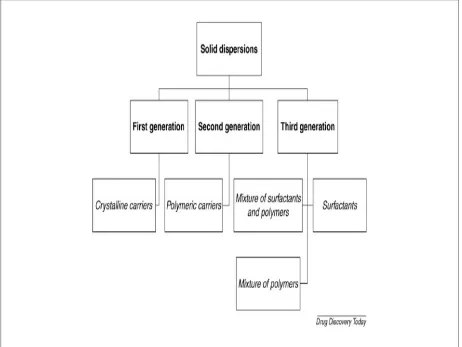
First generation solid dispersion
The first description of solid dispersions was from Sekiguchi and Obi in 1961. They
renowned that the formulation of eutectic mixtures improves the rate of drug release and,
therefore the bioavailability of poorly water soluble drugs. In the same decade, a number of solid
dispersions were described using poorly water soluble drugs, such as sulfathiazole and
chloramphenicol using urea as high water soluble carrier.
These solid dispersions fashioned faster release and higher bioavailability than
conventional formulations of the same drugs. The small particle size and the better wettability of
the drug were the major reasons for the experimental improvements in bioavailability. Later,
Levy and Kaning developed solid dispersion systems, containing mannitol as carrier, by
developing solid solutions through molecular dispersions in place of using eutectic mixtures. The
observed Improvements were credited to faster carrier dissolution, releasing microcrystals or
particles of drug. These solid dispersions, which could be designed as first generation solid
Second generation solid dispersions
In the late sixties it was experimental that solid dispersions, where the drug was
maintained in the crystalline state, might not be as effective as the amorphous, because the
first-mentioned were more thermodynamically stable. Therefore, a second generation of solid
dispersions appeared, containing amorphous carrier instead of crystalline.
Fully synthetic polymers include povidone (PVP), poly ethylene glycols (PEG) and
Poly methacrylates. Natural product based polymers are mainly composed by cellulose
derivatives, such as hydroxyl propyl methylcellulose (HPMC), ethylcellulose or hydroxyl propyl
cellulose or starch derivates, like cyclodextrins.
Third generation solid dispersions
Recently, it has been shown that the dissolution pattern can be improved if the carrier has
surface activity or self-emulsifying properties, therefore third generation solid dispersions
appeared. These include a surfactant carrier, or a mixture of amorphous polymers and surfactants
as carriers. These third generation solid dispersions are proposed to achieve the highest degree of
bioavailability for poorly soluble drugs and to stabilize the solid dispersion, avoiding drug
recrystallization.
HPMC was also associated with poloxamer and poly oxy ethylene hydrogenated castor
oil to prepare an amorphous felodipine solid dispersion. The addition of surfactants in the
formulation containing a polymeric carrier may help to avoid precipitation and/or protect a fine
POORLY WATER SOLUBLE DRUG
Tablet/capsule Dosage Form solid
dispersion/solution
Disintegration Disintegration
Large Solid Particles colloidal particles/
(Usually 5-100 microns) Fine Oily Globules (Usually < 1 microns)
Low dissolution rate ABSORPTION higher dissolution rate
Figure 2 : Schematic representation of the bioavailability enhancement of a
poorly water soluble drug by solid dispersion compared with conventional
Dosage form
The advantage of solid dispersion, compared with conventional capsules and tablet
formulations, is shown schematically in Figure-3 .
8From conventional capsules and
tablets, the in vitro release rate is limited by the size of the primary particles formed after
the disintegration of dosage forms. In this case ,an average particle size of 5 µm is
generally the lower limit,although higher particle sizes are preferred for ease of handling ,
formulation, and manufacturing . On the other hand, if a solid dispersion or a solid
solution is used , a portion of the drug dissolves instantaneously to saturate the
gastrointestinal fluid, and the excess drug precipitates out as fine colloidal particles or
oily globules of submicron size
8.
The advantages of solid dispersion system includes,
a.
An increase in aqueous solubility of the drug because of its very small particle
size.
b.
A possible solubilization effect on the drug by the carrier in the surrounding
diffusion layer.
c.
A reduction or absence of agglomeration of drug particles
d.
Excellent wettability and dispersability of the exposed drug paticles in the
gastrointestinal fluids.
e.
Formation of metastable polymorphic forms
However,solid dispersion does have certain disadvantages which include change in
crystallinity and decrease dissolution rate on aging.moisture and temperature have more
PREPARATION TECHNIQUES OF SOLID DISPERSION9
A.SOLVENT EVAPORATION METHOD
In this method, physical mixture of two components are dissolved in a common solvent
and followed by the evaporation of solvent. This method has been used for a long time in the
preparation of solid solution or mixed crystals of organic or inorganic compounds.
Advantages of this method:
1. Low temperature requirement for the preparation of dispersion
2. Thermal decomposition of drugs and carriers can be prevented.
Disadvantages of this method:
1. The higher cost of production
2. Incomplete removal of solvent
3. Selection of common solvent
B. MELTING METHOD
The physical mixture of drug and water-soluble carrier was heated to melt and the molten
mixture was then cooled and solidified mass was crushed, pulverized and sieved. The melting
point of a binary system depends on its composition and proper manipulation of drug carrier
ratios. Decomposition should be avoided due to fusion time and rate of cooling.
C. KNEADING METHOD
minutes and dried at 450C. The dried mass is pulverized and sieved through sieve no 60 and the
fraction was collected.
Advantages of this method:
1. Low temperature requirement for the preparation of dispersion
2. Usage of organic solvent is less.
D. MELTING SOLVENT METHOD
It involves dissolving the drug in a suitable solvent and incorporation of the solution
directly into the molten carrier. The solvent or drug may not be miscible with the carrier. The
liquid solvent used may affect the polymeric form of the rug precipitate in solid dispersion.
Advantages of this method:
1. Low temperature requirement for the preparation of dispersion
2. Usage of organic solvent is less.
E. SPRAY DRYING
Spray drying technique finds more important utility in the pharmaceutical industry due to
rapid drying and specific physical characters such as particle size and shape of the product. It is a
cost effective process as compared to that of freeze drying resulting in the production of fine
solid particles. The operation conditions and design of the drier depends upon the drying
characteristics of the product and powder specifications.
F. LYOPHILIZATION TECHNIQUE
This technique was an alternative to solvent evaporation method. Here the drug and
dispersion. Lyophilization technique was used to improve the solubility and dissolution rate of
many drugs.
G. MELT AGGLOMERATION PROCESS
This technique has been use to prepare solid dispersion where a binder acts as a carrier.
The solid dispersion is prepare by heating binder, drug and excipient to a temperature above the
melting point or spraying the dispersion of drug in the molten binder on the heated excipient
using a high shear mixer. The effect of binder type, method of preparation and particle size are
the critical factors influencing the solid dispersion preparation by this method. These parameters
results in various dissolution rates, mechanism of agglomerate formation and growth,
CHAPTER III
LITERATURE REVIEW
Literature reviews on solid dispersions of a number of drugs have been attempted and
reports on them have been well documented.
1. Heike Bleya et al., were prepared solid dispersions by a melting method from the
water-insoluble model drugs carbamazepine and nifedipine and polyethylene glycol 1500 (PEG
1500) or 1:1 mixtures of PEG 1500 and the polymers polyvinylpyrrolidone (PVP 30, PVP
12), polyvinylpyrrolidone-co-vinylacetate (PVPVA) and Eudragit EPO (Eudragit),and were
characterized by dissolution, powder X-ray diffractometry.
2. Jani Rupal et al., developed Solid dispersions (SDs) of Aceclofenac in PEG-6000, PVP
were prepared by solvent evaporation method. The solid dispersion was characterized for
physical appearance, solubility and IR. FTIR study reveled that drug was stable in SDs.
Solubility of Aceclofenac from SDs increased in distilled water.
3. Anette Seo et al., were prepared solid dispersion by melt agglomeration were agglomerates
containing solid dispersions of diazepam as poorly water-soluble model drug in order to
evaluate the possibility of improving the dissolution rate. Lactose monohydrate was melt
agglomerated with polyethylene glycol (PEG) 3000 or Gelucire® 50/13 (mixture of
glycerides and PEG esters of fatty acids). Different drug concentrations, maximum
manufacturing temperatures, and cooling rates were investigated. It was established to be
possible to increase the dissolution rate of diazepam by melt agglomeration..
4. Betageri.G.V et al., were studied the preparation of solid dispersions and lyophilization of
the dispersions designed to enhance the solubility. Solid dispersions of GLY (Glyburide)
PEG 4000 and PEG 6000 (1:1 mixture). Dissolution studies showed a significant raise in
dissolution of GLY when dispersed in PEGs.
5. Angela Nedelcu et al.,were prepared inclusion complexes of repaglinide by using
ß-cyclodextrin and ß-cyclodextrin derivatives.dissolution studies showed a significant raise
in dissolution of repaglinide when dispersed in ß-cyclodextrin.
6. Sandrien Janssens et al., were designed Kollicoat IR, a new pharmaceutical excipient
developed as a coating polymer for instant release tablets, as a carrier in solid dispersions of
Itraconazole. The solid dispersions were prepared by hot stage extrusion. DSC and X-ray
powder diffraction were used to characterize the miscibility of the drug and the carrier. The
results of this study show that Kollicoat IR® is a capable excipient for the formulation of
solid dispersions of Itraconazole prepared by hot stage extrusion.
7. Renata Jachowicz et al., were prepared Solid dispersions of different ratios of Gelita
collagel as the carrier and lactose were prepared by the spray drying method. In vitro release
studies have revealed that by preparing solid dispersions the dissolution rate and the
solubility of oxazepam increase obviously, independent of the ratio of drug, carrier and
lactose. The properties of the solid dispersions were characterized by X-ray diffraction and
polarizing microscopic studies.
8. Karel Six et al., were investigated the performance of three new solid dispersion
formulations of itraconazole in human volunteers in comparison with Sporanox®, the
marketed form. Solid dispersions were prepared with itraconazole (40%, w/w) and HPMC
2910, Eudragit E100 or a mixture of Eudragit E100-PVPVA64 were manufactured by
9. Anne Mari Juppo et al., were evaluated the formation of solid solution particles in the
Solution Enhanced Dispersion by Supercritical fluids (SEDS) process from a model drug
and two different types of carriers, mannitol and Eudragit† E100. SEDS was shown to be an
effective process for forming intimate blends and solid solutions for the drug and two
different types of carriers.
10.Shailesh V. Biradar et al., were developed a solid dispersion of Roxithromycin (ROX), a
class IV drug has 50% absolute oral bioavailability due to poor aqueous solubility. Their
study dealt with exploring the effect of homogenization, homogenization pursued by freeze
drying and homogenization followed by spray drying in the presence of solubilizers on drug
solubility and dissolution rate.
11.Okonogi.S et al., were studied to develop the dissolution rate of a sparingly water soluble
drug, ofloxacin, by solid dispersion systems with urea and mannitol. DSC, PXRD analysis
and IR Spectroscopy were performed to evaluate the physicochemical properties.
12.Bhaskar Chauhan et al., were formulated Solid dispersions (SDs) of glibenclamide
(GBM); a poorly water-soluble drug and polyglycolized glycerides (Gelucire®) with the aid
of silicon dioxide (Aerosil® 200); as an adsorbent, were prepared by spray drying
technique. This study demonstrated the high potential of spray drying technique for
obtaining stable free flowing SDs of poorly water-soluble drugs using polyglycolized
glycerides carriers with the aid of silicon dioxide as an adsorbent.
13. Adamo Fini et al., were prepared a number of systems at five compositions (5, 10, 20, 30
and 40% w/w) of diclofenac/N-(2-hydroxyethyl) pyrrolidine salt and acidic diclofenac in
PEG6000 and Gelucire 50/13, as physical mixtures and as solid dispersions. Powder X-ray
drug is present inside the samples in different physical states. Drug solubility into the
carriers increases with temperature and thermograms show only the melting point peak of
the carriers.
14.Guy Van den Mooter et al., were developed solid dispersions made up of itraconazole and
Inutec SP1, a new polymeric surfactant, by spray drying and hot-stage extrusion.
Differential scanning calorimetry (DSC) and X-ray powder diffraction (XRD) were used to
evaluate the miscibility of the components of the dispersions. This study reveals the
potential of the new polymeric surfactant as a carrier in the formulation of solid dispersions
for poorly soluble drugs.
15.Naji M. Najib et al., worked to provide a valuable insight into the mechanism of
dissolution rate enhancement of diflunisal caused by its dispersion in polyethylene glycol
(PEG).
16.Xingwang Zhang et al., were studied to characterize lansoprazole (LSP) /PVP solid
dispersion prepared by a fluid-bed coating technique. In vitro dissolution test in pH 7.4
phosphate buffer indicated that the dissolution rate was dramatically enhanced even at an
LSP/PVP ratio of 1/1.75 or with more PVP. DSC and powder X-ray diffractometry proved
the absence of crystallinity in LSP/PVP solid dispersion at a ratio of 1/2 or with more PVP.
17.Masataka Saito et al., werestudied to improve the solubility and, physical characteristics
of griseofulvin (GF) solid dispersions with saccharides as the dispersion carrier using a roll
mixing method. This study suggested that the saccharides with a high molecular weight are
useful carriers for solid dispersions.
using a laboratory-size, twin-screw counter rotating batch internal mixer. The outcome
showed that the dissolution rate increased with increasing the mixer set temperature, or the
screw rotating speed.
19.Tomoyuki Watanabe et al., were studied the states of interaction between indomethacin
(IM) and polyvinylpyrrolidone (PVP) in an amorphous solid dispersion prepared by
co-grinding were compared with those between IM and silica nanoparticles.
20.Carina Dahlberg et al., were demonstrated the ability of drugs to persuade the wetting of
solid dispersion tablets in unexpected ways. Five model drugs of different water solubility
and ability to interact with the involved polymers were incorporated in hydrophilic polymer
matrices, made of either hydroxypropyl methylcellulose (HPMC) or polyvinyl pyrrolidone
(PVP).However, the solid dispersions containing HPMC deviated from this regular
behaviour and displayed contact angles below those of the pure compounds involved, either
drug or polymer.
21.Anguiano-Igea.S et al., were examined the effect of molecular weight of polyethylene
glycols (PEGS) and drug/PEG ratio on the structure and dissolution rates of the solid
dispersions with clofibrate. The dissolution rates of clofibrate improved as the molecular
weight of PEG increased, but the best results were obtained with PEG 20000.
22.Yalcin Ozkan et al., were examined the release of etodolac from various molecular weight
fractions of polyethylene glycol (PEG) solid dispersions. Solid dispersions of etodolac were
prepared in different molar ratios of drug:carrier by using solvent and melting methods. The
dissolution rate of etodolac is increased in all of the solid dispersion systems compared to
23.Nattha Kaewnopparat et al., were prepared solid dispersions(SD)of curcumin polyvinyl
pyrrolidone in the ratio of 1:2, 1:4, 1:5, 1:6, and 1:8 in an attempt to increase the solubility
and dissolution. Both solubility and dissolution of curcumin solid dispersions were
appreciably greater than those observed for physical mixtures and intact curcumin.
24.Arvind K. Bansal et al., were developed a solid dispersion method for the drug Irbersartan.
Irbesartan (IBS) is a hydrophobic drug with poor aqueous solubility and dissolution rate.
Solid dispersions of IBS were ready with both small molecules (tartaric acid and mannitol)
and polymeric additives (polyvinylpyrrolidone, PVP, and hydroxypropyl methylcellulose,
HPMC). Thermal methods were used to evaluate the miscibility of the drug and additives.
25.Yogesh Pore et al., were studied the dissolution behaviour of a poorly water-soluble drug,
tadalafil, from its solid dispersion systems with poloxamer 407 has been investigated. Solid
dispersion systems of tadalafil were prepared with poloxamer 407 in 1:0.5, 1:1.5 and 1:2.5
ratios using the melting method. Studies established the presence of strong hydrogen
bonding interactions, a significant decrease in crystallinity and the possibility of existence of
amorphous entities of the drug.
26.Anette Seo et al., were aimed to prepare solid dispersions of diazepam by melt
agglomeration as diazepam is a poorly water-soluble model drug so as to evaluate the
possibility of improving the dissolution rate. Lactose monohydrate was melt agglomerated
with polyethylene glycol (PEG) 3000 or Gelucire® 50/13 (mixture of glycerides and PEG
esters of fatty acids) as meltable binders in a high shear mixer. It was found to be feasible to
increase the dissolution rate of diazepam by melt agglomeration. A higher dissolution rate
27.Minsuk Lee et al., weredesired to increase the solubility of sibutramine freebase, the solid
dispersion was prepared using a fluid-bed granulator. The solid dispersion containing
sibutramine freebase was characterized by DSC and powder X-ray diffraction (XRD). The
dissolution rate of sibutramine solid dispersion was considerably increased about 70% than
sibutramine freebase.
28.Punitha.S et al., were developed a solid dispersion of celecoxib by Physical triturating
method, Solvent evaporation and fusion method were prepared using 1:1, 1:3 and 1:5 ratios
of drug and polymer (urea). The prepared dispersion showed marked increase in the
saturation solubility and dissolution rate of celecoxib than that of pure drug.
29.Gopal Venkatesh Shavi et al., were formulated solid dispersions of Gliclazide using
different water soluble polymers such as polyethylene glycol 4000 (PEG 4000),
polyethylene glycol 6000 (PEG 6000) using fusion method and polyvinyl pyrrolidone K- 30
(PVP K 30) by solvent evaporation method. Pharmacokinetic studies of optimized
formulation were compared with pure drug and marketed formulation in wistar rats.
30.Margarit.M.V et al., wereanalyzed the physicochemical characteristics of solid dispersions
of pizotifen malate and povidone (Kollidon 12) at different proportions. The results were
correlated with findings for physical mixtures with the same proportions.
31.Biswal.S et al., were prepared solid dispersions (SDs) of Gliclazide with polyethylene
glycol (PEG) 8000 and compare them with SDs in PEG 6000. Gliclazide SDs containing
changeable concentrations of PEG 8000 were ready using the fusion – solvent technique,
and their phase solubility behavior and dissolution in 0.1N HCl were assessed at 37oC. The
32.Patel B.P et al., were prepared solid dispersions of Cinnarizine by using PEG 4000,
PVP K30 exhibited enhanced dissolution rate of Cinnarizine.
33.Jachowicz.R et al., were formulated the ternary solid dispersions of ketoprofen with
Macrogol and kollagen hydrolizate derivative as carriers , in which diverse methods of solid
dispersion preparation (melting, solvent method, different cooling), different proportions of
drug:carriers and molecular weight of Macrogol were tested. The raise in the amount of
released ketoprofen from solid dispersion pellets was 3.8-times bigger than from the pellets
containing the drug alone.
34.Hirofumi Takeuchi et al., were prepared a Solid dispersion particle of tolbutamide (TBM)
by formulating nonporous (Aerosil 200 (hydrophilic), Aerosil R972 (hydrophobic)) or
porous (Sylysia 350 (hydrophilic), Sylophobic 200 (hydrophobic)) silica as a carrier and
applying the spray-drying (SD) or evaporation (Eva) method.
35.Nora Anne Urbanetz et al., were prepared a solid dispersion of nimodipine by
incorporation of a drug in a carrier by melt embedding with in the carrier material. As the
dispersivity of the drug is of outstanding importance for its dissolution characteristics,
parameters which are supposed to influence crystallinity and dispersivity, It is found that the
absence of crystalline drug material in solid dispersions containing nimodipine and
polyethylene glycol 2000 is the must for a high dissolution rate and a significant
supersaturation in the dissolution medium.
36.Purvis T. et al., were prepared rapidly dissolving Repaglinide powders produced by the
Ultra-rapid freezing process.These formulations showed a faster rate of dissolution and
37.Arias.M.J. et al., were demonstrated a solid dispersion technique for triamterene as a
method for enhancing the Gl absorption of the drug triamterene has been explored so as to
acquire better dissolution characteristics and better bioavailability. In vitro release profiles
have been considered and quantified in terms of dissolution efficiency over the first 30 min
(DE3,,) and dissolution percentage over the first 30 min (DP,,). The results revealed that
there were no significant differences between the three polyethylene glycols (PEGS) under
test.
38.Wei Wu et al., were developed the solid dispersions of silymarin (SM) with
polyvinylpyrrolidone (PVP) by a one-step fluid-bed coating technique. The process
involved the spray application of the ethyl alcohol solution of SM and PVP and subsequent
deposition of the coprecipitates onto the non-pareil pellets in drying air flow in a fluid-bed
coater. The results demonstrated that the dissolution of PVP/SM solid dispersions was
enhanced greatly at PVP/SM ratios of over 4/1. The results indicate that the fluid-bed
coating technique has the potential use in the preparation of solid dispersions.
39.Madhuri Newa et al., were developedbinary solid dispersion of ibuprofen using poloxamer
188. By melt agglomeration method. And concluded that the solubility, dissolution and
absorption rate of ibuprofen were enhanced by preparing ibuprofen solid dispersion with
poloxamer 188.
40.Monica Rao et al., were prepared solid dispersion of simvastatin by using PVP K30 and
poloxamer 188. It is a concluded to improved bioavailability due to enhancement in rate and
CHAPTER IV
AIM OF WORK
Repaglinide is a poorly water soluble drug and it belongs to Class II in Biopharmaceutics
Classification System and which is prescribed as an anti diabetic drug for the treatment of type II
(non-insulin dependent) diabetes mellitus. Solid dispersions of repaglinide
would increase the solubility, bioavailability of drug and improve drug efficiency.
Repaglinide is a carbamoyl methyl benzoic acid derivative used as an oral
antidiabetic medication in the treatment of type II diabetes, that act primarily by
decreasing insulin resistance.
No attempt has been made to increase the solubility of Repaglinide through solid
dispersion methods. Hence the dissolution of Repaglinide in citro phosphate buffer PH 5 may
increase its absorption and finally bioavailability may be enhanced for the conventional
dosage formulations.
Therefore the aim of present study is to develop a solid dispersion method
for Repaglinide to enhance its solubility. So that the formulation dissolves completely in the citro
CHAPTER V
PLAN OF WORK
PART I
1.
Determination of λmax for Repaglinide in citro phosphate buffer PH 5.2.
Plotting of calibration curve for the drug in citro phosphate buffer PH 5.PART-II
1. Formulation of solid dispersions of Repaglinide using different concentration
of carriers by melting method and solvent evaporation method.
PART-III
1. Determination of drug content of all the formulations
PART -IV
1.Invitro release studies of the formulated repaglinide solid dispersions by using citro
Phosphate buffer PH 5 as dissolution medium in USP-type-I method (basket type).
PART-V 11,12,13
1. IR studies of drug and solid dispersions to determine the interaction between carriers and
drug.
2. Differential scanning calorimetry (DSC) studies of selected formulations to determine the
status of the drug and carrier.
3. Powder x-ray diffraction (PXRD) studies of selected formulations to determine crystallinity
CHAPTER VI
MATERIALS AND EQUIPMENTS
MATERIALS USED
1. Drug-Repaglinide - Gift sample from Dr. Reddy’s Laboratories
2. PEG-6000 - S. D. Fine Chemicals
3. Poloxamer 188 - Madras Pharma
4. PVP k30 - Nice Chemicals
5. Crospovidone - Nice Chemicals
6. Methanol - Nice Chemicals
7. Disodium hydrogen orthophosphate - Qualigens
8. Citric acid monohydrate - Qualigens
EQUIPMENTS USED
1. Electronic Balance - A&D Company, Japan
2. UV Visible Spectrophotometer - UV Pharma Spec 1700, Shimadzu, Japan
3. Dissolution Apparatus - LABINDIA Disso 2000
4. Water Bath - Mc Dalal & Co
CHAPTER VII
DRUG PROFILE
40,41,42,43Repaglinide is an oral blood glucose-lowering drug of the meglitinide class used in the
management of type 2 diabetes mellitus (also known as non-insulin dependent diabetes
mellitus or NIDDM). This class was developed to specifically control meal-related (prandial)
glucose fluctuations in patients with type 2 diabetes mellitus. Like the sulphonylureas, they
reduce blood glucose by stimulating insulin secretion. Repaglinide was approved by FDA in
1997.
STRUCTURAL FORMULA:
EMPIRICAL FORMULA:
• C27 H36 N2 O4
CHEMICAL NAME:
DESCRIPTION:
• Nature : Repaglinide is a white to off-white powder • Solubility : 2.94e-03 mg/mL
• Melting point : 130 to 131 0C • Molecular weight : 452.6
SOLUBILITY:
• Freely soluble in methanol.
• Soluble in dichloromethane.
• Insoluble in water
CHEMICAL PROPERTIES:
Loss on drying
• Not more than 0.7% Residue on ignition
• Not more than 0.1%
Heavy metals
• Less than 0.001%
MECHANISM OF ACTION:
Repaglinide acts by stimulating release of insulin from the β cells of the islets of
pancreas inhibiting ATP-sensitive K+ channels, thereby activating the Ca++ channels with
increase in intracellular calcium to release insulin. However, repaglinide acts on a different
binding site than the sulphonylureas. Repaglinide is not effective in the absence of functioning
PHARMACOKINETICS:
Absorption:
After oral administration, repaglinide is rapidly and completely absorbed from the
Gastrointestinal tract. After single and multiple oral doses in healthy subjects or in patients,
peak plasma drug levels (Cmax) occur within 1 hour (Tmax). Repaglinide has a plasma
half-life of approximately 1 hour. The mean absolute bioavailability ranges from 56% to
63%.When repaglinide was given along with food the mean Tmax was not changed but the
mean Cmax and AUC was decreased by 20% and 12% respectively.
Distribution:
The volume of distribution at steady state (Vss) was 31 L, and the total body clearance
(CL) was 38 L/h. Protein binding and binding to human serum albumin was greater than 98%.
Metabolism:
Repaglinide is completely metabolized by oxidative biotransformation and direct
conjugation with glucuronic acid after either an IV or oral dose. The major metabolites are an
oxidized dicarboxylic acid, the aromatic amine, and the acyl glucuronide. The cytochrome
P-450 enzyme system, specifically 2C8 and 3A4, have been shown to be involved in the
N-dealkylation of repaglinide to oxidized dicarboxylic acid and the further oxidation to aromatic
Excretion:
Within 96 hours after dosing with 14C-repaglinide as a single, oral dose, approximately
90% of the radiolabel was recovered in the feces and approximately 8% in the urine. Only
0.1% of the dose is cleared in the urine as parent compound. The major metabolite oxidized
dicarboxylic acid accounted for 60% of the administered dose. Less than 2% of parent drug
was recovered in feces.
INDICATIONS AND USAGE:
• Repaglinide is indicated as an adjunct to diet and exercise to lower the blood glucose in patients with type 2 diabetes mellitus.
• Also indicated for combination therapy use with metformin or thiazolidinediones.
• If this treatment program fails to reduce symptoms and/or blood glucose, the use of an oral blood glucose-lowering agent or insulin should be
considered.
DOSE:
The recommended dose range is 0.5 mg to 4 mg taken with meals. Repaglinide may be
dosed preprandially 2, 3, or 4 times a day in response to changes in the patient’s meal pattern.
The maximum recommended daily dose is 16 mg.
For patients not previously treated or whose glycosylated haemoglobin level (HbA1c)
is < 8%, the starting dose should be 0.5 mg with each meal. For patients previously treated
There is no fixed dosage regimen for the management of type 2 diabetes with
Repaglinide. The patient's blood glucose should be monitored periodically to determine the
minimum effective dose for the patient; to detect primary failure, i.e., inadequate lowering of
blood glucose at the maximum recommended dose of medication; and to detect secondary
failure, i.e., loss of an adequate blood glucose-lowering response after an initial period of
effectiveness. Glycosylated hemoglobin levels are of value in monitoring the patient's longer
term response to therapy.
When transferred from longer half-life sulfonylurea agents to repaglinide, close
monitoring may be indicated for up to one week or longer. Patients should then be observed
carefully for hypoglycemia due to potential overlapping of drug effects.
ADVERSE EFFECTS:
Common adverse events:
The most common adverse events leading to withdrawal were hyperglycemia,
hypoglycemia, and related symptoms.
The incidence cardiovascular events like hypertension, abnormal EKG, myocardial
infarction, arrhythmias, and palpitations were ≤ 1%.
The incidence of total serious cardiovascular adverse events, including ischemia, was
higher for repaglinide than for sulfonylurea drugs in controlled comparator clinical trials.
Infrequent Adverse Events (<1% of Patients):
Postmarketing experience includes reports of rare adverse events like alopecia,
hemolytic anemia, pancreatitis, Stevens - Johnson syndrome, and severe hepatic dysfunction
GI events : nausea, diarrhea, constipation, vomiting and dyspepsia.
Musculoskeletal events : arthralgia and backpain.
Respiratory events : sinusitis, rhinitis, bronchitis.
Drug-Drug interactions:
Repaglinide is metabolized by cytochrome P450 enzymes 2C8 and 3A4.
Consequently, repaglinide metabolism may be altered by drugs which influence these
cytochrome P450 enzyme systems via induction and inhibition. Caution should therefore be
used in patients who are on repaglinide and taking inhibitors and/or inducers of CYP2C8 and
CYP3A4. The effect may be very significant if both enzymes are inhibited at the same time
resulting in a substantial increase in repaglinide plasma concentrations. Drugs that are known
to inhibit CYP3A4 include antifungal agents like ketoconazole, itraconazole, and antibacterial
agents like erythromycin. Drugs that are known to inhibit CYP2C8 include agents like
trimethoprim, gemfibrozil and montelukast. Drugs that induce the CYP3A4 and/or 2C8
enzyme systems include rifampin, barbiturates, and carbamezapine.
Contraindications:
Repaglinide is contraindicated in patients with,
1. Diabetic ketoacidosis, with or without coma.
2. Type1 diabetes.
3. Known hypersensitivity to the drug or its inactive ingredients.
Storage:
CHAPTER VIII
EXCIPIENTS PROFILE
POLOXAMER 188 44
SYNONYM
Lutrol F 68, Pluronic F 68
STRUCTURE
CHEMICAL NAME
Polyethylene-Polypropylene Glycol
EMPIRICAL FORMULA
HO(C2H4O)a(C3H6O)b(C2H4O)aH
MOLECULAR WEIGHT
FUNCTIONAL CATEGORY
Emulsifying agent
Sensitize drug resistant cancers to chemotherapy
DESCRIPTION
White to off white granules
PROPERTIES
Physical state : white powder
Solubility in water : soluble in water
Solvent solubility : soluble in methanol and chloroform mixture
HLB value : 29.0
BIOLOGICAL EFFECTS OF POLOXAMER
Originally thought to be inert carrier molecules work led by Kabanov has recently shown
that some of these polymers have a very real effect on biological systems independently of the
STABILITY AND STORAGE CONDITIONS
It is stable under ordinary conditions, and should be stored in a well-closed container and
protected from light.
SAFETY
It is generally regarded as an essentially non-toxic and non-irritant material at the levels
employed as an excipients.
HANDLING PRECAUTIONS
Keep away from heat. Keep away from sources of ignition. Empty containers pose a fire
risk; evaporate the residue under a fume hood. Ground all equipment containing material. Do not
PEG-6000
SYNONYM
Carbowax; Carbowax Sentry; Lipoxol; Lutrol E; PEG; Pluriol E; polyoxyethylene glycol.
STRUCTURE
CHEMICAL NAME
a-Hydro-o-hydroxypoly(oxy-1,2-ethanediyl)
EMPIRICAL FORMULA
HOCH2 (CH2OCH2)mCH2OH
Where m represents the average number of oxyethylene groups. Alternatively, the general
formula H(OCH2CH2)nOH may be used to represent polyethylene glycol, where n is a number m
MOLECULAR WEIGHT
6000
FUNCTIONAL CATEGORY
Ointment base; plasticizer; solvent; suppository base; tablet and capsule lubricant.
DESCRIPTION
The USPNF 23 describes polyethylene glycol as being an addition polymer of ethylene
oxide and water. Polyethylene glycol grades 200–600 are liquids; grades 1000 and above are
solids at ambient temperatures. Solid grades (PEG>1000) are white or off-white in color, and
range in consistency from pastes to waxy flakes. They have a faint, sweet odor. Grades of PEG
6000 and above are available as free-flowing milled powders.
PROPERTIES
Physical state : white flakes
Solubility in water : soluble in water
Solvent solubility : soluble in methanol,ethanol(95%),dichloromethane,
and acetone.
HANDLING PRECAUTION
Observe normal precautions appropriate to the circumstances and quantity of material
handled. Eye protection is recommended
STABILITY AND STORAGE CONDITIONS
Polyethylene glycols are chemically stable in air and in solution; Polyethylene glycols
should be stored in well-closed containers in a cool, dry place.
SAFETY
Polyethylene glycols are widely used in a variety of pharmaceutical formulations.
Generally, they are regarded as nontoxic and nonirritant materials. Adverse reactions to
polyethylene glycols have been reported, the greatest toxicity being with glycols of low
PVP K 3044
SYNONYM
Kollidon, Plasdone; poly [1-(2-oxo-1-pyrrolidinyl) ethylene]; Polyvidone; Polyvinylpyrrolidone;
PVP; 1-vinyl-2-pyrrolidinone polymer.
STRUCTURE
CHEMICAL NAME
1-Ethenyl-2-pyrrolidinone homopolymer
EMPIRICAL FORMULA
(C6H9NO)n 2500–3 000 000
MOLECULAR WEIGHT
FUNCTIONAL CATEGORY
Disintegrant; dissolution aid; suspending agent; tablet binder
DESCRIPTION
Povidone occurs as a fine, white to creamy-white colored, odorless or almost odorless,
hygroscopic powder.
PROPERTIES
Physical state : white powder
Solubility : freely soluble in acids, chloroform, ethanol (95%),
Ketones.
Ethanol and water : practically insoluble in ether, hydrocarbons, and
mineral oil.
HANDLING PRECAUTIONS
Observe normal precautions appropriate to the circumstances and quantity of material
STABILITY AND STORAGE CONDITIONS
Povidone may be stored under ordinary conditions without undergoing decomposition or
degradation. However, since the powder is hygroscopic, it should be stored in an airtight
container in a cool, dry place.
SAFETY
Povidone is widely used as an excipient, particularly in oral tablets and solutions. When
consumed orally, povidone may be regarded as essentially nontoxic since it is not absorbed from
the gastrointestinal tract or mucous membranes. Additionally it has no irritant effect on the skin
CROSPOVIDONE 44
SYSNONYM
Cross linked povidone
Kollidon CL
Polyvinyl polypyrrolidone
STRUCTURE
CHEMICAL NAME
1-Ethenyl – 2 – Pyrrolidinone homopolymer.
MOLECULAR WEIGHT
> 1000 000
FUNCTIONAL CATEGORY
Tablet disintegrant
DESCRIPTION
White to creamy white powder.
PROPERTIES
Physical state: White powder
Solubility in water; insoluble in water
Solvent solubility: Soluble in methanol and dichloromethane
STABILITY AND STORAGE CONDITIONS
Crospovidone is hygroscopic; it should be stores in an airtight container in a bol, dry
place.
SAFETY
Crospovidone is use in oral pharmaceutical formulations and is generally regarded as a
nontoxic and non irritant material.
HANDLING PRECAUTIONS
CHAPTER IX
EXPERIMENTAL DETAILS
PREPARATION OF CALIBRATION CURVE FOR REPAGLINIDE
PREPARATION OF DISSOLUTION MEDIUM:45
CITROPHOSPHATE BUFFER PH 5:
10.2g of citric acid monohydrate and 18.16g of dibasic sodium phosphate are dissolved in
1L of distilled water.
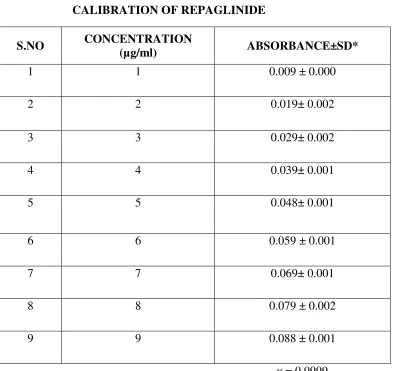
Preparation of Calibration Curve for REPAGLINIDE:53
To a quantity of 100mg of repaglinide, 5ml of methanol is added and the volume is made
up to 100ml with methanol. Dilutions are made to get the concentration of 1-10 µg/ml
respectively. The solution is scanned in (UV) spectrophotometer and the λ max is found to be
283nm.The absorbance’s of the solutions are measured at the λ max .
The calibration graph is drawn by taking the concentration on X axis and respective
absorbance in Y axis, to get a straight line as per like Beers law. This standard curve is used to
estimate the concentration of the drug release from the formulation during the in vitro dissolution
studies.
PREPARATION OF REPAGLINIDE SOLID DISPERSION FORMULATION: 14,15
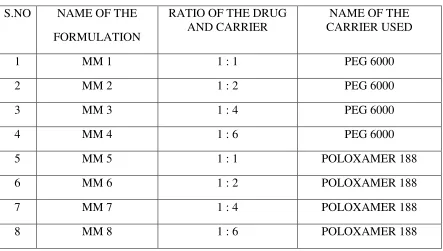
Solid dispersions are prepared with the drug repaglinide and polymers (PEG 6000,
Melting method17,19 ,34,38:
PEG 6000 is melted in a water bath at 700c, the drug repaglinide added in the solidstate
and the mixture is stirred well until homogeneity would be attained. The mixture allowed to cool
slowly at room temperature.
Poloxamer 188 is heated at temp of 550c using a thermostatically controlled water bath.
Then the drug repaglinide is dispersed in the ratios 1:1, 1:2, 1:4, and 1:6 in the melted carrier
poloxamer 188. The resultant mixture is cooled in an ice water mixture and maintained at the
cold temp for 2 hrs.
The solidified mass is removed from the ice water mixture and allowed to attain the room
temperature (25-300c). It is stored at room temperature for 24 hrs, and then pulverized using a
glass mortar and pestle. The pulverized mass sifted through a no.120 sieve and then weighed,
and transferred to an amber coloured bottle.
Solvent Evaporation Method26,27,28:
Repaglinide and PEG 6000, PVP K30, Poloxamer 188, Crospovidone are taken in the
ratios of 1:1, 1:2, 1:4, and 1:6 separately. Then the mixtures are triturated and dissolved in
methanol. The solutions are evaporated at 400 C, the residual mass scraped and sifted through
sieve no.120 and kept in desiccator for drying (Table 1).
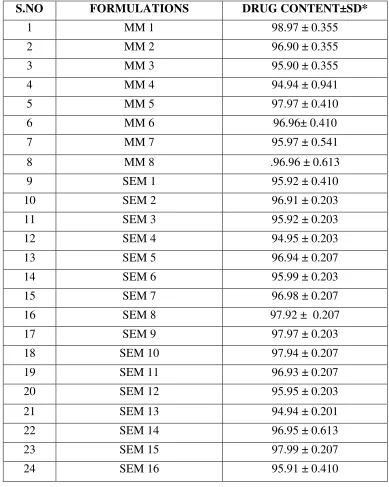
DRUG CONTENT ANALYSIS
Solid dispersions equivalent to 2mg of Repaglinide are taken and dissolved in minimum
quantity of methanol and volume is made up to 50ml. From this solution, aliquot is taken and
again diluted with methanol up to 50ml. The solution is assayed for drug content using
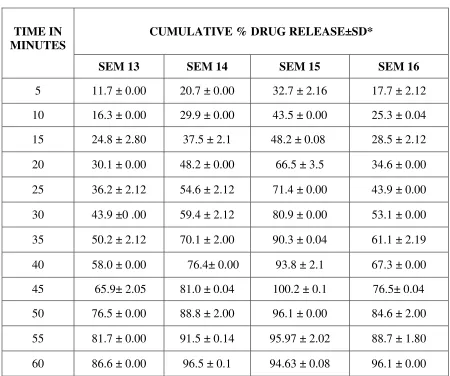
INVITRO RELEASE STUDIES 45,51,53,35:
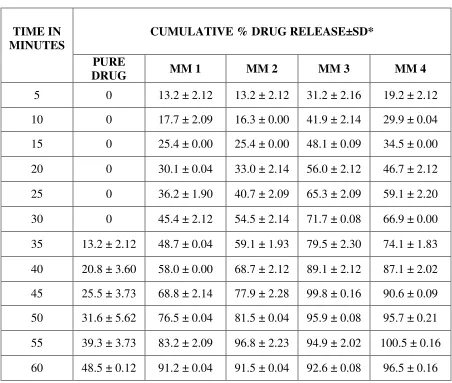
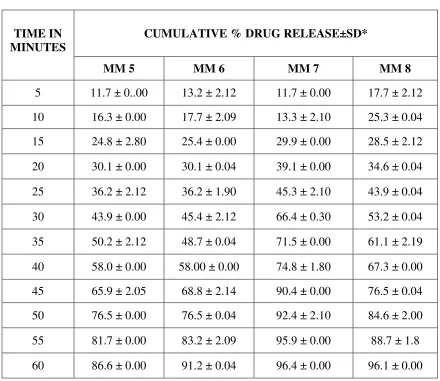
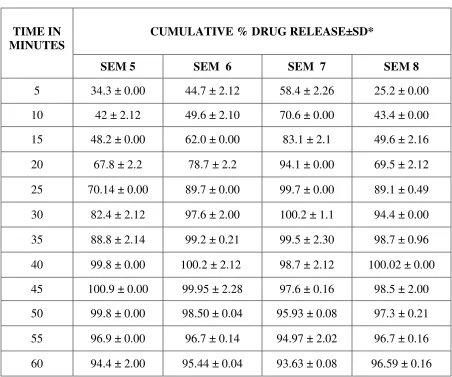
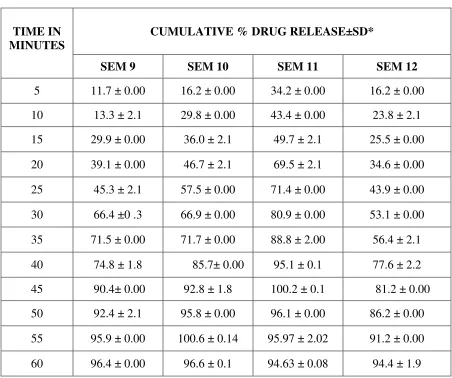
In-vitro release studies of Repaglinide is performed by using USP type I basket
dissolution apparatus in 900 ml of citro phosphate buffer pH 5 maintained at 37° C ± 1° C and
75 rpm. Samples (10 ml) are withdrawn at regular intervals of 5 minutes for 1hr and the same
volume of fresh dissolution medium is replaced after every withdrawal. The withdrawn samples
are analyzed by U.V. visible spectrophotometer at λ max 283 nm.
The above procedure is performed with repaglinide solid dispersion formulations.
FT-IR STUDIES ;32,33
The possibility of drug-excipient interactions are further investigated by IR. The
FT-IR graph of pure drug and combination of drug with excipient are recorded .The analysis is
performed by using Shimadzu FT-IR Spectrometer. The scanning range is 450-4000 cm-1 and the
resolution is 4cm-1. Samples are prepared in KBr pellets.
POWDER X-RAY DIFFRACTION (PXRD) STUDIES; 36,37,39,19
X- ray diffraction measurements of the solid dispersions are performed on a Rigaku X-
ray generator (Japan) with a copper anode (cu Kά radiation, λ = 1.540598 nm, 40 kV), over the
2θ range of 10-700 to find out the crystalline nature of pure drug and solid dispersed
formulations.
SOLUBILITY STUDIES34,29,30,31
for 2 minutes and shaken at (Mechanical Shaker) 24 hours. Resultant samples containing
undissolved solid dispersions suspended in the test medium are centrifuged at 10,000rpm for 5
minutes and the clear supernatant obtained are filtered (whatman), suitably diluted with distilled
water and analyzed spectrophotometrically at 283nm.
DSC STUDIES18,19
DSC is performed using Perkin Elmer STA 6000 Thermal Analyzer. The instrument is
calibrated with indium standard. Accurately weighed (it varies from 3mg-25mg) samples are
placed in an open type ceramic sample pans. Thermo grams are obtained by heating the sample
at a constant heating rate of 8ºC/minute. A dry purge of Argon gas (60ml/min) is used for all
runs. Samples are heated from 37°C-400°C.
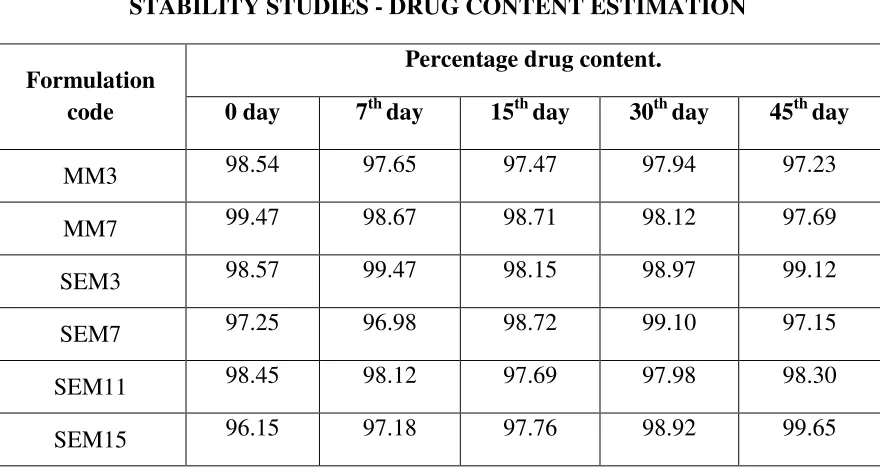
STABILITY STUDY 21,22
The stability of repaglinide solid dispersion was monitored up to 45 days at ambient
temperature and relative humidity (40°C/60%RH). Periodically samples were withdrawn and
characterized by dissolution rate measurements.
PREPARATION OF TABLETS54:
Of all the formulations, selected solid dispersion (SEM 7) is compressed into tablets.
These