Economic Perspective 1
THE DEVELOPMENT AND IMPLEMENTATION OF A STRATEGIC ROLE WITHIN SCOTTISH ENTERPRISE
by Neil Hood*, Strathclyde Business School
Introduction
In all the discussion which has surrounded the
establishment of Scottish Enterprise (SE)
over
the
past two years, relatively little public attention
has been given to the desired strategic direction
in which the organisation could, or should,
develop as it moves from the extended preparation
phase into implementation. There has for example
been much talk of the core body providing a
measure of strategic leadership for the new
network, without too much consideration of the
likely processes by which this may come about.
Equally there has been a recognition in both the
design of the initiative and in public comment
that an overall sense of direction and associated
co-ordination are essential if duplication of
effort and fragmentation of impact are to be
avoided.
This paper commences with an examination of the
strategy formulation process within this
initiative and thereafter considers some of the
determinants of Scottish Enterprise strategy
against the background of the actual and
prospective needs of the Scottish economy over the
next five years or so. It does so in the light of
the powers and functions which the enabling Act
(1) makes available to the new body, and bearing
in mind the level and nature of its funding.
Neil Hood is Professor of Business Policy in
the Department of Marketing, Strathclyde
Business School, University of Strathclyde, a
post he holds part-time with a variety of
business interests. He was Director of
Locate in Scotland from 1987-89, and from
March 1989 until August 1990 was Director of
Employment and Special Initiatives, SDA where
he was responsible for managing the SDA
dimension of Scottish Enterprise.
Equally any such consideration has to be in the
context of the organisational framework within
which Scottish Enterprise is required to operate
both at the Governmental level, and within the
disaggregated network of Local Enterprise
Companies (LEC's) which are responsible for the
delivery (and progressively for the design and
development) of a substantial proportion of its
services.
Strategy Formulation Processes
By far the most fundamental, but yet the least
considered element of strategy formulation for
Scottish Enterprise, surrounds the question of
what type of core role is expected to emerge in
the short to medium term. (2) Depending on how
that develops, there may be little or much to be
either offered (or accepted) in terms of strategic
direction for the initiative as a whole. Without
such direction, however, its effectiveness will be
in jeopardy and much of the opportunity which it
offers in principle will be missed. (3)
It should be stressed at the outset that, on paper
at least, there is considerable clarity as to the
starting point in strategic matters relating to
Scottish Enterprise. Appendix 1 sets out the
statement made to the House of Commons by the
Secretary of State for Scotland in July 1989 which
defines the strategic role of the core.
1
lesser degrees of challenge in practice. Thus,
depending on how this remit is interpreted,
implemented and supported by Government, its
strategic role will either be strong and powerful,
or weak and impotent.
an active contributor to the network.
Anything that remained would be for statutory
and constitutional purposes only, but
strategic leadership or agenda setting
activity would be out of the question.
Options for a core role: In practice many
different variables will determine the strategic
direction of Scottish Enterprise, and there are
therefore several quite different ways in which
the role of the core could develop, each of which
follows on from the way in which it is initially
perceived by Government and LEC's alike. Three
of these are now briefly considered.
a) It could be principally viewed as a channel
through which Government funding is
negotiated, a means by which terms and
conditions of project evaluation are
standardised and a framework within which a
measure of network coordination and impact
assessment is accepted at the margin. If it
is, the core will have a short, frustrating
and tempestuous life. This approach would
simply define it out of existence as the LEC
network matures.
b) An alternative view would regard the core of
Scottish Enterprise as a national economic
development agency in its own right which
implements a strategy agreed with Government
reflecting national economic needs. This
strategy may or may not entirely coincide
with all those being pursued by its
'associates', the LEC's, but they would be
consistent with each other. Put another way,
the whole would be substantially greater than
the sum of the parts.
c) Yet another way of regarding the core would
be to envisage it as an organisation whose
strategy is largely driven by the desire to
facilitate the work of LEC's. This would require the core to focus its attention on
the development of products and services for
local delivery, and in assisting smaller
LEC's with joint projects. Taken to
extremes, and it would be in certain
quarters, this approach would quickly erode
any core concept as the LEC's gained
experience, pushed for independence and
developed their own product range. In
effect, in the manner of the booster rocket
for the lunar module, when it had served its
purpose, the core would simply fall away as
As matters stand at the moment, none of these
options exactly defines the role of the Scottish
Enterprise core, yet there are elements of all of
them present in some aspects of the structure, in
perceptions and in the rhetoric about the
initiative. Item (b) is perhaps most accurate,
yet rarely used to describe the concept since it
smacks of a down-scaled SDA and not of a body in
tune with the new environment. Unfortunately none
of these options provide a wholly stable basis for
setting strategy for the network in what is after
all a small country, with many common and
recurring economic development problems. The
essential prerequisite is therefore to determine
more precisely how the core role will work in
practice, otherwise any attempt to exercise
leadership, however defined, will be frustrated
simply because it may progressively be regarded by
the LEC's as of marginal relevance. So long as
the balance of power and political expectation is
inclined in the LEC direction, as it has been from
the outset of this exercise, this will remain an
issue for debate.
While some of these underlying uncertainties
remain, a set of procedures is now in place to
give force to the strategic lead which is
attributed to the core. These are now examined
both in design and in implementation.
Formal planning procedures: By some measures, the
network of economic development agencies which
operate as Scottish Enterprise should not be short
of strategies. At the core level, the annual
corporate planning process inherited from its
parent bodies will ensure that, via the Industry
Department for Scotland as its sponsoring
Department in The Scottish Office, the relevant
Departmental and Ministerial interests are taken
into account and associated with its annual
a11ocated budget.
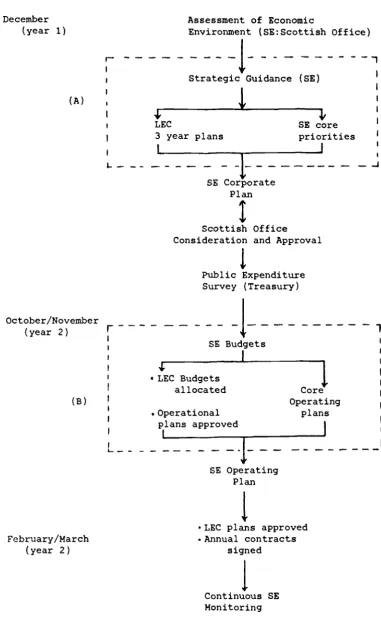
Figure 1 indicates the broad outline of how the
formal planning process for Scottish Enterprise as
a whole is likely to work and the way in which it
relates to the public expenditure round. It also
draws attention to two specific time periods in
which discussions and negotiations take place
Figure 1
Scottish Enterprise : Outline Planning Process
December
(year 1)
(A)
Assessment of Economic
Environment (SE:Scottish Office)
i'
J
LEC
3 year plans
TStrategic Guidance (SE)
L_
T
SE core
priorities
I
SE Corporate
Plan
I
Scottish Office
Consideration and Approval
October/November
(year 2)
r(B)
February/March
(year 2)
Public Expenditure
Survey (Treasury)
SE Budgets
• LEC Budgets
allocated
• Operational
plans approved
1
Core"
Operating
plans
SE Operating
Plan
,r
• LEC plans approved
• Annual contracts
signed
network concept and material to the considerations
in this paper. Of these A is particularly
critical and involves the process by which
guidance is determined, specified, transmitted,
and factored into the three year plans of the LEC's; and conversely the extent to which
feedback is two-way and results in a cohesive
Scottish Enterprise corporate plan to which all
parties are committed. Downstream of that and
ever contentious is area B where budgets and
operational plans are reconciled. Although Figure
1 does not suggest a formal joint evaluation of
the LEC plans on the part of Scottish Enterprise
and Scottish Office, this is to be expected
especially in the early years. It is also
desirable, given the pressures which would flow if
these plans were subsequently shown to be within
the powers of Scottish Enterprise yet outwith
current Government policy. The very existence of
LEC's means that the gap between powers and policy
will be a contested area simply because their
Boards will bring a different perspective to both
the acceptability and validity of policy
guidelines.
It will be evident that although the overall
planning process in Figure 1 is similar to the
past, and is one shared by cognate bodies, the
whole exercise is now quite a different one in
this case in that it has to consolidate the
outcomes of the extensive business planning
processes of thirteen LEC's. The nature of such a
'consolidation' exercise is delicate in itself,
bearing in mind the strenuous efforts at the LEC
level to differentiate themselves in order to
reflect local needs, opportunities and interests.
This is to say nothing of the fact that many of
these companies have powerful boards whose members
are not used to leaving someone else to negotiate
resources on their behalf! In that regard, much
back door lobbying and special pleading is to be
expected. It should be noted that the formal
process suggested in Figure 1 has no direct
LEC/Scottish Office link, nor should it have.
Informal links, and their impact on the whole
process, are of course quite another question. If
the model of Scottish Enterprise is however to be
implemented in a cohesive manner with
Scottish-level interests dominating, Ministers would be
well advised to change the locks on their doors
sometime soon and ensure that both the formation
of overall strategy and the allocation of budgets
is undertaken at arms length through the Board of
Scottish Enterprise. As Figure 1 indicates there
is in any event ample scope within that mechanism
for shaping the initiative to accord with
Government policy.
LEC's and the core: All of the issues considered
above are made the more critical when the role which strategy and planning have played within the
LEC's in the formative twelve to eighteen month
period before April 1991 is borne in mind.
Initially in order to gain approval as the
preferred bidders for their respective areas, the
prospective LEC's had to bring forward their
outline plans and vision, distinguishing their
particular contribution. In a number of cases
where there were contested bids, different
approaches to this task were evident. This
process was subsequently reinforced and extended
after the award of development funding in the
first six months of 1990 when significant effort
and resource were put into the preparation of
business plans for submission later that year.
Simply because the LEC's were not able to trade
under contract with Scottish Enterprise at that
time and there were relatively few operational
decisions to be made, the inevitable focus of
attention was on reviewing and planning. This is
not to say that specific projects were not
considered, but generally this was a secondary
dimension in these early stages.
There can therefore be fewer organisations in this
field which have spent more time preparing to do
business, without actually doing it - a matter of
no small frustration to many of those concerned.
Proportionately they have been able to place much
more emphasis on strategy than has the Scottish
Enterprise core, given its inevitable
responsibilities with all aspects of the
initiative, and particularly with the detailed
mechanics of its implementation, with the building
of relationships with the emerging network,
supporting the staffing and development of LEC
plans and so on. In short, some of the LEC's
would regard themselves as being equally as well
prepared to lead a 'bottom up' strategy, as
Scottish Enterprise is to give them 'top down'
strategic guidance at the national level.
However, this difference of emphasis in the early
months may well prove to be beneficial. The LEC's
clearly did require relatively more time to
formulate their local strategies, while the core
had much more of a direct inheritance in
methodology and content. Provided the two
perspectives can be balanced in implementation,
and Scottish Enterprise was designed to enable
sense of direction for economic development at
national and local level. To achieve that balance
will however take both time and patience.
Imp1ementat i on
Much of the initial preparatory work discussed
above is once and for all and more attention will
inevitably be devoted to the overall direction
from which the gains associated with this
initiative will come as the network begins to
operate in earnest from April 1991. This section
thus turns to implementation viewed from two
perspectives. The first looks at the practical
mechanisms adopted to achieve the balance
discussed above at the early stages of this
initiative, in the light of the needs of the
Scottish economy. The second concerns some of the
fundamentals for the success of Scottish
Enterprise in the linking of strategy and
operations at the structural and policy level.
Mechanisms: In order to begin to implement its
strategic leadership role, the Board of Scottish
Enterprise adopted a series of strategic
priorities in the summer of 1990. These were
founded on a detailed analysis of the long-run
performance of the Scottish economy and informed
by the powers and functions which would become
available to Scottish Enterprise. Seven strategic
priorities were identified for project and
programme development, namely competitiveness,
access to capital, human capital, environment,
product development, internationalisation and
technology. This paper does not allow scope for a
detailed evaluation of these choices, but it is
not surprising that they reflect the inherited
priorities of the SDA and the Training Agency
(TA). Both bodies had founded their strategies on
historic analysis of the same economy, while
Scottish Enterprise will continue to be able to
deploy the same powers and functions and hence
seek to make a contribution in similar areas of
activity. The priorities were presented in a
manner which left ample scope for individual LEC
creativity and initiative. In each case a
briefing paper was prepared detailing the
background and rationale for the focus on that
particular issue, together with an assessment of
the Scottish relative position, objectives which
should be set for SE action, guidance on methods
which might be adopted to address the problem or
exploit the opportunity and so on. All of this
material was made available to LEC boards and was
accompanied by extensive dialogue on the part of
SE core executives with them and their embryonic
local executive teams. It was correctly regarded
as a fundamental ingredient of network building;
as an essential input into the planning processes
of the LEC's which were already well underway by
summer 1990; and as a means of providing structure
to the initiative, as well as ensuring continuity
since LEC's were destined to inherit a
considerable number of actual programmes and
projects from both of the merging bodies.
It was inevitable that the strategic priorities
would fall into the two broad categories of
enterprise and environment; while it was
recognised that the lines between several of the
seven priority areas were soft and that the key to
success lay in planning activity which would
enable the maximum interaction between them.
Equally it was important to ensure from the outset
that at the strategic level, the SDA and TA
functions were integrated and that LEC's were
given guidance on how that could be achieved.
LEC's were moreover encouraged to focus specific
attention on both realising opportunities for, and
removing blockages to, development as they saw
them. There were other important reasons for the
working up and dissemination of these priorities.
Chief among these was the need to make it plain
that overall SE funding priorities would be driven
by them, while also providing a clear and early
signal about the way in which LEC 3-year business
plans would require to be crafted in order to have
their annual operating plans and budgets approved.
All of his can therefore be viewed in the context
of the initial stages of the process set out in
Figure 1. Furthermore, it attempted to handle the
sensitivities of providing strategic leadership in
this new context where SE is a development agency
which guides and funds independent contractors,
whose principal (and initially sole) reason for
existence is to contract with this single entity.
Of considerable importance, both within the
setting of 1991/92 LEC planning and as the basis
for future relationships, is the fact that there
has been widespread acceptance of these strategic
priorities as being substantially correct as a
point of departure for the new network.
1
priorities which actually influence spending
patterns and give substance to planning. History
will play an important part in this within the
1991/93 spending patterns of most LEC's as
projects in the pipeline reflect previously
established priorities, some of which they may
wish to revisit in due course. On the other hand,
where there is competition for resources, and when
appraisal methodology is applied to a range of
proposed projects, questions concerning their
impact at the level of the Scottish economy and
the extent to which the project succeeds in
leveraging private funds alongside those from
Scottish Enterprise and other public sources,
become very material. In other words, meaningful
operational priorities when applied to projects
utilising government funding through Scottish
Enterprise, cannot be determined independent of
these wider considerations. However, this will
not always command widespread acceptance.
This can be readily illustrated. For example,
historic rankings have placed a high priority on
projects involving land assembly or factory
provision for inward investing companies. This
has been the case for reasons associated with the
scarcity of these projects, the competition
involved in attracting them and, most
significantly, the additional benefits accruing
for the Scottish economy in having secured them.
In contrast, although certain types of
environmental projects may well be of considerable
local benefit, they usually have a lesser impact
on the economy as a whole. Such projects would
therefore feel the pressure of cash limits and
rephasing some time before inward investment
projects. Of course, many areas of Scottish
Enterprise work involve less clear choices and
more precise judgement on relative rankings than
in this example but it does illustrate the
principle of how operational priorities will have
to link to the portfolio of activity in all parts
of Scottish Enterprise.
It is clear then that if a 'strong strategic role1
(Appendix 1) is to be implemented, the onus will
rest on the core to spell out its operational priorities and indicate clearly which impact
measures are acceptable in order to guide the
planning and bidding process. The early signs
indicate that, as this process gets underway, most
proposals within LEC business plans are in fact
within the stated operational priorities. This is
not to suggest that they are tame, unchallenging
documents which lack creativity or ambition, quite
the contrary at times. But it does suggest that a
high level of realism has been applied during the
initial stages, with the focus on continuity.
Ambition would appear to be principally confined
to the lodging of funding bids beyond the historic
spend in their respective areas and occasional
questioning of SE operational priorities and of
Government policy, especially towards training.
Neither of these are of course small matters.
They merely serve to give evidence of the strength
of feeling in LEC Boards both about the
acceptability of guidance and about the politics
of competitive bidding. They also fuel concerns
about 'strategic roles' in the near future.
All of the mechanisms discussed in this section
are necessary components of developing and
implementing a strategic direction for Scottish
Enterprise. But there are still outstanding, and
to some extent much larger, questions to be
addressed. It is almost inevitable that, given
the background to this initiative, more attention
has been devoted to process than to principle.
For example, this has not encouraged discussion on
what types of SE activity have the maximum impact
on the Scottish economy and whether substantial
additional resource should be allocated in these
directions, to the detriment of others - and what impact that would in turn have on spending
patterns in LEC's. Equally, the system is not yet
geared to assessing the relative efficiency of
different types of project and delivery
mechanisms, and communicating these throughout the
network. Both of these examples raise questions
of principle, but also of practice.
It would be frankly wasteful if Scottish
Enterprise as a whole was encouraged to find its
own solution to each of these types of question
without paying attention to the cumulative
experience of the past. This particularly applies
to SDA functions and spending simply because it is
more discretionary than that of the TA. Put
another way, the challenge is to stimulate
creativity without encouraging a laissez-faire
approach which discounts previously validated
experience. There is little doubt that this is
one of the critical success factors for Scottish
Enterprise, but, as the next section suggests,
there are others.
Critical success factors for the future: While
these initial mechanisms have served to set the
process in train and provide direction and
the near future. They involve all the relevant
parties and are concerned with the link between
setting a strategic direction and its
implementation as the network gains momentum and
as LEC's flex their muscles. Some of these issues
call into question aspects of the present
structure and distribution of responsibilities,
others presume a willingness to re-examine allied
aspects of policy towards economic development in
Scotland in the near future. It is however
acknowledged that if both the spirit and letter of
the statement in Appendix 1 were to hold, many of
the concerns expressed in the following paragraphs
would be less pressing. Thus the juxtaposition of
strategy and implementation are explicitly
recognised in projects and programmes in industry
and enterprise where these span the SE area; in
major investments; inward investment; and in
large physical projects. A not inconsequential
aspect of these being at the core is that, since
it is a Government agency and not an independent
company, it can more readily act on Ministerial
instruction whether that involves action at
national or local level. However, setting this
aspect aside, there are several other issues to be
borne in mind.
1. Firstly, there is the question of the
delineation of national and local interests.
Given the SE structure, all parties will have to
subscribe in principle and in detailed practice to
there being an overarching economic interest at
the national level. There are activities where
this principle is relatively clear, such as inward
investment and large physical projects which
create national assets. In these instances both
national economic interests and national
implementation are vested in the core, as Appendix
1 makes clear. But even there the practice will
require careful monitoring and absolutes will be
hard to specify. Moreover there are relatively
few functions where there is that level of
clarity, not least because most of the LEC
business activity areas are also represented at
the core. It is true that, as Scottish Enterprise
is set up, the initial levels of delegated
spending authority are among the features
distinguishing the core from the LEC's. But this
applies to implementation, not to impact and a
temporary level of delegation in project or
programme finance will not delineate the Scottish
as distinct from the local level of interests.
Indeed it was never designed to do so. The more
basic issue is not who does what but rather
whether the economy of Scotland genuinely benefits
as a whole from what is done.
The methods of project appraisal which the
Treasury requires bodies such as Scottish
Enterprise to employ, validly distinguish between
the gainers and losers from the implementation of
a specific project, and are particularly concerned
with matters such as displacement and
additionality. It is therefore possible to argue
that 'Scottish level interests' could be
determined principally by the application of such
procedures at the earliest possible stage in the
development of a project. Such techniques clearly
have an important role to play, but are far from
infallible in their methodology, and for the first
time will now be subject to both more public and
more private sector scrutiny, especially if LEC's
have important projects rejected after long
periods of planning. Moreover to rely exclusively
on such mechanisms, and in effect use them
negatively to define a vital element of strategy,
would be wholly against the spirit of establishing
a supportive set of core-LEC relationships upon
which the Scottish Enterprise model essentially
depends. What it is in the national interest to
do has to be established and adhered to long
before then. At the same time the acceptance in
principle that the application of these procedures
will inevitably lead in the last resort to the
Board of Scottish Enterprise having to make some
tough allocation decisions over certain types of
project is vital to the integrity of this model.
There are testing times ahead in this regard.
the geographical area concerned, even if that means doing so directly.
The second is that the criteria which determine the type, and to some extent (depending on the programme), the pattern of spending in Scottish Enterprise are common to the network as a whole. Therefore, while remembering that this is not a corporate model, and the core is not a corporate headquarters determining all aspects of the strategy, product and service mix of the thirteen LEC's which are in no sense its subsidiaries, the network as a whole is designed to pursue overall goals by broadly common means. In effect it is assumed that, more in the mode of a 'mother-daughter' organisational relationship, the core will provide national leadership to the system as a whole while recognising that it operates with largely autonomous associate businesses.
The third dimension is whether this structure allows of the possibility that the strategy which an LEC proposes to implement is capable of being rejected outright by the core on whatever grounds. Of course every effort would be made to avoid this outcome, but it is difficult to see where countervailing power comes from for Scottish Enterprise if such limiting cases are not explored. In reality such authority would only be able to be asserted with the full backing of Ministers.
All three of these considerations have a part to play in determining the strategic role of the core. The ongoing relationship with the network is founded on the presumption (however unpalatable) that the core does not actually have a primus inter pares relationship with the LEC's. Its monitoring, supportive, agenda setting and final arbitrar roles will indeed have to be carefully balanced, but only one body can exercise a 'strong strategic role' in this network. Thus while the corporate planning processes and mechanisms discussed earlier are a necessary element of the core contribution to strategy, these in themselves are not sufficient. Their insufficiency stems primarily from the fact that they could readily be seen as too static, being the annual talisman to which contract related obeisance is paid. They have necessarily to be supplemented by the concept for the core introduced earlier in the paper, whereby as a 'national economic development agency' in its own right, it is consistently seen to be pursuing relevant national initiatives in a proactive
manner some, but not all, of which will filter
into strategic and operational directives for
LEC's. Such a route will, for reasons of national
interest and national benefit, be essential in order to continue to position Scotland in the externally competitive development environment which prevails in Europe in the 1990's.
3. This leads on to a third consideration. The
concept of Scottish Enterprise started in the
minds of its initiators with LEC's (or a close
equivalent) as a given, before the design of a
core of a meaningful kind was seriously
considered. In no sense therefore was Scottish
Enterprise able to evaluate local delivery options
and itself make a strategic choice between them.
Its Board did not exist until long after the LEC
concept was established, for reasons largely
associated with the TEC developments in England
and Wales where there was no equivalent core to
have a strategic role. One outcome of this is
that the Board of Scottish Enterprise took on a
role where much of its scope for decision making
has been narrowed into particular areas, only a
few of which are strategic. They include
financial allocations, appraisal mechanisms, and
large project approval. Within that is of course
included the assessment of LEC business plans and
Solomon-like judgements on resource allocations
for these, as well as approving the overall
corporate plan. It is true that there is
considerable scope in these latter areas for
staking out some strategic turf and making
positive and fearless choices. This would involve
Scottish Enterprise consistently acting as the
body which is accountable for this network, rather
than one which is forced towards restricted scope
for decision-making because of the politics of the
establishment of LEC's. Indeed, in the judgement
of this author, such an exercising of the
accountability principle and with it the taking of
strategic decisions in key policy matters, is
essential if the core role is in any sense to be
proactive and not be seen as residual. Otherwise
the 'strategy' of Scottish Enterprise will be
little more than the sum of its parts and the
pressure will be on the reconciliation of bids
rather than on the development of initiatives.
Such a route to its strategy can in no way be
regarded as generating a meaningful, and coherent
programme for deploying its total resource to best
effect for the Scottish economy. For instance, it
is is already clear that some LEC's regard the
justify its existence in absolute terms, rather
than look to it for overall strategic direction
-hardly a desirable starting point!
4. The final issue to be faced is whether the
interests of exercising a strategic role may not
be best served were the core to be progressively
developed to ensure that it does undertake the
distinctive functions which were originally
conceived by Government for it. It may then need
to be given permission to supplement that role by
taking on others where it is in the national
interests to do so. This may in turn require the
redefining of some responsibilities both within
and outwith SE. Under the present terms of
reference, the search for distinctiveness would
have to be in areas where the national perspective
was readily definable and agreed at Ministerial
level. This however is not a simple matter.
Scottish Enterprise is designed to be a network of
'full function' development agencies where each of
the principal powers and functions is represented
within all the LEC's, and whose application of
these is governed principally by delegated
authority levels. In that sense the LEC's largely
mirror the core, which also has equivalent, but
larger levels of delegation from its sponsoring
department.
Nevertheless there is a need for progressively
more clarity in the exercising of certain
functions. Pursuing this line of approach might
lead to the identification of groups of activity
where it could be persuasively argued that the
direct linking of both national strategic
direction and leadership in implementation (or in
securing it) are essential, principally on grounds
of efficiency, effectiveness, and competitiveness.
These would include, firstly, activities where the
effective operation of the function requires a UK
national or international presence. The obvious
example of this is inward investment, and the
status of Locate in Scotland is preserved within
Scottish Enterprise. There is a strong case for
taking this approach further into most, if not
all, trade related activity.
To do so would require the establishment of a new
trade organisation for Scotland which integrated
the efforts of all bodies operating in trade
promotion and trade development at national level,
with Scottish Enterprise taking the lead. At
present SDA, the Export Office in the Industry
Department and Scottish Council (Development
&
Industry) are all operating at the 'national'
level with many local institutions, even before
LEC's become fully operational (4). It is
improbable that this could ever be achieved
without a central support structure and clear
thinking on how this body would mobilise LEC
inputs to best effect. Indeed there is a distinct
lack of cohesive planning in this vital area of
economic development, and early evidence that as
presently structured, the establishment of
Scottish Enterprise will lead to further diffusion
and fragmentation of effort in the absence of a
major new initiative involving the public and
private sectors. The politics of this are complex
and sensitive, but so were they in 1980 when
inward investment integration was planned! Then
the potential pay-off was seen as being worth the
short term pain, so why not charge SE with such a
strategic task for the 1990's?
Another activity in this category is marketing.
There is every reason for arguing that, in support
of a body which is charged with the responsibility
for developing a strategic response to enterprise,
economic regeneration and training, a strong
presence has to be maintained in this area.
Appendix 1 implies just such a presence. But in
exactly the same manner in which Governments wish
credit from funding development agencies, LEC's
will wish to deploy marketing resources to promote
their achievements. It should be relatively easy
to control this by budget allocations and avoid
wasteful effort, but if LEC's decide to use their
own funds to promote nationally and create further
noise in a busy market place, there is little
Scottish Enterprise can do to stop them.
purposes of this discussion, there is much to be
said for UK wide and international marketing of
all types being regarded, as a matter of policy
and reinforced by budgetary control, as an
activity where Scottish Enterprise has primacy.
In short this is another area where the strategic
and operational roles are best integrated at the
core, irrespective of pressures to the contrary.
If the approach advanced in the above paragraphs
were to be adopted it would bring some
considerable clarity to the mechanisms by which
strategy for Scottish Enterprise is formulated and
implemented in the near future. Moreover, taken
in conjunction with the responsibility to give
leadership to the corporate planning process for
the network as a whole, it would provide a clearer
basis for a complementary relationship to emerge
on operational matters as between the core and the
LEC's. As long as the present funding system and
reporting structure is in place, there is the
basis for complementarity in matters of finance
and accountability, but on operational matters it
is less secure, simply because it is less clear.
Having said that, however, much of the
distinctiveness of the strategic contribution from
the core will not come from the possession of
further functions, helpful though that might be.
It will emerge more from the style in which it is
managed, the perspective which it brings to
Scottish economic affairs, the innovative nature
of its thinking, the effectiveness of its
co-ordinating of the whole network and the manner by
which it grasps the lead responsibility which it
has by statute. There is, for example, little
doubt that one of the SDA's principal strengths
has, in the eyes of both its customers and
competitors, been its ability to provide an
integrated delivery mechanism. Scottish
Enterprise offers the possibility to maintain and
develop that at two levels (namely both national
and local) and it is essential that the potential
for both are realised if there is to be real net
gain to the Scottish economy. Moreover, it is
only by exercising this lead role that the
fundamentals of economic development policy will
be addressed. For example in recent months there
has been little consideration as to whether, when
fully operational, Scottish Enterprise as a
development mechanism will actually improve
Scotland's competitive position in the aggressive
world of industrial development. And yet who will
unflinchingly ask such questions, provide answers
and if necessary suggest new directions if the
core body does not? This is precisely the reason
for having an empowered body operating at arms
length from Government, a role which Scottish
Enterprise can readily play.
Conclusion
This paper has explored a number of important
issues surrounding the implementation of a
particular policy statement which lies at the
heart of Scottish Enterprise. It is correctly
positioned there since no organisation and no
initiative with this inherent level of complexity
can be without the commitment to provide it with a
strategic direction from the outset. A useful
start has been made, but there is much still to do
and many inherent pressures towards fragmentation.
The solution is regarded as lying in several
related dimensions. The first involves exercising
both the spirit and letter of the strategic role
as established, and all concerned accepting that
this is what they signed on for. The second
involves the content of the work of a national
agency in its own right, progressively clarifying
roles, as well as being viewed as adding value
through its creativity and initiative. The third
will require, at the margin, the drawing of lines
as to where LEC's may or may not stray. The
fourth demands the championing of important policy
causes where initiative is clearly required but
existing structures or inclinations are not in the best interests of the Scottish economy and where
no one else will face up to the consequences of
inactivity. Anything less will not begin to
provide a Scottish solution to Scottish problems,
and will merely fritter away the potential gains
associated with this initiative.
Appendix 1
"The central bodies (referring to Scottish
Enterprise and Highlands and Islands Enterprise)
will have a strong strategic role and will
therefore set the policy framework and monitor the
local companies; design, develop, and secure the
implementation of projects and programmes,
particularly in industry and enterprise
development with an applicability across their
areas; approve major projects that fall out with
the companies' competence; and handle certain
functional activities including major investments,
inward investment attracted by Locate in Scotland,
marketing and the design and implementation of