Research Report DCSF-RR022
Improving safeguarding
practice
Study of serious case reviews
2001-2003
Wendy Rose and Julie Barnes
Improving Safeguarding Practice
Study of Serious Case Reviews 2001-2003
Wendy Rose and Julie Barnes
The Open University
The views expressed in this report are the authors’ and do not necessarily reflect those of the Department for Children, Schools and Families.
CONTENTS
Acknowledgements 2
Executive Summary 3
Chapter 1 - Introduction 10
Chapter 2 - Children in the study 13
Chapter 3 - Children experiencing harm in the context of neglect and
domestic violence 19
Chapter 4 - Changing context of serious case reviews 30
Chapter 5 - Conducting serious case reviews 38
Chapter 6 - Overview conclusions, recommendations and action plans
52
Chapter 7 - Learning lessons from serious case reviews 66 Chapter 8 - Making a difference: reflections and conclusions 79
Appendix 1 - Aims and methods of the study 92
Appendix 2 - Analysis of 40 serious case review reports, 2001-2003 97 Appendix 3 - Reviewing and investigating individual cases: Serious Case Reviews, Chapter 8, Working Together to Safeguard Children 2006
107
Acknowledgements
We owe an enormous debt to many people who have worked with us in producing this second biennial analysis of serious case reviews, but we particularly wish to thank our commissioners, Jenny Gray OBE, policy adviser on safeguarding, and Caroline Thomas, Carolyn Davies and Nigel Gee, research managers in the Department for Education and Skills (now the Department for Children, Schools and Families), who gave us extensive support, and Colin Green, formerly Deputy Director, Child Protection Division of the Department for Education and Skills.
The research team was augmented by the expert assistance of Geoff Gurney in the analysis of reports, and by the technical expertise of Stewart Berry and Adam Seeley. We received generous responses from all those professional staff in children’s services or (then) Area Child Protection Committees we approached for telephone interviews, to whom we are very grateful.
Participants in a national study seminar on the emerging issues and in follow up discussions gave us stimulating, reflective and creative contributions from their wide experience and wisdom. The many people who have helped us include Ann Black, Stuart Bond, Mike Burns, Christine Christie, Helen Elliott, Barbara Firth, Nicola Francis, Ruth Gardner, Veronica Grant, Andrea
Hickman, Christine Humphrey, Debbie Jones, David Lambert, Peter Maddocks, Jill Pedley, Claire Phillips, Arran Poyser, Sue Richards, Nigel Thompson, Catherine Warren, Katy Young and colleagues at NSPCC. Penny Wilkinson gave invaluable help during the study and in organising the study seminar in 2006, and Lesley Henderson provided ever willing
administrative support from the Open University. The list is not exhaustive.
We shall always remember the children and families of the serious case reviews whose lives were contained in the pages of the reports we read, and we acknowledge with respect those professionals we encountered who are committed to improving safeguarding practice.
Authors
Executive Summary
Introduction
The Government announced in 1999 that it would be commission overview reports of serious case reviews on a biennial basis to draw out key findings from the local reviews and identify their implications for policy and practice (Department of Health et al 1999). The overall aim of this second biennial study was to prepare an overview of findings from a selection of case reviews undertaken during 2001-2003.
Specific objectives were: to identify the key themes common to the
recommendations; to ascertain whether case review reports resulted in action plans derived from the findings and if plans were implemented within the recommended timescales; to consider what helped or hindered their
implementation; and to ascertain if review processes led to any changes in policy or practice at a local level. Finally an important objective was to identify from the reviews any lessons for policy and practice at a national level.
Key findings
• Serious case reviews make an important contribution to understanding what happens in circumstances of significant harm. Their effectiveness can be improved and there are examples of promising approaches using the findings of serious case reviews to bring about improvements in safeguarding practice. However, achieving such improvements require Local Safeguarding Children Boards to develop a much stronger learning culture within which serious case reviews are but one important source of knowledge for improving safeguarding practice.
• Older children as well as young children and babies, and children with additional or specific needs such as disabled children and their families are all subject to death or serious injury and their circumstances require
careful monitoring by Local Safeguarding Children Boards.
• A notable number of children who were experiencing neglect in the context of a range of other family difficulties, and children living in circumstances where domestic violence prevailed, co-existing with other problems in their families such as substance misuse and mental ill health were the subject of Serious Case Reviews, indicating challenges for effective service provision to safeguard the welfare of children.
.
• A critical decision in commissioning a review is the appointment of an independent chair or author of the overview. Local Safeguarding Children Boards currently rely on a system of informal contacts to find suitable people. Consideration has to be given to how a resource of trained, credible experts in this field can be developed and operate in an open and transparent way.
• The quality of the overview report is dependent on the agency
management reviews and their chronologies. Acknowledgement is not always given to the time this may take, the training needs of those preparing reports and to the management issues required
• Chronologies and genograms serve discrete purposes to assist the
analysis of agencies’ contact with the family, particularly the child, and the direction of enquiry. On occasions in the study these were found to have been overlooked or poorly presented.
• The requirement to invite family members to contribute to case reviews is a major development and their involvement requires appropriate
facilitation, planning and resources. There were evidence of some family involvement and the consequential issues in the case reviews studied.
• The formulation of recommendations and the creation of action plans at the conclusion of the overview were sometimes described as being done in a rush due to other constraints. They require reflection and a strategic approach.
• The completion of the overview report was often described as being accompanied by some uncertainty and confusion at a time of a high level of activity to handle the outcome of the review. This part of the process requires as much planning and management as the initial stages of commissioning the review
Methods
The planned use of a national database as a sampling frame proved problematic because of the incomplete nature of the database records. An alternative strategy was employed in which records of all reviews conducted, together with their action plans were requested to be supplied to the
Department of Health through regional offices of the then Social Services Inspectorate. Whilst an estimated number of 180 reports were expected, only 45 were received and some reports contained no action plans. The final sample of the 40 records included in the study was therefore not a representative sample but was the best available in the circumstances.
successfully carried out. As an alternative an invited national study seminar was organised. Additional interviews were also carried out with a number of key people who had direct responsibility for managing the outcomes of serious case reviews, which were not subject reviews of the study.
Detailed Findings, Conclusions and Implications
Some strong themes have emerged at the conclusion of this study about the effectiveness of the current serious case review process. The analysis of forty serious case reviews raised some recurring issues which were reinforced by evidence from other sources and by discussion with a range of key
stakeholders. They fall into four main areas:
• Are there emerging themes from overviews that require careful monitoring and attention by Local Safeguarding Children Boards so that agency policy and practice can respond more effectively?
• How can the serious case review process be made more effective so that reviews can fulfil their purpose?
• How can the findings of serious case reviews be used to create sustainable change and improvements in safeguarding policy and practice?
• Are there alternative approaches which Local Safeguarding Children Boards might explore to assist agencies to improve their safeguarding practice?
Emerging themes from the serious case reviews
The study of forty serious case reviews revealed a number of issues which will continue to require careful monitoring and attention by Local Safeguarding Children Boards, not least the vulnerability of older children as well as young children and babies, and children with additional or specific needs such as disabled children and their families. It is a matter of concern that there is still poor recording about ethnicity of family members. The absence of specific expertise to assist serious case reviews in their knowledge or understanding of issues relating to families from different cultures and languages suggests that thought should be given to such engagement at the commissioning stage.
Two features stood out strongly from the cases read: the number of children who were experiencing neglect in the context of a range of other family difficulties and children living in circumstances where domestic violence prevailed, co-existing with other problems in their families such as substance misuse and mental ill health. These situations continue to pose major
challenges for the providers of services, particularly in terms of early identification, timely and appropriate intervention, and co-ordination of
evidence that the views of the child were not always sought and that communication was more likely to take place between practitioners and parents rather than with children.
Making the serious case review process more effective
The decision to hold a review: There would be benefit in striving for more consistency across the new Boards about the decision, an area where the government offices in regions and Ofsted could have different roles to play. Boards also need to be clear from the beginning about the purpose of each review and to have anticipated the likely outcomes.
Chairing the serious case review: The appointment of external chairs of overviews has a number of merits. However, Boards should not have to continue to rely on the current arbitrary system of informal contacts to find suitable people. Consideration should be given as to how a resource of trained, credible experts in this field can be developed and operate in an open and transparent way. The Department for Children, Schools and Families, in collaboration with the government offices in the regions, may need to take a lead in addressing these issues.
Management reviews and the overview report: During the study, a general desire was expressed for more training for those who would be preparing agency management reviews and for those carrying out overviews.
Exemplars or templates of agency and overview reports, it was suggested, would be helpful. These are obviously matters requiring further consideration at both central government and regional government office level.
The inclusion of chronologies and genograms: Chronologies and genograms serve discrete purposes and on occasions in the study were found to have been overlooked or poorly presented. There was almost no record in the chronologies examined of when a child or children of the family were seen or whether children had expressed any views; the focus was mainly on parental and inter-agency contact. These omissions may be a reflection of the state of agency records and require review by Local Safeguarding Children Boards.
The contribution of family members: The new Working Together (2006) requirement to invite family members to contribute to case reviews is a major development and their involvement requires appropriate facilitation, planning and resources. It is likely that family members will find the process far less stressful if a key worker is appointed to work with them throughout, provide information and explanation, help them contribute and take them through the executive summary at the end. It is not a task that can simply be added on to existing job descriptions but the necessary expertise, time, training and
Formulating recommendations and action plans: The formulation of
recommendations and the creation of action plans at the conclusion of the overview were sometimes described as being done in a rush due to other constraints. Rarely were action plans specific about what needed to change and how the outcome would be identified. It was suggested that auditing progress on implementing action plans was an important part of ensuring drift and fatigue did not set in; the NSPCC audit framework (Handley and Green 2004) was one of the tools found useful for this purpose as well as those developed ‘in house’ by Area Child Protection Committees.
Managing the outcome of the review: This part of the process requires as much planning and management as the initial stages of commissioning the review. There were judgments to be made about those who would have access to the report, those who needed to be briefed and handling issues of confidentiality. Executive summaries were often found to be difficult
documents to write as they would be made public, balancing a sufficiently detailed analysis of what had happened without fuelling inappropriate public interest in matters sensitive to family members and, in some cases, individual professional staff. These summaries had to serve a number of purposes within agencies as well as the wider community, and this led in one review to a further professional summary being prepared for staff information and training purposes. Some of these process matters could be addressed by more sharing of information and experience between Local Safeguarding Children Boards.
Costing serious case reviews: Serious case reviews are undoubtedly very resource intensive. However, there was no evidence from the reviews of any consideration of cost being a factor in the decision to undertake a review or of cost influencing the conduct of the review. In that respect, it is difficult to comment on whether the serious case reviews provided value for money. Similarly, there was no indication of cost being a factor in determining the recommendations or action plans. Some of these would have been very expensive to implement, such as new members of staff or some
comprehensive training programmes, and would require a high level of agencies’ commitment to do so. This would seem to be an issue for further exploration as the new Local Safeguarding Children Boards become more fully established.
Using findings of serious case reviews to learn lessons
Translating findings into recommendations and action for change: The findings on the whole reflected the analysis of information presented in the reports. However, the recommendations did not always follow from the
might have been expected on issues of management, supervision, staffing resources and staff knowledge, skills and experience. The organisational context, which in some agencies at the time was undergoing major change, resulting in disruption and discontinuity in staffing, also rarely featured in issues to be addressed.
Implementing recommendations and action plans: A range of factors were identified by respondents which either promoted or hindered implementation. Those that helped implementation included recommendations which were in line with other national or local developments so that the outcome of the review could act as a further lever for change, particularly in securing higher priority or additional resources. In some areas, the shock factor of the circumstances of the case or the authority ascribed to a serious case review were important in ensuring recommendations were taken seriously. Overall it was clear that strong and confident leadership from the Area Child Protection Committee played an important role in taking action forward.
Learning lessons locally, regionally and nationally: Serious case reviews were generally regarded as a valuable and important response to child deaths or serious injuries where there were suspicious or concerning circumstances but there were a range of views about their impact locally and how far lessons from the reviews were being learned. However, there were some promising and creative examples of different approaches being developed locally to ensure findings from reviews had impact. Examples are given in the text. There was also potential for collaboration between Local Safeguarding Children Boards regionally and some promising examples of how this could be done effectively by providing a sound knowledge base on which to draw as well as the opportunity to learn from others’ experiences. The argument for government offices in facilitating these developments was strongly made. Government offices were also identified as having a role in assisting
communication between local and central government so that policy makers could be informed by local experiences.
Alternative approaches to safeguarding practice
There were, however, some compelling debates about whether serious case reviews were the best or the only vehicle for generating lessons to be learned. There was evidence of alternative approaches being explored. These
included taking a measured, whole system approach and establishing a culture of a learning organisation by engaging agency staff regularly in
examining practice in cases of ‘near misses’, where there had been concerns. Another and perhaps more radical example was an approach that aimed to learn from evidence of what worked well in multi-agency safeguarding practice and to develop policy, practice and training building on best practice.
Conclusion
improved and there are examples of promising approaches using the findings of serious case reviews to bring about improvements in safeguarding practice. However, achieving such improvements requires Local Safeguarding Children Boards to develop a much stronger learning culture within which serious case reviews are but one important source of knowledge for improving
Chapter 1 - Introduction
The Department for Education and Skills will commission overview reports at least every two years, drawing out key findings of serious case reviews and their implications for policy and practice. (HM Government 2006a, p.154)
This report is titled Improving Safeguarding Practice. There are a number of dimensions to the idea of improving safeguarding practice from a study of case reviews of child deaths and serious injuries. At one level, it is hoped that study of the circumstances of the children and families involved, and their contact with professionals, will create an opportunity to reflect and will
contribute to the development of more knowledgeable and skilled practice in working with children and families, as well as to improved collaboration
between agencies. At another level, it is hoped that by exploring a number of overviews, the processes of reviewing child deaths and serious injuries might be revealed, appraised and improved, and more attention given to ensuring such reviews bring about local change in the best interests of vulnerable children. Finally, by examining the themes and patterns emerging from the reviews in association with evidence from other sources, including research and inspection, there can be messages for national as well as local policy and practice. It is the intention of this study to reflect some of the new challenges being faced by those who carry responsibility for establishing and undertaking serious case reviews, and to encourage increased openness and dialogue about contemporary experiences.
The biennial reviews
The first study by Sinclair and Bullock (2002) was a broadly based review which focused particularly on examining the characteristics of the children and families who were the subject of serious case reviews and on exploring the review process. It also produced a valuable overview of the research
literature, which will not be repeated in this study. Instead, a detailed chapter has been included on the changing context in which serious cases reviews are undertaken.
As part of their review, Sinclair and Bullock had asked respondents about the value of serious case reviews. They reported that all respondents stressed their value. However, among the negative comments they received, ‘there was a feeling that the process can be so exhausting that once the report is complete, people sit back and say “that’s it!”’ (Sinclair and Bullock 2002, p.53). It was decided, therefore, when the second overview was commissioned, to explore the impact of serious case reviews and to see whether they made a difference and, if so, why some did and others did not. What were the particular features or conditions that made some serious case reviews more effective than others? Axford and Bullock (2005) comment in their study of international approaches to significant case reviews that there is very little material about the effectiveness of reviews:
While there is a large body of research on child abuse and neglect and on child death rates generally, there is very little published material on the case review process and even less on its effectiveness. Most available evidence comes from England. (p.3)
Exploration of the factors influencing the case review process and the impact of the findings on local policy and practice has, therefore, been the particular focus of the second biennial study. Do the resources invested in the conduct of serious case reviews make a difference to local safeguarding practice? This study has also included an analysis of the characteristics of the children and their families who have been the subject of forty overviews during the period 2001-2003. Some of the emerging patterns and themes which might have relevance to local and national policy have been examined in more detail, thus providing continuity with the first study and contributing to the cumulative development of a body of evidence. Serious case reviews
inevitably reflect the prevailing policy, public and professional interests of their time. Making sense of the impact of these factors requires an understanding of the changing context of serious case reviews, considered in a separate chapter.
national notification database (see discussion in Appendix 1). In a more detailed study of 47 serious case reviews, the study then focuses on
Chapter 2 - Children in the study
The profile of children in the study
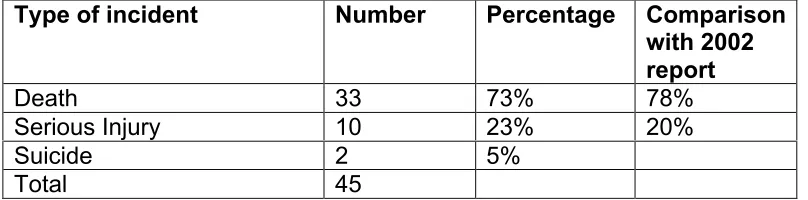
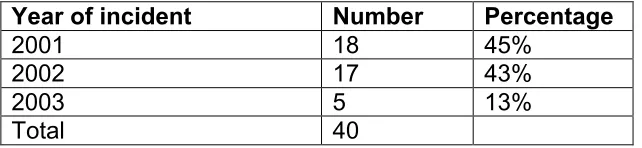
There were 45children in this study whose deaths or injuries became the subject of 40 serious case reviews between April 2001 and March 2003. Most of the incidents (73%) involved the death of a child, and a further 23%
involved serious injury. This was similar to Sinclair and Bullock’s earlier study (2002).
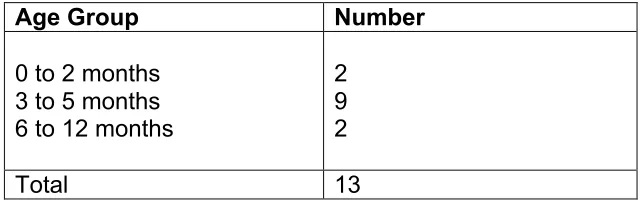
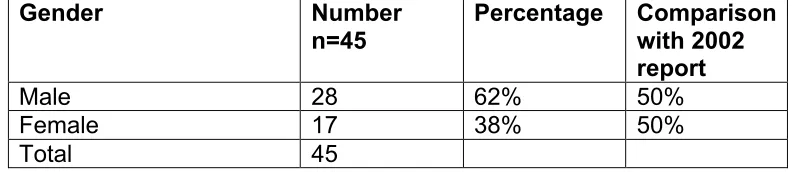
Nearly two thirds of the children in this study were boys: 28 (62%) were boys and 17 (38%) were girls. Their ages ranged from under two months to 16 years old and can be grouped into broad age bands:
• 47% were children aged 2 years or under, of whom two-thirds were less than one year;
• 9% were aged three to four years;
• 24% were in the five to ten year age band; and
• 20% were children and young people aged 11 years or older.
Compared with the previous study, in which 80% of the sample were aged five and under, more of the children in this study were older (Appendix 2).
Only eight children (18%) had their names on the local child protection register and were, therefore, the subject of an interagency child protection plan at the time of the incident, and in one case it was not recorded whether the child was registered or not (Appendix 2). One of the eight children on the child protection register was on an interim care order. There were a further three children on interim care orders but not on the child protection register. Another child was currently being accommodated by a local authority under section 20 of the Children Act 1989,and one child had been adopted and was living with her adoptive parents (Appendix 2). An extensive range of statutory services, in addition to health, education and children’s social care, had been involved with the children and their families at one time or another, including youth justice, housing, and adult services in health and social care. In addition, a further range of professionals from services such as the British Transport Police, hospital accident and emergency departments, and paramedic services had come in contact with the children or their families, usually at times of crisis. A complex network of interagency involvement often existed.
Three quarters of the children in this study had died but not all the deaths were the result of deliberate maltreatment or harm by carers. The toddler who drank his mother’s prescription of methadone and the baby who died because treatment was not sought in time were two of the children where harm was not intentional. Two deaths were suicides by adolescents. A quarter of the
(Victoria Climbié, who died in February 2000, and Child B, found tortured in 2003) led to an examination of circumstances of maltreatment ‘where adults believed that a child in their care was a “witch” or “possessed by evil spirits”’ (Stobart 2006, p.4). A study of thirty-eight cases occurring since 2000 was commissioned by the then Department for Education and Skills (Stobart 2006) and national guidance was subsequently issued (HM Government 2007a). However, none of the children within this biennial study of serious case reviews suffered abuse linked in anyway to such accusations.
Ethnicity
Information about the ethnic background of children in this study was often incomplete or vague (echoing findings in the earlier study by Sinclair and Bullock, 2002). Ethnicity of the children was not recorded in a third of the serious case review reports (a higher proportion than in the previous study). Of the remaining children, twelvewere recorded as being Black/Black British, Asian/Asian British or of dual heritage. However, even where the children were identified as having a minority ethnic background, parental ethnicity was rarely identified (only in five cases). The impact of culture, language, religion and race was not explored in the overviews, nor the consequences these factors might have had on the children’s development, family or wider
circumstances, or on the children’s or family’s contact and relationships with different agencies’ practitioners. There were no indications in these reviews of specialist expertise being brought in to assist those undertaking the serious case review to gain a better understanding of what might have been
happening or how agencies might have responded more sensitively or appropriately. There are a number of independent consultants or
organisations with such expertise, for example AFRUCA, Africans Unite Against Child Abuse, which may be called upon to give advice and assistance.
Disabled children
The available UK evidence on the extent of abuse among disabled children suggests that disabled children are at increased risk of abuse, and the presence of multiple disabilities appears to increase the risk of both abuse and neglect. (HM Government 2006a, p.198)
Five children in the sample were identified as disabled, although in 20% of the reviews this information was not recorded. In addition, a small number
family pressures. The reviews often described situations where disability was linked with a combination of other factors such as a young or single mother coping alone, further pregnancy, domestic violence, substance misuse or depression.
Some of the overview reports identified concerns about the extent to which there appeared to be weaknesses in the scope of assessments of disabled children by practitioners and how far they encompassed all aspects of the child’s welfare, particularly consideration of whether there was any risk of harm. Others drew attention to the operation of the ‘“rule ofoptimism” with society’s most vulnerable children’. These concerns were succinctly summed up in one overview report:
Children with Disabilities are under represented on the Child Protection Register both locally and nationally. This case has highlighted why this maybe so. A number of experienced practitioners reviewed the issues that were presenting in this case and did not trigger the Child
Protection system, there is little doubt that if a child without a disability was presented with some of the similar circumstances, the Child Protection system would be triggered. There are clearly attitudinal and training issues which need to be addressed.
Issues for policy and practice of disability
The analysis of this small number of cases of disabled children reinforces some important messages for effective practice that apply generally to work with disabled children and their families (see Marchant and Jones in
Department of Health 2000). First, since a child’s disability is likely to have a widespread impact on the family’s functioning, there is an overwhelming need for comprehensive multi-agency assessments to take account of all the
strengths and pressures a child and other family members may be
experiencing. Assessments need to acknowledge a disabled child’s changing needs over time. They also need to take account of the long term nature of disability and the potential need for continuing professional support and services. Assessing what is happening to a child and family is likely to require the involvement of a range of both adult and children’s services, including universal and specialist services, and assessments will therefore be more complex to co-ordinate and manage. Analysis of information gathered should always include consideration of whether there is risk of significant harm to the child or other children of the family.
Good practice would suggest that coherent and detailed plans should result which focus on the child, and the process should fully involve the family throughout. A lead professional should be clearly designated to co-ordinate the implementation of the plan and to communicate with other agency
practitioners involved. Finally, regular review of the plan and services should be undertaken with family members and other agencies to see how the plan is working and whether it needs to be amended according to changing
fragmentation of services by disabled children and families in the cases in this study underlines the vulnerability of families in such situations when
insufficient priority is given by agencies to the impact of child disability. Policies, training programmes and resources for disabled children and their families need to be developed in a context of promoting welfare and
safeguarding children who may be particularly vulnerable (HM Government 2006a, pp.198-199).
The abuse of older children
This study has taken a particular interest in older children who were the subject of serious case reviews, including those who were in their mid or late teens but still under the age of 18. Previous studies in the UK and elsewhere have emphasised the vulnerability to abuse and neglect of new born and very young children, and early studies focused on the ‘battered baby’ syndrome (Scott 1973; Smith et al 1974; Greenland 1987; Sobotta and Davis 1992, for example). UNICEF confirmed the greater risk to very young children in a recent research report on Child Maltreatment Deaths in Rich Nations:
The risk of death by maltreatment is approximately three times greater for the under-ones than for those aged 1 to 4, who in turn face double the risk of those aged 5 to 14. (UNICEF 2003, p.2)
In this study, nearly half the children were aged two years or younger, and 29% were under the age of one. The public image of child abuse has, understandably, become associated with the deaths of infants or young children. Indeed, not just among the public but also among professionals. The chair of one Area Child Protection Committee in Sinclair and Bullock’s study commented ‘I always remind myself we are talking about dead babies’ (Sinclair and Bullock 2002, p.1). The focus of the media also contributes to this public image of child abuse, particularly in local press accounts and the coverage of inquiries acquiring national interest.
Nine (20%) of the children in this study were aged 11 years or over, and five of these children were young people aged 15 or over. In an earlier study by Arthurs and Ruddick (2001), involving 33 children who had been the subject of ‘Part 8’ Reviews over a two year period in the South East Region of the NHS, 4 children were over the age of 10. In Sinclair and Bullock’s study of the same period, there were six aged over 11 out of a total of forty children. The numbers in these studies are small and should be regarded with caution. It would be premature to say there is any discernable trend towards older children becoming the subject of serious case reviews. However, there is increasing interest in this older age group. Brandon and her colleagues discuss some of these issues in the third biennial study (Brandon et al 2008).
years or over on 31 March 2002 and 2003 respectively (Department for Education and Skills 2006a). The proportion of older children who are on the child protection register has not altered significantly over the last decade but the proportion subject to serious case review may be changing. The total cohort of serious case reviews needs careful monitoring over time before any conclusions can be drawn. There may be several reasons why serious case reviews were held on the nine older children in this study. The circumstances in which these children died or were seriously injured may have caused an unusual level of concern. Another reason could be that the Area Child Protection Committees had become more sensitive to the deaths or serious injury of older children and broadened their grounds for holding a serious case review. In all nine cases, the decision was deemed entirely consistent with government guidance about holding a serious case review.
It was decided, therefore, that older children and their needs merited further comment in reporting this study. This was partly because it was apparent their circumstances were different from those of younger children in the study and partly because of the absence of attention given elsewhere to older children experiencing abuse and neglect. Rees and Stein, in a systematic review of national and international research evidence in 1999, noted the neglect of adolescent abuse in the UK and observed that at the time of their review ‘not a single journal article or book dealing specifically with the abuse of adolescents was identified’ (Rees and Stein 1999, p.3). They concluded that this constituted a significant gap in overall knowledge about child abuse in the UK, which is being remedied through a major research study on the
subject by Stein and colleagues as part of the joint Department for Children, Schools and Families and Department of Health Safeguarding Research Programme. This is not a new concern. As early as 1974, during the discussion session at a government conference, comment was made along these lines:
It was suggested that although the Department of Health’s
memorandum on Non-Accidental Injury, which had been issued in April 1974, encouraged agencies to look at children of all ages discussion at the Conference had centred on very young children …From the
psycho-social point of view what was known about young children was not necessarily equally applicable to the older child at risk.
(Department of Health and Social Security 1974, p.47)
In general, there appear to be a range of assumptions about adolescents in relation to abuse and neglect which lead to different perceptions of them from younger children who are suffering similar significant harm. They are thought to be better able to take care of themselves, avoid physical harm, keep out of the way or ask for help. However, there are also often unspoken assumptions that perhaps they have brought the abuse on themselves or that they have at least in some way contributed to the situation. In this study, non-attendance at school or involvement in juvenile offending activity appeared to elicit a response amongst professionals which focused solely on the adolescents’ behaviour and not on the wider circumstances in which they were growing up. On reflection, these family and environmental factors would have suggested they were at least children in need requiring in-depth assessment and service planning, if not requiring a safeguarding plan. The demonology of
Chapter 3 - Children experiencing harm in the context
of neglect and domestic violence
Two themes stood out from the analysis of the reports in this study and had posed major challenges for the practitioners and agencies working with children and their families: these were children who were experiencing neglect and children who were growing up in situations of domestic violence.
Children and neglect
Neglect is the persistent failure to meet a child’s basic physical and/or psychological need, likely to result in the serious impairment of the child’s health or development. (HM Government 2006a, p.9)
Many of the children who suffered significant harm in this study were growing up in complex family circumstances where there was often an
intergenerational pattern. Their parents had had similar family histories to their own. Few of the children were living with parents with stable
relationships, in settled family households, in adequate housing, with sufficient resources or community support to meet their needs. Parents were often coping with a range of their own problems, including substance misuse, mental ill health, learning disabilities, or domestically volatile or violent relationships. At the same time, lack of resources meant uncertain income, unsuitable and overcrowded accommodation, frequent moves, debts and, for some, the need to find money for drugs and alcohol. In a few cases, this need took parents into criminal behaviour to fund their substance usage.
Their parenting capacity was sometimes further impaired by additional pressures such as acquiring responsibility for caring for a disabled elderly parent as well as their own children, coping with sudden loss of key supports from family or neighbours or experiencing the onset of debilitating depression. Responding appropriately to children’s changing needs as they moved from one stage of development to another also posed a challenge for some parents. There is a strong theme from these overviews of (usually) single mothers struggling with chronic and enduring problems to do their best for their children. Some were succeeding against all the odds until a set of
pressures accumulated or unexpected incidents occurred and overturned their fragile stability. Numerous studies have provided compelling insights into parenting in these circumstances and the erosion of parenting capacity that can occur (see, for example, Holman 1998; Cleaver et al 1999; Ghate and Hazel 2002; Seaman et al 2005).
The children growing up in these situations in this study fared very differently to each other. Some showed astonishing resilience - they were bright,
danger without appropriate parental or other adult oversight. Others did less well. They struggled with chronic ill health, sight or hearing problems which were unidentified, or went to school irregularly where they were noted as ‘hungry’, ‘inadequately clothed’, ‘smelly’ and ‘shunned by peers’. In one case, the children in a family were described by the school as ‘pathetic little things at times’. As some of the children grew older and more independent, they
stayed out late, got into fights with peers or adults, were injured in accidents, or began to develop violent, antisocial or erratic behaviour. The key adult or adults in their lives, as others have observed, were either emotionally or physically unavailable to them, and unable to offer consistent care or keep them safe (Turney and Tanner 2005). A way of coping was to opt out from the routine of school and some children stopped attending, and drifted into offending behaviour during the day and into dangerous activities, such as playing on the railway line.
What was outstanding about these children was that, even before they suffered the significant harm which led to their being the subject of serious case reviews, they would have been children in need as defined by the
Children Act 1989 i.e. they and their siblings were children whose health and development was being impaired and they were in need of services.
Cleaver and Walker, in their study of assessing children’s needs and
circumstances, categorised as multiple-problem those cases where difficulties had been identified in more than two or three dimensions in all three domains of the Assessment Framework, the child’s developmental needs, parenting capacity to respond, and wider family and environmental factors (Cleaver and Walker 2004, p.223). They concluded it would be expected that such cases would result in a core assessment. From such an assessment it would, therefore, be likely that a child’s plan would be constructed, co-ordinating multi-agency contacts and services towards a clear set of objectives and timescales for achieving improvement in the child’s wellbeing and some signs of change in the family’s situation. It did not happen in this way for many of the children in the reviews in this study.
These children were suffering from neglect; they and their families were experiencing multiple problems. Their difficulties were systemic, not one-off incidents and this comes through clearly in the information in the overview reports. The needs of neglected children have been well documented over the last decade, particularly by Iwaniec (1995), Stevenson (1998), Tanner and Turney (2003), Daniel and Taylor (2004) and, more recently, in a research and practice briefing by Turney and Tanner for the Department for Education and Skills (2005). However, in this study, the severity and impact of neglect were not identified by practitioners. The children and their family
circumstances were not the subject of careful and co-ordinated multi-agency assessments, nor did they have developed for them coherent and monitored multi-agency children in need plans.
concerns, particularly health workers, teachers and school nurses in
circumstances where, for instance, the parent had raised worries or critical appointments had been missed. However, these incidents were often seen in isolation, without the whole picture being taken into account and the family history of dealing with similar situations was not explored. When there was concern, action was taken or advice given but not followed through if the parent failed to respond, and the implications or reasons for the difficulties were not considered nor the consequences for the child weighed up. As a result, the cumulative impact of long term neglect was not understood. Thus, the significance was not identified so other agencies were not alerted or informed and a comprehensive picture was not shared and held by the agencies involved. Key practitioners, such as school nurses, it was noted in one review, were excluded on many occasions from the network of
professional liaison and the school was not informed or contacted for the views or information of its staff, when it could have had made an important contribution.
Speaking to children
A further issue which emerged in these circumstances of neglect was whether practitioners who were visiting families had spoken to children directly to gather information from them. In one review, a chronic level of need had been identified by agencies and questions were being asked about the parents’ level of care. However, the overview noted there was no indication of the children having been asked about what was happening to them by the practitioners who were visiting the family:
There is no information that the children were spoken with. Sibling 1 had just turned 16 and sibling 2 was 14 years old and both were fully able to discuss issues of physical chastisement within the family. The accounts from the older children would have been able to inform a decision about speaking with the younger siblings who at age five years and four years would also have been able to express if they were being hit around the head in answer to direct questions.
National guidance states that, as part of an initial assessment of a child’s needs, the process should involve seeing the child, and speaking to the child as appropriate to age and understanding (HM Government 2006a, p.110). This statement refers to the responsibilities of children’s social care
practitioners who are likely to have received training in direct work with children. It is not quite so straightforward for other professionals who may have varying degrees of training and experience in working with children. Observing children, their appearance and behaviour, is obviously an activity which is imperative for all those who have professional contact with children and families. Talking with children, particularly in sensitive situations, is a step further. It requires clarity about roles and responsibilities as well as
judgement about when it is appropriate to do so. The principle of a child’s age and understanding is important in determining when and how to involve
be taken or services to be provided. Not all practitioners from all agencies will feel confident or sufficiently skilled in undertaking direct work with children, especially with younger children, in these circumstances.
Effective communication and engagement with children, young people, their families and carers has been identified as a fundamental part of the common core of skills and knowledge essential for the children’s workforce
(Department for Education and Skills 2005; see also guidance for education staff in Department for Education and Skills 2006b, pp.72-73). Preparation, training and reflection with the support of skilled supervision are critically important dimensions of communication for practitioners working with children and families, and knowing when and who to contact is equally important for those who identify concerns but are not suitably qualified to continue the task of gathering sensitive information from children.
When children’s views are sought about these matters, they make it clear that knowing and trusting an adult is important. In a study by the Children’s Rights Director for England (2007) on children and safeguarding, a number of
discussion groups with children and young people were held:
This group…told us that children and young people need to be able to discuss being harmed informally with someone they know and trust - if it’s a formal process, then it’s more difficult. (Children’s Rights Director 2007, p.10)
These views echo findings from other studies (see Department of Health 2001) and reinforce the great care that needs to be taken in encouraging direct work with children (Aldgate and Seden 2006).
On the whole children, particularly older children, acknowledge there are dilemmas for themselves and for the professionals involved when children are living in potentially unsafe situations. They recognise parents want to keep their children and should get help to do so, but not at the expense of their children’s safety. It has been summed up by children in the following terms: ‘children should remain with their families if there are just difficulties, but if they are in danger then they should be taken away’ (Children’s Rights Director 2007, p.15). However, children and young people require highly skilled work with them when such profound decisions are being made, and they need a trusted relationship, facts and information, and someone to make sense of the issues for them. There is also the continuing responsibility for direct work with children living through difficult and painful family change, ‘so that things add up and make some sort of sense and in this way we can prevent and relieve a great deal of distress’ (Winnicott 1964, p.58). Jones (2003 and 2006)
Assessing the impact of neglect on children
One overview identified the difficulty in circumstances of neglect as lying with the thresholds for decisions about assessment and intervention. This
particular overview explored the challenge for professionals of deciding
whether the care being provided to the children was ‘good enough’, and noted the different perceptions and different priorities of the professionals involved. In the early period of the family’s circumstances, the report concluded, health and education staff collectively had based their decisions on a threshold which ‘tolerated a poor level of care of the children’. In the latter period, the
overview identified that it was clear ‘a divergence of professional views about the thresholds for intervention’ had emerged, which had a paralysing effect on proactive agency action being taken.
The reasons for this appear to be complex. In some cases, frequent turnover of key professionals was undoubtedly an issue, particularly when new staff had little or no knowledge of the family’s history or of the adult members’ usual pattern of coping. In other cases, however, there were staff who had known the family for a decade or more, were trusted and in regular contact. In these cases a range of factors emerged as important in shaping the
professionals’ response: the parent was well intentioned; the standard of care was not all bad – either good or sufficient in some respects and not in others; the level of difficulties varied over time, sometimes worse than at other times, but then improvements were noted; the child seemed to be doing well enough; the parent was coping in similar circumstances and in a similar way to many other families in the local area. This could then lead to two responses by practitioners, noted by reviewers. The first was over-optimism and the second was immunity or insensitivity to deteriorating conditions.
The findings in this study have been echoed in subsequent serious case reviews, such as the review of a case of severe neglect produced by an independent author, Professor Pat Cantrill, in 2005. In the Executive
Summary, Professor Cantrill acknowledged that responsibility for the neglect rested with the parents ‘as it is their actions by omission and commission that led to them failing to provide their children with the physical, emotional and social care that they had a right to expect’ (Sheffield Child Protection Committee 2005, p.9). In examining the role of public services in the case, she concluded the services involved with the family had acted in good faith but:
A combination of structural, cultural and individual deficiencies resulted in some services failing to have in place an effective benchmark for, or assertiveness in intervening in, the care of the … children. (Sheffield Area Child Protection Committee 2005, p.9)
• where some elements of neglect are found and services to the family should appropriately be provided on the basis of the children being in need;
• where the neglect is so serious, the children need to be safeguarded by a child protection plan and registration;
• where it is necessary to take court action which may lead to the removal of the children from their families.
She emphasises the importance of a systematic approach to assessing children’s welfare ‘at any stage in the process’ in order to facilitate monitoring improvements or deterioration, and to determine when children move from being children in need to being children in need of safeguarding, and
ultimately when they are no longer safe at home. One of the overviews in this study identified the importance of undertaking a full and holistic assessment in these circumstances according to the then newly introduced Framework for the Assessment of Children in Need and their Families (Department of Health et al 2000). This would offer the opportunity to take into account:
the complex and long term inadequacies in care before any decisions about seriousness can be made in relation to neglect. The approach taken to assessing the circumstances of [child] and siblings did not however reflect this and as a result the thresholds for intervention, not based on a full assessment, resulted in practice that was at times reactionary and inconsistent.
The need for in-depth assessment was evident in many of the cases where children and their siblings were suffering neglect but, critically, it was also evident that the process of coherent, co-ordinated, child focused assessment had to begin with those professionals in health and education services
regularly in contact with the children. The challenge is ensuring health and education professionals have sufficient and appropriate knowledge about child development, understand this is central to their work and can apply it in their daily practice. This is particularly relevant in the context of some of the communities of chronic poverty and disadvantage where practitioners are working.
Some have argued that health visitors as public health practitioners should take on an expanded role in safeguarding children, designating ‘the health visitor as the primary health care team’s representative and key worker in the child protection process’ which would clarify the responsibilities they often assume (Lupton et al 2001, p.150). It might also ensure a more appropriate level of resources to support their critical role in early identification of need and mobilising a multi-agency approach to providing additional services when required. These aspects of the health visitor’s role have been reinforced in the recommendations of the recent report commissioned by the Secretary of State for Health, Facing the Future: Review of the role of health visitors
The need for a common set of skills and knowledge across the children’s workforce has been recognised by government and six core areas of
expertise have been identified as requirements to practise (HM Government 2005). Their translation into the training, management and supervision of practice has particular relevance to the identification of child neglect and its impact, and requires national and local action. The importance of developing a common approach to identifying and assessing concerns about children’s care and welfare (with the appropriate training to underpin it) also emerged as a factor in those situations where children were living in families experiencing domestic violence.
Children and domestic violence
There is a common link between domestic violence and child abuse. Among victims of child abuse, 40 per cent report domestic violence in the home. (UNICEF 2006, p.7)
Domestic violence featured in many of the serious case reviews in the study. The relationship between domestic violence and the risk of harm to children has been well established in the UK (for example, Scott 1974; Bentovim 1992; Reder and Duncan 1993; Mullender and Morley 1994; NCH Action for Children 1994; Mullins 1997; Cleaver et al 1999; Reder and Duncan 1999; Humphreys and Mullender 2000; Humphreys and Stanley 2006, and many others). Furthermore, Cleaver et al (2007), in a recent study for the
Department for Children, Schools and Families on the response of child protection practices and procedures to children exposed to domestic violence and parental substance misuse, found that:
domestic violence and parental substance misuse rarely existed in isolation. (Cleaver et al 2007, p.85)
A key factor in children’s vulnerability found in their study was the co-morbidity of issues confronting the family. As a result of the recognition of the harm children could suffer in circumstances of domestic violence, during the period when the serious case reviews in the present study were being undertaken, an amendment was made to the definition of significant harm in the Children Act 1989. The knowledge of the harm children could suffer in these
circumstances was incorporated into new child welfare legislation in 2002.
2002, Explanatory Notes, p.67). Interestingly, however, this extension to the definition of harm was mentioned only once in any of the reviews in this study.
The overviews often draw out very clearly the association between domestic violence and other behaviours children may have been exhibiting, such as poor school attendance, bullying, aggression or offending. However, they also note the lack of significance attributed to the domestic violence which was well known to a number of agencies, and the impact this may have been having on the child or children of the family:
What is clear in this case is that no one single incident gave sufficient cause for concern for any agency to identify; that based on that incident alone there was a risk of significant harm. However this is commonly the situation in cases where domestic violence is prevalent.
It was clear to the Panel from this information that had these details come together on a multi agency basis, a detailed assessment of these boys’ needs on the basis of “likely significant harm” would have been warranted.
In these situations, the role of schools as holders or keepers of information cannot be underestimated (in one case, the loss of school and education welfare records meant the history of domestic violence in a family was
unknown to a new key member of the school staff until a short time before the children were killed). Schools, together with health visitors for families with very young children, are the services which will normally have contact with all children, and schools will have daily opportunities to observe and learn of unusual incidents and changes in normal routines. They can become repositories for information gathered from within the school environment as well as from contacts with the family by other agencies. How that information is recorded, how the link is made between that knowledge and the behaviours of children and parents in relation to school and other agency staff, and how that information is then used as a trigger of concern to mobilise multi-agency action are critical to achieving improvements in safeguarding the welfare of children in circumstances of family domestic violence, mental ill health and substance misuse.
It requires schools to provide carefully developed awareness training and clear protocols for teaching staff and to develop agreements in collaboration with Primary Care Trusts or the relevant NHS employer for other agency practitioners in schools, such as nurses. Similar problems face the police and the reviews identified uncertainty about when and how the police should refer incidents of domestic violence. Some of these issues are being addressed through agency specific guidance about responsibilities for safeguarding and promoting the welfare of children, such as Safeguarding Children and Safer Recruitment in Education which highlights the serious effect on children of households where there is substance misuse and domestic violence (Department for Education and Skills 2006b pp.73-74), and Statutory
Assessing the impact of violence on a child
It is to be hoped that government policy on the Common Assessment Framework (HM Government 2006b) and the development of ContactPoint
(Department for Education and Skills 2007) will assist in standardising the gathering and recording of information between agencies from the point of early concerns about a child, and providing an improved framework for sharing that information. The opportunity offered by the Common
Assessment Framework for improving early intervention has been reinforced in a recent research and practice briefing by Humphreys (2006). She
emphasises, however, that multi-professional training will be required to heighten awareness as well as requiring the development of appropriate service provision for all adult and child family members (Humphreys 2006, p.5).
Comment is made in some of the reviews about the importance of gathering details, such as the timing and exact nature of incidents. For instance:
Particular attention should clearly have been given to the children’s whereabouts when the violence took place.
However, the impact on the children in a family can become secondary to the attention focused on the parents (who may be little more than children
themselves - in one review, aged 13 at the birth of her child, and in another, read but not included in the study, both parents were barely 17) or focused on other family members caught up in domestic conflict and abuse. One review graphically described what can happen in these circumstances:
Moreover, when some detail was available, the issue of the children’s safety appears to have been lost in the concentration on adults. It was noted by the Panel that the children appeared effectively hidden from view. It was apparent no one ever asked the children directly about what they had witnessed and what it had made them feel. In reality no assessment of the children’s needs really took place.
However, where concerns have been identified, if multi-agency contact is not properly planned and co-ordinated, then it may well reduce the likelihood of important information being shared and the effectiveness of any agency’s contact may be severely limited. Agencies are often working with multiple family problems. There were clear examples of children’s services expending considerable effort to engage with one or more parent to address the
children’s issues, such as non-attendance at school, in very difficult and volatile family circumstances and, in particular, where domestic violence and parental substance misuse co-existed. Cleaver et al (2007) note in their study that:
A key factor in supporting collaborative working is the extent to which inter-agency and individual agency plans, procedures and protocols address the inter-relationship of these issues. (Cleaver et al 2007, p.309)
One review decided that the appointment of a senior manager with a strategic leadership role in relation to domestic violence to address all aspects of multi-agency working would give the issue appropriate priority and focus in the area and provide the infrastructure practitioners required to support them in their work. This decision, which became part of the overview’s action plan, raises the question of how the impact of that appointment would be evaluated by the particular Area Child Protection Committee (or its successor body, the Local Safeguarding Children Board). How would the Committee know it was making a difference and improving early identification and intervention where there were problems of domestic violence? These matters are explored in later chapters.
Issues for policy and practice of neglect and domestic violence
The overview reports of cases involving neglect and domestic violence in this study clearly identified some key issues for safeguarding practice which require addressing by Local Safeguarding Children Boards and their constituent agencies. Again these issues have been identified in previous studies of serious case reviews and have been explored (and continue to be explored) by a number of writers. However, they have important implications for safeguarding training priorities, policies about agency supervision and other aspects of agency management:
• keeping a child or children in focus when there may be understandable attention being given to complex and pressing adult family members’ needs;
• gathering knowledge about family history as an essential part of assessing and understanding what is happening and what may be family patterns of behaviour in stressful situations;
• recognising the emotional impact, and its consequences, of work with children and families experiencing severe difficulties, particularly where violence and conflict are inherent in family interactions;
• reinforcing the importance of all practitioners assessing a child within a developmental/ecological framework and ensuring appropriate training; • addressing issues of risk of harm in the context of evidence from
systematic reviews of risk factors, particularly for the recurrence of maltreatment (see Hindley et al 2006);
• giving careful attention to the processes of analysis of information, decision making and planning (see Jones et al 2006);
• addressing interagency communication and the factors which facilitate or inhibit effective interagency working (see Hudson et al 1999).
Chapter 4 - Changing context of serious case reviews
Having examined some of the emerging issues about the children and their families in this study, the following chapters focus on the conduct of serious case reviews and explore the factors influencing their impact in bringing about improvements in local safeguarding policy and practice.
The national context in which serious case reviews were being undertaken during 2001-2003 was one of considerable change, as a result of both external events and major policy and legislative developments. These changes have been far reaching and will continue to shape the safeguarding environment in which serious case reviews are an integral part.
Government guidance on reviewing child deaths and serious injuries
In the period of this study, Area Child Protection Committees were expected to conduct serious case reviews in accordance with recently revised statutory guidance (Department of Health et al 1999). This guidance emphasised the importance government attached to the process of reviewing cases of child death and serious injury where child abuse was suspected or other serious concerns were identified, so that lessons could be learned. In this respect, the guidance was restating the original intentions for such local safeguarding bodies. A Government Circular in April 1974, Non-Accidental Injury to
Children (LASSL(74)13/CMO(74)8) had recommended the formation of area review committees in local areas. The tasks identified for these new joint policy making bodies included that they should ‘advise on the need for
inquiries into cases which appear to have gone wrong and from which lessons could be learned’.
The Department of Health and Social Security in 1988 conceived the importance of reviews in terms of accountability, particularly of public agencies. It was ‘the general management responsibility of any agency to ensure that services are provided to an acceptable level’ (p.7). The
Department set about systematising much of what was already good practice in Area Review Committees and drew on the experience of other inquiry processes, such as that outlined by SOLACE (the Society of Local Authority Chief Executives) for ad hoc inquiries in local government. The proposed framework laid the foundation for the conduct of serious case reviews, distinguishing the different types and relationship of inquiry or review in serious cases of child abuse. It identified six underlying principles on which ‘local inquiries’ should be based (p.6):
• Urgency • Impartiality • Thoroughness • Confidentiality • Co-operation • Resolution.
The principle of ‘resolution’ is particularly pertinent to this study, with the acknowledgement that change should occur as the result of any
recommendations by the review:
Action should be taken to implement any recommendations that may arise and are accepted by the agencies concerned. The Review Committee should establish a mechanism to monitor progress on implementation of the recommendations. (Department of Health and Social Security 1985, p.6)
The framework for the conduct of reviews in England and Wales is
substantially still the same: establishing the facts, assessing decisions made and actions taken, checking whether procedures were followed, considering whether services were realistic, and concluding with recommendations for appropriate action in the light of the review’s findings.
The intention had been to issue the guidance separately as a stand alone document. However, at the last minute it was decided to incorporate it into the new child protection guidance, Working Together: A Guide to
Arrangements for Inter-Agency Co-operation for the Protection of Children from Abuse (Department of Health and Social Security and the Welsh Office 1988). It became Part 8 of that document (and in subsequent government guidance continued as Chapter 8). The interagency guidance was then updated and brought into line with the Children Act 1989 (Home Office et al 1991).
and on remedial action within the local agencies’ (p.5). Reder and Duncan (1999) had undertaken a study of fatal child abuse cases drawing on Part 8 Reviews and had made a number of recommendations for the future review process of child deaths:
• Reviews of children’s deaths would be enhanced by the
inclusion on review panels of personnel from relevant professions who are of sufficient seniority and experience.
• Standing Child Death Review Teams could improve the
identification of maltreatment related deaths and the practice lessons that might be learned from them.
• Participants in case reviews at all levels of seniority should be
made aware of the remit of the review - i.e. whether its primary task is disciplinary, learning, and so on.
• Case review reports should have a standard format and contain
detailed genograms and family histories, together with integrated chronologies of significant events, professional interventions and their outcomes.
• Reviewers’ recommendations should be clearly based on their
understanding of the dynamics of the case and of the different levels of influence on professionals’ work, as well as on
procedural factors. (Reder and Duncan1999, pp.118-119)
Many of these recommendations, in combination with new knowledge gained from other studies (such as James 1994; Department of Health 1995; Falkov 1996) were incorporated into the revised safeguarding guidance (Department of Health et al 1999) contributing to a greater level of clarity and, at the same time, a greater level of prescription (Sinclair and Bullock 2002). Increased specificity about the requirements was also in part a response to requests from Area Child Protection Committees themselves for more guidance about the process. This was because, under the previous guidance of 1991, it still allowed considerable discretion which created uncertainty for some Area Child Protection Committees.
Public concerns about safeguarding children
However, during the period of this study, public interest and concerns about how well children were being safeguarded were heightened by an unusual sequence of tragic incidents and other events. In February 2000, a nine year old child from the Ivory Coast living in London died in circumstances of
Public anxieties were also raised about the adequacy of interagency procedures and practice in the employment of staff working with children. This followed the deaths of ten year old Holly Wells and Jessica Chapman who were killed by their school caretaker, Ian Huntley, in August 2002. Two inquiries were commissioned into the circumstances surrounding Ian Huntley. The first was a public inquiry into the effectiveness of intelligence-based record keeping, vetting procedures and information sharing, set up by the Home Secretary and chaired by Sir Michael Bichard (HC 653 2004) and the second was a serious case review into statutory agency responses to earlier incidents involving Ian Huntley, conducted by an independent chair, Sir Christopher Kelly (North East Lincolnshire 2004).
The findings and recommendations of these inquiries led to significant policy changes, as signalled in the Government’s response to the Victoria Climbié Inquiry Report, Keeping children safe, in which the