AIS Electronic Library (AISeL)
ACIS 2010 Proceedings
Australasian (ACIS)
1-1-2010
Development of knowledge management support
for the sleep disorder diagnosis proces
Jacqueline Blake
Don Kerr
Raj Gururajan
This material is brought to you by the Australasian (ACIS) at AIS Electronic Library (AISeL). It has been accepted for inclusion in ACIS 2010 Proceedings by an authorized administrator of AIS Electronic Library (AISeL). For more information, please [email protected].
Recommended Citation
Blake, Jacqueline; Kerr, Don; and Gururajan, Raj, "Development of knowledge management support for the sleep disorder diagnosis proces" (2010).ACIS 2010 Proceedings.Paper 98.
Development of knowledge management support for the sleep disorder
diagnosis process
ABSTRACT
Sleep disorders are a major problem in today’s society with a lack of sleep being associated with lost productivity and accidents. There is a need to improve the sleep disorder diagnosis process and this paper describes the work in progress for the development of a patient data gathering system and decision support system. This system is designed to support a sleep physician’s diagnosis of sleep disorders. To facilitate acceptance by physicians a participatory research approach to development was taken, involving physicians and a psychologist. This approach has produced a system which integrates into a physician’s work flow.
KEYWORDS
Health, Knowledge management, Clinical decision support system, sleep disorder, design science
INTRODUCTION
The direct and indirect costs of sleep disorders to the Australian society in 2004 was estimated to be 7.4 billion dollars and this represented 0.8 per cent of the gross domestic product of the Nation . These costs include co-existing disorders, lost production, transport and workplace accidents and social costs, such as learning difficulties. At an individual’s level, sleep deprivation may be associated with an increased risk of myocardial infarction (heart attack), type two diabetes and depressed immune response (Akerstedt and Nilsson 2003). The point at which sleepiness becomes a problem is when the person with excessive daytime sleepiness is more susceptible to adverse consequences from carrying out day to day activities such as driving or performing work related tasks (Sangal 2006). Sleepiness is therefore an important contributing factor for driving and work related injuries (George 2004)
.
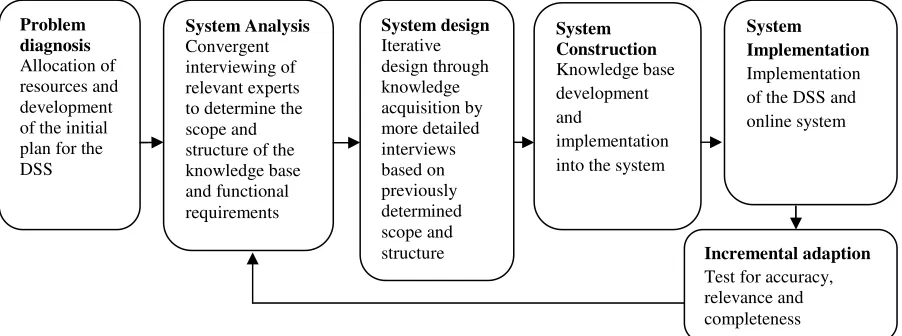
Johns and Hocking (1997) state that between 16 to 20 per cent of motor vehicle accidents on Australian highways can be attributed to driver sleepiness. However effective treatment of sleep disorders can eliminate excessive day time sleepiness thus returning an individual to a normal level of ability to perform skilled manual tasks such as driving (George 2001). [image:2.595.76.527.577.745.2]Sleep disorders have traditionally been under diagnosed by primary physicians, with only those patients who are very symptomatic being referred to sleep specialists (Bailes et al. 2008). There has been increased awareness of sleep disorders imposing an increased burden of disease on the current health system among physicians and the wider community. This has led to a shortage of sleep disorder specialists (Australian Medical Workforce Advisory Committee 2000; Patlak 2005) hence the sleep community is interested in changing the traditional model of care for sleep disorders to one that leverages information systems to provide efficiencies and timely communication flows (Colten and Alterogt 2006 p. 26). Abidi (2001) refers to the strategic use of knowledge derived from healthcare data as being “… pertinent towards the improvement of the operational efficiency of the said healthcare enterprise” (Abidi 2001, p. 6) while Hirakis & Karakounos (2006) state that knowledge management in healthcare allows the development of best practice models and encourages innovation through development of the resultant knowledge base. With this in mind, this paper describes the development of a knowledge based decision support system (DSS) to assist physicians with the diagnosisof sleep disorders. The basic outline for our approach is shown in figure 1.
Figure 1 Development of decision support system and knowledge management systems
Problem diagnosis
Allocation of resources and development of the initial plan for the DSS System design Iterative design through knowledge acquisition by more detailed interviews based on previously determined scope and
structure Incremental adaption
As this is still work in progress and evaluation of the system has not been finalised, this paper describes the first two phases of the development approach only. Before we describe the system in more detail, we present an overview of clinical decision support systems from the extant literature.
LITERATURE REVIEW
The literature review in this paper is divided into the medical literature which is designed to provide a background to the problem domain and the Decision Support Systems (DSS) literature.
The medical literature
The medical literature emphasises the importance of effective communication during consultations, for example Chapman & Sonnenberg (2000) state that during diagnostic consultations and while designing treatment program, a physician needs to make decisions that affect a patients future lifestyle, equally the patient needs to make decisions about the suggested lifestyle changes and whether to accept the diagnosis and treatment plan. For both these decision making processes accurate and timely patient and diagnostic information is critical. This patient information depends on the quality of the communication flow between a patient and physician. Stewart (1995) contends that any inaccurate information can impact on the quality of the health outcome, while Fleisher et al. (2008) indicates that successful communication leads to enhanced shared decision making. This communication takes place during medical history taking, conveying a diagnosis decision or a discussion of a management plan for the disorder. Patient history, in conjunction with physical examinations and laboratory tests are the major determinates of the final diagnosis in clinics where patients are referred with non-emergency disorders (Hampton et al. 1975).
Collins, Britten & Ruusuvuori (2007) report that many patients percieve a consultation to be a series of disjointed questions. This is because the question and response pattern and connections between questions within the medical consultation is only understood by the physician. In addition, within a consultation the patient does not have time to reflect and consider the meaning of the questions asked as they are focused on answering the next question (Charavel et al. 2001). A patient who has their narrative validated by the physician listening actively feels more confident in the relationship with the physician becoming a more active participant in the consultation and a better manager of their chronic condition (Peek et al. 2009).
A consultation in which the physician and patient collaborate has been shown to achieve better patient outcomes (Charles et al. 1999). Kasper et al. (2008, p. 42) describe shared decision making as “a two way exchange of information involving both parties in the decision”. Patients who ask questions receive more information tailored to their personal circumstances and tend to follow treatment plans as opposed to patients who passively wait for the physician to inform them of a treatment plan (Greenfield et al. 1985; Sheppard et al. 2009). The patient holds their own view of how a disorder affects their life independently from how a physician views a disorder this also impacts on how ready they are to accept treatment burdens. The physicians can affect this wellness view by having time within the consultation to discuss how the disorder is impacting on the patient’s lifestyle using their clinical experience (Breslin et al. 2008; Tuckett et al. 1985).
The Clinical DSS literature
Arnott and Pervan (2008, p. 658) define knowledge management-based decision support systems as “systems that support decision making by aiding knowledge storage, retrieval, transfer and application by supporting individual and organizational memory and inter-group knowledge access”. Knowledge management systems in healthcare have been shown to improve physician adherence to evidence based guidelines for treatment and also reduce errors in diagnosis (Jamal et al. 2009; Leape 2009). However, views on the effectiveness of knowledge management systems have been mixed, with a review by Garg et al. (2005) suggesting that there was no impact on patient outcomes.
Purcell (2005) described a good clinical decision support system as one that presents filtered knowledge and patient history in a timely manner that can enhance patient care. Kawamoto et al. (2005) summarises the requirements for clinical decision support systems success through a review of the current literature at the time. According to Kawamoto et al (2005) possession of five of the features outlined below increased the success rate of the systems significantly. These requirements are as below;
1. Support to be provided to the user (the physician) automatically
2. The system to be incorporated as part of a charting or input system not a standalone system 3. Use of a computer to generate the decision support
4. Prompts for clinicians to provide a reason for not following advised action
Providing decision support with accessible complete data at the time and location of the decision making process also improves physician acceptance of a clinical DSS (Haug et al. 2003; Kawamoto et al. 2005). Regan & Holtzman (1995, p.91) add that if no explanation for the outcome is given then the output from an DSS is likely to be rejected. Explanations of how a decision was derived enhance user satisfaction as physicians must be able to trust a system in order to base their diagnosis on the output of the system.
Acceptance of a clinical DSS is also enhanced if the output from the system is presented in a format that follows the logical structure of a decision within the field. Patel, Arocha & Kaufma (2001, p. 330) propose a framework for clinical knowledge management systems in which decision making is shown as a tree moving from patient observations to domain knowledge then to a point at which a diagnostic decision can be made. This framework can be used to configure the output from the system in a format that physicians expect and quickly assimilate.
The framework described above lends itself to a design science approach to development and evaluation using the seven guiding principles described by Hevner et al. (2004). The design science approach is problem centred with the object of producing a relevant information system solution as an artefact (March and Storey 2008). The artefact in this case is an information system used as a decision support aid during consultations. (March and Storey 2008). Boland (2002) describes design science as a problem solving approach aimed at changing an existing environment (in this case the way consultations are conducted by physicians at the moment) to one which better reflects the new aims (a decision support mechanism to improve consultations). The seven guiding principles proposed by Hevner et al. (2004) for design science research are detailed below.
Design as an Artefact: A prototype to support the physician’s decision making during a consultation has been
developed as a viable artefact.
Problem Relevance: This problem is relevant because sleep disorders are recognised as being a significant
problem that is becoming an increasing burden to the health system. Increasing the quality of communication between a physician and patient within a consultation increases a patient’s self knowledge. In addition, increasing the rigour of the diagnostic process provides a key component to this important problem.
Design Evaluation: Standard, well documented methods based on the extant literature have been used in the
production of the information system artefacts in this project.
Research Contributions: This project has driven the development of a new sleep disorder questionnaire
designed to capture patient history. A web application to support sleep physicians during the diagnostic process and provide disorder specific information to the patient was also developed.
Research Rigor: The design, construction and evaluation of the artefact used an established research
framework and was overseen by industry and academic third parties.
Design as a Search Process: The design process was iterative withspecialists in the problem domain informing
design decisions.
Communication of Research: The research is planned to be disseminated through Australian Sleep Association
conferences and information systems conferences and journals.
METHODS USED IN THE PROJECT
As mentioned earlier a design science approach was used. One of the most important factors is the role the patient history plays during a consultation and the inclusion of patient history as an input was part of the system scope that the physicians expected and considered best practice during a consultation. In order to facilitate the knowledge acquisition process, the researcher formed a team with two sleep physicians and a psychologist. These three individuals were considered experts in the field of sleep disorder diagnosis and a collaborative approach was taken to help gain insights into their shared knowledge and experience in the sleep disorder domain and in order to develop the knowledge base forthe DSS. All stakeholders (physicians and patients) provided approval for the process (as required by ethics). Gaining these stakeholders’ approval of the output from the DSS and a data gathering instrument for the patient history was essential to gain access to sleep investigation clinics’ patients to test the instrument and gave the medical team a vested interest in the success of the project (Cornwall and Jewkes 1995). The two sleep specialists provided expertise on the diagnostic criteria and process, while the psychologist specializes in psychological sleep disorders such as insomnia, the psychology impacts of sleep disorders and compliance to sleep disorder treatment by patients. The researcher acted as a team leader to keep the team focused on the required outcome, set agendas, produced questionnaire drafts, scheduled meetings and kept records of the meetings.
An information system was planned which would automate patient history data gathering by using an online patient history questionnaire which would act as a data gathering tool. This information would be stored in a database with the additional benefit of forming an evidence base of patient histories for future study.
aforementioned medical team). The purpose of these interviews was to understand the environment within which the DSS would operate including discussing and recording the protocol and operations of the sleep disorder diagnostic process. An understanding of the context of the DSS is important in order to ensure that the IT artefact (DSS) instantiation does not cause unseen side effects such as reporting misleading patient history information. The system also needs to meet the requirements of the end user (March and Smith 1995). In this instance the environment is medical and therefore a strong requirement is patient privacy, provision for multiple sleep disorders in one patient and awareness of co-existing conditions impacting on sleep disorders.
A convergent interviewing method (Dick 2002) was used to discover initial requirements. Dick (2002) recommends a convergent interview approach if researchers are in some doubt about what information is to be collected. The approach was used in this project because the researcher was not familiar of the relevance of aspects of the problem domain and was in some doubt about the importance of some of the information provided. Notes and impressions from the interviews were written in a journal and emailed to the interviewee for confirmation that these were aligned with what information they intended to convey.
These meetings confirmed that there were two main types of consultations, an exploratory consultation where the physician is investigating the current symptoms and patient history and a shorter confirmatory consultation where the physician discusses the diagnosis with the patient.
Major themes identified during the Problem Identification and System Design Stages
This paper will concentrate on the early stages of development of the system as it provides insights to the physician’s understanding of the system and how it can help with their work. The physician sleep specialist is a director of a public hospital sleep clinic referred to as SP1 in this paper. Another sleep specialist also a director of a public hospital sleep clinic was used to confirm some requirements for the system and will be referred to as SP2 in this paper.
Descriptive codes were applied to the field notes from the interviews with SP1. This was to highlight the important themes in the physician’s dialog. Three main themes in the early interviews were apparent and they were;
• A concern for the patient experience
• A concern for consistency of treatment across the clinic and • Operational clinic implications.
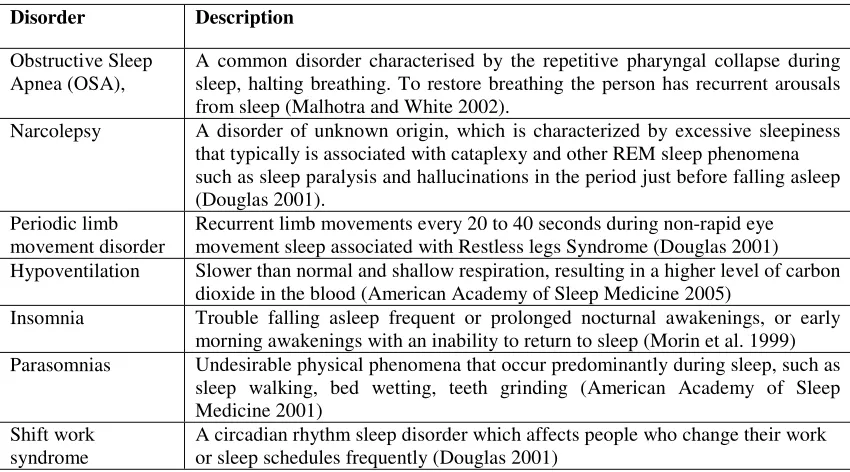
In later meetings the discussion was solely operational for instance specific pieces of information required to be gathered in the questionnaire. In early interviews SP1stated that he “was unsure what the project could offer the clinic”. However by the third interview SP1 had a clear view of what the knowledge management system should offer, which was to act as “a web-based triage process” by “identifying or predicting a significant sleep disorder”. This statement set a clear objective for the expectations the clinic had from the systems. We were also able to set boundaries on which sleep disorders should be targeted by the physician stating his view of the main disorders (shown in table 1). This set of sleep disorders was also confirmed by SP2.
SP1’s concern for the patient experience was shown by statements such as he “was looking to improve patients satisfaction with the service” offered by the clinic. He also worried that some patients would be disadvantaged by a web-based questionnaire, however he followed this up with the solution that the clinic staff would either send a paper based questionnaire to the patient or fill in the questionnaire over the telephone for the patient. Another area discussed which crosses from concern for the patient and operational clinic concerns is the need to prioritise patients, so those patients who are most in need of the service have faster access to services. This was established by statements such as “in referrals GP’s leave vital information out even if using the clinic referral form”. SP2 also agreed that information such as the referred patient was a truck driver, for example would be left off a referral however this kind of information makes seeing these patients a higher priority. This implies that more complete patient information earlier in the patient clinic interaction would improve some patient outcomes. SP1 also stated that a model of care based on physical measurements such as wrist actigraphy or sleep studies does not address the fundamental concerns of the patient, which is that they have excessive daytime sleepiness. A knowledge based system which takes a more holistic view of the patient validates the concerns they have about the impact of the disorder on their lifestyle, while still giving the physician required patient information.
based in that the SP1 stated that in many cases they could not “predict if a woman has a sleep disorder” from the patient history as the “range of symptoms they present with may not be reflected in the outcome of a sleep study”. He said there is currently no evidence base of predisposing factors for sleep disorders in women, so that the data from this project could help fill that gap.
The third theme was operational concerns for the smooth running of the clinic. One of the main concerns is that the clinic has sixty appointments for a first consultations and potential sleep studies and 250 follow up visits per month but enough sleep study beds for 120 patients. One solution to this problem is to give patients whose information indicates a high chance of Obstructive Sleep Apnea (OSA) a sleep study before a consultation. This solution reduces the need for follow up visits freeing more sleep specialist time for first consultations. SP1 stated that he now considered a knowledge based system used to gather patient information and provide data to the clinic earlier in the interaction “is ideally suited” to allow the sleep clinic to function well. The coding of these interviews by bringing to light areas of interest for the physician helped to set boundaries and objectives for the development of the knowledge based system.
After receiving University and hospital ethics approval and patient permission the researcher observed both types of patient consultations focusing on the questions asked by the physician to the patient and other tests requested, for instance the depression index test. Using methodology recommended by Green & Thorogood (2004) these observations were used to confirm what information the physicians acquired during the consultation and this acted as a validation instrument for the information gained during interviews. It was explained to the patient that the researcher was there to observe the physician’s protocol during a consultation and no notes would be taken of their responses. Participant observation was used during these consultations with the researcher acting as a limited observer (Ely et al. 1991). A few minutes was set aside after each consultation to ask questions of the physician that had arisen during the consultation and to further understand the consultation environment as well as making aspects of the consultation more explicit. During the consultation, a paper questionnaire and other documentation were completed and content analysis was conducted on these to determine the range of information discovered. This content analysis output was then discussed with the sleep physicians for their suggestions to improve patient history discovery.
These investigations confirmed that the physicians spend a large portion of the available consultation time on routine questions such as capturing details on smoking habits and caffeine consumption. In the new system the capturing of patient information either using online tools or a paper based questionnaire transfers the form filling responsibility to the patient. An at home mode form filling approach with the capability for multi-sessions would enable patients to respond to questions in a relaxed environment, resulting in time savings for both themselves and the sleep physician. Due to the reduction in time given for data collection, the physician can spend time with the patients discussing patient-specific symptoms and life-style. This will enable them to see more patients or they can perform a more in-depth consultation with each patient. This meets the objective of the system acting as a web-based triage system as well as meeting operational concerns.
Development of sleep questionnaire
The current patient history form was re-written and redeveloped into an online tool. This acted as an information gathering point with the final purpose of input into the DSS. With the additional benefit that it would become a standard, validated tool for patient appraisal in sleep disorder consultations. The aims of development were: to better identify patients needing treatment over the current clinical process, increase patient opportunity to access sleep disorder information, build an evidence base of patient histories and improve the operational functioning of the clinic.
The participatory approach taken for the development of the questionnaire is consistent with the approach advocated by (Cornwall and Jewkes 1995, p. 1667) as this can produce “knowledge used in action”. The University of British Columbia Institute of Health Promotion Research (1996) web site describes participatory research as “systematic inquiry, with the collaboration of those affected by the issue being studied, for purposes of education and taking action or effecting change”.
Meeting outcomes
Table 1: Common sleep disorders
Disorder Description
Obstructive Sleep Apnea (OSA),
A common disorder characterised by the repetitive pharyngal collapse during sleep, halting breathing. To restore breathing the person has recurrent arousals from sleep (Malhotra and White 2002).
Narcolepsy A disorder of unknown origin, which is characterized by excessive sleepiness that typically is associated with cataplexy and other REM sleep phenomena such as sleep paralysis and hallucinations in the period just before falling asleep (Douglas 2001).
Periodic limb movement disorder
Recurrent limb movements every 20 to 40 seconds during non-rapid eye movement sleep associated with Restless legs Syndrome (Douglas 2001) Hypoventilation Slower than normal and shallow respiration, resulting in a higher level of carbon
dioxide in the blood (American Academy of Sleep Medicine 2005)
Insomnia Trouble falling asleep frequent or prolonged nocturnal awakenings, or early morning awakenings with an inability to return to sleep (Morin et al. 1999) Parasomnias Undesirable physical phenomena that occur predominantly during sleep, such as
sleep walking, bed wetting, teeth grinding (American Academy of Sleep Medicine 2001)
Shift work syndrome
A circadian rhythm sleep disorder which affects people who change their work or sleep schedules frequently (Douglas 2001)
Hypoventilation or under breathing which although not a major sleep disorder was considered critical as patients with neuromuscular disorders such as muscular dystrophy form a significant proportion of their public hospital sleep clinic patients. This is because both physicians sleep investigation unit’s fit within larger respiratory departments; however hypoventilation may also exist with sleep apnea. One of the goals of the questionnaire is increasing physician productivity during consultations, so that questions targeting rarely seen sleep disorders were not included. The patient history contained in the questionnaire and the physical examination will still diagnose less common sleep disorders, so these people will not be disadvantaged. The symptoms of these disorders would be matched to the criteria contained in the International Classification of Sleep Disorders (ICSD) diagnostic and coding manual (American Academy of Sleep Medicine 2005). This sleep disorder criteria was chosen as the physicians considered that it was the most specific with the best evidence base and is produced in association with the European Sleep Research Society, the Japanese Society of Sleep Research, and the Latin American Sleep Society, so has widespread acceptance.
The new patient history questionnaire in part used a bank of questions developed for a previous project (The Prince Charles Hospital 2005) which was abandoned due to changes in the project team. This bank of questions was generated from a large pool of questionsbased on an extensive review of existing sleep questionnaires and structured diagnostic interviews and reviewed by experienced, board registered, sleep medicine clinicians. The item set was extensively revised to improve readability to an age ten readability level which was felt to be an appropriate reading level to maximise understanding by respondents. The items were rewritten to conform to a five-point Likert-like response scale. This original pool of questions was reduced to 100 by focusing on mapping the questions to the International Classification of Sleep Disorders. However demographic and past medical history questions and standard sleep disorder tests has brought that number back up to 200. The final version of the questionnaire meets the goals of gathering general patient information, such as age, occupation and current medication as well as information on sleep habits. Comments during pre-testing did indicate that respondents found the questionnaire long, however this is countered by being able to complete the questionnaire over a number of sittings and that the patient would normally have up to two months available to complete the form during the wait time for an appointment. In future it is planned that the database of information from respondents will show questions which may be excluded from the questionnaire, streamlining the data gathering process for the decision support system.
twenty eight natural decision points. The individual decision points for each sleep disorder are illustrated in figure two using insomnia as an example
Figure 2 Insomnia sleep disorder criteria based decision points
At each decision point there is a clear yes/ no response if the patient meets the sleep disorder criteria based on their response to the cluster of questions on that criteria. This means the report which is produced as an outcome of the DSS, works through patient demographic, past medical history and current health then into the individual sleep disorders stating if the patient meet the individual criteria of the sleep disorder. In line with the literature (Guerlain et al. 2000) recommendations are then given for treatment, such as an overnight sleep study is indicated. Sectioning the information in this fashion also fits with the Patel, Arocha and Kaufman (2001) model of medical decision making discussed in the literature review. The rule base and the resulting report were checked by the physicians and psychologist for suitability and relevance to their professional practise. In the first instance a desk walkthrough was attempted with these stakeholders using structured English to describe the rule base and report; however this failed with the comment that it was too complicated to understand. A PowerPoint presentation as a paper based prototype was then constructed describing this information in descriptive terms with one page per sleep disorder criteria. This was successful and resulted in the physicians making suggestions for small changes to the layout of the report. The database design process complied with industry standards and script creation was based upon Entity-Relationship Diagrams (ERDs) which modelled the data requirements.
In the online patient history questionnaire we have used maximum contrast of black text on a plain white background, with a sans serif font and an uncluttered background. The uncluttered background maximises the readability of the questions And the plain background also helps to minimise the size of web application which means that those patients with slow download speeds are not penalised by having to wait for a graphic to download.
A user tries to make logical sense of the web page displayed at first glance, so that the design of the page must make logical sense, for instance headings are in a larger font. Design elements which are related need to be gathered together graphically, for example a question is contained within a frame. The graphical treatment of these elements needs to be consistent and predictable throughout the web site to aid usability (Williams, 2000). A linear web site plan where the user moves through the web application page by page helps to orientate them so that they are aware of their position on the web site (Guenther, 2004; Yen, et al., 2007).
Heuristic evaluation rules for websites detailed by Sharp, Rogers, and Preece (2007) were employed. The website has internal consistency, with simple dialog and phases carrying the same meaning throughout. To aid internal consistency, formatting of pages fonts, font sizes and font colours are consistent. The user’s memory load is minimised with no information being required to be remembered from one part of the web dialog to the other. Validation exists within the web forms, for example some questions such as date of birth must be answered.
DISCUSSION
While the sleep disorder DSS is still in development and has yet to be evaluated d, a number of results have emerged. The physicians are still actively engaged in the development process and have commented that they would also like to routinely use the system to test patients suffering from heart-failure for sleep disorders and as an effective data-gathering tool. Stakeholders in the research and the participatory research process have been successful as has the ongoing commitment to the outcomes of the research. This is demonstrated by their willingness to sponsor the resultant web application for hosting by their organisations internal systems.
Insomnia
ICSD Criteria A: Trouble sleeping or staying asleep
ICSD Criteria B: Sleep difficulty despite adequate opportunity for sleep
ICSD Criteria C: Daytime impairment due to sleep quality
One of the physicians remarked during an interview that it is common for patients at the first consultation to not know why they have been sent to the Sleep Clinic. They have been referred to the clinic by a General Practitioner but have limited knowledge of sleep disorders, they are just aware they have a problem with snoring or day time sleepiness. The completion of the online form in advance gives the patient a springboard to gather knowledge on the various parameters of sleep disorders as asked in the questionnaire. The information from the completed patient questionnaire is then used as an input into the DSS, which will then produce a report for the physician in an easily accessible format providing an objective second opinion.
Using the Stranieri et al. (1999) method of replacing a large decision support system with multiple small decision support systems in the discretionary environment of a sleep disorder diagnosis has worked well. Each downstream decision feeds into the decision point above it in the decision tree, simplifying each decision to a yes/ no outcome. This method has meant that an explanation of the decision process in the decision support system is able to be communicated to the physician in the form of a report. This report provides the accuracy and transparency of the decision making process which the physician requires. The report summarises demographic and patient history information contained in the questionnaire as well as the output from the DSS. The inclusion of background patient data in the report means that the physician is presented with a comprehensive overview of the patient while preserving patient individuality (Morris 2002). This patient overview means the report integrates into the physician’s consultation workflow lowering the threshold to engage with the DSS.
After the initial distribution and analysis of results, testing each question will be carried out using factor analysis for relevance and to observe whether they are loading on the correct construct. Sections of the questionnaire may then be used by other groups of physicians such as general practitioners to test for specific disorders such as insomnia, as the diagnosis of this sleep disorder is often confounded by depression. The resulting report meets Kawamoto et al. (2005), Regan and Holtzman (1995) and Haug, Rocha and Evans (2003) criteria for clinical decision support system success as described in the introduction and hence should act as an objective second opinion for the physician. The design science framework was used to develop and evaluate the DSS and this approach has provided a checklist of the effectiveness of the solution.
In future research, the online tools provide an access point for the gathering of patient information electronically using an internet platform, this information can then be distributed to all the stakeholders involved in the sleep assessment starting from the general practitioner to the sleep clinic, in near real time. This is a benefit to the patient and the primary care physician in the management of chronic sleep disorders and increases collaboration between physicians. The collection of patient information in the database of the DSS also provides an evidence base free from data re-entry errors.
REFERENCES
Abidi, S.S.R. 2001. "Knowledge Management in Healthcare: Towards `Knowledge-Driven' Decision-Support Services," International Journal of Medical Informatics (63:1-2), pp 5-18.
Akerstedt, T., and Nilsson, P.M. 2003. "Sleep as Restitution: An Introduction," Journal of Internal Medicine
(254:1), pp 6-12.
American Academy of Sleep Medicine. 2001. "The International Classification of Sleep Disorders, Revised Diagnostic and Coding Manual." Retrieved 5 February 2008, from http://www.absm.org/PDF/ICSD.pdf
American Academy of Sleep Medicine. 2005. International Classification of Sleep Disorders , Diagnostic and Coding Manual, (2nd ed.). Westchester, Illinois: American Academy of Sleep Medicine.
Arnott, D., and Pervan, G. 2008. "Eight Key Issues for the Decision Support Systems Discipline," Decision Support Systems (44:3), pp 657-672.
Australian Medical Workforce Advisory Committee. 2000. "The Specialist Thoracic Medicine Workforce in Australia, Amwac Report 2000." Retrieved 31 March 2008, from http://www5.health.nsw.gov.au/amwac/amwac/pdf/thoracic_medicine_2000.1.pdf
Bailes, S., Baltzan, M., Rizzo, D., Fichten, C.S., Amsel, R., and Libman, E. 2008. "A Diagnostic Symptom Profile for Sleep Disorder in Primary Care Patients," Journal of Psychosomatic Research (64:4), pp 427-433.
Breslin, M., Mullan, R.J., and Montori, V.M. 2008. "The Design of a Decision Aid About Diabetes Medications for Use During the Consultation with Patients with Type 2 Diabetes," Patient Education and Counseling
(73:3), pp 465-472.
Charavel, M., Bremond, A., Moumjid-Ferdjaoui, N., Mignotte, H., and Carrere, M.O. 2001. "Shared Decision-Making in Question," Psycho-Oncology (10:2), pp 93-102.
Charles, C., Gafni, A., and Whelan, T. 1999. "Decision-Making in the Physician-Patient Encounter: Revisiting the Shared Treatment Decision-Making Model," Social Science & Medicine (49:5), pp 651-661.
Collins, S., Britten, N., and Ruusuvuori, J. 2007. Patient Participation in Health Care Consultations : Qualitative Perspectives. Maidenhead: Open University Press.
Colten, H.R., and Alterogt, M.M. 2006. "Sleep Disorders and Sleep Deprivation: An Unmet Public Health Problem." National Academies Press.
Cornwall, A., and Jewkes, R. 1995. "What Is Participatory Research?," Social science & medicine (41 12), pp 1667-1676.
Dick, B. 2002. "Convergent Interviewing. Session 8 of Areol - Action Research and Evaluation on Line.."
Douglas, N.J. 2001. "Why Am I Sleepy? Sorting the Somnolent," American Journal Respiratory Critical Care Medicine (163), pp 1310-1313.
Ely, M., Anzul, M., Friedman, T., Garner, D., and McCormack Steinmetz, A. 1991. Doing Qualitative Research : Circles within Circles. London: Falmer Press.
Garg, A.X., Adhikari, N.K.J., McDonald, H., Rosas-Arellano, M.P., Devereaux, P.J., Beyene, J., Sam, J., and Haynes, R.B. 2005. "Effects of Computerized Clinical Decision Support Systems on Practitioner Performance and Patient Outcomes: A Systematic Review " Journal American Medical Association
(293:10), pp 1223-1238.
George, C.F.P. 2001. "Reduction in Motor Vehicle Collisions Following Treatment of Sleep Apnoea with Nasal Cpap," Thorax (56), pp 508-512.
George, C.F.P. 2004. "Driving and Automobile Crashes in Patients with Obstructive Sleep Apnoea/Hypopnoea Syndrome," Thorax (59:9), pp 804-807.
Greenfield, S., Kaplan, S., and Ware Jr, J.E. 1985. "Expanding Patient Involvement in Care," Annals of Internal Medicine (102:4), pp 520-528.
Guerlain, S., Brown, D.E., and Mastrangelo, C. 2000. "Intelligent Decision Support Systems," Systems, Man, and Cybernetics, 2000 IEEE International Conference on, pp. 1934-1938 vol.1933.
Hampton, J.R., Harrison, M.J., Mitchell, J.R., Prichard, J.S., and Seymour, C. 1975. "Relative Contributions of History-Taking, Physical Examination, and Laboratory Investigation to Diagnosis and Management of Medical Outpatients," British Medical Journal (2:5969), May 31, 1975, pp 486-489.
Haug, P.J., Rocha, B.H.S.C., and Evans, R.S. 2003. "Decision Support in Medicine: Lessons from the System,"
International Journal of Medical Informatics (69:2-3), pp 273-284.
Hevner, A.R., March, S.T., Park, J., and Ram, S. 2004. "Design Science in Information Systems Research," MIS Quarterly (28:1), pp 75-105.
Hirakis, O., and Karakounos, S. 2006. "Goals and Benefits of Knowledge Management in Healthcare," in:
Handbook of Research on Informatics in Healthcare and Biomedicine, A.A. Lazakidou (ed.). Idea Group Reference, pp. 193-200.
Jamal, A., McKenzie, K., and Clark, M. 2009. "The Impact of Health Information Technology on the Quality of Medical and Health Care: A Systematic Review," Health Information Management Journal (38:3).
Johns, M., and Hocking, B. 1997. "Excessive Daytime Sleepiness: Daytime Sleepiness and Sleep Habits of Australian Workers," Sleep (20:10), pp 844-849.
Kawamoto, K., Houlihan, C.A., Balas, E.A., and Lobach, D.F. 2005. "Improving Clinical Practice Using Clinical Decision Support Systems: A Systematic Review of Trials to Identify Features Critical to Success "
British Medical Journal (330).
Leape, L.L. 2009. "Errors in Medicine," Clinica Chimica Acta (404:1), pp 2-5.
Malhotra, A., and White, D.P. 2002. "Obstructive Sleep Apnoea," The Lancet (360:9328), pp 237-245.
March, S.T., and Smith, G.F. 1995. "Design and Natural Science Research on Information Technology,"
Decision Support Systems (15:4), pp 251-266.
March, S.T., and Storey, V.C. 2008. "Design Science in the Information Systems Discipline: An Introduction to the Special Issue on Design Science Research," MIS Quarterly (32:4), pp 725-730.
Morin, C.M., Colecchi, C., Stone, J., Sood, R., and Brink, D. 1999. "Behavioral and Pharmacological Therapies for Late-Life Insomnia: A Randomized Controlled Trial " Journal American Medical Association (281:11), pp 991-999.
Morris, A.H. 2002. "Decision Support and Safety of Clinical Environments," Quality and Safety in Health Care
(11:1), pp 69-75.
Patel, V.L., Arocha, J.F., and Kaufman, D.R. 2001. "A Primer on Aspects of Cognition for Medical Informatics," Journal American Medical Informatics Association (8:4), pp 324-243.
Patlak, M. 2005. "Tips to Help You Detect Common Sleep Disorders." Retrieved 31 March 2008, from http://www.acponline.org/clinical_information/journals_publications/acp_internist/mar05/sleep.htm#pool
Peek, M.E., Wilson, S.C., Gorawara-Bhat, R., Odoms-Young, A., Quinn, M.T., and Chin, M.H. 2009. "Barriers and Facilitators to Shared Decision-Making among African-Americans with Diabetes " Journal of General Internal Medicine (online).
Purcell, G.P. 2005. "What Makes a Good Clinical Decision Support System " British Medical Journal (330), pp 740-741.
Regan, P.J., and Holtzman, S. 1995. "R&D Decision Advisor: An Interactive Approach to Normative Decision System Model Construction," European Journal of Operational Research (84:1), pp 116-133.
Sangal, R.B. 2006. "When Is Sleepiness a Disease? How Do We Measure It?," Sleep Medicine (7:4), pp 310-311.
Sheppard, V.B., Williams, K.P., Harrison, T.M., Jennings, Y., Lucas, W., Stephen, J., Robinson, D., Mandelblatt, J.S., and Taylor, K.L. 2009. "Development of Decision-Support Intervention for Black Women with Breast Cancer," Psycho-Oncology (early view:9999), p n/a.
Stranieri, A., Zeleznikow, J., Gawler, M., and Lewis, B. 1999. "A Hybrid Rule – Neural Approach for the Automation of Legal Reasoning in the Discretionary Domain of Family Law in Australia " Artificial Intelligence and Law (7:2-3).
The Prince Charles Hospital. 2005. "The Prince Charles Hospital Health Service District Research Directory." Retrieved 01 March 2007, from http://www.health.qld.gov.au/tpch/research/docs/res_dir2006part1.pdf
Tuckett, D., Boulton, M., Olson, C., and Williams, A. 1985. Meetings between Experts: An Approach to Sharing Ideas in Medical Consultations. London: Tavistock Publications Limited.
University of British Columbia Institute of Health Promotion Research. 1996. "Guidelines and Categories for Classifying Participatory Research Projects in Health."
ACKNOWLEDGEMENTS
This research was supported under Australian Research Council's Linkage Projects funding scheme (project number LP0455115). We also wish to acknowledge the time, expertise and support from Dr James Douglas, Dr Ross Sellers and Dr Simon Smith