Laser Scanning for
Forest Structure Analysis
A dissertation submitted by
Adam John Coburn
In fulfilment of the requirements of
Courses ENG4111 and ENG4112 Research
Project
Towards the degree of
Abstract
Terrestrial laser scanning is one of the most recent technological advancements within the spatial science industry. Its current use within the forest analysis field is limited.
Collecting data to create a forest inventory can be a long and strenuous process with current procedures relying on outdated and inefficient techniques. Terrestrial laser scanning is a technique that has the potential to greatly enhance this data collection process.
In this study, a forested area of 6700m2 in eastern Toowoomba has been
scanned to extract tree height, diameter at breast height, basal area and volume. The same data has been collected using contemporary techniques so that terrestrial laser scanning’s suitability can be assessed.
The measured components were compared and discrepancies were identified. When compared to traditional methods, laser scanning overestimated height by 0.196m (2.42%). Diameter at breast height, basal area and volume were all underestimated by 0.061m (13.33%), 0.044m2
University of Southern Queensland
Faculty of Health, Engineering and Sciences
ENG4111/ENG4112 Research Project
Limitations of Use
The Council of the University of Southern Queensland, its Faculty of Health, Engineering & Sciences, and the staff of the University of Southern Queensland, do not accept any responsibility for the truth, accuracy or completeness of material contained within or associated with this dissertation.
Persons using all or any part of this material do so at their own risk, and not at the risk of the Council of the University of Southern Queensland, its Faculty of Health, Engineering & Sciences or the staff of the University of Southern Queensland.
University of Southern Queensland
Faculty of Health, Engineering and Sciences
ENG4111/ENG4112 Research Project
Certification of Dissertation
I certify that the ideas, designs and experimental work, results, analyses and conclusions set out in this dissertation are entirely my own effort, except where otherwise indicated and acknowledged.
I further certify that the work is original and has not been previously submitted for assessment in any other course or institution, except where specifically stated.
Acknowledgements
I would like to acknowledge that this research was carried out under the supervision of Dr. Xiaoye Liu. Her continued guidance has been irreplaceable.
Table of Contents
Abstract ... 2
Acknowledgements ... 5
Table of Contents ... 6
List of Tables... 9
List of Figures ... 10
Chapter 1 - Introduction ... 12
1.1 Introduction ... 12
1.2 Research Aim ... 13
1.3 Justification ... 13
1.4 Dissertation Overview ... 14
Chapter 2 - Literature Review ... 16
2.1 Introduction ... 16
2.2 What is Laser Scanning? ... 16
2.3 Types of Laser Scanners ... 17
2.4 Current Applications of Laser Scanners ... 22
2.5 Forest Structure Analysis ... 25
2.6 Laser Scanning of Forest Structures ... 27
2.7 Conclusion ... 30
3.1 Introduction ... 31
3.2 Study Area ... 31
3.3 Equipment ... 33
3.4 Field Procedures ... 33
3.5 Post Processing ... 36
3.6 Data Comparison ... 39
3.7 Conclusion ... 39
Chapter 4 – Results ... 40
4.1 Introduction ... 40
4.2 Traditional Data ... 40
4.3 Scanned Data ... 41
4.4 Variations ... 43
4.4 Conclusion ... 47
Chapter 5 – Discussion ... 48
5.1 Introduction ... 48
5.2 Quick View Analysis ... 48
5.3 Planar View ... 54
5.4 Average of Quick and Planar Measurements ... 56
5.5 Time Comparison ... 58
5.6 Conclusion ... 60
6.1 Introduction ... 61
6.2 Research Findings ... 61
6.3 Further Research and Recommendations ... 62
6.4 Conclusion ... 63
Appendix ... 64
Appendix 1 – Project Specification... 64
Appendix 2 – How Scanners Measure Distance ... 66
Appendix 3 – FARO Scene Cluster ... 67
Appendix 4 – FARO Scene Quick View ... 69
Appendix 5 – FARO Scene Planar View ... 71
Appendix 6 – Risk Assessment Documents... 72
List of Tables
Table 1. Data obtained from traditional methods. ... 40
Table 2. Quick view tree measurements... 41
Table 3. Planar view tree measurements. ... 41
Table 4. Average tree measurements from scanned data. ... 42
Table 5. Mean height variances and standard deviations. ... 43
Table 6. Mean DBH variances and standard deviations... 44
Table 7. Mean basal area variances and standard deviations. ... 45
Table 8. Mean volume variances and standard deviations. ... 45
Table 9. Percentage variances between scanned average and traditional. .. 45
Table 10. Volume calculated using planar height and quick DBH ... 57
List of Figures
Figure 1. The Leica Scanstation c10 – a time-of-flight scanner. ... 18
Figure 2. The Leica HDS 6200 – a phase based scanner ... 19
Figure 3. The Reigl VZ-400 – a waveform processing scanner... 20
Figure 4. Multiple echo detection ... 21
Figure 5. Toowoomba’s location within Queensland. ... 31
Figure 6. Satellite view od the study area. ... 32
Figure 7. One section of the area being analysed. ... 32
Figure 8. The FARO Focus 3D conducting a scan. ... 34
Figure 9. Scan locations within the study area. ... 34
Figure 10. Variances in height between scanned data and traditional. ... 43
Figure 11. Variances in DBH between scanned data and traditional. ... 44
Figure 12. Variances in basal area between scanned data and traditional. . 44
Figure 13. Variances in volume between scanned data and traditional. ... 45
Figure 14. Variation as a percentage between scanned data and traditional. ... 46
Figure 15. Vertical height error. ... 49
Figure 16. Tree #18, the largest quick view variation. ... 50
Figure 17. Tree #17, the smallest quick view variation. ... 50
Chapter 1 - Introduction
1.1 Introduction
In the modern era technology is advancing extremely quickly. These advancements allow for old techniques and practices to be replaced with safer, quicker and more efficient ones. One such technology is terrestrial laser scanning (TLS).
Laser scanning is a process which allows for rapid data collection. Millions of data points can be measured to high accuracy and precision in minutes. Data such as this is extremely useful in obtaining a detailed understanding of the features measured.
Not only does laser scanning offer quick data collection, it is also excellent at providing a visual representation of the data collected. Such high quantity point clouds allow anyone observing the point cloud to identify exactly what the object is. This visual aspect, combined with the high accuracy and precision data allows for effective and efficient data manipulation.
scanning offers the potential to improve the data capture stage of forest analyses and also offers detailed analysis tools.
1.2 Research Aim
The aim of this study is to assess laser scanning’s suitability when recording a forest structure. This will be achieved by executing the following objectives:
a) Identifying the following components of the structure using laser scanning and traditional methods:
o Tree height.
o Diameter at breast height. o Basal area.
o Tree volume.
b) Comparing the acquired data and assess laser scanning’s suitability
1.3 Justification
Completing a forest inventory can be a long and strenuous process, especially if required to be completed by one person. Detailed information needs to be recorded on each member of the structure. This involves measuring, taking photos and analysing the individual structure. The data then needs to be transferred to a computer, analysed again and recorded. This needs to be completed for all members of the forest structure being analysed.
easily manipulate the captured data. Another benefit of the technology is the high level of both accuracy and precision.
As the process of using terrestrial laser scanning to capture forest data becomes more common, the techniques used will improve. This research is no exception and aims to not only analyse the results obtained from the data, but also the suitability of the process to the application.
1.4 Dissertation Overview
This dissertation features six main chapters. A brief description of these chapters is given below:
Chapter 1: Introduction – Provides an introduction to the research area. Research aims of the study are highlighted. Background information regarding the topic and justification of the research is also discussed.
Chapter 2: Literature Review – Identifies the key components as well as a summary of the literature review conducted for this research. The three areas of interest are: laser scanning, forest analysis and laser scanning’s current applications within forest structures.
Chapter 3: Methodology – The methods used to meet the aims of the study are identified in this chapter. The study area as well as the techniques used to both capture and analyse the data are discussed.
Chapter 5: Discussion – The raw data obtained is compared and contrasted to identify relationships. Resultantly the suitability of laser scanning can be identified.
Chapter 2 - Literature Review
2.1 Introduction
A literature review was conducted with regard to five key areas: the explanation of laser scanning, the types of scanners available and how they work, the current applications of laser scanning, forest inventorying and structure analysis as well as the application of laser scanning within the aforementioned field. Consequently the aim of this chapter is to provide insight on studies conducted in this professional field by analysing conducted research and studying previous findings.
2.2 What is Laser Scanning?
A laser scanner is hardware that is used to collect 3D data of a real world object. This allows the object to be analysed effectively and efficiently using powerful software.
Laser scanning is considered a new technology within the spatial science and engineering world despite Electronic Distance Measurement (EDM) being around since the 1960s. This is because it did not become used in this professional field until the late 1990s (SurvTech Solutions 2014). The reason this occurred was because the technology could not be used effectively until computer storage systems and bandwidth improved (SurvTech Solutions 2014).
Consequently the technology is not as ‘mobile’ as data collected by GPS or total station. Data captured with these two instruments would take weeks of work to create the same point cloud that is achieved by laser scanning. Consequently, total station and GPS point clouds only identify key points. This results in smaller file sizes which are heavily streamlined when compared to laser scanner point clouds. The storage required to store scanned point clouds is evidently one limitation associated with the technology.
If storage issues are overcome, the models created allow for a very detailed analysis of the real world. This high level of detail has been the force behind laser scanning’s growth. The technology has improved with scans taking less time and outputting large quantities of information with high accuracy and precision.
2.3 Types of Laser Scanners
There are three principle types of scanners: Time-of-Flight, Phase Based and Triangulation (Payne 2009). Appendix 2 provides a diagram explaining how time-of-flight and phase based scanners measure distances. Scanners that slightly alter these principles also exist. These are known as Waveform Processing scanners scanners.
2.3.1 Time-of-Flight Scanners
horizontal bearing to create a 3D point in the same position as the target object. A time-of-flight scanner is best used when large distances need to be measured.
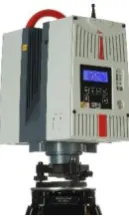
Figure 1. The Leica Scanstation c10 – a time-of-flight scanner. (Leica 2010).
California Department of Transportation (2011) stated that the maximum range is typically 125-1000m. The Leica ScanStation C10 (Figure 1) can measure distances up to 300m. The drawback of time-of-flight scanners is their slower data acquisition. The Leica ScanStation C10 can capture 50,000 points per second (Leica 2010) and is a relatively fast time-of-flight instrument.
2.3.2 Phase Based Scanners
[image:19.595.266.331.362.473.2]A phase based scanner records measurements by emitting a single, constant beam. The change of phase of the laser light is measured to allow the scanner to calculate a distance (Jones 2010). This is done by the scanner modulating the emitted laser light into multiple phases and comparing the phase shifts of the returned laser energy (California Department of Transportation 2011). California Department of Transportation (2011) also stated that the distance is then calculated by the scanner using phase-shift algorithms to determine the distance based on the unique properties of each individual phase.
Figure 2. The Leica HDS 6200 – a phase based scanner. (Leica 2010). As a result of the laser light constantly being emitted it is possible to capture points extremely quickly. This rapid rate of point capture is a feature of the Leica HDS 6200 which is capable of recording up to 1,000,000 points per second (Leica 2010).
2.3.3 Triangulation Scanners
handheld options and consequently require less preparation. They are also less sensitive to ambient light.
Triangulation scanners measure distances, which allows them to create points, by using a laser line or single laser point to scan across and object. A sensor then detects the reflected light and calculates the distance from the object to the scanner using trigonometric triangulation (3D Systems 2011). For this to occur, the distance and angle between the sensor and laser source must be known extremely precisely. These known parameters allow the machine to identify the angle of the laser when reflected off the object and detected by the sensor. Resultantly, a position can be calculated for the scanned point.
2.3.4 Waveform Processing Scanners
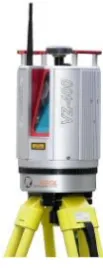
[image:20.595.272.324.571.706.2]Waveform processing scanners are also referred to as echo digitisation scanners. These instruments use pulsed time-of-flight technology and internal real-time waveform processing techniques to identify multiple returns or reflections of the same signal pulse, resulting in the detection of multiple objects (California Department of Transportation 2011).
Waveform processing scanners are also capable to measure points at an extremely high rate. California Department of Transportation (2011) identified that waveform processing scanners can possess a pulse rate of 300,000 as well as an echo detection capability of 15 returns per pulse. This allows data collection rates to achieve, and potentially exceed, 1.5 million points a second (California Department of Transportation 2011).
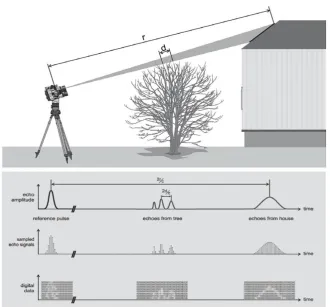
[image:21.595.133.464.362.669.2]The main limitation of echo digitising scanners is the inability to discriminate between returns of the same laser pulse. This is a result of objects that are closely spaced. Figure 4 provides an example of such a situation.
In Figure 4, “d” is the discrimination limit which is a function of laser emitter and receiver operating parameters. California Department of Transportation (2011) stated that returns from objects that are closer together than the laser scanner’s multiple object discrimination limit will create false points in the data. The problem of false points can be reduced however it is beyond the scope of this dissertation.
2.4 Current Applications of Laser Scanners
Laser scanners have been around for approximately twenty years (SurvTech Solutions 2014) allowing a multitude of their uses to be tested. Before the equipment becomes staple use in an environment, it must be vigorously tested to assess the suitability of the equipment to the application. Once testing is completed and the results are satisfactory, the device can progress from uncommon use in the area to common practice.
2.4.1 Engineering Applications
Within the engineering world terrestrial laser scanning has a multitude of applications. Some of these require an extremely high accuracy while others require an accuracy of lower standards. These categories have been divided and explained below.
2.4.1.1 Strict High Accuracy Requirements
meet the specifications required. Consequently they would not be suitable to the task.
California Department of Transportation (2011) deemed that the following applications require engineering level accuracy:
Pavement Analysis Scans
Roadway/pavement topographic surveys
Structures and bridge clearance surveys
Engineering topographic surveys
Deformation and monitoring surveys
As-built surveys
The data captured by these surveys is critically analysed and resultantly must represent the real world as closely as possible.
2.4.1.2 Tasks of Lesser Accuracy
Tasks suitable to laser scanning requiring less accuracy include:
Corridor study and planning surveys
Earthwork surveys
Environment surveys
Sight distance analysis surveys
Urban mapping and modelling
2.4.2 Non-Engineering Applications
A laser scanner has various uses outside of the engineering environment. These applications range across various fields, utilise different types of scanners and have varying accuracy standards.
Laser scanning has been effectively used to monitor coastal erosion. Rosser et. al. (2005) analysed a coastal cliff face made up of hard rock. The cliff was monitored over a period of 16 months and it was concluded that laser can quantify cliff failures to a previously unobtainable precision.
Analysing cultural heritage is extremely important as it provides us with information on the quality of the structure. By analysing the structure it is possible to identify repairs that need to be conducted to help preserve the object. Castagnetti et. al. (2012) observed the Cathedral of Modena and were able to create a model that can be used for monitoring deformation. The highly detailed data was also used to analyse structural integrity and compute anomalies in structural geometry.
Crime scenes must be analysed to a high detail to ensure that correct verdicts are reached by judge or jury. By utilising laser scanning to its full potential, it is possible to create a virtual representation of a crime scene allowing for detailed analysis. Agosto, Ajmar, Boccardo, Tonolo, & Lingua (2008) identified that this virtual recreation can be more compelling for juries and also allows for investigators to virtually ‘revisit’ a crime scene.
suited to the application and has the potential to save time and increase accuracy.
2.5 Forest Structure Analysis
Forest structures are analysed and recorded into a forest inventory. These inventories detail important information about the structure and are an investment to support current and future forest resource opportunities (BC Forest Conversation 2013). BC Forest Conversation (2013) also states that forest inventories are the primary source of information for determining acceptable annual harvest levels while at the same time maintaining healthy forests and healthy communities. The uses of a forest inventory reinforce its need to be accurate and well documented.
2.5.1 Types of Inventories
Forest inventories, although large, are targeted to achieve a single purpose. Resultantly there are multiple types of inventories. Food and Agriculture Organisation of the United Nations Forestry Department (2014) identifies eight types of forest inventory contained within two different categories. The first category, harvesting, features pre-concession, logging planning and management planning inventories. Management inventories make up the second category and compile growth studies, biodiversity surveys, social surveys, post-harvest and diagnostic sampling inventories.
2.5.2 Inventory Objectives
inventory is proposed for an existing forest management unit or for a new concession’ (Food and Agriculture Organisation of the United Nations Forestry Department 2014). Food and Agriculture Organisation of the United Nations Forestry Department (2014) outline three specific guidelines that should be considered when determining inventory objectives. The first is that objectives need to be determined jointly by the people who will use the results, not just by the inventory specialists. Second is that objectives should be prioritised so that important information is not missed and that unnecessary information is not collected. The final guideline is to ensure that the inventory is both practicable and achievable. All aspects of the inventory and the collecting process must be sound to ensure that time and money is not wasted.
2.5.3 Components
Inventories are designed to achieve a specific purpose. Consequently the key components of inventories vary. However some components are applicable to a number of inventories reinforcing their importance.
When measuring tree height and resultantly volume, the structure is assumed to be a cylinder and the volume is then determined. However Brack (1999) outlined four types of tree volume and resultantly volume is calculated dependant on the purpose. Biological volume is the volume of stem with branches trimmed at the junction with the stem. Merchantable volume excludes volume within irregularities of the bole shape caused by normal growth as well as irregularities not part of natural growth. Gross volume estimates include decayed and defective wood whereas net volume excludes decayed and defective wood. Different purposes are calculated in different ways, with some volumes requiring vigorous work with complex formulae.
2.6 Laser Scanning of Forest Structures
The suitability of using laser scanning technology to analyse and monitor forest structures has been assessed a number of times. Multiple studies have been conducted, differing in both purpose and method with each study increasing knowledge and understanding of using terrestrial laser scanning to analyse forest structures.
technology allows for an accurate analysis and has a number of potential possibilities. To establish this process, Thies and Spiecker (2004) stated that robust models for data analysis as well as improvements in hardware technology are required. By proving the second hypothesis, Thies and Spiecker (2004) were able to show that repeated measurements at different times but identical scanner positions can be compared directly which eliminates human discrepancy when recording inventory data. Furthermore it was identified that data acquisition and analysis is independent from subjective influences of the measuring person. Lastly, and possibly the most important finding, was that by using terrestrial laser scanning, a large data pool is created which can be used for a vast number of investigations. Newnham et al. (2012) observed not only the suitability of terrestrial laser scanning within a vegetated environment, but also which type of scanner was more suited to the application. Two time of flight scanners and two phase based scanners were used for the study. One finding of this study was that ‘time of flight instruments, at the time, provided the best characterisation of vegetation structure, mainly in the upper parts of the canopy, where multiple beam interceptions are not accommodated well by the phase-shift scanners’ (Newnham et al. 2012).
that ‘inducing a 1cm global registration error leads to an 8.8% increase in total volume’ (Burt et al. 2013). By combining this study with previous studies, Burt et al. (2013) believe that there is a possibility to provide a number of opportunities ranging from independent biomass estimation through to validation of allometric scaling.
Cote et al. (2009) designed a system to accurately reconstruct trees from TLS. This system was designed to help with the various forms of noise that is generated when scanning forest structures. This includes both wind and the smaller tree constituents such as branches, twigs and foliage. Data obtained from the scans was found to be usable and provided an appropriate representation of the structure. Once the reconstruction system was applied, evaluations were performed on the new data. The outcome of the study was that ‘the results of these evaluations confirm the appropriateness of the proposed tree reconstruction model for the generation of structurally and radiatively faithful copies of existing plant and canopy architectures’ (Cote et al. 2009).
2.7 Conclusion
Chapter 3 - Methodology
3.1 Introduction
This chapter will identify the processes undertaken to fulfil the research aim. It will feature:
Study Area
Equipment
Field Procedures
Post Processing
Comparison Methods
3.2 Study Area
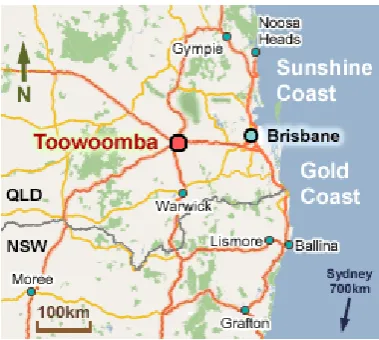
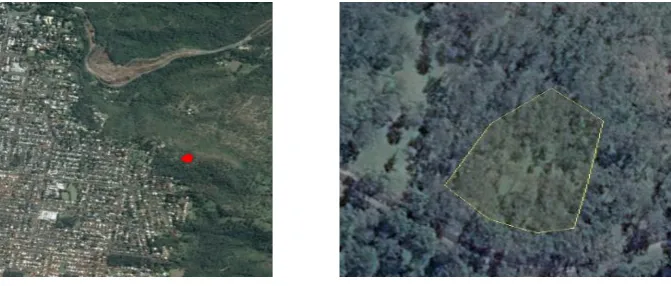
[image:31.595.202.392.479.649.2]The study area selected is located on the eastern side of Picnic Point, Toowoomba.
Figure 5. Toowoomba’s location within Queensland (Toowoomba Motor Village 2014)
This site is also moderately steep as a result of being on the side of a mountain. The location features areas of both dense and open canopy. Areas on the ground are also open as well as fairly populated with tree structures.
[image:32.595.143.479.162.305.2]
Figure 6. Satellite view of the study area (Google Earth 2014)
The varying terrain and densities combined with varying tree heights and thicknesses allows for unbiased testing. Twenty individual structures of varying height and diameter will be analysed. The fluctuating measurements will assist in removing consistent errors that may occur.
[image:32.595.114.484.440.668.2]3.3 Equipment
The FARO Focus 3D laser scanner has been used in this study. This scanner is a phased based scanner capable of recording 976,000 points per second. When properly calibrated, the Focus 3D records these points with an accuracy of +/- 2mm. Alongside the scanner twelve reference spheres (140mm diameter) were used to assist in registration.
To record data using traditional methods a Laser Tech Inc. Tru Pulse 360° distometer was used. Such an instrument is able to calculate vertical height on-the-fly requiring no calculations during data acquisition or post processing. Alongside this instrument a flexible tape measure was used to locate breast height and measure the DBH.
It has been assumed that all equipment is correctly calibrated as performing such a task is beyond the scope of this research.
3.4 Field Procedures
3.4.1 Laser Scans
A total of seventeen scans were conducted with the field of view ranging from 100 to 360 degrees. These scans were completed over two days. Both days were slightly overcast and 25°C.
photos of the area scanned. These photos are overlayed onto the point clouds to create a real-world view of the data.
Figure 8. The FARO Focus 3D conducting a scan.
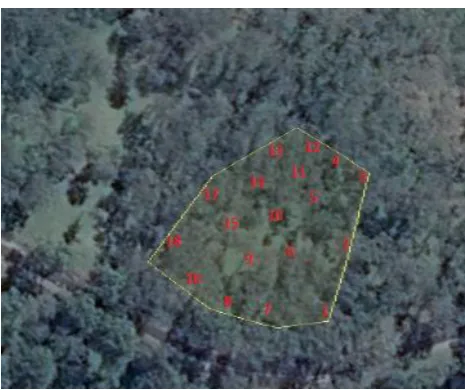
The scan locations were planned to ensure minimal blind spots. Across the two days, scanning took roughly twelve hours.
[image:34.595.181.414.444.639.2]Scans are aligned to one another by using reference spheres provided with the scanner. These spheres are 140mm in diameter and feature special reflective properties, allowing them to be detected by the software. The scans are aligned by subsequent scans featuring spheres in the same location. A common point is established and the scans can be registered. To do this at least three spheres must be common between scans. Once scans are registered a cluster is created (Appendix 3).
Twelve reference spheres were used for this study. Consequently spheres had to be moved around the study area as scans were completed. This was due to the large study area and the limited number of spheres. This did not cause any failures with registration however the cluster from the first day could not be registered with the cluster from the second day. The data analysis was not affected by this complication.
3.4.2 Traditional Analysis
Forest inventory data must be collected using the current and traditional methods to assess the suitability of the laser scanner. An assessment needs to be made about the quality and size of the tree. To do this the following information is collected using the described technique. This data took approximately two hours to identify.
3.4.2.1 Tree Height
top and bottom of the tree with simple trigonometry calculating the vertical distance.
3.4.2.2 Diameter at Breast Height
The DBH is calculated by first marking a point on the tree 1.3m from the forest floor. A tape is then wrapped around the trunk at this height to obtain the circumference. This can be done to a higher accuracy by marking multiple points around the tree at the same height. Once the circumference is calculated, dividing the value by Pi will return the DBH.
3.4.2.3 Volume
Tree volume can be easily calculated by assuming the structure is a perfect cylinder. Multiplying the basal area by the height gives the volume of the structure.
3.5 Post Processing
3.5.1 Scan Analysis
FARO Scene is software provided by FARO used to analyse scans conducted with their equipment. This software allows the user to analyse the generated point cloud. It is also possible to overlay colour photographs on these point clouds to achieve a realistic view.
computer allowed registration to be completed in one hour. A further thirty minutes was required to identify tree characteristics.
Once the cluster is created through registration, it is possible to overlay the captured photos onto the measured points. This allows for an accurate visual representation of the cluster, rather than a black and white point cloud. These photos are overlayed in three ways, identified as: Quick view, Planar view and 3D view.
3.5.1.1 Quick View
The quick view overlay provides a view from the position of the scanner. The photos are wrapped around the position of the scanner, allowing for 360 degree rotation around the view point. The limitation with this view is that high places, namely the tops of trees, become distorted when the scale is altered to view these high up places. The advantage of this view is the detail provided when performing measurements. When conducting multiple measurements, distances for each measurement are detailed, as well as a vertical and horizontal distance from the starting point. A large scale and small scale example are provided in Appendix 4, alongside a measurement example.
3.5.1.2 Planar View
measurements. This view also identifies the location of other scans within the same cluster. Resultantly it is possible to identify where in the cluster the structure is and can also assist when trying to return to the individual structure. The disadvantage to this view is that less detail is provided when measuring objects. Unlike the quick view, only a total distance is given, rather than the distance of each individual measurement. A horizontal and vertical distance is still provided from the first to last measurement. Refer to Appendix 5 for a small scale image and a measurement example.
3.5.1.3 3D View
The 3D View is used to compile the cluster. The photos are overlayed onto the scan points, however any areas that cannot be overlayed onto points are left blank. It is useful when determining the data each scan was able to identify. Another advantage of this view is that the viewpoint is not limited to the location of the scanner. However when moving through the point cloud the data must reload each time a movement is made, clogging the system. Resultantly obtaining data using this technique is time consuming.
Of these, the quick and planar views will be used to analyse tree structures. These two views provide enough manipulation to allow the structures to be analysed to a high degree. Resultantly DBH and height can be calculated. 3.5.2 Traditional Data Analysis
3.6 Data Comparison
To assess the suitability of laser scanning in capturing and analysing forest structures, a comparison between scanned and traditionally collected data must be performed.
To execute such a task twenty trees will be analysed. These structures will vary in height, shape and diameter to ensure the outcome is unbiased. Height and DBH will be determined so that volume can be calculated. The volume is calculated by first determining the basal area. The basal area is then multiplied by the height of the structure.
Data obtained using the quick and planar views will be compared to the traditional method. An average of the two methods will also be calculated and compared to the traditional data to identify which option is most suitable.
3.7 Conclusion
Chapter 4 – Results
4.1 Introduction
This chapter will present the data acquired using the two methods. Differences between the various data forms will also be identified.
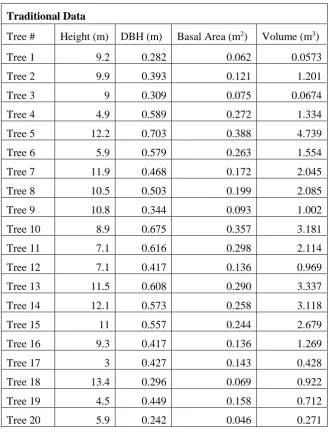
4.2 Traditional Data
Traditional Data
Tree # Height (m) DBH (m) Basal Area (m2) Volume (m3)
Tree 1 9.2 0.282 0.062 0.0573
Tree 2 9.9 0.393 0.121 1.201
Tree 3 9 0.309 0.075 0.0674
Tree 4 4.9 0.589 0.272 1.334
Tree 5 12.2 0.703 0.388 4.739
Tree 6 5.9 0.579 0.263 1.554
Tree 7 11.9 0.468 0.172 2.045
Tree 8 10.5 0.503 0.199 2.085
Tree 9 10.8 0.344 0.093 1.002
Tree 10 8.9 0.675 0.357 3.181
Tree 11 7.1 0.616 0.298 2.114
Tree 12 7.1 0.417 0.136 0.969
Tree 13 11.5 0.608 0.290 3.337
Tree 14 12.1 0.573 0.258 3.118
Tree 15 11 0.557 0.244 2.679
Tree 16 9.3 0.417 0.136 1.269
Tree 17 3 0.427 0.143 0.428
Tree 18 13.4 0.296 0.069 0.922
Tree 19 4.5 0.449 0.158 0.712
[image:40.595.133.465.259.692.2]Tree 20 5.9 0.242 0.046 0.271
4.3 Scanned Data
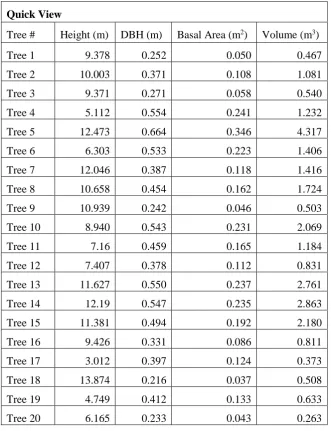
Quick View
Tree # Height (m) DBH (m) Basal Area (m2) Volume (m3)
Tree 1 9.378 0.252 0.050 0.467
Tree 2 10.003 0.371 0.108 1.081
Tree 3 9.371 0.271 0.058 0.540
Tree 4 5.112 0.554 0.241 1.232
Tree 5 12.473 0.664 0.346 4.317
Tree 6 6.303 0.533 0.223 1.406
Tree 7 12.046 0.387 0.118 1.416
Tree 8 10.658 0.454 0.162 1.724
Tree 9 10.939 0.242 0.046 0.503
Tree 10 8.940 0.543 0.231 2.069
Tree 11 7.16 0.459 0.165 1.184
Tree 12 7.407 0.378 0.112 0.831
Tree 13 11.627 0.550 0.237 2.761
Tree 14 12.19 0.547 0.235 2.863
Tree 15 11.381 0.494 0.192 2.180
Tree 16 9.426 0.331 0.086 0.811
Tree 17 3.012 0.397 0.124 0.373
Tree 18 13.874 0.216 0.037 0.508
Tree 19 4.749 0.412 0.133 0.633
[image:41.595.133.465.111.543.2]Tree 20 6.165 0.233 0.043 0.263
Table 2. Quick view tree measurements.
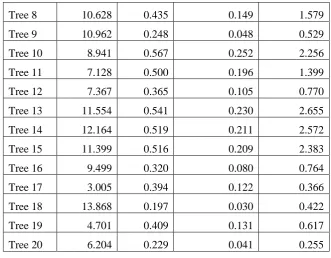
Planar View
Tree # Height (m) DBH (m) Basal Area (m2) Volume (m3)
Tree 1 9.420 0.226 0.040 0.378
Tree 2 9.789 0.353 0.098 0.958
Tree 3 9.298 0.281 0.062 0.576
Tree 4 5.061 0.529 0.220 1.112
Tree 5 12.375 0.647 0.329 4.067
Tree 6 6.339 0.516 0.209 1.325
Tree 8 10.628 0.435 0.149 1.579
Tree 9 10.962 0.248 0.048 0.529
Tree 10 8.941 0.567 0.252 2.256
Tree 11 7.128 0.500 0.196 1.399
Tree 12 7.367 0.365 0.105 0.770
Tree 13 11.554 0.541 0.230 2.655
Tree 14 12.164 0.519 0.211 2.572
Tree 15 11.399 0.516 0.209 2.383
Tree 16 9.499 0.320 0.080 0.764
Tree 17 3.005 0.394 0.122 0.366
Tree 18 13.868 0.197 0.030 0.422
Tree 19 4.701 0.409 0.131 0.617
[image:42.595.131.463.70.328.2]Tree 20 6.204 0.229 0.041 0.255
Table 3. Planar view tree measurements.
Average
Tree # Height (m) DBH (m) Basal Area (m2) Volume (m3)
Tree 1 9.399 0.239 0.045 0.421
Tree 2 9.896 0.362 0.103 1.018
Tree 3 9.335 0.276 0.060 0.558
Tree 4 5.087 0.542 0.230 1.171
Tree 5 12.424 0.656 0.337 4.191
Tree 6 6.321 0.525 0.216 1.365
Tree 7 12.076 0.383 0.115 1.387
Tree 8 10.643 0.445 0.155 1.651
Tree 9 10.951 0.245 0.047 0.516
Tree 10 8.941 0.555 0.242 2.162
Tree 11 7.144 0.480 0.180 1.289
Tree 12 7.387 0.372 0.108 0.800
Tree 13 11.591 0.546 0.234 2.707
Tree 14 12.177 0.533 0.223 2.716
Tree 15 11.390 0.505 0.200 2.280
Tree 16 9.463 0.326 0.083 0.787
Tree 17 3.009 0.396 0.123 0.369
Tree 18 13.871 0.207 0.033 0.464
Tree 20 6.185 0.231 0.042 0.259
Table 4. Average tree measurements from scanned data.
4.4 Variations
[image:43.595.116.480.233.454.2]From these measurements, variances can be calculated between the three types of scan measurements and the traditional method.
Figure 10. Variances in height between scanned data and traditional.
Height
Quick View Planar Average
Mean 0.206 0.185 0.196
[image:43.595.190.407.510.590.2]Std Dev 0.127 0.146 0.133
Table 5. Mean height variances and standard deviations.
-0.200 -0.100 0.000 0.100 0.200 0.300 0.400 0.500 0.600
1 2 3 4 5 6 7 8 9 10 11 12 13 14 15 16 17 18 19 20
Figure 11. Variances in DBH between scanned data and traditional.
DBH
Quick View Planar Average
Mean -0.058 -0.064 -0.061
[image:44.595.191.407.348.430.2]Std Dev 0.037 0.028 0.032
Table 6. Mean DBH variances and standard deviations.
Figure 12. Variances in basal area between scanned data and traditional.
-0.180 -0.160 -0.140 -0.120 -0.100 -0.080 -0.060 -0.040 -0.020 0.000
1 2 3 4 5 6 7 8 9 10 11 12 13 14 15 16 17 18 19 20
DBH
Planar Quick Average Tree No. D if feren ce (m ) -0.140 -0.120 -0.100 -0.080 -0.060 -0.040 -0.020 0.0001 2 3 4 5 6 7 8 9 10 11 12 13 14 15 16 17 18 19 20
[image:44.595.115.480.469.689.2]Basal Area
Quick View Planar Average
Mean -0.042 -0.045 -0.044
[image:45.595.189.408.74.152.2]Std Dev 0.033 0.025 0.028
[image:45.595.116.480.194.417.2]Table 7. Mean basal area variances and standard deviation.
Figure 13. Variances in volume between scanned data and traditional.
Volume
Quick View Planar Average
Mean -0.352 -0.393 -0.374
Std Dev 0.292 0.254 0.266
Table 8. Mean volume variances and standard deviation.
Percentage
Tree # Height DBH Basal Area Volume
Tree 1 2.163 -15.159 -28.020 -26.464
Tree 2 -0.040 -7.914 -15.203 -15.237
Tree 3 3.717 -10.610 -20.095 -17.125
Tree 4 3.806 -8.045 -15.442 -12.224
Tree 5 1.836 -6.818 -13.172 -11.578
Tree 6 7.136 -9.463 -18.031 -12.182
Tree 7 1.475 -18.254 -33.177 -32.191
-1.200 -1.000 -0.800 -0.600 -0.400 -0.200 0.000
1 2 3 4 5 6 7 8 9 10 11 12 13 14 15 16 17 18 19 20
[image:45.595.190.406.470.551.2]Tree 8 1.362 -11.618 -21.886 -20.822
Tree 9 1.394 -28.732 -49.209 -48.501
Tree 10 0.455 -17.755 -32.358 -32.051
Tree 11 0.620 -22.150 -39.394 -39.018
Tree 12 4.042 -10.908 -20.627 -17.418
Tree 13 0.787 -10.275 -19.495 -18.862
Tree 14 0.636 -6.974 -13.462 -12.911
Tree 15 3.545 -9.343 -17.812 -14.898
Tree 16 1.747 -21.940 -39.066 -38.001
Tree 17 0.283 -7.276 -14.023 -13.779
Tree 18 3.515 -30.243 -51.340 -49.629
Tree 19 5 -8.537 -16.346 -12.163
Tree 20 4.822 -4.512 -8.821 -4.424
[image:46.595.132.464.69.341.2]Mean 2.415 -13.326 -24.349 -22.474
Table 9. Percentage variances between scanned average and traditional.
Figure 14. Variation as a percentage between traditional and scanned data average. -60 -50 -40 -30 -20 -10 0 10 20
1 2 3 4 5 6 7 8 9 10 11 12 13 14 15 16 17 18 19 20
[image:46.595.125.470.381.623.2]4.4 Conclusion
Chapter 5 – Discussion
5.1 Introduction
The data that was obtained using traditional methods has been analysed to calculate DBH, basal area and volume of twenty tree structures. The same procedures have been followed to allow the same to be done for the data collected using the FARO Focus 3D.
The scanned data has been analysed using two methods made available by the software used. FARO Scene allows for measurements to be made using both a quick view and a planar view. These two methods, along with an average, will be analysed alongside the traditional methods to analyse the suitability of using laser scanning to analyse forest structures.
5.2 Quick View Analysis
The quick view data is outlined in Table 2 with the variances provided in Figures 10 through 13.
5.2.1 Height
measurement point, hands must be held steady and the eyes of the user would need to provide perfect vision. A slight movement from the required point to be measured combined with the 100mm accuracy can drastically alter the distance measured. Alongside this, the distometer can only measure vertical heights. If a tree is not completely straight, error is introduced to the measurement.
Figure 15. Vertical height error.
An angle as small as twenty degrees can introduce a height difference of 600mm as seen in Figure 15. From the analysed data, the largest variance in height is 474mm on tree #18. Although the angle to the measured point is not great (Figure 16), the height of the tree can easily provide this discrepancy. As the height increases, so too does the variation in vertical height if the angle of deviation remains consistent. In contrast, the smallest difference is 12mm which was measured on tree 17.
10m 10m
20o 9.4m
Figure 16. Tree #18, the largest quick view variation.
In Figure 17, tree #17 is shown and it is easily identified that the structure is almost completely vertical. Such a characteristic, combined with a low height has resulted in this near perfect measurement.
[image:50.595.196.398.483.729.2]When assessing the mean and standard deviation of the quick view variations, the data is positive. The mean identifies that the quick view measurements overestimate the tree height by 206mm. However based on previous statements, it is possible that the distometer underestimates the height by this measurement. Reinforcing this idea is the standard deviation of 127mm. Such a distance is near the measurement accuracy of the distometer without introducing human error. Resultantly, the data suggests that FARO Scene’s quick view measurements can accurately record tree height data, possibly to a higher standard than that of traditional methods.
5.2.2 Diameter at Breast Height
Figure 18. Tree #20, the smallest DBH variation.
Figure 19. Tree #11, the largest DBH variation.
[image:52.595.113.483.357.558.2]standard deviation of 37mm, it is quite a significant error. However the current method of obtaining DBH is not always accurate. While the quick view measurement allows for a straight line to be drawn across the tree, parallel to the ground, such a measurement is not possible in the field. A tape measure must be wrapped around the tree and is susceptible to multiple errors. This includes: not being parallel to the ground, not being at 1.3m from the ground, fluctuations in the tape as it is wrapped around the tree, the tape not resting perfectly against the tree edges and if the measurement is made on a hill, the tape may not be representative of a flat plane that is 1.3m from the forest floor on the highest side. Such a high number of possible, if not probable errors suggests that much like the case with height, the scanner measurements, although they seem incorrect, reflect the true measurement of the tree to a greater degree than the traditional methods.
5.2.3 Volume
To calculate the volume of the tree, the DBH is converted to area. Such an area is known as the basal area and is multiplied by the height of the tree to determine the tree volume. The largest variation between quick view analysis and traditional analysis was identified on tree #10. Although this structure had an excellent height measurement (+40mm) and the DBH calculation was not the worst in the population (25mm better than #11), the height of the tree caused the difference to become significant. The volume variation of tree #10 is 1.112m3 which is 35% of the traditional volume.
and below the mean, the DBH is the exact opposite. The DBH measurement for this structure is 227% of the mean variation and three and a half times larger than the standard deviation. This miscalculation combined with a tree of such a large height easily explains the discrepancy between the two measurement methods.
Tree #20 has a DBH calculation that is near identical to the traditional method and has resulted in the volume differing by a mere 0.008m3. The
underestimate of the DBH and the overestimate of the height has resulted in this near exact measurement.
The mean volume variation amongst all twenty measurements is an underestimation of 0.352m3. However if structure #10 and #11 are removed (the two outliers), this is reduced to 0.278m3 which is an immense
improvement, a 21% reduction. Resultantly, it can be stated that if the two outliers are removed, the quick view measurements underestimate tree volume by 0.278m3. This figure represents 21% of average tree volume (1.328m3) when the outliers are again removed.
5.3 Planar View
The planar view data is outlined in Table 3 with the variances provided in Figures 10 through 13.
5.3.1 Height
the quick view measurement. Again this is likely due to the large height of the tree combined with an offset angle.
Continuing this trend, the closest representation was the measurement on tree #17. This error was 5mm, 7mm less than the quick view. Such a measurement can be explained by the straightness of the tree as well as its low height.
The average difference (185mm) is also less than the quick view average (206mm). Such a result suggests that the planar view is better suited to measuring height than the quick view.
5.3.2 Diameter at Breast Height
Reflective of quick view measurements, the largest DBH error was on tree #11. However this error (116mm) was 41mm less than the quick view error (157mm). This is an extensive difference, constituting a 26% improvement. Furthermore, the smallest difference is 13mm and much like the quick view, has been made on tree #20. The difference of 4mm between the two measurements is insignificant.
provide a better representation of DBH than what is provided by the quick view measurements.
5.3.3 Volume
The average volume discrepancy observed when using the planar view for measurements is -0.393m3. When compared to the quick view average of -0.352m3, this is a slight difference (0.041m3). However if, like in the previous section, the two quick view outliers are removed, the quick and planar view average becomes -0.346m3 and -0.278m3 respectively. Consequently the difference in average volume becomes 0.068m3, a 70% increase. Such data suggests that the quick view is more appropriate if calculating volume.
5.4 Average of Quick and Planar Measurements
because planar view was more suited to height calculation and quick view to DBH.
Planar Height & Quick DBH
Tree # Height (m) DBH (m) Basal Area (m2) Volume (m3)
Tree 1 9.420 0.252 0.050 0.470
Tree 2 9.789 0.371 0.108 1.058
Tree 3 9.298 0.271 0.058 0.536
Tree 4 5.061 0.554 0.241 1.219
Tree 5 12.375 0.664 0.346 4.283
Tree 6 6.339 0.533 0.223 1.414
Tree 7 12.105 0.387 0.118 1.423
Tree 8 10.628 0.454 0.162 1.720
Tree 9 10.962 0.242 0.046 0.504
Tree 10 8.941 0.543 0.231 2.069
Tree 11 7.128 0.459 0.165 1.179
Tree 12 7.367 0.378 0.112 0.826
Tree 13 11.554 0.550 0.237 2.744
Tree 14 12.164 0.547 0.235 2.857
Tree 15 11.399 0.494 0.192 2.184
Tree 16 9.499 0.331 0.086 0.817
Tree 17 3.005 0.397 0.124 0.372
Tree 18 13.868 0.216 0.037 0.508
Tree 19 4.701 0.412 0.133 0.626
[image:57.595.133.465.132.563.2]Tree 20 6.204 0.233 0.043 0.264
Figure 14. Variances in volume between traditional and scanned data.
Volume
Quick View Planar Average Combination
Mean -0.352 -0.393 -0.374 -0.357
Std Dev 0.292 0.254 0.266 0.291
Table 11. Volume variances between traditional and scanned data. Although such an idea sounds like it would be the best representation, table 11 does not reinforce this argument. The mean variation of -0.357m3 is an
underestimation 0.005m3 greater than the data identified using the quick view. Although the standard deviation favours this new calculation by 0.001m3, it is not enough to justify 0.005m3. If tree #10 and #11, the outliers, are removed the mean difference becomes -0.283m3, again an underestimation 0.005m3 greater than the quick view calculation.
5.5 Time Comparison
Recording data using traditional methods can be a long process, especially if high detail records are required. To record data using the laser scanner
-1.200 -1.000 -0.800 -0.600 -0.400 -0.200 0.000
1 2 3 4 5 6 7 8 9 10 11 12 13 14 15 16 17 18 19 20
[image:58.595.155.440.347.430.2]approximately twelve hours was required. An extra hour was required to process all scans before data analysis. Once this was completed the data was readily available to process. Obtaining the required measurements using both views took roughly thirty minutes to calculate and record.
Observing the twenty trees using contemporary methods required four hours of work. Two hours to measure trees in the field and then another two of post processing which included calculations and data entry. In total the scanned analysis took thirteen and a half hours whereas the traditional analysis took only four hours. A difference of nine and a half hours is quite large and suggests that scanning is impractical. However if the quantity of data is compared the outcome changes. In three hours traditional methods could only analyse twenty trees. Although scanning took longer, data is available for every individual structure within the study area. The amount of information that can be extracted from the scan is only limited to the size of the scan. Adding to this, the data can be analysed at any time. When using traditional methods the only data that can be analysed is what has been recorded in the field. Although photos can allow for later analysis, no measurements can be executed and if photos do not fulfil the requirements it may be necessary to return to the site.
Although the time taken could be improved in both instances, there is greater room for improvement in the scanning procedures. A true comparison cannot be made unless the same number of individual trees are analysed using both methods but observations on the techniques used in this study propose that laser scanning is more efficient.
5.6 Conclusion
FARO Scene is software used to make measurements on scan point clouds. This can be done in the various views provided which include a quick, planar and 3D view. Using the point clouds observed, the quick and planar views were used to calculate tree height and DBH. This data was then manipulated to determine the basal area and volume for twenty trees within the aforementioned study area.
Chapter 6 – Conclusions
6.1 Introduction
Overall the research aim of the study has been achieved. Height, DBH, basal area and volume could be calculated using terrestrial laser scanning. The same data was collected using traditional methods. Comparisons were completed to determine laser scanning’s suitability at collecting such data.
6.2 Research Findings
The scanned data was analysed using both the quick and planar views provided by the FARO Scene software. When measuring height, both views overestimated the height of the tree. DBH and basal area calculated from scanned data underestimated traditional data. The combination of this resulted in both methods underestimating the volume by approximately 21% on average.
and -0.393m3 respectively. Differences between the two views were not large until volume was measured. Regardless the difference was quite small with differences in height, DBH, basal area and volume measuring 0.021m, 0.006m, 0.003m2 and 0.041m3 respectively.
6.3 Further Research and Recommendations
The obtained results were collected from one survey and only a small sample was analysed. Contained within this small sample were large gross errors which reduced the amount of usable data. To accommodate errors of this sort, the study area should be surveyed a number of times. A larger sample combined with multiple analyses of the same structure would alleviate gross errors.
Although the data suggests the scanned data is a poor representation of the structure, this is not a confirmed fact. Analysing the structure using other surveying methods would help distinguish this concept. Obtaining DBH and height using a high accuracy total station would outline which measurements accurately reflect the structure’s properties.
6.4 Conclusion
Terrestrial laser scanning is a relatively new technology however it is already a staple form of measurement in a number of industries. The use of such technology is relatively new within a forested environment but benefits are already prominent. Height, DBH, basal area and volume of trees within a forest structure can be easily measured using point cloud analysis software.
Appendix
Appendix 1 – Project Specification
University of Southern Queensland
FACULTY OF ENGINEERING AND SURVEYING
ENG4111/4112 Research Project
PROJECT SPECIFICATION
FOR: Adam John COBURN
TOPIC: LASER SCANNING FOR FOREST STRUCTURE
ANALYSIS
SUPERVISOR: Dr. Xiaoye Liu
PROJECT AIM: This project seeks to analyse a forest structure by using a CAD system. The structure will be recorded using a Laser Scanner.
PROGRAMME: Issue B. August 14th 2014
1. Research the background information relating to forest structure analysis, Laser Scanning and Laser Scanning’s use within forest structure analysis.
3. Analyse the scanned data to determine: a. Height of the trees.
b. Diameter at breast height. c. Basal area.
d. Tree volume.
4. Record the same data using traditional data collection methods.
5. Compare the data sets to determine the suitability of laser scanning when capturing forest data.
As time permits:
Appendix 2 – How Scanners Measure Distance
How phase based scanners and time-of-flight scanners measure distances.
Appendix 3 – FARO Scene Cluster
Top View
Appendix 4 – FARO Scene Quick View
A large scale view.
Appendix 5 – FARO Scene Planar View
The same scan as provided in Appendix 4, viewed at a small scale.
Appendix 6 – Risk Assessment Documents
Trip hazard risk assessment
Exposure to laser light risk assessment
References
3D Systems 2011, 3D Systems, Rock Hill, United States of America, viewed 18 May 2014, <http://www.rapidform.com/3d-scanners/>
Agosto, E & Ajmar, A & Boccardo, P & Tonolo, FG & Lingua, A 2008, “Crime Scene Reconstruction Using a Fully Geomatic Approach”, Sensors, vol. 8, pp. 6280-6302.
An Overview of the LED and Laser Classification System in EN 60825-1
and IEC 60825-1 2014, Lasermet, United Kingdom, viewed June 1 2014,
<http://www.lasermet.com/resources/classification_overview.php>
BC Forest Conversation 2013, BC’s Forest Inventory: Why it matters and
what needs to be done about it, BC Forest Conversation, British Columbia,
Canada, viewed 13 August 2014, <http://bcforestconversation.com/wp-content/uploads/Moss-Forest-Inventories-In-BC1.pdf>
Brack, C 1999, The Australian National University, Canberra, viewed 14
August 2014,
<http://fennerschool-associated.anu.edu.au/mensuration/volume.htm>
Burt, A & Disney, MI & Raumonen, P & Armston, J & Calders, K & Lewis, P 2013, ‘Rapid Characterisation of Forest Structure From TLS and 3D Modelling’, Geoscience and Remote Sensing Symposium, pp. 3387-3390.
California Department of Transportation 2011, Terrestrial Laser Scanning
Specifications, California Department of Transportation, California, viewed
17 May 2014, <http://www.dot.ca.gov/hq/row/landsurveys/Surveys Manual/ 15_Surveys.pdf>
Castagnetti, C & Bertacchini, E & Capra, A & Dubbini, M 2012, ‘Terrestrial laser scanning for preserving cultural heritage: analysis of geometric anomalies for ancient structures’, FIG Working Week, Rome, Italy.
Class 3R 2014, Laser Institute of America, Orlando, Florida, viewed June 1
2014, <https://www.lia.org/store/Class+3R>
Classification of Research According to Purpose 2013, Learner Area,
viewed 2 June 2014,
<http://learnerarea24.blogspot.com.au/2013/04/classification-of-research-according-to_5.html>
Cote, JF & Widlowski, JL & Fournier, R & Verstraete, M 2009, ‘The structural and radiative consistency of three dimensional tree reconstructors from terrestrial lidar’, Remote Sensing of Environment, vol. 113, pp. 1067-1081.
Food and Agriculture Organisation of the United Nations Forestry Department 2014, Guidelines for defining forest resources, Food and Agriculture Organisation of the United Nations, Rome, Italy, viewed 14 August 2014, <http://www.fao.org/docrep/w8212e/w8212e05.htm#1.3 forest inventory>
History of Laser Scanning 2013, SurvTech Solutions, East Tampa, Florida,
viewed May 16 2014, <http://floridalaserscanning.com/3d-laser-scanning/history-of-laser-scanning/>
Home1h 2014, Toowoomba Motor Village, viewed 12 October 2014,
< http://www.toowoombamotorvillage.com.au/images/home1h.gif>
Hubbard Brook Ecosystem Study 2001, Hubbard Brook Ecosystem Study,
New Hampshire, viewed 14 August 2014,
<http://www.hubbardbrook.org/w6_tour/biomass-stop/how-to-quantify.htm>
Jones, T2010, 3D Laser Scanning revolutionising data collection, Land Air Surveying Company, Alabama, viewed 17 May 2014, <http://www.landairsurveying.com/blog/3d-laser-scanning-revolutionizing-data-collection/las2/>
Leica C10 2013, Smart Geometrics, Texas, viewed 17 May 2014,
<http://www.smartgeometrics.com/about-laser-scanning/laser-scanning-equipment-comparison/>
Leica HDS6200 2013, Smart Geometrics, Texas, viewed 17 May 2014,
Maniatis, D 2010, ‘Options for sampling and stratification for national forest inventories to implement REDD+ under the UNFCCC’, Carbon
Balance and Management, vol. 5, no. 9, viewed 14 August 2014,
<http://www.cbmjournal.com/content/5/1/9>
Newnham ,G & Armston, J & Muir, J & Goodwin, N & Tindall, D & Culvenor, D & Puschel, P & Nystrom, M & Johansen, K 2012, ‘Evaluation of Terrestrial Laser Scanners for Measuring Vegetation Structure’, CSIRO Sustainable Agriculture Flagship.
Payne, A 2009, Laser Scanning For Archaeology, A Guide to Good Practice, Archaeology Data Service, United States, viewed 17 May 2014, <http://guides.archaeologydataservice.ac.uk/g2gp/LaserScan_1-2>
Raumonen, P & Kaasalainen, M & Akerblom, M & Kaasalainen, S & Kaartinen, H & Vastaranta, M & Holopainen, M & Disney, M & Lewis, P 2013, ‘Fast Automatic Precision Tree Models from Terrestrial Laser Scanner Data’, Remote Sensing, vol. 5, pp. 491-520.
Riegl VZ-400 2014, Reigl Laser Measurement Systems, Austria, viewed 18
May 2014, <http://riegl.com/nc/products/terrestrial-scanning/produktdetail/ product/scanner/5/>
Rosser, NJ & Petley, DN & Lim, M & Dunning, SA & Allison, RJ 2005, ‘Terrestrial laser scanning for monitoring the process of hard rock coastal cliff erosion’, Quarterly Journal of Engineering Geology and
Hydrogeology, vol. 38, no. 4, pp. 363-375.
Thies, M & Spiecker, H 2004, ‘Evaluation and future prospects of terrestrial laser scanning for standardised forest inventories’, International Archives of
Photogrammetry, Remote Sensing and Spatial Information Sciences, Vol.