R E S E A R C H
Open Access
Molecular cloning and preliminary function study
of iron responsive element binding protein 1
gene from cypermethrin-resistant
Culex pipiens
pallens
Wenbin Tan
1*, Xiao Wang
1, Peng Cheng
2, Lijuan Liu
2, Haifang Wang
2, Maoqing Gong
2, Xin Quan
1,
Honggang Gao
1and Changliang Zhu
3Abstract
Background:Insecticide resistance jeopardizes the control of mosquito populations and mosquito-borne disease control, which creates a major public health concern. Two-dimensional electrophoresis identified one protein segment with high sequence homology to part ofAedes aegyptiiron-responsive element binding protein (IRE-BP).
Method:RT-PCR and RACE (rapid amplification of cDNA end) were used to clone a cDNA encoding full length IRE-BP 1. Real-time quantitative RT-PCR was used to evaluate the transcriptional level changes in the Cr-IRE strainAedes aegypticompared to the susceptible strain ofCx. pipiens pallens. The expression profile of the gene was established in the mosquito life cycle. Methyl tritiated thymidine (3H-TdR) was used to observe the cypermethrin resistance changes in C6/36 cells containing the stably transfected IRE-BP 1 gene ofCx. pipiens pallens.
Results:The complete sequence of iron responsive element binding protein 1 (IRE-BP 1) has been cloned from the cypermethrin-resistant strain ofCulex pipiens pallens(Cr-IRE strain). Quantitative RT-PCR analysis indicated that the IRE-BP 1 transcription level was 6.7 times higher in the Cr-IRE strain than in the susceptible strain of 4th instar larvae. The IRE-BP 1 expression was also found to be consistently higher throughout the life cycle of the Cr-IRE strain. A protein of predicted size 109.4 kDa has been detected by Western blotting in IRE-BP 1-transfected
mosquito C6/36 cells. These IRE-BP 1-transfected cells also showed enhanced cypermethrin resistance compared to null-transfected or plasmid vector-transfected cells as determined by3H-TdR incorporation.
Conclusion:IRE-BP 1 is expressed at higher levels in the Cr-IRE strain, and may confer some insecticide resistance inCx. pipiens pallens.
Background
Mosquitos are one of the medically important insects closely related to the life of human beings. The harm caused by mosquitoes to human beings is not only because of the harassment and blood feeding habits, but also in the transmission of various diseases, such as malaria [1], filariasis [2], yellow fever [3], dengue [4], and Japanese encephalitis [5]. It requires enormous efforts to overcome these diseases, which include
environmental management, the use of insecticides and repellents, vaccine research and biological mosquito control [6-8]. Insecticides play a central role in control-ling mosquitoes, but today, more and more serious insecticide resistance has appeared in mosquitoes, and against every chemical class of insecticides, such as Organochlorine, carbamate, organophosphate, pyre-throid and insect growth regulators [9-11]. Insecticide resistance jeopardizes the control of mosquito popula-tions and mosquito-borne disease control, which creates a major public health concern [12-14].
Pyrethroids [15] are a group of chemicals that interact with insect ion channels causing a disruption to * Correspondence: [email protected]
1
Department of Pathogenic Biology, Jining Medical University, Jining, Shandong Province, 272067, PR China
Full list of author information is available at the end of the article
transmembrane potentials, therefore interfere with the normal functions of the insect nerve system. As a mem-ber of pyrethroids, cypermethrin [16] is commonly used for the treatment of bed nets and as a residual spray to help control mosquito population and disease transmis-sion, such as malaria. Unfortunately the wide spread use and incorrect application of cypermethrin and other synthetic pyrethroids has accelerated the emergence of
resistance in both targeted Anopheles species and
off-target species such asCx. pipiens pallens[17]. The elu-cidation of the resistance mechanism becomes impor-tant to guide the use of cypermethrin and the development of its substitutes.
To study the mechanism of cypermethrin resistance, a resistant strain ofCx. pipiens pallens, Cr-IRE, has been previously established in the laboratory of Shandong Institute of Parasitic Diseases by selecting stadium larvae with increasing concentrations of cypermethrin over 39 generations, and the cypermethrin-resistant level is 160.43 times higher than that of the sensitive strain [18]. Two-dimensional electrophoresis was used to screen differences in protein expression (Data not shown). One of the identified protein segments has high
sequence homology to part of Aedes aegypti
iron-responsive element binding protein (IRE-BP). Iron is necessary for a number of essential cell functions but, as excessive amounts can be toxic, iron metabolism is care-fully controlled at both cellular and systemic levels. One of the iron homeostasis regulatory proteins is IRE-BP. IRE-BP is a cytosolic protein that binds a highly con-served sequence in the untranslated regions of mRNAs involved in iron metabolism including ferritin, IRE-BP 1 receptor, and erythroid 5-aminolevulinate acid synthase [19]. IRE-BPs has remained highly conserved during evolution. Iron-responsive elements (IREs) are regula-tory RNA elements, which serve as specific binding sites for the IRE-binding protein (IRE-BP). Interaction between IREs and IRE-BP induces repression of ferritin mRNA translation and IRE-BP 1 receptor mRNA stabili-zation [20]. But the correlation between the function of IRE-BP 1 and insecticide resistance has not been reported to date.
In the present study, we utilized RT-PCR and RACE (rapid amplification of cDNA end) to clone a cDNA encoding full length IRE-BP 1. The nucleotide sequence of the clone was subsequently determined. Real-time quantitative RT-PCR indicated that this gene is tran-scribed to a greater extent in the Cr-IRE strain than in
the susceptible strain of Cx. pipiens pallens. We also
established the expression profile of the gene in the mosquito life cycle. Increased cypermethrin resistance in C6/36 cells containing the stably transfected IRE-BP 1 gene provided further support for a role of IRE-BP 1 in cypermethrin resistance inCx. pipiens pallens.
Materials and methods Mosquitoes
Cr-IRE strain and the susceptible strain of Cx. pipiens
pallensmosquitoes used in this study were reared at 28° C with 70-80% humidity and a constant light:dark cycle (14:10). The mosquitoes were fed with mouse blood. The Cr-IRE colony has been selected from a susceptible strain [18], and the resistance has been maintained by treatment with cypermethrin at LC50of each generation.
The LC50of Cr-IRE strain is 3.322 mg/L, 81-fold greater
than that in the susceptible strain (0.041 mg/L).
RNA extraction, 5’RACE PCR and RT-PCR
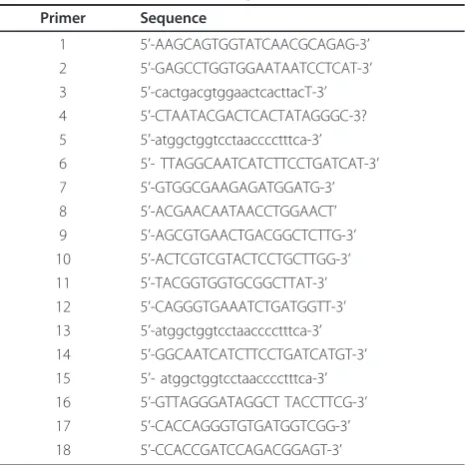
Total RNA was extracted from approximately 20 mg of 1st, 2nd, 3rd and 4th instar larvae and female adult Cx. pipiens pallens mosquitoes, using Trizol reagent (Gibco BRL, Grand Island, NY, USA) according to the manu-facturer’s protocol. The amplification of the 5’ end of IRE-BP 1: forward primer: nested universal primer mix (UPM) was provided by the kit: (Primer 1, Table 1), reverse primer: designed based on the sequence reported by Saitoh, Y., [21] (GenBank Accession No. D16150.1): (Primer 2, Table 1). The amplification of the 3’end of IRE-BP 1: forward primer: designed based on the sequence reported by Saitoh, Y. [21] (GenBank Acces-sion No. D16150.1): (Primer 3, Table 1), reverse primer:
use the UPM primer proved by the 3’-RACE Kit:
[image:2.595.306.539.497.730.2](Pri-mer 4, Table 1). The cDNA fragments were successfully amplified and separated by electrophoresis on a 1% agarose gel. The cDNA fragment of interest was purified using a quick gel extraction kit (Qiagen, Hilden, Ger-many), and ligated into a pGEMT-easy vector (Tianwei,
Table 1 Primers used in the experiments
Primer Sequence
Beijing, China) for 5 min at 4°C. Plasmid DNA was extracted using a plasmid mini kit (Qiagen) and sequenced using the T7 promoter by Invitrogen Com-pany (Applied Biosystems model 3730; Shanghai Invitro-gen BioTech Company, Shanghai, China).
After the 5’and 3’ part of the sequence was obtained, a pair of forward primer (Primer 5, Table 1) and reverse primer (Primer 6, Table 1) was designed so that the full length cDNA of the gene could be obtained. RT-PCR conditions were: initial denaturation at 95°C for 5 min, followed by 32 cycles at 95°C for 1 min, 61°C for 1.5 min and 72°C for 2 min 30 s with a final 10-min exten-sion at 72°C. The cDNA fragment obtained was ligated into a pGEMT-easy vector and sequenced. The NCBI database http://www.ncbi.nlm.nih.gov/BLAST/ was used to perform similarity searches and retrieve homologous sequences. The sequence analysis tools from the SWISS-PROT Internet server were used to process the data for the deduced protein sequences. Multiple sequence alignment was conducted using the DNAman software (version 4.13; Lynnon BioSoft, Quebec, Canada). The sequences included in our analysis for Sequence alignment and phylogenetic tree analysis were:
Aedes aegypti: AY445078;Canis familiaris: XM_538698;
Citrus clementina: FN552254; Culex pipiens pallens:
HM443949; Culex quinquefasciatus: XM_001843334;
Danio rerio: NM_001034983; Drosophila melanogaster:
NM_058023; Gallus gallus: D16150; Homo sapiens:
AF261088;Manduca sexta: AY032658; Mus musculus:
AJ427344;Pan troglodytes: XM_001155874;Salmo salar:
NM_001140230; Tribolium castaneum: XM_967008;
Tribolium castaneum: XM_967008 and Vitis vinifera: XM_002263301.
Real-time quantitative RT-PCR analysis
b-actin (forward: Primer 9, Table 1; reverse: Primer 10, Table 1). To confirm the accuracy and reproducibility of real-time quantitative RT-PCR, the experiment was determined in three repeats within one LightCycler run. The results for IRE-BP 1 were normalizb-actin (forward: Primer 9, Table 1; reverse: Primer 10, Table 1). To con-firm the accuracy and reproducibility of real-time quan-titative RT-PCR, the experiment was determined in three repeats within one LightCycler run. The results
for IRE-BP 1 were normalib-actin (forward: Primer 9,
Table 1; reverse: Primer 10, Table 1). To confirm the accuracy and reproducibility of real-time quantitative RT-PCR, the experiment was determined in three repeats within one LightCycler run. The results for
IRE-BP 1 were normalized to the housekeepingb-actin gene.
The threshold cycle (Ct) values were used to quantify the target gene expression for each sample and amplifi-cation fold of IRE-BP 1 in Cr-IRE and in the susceptible strain of Culex pipiens pallenswas calculated using the
2-ΔΔCt method [22]. The real-time PCR analysis was
repeated three times with independent samples.
Semi-quantitative RT-PCR analysis of different life cycle RT-PCR was also done with samples isolated from Cr-IRE strain egg, 1st, 2nd, 3rd and 4th instar larvae, pupa and female adult mosquitoes to confirm the expression levels at each developmental stage using the primers
described above. Mosquito b-actin gene cDNA was
amplified by PCR using the forward primer (Primer 11, Table 1), and the reverse primer (Primer 12, Table 1).
The PCR conditions were: 95°C for 5 min followed by 25 cycles of 95°C for 40 s, 53°C for 40 s, 72°C for 1 min with a final 10-min extension at 72°C. The IRE-BP 1
and b-actin gene PCR products were resolved by
elec-trophoresis on 1% agarose gels. Gels were photographed using Molecular Analyst 1.4.1 (Bio-Rad, Hercules, USA) and the images were analyzed by using BandScan 5.1 software. The magnitude of IRE-BP 1 expression in Cr-IRE strain compared to the cypermethrin sensitive strain was calculated by the following formula: (RL/Rb)/(SL/ Sb). RL is the band intensity of Cr-IRE strain IRE-BP 1, Rb is the band intensity of Cr-IRE strainb-actin, SL is the band intensity of susceptible strain IRE-BP 1 and Sb is the band intensity of susceptible strainb-actin.
Construction of the expression vector
The entire coding region of IRE-BP 1 was amplified by PCR using the specific primers designed. The reverse primer was designed to remove the original stop codon and maintained the reading frame through the DNA encoding the C-terminal peptide. The forward primer: (Primer 13, Table 1), and the reverse primer: (Primer 14, Table 1). The PCR conditions were: 95°C for 5 min, followed by 32 cycles at 95°C for 1 min, 61°C for 1.5 min and 72°C for 2 min 30 s with a final 10-min exten-sion at 72°C. The PCR product was purified from the gel following electrophoresis using a quick Gel extrac-tion kit (Qiagen). The purified PCR product was ligated with T4 DNA ligase to the pIB/V5-His-TOPO vector (Invitrogen, Carlsbad, USA), and the ligation reaction
solution was transformed into TOP10E. colicompetent
cells (Invitrogen). Positive clones were identified by restriction analysis of recombinants with NotI and BamHI, and by PCR with specific primers and vector primers. The accuracy of the expression plasmid pIB/ V5-His-TOPO IRE-BP 1 was further verified by sequencing.
Cell culture and stable transfection
Sigma), 100 IU/ml penicillin and 100μg/ml
streptomy-cin (Invitrogen). The cells were grown in a 5% CO2
humidified incubator at 28°C and were plated in a six-well culture plate prior to transfection. When the cells were at 50-60% confluence, they were transfected using Cellfectin (Invitrogen) according to the manufacturer’s instructions. Briefly, for each well, 2μg DNA was added
to 100μl serum-free EMEM medium, then separately, 5
μl Cellfectin reagent was added to 100 μl serum-free
medium, then the two solutions were combined, mixed gently, and incubated at room temperature for 30 min. Subsequently, 0.8 ml of serum-free medium was added to this mixture and the entire mixture was layered on to cells after washing the cells with antibiotic-free medium. The cells were incubated with the transfection mixture
for 24 h in a 5% CO2 humidified incubator at 28°C, and
the transfection medium was then replaced with 2 ml normal growth medium-containing serum. The cells were then incubated for an additional 48 h before being harvested for RT-PCR and Western blotting.
Once it had been confirmed that the cells were expressing the expected protein, stable expression cell
lines were created according to the manufacturer’s
instructions. Briefly, a kill curve was performed to test the cell line for sensitivity to 14μg/ml blasticidin, which can kill cells within one week. Forty-eight hours post-transfection, the transfection solution was removed and fresh medium without blasticidin was added. The cells were split at a 1:5 ratio and allowed to attach for 20 min before the selective medium was added. The med-ium was removed and replaced with medmed-ium containing 14μg/ml blasticidin, and the cells were incubated at 28° C. The selecting medium was replaced every 3-4 days until clones were observed. Eight days later, the medium
was replaced with medium containing 7μg/ml
blastici-din. The resistant cell lines were isolated using a dilu-tion method until only one colony was found in each well of a 96-well microtiter plate, after which the plate was incubated until the colony filled most area of the well. The cells were harvested and transferred to a
24-well plate with 0.5 ml fresh medium containing 7μg/ml
blasticidin, then the clone was expanded in 12-and 6-well plates, and finally a T-25 flask. The cells were ana-lyzed for expression using RT-PCR and Western blotting.
Isolation of total RNA and RT-PCR analysis of the specific IRE-BP 1 transcript
Total RNA was isolated from transfected cells by using Trizol reagent (Invitrogen) according to the manufac-turer’s protocol. Five micrograms of isolated total RNA from each sample was used as a template for first-strand cDNA synthesis. The cDNA was synthesized at 70°C for 5 min, and 0°C for 5 min, then 37°C for 1.5 h
with a random primer using Avian myeloblastosis virus (AMV) reverse transcriptase (TaKaRa). The reverse transcriptase was then inactivated at 99°C for 5 min. PCR amplification of the IRE-BP 1 gene was performed with the forward gene-specific primer (Primer 15, Table 1) and the reverse vector primer ((Primer 16, Table 1) for confirmation of transcriptional expression.
The primers used for b-actin PCR amplification were:
forward (Primer 17, Table 1) and reverse (Primer 18, Table 1). One microliter of the RT reaction product was used as the template for routine PCR. The follow-ing cyclfollow-ing parameters were used: 95°C for 5 min fol-lowed by 25 cycles of 95°C for 1 min, 60°C for 90 s and 72°C for 2.5 min, followed by a final extension step of 72°C for 10 min.
Western blot analysis
Protein was extracted from transfected cells by KEYGEN Total Protein Extraction Kit (Nanjing, China) according
to the manufacturer’s instructions and concentrations
were determined by BCA Protein Assay kit (Pierce, USA). Twenty micrograms of protein per lane was used for SDS-PAGE electrophoresis. The gels were run for 100 min at 100 V and protein was transferred to a PVDF membrane at 40 V for 30 min then blocked in TBST and 5% non-fat dry milk for 2 h. Detection was done with the diaminobenzidine (DAB) chromogenic kit (Boster BioTech Company, Wuhan, China) according to
the manufacturer’s instructions. The membrane was
exposed in visible light for 10 min, then washed with ddH2O to terminate the reaction. Molecular weight was determined by comparison with molecular weight mar-kers (Bio-Rad).
3
H-TdR incorporation
C6/36 cells were kept in the presence of various concen-trations of cypermethrin (1, 5, 10, 20, 40, 80, 120, 160
and 200 μM) for 72 h before 3H-TdR incorporation.
Eighteen hours before harvesting, 1lCi of 3H-TdR was
added to the medium of each well. To harvest the cells, EMEM medium was discarded, and cells were washed three times with 0.05 M PBS (pH 7.4), and detached from the microtiter wells by trypsinization. Detached C6/36 cells were harvested onto glass fiber filter paper using a mini-MASH II microharvesting device
(Whit-taker MA Bioproducts, Walkersville, MD) and3H-TdR
incorporated into C6/36 (cell associated3H-TdR) was
Statistical analysis
The inhibitive effect (E) of the cypermethrin on the cell viability was described by the equation: E = (Emax*C)/
(EC50+C). Horizontal axis is the concentration of
cyper-methrin, vertical axis is the inhibition rate; Emax is the concentration at which maximum effect is reached, while EC50(50% effective dose [ED50]) is the
concentra-tion at which 50% of the maximum effect is reached. The 95% confidence intervals were used to determine significant differences among different cells.
Results
Cloning of IRE-BP 1 full length cDNA
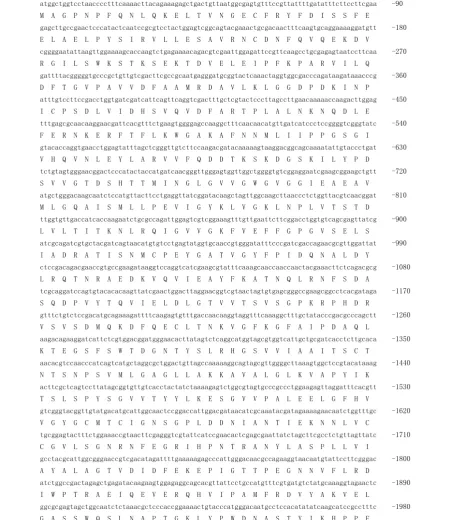
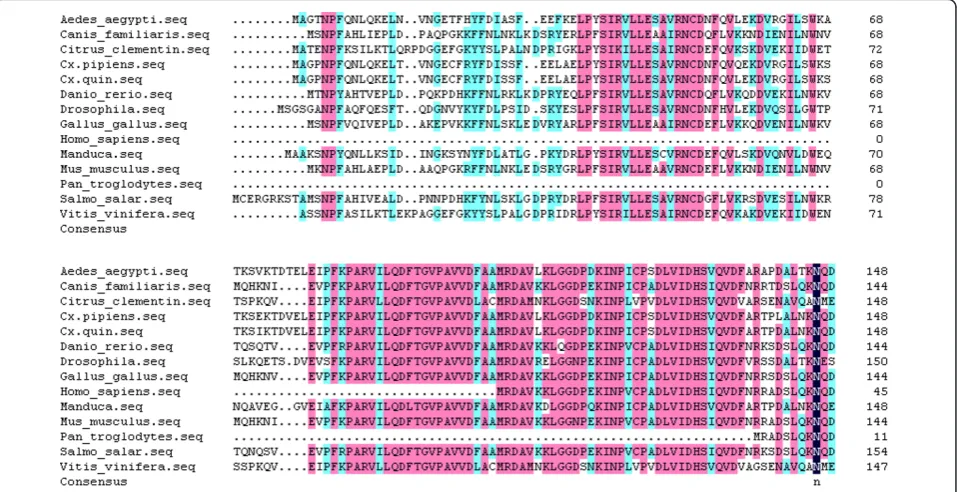
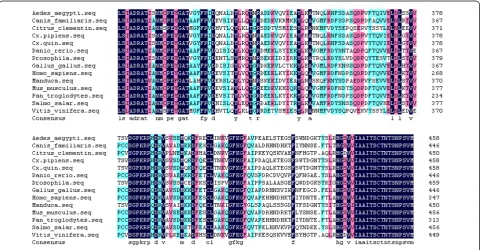
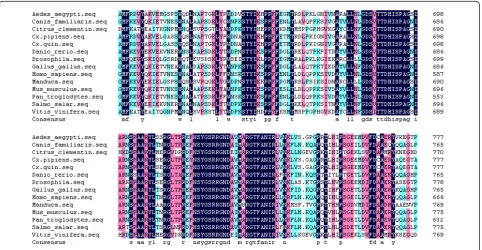
A fragment of the expected size (2706 bp) was cloned and sequenced. Then the full sequence was accessed by GenBank (Figure 1, 2, GenBank Accession No. HM443949). The longest open reading frame encoded 901 amino acids with a predicted molecular mass of 98.75 kDa. The predicted isoelectric point is 5.54 by ExPASy. Amino acid sequence alignment of IRE-BP 1 was conducted by ClustalW software in different species (Figure 3, 4, 5, 6, 7, 8). Phylogenetic relationships of
IRE-BP 1 among Cx. pipiens pallens and some other
species showed IRE-BP 1 of Cx. pipiens pallenshas the
highest homology withCulex quinquefasciatus IRE-BP 1
g (Figure 9). SMART showed there is a typical IRE-BP 1 domain found. SIGNAL P3.0 indicted there that no pep-tide sequence existed in the sequence.
Real-time quantitative RT-PCR analysis
The IRE-BP 1 exhibited 6.7-fold higher level of tran-scription in the Cr-IRE strain than in the susceptible strain. The results suggested that IRE-BP 1 expression was up-regulated in the Cr-IRE strain (Figure 10).
Expression of IRE-BP 1 gene at various developmental stages in Cr-IRE and susceptibleCx. pipiens pallens A 315-bp cDNA fragment was selectively amplified using the specific primers. The amount of amplified cDNA product was normalized by comparison with the
amplification product of the b-actin gene from Cx.
pipiens pallens(204 bp). The maximal level of IRE-BP 1 mRNA was detected in adult female mosquito, followed by the 4th instar larvae and the pupa. In all of the devel-opmental stages, Cr-IRE strain has 3-to 4-fold increase of IRE-BP 1 transcription compared to the susceptible strain (Figure 11).
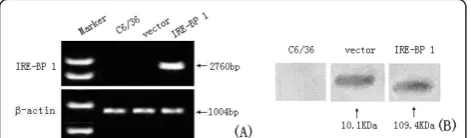
Transcription and expression of IRE-BP 1 in C6/36 cells A PCR product of the expected size, about 2760 bp, was observed only in cells that were transfected with the IRE-BP 1 gene (Figure 12A), confirming that IRE-BP 1 had been transcribed in the transfected cells. Western blot analysis using anti-His antibodies identified a
protein of 109.4 kDa molecular weight in cells trans-fected with the IRE-BP 1 gene (Figure 12B), confirming the exogenous IRE-BP 1 was expressed in C6/36 cells successfully.
Viability assay
Expression of the IRE-BP 1 gene improved the viability
of cypermethrin-treated C6/36 cells. The EC50 and 95%
confidence intervals of null-transfected cells are 35.24 (31.88-40.17), the EC50and 95% confidence intervals of
vector-transfected cells are 42.31 (34.19-49.26), and the
EC50 and 95% confidence intervals of IRE-BP 1
trans-fected cells are 101.34 (91.23-113.71). Obvious cell viabi-lity augmentation was observed in the IRE-BP 1 transfected C6/36 cells compared to null-transfected or vector-transfected cells (Figure 13).
Discussion
Insecticide resistance has become a serious public health problem, which limited the effectiveness of pest control and presented an obstacle to the control of vector borne diseases [12,23,24]. Here we report the characterization
of one cypermethrin resistance associated gene of Cx.
pipiens pallens[25]. The writer reported
insecticide-resistance ribosomal protein L39 gene of Cx. pipiens
pallens, while other researchers in the same laboratory identified several genes differentially expressed in cyper-methrin-resistant strain of the mosquito previously [15,26-37]. Some of the candidate genes encode for enzymes such as chymotrypsin [30], trypsin [34], CYP450 [29], which are likely involved in more direct functions, e.g. oxidation of cypermethrin, others are likely more upstream factors, such as ribosomal protein
L39 [25]. The predicted Culex pipiens pallensIRE-BP 1
protein has many characteristics common to the IRE-BP
1 family, and the Cx. pipiens pallensIRE-BP 1 protein
sequence shared 99.45% identity with that of Cx.
quin-quefasiatus. These results strongly suggest that this pro-tein is the IRE-BP 1 ofCx. pipiens pallens.
We determined the expression profile of IRE-BP 1 mRNA during the mosquito life cycle. Our results demonstrated that the levels of IRE-BP 1 expression are developmentally regulated, and the expression was the highest in adult mosquitos.
IRE-BP binds to iron-responsive elements (IREs),
which were first identified in the 5’ UTR of ferritin
mRNA and in the 3’UTR of transferrin receptor (TftR)
mRNA. Binding of IRE-BP to IREs is regulated by the iron status of the cell. Iron starvation activates binding and thus represses ferritin mRNA translation and stabi-lizes TfR transcriptsin vivo. The effect of changes in iron availabilityin vivo can be mimicked by alterations
in the redox environment of IRE-BP in vitro. This
activity is regulated post-translationally by the reversible oxidation-reduction of cysteinyl sulthydryl groups important for the interaction of IRE-BP and IREs.
In cells that are iron-depleted, the Fe-S cluster of cytosolic aconitase is disrupted, resulting in a loss of
aconitase activity and the exposure of the RNA-binding site so that, as the IRE-BP, it can bind with high affinity to the IRE [19]. In the presence of adequate iron, the [4Fe-4S] cluster is reassembled, enzyme activity is regained, and RNA binding is lost. The binding of the
[image:6.595.72.534.95.616.2]DWJJFWJJWFFWDDFFFFWWWFDDDDFWWDFDJDDDJDJFWJDFWJWWDDWJJFJDJWJWWWFFJWWDWWWWJDWDWWWFWWFFWWFJDD 0$*313)41/4.(/791*(&)5<)',66)( JDJFWWJFFJDDFWFFFDWDFWFDDWFFJFJWFFWDFWJJDJWFJJFDJWDFJDDDFWJFJDFDDFWWWFDDJWJFDJJDDDDJJDWJWW (/$(/3<6,59//(6$951&'1)494(.'9 FJJJJDDWDWWDDJWWJJDDDDJFDFFDDJWFWJDJDDDDFDJDFJWFJDDWWJJDJDWWFFJWWFDDJFFWJFJDJDJWDDWFFWWFDD 5*,/6:.67.6(.7'9(/(,3).3$59,/4 JDWWWWDFJJJJJWJFFFJFWJWWJWFJDFWWFJFFJFDDWJDJJJDWJFJJWDFWFDDDFWDJJWJJFJDFFFDJDWDDJDWDDDFFFJ ')7*93$99')$$05'$9/./**'3'.,13 DWWWJWFFWWFFJDFFWJJWJDWFJDWFDWWFDJWWFDJJWFJDFWWWJFWFJWDFWFFFWWDJFFWWJDDFDDDDDFFDDJDFWWJJDJ ,&36'/9,'+6949')$573/$/1.14'/( WWWJDJFJFDDFDDJJDDFJDWWFDFJWWWFWJDDJWJJJJDJFFDDJJFWWWFDDFDDFDWJWWJDWFDWFFFWFFJJJJWFJJJWDWF )(51.(5)7)/.:*$.$)110/,,33*6*, JWDFDFFDJJWJDDFFWJJDJWDWWWDJFWFJJJWWJWFWWFFDDJDFJDWDFDDDDDJWDDJJDFJJFDJFDDDDWDWWJWDFFFWJDW 9+491/(</$599)4''7.6.'*6.,/<3' WFWJWDJWJJJDDFJJDFWFFFDWDFWDFFDWJDWFDDFJJJWWJJJDJWJJWWJJFWJJJJWJWFJJDJJDDWFJDDJFJJDDJFWJWW 699*7'6+770,1*/*99*:*9**,($($9 DWJFWJJJDFDDJFDDWFWFFDWJWWDFWWFFWJDJJWWDWFJJDWDFDDJFWDJWWJJFDDJFWWDDFFFWFWJJWWDFJWFDDFJJDW 0/*4$,60//3(9,*<./9*./13/9767' WWJJWJWWJDFFDWFDFFDDJDDWFWJFJFFDJDWWJJDJWFJWFJJDDDJWWWJWWJDDWWFWWFJJDFFWJJWJWFDJFJDJWWDWFJ /9/7,7.1/54,*99*.)9())*3*96(/6 DWFJFDJDWFJWJFWDFJDWFDJWDDFDWJWJWFFWJDJWDWJJWJFDDFFJWJJJDWDWWWFFFJDWFJDFFDJDDFJFJWWJJDWWDW ,$'5$7,610&3(<*$79*<)3,'41$/'< FWFFJDFDJDFJDDFFJWJFFJDDJDWDDJJWFFDJJWFDWFJDDJFJWDWWWFDDDJFDDFFDDFFDDFWDFJDDDFWWFWFDJDFJFJ /54715$('.949,($<).$714/51)6'$ WFJFDJJDWFFDJWJWDFDFDFDDJWWDWFJDDFWJJDFWWDJJDDFJJWFJWDDFWDJWJWJDJFJJJFFJDDJFJJFFWFDFJDWDJD 64'39<749,(/'/*7997696*3.53+'5 JWWWFWJWFWFFJDFDWJFDJDDDJDWWWWFDDJDJWJWWWJDFFDDFDDJJWDJJWWWFDDDJJFWWWJFWDWDFFFJDFJFFFDJFWW 9696'04.')4(&/71.9*).*)$,3'$4/ DDJDFDJDDJJDWFDWWFWFJWJJDFJJDWJJJDDFDFWWDWDJWFWFDJJFDWJJWDJFJWJJWFDWWJFWJFJDWFDFFWFWWJFDFD .7(*6)6:7'*17<6/5+*699,$$,76&7 DDFDFJWFFDDFFFDWFDJWFDWJFWDJJFJFWJJDFWJWWDJFFDDDDDJJFDJWDJFJWWJJJJFWWDDDJWJJFWFFJWDFDWDDDJ 17613690/*$*//$..$9$/*/.9$3<,. DFWWFJFWFDJWFFWWDWDJFJJWJWWJWFDFFWDFWDWFWDDDDJDJWFWJJFJWDJWJFFFJFFFWJJDDJDJWWDJJDWWWFDFJWW 76/63<6*997<</.(6*993$/((/*)+9 JWFJJJWDFJJWWJWDWJDFDWJFDWWJJFDDFWFFJJDFFDWWJJDFJDWDDFDWFJFDDDWDFJDWDJDDDDJDDFDDWFWJJWWWJF 9*<*&07&,*16*3/''1,$17,(.11/9& WJFJJDJWDFWWWFWJJDDDFFJWDDFWWFJDJJJWFJWDWWFDWFFJDDFDFWFJDJFJDDWWDWFWDJFWWFJFFWFWJWWDJWWDWF &*9/6*151)(*5,+3175$1</$63//9, JFFWDFJFDWWJJFJJJDDFFJWFJDFDWDJDWWWWJDDDDDJDJFFFDWWJJJDFDDFJFFDJDDJJWDDFDDWJWDWWFFWWFJJJDF $<$/$*79',')(.(3,*773(*119)/5' DWFWJJFFJDFWDJDJFWJDJDWDFDDJDDJWJJDJDJJFDJFDFJWWDWWFFWJFFDWJWWWFJWJDWJWFWDWJFDDDJJWDJDDFWF ,:375$(,4(9(54+9,3$0)5'9<$.9(/ JJFJFJDJWDJFWJJFDDWFWFWDDDFJFWFFFDFFJJDDDDFWJWDFFFDWJJJDFDDWJFFWFFDFDWDWDWFDDJFDWFFJFFWWWF *$66:46/1$37*./<3:'1$67<,.+33)
IRE-BP to the IRE found in the 5’untranslated region of transcripts for ferritin or the erythroid form of 5-amino-levulinate synthase down-regulates protein synthesis, most likely through an inhibition of translation initiation [38]. In the case of transferrin receptor regulation, five
IREs are found within the 3’untranslated region of the transcript and their interaction with the IRE-BP results in a stimulation of transferrin receptor synthesis by inhi-biting degradation of the mRNA [9]. The dynamic prop-erties of the Fe-S cluster in the IRE-BP/cytosolic
WWWJDJDFJDWJDFWFJFJDWWWDFFFDDDDWDJJJDDFDWWJWJJJWJFDFJDJFJWWJFWWDDWFWFJJFJDFWFDJWWDFFDFDJDW )(7075'/3.,*1,9*$5$//1/*'6977' FDFDWFWFJFFDJFWJJWWFFDWWJFWFJDDDFDJFFFJJFJJFDFJWWDWFWDWFFJDDFJWJJDFWWDFWFFDFJDJDDWDFDDFWFW +,63$*6,$5163$$5</6(5*/735(<16 WDFJJDWFWFJFFJDJJWDDWJDFJFDJWJDWJJFWFJFJJWDFFWWWJFDDDWDWWDJDWWDJWDDDFDDJWWJJWJWFJJJJJFJJJW <*655*1'$90$5*7)$1,5/91./96*$* FFFDJJDFFFWWFDWDWFFFDDJWJJFJDDJDJDWJJDWJWWWWWJDFWJWJFWJDDFJWWDWJFFFDJJDJJJDDFDJFDFWFDWDJFJ 357/+,36*((0'9)'&$(5<$4(*7$/,$ DWWJWFJJJDDDJDWWDFJJWDJFJJFWFWWFFFJFJDFWJJJFWJFFDDJJJDFFJWDFWWJFWJJJDDWFDDJJFFJWWDWWJFFJDJ ,9*.'<*6*665':$$.*3<//*,.$9,$( WFJWDFJDJFJWDWWFDFFJFWFJDDFWWJJWFJJDDWJJJDDWFJWFFFJFWJFDDWDWWWJJDJJJDFDDDDFJFFJDJDFWJWWJJD 6<(5,+561/9*0*,93/4</(*41$(79* WWJDFFJJDDDJJDDFWJWWWDDFDWWJWJWWJFFJJDFDDWWWJDDJFFDFDFJDWDDJDWFDFJJWWJDDDFFJDFDJFJJDFWJFDJ /7*.(/)1,9/3'1/.3+'.,79(7'6*/4 WWFFDJJWWDWWJWWFJWWWWJDWDFJJDJJWFJDWWWJJDJWDFWWFFJJDDFJJJJJDDWWWWJDDFWDFDWJDWFDJJDDJDWJDWW )49,95)'7(9'/(<)51**,/1<0,5.0, JFFWDD
[image:7.595.57.539.89.305.2]$
Figure 2cDNA sequence and deduced amino acid sequence of IRE-BP 1. cDNA sequence and deduced amino acid sequence of IRE-BP 1. (continued)
Figure 3Amino acid sequence alignment of IRE-BP 1 in different species. Amino acid sequence alignment of IRE-BP 1 in different species. Abbreviations and GenBank Accession Numbers:Aedes aegypti:AY445078;Canis familiaris:XM_538698;Citrus clementina:FN552254;Culex pipiens pallens:HM443949;Culex quinquefasciatus:XM_001843334;Danio rerio:NM_001034983;Drosophila melanogaster:NM_058023;Gallus gallus:
D16150;Homo sapiens:AF261088;Manduca sexta:AY032658;Mus musculus:AJ427344;Pan troglodytes:XM_001155874;Salmo salar:
[image:7.595.60.539.426.672.2]aconitase suggested that it might serve as a target for NO produced in response to glutamatergic stimulation in neurons. No association between IRE-BP 1 and pyre-throid resistance was established before. In this study, we found a higher transcriptional level of IRE-BP 1 in the Cr-IRE strain than in the susceptible strain. Ectopic
[image:8.595.58.541.88.341.2]expression of IRE-BP 1 in C3/36 cells also increases resistance against cypermethrin. The up-regulation of IRE-BP 1 in adult mosquito may be indicative of an adaptive ability of the mosquito to regulate the synthesis of other insecticide resistance proteins and consequently to have enhanced resistance to insecticides. Although
Figure 4Amino acid sequence alignment of IRE-BP 1. Amino acid sequence alignment of IRE-BP 1 in different species. (continued)
[image:8.595.58.542.466.716.2]we do not have enough information to pinpoint the exact role of IRE-BP 1 in cypermethrin resistance, our results suggest that IRE-BP 1 is a good candidate for future studies of pyrethroid resistance.
The IRE-BP 1 family spans both vertebrates and inver-tebrates. It includes serum IRE-BP 1, ovo IRE-BP 1, lac-toferrin, melano IRE-BP 1, inhibitor of carbonic
[image:9.595.58.541.87.340.2]anhydrase, saxiphilin, the major yolk protein in sea urchins, the crayfish protein, pacifastin, and a protein from green algae. Most (but not all) contain two domains of around 340 residues, thought to have evolved from an ancient duplication event. For serum IRE-BP 1, ovo IRE-BP 1 and lactoferrin each of the duplicated lobes binds one atom of Fe (III) and one
Figure 6Amino acid sequence alignment of IRE-BP 1. Amino acid sequence alignment of IRE-BP 1 in different species. (continued)
[image:9.595.58.541.466.716.2]carbonate anion. With a few notable exceptions each iron atom is coordinated to four conserved amino acid residues: an aspartic acid, two tyrosines, and a histidine, while anion binding is associated with an arginine and a threonine in close proximity. These six residues in each
[image:10.595.58.541.86.339.2]lobe were examined for their evolutionary conservation in the homologous N- and C-lobes of 82 complete IRE-BP 1 sequences from 61 different species. Of the ligands in the N-lobe, the histidine ligand shows the most
[image:10.595.306.540.436.624.2]Figure 8Amino acid sequence alignment of IRE-BP 1. Amino acid sequence alignment of IRE-BP 1 in different species. (continued)
Figure 9Phylogenetic relationships of IRE-BP 1. Phylogenetic relationships of IRE-BP 1 amongCulex pipiens pallensand some other species. Abbreviations and GenBank Accession Numbers:
Aedes aegypti:AY445078;Canis familiaris:XM_538698;Citrus clementina:FN552254;Culex pipiens pallens:HM443949;Culex quinquefasciatus:XM_001843334;Danio rerio:NM_001034983;
Drosophila melanogaster:NM_058023;Gallus gallus:D16150;Homo sapiens:AF261088;Manduca sexta:AY032658;Mus musculus:
AJ427344;Pan troglodytes:XM_001155874;Salmo salar:
NM_001140230;Tribolium castaneum:XM_967008;Vitis vinifera:
XM_002263301.
Figure 10Quantitative RT-PCR assay of IRE-BP 1. Quantitative RT-PCR assay of IRE-BP 1 mRNA in Cr-IRE and susceptible strains of
Culex pipiens pallens. Quantitative RT-PCR was performed by using a Lightcycle-RNA amplification Kit SYBR Green and repeated using three independently purified RNA samples. The enhancement of fluorescence was found to be proportional to the initial
[image:10.595.56.291.445.622.2]variability in sequence. Also, of note, four of the twelve insect IRE-BP 1s have glutamic acid substituted for aspartic acid in the N-lobe (as seen in the bacterial fer-ric binding proteins). In addition, there is a wide spread substitution of lysine for the anion binding arginine in the N-lobe in many organisms including all of the fish, the sea squirt and many of the unusual family members i.e., saxiphilin and the green alga protein. It is hoped that this short analysis will provide the impetus to establish the true function of some of the TF family members that clearly lack the ability to bind iron in one or both lobes and additionally clarify the evolutionary history of this important family of proteins.
Conclusions
In summary, we have cloned the first IRE-BP 1 gene known fromCx. pipiens pallens. Based on the character-istics of the gene, it is a member of the IRE-BP 1 family. The data in the present study suggests that IRE-BP 1 may confer some cypermethrin resistance in mosquitoes. Research carried out to date has provided a basis for further studies on the gene function associated with
insecticide resistance, which will improve our under-standing of the molecular basis of IRE-BP 1 mediated resistance inCx. pipiens pallens.
Acknowledgements
The work was supported by grants from the Office of Education Research Fund of Shandong Province (No. J09LF04 to Tan Wenbin), the natural science foundation of Shandong Province (No. ZR2011HL004 to Tan Wenbin), Jining Science and Technology Research Fund (Tan Wenbin, 2009) and Jining outstanding youth fund project of scientific research innovation (Tan Wenbin, 2010).
Author details
1Department of Pathogenic Biology, Jining Medical University, Jining,
Shandong Province, 272067, PR China.2Shandong Institute of Parasitic Diseases, A grand key laboratory of health department, Jining, Shandong Province, 272013, PR China.3Department of Pathogenic Biology, Nanjing Medical University; Key Laboratory of Modern Pathogenic Biology of Jiangsu Province, Nanjing, Jiangsu Province, 210029, PR China.
Authors’contributions
Wenbin Tan coordinated and carried out the whole experiment and manuscript writing, Xiao Wang participated in the cell culture and data analysis. Peng Cheng participated in the sequence alignment. Lijuan Liu and Haifang Wang participated in the sequence alignment. Maoqing Gong participated in the RT-PCR and RACE experiment. Xin Quan participated in the3H-TdR experiment. Honggang Gao participated in the Real-time
quantitative RT-PCR analysis. Changliang Zhu participated in the design of the study and performed the statistical analysis.
All authors read and approved the final manuscript.
Competing interests
The authors declare that they have no competing interests.
Received: 30 August 2011 Accepted: 10 November 2011 Published: 10 November 2011
References
[image:11.595.304.539.87.268.2]1. Wood OR, Hanrahan S, Coetzee M, Koekemoer LL, Brooke BD:Cuticle thickening associated with pyrethroid resistance in the major malaria vector Anopheles funestus.Parasit Vectors2010,3:67.
[image:11.595.56.293.89.161.2]Figure 11Semi-quantitative RT-PCR. Semi-quantitative RT-PCR of each life stage showed the relative amount of amplified transcripts of IRE-BP 1 (panel 1) in comparison with amplified mosquito b-actin gene transcripts (panel 2). M, marker; 1, Cr-IRE strain egg; 2, susceptible strain egg; 3, Cr-IRE strain 1st larvae; 4, susceptible strain 1st larvae; 5, Cr-IRE strain 2nd larvae; 6, susceptible strain 2nd larvae; 7, Cr-IRE strain 3rd larvae; 8, susceptible strain 3rd larvae; 9, Cr-IRE strain 4th larvae; 10, susceptible strain 4th larvae; 11, Cr-IRE strain pupa; 12, susceptible strain pupa; 11, IRE strain pupa; 12, susceptible strain pupa; 13, Cr-IRE strain female mosquito; 14, susceptible strain female mosquito.
Figure 12Effects of expression and transcripts of IRE-BP 1 in cells. (A) RT-PCR analysis of IRE-BP 1 mRNA in mosquito cells using forward primer of IRE-BP 1 and reverse primer of vector. The production of the transcripts was detected in cells transfected with IRE-BP 1 (lane 2); No signal was detected either in normal cells (lane 3) or in cells transfected with vector (lane 1). (B). Western blot analysis. Expression of IRE-BP 1 was detected in cells transfected with IRE-BP 1 (lane 3), expression of vector protein was detected in cells transfected with vector (lane 2), no signal was detected in normal cells (lane 1).
Figure 13Inhibitive effect of cypermethrin on cell viability. The cultured cells were treated with different concentration of
[image:11.595.57.293.563.632.2]2. Pedersen EM, Stolk WA, Laney SJ, Michael E:The role of monitoring mosquito infection in the Global Programme to Eliminate Lymphatic Filariasis.Trends in parasitology2009,25:319-327.
3. Salvemini M, Mauro U, Lombardo F, Milano A, Zazzaro V, Arca B, Polito LC, Saccone G:Genomic organization and splicing evolution of the doublesex gene a Drosophila regulator of sexual differentiation in the dengue and yellow fever mosquito Aedes aegypti.BMC Evol Biol2011, 11:41.
4. Wu X, Hong H, Yue J, Wu Y, Li X:Inhibitory effect of small interfering RNA on dengue virus replication in mosquito cells.Virol J2010,7:270. 5. Dutta P, Khan SA, Khan AM, Borah J, Sarmah CK, Mahanta J:The effect of
insecticide-treated mosquito nets (ITMNs) on Japanese encephalitis virus seroconversion in pigs and humans.Am J Trop Med Hyg2011,84:466-472. 6. Itokawa K, Komagata O, Kasai S, Masada M, Tomita T:Cis-acting mutation
and duplication: History of molecular evolution in a P450 haplotype responsible for insecticide resistance in Culex quinquefasciatus.Insect Biochem Mol Biol2011,41:503-512,.
7. Kumar K, Sharma AK, Kumar S, Patel S, Sarkar M, Chauhan LS:Multiple insecticide resistance/susceptibility status of Culex quinquefasciatus principal vector of bancroftian filariasis from filaria endemic areas of northern India.Asian Pac J Trop Med2011,4:426-429.
8. Li T, Liu N:Inheritance of permethrin resistance in Culex quinquefasciatus.J Med Entomol2010,47:1127-1134.
9. Wang J, Pantopoulos K:Regulation of cellular iron metabolism.Biochem J
2011,434:365-381.
10. Weill M, Duron O, Labbe P, Berthomieu A, Raymond M:Insecticide resistance in the mosquito Culex pipiens.Med Sci (Paris)2003, 19:1190-1192.
11. Schellenberg JA, Minja H, Mponda H, Kikumbih N, Mushi A:Re-treatment of mosquito nets with insecticide.Trans R Soc Trop Med Hyg2002, 96:368-369.
12. Darriet Frédéric, Marcombe Sébastien, Etienne Manuel, Yébakima André, Agnew Philip, Yp-Tcha Marie-Michelle, Corbel Vincent:Field evaluation of pyriproxyfen and spinosad mixture for the control of insecticide resistant Aedes aegypti in Martinique (French West Indies).Parasit Vectors2010,3:88.
13. Pemba DF, Bandason E, Namangale J:Comparison of deltamethrin as indoor residual spray or on insecticide treated nets for mosquito control in Lake Chilwa, Malawi.Med J2008,20:86-89.
14. Pennetier Cédric, Chabi Joseph, Martin Thibaud, Chandre Fabrice, Rogier Christophe, Hougard Jean-Marc, Pages Frédéric:New protective battle-dress impregnated against mosquito vector bites.Parasit Vectors
2010,3:81.
15. Chen L, Zhong D, Zhang D, Shi L, Zhou G, Gong M, Zhou H, Sun Y, Ma L, He J, Hong S, Zhou D, Xiong C, Chen C, Zou P, Zhu C, Yan G:Molecular ecology of pyrethroid knockdown resistance in Culex pipiens pallens mosquitoes.PLoS One2010,5:e11681.
16. Mugni H, Demetrio P, Bulus G, Ronco A, Bonetto C:Effect of aquatic vegetation on the persistence of cypermethrin toxicity in water.Bull Environ Contam Toxicol2011,86:27.
17. Al-Sarar AS, Al-Hafiz AM, Bakr YA, Bayoumi AE, Hussein HI:Effects of space spray application methods on fenitrothion efficacy and development of resistance in Culex pipiens.J Am Mosq Control Assoc2011,27:129-134. 18. Wang H, Cheng P, Zhen T, Jiang H, Wang H, Sun C, Zhao Y, Wang X:
Tentative study on resistance development and cross-resistance of DDVP-resistant Culex pipiens pallens.Parasitoses and Infectious Diseases
2005,3:11-13.
19. Popovic Z, Templeton DM:Inhibition of an iron-responsive element/iron regulatory protein-1 complex by ATP binding and hydrolysis.FEBS J
2007,274:3108-3119.
20. Harigae H:Recent progress in iron metabolism and iron-related anemia.
Rinsho Byori2010,58:1211-1218.
21. Saitoh Y, Ogawa A, Hori T, Kunita R, Mizuno S:Identification and localization of two genes on the chicken Z chromosome: implication of evolutionary conservation of the Z chromosome among avian species.
Chromosome Res1993,1:239-251.
22. Livak KJ, Schmittgen TD:Analysis of relative gene expression data using real-time quantitative PCR and the 2(-Delta Delta C(T)) Method.Methods
2001,4:402-408.
23. Annabel FVHoward, N’Guessan Raphael, Constantianus JMKoenraadt, Asidi Alex, Farenhorst Marit, Akogbéto Martin, Thomas BMatthew,
Knols GJBart, Takken Willem:The entomopathogenic fungus Beauveria bassiana reduces instantaneous blood feeding in wild multi-insecticide-resistant Culex quinquefasciatus mosquitoes in Benin, West Africa.
Parasit Vectors2010,3:87.
24. Okumu FO, Madumla EP, John AN, Lwetoijera DW, Sumaye RD:Attracting, trapping and killing disease-transmitting mosquitoes using odor-baited stations - The Ifakara Odor-Baited Stations.Parasit Vectors2010,3:12. 25. Tan W, Sun L, Zhang D, Sun J, Qian J:Cloning and overexpression of ribosomal protein L39 gene from deltamethrin-resistant Culex pipiens pallens.Exp Parasitol2007,115:369-378.
26. Zhang J, Yang M, Wang W, Sun H, Xu Y:prag01, a novel deltamethrin-resistance-associated gene from Culex pipiens pallens.Parasitol Res2011, 108:417-423.
27. Xu Y, Yang M, Sun J, Qian J, Zhang D:Glycogen branching enzyme: a novel deltamethrin resistance-associated gene from Culex pipiens pallens.Parasitol Res2008,103:449-458.
28. Sun L, Dong H, Guo C, Qian J, Sun J:Larvicidal activity of extracts of Ginkgo biloba exocarp for three different strains of Culex pipiens pallens.J Med Entomol2006,43:258-261.
29. Gong MQ, Gu Y, Hu XB, Sun Y, Ma L:Cloning and overexpression of CYP6F1 a cytochrome P450 gene from deltamethrin-resistant Culex pipiens pallens.Acta Biochim Biophys Sin (Shanghai)2005,37:317-326. 30. Gong MQ, Shen B, Gu Y, Tian HS, Ma L:Serine proteinase over-expression
in relation to deltamethrin resistance in Culex pipiens pallens.Arch Biochem Biophys2005,438:53-62.
31. Zhu CL, Li JM, Tian HS, Ma L, Li XL, Wu GL:Cloning and identification of cytochrome P450 resistance related genes in the mosquito Culex pipiens pallens.Zhongguo Ji Sheng Chong Xue Yu Ji Sheng Chong Bing Za Zhi2000,18:263-268.
32. He J, Sun H, Zhang D, Sun Y, Ma L:Cloning and characterization of 60S ribosomal protein L22 (RPL22) from Culex pipiens pallens.Comp Biochem Physiol B Biochem Mol Biol2009,153:216-222.
33. Hu X, Wang W, Zhang D, Jiao J, Tan W:Cloning and characterization of 40S ribosomal protein S4 gene from Culex pipiens pallens.Comp Biochem Physiol B Biochem Mol Biol2007,146:265-270.
34. Shen B, Tian HS, Ma L, Li XL, Zhen SZ, Zhou DH, Zhu CL:Cloning and sequence analysis of full-length trypsin cDNA of Culex pipiens pallens.
Sheng Wu Hua Xue Yu Sheng Wu Wu Li Xue Bao (Shanghai)2002,34:28-32. 35. Tian HS, Zhu CL, Gao XH, Ma L, Shen B:Cloning and identification of
deltamethrin-resistance or susceptibility associated genes of Culex pipiens pallens.Zhongguo Ji Sheng Chong Xue Yu Ji Sheng Chong Bing Za Zhi2001,19:193-197.
36. Yang M, Qian J, Sun J, Xu Y, Zhang D:Cloning and characterization of myosin regulatory light chain (MRLC) gene from Culex pipiens pallens.
Comp Biochem Physiol B Biochem Mol Biol2008,151:230-235. 37. Zhu C, Li Y, Sun L, Li J, Gao X, Ye B:Genetic analysis of deltamethrin
resistance in Culex pipiens pallens.Zhongguo Ji Sheng Chong Xue Yu Ji Sheng Chong Bing Za Zhi1998,16:21-24.
38. Meehan HA, Connell GJ:The hairpin loop but not the bulged C of the iron responsive element is essential for high affinity binding to iron regulatory protein-1.J Biol Chem2001,276:14791-14796.
doi:10.1186/1756-3305-4-215
Cite this article as:Tanet al.:Molecular cloning and preliminary function study of iron responsive element binding protein 1 gene from cypermethrin-resistantCulex pipiens pallens.Parasites & Vectors2011