https://doi.org/10.5194/gh-73-151-2018
© Author(s) 2018. This work is distributed under
the Creative Commons Attribution 3.0 License. suppor
ted b
Fuzzy difference and data primitives: a transparent
approach for supporting different definitions
of forest in the context of REDD
+
Alexis Comber1and Werner Kuhn2
1School of Geography, University of Leeds, Leeds, LS2 9JT, UK
2Department of Geography and Center for Spatial Studies, University of California, Santa Barbara, USA Correspondence:Alexis Comber ([email protected])
Received: 5 June 2017 – Revised: 13 February 2018 – Accepted: 3 March 2018 – Published: 19 April 2018
Abstract. This paper explores the use of fuzzy difference methods in order to understand the differences be-tween forest classes. The context for this work is provided by REDD+, which seeks to reduce the net emissions of greenhouse gases by rewarding the conservation of forests in developing countries. REDD+requires that local inventories of forest are undertaken and payments are made on the basis of the amount of forest (and asso-ciated carbon storage). At the most basic level this involves classifying land into forest and non-forest. However, the critical issues affecting the uptake, buy-in and ultimately the success of REDD+are the lack of universally agreed definition of forest to support REDD+mapping activities, and where such a definition is imposed, the marginalization of local community voices and local landscape conceptualizations. This tension is at the heart of REDD+. This paper addresses these issues by linking methods to quantify changes in fuzzy land cover to the concept of data primitives, which have been previously proposed as a suitable approach to move between land cover classes with different semantics. These are applied to case study that quantifies the difference in areas for two definitions of forest derived from the GLC and FAO definitions of forest. The results show how data primi-tives allow divergent concepts of forest to be represented and mapped from the same data and how the fuzzy sets approach can be used to quantify the differences and non-intersections of different concepts of forest. Together these methods provide for transparent translations between alternative conceptualizations of forest, allowing for plural notions of forest to be mapped and quantified. In particular, they allow for moving from an object-based notion of forest (and land cover in general) to a field-based one, entirely avoiding the need for forest boundaries.
1 Introduction
This paper suggests and applies an alternative approach for classifying and mapping land cover, using the example of for-est in the context of Reducing Emissions from Deforfor-estation and Forest Degradation (REDD and REDD+). REDD+ Ini-tiatives seek to reduce the net emissions of greenhouse gases by rewarding the conservation of forests in developing coun-tries (Angelsen, 2009). REDD+requires that local invento-ries of forest are undertaken and payments are made on the basis of the amount of forest (and associated carbon) that are mapped. At the most basic level this involves classifying land into forest and non-forest.
established reasons for not having a standard definition of forest (see Comber et al., 2007, for an extensive discussion on the problems caused by the imposition of standards in land cover mapping). Not least among these is that local considerations and landscape conceptualizations are ignored (Hoeschele, 2000; Robbins, 2001) to the detriment of local stakeholders. However, there can be considerable disagree-ment over the amount of forest, when mapped under different classifications. For example, Romijn et al. (2013) compared the forest stock levels in Indonesia when mapped using lo-cal forest definitions and using FAO definitions and found the extent of forest to be 27 % higher when using the local definition.
The critical issues addressed by this paper are how to al-low for these divergent landscape conceptualizations within mapping and how to avoid possibly inaccurate estimates of forest extent. The analysis applies a methodology that links data primitives (Comber, 2008; Wadsworth et al., 2008) and soft classifications. It applies these to classifications of forest from the Global Land Cover (GLC) project as described in Bartholome and Belward (2005) and from the FAO (Di Ggorio and Jansen, 1998). It shows how these can be re-interpreted using soft classifications to explore the overlaps and boundaries between different versions of forest. The data primitive approach allows the critical dimensions associated with land cover and land use to be captured as well as the inherent relative uncertainty in class definitions. It provides a shared, transparent, robust and well understood method for mapping and reporting forested areas and for supporting global policy initiatives such as REDD+, whilst at the same time accommodating local divergence in forest semantics – and the way that “forest” (and therefore the boundary with non-forest) is conceptualized spatially.
2 Background
To situate our approach, we first provide the necessary background on land cover classification, the problems with REDD+ in relation to crisp definitions of forest and the uncertainty in forest definitions, and the concepts of fuzzy boundaries and fuzzy differences.
2.1 Land cover classification
Classification, the process of sorting real world phenomena into categories or classes, is a core activity within geogra-phy and many other disciplines. Classes describe groups of social and environmental phenomena with broadly similar characteristics. Land cover classes are used to describe the physical characteristics of the earth’s surface and land use classes describe the socio-economic activities thereon. Typ-ical land cover classes include water, grass and forest; typi-cal land use classes include agriculture, forestry and urban. There is an extensive literature on the different philosophi-cal underpinnings of the way that land cover and land use
classes are conceptualized (e.g. Comber et al., 2005; Fisher et al., 2005), including for specific classes such as forest (Ben-net, 2001; Comber, 2008). This application based literature is complemented by more general considerations of the na-ture of classification (e.g. Lakoff, 1987) and by more for-mal research considering the nature of how to represent ob-jects, processes and relationships of geographic phenomena in computer models and analyses (e.g. Kuhn, 2005, 2012).
Classification typically allocates each item uniquely to one class and this is true for land cover and land use, although much theoretical work exists suggesting alternative, soft clas-sifications such as those supported by fuzzy sets (e.g. Fisher, 2010). All global land cover data produced for monitoring purposes and used as inputs to global climate change mod-els adopt a crisp classification with hard boundaries between the resulting land cover objects of different classes. Thus, land cover classification is a process of homogenization that ignores any within class variation and, more critically, ex-cludes any consideration of the potential for uncertainty in boundaries between classes. This contrasts with a well de-veloped literature on boundary uncertainty within geography (Smith, 1995; Burrough and Frank, 1996), reflecting a ver-nacular definition of geography as “the art of drawing lines on a map that do not exist in reality”.
Classifications with crisp boundaries provide a convenient and familiar framework for representing environmental and social processes that are readily understood by policy mak-ers. For example, in the sphere of climate change, REDD+
and climate models seek to standardize or “harmonize” def-initions of forest and use crisp mappings of forested areas that may not exhibit crisp edges in reality and whose classifi-cation may be deeply contested. This culture of class defini-tion standardizadefini-tion creates baseline inventories that ignore uncertainties and local variations in how land cover classes such as forest are conceptualized (semantics) and the func-tions associated with them. This can have serious political implications for the way that land is managed locally and for local discourses around land. This has become evident with the roll out of REDD+in many developing countries, where fixed IPCC/UN definitions of “forest”, for the purpose of carbon accounting, are being used to drive land reform and privatization agendas. Local land cover interpretations are excluded from local and global decision making.
2.2 Forest definitions and REDD+
car-bon stocks and changes using a combination of remote sens-ing and field surveys (UNFCCC COP15, 2009), with each country defining what constitutes “forest”. This was to over-come the deeply contested nature of what a “forest” is (and land cover and land use classification in general), which is well established in the literature (see for example Hoeschele, 2000; Bennet, 2001; Robbins, 2001; Smith and Mark, 2001; Comber et al., 2005) and reflects commendable courage by the remote sensing community that is driving the REDD+
initiative. However, REDD+activities require forest to be demarked, presenting a number of challenges, two of them being of critical importance.
First, any particular definition of forest and the associated mapping will determine the reported amount of forest, which will in turn affect the estimates of carbon storage (Mag-don and Kleinn, 2012; Romijn et al., 2013). There are hun-dreds of forest definitions as documented by Lund (2016) and explored conceptually by Bennett (2001) and Comber et al. (2005) with profoundly different threshold parameters for height, stripwidth, minimum area, species (some include grasses such as bamboo), canopy, management and plan-tation cover etc. These are international, national and sub-national in scope and reflect locally important variations in the concept of “forest” and its semantics – what the concept is in the local context (not just the REDD+context). Re-garding REDD+, Morales-Barquero et al. (2014) highlight the difficulties in operationalizing local and national level REDD+projects and programmes in Mexico. They present a framework that includes local definitions and measurements of forest degradation that support both local and national objectives and suggest the use of comparative biophysical benchmarks for assessing degradation. More recently, Chaz-don et al. (2016) examined historical forest concepts and def-initions and documented how these relate to variations in socio-economic activity. They note a number of problems with top-down forest definitions for assessing global changes in forest stocks: their failure to distinguish between natural and plantation forests and the lack of consideration of the qualities and trajectories of forested areas in standard ap-proaches. In order to try to accommodate the divergence in the concept of forest, and to support consistency in carbon ac-counting, the UN requires robust and transparent national re-porting of measurement systems, remote sensing and ground based forest carbon inventory data, the methods and the for-est definitions used in national measurements (Herold et al., 2012a, b).
Second, national definitions and associated mappings are deeply political exercises that are frequently used to drive secondary local political agendas that exclude and are in conflict with local communities. Mapped forests, however they are defined, are presented locally as “facts”, which are then manipulated towards the interests of the state, exclud-ing community views, perceptions and opinions from the classification and measurement activity. For example, there are cases of REDD+projects being used locally to support
the violent eviction of people from the land in many coun-tries (Himmelfarb, 2012; Cavanagh and Benjaminsen, 2014; Grainger and Geary, 2011; Nel and Hill, 2013; Lyons and Westoby, 2014; Forest Peoples Programme, 2014; Beymer-Farris and Bassett, 2012). In other cases, national definitions are imposed and the subsequent mappings are used to sup-port land privatization agendas and forest commodification with the objective of removing commonly held land from collective ownership (Ece, 2015). Critical to the success of REDD+, there are also problems in identifying the finan-cial beneficiaries of carbon payments because the forested land lacks natural ownership divisions. A further negative dimension of REDD+is that it often is used by local pol-icy makers as an excuse to ignore and overlook the opin-ions and views of forest-dependent communities and indige-nous forest-dwelling populations. Local understanding and knowledge are important for the forest conservation objec-tives of REDD+. For example, Bong et al. (2016) com-pared community knowledge of deforestation and degrada-tion drivers amongst different Indonesian villages and found local knowledge to be key to understanding the local im-pacts of deforestation drivers. They highlighted the impor-tance of incorporating local knowledge and conceptualiza-tions within definiconceptualiza-tions of forest to develop more locally ap-propriate REDD+monitoring systems. However, some com-munities in likely REDD+countries do not hold a concept of forest at all (Niclas Burenhult, personal communication, 2016) and where they do this has a nuanced and spiritual meaning. Specifically, although the people of Jahai in the in the Malay Peninsula live in forests, they have no concept of forest (Burenhult, 2009). Instead it is their home and the nearest terms they have for forest-like things describe leaves and trees as well as canopy floor, covered area and exposed area.
The conclusion is that the requirement of REDD+to de-marcate forest is problematic in many places. Crisp map-pings of forest do not reflect the many cultural, linguistic and ownership aspects of forest, whichever way the category is defined. Initiatives like REDD+, regardless of how well meaning they are, result in a clash of categories with the con-sequence that important forest related parameters are over-looked. These wide ranging negative implications for forest-dependent communities and indigenous forest-dwelling pop-ulations threaten forest conservation in developing countries and as a consequence have been referred to as the dark side of REDD+(Cavanagh et al., 2015).
sepa-rable from other object classes. In such cases any uncertainty is related measurement error which can be analysed using probabilities. However, for objects whose definitions are less well defined (poorly defined object classes), and that are con-tested such as forest, the uncertainties relate to vagueness or ambiguity. Vagueness occurs when it is difficult to unequiv-ocally allocate an individual object to a class, for example because of disagreement about its components or its extent. Ambiguity occurs when an object can be placed into more than one class under different schemes or interpretation of the evidence, or when the assignment of an object to a class is open to interpretation. The concept of “forest” in the con-text of REDD+is both vague and ambiguous, depending on which side of the (mapping) fence you are on.
2.3 Fuzzy boundaries and difference
In fuzzy land classifications, each piece of land or object (for example, the piece corresponding to a pixel in a satel-lite image) is allocated a degree of membership to each class in the range [0, 1] (Fisher and Pathirana, 1990). This al-lows each object to have partial membership to more than one land cover class. For these reasons fuzzy approaches are frequently referred to as “soft” classifications as the fuzzy outputs include and represent some of the inherent uncer-tainty associated with allocating objects to classes (Fisher, 1997). This is in contrast to “hard” or Boolean approaches, which do not accommodate any uncertainty. For these rea-sons fuzzy sets and fuzzy classification algorithms have been suggested as appropriate approaches in remote sensing anal-yses for representing land cover objects which may or may not fit neatly into the classification scheme and/or the sam-pling frame (pixel).
In a standard land cover classification, class summaries or centres are created that describe the (proto-) typical class properties usually in ann-dimensional feature space, for ex-ample representing different remote sensing image bands, or as in this case, data primitives as described below. In a Boolean classification each piece of land is allocated to the class to which it is nearest in the feature space. Different al-gorithms create the class centres and measure distances in
n-dimensional space in different ways. The issue that fuzzy classifications seek to address is that a piece of land may be near to more than one class, suggesting that it contains some of the properties of more than one classes, resulting in a de-gree of ambiguity (Fisher et al., 2006a) in the allocation.
A second commonly arising problem that fuzzy classifi-cations seek to address relates to the sampling frame. The assumption in mapping land cover using remote sensing is that the objects of interest on the ground are adequately de-scribed and captured by the imagery. The inference is that the spatial scale of the processes on the ground (such as land cover) are larger than the pixel and that contiguous pixels will describe the extent of these processes. In reality there are many sub-pixel objects on the ground (Fisher, 1997)
aris-ing from a mismatch between the scale of observation and the granularity of the processes being observed (Fisher et al., 2007). Fuzzy sets seek to accommodate these problems re-lated to the pixel in the mapping of sub-pixel objects (less than the size of a pixel), trans-pixel objects (linear objects crossing pixels), intergrades (where land cover types merge into each other over space) and boundaries (where multiple covers meet within one pixel).
Conceptually, fuzzy approaches have potential value to op-erational land cover monitoring exercises such as REDD+
because they can explicitly accommodate the uncertainty in-herent to classification. Here these the concepts of fuzzy min-imum interval, fuzzy bounded difference and fuzzy loss and gain are extended to examine the differences between two fuzzy classifications as described in Sect. 3.
2.4 Land cover objects vs. land cover fields
The typical land cover classification process described above results in crisp and hard boundaries between classes in at-tribute space as well as between the resulting regions on the ground. It is therefore tempting to interpret these regions as land cover objects with boundaries and identity. To quantify a country’s amount of, for example, forest, one simply adds the surface areas of all forest objects in that country at a given time.
Yet, for the reasons stated in the previous subsection, such an outcome of land cover classification is not satisfactory. In particular, for the case of forests, it is unsuitable to deal with partial deforestation and forest degradation. Forests do not simply disappear from their boundaries inward by convert-ing pieces of forests to non-forests. Rather, deforestation and forest degradation proceed as gradual reductions of “forest-ness” of pieces of land, as might occur, for example, through a systematic thinning of tree density.
It turns out that fuzzy boundaries and differences, or rather fuzzy membership values for pieces of land in a land use category, provide exactly the mathematical model needed to deal with such an idea of forestness. As the following analy-sis section will show, they generate feature vectors for each piece of land corresponding to, for example, a pixel. In Geo-graphic Information Systems (GIS), such arrays of vectors of observed values are known as vector fields. Thus, using the classic dichotomy of fields vs. objects (Couclelis, 1992), we conclude that forests are much more adequately conceptual-ized as fields rather than as objects.
3 Analysis
2008), which enable each class to be described at the most fundamental level. In the terminology of GIS field models, data primitives are the dimensions of the forest field vector.
Defining land based objects not by their spectral properties but by their fundamental functional and biophysical charac-teristics has been suggested by a number of authors. Such data primitives characterize the building blocks of land cover and land use. They are fundamental because they seek to describe land cover and land use classes in dimensions that encapsulate what such classes mean and represent. The ob-jective in describing categories of things such as forest in this way, referred to as “conceptual spaces”, “approximation spaces” and “domains”, is to generate descriptions of data features to allow the amount of overlap between them to be quantified. The approach is grounded in the work of Gar-denfors (2000) and Ahlqvist (2004). Indeed, the FAO Land Cover Classification System (LCCS) developed by Di Gre-gorio and Jansen (1998) adopts a modified or constrained data primitives approach.
Here we use data describing vegetation height, biomass as a proxy for photo-synthetic activity, soil wetness, human disturbance and seasonality for the data primitives. The po-sitions of each class in these dimensions are extracted. Then a new class of forest is defined using the same data primi-tives and subsequently mapped. The differences between the two soft, fuzzy mappings of forest within the primitives are explored and quantified and shown to provide a transparent and translatable comparison of different definitions and map-pings of forest.
3.1 Data
The GLC data were downloaded and extracted for the USA. Five datasets were assembled to provide measures that ap-proximated to the dimensions of vegetation height, biomass, soil wetness, human disturbance and seasonality; these were obtained from the following open data portals:
– vegetation height: from Existing Vegetation Height
data from http://www.landfire.gov/version_comparison. php?mosaic=Y;
– biomass: from http://landcarbon.org/categories/ biomass-c/download/ (gC m−2);
– soil wetness and soil moisture: from http://giovanni. gsfc.nasa.gov/giovanni for the month of June for 0– 100 cm depth;
– human disturbance: proximity to mapped Urban and Managed land from GLC (classes 16, 17, 18, 22);
[image:5.612.309.547.94.199.2]– seasonality: phenology growing season data from the MODIS archive: Duration DUR Length of photosyn-thetic activity (number of days): https://lta.cr.usgs.gov/ emodis_phen.
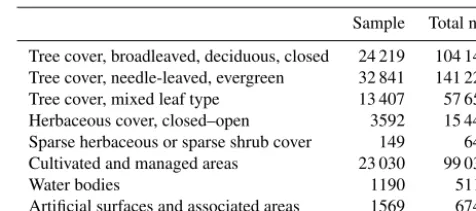
Table 1. The sample number and total distribution of the GLC classes.
Sample Total no.
Tree cover, broadleaved, deciduous, closed 24 219 104 142
Tree cover, needle-leaved, evergreen 32 841 141 220
Tree cover, mixed leaf type 13 407 57 652
Herbaceous cover, closed–open 3592 15 449
Sparse herbaceous or sparse shrub cover 149 641
Cultivated and managed areas 23 030 99 030
Water bodies 1190 5118
Artificial surfaces and associated areas 1569 6748
These were all resampled to 0.0217 of a degree, with the mean value used to aggregate the data, and clipped to a smaller case study area. The spatial distributions of these variables and the GLC data are shown in Figs. 1 and 2.
3.2 Class centres
The typical characteristics of each of the GLC classes in each of the five dimensions were extracted by selecting a sample of GLC pixels from each class (Table 1), with the sample number weighted by the distribution of the class in the study area. The class centres are shown in Table 2.
3.3 Fuzzy classification: GLC and FAO
A fuzzyc-means classifier was used to generate soft clas-sifications for each pixel in the study area. This algorithm used was the implementation of the fuzzy clustering method (e.g. Bezdek, 1981) in the e1071 R package (Meyer et al., 2012). The classifier generates fuzzy memberships in the range of [0, 1] to each class for each pixel. In this case the class centres were those in Table 2 and the classifier gener-ated fuzzy memberships to the set of each class in the five primitive dimensions.
The fuzzyc-means algorithm seeks to minimise the objec-tive function:
X
i
X
j
wiumijdij, (1)
wherewi is the weight of observation (pixel)i,uij is the
membership of observationiin cluster (class) j, anddij is
the Euclidean distance (dissimilarity) between observationi
Figure 1.The data primitives in the study area: Seasonality in photosynthetic activity (days), Lack of human disturbance (proximity Urban and Managed land) in km, Soil moisture (water) in kg m−2, Vegetation height in metres and Biomass in gC m−2.
Figure 2.GLC data: green and brown are forest classes, pink is agriculture and red is urban.
Finally, a second forest class was introduced. This was based on the FAO forest class definition (http://www.fao.org/ docrep/006/ad665e/ad665e06.htm) and included the follow-ing key characteristics: tree crown cover, more than 10 % canopy cover, minimum height of 5 m although young and
“temporarily unstocked” land can be included. By selecting a sample of forest pixels with the characteristics of being greater than 5 m and having greater than 10 % canopy cover, a second set of class centres in the five primitives was gener-ated. These are shown in Table 3. The second fuzzy classifi-cation of forest was then generated using thec-means algo-rithm above, from the class centres.
3.4 Fuzzy boundaries and difference
[image:6.612.49.285.460.607.2]Table 2.The median values for each GLC in the 5 primitive dimensions: VH=Vegetation Height; BIO=Biomass; SW=Soil Wetness; LHD=Lack of Human Disturbance; GS=Seasonality.
VH BIO SW LHD GS
Tree cover, broadleaved, deciduous, closed 24.6 8018.6 339.3 5.4 204.1 Tree cover, needle-leaved, evergreen 20.1 7673.4 281.2 5.8 214.3 Tree cover, mixed leaf type 27.5 9701.6 304.9 10.3 200.7 Herbaceous cover, closed–open 13.9 3415.1 235.2 2.6 205.2 Sparse herbaceous or sparse shrub cover 6.0 130.0 298.9 2.1 192.7 Cultivated and managed areas 11.5 2407.0 337.1 0.0 204.3 Water bodies 13.1 8160.3 303.7 1.8 212.1 Artificial surfaces and associated areas 7.3 367.3 283.4 0.0 214.5
classifications from the perspective of each concept of forest. This process is exemplified in the sections below.
The fuzzy confusion (correspondence) matrix, describing the intersection between the two fuzzy forest classes, can be derived using the minimum interval or using the bounded dif-ference of fuzzy loss and fuzzy gain. As Fisher et al. (2006b) noted, the minimum interval is the standard approach in fuzzy sets but is counter-intuitive when it is used to com-pare different classes – it only makes sense in the context of fuzzy land cover when comparing fuzzy sets of the same class but captured at different times (i.e. the diagonal in a change matrix). For these reasons a number of alternative operators have been suggested (Klir and Yuan, 1995; Leung, 1988; Zadeh, 1965) and as Fisher et al. (2006b:166) note, “Of these, the bounded difference between two fuzzy sets is the simplest operator for which the results make the most sense”. The notion of bounded difference underpins the fuzzy con-fusion matrix as follows: the minimum interval is used to calculate the fuzzy intersections between fuzzy sets of the same class and the bounded difference is used to determine all other fuzzy intersections (i.e. off-diagonals in the confu-sion matrix). The concepts and measures of fuzzy loss and gain, usually used in a time series analysis of change, can here be used to determine the areas of difference between the 2 classifications containing the 2 concepts of forest. These are derived from the marginal totals of a confusion matrix and describe the overlaps (intersections) and non-overlaps (non-intersections) between land cover classes defined in dif-ferent ways. From these, estimates of the amount (area) of fuzzy intersection between each class can be obtained as well as the total amounts of non-intersection through fuzzy loss and gain.
3.4.1 Minimum interval
In a standard fuzzy sets approach, the minimum operator is used to determine the intersection between two fuzzy classi-fications,C1andC2as follows:
µ(C2, C2)=min (µ(C1, C2)). (2)
In the analyses below, this is used to determine the diagonal elements in the fuzzy correspondence matrices.
3.4.2 Bounded difference
The bounded difference describes the fuzzy intersection of 2 land cover types. It provides a conservative estimate of in-tersection and non-inin-tersection because of its logic and math-ematics: essentially if the sum of fuzzy memberships at any location is less than one then the membership to the intersec-tion, i.e. fuzzy change (non-intersection), will be zero. The bounded difference between two fuzzy setsAandB is de-fined as follows:
µ(A∩B)=max(0, µ(A)+µ(B)−1). (3)
3.4.3 Loss and gain
In the methods suggested by Fisher et al. (2006b), the bounded difference (Eq. 3) is used to quantify the off-diagonal loss and gain at each location (pixel) from the marginal totals of the fuzzy correspondence matrix.
3.4.4 Worked example
Consider two fuzzy classifications (C1 and C2) of three
classes each (a,bandc) on a 4x4 pixel grid, as described in Tables 4 and 5. Each cell contains the memberships to three classes at each time interval.
The diagonals in the fuzzy correspondence matrix are pop-ulated by the sum of the minimum intersections and the off diagonals by the sums of the bounded difference. To illustrate this, the table of minimum interval for classa in classesa1
anda2is shown in Table 6, along with the bounded difference
between classesb1andc1. The derived fuzzy correspondence
Table 3.The median values for each of the FAO Forest classes in the five primitive dimensions. The data primitives have the following units: Seasonality photosynthetic activity (days), Lack of human disturbance (proximity Urban and Managed land) km, Soil moisture (wa-ter) kg m−2, Vegetation height metres and Biomass gC m−2.
Vegetation Biomass Soil Lack of Seasonality height wetness human
disturbance
FAO forest 25 8665.5 309.2 7.3 205.7 FAO not-forest 1 130.0 348.6 0.0 206.3
Table 4.Example fuzzy memberships for a hypothetical classification over 4x4 pixel dataset with three classes (a1,b1andc1).
a1 b1 c1
0.5 0.50 0.43 0.33 0.33 0.33 0.14 0.17 0.17 0.17 0.43 0.5 0.5 0.38 0.29 0.33 0.33 0.25 0.29 0.17 0.17 0.38 0.43 0.5 0.2 0.20 0.40 0.40 0.60 0.60 0.20 0.20 0.20 0.20 0.40 0.4 0.2 0.17 0.40 0.40 0.60 0.50 0.20 0.20 0.20 0.33 0.40 0.4
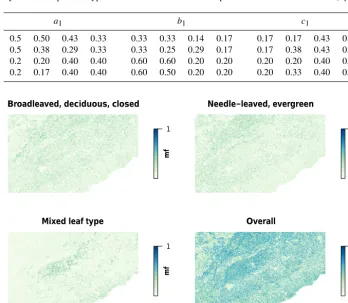
Figure 3.The fuzzy membership to the three GLC forest classes in study area and their combined fuzzy memberships to an overall forest class.
4 Results
4.1 Fuzzy forest
The fuzzy memberships to the three GLC forest classes, whose class centres are listed in Table 2 are shown in Fig. 3, along with a combined overall membership for all GLC for-est classes. The class centres for the forfor-est class arising from FAO class definition are shown in shown Table 3. The result of the fuzzyc-means classification is shown in Fig. 4.
4.2 Boundaries
[image:8.612.124.472.205.507.2]dif-Table 5.Example fuzzy memberships for a second hypothetical classification, again with three classes (a1,b1andc1).
a1 b1 c1
[image:9.612.118.477.77.284.2]0.33 0.33 0.50 0.5 0.33 0.33 0.50 0.5 0.17 0.17 0.25 0.25 0.25 0.25 0.50 0.5 0.25 0.25 0.50 0.5 0.38 0.38 0.25 0.25 0.43 0.43 0.20 0.2 0.43 0.43 0.20 0.2 0.43 0.43 0.40 0.40 0.43 0.43 0.38 0.2 0.43 0.43 0.38 0.2 0.43 0.43 0.38 0.40
Figure 4.The fuzzy membership to the FAO forest and not-forest classes in study area.
Table 6.The minimum interval for classa(that isa1–a2) and the bounded difference between classesb1andc1.
a1–a2 b1–c2
0.5 0.5 0.25 0.25 0 0 0 0
0.38 0.38 0.25 0.25 0 0 0 0 0.14 0.14 0.4 0.4 0.03 0.03 0 0 0.14 0.14 0.25 0.4 0.03 0 0 0
ferent intensities of forest. The detail in Fig. 6 illustrates the local variation in those membership intensities.
4.3 Fuzzy difference
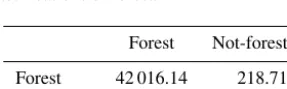
[image:9.612.55.280.354.424.2]The classic approach to examining the intersection between two fuzzy sets is to use fuzzy bounded difference, with ex-planatory fuzzy losses and gains (as in Table 7). The losses and gains are evident in the off diagonals of the fuzzy bounded difference correspondence matrix. The data for per pixel fuzzy memberships for the FAO and GLC classifica-tions of “forest” and “not-forest” were used as the inputs to the fuzzy difference analysis (Eq. 3). The results are shown in Table 9 and quantify the similarities and differences in the membership to the two classes of forest in this study. This provides a tractable and transparent method to move between two classifications, regardless of their semantics. The off di-agonals in Table 9 provide the equivalent of the losses and gains, relative to the forest class under consideration and de-scribe how the semantic boundaries between the two classes intersect.
Table 7.The fuzzy difference matrix with loss and gain for the worked example.
a b c Loss Gain
a 4.77 0.00 0.00 0.00 0.00
b 0.00 4.44 0.09 0.09 0.00
c 0.00 0.00 4.38 0.00 0.09
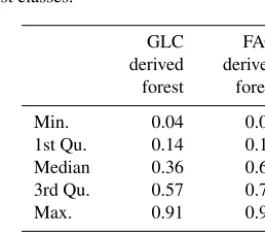
Table 8.The summaries of the Fuzzy memberships GLC and FAO derived Forest classes.
GLC FAO
derived derived forest forest
Min. 0.04 0.02
1st Qu. 0.14 0.17 Median 0.36 0.68 3rd Qu. 0.57 0.79
Max. 0.91 0.98
Total 42234.84 63378.22
5 Discussion
[image:9.612.349.509.357.412.2] [image:9.612.362.495.461.577.2]sci-Figure 5.Detail around Atlanta, Georgia of the differences in the fuzzy memberships to the GLC (red) and FAO (blue) forest classes, with a map of difference, yellow indicating similar fuzzy membership values, red where GLC fuzzy forest memberships are greater and blue where FAO are greater.
Figure 6.The boundary conditions between forest and not-forest arising from the differently defined forest classes, with context from an Open Street Map backdrop. The fuzzy GLC forest is mapped in red and the FAO fuzzy forest class is mapped in blue, both with a transparency term.
Table 9.The fuzzy difference matrix for the GLC (rows) and FAO (columns) classifications of forest.
Forest Not-forest
Forest 42 016.14 218.71 Not-forest 21 362.08 50 417.08
entists or involved in policy making (see Harvey and Chris-man, 1998 for the classic example of the negotiation of the differences in land cover definitions).
The problems for REDD+are two-fold. First, differences in definitions of forest influence the amount of forest that is mapped, and therefore measures of carbon storage. This un-dermines the ambitions of REDD+. For example, Romijn et al. (2013) found that different definitions of forest resulted in different amounts of Indonesian deforestation being iden-tified. They noted critically that any definition of forests that is not adapted to national circumstances could lead to large areas of deforestation being excluded and not accounted for under the REDD+scheme, confusing the carbon accounting. Other research has identified similar problems in other ar-eas (Van Noordwijk and Minang, 2009; Magdon et al., 2014;
[image:10.612.153.440.220.363.2] [image:10.612.96.240.466.510.2]repre-sented and mapped as well as the landscape more generally. This approach allows the divergence and plurality of con-cepts of forest to be simultaneously accommodated within the mapping and measurement of forest. It is sensitive to and supports local semantics and landscape conceptualisations in spatial data and mapping, while at the same time allowing parallel external or standardised view of landscapes, such as are required for REDD+.
Further work will explore how such approaches can be used to link across divergent classification systems, to sup-port methods for spatial data integration. It will also inves-tigate the sensitivity of the methods and results to different fuzzy exponent values, which is the main factor that controls the degree of fuzziness or hardness in the outputs. There is also a need to look at the data on which the fuzzy classifier is trained – here medians were used – but the full distribu-tion of values in different data primitive dimensions could be explored. There are also opportunities to consider how this approach could be further extended into considerations of fuzzy change for analysing temporal change between differ-ent (n) classifications with different classes – a sort of type-n
fuzzy set problem. This would help to determine the direc-tions of “forestness” transidirec-tions, for example to quantify the success of restoration or increasing carbon stocks with the stand age. Finally, there are opportunities to extend this ap-proach to other apap-proaches that generate beliefs such as those based on probabilities.
6 Conclusions
This paper has shown how data primitives and fuzzy inter-sections can be used to support alternative mappings of the same feature (in this case forest) based on different seman-tics and concepts. The methods allow the differences be-tween stocks of forest to be quantified when different for-est classifications are applied. The data primitive approach defines each forest class in terms of their positions in dif-ferent dimensions: here measures of soil wetness, vegetation height, biomass, human disturbance and seasonality were used. These provide a common set of orthogonal data layers (GIS field layers) and are fully described in Comber (2008) and Wadsworth et al. (2008). Fuzzy intersection methods (Fisher et al., 2006b) were used to quantify the overlaps between the classes, specifically fuzzy bounded difference. Representing forest classifications using fuzzy sets allows the inherent uncertainty in the classification procedure to be represented as well as the inherent vagueness and ambiguity in forest definitions. Some of this may be due to image or pixel uncertainty but also to variations in the semantics and concepts of forest held by different groups and stakeholders in the REDD+process. This method allows the plurality of forest definitions to be simultaneously represented in spatial data, whatever the local definition of forest is. Thus, differ-ent classifications, resulting from diverse conceptualizations
of landscape features such as forest can be overcome, not through standardization (see Comber et al., 2007) as argued by many in the policy arena and the remote sensing commu-nity, but by accommodating divergent “soft”, fuzzy classi-fications and mappings. Crucially, such an approach to for-est mapping does not rely on any boundaries, be they crisp or vague. It only requires the ability to characterize classes within the dimensions of the data primitives in the “forest-ness” vector field. The methods described in this paper could be used in the context of REDD+initiatives to support multi-ple views of the same landscape. Such transparency can over-come some of the problems of exclusion and back door land reforms that are commonly experienced during REDD+ ini-tiatives and mapping (Ezzine-de-Blas et al., 2011), as well as the issues highlighted by Romijn et al. (2013) of how to define forest. In our approach, one can define forest however one wants and link it to another definition.
Data availability. All of the analyses and maps in this paper were undertaken in R, the open source statistics software. The code and data used to construct this analysis as well as the RMarkdown file used to create this paper are freely available at https://github.com/ lexcomber/ForestPaper.
Acknowledgements. Some of the ideas in this work were devel-oped under a Joint Nature Conservancy Committee project “Fuzzy approaches for Developing and Evaluating Earth Observation-enabled ecological land cover time series system” (JNCC Reference: C12-0171-0589). The authors would like to thank Ross Purves and his team for their invitation to take part in a workshop in 2016, which led to the further development of these ideas. Lex Comber would like to thank the late and great Pete Fisher for the germ of the ideas in this paper: these were taken from work that he and Pete never managed to finish. Werner Kuhn acknowledges support from the University of California, Santa Barbara, for the Center of Spatial Studies.
Edited by: Benedikt Korf
Reviewed by: two anonymous referees
References
Ahlqvist, O.: A parameterized representation of uncertain concep-tual spaces, T. GIS, 8, 493–514, 2004.
Angelsen, A. (Ed.): Realising REDD+: National strategy and pol-icy options, Cifor, Situ Gede Bogor Barat, Indonesia, 2009. Astuti, R. and McGregor, A.: Indigenous land claims or green
grabs? Inclusions and exclusions within forest carbon politics in Indonesia, J. Peasant Stud., 44, 445–466, 2017.
Bartholome, E. and Belward, A. S.: GLC2000: A new approach to global land cover mapping from earth observation data, Int. J. Remote Sens., 26, 1959–1977, 2005.
Beymer-Farris, B. A. and Bassett, T. J.: The REDD menace: resur-gent protectionism in Tanzania’s mangrove forests, Global Envi-ron. Change, 22, 332–341, 2012.
Bezdek, J. C.: Pattern Recognition with Fuzzy Objective Function Algorithms, Plenum Press, New York, 1981.
Bong, I. W., Felker, M. E., and Maryudi, A.: How Are Lo-cal People Driving and Affected by Forest Cover Change? Opportunities for Local Participation in REDD+ Measure-ment, Reporting and Verification, PloS One, 11, e0145330, https://doi.org/10.1371/journal.pone.0145330, 2016.
Burenhult, N.: Landscape terms and toponyms in Jahai: a field re-port, Working Pap. Linguist., 51, 17–29, 2009.
Burrough, P. A. and Frank, A. U. (Eds.): Geographic Objects with Indeterminate Boundaries, Taylor and Francis, London, 1996. Cavanagh, C. and Benjaminsen, T. A.: Virtual nature, violent
accu-mulation: the ‘spectacular failure’ of carbon offsetting at a Ugan-dan National Park, Geoforum, 56, 55–65, 2014.
Cavanagh, C. J., Vedeld, P. O., and Trædal, L. T.: Securitizing REDD+? Problematizing the emerging illegal timber trade and forest carbon interface in East Africa, Geoforum, 60, 72–82, 2015.
Chazdon, R. L., Brancalion, P. H. S., Laestadius, L., Bennett-Curry, A., Buckingham, K., Kumar, C., Moll-Rocek, J., I. C. Guimaraes Vieira, and Wilson, S. J.: When is a forest a forest? Forest concepts and definitions in the era of forest and landscape restoration, Ambio, 45, 538–550, 2016.
Comber, A.: The separation of land cover from land use with data primitives, J. Land Use Sci., 3, 215–229, 2008.
Comber, A., Wadsworth, R. and Fisher, P.: Reasoning methods for handling uncertain information in land cover mapping, in: Fun-damentals of Spatial Data Quality, edited by: Devillers, R., and Jeansoulin, R., ISTE, London, 123–139, 2006.
Comber, A. J., Fisher, P. F., and Wadsworth, R. A.: What is land cover?, Environ. Plan. B, 32, 199–209, 2005.
Comber, A. J., Fisher, P. F., and Wadsworth, R. A.: Land cover: to standardise or not to standardise? Comment on ‘Evolving stan-dards in land cover characterization’ by Herold et al., J. Land Use Sci., 2, 287–291, 2007.
Couclelis, H.: People manipulate objects (but cultivate fields): Be-yond the raster-vector debate in GIS, in: Theories and methods of spatio-temporal reasoning in geographic space, edited by: Frank, A. U., Campari, I., and Formentini, U., Springer-Verlag, Berlin, 65–77, 1992.
Di Gregorio, A. and Jansen, L. J.: Land Cover Classification Sys-tem (LCCS): classification concepts and user manual, FAO, Rome, 1998.
Duchelle, A. E., Cromberg, M., Gebara, M. F., Guerra, R., Melo, T., Larson, A., Cronkleton, P., Börner, J., Sills, E., Wunder, S., and Bauch, S.: Linking forest tenure reform, environmental com-pliance, and incentives: lessons from REDD+initiatives in the Brazilian Amazon, World Development, 55, 53–67, 2014. Ece, M.: Representation through Privatisation. Responsive
For-est Governance Initiative, working paper 23 – available at: https://sdep.earth.illinois.edu/files/RFGI_Working_Papers/ RFGI23_MelisEce.pdf (last access: 23 March 2017), 2015. Ezzine-de-Blas, D., Börner, J., Violato-Espada, A. L., Nascimento,
N., and Piketty, M. G.: Forest loss and management in land reform settlements: Implications for REDD governance in the Brazilian Amazon, Environ. Sci. Policy, 14, 188200, 2011.
Fisher, P., Comber, A., and Wadsworth, R.: Approaches to uncer-tainty in spatial data, in: Fundamentals of Spatial Data Quality, edited by: Devillers, R. and Jeansoulin, R., ISTE, London, 43– 59, 2006a.
Fisher, P., Arnot, C., Wadsworth, R., and Wellens, J.: Detecting change in vague interpretations of landscapes, Ecol. Inform., 1, 163–178, 2006b.
Fisher, P., Cheng, T., and Wood, J.: Higher order vagueness in geo-graphical information: empirical geogeo-graphical population of type n fuzzy sets, Geoinformatica, 11, 311–330, 2007.
Fisher, P. F.: The pixel: a snare and a delusion, Int. J. Remote Sens., 18, 679–685, 1997.
Fisher, P. F.: Remote sensing of land cover classes as type 2 fuzzy sets, Remote Sens. Environ., 114, 309–321, 2010.
Fisher, P. F. and Pathirana, S.: The evaluation of fuzzy membership of land cover classes in the suburban zone, Remote Sens. Envi-ron., 34, 121–132, 1990.
Fisher, P. F., Comber, A. J., and Wadsworth, R. A.: Land use and Land cover: Contradiction or Complement, in: Re-Presenting GIS, edited by: Fisher, P. and Unwin, D., Wiley, Chichester, 85– 98, 2005.
Forest Peoples Programme: Annual Report, available at: http://www.forestpeoples.org/tags/annual-reports/publication/ 2015/annual-report-2014 (last access: 23 March 2017), 2014. Gardenfors, P.: Conceptual Spaces: The Geometry of Thought. A
Bradford Book, MIT Press, Cambridge, MA, 2000.
Gizachew, B., Astrup, R., Vedeld, P., Zahabu, E. M., andDuguma, L. A.: REDD+ in Africa: contexts and challenges, in: Natural Resources Forum, Blackwell Publishing Ltd., Berlin, 2017. Gou, Y.: The Role of Maps in Capturing Distal Drivers of
De-forestation and Degradation: A Case Study in Central Mozam-bique, in: Land Use Competition, Springer International Publish-ing, Berlin, 91–109, 2016.
Grainger, M. and Geary, K.: The New Forests Company and its Uganda plantations, OXFAM International, Washington, D.C., USA, 2011.
Gupta, A., Vijge, M. J., Turnhout, E., and Pistorius, T.: Making REDD+transparent: The politics of measuring, reporting, and verification systems, in: Transparency in Global Environmental Goverance. Critical Perspectives , edited by: Gupta, A. and Ma-son, M., MIT Press (Earth System Goverance), Cambridge, Mas-sachusetts, 181–201, 2014.
Harvey, F. and Chrisman, N.: Boundary objects and the social con-struction of GIS technology, Environ. Plan. A, 30, 1683–1694, 1998.
Herold, M., Verchot, L., Angelsen, A., Maniatis, D., and Bauch, S.: A Step-wise Framework for Setting REDD+Forest Reference Emission Levels and Forest Reference Levels, CIFOR Infobrief, no. 52, Cifor, Situ Gede Bogor Barat, Indonesia, 2012a. Herold, M., Angelsen, A., Verchot, L. V., Wijaya, A., and
Ainem-babazi, J. H.: A stepwise framework for developing REDD+ ref-erence levels, in: Analysing REDD+; Challenges and Choices, edited by: Angelsen, A., Brockhaus, M., Sunderlin, W. D., and Sunderlin, L. V., CIFOR, Bogor, Indonesia, 279–299, 2012b. Himmelfarb, D.: In the Aftermath of Displacement: A
Hoeschele, W.: Geographic information engineering and social ground truth in Attappadi, Kerala State, India, Ann. Assoc. Am. Geogr., 90, 293–321, 2000.
Klir, G. J. and Yuan, B.: Fuzzy Sets and Fuzzy Logic: Theory and Applications, Prentice Hall, Englewood Cliff., 1995.
Kuhn, W.: Geospatial semantics: why, of what, and how?, in: Jour-nal on data s emantics III, Springer, Berlin, Heidelberg, 1–24, 2005.
Kuhn, W.: Core concepts of spatial information for transdisciplinary research, Int. J. Geogr. Inform. Sci., 26, 2267–2276, 2012. Lakoff, G.: Women, fire, and dangerous things. What categories
re-veal about the mind, University of Chicago Press, Chicago, 1987. Lakoff, G.: Women, fire, and dangerous things, University of
Chicago Press, Chicago, 2008.
Larson, A. M., Brockhaus, M., Sunderlin, W. D., Duchelle, A., Babon, A., Dokken, T., Pham, T. T., Resosudarmo, I. A. P., Se-laya, G., Awono, A., and Huynh, T. B.: Land tenure and REDD+: The good, the bad and the ugly, Global Environ. Change, 23, 678–689, 2013.
Leung, Y. C.: Spatial Analysis and Planning under Imprecision, El-sevier, New York, 1988.
Lund, H. G.: Definitions of Forest, Deforestation, Afforestation, and Reforestation, Misc. pagination, Forest Information Services, Gainesville, VA, Note, this paper has been continuously updated since 1998, https://doi.org/10.13140/RG.2.1.2364.9760, 2016. Lyons, K. and Westoby, P.: Carbon colonialism and the new land
grab: plantation forestry in Uganda and its livelihood impacts, J. Rural Stud., 36, 13–21, 2014.
Lyster, R.: REDD+, transparency, participation and resource rights: the role of law, Environ. Sci. Policy, 14, 118–126, 2011. Magdon, P. and Kleinn, C.: Uncertainties of forest area estimates
caused by the minimum crown cover criterion – a scale issue relevant to forest cover monitoring, Environ. Monit. Assess., 185, 5345–5360, 2012.
Magdon, P., Fischer, C., Fuchs, H., and Kleinn, C.: Translating cri-teria of international forest definitions into remote sensing image analysis, Remote Sens. Environ., 149, 252–262, 2014.
Meyer, D., Dimitriadou, E., Hornik, K., Weingessel, A., and Eisch, F.: e1071: Misc Functions of the Department of Statis-tics (e1071), R package version, TU Wien, Wien, 1–6, 2012. Morales-Barquero, L., Skutsch, M., Jardel-Peláez, E. J., Ghilardi,
A., Kleinn, C., and Healey, J. R.: Operationalizing the definition of forest degradation for REDD+, with application to Mexico, Forests, 5, 1653–1681, 2014.
Nel, A. and Hill, D.: Constructing walls of carbon–the complexi-ties of community, carbon sequestration and protected areas in Uganda, J. Contemp. Afr. Stud., 31, 421–440, 2013.
Robbins, P.: Fixed categories in a portable landscape: the causes and consequences of land-cover categorization, Environ. Plan. A, 33, 161–179, 2001.
Romijn, E., Ainembabazi, J. H., Wijaya, A., Herold, M., Angelsen, A., Verchot, L., and Murdiyarso, D.: Exploring different forest definitions and their impact on developing REDD+ reference emission levels: A case study for Indonesia, Environ. Sci. Pol-icy, 33, 246–259, 2013.
Ryan, C. M., Berry, N. J., and Joshi, N.: Quantifying the causes of deforestation and degradation and creating transparent REDD+ baselines: a method and case study from central Mozambique, Appl. Geogr., 53, 45–54, 2014.
Smith, B.: On drawing lines on a map, in: Lecture Notes in Com-puter Science 988 Spatial Information Theory, edited bb: Frank, A. U. and Kuhn, W., Springer, Berlin, 475–484, 1995.
Smith, B. and Mark, D.: Geographical categories: an ontological investigation, Int. J. Geogr. Inform. Sci., 15, 591–612, 2001. Sunderlin, W. D., Larson, A. M., Duchelle, A. E., Resosudarmo,
I. A. P., Huynh, T. B., Awono, A., and Dokken, T.: How are REDD+proponents addressing tenure problems? Evidence from Brazil, Cameroon, Tanzania, Indonesia, and Vietnam, World De-velopment, 55, 37–52, 2014.
UNFCCC COP15: Methodological guidance for activities relating to reducing emissions from deforestation and forest degradation and the role of conservation, sustainable management of forests and enhancement of forest carbon stocks in developing countries, Decision 4/CP.15, Copenhagen, http://unfccc.int/resource/docs/ 2012/sbsta/eng/l09r01.pdf (last access: 23 March 2018), 2009. Van Noordwijk, M. and Minang, P.: If we cannot define it, we
cannot save it: forest definitions and REDD, ASB Policy Brief 15, ASB Partnership for the Tropical Forest Margins, Nairobi, Kenya, http://www.asb.cgiar.org/content/if-we-cannot-define-it-we-cannot-save-it-forest-definitions (last access: 23 March 2018), 2009.
Wadsworth, R., Balzter, H., Gerard, F., George, C., Comber, A., and Fisher, P.: An environmental assessment of land cover and land use change in Central Siberia using Quantified Conceptual Over-laps to reconcile inconsistent data sets, J. Land Use Sci., 3, 251– 264, 2008.