Oxygen-dependent proteolysis regulates the
stability of angiosperm polycomb repressive
complex 2 subunit VERNALIZATION 2
Daniel J. Gibbs
1, Hannah M. Tedds
1, Anne-Marie Labandera
1, Mark Bailey
1, Mark D. White
2,
Sjon Hartman
3, Colleen Sprigg
1, Sophie L. Mogg
1, Rory Osborne
1, Charlene Dambire
4, Tinne Boeckx
4,
Zachary Paling
1, Laurentius A.C.J. Voesenek
3, Emily Flashman
2& Michael J. Holdsworth
4The polycomb repressive complex 2 (PRC2) regulates epigenetic gene repression in eukar-yotes. Mechanisms controlling its developmental specificity and signal-responsiveness are poorly understood. Here, we identify an oxygen-sensitive N-terminal (N-) degron in the plant PRC2 subunit VERNALIZATION(VRN) 2, a homolog of animal Su(z)12, that promotes its degradation via the N-end rule pathway. We provide evidence that this N-degron arose early during angiosperm evolution via gene duplication and N-terminal truncation, facilitating expansion of PRC2 function inflowering plants. We show that proteolysis via the N-end rule pathway prevents ectopic VRN2 accumulation, and that hypoxia and long-term cold exposure lead to increased VRN2 abundance, which we propose may be due to inhibition of VRN2 turnover via its N-degron. Furthermore, we identify an overlap in the transcriptional responses to hypoxia and prolonged cold, and show that VRN2 promotes tolerance to hypoxia. Our work reveals a mechanism for post-translational regulation of VRN2 stability that could potentially link environmental inputs to the epigenetic control of plant development.
https://doi.org/10.1038/s41467-018-07875-7 OPEN
1School of Biosciences, University of Birmingham, Edgbaston B15 2TT, UK.2Chemistry Research Laboratory, University of Oxford, 12 Mansfield Road, Oxford
OX1 3TA, UK.3Plant Ecophysiology, Institute of Environmental Biology, Faculty of Science, Utrecht University, Padualaan 8, Utrecht 3584 CH, The Netherlands.4School of Biosciences, University of Nottingham, Loughborough LE12 5RD, UK. These authors contributed equally: Hannah M. Tedds, Anne-Marie Labandera. Correspondence and requests for materials should be addressed to D.J.G. (email:[email protected])
or to M.J.H. (email:[email protected])
123456789
P
olycomb group (PcG) proteins are essential regulators of gene expression in eukaryotes, functioning as multiprotein complexes to establish epigenetically silenced states on their gene targets1–3. One of the best characterized of these complexes is the polycomb repressive complex 2 (PRC2), which catalyses the deposition of the repressive histone H3 lysine 27 trimethylation (H3K27me3) mark on chromatin4,5. This modification is mito-tically stable and therefore acts as a long-term (yet reversible) suppressor of gene transcription. PRC2 activity controls cell identity, developmental transitions and the establishment of environmental memory across kingdoms4,5. Although many PRC2 functions and gene targets have been identified, mechan-isms underpinning signal perception and transduction via this complex, as well as its developmental specificity, are still poorly understood.The canonical PRC2 comprises four subunits: ENHANCER OF ZESTE [E(z)], SUPRESSOR OF ZESTE 12 [Su(z)12], EXTRA SEX COMBS (Esc) and p552,4,5. E(z) is the catalytic component with histone-methyltransferase (HMTase) activity, whilst Su(z)12 and Esc are both required for complex integrity and facilitating methylation by E(z)2,6. A wide range of context-specific binding partners also contribute to specificity, efficiency and robustness of PRC2 activity2,5. In contrast to animals, plants encode multiple copies of PRC2 subunits5,7, allowing the formation of different complexes with distinct functions, although knowledge of how and why these components diverged during evolution to acquire new roles is limited. InArabidopsis thaliana, PRC2 complexes are classified depending on which one of three Su(z)12-like subunits they recruit: FERTILIZATION INDEPENDENT 2 (FIS2), EMBRYONIC FLOWER 2 (EMF2) or VERNALIZATION 2 (VRN2)5,7,8. FIS2-PRC2 inhibits seed development in the absence of fertilization9, whilst EMF2-PRC2 promotes vegetative growth through suppressing flowering10. VRN2-PRC2 has several developmental functions11–13, but is best known as a key reg-ulator of vernalization, the epigenetic process by which long-term cold exposure promotes the transition from vegetative to repro-ductive development14. During vernalization, VRN2-PRC2 methylates and silences the floral repressor gene FLOWERING LOCUS C(FLC), thereby encoding a memory of cold that permits
flowering once warm temperatures return. A molecular mechanism regulating the cold-triggered accumulation15 of VRN2 required for this process is not known.
The evolutionarily conserved N-end rule pathway regulates pro-tein destruction through the recognition of N-terminal degradation sequences (N-degrons) in target proteins, which promote their ubiquitylation by specific E3 ligases (N-recognins)16–18. Several branches of the N-end rule pathway are known, which mediate a broad range of growth, developmental and stress-associated pro-cesses across kingdoms (reviewed in refs.16,17). In plants, group VII ETHYLENE RESPONSE FACTOR (ERFVII) transcription factors are Methionine-Cysteine- (Met-Cys-; MC-) initiating substrates of the arginylation (Arg)/N-end rule pathway19–21, which are regulated by oxygen (O2) and nitric oxide (NO), similar to several
REG-ULATOR OF G PROTEIN SIGNALLING (RGS) proteins in mammals22,23. ERFVIIs are targeted for destruction in normoxia via O2-dependent oxidation of Nt-Cys, which involves the successive
actions of METHIONINE AMINOPEPTIDASES, PLANT CYSTEINE OXIDASES (PCOs)24,25, ARGINYL TRANSFERASES (ATEs), and recognition by the N-recognin PROTEOLYSIS6 (PRT6) (summarized in Fig.1a). NO is also required for degrada-tion21, although whether it is involved in Nt-Cys oxidation, or acts indirectly via other factors is currently not known. Under low-O2
conditions (hypoxia), Nt-Cys oxidation is limited, leading to increased protein accumulation and function. Thus, ERFVII stability and activity is coupled to O2 (and NO) availability, which is
important for regulating the survival offlooding stress, other abiotic and biotic stresses, and photomorphogenesis26–29. We hypothesized that hypoxia may regulate further aspects of development or environment-response through modulating the stability of other MC-initiating regulatory proteins with different cellular functions.
Here, we identify the plant PRC2 subunit VRN2 as a substrate of the Arg/N-end rule pathway via its conserved N-terminal Cys2 residue. Despite constitutive VRN2 expression, this post-translational regulation confines VRN2 to the meristems of roots and shoots under non-vernalizing and aerobic growth conditions. We show that both submergence-induced hypoxia and long-term cold exposure lead to enhanced VRN2 accumu-lation throughout the plant. Cold-exposure induced several transcriptional and post-translational changes typically associated with hypoxia, including ERFVII stabilization and accumulation of hypoxia-related transcripts, suggesting overlap in the cellular response to both conditions. Thus our work identifies the N-end rule pathway as a key determinant of tissue-specific and environment-responsive VRN2-PRC2 activity. Furthermore, phylogenetic and biochemical analyses provide evidence that the N-degron of VRN2 was exposed early in angiosperm evolution through gene duplication and N-terminal truncation of an ancient homolog, which facilitated the expansion of PRC2 func-tion in plants through linking the stability of Su(z)12 to the perception of the environment.
Results
VRN2 is a substrate of the Arg/N-end rule pathway. We identified VRN2 as a candidate target N-end rule substrate, due to its MC-initiating N-terminus, which is conserved throughout angiosperms (Fig.1b). Wild type (WT) VRN2-HA expressed in an in vitro rabbit reticulocyte system (containing functional N-end rule pathway components19) was degraded following treatment with the translation inhibitor cycloheximide (CHX), whereas co-treatment with the proteasome inhibitor bortezomib (BZ), or mutation of Cys2 to Alanine (Ala; a stabilizing residue), prevented this turnover (Fig.1c). VRN2-FLAG15was also unstable in transgenic seedlings, but stabilized by BZ, indicating it is regulated via the 26S protea-some in vivo (Fig.1d). To test if this regulation is linked to the N-end rule pathway, we introduced VRN2-FLAG into prt6-1 (that lacks PRT6 E3 ligase activity19), and observed increased protein accumulation compared to WT (Fig. 1d). Next, we generated a series of transgenic plants expressing WT or mutant (Ala2) VRN2-GUS (β-glucuronidase) fusions driven by approximately 2 kb of the native VRN2 promoter. Similarly to VRN2-FLAG, we observed accumulation of VRN2-GUS in both prt6-1 and ate1 ate2 (that lacks ATE activity19), as well as higher steady-state levels of mutant Ala2-VRN2-GUS protein relative to WT VRN2-GUS in Col-0 (Fig.1e–g and Supplementary Figure 1a, b). Transgene-specific RT-PCR showed that there were no significant differences in WT-VRN2-GUS or Ala2-WT-VRN2-GUS expression in the different genetic backgrounds, confirming that these changes in abundance relate to post-translational control, and published microarray data19
VRN2 is regulated by O2and contributes to hypoxia tolerance. Since degradation of VRN2 via the N-end rule pathway is dependent on its Cys2 residue, we examined the influence of O2
and NO on VRN2 stability. We observed strong post-translational accumulation of VRN2-FLAG and VRN2-GUS in seedlings exposed to submergence-induced hypoxia or the NO scavenger cPTIO (Fig. 2a–d and Supplementary Figure 2a). We also found that recombinant Arabidopsis PCOs could oxidize in vitro the Nt-Cys residue of a peptide representing the Met1-excised N-terminus of VRN2. Mass shifts of 32 Da were observed in the presence of all 5 PCOs (Fig. 2e and Supplementary Fig-ure 4a), signifying O2-dependent Cys-sulfinic acid generation,
which is required for subsequent ATE activity and recognition by PRT625. Previous work showed thatprt6-1has enhanced hypoxia resistance, due to the constitutive accumulation of ERFVIIs19. To
assess if ectopic VRN2 accumulation inprt6-1also contributes to this resilience, we isolated a new null T-DNA allele in Col-0,
vrn2-5 (Supplementary Figure 5), and generated combination mutants for assessing seedling root tip survival following hypoxic stress. Survival of root tips under hypoxia was much greater in
prt6-1 than Col-0, but was significantly reduced in the prt6-1 vrn2-5double mutant (Fig.2f). This double mutant was also more sensitive thanprt6-1to root waterlogging (Fig.2g), a distinct but eco-physiologically relevant root hypoxia stress. Collectively, these data define an O2-sensitive Cys2 N-degron in VRN2. This
N-degron restricts VRN2 accumulation to meristems, which are proposed to be naturally hypoxic due to high metabolic activity and oxygen consumption30. VRN2 is stabilized throughout the plant in response to low-O2, where our genetic evidence suggests
it contributes to hypoxic stress-survival.
MetAP ATE
PRT6 O2,NO
PCO
MC C C* RC*
MetAP
MA A Stable
BZ
a b
c d
e f g h
i j
0 30 90 0 30 90 0 30 90 0
14
8
6
VRN2
mRNA
e
xpression (log2)
4
2
0 12
10 8 6 4 2 0
Ala2WT WT
i ii iii iv
WT a
b b
b
Relativ
e density
2 4 8 2 4 8 WT prt6–1
58 kDa
1.1 kb 1.0 kb 130 kDa
1.1 kb 1.0 kb 130 kDa
70 kDa CBB
CBB CBB
Col–0
VRN2-GUS
ACTIN2
VRN2-GUS
α-HA
αGUS
CHX (min)
VRN2-GUS
ACTIN2 VRN2-GUS
BZ
VRN2-FLAG
CBB CHX (h)
– + – – +
Ala2-VRN2-HA VRN2-HA
prt6–1 ate1
ate2
Col–0
pr
t6–1
Col–0
ate1ate2
prt6–1
Col–0
pr
t6–1
ate1 ate2
Col–0
prt 6–1
Col–0
+BZ
VRN2-GUS
Ala2-VRN2-GUS VRN2-GUS
VRN2-GUS WTAla2WT
Proteasome
0 0.5 1
Probability
[image:3.595.108.489.46.419.2]Sub (min)
a b
c d
e
f g
VRN2-FLAG
ACTIN-2 VRN2-FLAG
CBB
100
Peptide
CRQNCRAKSSPEEV
[M+3H]3+= 536.2
(O2)CRQNCRAKSSPEEV
[M+3H]3+= 546.9
PCO1
50
%
0
100
50
%
% Root mer
istem sur
viv
a
l
Rosette w
e
ight (g)
0
100 2.5
* *
2.0
1.5
1.0
0.5
0.0
Control Waterlogged 80
60
40 a
a c b
20
0
Hypoxia Normoxia
Col–0 prt6–1 vrn2–5 prt6–1vrn2–5
525 530 535 540
+ 32 Da 545 m/z
m/z
550 555 560
525 530 535 540 545 550 555 560
– Sub cPTIO
cPTIO
VRN2-FLAG
Tubulin 70
kDa
1.1 kb 0.2 kb
70 kDa
55 kDa 0 30 120
VRN2-GUS –
– Submerged cPTIO
+
Fig. 2VRN2 is regulated by O2and NO availability and positively regulates hypoxia tolerance.aVRN2-FLAG protein accumulation during a submergence time course.bVRN2-FLAG protein accumulation ± NO scavenger cPTIO.cmRNA levels ofVRN2-FLAG ± submergence or cPTIO treatment.
[image:4.595.133.462.49.581.2]VRN2 abundance is restricted in the absence of cold. We next investigated whether the N-end rule pathway regulates the known post-translational accumulation of VRN2 in response to long-term cold exposure, which is required for vernalization14,15. VRN2-GUS protein levels increased in Col-0 seedlings after 1 week at 5 °C, without any detectable mRNA changes (Fig. 3a). In contrast, VRN2-GUS was already present at high levels in prt6-1at 22 °C, showing only a small increase during cold treatment. This enhanced abundance was maintained throughout sub-sequent continued cold exposure. The spatial patterning of VRN2-GUS in seedlings after 4 weeks at 5 °C resembled that observed inprt6-1(or mutant Ala2-VRN2-GUS in WT) at 22 °C, and was inversely correlated with cold-responsive pFLC::FLC-GUS31 repression observed in the vernalization-dependent C24 background (Fig.3b and Supplementary Figure 2c), in accordance withFLCbeing repressed by VRN2-PRC2. A return to 22 °C after 4 weeks of cold exposure led to depletion of VRN2 in both WT and prt6-1, indicating the presence of other degron(s) in VRN2 independent of the Arg/N-end rule pathway. These data reveal that the N-end rule pathway limits VRN2 accumulation under non-vernalizing conditions.
Molecular responses to cold-exposure and hypoxia. The pattern of VRN2 protein accumulation in response to cold (Fig. 3b) is similar to that observed in response to submergence (Fig. 2d). In both conditions, the accumulation of VRN2 could be determined by reduced degradation via its N-degron. We therefore considered possible mechanism(s) by which long-term cold exposure might promote stabilization of VRN2. Previous studies showed that ALCOHOL DEHYDROGENASE (ADH), a key hypoxia-induced protein, accumulates in cold-treated plants (including Arabidopsis, maize and rice)32,33. Therefore, we investigated the potential link between gene-expression regulation in response to long-term cold and hypoxia. Using RNA seq analysis of non-vernalized vs 4-week-vernalized seedlings, we compared cold-induced transcripts with those induced by hypoxia21. This revealed a significant overlap in gene expression between the two conditions (p< 0.0015; hyper-geometric test21). Approximately 20% of hypoxia-upregulated genes21 were upregulated by long-term cold treatment, including many of the core anaerobic-response genes that are universally induced by low-O234(Fig.4a, b). Amongst the most highly
upre-gulated transcripts were mRNAs critical for the survival of anae-robiosis (including ADH1 and PDC1), as well as VIN3, which interacts with VRN2-PRC2 to promote FLC silencing during vernalization15,35, and which was previously also shown to be hypoxia-induced36 (Fig. 4a, b). We investigated the relationship between vernalizing conditions and anaerobic gene expression in
more detail, by analyzing the expression of ADH1using qPCR in different genetic backgrounds.ADH1was expressed at much higher levels in prt6-1 and prt6-1 vrn2-5 compared to WT and vrn2-5
under non-vernalizing conditions (Fig.4c), corroborating previous studies showing ectopic accumulation of anaerobic genes in
prt6-119,20. Furthermore, ADH1 was still induced in vrn2-5 in response to cold treatment, and was hyper-induced inprt6-1 and
prt6-1 vrn2-5seedlings. This indicates that VRN2 accumulation in the cold does not significantly influenceADH1transcription, and that other factors, which are altered in prt6-1, promote anaerobic gene expression in response to cold.
Since ERFVII transcription factors are known substrates of the N-end rule pathway that induce anaerobic gene expression in response to O2-deprivation19,20,26, we examined their role in
regulating cold-triggered expression of hypoxia-associated genes. Similarly to VRN2, cold temperatures led to strong stabilization of the ERFVII proteins RAP2.3-HA and HRE2-HA (Fig. 4d). Furthermore, the cold-responsive hyper-induction of
ADH1 and HB1 in prt6-1 was reverted in a prt6 erfVII27
sextuple mutant that lacks all 5 ERFVIIs (Fig. 4e, f and Supplementary Figure 6), suggesting that the cold-induced accumulation of ERFVIIs may control anaerobic gene induc-tion. However, ADH1 and HB1 were still significantly upregulated by cold exposure in prt6 erfVII, albeit to a lesser extent than in WT (Fig.4f and Supplementary Figure 6). These data suggest that upregulation of anaerobic genes in the cold could be potentiated by stabilized ERFVIIs, but that it is also controlled by a mechanism that is independent of ERFVIIs and the canonical hypoxia signalling pathway.
PRT6expression is not significantly altered by cold tempera-ture (Fig. 4b), indicating that enhanced stabilization of VRN2 and ERFVIIs is not a consequence of changes in N-recognin E3 ligase levels. However, we found in vitro PCO enzyme activities towards both VRN2 and ERFVII Nt-peptides were significantly reduced at 5 °C relative to 22 °C (Fig. 4h and Supplementary Figure 4b–d). Furthermore, NO levels were significantly reduced in the roots of seedlings exposed to long-term cold conditions (Fig. 4h). Since NO-depletion can also promote accumulation of VRN2 (Fig.2b, d) and ERFVIIs21, we propose that cold-exposure may induce conditions that enhance the stability of Cys-initiating N-end rule substrates, including both VRN2 and the ERFVIIs, and that this stabiliza-tion may be partly responsible for the observed overlap in gene expression.
Angiosperm-specific recruitment of Su(z)12 to the N-end rule. We explored the conservation and evolutionary origins of the Weeks vernalized (5 °C)
W
eeks
v
e
rnaliz
ed (5 °C)
0
a b
0 CBB
CBB
Col-0
prt6-1
pFLC:: FLC-GUS
C24
VRN2-GUS Ala2-VRN2-GUS
VRN2-GUS
α-GUS
α-GUS
VRN2-GUS
ACTIN2
130 kDa
130 kDa
VRN2-GUS
Col-0
Col-0
pr
t6
1 2 4
4 4 + 1
1.0 kb
1.1 kb
Fig. 3The N-end rule pathway restricts VRN2 accumulation under non-vernalizing conditions.aProtein and mRNA levels of WT VRN2-GUS in vernalized (1–4 weeks) Col-0 andprt6-1seedlings. 4+1 refers to 1 week‘recovery’at 22 °C following vernalization.bHistochemical staining of seedlings expressing
pFLC::FLC-GUS(C24 background), and WT or mutant (Ala2) VRN2-GUS in Col-0 andprt6-1, ±4 weeks vernalization. Scale bar 5 mm. See also
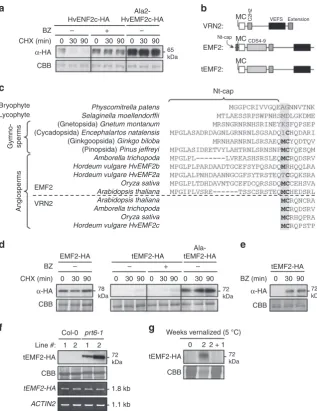
[image:5.595.132.467.50.171.2]connection between PRC2 and the N-end rule pathway. We identified and cloned an MC-initiating VRN2-like protein (HvEMF2c) from barley, a monocot species distantly related to Arabidopsis, and confirmed in vitro that it harbors a functional N-degron (Fig. 5a). However, we did not identify MC-initiating Su(z)12 homologs in basal land-plants or in animals. This sug-gests that O2-sensitive Su(z)12 proteins are only found in
angiosperms, although in some species, VRN2-like proteins might evade degradation despite carrying this N-terminal sequence, similar to the SUB1A ERFVII in rice19.
We investigated how Su(z)12 was recruited as a substrate of the N-end rule pathway specifically in the flowering plant lineage. VRN2 is proposed to have evolved following duplica-tion of an ancient EMF2-like Su(z)12 gene37,38. Alignment of Arabidopsis EMF2 and VRN2 protein sequences shows that the N-terminus of VRN2 is equivalent to an internal MC-dipeptide in the N-terminal cap region of EMF2 21 amino acid residues downstream of Met1 (Fig. 5b, c and Supplementary Figure 7), that is also present in EMF2-like proteins from gymnosperm taxa, but not in more basal land plants (Fig.5c). 4v> a b c f d g h e norm hyp> 0v 4v Weeks vernalized (5 °C)
Weeks vernalized (5 °C)
0 43 kDa 30 kDa RAP2.3-HA HRE2-HA CBB CBB
Fold reduction in PCO activities at 5 °C
PCO 1 2 3 4 5 1.83 2.26 9.32 2.39 2.13 3.96 7.85 4.30 3.36 6.40 VRN2 ERFVII
2 2 + 1
Weeks at 5 °C
0
d
c
a a a a
e
b be
prt6-1 prt6erfVII
Col-0
2 2 + 1 Weeks at 5 °C
p
<
0.001
p < 0.05 0v 0 2 0.2 kb 1.8 kb 1.2 kb 1.8 kb 0.5 kb 1.0 kb 0.8 kb 1.1 kb 1.1 kb 1.8 kb 0.5 kb 1.2 kb 2 + 1 2402 277 150 0v Col-0 vrn2-5 prt6-1 prt6-1vrn2-5 Col-0 0 70 60 50 40 ADH1 e xpression (relativ e f old change) 30 20 10 0 10 8 6 4 D AF-FM D A
fluorescence (× 10
3)
2
0
– 0 V 2 V
*
2 V 0 V
2 2 + 1 0 2 2 + 1 0 2 2 + 1
prt6-1 prt6erfVII
4v c
e
a a b b
d ab ADH1 e xpression (relativ e f old change) 125 100 75 50 25 0 1 112 138 20.78 11.24 10.35 1.2 6.95 1
10.07 0.84 9.93 49.8 57.9 0.64 5.74
0.6 ADH1 PDC1 PRP VIN3 PDC1 HB1 SUS4 ACTIN2 PCO1 ADH1 PRT6 SRO5 CML38 At5g47060 At4g17670 CYP707A3 HB1 TIL1 ADH1 HB1 VIN3 ACTIN2 PCO1 At3g27220
0 0.8 1.7 2.5 3.4 >4.2 Magnitude of change (Log2 scale)
This dipeptide sequence occurs in the basal angiosperm
Amborella trichopoda and many other angiosperm taxa, but has diverged in some extant angiosperm groups, suggesting that it is not important for EMF2 function (Fig. 5c and Supple-mentary Figure 8). Collectively these phylogenetic data suggest the internal MC dipeptide was fixed before angiosperms evolved, giving the capacity for an ancient EMF2-like protein to become an O2-regulated VRN2-like protein following
removal of the Nt-cap. To test this, we cloned Arabidopsis
EMF2 and showed full-length EMF2-HA was stable in vitro, but N-terminally truncated EMF2-HA (tEMF2-HA; Fig. 5b) was extremely unstable via its Cys2 residue (Fig. 5d, e). This was confirmed in planta, where tEMF2-HA could only be detected in theprt6-1mutant despite equivalent transgene mRNA levels in Col-0 (Fig. 5f). Moreover, this N-terminal truncation was sufficient to couple tEMF2-HA protein accumulation to cold exposure, similar to VRN2 (Fig. 5g). These data therefore support a mechanism for the evolutionary co-option of Su(z)12 to the N-end rule pathway in angiosperms, via gene duplica-tion37 and N-terminal truncation of an ancient EMF2-like protein.
Discussion
Here, we report that flowering plants have uniquely evolved a variant of the Su(z)12 PRC2 component—VRN2—that is regu-lated by the O2- and NO-sensitive branch of the Arg/N-end rule
pathway. This proteolytic regulation is required to prevent ectopic accumulation of VRN2 outside of meristems in the absence of external stimuli such as cold or hypoxia, despite constitutive
VRN2mRNA expression38. We show that both submergence and cold-exposure promote VRN2 accumulation. It will now be important to investigate in detail the connection between pro-teolytic control of VRN2 by the N-end rule pathway and the molecular changes that occur at known (e.g. FLC) and novel genome-wide targets of VRN2-PRC2.
Hypoxia frequently occurs in plants during development and in response to external abiotic stress such as flooding30,39. Reduced oxygen availability is transduced into transcriptional changes by the ERFVII transcription factors, which promote hypoxia tolerance through enhancing expression of key genes associated with anaerobiosis19,20. Here, we show that VRN2 stability is also regulated by O2, and that it could
con-tribute to hypoxia stress-tolerance. As part of a chromatin-modifying complex, it is possible that VRN2 may be involved in the epigenetic control of gene expression linked to hypoxia acclimation, or NO signalling40. Together with ERFVIIs, this indicates that plants could modulate the transcriptional and epigenetic control of gene expression in response to O2 and
NO availability by targeting functionally distinct proteins to the same proteolytic pathway, and suggests others remain to be
identified41. Future studies examining the effect of physiological
fluctuations of these gases on VRN2 accumulation, and the subsequent effect on the genome-wide targets of VRN2, may shed light on this. It is interesting to note that VIN3, another key protein that is transcriptionally induced by cold and essential for the vernalization response35, is also upregulated by hypoxia and may also therefore be required for VRN2 functions in response to low-O2.
VRN2 was originally identified as a positive regulator of ver-nalization, but a mechanism explaining its environmentally-induced accumulation in response to cold temperatures has not been described14,15. We found that long-term cold inhibits VRN2 proteolysis and that the N-end rule pathway is involved in restricting the accumulation of VRN2 in the absence of cold temperatures. Prolonged growth in the cold led not only to VRN2 accumulation, but also the induction of other molecular events that are also triggered by hypoxia, including stabilization of ERFVII transcription factors and upregulation of core anaerobic response genes. Exposure to cold temperatures has previously been shown to interfere with respiration through altering mem-brane fluidity properties in mitochondria, which initiates a shift to anaerobic metabolism32,33. Furthermore, transcriptional simi-larities between plants subjected to either hypoxic stress, or chemical inhibition of mitochondrial respiration, have also been reported42. Recently it was hypothesized that cold and hypoxia both represent an ‘energy crisis’ in plants, which may explain similar metabolic responses43.
Given the observed similarities in the cellular response to hypoxia and cold, we speculate that the accumulation of ERFVII transcription factors and VRN2 during cold-exposure could be related to biochemical changes that induce or mimic O2
limita-tion. We also investigated O2-independent mechanisms to
explain cold-induced accumulation of VRN2 and ERFVIIs, and found that PCO activities and NO levels are both reduced at lower temperatures. Both of these situations could promote accumulation of O2-sensitive N-end rule proteins even if O2 is
present. Nevertheless, further work is needed to show if and how the N-end rule-dependent turnover of VRN2 and ERFVIIs is modified during cold exposure.
To conclude, our work has uncovered a proteolytic mechanism operating on the PRC2 machinery that functions specifically in
flowering plants. This was achieved through the lineage-specific evolution of a conditional gas-sensitive N-degron in the Su(z)12 component, perhaps representing a step toward PRC2 neo-functionalization in angiosperms. Given the key roles for VRN2 in regulating the coordination of flowering with seasonal cues, this coupling of Su(z)12 to the Arg/N-end rule pathway may have facilitated a connection between environmental conditions and PRC2 activity, whilst also permitting further diversification of PRC2 function.
Methods
Plant growth and materials.A. thaliana(Arabidopsis) seedlings were obtained from the Arabidopsis Stock Centre (NASC), except for: VRN2-FLAG15(from Dr.
Chris Helliwell, CSIRO, Australia), andpFLC::FLC-GUS(C24 ecotype, containing 6 kb FLC-GUS construct31, from Dr. Candice Sheldon, CSIRO, Australia). The
35S::HRE2-HA and 35S::RAP2.3-HA transgenic lines, as well asprt6-1,ate1-2 ate2-1andprt6-1 erfVIIsextuple mutants were described previously19,21,27,28. Molecular
characterisation ofvrn2-5(SALK_201153) is described in Supplementary Figure 5. Mutant combinations were generated by crossing, and confirmed by PCR geno-typing and RT-PCR (primers in Supplementary Table 1). Seeds were surfaced sterilized in 20% Parazone, plated on half-strength Murashige and Skoog (MS) medium (1% agar, pH 5.7, grown vertically), and stratified at 4 °C for a minimum of 2 days, before being transferred to long day (LD; 16 h L:8 h D) condition under whitefluorescent light (90–100μmol m−2s−1) at 22 °C, and transferred to soil after 2 weeks if necessary.
Plant phenotypic analyses. For the waterlogging assays, 12days old seedlings were transferred to soil and grown under neutral days (ND; 12 h L:12 h D). Two replica trays were set up with genotypes distributed quasi-randomly. After 12 further days of growth in soil, one tray was subjected to waterlogging for 21 days (water level maintained at the soil surface), whilst the other (control) was watered as normal
with good drainage. The fresh weight of each rosette was then measured. To measure root hypoxia survival, seedlings were grown under SD conditions at 20 °C on vertical 1/2 MS plates. After 4 days of growth, seedlings were placed into sealed desiccators. 100% N2wasflushed through the desiccators at aflow rate of 4 L/min,
until oxygen levels fell to below 0.1%. After hypoxia treatment, seedlings were returned to SD conditions for 3 further days. Roots were scored as dead if there was no growth following hypoxia treatment.
Construction of transgenic plants. To generate C-terminally GUS-tagged VRN2 driven by its native promoter, the full genomic DNA sequence (from approx. 2 kb upstream of the ATG and ending at the STOP codon) was amplified from seedling genomic DNA extracts using attB-flanked primers, and recombined into pDO-NOR201 using gateway BP clonase (Invitrogen; 11789020). The C2A mutation was incorporated usingdpnI-mediated site-directed mutagenesis, prior to mobilisation into the destination binary vector pGWB533 using LR clonase (Invitrogen; 11791100). To create 35S::tEMF2-HA (truncated EMF2) lines, tEMF2 was ampli-fied from seedling cDNA, directionally cloned into pE2c and mobilised into pB2GW7. For all cloning primers see Table S1. Transformation intoAgrobacterium tumefaciens(strain GV3101 pMP90) and Arabidopsis was performed according to established protocols. At least 8 independent transgenic plants were selected for each construct; data from 2–3 independent T3homozygous lines are shown.
HvENF2c-HA
Ala2-HvEMF2c-HA
BZ
a b
c
d
f g
e
α-HA CBB
Nt-cap
EMF2
VRN2
BZ
CHX (min)
CBB
CBB CBB
Line #: 1 2 2 0 2 2 + 1
1.8 kb
1.1 kb 1
– – + –
0 30 90 0 30 90 0 30 90 0 30 90 0 30 90
78 kDa
72 kDa
72 kDa 65
kDa
72 kDa
72 kDa α-HA
BZ (min)
CBB
α-HA EMF2-HA
Col-0 prt6-1
tEMF2-HA
Weeks vernalized (5 °C)
tEMF2-HA tEMF2-HA
tEMF2-HA
ACTIN2
tEMF2-HA
Ala-tEMF2-HA Bryophyte Physcomitrella patens
(Gnetopsida) Gnetum montanum
(Pinopsida) Pinus jeffreyi
Hordeum vulgareHvEMF2a
Hordeum vulgare HvEMF2c Oryza sativa Amborella trichopoda Arabidopsis thaliana Arabidopsis thaliana Oryza sativa Hordeum vulgareHvEMF2b Amborella trichopoda (Ginkgoopsida) Ginkgo biloba (Cycadopsida) Encephalartos natalensis Selaginella moellendorffii
Gymno- sper
ms
Angiosper
m
s
Lycophyte
0
– + –
30 90 0 30 90 0 30 90
VRN2:
VEFS Extension
MC
MC
MC tEMF2:
EMF2:
Nt-cap
C2H2
CDS4-9
CHX (min)
[image:8.595.137.455.48.460.2]In vivo protein stability analyses. Total protein was extracted from un-treated or treated 7-day-old (or appropriately vernalized) seedlings by grinding up frozen samples directly into SDS protein extraction buffer (125 mM Tris–HCl pH 8.8, 1% (w/v) SDS, 10% (v/v) glycerol, 50 mM Na2S2O5) using a micropestle, before
cen-trifugating and determining protein concentration in the supernatant using the BioRad DC Protein Assay (Bio‐Rad)19. To assess the effects of
submergence-induced hypoxia on in vivo protein stability, seedlings were immersed in 2 ml Eppendorf tubesfilled with degassed water, sealed with parafilm, and incubated in the dark at room temperature for the times indicated. To test the effects of nitric oxide scavenging, seedlings were incubated in liquid 1/2 MS with 200μM cPTIO for 6 h (Enzo life science; ALX-430-001)19,21. For cycloheximide-chase assays,
seedlings were transferred to liquid 1/2 MS in 6-well microtiter plates supple-mented with 100 mM cycloheximide (Sigma-Aldrich; C4859), 100 mM bortezomib (ApexBio technology; A2614), both, or appropriate solvent controls. Seedlings were then incubated at 22 °C in the light with gentle shaking, and harvested at stated time points for protein/RNA extraction (in liquid nitrogen) or GUS histochemical staining.
Histochemical staining. For histochemical analysis ofβ-Glucuronidase (GUS) enzyme activity, transgenicArabidopsistissues were incubated in a buffer containing: phosphate buffer (100 mM) pH 7.0, potassium ferricyanide (2 mM), potassium fer-rocyanide (2 mM), Triton X-100 (0.1% v/v) and X-Gluc solution (5-bromo-4-chloro-3-indolyl-beta-D-glucuronic acid, cyclohexylammonium salt, X-GLUC Direct) (1 mM). Samples were then incubated at 37 °C in the buffer for 4–8 h. Seedlings were cleared andfixed in 3:1 ethanol:acetic acid before mounting in Hoyer's solution (30 g gum Arabic, 200 g chloral hydrate, 20 g glycerol, 50 ml water) before imaging on a light microscope.
In vitro stability assays. To generate protein–HA fusions driven by the T7 promoter, cDNAs were PCR amplified from Arabidopsis or barley total cDNA and directionally cloned into a modified version of the pTNT (Invitrogen) expression vector (pTNT3xHA19). N-terminal variations were incorporated by changing the
forward primer (primers in Supplementary Table 1). Cycloheximide-chase assays were then performed using the TNT T7 Coupled Reticulocyte Lysate system (Promega; L4610)19,44, using 50μM bortezomib in place of MG132. For Fig.5e,
50μM bortezomib was added at the beginning of the reaction and no cycloheximide was used. All assays were performed at least three times.
Immunoblotting and relative quantification. Equal total protein amounts were resolved by SDS-PAGE, and were transferred to PVDF using a MiniTrans-Blot electrophoretic transfer cell (Bio-Rad). Membranes were probed with primary antibodies at the following dilutions: anti-HA (Sigma-Aldrich; H3663), 1:2000; anti-GUS (Sigma-Aldrich; G5420), 1:1000; anti-FLAG (Sigma-Aldrich; F1804), 1:1000. HRP-conjugated anti-mouse or rabbit secondary antibodies (Santa Cruz; sc-358914 and sc-2004) were used at a titre of 1:10,000. Immunoblots were developed tofilm using ECL western blotting substrate (Pierce). For quantification of steady state levels in different mutant backgrounds, relative pixel density of protein bands from three independent lines for each transgene was assessed using imageJ. All blots were performed at least three times.
Analysing the activities of AtPCO1-5 in vitro.A. thalianaPCOs 1 to 5 were expressed and purified by sequential steps of immobilized nickel affinity and size exclusion chromatography as previously described45. The activities of each AtPCO
were examined by incubating 200 µM of peptide corresponding to thefirst 14 amino acids of the methionine excised N-terminus of VRN2 (VRN22–15) or
RAP2.2/2.12 (RAP22–15) with and without 0.1–0.8 µM enzyme in a bench top
thermocycler (Eppendorf) at 5 or 22 °C under aerobic conditions. Time points were taken at regular intervals by quenching the reaction 1 in 10 with 1% formic acid, allowing oxidation to be monitored by ultra-high performance chromatography (UPLC)-mass spectrometry (MS). Turnover was quantified by comparing the areas underneath the product and substrate ions extracted from the total ion current chromatogram. UPLC-MS measurements were obtained using an Acquity UPLC system coupled to a Xevo G2-S Q-ToF mass spectrometer (Waters) operated in positive electrospray mode. Instrument parameters, data acquisition and data processing were controlled by Masslynx 4.1 with source conditions adjusted to maximise sensitivity and minimise fragmentation. Samples were injected on to a Chromolith Performance RP-18e 100-2 mm column (Merck) heated to 40 °C and eluted at 0.3 ml/min using a gradient of 95% deionized water supplement with 0.1% (v/v) formic acid to 95% acetonitrile.
NO detection byfluorescence microscopy. Intracellular NO levels were visua-lized using DAF-FM diacetate (7′-difluorofluorescein diacetate, Bio-Connect). Seedlings were incubated in the dark for 15 min in 10 mM Tris–HCl buffer (pH 7.4) containing 50μM DAF-FM DA and subsequently washed twice for 5 min 10 mM Tris–HCl buffer (pH 7.4). Several roots of all treatments were mounted on the same slide to allow direct comparison. Fluorescence was visualized using a Zeiss Observer Z1 LSM7 confocal microscope with excitation at 488 nm and emission 520 nm. Roots (0v) incubated and mounted in 10 mM Tris–HCl buffer (pH 7.4) without DAF-FM DA were used as a negative control to set background values.
Within experiments, pinhole, gain, laser power and detector offset were identical for all slides. Mean DAF-FM DAfluorescence pixel intensity within the root was determined using ICY software (http://icy.bioimageanalysis.org/).
Phylogenetic analyses. EMF2 and VRN2-like sequences fromflowering plants (NCBI organism ID: angiosperms [taxid:3398]) were obtained using the Arabi-dopsis EMF2 or VRN2 protein sequence, and sequence similarity assessed using the NCBI (https://blast.ncbi.nlm.nih.gov) Protein Basic Local Alignment Search Tool (BLASTP). Protein sequences representing diverse angiosperm clades (Sup-plementary Data 2 and Sup(Sup-plementary Data 3) were aligned using MUltiple Sequence Comparison by Log-Expectation (MUSCLE)46in the programme
Mac-Vector Inc. (NC, USA). Weblogo 3.0 was used to obtain a graphical representation of amino acid proportions at the amino-terminus of VRN247. EMF2-like sequences
from non-angiosperm plants were obtained either from genome sequences or from sequenced transcriptomes of other species via the 1kp project48–58(Supplementary
Data 4). Multiple sequence alignments were carried out as described above.
Reverse transcriptase PCR and qPCR. For semi-quantitative RT–PCR, RNA was extracted from seedlings using an RNEasy plant mini kit (Qiagen; 74904) and converted to cDNA with Superscript II Reverse transcriptase (Invitrogen; 18064-014) using OligodT primers. PCRs were then performed with gene-specific or transgene-specific (i.e. gene-specific forward, tag-specific reverse) primers, and ACTIN-2was amplified for use as a loading control. For quantitative assessment of FLCexpression, RNA was extracted from 11-day-old seedlings grown at 22 °C and converted to cDNA as described above. Real-time quantitative RT-PCR was per-formed in triplicate using Brilliant III UF MM SYBR QPCR Low ROX master mix (Agilent; 600892) on an AriaMx Real-Time PCR system (Agilent) according to manufacturer’s instructions. Relative transcript levels forADH1 or HB1were determined by normalization toACTIN. The control value was converted to 1 and relative fold change for other lines and treatments calculated. Data shown are mean of three biological repeats. Error bars indicate standard deviation. For primer sequences see Supplementary Table 1.
RNA sequencing. RNA was extracted from non-vernalized (0v) or 4 weeks ver-nalized (4v) seedlings grown on vertical 1/2 MS plates as described above. Three biological replicates for each treatment were used for subsequent RNA sequencing, which was carried out at Glasgow Polyomics (www.polyomics.gla.ac.uk). An Initial QC was carried out using a nanodrop (to measure concentration) and the quality was tested on the Agilent Bioanalyser on a RNA Nano chip to ensure RIN values were above 8. The library was then prepared using the Illumina TruSeq mRNA kit (polyA selection), before being analysed using the Qubit and the bioanalyser HS DNA chip. Samples were pooled and sequenced on the HiSeq 4000. 150 bp reads (75 × 2 per fragment) were generated in fastq format, and aligned to the Arabi-dopsisgenome (TAIR10), and then analysed using Kallisto59(https://pachterlab.
github.io/kallisto/about) before being processed using the R package, DESeq260
(https://bioconductor.org/packages/release/bioc/html/DESeq2.html). DESeq2 was used to compare pairs of samples and generate thefinal set of excel spreadsheets showing fold change differences. For subsequent analyses the gene list wasfiltered for genes upregulated in 4v by at least 1.5 fold, with apvalue < 0.05. Venn dia-grams of overlapping gene sets were generated using Venny 2.1, and expression heatmaps created using the BAR HeatMapper tool (https://bar.utoronto.ca/ntools/ cgi-bin/ntools_heatmapper.cgi). The hypergeometric test used to determine the significance of overlap measures the probability of observing a 65 or more gene overlap between two lists of length 2101 and 342 chosen at random out of 15,898 genes. 2101 is the number of cold upregulated genes that are also on the ATH1 microarray used in Gibbs et al.19, and 15,898 is the genes that were induced by
hypoxia in Gibbs et al.19.
Reporting summary. Further information on experimental design is available in the Nature Research Reporting Summary linked to this article.
Data availability
RNA-seq data is available at NCBI GEO database with accession code GSE123459. The source data underlying allfigures can be found in the Source Datafile.
Received: 11 June 2018 Accepted: 4 December 2018
References
1. Simon, J. A. & Kingston, R. E. Mechanisms of polycomb gene silencing: knowns and unknowns.Nat. Rev. Mol. Cell Biol.10, 697–708 (2009). 2. Schwartz, Y. B. & Pirrotta, V. A new world of Polycombs: unexpected
partnerships and emerging functions.Nat. Rev. Genet.14, 853–864 (2013). 3. Derkacheva, M. & Hennig, L. Variations on a theme: Polycomb group proteins
4. Margueron, R. & Reinberg, D. The Polycomb complex PRC2 and its mark in life.Nature469, 343–349 (2011).
5. Mozgova, I., Kohler, C. & Hennig, L. Keeping the gate closed: functions of the polycomb repressive complex PRC2 in development.Plant J.83, 121–132 (2015).
6. Yuan, W. et al. Dense chromatin activates Polycomb repressive complex 2 to regulate H3 lysine 27 methylation.Science337, 971–975 (2012).
7. Forderer, A., Zhou, Y. & Turck, F. The age of multiplexity: recruitment and interactions of Polycomb complexes in plants.Curr. Opin. Plant Biol.29, 169–178 (2016).
8. Hennig, L. & Derkacheva, M. Diversity of Polycomb group complexes in plants: same rules, different players?Trends Genet.25, 414–423 (2009). 9. Yadegari, R. et al. Mutations in the FIE and MEA genes that encode
interacting polycomb proteins cause parent-of-origin effects on seed development by distinct mechanisms.Plant Cell12, 2367–2382 (2000).
10. Yoshida, N. et al. EMBRYONIC FLOWER2, a novel polycomb group protein homolog, mediates shoot development andflowering in Arabidopsis.Plant Cell13, 2471–2481 (2001).
11. Roszak, P. & Kohler, C. Polycomb group proteins are required to couple seed coat initiation to fertilization.Proc. Natl Acad. Sci. USA108, 20826–20831 (2011).
12. Ikeuchi, M. et al. PRC2 represses dedifferentiation of mature somatic cells in Arabidopsis.Nat. Plants1, 15089 (2015).
13. de Lucas, M. et al. Transcriptional regulation of Arabidopsis Polycomb Repressive Complex 2 coordinates cell-type proliferation and differentiation. Plant Cell28, 2616–2631 (2016).
14. Gendall, A. R., Levy, Y. Y., Wilson, A. & Dean, C. The VERNALIZATION 2 gene mediates the epigenetic regulation of vernalization in Arabidopsis.Cell 107, 525–535 (2001).
15. Wood, C.C. et al. TheArabidopsis thalianavernalization response requires a polycomb-like protein complex that also includes VERNALIZATION INSENSITIVE 3.Proc. Natl Acad. Sci. USA103, 14631–14636 (2006). 16. Varshavsky, A. The N-end rule pathway and regulation by proteolysis.Protein
Sci.20, 1298–1345 (2011).
17. Gibbs, D. J., Bacardit, J., Bachmair, A. & Holdsworth, M. J. The eukaryotic N-end rule pathway: conserved mechanisms and diverse functions.Trends Cell Biol.24, 603–611 (2014).
18. Bachmair, A., Finley, D. & Varshavsky, A. In vivo half-life of a protein is a function of its amino-terminal residue.Science234, 179–186 (1986). 19. Gibbs, D. J. et al. Homeostatic response to hypoxia is regulated by the N-end
rule pathway in plants.Nature479, 415–418 (2011).
20. Licausi, F. et al. Oxygen sensing in plants is mediated by an N-end rule pathway for protein destabilization.Nature479, 419–422 (2011). 21. Gibbs, D. J. et al. Nitric oxide sensing in plants is mediated by proteolytic
control of group VII ERF transcription factors.Mol. Cell53, 369–379 (2014).
22. Hu, R. G. et al. The N-end rule pathway as a nitric oxide sensor controlling the levels of multiple regulators.Nature437, 981–986 (2005).
23. Kwon, Y. T. et al. An essential role of N-terminal arginylation in cardiovascular development.Science297, 96–99 (2002).
24. Weits, D. A. et al. Plant cysteine oxidases control the oxygen-dependent branch of the N-end-rule pathway.Nat. Commun.5, 3425 (2014). 25. White, M. D. et al. Plant cysteine oxidases are dioxygenases that directly
enable arginyl transferase-catalysed arginylation of N-end rule targets.Nat. Commun.8, 14690 (2017).
26. Gibbs, D. et al. Group VII ethylene response factors co-ordinate oxygen and nitric oxide signal transduction and stress responses in plants.Plant Physiol. 169, 23–31 (2015).
27. Abbas, M. et al. Oxygen sensing coordinates photomorphogenesis to facilitate seedling survival.Curr. Biol.25, 1483–1488 (2015).
28. Vicente, J. et al. The Cys-Arg/N-end rule pathway is a general sensor of abiotic stress inflowering plants.Current Biology27, 3183–3190 (2017).
29. Vicente, J. et al. Distinct branches of the N-end rule pathway modulate the plant immune response.The New Phytologist. Preprint at:https://www.ncbi. nlm.nih.gov/pubmed/30117535,https://doi.org/10.1111/nph.15387
(2018).
30. Considine, M. J. et al. Learning to breathe: developmental phase transitions in oxygen status.Trends Plant Sci.22, 140–153 (2017).
31. Sheldon, C. C. et al. Resetting of FLOWERING LOCUS C expression after epigenetic repression by vernalization.Proc. Natl Acad. Sci. USA105, 2214–2219 (2008).
32. Jarillo, J. A., Leyva, A., Salinas, J. & Martinez-Zapater, J. M. Low temperature induces the accumulation of alcohol dehydrogenase mRNA inArabidopsis thaliana, a chilling-tolerant plant.Plant Physiol.101, 833–837 (1993). 33. Christie, P. J., Hahn, M. & Walbot, V. Low-temperature accumulation of
alcohol dehydrogenase-1 mRNA and protein activity in maize and rice seedlings.Plant Physiol.95, 699–706 (1991).
34. Mustroph, A. et al. Profiling translatomes of discrete cell populations resolves altered cellular priorities during hypoxia in Arabidopsis.Proc. Natl Acad. Sci. USA106, 18843–18848 (2009).
35. Sung, S. & Amasino, R. M. Vernalization inArabidopsis thalianais mediated by the PHDfinger protein VIN3.Nature427, 159–164 (2004).
36. Bond, D. M., Wilson, I. W., Dennis, E. S., Pogson, B. J. & Jean Finnegan, E. VERNALIZATION INSENSITIVE 3 (VIN3) is required for the response of Arabidopsis thaliana seedlings exposed to low oxygen conditions.Plant J.59, 576–587 (2009).
37. Chen, L. J., Diao, Z. Y., Specht, C. & Sung, Z. R. Molecular evolution of VEF-domain-containing PcG genes in plants.Mol. Plant2, 738–754 (2009). 38. Qiu, Y., Liu, S. L. & Adams, K. L. Concerted divergence after gene duplication
in Polycomb repressive complexes.Plant Physiol.174, 1192–1204 (2017). 39. Bailey-Serres, J. et al. Making sense of low oxygen sensing.Trends Plant Sci.
17, 129–138 (2012).
40. Domingos, P., Prado, A. M., Wong, A., Gehring, C. & Feijo, J. A. Nitric oxide: a multitasked signaling gas in plants.Mol. Plant8, 506–520 (2014). 41. Holdsworth, M. J. First hints of new sensors.Nat. Plants3, 767–768 (2017). 42. Wagner, S., Van Aken, O., Elsasser, M. & Schwarzlander, M. Mitochondrial
energy signaling and its role in the low-oxygen stress response of plants.Plant Physiol.176, 1156–1170 (2018).
43. Greenway, H. & Armstrong, W. Energy-crises in well-aerated and anoxic tissue: does tolerance require the same specific proteins and energy-efficient transport?Funct. Plant Biol.45, 877–894 (2018).
44. Mendiondo, G. M. et al. Enhanced waterlogging tolerance in barley by manipulation of expression of the N-end rule pathway E3 ligase PROTEOLYSIS6.Plant Biotechnol. J.14, 40–50 (2015).
45. White, M. D., Kamps, J., East, S., Taylor Kearney, L. J. & Flashman, E. The plant cysteine oxidases fromArabidopsis thalianaare kinetically tailored to act as oxygen sensors.J. Biol. Chem.https://doi.org/10.1074/jbc.RA118.003496
(2018).
46. Edgar, R. C. MUSCLE: multiple sequence alignment with high accuracy and high throughput.Nucleic Acids Res.32, 1792–1797 (2004).
47. Crooks, G. E., Hon, G., Chandonia, J. M. & Brenner, S. E. WebLogo: a sequence logo generator.Genome Res.14, 1188–1190 (2004).
48. Albert, V. A. et al. The Amborella genome and the evolution offlowering plants.Science342, 1467 (2013).
49. Banks, J. A. et al. The Selaginella genome identifies genetic changes associated with the evolution of vascular plants.Science332, 960–963 (2011). 50. Bowman, J. L. et al. Insights into land plant evolution garnered from the
Marchantia polymorphagenome.Cell171, 287 (2017).
51. Goff, S. A. et al. A draft sequence of the rice genome (Oryza sativaL. ssp japonica).Science296, 92–100 (2002).
52. Guan, R. et al. Draft genome of the living fossil Ginkgo biloba.Gigascience5, 49 (2016).
53. Kaul, S. et al. Analysis of the genome sequence of theflowering plant Arabidopsis thaliana.Nature408, 796–815 (2000).
54. Mascher, M. et al. A chromosome conformation capture ordered sequence of the barley genome.Nature544, 426 (2017).
55. Rensing, S. A. et al. The Physcomitrella genome reveals evolutionary insights into the conquest of land by plants.Science319, 64–69 (2008).
56. Roodt, D. et al. Evidence for an ancient whole genome duplication in the cycad lineage.PloS ONE12, e0184454 (2017).
57. Wan, T. et al. A genome for gnetophytes and early evolution of seed plants. Nat. Plants4, 82–89 (2018).
58. Matasci, N. et al. Data access for the 1,000 plants (1KP) project.Gigascience3, 17 (2014).
59. Bray, N. L., Pimentel, H., Melsted, P. & Pachter, L. Near-optimal probabilistic RNA-seq quantification.Nat. Biotechnol.34, 525–527 (2016).
60. Love, M. I., Huber, W. & Anders, S. Moderated estimation of fold change and dispersion for RNA-seq data with DESeq2.Genome Biol.15, 550 (2014).
Acknowledgements
We thank C. Neal Stewart (University of Tennessee) for contributingPinus jeffreyidata to the 1KP project, Julietta Marquez for technical assistance, Simon Pearce for help with statistics, and Glasgow Polyomics (polyomics.gla.ac.uk) for their assistance with the RNAseq investigation. This work was supported by the Biotechnology and Biologi-cal Sciences Research Council [Grant numbers BB/M020568/1, BB/M007820/1, BB/ M002268/1, BB/M024458/1], and a European Research Council grant (ERC Starting Grant 715441-GasPlaNt) to D.J.G. The NWO-ALW programme Graduate school Hor-ticulture and Starting materials (EPS2 3c 195) supported the work of S.H.
Author contributions
M.J.H., M.D.W., Z.P., L.A.C.J.V. and E.F. analysed data. D.J.G. and M.J.H. wrote the manuscript.
Additional information
Supplementary Informationaccompanies this paper at https://doi.org/10.1038/s41467-018-07875-7.
Competing interests:The authors declare no competing interests.
Reprints and permissioninformation is available online athttp://npg.nature.com/ reprintsandpermissions/
Journal peer review information:Nature Communicationsthanks the anonymous reviewers for their contribution to the peer review of this work.
Publisher’s note:Springer Nature remains neutral with regard to jurisdictional claims in published maps and institutional affiliations.
Open Access This article is licensed under a Creative Commons Attribution 4.0 International License, which permits use, sharing, adaptation, distribution and reproduction in any medium or format, as long as you give appropriate credit to the original author(s) and the source, provide a link to the Creative Commons license, and indicate if changes were made. The images or other third party material in this article are included in the article’s Creative Commons license, unless indicated otherwise in a credit line to the material. If material is not included in the article’s Creative Commons license and your intended use is not permitted by statutory regulation or exceeds the permitted use, you will need to obtain permission directly from the copyright holder. To view a copy of this license, visithttp://creativecommons.org/ licenses/by/4.0/.