A STUDY TO EVALUATE THE EFFECTIVENESS OF
COMPUTER ASSISTED TEACHING ON THE
LEVEL OF KNOWLEDGE REGARDING THE
EFFECTS OF JUNK FOODS ON HEALTH AMONG
ADOLESCENT CHILDREN IN A SELECTED
SCHOOL , ERODE DISTRICT.
BY 301317102
A DISSERTATION SUBMITTED TO THE TAMILNADU
Dr. M.G.R. MEDICAL UNIVERSITY, CHENNAI, IN
PARTIAL FULFILMENT OF THE REQUIREMENT FOR
THE AWARD OF THE DEGREE OF
A STUDY TO EVALUATE THE EFFECTIVENESS OF
COMPUTER ASSISTED TEACHING ON THE LEVEL OF
KNOWLEDGE REGARDING THE EFFECTS OF JUNK
FOODS ON HEALTH AMONG THE ADOLESCENT
CHILDREN IN A SELECTED SCHOOL AT ERODE
By 301317102
Research and
Clinical Speciality Guide:
---Prof. Mrs.M.KAVIMANI, R.N, R.M, M.S.N.,(PhD.,)
SUBMITTED IN PARTIAL FULFILMENT OF THE REQUIREMENT FOR THE AWARD OF THE DEGREE OF MASTER OF SCIENCE IN NURSING FROM THE TAMILNADU
DECLARATION
I hereby declare that the present dissertation titled “A STUDY TO EVALUATE THE EFFECTIVENESS OF COMPUTER ASSISTED TEACHING ON THE LEVEL OF KNOWLEDGE REGARDING THE EFFECTS OF JUNK FOODS ON HEALTH AMONG ADOLESCENT CHILDREN IN A SELECTED SCHOOL AT ERODE.
Outcome of the original research work undertaken and carried out by me, under the Guidance of Research and Clinical Specialty Guide
Prof. Mrs.M.KAVIMANI, R.N, R.M, M.S.N.,(PhD.,)Principal,
Shivparvathi Mandradiar Institute of Health Sciences, College of Nursing. I also declare that the material of this has not found in any way, the basis for the award of any degree diploma in this University or any other University.
CERTIFIED THAT THIS IS THE BONAFIDE WORK OF 301317102
AT THE SHIVPARVATHI MANDRADIAR INSTITUTE OF HEALTH SCIENCE, COLLEGE OF NURSING
SUBMITTED IN PARTIAL FULFILMENT OF THE REQUIREMENT FOR THE AWARD OF THE DEGREE OF MASTER OF NURSING FROM THE TAMILNADU Dr.M.G.R. MEDICAL UNIVERSITY CHENNAI.
Examiners:
1. _________________________
2. __________________________
---Prof. Mrs. M. KAVIMANI, R.N, R.M, M.S.N,(PhD.,) PRINCIPAL, H.O.D.Paediatrics
SPMIHS
ACKNOWLEDGEMENT
“But the Lord has been my defense, and my God the rock of my refuge”
(Psalms 94:22)
I am thankful to “The Supreme Power of God” for giving me the potential Opportunities, energy, courage to join in the M.Sc (N) Programme and his grace, mercy Wisdom and blessing throughout this endeavor without which, it would not have been Possible for successful completion of this dissertation.
With gratitude I wish to acknowledge all those who have enabled me to complete this study successfully.
I would like to express my sincere thanks and immense gratitude to
our Honorable Chairman (Late) Mr.Shivakumar Mandradiar,
Grateful thanks to Mr.Naveen Mandradiar, Secretary, Mrs.Mano Mandradiar Correspondent, Mrs.Pallavi Mandradiar, and Mr.Balasubramanian, Manager, SPM Institute of Health Science College of Nursing, Palayakottai, for their constant encouragement and support to complete this study.
Dedication, Hard work, Sincere, Intelligence all this makes the person to be success in their life. These qualities are appreciated and I avail this Honor of expressing profound ,sincere gratitude and reverence heartful
thanks to our Principal and Research Guide Prof. Mrs.M.Kavimani,
M.Sc(N).,(PhD.,) Shivparvathi Mandradiar Institute of Health science, for her care, patience, encouragement and support given during the entire study.
I extent my appreciation and grate fulness to Ms.Suganthi. M.Sc (N),
Lecturer, Child Health Nursing, Shivparvathi Mandradiar Institute of
Health Science, for her guidance, support, ever willing help from time to time, untiring and patient correction which helped me to bring this study as successful one.
I am indeed thankful to Prof. Dr. K. Dhanapal, Bio-statistician,
I take this opportunity to extent my earnest and profound sense of gratitude to all faculty members, Shivparvathi Mandradiar Institute of Health Science, for their motivation during the period of study.
I would like to give my very special thanks to all the teaching staff and non teaching staff of SPMIHS, for their contribution during my course of my study.
A memorable note of gratitude to Ms. B. Vanitha, Librarian SPMIHS for the timely help, kind cooperation and attention for completing the project work successfully.
I express my special gratitude and thanks to Mrs.NATHIYA
Principal, Kongu Kalvi Nilayam Matriculation Higher Secondary School, Rangampalayam, Erode district for providing a wonderful opportunity for conducting the study and I am very grateful to all the teachers of the schools for their kind cooperation during the study period.
I owe my profound gratitude and exclusive thanks to the panel of experts namely Dr.Nassir MD(Paed)., Mrs.Suganthi Joseph, Mrs.Santhi, Miss.Suganthi, Mrs.Jhancy Nirmala for validating the tool amidst their busy schedule and providing valuable suggestions and also I gladly thankful for her valuable suggestions.
I extend my sincere thanks to every soul who helped me directly or indirectly in making this study a successful one, but not mentioned in this acknowledgement.
Above all I bow my head in reverence to God Almighty for guiding me to reach the steps and complete my study. His omnipresence has been my anchor through the fluctuating hard times and making it all possible.
Thanks to all!!
TABLE OF CONTENTS
CHAPTER
NO. CONTENTS
PAGE NO.
I INTRODUCTION
Background of the Study
Need for the Study
Statement of the Problem
Objectives of the Study
Hypothesis
Operational Definitions
Assumptions
Delimitations
Conceptual Frame Work
II REVIEW OF LITERATURE
1. Studies related to changing trends in adolescents eating pattern.
2. Studies related to factors influencing junk food.
3. Studies related to prevalence of junk food consumption and effects junk food on health among adolescents
4. Studies related to the effectiveness of teaching programme on effects of junk food on health among adolescents
19-32
III METHODOLOGY
Research Approach
Research Design
Variables
Settings
Population
Sample
Sample Size
Sampling Technique
Sampling Criteria
Development of the Tool
Description of the Tool
Validity
Reliability
Pilot Study
Plan for Data Analysis
Ethical Consideration
IV DATA ANALYSIS AND
INTERPRETATION
1. Data on selected demographic variables of adolescent children.
2. Data on pre test and post test level of knowledge regarding the effects of junk foods on health among adolescent children.
3. Data on effectiveness of computer assisted teaching regarding the effects of junk foods on health among adolescent children.
4. Data on association between the post test level of knowledge and the selected demographic variables among adolescent children explained by Chi-Square.
V SUMMARY, FINDINGS, DISCUSSION, IMPLICATIONS, CONCLUSION AND RECOMMENDATIONS
Summary
Findings
Discussion
Implications
Limitations
Recommendations
Conclusion
70-83
REFERANCES
Text Books
Journals
Electronic Sources
84-91
APPENDICES 92-127
TABLE.NO. TITLE PAGE NO.
1.
2.
3.
4.
Frequency and percentage distribution of demographic variables of adolescent children.
Frequency and percentage distribution of pre and post test level of knowledge regarding effects of junk foods on health among adolescent children.
Mean, Standard deviation, Range, Mean Difference and paired ‘t’ value level of knowledge regarding effects of junk foods on health among adolescent children. Frequency and percentage distribution and Chi-Square value of association between the post test level of knowledge and their selected demographic variables of adolescents children.
53
59
63
65
FIGURE NO.
TITLE PAGE NO.
1. Conceptual Frame work. 18
2. Schematic presentation of Research
Design.
35
3. Frequency and percentage distribution of
pretest and post test level of knowledge regarding the effects of junk food on health among children.
60
4. Mean and SD of pre and post test level of
knowledge
62
LIST OF APPENDICES
NO
1 Letter seeking permission to conduct the
main study
92
2 Letter granting permission to conduct the
main study
93
3 Letter seeking experts opinion for the
content validity of the tool used for the study
94
4 List of experts 96
5 Consent Form for study participants 97
6 Structured knowledge questionnaire 98
7 Lesson plan on Effects of junk food on
health.
114
LIST OF ABBREVIATIONS
SHORT
SPMIHS
CAT
H1
MSC (N)
P
F
%
x2
SD
NS
MD
SPSS
Shivparvathi Mandradiar Institute of Health Sciences
Computer Assisted Teaching
Research Hypothesis
Master of Science in Nursing
Probability
Frequency
Percentage
Chi-square test
Standard Deviation
Non Significant
Mean Difference
ANOVA
WHO
FDA
AAP
Analysis of Variance
World Health Organization
Food and Drug Administration
ABSTRACT
A study to evaluate the effectiveness of computer assisted teaching on the level of knowledge regarding the effects of junk foods on health among the adolescent children in a selected school at Erode Tamilnadu was under taken by 301317102 as a partial fulfillment of the requirement for the degree of Master Of Science in Nursing at Shivparvathi Mandradiar Institute of Health Science, under the Tamilnadu Dr.MGR Medical University during the year 2013-2015.
The objectives of the study were
1. To assess the pre and post test level of knowledge regarding the effects of junk foods on health among adolescent children in selected school.
3. To find out the association between the post test level of knowledge regarding the effects of junk foods on health among adolescent children and their selected demographic variables.
The research hypotheses formulated were
H1. There is a significant difference between the pre test and
post test level of knowledge regarding the effects of junk foods on health among adolescent children.
H2. There is a significant association between the post test
levels of knowledge regarding the effects of junk foods on health among adolescent children with their selected demographic variables.
The conceptual framework adopted for the present study was based on Betralanff’s theory (1968) the general system theory. This theory helped the investigator to assess the effectiveness of computer assisted teaching regarding Effects of junk foods on health among Adolescent children education students.
The research design selected for the present study was pre experimental study to evaluate the effectiveness of computer assisted teaching regarding Effects of junk foods on health among Adolescent children. The independent variable was computer assisted teaching on Effects of junk foods and the dependent variable was knowledge regarding Effects of junk foods on health.
The investigator developed a structured questionnaire as a tool for the present study. The content validity of the tool was established by 5 experts. The reliability of the tool was ascertained by test retest method reliability co efficient was r=0.9 and the tool was found to be reliable for the study. Pilot study was conducted in Navarasam Matriculation Higher Secondary school Palliyuthu at Erode District among 10 adolescent children, who fulfilled the sample selection criteria. The study was found to be feasible.
CHAPTER II
REVIEW OF LITERATURE
Review of literature is a written summery of the study conducted previously study topic. The review of literature is defined as a broad, comprehensive in depth, systematic and critical review of scholarly publication, unpublished scholarly print materials, audiovisual materials and personal communication.
-BT Basavanthappa
The literature review serves to guide the researchers in discussing the results of the study in terms of agreement or non-agreement with other studies.
IN THIS STUDY, REVIEW OF LITERATURE WERE CLASSIFIED
UNDER THE FOLLOWING HEADINGS
Studies related to changing trends in adolescents eating pattern. Studies related to factors influencing junk foods.
Studies related to prevalence of junk food consumption and effects of junk foods on health among adolescents.
1. STUDIES RELATED TO CHANGING TRENDS IN ADOLESCENTS
EATING PATTERN
Sonoo Ranjana et-al(2013)conducted a descriptive study to appraise and
understand eating behavior of secondary school adolescents at 12-19 yrs of age in Mauritius. The data was collected randomly from a representative sample n=384 of adolescents through a self- administered questionnaire. The SPSS 16.0 was used to compute all relevant descriptive statistic and test hypothesis as well.4-point liket scale was used popularity score was calculated. A Chi- square test of independence revealed that the frequency of fast food consumption was significantly higher in adolescents from low income group. The results revealed that 84% of the adolescents snacked in between meals. This study concluded that fast food intake was more common among adolescents from low income group who may be consuming road-side fast food that are cheaper.
Alphonsus NOnyiriuka et-al(2013) Conducted a school- based- cross –
that frequency of skipping meals was 30%,50% and 59% among participants less than 14 yrs old,14-16yrs old and above 16 yrs old respectively (p<0.001). Only 15% of the participants consumed fruits and vegetables daily. Sixty percent of the participants consumed fast food with 76% of them consuming fast food along with soft drinks. The study concluded that Meal skipping, consumption of fast foods along with soft drinks and low consumption of fruits and vegetables were the main eating habits displayed by adolescents urban schoolgirls in Benin City, Nigeria.
Nora A. ALFaris et-al(2010) conducted a cross- sectional study of 13-18
trends of fast food consumption and targeted eating behaviors of adolescent and young adult girls.
Lakhwinder Kaur et-al(2009) Conducted a co relational study with an
objective of assessing the association between the eating pattern and body mass index among adolescents of 12 -19 yrs in 2007 at Guru Nanak Public Senior Secondary school in Dhahan Kaleran. Through systematic random sampling technique 120 subjects were selected. Interview schedule was used for collecting the data. BMI was calculated using anthropometric measurement. Finding revealed that 57% adolescents had normal BMI. A positive association between eating pattern and BMI was found x2=5.9,df=2,p=0.01.The study concluded that trends in adolescents eating pattern shows a great concern with regard to the prevalence of obesity.
Moy Foong Ming et-al (2006)did a cross- sectional study with a
lunch(6.7%) and dinner(4.4%) .Fast food and local hawker food were also consumed by about 60-70% of the students. The study concluded that Multivarite Logistic regression analysis showed that skipping of breakfast is significantly associated with age, sex, BMI and taking of nutritional supplements.
2. STUDIES RELATED TO FACTORS INFLUENCING JUNK FOODS
DR.Naheedvaida(2013)Done a study to assess the prevalence of fast food
intake among urban students in the age group of 14-19 years in Srinagar. Selected sample of 80 urban adolescent student were randomly selected in the target area .A structured questionnaire was administered and interviews were carried out on the students in different schools and colleges in Srinagar to gather data related to the subject. The data was further statistically analyzed by presenting the information through percentages, mean, standard deviation, coefficient of variation. Study results showed that sex and economic status were found to be the chief variable in fast food consumption and girls were leading in former and also adolescent students studying in private schools were up in the latter. On the other hand, flavor, variety, brand, fast service, and availability were found main driving force in fast food intake. . Also exposure to advertisements, media influence and urbanization were found to be the chief factors of fast food intake.
food consumption by applying Theory of Planned Behavior. A total of 354 students were recruited from a middle school. The subjects completed a pre-tested questionnaire. The average monthly frequency of fast food consumption was 4.05.As expected , fast food consumption was considered to be a special event rather than part of an everyday diet, closely associated with meeting friends or celebrating most likely with friends, special days. Multiple regression analyzes showed that fast food consumption behavior was significantly related to behavioral intention (b=0.56,P<0.001) and perceived behavioral control (b=0.19,P<0.001).Further analysis showed that behavioral intention was significantly related to subjective norm(b=o.15,P<0.01)and perceived behavioral control (b=0.56,P<0.001) All Statistical analysis were conducted with SPSS 12.0. Simple statistic such as frequency, means and standard deviations were used along with t-test and x2 tests. A Pearson correlation test was conducted to examine the relationship between factors of the TPB (Theroy of Planned Behavior) and fast food use. The study concluded that further studies should examine effective ways of changing subjective norms and possible alternatives to fast food consumption for students to alter perceived behavioral control.
Silvia Hope et-al(2010)conducted a cross sectional study to provide locally
revealed that the secondary school participants were statistically more likely to watch television on more days of the week than primary school participants. The study concluded that children and adolescents in Suva are being exposed to and affected by the junk food advertisements which are abundant in their daily environment.
Massimo Santinello et –al(2009) conducted a cross sectional survey
among adolescents between 11 and 16 yrs in Belgium Flanders &the Veneto region of Italy. The purpose of the study was focus on several lifestyle behaviors and family rules as determinant of soft drink consumption were limited to adolescents. Sample of 14407 adolescents were selected .A questionnaire survey was done to collect data. SPSS version14.0 was used for analyses .Chi- square tests were performed to determine country and gender differences. Binary logistic regression was used to test the association between soft drink consumption and food related life style. The results revealed that each independent variables was significantly associated with daily soft drink consumption, despite some sub-groups exception. These findings suggested that considering gender and cultural differences, involving parents and limiting the adolescent’s exposure to television would increase the effectiveness of interventions aimed to reduce soft drink consumption in adolescence.
3. STUDIES RELATED TO PREVALENCE OF JUNK FOOD
Robert J Hancox et- a l(2014) conducted a multi country cross- sectional
study on adolescents aged 13-14 yrs. The study selected 72,900 children in 17 countries and 1,99,135 adolescents in 36 countries).A questionnaire was used to collect data. A general linear mixed model was used to determine the association between BMI and fast food consumption, adjusting for Gross National Income per capita by country, measurement type age and sex. Frequent and very frequent fast- food consumption was reported in 23% and 4% of children, and39%and 13%of adolescent respectively. The study concluded that fast-food consumption was high in childhood and increased in adolescence.
lure the young adult to consume junk food which invites attention from parents, school authorities and legislative bodies.
Hanan A. Alfawaz(2012) conducted a descriptive, questionnaire-based,
cross sectional study. The purpose of the study was to study the relationship between fast food and Body Mass Index and the pattern of consumption of fast food among female university students. Total of 141 female students aged 18 to 26 yrs from different study levels of Nutrition and Food Science Department, King Saudi University, Riyadh Saudi Arabia were included. A survey questionnaire which contains three section was used. Data were analyzed by using SPSS VERSION 12.Descriptive data was obtained for all the parameters tested as percentage. For a comparison of categorical variables, Chi-Square, Pearson correlation tests and one way ANOVA test were used. The result revealed that overweight and obesity were present in 25% of female students .Fast food consumption frequency of 1-2 times per week was high among them (74.5%). The study concluded that significant (p<_0.05) positive fast food is unhealthy.
Farzaneh Montazerifar et-al(2012) conducted a cross- sectional,
habits were evaluated by a two-day -24 hrs dietary recall, and a food frequency questionnaire (FFQ). Data were analyzed by SPSS , VERSION 11.5,,SPSS INC ,Chicago IL The evaluation of eventual significant differences was carried out by one sample t-test . The result revealed that intake of nutrients and food pattern of adolescents girls were found to be lower. The study concluded that consuming insufficient diet during this time can lead to stop or slow growth and unsuitable food pattern also results in diet –related chronic diseases in adolescents and adulthood.
Mohammad Hossein Rouhani et- al(2012) A cross- sectional study was
done to determine the association between fast food consumption and diet quality as well as obesity among Isfahanian adolescent girls in Iran. The 140 samples were selected by the use of systemic cluster random sampling. Dietary intakes were assessed using a validated food frequency question. SPSS software (version12) was used to conduct the statistical analysis. Normal distribution was evaluated by Kolmogorov- Smirnov test, histogram graph, p-p plot graph. The results revealed that the high intake of fast food were significantly associated with overweight. The study concluded that the fast food consumption was associated with poor diet quality and high prevalence of overweight among Isfashani adolescents.
Camilla chermont P.Estima el-al(2011) conducted a cross- sectional study
for group comparison. The results revealed that the most frequent consumed beverage was industrialized fruit juice (38.1% ),soft drinks(28.6%), and natural fruit juices (22.2%), and main place were home(38.2%),school(22.1%).The study concluded that sweet beverage intake was frequent among adolescents specially soft drinks were consumed at home and at school. The nutrition education program should aim to stimulate the intake of more healthy beverages by adolescents
Shanthy A. Bowman el-al (2004) conducted a study to test the hypothesis
that fat food consumption adversely affects dietary factors linked to obesity risk. The study selected 6212 children and adolescents of 4 to19 yrs in United States. Survey was done to collect the data .The SUDAAN software package was used for regression analysis and for the estimation of percentages, mean, standard errors of the mean and pairwise comparisons among groups. The result revealed that 30.3%of total samples were consuming fast food. Fast –food consumption was highly prevalent in both genders,all racial/ethnic groups and all region of the country. The study concluded that consumption of fast food among children in the United States seems to have an adverse effect on dietary in ways that plausibly could increase risk for obesity.
4. STUDIES RELATED TO THE EFFECTIVENESS OF TEACHING
PROGRAM ME ON EFFECTS OF JUNK FOODS AMONG
Mandeep Kaur (2014)did a quasi-experimental study on adolescents of 11
to 18 years of age in Delhi to determine the effectiveness of planned teaching programme on knowledge regarding health hazards of junk foods. They study comprised of 100 adolescents selected through purposive sample method. The data collection was done with self-administered questionnaire. Inferential statistics and descriptive statistics were used to analyze the data. The results showed that the mean pretest score was 9.95 and mean post test score was 18.50 the mean difference between the pretest knowledge score and post test knowledge score was 8.55.The study concluded that planned teaching programme was effective in order to increase the knowledge of the adolescents.
Vandana Sharma(2013) conducted a pre- experimental study. The purpose
SupinyaIn -Iw et-al(2012) Conducted a prospective cohort and
randomized controlled trial. The purpose of the study was to determine the Change in body weight and body mass index, as well as diet behaviors at 4 months after intervention between experimental and control group obese adolescent girls who participated in school based nutritional education program me in Thailand. The study recruited 49 obese girls from a secondary school. Those adolescents were randomized into 2 groups of intervention and control. The intensive interactive nutritional programe was provided to the intervention group. Weight , height , dietary record and percentage fat consumption, as well as self- administered questionnaires on healthy diet attitudes were collected at baseline and 4-months follow-up, and then compared between two groups. The statistical analyses of differences between groups were demonstrated using paired t test and Mc Nemar’s test. The analyses were performed using SPSS for Window, release 11.5.(SPSS Chicago, IL). The result revealed that there was a statistically significant changes of BMI in the intervention group by 0.53+_1.61kg/m (p=0.016) compared to the control group (0.51+1.57 kg/m, p=0.063) but no significant change in calorie and % fat consumption between group. The study concluded that interactive and intensive nutritional education program as shown in the study was one of the most successful school- based interventions for obese adolescents.
Puri et-al(2007) studied to assess the impact of a diet and nutrition
CHAPTER-III
RESEARCH METHODOLOGY
This chapter deals with the description of the research methodology adopted by the investigator to assess the effectiveness of health teaching on effects of junk foods on health among adolescent children in a selected school, Erode.
Methodology is the most important part of any research study, which enables the researcher to form a blue print for the study undertaken.. Research methodology refers to the controlled investigations related to the ways of obtaining, organizing and analyzing data. Methodological studies address the development, validation and evaluation of research instrument & techniques.
RESEARCH APPROACH
According to Suresh k. Sharma (2011) the research approach involves the description of the plan to investigate the phenomenon under study in a quantitative, qualitative or a combination of the two methods. Furthermore, It helps to decide whether the presence or absence as well as manipulation and control over variables. Also, it helps to identify the presence or absence of and comparison between groups.
Research approach is a systematic, controlled empirical and critical investigation of natural phenomena guided by theory and hypothesis about presumed relations among the phenomena. The Research approach used for this study was quantitative evaluative approach.
RESEARCH DESIGN
Target PopulaƟon
Adolescents Children at Selected School, Erode
Accessible PopulaƟon
Adolescent Children in the age group of 12Ͳ16 Years
Sampling Technique Convenience Sampling
Sample and Sample Size
Adolescents Children Studying at Kongu Kalvi Nilayam N=60
Tool and Data CollecƟon Method Structured QuesƟonnaire
Demographic Variables Age
Sex Religion Class of Studying
Type of Family Monthly Income EducaƟon of Father EducaƟon of Mother OccupaƟon of Father OccupaƟon of Mother
Previous informaƟon Source of informaƟon
Pre Test
Computer Assisted Teaching
Post Test
EXPERIMENTA L GROUP
O1 X O2
The Symbols used are:
O1: Pre test; Assessment of knowledge on effects of junk food on health.
X: Intervention: Administration of computer assisted teaching on effects of junk food on health .
O2: Post test: Assessment of knowledge after 7 days of computer assisted teaching.
VARIABLES
According to Suresh K. Sharma (2011) variables are qualities, properties or characteristics of person, things or situation that change or vary. Variables are concepts at different level of abstraction that are concisely defined to promote their measurement or manipulation within study.
Independent variables is the variables which has the presumed effect on the dependent variables.
In this present study the independent variable is computer assisted teaching
DEPENDENT VARIABLES
Dependent variable is often referred to as the consequence or the presumed effect that varies with a change in the Independent variables.
In this present study the dependent variable is knowledge of adolescent children.
According to Sureshk .Sharma Extaneous variables are the factors which are not the part of the study but may affect the measurement of the study variables. These variables are usually recognized and controlled by researcher.
In the present study it refers to the selected demographic variables such as age, sex, religion, class of studying, type of family, family income, education of the father, education of the mother, occupation of the father, occupation of the mother, previous orientation and source of knowledge.
SETTING OF THE STUDY
According to polit and Hungler (2004) ,Research settings are specific places in a research where data collection is to be made. The selection of setting was done on the basis of feasibility of conducting the study. Availability of subject and permission of authorities. The present study was conducted at Kongu Kalvi Nilayam Matriculation Higher Secondary School, Erode.
Acquaintance of the investigator with the area and the cooperation from the school.
POPULATION
According to Polite& Hungler(1995) A population is an aggregate or totality of all subjects that possess a set of specification .The two type of population is the target population and the accessible population.
THE TARGET POPULATION
It is the entire population in which the researchers are interested and to which they would like to generalize the research findings.
In the study were adolescent children who were studying in selected school at Erode.
It is the aggregate of cases that confirm to the designed inclusion and exclusion criteria and that are accessible as subjects of the study.
In the study were adolescent who are studying in Kongu Kalvi Nilayam Matriculation higher secondary school at Erode.
SAMPLE
According to Polite & Beck (2004) ,a sample is a subset of population & selected to participate in a research study, it is a portion of the population which represents the entire population.
The sample selected for the present study were the adolescent children studying at Kongu Kalvi Nilayam Matriculation Higher Secondary school Erode, who were willing to participated & present during the period of data collection.
According to Polit & Beck (2002) sample size is normally decided by nature of the study, nature of population, type of sampling technique, tool variables, statistical test adopted for data analysis sensitivity of the measures.
In this study the sample size was 60 adolescent children studying in Kongu Kalvi Nilayam Matriculation Higher Secondary school, Erode.
Those who fulfill the inclusion and exclusion criteria and it was arbiterly decided to be 60.
SAMPLING TECHNIQUE
According to Manoj Kumar yadav it means a given number of subjects from a defined population as representative of that population
In this study Non Probability convenience sampling technique was used to select the sample
S.NO AGE NO OF SAMPLES 1 12 - 13 Years 24 2 13 - 14 Years 21 3 15 - 16 Years 15
SAMPLING CRITERIA
Sampling criteria is that which specifies the characteristics that the sample of the population must possess. The following criteria were used in the present study to select sample.
1. Adolescent children between the age of 12 to 16 years .
2. Adolescent children who were willing to participate in this study.
3. Adolescent children those who were studying in VIII, IX, X &XI standards.
EXCLUSION CRITERIA
1.Adolescent children who had been exposed to similar teaching previously.
2.Adolescent children were absent during the data collection.
SELECTION AND DEVELOPMENT OF TOOL
DEVELOPMENT OF THE TOOL
The tool is a written device that a researcher uses to collect the data. After careful and detailed review of literature the researcher prepared and developed demographic data and structured questionnaire as a tool for the present study.
The tool is an instrument to assess and collect the data from the respondent of the study, Polit and Beck(2004).
Description of the tool refers to the explanation of the content of the tool. The researcher listed the number of items and the scoring for each item in the tool. The tool consists of two parts.
Section –A
It consists of demographic characteristics of Adolescents like age, sex, class of studying, religion, type of family, family income, education of the father, education of the mother, occupation of the father, occupation of the mother, source of previous information
Section-B
It consists of structured knowledge questionnaire.
SCORING PROCEDURE
S.NO SCORE LEVEL OF KNOWLEDGE
1 0 - 10 In Adequate Knowledge
2 11 - 20 Moderately Adequate Knowledge
3 21 - 30 Adequate Knowledge
VALIDITY OF THE TOOL
Validity refers to whether an instrument accurately measure what it is supposed to measure. Content validity represents the universe of content which provides the framework and basis of formulating the items that will adequately represent the content.
RELIABILITY OF THE TOOL
Reliability of research instrument is defined as the extent to which the instrument yields he same results on repeated measures. The reliability of a measuring tool can be assessed in the aspects of stability, internal consistency, and equivalence depending on the nature of the instrument and aspects of the reliability concept.
The method adopted for the present study was test- retest method to measure the homogeneity of the tool using Karl Pearson’s correlation coefficient formula reliability coefficient was r=0.92 and the tool was found to be statistically reliable for the main study.
PILOT STUDY
The pilot study was conducted in Navarasam Matriculation Higher Secondary school, Palliyuthu, Erode district in the month of March 2015 to find the feasibility of the study. Ten adolescent children were selected using convenience sampling technique. The subjects for the pilot study possessed the characteristics as that of the sample for the final study, but were not included in the main study. Prior to the study permission was obtained from concerned authority. The selected subjects were informed of the purpose of the study and consent was obtained. Assessment of Knowledge was done by using structured questionnaire. Post- test was conducted using the same structured questionnaire on the seventh day of pre- test and after computer assisted teaching regarding effects of junk food on health. The time taken to complete one questionnaire was 30 minutes. The collected data were analyzed using descriptive and inferential statistics.
After conducting the pilot study, it was found that the study was feasible. The concerned authority and the sample were found to be cooperative, the questionnaire and computer assisted teaching contains information regarding effects of junk food were relevant and the time and cost of the study was within the limit.
DATA COLLECTION PROCEDURE
The study was conducted in Kongu Kalvi Nilayam Matriculation School Erode district. Data were collected for 4 weeks in the month of June 2015, and official permission was obtained from the authorities.
Screening was done with the help of the school teachers working in the particular school to select the samples. Total of 60 students who fulfilled the selection criteria were selected by convenient sampling. To assess each subject it took about 30 minutes.
Phase II Data collection and Interpretation Phase
Before collecting the data, permission was obtained from the concerned authority. Keeping in mind the ethical aspect of research, the data was collected after obtaining the informed consent of the sample. The samples were assured anonymity and confidentiality of information provided by them. The researcher collected the data from the subjects. Pre- test was conducted, followed by conducting computer assisted teaching programme regarding effects of junk food on health. Post –test was conducted to evaluate the effectiveness of computer assisted teaching programme.
Phase –III Termination Phase
PLAN FOR DATA ANALYSIS
Data analysis is the systematic organization and synthesis of research data and testing of the research hypothesis using that data.
The data collected from the subjects were edited, coded and entered in excel sheet. The data were analyzed and using descriptive and inferential statistics by manual. A probability of less than 0.05 was considered to be significant. The following plan of analysis was developed.
Section I
Data on Description of the subjects with respect to demographic variables was presented in terms of frequency and percentage
.
Section II
Section III
Data on Statistical significance of the effectiveness of computer assisted teaching was analyzed using Paired ‘t’ test.
Section IV
Data on association between post test score of the adolescent children and the selected background factors were explained by using chi-square(x )
ETHICAL CONSIDERATIONS
ց
CHAPTER –IV
DATA ANALYSIS AND INTERPRETATION
Data analysis is the systemic organization and synthesis of research data and the testing of research data and also the testing of hypothesis using data. Interpretation is the adequate exposition of the facts presented in terms of purpose of the study.
THE DATA ANALYSIS WERE PRESENTED AS FOLLOWS
Section I: Data on selected demographic variables of adolescent children in experimental group.
Section II: Data on pre and post test level of knowledge regarding the effects of junk foods on health among adolescent children.
Section III: Data on effectiveness of computer assisted teaching regarding the effects of junk foods on health among adolescent children .
SECTION I: DATA ON SELECTED DEMOGRAPHIC VARIABLES OF
ADOLESCENT CHILDREN IN EXPERIMENTAL GROUP
TABLE1: FREQUENCY, PERCENTAGE DISTRIBUTION ON
DEMOGRAPHIC VARIABLES OF ADOLESCENT CHILDREN
S.NO DEMOGRAPHIC VARIABLES EXPERIMENTAL GROUP FREQUENCY PERCENTAGE 1 AGE
a) 12-13 years b) 13-14years c) 14-15years d) 15-16 years
24 21 0 15 40% 35% 0% 25% 2 GENDER
a) Boys b) Girls
28 32 46.66% 53.33% 3 Religion a) Hindu b) Muslim c) Christian d) Others 42 8 10 0 70% 13.3% 16.6% 0 4 Class of studying
a) 8th
standard b) 9th
standard c) 10th
standard d) 11th
standard 24 21 0 15 40% 35% 0% 25%
5 Type of family
b) Nuclear family c) Extended family
5 0
8.3% 0% 6 Monthly income in Rupees
a) Below Rs 5000 b) Rs 5000 to Rs
10000
c) Rs 10000 to Rs12000
d) Above Rs 15000
0 15 25 20 0% 25% 41.6% 33.3%
7 Education of the Father a) Illiterate
b) Primary school education
c) Secondary school education
d) Graduate and
above 3 19 21 17 5% 31.6% 35% 28.3% 8 Education of the Mother
a) Illiterate
b) Primary school education
c) Secondary school education
d) Graduate and
above 5 24 20 11 8.3% 40% 33.3% 18.3% 9 Occupation Of the Father
10 Occupation Of the Mother
a) Govt.Job
b) Private Job
c) Business d) Coolie 2 19 10 29 3.3% 31.6% 16.6% 48.3% 11 Do you know about the
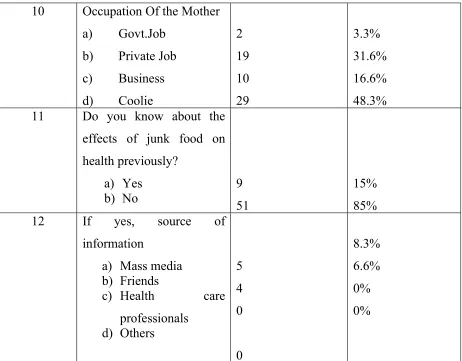
effects of junk food on health previously? a) Yes b) No 9 51 15% 85%
12 If yes, source of
information
a) Mass media b) Friends
c) Health care
[image:59.612.108.570.84.445.2]professionals d) Others 5 4 0 0 8.3% 6.6% 0% 0%
Table No 1 : Shows the frequency and percentage distribution of
demographic variables of adolescent children.
Regarding Age majority of the respondents i.e 24(40%) were in the age group of 12-13 years 21 (35%) were in the age group of 13-14 years and the least 15(25%) were in the age group of 15-16 years and none were in 14-15 years of age group.
Regarding Religion majority 42(70%) were Hindus,10(16.6%) were Christians , only 8(13.3%) were Muslims, and no one belong to other religion.
Regarding Class of studying majority of them 24(40%) were studying in 8th standard, 21(35%) were studying in 9th
standard, and the least 15(25%) were in 11th
standard and none of them were in 10th
standard.
Regarding Type of family majority 55(91.6%) were living in nuclear family,5(8.3%) were living in joint family and no one belongs to extended family.
Regarding Monthly Income majority of them 25(41.6%) were getting monthly salary between Rs10,000- 12,000,20(33.3%) were getting monthly salary above Rs15,000,15(25%) were earning between Rs 5000-10,000 and no one is getting below Rs 5000
Regarding Education of the father majority 21(35%) had completed their secondary school education, 19(31.6%) had completed their primary school education, 17(28.3%) of them graduate and only 3(5%) were illiterate.
Regarding occupation of the father majority 38(63.3%) were working in private job,9(15%) were doing Business, 7(11.6%) were in Government job and 6(10%) were working as a collie.
Regarding occupation of the mother majority29(48.3%) were house wives 19(31.6%) were in private job ,10(16.6%) were involved in Business and only 2(3.3%) were doing Government job.
Regarding the previous knowledge on effects of junk food on health majority 51(85%) did not know about effects of junk food on health,9(15%) had known about effects of junk food on health.
Regarding source of information majority 5(8.3%) were known about junk food through Mass media, 4(6.6%) were come to know through friends and none of them were known through Health care professionals and others.
It was inferred that among 60 participants, majority 24(40%)were in the age group between 12-13 years,32(53.3%) were girls,42(70%) were Hindus ,24(40%) were studying 8th
SECTION II: DATA ON PRE AND POST TEST LEVEL OF KNOWLEDGE
REGARDING THE EFFECTS OF JUNK FOODS ON HEALTH AMONG
ADOLESCENT CHILDREN
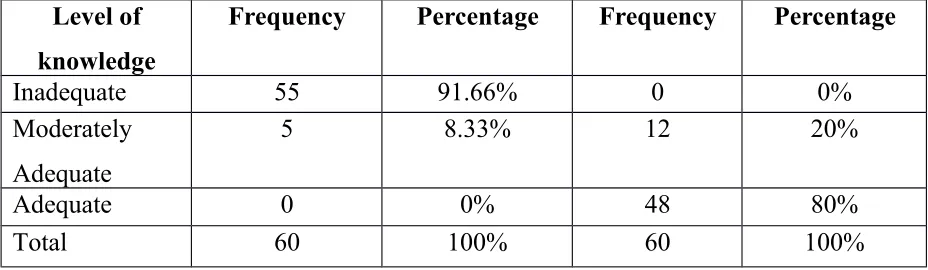
TABLE 2: FREQUENCY AND PERCENTAGE DISTRIBUTION OF PRE
AND POST TEST LEVEL OF KNOWLEDGE REGARDING THE
EFFECTS OF JUNK FOODS ON HEALTH AMONG ADOLESCENT
CHILDREN
Level of
knowledge
Frequency Percentage Frequency Percentage
Inadequate 55 91.66% 0 0%
Moderately Adequate
5 8.33% 12 20%
Adequate 0 0% 48 80%
[image:63.612.102.566.87.222.2]Total 60 100% 60 100%
Table 2: shows the frequency and percentage distribution of pre and post test
level of knowledge regarding the effects of junk foods on health among
adolescent children
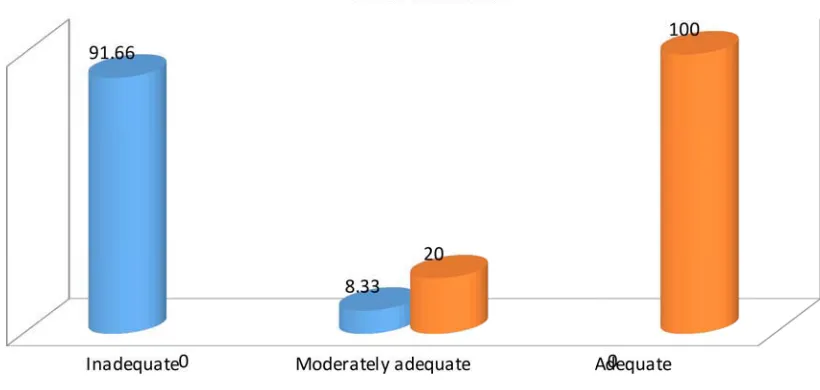
Fig 3. FREQUENCY AND PERCENTAGE DISTRIBUTION OF PRE AND
POST TEST LEVEL OF KNOWLEDGE REGARDING THE EFFECTS OF
Fig 3. Shows the Frequency and Percentage distribution of Pre and
Post test level of knowledge regarding the effects of junk foods on health
among adolescent
It was inferred that among 60 participants 55(91.66%) had inadequate knowledge and 5(8.33%) had moderately adequate knowledge and none of them had adequate knowledge. The post test was conducted after administration of computer assisted teaching regarding effects of junk food on health among adolescent children. On the seventh day post test was conducted by using the same questionnaire. The post test knowledge scores showed a significant difference. Majority of them 48(80%) gained adequate knowledge and 12(20%) gained moderately adequate knowledge which showed that computer assisted teaching regarding effects of junk food on health among adolescent children was effective.
SECTION III: DATA ON EFFECTIVENESS OF COMPUTER ASSISTED
TEACHING REGARDING THE EFFECTS OF JUNK FOODS ON
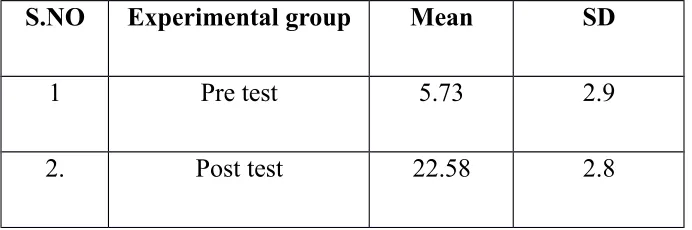
S.NO Experimental group Mean SD
1 Pre test 5.73 2.9
2. Post test 22.58 2.8
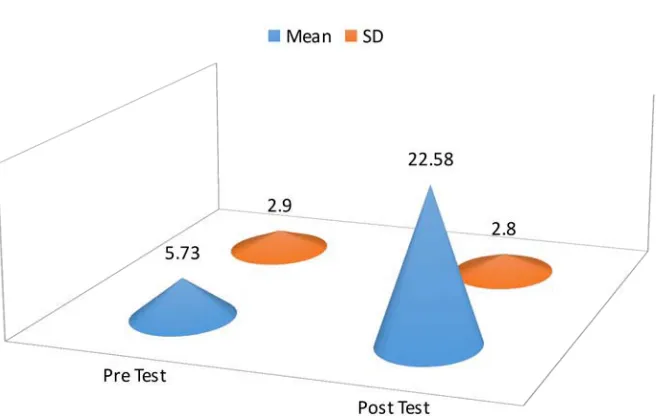
FIGURE 4: THE MEAN AND STANDARD DEVIATION OF PRE AND
[image:65.612.156.502.117.232.2]Fig 4. Shows the mean and standard deviation of pre test and post test level of
knowledge scores
The obtained overall pre test mean score was 5.73,SD 2.9 and in post test over all mean score was 22.58, SD 2.8
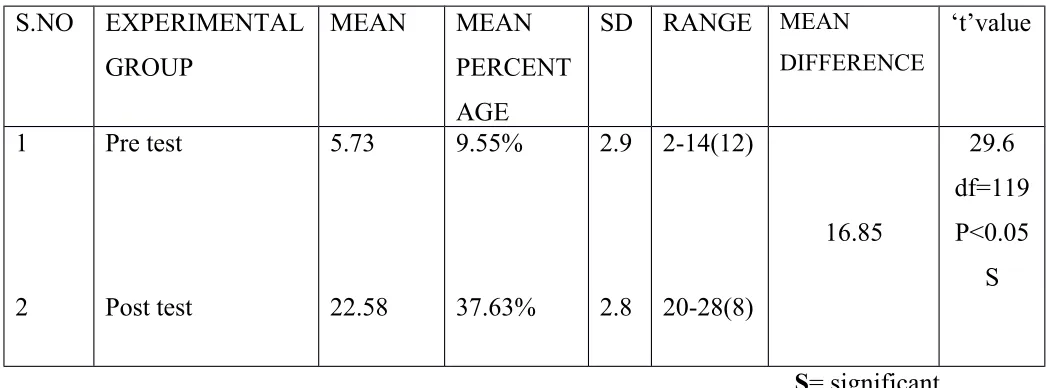
TABLE 3: MEAN, STANDARD DEVIATION, RANGE, ’t’ VALUE
REGARDING LEVEL OF KNOWLEDGE ON EFFECTS OF JUNK
AND AFTER ADMINISTRATION OF COMPUTER ASSISTED
TEACHING ON EFFECTS OF JUNK FOODS ON HEALTH
S.NO EXPERIMENTAL
GROUP
MEAN MEAN PERCENT AGE
SD RANGE MEAN
DIFFERENCE
‘t’value
1 Pre test 5.73 9.55% 2.9 2-14(12)
16.85
29.6 df=119 P<0.05
S
2 Post test 22.58 37.63% 2.8 20-28(8)
[image:67.612.70.593.167.361.2]S= significant
Table 3: Shows the Mean, Standard deviation, Range, Mean difference and
paired ‘t’ value level of knowledge regarding the effects of junk foods on
health among adolescent children.
The obtained pre test over all mean score was 5.73, SD 2.9, Mean percentage was 9.55% and range was 12. The obtained post test over all mean score was 22.58,SD was 2.8, Mean percentage was 37.63% and range was 8 .The mean difference between the pre test and post test score was 16.85 and the obtained ‘t’ value 29.6 was significant at P< 0.05 level.
effective in improving the knowledge of adolescent children regarding effects of junk foods on health.
SECTION IV: DATA ON ASSOCIATION BETWEEN THE POST TEST LEVEL OF KNOWLEDGE AND THE SELECTED DEMOGRAPHIC
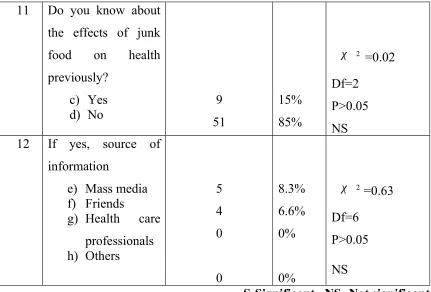
TABLE 4: FREQUENCY, PERCENTAGE DISTRIBUTION AND CHI
SQUARE ASSOCIATION BETWEEN THE POST TEST LEVEL OF
KNOWLEDGE AND THEIR SELECTED DEMOGRAPHIC VARIABLES
OF ADOLESCENT CHILDREN
S.NO DEMOGRAPHIC
VARIABLES
EXPERIMENTAL GROUP
f % 2
1 AGE
e) 12-13 years f) 13-14 years g) 14-15 years h) 15-16 years
24 21 0 15 40% 35% 0% 25% 2 =10.71 Df=6 P>0.05 NS 2 GENDER c) Boys d) Girls
c) 8th
standard d) 9th
standard c) 10th
standard d) 11th
standard 24 21 0 15 40% 35% 0% 25% 2 =6.24 Df=6 P>0.05 NS
5 Type of family
d) Joint family e) Nuclear family f) Extended family 55 5 0 91.6% 8.3% 0% 2 =0 Df=4 P>0.05 NS 6
Monthly income in Rupees
e) Below Rs
5000
f) Rs 5000 to Rs 10000
g) Rs 10000 to Rs12000 h) Above Rs
15000 0 15 25 20 0% 25% 41.6% 33.3% 2 =0.35 Df=6 P>0.05 NS
7 Education of the
h) Graduate and
above 17 28.3%
8 Education of the
Mother e) Illiterate f) Primary school education g) Secondary school education h) Graduate and
above 5 24 20 11 8.3% 40% 33.3% 18.3% 2 =1.22 Df=6 P>0.05 NS
9 Occupation Of the Father
e) Govt.Job f) Private Job g) Business h) Coolie 7 38 9 6 11.6% 63.3% 15% 10% 2 =0.2 Df=6 P>0.05 NS 10 Occupation Of the
Mother
a) Govt.Job
b) Private Job
11 Do you know about the effects of junk food on health previously? c) Yes d) No 9 51 15% 85% 2 =0.02 Df=2 P>0.05 NS 12 If yes, source of
information
e) Mass media f) Friends
g) Health care professionals h) Others 5 4 0 0 8.3% 6.6% 0% 0% 2 =0.63 Df=6 P>0.05 NS
[image:72.612.110.541.85.377.2]S-Significant, NS- Not significant
Table 4 shows the frequency, percentage distribution and chi square
association between the post test level of knowledge and their selected
demographic variables of adolescent children.
CHAPTER- V
SUMMARY, FINDINGS, DISCUSSION, IMPLICATIONS,
LIMITATIONS, RECOMMENDATIONS, AND
CONCLUSION
This chapter deals with summary, findings, discussion, implications, limitations, recommendations, and conclusion. The essence of any research project is based on study , findings, , limitations, interpretation, of the research results and recommendations to incorporate the study implications. It also gives meaning to the results obtained in the study.
SUMMARY
The main aim of the study was to evaluate the effectiveness of computer assisted teaching regarding Effects of junk foods on health among Adolescent children.
OBJECTIVES OF THE STUDY
x To evaluate the effectiveness of computer assisted teaching on the Effects of junk foods on health in terms of gaining knowledge among Adolescent children in selected school.
x To find out the association between the post test level of knowledge regarding the Effects of junk foods on health among Adolescent children and their selected demographic variables
The study attempted to examine the following research hypothesis
HYPOTHESIS
x H1: There is a significant difference between the pre test and post test level of knowledge regarding the Effects of junk foods on health among Adolescent children.
x H2: There is a significant association between the post test level of knowledge regarding the Effects of junk foods on health among Adolescent with their selected demographic variables.
Extensive literature review was done for the present study and the reviews were presented in the following headings, Studies related to changing trends in adolescents eating pattern, Studies related to factors influencing junk foods, Studies related to prevalence of junk foods consumption and effects of junk foods on health among adolescent children, Studies related to the effectiveness of teaching programme on effects of junks food on health among adolescents.
investigator to assess the effectiveness of computer assisted teaching regarding Effects of junk foods on health among Adolescent children education students.
The research design selected for the present study was pre experimental study to evaluate the effectiveness of computer assisted teaching regarding Effects of junk foods on health among Adolescent children. The independent variable was computer assisted teaching on Effects of junk foods and the dependent variable was knowledge regarding Effects of junk food son health.
The investigator developed a structured questionnaire as a tool for the present study. The content validity of the tool was established by 5 experts. The reliability of the tool was ascertained by test retest method reliability co efficient was r=0.92 and the tool was found to be reliable for the study. Pilot study was conducted in Navarasam Matriculation Higher Secondary school Palliyuthu at Erode district among 10 adolescent children, who fulfilled the sample selection criteria. The study was found to be feasible.
FINDINGS
The major findings of the study were classified under following headings
1. Findings related to background factors of adolescent children
Among the total samples majority 24(40%)belong to the age group12-13 years, 32(53.3%) were girls,42(70%) were Hindu ,24(40%) were studying in 8th standard,55(91.6%) were living in nuclear family, 25(41.6%) of their parents are earning Rs 10000-Rs 12000, 21(35%) of their fathers had completed secondary school education, 24(40%)of their mothers had completed primary school education, 38(63.3%) of their fathers were doing private job, 29(48.3%) of their mothers were house wife,51(85%) of them were not known about effects of junk food on health previously, 26(43.3%) were come to know about effects of junk food on health previously through Mass media.
2. Findings on Knowledge of adolescent children regarding effects of
junk foods on health in pre test and post test.
3. Findings on effectiveness of computer assisted teaching by
comparing the pre test mean, post test mean and Level of knowledge.
In pre test the obtained overall mean score was 5.73, standard deviation was2.9, Mean percentage was 9.55% and range was 12. The obtained overall post test mean score was 22.58 and standard deviation was 2.8, Mean percentage was37.63% and the range was 8. The mean difference was16.85 and the obtained t value was29.6 which is significant at the level of 0.05It was inferred that post test knowledge score among adolescent children significantly high when compared to pre test knowledge score among adolescent children. So the computer assisted teaching was effective.
4. Findings on association between post test score with their
Demographic Variables among adolescent children.
There was no significant association between the post test level of knowledge and demographic variables among adolescent children. Computer assisted teaching was independently effective to improve the knowledge of the samples.
The results of the study were discussed according to the objectives of the study
Objective 1: To assess the pre test and post test level of knowledge regarding
the Effects of junk foods on health among Adolescent children in selected
school
In pre test majority of adolescent children 55(91.66%) of inadequate knowledge, 5(8.33%) of them had moderate knowledge and none of the adolescent children (0%) had adequate knowledge. This shows that computer assisted teaching is very much needed to improve the knowledge.
In post test majority of adolescent children 12(20%) of them had moderately adequate knowledge, 48(80%)of them had adequate knowledge. This shows that computer assisted teaching is very effective to improve the knowledge.
Objective 2: To evaluate the effectiveness of computer assisted teaching on
the Effects of junk foods on health in terms of gaining knowledge among
Adolescent children in selected school
The obtained overall post test mean22.58, standard deviation 2.8 and the range 8, pre test , mean 5.73,standard deviation 2.9 and the mean difference was 16.85 and t=29.6 was significant. The result showed that the mean post- test knowledge scores22.58 was found to be significantly higher than their mean pre-test knowledge score 5.73 as evident from ‘t ‘ value (29.6)
It was inferred the post test knowledge score was increased after the computer assisted teaching among adolescent children.
These findings were supported by Mandeep Karur(2014)did a quasi-experimental study on adolescents of 11 to 18 years of age in Delhi to determine the effectiveness of planned teaching programme on knowledge regarding health hazards of junk foods. The results revealed that the mean pre test score was 9.95 and mean post test score was 18.50 the mean difference between the pre test knowledge score and post test knowledge score was 8.55. The study concluded that planned teaching programme was effective in order to increase the knowledge of the adolescents.
Objective 3 : To find out the association between the post test level of
knowledge regarding the effects of junk foods on health among Adolescent
children and their selected demographic variables
There was no significant association between any of the background factors among the post test level of knowledge among adolescent children in Kongu Kalvi Nilayam.
independent variables was significantly associated with daily soft drink consumption, despite some sub group.
IMPLICATIONS
The findings of the study have the following implications in Nursing
Nursing implications
The findings of the study have implications on the field of nursing education , nursing practice, nursing administration and nursing research.
Nursing practice
x Computer assisted teaching can be used in various adolescent care centers, OPD, Community health centers, to give health education to the adolescent group.
x It helps in identifying the problems of the adolescent children suffering from junk foods
x It provides appropriate information regarding effects of junk foods on health.
Nursing education
x The nurse educator have the responsibility to update the knowledge, attitude and practice of nursing students on knowledge and awareness about effects of junk foods on health.
x The findings of the study can serve as guidelines for the nurse educator for preparing computer assisted teaching for student nurse regarding effects of junk foods on health.
x The nursing students should be made aware about their role in health promotion of the adolescent suffering from health problems and prevention of junk foods related health problems.
Nursing administration
x It helps the nursing administrator to prepare computer assisted teaching regarding the effects of junk foods on health to community and public.
x It helps the nurse to learn how they can reach the adolescent children, teacher education students to create awareness regarding effects of junk foods on health.
x It gives more awareness about planning budget to prepare computer assisted teaching material regarding various adolescent problems.
Nursing research
x The study provides a baseline data for conducting other research studies.
x The study will be a motivation for the budding researchers to conduct similar studies in larger samples.
x The study will be a reference for the research scholars.
x Further research works can be conducted with every medical condition to identify most effective knowledge imparting strategies.
The following points were beyond the control of the investigator:
x Study is limited only those who are willing to participate in the study
x Study samples were small
x The study was limited to the experience of the researcher
x The Study was confirmed to only on selected school, which obviously imposed limits to larger generalizations.
Recommendations
On the basis of the findings of the study, the following recommendations have been made:
x A similar study can be replicated on a large sample to generalize the findings.
x A similar study can be conducted to find the differences in the knowledge level of the adolescent children on the basis of various institutional settings such as government and private institutions, state board and matriculation school.
x A similar study can be conducted to find differences in the knowledge level, attitude and practice
CONCLUSION
The following conclusions were drawn from the findings of the study. Computer assisted teaching method was an effective method of giving information to people. This method helps for easy understanding and gives more awareness about effects of junk food on health among adolescent children.
REFERENCE
TEXT BOOKS
1. Dr. Swaminathan, (2005), Advanced Text Book On Food And Nutrition, Vol 1, Published By Pactco, Page No :230, 476-482
3. K.V Rameshwar Sharma, (2015), Text Book Of Nutrition For Nursing, Forncline Publication, Page No :115-118.
4. Kelvin v.s, (2014), Food for health and healing, National health and wellness club, page No: 79-82,208-210.
5. Krause’s food, nutrition and diet therapy, 11th
edition, Saunders Publications page No: 284-294.
6. Parul Data, (2014), Pediatric Nursing, 3rd
Edition, Jaypee Brothers Medical Publishers (P) Ltd, Page No :136
7. Merilyn J. Hockenberry, David Wilson, (2012), Wong’s Essentials Of Pediatric Nursing, 8th
Edition, Published By Elsevier, Page No: 1206,263-265
8. Dorothy R. Marlow, (2001), Text book of pediatric nursing, 6th , edition, published by Harcourt India (p) ltd, page No:1114-1115
9. Dorland’s Pocket Medical Dictionary, 25th Edition, Oxford And IBM Publishing Co. Pvt Ltd, Page No :263
10. Suzanne C. Smeltzer, Brunner And Suddarth’s Text Book Of Medical-Surgical Nursing, 8th Edition, Published By Lippincott, Page No: 512,&1018
11. Polit, Hunglerhp. (2013), Text Book of Nursing Research Principles And Methods. 9th
, Edition , Philadelphia: Lippincott, Page No:351-359.
12. Bt Basavanthappa, (2014), Nursing Research And Statistics, 3rd
Edition ,Jaypee Brother’s Medical Publisher (P) Ltd, Page No: 106-108.
14. Pee Vee (2012), Text Book of Nutrition, Published by PV Books Pvt. Ltd. Page No.75 – 85
15. Darshan Sohi (2010), Text Book of Nutrition, Published by PV Books Pvt. Ltd Page No. 245 – 247.
16. TK Indhrani (2005), Nursing Manual of Nutrition and Therapeutic diet, Published by JP Brothers, Page No. 138-139.
17. Jacob Anchikad, (2009), Nutrition and Bio Chemistry for Nurses, Published by Jp Brothers, Page No. 289.
18. B.Srilakshmi, (2007), Dietetics, Fifth Edition New Age International Pvt. Ltd Publication, Page No. 16-18.
19. Siubhangini A Joshi, (2001), Nutrition Dietetics, 9th
Edition Tata Nc Graw-hil Publication.
20. Moly Sam .J. (2001), Text Book of Nutrition for Nurses, Published by JP Brothers.
JOURNALS
1. Dr. NaheedVai, (2013), Prevalence Of Fast Food Intake Among Urban Adolescent Students, The International Journal Of Engineering And Science, Volume 2 Issue 1 ,Page No:353-359.
3. Alphonsus N Onyiriuka, Amarabia N Ibeawuchi, Rita C Onyiruka, (2013), Assessment Of Eating Habits Among Adolescent Nigerian Urban
Secondary Schoolgirls, srilanka journal of child health ,42(1):20-26
4. Massimo Santinello,Carine A. Vereecken, Chiara Verzeletti, (2009), Soft Drink Consumption In Adolescence: Association With Food –Related
Lifestyles And Family Rules In Belgium Flanders And The Veneto Region Of Italy, European Journal Of Public Health, vol.20,no 3, page No : 312-317.
5. Ms. Vandana Sharma, (2013), Adolescents Knowledge Regarding Harmful Effects of Junk Food, IOSR journal of nursing and health science, volume 1, issue 6 page No: 1-4
6. Shanthy A. Bowman Steven L.Gortmaker ,Cara B. Ebbeling, (2004), Effects Of Fast- Food Consumption On Energy Intake And Diet
Quality Among Children In A National Household Survey, Fast Food Energy Intake, And Diet Quality In Children, vol 113 no 1. Page No: 112-118.
7. Dr. Radhana Grupta and Satyabhama. J. (2009), Health Action , Page No: 3-19
8. Little Flower A, Rashmi Hp, (2003), Prevalence Of Obesity Among Urban High School Ind J Comm Med. Page No: 187-190.